Celebrating 40 years since the release of Star Trek IV, the legacy ILM artist looks back on one of ILM’s most impressive visual effects: creating miniature animatronic whale puppets that could freely swim in water via remote control.
Many movie classics can be described in a simple, succinct sentence, but few evoke a memory quite like “the one with the whales.” Not Free Willy, Pinocchio, or Moby Dick; we’re talking about Star Trek IV: The Voyage Home, which landed in U.S. theaters on November 26, 1986. The classic Star Trek bridge crew – William Shatner (Admiral James T. Kirk), Leonard Nimoy (Mr. Spock), DeForest Kelley (Doctor Leonard “Bones” McCoy), James Doohan (Commander Montgomery “Scotty” Scott), George Takei (Commander Hikaru Sulu), Walter Koenig (Commander Pavel Chekov), and Nichelle Nichols (Commander Nyota Uhuru) – travels back in time 300 years from 2286 to 1986 in their stolen Klingon Bird-of-Prey to locate humpback whales, long gone by the 23rd century but vital to the survival of Earth now that a mysterious alien probe has arrived to communicate with the extinct cetacean species.
Effortlessly charming, witty, and exciting, The Voyage Home set new standards both critically and commercially for the franchise, swimming its way toward a global haul of $133 million and cementing the legend and legacy of that first, great crew. Industrial Light & Magic designed and implemented visual effects for The Voyage Home, bringing concept designer Ralph McQuarrie back after his work on Star Trek: The Motion Picture (1979), and delivering innovative work in the realms of matte painting, motion control, and early computer graphics effects. With ILM already working on Howard the Duck (1986) and about to begin testing for Inner Space (1987), The Voyage Home was made during an intense period of activity for the company. Speaking recently with ILM.com, modelmaker John Goodson looks back at his first voyage among the stars.
“I wasn’t officially part of the project,” remembers Goodson, “My high school friend Tony Hudson got a job in the ILM Creature Shop, and we agreed that if either one of us ever got there, one would call the other, so I slept on his couch for five weeks and went to work with him during the day.”
That gave Goodson the chance to be present for some incredible moments. But before work on the miniature mechanical whales began, other options were being explored, as ILM visual effects cameraman Don Dow discussed with Cinefex back in 1986. “They knew that nothing else in the script was going to be a big problem. In fact, they had alternate creatures in mind and were ready to change the script accordingly.”
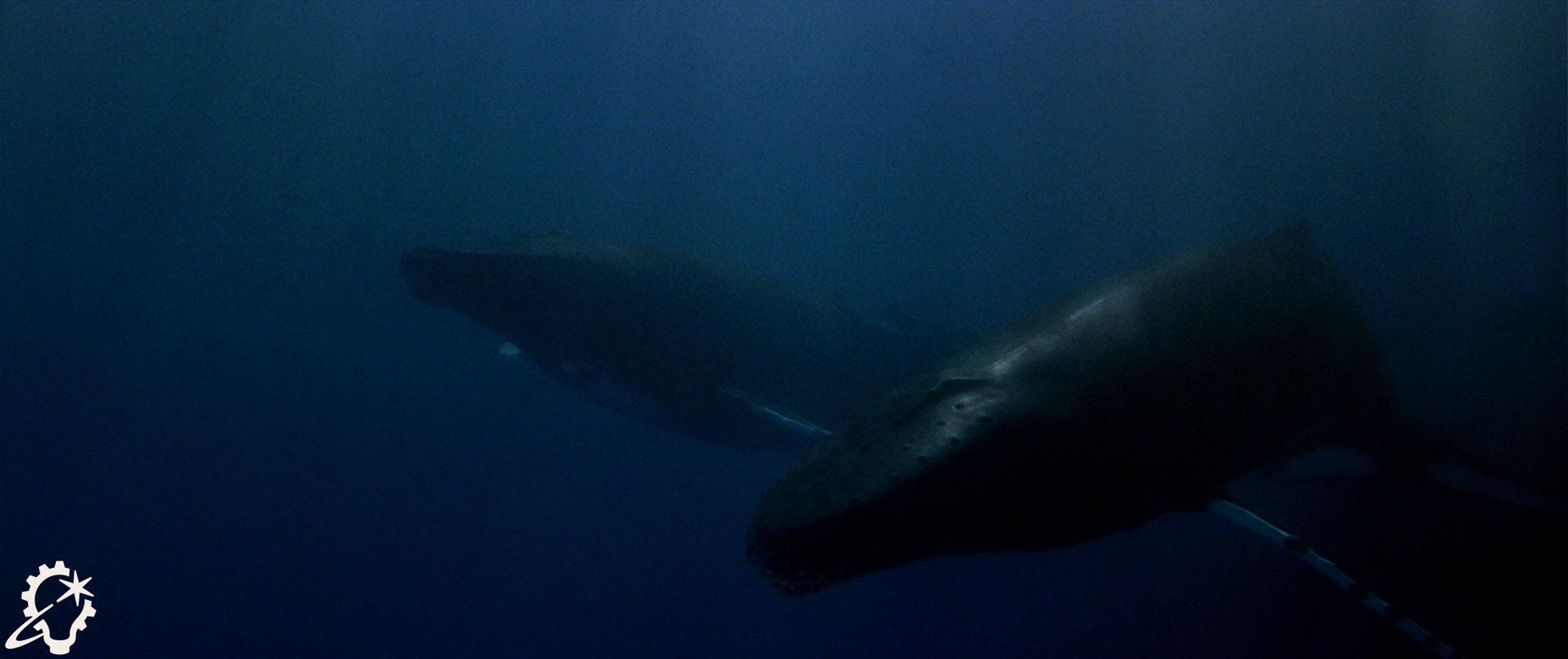
Thankfully for all involved, we fondly remember George and Gracie – as the whales were known – partly because the real-life Humphrey the whale swam into San Francisco Bay. “We grabbed our cameras and spent several days chasing Humphrey up in the delta trying to photograph him,” added Dow. “By the time we’d find Humphrey and get our camera set up, he’d be off to a different spot.” Unable to enter the waters with an endangered species, Dow and his team changed tack. “We were able to spend a lot of time observing him, and that helped us considerably.”
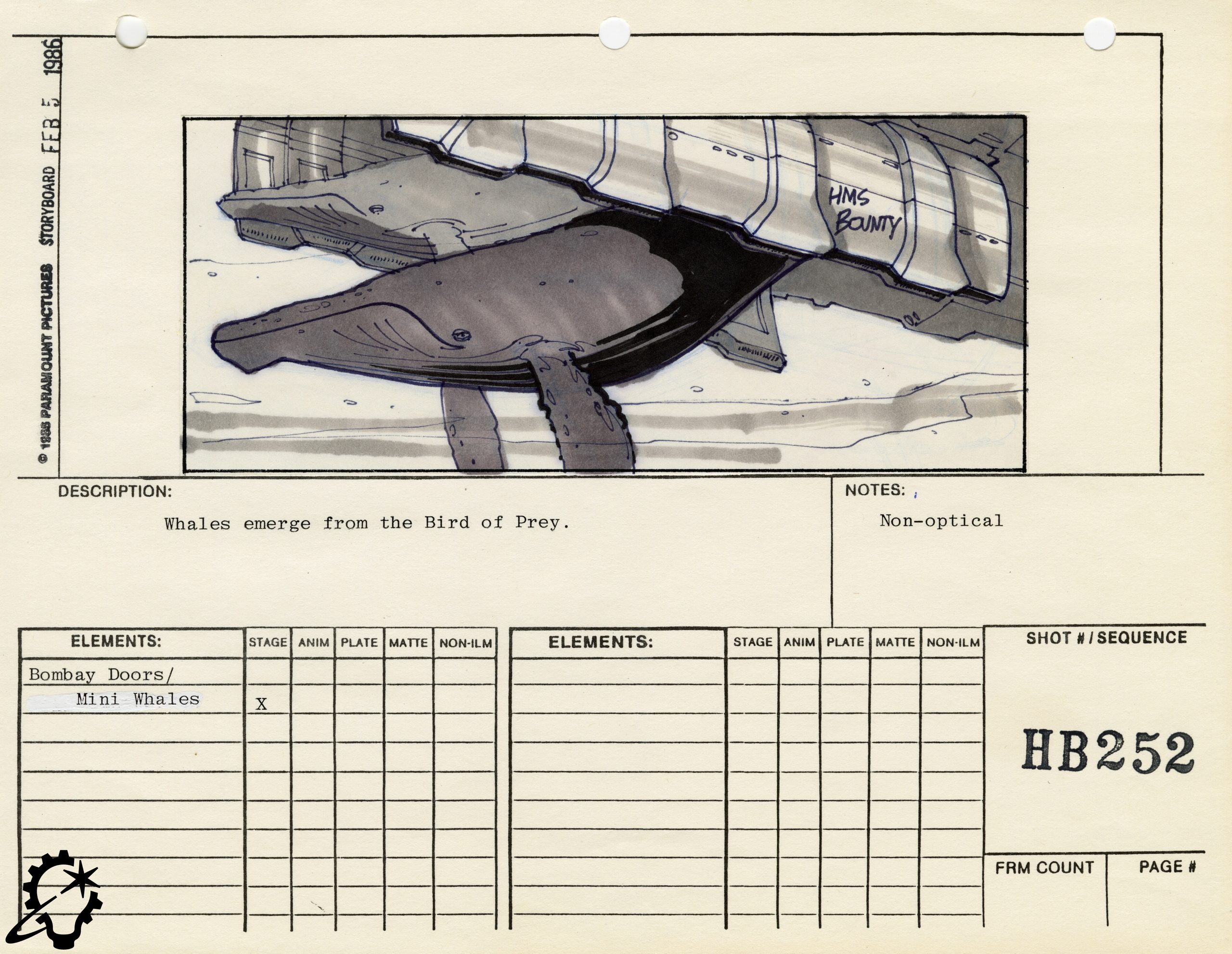
After their time in the Bay, bringing the whales to life on screen fell fully to ILM. “Their first reaction was to shoot a miniature against a blue screen and then comp it into water plates, but it would’ve been hard to get any subtlety of movement and the right kind of light interaction,” remembered MIT robotics expert Walt Conti, who, despite not being well-versed in film, was brought in by art director Nilo Rodis-Jamero and tasked with creating self-contained miniature whale models that could operate independently. “Another alternative was to shoot full-size mechanical whales on tracks, but that approach limits you to very specific angles and movements and just didn’t seem flexible enough for the underwater sequences,” Conti told Cinefex.
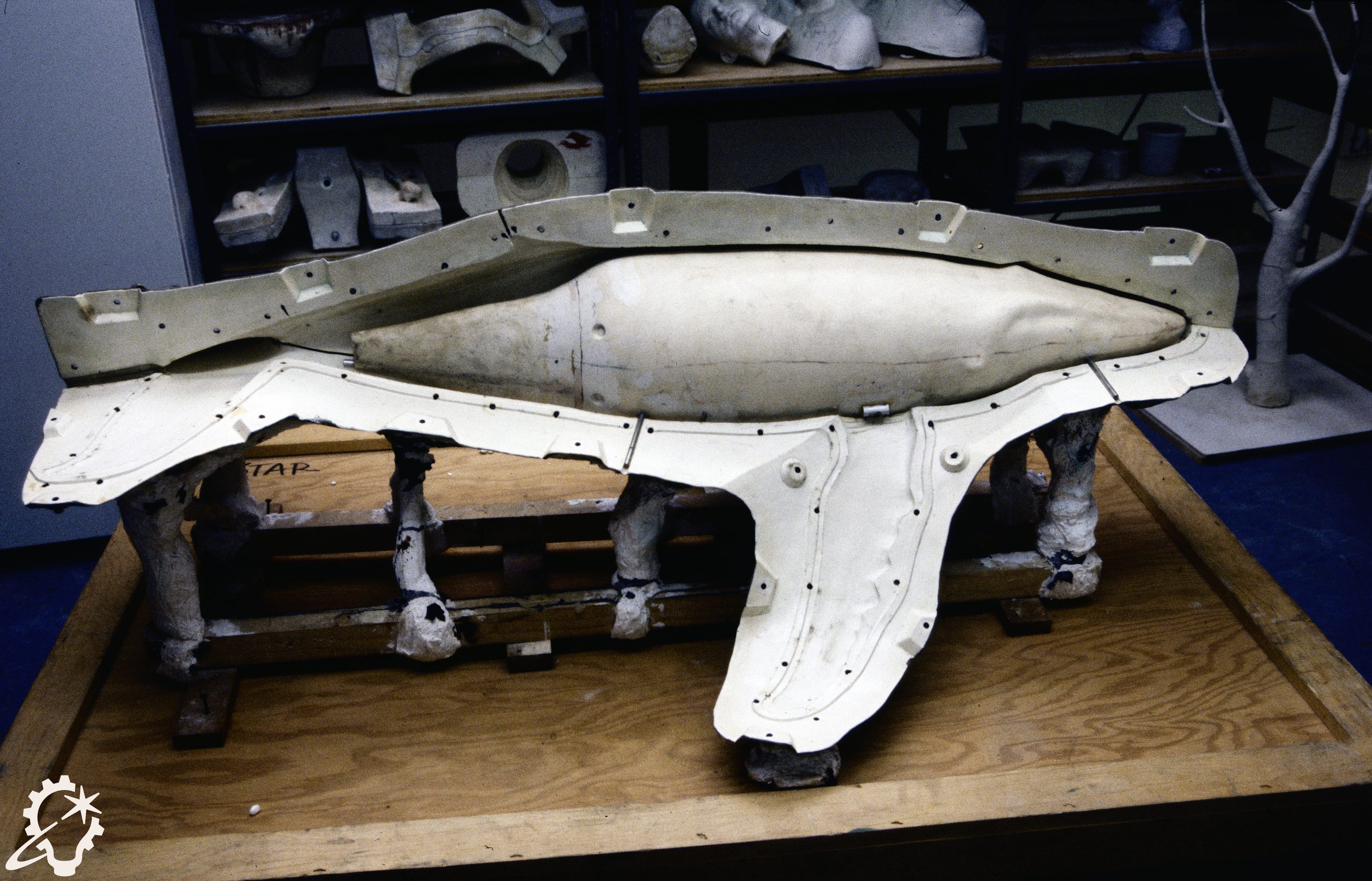
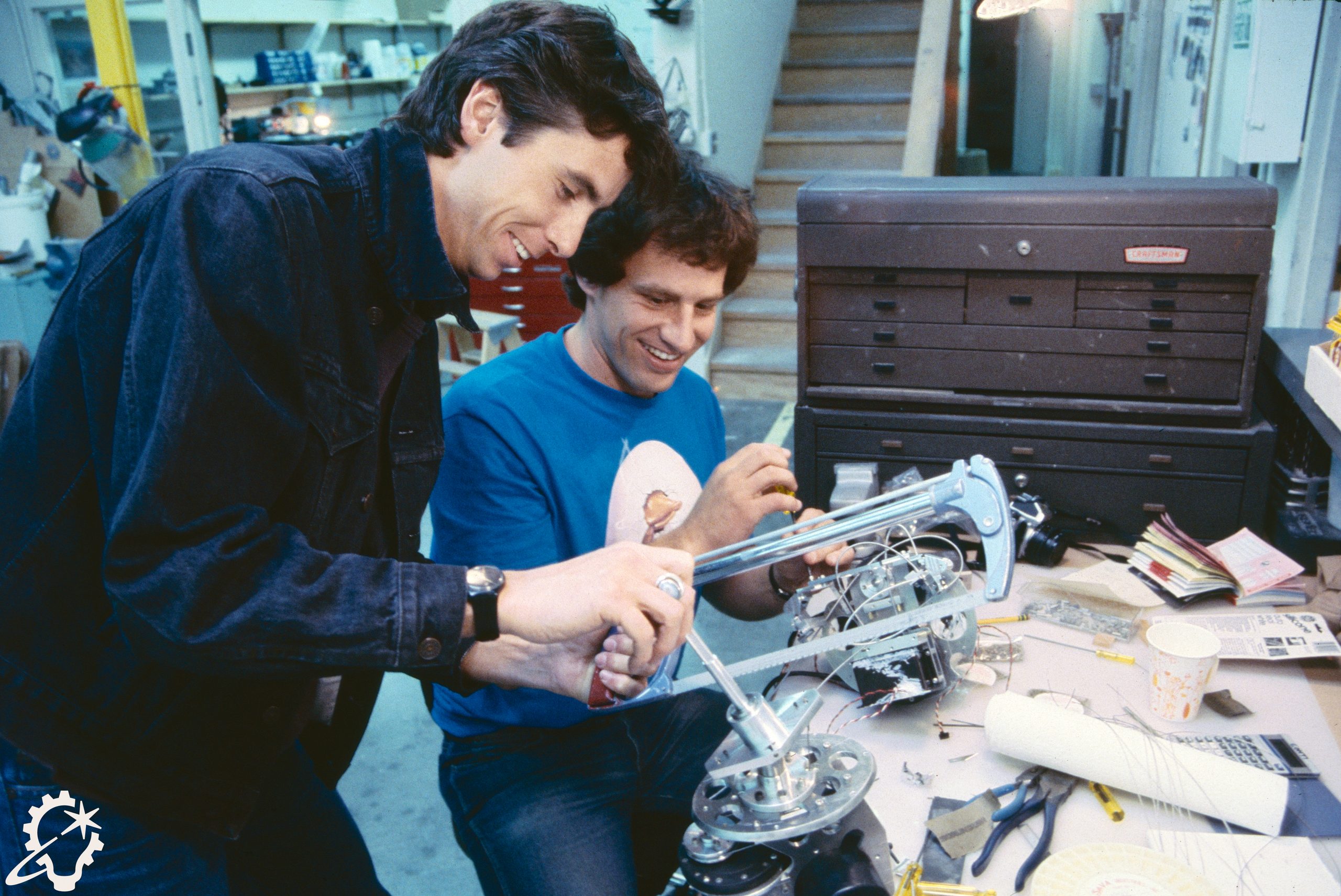
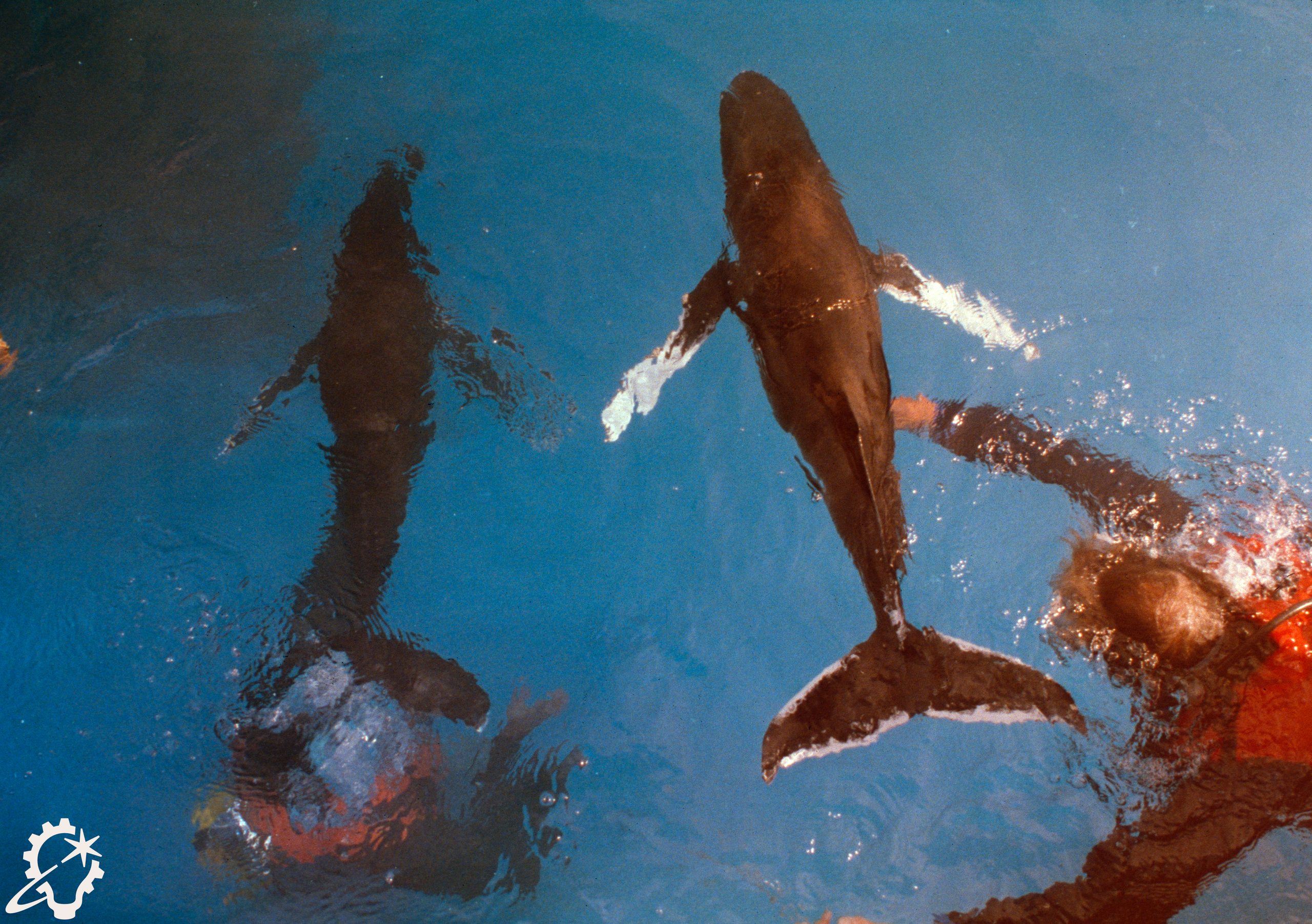
“We put together a 30-inch prototype very quickly to show to Paramount. It had the tail motion and was free-swimming, but it still had an umbilical cord coming out of it for power,” said Conti. “I found that the movement could be simplified tremendously by keeping the front half of the whale rigid and having all the motion in the tail and in the pectoral fins. We threw that together and filmed it and showed the footage to Paramount, and they loved it.”
The pathway to this mechanical marvel was opening up before them, and the young Goodson was there to see it grow. “They initially created an iteration of the whale with an umbilical attached to it, and by the time I got there they’d developed a four-foot-long, free-swimming whale,” he says. Ocean Society’s Pieter Folkens’s design, with enough room for all the servos and radio gear, along with Richard Miller’s sculpting skills, went a long way toward bringing these independent mammals to life.
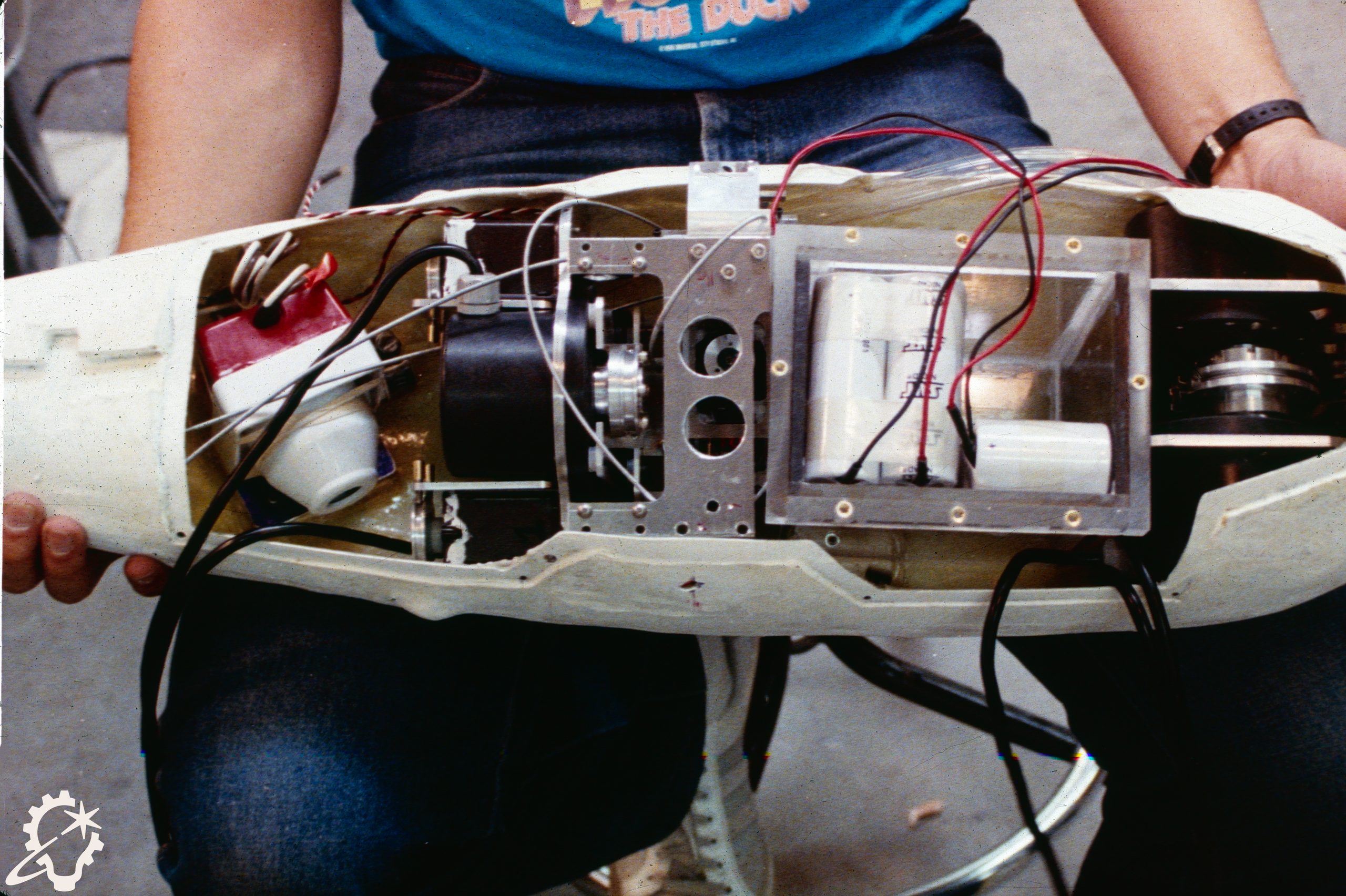
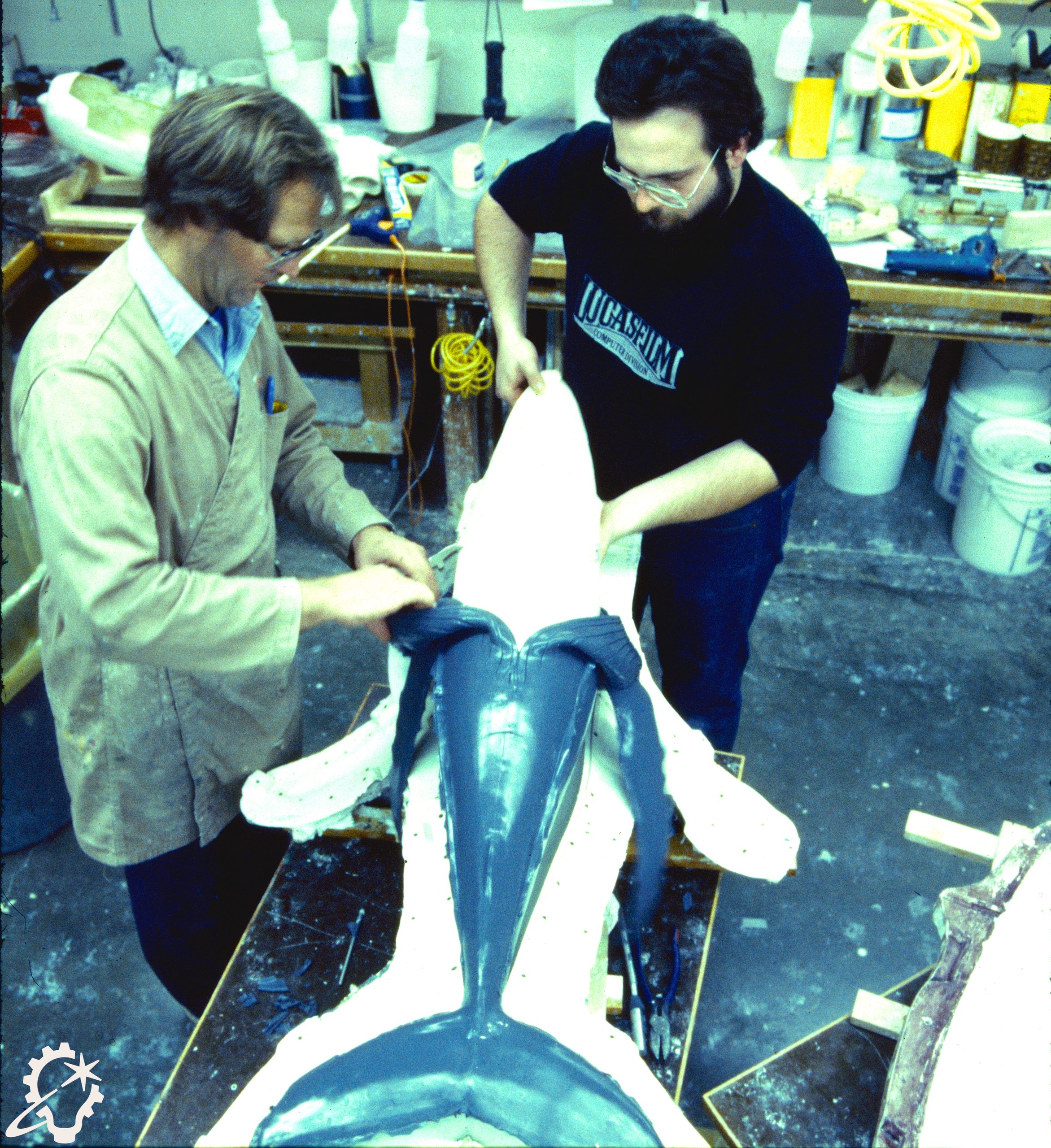
The team created a three-piece fiberglass mold based on Miller’s sculpture. Constructed in fiberglass by Rick Anderson, the front half housed servos, sealing each piece individually with polyurethane marine sealant rather than bonding the entire whale. “The whales had a fiberglass inner core, and motors went to pectoral fins, which were spring steel, like the tail,” remembers Goodson. “There was a large servo motor from some kind of missile that had enough torque it could move the tail.” Each fin rotated independently, while the tail was essentially a hinge that moved up and down and from side to side.
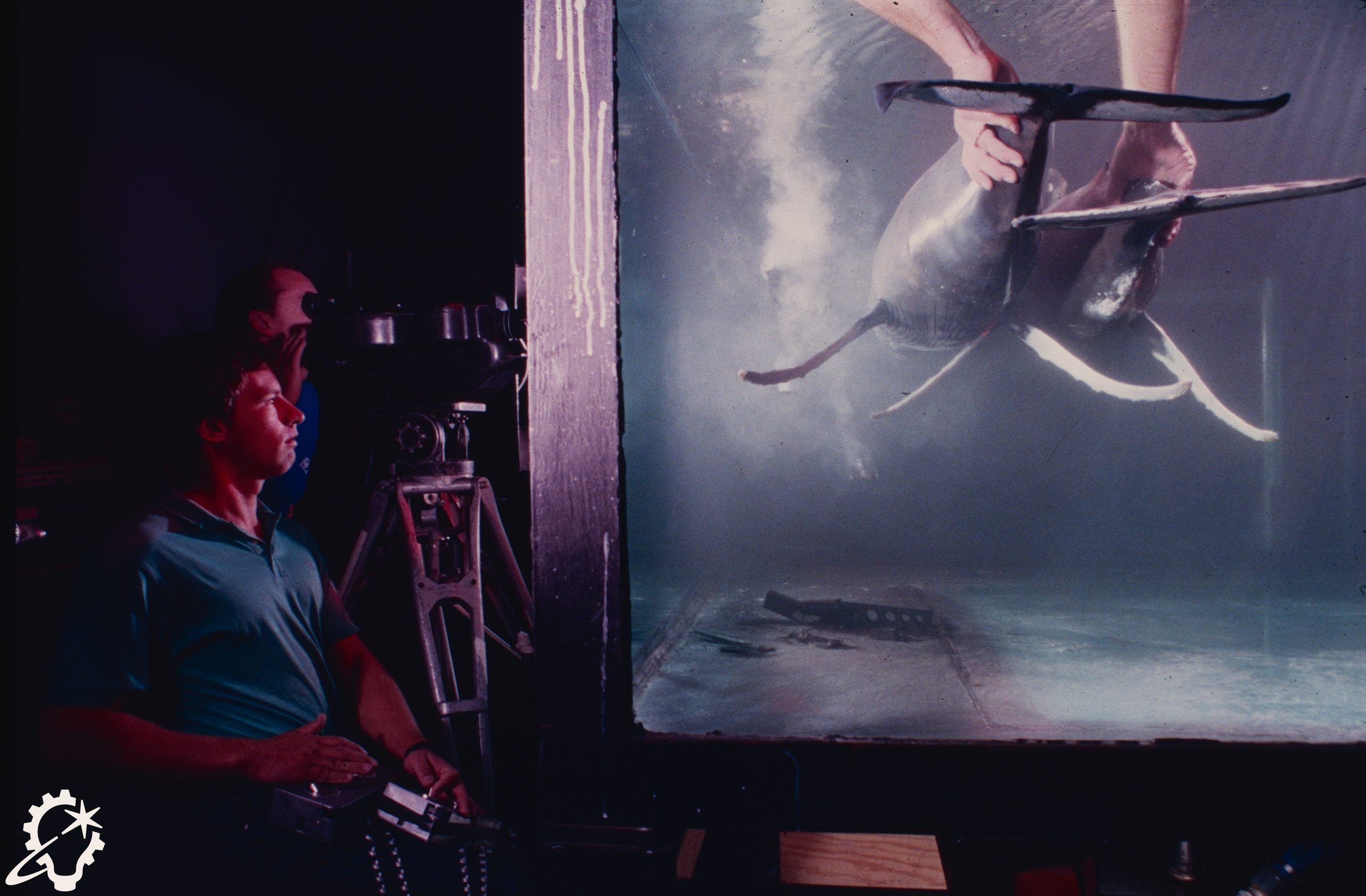
Then the all-important skin had to be designed. “The skin was made out of three layers of a urethane elastomer made by Smooth-On called PMC-724,” explains Goodson. “There was the inner shell and an outer core of PMC-724; they mixed micro balloons, which are microscopic glass spheres, and that made it stiffer. Then around that, they had another layer of regular PMC-724, so it was like rubber. Then the last layer was PMC-724, but there was a plasticizer you could get for it, and they plasticized it to 125%. That’s in excess of what the material can stand, so it was leaching out of the material, but that made the material pliable enough that when the whale’s tail moved, you didn’t get wrinkles in the surface, which would have kind of clued you into the fact something’s wrong.” Those problems solved, the whales began to look like more than simple animatronics. “It was an amazing thing to conquer because that was one of the bigger problems, and it worked really, really well.”
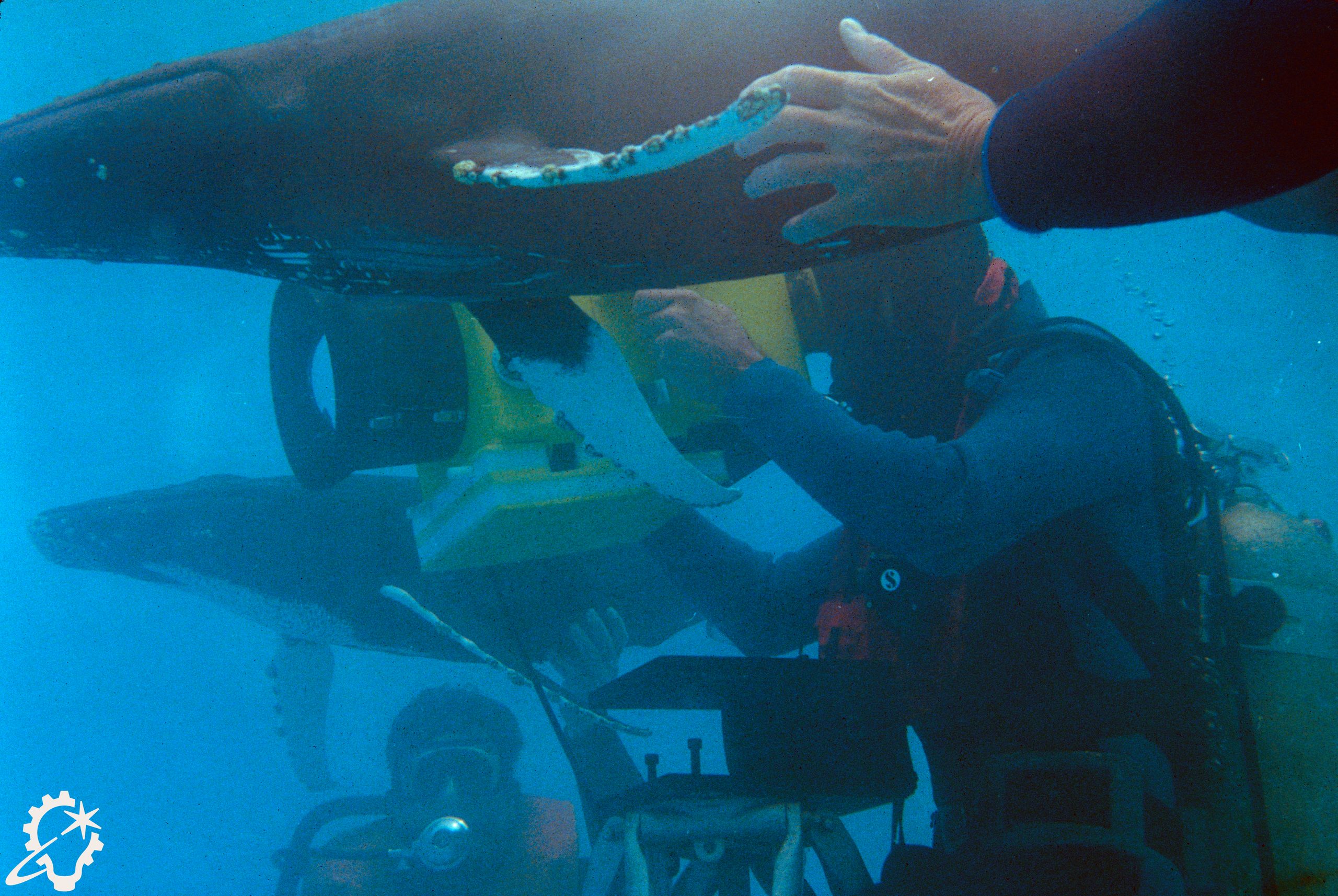
With skin and bone in place, more innovations were baked into this cetacean creation. “They fitted an intake screen beneath a cluster of barnacles under the chin that ran to an impeller pump that went out through the tail, so between the flukes there’s a small piece of tubing that would provide a turbo jet of water if we needed it,” says Goodson. Thankfully they didn’t; the design copied the swimming action of a real whale so well the system was never required. However, the team still needed to be able to access the interior of the animatronic, should they need to tweak, repair, or adjust the model. “The whales opened up from that intake. It split down the center like a Ziploc that snapped into the fiberglass frame, so they could peel the skin off if they needed to.” Despite the 23rd century having no need for such vulgar concepts as currency, money was vital to making the whales work as they did. “They took pocket change and put it inside the whales to make them neutrally buoyant,” adds Goodson.
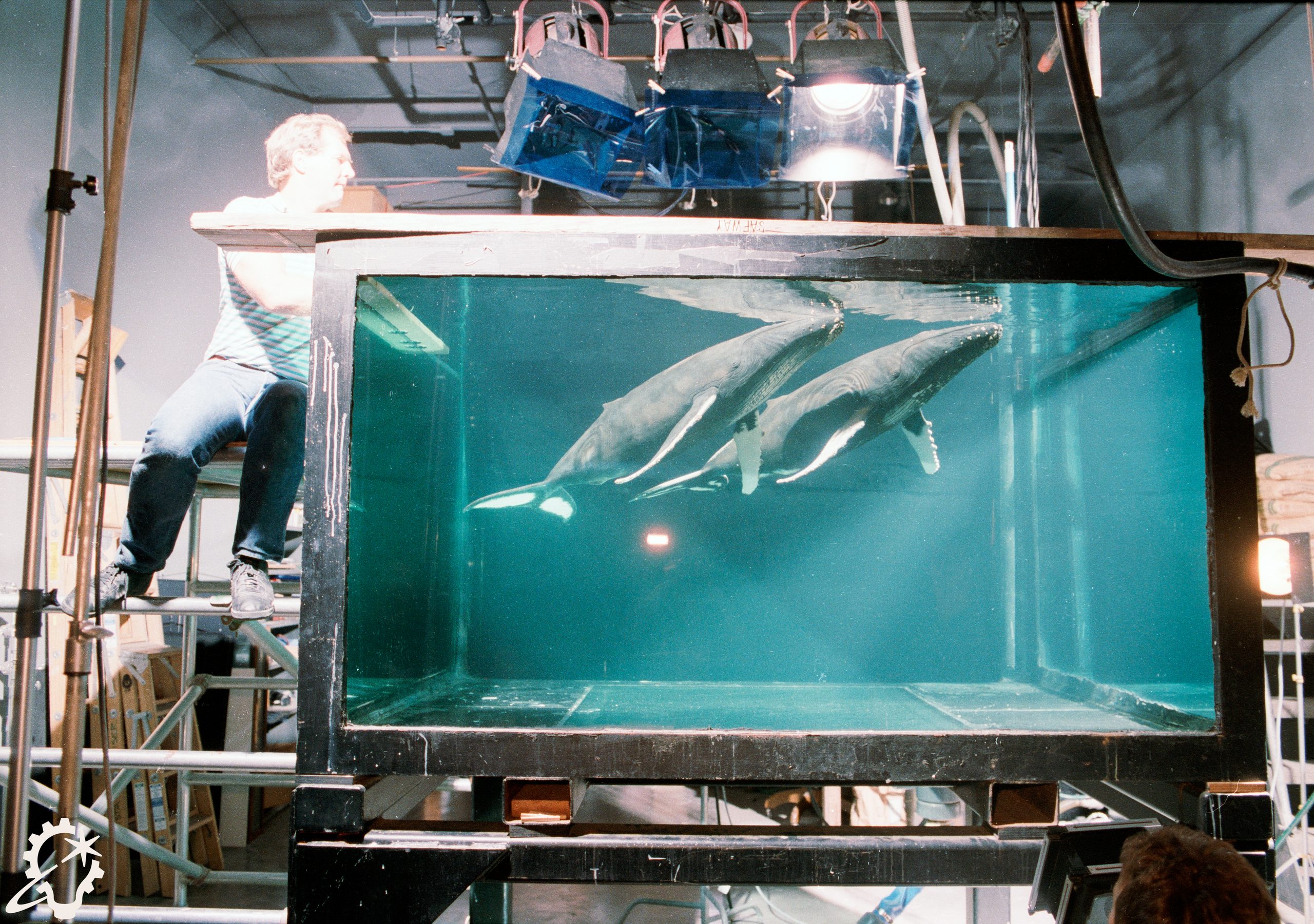
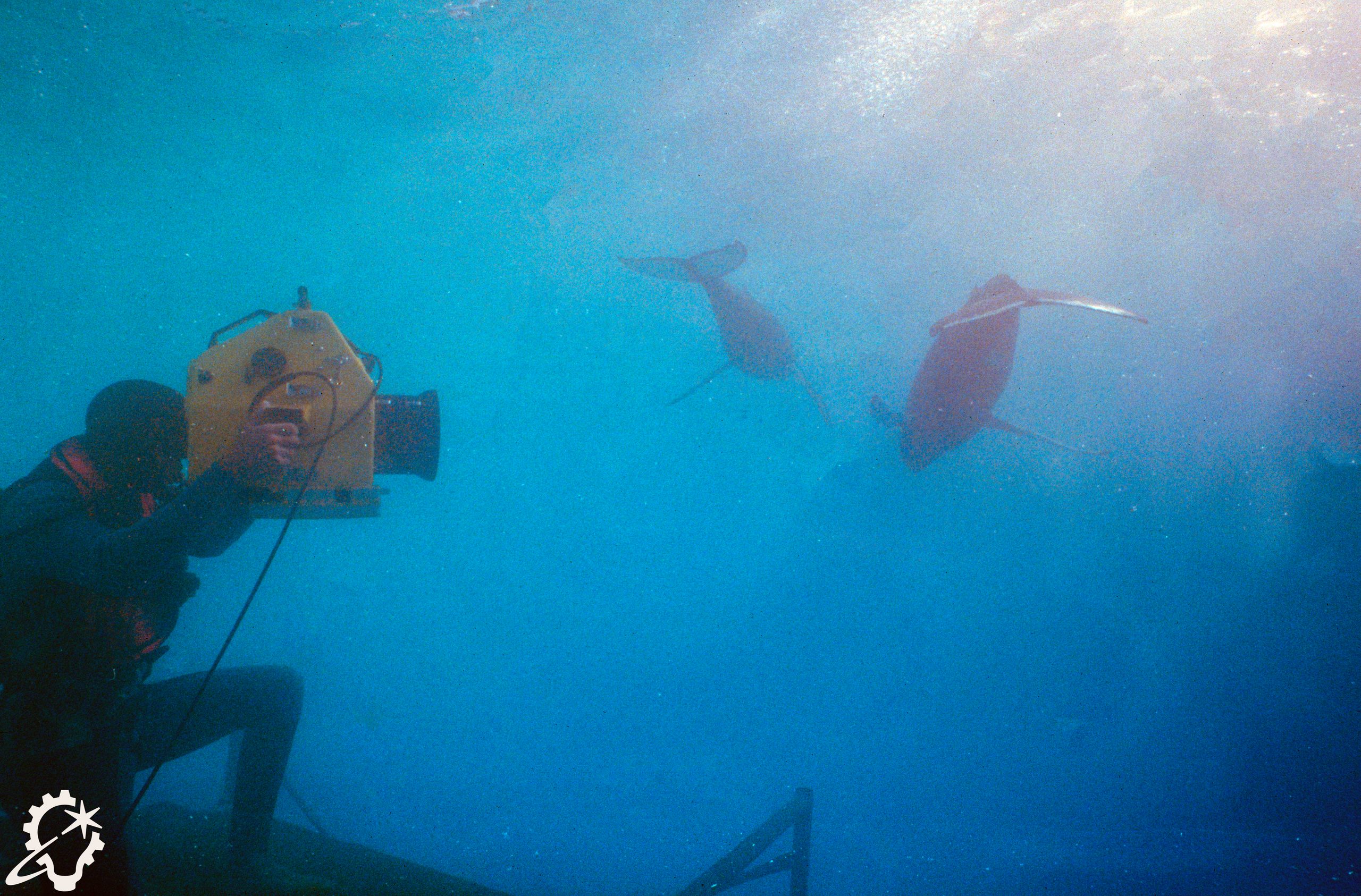
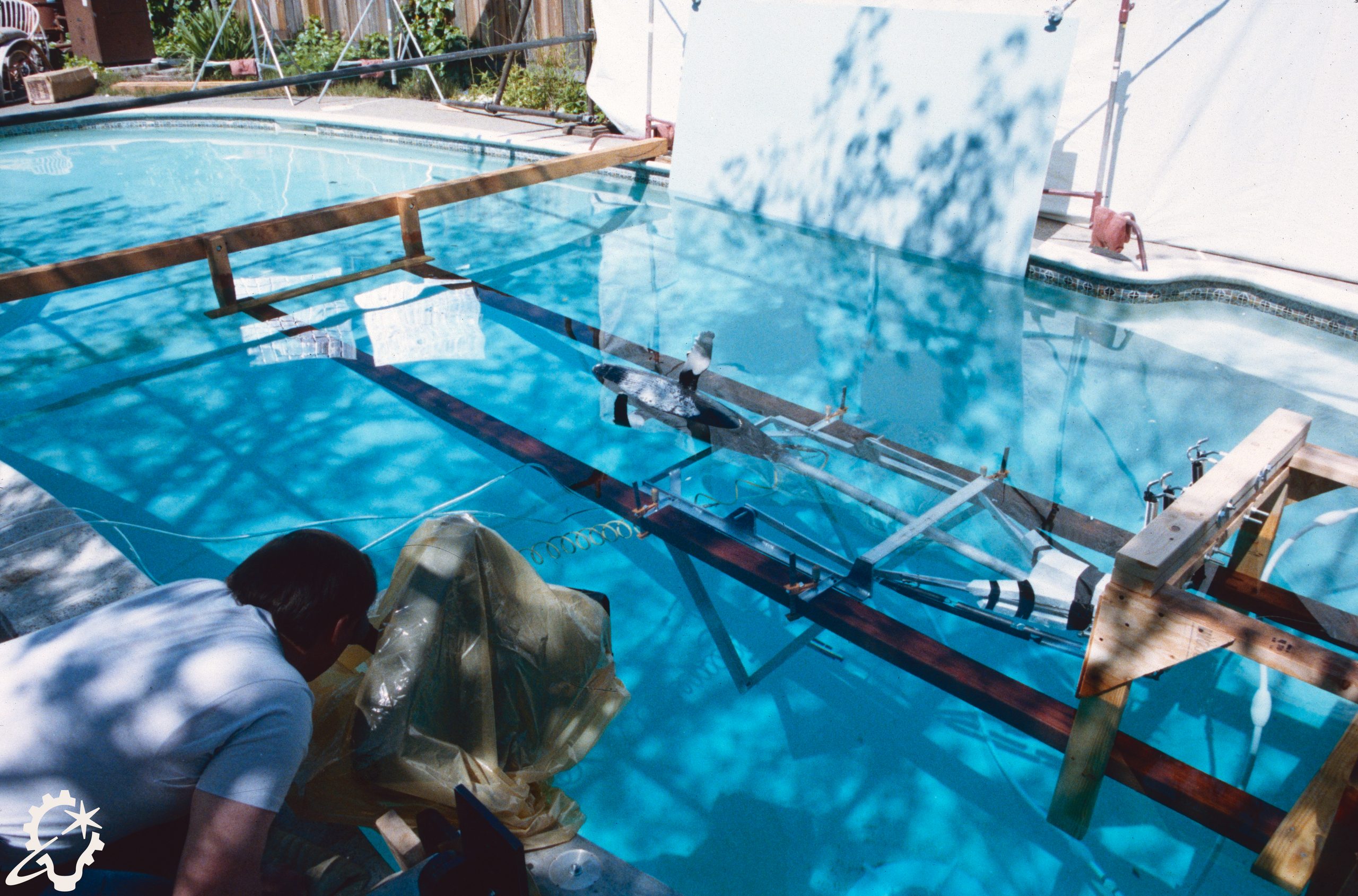
With the whales now built, they had to be filmed, and an unlikely location became their “oceanic home.” “There was a school in San Mateo with a 17-foot pool and a room downstairs with a window they could film through,” says Goodson. “Don Dow was the effects supervisor, and we went down with underwater cameraman Pete Romano and two assistants, one of whom was Toby Heindel.”
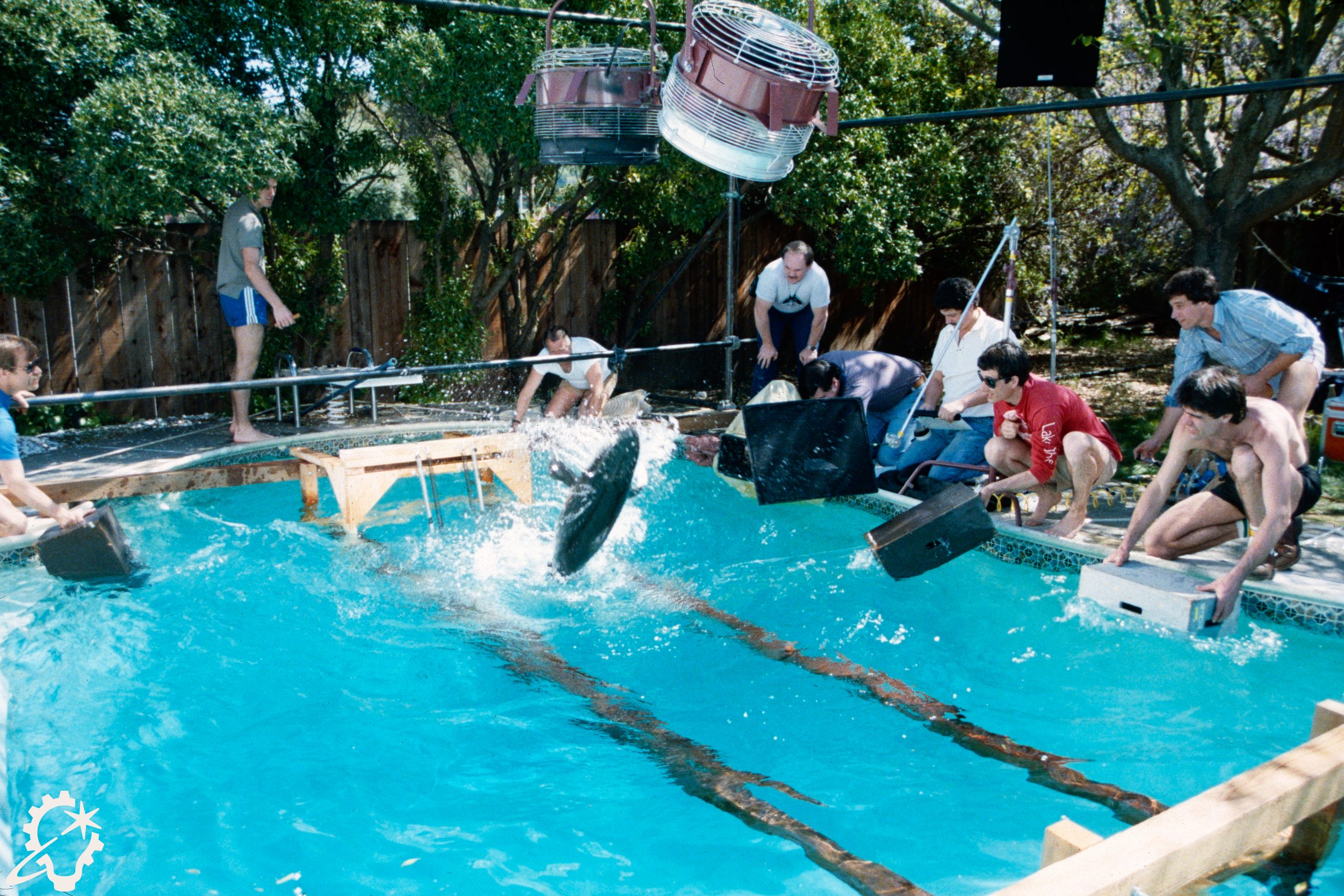
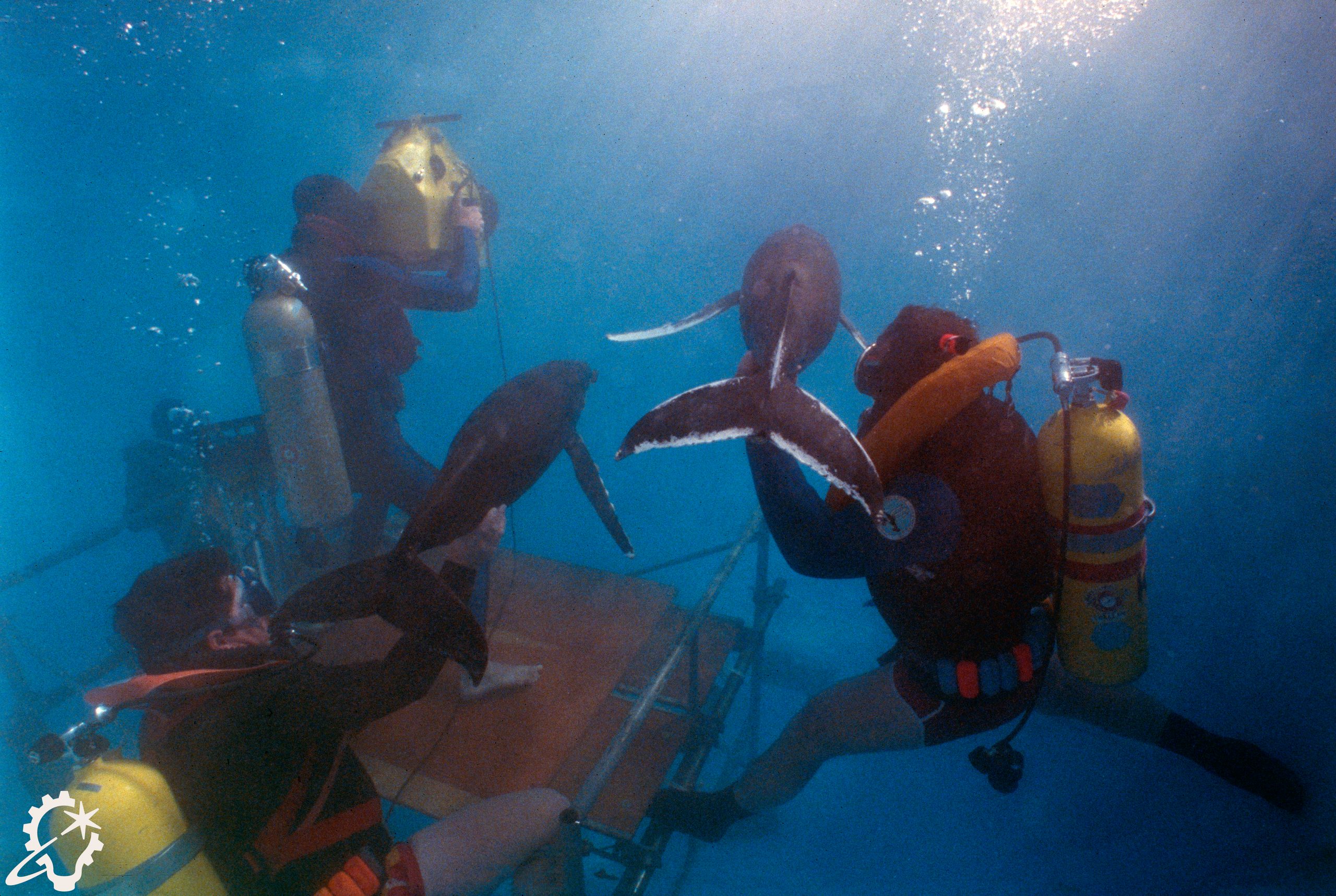
Each whale required two people to operate it: one to control its direction via tail movements and one to control the flippers, while two additional handlers held the whales until the camera rolled. “Their job was to put the whales back to the start position, and then they would swim through the shots,” recalls Goodson. “I was video recording for Don Dow during the shots and doing playback, as well as preventing the hull of the whaling ship from hitting the side of the pool. They would point it at one side of the pool and let it go to shoot the whales and the boat going overhead.”
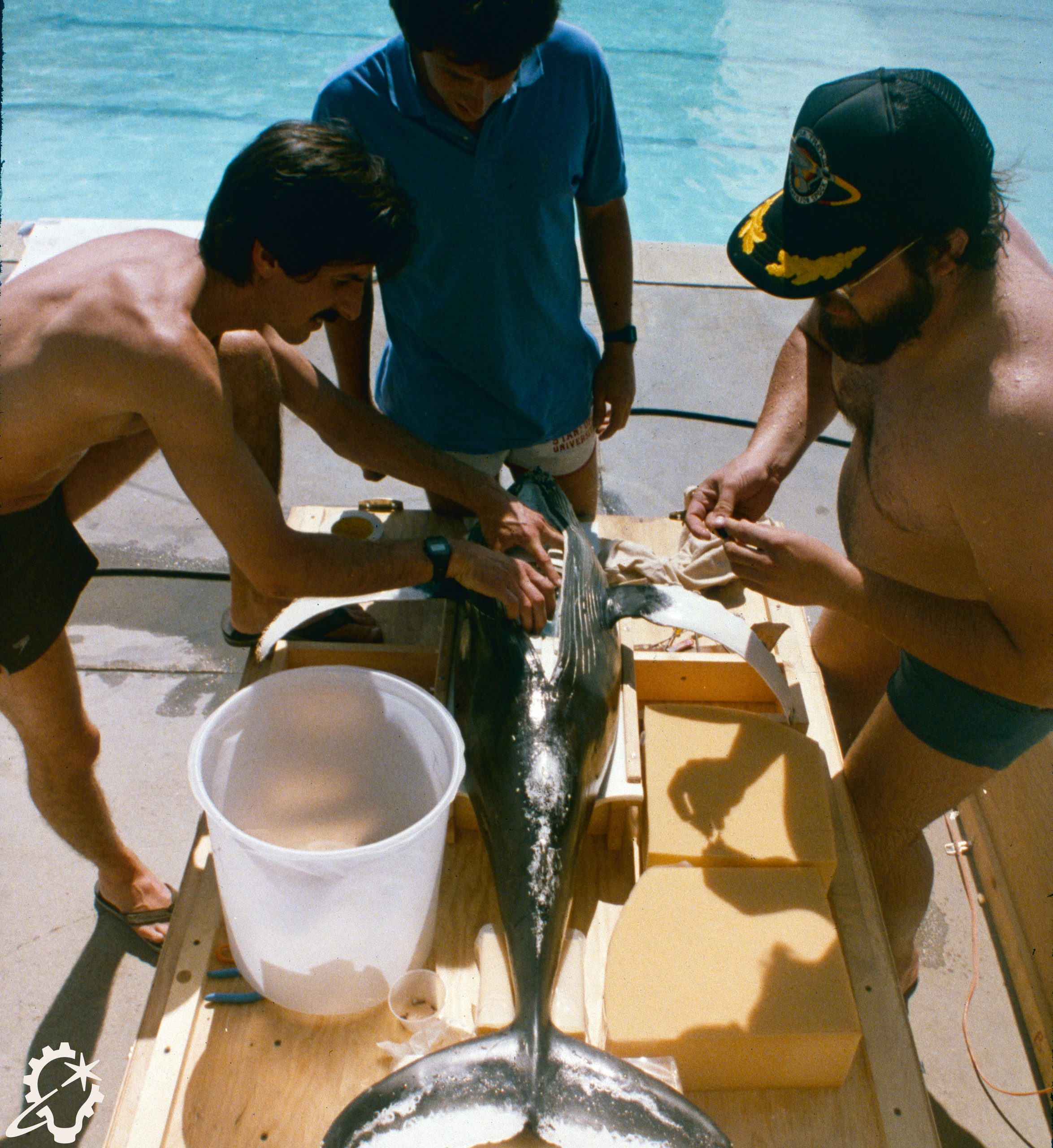
That boat was the infamous whaling ship, and a version of it has since been on display at ILM’s San Francisco studio for many years. “Dick Dova was one of the grips, and one of his jobs was to mount a stage light over the water,” Goodson says. “The lower doors of the Klingon Bird-of-Prey were made of wood and were pretty crude, but when they opened, the light would shine down. Dickie put diatomaceous earth into the water, and that gave them the ‘god rays’ of light the whales would swim through.”
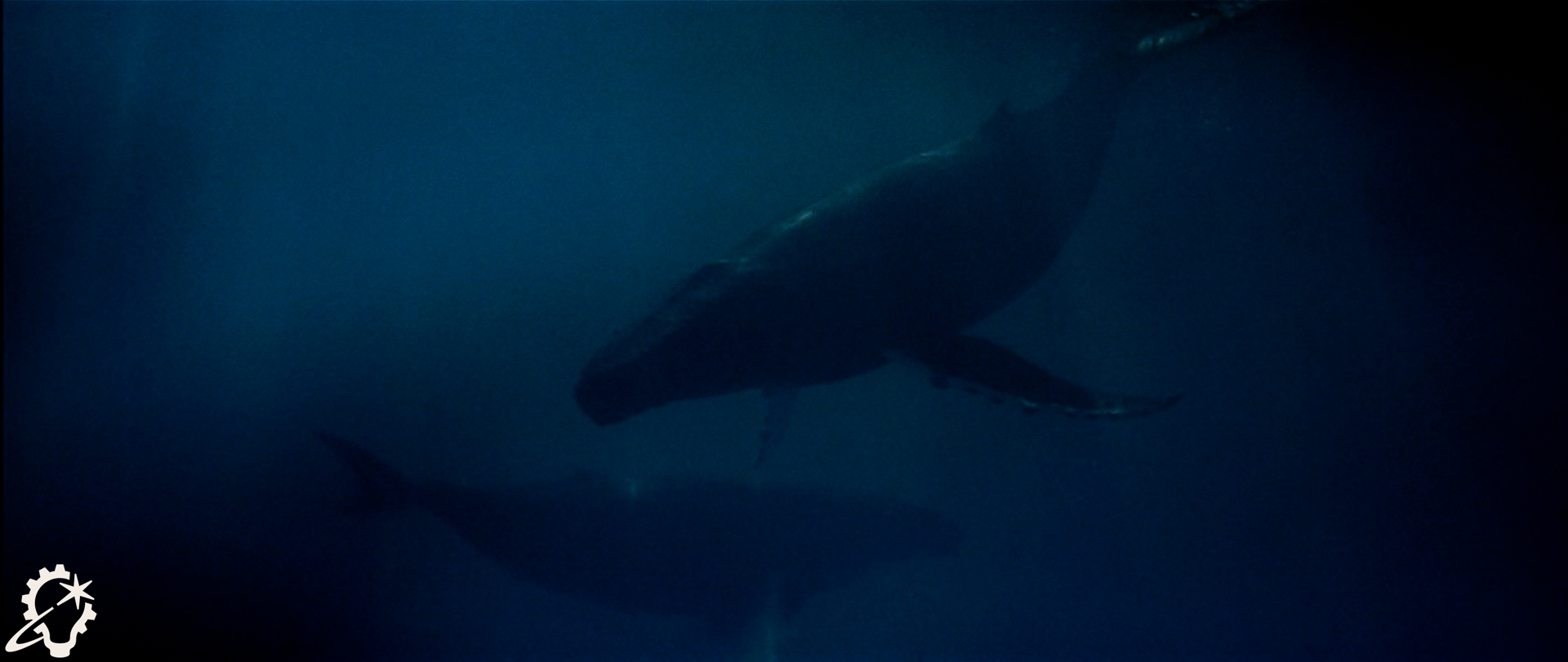
“We learned to be very careful to shoot the whales only at certain angles,” said Walt Conti back in 1986. “Technically, shooting the whales swimming from underneath was a great way to see them because it made them look so much larger, but most people are not accustomed to seeing a whale from that position, and so it didn’t really work. Audiences are used to seeing these animals photographed from specific angles, and if you deviate too much from that, it just doesn’t seem real to them.”
For Goodson, his presence on the Star Trek IV set opened a pathway to a four-decade career that continues to this day. “I reached out to Lorne Peterson, Steve Gawley, Charlie Bailey, Ease Owyeung, and Greg Jein and asked for an hour of their time. Everybody gave me an hour, but the one who I really registered with was Greg Jein.” Academy Award-nominated for Best Visual Effects on Close Encounters of the Third Kind (1977) and 1941 (1979), the late Greg Jein would go on to become a Trek legend. He worked on Star Trek: The Motion Picture, Star Trek V: The Final Frontier (1989), Star Trek VI: The Undiscovered Country (1991), and on the two-, four-, and six-foot models of the USS Enterprise (NCC-1701-D) from Star Trek: The Next Generation (1987), as well as models for Star Trek: Deep Space Nine (1993). “Greg was a very positive force in my life,” Goodson reflects. “He helped me get into the Academy, helped me get a lot of work with Paramount. He was an amazing mentor, and a wonderful person. I had a year left in school, and he said, ‘Go back and finish school. This will still be here.” So I did exactly that. That was really good advice.”
After following Jein’s wise counsel, Goodson decided to take his shot. “By that point, I had met some people, so when I came back out, I tried to see if there was anything to do, but there wasn’t. A few days later ILM called and said, ‘We need you to come in on Monday.’ Larry Tan came down and said, ‘Wait here, Jeff Mann will come by and get you.’ I waited, but Jeff didn’t show up. Eventually it got to lunchtime, and Larry came down and said, ‘Did Jeff not come down? Come with me.’ I followed him down the hall to the wood shop, and he said, ‘I’m giving you to Steve Gawley. Steve hates rookies.’ Great. He took me to Steve, and he goes, ‘Steve, this is John. He’s yours. Put him to work.’ Steve handed me a drawing of the miniaturization platform from Body Wars [the motion simulator attraction inside the Wonders of Life pavilion at Epcot, which closed in 2007], said, ‘Build this,’ and walked out.”
A moment as nerve-racking as you could imagine, but Goodson was undeterred. “It was lunchtime. I didn’t know how I got to the wood shop. I didn’t know how to get back out of the building. I didn’t know where the bathroom was. I didn’t know anything, and I was all alone, so I walked into the hall, and I saw Dennis Muren, who I recognized from TV. I said, ‘Can you take me to the Model Shop?’ and Dennis took me up there. I met Bill George, and he pointed me to Eric Christensen’s old desk. I sat there and tried to be as invisible as I could.” Three days later, his situation had not improved. “On day three, I was heading to the bathroom, and I ran into Jeff Mann. Jeff goes, ‘Was I supposed to come and talk to you?’ I said, ‘Yeah, do I work here now?’ And he goes, ‘Yeah, you’re working here.’”
With Star Trek VI, Star Trek Generations (1994), Star Trek: First Contact (1996), Star Trek (2009), and Star Trek Into Darkness (2013) ahead of him, Goodson plowed into the work. “We did 70, 80, 90 hour weeks for the first two years. I was in heaven. The fun part of the ILM Model Shop was always problem-solving.” He also remembers their unique tendering process. “We would bid for stuff and give people a number, but we were always guessing. Steve Gawley used to call it SWAG – ‘Scientific Wild Ass Guess.’ So yeah, leap of faith.”
The audacity to even attempt to build George and Gracie for The Voyage Home without precedent says everything about ILM’s mindset in the 1980s. To photograph and build a self-contained, radio-controlled animatronic whale to such a level of authenticity that audiences worldwide would be completely fooled is a feat rarely matched, if at all. “It was really quite ambitious to build something like this,” Walt Conti told Cinefex. “But it was definitely the most efficient way to handle the whale sequences because we were able to avoid the optical process completely. We were fortunate that the people behind the film – Harve Bennett, Ralph Winter, and Leonard Nimoy – really cared about the quality of the whales. What we did on this film really opens up a whole new tool chest for directors.”
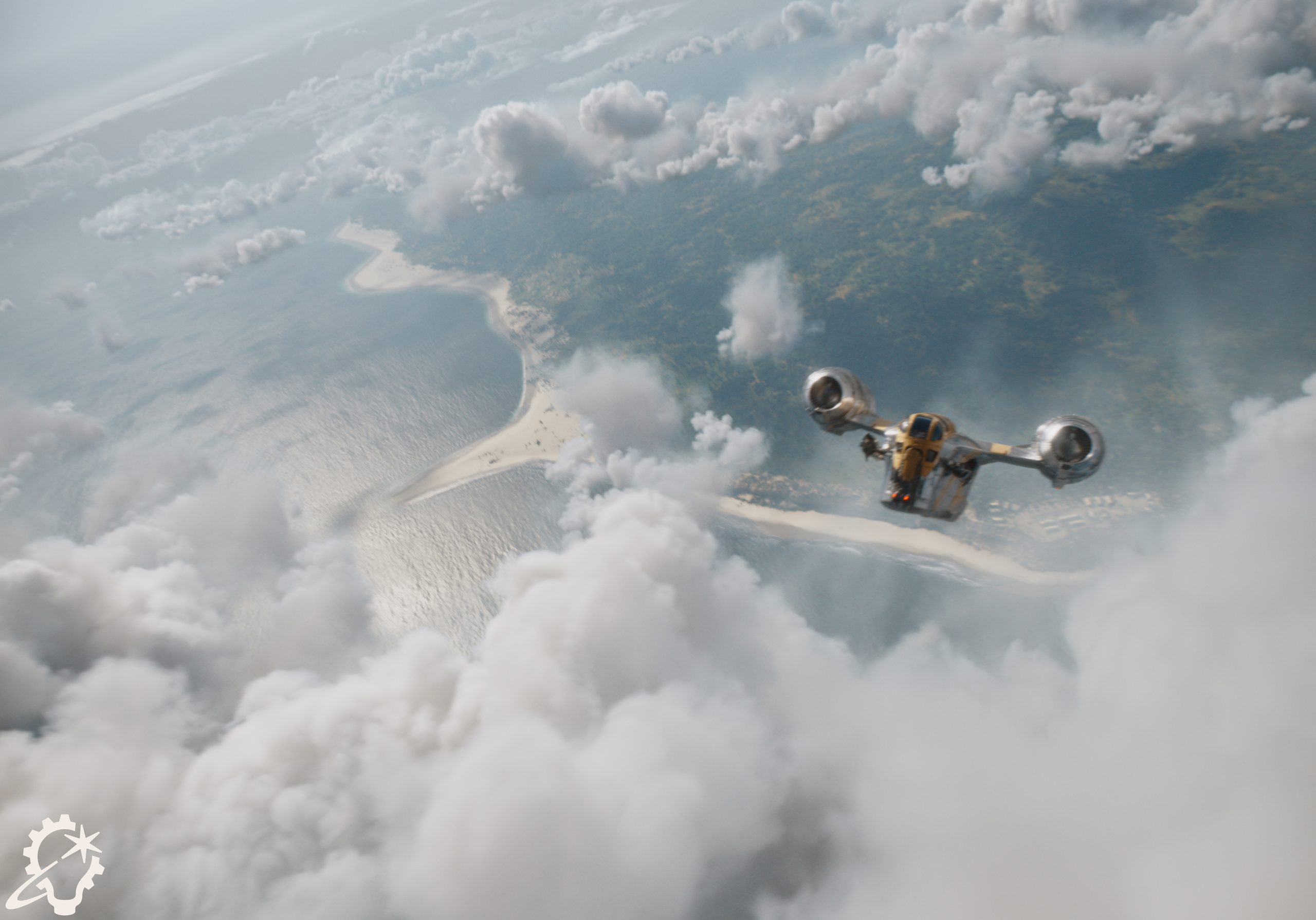
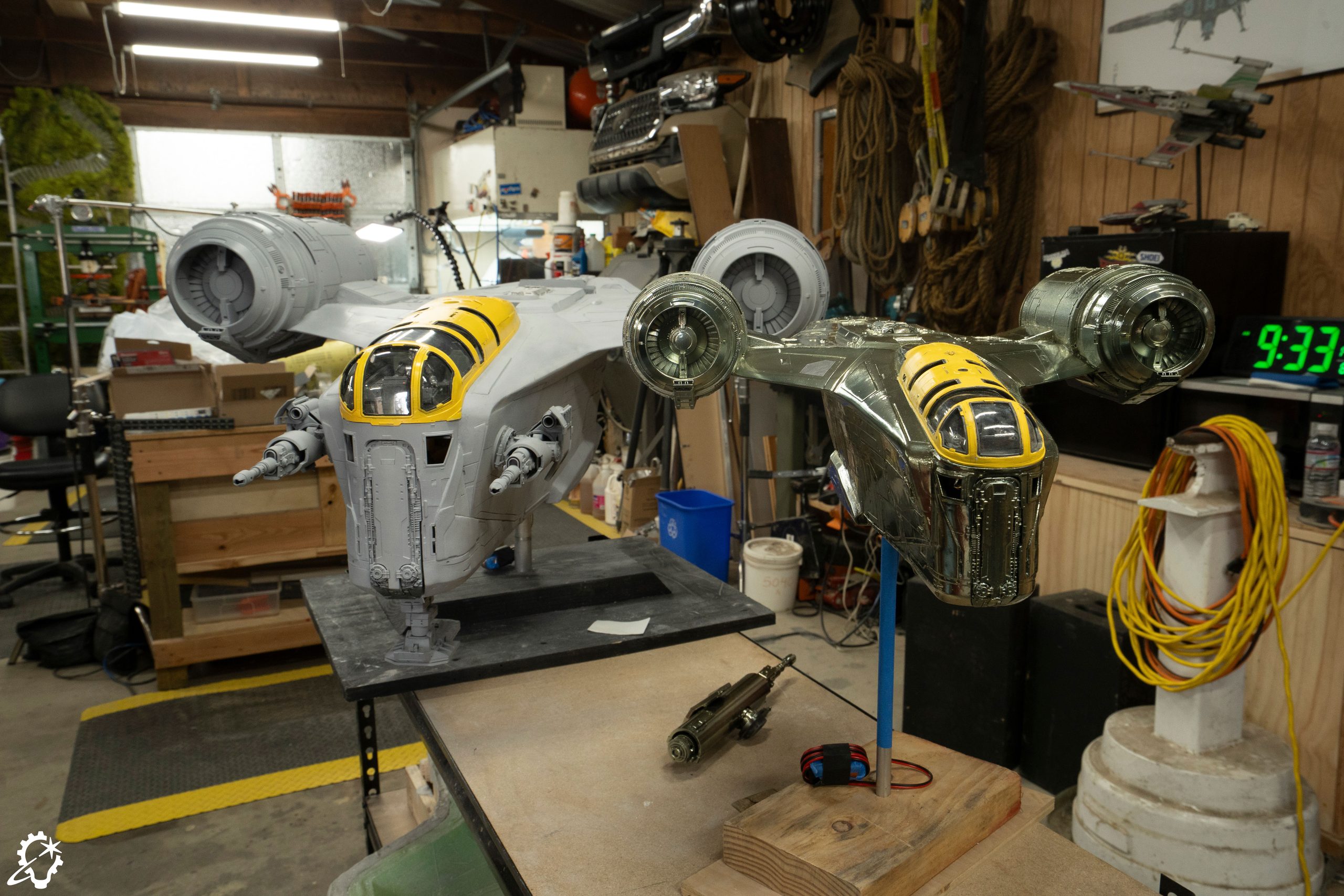
In recent years, Goodson has built miniature vehicles for The Mandalorian (2019-2023), Ahsoka (2023-present), and The Mandalorian and Grogu (2026), and with the knowledge and skills of his own mid-career shift from practical to digital to draw on, looks at the inherent differences between the two disciplines. “We were working on The Mandalorian and Grogu, and Jon Favreau came in. We had the four-foot Razor Crest out in the sun, and he kept getting closer to it, and he goes, ‘The closer you get, the better it looks.’ I said, ‘Yeah, it’s real metal and real sunlight. It’s not a simulation.’ That’s what the whales are. Computer graphics stuff is a simulacrum, so there’s a difference. There’s something more visceral and textural about real things.”
While extolling the virtues of practical methods, Goodson concedes that digital modeling shines at many things that practical doesn’t. “I don’t know how we’d do Transformers [2007] without computer graphics, so there are places where different techniques are appropriate, but for the longest time, CG has been everything. It’s really good for a lot of things, but I think it’s better if you have a hybrid of practical combined with digital. They complement each other, and you get a better end result.”
Finally, Goodson thinks back over 40 years to that incredibly innovative time when ILM, Paramount, and the Star Trek team made us believe a four-foot-long animatronic whale could convincingly fill a cinema screen. “People didn’t realize they were miniatures, and why would they? They looked like living animals; it was phenomenal to watch.”
–
Read more about Star Trek here on ILM.com:
ILM Celebrates 60 Years of ‘Star Trek’ – Part 1: From Khan’s Wrath to a Voyage Home
ILM Celebrates 60 Years of Star Trek – Part 2: From Next Generation to Alternate Realities
Industrial Light & Magic’s Everlasting ‘Star Trek III’ Starship Designs
Mark Newbold writes for ILM.com, Skysound.com, and daily news site FanthaTracks.com, having previously contributed to Star Wars Insider magazine, StarWars.com and StarTrek.com. He is a 4-time Star Wars Celebration Podcast Stage host, podcasting for over 20 years, and has been involved in websites since 1996. You can find this Hoopy frood @Prefect_Timing.