Artists from ILM’s London studio, including visual effects supervisor Steve Moncur, animation supervisor Stafford Lawrence, and CG supervisors Christian Waite and Elizabeth Mitchell, discuss their team’s work on the Netflix series.
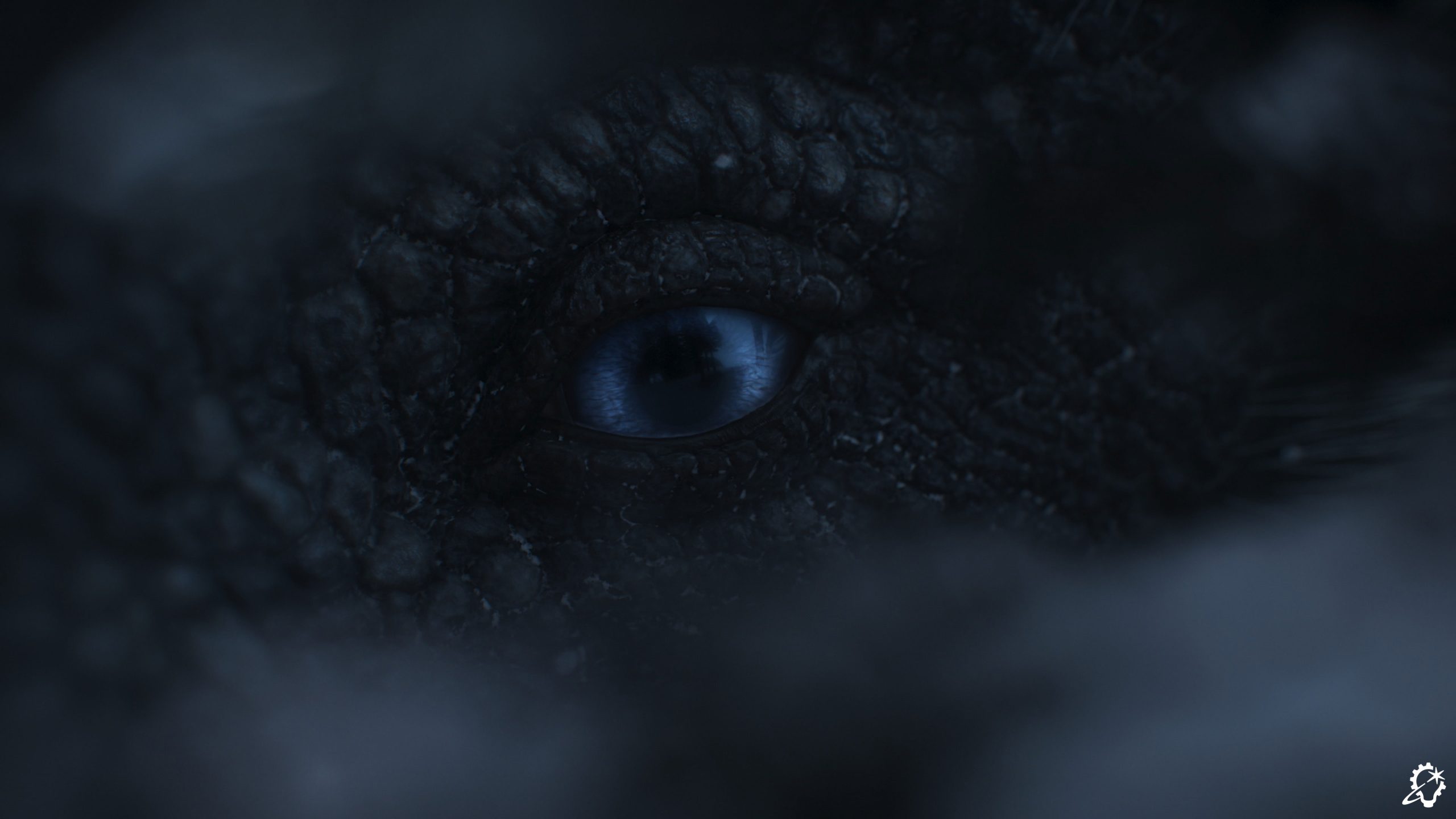
The Dinosaurs (2026), the follow-up to Netflix’s 2023 series Life On Our Planet, takes us on a journey through time, back 66 million years to a momentous happening in global history, when the Cretaceous–Paleogene extinction event saw a nine-mile-wide asteroid travelling at 45,000 miles per hour smash into the Gulf of Mexico’s Yucatán Peninsula, creating a crater 120 miles in diameter and releasing more than a billion times the energy of the atomic bombings of Hiroshima and Nagasaki, wiping out over 75% of all animal and marine species on Earth.
Across four gripping episodes of The Dinosaurs, we journey even further back in time, from the asteroid strike to the distant Triassic Period, 235 million years ago, and on into the Jurassic and Cretaceous Periods, where the great dinosaurs ruled the oceans, lands, and skies of our planet.
To bring these majestic creatures to life, Industrial Light & Magic returned for The Dinosaurs after their work on Life On Our Planet, bringing not only their skills in visual effects and creature creation to bear (not to mention decades of experience with the genetically-altered creations of Jurassic Park) but also a desire to depict these iconic animals as accurately as possible, utilizing the latest techniques and scientific knowledge, all in collaboration with advisors spanning the world of paleontology.
ILM.com was fortunate enough to sit down with four members of the ILM team – visual effects supervisor Steve Moncur, animation supervisor Stafford Lawrence, and CG supervisors Christian Waite and Elizabeth Mitchell – to discuss the making of this incredible and dramatic journey back in time, one that began during a crucial moment in our own history – the global coronavirus pandemic of 2020.
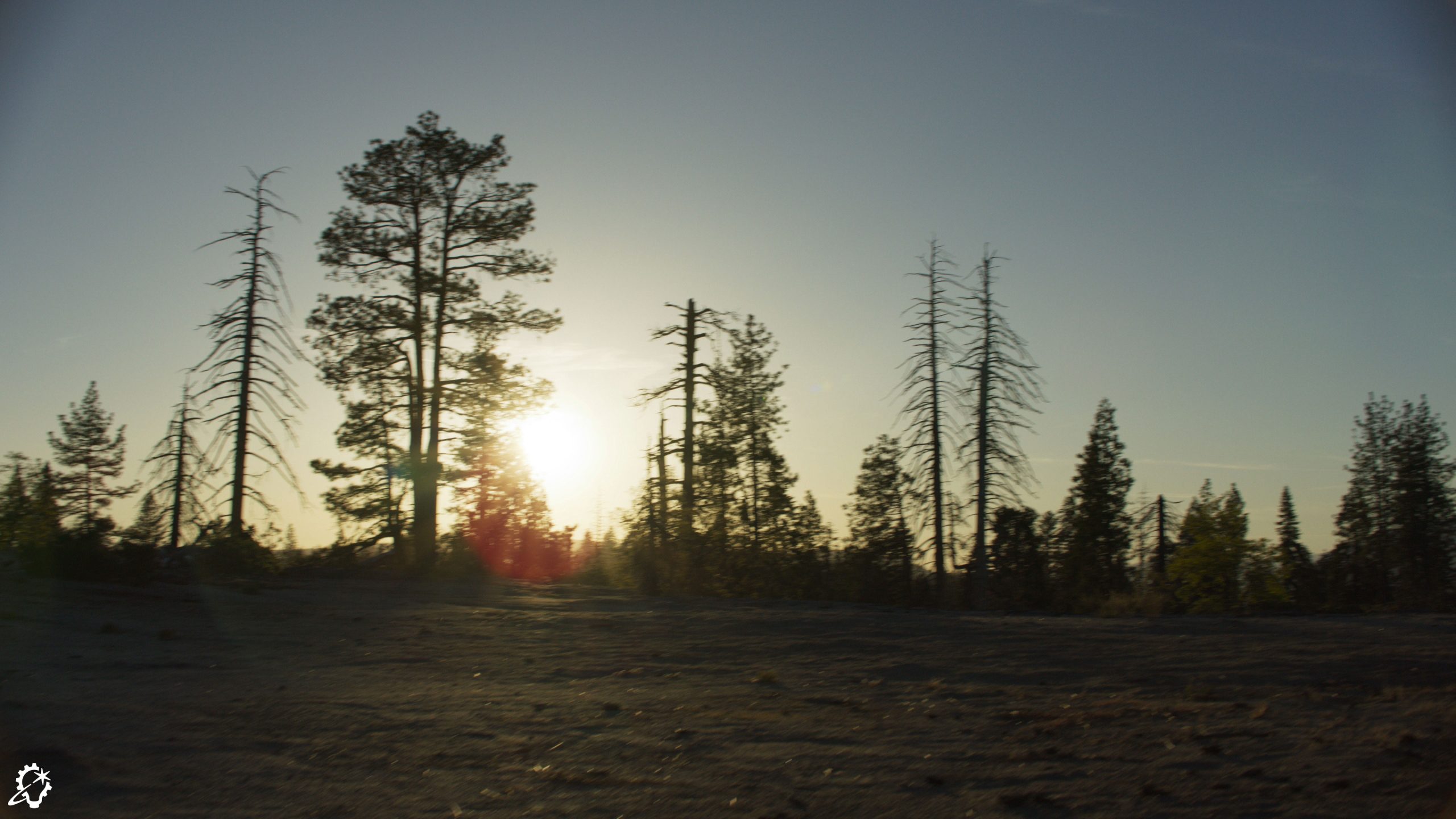
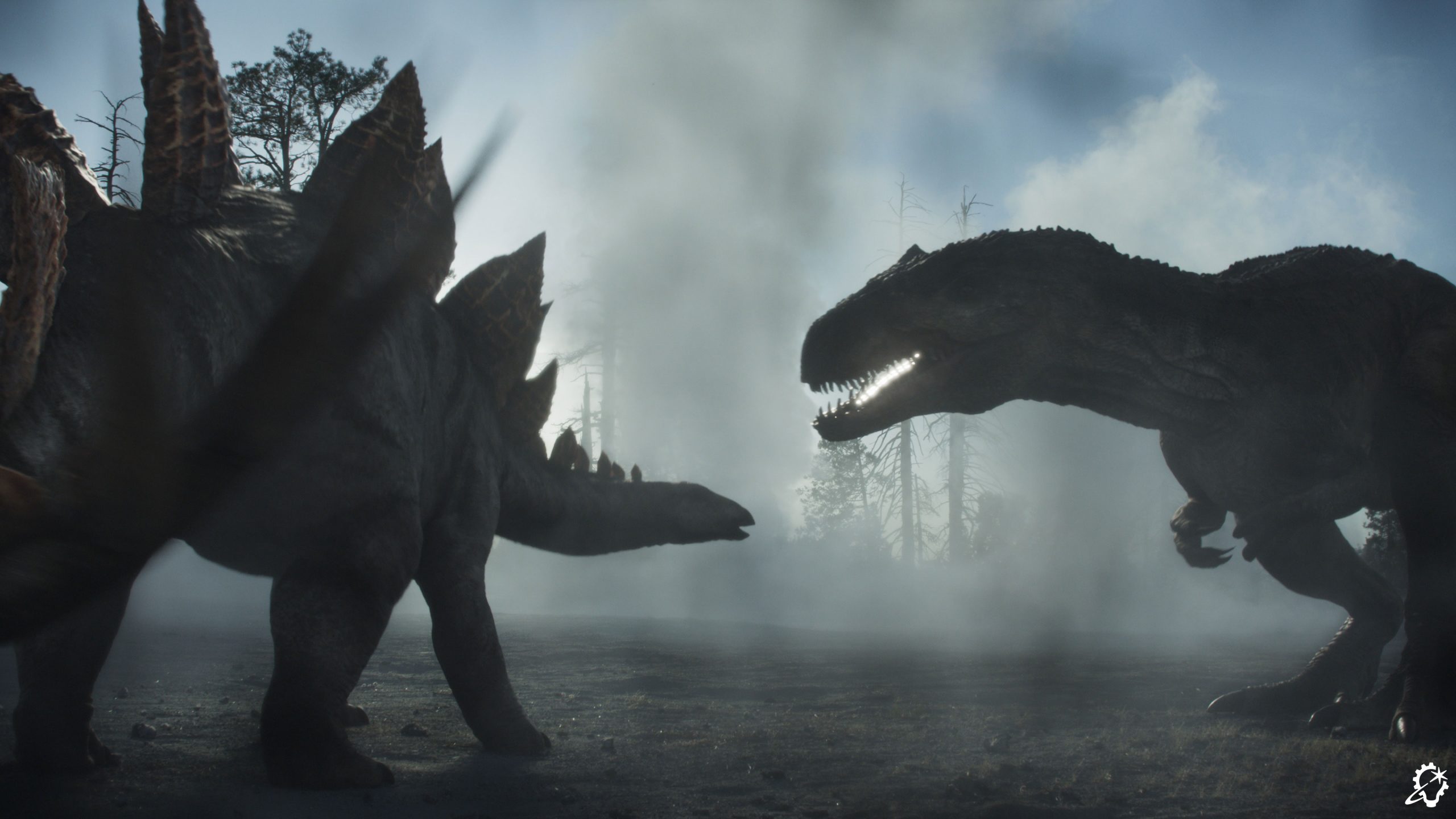
“Jonathan Privett, who was the visual effects supervisor on Life On Our Planet (aka Loop 1), had a break from shooting through COVID, which put the brakes on rolling from Loop 1 into The Dinosaurs (aka Loop 2),” explains Steve Moncur. “Once that had resolved itself, Jonathan was able to fly to locations to film more freely, but Netflix sought to reduce the shoot and post schedule because Loop 1 ended up taking almost three years due to the global pandemic. They wanted the next one to be done and dusted in around half that time.”
That decision saw Moncur brought on board to help facilitate the compressed schedule, bringing his decades of visual effects experience to the project. “They needed someone to be the at-home supervisor to support the team in the UK, getting all the assets ready while Jonathan was away filming. That meant I could do the UK shoot while he was doing the foreign shoot, which was a necessity of the time frame.”
With a quartet of directors – including Nick Shoolingin-Jordan, Jolyon Sutcliffe, Amber Cherry Eames, and Darren Williams – splitting their time between UK and international shoots (travelling the globe to Canada, the United States, Iceland, the Seychelles, South Africa, New Zealand, China, Dominica, the Canary Islands, and Jordan), and two visual effects supervisors at home and abroad, the production was able to capture the material they required.
“It helped that Jonathan and I have known each other for many, many years, so we already had a shorthand,” says Moncur. “But it also meant that I could be there to support Elizabeth. She was then able to bring me up to speed on everything that had happened in the first series and teach me all the dinosaur names, which was super useful.”
CG supervisor Elizabeth Mitchell, a veteran of Life On Our Planet, picks up the story. “When I had the opportunity to work on Loop 2, I jumped at it. It was a great crew, and I was working with the same production team, and it was an opportunity to work with what we had, improve it, and make it bigger and better.” Animation supervisor Stafford Lawrence concurs. “I’d been involved in Loop 1 in a supervisory role, helping out with animation supervision, so much like Liz, we took what we’d learned on Loop 1 and segued over into Loop 2.”
CG supervisor Christian Waite was keen to dip his toes into the waters of the past. “I’d worked with everyone before, so it felt like a natural transition, and I always wanted to do dinosaurs.”
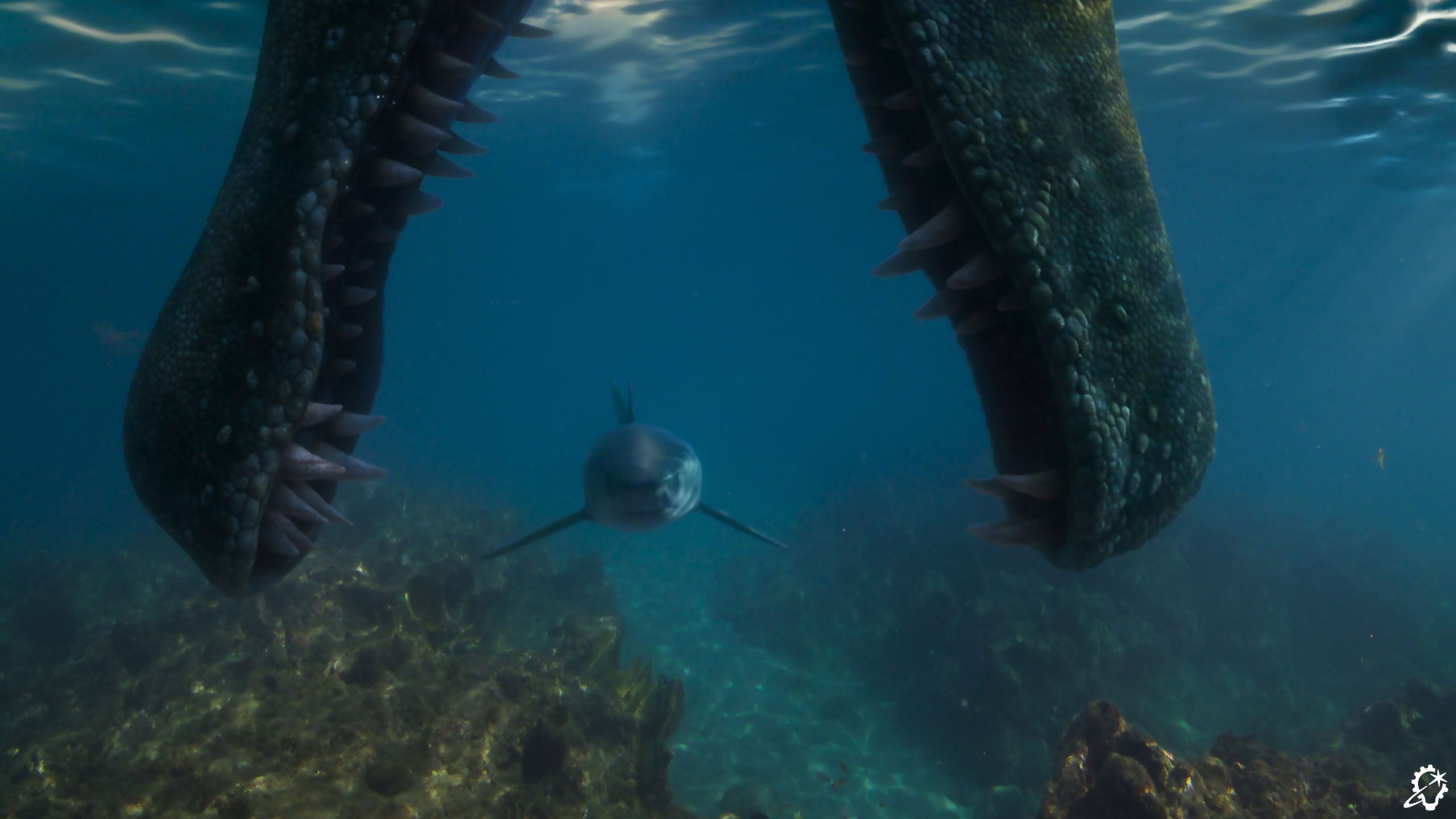
Technology moves forward, adding more strings to the bows of visual effects artists worldwide. But as Moncur explains, that wasn’t the biggest difference between the two series. “The Dinosaurs was never meant to be ‘Life On Our Planet 2,’” he says. “They were always supposed to be separate projects. Loop 1 was very much a natural history piece, whereas The Dinosaurs was conceived by Netflix to be a drama piece, so the biggest difference was in the narrative.”
“There was a balance between drama and science,” continues Waite. “The science had to fit in with the story, but the drama had to fit in with the vision, and those two things had to work together, so it was always a bit of a back and forth, but with a lean towards the science.”
“We worked with our own group of paleontologists,” Mitchell adds. “Our senior science researcher, Dr. Tom Fletcher, would send everything off to them to make sure we were scientifically correct. The scientists are specialists in their own field, and it’s amazing that they focus their attention on such specific areas. You don’t often get that on a show, so it was interesting to have these scientific comments.”
Despite the differences between the Netflix shows, The Dinosaurs would share plenty of digital DNA with its predecessor, as Moncur explains. “From a technical point, we were going to take some of the Loop 1 assets and retexture and repurpose them for The Dinosaurs because everybody wants those classic dinosaurs, be it a T. rex or an Ankylosaur.” With a third of the creatures from Life On Our Planet joining the menagerie of The Dinosaurs, that incorporation required some changes as they moved into Loop 2. “Our rigging systems and feather and texture systems changed over time, so there was also some re-engineering there.”
“Technology-wise, we’re largely using the same things we’ve been using for a while,” explains Waite. “But our artists have got a lot better at using them, and a lot faster.”
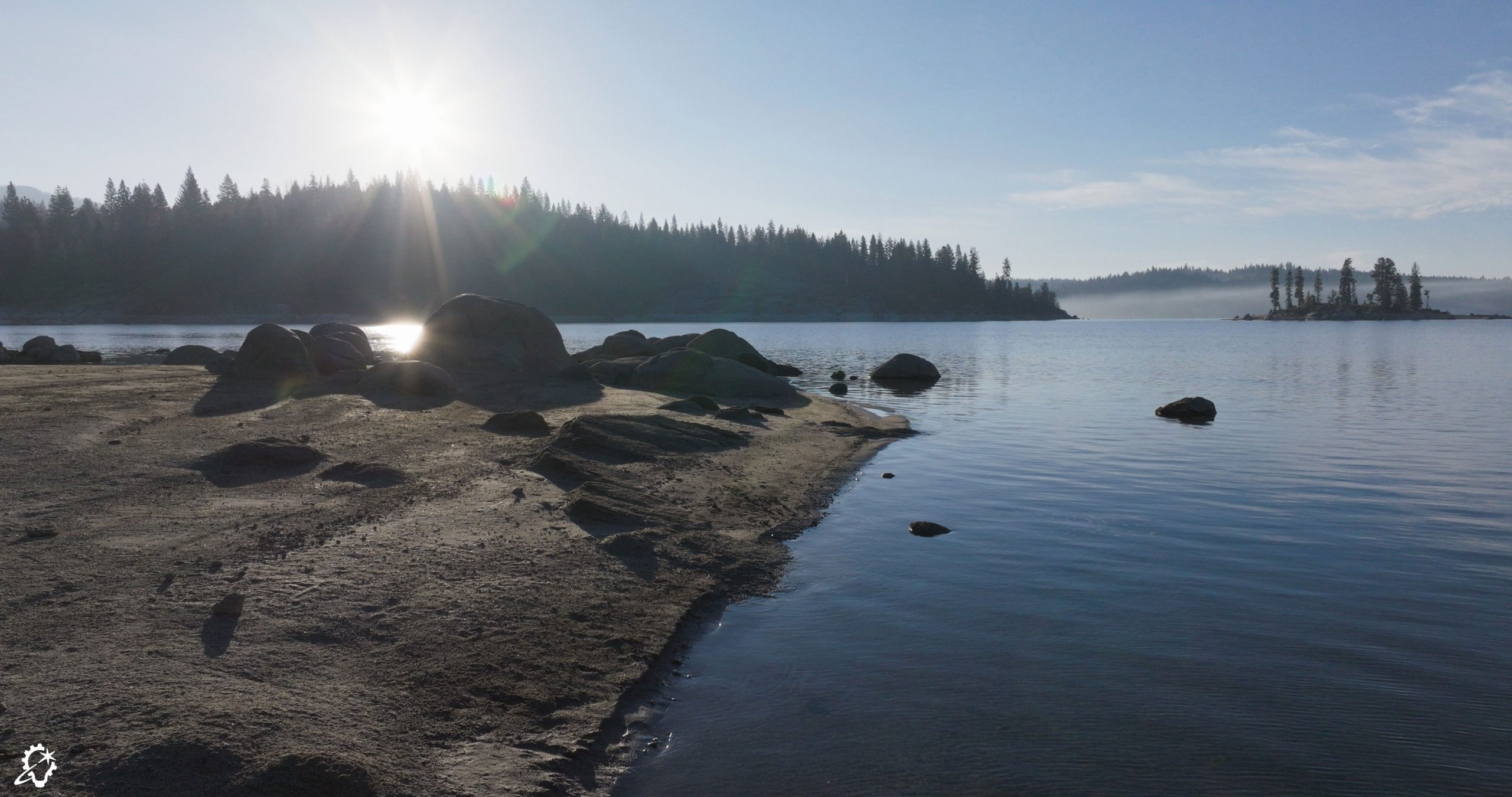
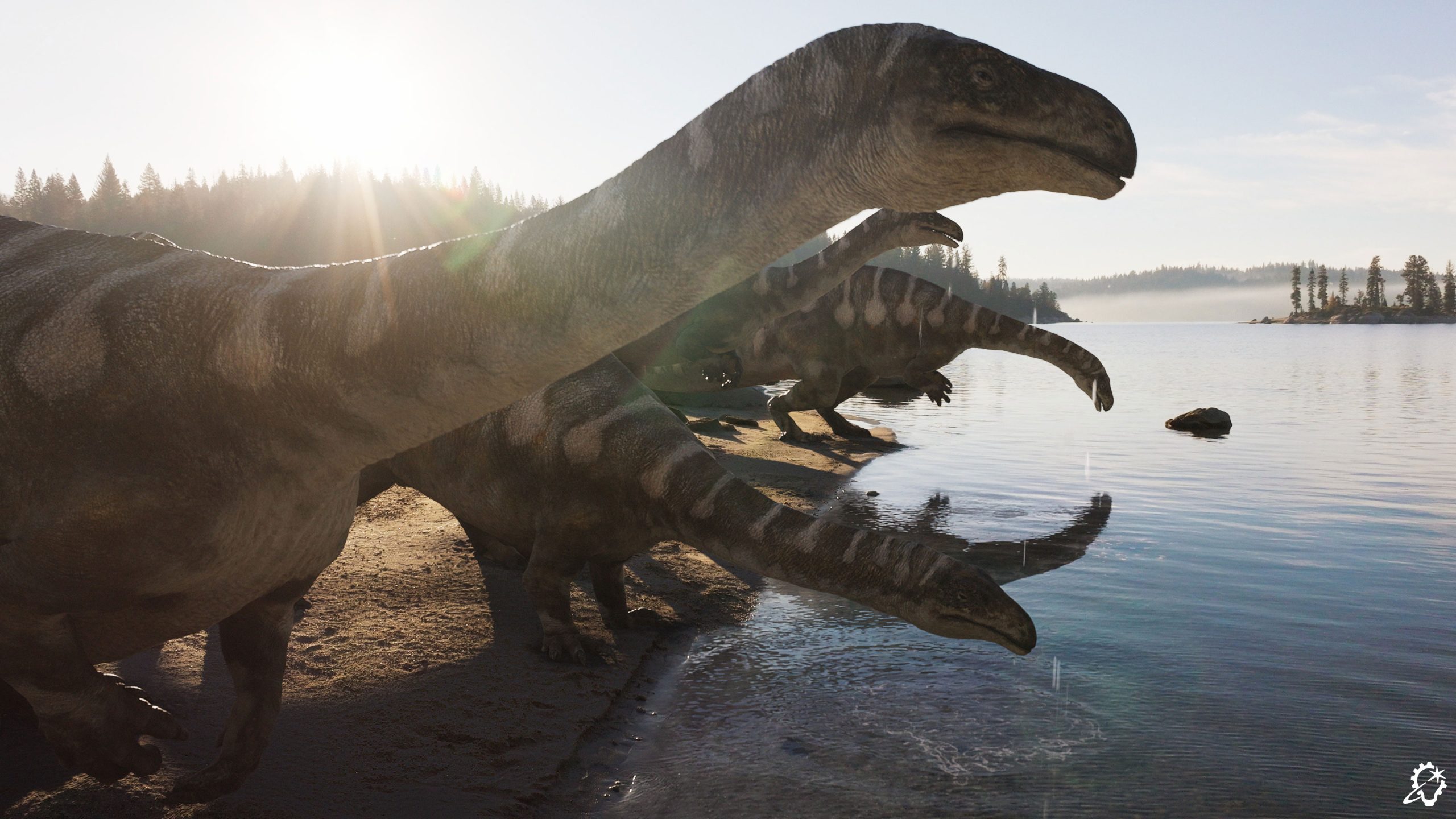
The years between the two sister projects also saw advancements in knowledge regarding these incredible creatures, something the team was keenly aware of. “In the world of paleontology, new things are always being discovered,” explains Mitchell. “For example, some people now believe these creatures had hair and feathers, so there were a few changes like that.”
“We’re used to feathers being associated with dinosaurs like the T. rex,” Moncur notes, “but I didn’t realize there were different types of feathers. There was an early proto-feather that we had to work into our system across multiple creatures.” That meant changes to their systems and rigs, as Mitchell explains. “Our feather system had been updated so we could produce better results there, so we took how they used to look and updated them.”
In a production with so many moving parts, including filming around the globe while visual effects work pushed on, these “new” discoveries from millions of years ago could have a very tangible effect, as Waite reveals. “I remember we had to change the gait of a dinosaur’s walk because they’d found new footprints and extrapolated that they walked slightly differently than we previously thought.”
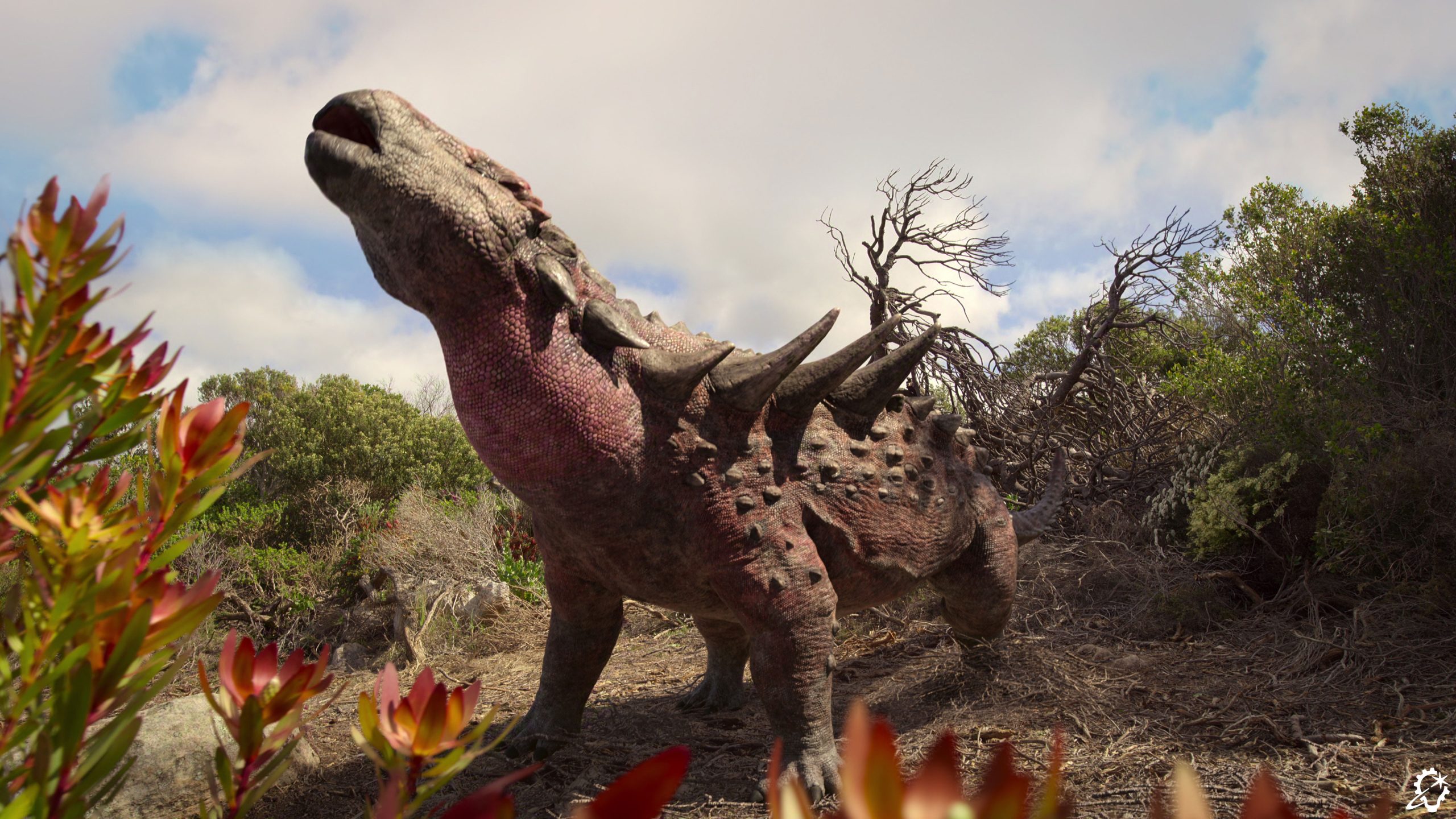
“They thought that at that particular time in evolution, the Ankylosaur had four toes,” Moncur adds, “but they then discovered it only had three on each of its front legs, so we had to remove a toe, which in the digital world is less problematic, but they’d also commissioned a practical model to do drag stunts. They had to go back to the modelmakers, who had built this practical, dead Ankylosaur, and cut two toes off. Between commissioning the physical build to the scientific discovery being published and becoming widely accepted in the scientific community. That’s how on the edge of science we were.”
Elizabeth Mitchell emphasizes the point. “I embraced the paleontological updates because it’s important to show the latest discoveries.”
Of course, in the process of creating visual effects, such changes can have an impact. “I’m happy to be as scientifically accurate as possible, but I’m not happy if the science then ‘un-finals’ 2,050 shots!” explains Moncur. “We were pretty adaptable but have to account for redoing things when needed, so it becomes a question of time and resources. How much can we invest in scientific accuracy if we’re that far down the path?” Stafford Lawrence continues. “If the rigs are set up properly and we think smart in terms of how we set things up, losing a toe doesn’t mean you lose the animation on all the other toes.”
However, a seemingly simple change to a toe and even the gait of an animal can cause more of an effect than one might expect.
“If the gait changes, then that can change the timing of how we do the shot,” Lawrence continues. “Then it’s down to the animator and the creative problem-solving that you do on a shot. Essentially, we had two core dinosaurs, the quadruped and the biped, and we got those working really, really well. We then developed walk cycles, and those could then be mapped onto the various species of dinosaur underneath, but whether it had three or four toes, or longer legs, we were always building on a similar dinosaur of a similar size. There were a couple that were a mixture of both, but essentially, we had every dinosaur, apart from the birds, which are their own thing, so you never strayed too far tangentially.” Lawrence adds with a smile, “Unless they dig up another dinosaur.”
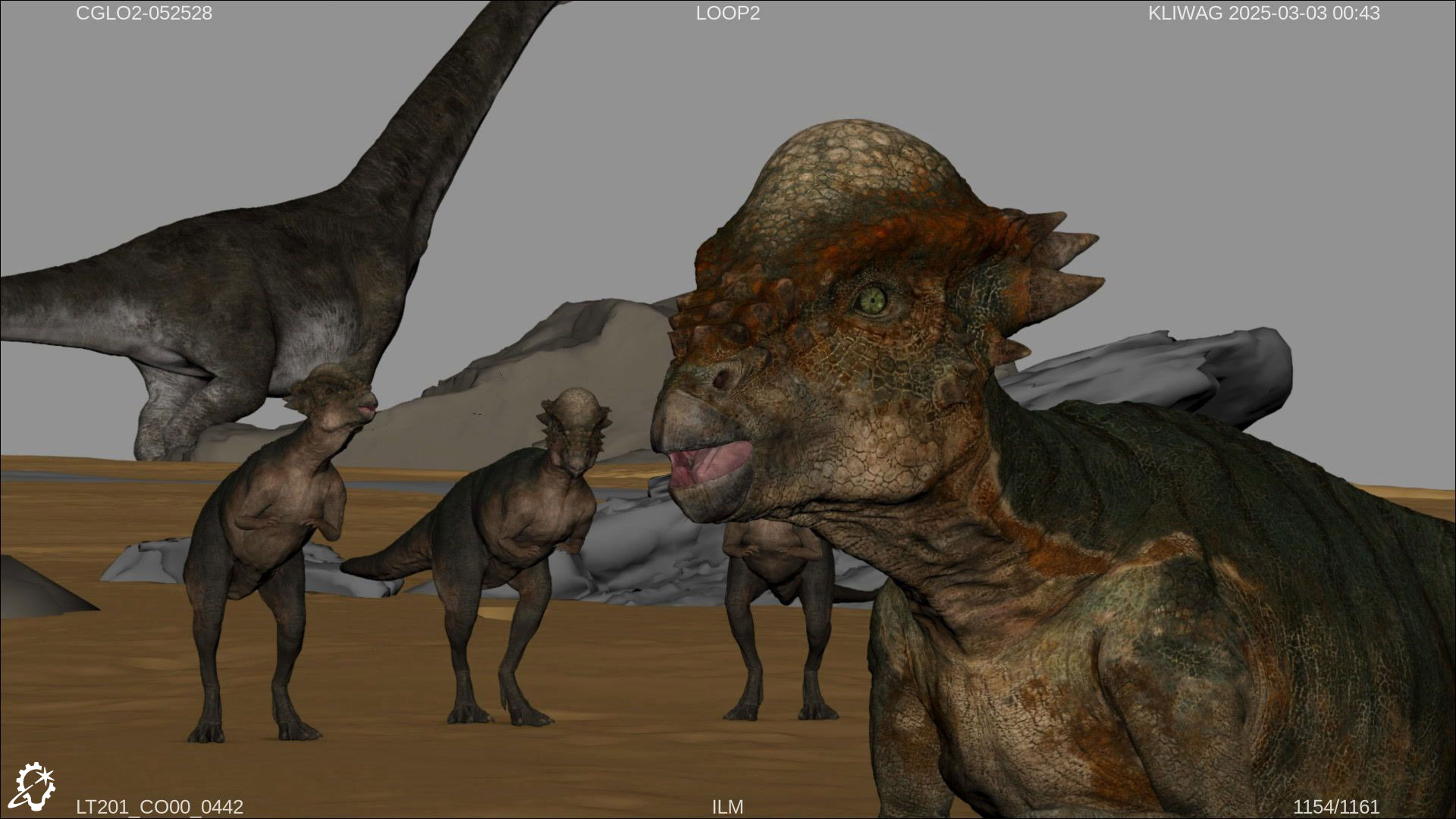
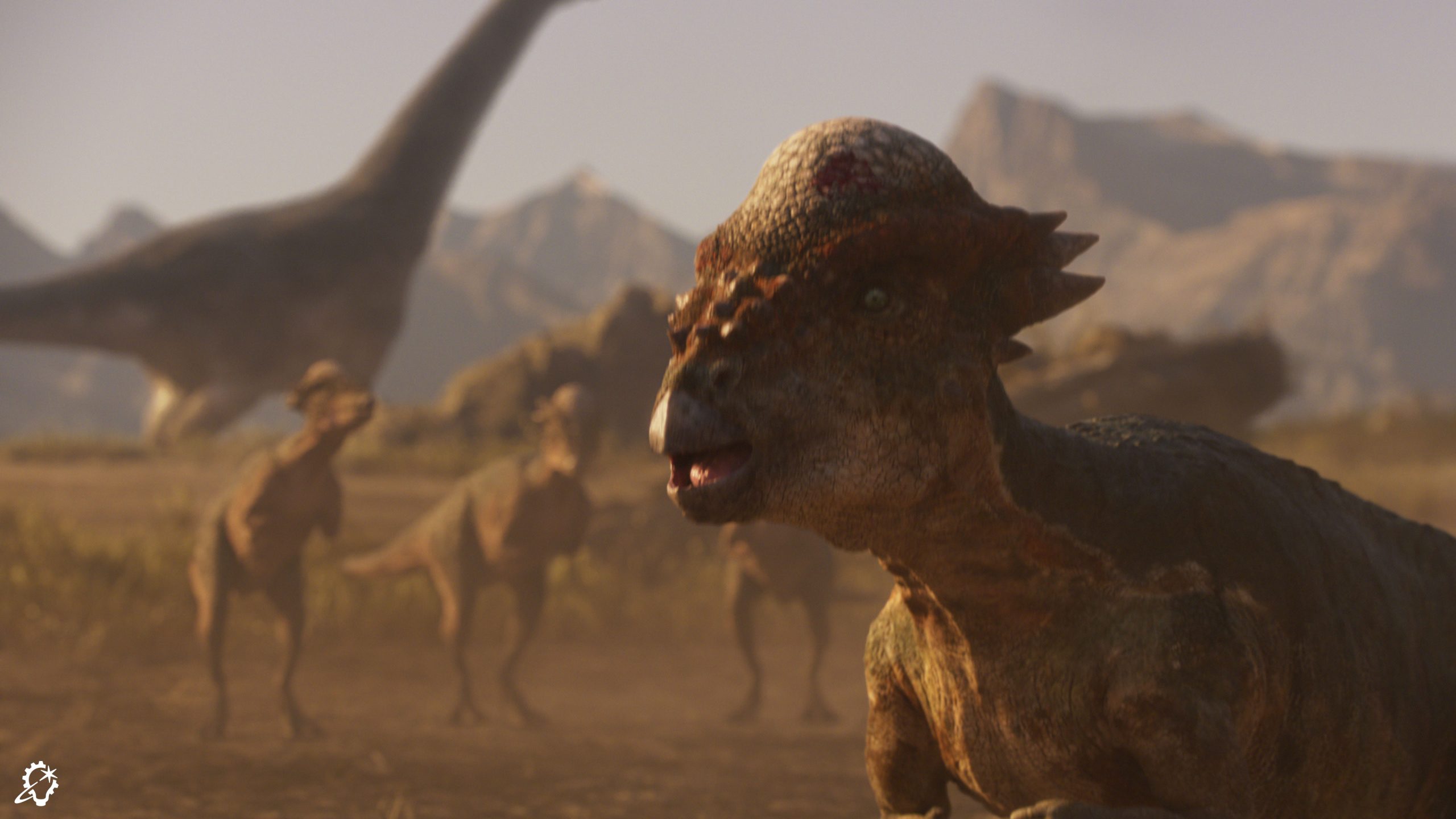
Delivering living, breathing dinosaurs might be somewhat unlikely without the help of John Hammond, but there are plenty of places to look right here and now to help inform the movement of these amazing animals. “Even though we use real-world references like rhinoceroses, there’s always an element of trying to retrofit and work things out because modern creatures have evolved,” says Lawrence. “They move more fluidly, so we have to take that into account.” That would be helpful for the animators as they planned their shots. “Before animating, we’d drop in reference plates and get everything mapped out so we knew we were on the right path before laying down a key frame.”
Digitally creating dinosaurs was an involved process, one that experienced its own evolution, as Christian Waite explains. “We wouldn’t start from the ground up on skeletons and muscles. We would work on the outer surface of the dinosaur to match what the concepts would be, which in turn were matched to the skeletons that have been found and what they think it would have looked like. Then we would reverse engineer the internal muscle structures and skeletons. These creatures evolved together, so they’ve all got thigh bones, they’ve all got shin bones, so if it was a sauropod, we would reuse the internals so that all of our simulations would work and our rigs were all the same, but the outer surface was constructed from the concept art.”
It’s a fascinating process, and one that is somewhat different from the approach taken on Life On Our Planet, as Mitchell details. “On Loop 1 we focused on the fossils and creating the skeleton, and the rest came after, but we learned that wasn’t the way to go because you don’t see the skeletons. Even though it was technically correct, it made things harder for us because it didn’t always work in the rig. With this project, we learned to achieve the dinosaur look we wanted and then reverse engineer it.”
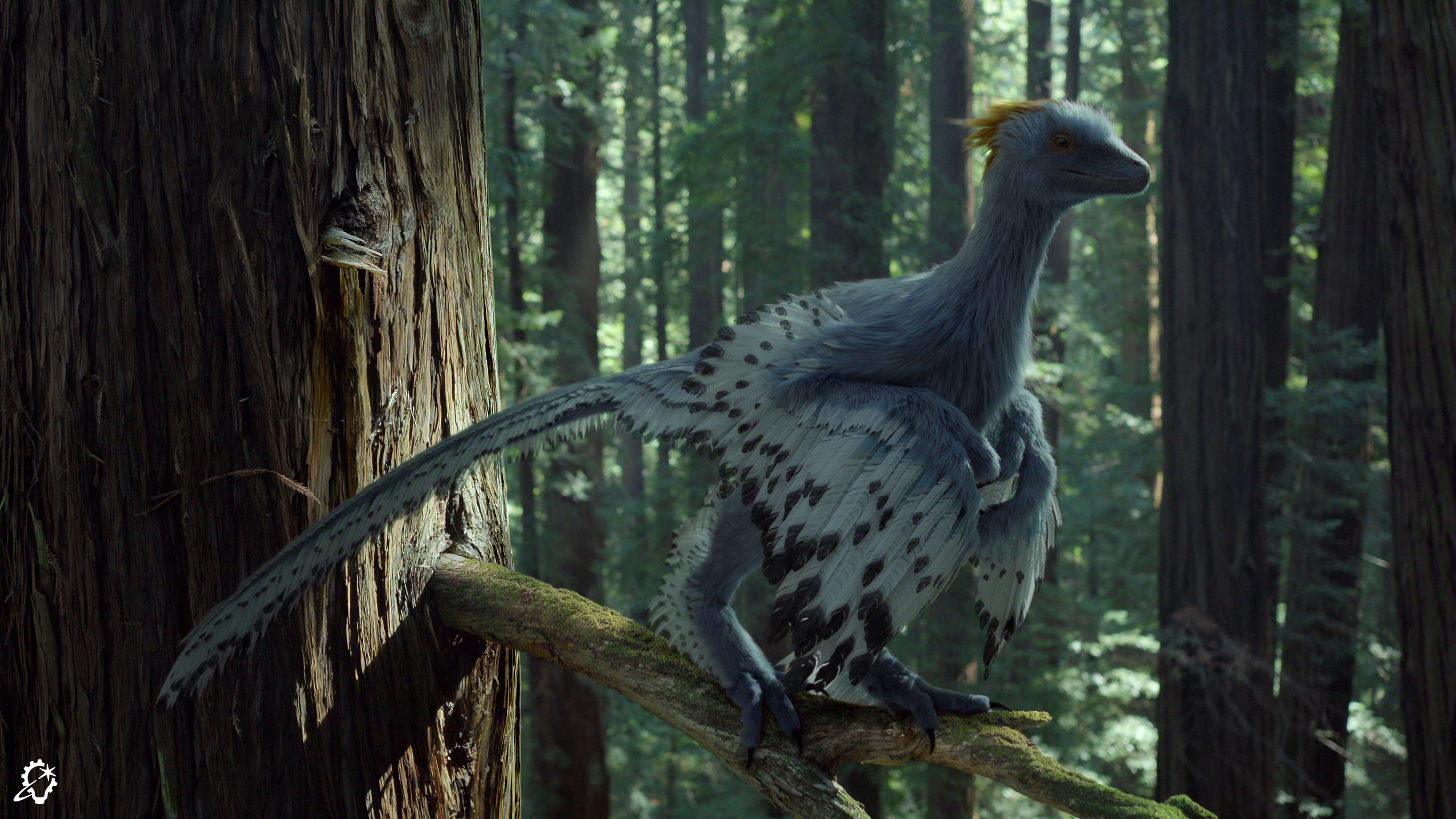
That meant the team had corralled a dizzying Mesozoic menagerie for viewers to watch. “Including variants, there are over 70 dinosaurs. Those two core types of dinosaurs are basically the parents of 25 other dinosaurs,” says Mitchell. With random variables thrown into the mix, like removing toes from Ankylosaurs, the setup was stable enough to weather a few changes. “We were never in a situation where it was like ‘tear it down and start again,’” notes Moncur.
To help in their efforts to better understand and recreate these titans, information packs were given to the team, as Lawrence explains. “They went into a lot of detail about things like the amount of motion rotation you might get in the shoulder, which was useful when we were building up our library and creating a walk cycle. A sign-off on the walk cycle also means you’re getting a sign-off on how far you can push the stretch of a limb or turn of the head.”
Along with the information packs, members of the team also met up for a little bonding time and to discuss their plans, as Lawrence reveals. “We went to Bristol for a couple of weeks, and that was really helpful because we were tuning into the storytelling that the directors wanted to do, but also spending a lot of time with the experts, asking, ‘What can we do, what can’t we do?’ and getting instant one-on-one feedback. What’s the story we’re trying to tell? What do we actually want to communicate here? That was really interesting and fulfilling.”
While changes both paleontological and digital can potentially alter the production, the process of skilfully and faithfully recreating the movement of the dinosaurs still comes down to good old-fashioned logic and know-how. “There’s a muscle that goes from the upper thigh to the base of the tail, so when the left leg goes back, the tail will swing to that side, which is slightly counterintuitive,” explains Lawrence. “If you’re walking, you sort of wiggle your bum; you’d expect it to go the other way, so there are lots of quirks like that.”
In addition, the bone structure of creatures millions of years old had a surprising effect on modern techniques. “Another thing was the rigidity of the spines,” Lawrence continues. “In animation, you always want a nice arc or a line of action, but suddenly you have this very straight spine blocking your lovely undulating curve. You get the animators excited and try to get all these lovely shapes, but then you’re having to steer it back because that’s exactly the sort of thing that would bounce against the experts. It’s the balance between keeping it dynamic enough to tell a good story, but also keep the experts happy. There’s definitely some bargaining going on.”With The Dinosaurs steering more towards the realm of drama than the natural-history-focused Life On Our Planet, the involvement of executive producer (and friend of the dinosaurs) Steven Spielberg added an interesting layer to the production. As Moncur explains, his involvement was essential to the broader assembly of the series. “Mr. Spielberg had stuff flown out to him to view, but his Amblin executives are in tune with what Steven wants associated with his name and Amblin as a company, so they would also give feedback.”
With the focus on the drama, that feedback would involve another iconic figure in the production, narrator Morgan Freeman. “I would say 90% of it was script feedback around the voiceover and the language used, and less visual commentary on what we were doing or what the assets looked like,” says Moncur. “There was a huge amount of discussion around the narrative storytelling that Morgan was going to do.”
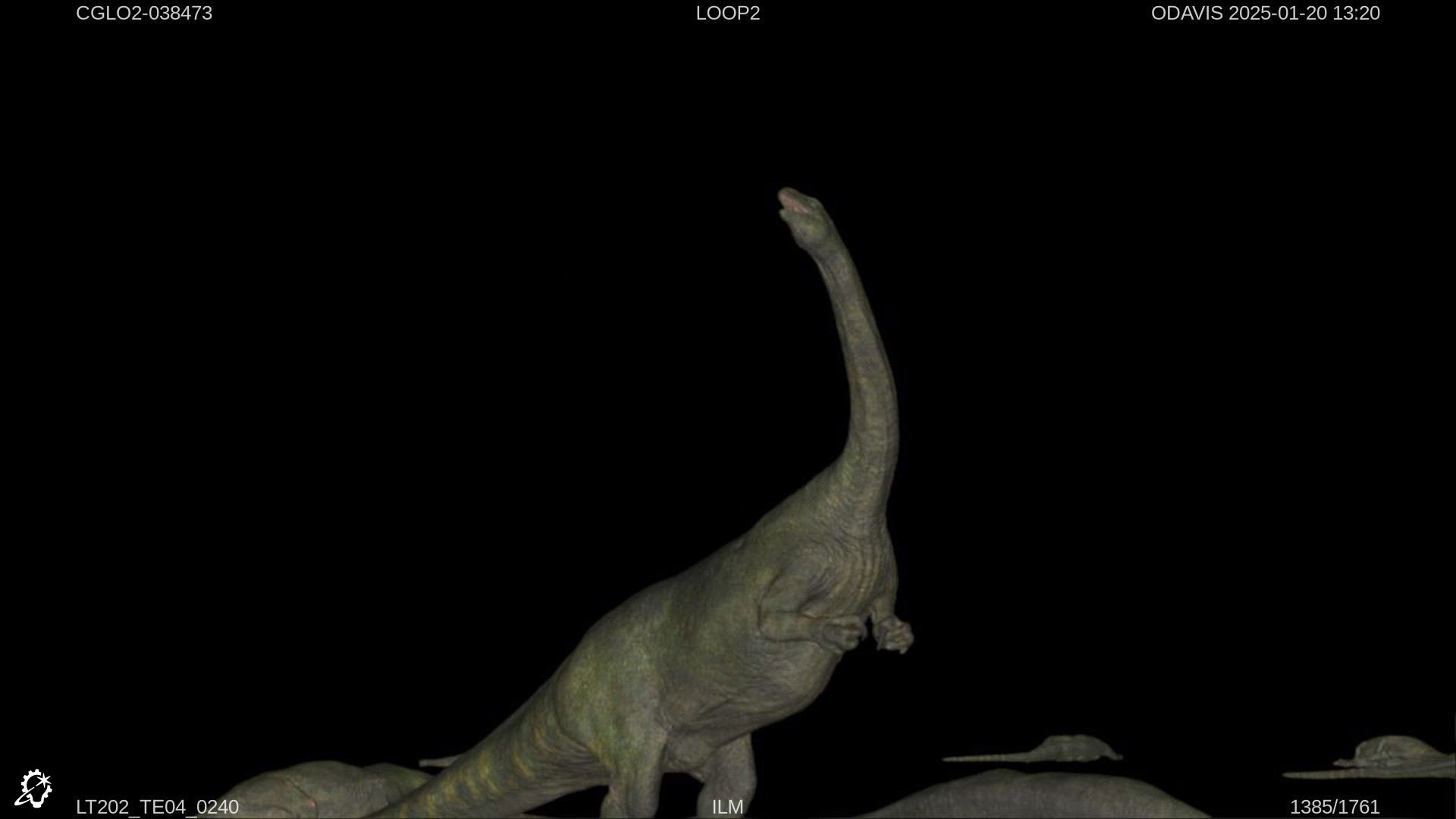
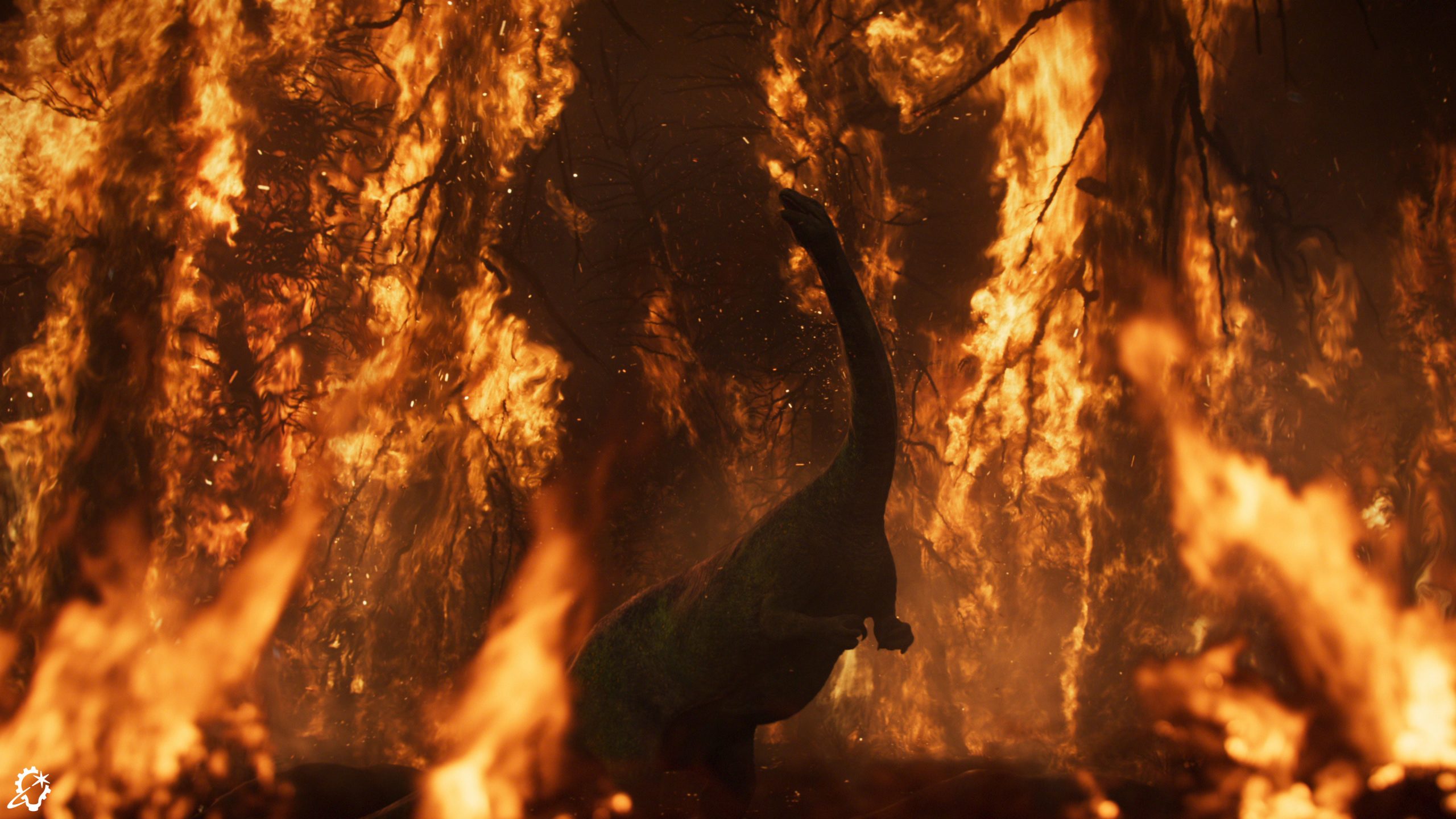
Using scientific knowledge to create the gait of a creature based on a dinosaur’s fossil remains is one thing, but how did these Triassic titans behave? With little reference to draw upon, yet with a variety of mating rituals to create, the team had to find inspiration to help extrapolate and hypothesize what these rituals might have looked like.
“That’s very much driven by the scientists,” says Moncur. “They are very prescriptive of what something should do behaviorally and what the equivalents are for what you can look at, and what you can’t look at. There were very detailed briefings, notes, and sometimes even acting from some of the scientists as to what that would be. The science was pretty tight on what could be extracted from modern creatures back to ancient creatures.” Waite adds that “a lot was taken from nature, like the Peloroplites and Dilophosaurus mating rituals. They didn’t know how such big animals could manage to do that, so I think there was a bit of animation development on that scene.”
“Sometimes you do wonder, are they just making this stuff up or not,” says Moncur with a laugh. “But they’re the ones that have doctorates, so they surely have the best chance of guessing how two massive tank-like creatures get it on for a bit of ‘chicky, chicky, woo-woo’ action.”
Among the many thrilling sequences in The Dinosaurs comes a scene in the second episode (“Conquest,” directed by Joylon Sutcliffe), which sees a pair of Allosaurus – a young male and an older, battle-scarred female – clash while hunting a Stegosaurus. The older female is made distinct thanks to a vicious-looking scar on her face. “Battle scars did help sell the story,” as Elizabeth Mitchell explains. “The ones that were often involved in fights had big scars across them, whereas other creatures didn’t need that.”
“Through some discussion, we realized one of them was older and must have a history,” Moncur continues, “so let’s give it a nasty old scar to make it look different from the younger challenger. The dinosaurs were relatively uniform, so in terms of the same species of dinosaur, it was a visually striking way of differentiating them.” The presence of scars wasn’t only land-based, as one of the titans of the deep also bears the scars of battle. “The scars on the Mosasaur had to be the right scale to make it look like a similar-sized animal had attacked it,” explains Mitchell. “You didn’t want a little scratch, so that was all thought out.”
The incorporation of real-world background plates and CG environment extensions with the magnificent creatures of the past merge to create a realm that has its own geography and realism, utilizing a variety of techniques to achieve a sort of time travel that any DeLorean would be proud of.
“The Hesperornis versus Mosasaurus chase and the Ankylosaurus versus T. rex fight [both featured in episode four, “Fall,” directed by Darren Williams] were very different things,” explains Waite. “There were a lot of shot plates for the Mosasaurus chasing the Hesperornis, but it was in the real world, whereas the T. rex fight is an entirely full and complex CG environment, with leaves and foliage on the ground to interact with. There’s a scene where the Ankylosaurus smashes a tree, so within the pipeline, being able to generate that amount of assets and have effects interact with them is an emerging thing, but the artists are very good at doing that now.”
One of the tensest and most eerie sequences comes in episode three, “Empire,” directed by Amber Cherry Eames, and as Moncur explains, its creation owed much to the horror thrillers of the past as the towering pterosaur Hatzegopteryx hunts the dwarf sauropod Magyarosaurus. “The Hatzegopteryx versus the Magyarosaurus scene was a nicely stylized sequence. I don’t think they could have practically shot that sort of material, so for the Hatzegopteryx sequence, they built the environment to give it a stark, horror movie vibe with the long grass.”
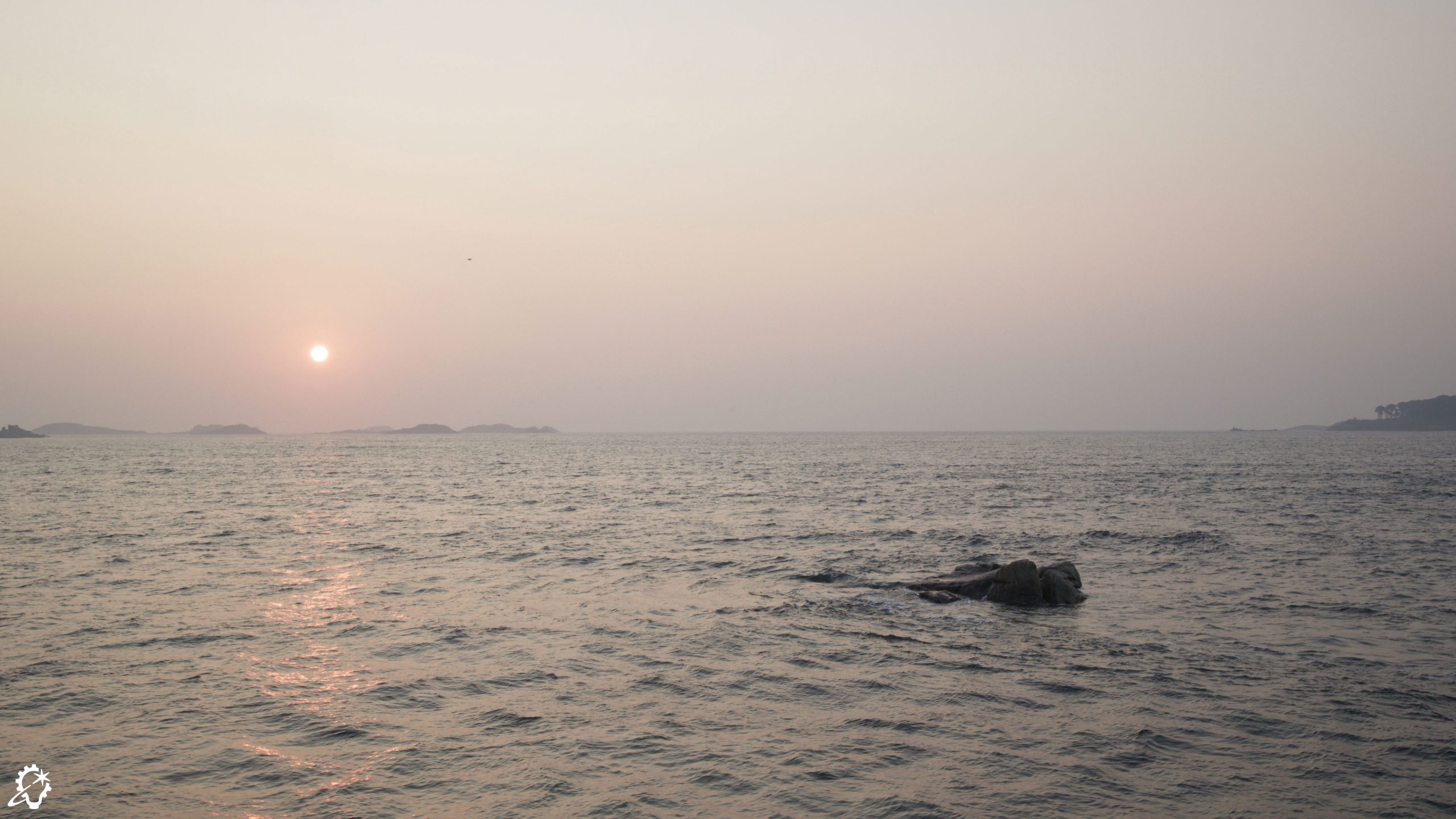
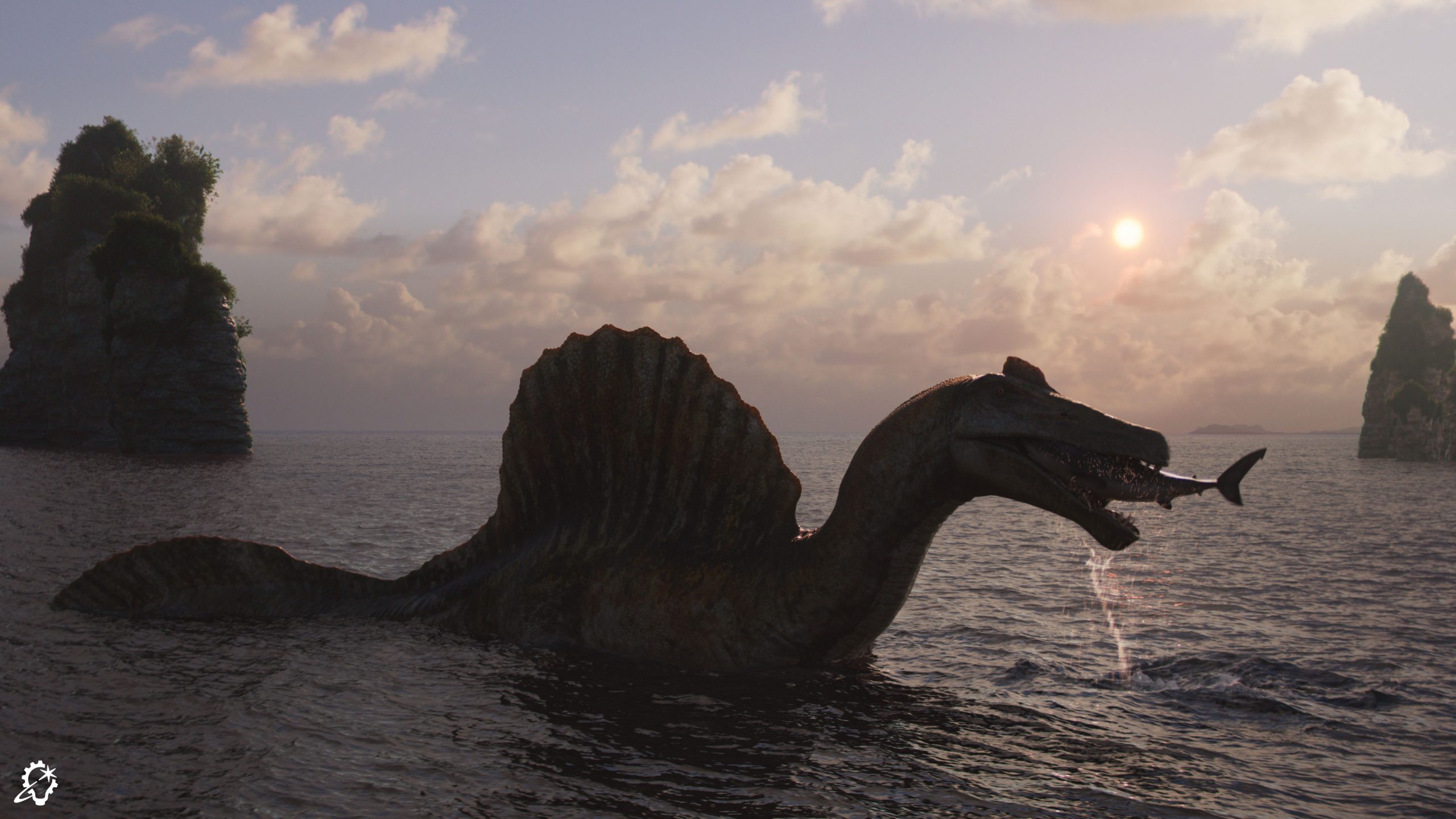
The visual effects artists can scour their digital landscape like a traditional location scout would, searching for the best sites and angles to film, as Moncur notes. “We treated the digital environments like real sets and locations, so that it made geographical sense when the creatures moved around. We didn’t just build things here and there; it was properly constructed, so we knew where everything was going to be. That meant I always had a correct sense of travel and scale in what we were doing, which meant we could then take our CG camera and treat it like a location or film set.”
There was also an additional geological consideration to factor in, as Elizabeth Mitchell reveals. Special attention had to be paid to the foliage of the Mesozoic era. “Some of our familiar foliage wouldn’t have been around back then. For example, grass didn’t exist, so we had to be very careful of that.” Christian Waite adds that “a lot of what was filmed on location, doubling for the areas they felt these dinosaurs would have lived. It had to be adapted in some way, and one of the key things we wanted to achieve was to have the dinosaurs interact with the real world, and that required a lot of effects work. For example, if they’re stepping on sand, they leave footprints, or if they’re in the forest there would be twigs flying everywhere. We also had the giant Mamenchisaurus in the snow, and snow is really hard to do, so that kind of interaction with the world was really important to make it feel like the images were actually shot. It was a great achievement by the effects team.”
“The amount of work that goes into embedding the creatures into the environment is quite phenomenal,” says Moncur. “In reality, there were only a handful of shots that weren’t touched by us in some shape or form. There was the Ankylosaur being dragged along by the T. rex, which was maybe three or four shots of the practical model, but that was it. Everything else had to either be dropped or replaced with our CG Ankylosaur, so there wasn’t a lot of in-camera practical material that wasn’t touched by us.”
With the series complete, Moncur can look back at a job well done, both by himself and the team, fulfilling a long-held desire to help bring the giants of the past back to life. “To be doing dinosaurs is an absolute dream come true, especially if you’re a nerdy kid that loves a lot of the stuff that we do. In a way, I’m pleased I didn’t work on the Jurassic series because getting to do real, science-driven dinosaurs isn’t something you get to do very often, even in this industry. People usually want Hollywood dinosaurs.”
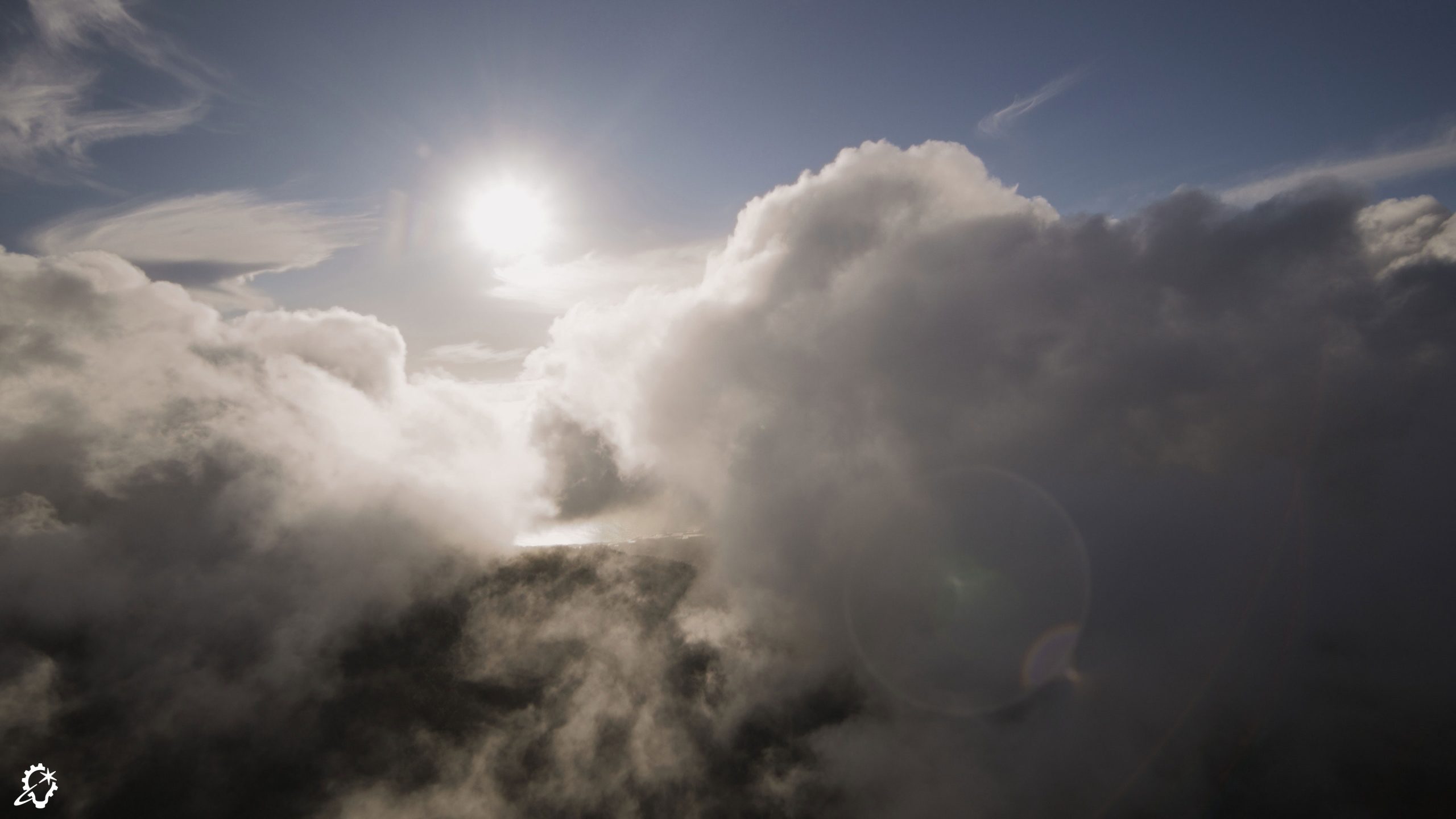
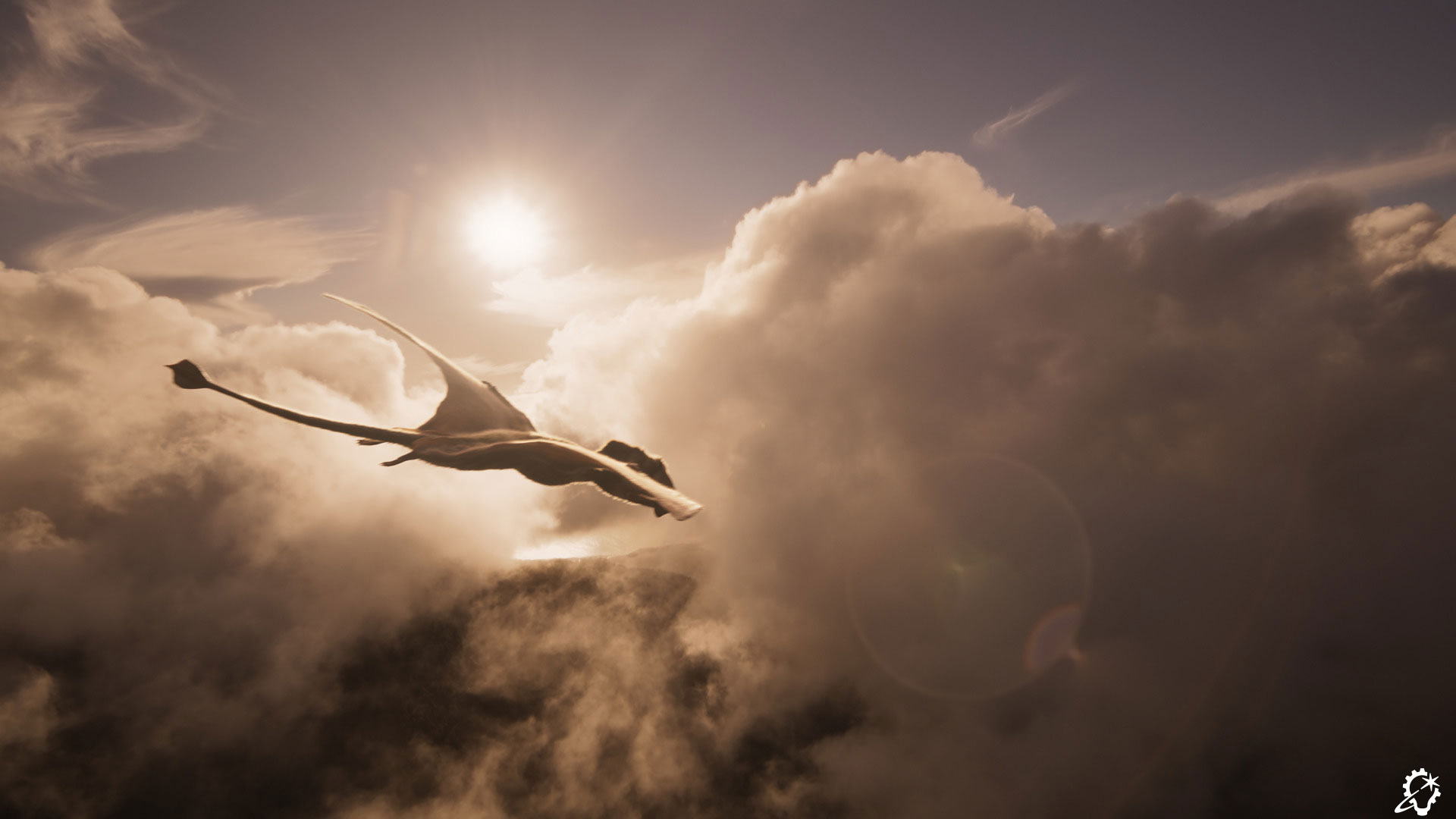
The ILM artists were proud to collaborate with a large group of scientific advisors, researchers, and fellow artists on The Dinosaurs. They include:
Overall scientific advisors – Alex Farnsworth, Ben Mills, Bhart-Anjan Bhullar, David Button, Dean Lomax, Emine Celiker, Fernando Montealegre-Zapata, James Witts, Jordan Bestwick, Liz Martin-Silverstone, Lyndsey Fox, Michael Habib, Paul Sereno, Paul Valdes, Peter Falkingham, Susannah Maidment, and Victoria Arbour.
Episode-specific scientific advisors: Ben Griffin, Ben Thomas, Case Vincent Miller, David Nesvorny, Douglas James, Emma Bernard, Gareth Collins, Holly Woodward, Joanna Morgan, Joschua Knüppe, Kimi Chapelle, Martin Ezcurra, Neil Brocklehurst, Neil Gostling, Philip Hadland, Robert Coram, Sean Gulick, Suresh Singh, Thorin Jonsson, Tom Holtz, and Torsten Scheyer.
Senior science researchers: Tom Fletcher, Tom Land
Paleontological audio design: Michael Habib and Charlie Woodrow
Creature design: Mark Witton and Scott Hartman
–
Mark Newbold writes for ILM.com, SkywalkerSound.com, and daily news site FanthaTracks.com, having previously contributed to Star Wars Insider magazine, StarWars.com and StarTrek.com. He is a 4-time Star Wars Celebration Podcast Stage host, podcasting for over 20 years, and has been involved in websites since 1996. You can find this Hoopy frood @Prefect_Timing.
Mark Newbold writes for ILM.com, Skysound.com, and daily news site FanthaTracks.com, having previously contributed to Star Wars Insider magazine, StarWars.com and StarTrek.com. He is a 4-time Star Wars Celebration Podcast Stage host, podcasting for over 20 years, and has been involved in websites since 1996. You can find this Hoopy frood @Prefect_Timing.