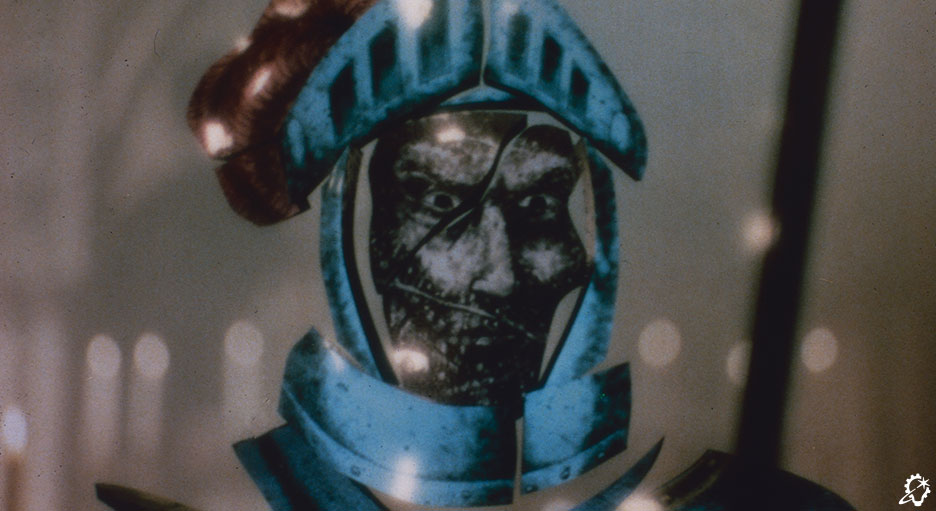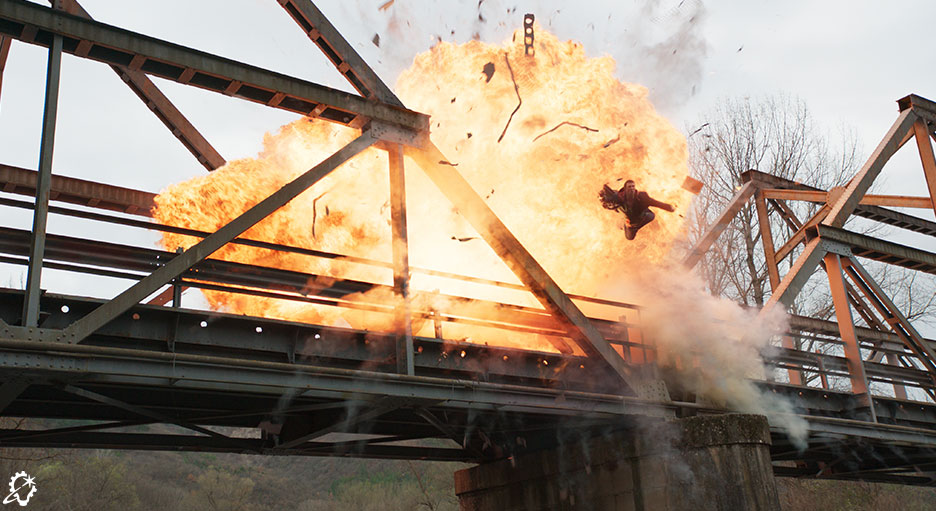
In honor of Star Trek’s 60th anniversary, past and present ILMers Ken Ralston, John Knoll, Roger Guyett, and Kim Smith, along with longtime Star Trek visual effects supervisor Dan Curry, discuss ILM’s visual effects contributions and connections to the Star Trek franchise.
In Part 1 of our exploration of the shared history between Industrial Light & Magic and Star Trek, we covered ILM’s initial foray into Gene Roddenberry’s galaxy on Star Trek II: The Wrath of Khan (1982), Star Trek III: The Search for Spock (1984), and Star Trek IV: The Voyage Home (1986). When Star Trek returned to television screens in 1987, ILM was there to help launch the franchise into The Next Generation.
In the iconic words of Star Trek legend Majel Barrett, so often repeated before the finales of multi-part episodes, “And now, the conclusion…”
ILM executive creative director John Knoll started on his own Star Trek journey as a motion-control camera operator on Star Trek IV, but his first major impact on the franchise occurred when it returned to its television roots with Star Trek: The Next Generation’s (1987-1994) pilot episode, “Encounter at Farpoint.” “The pilot episode was tremendous fun,” Knoll tells ILM.com. “I was a motion-control camera operator and shot all sorts of things for it. We were building a stock library for them, so we shot loads of elements of the Enterprise-D that got used throughout the whole run of the series. I also shot the warp drive starfields and multi-plane starfields that they used throughout the entire series and through Star Trek: Deep Space Nine [1993-1999] as well.
“I enjoyed Star Trek from childhood, and I loved the utopian future being presented,” Knoll continues. “Mankind has solved the majority of their internal problems, and we’re going out to explore. The drama comes from contact with new civilizations, and we’re putting the best of humanity forward through this optimistic view of the future. It’s easy to identify with that and respect its aspirational portrayal of the future,” he adds, citing the widespread interest in Star Trek throughout ILM. “With the Star Trek projects I’ve worked on, there’ve been a pretty enthusiastic cadre of folks here.”
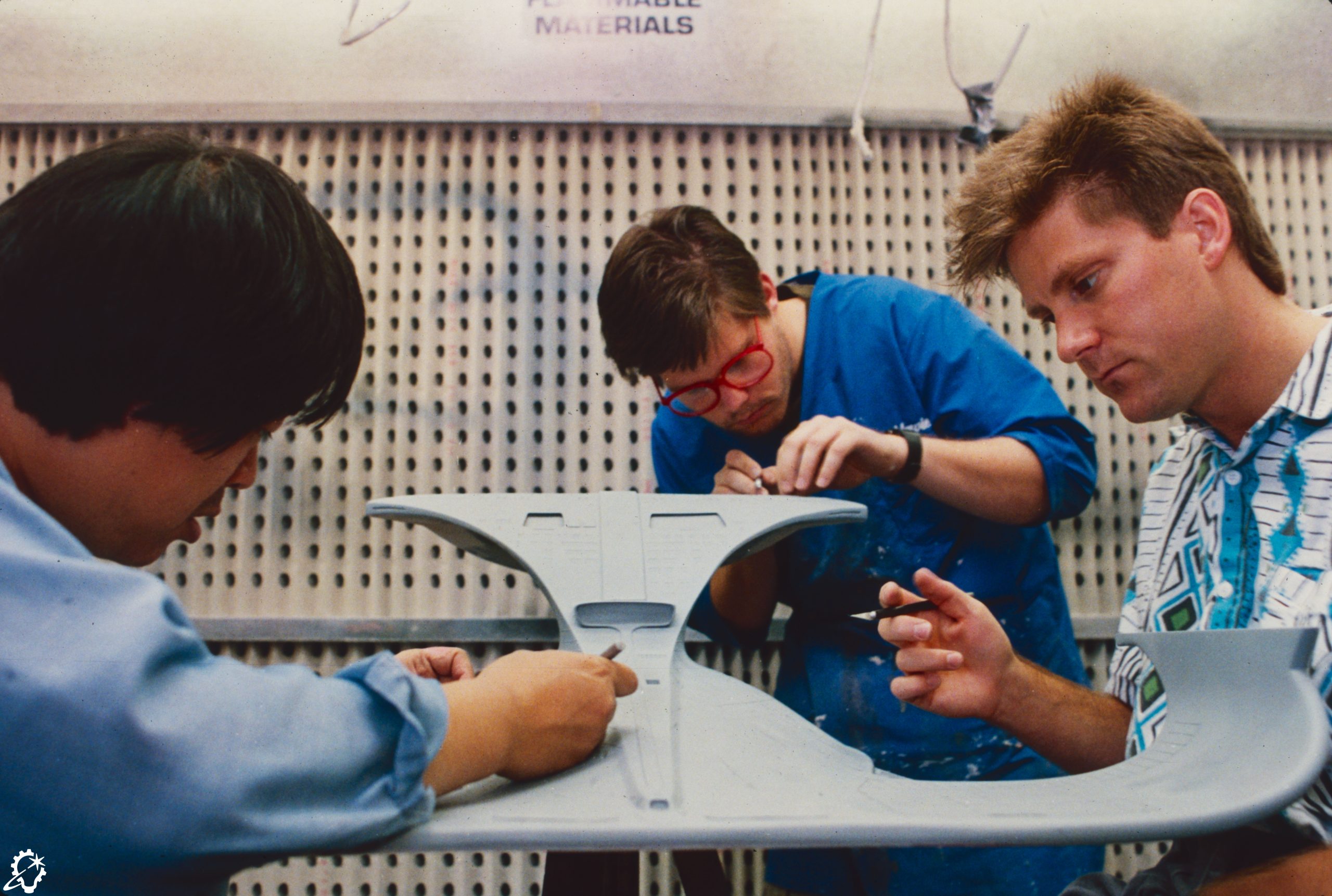
The admiration was mutual, as Star Trek visual effects artist Dan Curry, VES – who served as a visual effects producer and supervisor across episodes of The Next Generation, Deep Space Nine, Star Trek: Voyager (1995-2001), and Star Trek: Enterprise (2001-2005) – applauds the company, declaring, “I have an immense amount of gratitude to the luminaries at ILM for creating some of the greatest cinematic illusions ever done. I had designed titles for Star Trek IV, and became part of the Trek family when vice president of television post-production for Paramount, Peter Lauritson, who became a supervising producer on Star Trek, called me and said they were bringing Star Trek back. They planned to have ILM build the hero model of the Enterprise-D, and do 40 stock shots with it – flybys, entering warp, leaving orbit, etc. – and they asked me to storyboard those shots.”
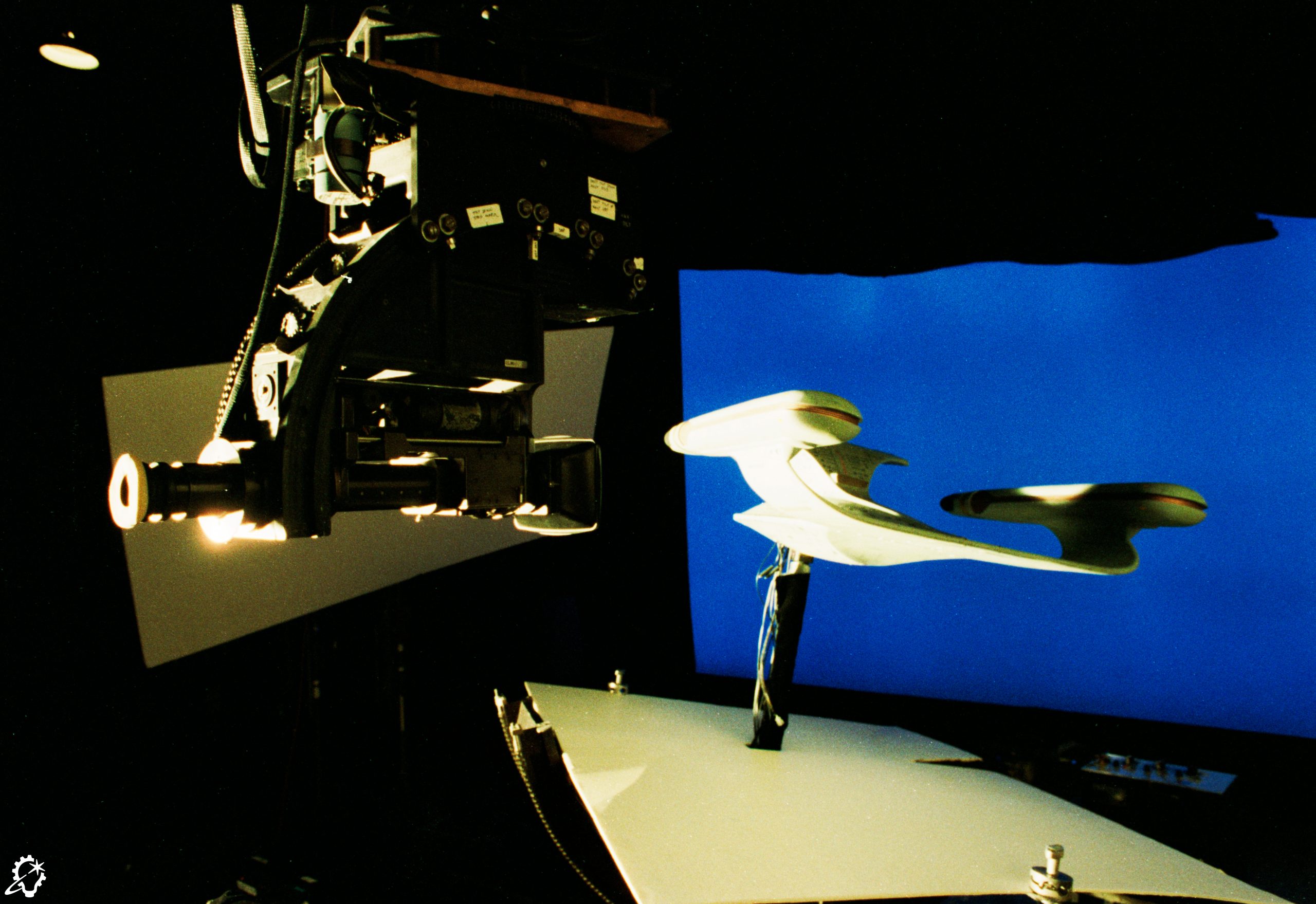
“The warp drive effect is probably the most prominent thing that I contributed to TNG,” Knoll relays. “Our ILM supe on the show was Dave Carson, and I was the in-house streak and slit-scan guy. When the idea of doing the jump-to-warp-drive effect came up, Dave talked to me about doing an effect where the Enterprise looks like it elongates and snaps off into the distance. The artwork that you scan to do a slit-scan is typically a two-dimensional piece on an animation stand. You scan the artwork past a slit of light, and by controlling what part of the artwork you see – and when – during a long exposure, you can get these emergent effects. My sense was that I could do that three-dimensionally.
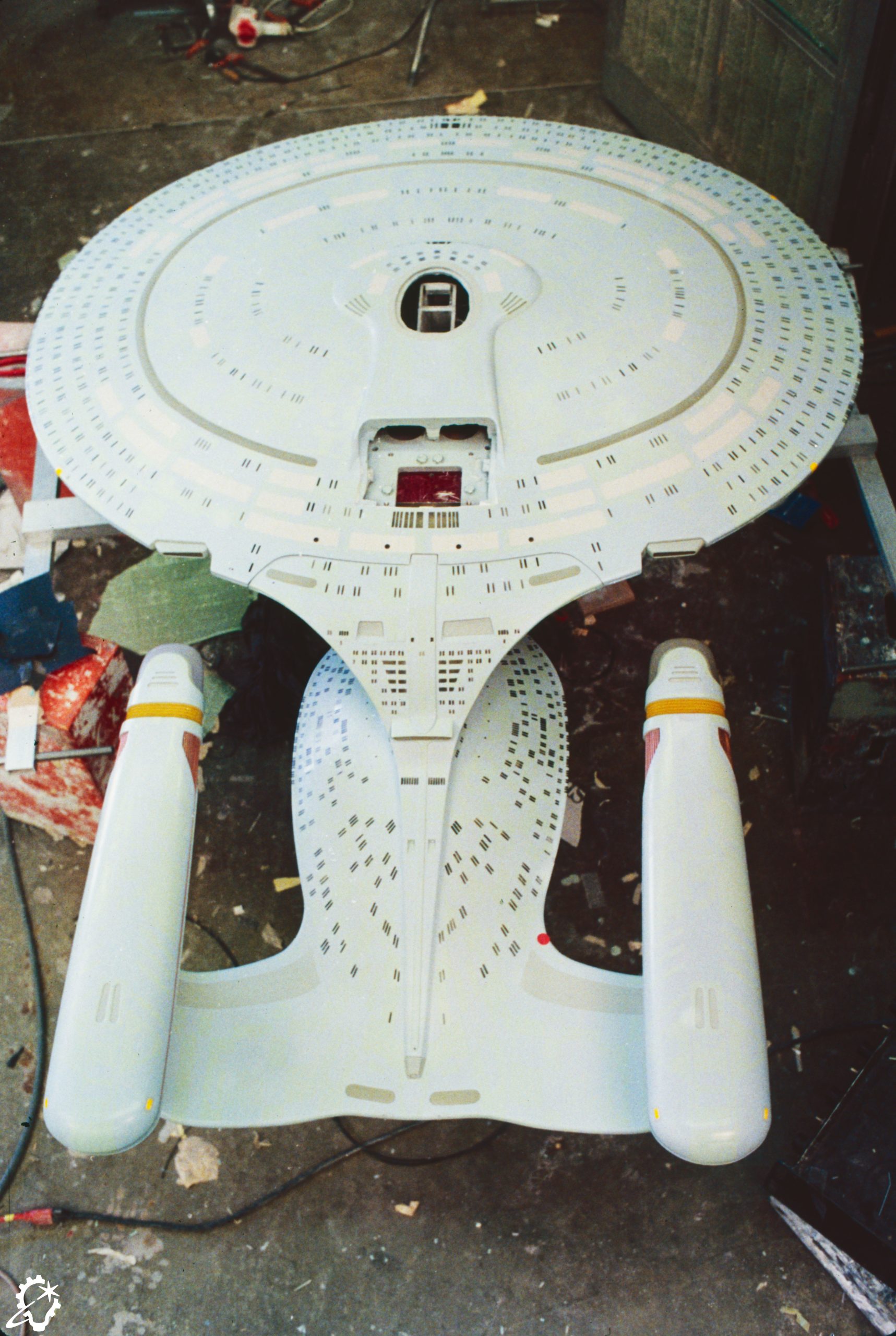
“The ILM Model Shop was building two miniatures of the Enterprise-D: a 2-foot-long model and a 6-foot-long model,” Knoll continues, “and there was a pretty small, maybe 10-inch-long study model of the Enterprise-D that had been built first as an approval model. I borrowed the study model and did a test of the slit-scan on the animation stand. Then I embedded myself with Pat Sweeney, whom I believe was the camera operator at the time, and his team. We replicated the setup I had on the animation stand, just on the stage with the larger models. To project the slit of light, we had two short motion-control tracks that we mounted a stage light on. We built up flags that blocked most of the light except for a narrow slit, and when you position this right and move the track, a narrow slit of light is projected onto the model.
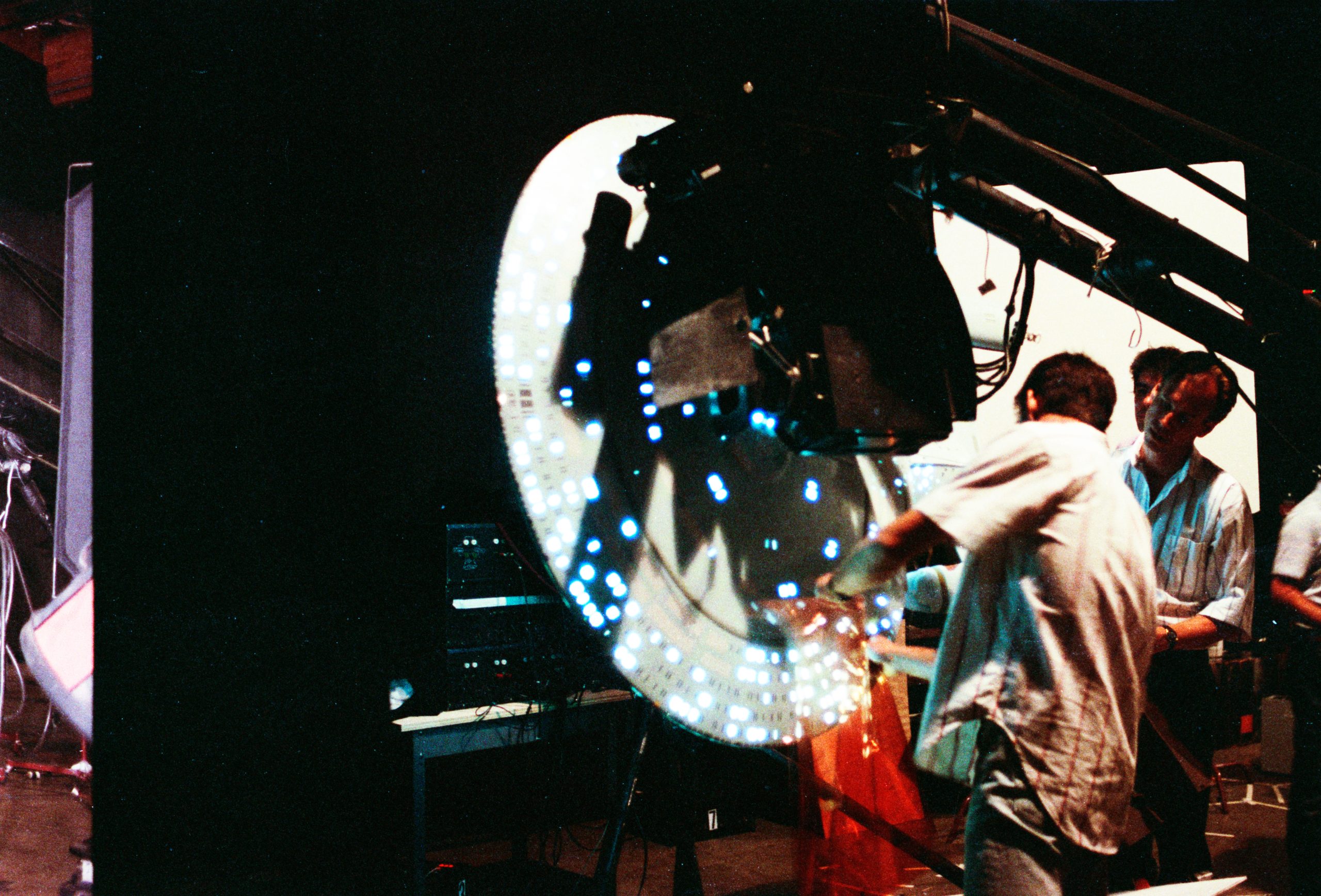
“We shot that from both sides, essentially doing that same gag, but with the Dykstraflex camera,” Knoll adds. “We shot three different versions of that from three different angles. Some of them are in the opening credits of the show, and the third was more of a three-quarter side view. And that was their library. Any time you saw the Enterprise go into warp drive, it was one of those scans.”
Centering his thoughts on the flash of light that accompanies the ship’s jump to warp, Knoll reveals, “There was no way to do that slit-scan with the model’s internal lights on. You’ll notice when the Enterprise goes into warp drive, there’s that big flash. There were two reasons for that. First, we switched from the 6-foot model to the 2-foot model, and they didn’t match each other. We needed you to lose sight of the model for a moment while we made the switch. The second reason was so you wouldn’t notice that all the lights went off. All the internal lights are only present on the model up until it finishes its transition. The running lights, anti-collision strobes, and the portholes all have to disappear when the Enterprise goes into warp drive because we couldn’t have the lights scan as well.”
While ILM’s warp effect and stock shots of the USS Enterprise-D appeared throughout The Next Generation’s run, many of the models ILM had constructed for previous films, such as the Excelsior-class starship and the Klingon Bird-of-Prey, were often shipped to Star Trek’s in-house visual effects team to film for additional episodes. “ILM was kind enough to send us their models in crates, and we’d deal with them respectfully, shoot them, and send them back,” Curry proclaims. “We were all huge fans of ILM and held their work in awe. They liked what we were doing, and there was a lot of camaraderie between us.”
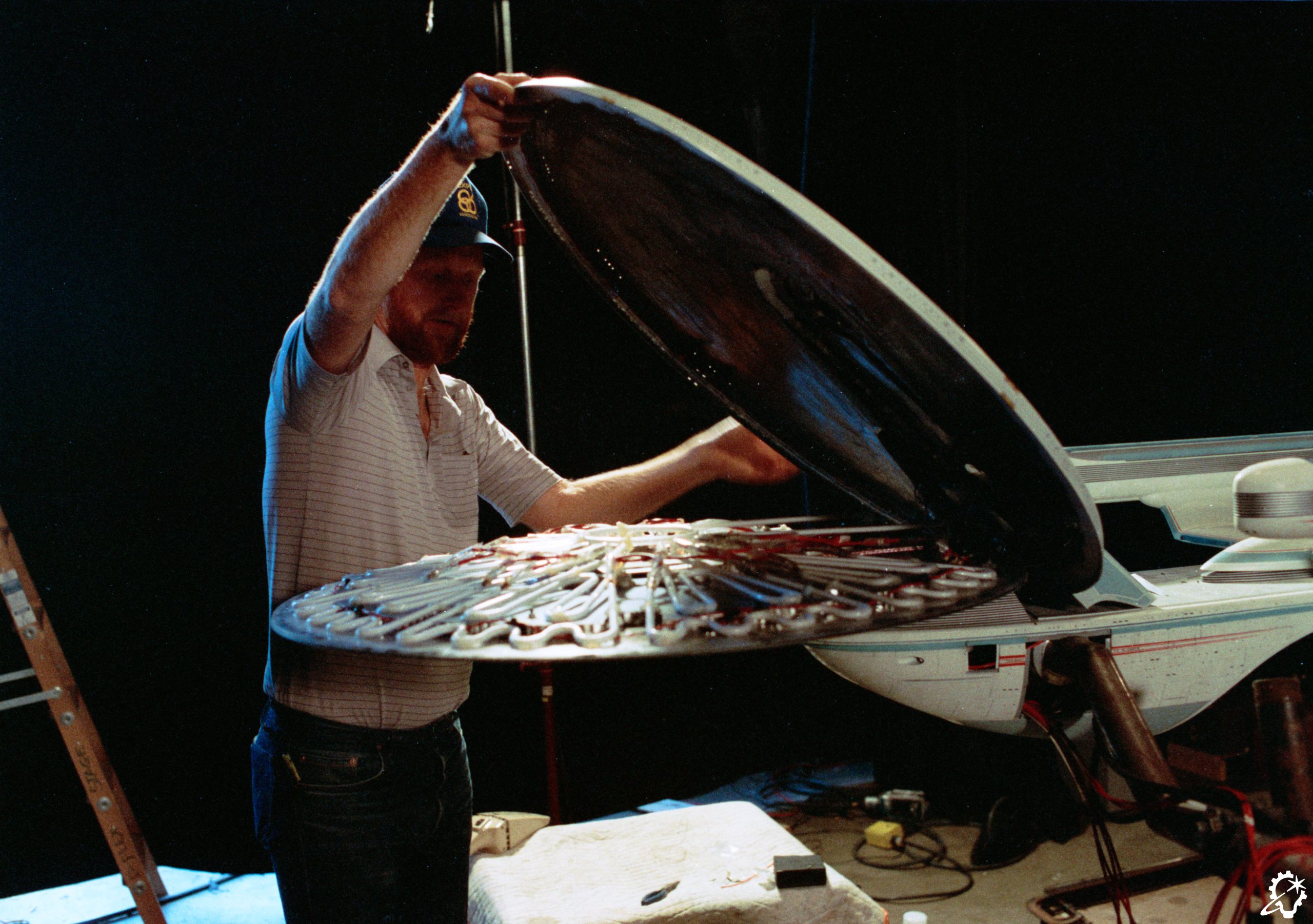
This professional courtesy continued as The Next Generation team prepped the show’s series finale, “All Good Things…” ILM’s Bill George constructed a brand-new model to represent the USS Pasteur, which debuted in the episode. “Bill George built the model for his own satisfaction, and when that episode came up, he offered to let us use it and sent it down to us,” Curry describes. “It saved us a lot of money, and Bill’s design sense and craftsmanship are unquestioned.”
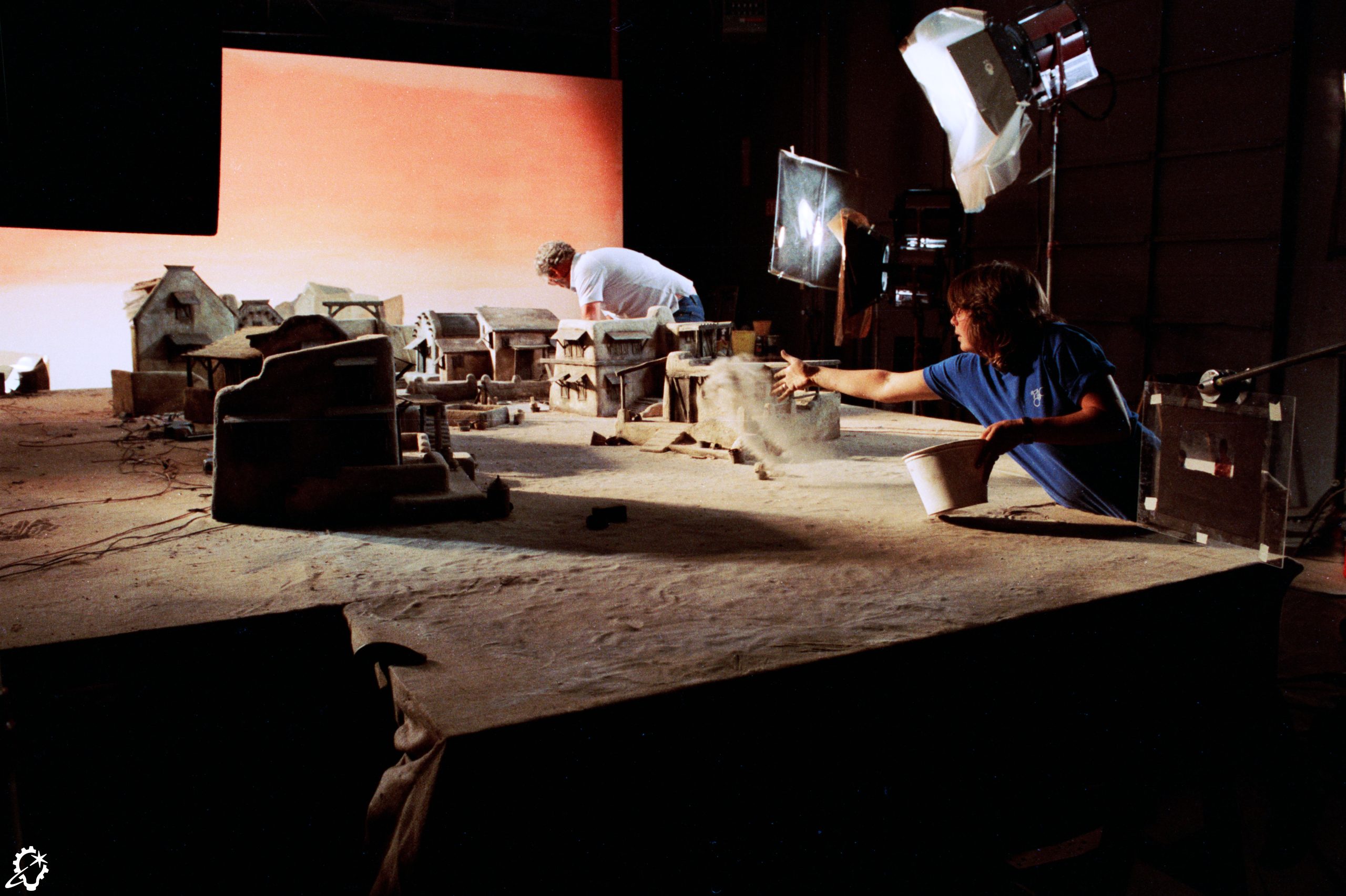
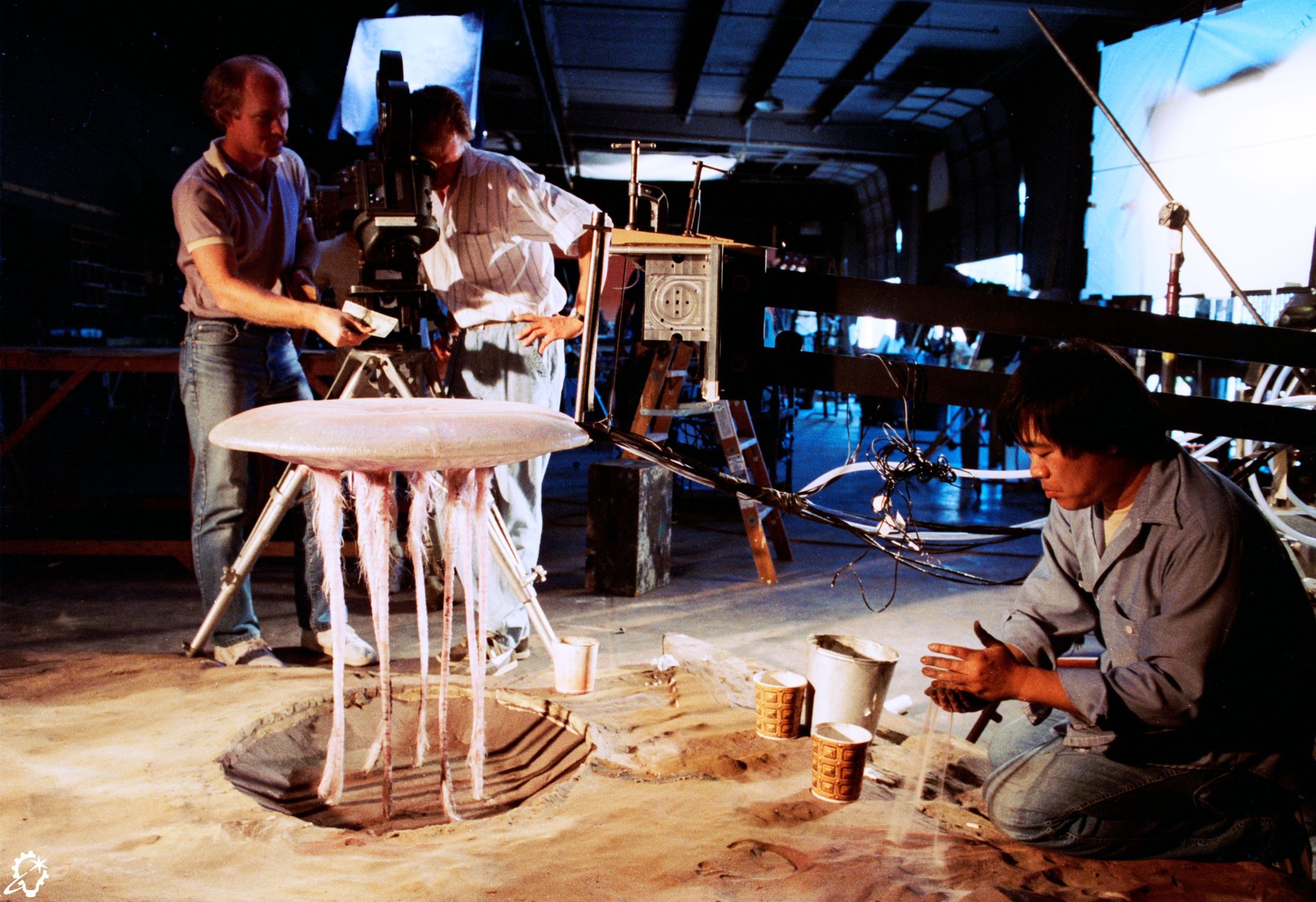
In addition to assisting in the launch of The Next Generation, ILM also contributed visual effects to the Star Trek Adventure attraction, which opened at Universal Studios Hollywood in 1988.
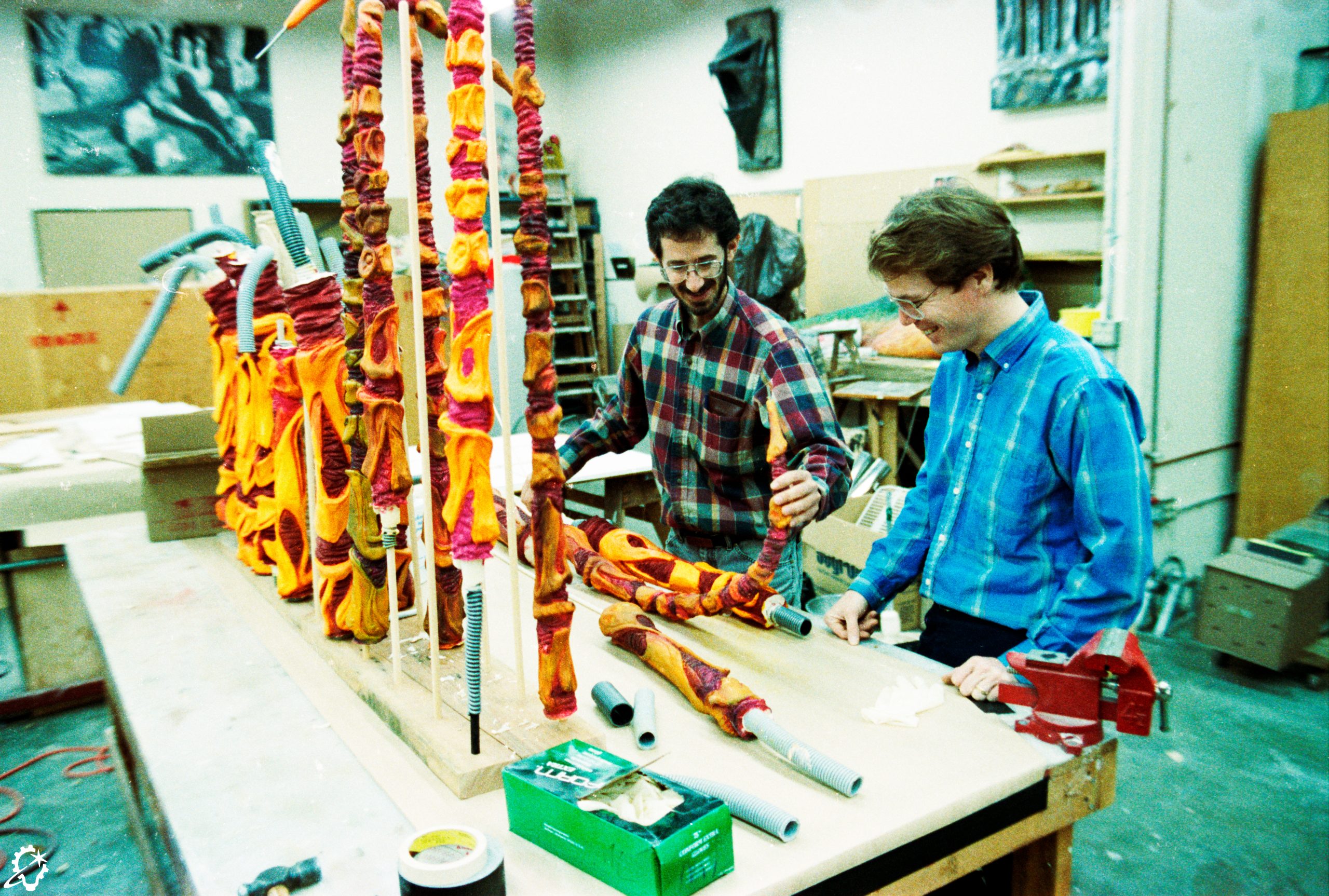
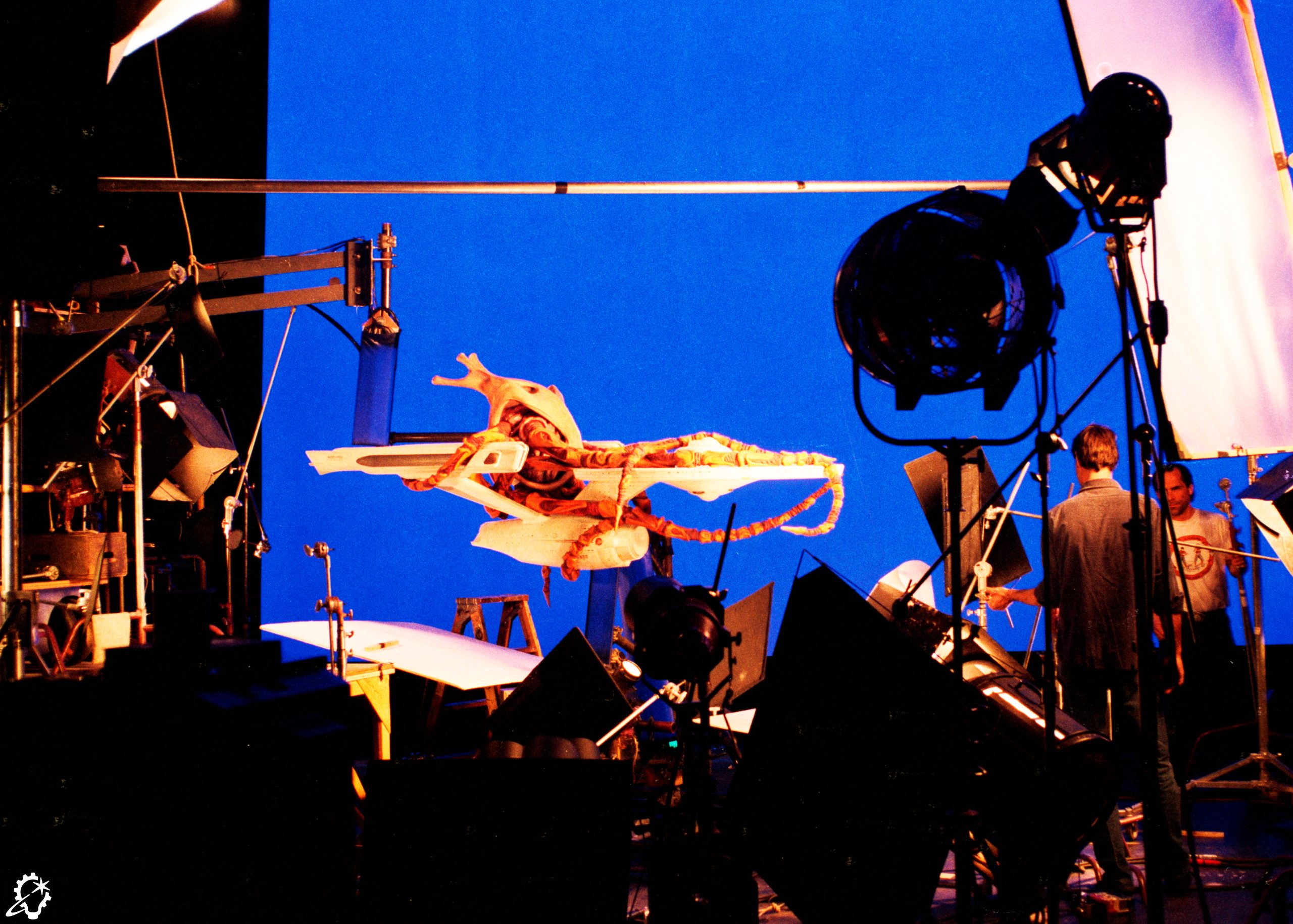
Of course, as Star Trek found renewed success on television, ILM reunited with the franchise on yet another big-screen adventure, Star Trek VI: The Undiscovered Country (1991). With Scott Farrar as the production visual effects supervisor, ILM set out to refurbish Doug Trumbull’s USS Enterprise – now labeled as the USS Enterprise-A – as well as previous ILM builds including the USS Excelsior, Klingon Bird-of-Prey, and Federation Spacedock.
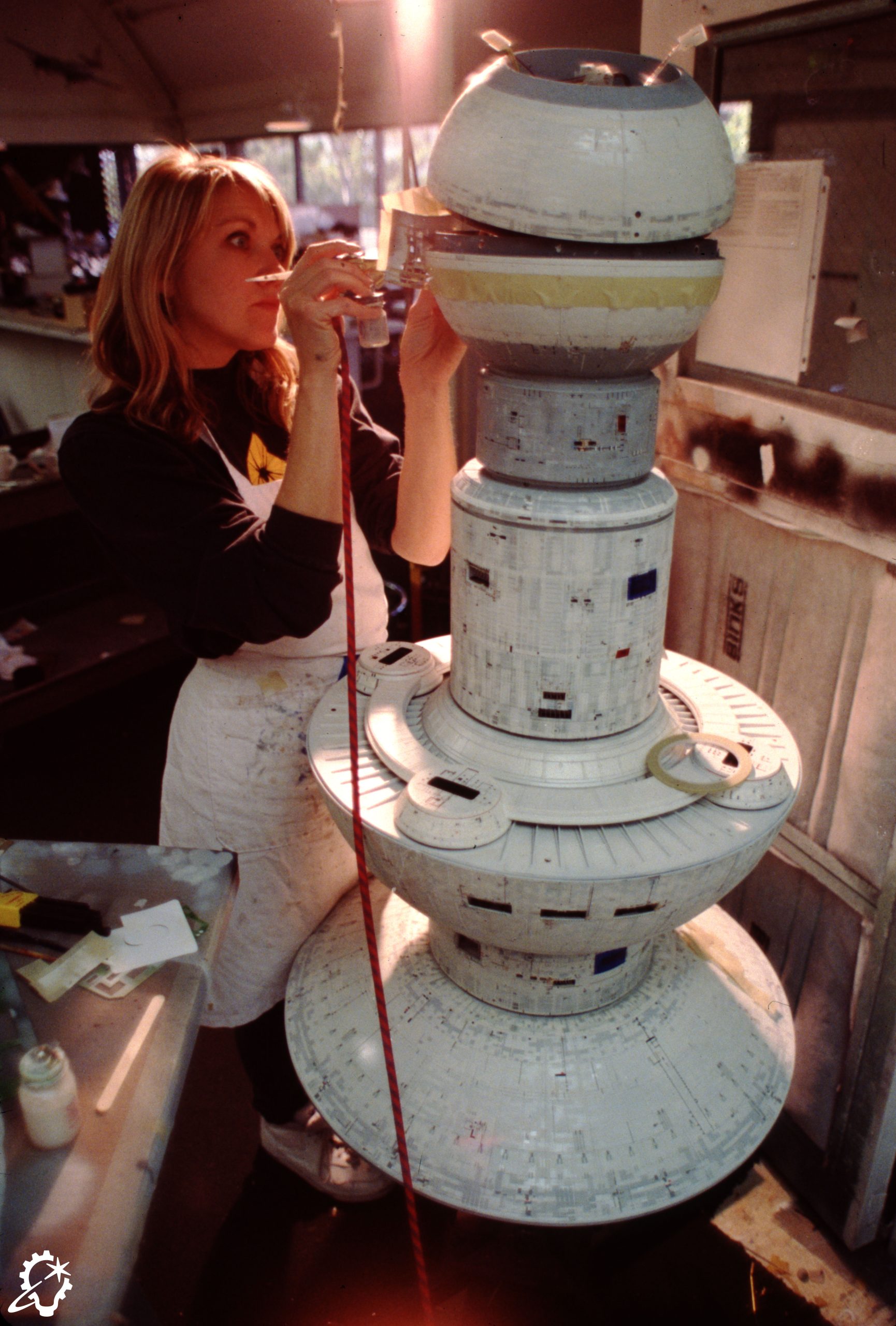
On the first of what would become many Star Trek assignments for her, ILM modelmaker Kim Smith tackled repainting the Enterprise-A. She states, “The Enterprise-A had a beautiful paint job, but it had gotten dulled by efforts on stage to reduce the glare from the lights. Models often get damaged in the course of shooting, and it’s always the job of the next movie to fix the model up again. They had used interference paint on the model, which I knew about but hadn’t ever come in contact with. I called down to the painters who originally painted the Enterprise-A and got some information on it. Unfortunately, I could not get interference paint in time to be able to use it, so I had to faux it with other pearlescent paints.
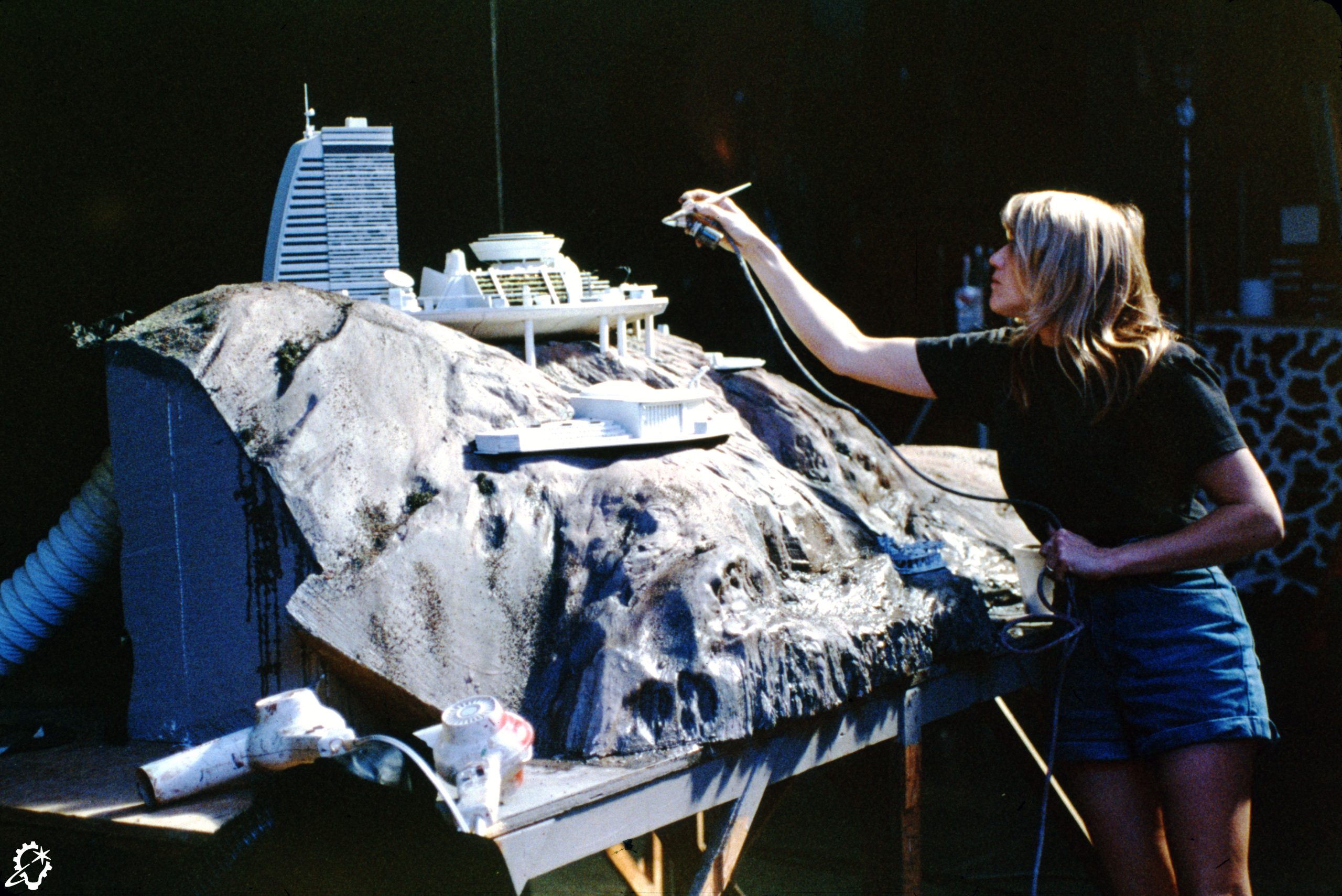
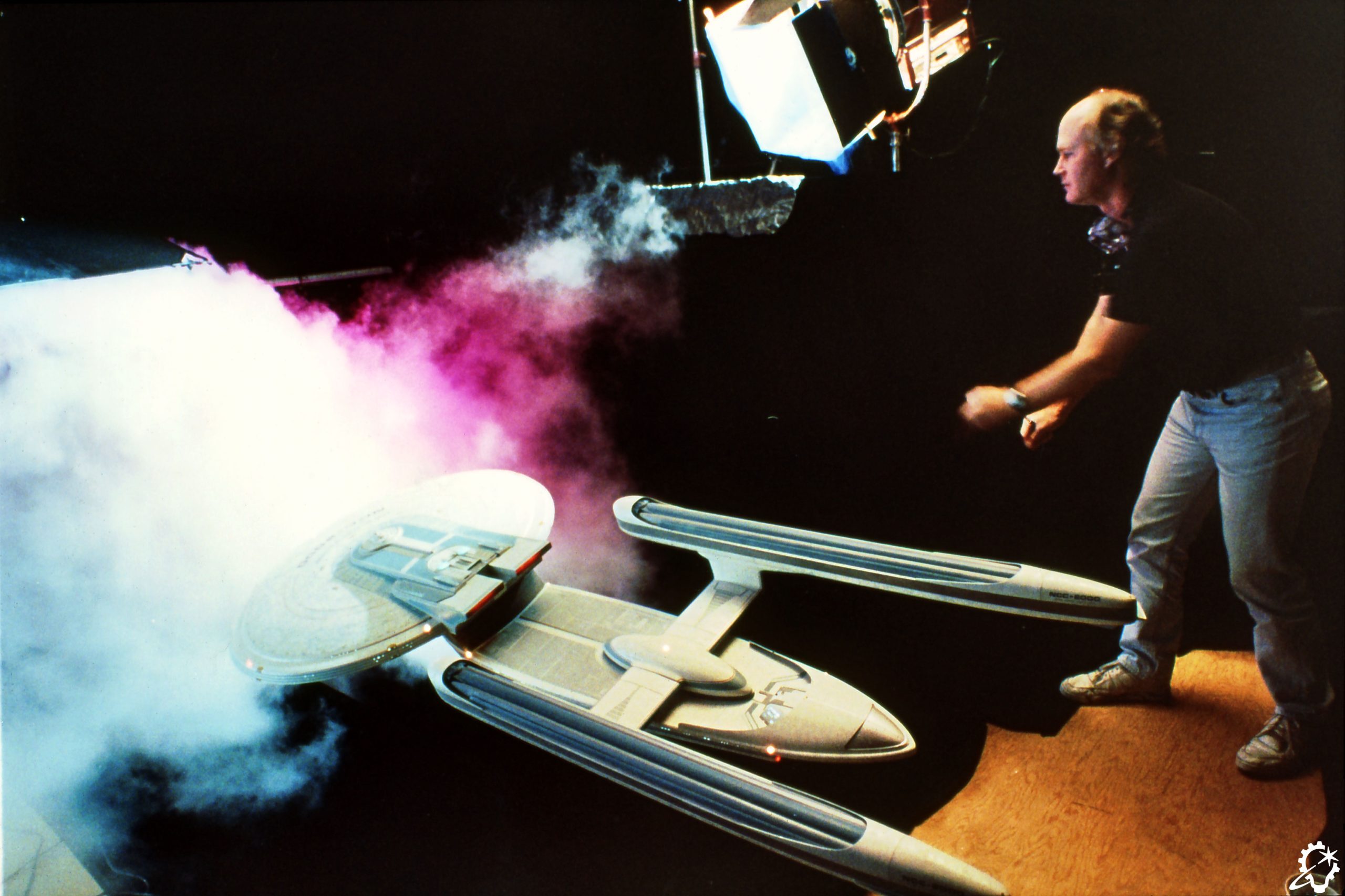
“ILM also made a larger-scale saucer for the Enterprise-A to use for when a torpedo strikes the ship in the big battle at the end,” Smith continues. “The restorations that I did were masked by hand because the models were hand-made – not by computer – and they didn’t have mathematically perfect dimensions. Every line that’s inscribed on the model could be in a fraction of a different place than the next one. So, when masking it, you have to do it by hand. However, for the larger saucer, it strikes me we might’ve cut some stencils on the laser cutter because the scale was much bigger. It was easier to do than it had been for the smaller models. That was my first project for Star Trek VI, and then I worked on restoring the Bird-of-Prey and a space station. In the course of working on Star Trek, I’ve gotten to help restore or build some of the most iconic ships.”
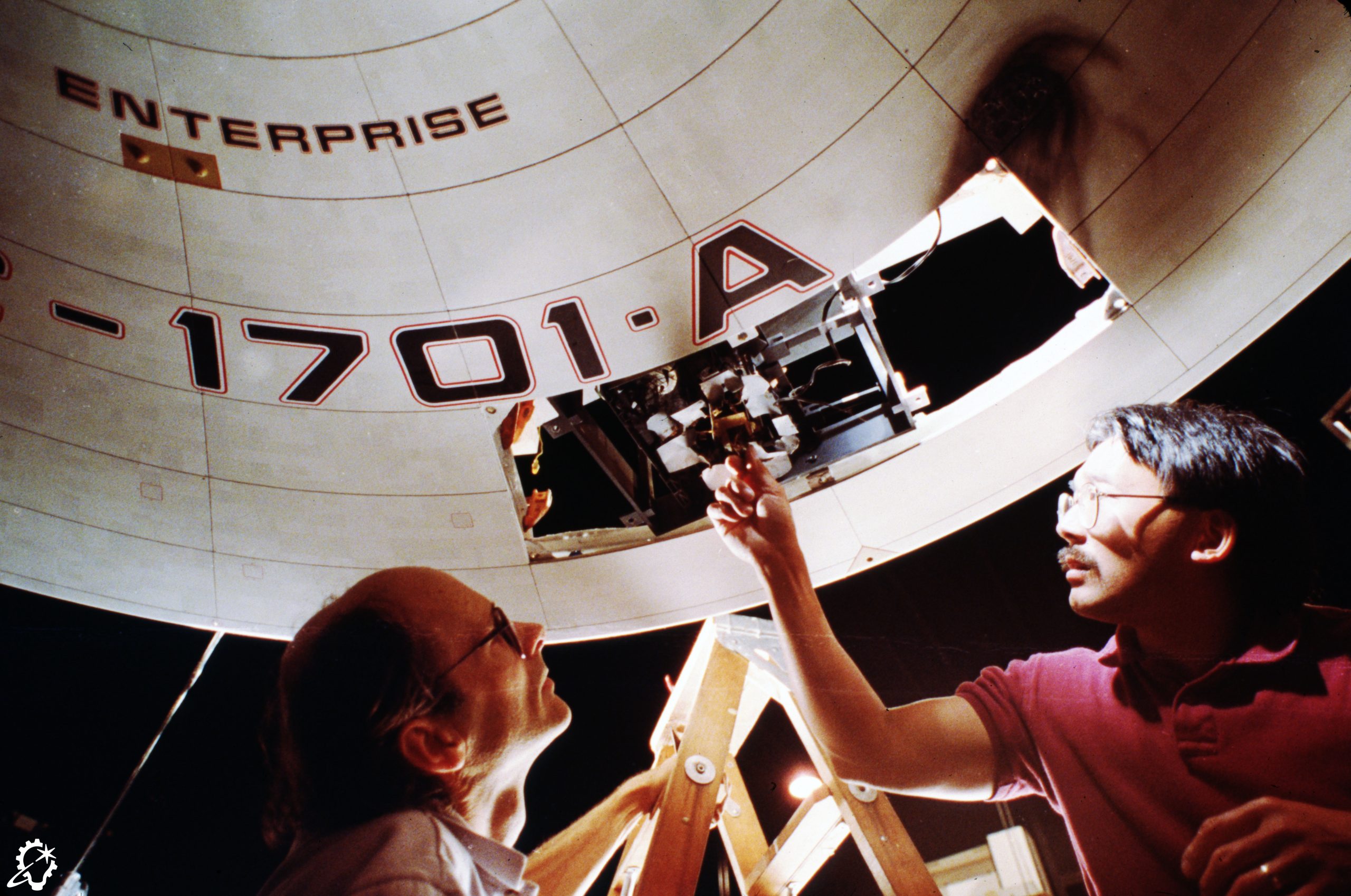
As Smith brought these models back to life, she understood the franchise’s meaningfulness to its millions of fans, adding, “It’s interesting to have it dawn on you that you’re working on something that is an enormous symbol for people. I did not watch Star Trek when it originally aired on television because I was on my way to college and didn’t have a TV for a long time. Later on, I enjoyed seeing it in syndication, and I appreciated its message and how fun it was. Bill George was the epicenter of Star Trek at ILM. [Smith’s fellow modelmaker] John [Goodson] didn’t start working on the films as early as Bill did – he came out to work with them on the whale models for Star Trek IV – but Star Trek was super important to John growing up. It was a show which promoted inclusion for people of all backgrounds.”
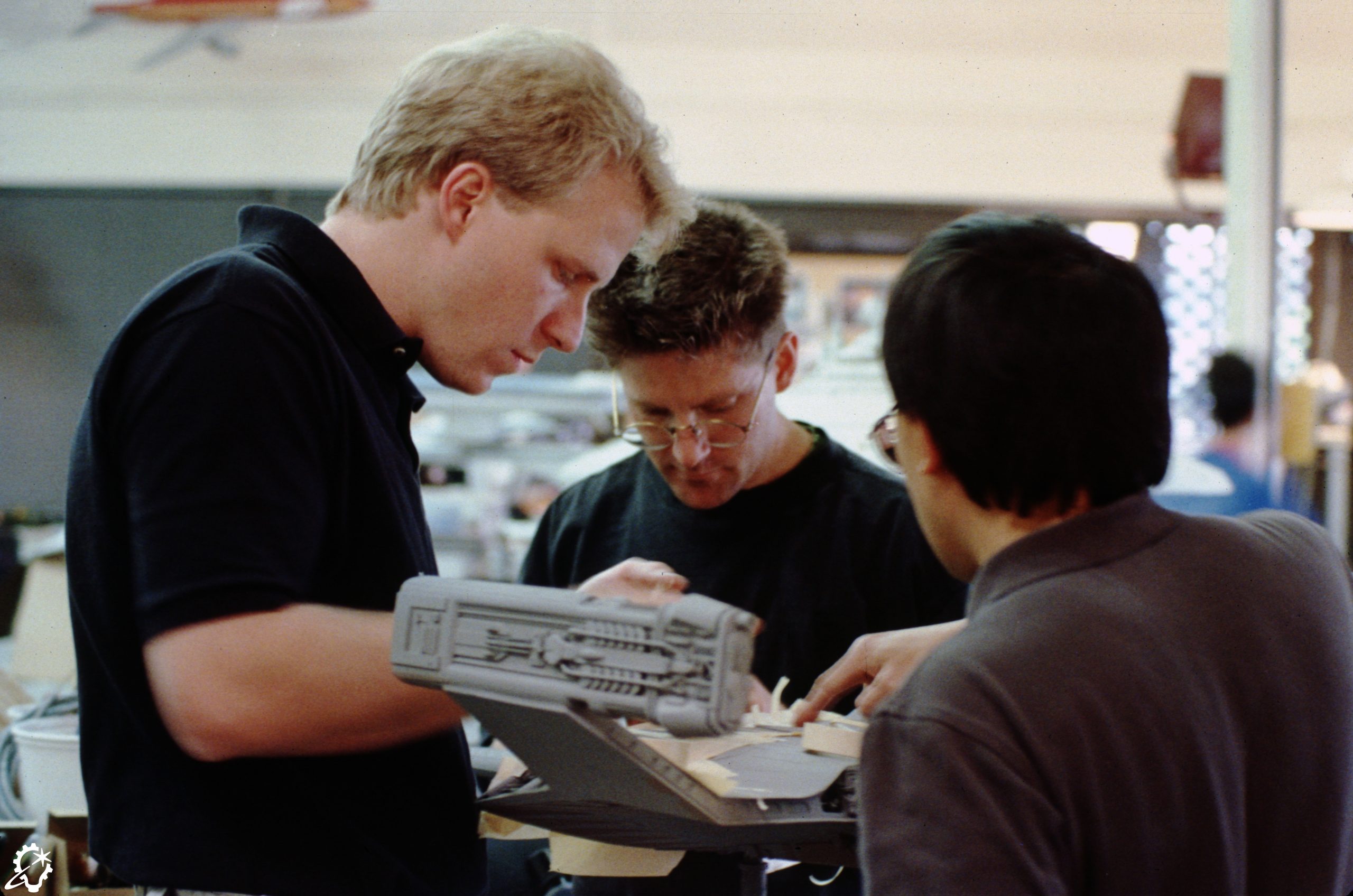
Due to Smith’s expertise in repainting the USS Enterprise-A, as well as her later ILM assignments involving the USS Enterprise-D and USS Enterprise-E, she and John Goodson and Bill George received an interesting call in the mid-2010s. The Smithsonian National Air and Space Museum invited the trio to serve on an advisory board and consult on the restoration of the original USS Enterprise studio model, which had appeared in every episode of Star Trek from 1966 to 1969.
The museum and this special board – which also included such Star Trek luminaries as Rick Sternbach, Michael Okuda, Denise Okuda, and John Van Citters – conducted extensive research on this project. Smith recollects, “Dr. Susan Buck took a core sample of the model to figure out which colors had originally been painted on first. The museum did the base paint on the model, and then Bill, John, and I came in. My specialty was to mix the paint for the detailing and make sure it was the right color and value.”
Although this effort was undertaken outside of Smith’s time at ILM, the final display of the model incorporated a touching family connection for her. Smith smiles, explaining, “When you look at the finished model from one side, you can see a mural painted by Robert McCall behind it. My dad [William A. Smith] actually consulted on that mural. Bob McCall was a very well-known artist for film and a great illustrator. Bob called my dad to get some information about murals, and lo and behold, this model that I worked on is now sitting in front of the mural that my dad consulted on.”
When The Next Generation’s cast made the leap to theatres in Star Trek Generations (1994), ILM was at the helm of the project’s visual effects once more, but this time with John Knoll as the visual effects supervisor. “I met with Jim Morris, who was president of ILM at the time, and I told him that I read a lot of science fiction as a kid,” Knoll elaborates. “Two weeks later, the script for Generations came in. I loved The Next Generation, and I had that initial contact with the show when I did the pilot. The chance to work on a feature film adaptation of that seemed like a fun opportunity.
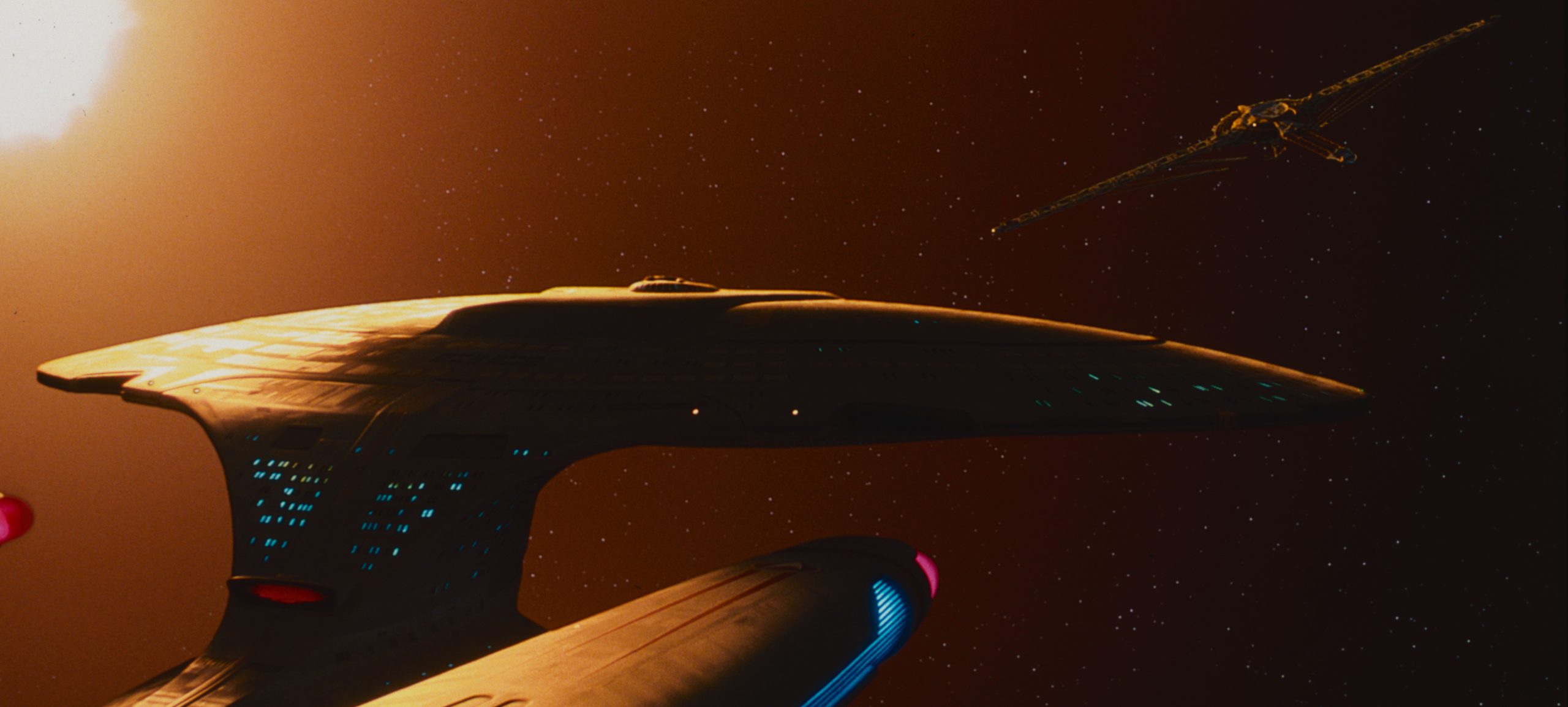
“The 6-foot Enterprise-D model that ILM had built was sitting around unused at that point, and I always want to shoot with the biggest model we can manage, especially for a feature film where we get close to it,” Knoll continues. “So we got the 6-foot model back. It had originally been done on a TV show budget and schedule, so step one was to do a big refurbishment on this model, strip it down and re-detail it. I was a big fan of the paint job that Ron Gress had done on the Enterprise in The Motion Picture, with all those pearlescent panels on it. I wanted to do something with that feel for the Enterprise-D, so shop supervisor John Goodson oversaw a gorgeous paint job on it. I was very happy with the refurbish, and that’s what we used for the majority of Generations.”
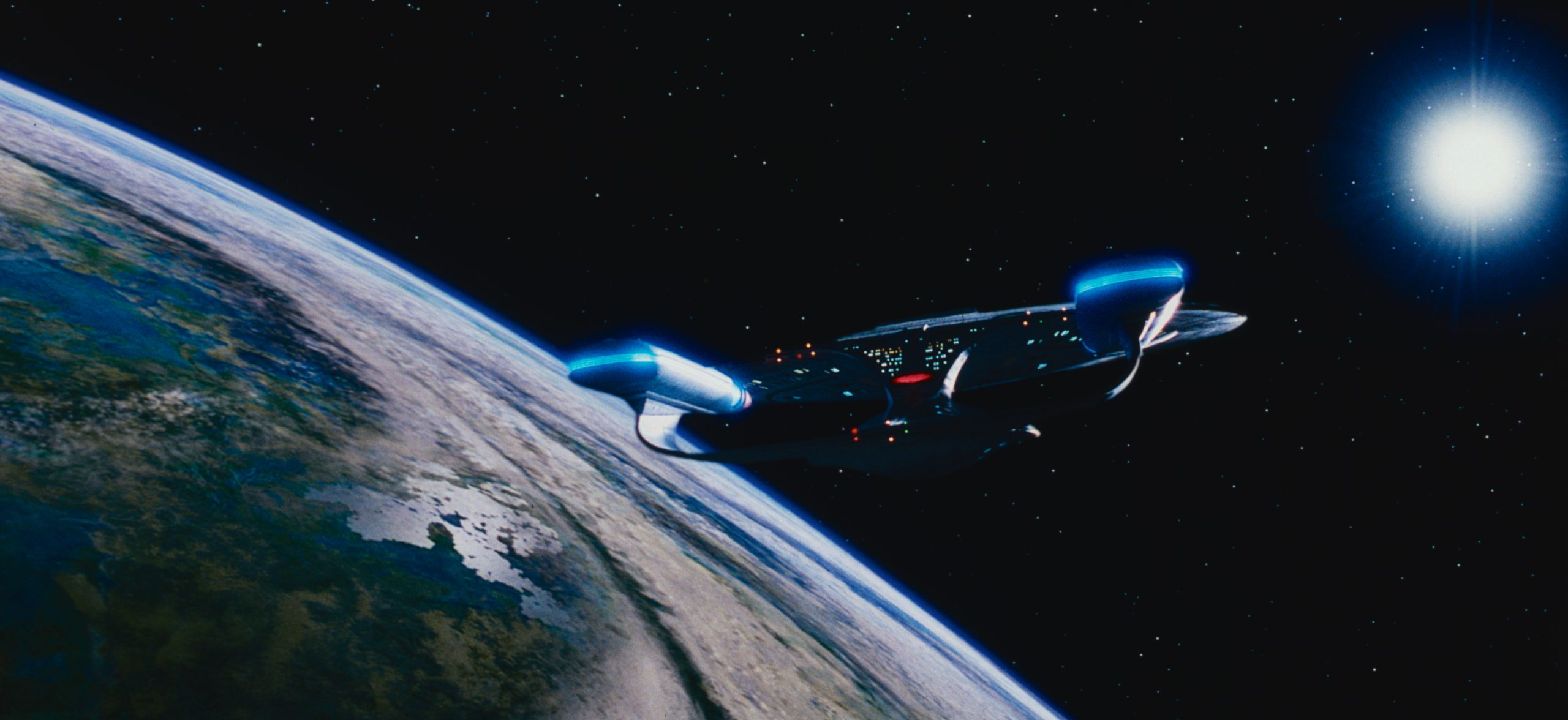
“I helped restore the Enterprise-D,” notes Kim Smith. “It required a complete repaint, and we wanted to keep the look of the original paint job. I had to think carefully about what color would be painted first. I masked the model so I could start with one color, then take off a layer of tape before painting the next without doing any more taping. We used so much masking tape on the model that we made a big paintball out of it. Matching paint took some work because grays can be tricky. People think of them as being blue or greenish grays, and a drop here or there might change it to a totally different hue than the one you want.”
Knoll’s time on Generations afforded him the chance to revisit the warp effect he had pioneered on the series, as he states, “ILM had a couple of shots of the Enterprise-D going into warp drive. I’d done that as a slit-scan effect some years earlier, but I was aware of the limitations of that technique. It occurred to me that computer graphics would be the right way to do this effect, but the cost of building a detailed CG model that would hold up to the close view necessary to do this stretch effect was so high that it wouldn’t fit into our budget. I’d been playing around with After Effects for compositing, a program called form-Z for modeling, Photoshop for texturing, and Electric Image for animation, lighting, and rendering. That was my tool set, so I decided I was going to build the Enterprise-D myself.
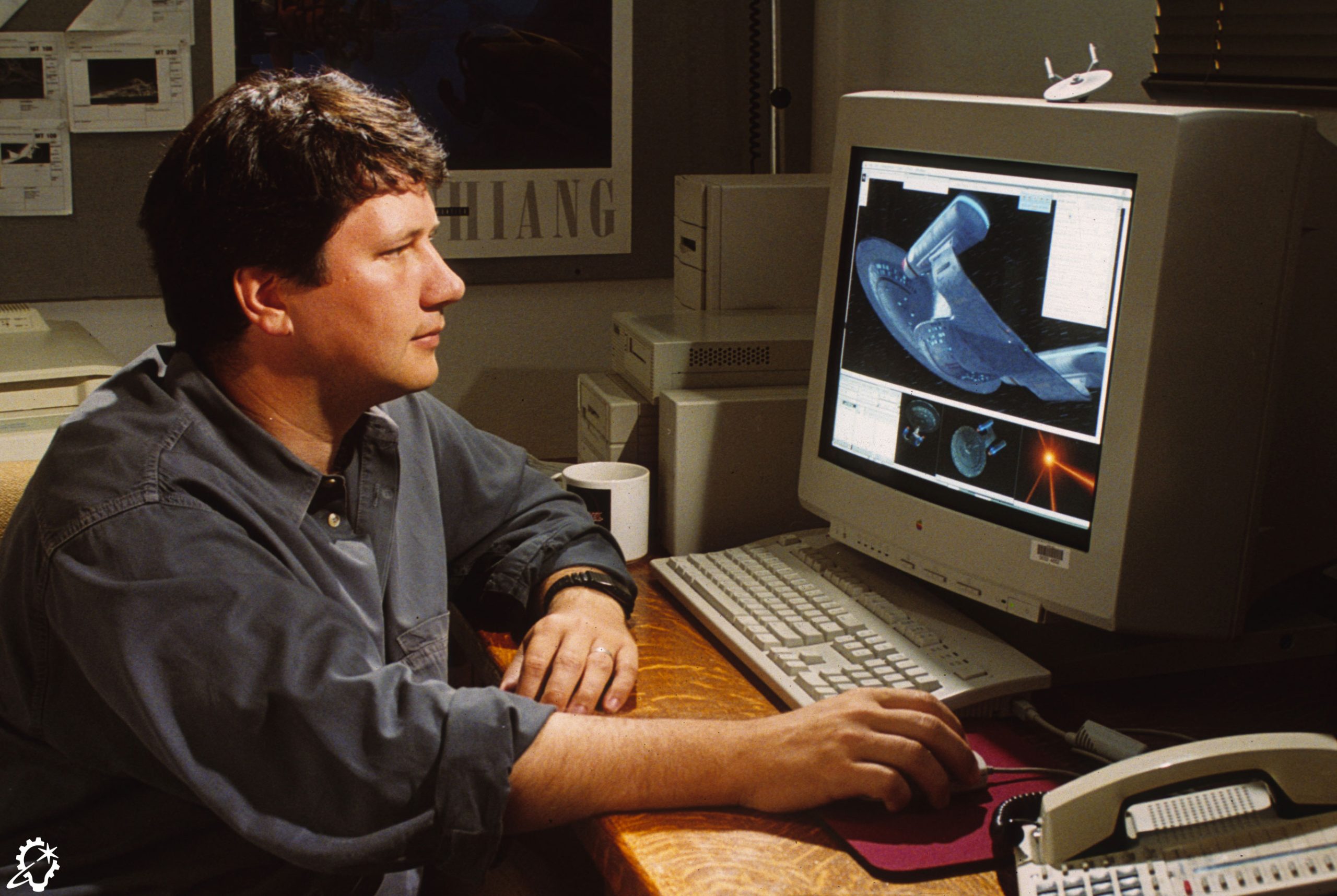
“I built it mostly to do that one close-up shot of the Enterprise-D turning, stretching, and going off into warp drive,” Knoll continues. “When that shot came to a successful conclusion, I had this CG model of the Enterprise-D that looked pretty good, and I could make elements with it cheaply. I started looking through the rest of the storyboards on the shot list for the stage, and I didn’t want to necessarily burn a day of stage time by shooting certain shots with the model. I figured we’d save our stage time for the close-up beauty shots of the ship flying by, and for these simple ones – small in frame, far away – I could make those with the CG model of the Enterprise-D. I made a dozen or so elements at home on my Power Macintosh.
“I was pleased with that workflow and carried it forward,” Knoll adds. “Ultimately, that led to the Rebel Unit that became a major force of workflow innovation at ILM after that. I experimented with it on Generations and used the same tool set for animatics and some shot work on Mission: Impossible [1996]. I started up the Rebel Unit as a department on Star Trek: First Contact [1996], where we recruited a half dozen people and did the whole opening space battle with those desktop tools. We later expanded the department on [Star Wars:] The Phantom Menace [1999].”
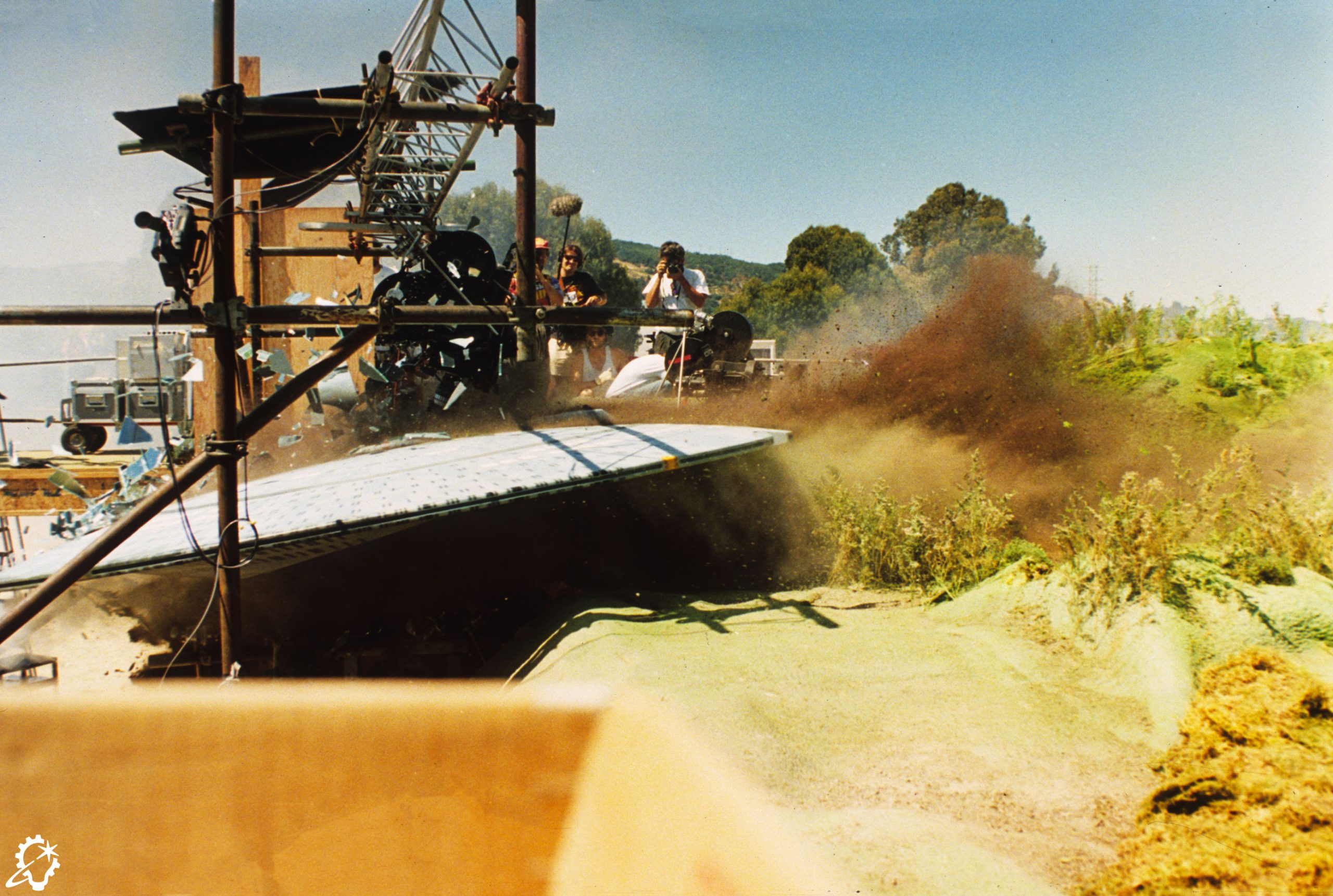
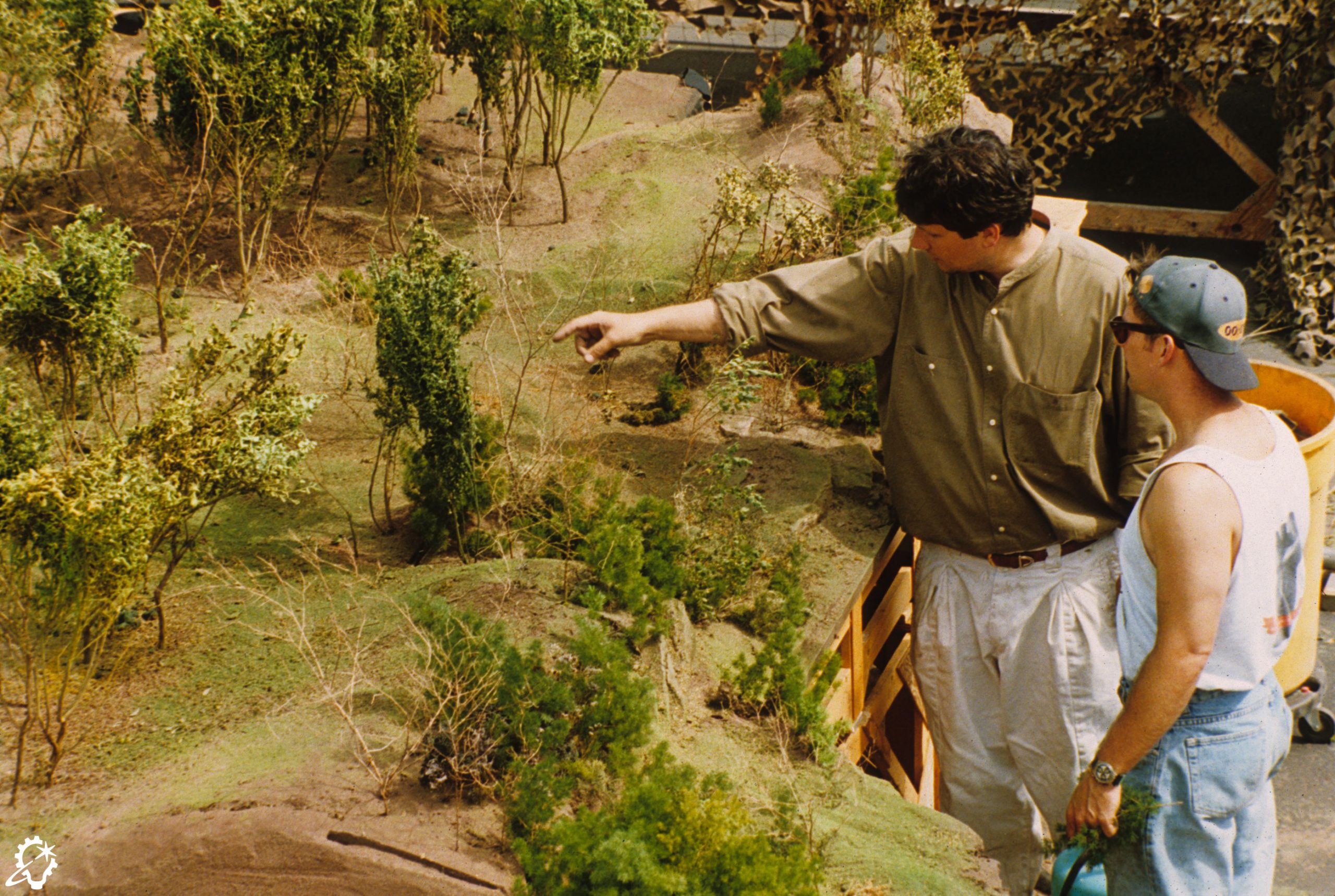
Of course, one of Generations’s splashiest effects is the crash-landing of the Enterprise-D’s saucer shortly after the destruction of the ship’s stardrive section. Curry places the effect in the context of Star Trek history, glowingly cataloging, “The amazing crash of the Enterprise-D in the forest is an iconic moment that fans still talk about. It was another example of the absolute brilliance of bringing an incredible illusion to the screen that depicted a defining moment in the Star Trek timeline.” Kim Smith adds, “We made a 12-foot Enterprise-D saucer for the crash shot, which I and a few others painted to withstand the beating it would get with repeated takes pulling it across the miniature landscape.”
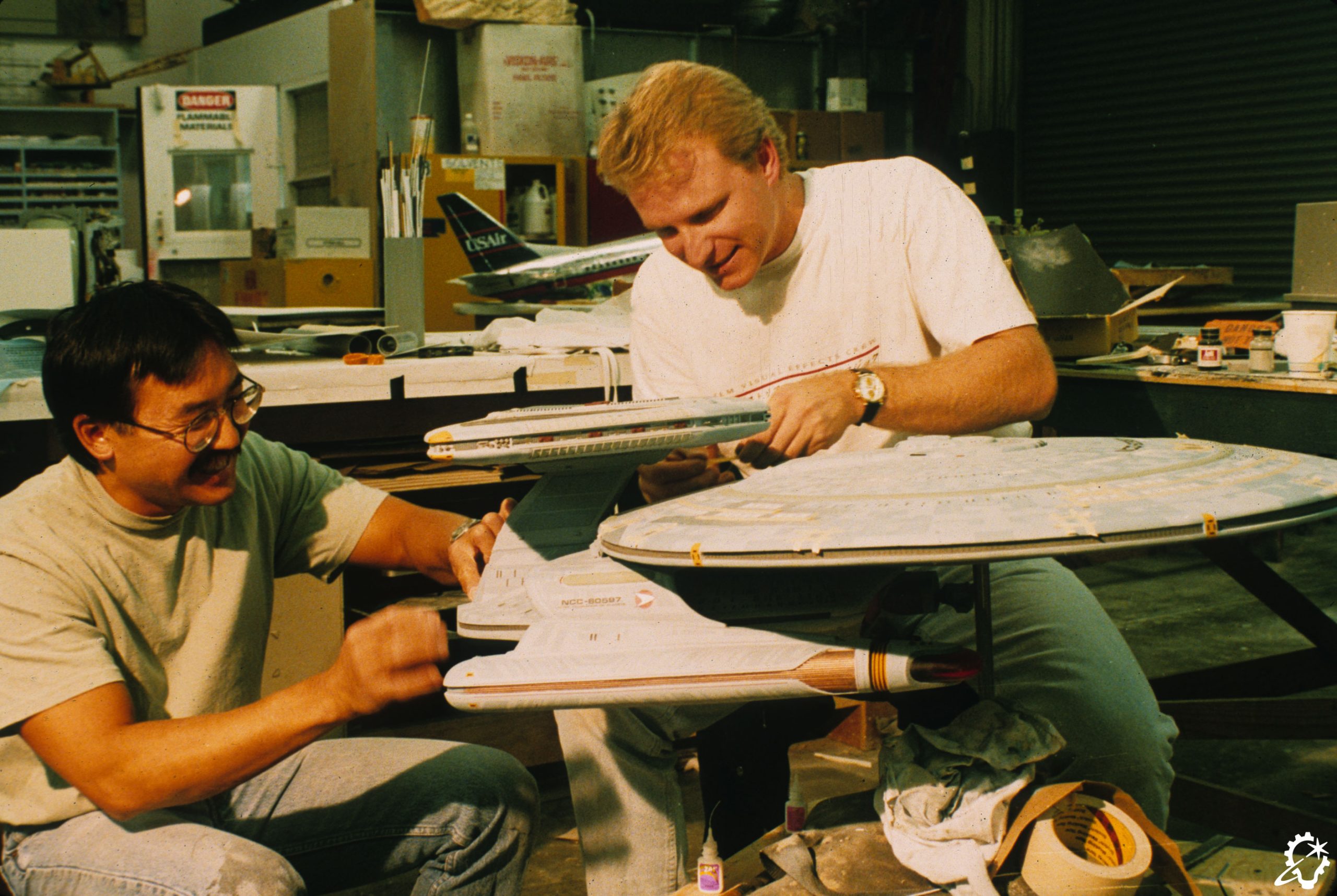
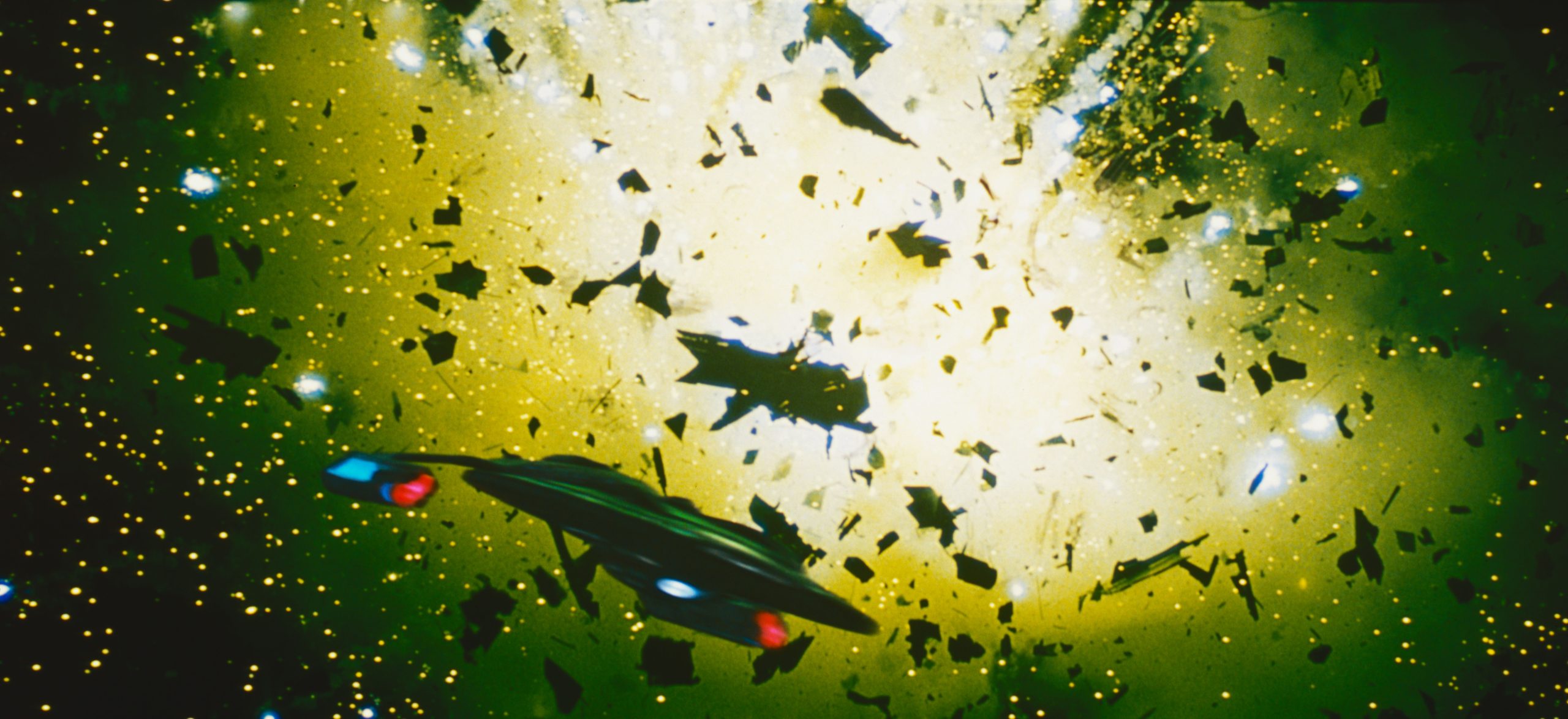
With The Next Generation star Jonathan Frakes set to direct Star Trek: First Contact, Knoll and his ILM colleagues embarked on another visual effects blockbuster, which further bolstered the company’s stunning body of work. The film’s opening sequence features the Battle of Sector 001, an epic clash between a fleet of Federation starships and an enormous Borg cube that demonstrates the movie’s scope. “The idea was that Starfleet marshaled every resource it had, and we wanted to have loads of ships fighting the Borg. I wanted to have the Starfleet armada consist of other types of ships, not just the Enterprise-E,” Knoll chronicles.
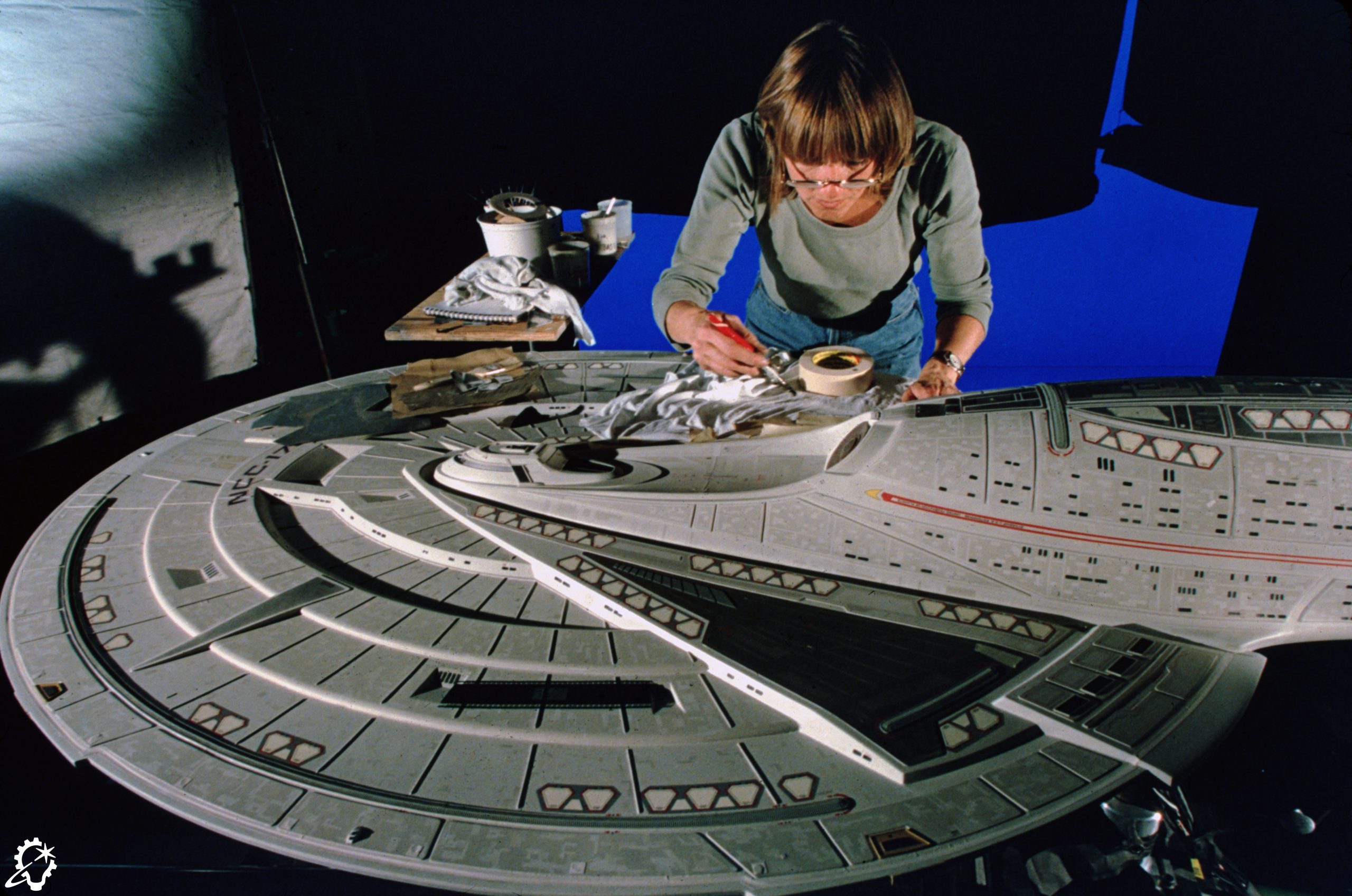
“I worked on the Borg cube, Borg sphere, the USS Cochrane, and the Enterprise-E for “First Contact,” modelmaker Kim Smith states. “I even helped with making a pattern for the Enterprise-E build. I noticed, in the wooden pattern that had been created for the saucer, that the windows did not match symmetrically from side to side, nor were there the same number of windows, so I did a lot of Bondo-ing to try to make the pattern match visually. For paint jobs, I use the highest quality masking tape, but the nacelles had a problem with residual mold release. The paint would not stick no matter how much cleaning, sanding, or barrier priming I did. I wound up coaxing the masking using low-tack “Post-Its” so the paint would not immediately peel off. Bill [George] asked me to do three sample paint jobs to arrive at the look of the ship, and we agreed on one of the samples. For me, one of the inspirations for the pattern was the seaming on a baseball, and, though one would never see how the two ideas relate, that was what was in my head as I broke up the surface with panels. It came out looking great and I stayed with the model all the way through shooting. I was the stage support for it, and when we were done, we packed it away in crates to send it back down to Paramount.
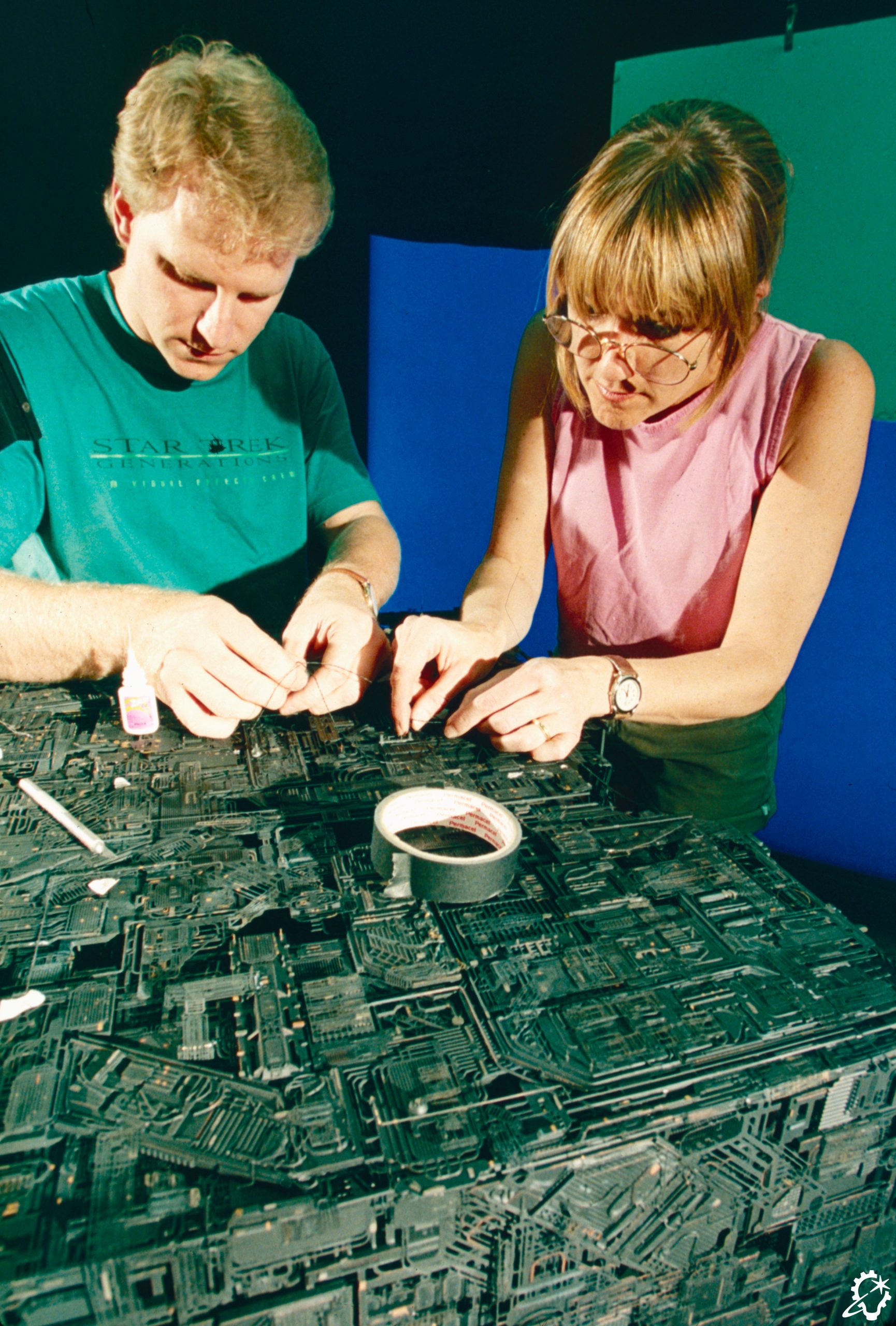
“The Enterprise-E was the most fulfilling model that I worked on because, while ILM made many of the Star Trek models over the years, this is the one I was involved with from scratch,” Smith continues. “From helping out with the pattern for it through casting and painting to babysitting and packing it up, I was there. In terms of any model that I worked on at ILM for any movie, the Enterprise-E was the closest thing I’ve had to a child – other than my pets [laughs]! And I’m super happy with how the model came out.”
In addition to the brand-new Sovereign-class USS Enterprise-E, Knoll hoped to diversify the Starfleet vessels seen on screen. “Alex Jaeger was my art director on the show, and one of the first tasks I had for him was to design a half a dozen other Starfleet vessels that fit into the Star Trek aesthetic,” he explains, “just like how the Reliant had clearly been from the same lineage as the Enterprise, but with different topology. Alex designed a bunch of ships that we built up as low-res models with the Rebel Unit group to take part in the battle. Some of those, like the Akira-class, became pretty popular with fans, too,” Knoll asserts, referencing the Akira-class design that continued to make appearances across Deep Space Nine, Voyager, and Star Trek: Picard (2020-2023).
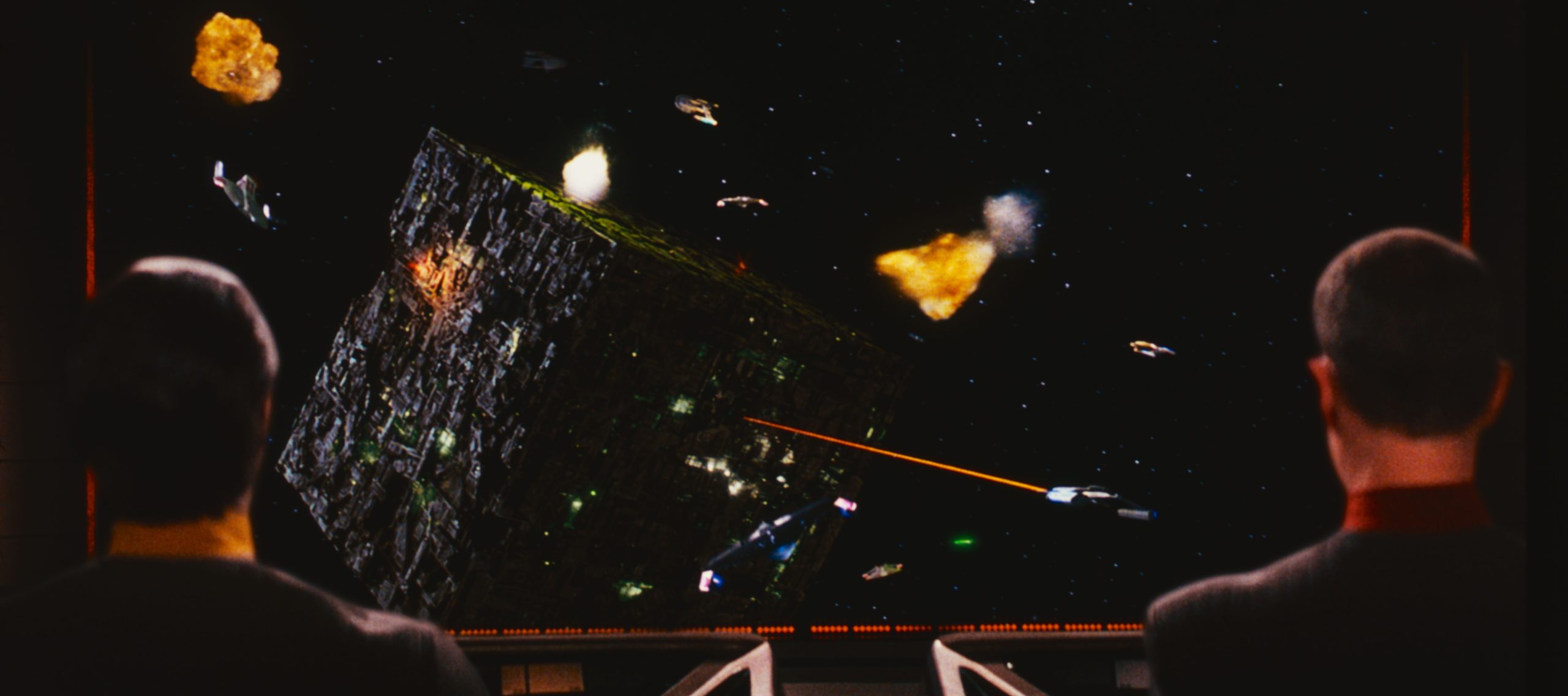
“In some of the battle’s big wide shots, where it’s supposed to be all of Starfleet combatting the Borg, I wanted it to look like there were 50 ships participating,” Knoll explains. “I used all of the ships that we made to be part of the fleet, but there are some Easter eggs in there. One of them was a little low-res model of the Millennium Falcon,” Knoll continues. “There were two models of the Falcon that were built for the Special Edition of the Star Wars trilogy. Scott Pasko, who worked at Electric Image, wanted to take a crack at it, so I sent him all my high-res reference images of the Falcon. Scott built this lovely model, and I reworked the textures and look dev.
“I also built a super lightweight – I think under 2,000 polygons – version of the Falcon using Scott’s model as a template, and I projected photographs of the 2-foot model onto that,” Knoll adds. “So the lightweight version became my stand-in model for doing animation playblasts; that way I wasn’t using the full model until it came time to do the real rendering. That’s the one you see in the space battle in First Contact.”
Among the wealth of visual effects shots ILM contributed to First Contact, another standout moment involved the entrance of the Borg Queen (Alice Krige), where her disembodied head and shoulders descend into her mechanical body. “Alex Jaeger did this beautiful art of just her head and shoulders with the spine sticking down, and he drew up some storyboards of what that shot could look like,” says Knoll. “Talking with Jonathan Frakes, he liked the idea of doing it as one long, continuous shot. You’d see her emerge from the shadows up in the ceiling, and while she’s delivering dialogue, she slowly lowers down, fits into her body, the body closes up, and she walks forward.
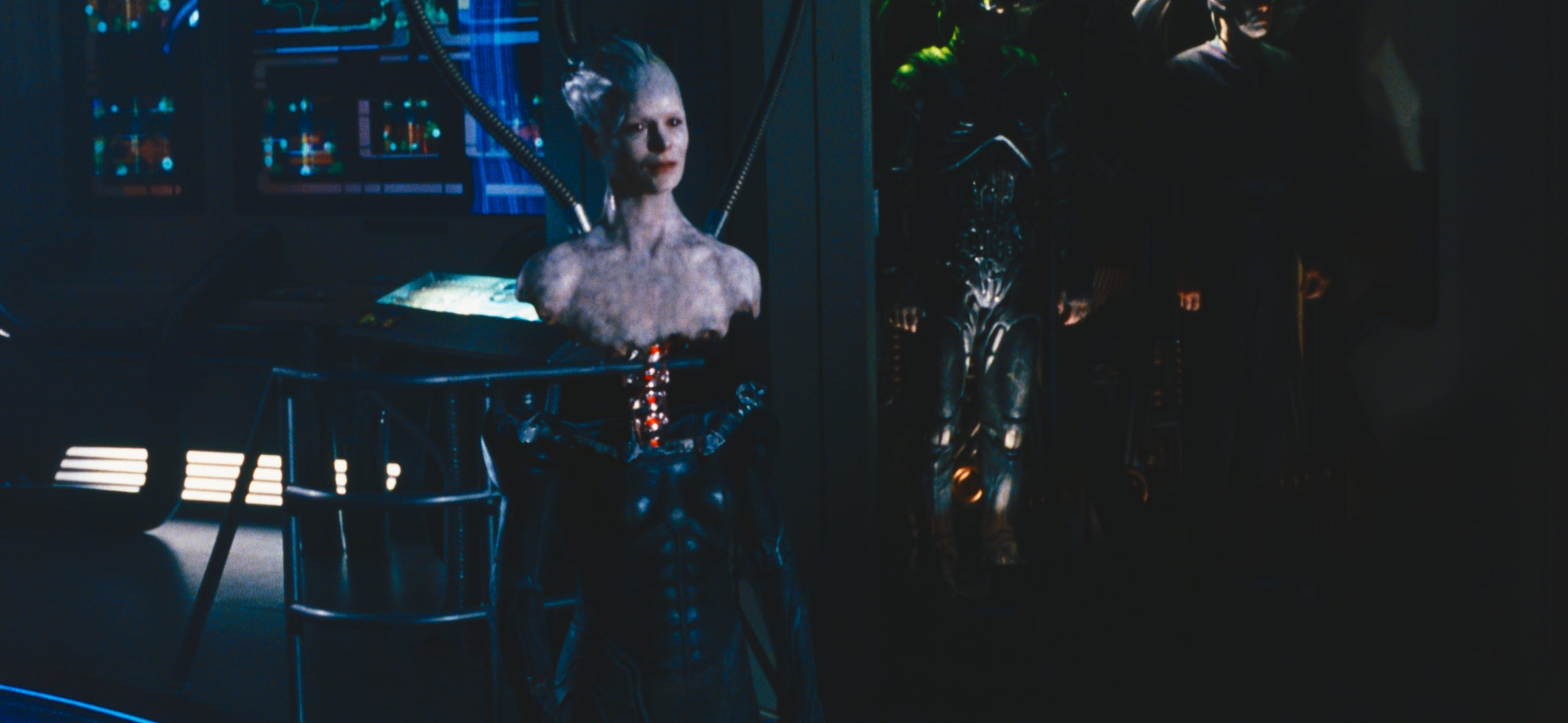
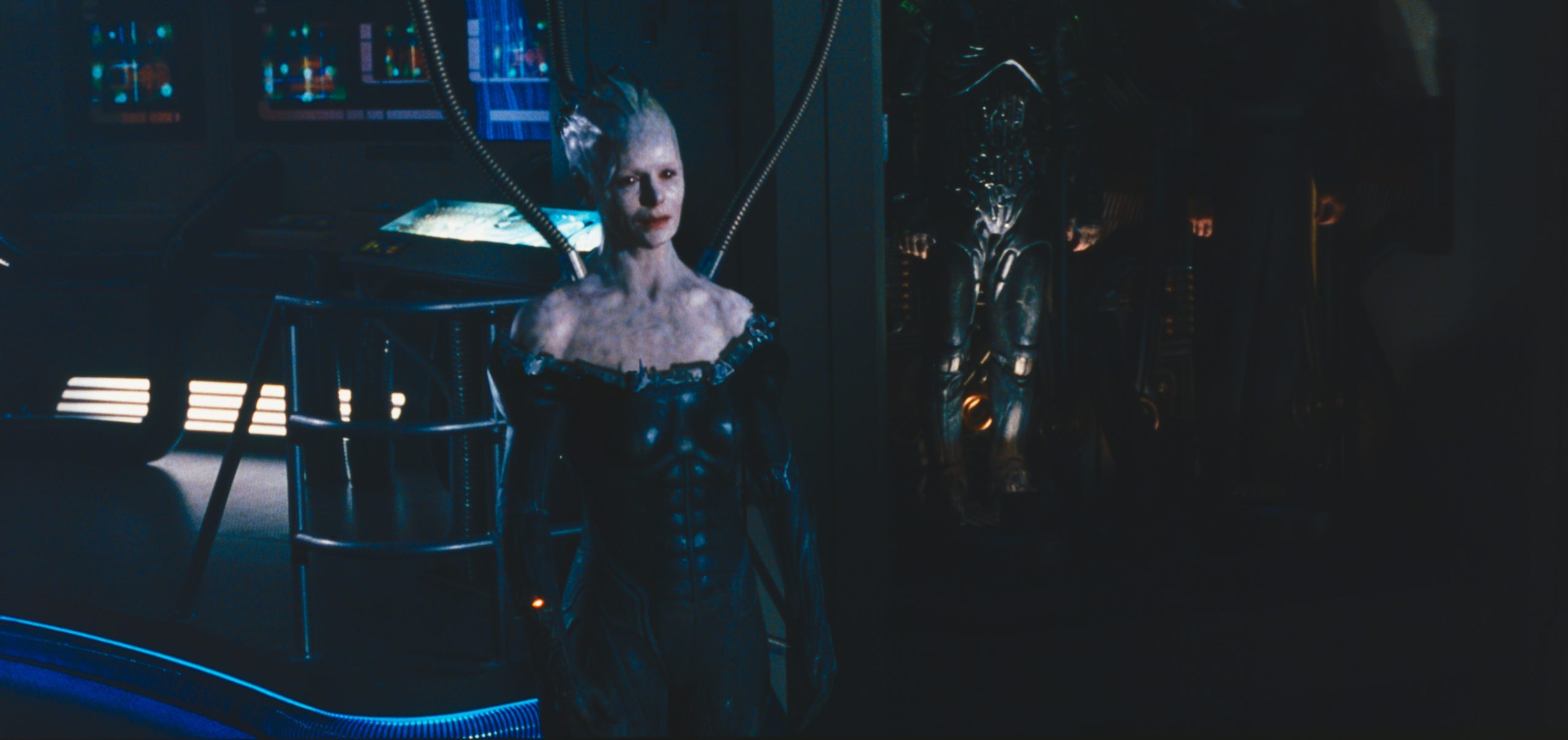
“I partnered with Todd Masters, who did animatronics and much of the Borg work on that show,” Knoll continues, “and the idea was that the head for sure was going to be Alice. However, we were going to have Todd build a prosthetic that would attach at her neck to be her shoulders and spine. Alice’s body would be leaned back with her head forward. We could lower that down from the ceiling on a crane into position, and then we’d have her already wearing her full-body suit. Then we’d match the position, shoot an overlapping piece, and make a transition between the two. Since the camera’s moving the whole time, we decided to shoot that motion-control so we could shoot both pieces with the same camera move.”
After their tenure on First Contact, Knoll and ILM shifted their attention to another space franchise. “I had started to talk to Paramount about doing visual effects for Star Trek: Insurrection [1998] when I got the call that George Lucas was interested in having me supervise on The Phantom Menace,” Knoll conveys. “I think we were bidding on doing the work on Insurrection, but we withdrew from the bidding because I got hired onto Episode I. Then I was sucked into the Star Wars universe.”
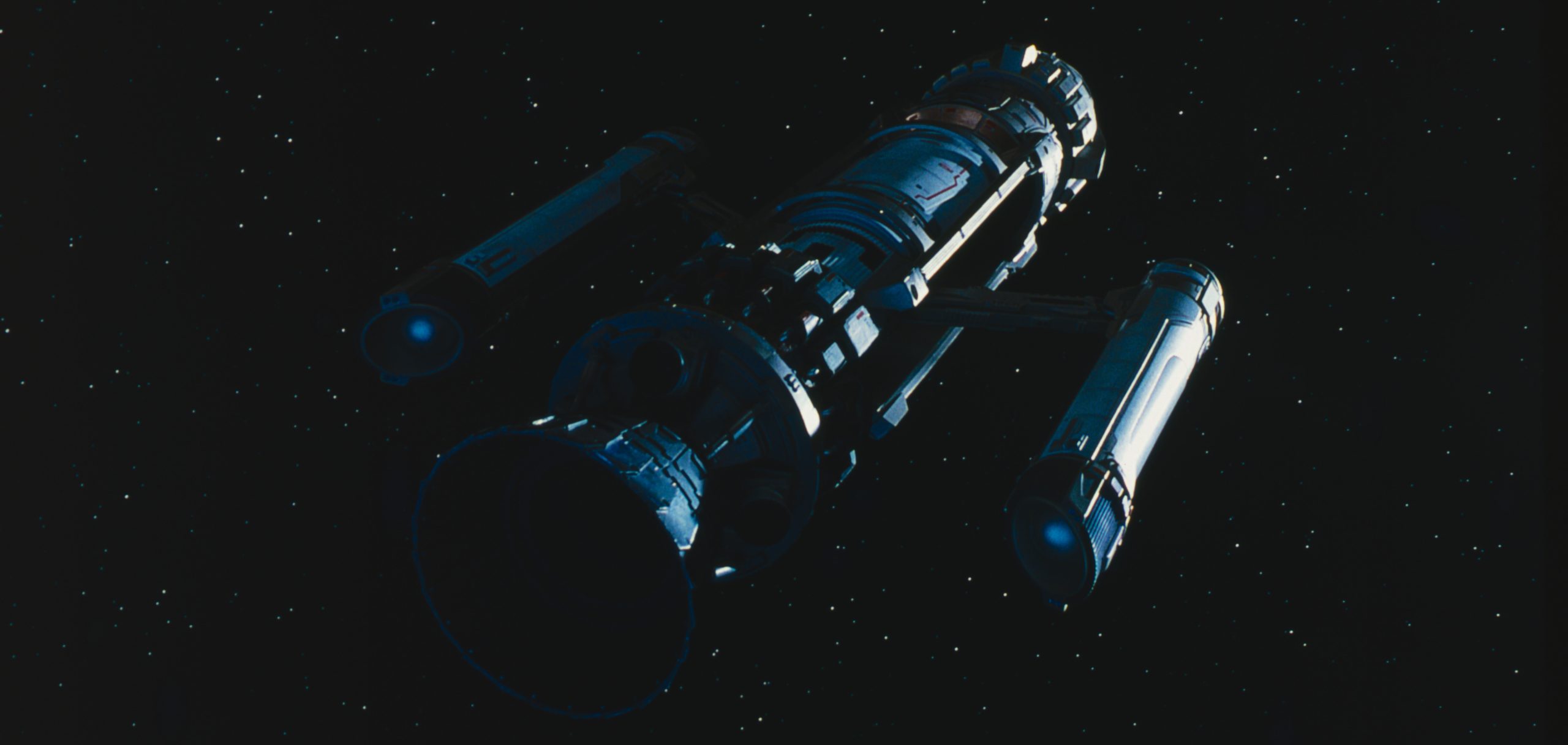
With ILM leading the charge on visual effects for the Star Wars prequel trilogy, the company took a bit of a break from Star Trek. Nevertheless, when J.J. Abrams signed on to refresh the franchise and helm a set of alternate-reality adventures with Captain Kirk (Chris Pine) and Spock (Zachary Quinto) in Star Trek (2009), the acclaimed director called upon ILM’s Roger Guyett to take the job as production visual effects supervisor.
“J.J. Abrams had reached out to me because he was a fan of the work we’d done on Harry Potter and the Prisoner of Azkaban [2004],” Guyett begins. “We had a great meeting in Los Angeles and before I knew it, I was back in LA working with him on Mission: Impossible III [2006]. J.J. is an impressive guy. He’s confident and full of ideas, but he’s also knowledgeable about so many crafts within the filmmaking process. He’s really fascinated and curious about visual effects.
“After finishing Mission, J.J. told me he was considering doing Star Trek,” Guyett continues. “I was a huge Star Trek fan and had seen the first run of movies. At the beginning it was hard to understand the best way to reinvigorate the franchise, but he did such a spectacular job. The casting was magnificent, and J.J. and the writing team brought a great wit to the Star Trek script. There’s a vibrancy and energy to the film. During the process I learned a lot from J.J., about shot design, composition, and also about the editing process. He was very inclusive. It’s interesting that he also has a fan’s perspective. I thought that was a wonderful characteristic to have as a director. You’re making a movie that you’d like to see yourself!”
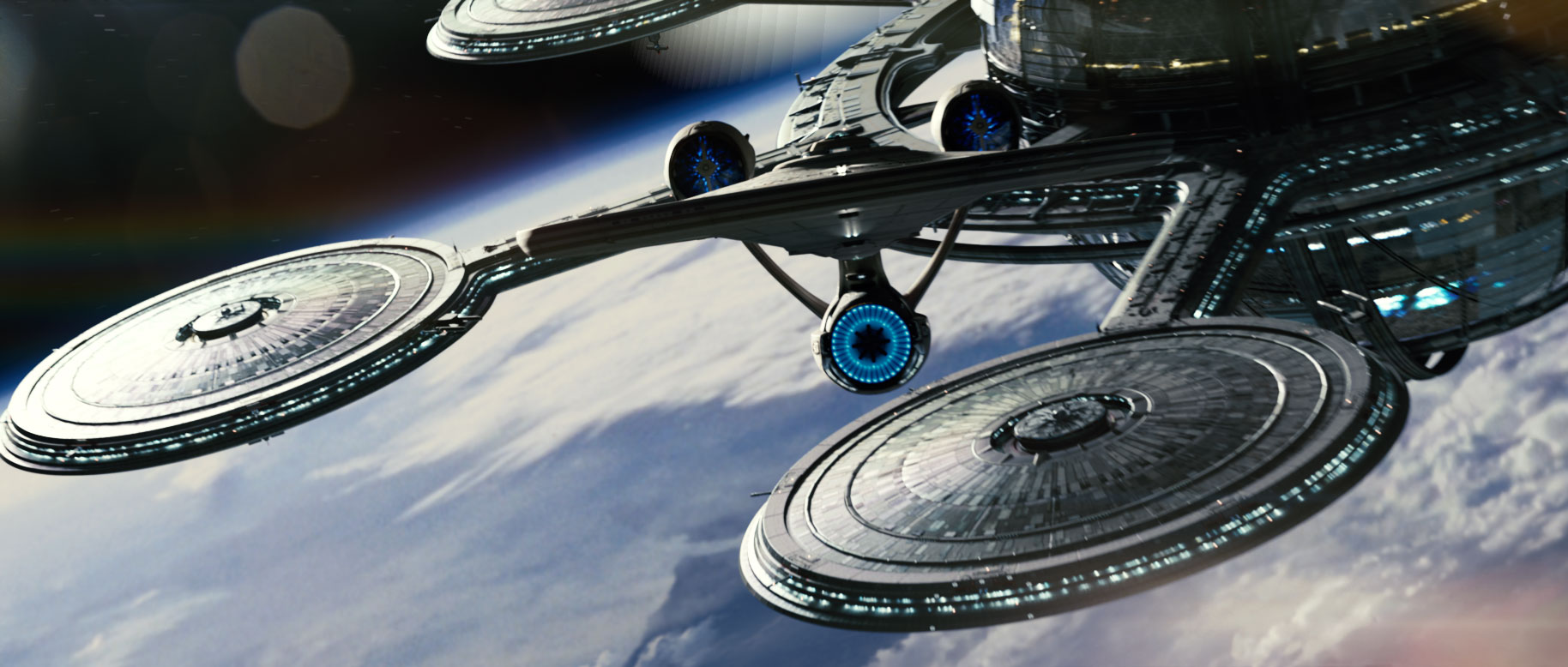
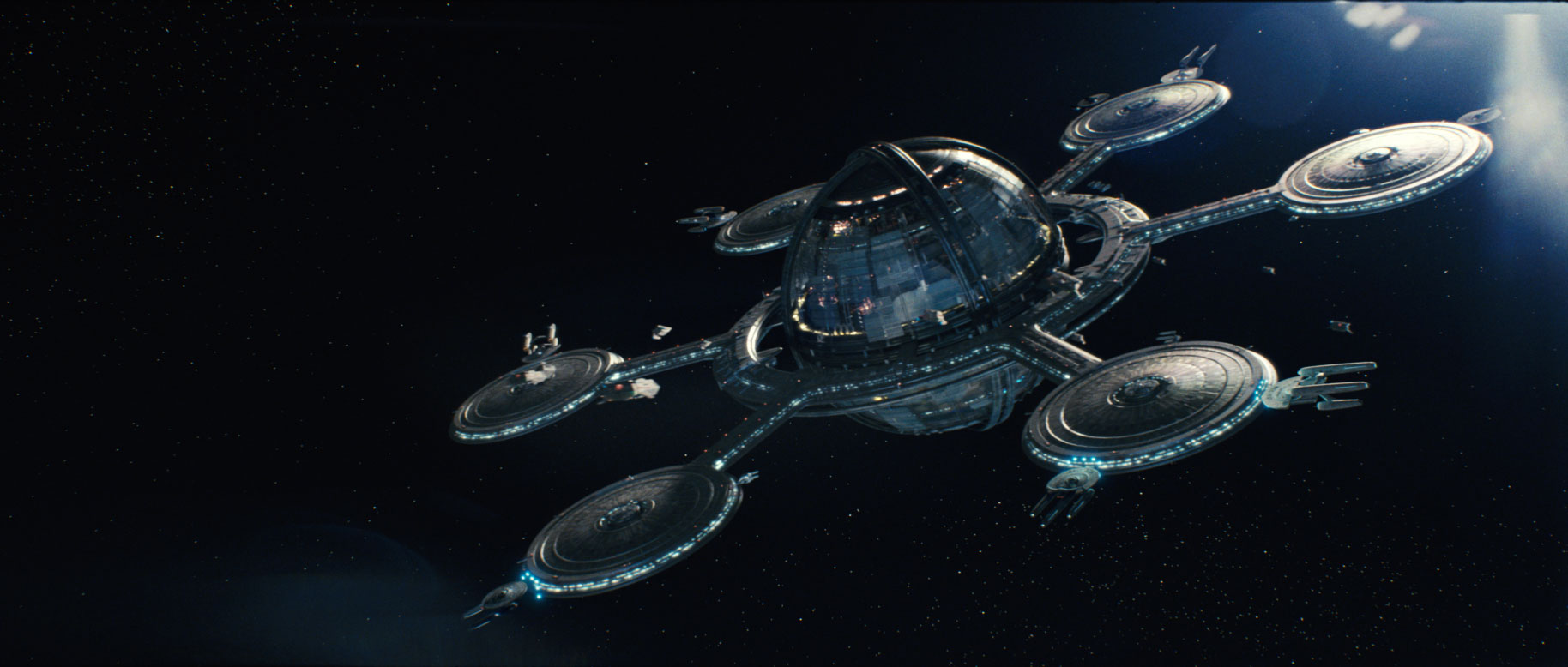
Guyett also praises ILM’s company culture, highlighting the Star Trek knowledge and experience its personnel brought to the film. “There were people like [digital models and simulation artist] John Goodson who built the USS Enterprise with [viewpaint supervisor] Ron Woodall and [digital model supervisor] Bruce Holcomb. They just had so much enthusiasm for it. We had a huge art department designing these things. [Visual effects art director] Yanick Dusseault did a lot of the environment work, for example, Spock’s planet, and [senior visual effects art director] Alex Jaeger had such a profound understanding of those worlds. And you could talk to people who had been involved with the earlier Star Trek projects, like John Knoll. [ILM sequence supervisor] Todd Vaziri was also a big Star Trek fan. There’s this general feeling that ILM is the home of Star Wars, which of course it is, but there is definitely a huge Star Trek history there, too.
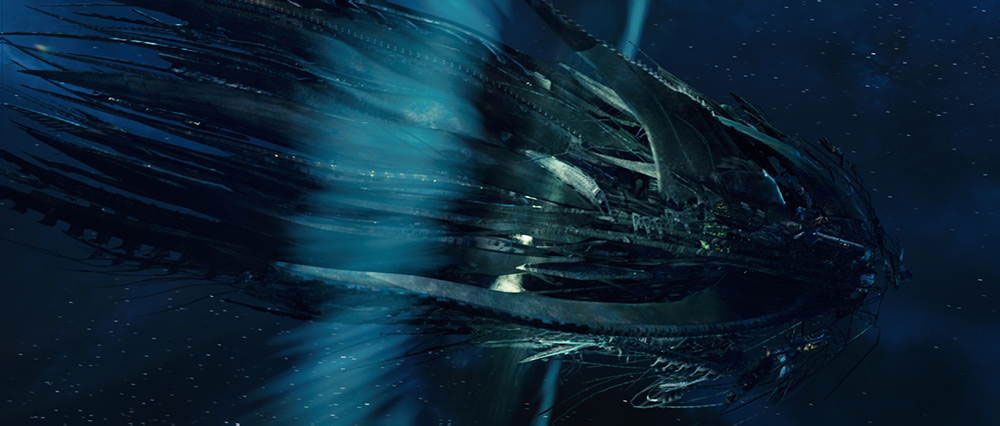
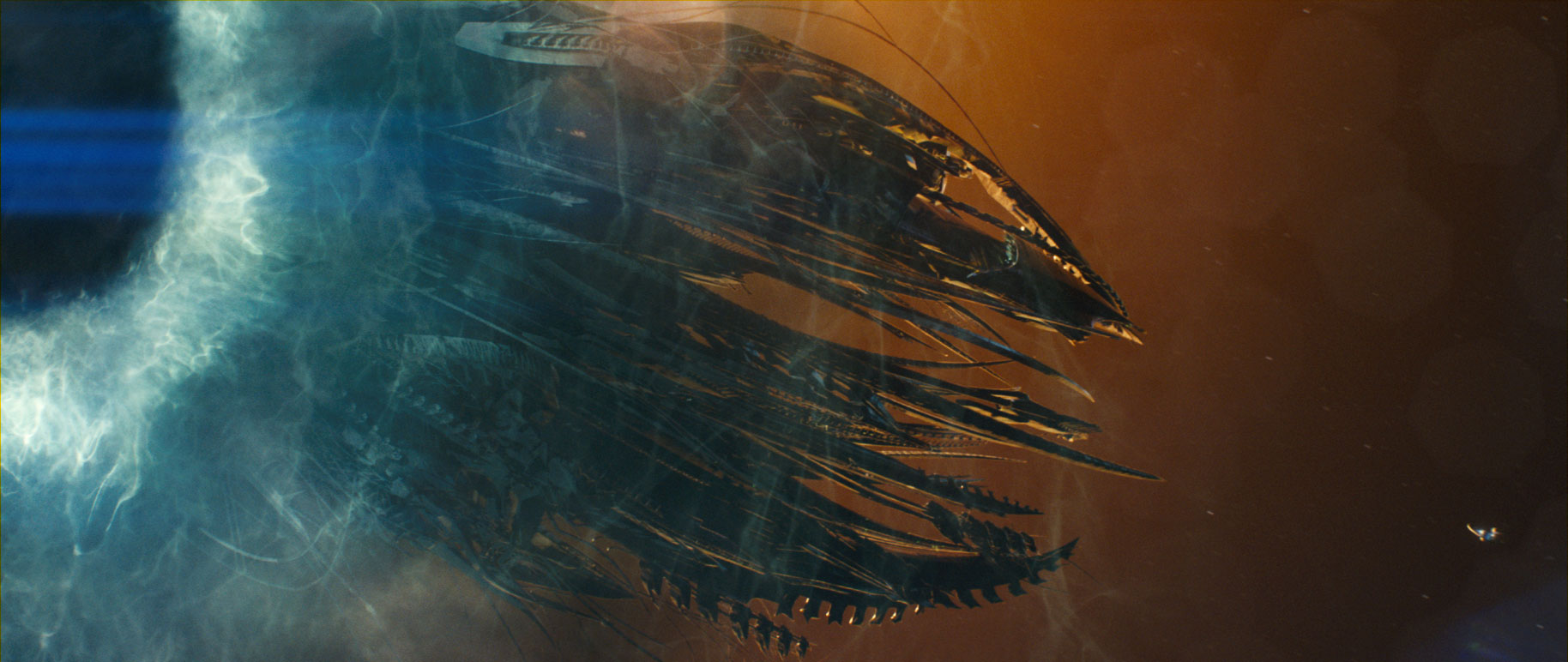
“We had [concept artist] James Clyne, who’s now a very successful production designer, design the Romulan mining ship Narada,” Guyett continues. “As far as building and having the ship as a model inside the system – it’s this huge piece of geometry because we had to accommodate many different scales. The Narada is a massive ship and would take forever to load up on our system,” Guyett adds before reflecting on his admiration for Abrams’s creative choices. “I loved the ideas J.J. conceived for the movie; the jump onto the drill platform over Vulcan, or where the ship breaks open and the Starfleet guy gets sucked into space.”
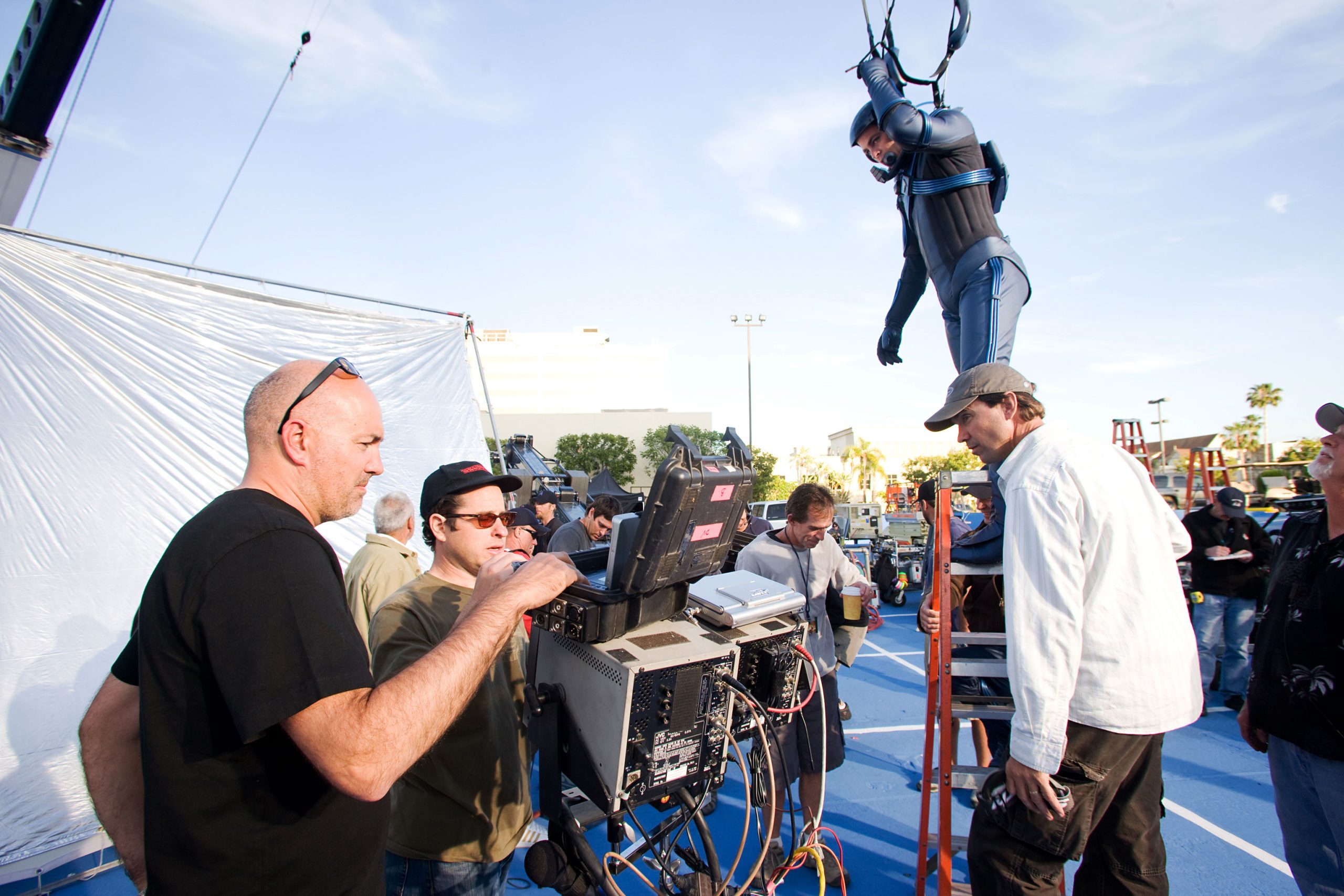
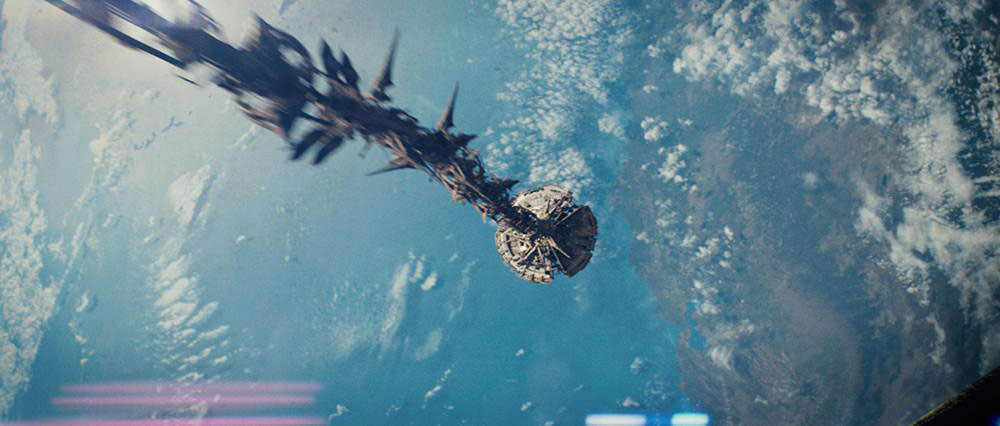
Guyett’s duties as visual effects supervisor and second unit director entailed extensive work alongside Star Trek’s stellar cast, as he expounds, “I did a bunch of work with the young and then unknown Chris Hemsworth [George Kirk] and had him flying across the USS Kelvin’s bridge. The whole cast was a joy to work with. I remember what a gentleman and classy guy Leonard Nimoy was. He had such gravitas. One moment, that I recall, was when James T. Kirk finds the ice cave on Delta Vega. We used an in-camera scale trick and didn’t build a full-size opening to the ice cave. Kirk is a kid dressed to double up for Chris Pine. He was 8 or 9 years old, so we miniaturized everything and built a half-sized arch of this ice cave.”
Guyett sees the collaboration between Abrams and ILM as a partnership that revolutionized how space is depicted in film, mentioning, “When you watch space movies like Star Trek, it’s sometimes difficult to connect the characters to the environment they’re in. J.J. had some interesting shot designs to make sure the audience felt this connection. You might start the shot on the exterior of the ship – out in space – but then resolve to a transitional moment where you see the actors through the bridge window of the Enterprise. There’s another shot where the camera pulls back across the exterior deck as the ship rotates – going from inside to outside in space. He was blurring those lines quite a bit. To me, those shots make it so much more interesting. When the crew goes up on the shuttle to see the Enterprise for the first time, you’re on the outside of the shuttle, you see them looking in awe, and then you see the space station. J.J. was very good at designing those kinds of shots to help the audience experience the Star Trek world in first person, along with the characters.
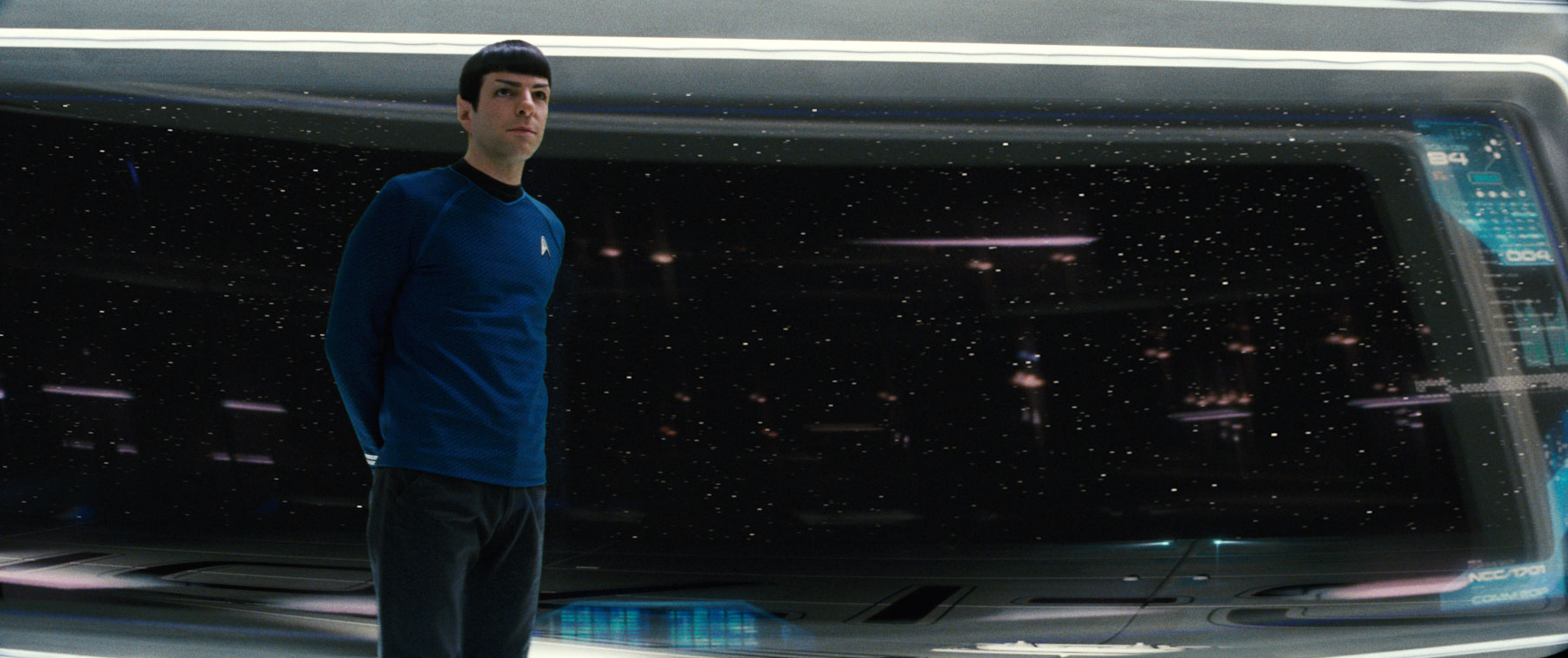
“J.J.’s Star Trek influenced the way people do those kinds of movies,” Guyett adds. “Even if it was just the lens flares or the palettes and environments we created. We wanted to try and energize it with new ideas and new ways of approaching things. Star Trek took you for a ride. Visually, it had this energy. Whether it’s camera movement, lighting styles, or the different environments, there’s a sense that you’re going on this journey. In my opinion, it all came together on that movie. J.J. was a great choice to direct.”

J.J. Abrams teamed up with Roger Guyett and ILM for another round of Star Trek, this time telling the story of Captain Kirk’s battle against an alternate-reality Khan Noonien Singh (Benedict Cumberbatch) in Star Trek Into Darkness (2013). “This second film didn’t have the benefit of an origin story, but we now understood the Star Trek world,” Guyett proposes. “That confidence emerged in our shot design and allowed us to be more ambitious in our approach.
“Visually, Into Darkness was so strong,” Guyett states. “From Kirk and Khan space-jumping between the USS Enterprise and USS Vengeance to the idea that those two ships could battle in a warp tunnel, which looked thrilling to me. We found a personality for the tunnel, playing with the distortion and physics of how something like that might happen. And the Enterprise underwater! The first scene, where Bones [Karl Urban] and Kirk are running through this red forest with the locals coming after them. The ship’s underwater, Spock’s landing in a volcano, and they freeze the volcano! So much fun!”
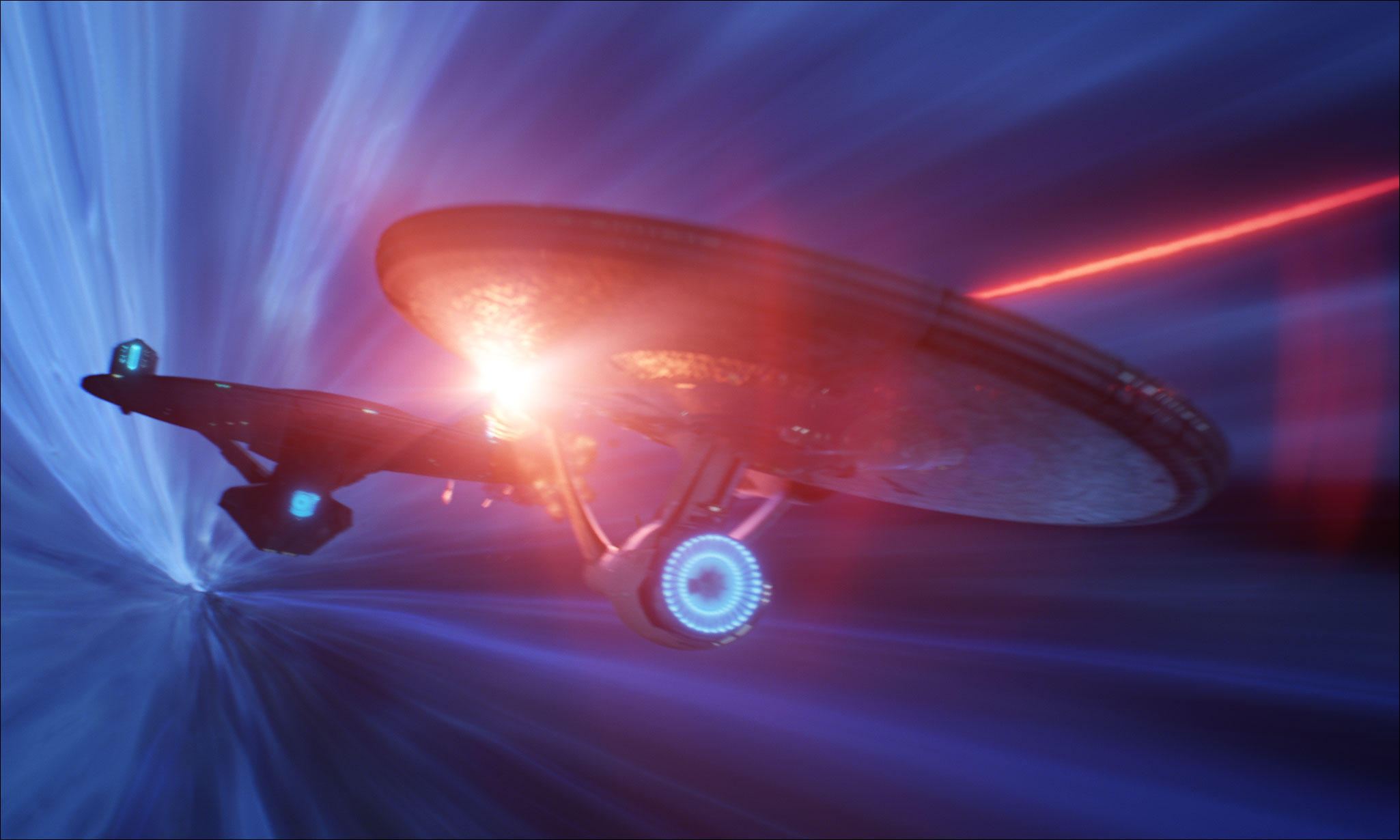
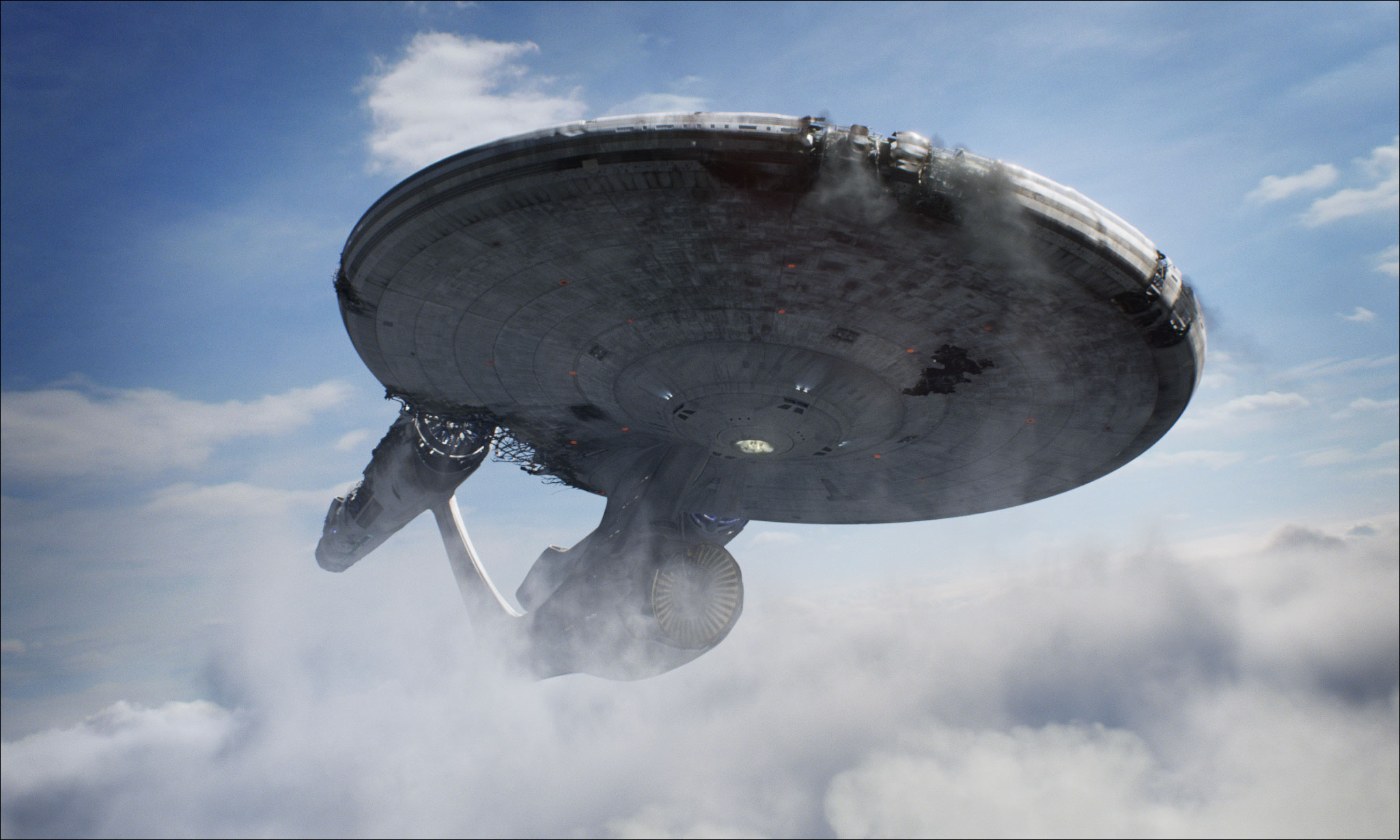
As breathtaking as those sequences are, Guyett stresses that Abrams’s creative choices remained driven by the story. “J.J. didn’t want action in the movie for its own sake. Every shot had to have some sort of storytelling aspect to it. Why am I showing the audience this shot? What meaning does it have, and what importance does it have? For example, when the Enterprise is hurtling towards Earth in Into Darkness, you need to convey the imminent danger and show the ship hurtling closer to its demise. But how do you show that idea without repeating the same shot over and over again? You can do the exciting action shot, but every shot must be something that’s worth having in the movie, in terms of that storytelling quality.”
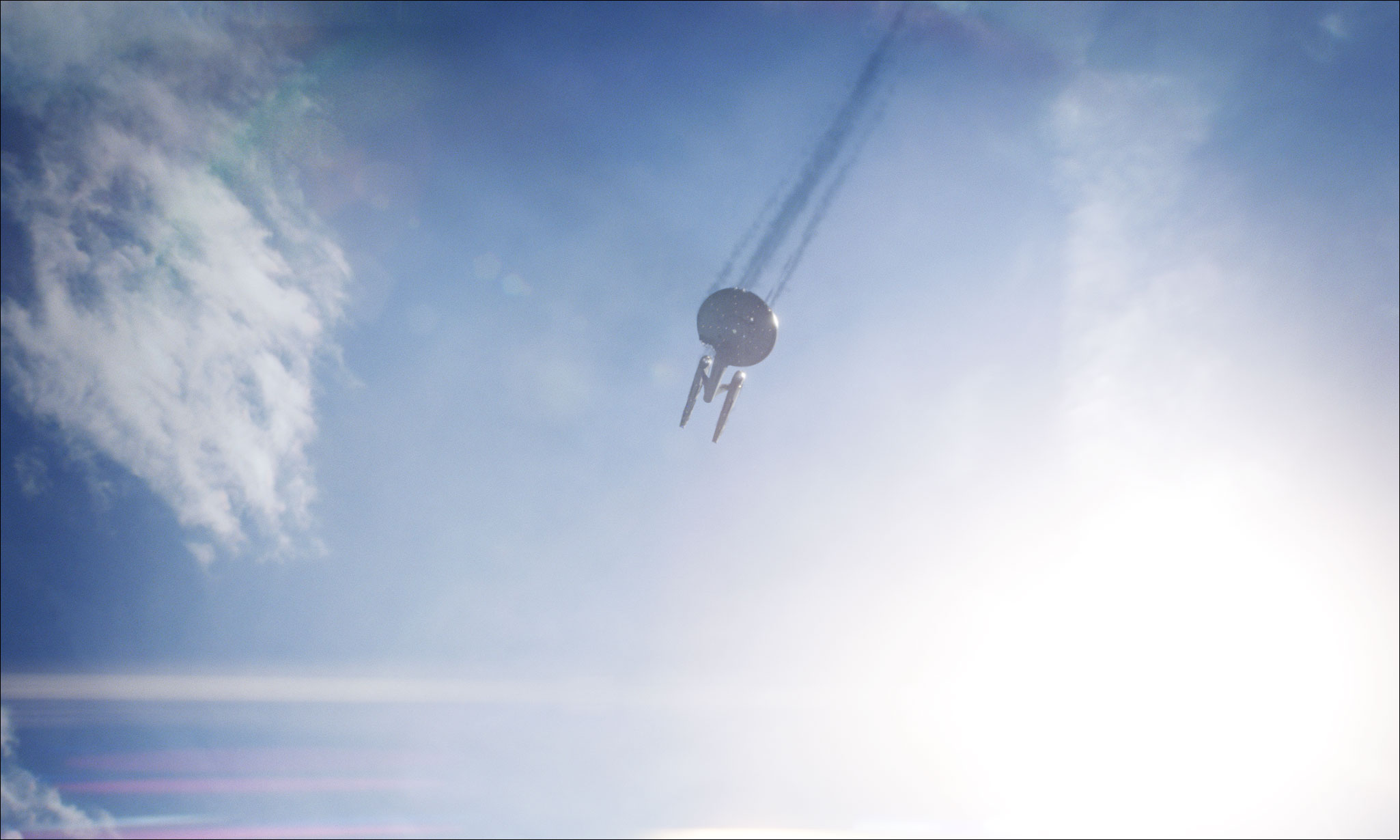
Guyett mulls over his favorite visual effects shots in Into Darkness, noting, “I have so many! But definitely the Enterprise rising out of the water, and later, the ship coming through the clouds, which I believe Todd Vaziri worked on. The technology needed was in its earlier stages – these were not trivial things to do. The Vengeance crashing into the [San Francisco] Bay and going through all the buildings – that was a huge undertaking in terms of the effort and technology involved. And sometimes we had fun with the details, such as the small creature in the red forest at the beginning of the movie. We pull back and see its little tentacles wobbling around, kind of like a National Geographic moment, and then we cut to Bones and Kirk running – all these wonderful little moments!”
Even with the latest advancements at his disposal, Guyett appreciates the filmmaking tricks that fit any given situation, as he shares, “When Kirk, Scotty [Simon Pegg], and Doctor Marcus [Alice Eve] are beamed back to the Enterprise, but they end up inside the cell that Khan had been in – the ship gets attacked, and there’s an explosion, and the ship rocks. But in truth, that was just a fixed set. Nothing was really moving. J.J. would tell the actors, ‘The ship’s turning to the right, so lean to the left.’ It’s old-school filmmaking, but it works.”
Looking back on his experiences with the Abrams-helmed Star Trek films, Guyett elucidates, “When you work on a J.J. show at ILM, he is so appreciative of the work. He is so respectful of the crew, and he’d spend time getting to know them. He genuinely cared. J.J. loved coming up to see us at ILM, and he enjoyed meeting the crew. He has such an enthusiasm for the work and a respect for the artistry of the crew and their craft. For example, I remember him spending time with [digital paint and roto supervisor] Beth D’Amato to learn how she approached a particular sequence and with [sequence supervisor] Daniel Pearson as he explained all the crazy simulation FX work he was doing.”
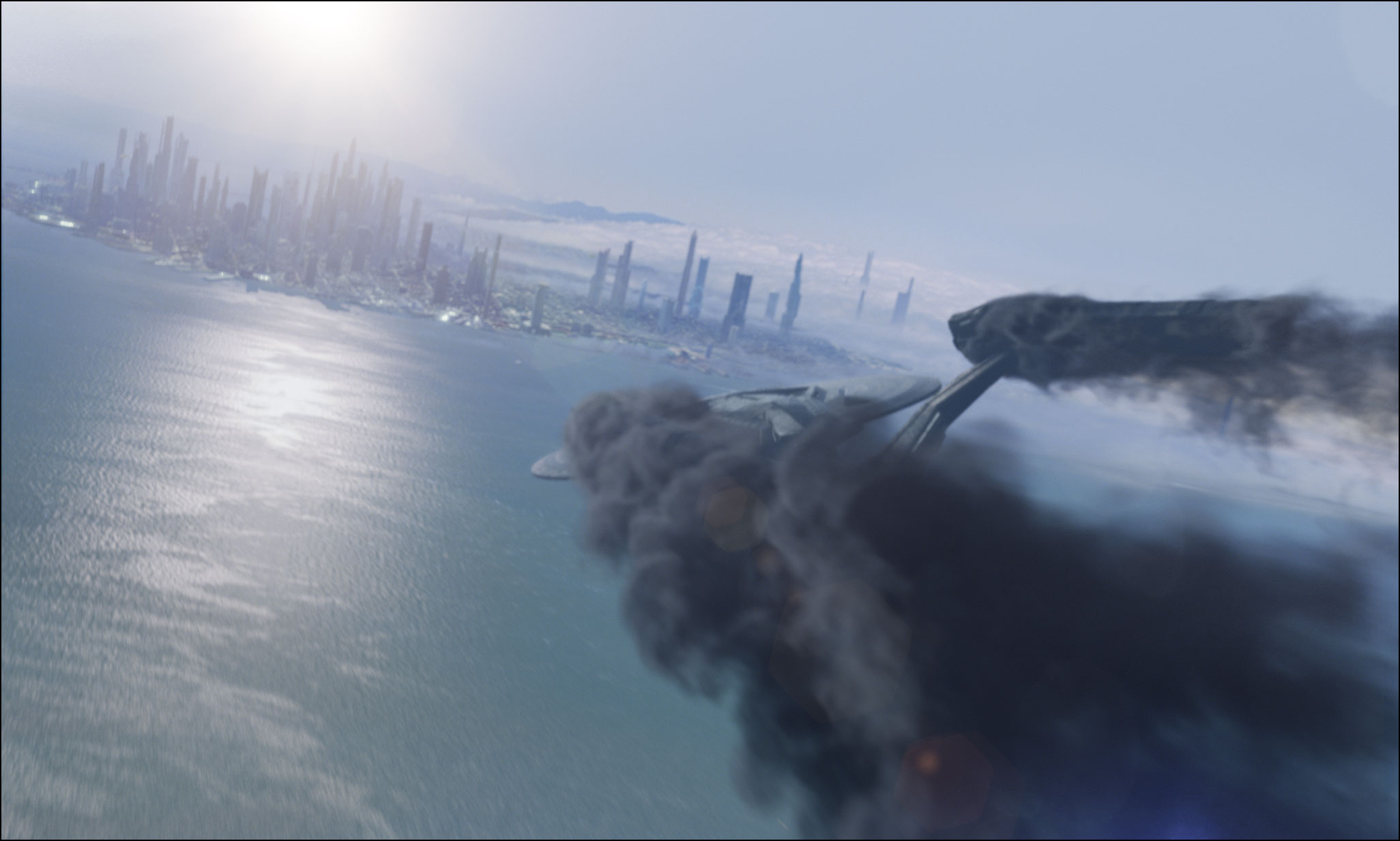
The success that Abrams, Guyett, and ILM cultivated on Star Trek and Star Trek Into Darkness did not go unnoticed by their peers, as John Knoll discloses, “I admire what Roger Guyett and his crew did with the look of Star Trek. Working on space-based sci-fi shows – it’s tricky to come up with a new look for that kind of work, a new stylebook. Everybody tends to adopt either a Star Trek or Star Wars stylebook. When ships meet in space, and they all agree on which direction is up, or somehow there’s a sun nearby so you can have sunlight raking across the ship. Certain lighting, framing, and shot-design stylebook items have gotten to be pretty ubiquitous, and doing something new and different – in a way that doesn’t feel like you’re being weirdly different just to be weirdly different – is challenging.
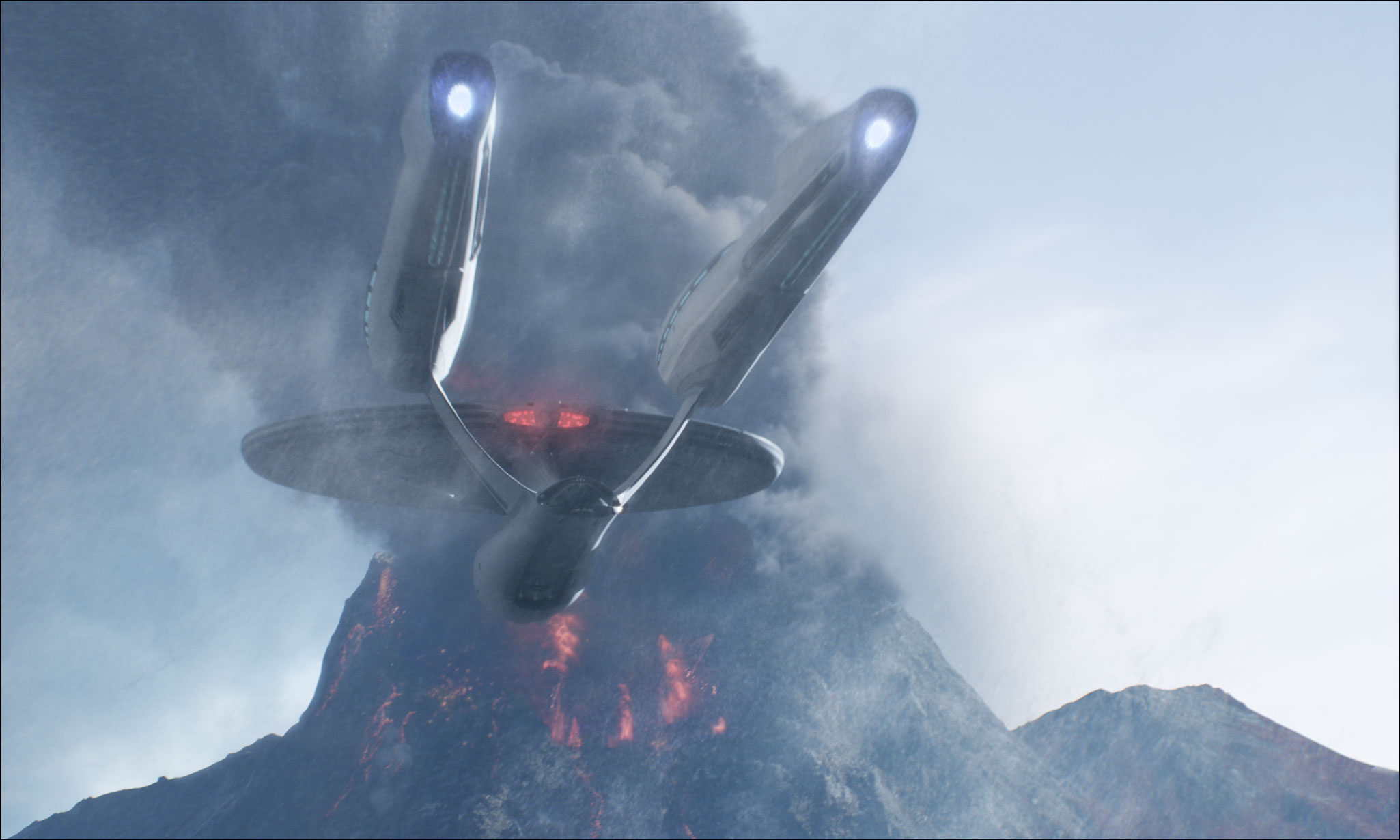
“One of the things that Roger and crew did, which I thought was brilliant, was – since the Enterprise is huge, how do you impress on people how big it is?” Knoll comments. “Well, it’s so big that it never fits in frame [laughs]. The majority of shot designs they did are framed in so tight that part of the Enterprise is always breaking the frame. I thought that was extremely effective. They didn’t light it the standard way that you often do for ships in space. There was a lot of backlighting where you’re mostly seeing the glistening panels, and there wasn’t a ton of front light on them. Embracing that felt fresh and different in a way that I thought was very pleasing.”
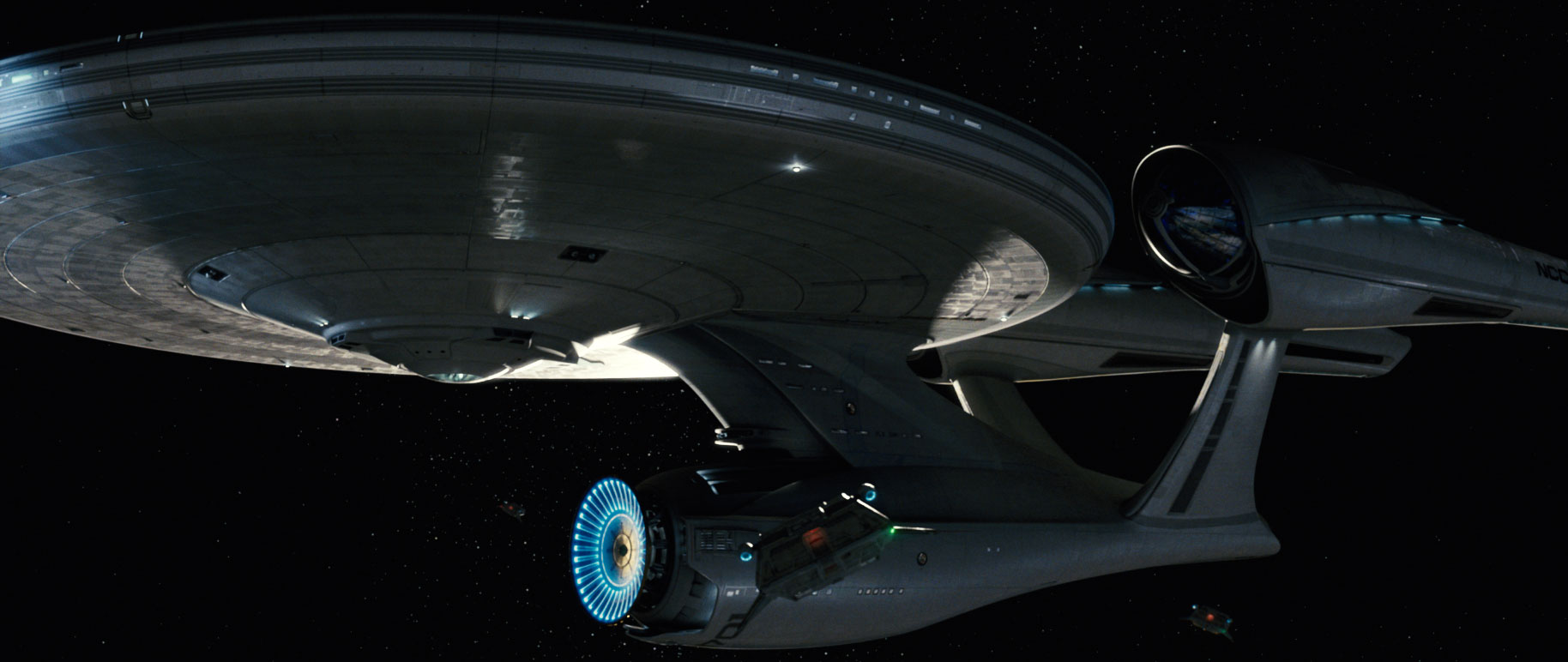
ILM’s contributions to Star Trek and Star Trek Into Darkness have continued to reverberate throughout the franchise, as many aesthetic elements – such as shots involving a transparent viewscreenwindow on the bridge – have endured in the visual effects stylings executed by other vendors in the latest Star Trek series, including Star Trek: Discovery (2017-2024), Star Trek: Strange New Worlds (2022-), and Star Trek: Starfleet Academy (2026-).
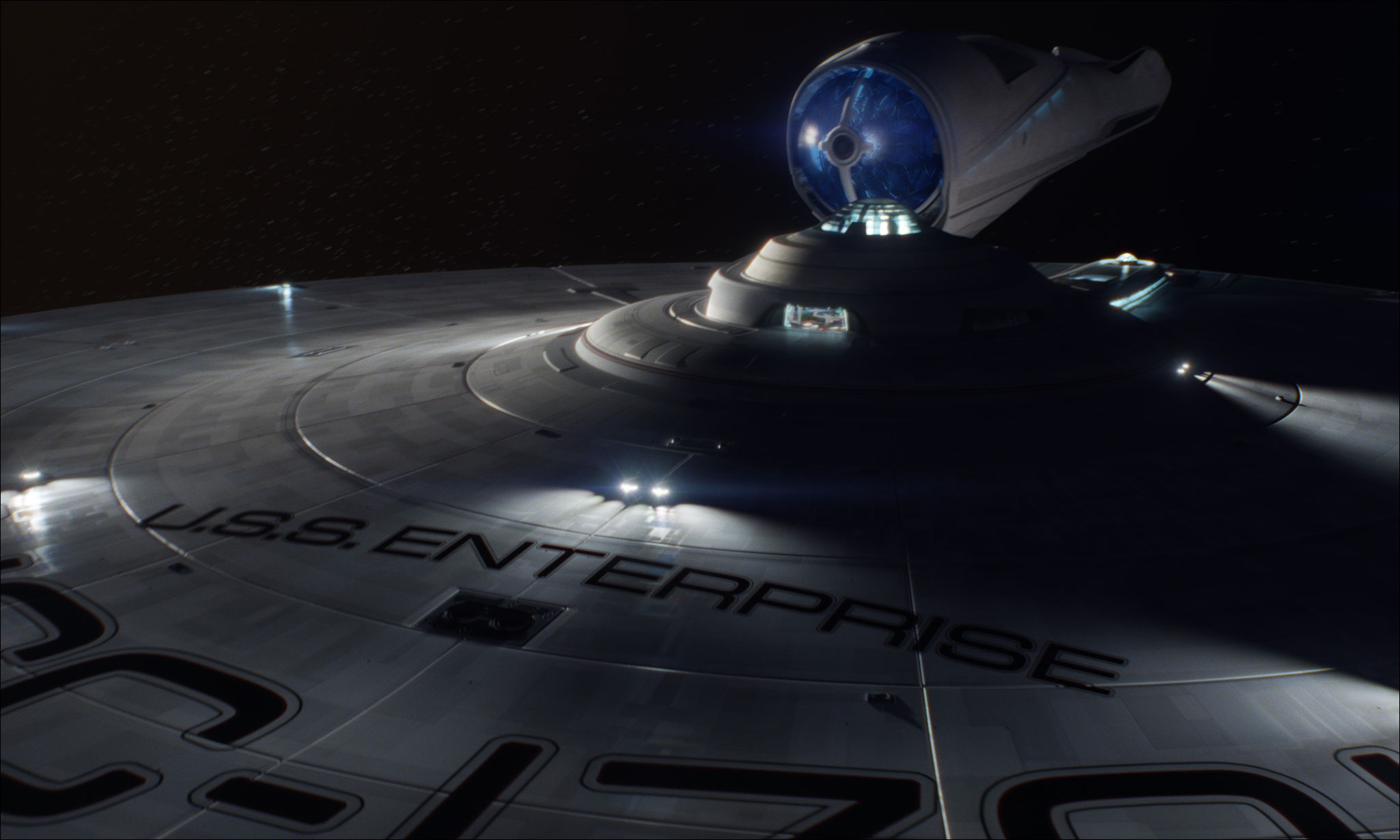
In fact, ILM’s influence on Star Trek, from the earliest days on The Wrath of Khan through Star Trek Into Darkness, comes much closer to rivaling the company’s substantial impact on the Star Wars franchise than many fans might realize. Touching on the visual language of both Star Trek and Star Wars, Knoll theorizes, “Part of the Star Trek stylebook was we’d treat spaceships as ships at sea. Generally, they’re arranged in a plane, and when two ships meet in space, they agree which direction is up. That’s how the shots are designed. Star Wars does some of the same, but typically a little less so. When we’re doing space-battle work, there are ships curving around and swooping, which is more based on World War II aircraft and the Battle of Britain. Having ships at odd angles is part of that Star Wars stylebook.
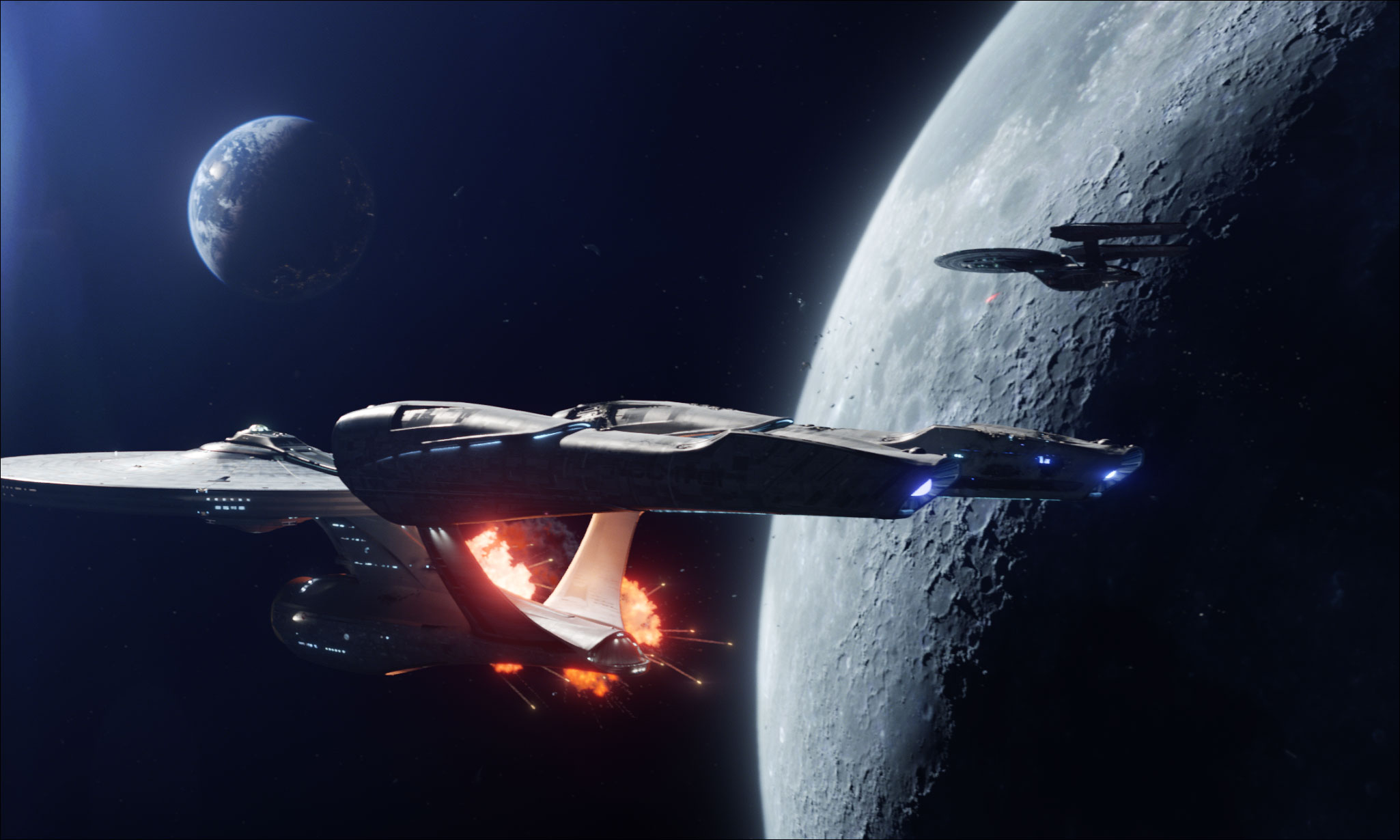
“As far as lighting goes, Doug Trumbull brought external lighting to the Enterprise in Star Trek: The Motion Picture,” Knoll adds, “getting away from the idea that no matter where you are in space, there’s conveniently a sun somewhere to light the ship. Making the ship self-illuminated was a clever idea. I tried to bring that external lighting back on the work we did on Generations, at least for the USS Enterprise-B. It wasn’t part of the stylebook on the Enterprise-D, which went with more of a Star Wars stylebook. Whenever you see the Enterprise-D, it’s lit from the outside.”
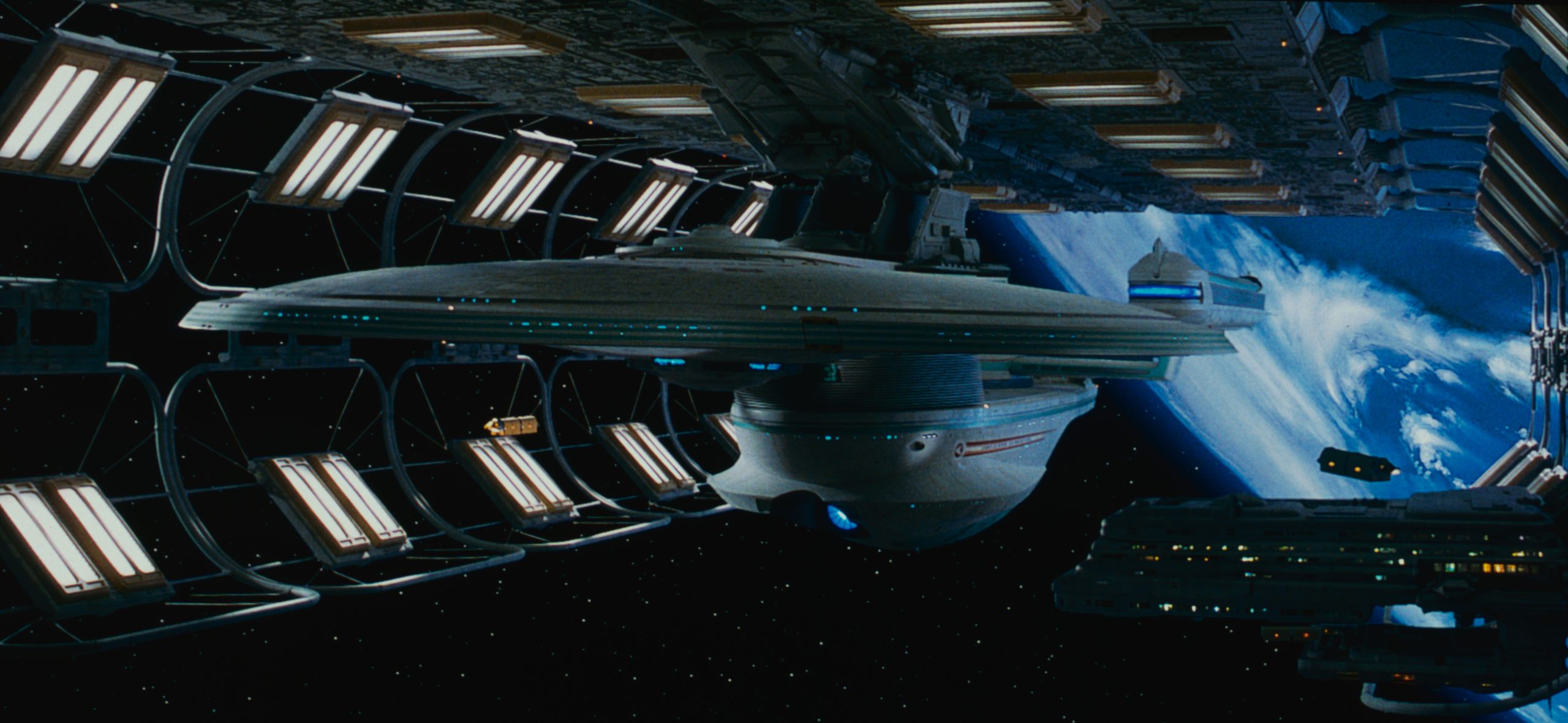
Ken Ralston expands on these notions, adding, “There’s such a naval theme to Star Trek, and predominantly so in The Wrath of Khan. In many ways, the nebula battle is Run Silent, Run Deep [1959]. Whereas, with [Star Wars:] The Empire Strikes Back [1980], that’s the reason I wanted a smaller Millennium Falcon – the 2-footer – because the behemoth that was on the first movie was cumbersome, and I wanted to give it some life. The 2-footer gave me the opportunity to do more acrobatics with the Falcon. On the other hand, when you have a giant, slow ship in Star Wars, say a Star Destroyer, you might approach it in more of a Star Trek way. X-wings fly around in all these maneuvers, but the Enterprise can only move so fast, unless it’s at warp speed, and then it just goes straight [laughs]!”
When contemplating ILM’s legacy within Star Trek, it becomes abundantly clear that the company’s dedication to the franchise has spanned numerous visual effects disciplines over the decades, from classic motion-control miniatures and early experiments with CG to out-of-this-world creatures and fully digital designs. ILM has played an essential role in every era of Star Trek’s cinematic history, pairing with Captain Kirk and the original series crew, Captain Picard’s (Patrick Stewart) next generation of officers, and J.J. Abrams’s alternate-timeline USS Enterprise to facilitate their treks through the stars. So the next time you discuss the countless projects on ILM’s iconic résumé, don’t forget to include ILM’s contributions to Star Trek on your list.
—
Jay Stobie (he/him) is a writer, author, and consultant who has contributed articles to ILM.com, Skysound.com, StarTrek.com, StarWars.com, Roddenberry.com, Star Wars Insider, Star Trek Explorer, and Star Trek Magazine. Jay loves sci-fi, fantasy, and film, and you can learn more about him by visiting JayStobie.com or finding him on Twitter, Instagram, and other social media platforms at @StobiesGalaxy. In memory of Midas.

Jay Stobie (he/him) is a writer, author, and consultant who has contributed articles to ILM.com, Skysound.com, StarTrek.com, StarWars.com, Roddenberry.com, Star Wars Insider, Star Trek Explorer, and Star Trek Magazine. Jay loves sci-fi, fantasy, and film, and you can learn more about him by visiting JayStobie.com or finding him on Twitter, Instagram, and other social media platforms at @StobiesGalaxy.