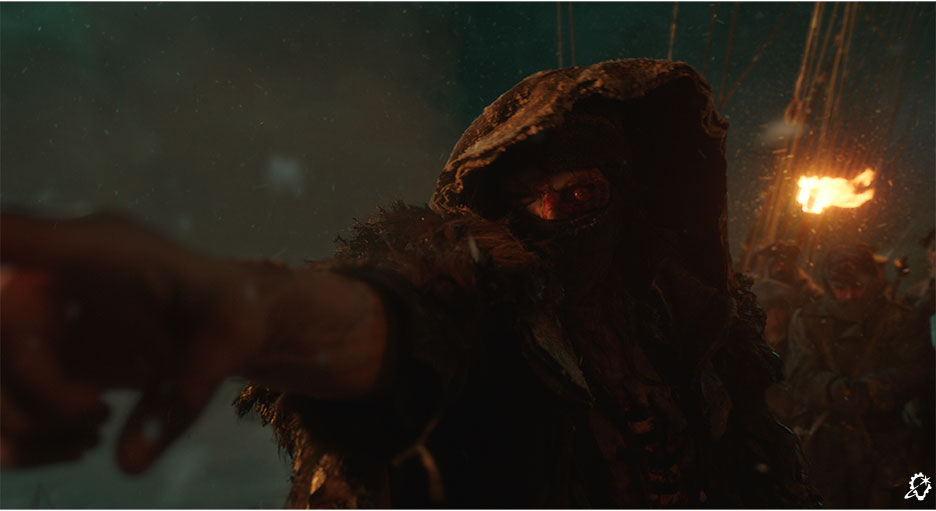
ILM visual effects supervisor Steve Ellis chronicles ILM’s work on Netflix’s latest spellbinding series.
Note to readers: this article contains spoilers about The Boroughs.
From creators Jeffrey Addiss and Will Matthews, Netflix’s The Boroughs (2026) follows Sam Cooper (Alfred Molina) as he and his band of fellow residents unearth a horrendous secret lurking within their retirement community. ILM visual effects supervisor Steve Ellis connected with ILM.com to explore Industrial Light & Magic’s numerous visual effects contributions to the project’s thrilling story, a task that included collaborating on the previsualisation and sequence design process, developing and animating the movement of the show’s unique creatures, orchestrating a dazzling scene highlighting the creatures’ miraculous blood, and much more.
As the ILM visual effects supervisor on The Boroughs, Steve Ellis worked directly with production visual effects supervisor Tara DeMarco and oversaw the approximately 170 shots that ILM handled as the project’s lead vendor. While ILM’s Mumbai studio helped out during early previs animation tests, the London studio tackled the majority of ILM’s duties on the series. “By ILM standards, we had a relatively small number of shots across seven of the eight episodes, but we did most of the biggest effects on the series, including the creature,” Ellis tells ILM.com.
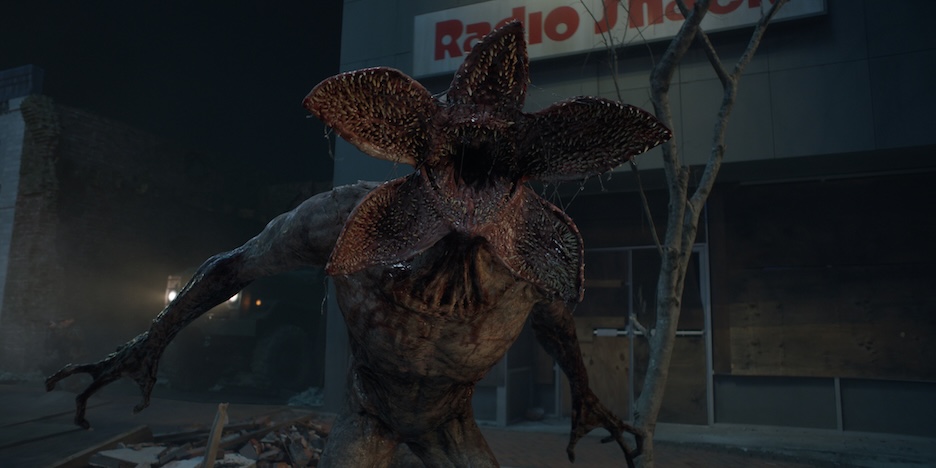
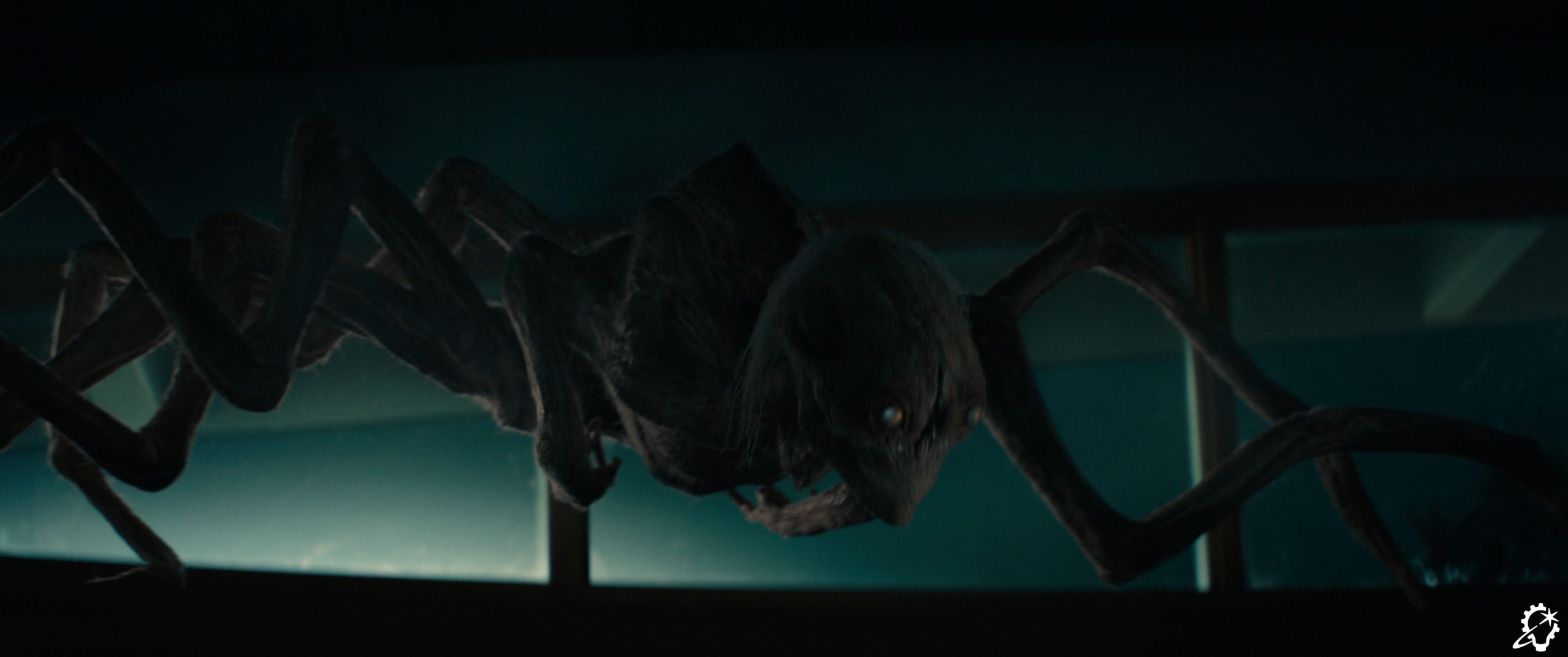
The creatures, often referred to as “The Kids” by the characters within the show, were the offspring of a mysterious being – known as Mother – who was being held captive by the shadowy cabal which owned and operated the community. A crucial piece of The Boroughs lore, these entities stood as one of ILM’s primary assignments on the show.
“The creature has this wonderful arc,” Ellis observes. “In the first episode – which was single-handedly animated by [lead digital artist] Filippo Dattola – it has to be creepy and scary, almost like an agent of death. However, as its arc evolves, we wanted viewers to start feeling sorry for it, because you ultimately learn that they are enslaved. By the end, you’re moved to feel hope when they break free, and even though Mother dies, it’s a moment of sweet release for her. We had to elicit so many emotional responses from the audience with these creatures through the work that we did.”
Before production began, ILM received a brief containing concept art and details about the creature’s outward traits. “The design had been worked on by the showrunners, as well as a fantastic concept artist, Jamie O’Hara,” Ellis divulges. “They and a number of other collaborators had figured out the creature’s design, and we were given this incredible concept artwork of the creature feeding on Jack [Bill Pullman] and hanging above Renee [Geena Davis] as she slept in bed. The art was quite faithful to the final shots – the showrunners had a clear vision of what they wanted.”
These initial discussions also revolved around the creature’s ancient appearance. “We talked about it being potentially hundreds of years old, so we looked at references of a ballerina in her eighties – someone who is an inspiration to us all,” Ellis shares. “Her skin was wrinkly, but there were taught muscles underneath. We had these interesting features that we wanted to implement into the creature’s design. What hadn’t been figured out was how this creature moved. That was the first thing ILM started on.”
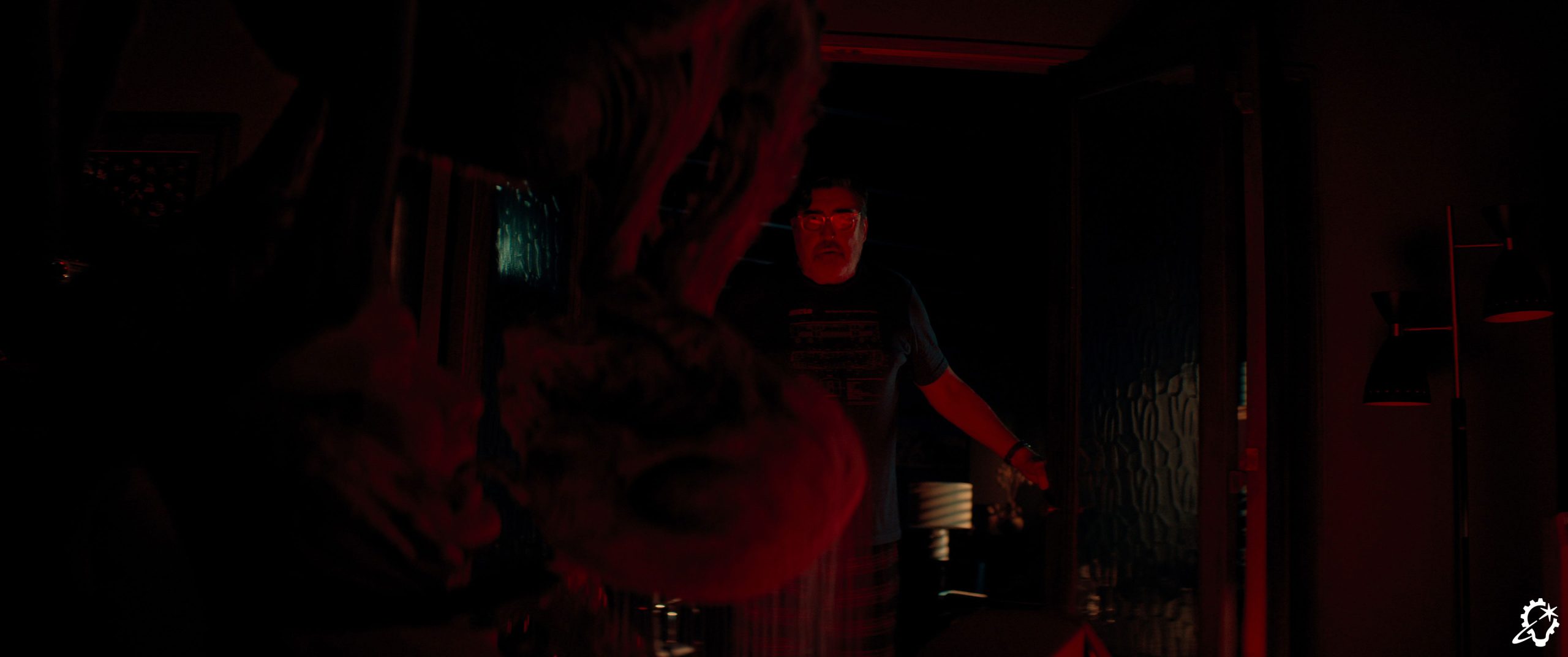
We built our initial rig for the creature and used the term ‘geriatric parkour.’ These creatures are old, yet they were designed to move along the ceilings of the bungalows,” Ellis continues. “Typically, one of the first things we explore with a creature is a walk cycle, and that becomes a basis for the animators who will pick up the cycle and develop it for the shots. But every creature sequence we had on The Boroughs was completely different, so there was no walk cycle. The creature was either in the bungalow, moving hastily across the ceilings or lowering itself from the ceiling, or it was in the cave environment and pushing itself against all of the nooks and crannies among the rocks.”
Such distinctive environments required that ILM plan each of the creature’s steps with extreme precision. “Every foot placement and hand grab was very purposeful, particularly in the cave sequence, where we looked at loads of references of rock climbers. For example, how does the weight of the creature swing? We recognized that climbers often use their arms as counterweights to be able to hang somewhere while moving parts of their body around, so we incorporated that into the specific animations,” Ellis reveals.
While the creature’s movements proved to be complex, ILM’s involvement in the previsualisation and sequence design process facilitated a smooth workflow, as Ellis explains, “We started work on the show just before the shoot started, and we delivered previs to Tara on set so that she could help the directors and camera team visualize the shots. Even just basic layouts, such as, ‘The creature will come in at Point A, the shot will take 10 seconds, and the creature will exit at Point B.’ We loved having previs to show Tara the blocking and action, and she said how excellent it was to have an image – even if it’s wrong – because everyone could talk about why it’s wrong. It was terrific to be part of that process, because we’d get plates within a week of sending the previs. We felt like real partners even though the shoot was in Albuquerque and we did most of our work in London.
“ILM prevised nearly all the sequences that we had shots in, and every sequence featuring a creature,” Ellis declares. “We also prevised the sequence where Sam, Judy [Alfre Woodard], and Wally [Denis O’Hare] find the creature in the abandoned tunnels. I went to ILM London’s motion-capture studio and, with a small crew, did a virtual camera scout of that. We essentially did digital storyboards, as this was an occasion where we were brought on before the storyboard artists. Usually, the sequences we tackled had already been storyboarded, but in this instance, Tara wanted to work ahead. So, ILM did our own virtual camera storyboards using our in-house real-time renderer, Helios, and I built a scene that had the creature on the railway tracks and moved the characters around the set.”
The immersive experience supplied many benefits to the ILM team, as Ellis notes, “I could physically walk around the stage with a virtual camera and see the action, which allowed me to create these snapshot storyboards. Within an hour or so, I storyboarded about 40 shots in the sequence. Also, since this was before the physical sets had been constructed, I filled the area with haze to make it feel moody and dark. Later, I went out to the set in Albuquerque when they shot that sequence, and seeing the ideas we devised during previs being used on the actual set was extremely rewarding.”
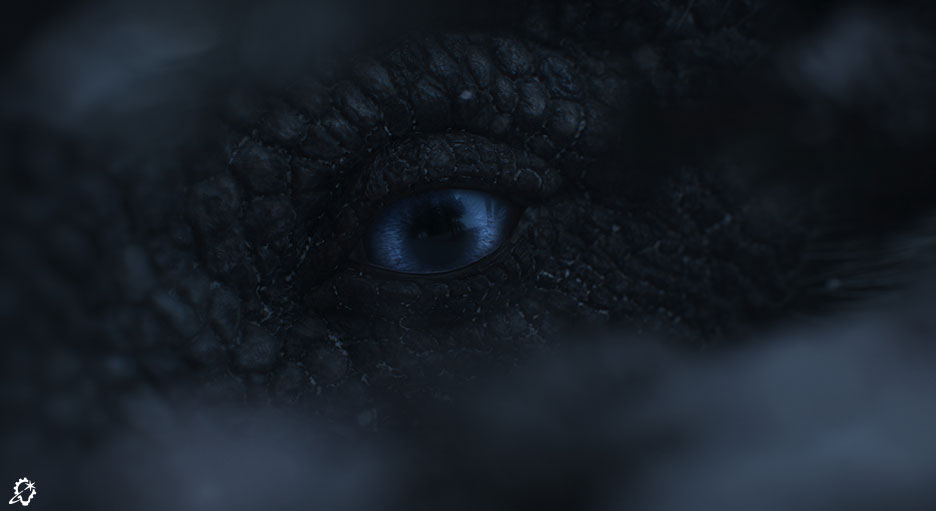
In addition to animating the creatures and blocking their movements, fulfilling the showrunners’ design vision ranked as another top priority for ILM. “We put so much thought, care, and love into our creature asset, whose lookdev was done by [technical director] Felipe Vargas,” Ellis professes. “The initial brief stated that their eyes needed to be retroreflective like a cat’s, so we researched the different reflective colors animals eyes have and presented various options to Tara. We had some tremendous turntables to show this retroreflectivity, and we focused on making new custom shaders to do it in a physically accurate way.”
Since Addiss and Matthews sought an ancient vibe for the creatures, ILM opted to avoid going in the direction of giving them “slimy” skin. “We went for old and leathery skin that was translucent and had wrinkles. We used techniques where we’d get into multiple levels of subdivision on the mesh for the skin sims,” Ellis says. “We had our standard asset, but when it came to the muscles and sim, we swapped out all of the skin with a super high-resolution version. Creature dev lead Gabriela Pruszkowska ran high-fidelity skin simulations to get a super-fine level of wrinkling. The mesh that we passed to our lighting technical directors was often different from the standard model, because we selectively subdivided parts of it – and sometimes the entire thing.“Much of the skin shading is procedurally driven, so we linked it to our animation rig,” Ellis remarks.
“Thus, when we’re deforming the skin – such as when the eyes move around – parts of the skin will get stretched, causing the blood in the shader to be pushed into other more relaxed areas. Therefore, depending on the facial animation that’s happening, the creature never appears the same. If the eyes stretch and push the skin, you’ll get a darker color as more blood is pushed out. Also, even though the creature doesn’t move a great deal, the showrunners wanted to see the tension. So, when it fed on Jack, we heavily sculpted, fired, and flexed our intricate tendon work to convey the tension as it gripped onto the chair.”
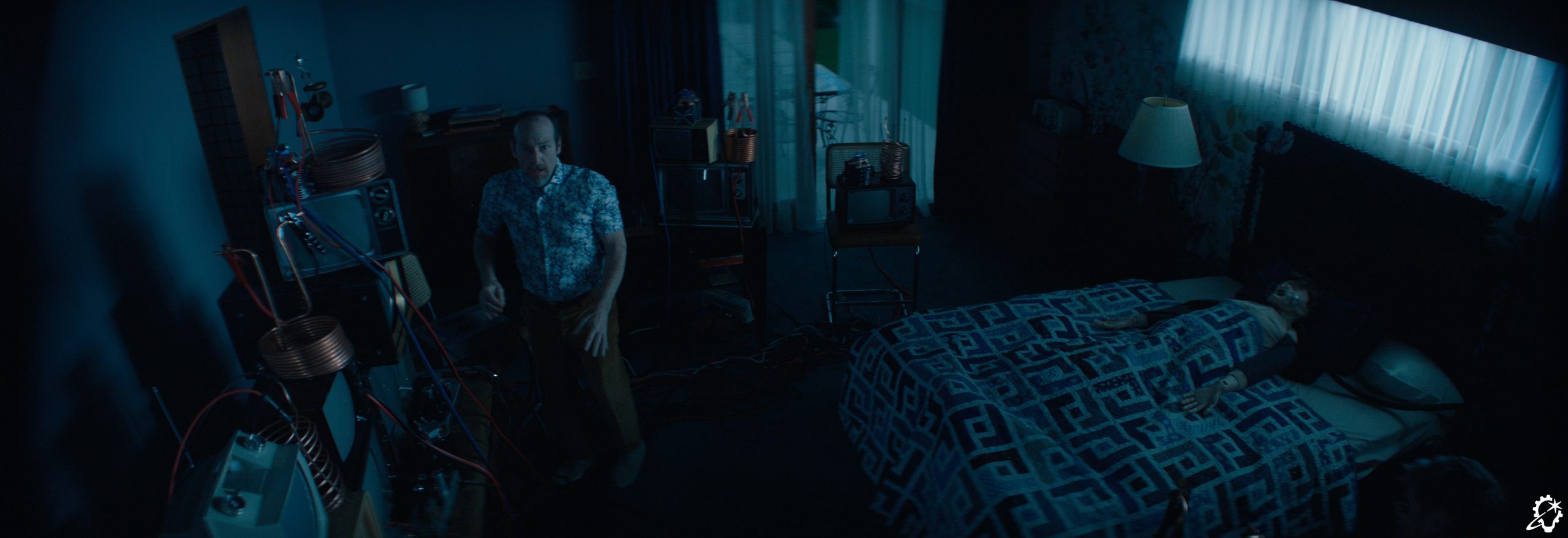
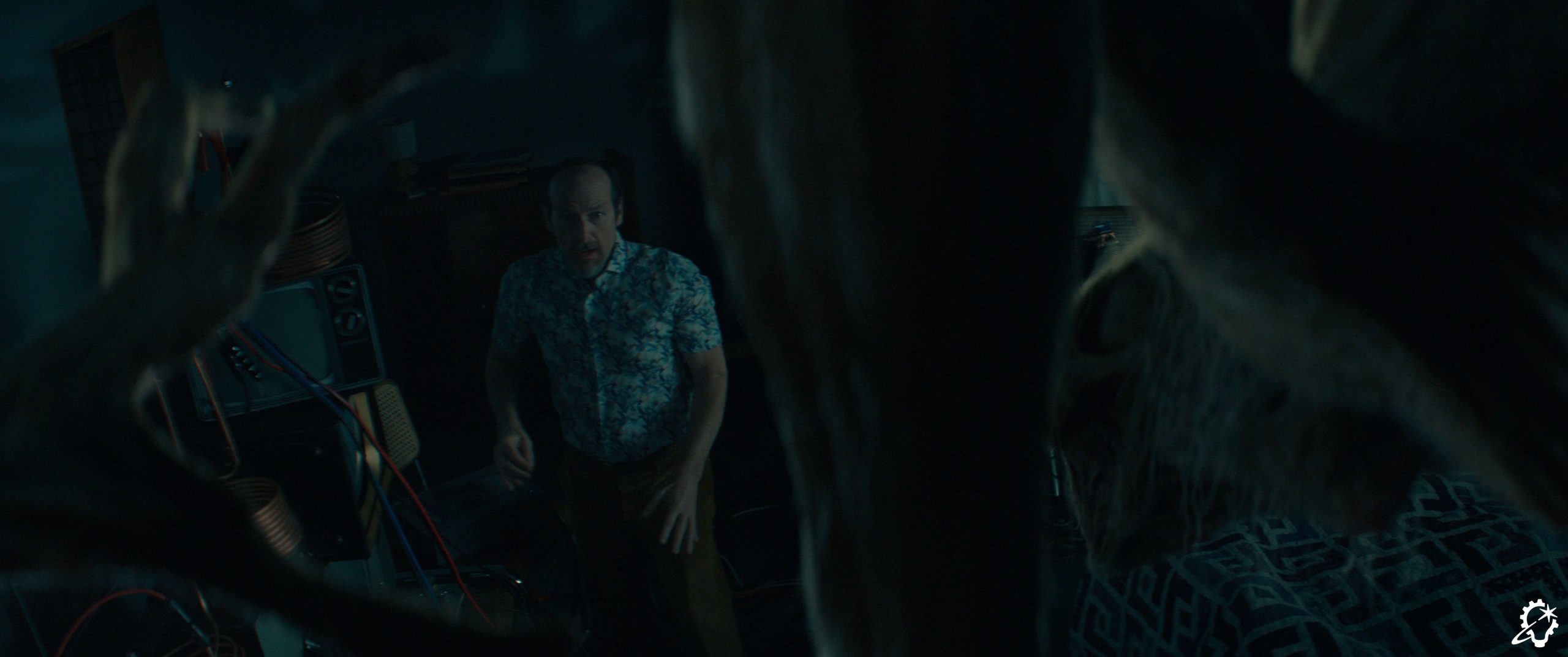
The level of thought and detail that ILM infused into the creature remained evident throughout the series, but Ellis points to a brief-yet-pivotal sequence to illustrate this fact. When Sam, Judy, and Wally attempt to set a trap for the creature, it emerges from the shadows atop a dimly lit closet and gets shot by Judy. “It’s a split-second scene, but there’s plenty of complicated motion as the creature is shot and scrambles away. Since it had been injured, the creature wanted to leave the scene, but it had to do so in a way that explained why Judy couldn’t hit it again. We did many iterations of how it swung through the door frame and where it would place its limbs – this way, Judy needed to duck out of the way.”
This scene resulted in a special collaboration between ILM and the production’s special effects crew when it came time to create the shadows behind the creature. While the bungalow exteriors were constructed on the Netflix backlot, the interior sets were built on soundstages and supported by digital backing provided by production. “However, for this sequence, we needed a device to show the creature in silhouette,” Ellis discloses. “ILM did some simple digital extensions of an evening sky to have a bright light source behind the creature. This way, we had the silhouette with only the glowing eyes showing.
“The script said that the creature started off hidden and gradually lifted itself up, getting ready to pounce onto the characters. Using Helios, I did proper ray-traced shadowing of how the light source would affect the shadows on the walls,” Ellis continues. “We passed our creature asset to the special effects team, and they actually built a tiny puppet – only a foot or so wide – and puppeteered it based the movements we prevised. All the shadows that you see in that moment are real and based off their little puppet with the light set close behind it.”
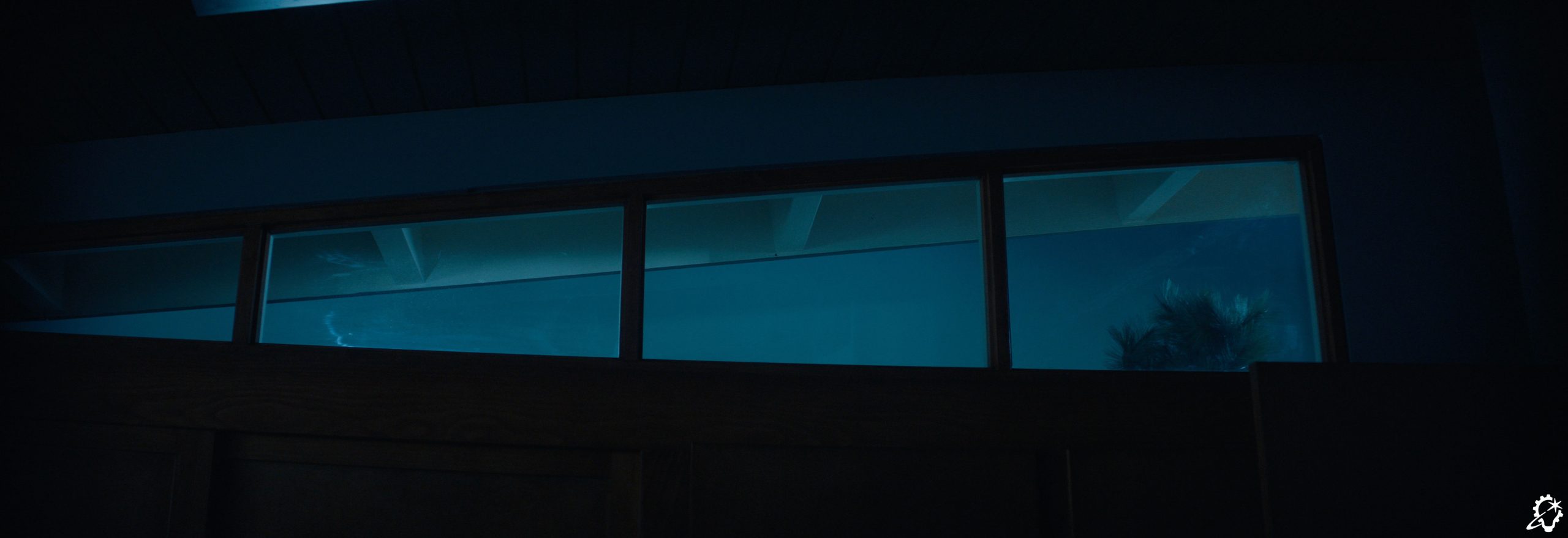
Another cross-departmental collaboration occurred for the creation of the chamber that the creatures navigated to feed Mother while she was held captive. “ILM received plans for Mother’s chamber from the art department and used Helios to visualize it. Since Helios is a real-time ray tracer, we could lay out storyboards and do shots where Mother is in the glass chamber. We were able to have shots from over her shoulder where she’s looking at Wally, and we’d see her real-time reflection as she reached out with her hand to beg for help. It’s so nice to have this technology, which isn’t something I had used before in previs, as Helios has come such a long way recently,” Ellis contends.
The creature’s entrance into the chamber to visit Mother offered ILM another chance to demonstrate the emotive nature of their work. “There’s a phenomenal sequence where the creature’s confined within the glass tube as it’s coming to deliver the brain fluid to Mother. It had to feel disinterested in Wally, but also exhausted – it’s not in a good space mentally. We considered all types of locomotion, and our animators figured out how it was cramped up and crushing itself into this tube. You can see some of the muscle sims we did as weight shifts around in its muscles,” Ellis offers.
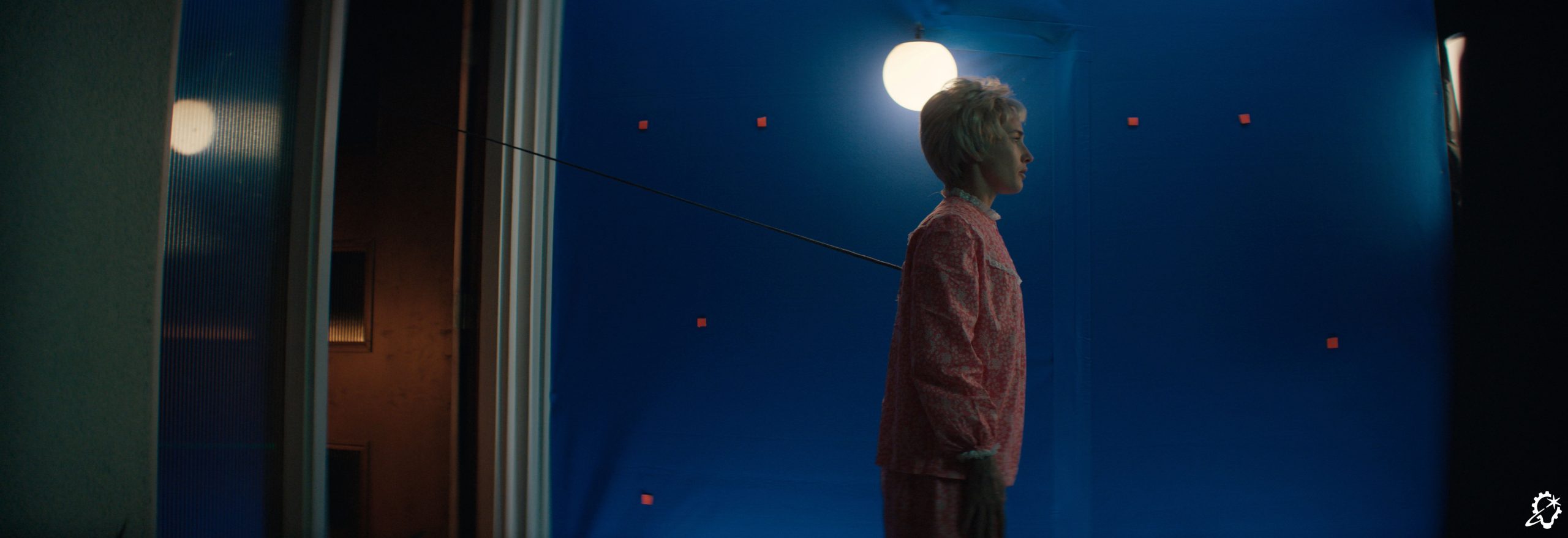
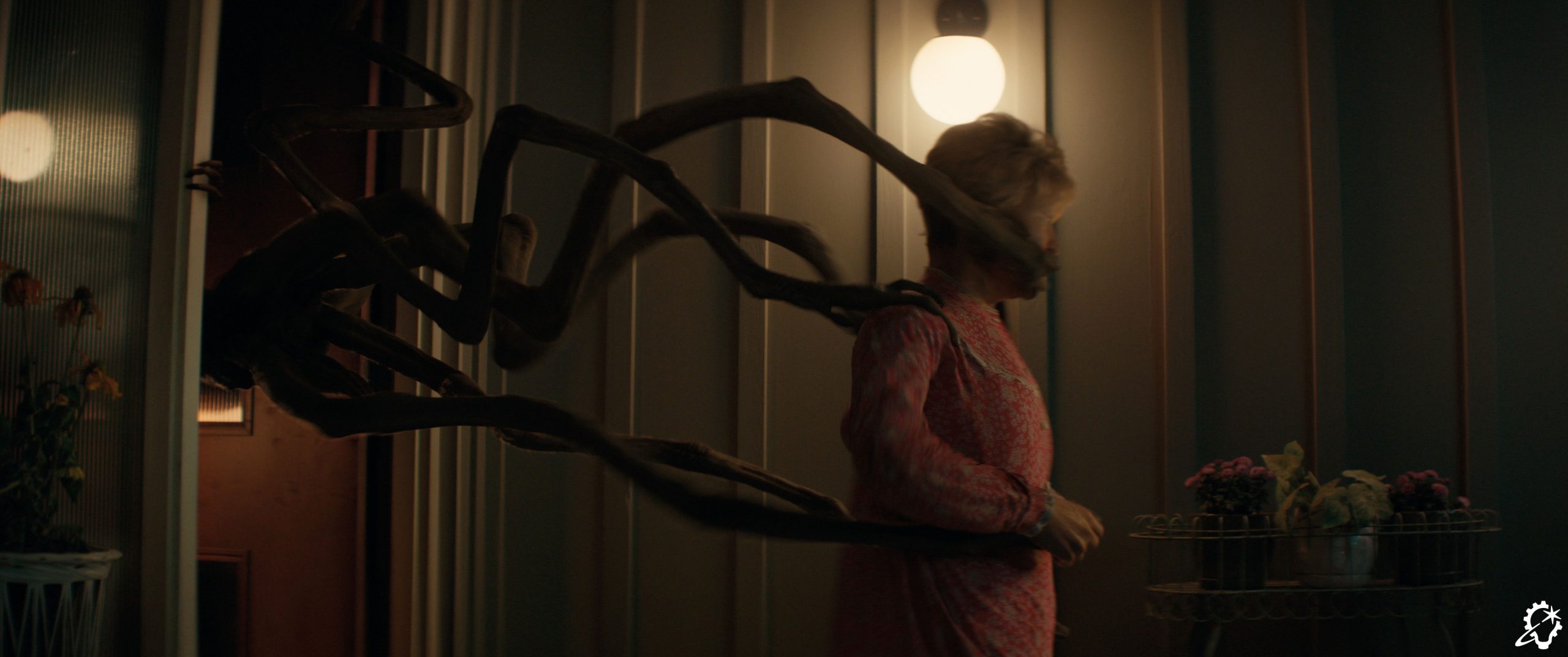
Of course, in order to get the fluid to sustain Mother, the creatures had to extract the substance through the mouths of the community’s sleeping residents. “The creatures don’t have mouths themselves, which presented another challenge to eliciting emotional responses. If we wanted to show a creature being unhappy, we couldn’t deliver that through sad mouth shapes. Without mouths, the creatures fed through a proboscis that we were involved in designing,” Ellis notes. “In the scene where a creature feeds on Geena Davis’s character Renee, we were able to digitally hold on to Geena’s spectacular performance and augment it with our creature. We added the soft contact of its fingers on her face, since the residents were supposed to remain sleeping while the creatures fed.”
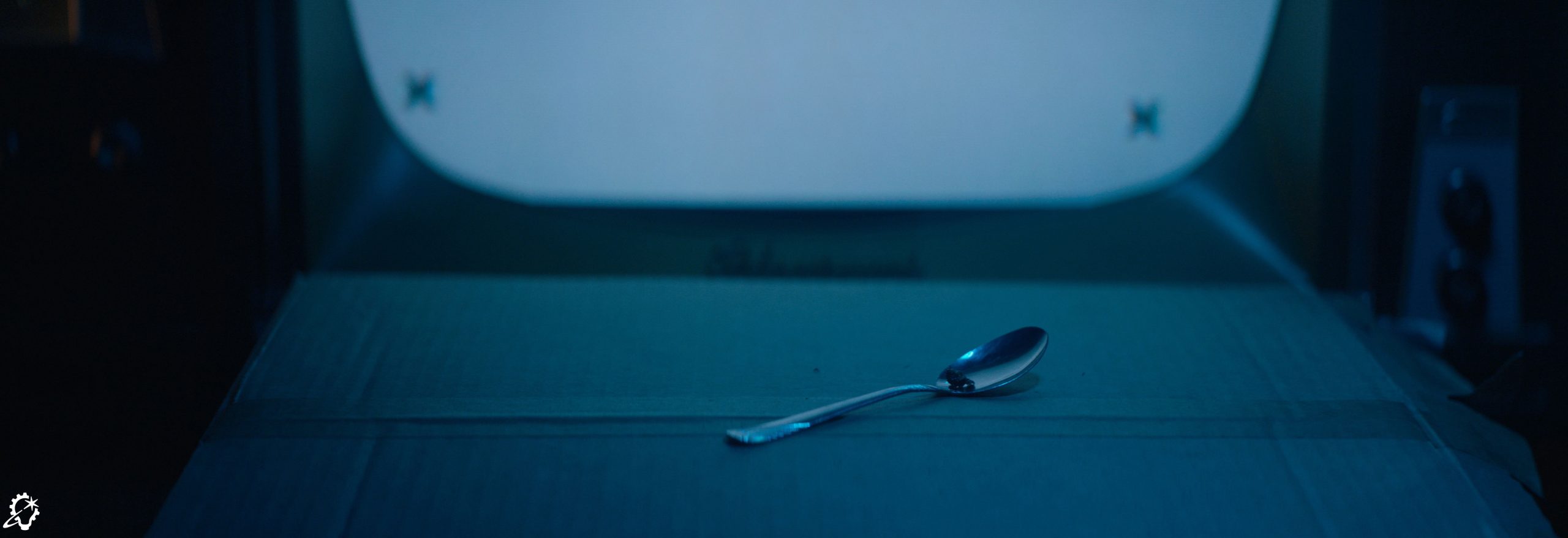
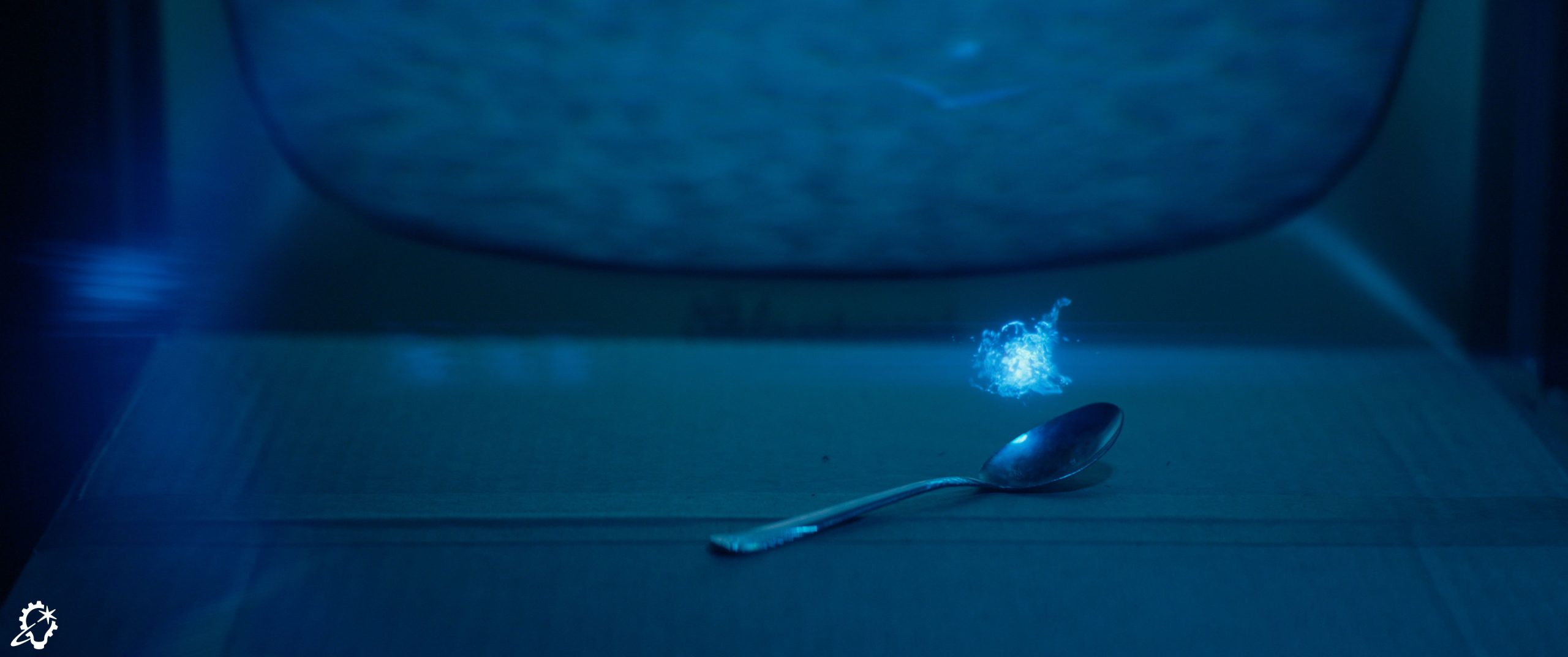
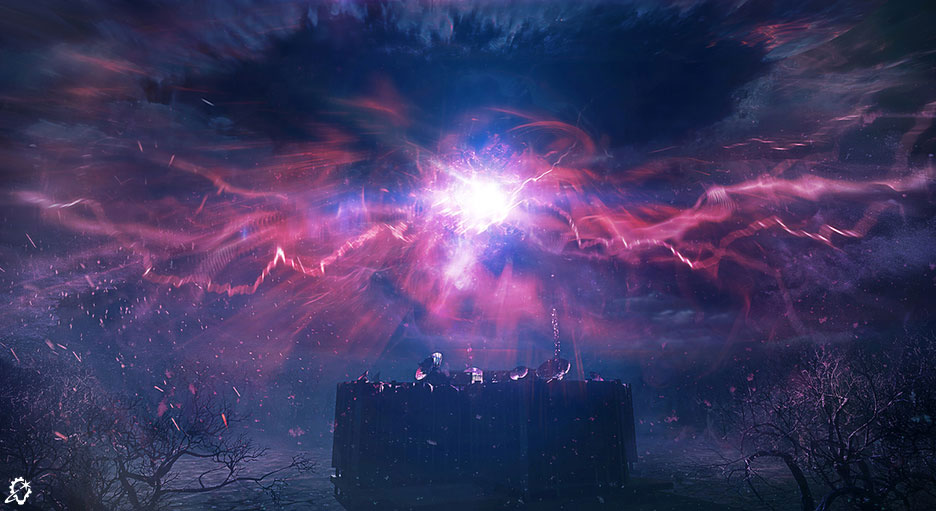
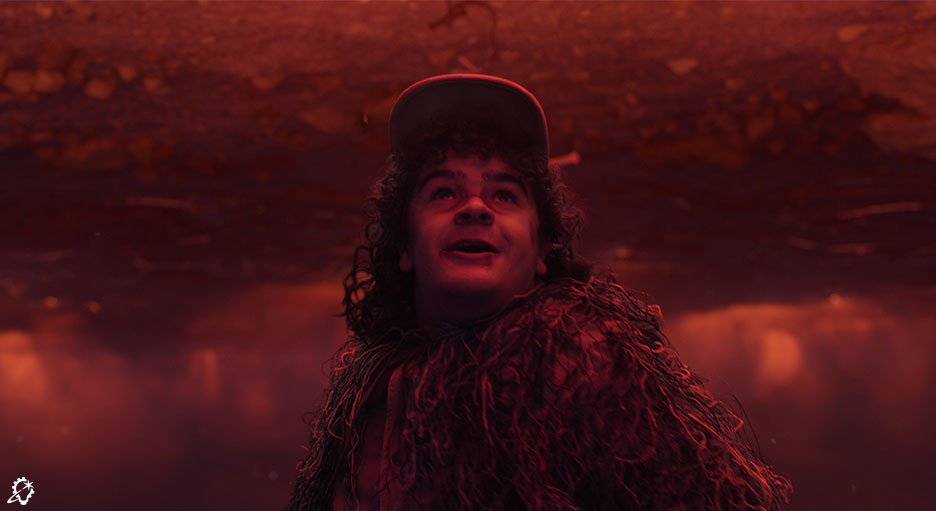
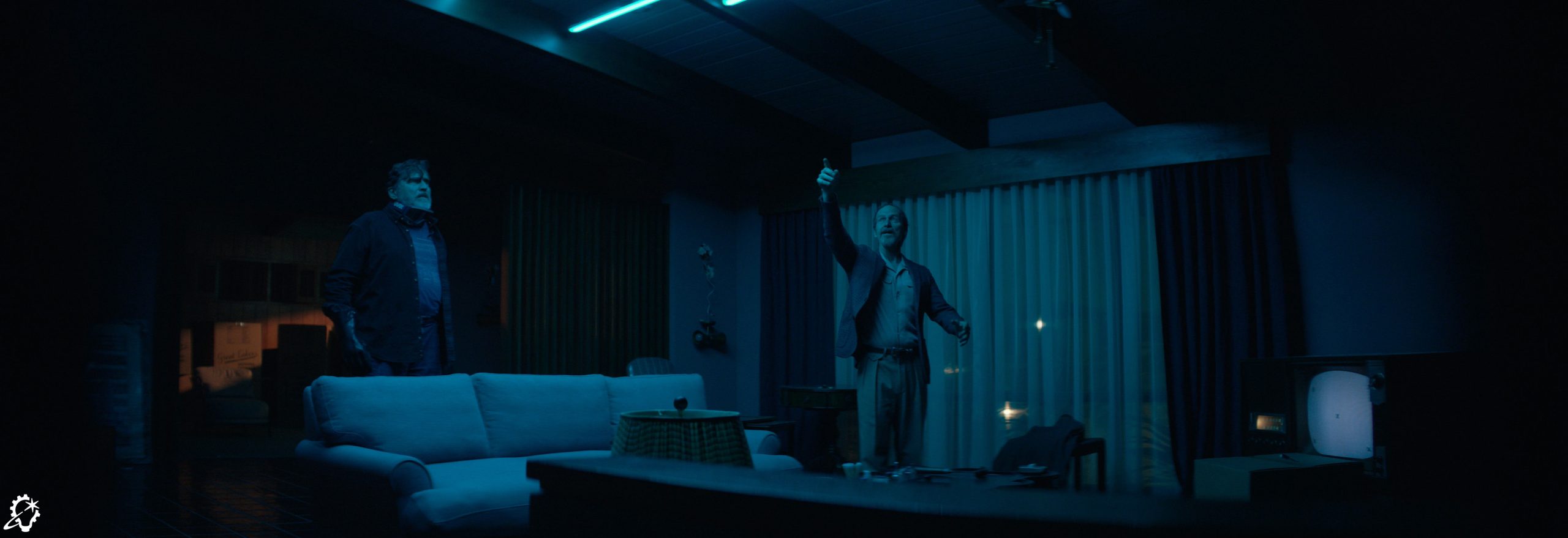
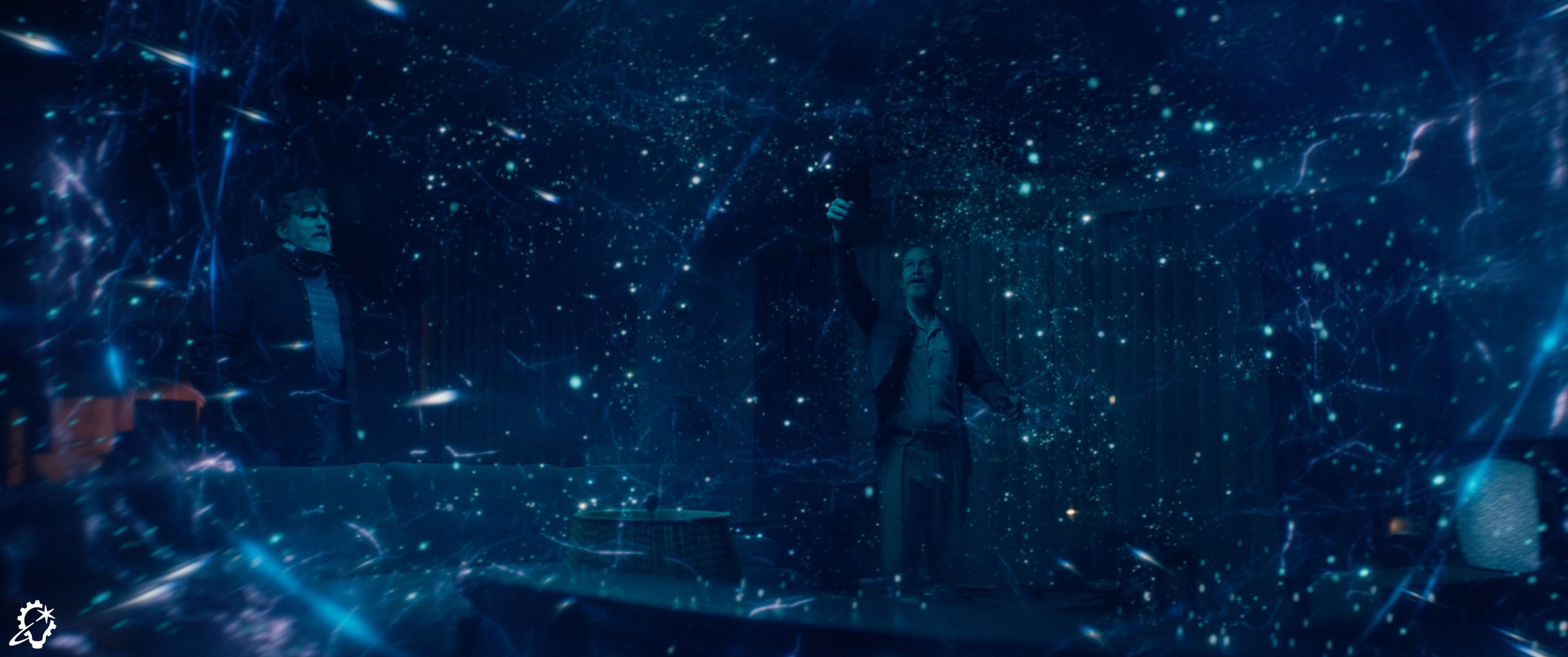
In one of the show’s most astounding sequences, Sam and Wally observe a hardened chunk of the creature’s blood as it melts and explodes into an awe-inspiring cloud with interstellar-like properties. “We were given a beautiful piece of concept art by Jamie O’Hara,” Ellis explains. “The showrunners talked about this blood – which we called ‘goo’ – as being the ‘stuff of the universe,’ so we contemplated what that would mean. We explored concepts from physics – the particles are the main element, but we also had ethereal strings as a nod to string theory. They’re interspersed among frozen prisms of light – photons don’t experience time, so we wanted to show something that was static. We factored in these mind-bending aspects of our universe, where this particle explodes and you see its component pieces.
“The blood needed to transition from a solid into a liquid, and then into an explosion of energy. [Lead effects technical director] Bianca Cirdei led the ILM effects team and handled the phase transition as the solid melted onto the spoon and started to ‘dance’ in front of the television. We created this zen-like energy from the TV that builds and finally explodes into blinding light,” Ellis recalls. “Once the blood explodes and Wally moves through the room, we wanted his movement to barely impact the particles. We called it the ‘Wally waft’ – you’d see particles pick up on the air currents as he moved his hands and pointed at things. We did fluid sims to disturb the air and affect the particles. Our compositing team – [digital artists] Mara Angioletti, Alba Sanchez-Serrano, and David Elwell – did a sensational job on the blood explosion.”
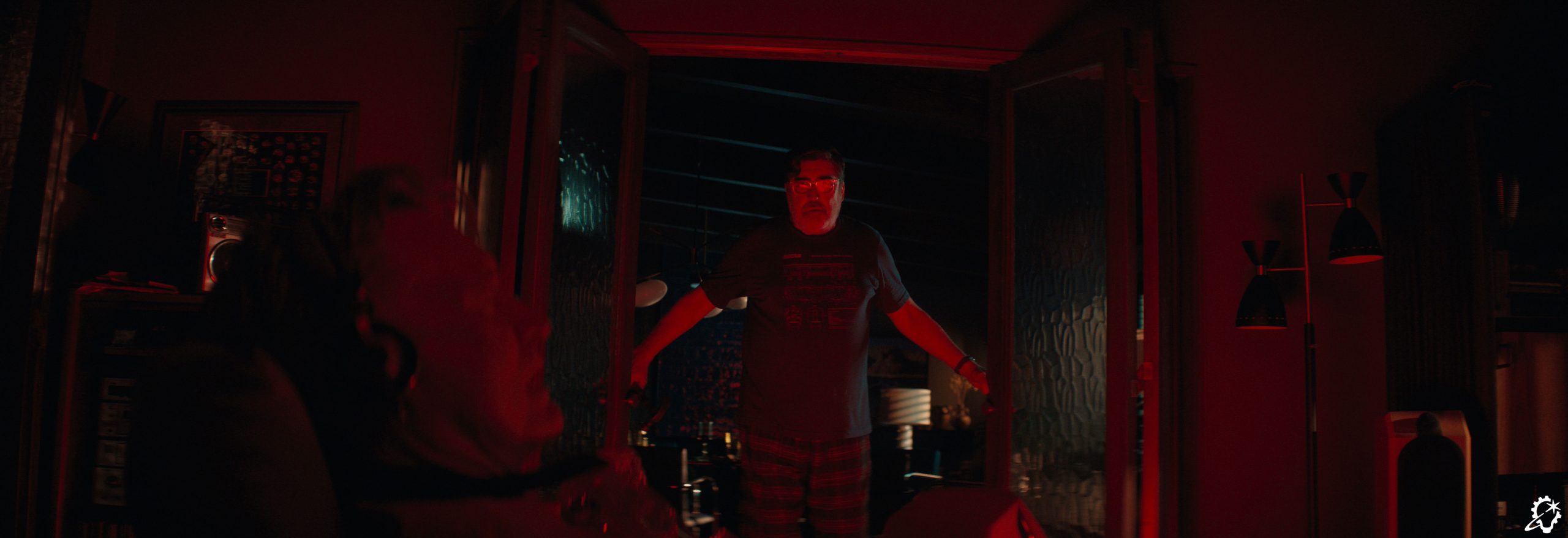
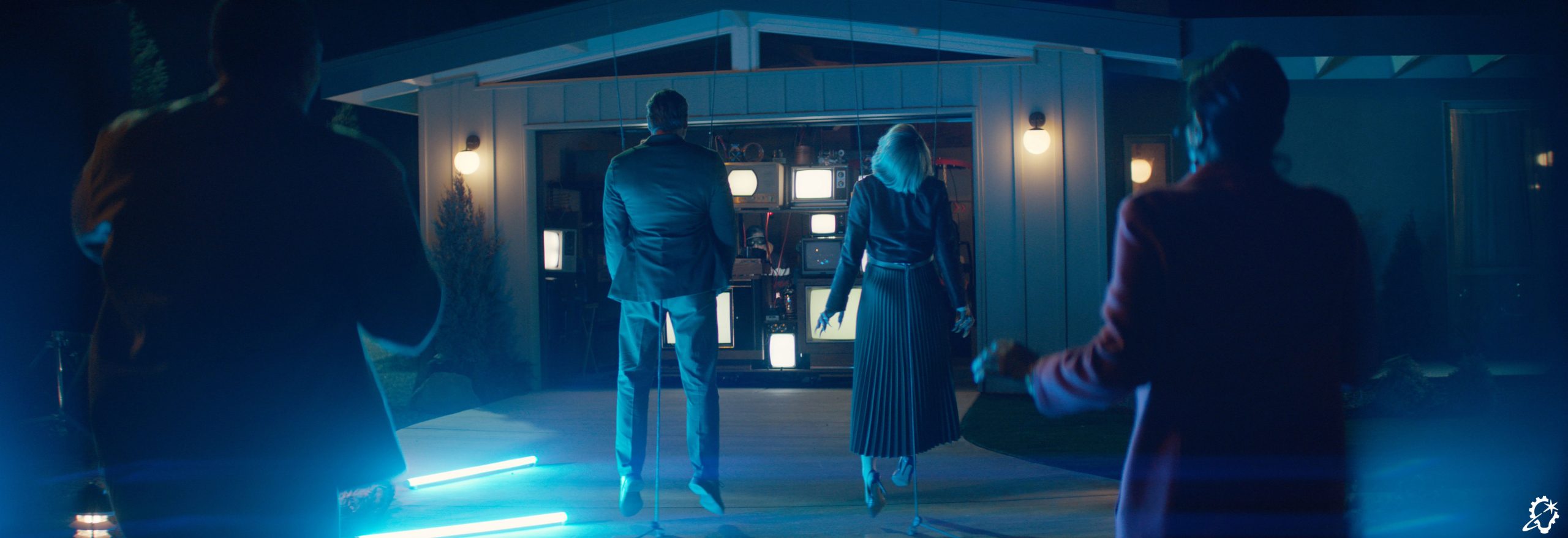
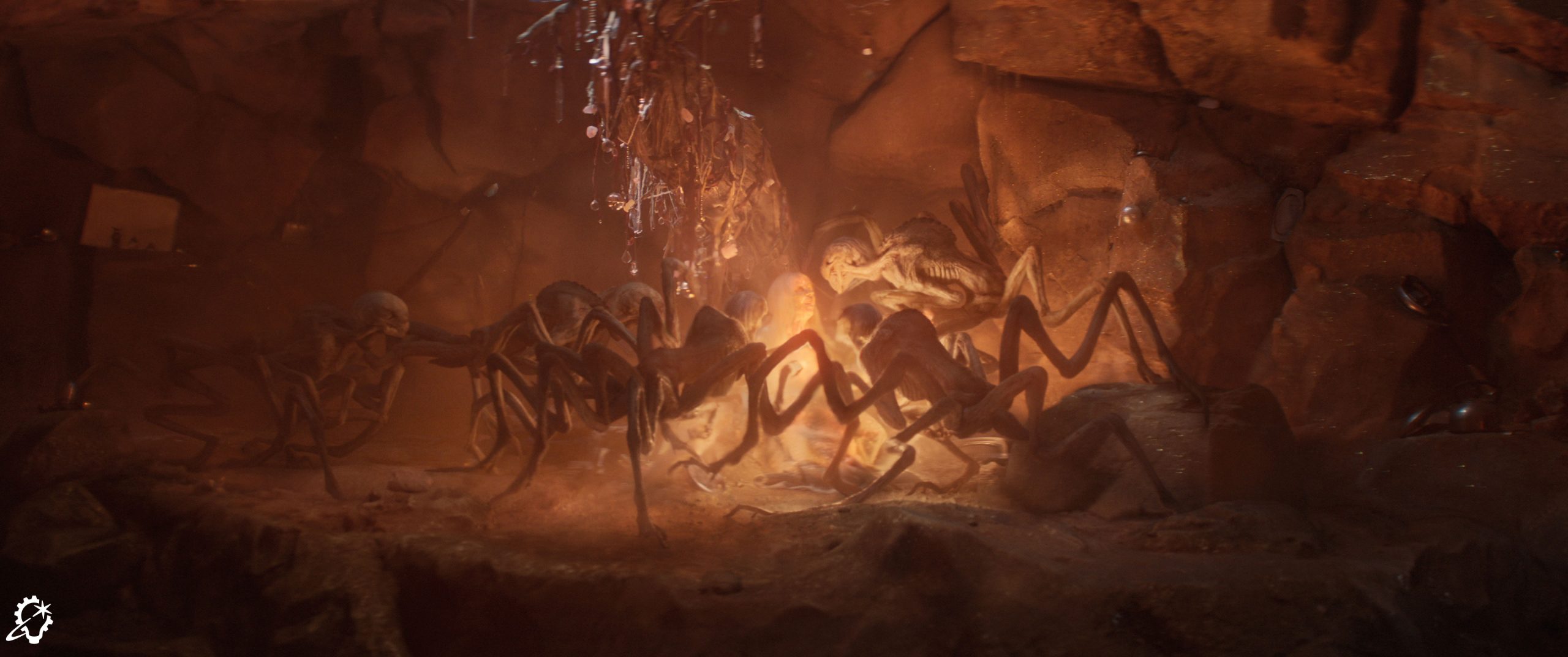
Ellis and ILM visual effects executive producer Stefan Drury traveled to the Albuquerque set for the final three weeks of the The Boroughs shoot. The last episode contained ILM’s most elaborate visual effects sequences, ranging from a standoff between the villains and Sam’s weaponized TVs to the creatures gathering in the cave to surround and protect Mother. “We were truly welcomed as creative partners on the show,” Ellis beams. “Once we arrived on set, we listened to a rehearsal and planned out the TV battle with [director] Augustine Frizzell. We had done digital previs for that sequence, but it was nice to feel the physicality of the set. There were so many visual effects for ILM to do on the TV sequence – the TV particle colliders, the digital prosthetic work on the villains, the exploding people – so we wanted to be there for that.
“For the TVs, I spent time online searching for rocket engine-type clips and turbulent fluid simulations. Another vendor did lovely atmospheric work on the TVs in earlier episodes, so we knew where to start – that was level one, but we were taking it to eleven,” Ellis continues. “I assembled video references of Coke bottles being opened in super slow motion, infrared footage of fluid sims, and highly saturated fluid sims. In the story, we needed to show that the machine was ramping up rather rapidly, so – from the established atmospherics you initially see with digital moiré work from the previous TV scenes we’d been involved in – the TVs turn on and start glitching. We played with the light and did plenty of illumination augmentation work.
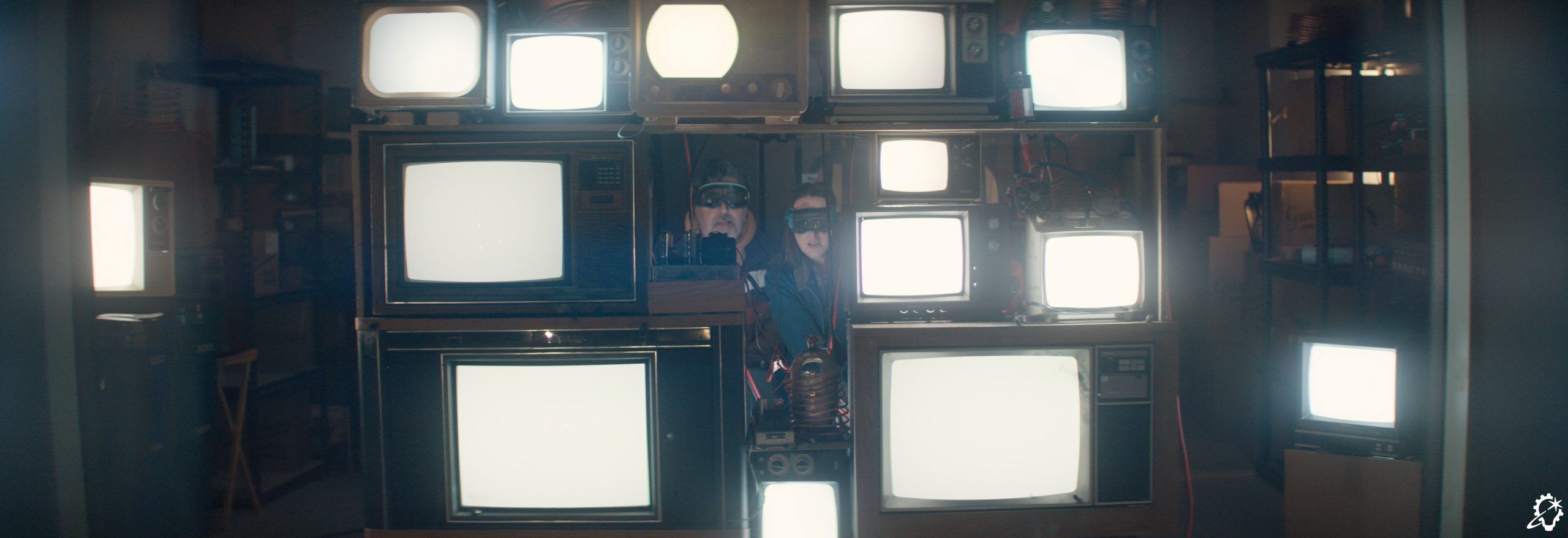
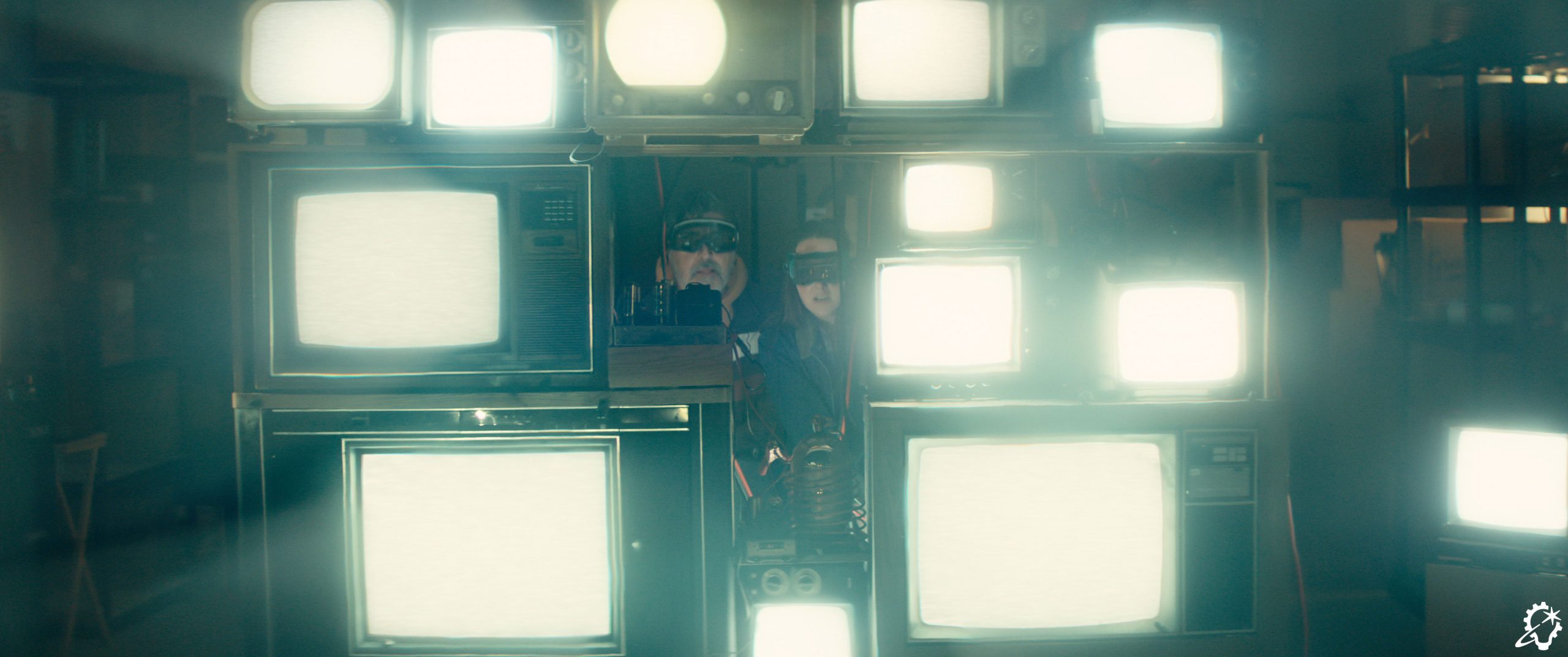
“When you look at those plates,” Ellis adds, “the TVs on set couldn’t get quite as bright as we needed to push it to, so we went ahead with some subtle – and hopefully invisible – lighting augmentation to the point where we did recreations of the bushes. We shadowcast the bushes and streetlights to be able to do a nice re-light on our set. Our villains – Blaine [Seth Numrich] and Anneliese [Alice Kremelberg] – were held within this particle beam and levitated off the ground, which was accomplished with real-world wire work that we did replacement around. We created our own digital ‘monster’ versions of Blaine and Anneliese from the ‘monster’ and ‘non-monster’ elements that Tara had shot for us on set, and when the machine reached its maximum power output, we were able to do cloth simulation-type work to rip skin off their faces and even have fluid sims of blood coming off.”
In another blink-and-you-might-miss-it scene, ILM spent a significant amount of time on the seconds leading up to Anneliese’s death. “We modeled large lacerations into her face, along with tons of projection work and distortion,” says Ellis. “We replaced her teeth with our own digital versions, and there’s all sorts of crazy interior lighting going on – the idea being that she absorbed so much of Mother’s ‘goo’ that she explodes with light from within, which was a nod to the blood explosion from episode two.”ILM’s penchant for outfitting even the briefest of moments with inspired ideas also applied to the death of one of the cabal’s henchmen. “When Ernest [Alex Knight] ran into the beam, he exploded immediately – and we threw the kitchen sink at him. [laughs] If you look at Ernest’s death, we did cloth sim as his clothing rips off, and then skin and muscle simulations. As he’s torn apart, you can see his skeleton underneath. It’s only for a few frames, but we built a skeleton that fractures. We usually go for pure realism, but in this case, the skeleton felt like it fit the fun and uniqueness of the show. ILM came up with that idea as a suggestion, and the showrunners trusted us as partners. We could’ve gone to the extreme and had his skeleton running around, but we believed that would’ve been too comical – we didn’t want to detract from what is, in the end, the conclusion of the love story between Blaine and Anneliese.”
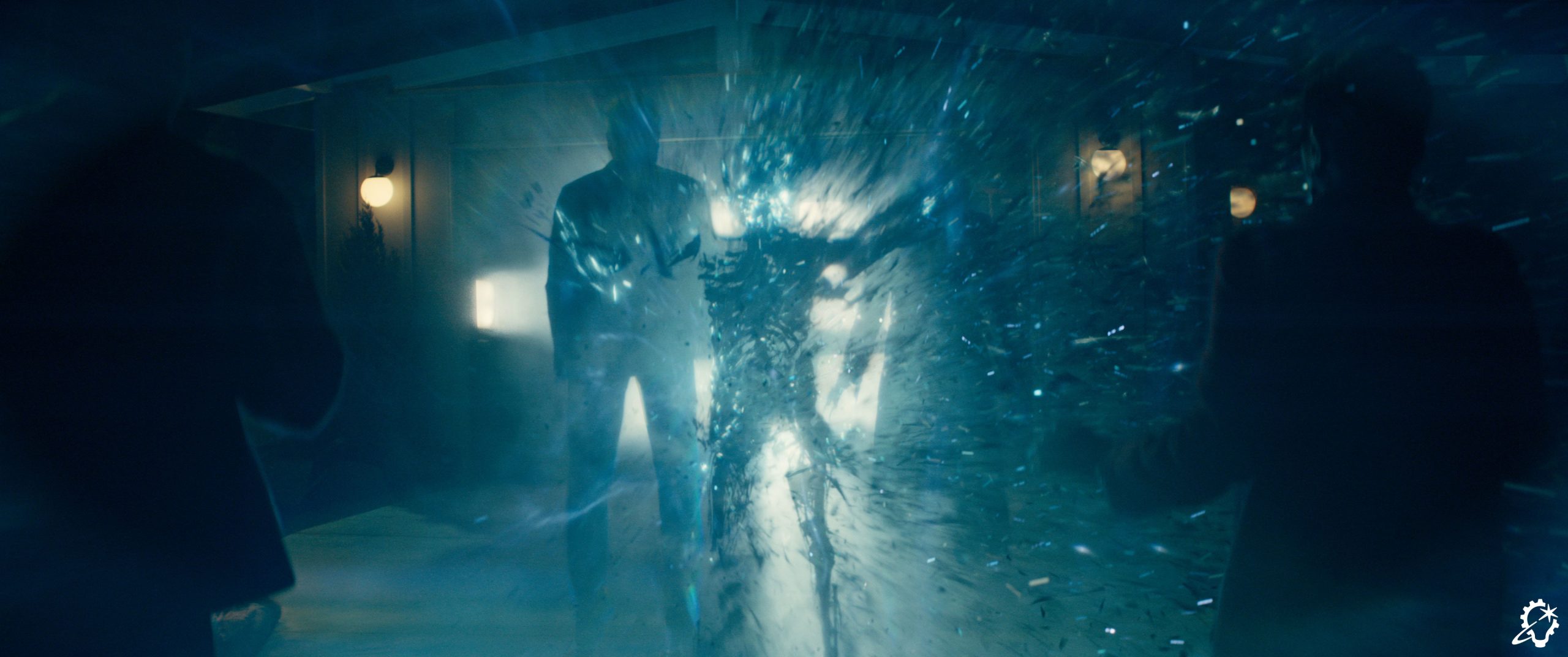
The collaborative spirit extended to ILM’s daily reviews, as Ellis praises his team’s willingness to speak up and take chances. “Everyone felt free to come up with ideas in dailies, and no one was afraid to fail. They brought so much creativity into what is a decidedly creative show. Our paint supervisor Luke Rawcliffe had a brilliant suggestion for the Anneliese destruction shot – since the pulsating light of the TVs was subtle and a difficult story point to put across, Luke proposed having the moments where Anneliese’s face is split or lacerated timed with the pulsing of the light to emphasize that these are the high-energy moments.”
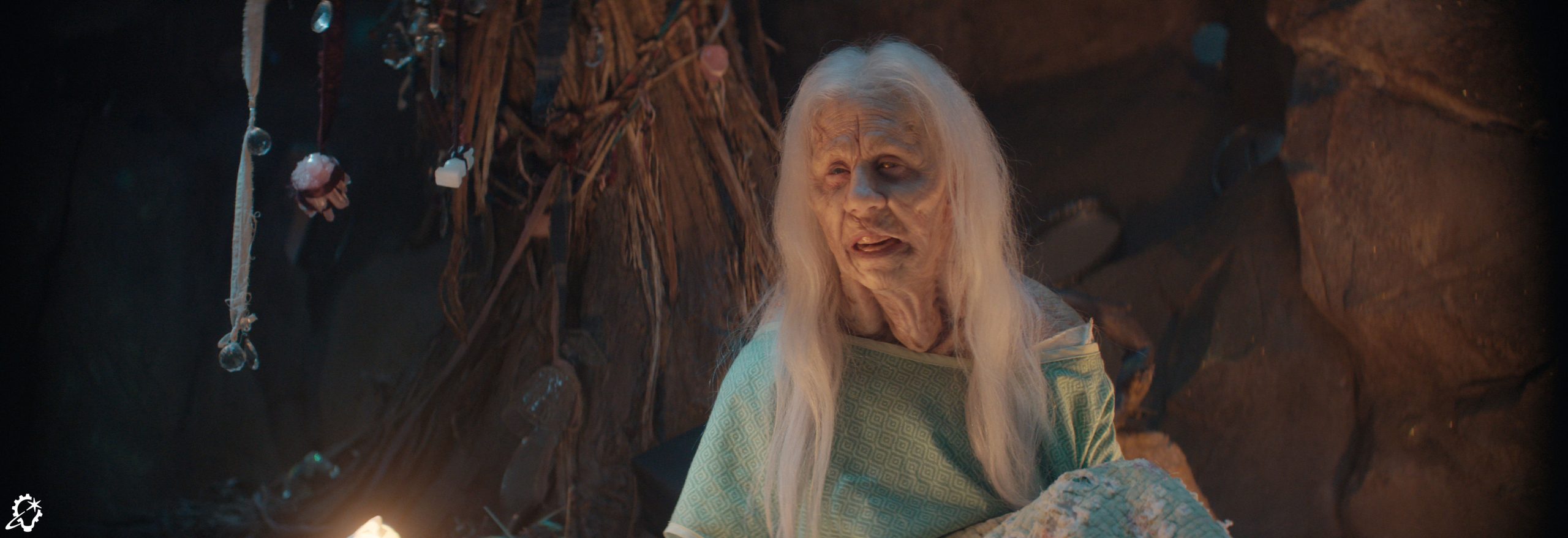
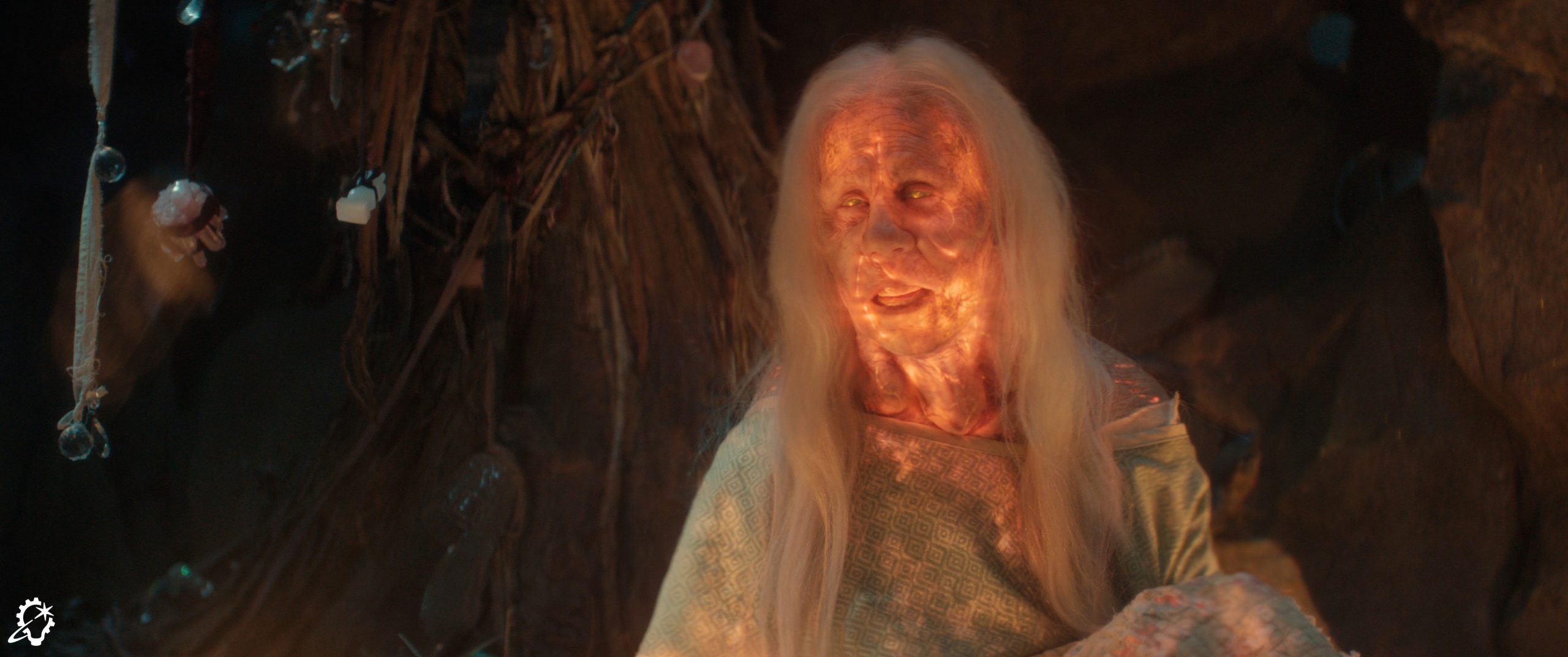
While Ellis wishes he could mention every member of his team for their outstanding contributions to The Boroughs, he stresses how vital every person’s skills were to the project. “[Senior modeler] Claire Blustin is the talented ‘monster artist’ who modeled the creature. [Texture artist] Emma Ellul did the creature’s textures, while Gabriela Pruszkowska built the muscle and skin setups for it. [Lead digital artist] Ludovic Ramisandraina did all of the cave explosion effects,” Ellis relays, as he turns to ponder ILM’s time on the series as a whole. “As you watch every episode, you are asking, ‘What is going on? Where is this going?’ It’s been magnificent to be visual partners – and storytelling partners – on such an extraordinary show. This is one of the most rewarding projects our team has worked on.”
–
Jay Stobie (he/him) is a writer, author, and consultant who has contributed articles to ILM.com, Skysound.com, Star Wars Insider, StarWars.com, Star Trek Explorer, Star Trek Magazine, and StarTrek.com. Jay loves sci-fi, fantasy, and film, and you can learn more about him by visiting JayStobie.com or finding him on Twitter, Instagram, and other social media platforms at @StobiesGalaxy.

Jay Stobie (he/him) is a writer, author, and consultant who has contributed articles to ILM.com, Skysound.com, StarTrek.com, StarWars.com, Roddenberry.com, Star Wars Insider, Star Trek Explorer, and Star Trek Magazine. Jay loves sci-fi, fantasy, and film, and you can learn more about him by visiting JayStobie.com or finding him on Twitter, Instagram, and other social media platforms at @StobiesGalaxy.