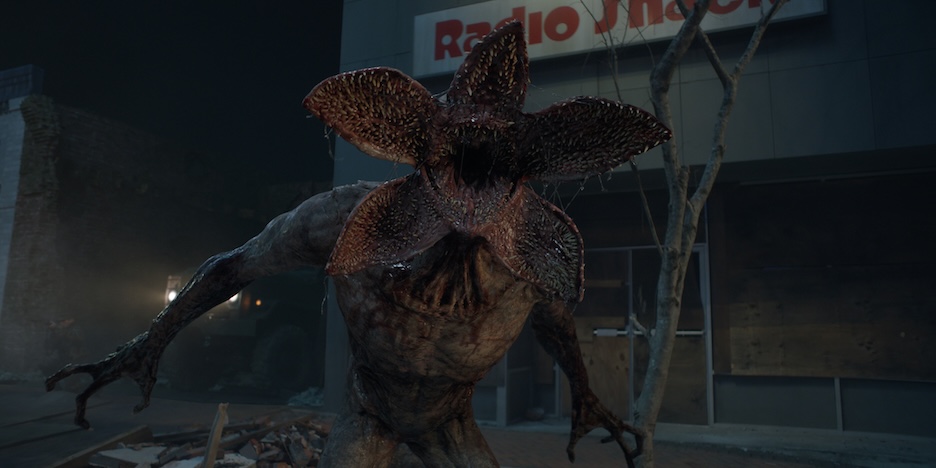
From Poltergeist to A Quiet Place, ILM has helped bring many horror stories to the screen.
How do you bring a nightmare to life? For 50 years, ILM has wrestled with that very question: whether horrific moments in decidedly non-horror movies (like the face-melting in 1981’s Raiders of the Lost Ark or Donavon’s demise in 1989’s Indiana Jones and the Last Crusade), modern flicks like Renfield (2023), or more family-friendly fare like Haunted Mansion (2023). No matter the genre, it is vital that Industrial Light & Magic’s technology and artistry perfectly mix with a very human fear.
Here are some of the scariest moments in ILM’s history… so far.
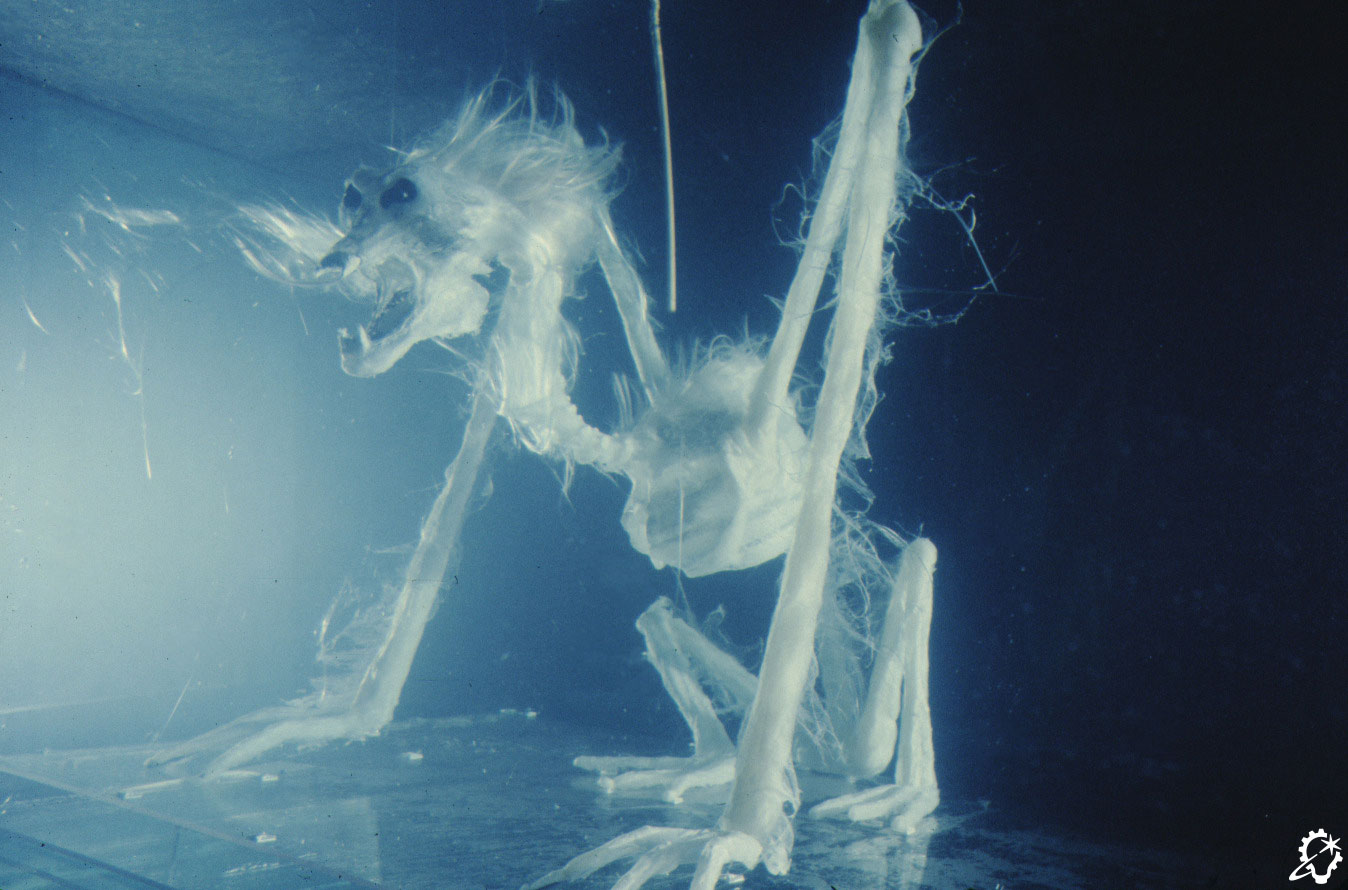
“They’re here.” One of the scariest moments in ILM history is also one of the earliest. In the final 15 minutes of the Tobe Hooper film, it seems like all is calm. The family is spending one of their last nights in Cuesta Verde, most of their possessions already packed up. But “The Beast” won’t let them leave, causing mayhem throughout the house.
The closet once again opens up, ready to engulf little Robbie and Carol Anne, and the resulting haunted house montage culminates with an undulating door sucking everything up with its tendrils. Producer Steven Spielberg expressly wanted a “full-size esophagus” to engulf the childhood bedroom. The demonic throat was actually a half-scale ILM miniature filmed separately and combined through optical compositing. It is just one of several moments in the movie that combines terror with technology, elevating Poltergeist to classic status, winning the BAFTA Award for Best Special Visual Effects and an Academy Award nomination (losing to another ILM project, E.T. the Extra-Terrestrial).
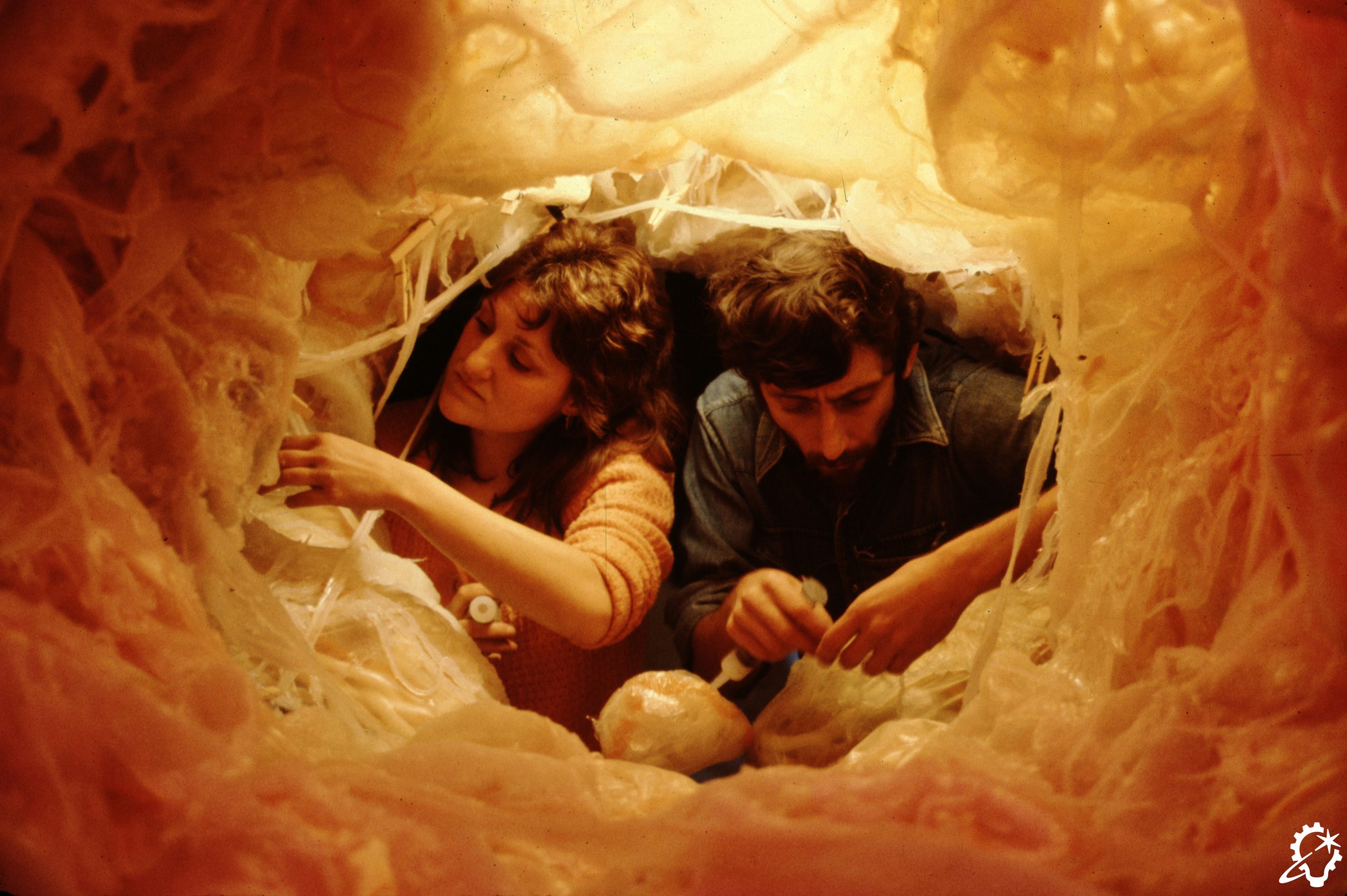
“Based on a true story,” Fire in the Sky’s scariest scene is the 12-minute alien probe near the end of the film, which involves a nonstop nightmarish volley of various extraterrestrial tortures.
When logger Travis Walton (D.B. Sweeney) finally flashes back to his time on the UFO, it is revealed to be even more traumatic than previously imagined. As he pushes through a strange membrane, Travis awakens in a zero-gravity alien chamber, eventually stripped down and bolted to an examination table. Alien goop (not maple syrup) is poured into his throat and eyes, and mechanical tools are shoved into his body. Even today, the aliens doing the dirty work remain terrifying, and the mix of compelling editing with ILM’s effects makes the whole sequence incredibly realistic. It is a masterful exercise in horror, and one this author will not be revisiting for a while.
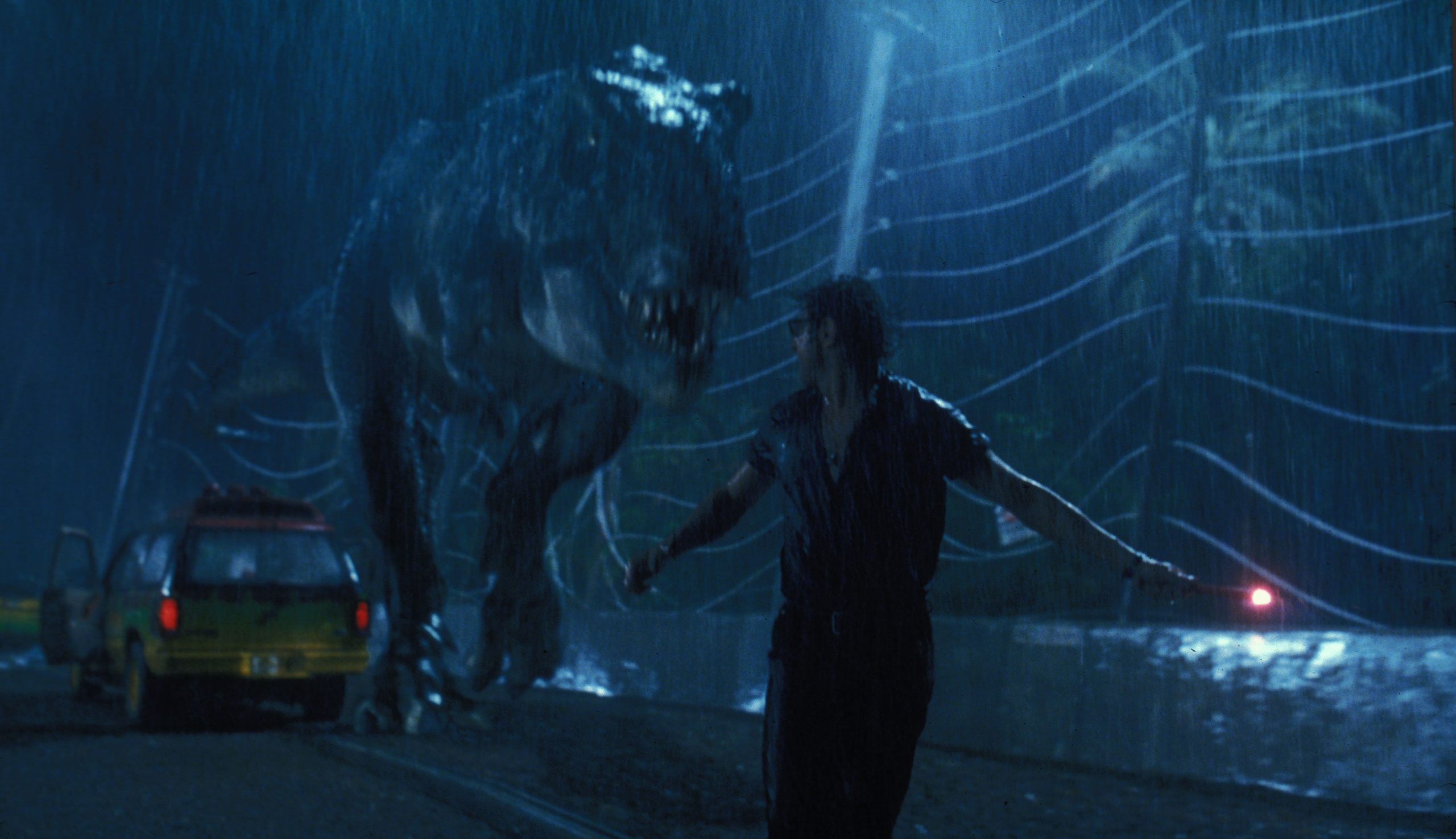
For a movie chock full of memorable moments, there is maybe no better scene than the Tyrannosaurus rex breaking free from her enclosure and terrorizing the stranded Ford Explorers. From small, quiet moments (the oft-mimicked ripples in the water glass) to comedic moments (“When you gotta go, you gotta go.”), the horror ramps up as the full menace of the T. rex is revealed through the rain.
The sequence is a masterclass in incredible early ILM CG effects, mixed with the beautiful, lifelike animatronic head and torso from Stan Winston Studio. With initial plans to use stop motion techniques with Phil Tippett’s team, the “DID” (Dinosaur Input Device) allowed anything the team animated with a traditional stop-motion armature to be fed into the computer for further enhancement and rendering. “We literally didn’t know we could do this,” later remembered visual effects supervisor Dennis Muren.
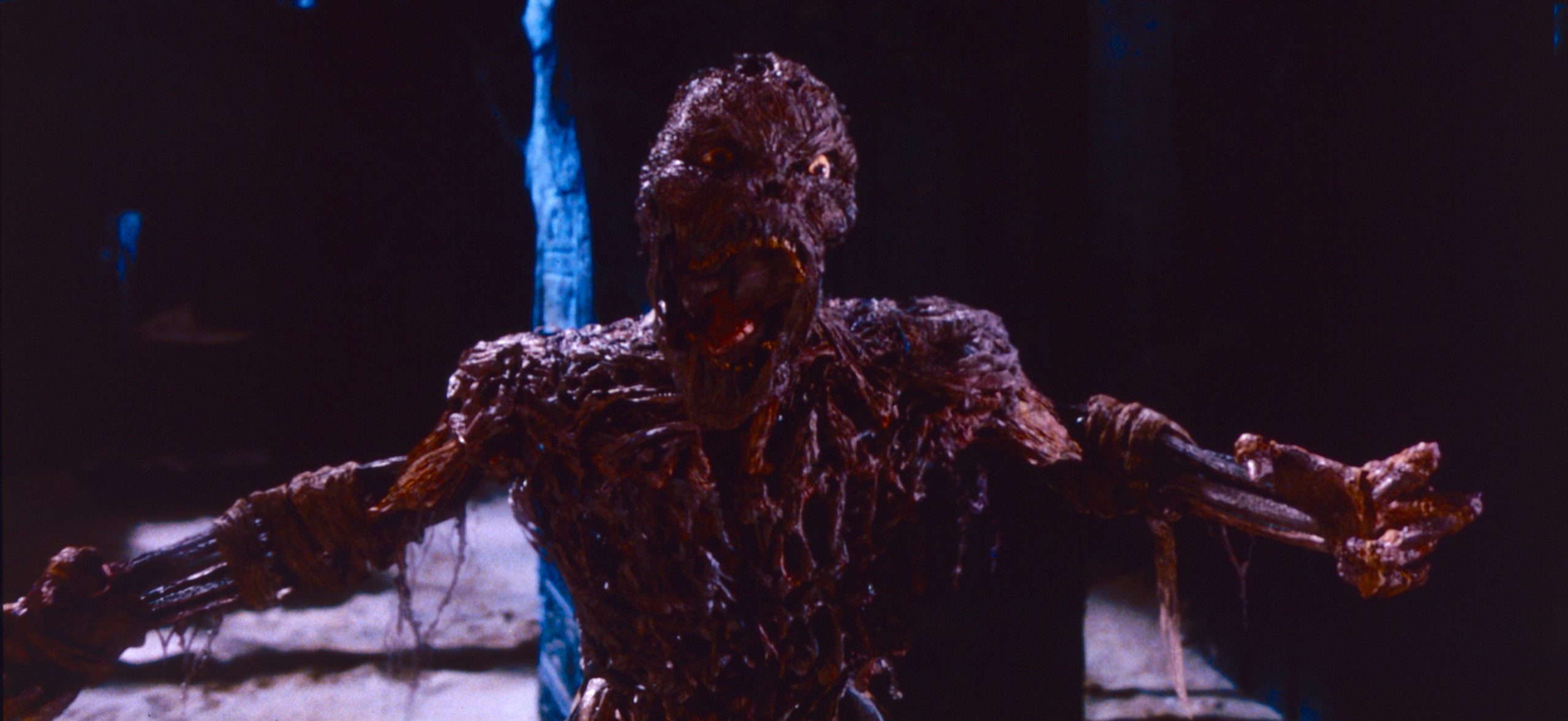
The reveal of the eponymous Mummy had to work. When the resurrected high priest Imhotep makes his first appearance an hour into the film, it needed to be scary, menacing, and believable. After all, he had been waiting 3,000 years for this moment.
Having removed the eyes and tongue of poor Mr. Burns (now crawling blindly in the background of the shot), the sinewy and rotting resurrected corpse roars and threatens our heroes. It was important for the ILM team to work on their “grossness threshold.” Imhotep needed to be dry and dusty and rotted, not gory and bloody. Michael Bauer, a CG supervisor on the film, took model shop maquettes of the Mummy and then built a realistic digital frame, saying of 1999 audiences: “We know what a human looks like, we know how a human moves.” ILM had to build the mechanics of basic human movement, from a skeleton to a musculature and then stripped it back down to the living corpse you see on screen.
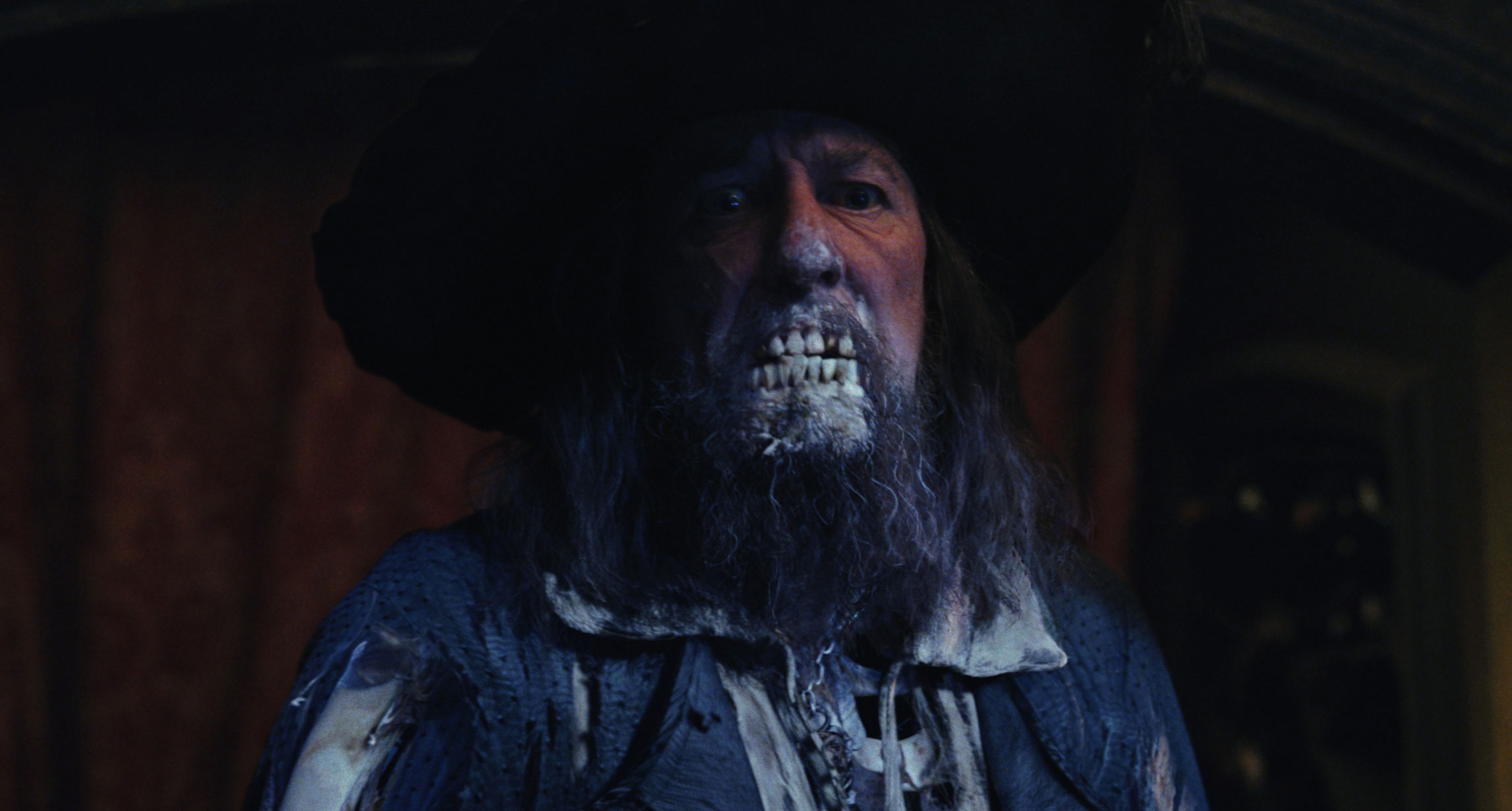
Much has been said about ILM’s award-winning work on the Pirates movies, including the first sequel, which provided some of the most memorable digital creations in cinematic history. But perhaps nothing can match the moment in the first film when Geoffrey Rush’s menacing Captain Barbossa steps into the moonlight, revealing his true form for the first time. His hands are the first to turn skeletal, and then it’s a full transformation on his face as he chugs a bottle of dripping wine: “You best start believin’ in ghost stories, Ms. Turner. You’re in one.”
All of the on-looking ghastly pirate actors shot their scenes separately, wearing mo-cap suits for ILM artist reference. It was quite a bit of detail, a complex process that turned an important sequence into an instant classic. (And don’t get us started on the creepy skeletal monkey!)
About 50 minutes into the film, Overlord transforms from a typical WWII thriller into a monster movie. It is revealed that Nazis have been experimenting to create super-soldiers because, after all, “a thousand-year Reich needs thousand-year soldiers.” The super soldier serum has a rather aggressive transformation process, a frightening on-screen mutation that required augmentation by the ILM team.
When one soldier is injected with the serum, he suddenly has super strength, but his body overreacts, creaking and crunching as it overcorrects. The second “victim” is the movie’s villain, Wafner (Pilou Asbæk), who survives the procedure with a gaping mouth wound that further contorts into a crazy smile, another perfectly horrific mix of ILM artistry and classic movie monster practical effects.
The scariest moment of A Quiet Place might be when Emily Blunt’s Evelyn Abbott is about to give birth. (The near-suffocation scene in the grain silo is a close second.) The house is empty, her family has gone, and she must do it all alone. But when she steps on a nail and breaks a picture frame, the real horror begins. The blind, shrieking monsters know where she is.
ILM’s creature effects were made in close collaboration with director John Krasinski, who even provided some reference motion capture for the monsters. With only months before release, this creative process successfully changed the design into something even more terrifying.. ILM returned to the AQP universe with 2024’s A Quiet Place: Day One, once again bringing these “Death Angels” to digital life.
Spoilers ahead for one of the most insane movies you can watch this Halloween season.
Malignant’s climax builds to the ultimate twist: The movie’s hidden villain, Gabriel, is actually an extreme parasitic twin attached to the movie’s protagonist, Madison. It’s only when she’s provoked in a prison cell that Gabriel’s final form is revealed: He is a tumorous extension on the back of her head. With a combination of on-set contortionist Marina Mazepa, incredible practical effects, added ILM CG layers, and digi-doubles inserted where needed, you will never forget Gabriel – even if you try.
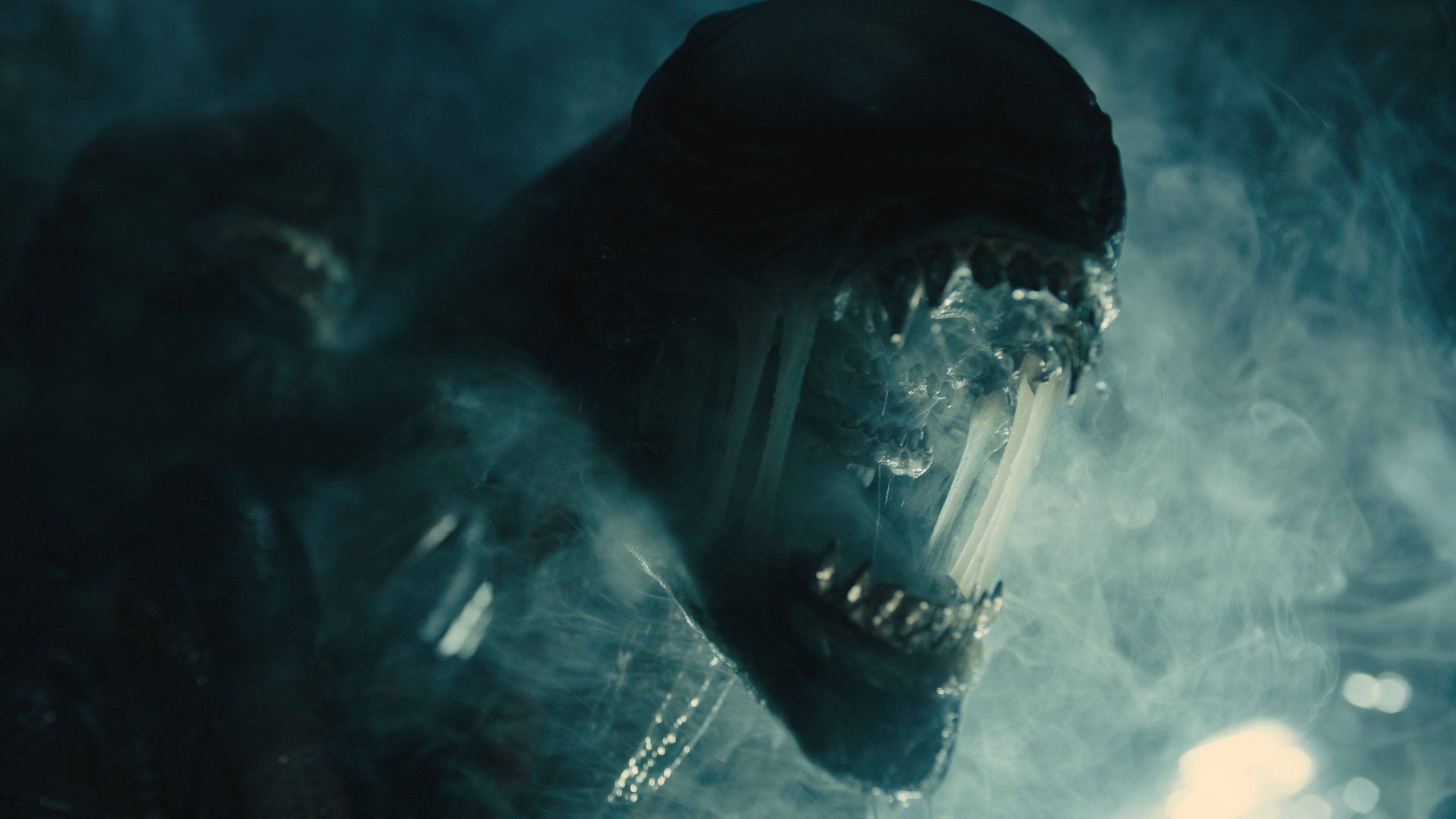
The acid blood zero-g scene in Alien: Romulus might just be one of the greatest sci-fi/horror sequences in modern memory. With both intense action and incredible frights, it is a perfect marriage of multiple genres that has always made the Alien franchise so unique.
As recounted in an earlier interview with ILM.com, visual effects supervisor Nelson Sepulveda-Fauser remembered: “There were a lot of requirements there … it needed to be terrifying, it needed to come toward our actors, to look impassable, but they still needed to be able to somehow make it through. We also needed a moving air current to affect the acid swirling in zero-g. So there was a lot of choreography needed. It took a lot of development and experimentation to get the recipe for realism so it didn’t feel magical as in a Harry Potter movie.”
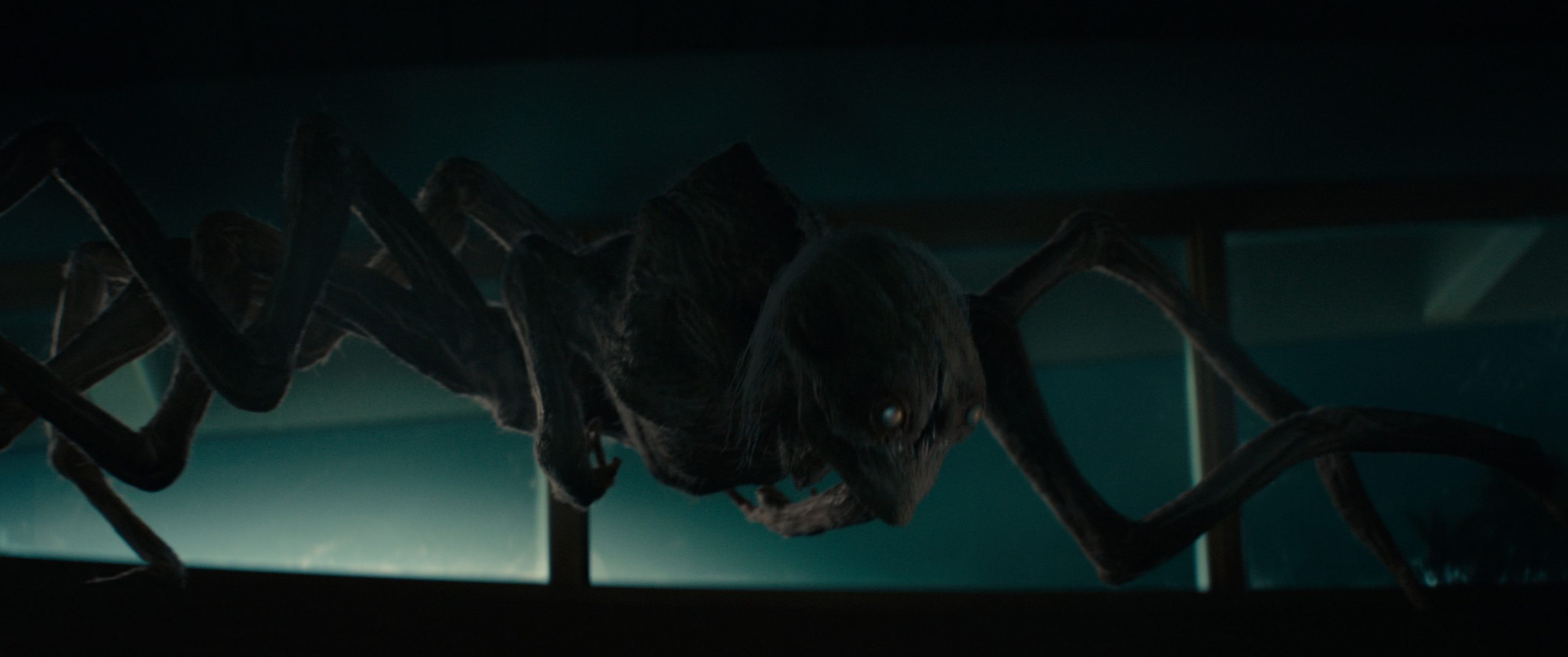
How do you kick off a scary streaming show? By immediately killing off genre legend Dee Wallace (E.T. the Extra-Terrestrial, Cujo). While she falls asleep to The Golden Girls, her character is stalked and killed by a leggy monster crawling down from her ceiling.
While not a theatrical movie, The Boroughs had to deliver huge scares on the small screen. “The creature has this wonderful arc,” visual effects supervisor Steve Ellis observed to ILM.com earlier this year. “In the first episode – which was single-handedly animated by [lead digital artist] Filippo Dattola – it has to be creepy and scary, almost like an agent of death. However, as its arc evolves, we wanted viewers to start feeling sorry for it because you ultimately learn that they are enslaved. We had to elicit so many emotional responses from the audience with these creatures through the work we did.”
And, of course, there are many chills and thrills still to come. This month, audiences will be subjected to the underwater horror of Whalefall, featuring ILM effects work. The scares will continue, and Industrial Light & Magic will always be there to add some more terror to the big and small screens.
—

Brandon Wainerdi is a writer and interviewer, whose work can be found in Star Wars Insider, on StarWars.com, and inside the iconic horror magazine, FANGORIA. He is the author of two Star Wars books, including the recent Star Wars Encyclopedia of Starfighters and Other Vehicles. He is also the host of Talking Bay 94, a long-running behind-the-scenes podcast that interviews the cast and crew of the Star Wars saga. You can find him on Twitter and Instagram.