ILMers detail a multi-faceted approach, incorporating both motion-control miniature photography and CG animation, which helped the Razor Crest take flight in The Mandalorian and Grogu.
In the aptly titled The Mandalorian (2019-23) episode “The Tragedy,” Moff Gideon (Giancarlo Esposito) inflicts a brutal one-two punch upon Din Djarin (Pedro Pascal) as the Imperial officer kidnaps Grogu and destroys the bounty hunter’s beloved ship, the Razor Crest, within a matter of moments. The Mandalorian rescues Grogu shortly thereafter, but his transport is unsalvageable. Now, with the titular characters employed by the New Republic in The Mandalorian and Grogu (2026), Colonel Ward (Sigourney Weaver) bestows Din Djarin with a replacement Razor Crest that had been procured from a former Imperial’s private collection.
The responsibility for enabling this new Razor Crest to take flight rested with Industrial Light & Magic, which utilized a hybrid approach that paired motion-control miniature photography and CG animation to allow the ship to soar through interstellar space and planetary atmospheres. Production visual effects supervisor John Knoll, production animation supervisor Hal Hickel, ILM visual effects supervisor Jeff Capogreco, virtual production manager and gaffer Lindsay Oikawa-Pflum, layout supervisor Douglas Moore, compositing supervisor Ben O’Brien, generalist supervisor Andy Proctor, and virtual production associate supervisor Brad Isdrab all joined ILM.com to outline the diverse range of methods ILM deployed to depict the Razor Crest in flight.
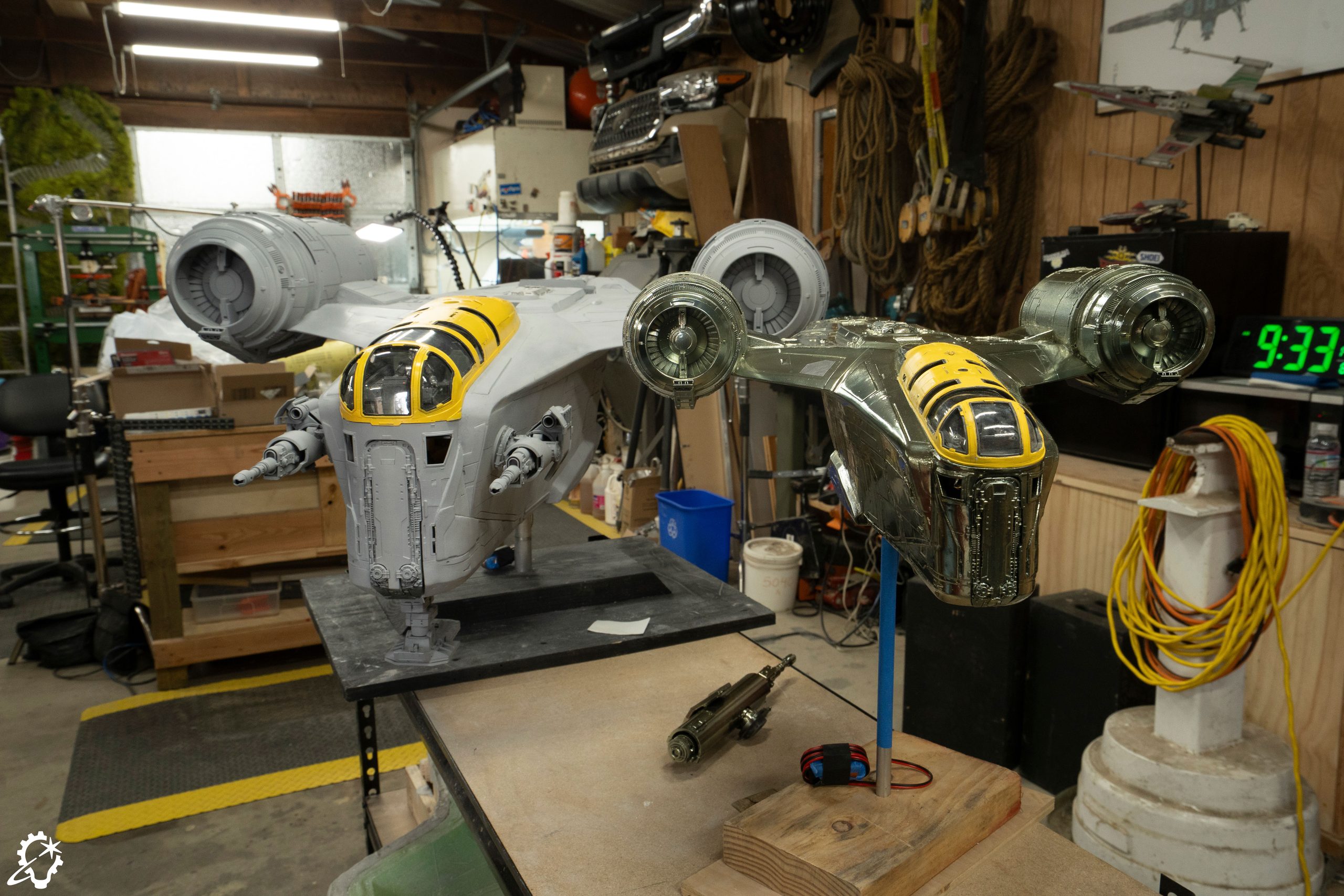
While physical and digital models had been used for the first Razor Crest in The Mandalorian series, Din Djarin’s acquisition of a fresh ship required the construction of brand-new assets for The Mandalorian and Grogu. A new version of the 24-inch miniature – to be used for rapid fly-bys at distance – was built using the original mold that model maker John Goodson had created for season one, along with a larger 48-inch iteration for shots where the camera gets close to the ship. A digital model was also available for fully CG shots, but even this version owed an element of its existence to the practical builds, as Lindsay Oikawa-Pflum tells ILM.com, “Brad Isdrab scanned the miniature by taking 360-degree photos of the actual model, and that’s the skin they wrapped around the digital models so it matched as closely as possible.”
This synergy between the practical and digital worlds would continue throughout the shoot, including when it came to planning the Razor Crest’s motion-control movements. “I animate in Maya, and that gets handed to our layout group,” Hal Hickel explains. “They translate it into the data John Knoll needs to run the motion-control system, and John will also have a QuickTime animation of what the shot’s supposed to look like. John can shoot a test and mix those images together to see how his test is lining up with the original intention of the shot.”
“We had a whole set of movies, so it was clear how the ship looks through the render camera or through the motion-control camera, as well as what it looks like from the top view, side view, front view, and perspective view,” Douglas Moore adds. “That way, you know everything that’s on there and being coded – the numbers and values of the motion-control rig and the rig that was moving the Razor Crest itself across the entire sequence of frames. We’d then export a text file that John would read to drive the motion-control rig.”
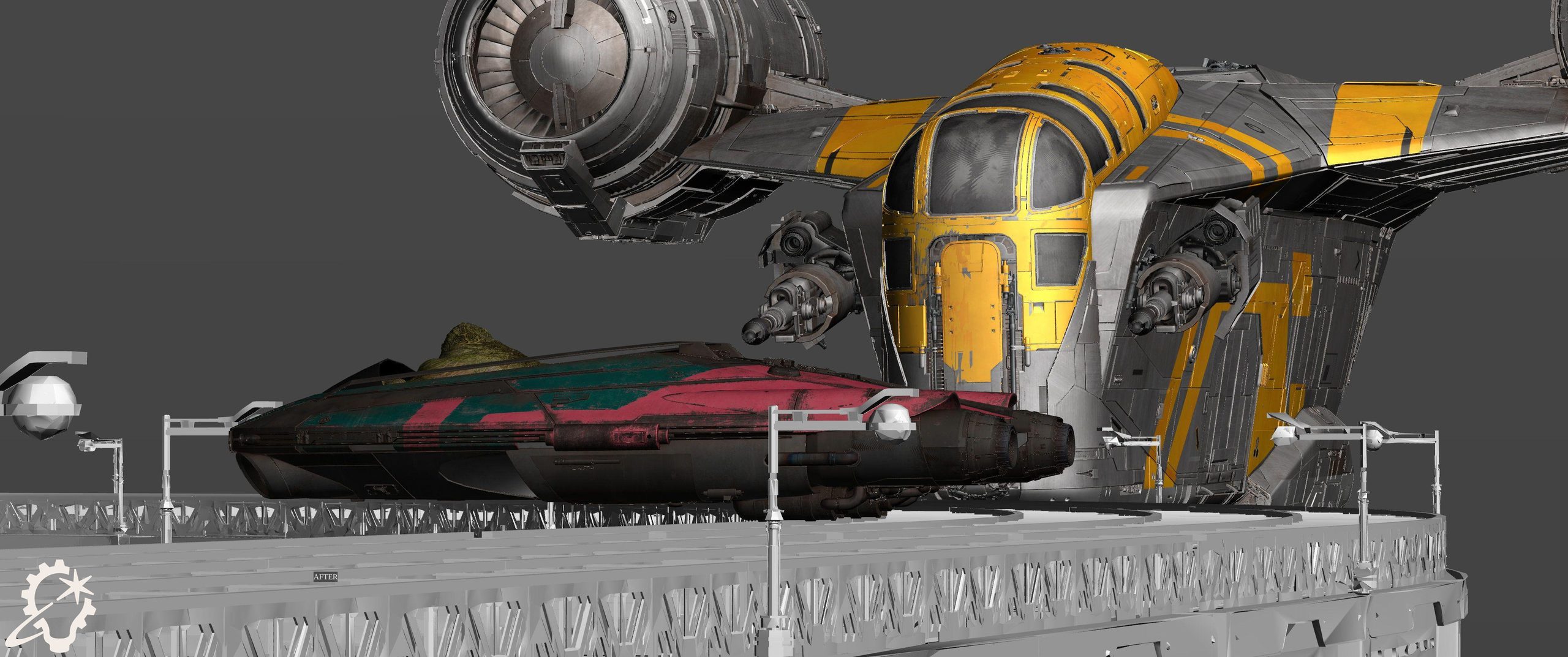
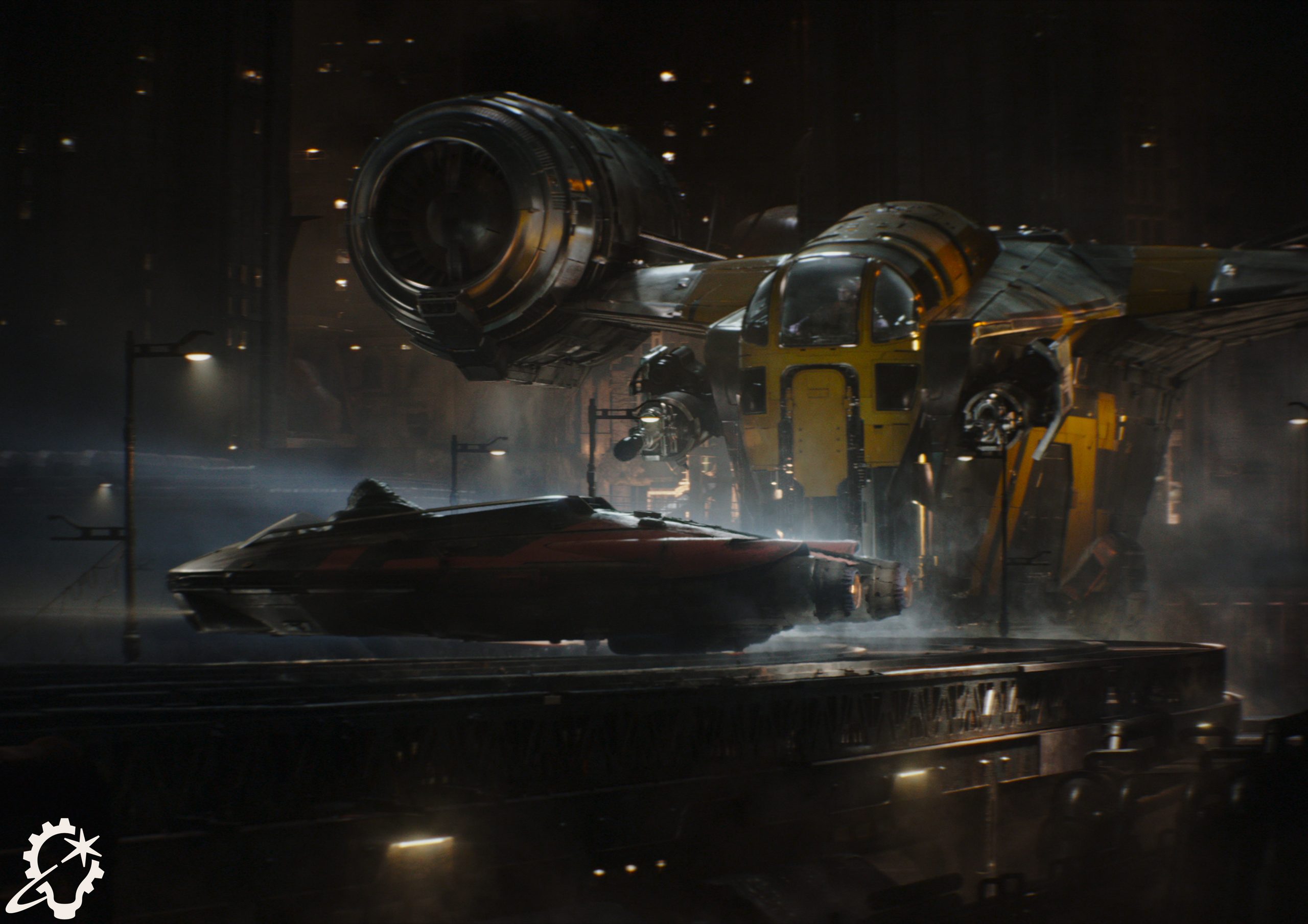
Determining whether to use a physical miniature or digital model typically came down to the specific demands that a given shot would have for the ship. “When we’re shooting the Razor Crest as a miniature, it does present some limitations,” Hickel notes. “It’s a physical model, it weighs a certain amount, it has to fit on a model mount, it can rotate on certain axes, and then the camera itself is traveling on a track. But it isn’t unlimited. You can’t do super radical flipping maneuvers, and because of that, that’s where we’d choose when to use CG and when to shoot the model – it has to do in part with the complexity of the move.”
Referencing a tumbling flip that Mando executes during the dogfight above Shakari, Hickel continues, “That’s a CG shot, because we needed complete freedom to tumble the ship on every axis and do exactly what we wanted with it. But when we’re doing beauty passes, and it’s just zooming past the camera, we want it to look as beautiful as possible, so we do those with the miniature. Same with the close-up shots where it has landed.” The intricate Shakari dogfight stands in contrast to the majority of the film’s shots that showcase the Razor Crest in flight. “In terms of miniature versus CG, I’d say 80% to 90% of our shots were all miniatures,” Jeff Capogreco says of his team’s work at ILM’s Sydney studio. “That’s partially because we didn’t have to push the spaceship to do things beyond the capabilities of motion-control.”
When designing motion-control shots, Hickel kept the miniature’s physical parameters in mind. “I have a CG version of the motion-control rig, so that I can see the track, the camera, the model mover with a little miniature Razor Crest on it – and they’re all in scale to each other. I can even put different lenses on the camera that correspond to the exact physical lenses that John has. He has certain lenses, so I only use those in the CG scene. Then I animate the camera up and down the track, pan and tilt on the camera, roll and tumble on the ship, and I design the shot that way. Rather than having a CG ship with a CG camera out in the void and doing whatever I want with them, I only do what I can within the physical constraints of the system. It’s in part so I ensure that I’m designing a shot that can be created with the rig,” Hickel describes.
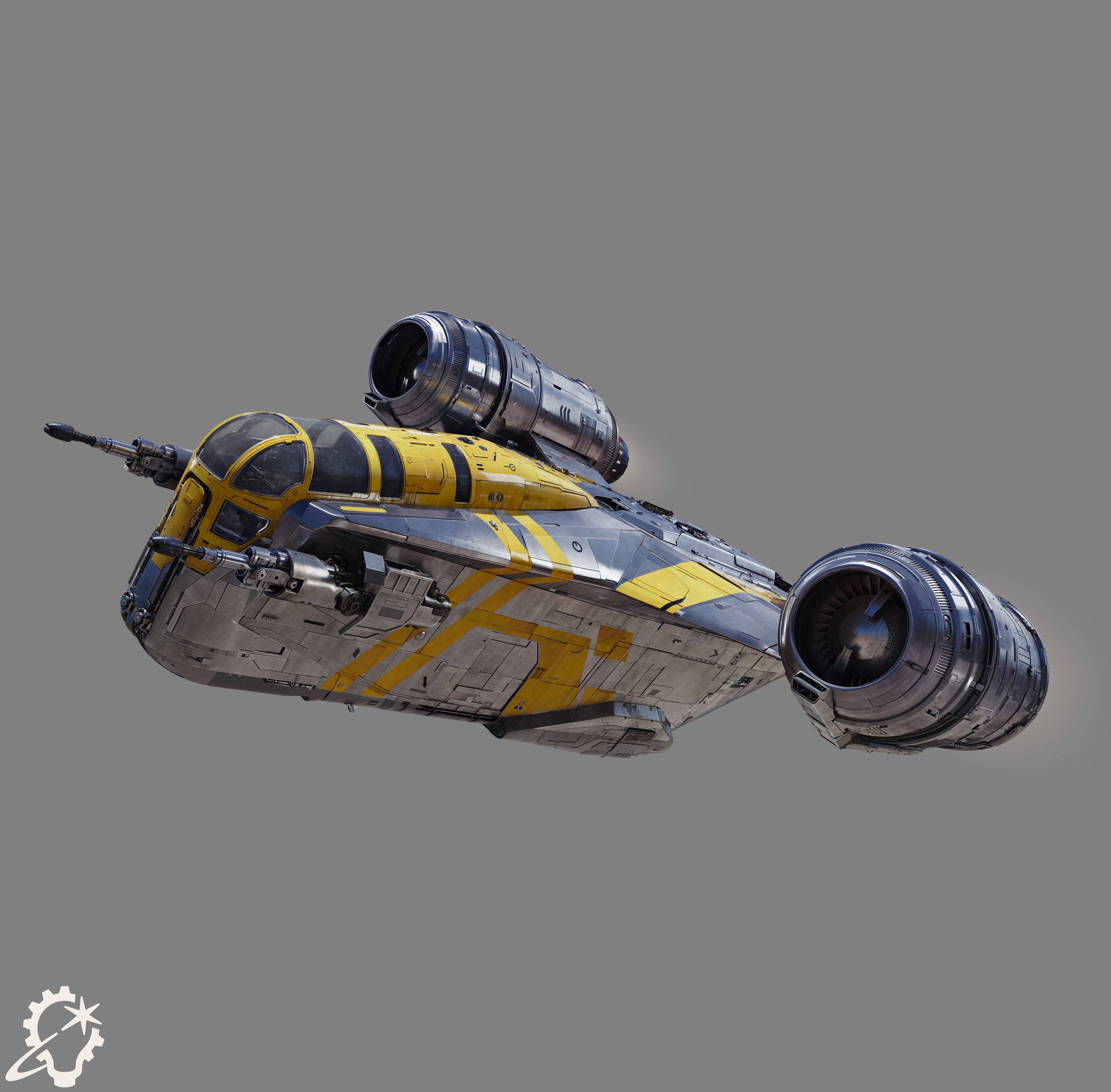
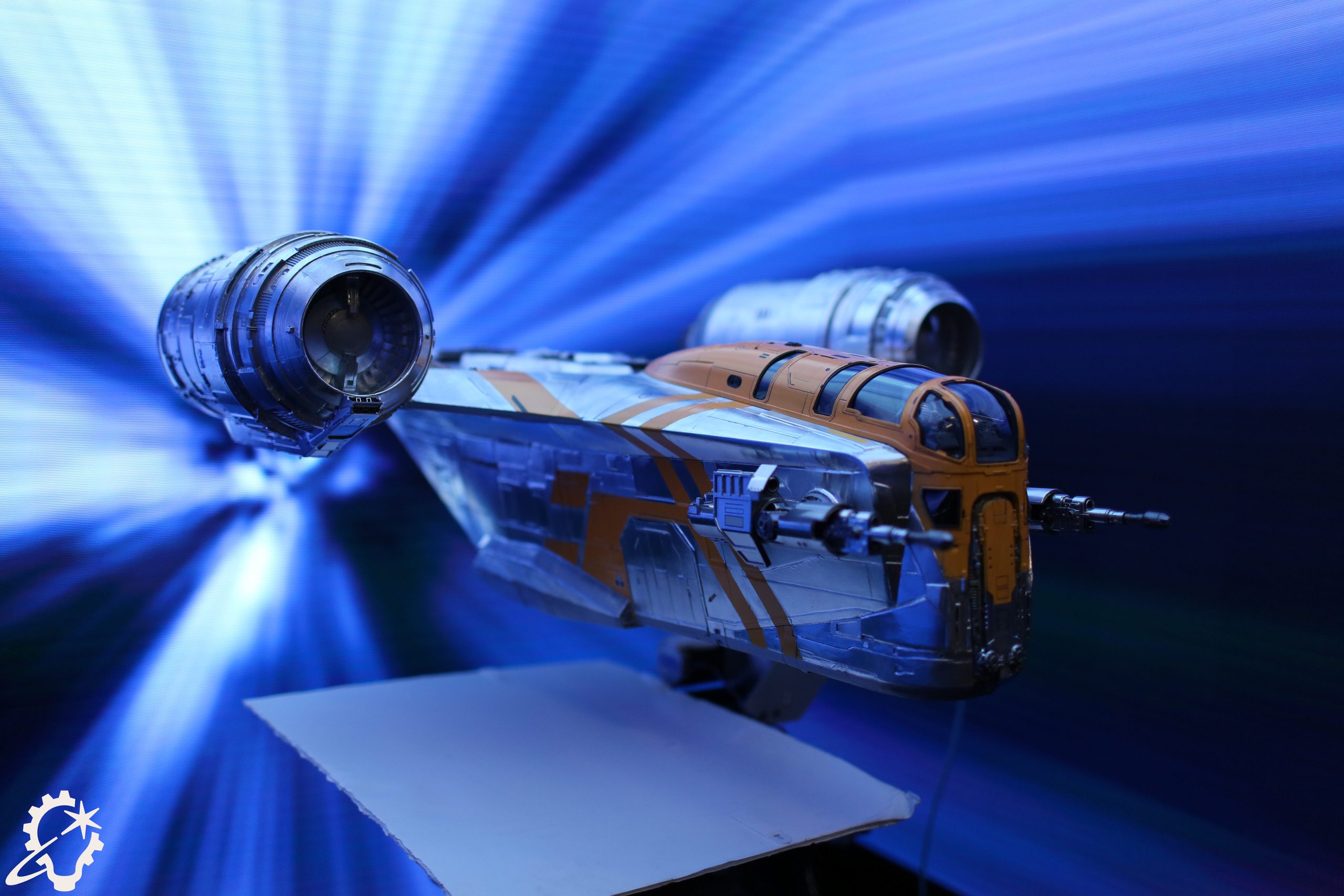
The Mandalorian’s trip to the big screen also afforded ILM the opportunity to film the physical models on a motion-control rig inside a smaller variant of an ILM StageCraft LED volume. “StageCraft is the convergence of practical models, photography, CG, and this proscenium where the practical and the virtual collide,” Brad Isdrab declares. “StageCraft is the umbrella term for ILM virtual production. It can be anything from simulcam or DMX-driven lights to LED volume photography. In-camera visual effects (ICVFX) are the flashiest and most recognizable versions of that, but there’s so much virtual production that isn’t in LED volumes.”
“I’ve helped build all of the StageCraft stages since the very beginning,” Oikawa-Pflum divulges. “When The Mandalorian and Grogu came up, John mentioned he was interested in doing what we had wanted to do for the prior seasons, which is use an LED screen to facilitate the backgrounds. It’s a mix of using an LED screen for the background as well as the blue screen.”
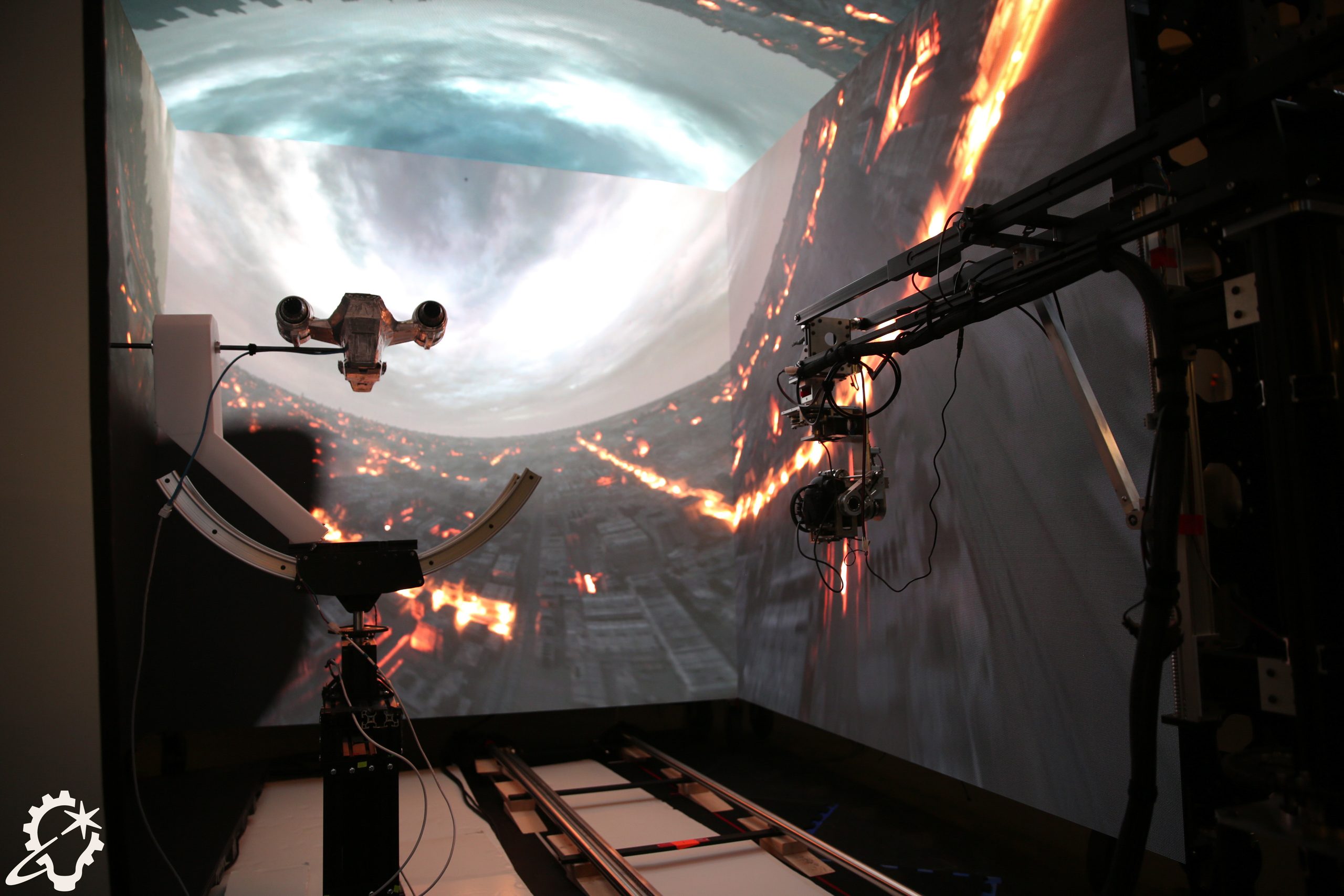
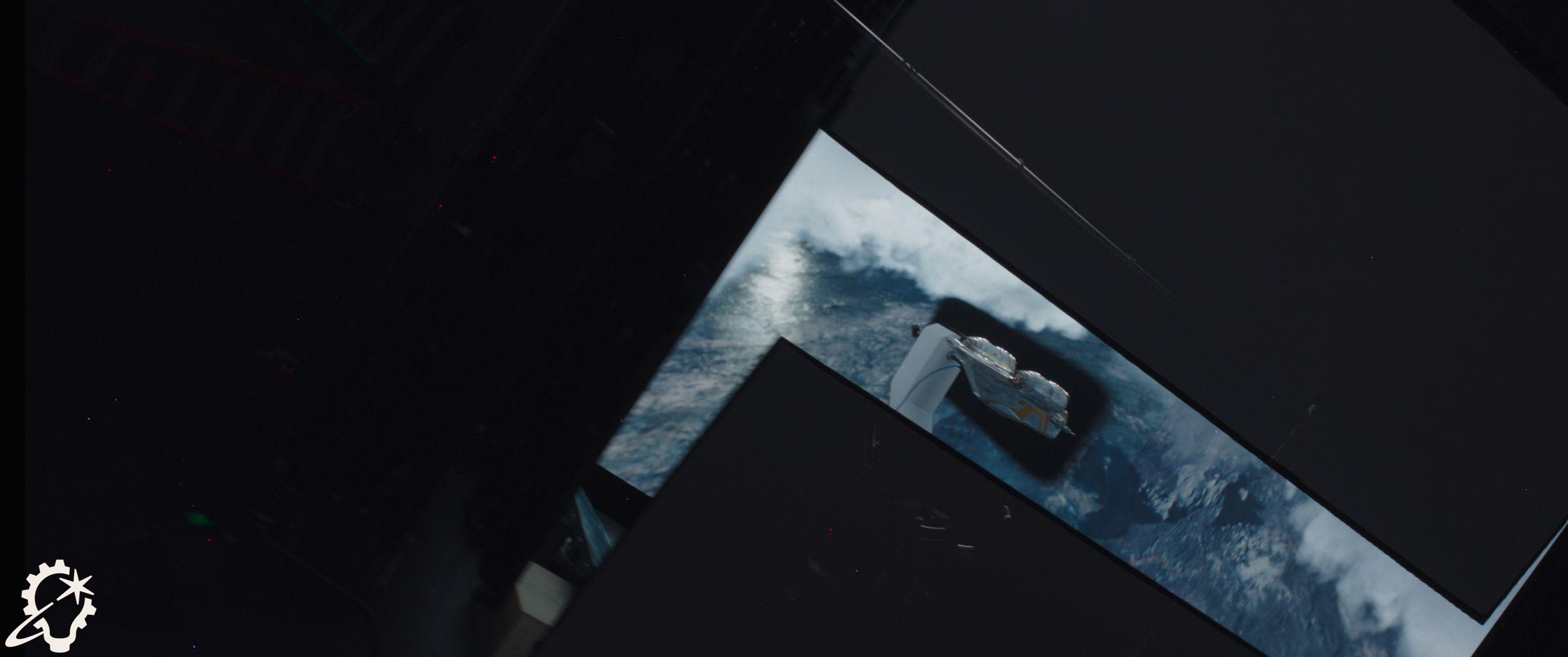
Isdrab adds that “John came up with the idea of doing an LED cave, which was our miniaturized volume. I supported the virtual production side, and we brought in much of the same content we ended up using for the cockpit shots. I built up a pixel map that folded our walls into that 8-foot cube shape around the model. So when it’s traveling in the right direction, we get those reflections projected from the top and 3 sides. We also had a couple of strips of stand-alone LED panels that we’d insert and angle up towards the bottom to get the reflections there.”
“The Razor Crest is a very reflective ship,” Oikawa-Pflum explains. “For The Mandalorian and Grogu, we were able to make this awesome StageCraft LED cube to have the light wrap around the ship so you could see the cloud reflections and even some of the buildings from the different planets in the backgrounds. It worked incredibly well because you can see those reflections on the ship, especially in the shots where he’s planetside. We had the Razor Crest in hyperspace in there too, and the reflections looked awesome. It made passes easier and faster, and we could do more complicated stuff that you normally couldn’t do, like daytime or the gray, foggy skies that you see in the film.”
Referring to the miniature volume as “the Cube,” Oikawa-Pflum highlights an innovative solution the ILM team devised during its assembly, sharing, “We built the Cube, but we couldn’t build doors on it because we needed the camera to go into it to shoot. However, we still wanted reflections on the front of the ship, so we considered getting more LED screens to fold in like we do for the StageCraft volumes. We were thinking of all these complicated ideas, and then Knoll suggested that we just get some foam core and stick silver Mylar on it. That’s what we ended up doing, and it worked incredibly well. Sometimes, the simplest low-tech solution is the best. Just because you can do something insane doesn’t mean you should.” [laughs]
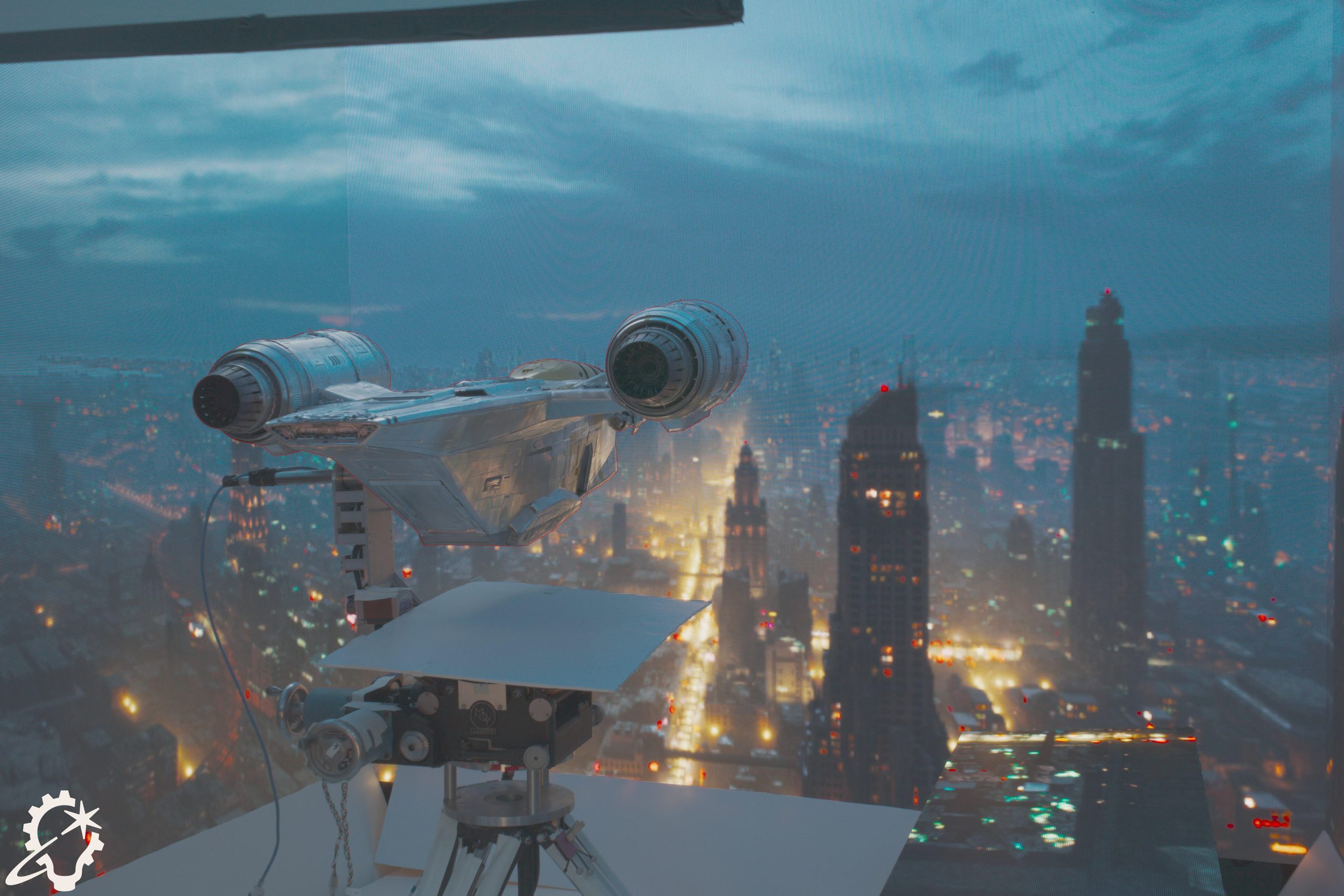
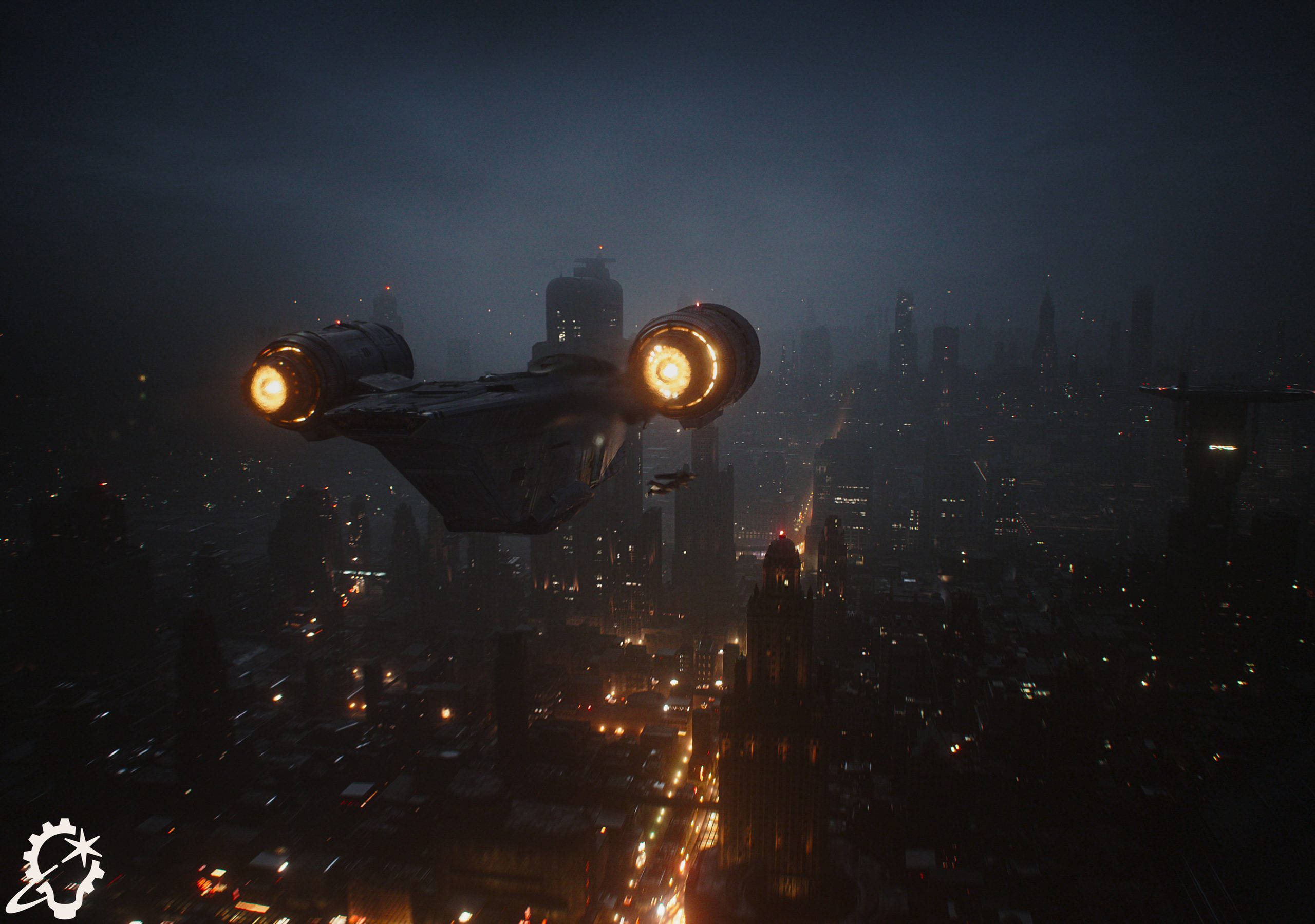
The workflow surrounding the motion-control shoots involved multiple departments within ILM, and again entailed both practical and digital elements. “Douglas would do the pre-shoot, and once John shot the plates, he’d also supply compositing with the layout stacks. Doug aligned things perfectly for the shot afterwards,” Ben O’Brien declares. Moore concurs, adding, “We often had to go back through and re-matchmove the plate properly so we could stick the 3D model in there, because sometimes they’d need a little extra glow on the back of the Razor Crest’s engines.”
The intensive motion-control shoots featured a large number of passes per shot, which were then sent to ILM’s compositors. “When John shot the Razor Crest, he’d shoot multiple keylight passes, engine passes, specular passes, sunlight passes, an environment pass, and even a blue screen pass. Since it was all on the motion-control rig, he could capture as many passes as he wanted. On any one shot, we’d have maybe 8 to 12 different passes that we would then rotoscope or use the blue screen plate that John shot to extract the Razor Crest from each of those plates and merge them all together at different values,” O’Brien recounts.
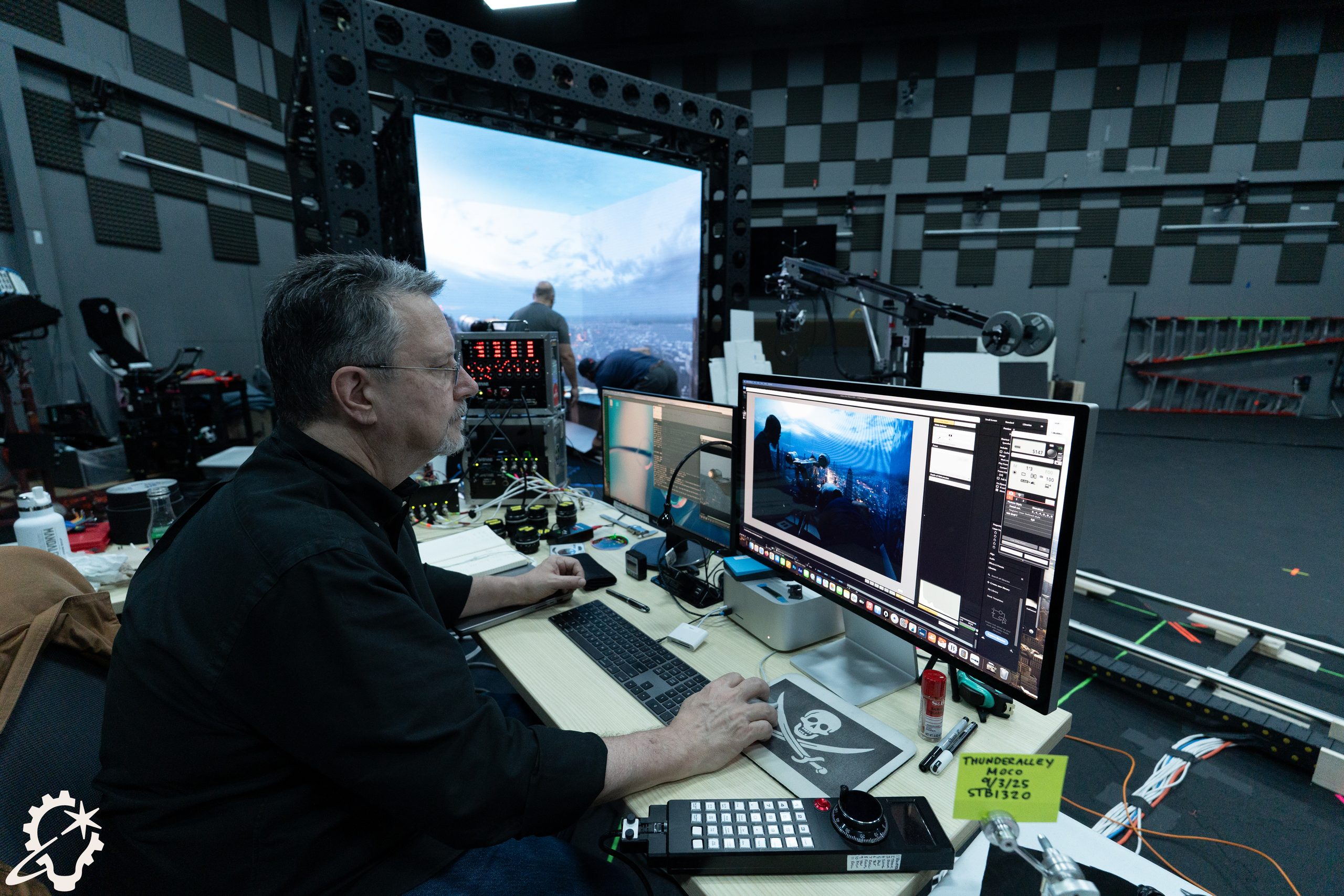
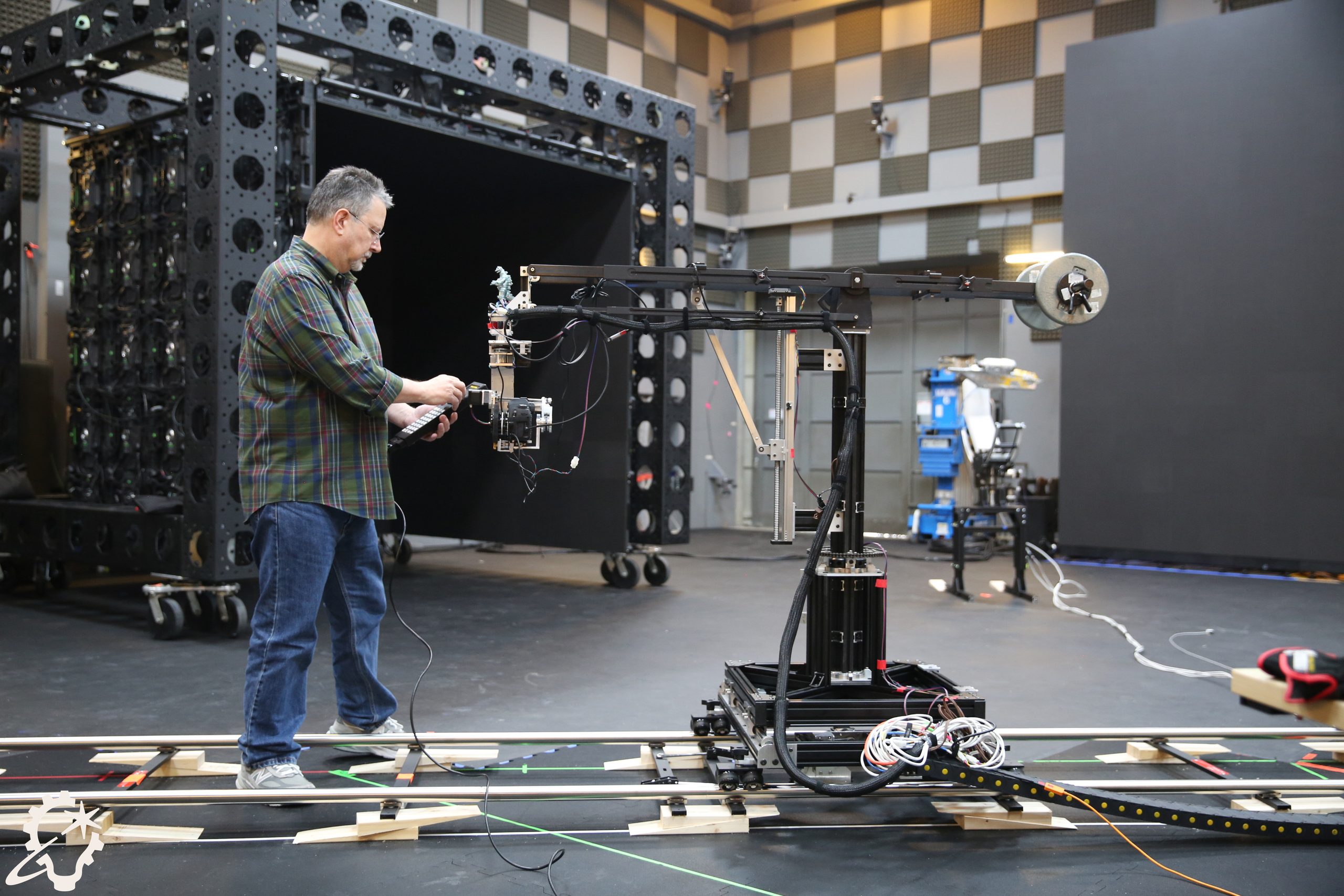
“What was great about the motion-control shoot and having a real Razor Crest is we could make our CG Razor Crest look all the better for it,” O’Brien continues. “We had some shots cut back-to-back between CG and practical, so in look development, lighting, and our other departments, we’d matte-shade the CG Razor Crest to the plate photography. John wanted to use the practical model because it looked fantastic. Occasionally, there was some flare cleanup, but very minimal. In order to have it locked to the plates, Douglas’s team enabled us to matchmove those plates into the shot. Once we’d cut them out and superimpose them together into a background or sand dunes or whatever, we would integrate the shadows and do some fine-tuning.”
The number of motion-control passes varied based on each shot’s complexity, as Oikawa-Pflum describes: “The shots that were the most complicated were the ones that traversed the entire track. Whenever we had a shot where you’re coming into the ship, flying by it, and then the camera’s turning and watching it trail off were by far the most intense to light and shoot.”
When problems arose in the mini-volume, the ILMers regularly resorted to innovative low-tech techniques for solutions, as Moore imparts, “When they initially shot the first pass, the LED grid was visible, and you’d have this chatter around the edge of the ship for the reflection. That wasn’t going to work for comping it, even with the blue screen pass. That’s when we started putting a black rectangle behind the model in every frame. It was actually dynamically positioned by Brad Isdrab.”
“I animated a dark mask that would sit right behind along the ship’s silhouette to protect those edges,” Isdrab clarifies. “The beauty of motion-control is we can do that as one pass and do a pass without it. Then we can blend them and get everything we were missing. It’s the same magic trick we use for getting cockpit lights, running lights, and engine lights – all of the different passes to give the compositors the ability to dial the beauty shot.”
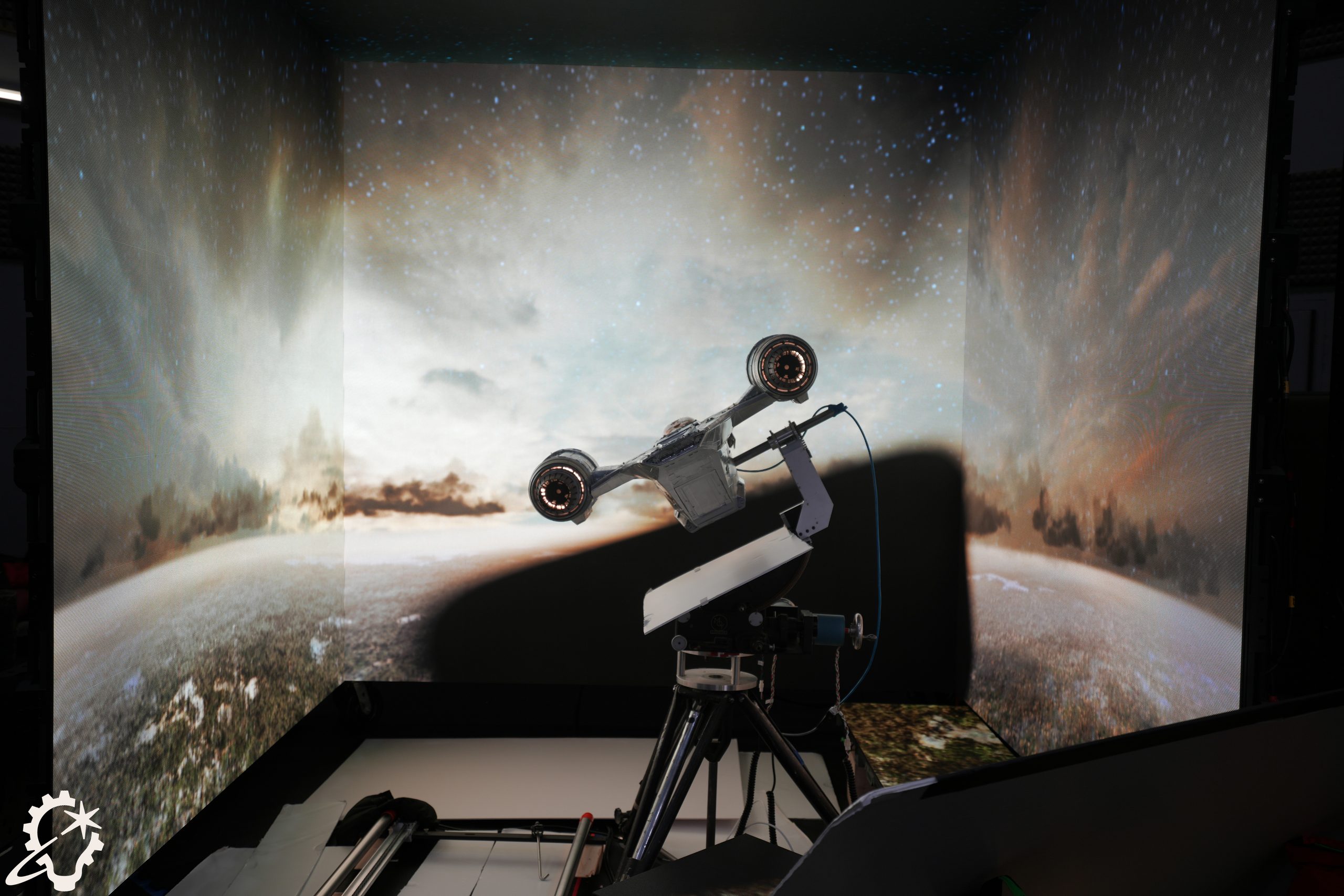
“Often, blue screen is horrendous with reflective objects because you end up getting a bluespill and – guess what – a big blue reflection on the spaceship,” Capogreco jokes. “In certain cases, where the spaceship is flatter to camera and not traveling toward us – in outer space, for example – John elected to use black cutting cards as opposed to blue screen.”
Oikawa-Pflum adds, “We had to get creative with the backgrounds. We had a super-heavy umbrella stand that we rolled out with C-stands, and on one of the shoots, I came up with sticking a black or white board to it as the camera’s moving. I’m literally pushing a cart with a board. Those shots were fun because you had to get creative with how you were going to do it during the shot to not have to do it again and lose hours of the day.”
The volume work necessary to film the actors inside the full-size cockpit for interior scenes and the motion-control miniature for exterior shots while the Razor Crest was in flight both required digital environments for the background LED screens. “The cockpit shots were done in the volume, so with some early designs for planets like Shakari, we did environments for those and turned them into what we called cockpit loads,” Andy Proctor elaborates. “Essentially, we’d have the actor in the physical cockpit, and then on the volume the environment outside the stage scene can pitch and roll on things to create the interactive lighting effects when he’s flying around.”
“We build our environments the same way we would for postproduction,” Isdrab conveys. “We lean heavily on photographic techniques – photogrammetry or panoramas – because we’ve found over the years that the more we touch it, the less real it looks. We’ll build things out for real based on photography as much as possible and create the hi-res version, and then we look at what concessions we need to make in order to get it to run on the wall. What are the needs of the scene? If we’re flying, and we know it’s going to be a five-minute-long, uninterrupted cockpit shot, we’re going to have to lower our resolution to be able to stream enough frames to cover that distance.”
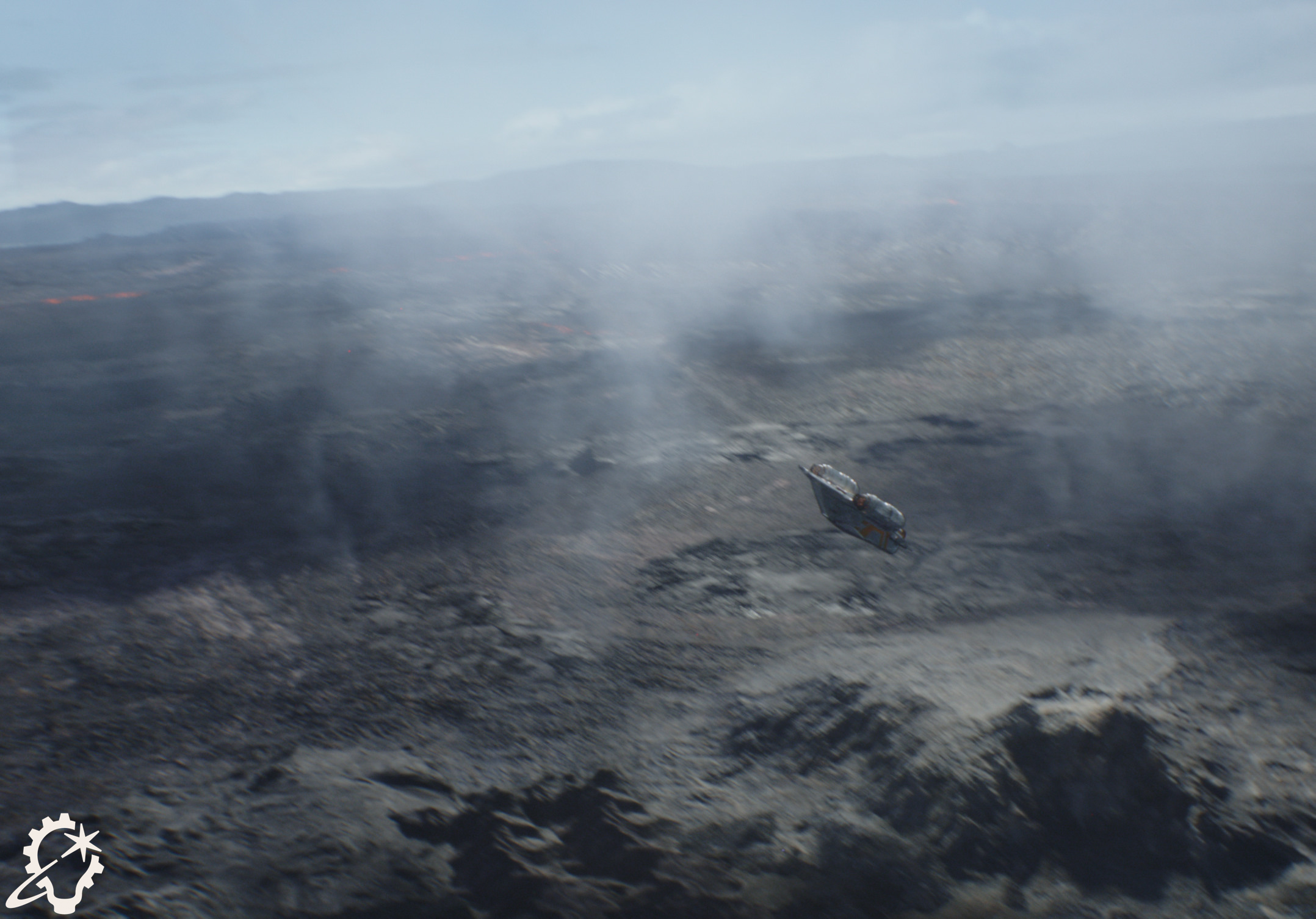
“With Shakari, we did a bunch of environments for the dunes, the aerial dogfight, and the big approach into the city. We took environments that we developed from the stage for the postproduction work and made versions of them that were for the miniature shoot, as well,” Proctor remembers, praising digital artist Steffen Hampel’s work on the city. “There’s one shot in particular where the Razor Crest flies in just before Mando jumps out, and we could really dial in the look of the city and flesh it out for the rest of the sequence. We rendered a 360-degree panorama that’s animated from the point of view of the ship, so as the animation plays and is projected from the mini-volume with the miniature shoot, it all corresponds to what you see in the rendered move of the camera reflected in the panels of the Razor Crest. We have this wonderful hybrid workflow of using the pre-rendered content that is CG, but having that project actual light onto the models, and it makes things feel more real.”
The cockpit and miniature shots also proved to be mutually beneficial to one another, as John Knoll reveals, “Fortunately, some of the miniature shots had corresponding cockpit shots that went with them. So, when you see the Razor Crest fly by as it’s descending into Shakari, we cut to the inside, and there’s Mando and Zeb in the cockpit. Those cockpit scenes were done in the volume, so to prep for those, we prepared volume content of us descending down into Shakari. When it came time to shoot the miniature elements of that, we started by reloading the original content that was used for the cockpits, which covered a number of the shots.
“For the other miniature shots where we didn’t shoot cockpit material, like the arrival on Nevarro, we had those shots underway already in our environment, and that’s the benefit of doing the miniature shoot in the middle of visual effects production – a lot of the shots that miniatures were going to go in were already underway to create the environment work,” Knoll concludes.
While the CG Razor Crest afforded more flexibility for fancy maneuvers, there was still a connection to the restrictions of its motion-control counterparts. “I didn’t use the CG motion-control rig to design shots that were going to be all CG, but I did try to keep the same vibe,” Hickel contends. For Mando’s dogfight over Shakari, Proctor recollects, “I know from experience that a sequence like that is very hard – it’s an unforgiving sequence because it’s long and dynamic. But for me, that ended up being one of the best-looking sequences in the film, especially being intercut with the cockpit stuff they shot on stage. Any time you cut back to Mando, it felt as dynamic as what you’re seeing in the CG shots where we’re following the dogfight.
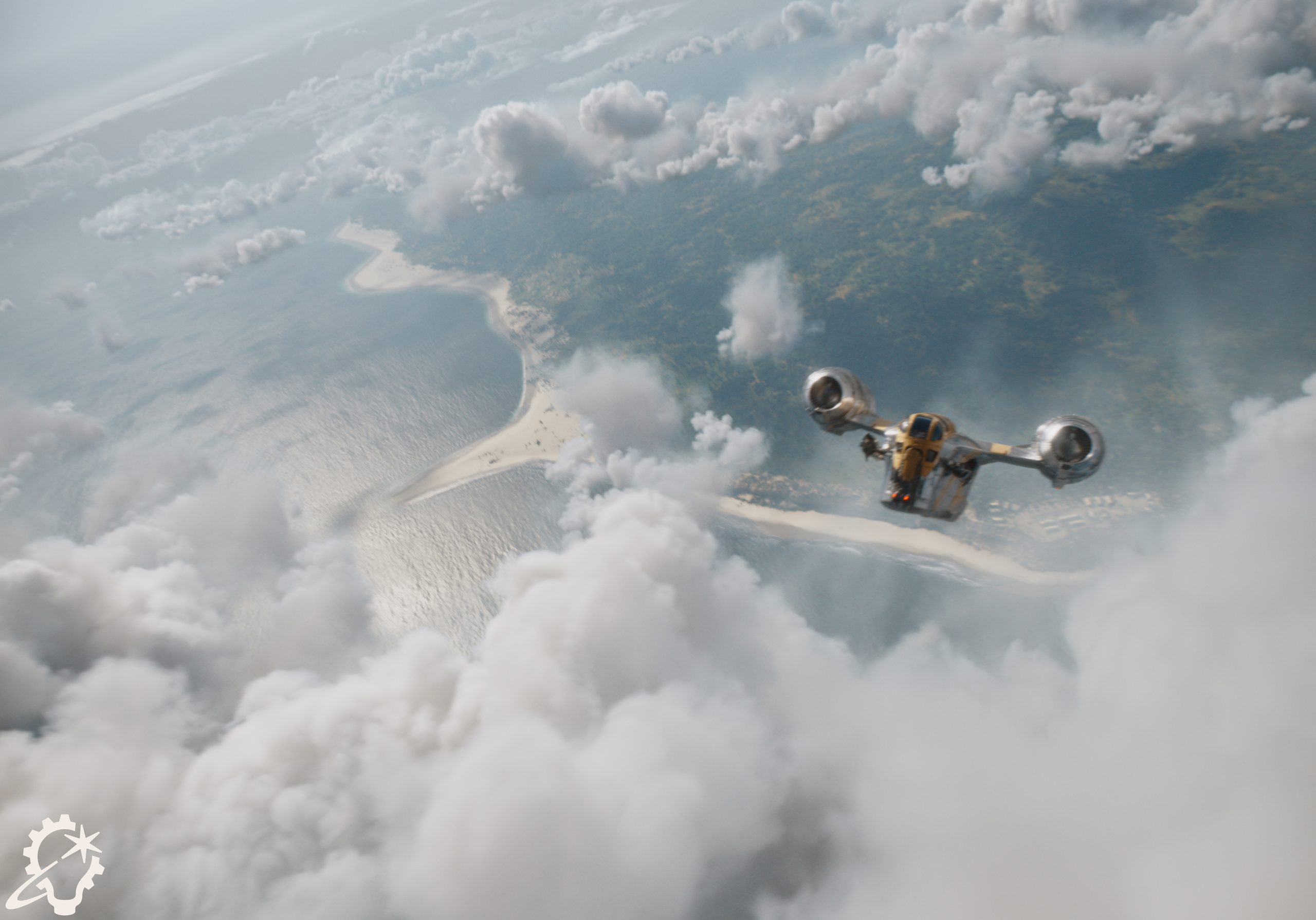
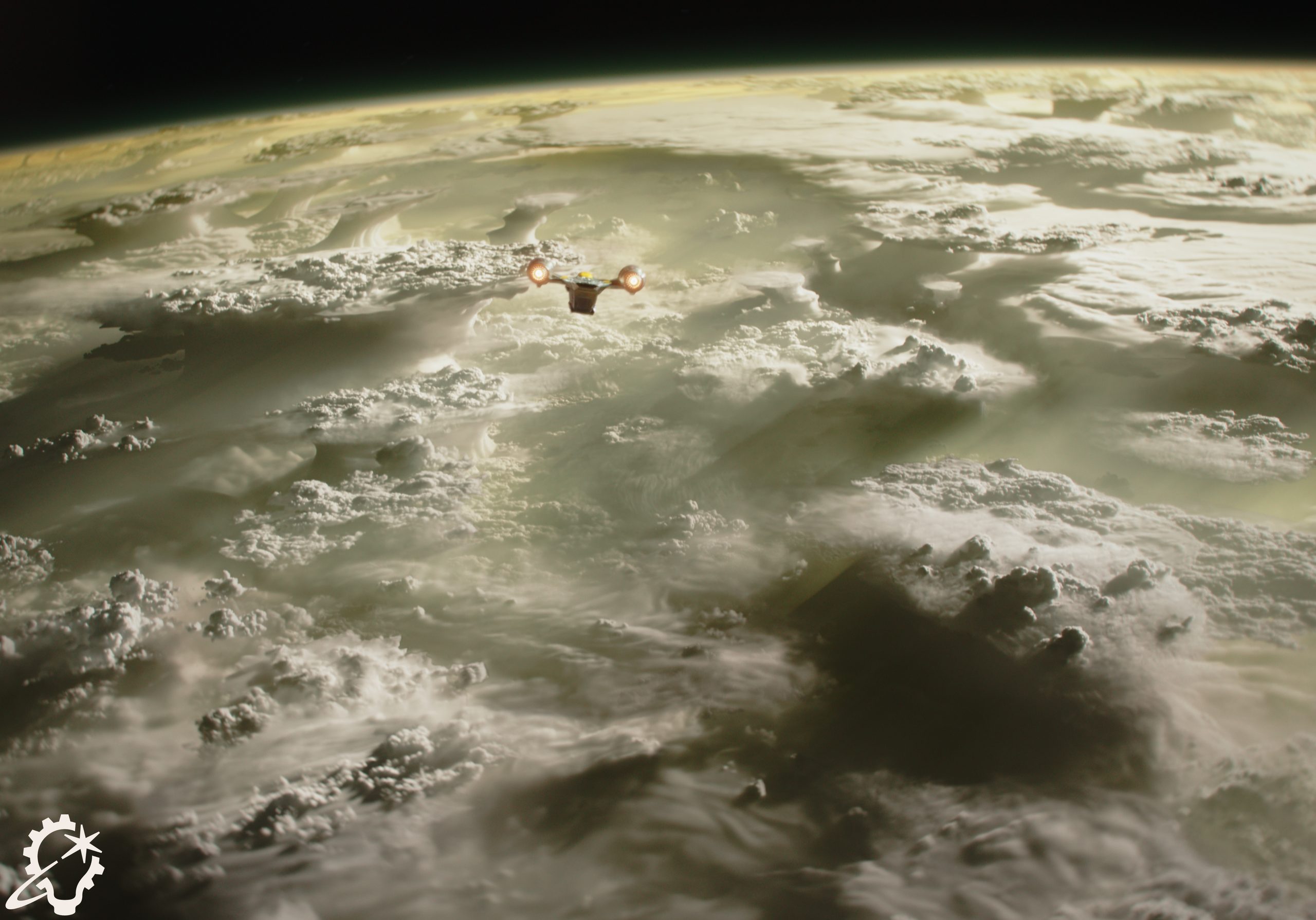
“That sequence was challenging on the environment side, just because clouds are tough,” Proctor continues. “Traditionally, they’re difficult in CG because everyone has an unconscious sense of what a natural phenomenon looks like, and they’re often hard to render. On this show, we were lucky to use a new version of V-Ray, which made cloud rendering a little easier. Also, ILM has done several cloud shows before, so as a facility, we put together a whole library of our best clouds. Those curated clouds, as well as the update to the renderer which gave us more control and physical accuracy in the rendering, meant that we only had to focus on getting everything to look beautiful.
“Our artists were astounding, too – [lead digital artist] Tadeusz Chmiel and [digital artist] Isaac Zuren found the recipe and managed to dial it on each shot,” Proctor adds. “Wherever possible, in both the hero shots and all the filler shots in between, we’d use aerial photography in the background, so you had this anchor of realism that helps the eye believe all the CG clouds, which needed to be CG for the dynamism. Mando uses the clouds and dives into them to hide, and there’s moments where they bank around clouds that become these big compositional features. We wanted to stay tre to the previs and keep that drama while making sure it felt like a real cloudscape, so we were constantly looking at reference to get the scale and density right.”
Din Djarin’s return to Nevarro in The Mandalorian and Grogu ranks as a favorite Razor Crest sequence among the ILMers, as Moore articulates, “That was a fun one. It’s a long shot, but it was also a technical challenge. There was plenty of back and forth between animation, layout, and environments because we had to take the path that animation had done but change the direction a bit, offset it, and move it.”
“That’s an incredible shot right there,” O’Brien agrees. “There were multiple passes, and we had to change the camera on it. You get a tremendous look at the ship. You could actually see some of the stands holding the Razor Crest in its reflection, so rather than replace it with CG, John had us paint it out.
“The challenge to that shot was that the camera does at least a 180 – maybe even a 270 – but it’s this big spiraling move,” O’Brien continues. “At some point, there’s no way to avoid seeing the ship in full sunlight, as it’s the middle of the day on Nevarro. On the environment side, we had to work to disguise that because it never looks good when the sunlight’s coming from the camera. We used a lot of cloud shadows to get past that moment and get back to the side light or the backlight. We did a bunch of tweaking to keep the ship looking pretty all the way through.”
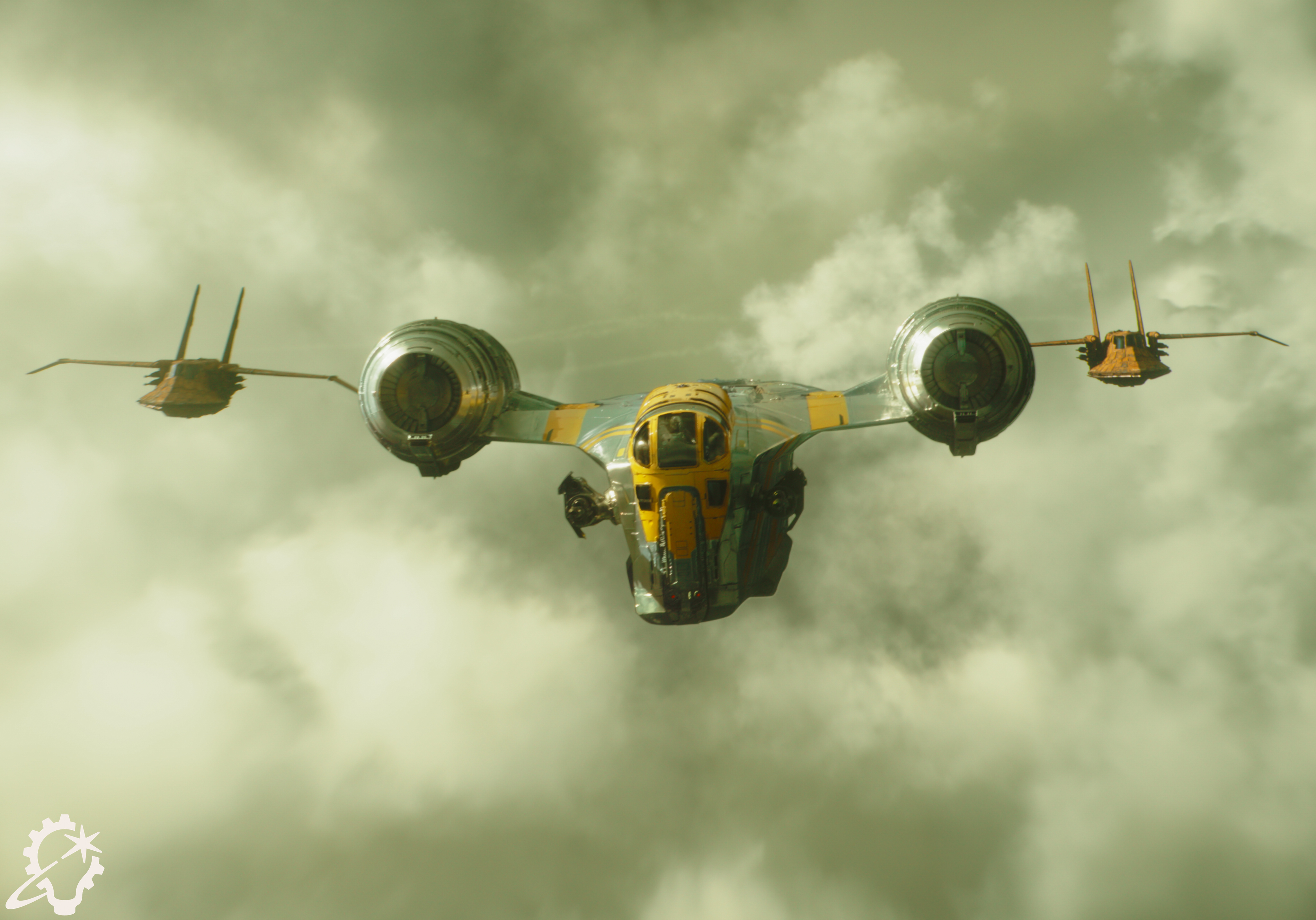
The 48-inch Razor Crest miniature had its time to shine – quite literally – when it was brought to Skywalker Ranch to be filmed for sunny exterior scenes related to its appearances at Adelphi Base. “There were significant logistics to that shoot. Bringing the motion-control rig on the road was something,” Isdrab laughs. “George [Lucas] was kind enough to let us use the Ranch, the most beautiful office you could hope for. We packed up and brought the equipment we thought we might need. We had to set it up and break it down every day when we were at the Ranch.”
“We had an amazing adventure going to the Ranch and shooting outside,” Oikawa-Pflum remembers. “We set up in the parking lot at Skywalker Sound and waited for clouds to behave the way we wanted. Once they cleared, we got these excellent openings that were exactly what Knoll was looking for.”
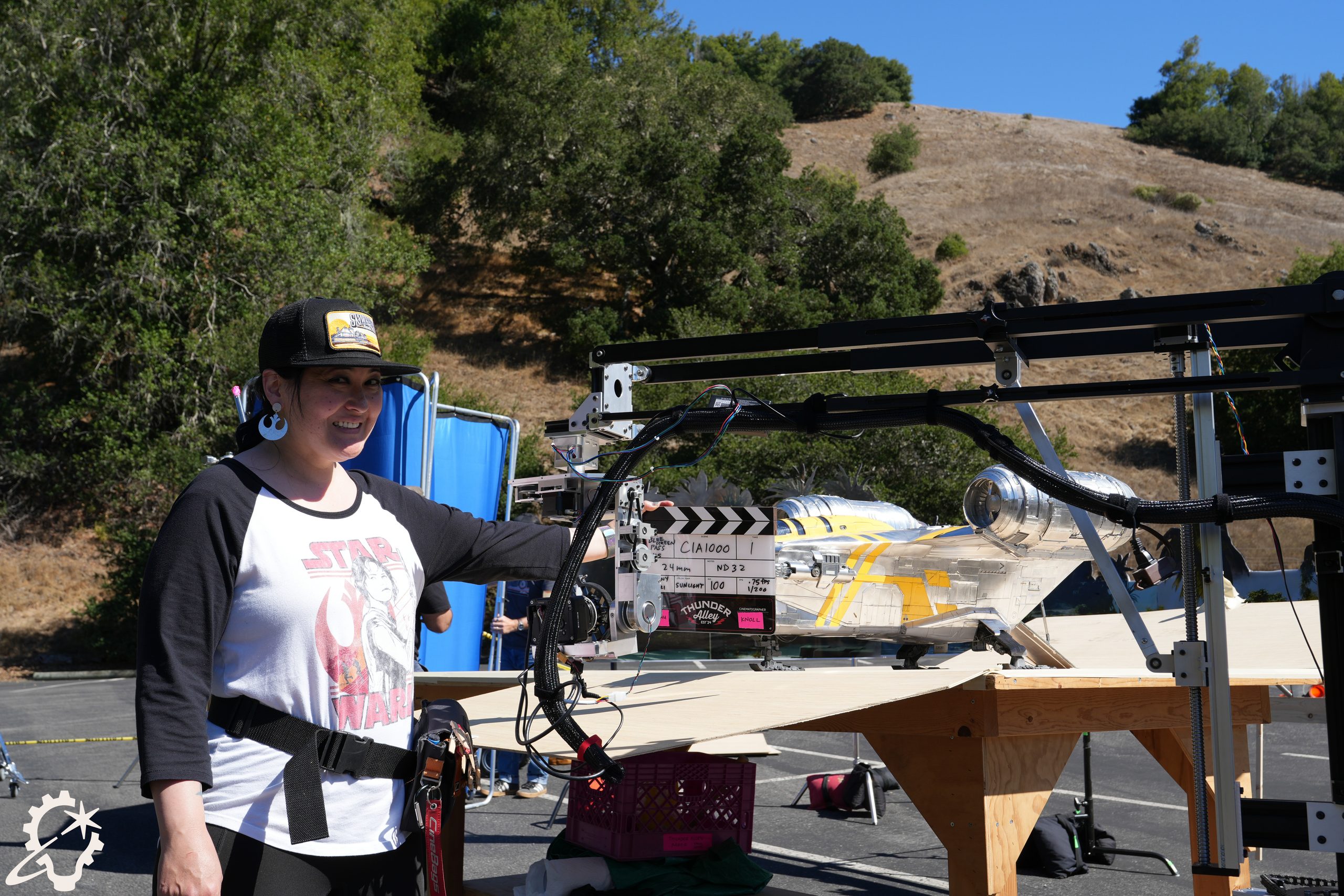
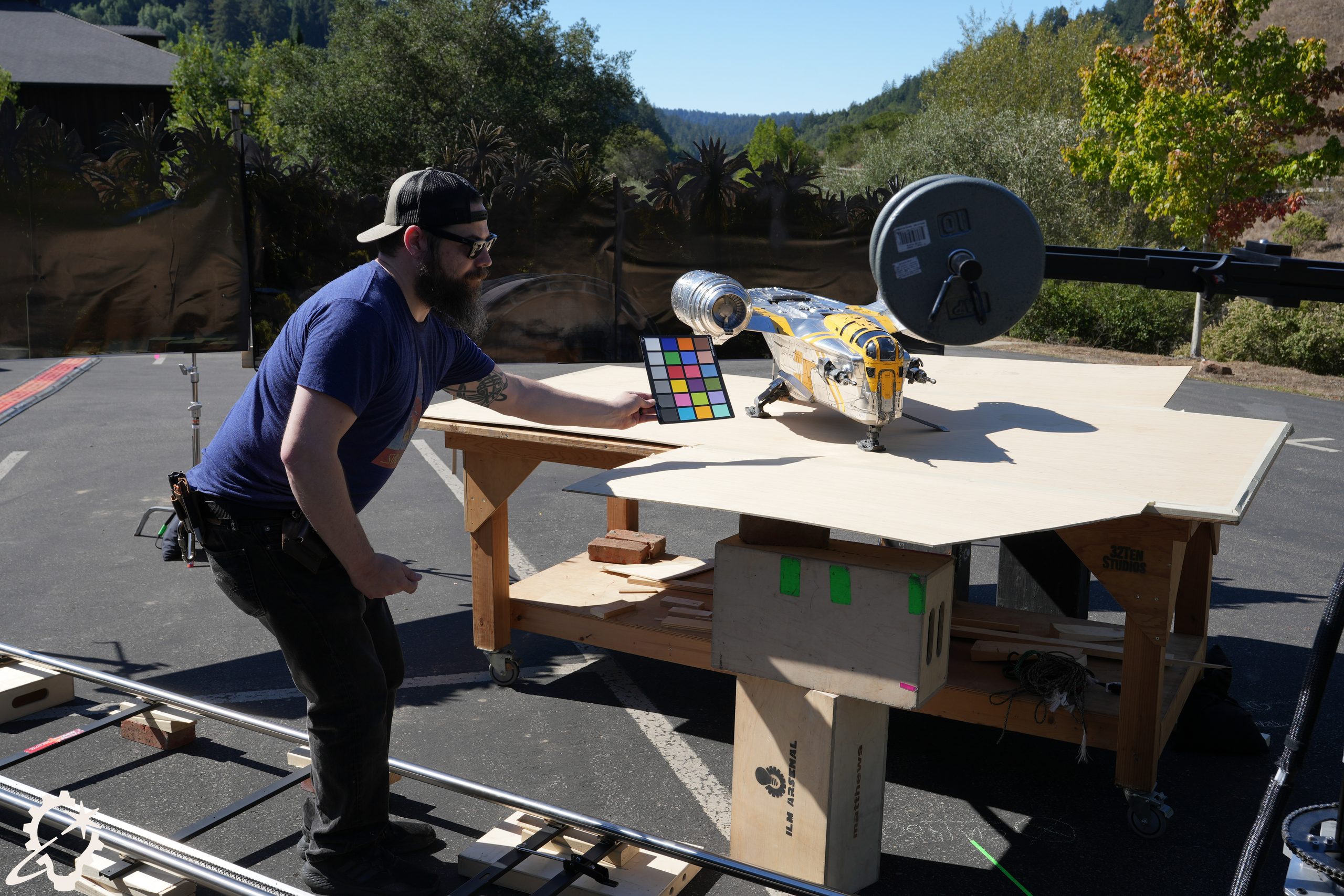
Much like the motion-control shots in the mini-volume, planning was key, as Moore underlines: “John mapped it out where in the sky the sun was going to be throughout the day so he could choose ideal shooting windows. He’d say he wanted certain shots grouped together and that he didn’t want to move the Razor Crest once. So he asked me to come up with a setup for the whole rig so he wouldn’t need to move it but could capture all of the different shots we needed.” The meticulous process also included ensuring small figures representing Mando and Zeb were placed as stand-ins within the model’s cockpit, with Oikawa-Pflum stating, “Even though you’re raking across the ship, there has to be something physically in there. Whenever someone is supposed to be in the cockpit, we have to put them in there.”
O’Brien notes how much he appreciated the Ranch shoot for compositing purposes, commenting, “We’re not bending things around in compositing and trying to change the lighting on the ship. Everything is driven off of that light on the day. There was a perfect natural glint on the monitor. We didn’t add a CG glint; it all came from the plate photography.”
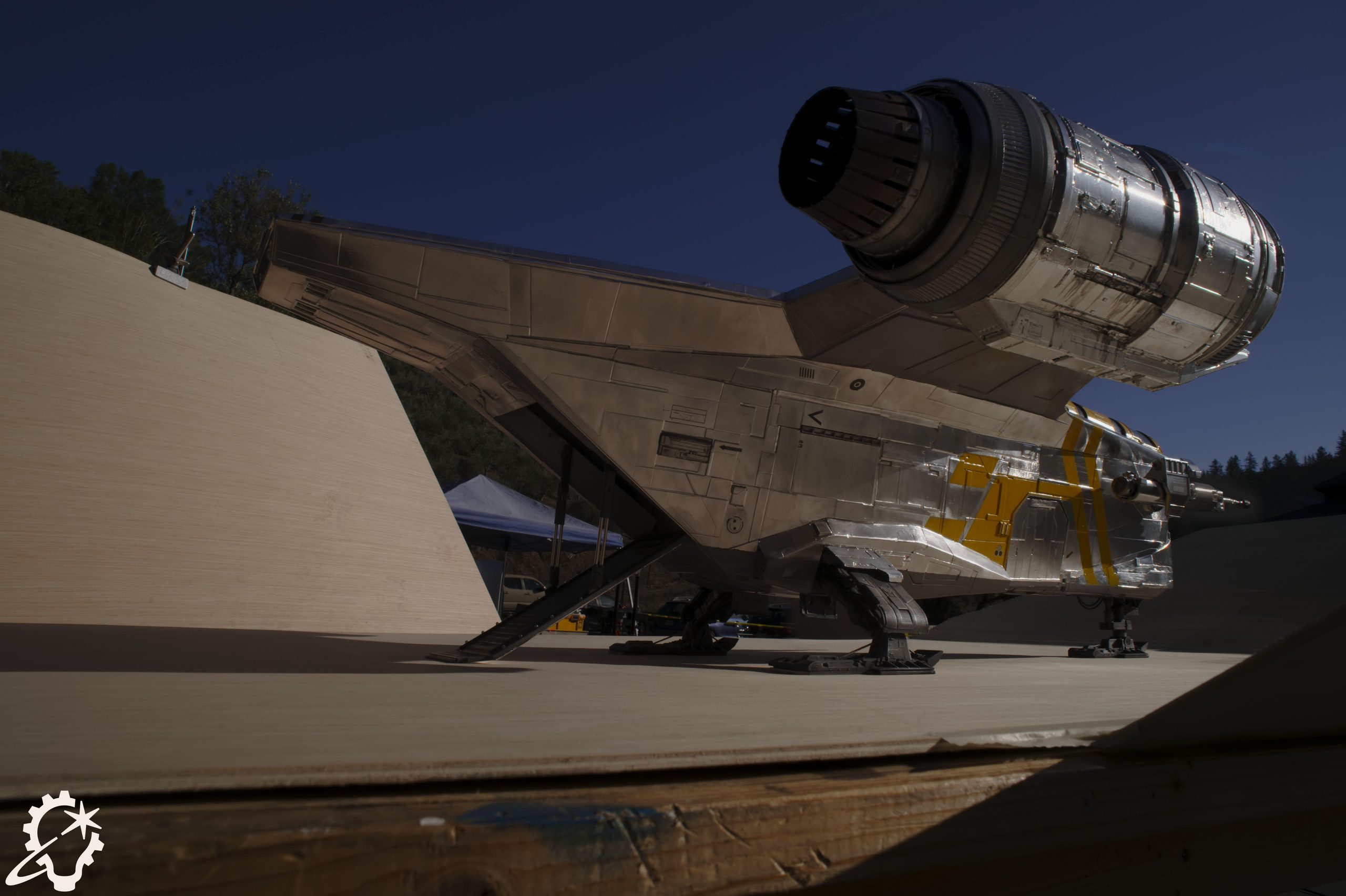
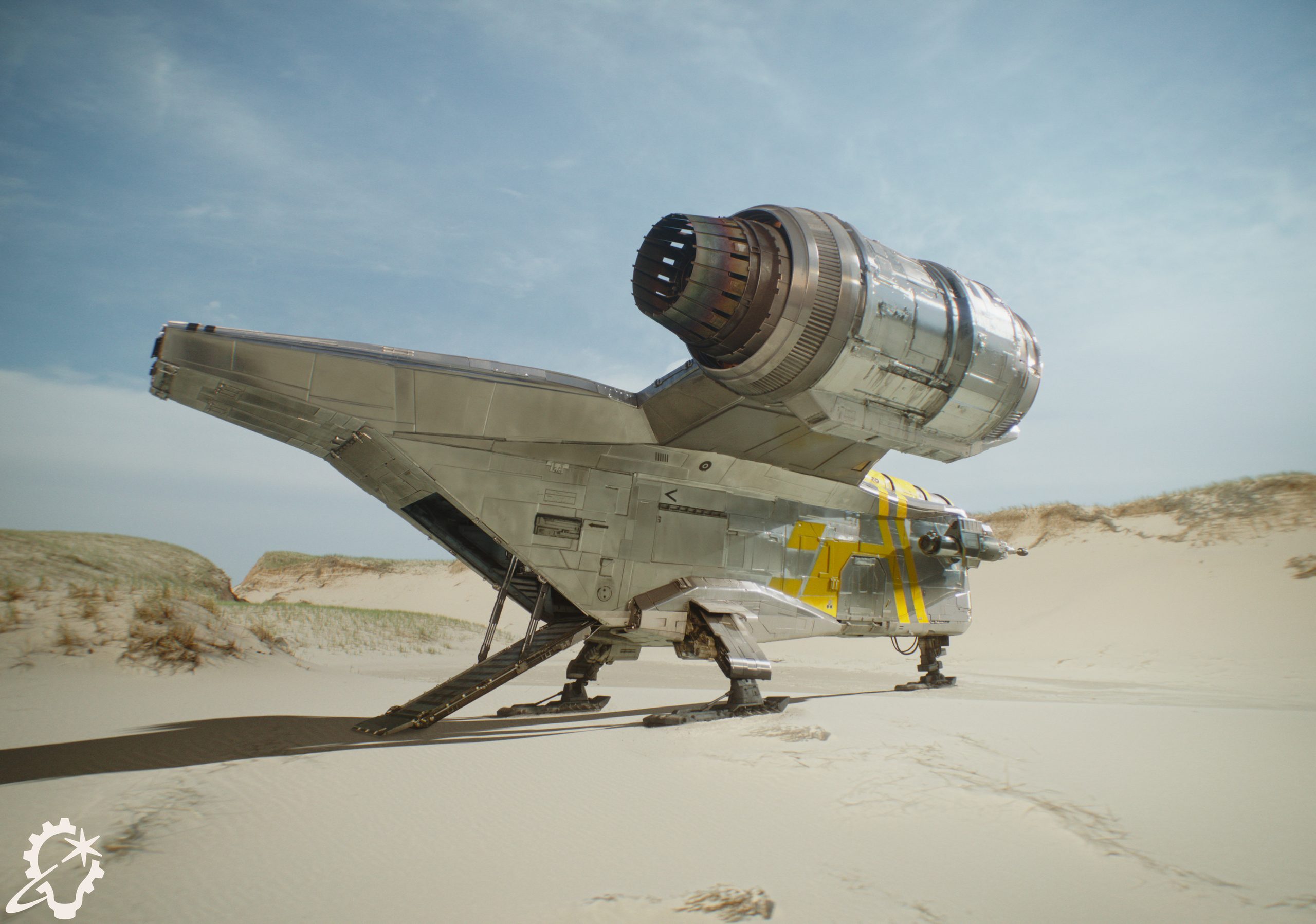
Reflecting on ILM’s hybrid approach to bringing the Razor Crest to the big screen, the team beams about the coordination between motion-control miniature photography and CG animation. “I truly think this approach made the shots better at the end of the day, and a lot more interesting,” Moore says. “There’s asymmetry that happens in some of those miniature shots – glints that you might not have gotten off of a corner – that stand out as unique. You have to work hard to get those imperfections in CG.”
Knoll and Oikawa-Pflum estimate that the film includes approximately 36 miniature shots between those done for the Razor Crest and the Red Jammer Y-wing, with Oikawa-Pflum emphasizing, “The level of detail that John Goodson and [modelmaker] Dan Patrascu put into this model lets you get so close. You can do this in 3D, but the miniature gives it a little more realism, weight, and reality. When you watch how ships move in the original trilogy, there are specific movements because that’s all the motion-control arm could do.”
Proctor picks up on this thought, postulating, “It’s part of the accepted Star Wars stylebook, where even if the audience doesn’t recognize why it looks a certain way, we know it’s because – whether it’s a puppet or a physical set or a ship or stop-motion – there are always things in there that connect to the filmmaking techniques that were used back then. But we don’t use them just to be arbitrarily nostalgic – it’s to retain the aesthetic that’s difficult to achieve in CG. You obviously need CG for the scale, but having enough of the traditional workflow sprinkled in keeps that thread alive, where it feels like all the other Star Wars movies that we’ve seen before and know and love.”
“The fact that we combined old motion-control techniques from the original trilogy with StageCraft – it’s a brilliant mix that I was so grateful we were able to do. It shows that ILM picks the right tool for the job, and it’s artist-driven,” Oikawa-Pflum summarizes. “That’s one of the things I love about this company. We don’t do things only because they are fun or cool, we do them because they’re right for that particular project. The end goal is always to make the best product possible with whatever we have at our disposal. Sometimes, that means using traditional dolly track, tungsten lights, or foam core with silver Mylar on it. Other times, it’s using an advanced LED rig. Whatever it takes to help drive the narrative forward and tell the story.”
—

Jay Stobie (he/him) is a writer, author, and consultant who has contributed articles to ILM.com, Skysound.com, StarTrek.com, StarWars.com, Roddenberry.com, Star Wars Insider, Star Trek Explorer, and Star Trek Magazine. Jay loves sci-fi, fantasy, and film, and you can learn more about him by visiting JayStobie.com or finding him on Twitter, Instagram, and other social media platforms at @StobiesGalaxy.