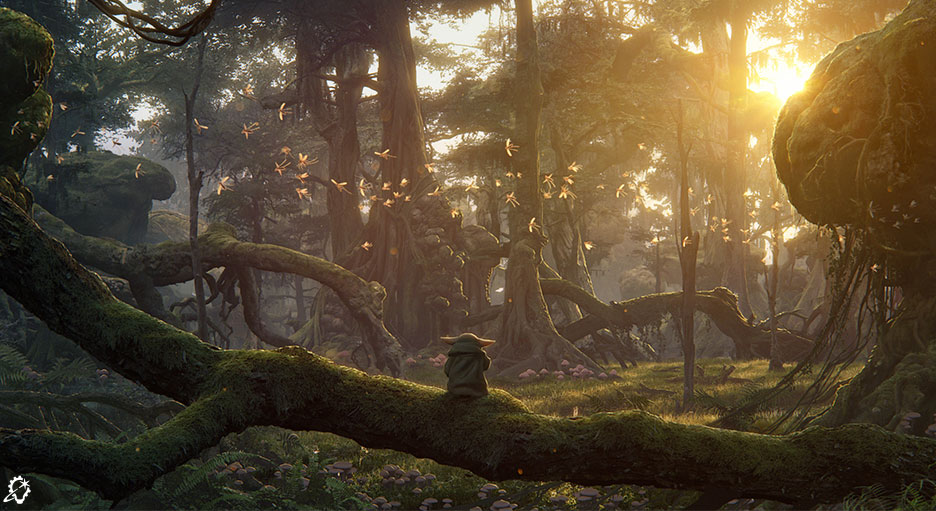
Tania Richard, Ken Beauchamp, Michael Dharney, Jason Madigan, and Michael Goddard from ILM’s Vancouver studio take us behind the scenes of one of the film’s most exciting and suspenseful sequences.
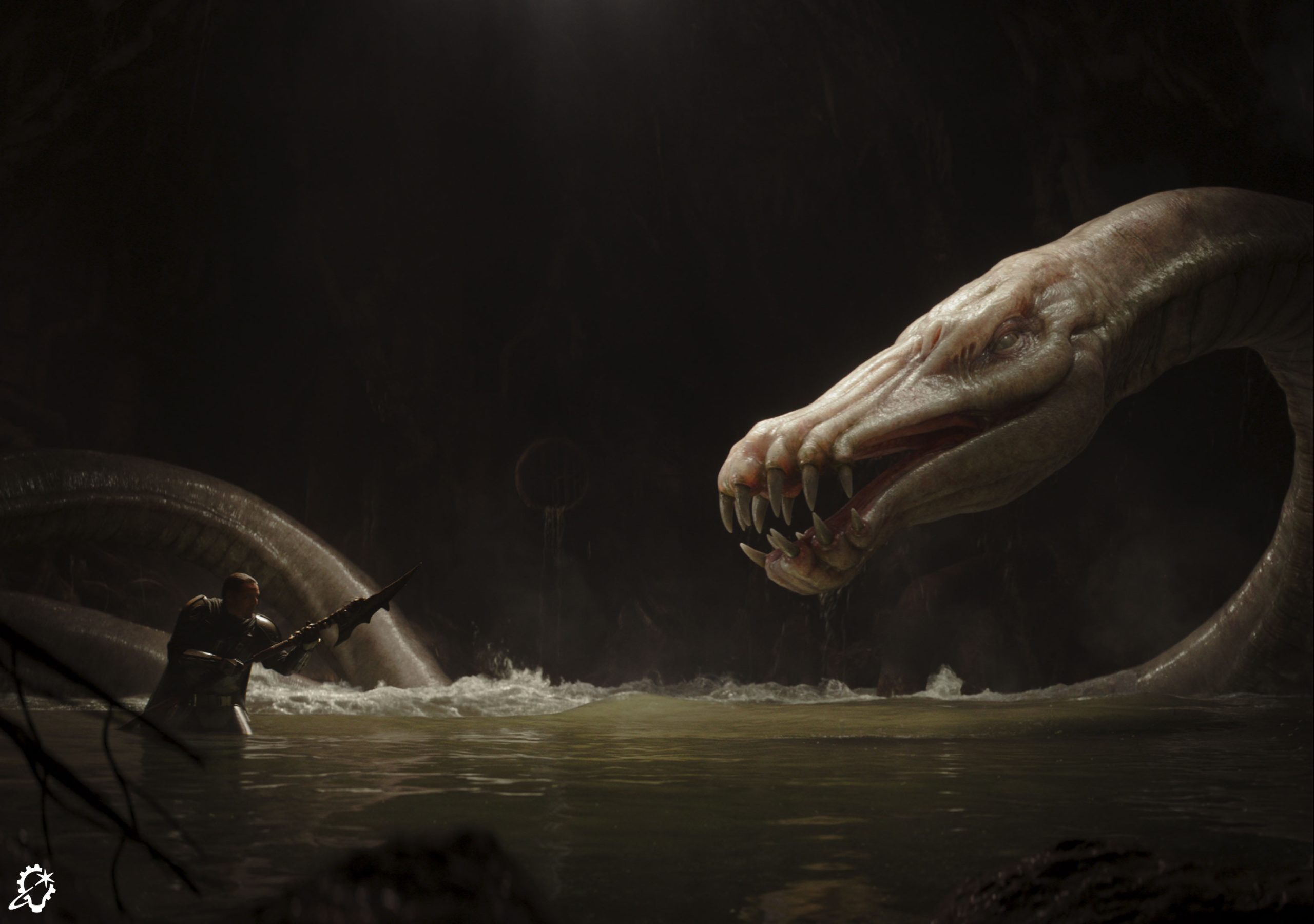
One of the most fearsome, lethal, and powerful creatures in the Star Wars galactic menagerie, the Dragonsnake arrives on-screen in The Mandalorian and Grogu (2026) with a splash. Its coiled fury and venomous fangs almost end Din Djarin as he battles the creature in the pit beneath the Hutt Twins’ audience chamber on Nal Hutta.
However, it’s not the first time we’ve seen a Dragonsnake on-screen. In Star Wars: The Empire Strikes Back (1980), R2-D2 is swallowed and quickly regurgitated by a Dagobah Dragonsnake, while Star Wars: The Clone Wars episode ‘The Hunt For Ziro’ (2010) gave us another species of Dragonsnake, one that attacks Obi-Wan Kenobi and pays dearly for that ill-advised decision.
With a lineage that reaches back over 45 years and a reputation for being an untameable beast, ILM was tasked with the job of bringing this unstoppable reptile to life in Jon Favreau’s Mandalorian adventure, and ILM.com had the pleasure of sitting down with five members of the team behind its digital creation to discuss the Dragonsnake’s journey from imagination to reality.
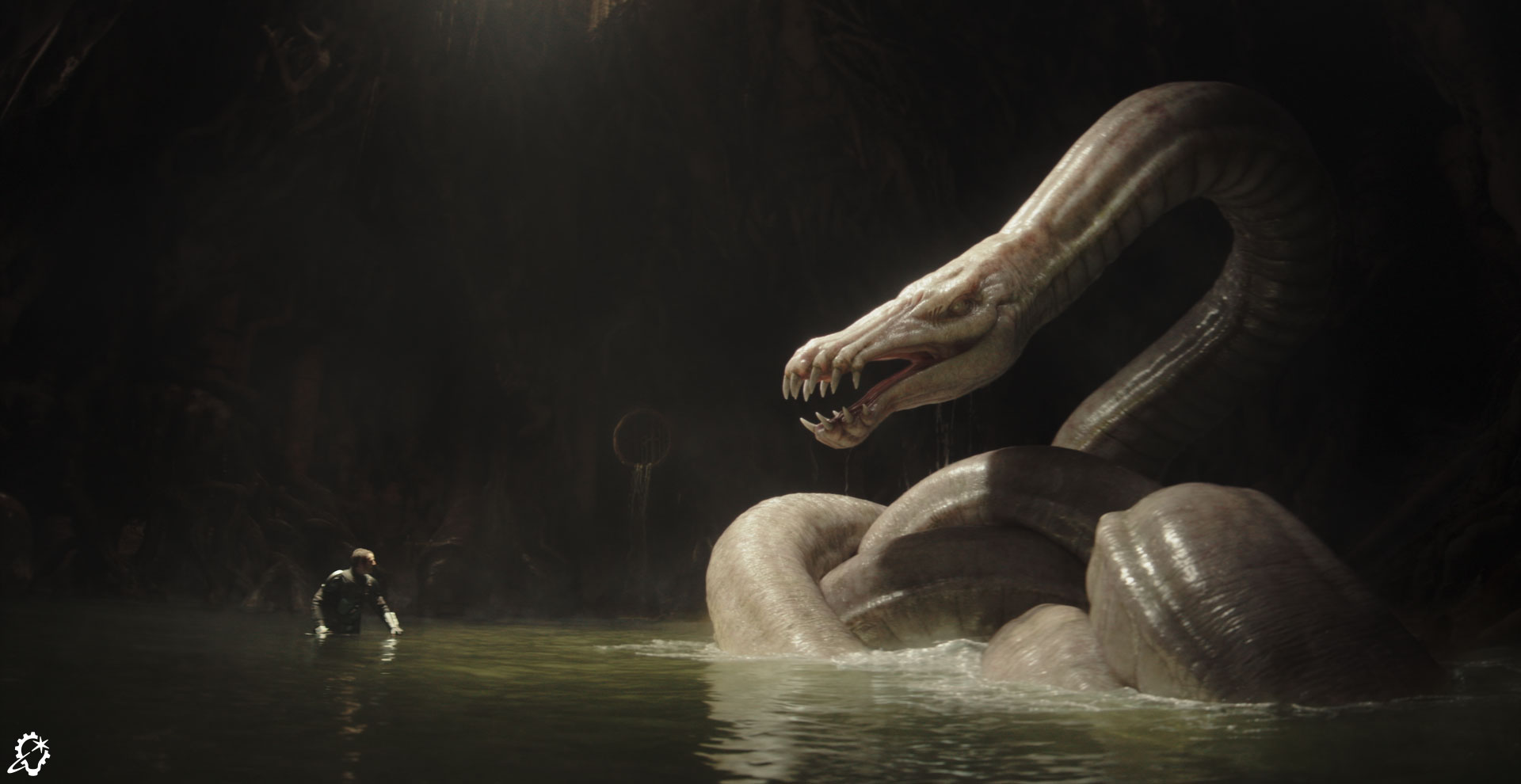
“We had beautiful artwork from [production designer] Doug Chiang’s team to follow,” explains ILM visual effects supervisor Tania Richard, “and once we got into shot work, that’s when our Vancouver team owned the sequences. The Dragonsnake was Vancouver’s main asset, and much of it was developed closely with [production visual effects supervisor] John Knoll and the San Francisco team early on during the project.”
“This is not your average garter snake,” says associate animation supervisor Michael Dharney. But where does ILM look for inspiration when building a snake the length of a football field? “We used real reference with snakes of varying scale to lock down both physicality and behavioral elements,” Dharney notes, “which was really helpful to ground us. There can be a temptation to break away from the basics when you’re working at this massive scale. That size was a piece of the puzzle that we constantly needed to be conscious of.”
Scale was a primary consideration, but the creature needed to retain its snake-like qualities, as Dharney continues. “The twitchy nature of a real snake needed to be conveyed, while maintaining convincing weight and mass for our creature. We looked at how larger creatures move, the momentum they carry, and how their mass restricts their movement.”
Lighting department supervisor Michael Goddard agrees, revealing a healthy dash of movie magic. “The animation team added extra coils to create different shapes and profiles in the water as it broke the surface,” he explains, “and those additional features really help define the water around the snake. We pushed different areas of the simulation around to create the feel of a much larger creature in the water. I don’t know if it’s spoiling the secret sauce,” Goddard adds with a smile, “but if you look under the hood, you’ll see all sorts of weird stuff going on.”
Lead digital artist Jason Madigan notes that “It was an interesting challenge because it’s a big snake, but the pit isn’t a very big room, so there were challenges with trying to get so much activity and action with such a large creature in such a small space and still have it make sense.”
“The trickiest part was managing the sheer scale of that massive creature in the relatively small pit environment,” adds Dharney. “It’s so large that we never see the end of it, yet it coils around endlessly and thrashes around in a very destructive manner, so we had to be very creative about how we maneuvered through the pit, making sure the Dragonsnake felt comfortable in its own environment while keeping the energy level high.”
There was also another element for the team to factor in, one that throws back to ILM creatures of the past. “Beyond this,” explains Dharney, “we needed to keep in mind that our director wanted the audience to believe that the Dragonsnake could have been conceived in the creature shop. That gave us the opportunity to lean on the aspects that animatronics would bring to the table, had this creature been sculpted around a robotic armature.”
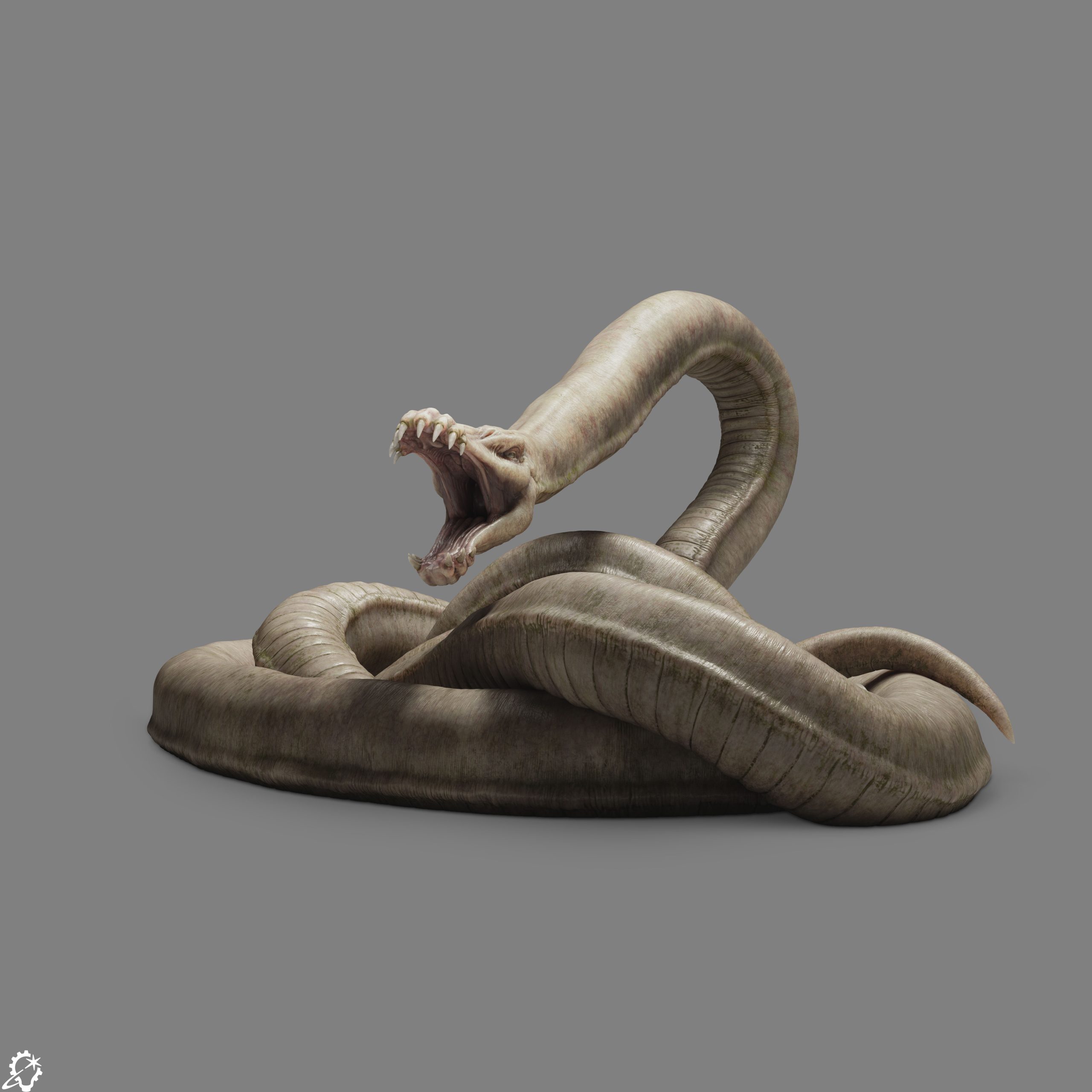
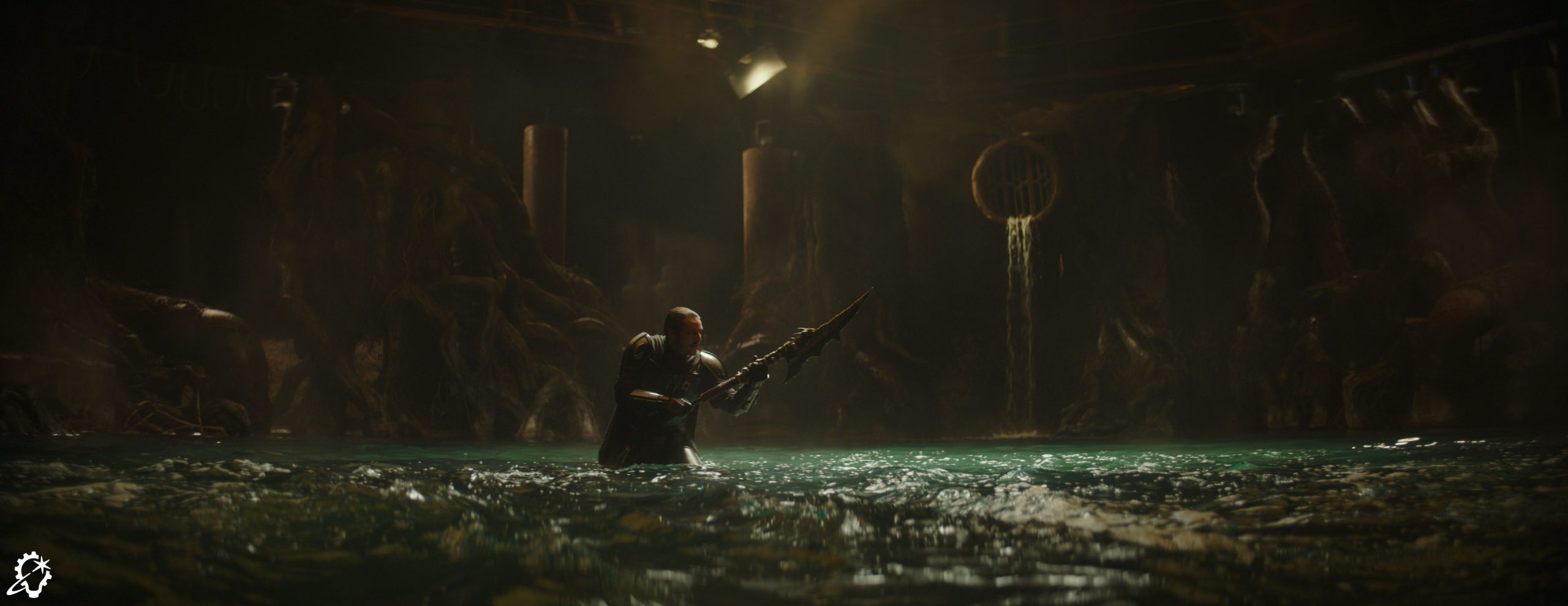
While the Dragonsnake is the primary focus of the team’s work, the pit where the snake resides is every bit as important as Tania Richard explains. “We built the full environment, but we also had to modify how we rendered the background in relation to the Dragonsnake in situations where realistically the snake would intersect with the wall. The environment team came up with some clever tricks to allow the animation team the freedom to pose and move the snake as they needed. [Department supervisor] Andy Proctor led the team in the build, and we had our beautiful designs from Doug Chiang’s team, so we had a good sense of what it would look like above water.”
“They shot a lot on set, but it wasn’t always exactly what they wanted, and from a comp perspective, being underwater is always a challenge,” says Madigan. “We had so many different circumstances throughout the underwater sequences. It’s above, below, above, below, above, below, and the plates were quite different.”
ILM is world-renowned for rising to such challenges. “The activity was changing, the location was changing, you’ve got the snake wrapped around Mando, and the snake head was filmed with a large on-set animatronic,” Madigan continues. “We couldn’t use that, so we had to remove it.” Additionally, the water itself became a key focus of their work. “Each shot had to be approached differently. It wasn’t something we could set up and say, ‘This is how we do the underwater stuff.’ Every shot was a puzzle to decipher.”
Bringing these elements together meant some creative thinking was required, as Goddard explains. “The water was murky when we looked down from above, but from a storytelling standpoint, you need to ‘de-murk’ it when you’re underwater, otherwise you can’t see anything, so a lot of the underwater roots weren’t necessary for the above water shots. That gave the animation team the freedom to do whatever they wanted to with the snake and not worry about it crashing through stuff, because you couldn’t see it.”
The murky water was also laced with some additional texture. “We had a comp treatment that added a bit of surface texture and dirt, which was pretty simple, but it only worked in certain circumstances,” says Madigan, “but the more you have to play with underwater, the easier it’s going to be to sell it as actually having content in the water volume between you and other objects. The amount of layered murky components that we put in some of those underwater shots was pretty high.”
As the sequence progresses, the game of cat and mouse between the Dragonsnake and Mando intensifies as Din Djarin has to not only avoid the huge reptile but also mind his footing, a tricky task to conceptualize and execute.
“One of the trickiest things to figure out was Mando as he’s trying to navigate the root system just under the surface of the water,” explains Richard. “We can’t necessarily see that from above, but once we go below, we need to be able to sell enough root structure that he’s able to walk on without completely obscuring the view, so finding the balance of just the right amount of roots under the water to sell that story point required a bit of exploration. Andy Proctor’s team essentially extended the set, but there were also some additional roots added for interaction with the snake.” With the Dragonsnake truly riled up, the pit, the water, and the snake interact in a dynamic fashion. “You see the Dragonsnake plowing into the root wall and snapping the roots,” adds Richard, “so we had to strategically figure out how to add that to the plate environment without breaking continuity.”
“A lot of our reference was from above the water,” says department supervisor Ken Beauchamp. “We had steam coming from the surface and interacting with the Dragonsnake so they could layer in some depth and add to the murkiness to make it look more like a dirty swamp. When we got underwater, the effects team were generating multiple layers of interactive bubbles, and we were referencing a couple of shots, like Mando diving underwater, which were fantastically filmed on set. They looked beautiful, so we took that and created all these layers of bubbles wrapping around his arm, his legs, his back, and we had aeration bubbles that were coming up from the ground, that were moving around roots, and interacting with everything. We had rays of light coming down and peeking through, so you got a sense that there was something above. Jason and his team had to then layer in all these elements together.”
Deep down in a water-filled pit with limited light, the Dragonsnake waits for its next meal, but as the audience watches, it’s clear that the only light is cast down from the small holes in the floor of the audience chamber. As the floor opens and the Hutts look down from their dais, light pours in, a task that fell to Michael Goddard and his team.
“We start with a key light that matches where that hole is on the set,” explains Goddard. “Because that’s where most of the light’s coming from. It was hitting a large amount of atmosphere, so we used a diffused version of that light, which contributed to a softer version of the key light. On a shot-to-shot basis, we would nudge that light around just to find the right visual aesthetic. In many of the shots where we’re looking straight down, the Dragonsnake would be very top-lit, but that’s not satisfying as an image, so we would nudge it over to introduce some shadowing.”
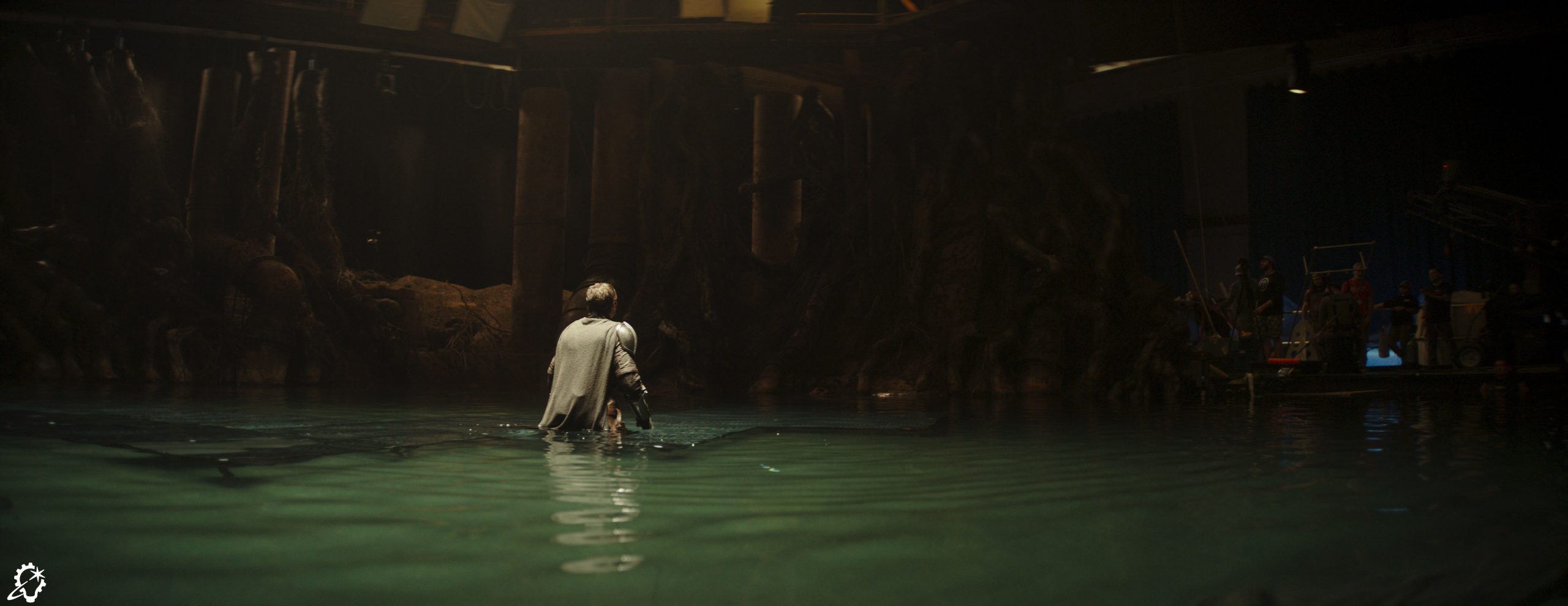
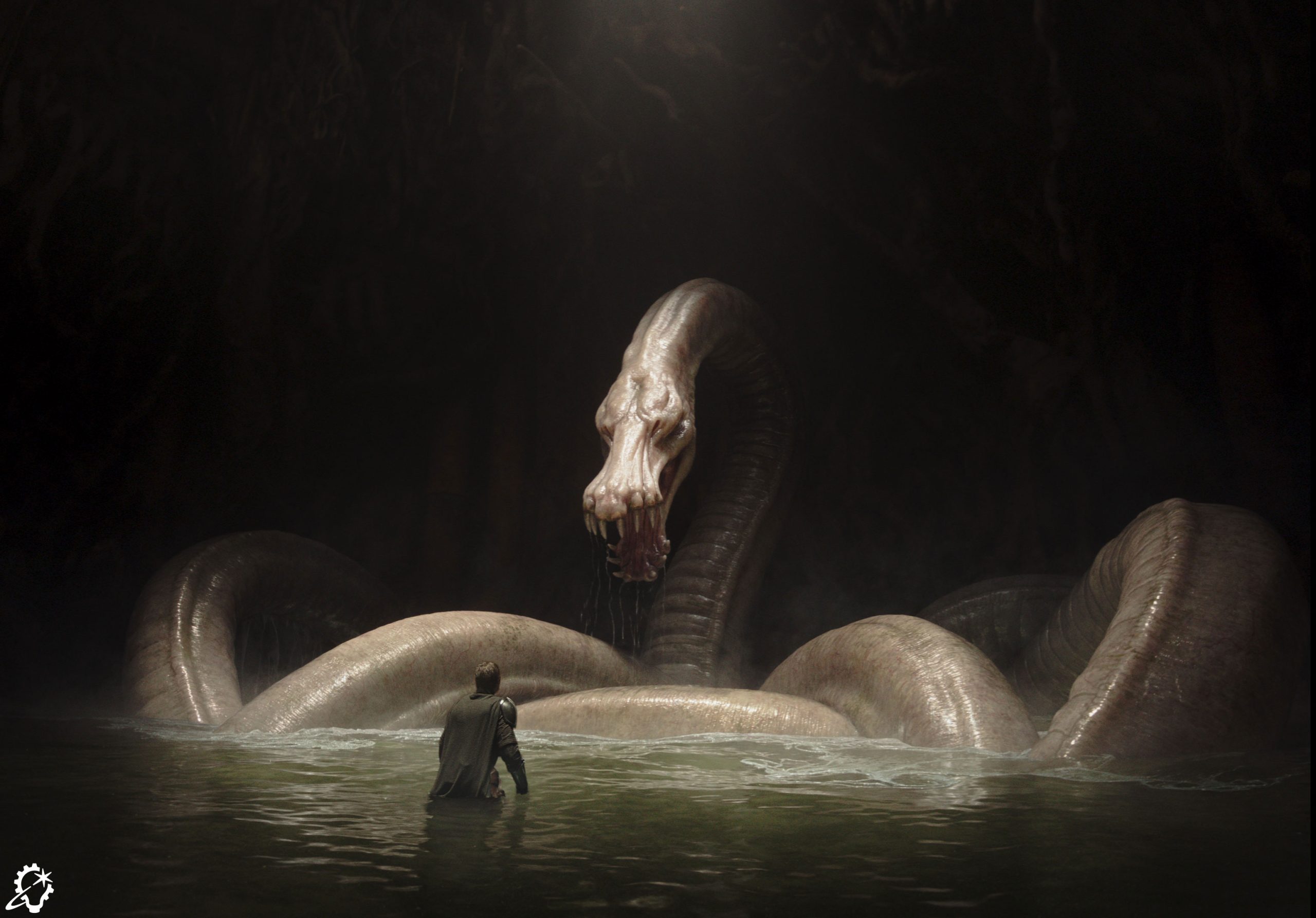
One of the many selling points of The Mandalorian and Grogu is the use of numerous visual effects techniques, from miniatures to CG, stop-motion to animatronics, puppetry to mask work. This blend of classic Star Wars skills makes for a visually engaging palette of effects. That eclectic approach has always been at the heart of ILM’s creative methodology, who used every tool at their disposal to bring the Dragonsnake and its lair to life.
“We used plates wherever we could,” says Madigan. “Sometimes plates had water motion filmed on set. If we could make that work with the FX team’s awesome effects and the surrounding shots, and hold onto some of the water for the Mando-based shots, which were almost completely plate water, then we would.” Retaining as much of the original on-set shoot was vital to grounding the scenes, but for a sequence like the Dragonsnake’s, it required some additional expertise from the Vancouver team. “The plate shots would be sandwiched around totally CG-created shots, so it was a case of figuring out where we could hold on to the work and effort they’d done on set.”
Richard agrees, adding, “The plates were beautifully shot, but one of the things that blew my mind – as simple as it sounds – were the shots where Mando and the Amani jump out of the water and you get this big spray splash event. We then extended the top of the frame, and the FX team created simulations of these splash events to marry into the on-set plate splashes. We had beautiful lighting from Michael’s team, and every time we gave Jason and our compositing team a challenging recipe, he came up with something really stunning.”
Teamwork is the key ingredient for success, as Michael Dharney explains. “Working intimately with all the other departments was crucial to the Dragonsnake sequences. There was a lot of cross-departmental pre-planning and bespoke problem-solving for each shot, with plenty of back-and-forth to get things just right. The added element of plate-based shots when Mando faces Dragonsnake added a whole other level of complexity. We actually had to redesign several shots in animation to get all these elements to work together, but thankfully, we had a lot of very clever folks piecing this together, and despite our Dragonsnake interacting with plate-based elements, the environment, the water, and other creatures, the crew really succeeded in delivering an incredibly convincing marriage of all these elements.”
Technology is ever-evolving in the world of Industrial Light & Magic, but something that hasn’t changed in half a century is looking at challenges from a different perspective. With the lighting team taking on rendering water rather than the effects crew, Goddard and his team were able to focus on the water’s look and movement. “We leaned on some of the tech that ILM has developed for water lately and adopted some of that to make it work for us,” notes Goddard. “ILM’s London studio has led the charge on that, most notably in Jurassic World: Rebirth [2025]. We decided early on that the close interaction of the characters and the water would be best rendered together, because then you get true refractions and reflections. This way we get volumetrics that distinguish and contaminate light values, and things like that look really pretty.”
In the spirit of another ILM classic, The Abyss (1989), “The surface of the water essentially became a character,” as Goddard adds. “We would light it the way we would a character, and it would respond. Sometimes we’d add in these creative decisions to beautify the water, maybe a bit more backlight to make it bloom a bit here and there.”
The power of the Dragonsnake is evident from the moment it looms out of the darkness, rising from the water, ready to strike. But bringing that coiled, muscular threat to life required plenty of work and consideration.
“Early on, the effects team looked at how fast the snake moved in water,” says Beauchamp, “and then we’d think about the realism of water, and sometimes both things don’t work together because one is moving too fast, or maybe one is moving too slow, so we were able to develop ways to mute some of that water to get a more realistic-looking splash that works with the scale and speed of this enormous creature. Sometimes we wanted to push the water a little bit more in order to enhance some of that movement, so there was a lot of work being done to find a balance that created a satisfying visual look that didn’t make the Dragonsnake look too small or too big.”
That meant the team had to run simulations to find the sweet spot between the movement of the Dragonsnake and its interactions with the murky water of the Nal Hutta pit. “We’d run variations to see if it created what we want, but in every single shot there would be water colliding with the environment,” Beauchamp continues. “You’d get waves that splashed up and made the environment wet. On some shots, we’d simulate two to three versions just to get an idea of where we needed to balance the shot, as sometimes the water might push over top of the camera because the Dragonsnake was creating such big waves. That’s why the water is its own character, because it needs to tell the story without taking over from the snake. The effects team started to understand that what needed to be done on the simulation side was secondary to the Dragonsnake and helping the snake tell the story and sit in its environment.”
Simulations allow the team to vividly convey to the director what the sequence will look like, but as Michael Dharney illustrates, there’s a method to the process. “It’s a tricky balance, for sure,” he explains.
“From a different camera angle, something that may have been convincing in one shot doesn’t always work in the next. It sounds like a cliché, but the best way to find the limit is to go too far. It’s always easier to scale things back than to slowly dial it up. Smaller details like the muscles in the face and through the body were often hard to read, so applying the age-old tactic of taking it too far was the clearest way of finding our limits.”
“There was a shot where the Dragonsnake emerges from the water,” adds Richard, “and the camera moves to the right. We see Mando in the background, but we had to be careful not to cover Mando entirely with that splash. Thankfully, Ken’s team would be really proactive and offer three versions: one where the splash was massive, one where it’s small, and something in the middle. That gave myself and John Knoll an opportunity to decide what worked best for the shot.”
While technical and scientific accuracy is the goal, sometimes the requirement to serve the story in the best way possible outweighs those perfectly logical expectations, especially when dealing with a fictional creature like a Dragonsnake. “It comes down to balance,” says Dharney. “By its very nature, this is a fantastical creature, so that leaves a lot of room for exploration. Playing with things like the speed in which the Dragonsnake can move are carefully considered against both its fantastical existence and the physical reality of the world it exists in. The ultimate goal is to create something that moves in an uncomfortably unfamiliar way but remains believable so that the audience isn’t taken out of the experience.”
“One thing that’s great about working with John Knoll is he doesn’t overcook stuff,” says Richard. “It doesn’t need to be perfect as long as we’re telling the story and we understand what’s happening. For instance, one shot that came together really well was the sequence with the Hutts crashing into the water. We did that towards the end, and we had all of our techniques sorted out. When the Hutts fall through the ceiling, we spent a lot of time trying to figure out how to break that ceiling apart and make sure we obscured Rotta.”
The battle between Rotta and the Hutt Twins saw the three Hutts tussle, roll, and attack each other so violently that the floor literally gives way, sending the three headfirst into the pit below, or at least that’s what we’re meant to think. Grogu uses the Force to suspend Rotta, saving him from certain doom while obscuring him from sight.
“We were partway through sorting out that simulation when we sent Jason and his team a work-in-progress version,” explains Richard. “He put something really beautiful together with his compositor, and the director bought it right away, so rather than continuing to refine and make that simulation perfect, we embraced the fact that it worked and it looked beautiful, and we went with it.”
The intuitive sensibilities of the team not only saved time and funds but also delivered a standout moment in the film. “That’s something that we carry throughout all of our work,” adds Richard, “and it’s something John Knoll inspires in the team: It doesn’t need to be perfect; it just needs to tell the story.”
That astute observation highlights the underappreciated skill of judging when the recipe is working rather than continuing to add more spices, as Jason Madigan explains. “It was one of the more complicated scenes because there were a lot of components with the atmospherics, the debris, and the water. We got some relatively early takes passed off, and the compositor put his head down for a couple of days and came back with something that looked better than anybody expected it to at that point.”
With the scene working well, the requirement to keep tinkering was pared back. “When things are so interactive, and the debris is driving the dust, major changes start to flow in,” Madigan continues. “We might not easily be able to get something as coherent as what we already had, so we made a call on that because it was working so well that we pulled back on a bunch of work and refined where we were at that point.”
“That’s the magic of the initial takes: If you overwork it, you kind of lose it,” adds Richard. It’s an ethos that the whole production took on board. “Broadly, that works across the show,” says Goddard. “Before we were delivering, we had to do ‘V1’ deliveries of each shot, and it was a painful experience. The shots were not in a good shape to get through the render farm, but it forced us to do a lot of optimizations and a lot of assembly. We passed some of these shots to comp, and we realized that some that we thought were really difficult were maybe not as bad. Once comp got involved and started putting things together, they could take parts of the plate and obscure some of the problem areas that we were worried about.”
As the film continues to thrill audiences around the world, the visual effects artists of The Mandalorian and Grogu move on to new projects, but with something very special on their resumes: an IMAX Star Wars adventure that can only happen when a team pulls in the same direction.
“We had such a great team,” says Richard. “Everybody collaborated and worked as one unit, not as separate entities. And John Knoll – come on, he’s a legend, right? Having Doug Chiang and his artwork, I can’t say enough about how helpful that is, and having access to the art department and being able to have him in the room in our sessions meant that if we started to veer off target visually, we knew right away what they wanted.
“The Vancouver team was brilliant,” adds Richard. “It’s been a highlight for me, and I think for a lot of the team.” Beauchamp agrees. “The biggest thing I’m going to take away from this project is the team that I had. If you look at a lot of sequences in movies, sometimes a few artists get to work on this sequence, and a few artists get to work on that sequence, but every artist that we have got to work on one of these sequences, so we all got to touch it.”
“It was a great team, and we had fun doing it, which makes a big difference,” says Madigan. “It was hard work for sure, but it was also quite varied, like the challenges between the underwater and above water. It required very different approaches, so there was nothing about it that felt like rinse and repeat.”
For Michael Goddard, the thrill was a visceral one. “Seeing it on the big screen was amazing. We work on small monitors, and occasionally we see the dailies in the big theater, but seeing it on an IMAX screen is just like, wow.” He laughs, “My only regret was that I delegated away the most beautiful shots!”
“The shots derived from the brilliant concept art are deeply satisfying, beautifully composed moments, and the animation team’s contribution supports the original design,” concludes Dharney. “It all built up to the satisfaction of the Dragonsnake eating the Hutt twins. Those shots pushed the rig to its limits in ways it didn’t in any other shots, and frankly, it was so much fun animating something so absurd.”
–
Mark Newbold writes for ILM.com, SkywalkerSound.com, and daily news site FanthaTracks.com, having previously contributed to Star Wars Insider magazine, StarWars.com and StarTrek.com. He is a 4-time Star Wars Celebration Podcast Stage host, podcasting for over 20 years, and has been involved in websites since 1996. You can find this Hoopy frood @Prefect_Timing.
—
Read more about The Mandalorian and Grogu on ILM.com:
Mark Newbold writes for ILM.com, Skysound.com, and daily news site FanthaTracks.com, having previously contributed to Star Wars Insider magazine, StarWars.com and StarTrek.com. He is a 4-time Star Wars Celebration Podcast Stage host, podcasting for over 20 years, and has been involved in websites since 1996. You can find this Hoopy frood @Prefect_Timing.