Continuing a new series celebrating ILM’s 50-year legacy, featuring new interviews with ILM animation supervisors Rob Coleman, Mathieu Vig, and Stephen King.
By Jamie Benning
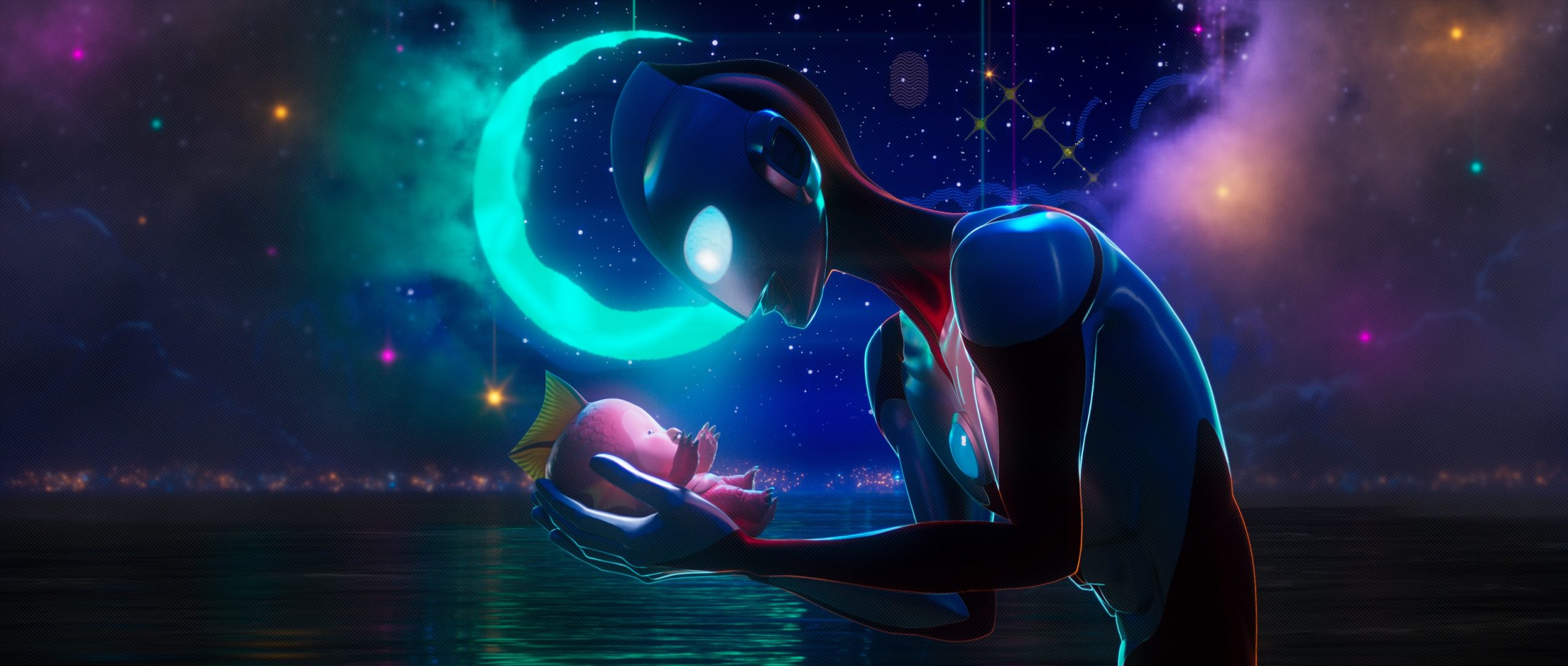
Ultraman and Nemi (Credit: Tsuburaya Productions & Netflix).
“ILM Evolutions” is an ILM.com exclusive series exploring a range of visual effects disciplines and examples from Industrial Light & Magic’s 50 years of innovative storytelling. Read part one of this story here.
After Rango (2011), ILM continued to focus on photoreal visual effects work, but the idea of returning to feature animation remained alive in the background. The ambition had been there for some time.
“Jim Morris [former ILM president] was always pushing for ILM to do more feature animation,” explains Rob Coleman, creative director and animation supervisor at ILM’s Sydney studio. “I remember going on senior staff retreats for years, and every year he brought it up that that was a goal for him.”
At one stage during the early 2000s, an animated Frankenstein film was in development, though it never reached production. Despite that momentum, feature animation remained secondary to ILM’s core live-action visual effects business.
When Disney acquired Lucasfilm in 2012, ILM found itself part of a larger family including not just Lucasfilm Animation, but also two giants of feature animation – Walt Disney Animation Studios and Pixar, the latter an outgrowth of a former Lucasfilm division. With such formidable in-house animation studios under the same corporate umbrella, the idea of ILM producing its own fully-animated features inevitably became more complex. For the time being, ILM leaned into its core strength: pioneering visual effects work that has long been integral to live-action storytelling.But then…“People weren’t shooting movies,” Coleman recalls. “The pandemic opened a door.” That led to renewed interest in feature animation from partner film studios. Soon, both Ultraman: Rising (2024) and Transformers One (2024) were underway.
A Return to Feature Animation with ‘Ultraman: Rising’
For decades, ILM had been at the forefront of visual-effects-based animation, but Ultraman: Rising marked a shift – embracing stylization while maintaining strong, character-driven storytelling.
Animation supervisor Mathieu Vig notes the challenge of moving from photorealistic creatures to a more expressive, feature animation style. “That was a very interesting challenge,” he tells ILM.com. “First of all, because many were eager to go back to feature animation. But a lot of people had never worked in feature animation, me included. So that was definitely a bit of a scary enterprise after all of these photoreal creatures and characters.”
Many of the animators came from big, effects-heavy projects and initially expected Ultraman to follow suit. “I think we were all expecting the movie to be about that. And we were ready for it. Then we realized it was not about that at all,” says Vig.
Meeting directors Shannon Tindle and John Aoshima helped align the team with the film’s more emotional and grounded tone. “They put me at ease very quickly,” notes Vig. “Because I realized how caring and how clear they were about what they wanted from me as an animation supervisor. They wanted to meet everybody. To talk to the team. They were both so clear and detailed. That way, we could focus on – does the animation feel true? Does it feel rehearsed or active?”
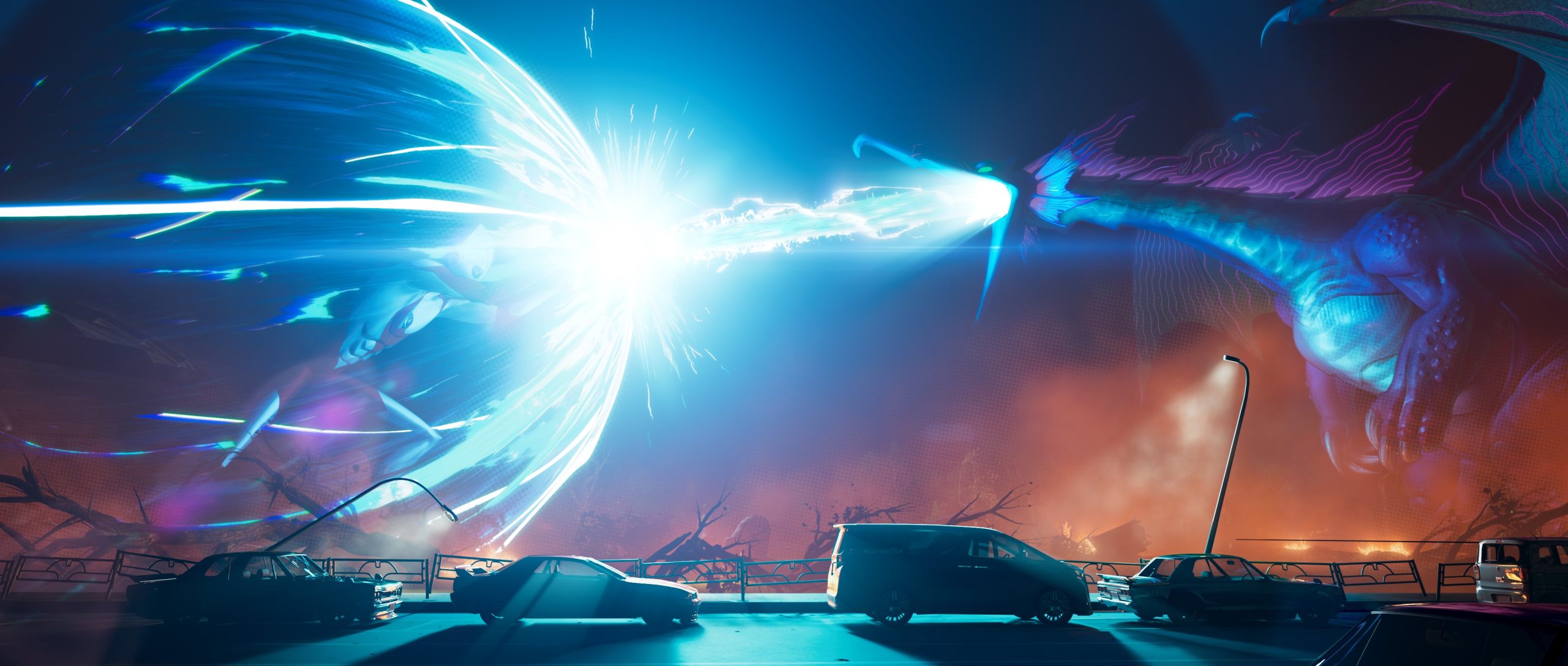
The directors emphasized performance-based animation first and foremost, even referencing unexpected inspirations like Kramer vs. Kramer (1979) to highlight the film’s emotional depth. “Despite the kaiju-sized spectacle, Ultraman: Rising wasn’t just about action,” Vig explains. “It was a story about family, identity, and connection. We wanted and needed to have believable characters, quite subtle acting. We wanted an interesting mix of something that looks stylized but at the same time has so much heart and groundedness. The animation reviews were always about character development. There was great trust on both sides.”
Ultraman does battle with Gigantron (Credit: Tsuburaya Productions & Netflix).
One of the defining aspects of the animation ethos is attention to imperfection – the small hesitations, twitches, and unplanned gestures that make performances feel real. “We always wanted to sneak in as much as possible. A little dirt, little accidents, a little hesitation when you grab something, scratching yourself when you’re confused,” Vig says. “Sometimes it was just a little bit too clean, a little bit too perfect. And we said, ‘Here you can add some very fine little moments where you can break the perfect choreography.’” Even quiet, dialogue-driven moments are given space to breathe.
“There’s one shot in particular that I really love,” he continues, “which is when Ken and Ami are talking in the restaurant and eating the curry. One-minute shots of Ken, explaining his life to Ami, and Ami listening. And again, nothing happens, but I remember seeing the first blocking of this shot. I was kind of mesmerized by how beautifully ‘nothing happening’ was done. Obviously, it’s not ‘nothing.’ There was a story behind it, but to make that moment engrossing and entertaining was quite something.”
This drive for grounded performance often meant starting from realism, then dialing it back into a stylized world. It became a creative muscle that benefited both the film and the artists.
“We always started with realistic acting and then tried to bring it back down to a feature animation, Ultraman style,” adds Vig. “If the whole team were a classically trained feature animation team, we would have probably worked in the opposite way. I think it’s a very good exercise, and it totally benefits us for future work in visual effects realism because we all went through this process of filtering the shot back to its essence, rather than saying, ‘I’m just going to fill it up with animation.’ We’ve been spoiled. I hope we can be spoiled again. Whether it’s robots, giant kaijus, whatever else, if you have these living, breathing characters, we can do them at ILM. And we’d all love to do more.” Ultraman: Rising wasn’t just a return to feature animation for ILM – it was a chance to apply decades of performance-focused visual effects expertise to a new kind of storytelling, and to remind themselves, and audiences, what’s possible when stylization and sincerity meet on screen.
Building an Animated Cybertron: ‘Transformers One’
For Rob Coleman, Transformers One marked both a creative opportunity and a personal return. Having previously worked as animation director on Happy Feet Two (2011) and as head of animation at Animal Logic for The LEGO Movie (2014), he was drawn back to ILM by a renewed promise: that the studio would once again pursue full-length animated storytelling alongside its groundbreaking visual effects work. “ILM was going to be doing animated features as well as visual effects,” he explains to ILM.com. “That’s what enticed me back.”
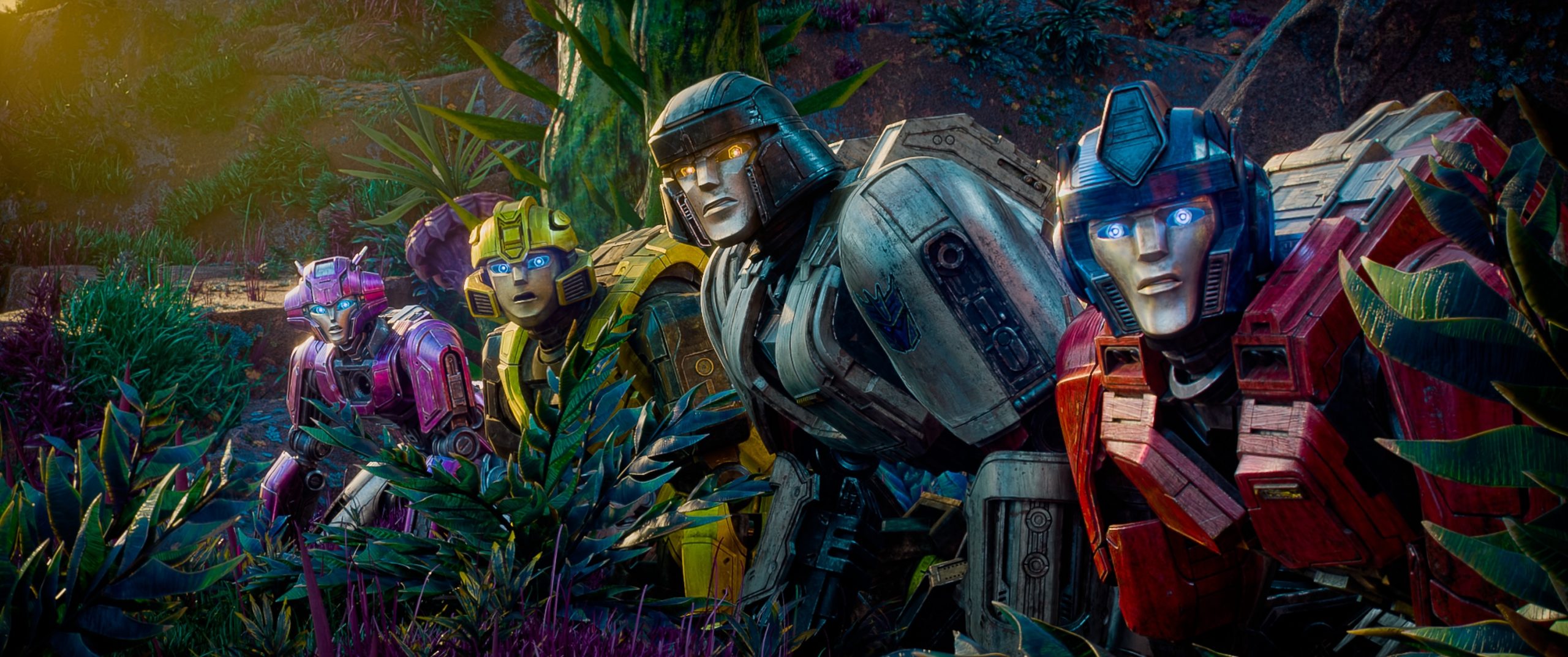
Unlike the live-action Transformers films, which blended human characters with visual effects, Transformers One is set entirely on Cybertron. The film focuses on the emotional backstory of two iconic characters, in a world without any human frame of reference.
“Director Josh Cooley made it clear from the beginning – this wasn’t part of the Michael Bay universe,” Coleman said. “It was an origin story about two friends, basically brothers, who, because of life decisions, end up on very different paths.”
A group of Autobots (Credit: Paramount).
This character-driven approach brought performance to the forefront of the animation process. ILM animation supervisor Stephen King emphasizes the importance of expressing emotional depth without relying solely on dialogue. “It was essential to Josh that the subtlety and the nonverbal acting was just as important as what they were talking about in the dialogue,” King tells ILM.com. “In order for an audience to connect to an animated character, you have to bring them to life and make the audience believe that they’re thinking.”
That philosophy extended to every aspect of the film’s design and animation style. For Coleman, making the robots believable also meant starting with their inner life, not just their external mechanics. “It was key that the audience think they were looking at sentient robots,” he notes. “We always thought about the life spark inside – the character’s soul.”
To support this, ILM developed new tools and techniques. Their facial animation system was rebuilt from the ground up, allowing animators more expressive control while maintaining the precision required for robotic characters. “We really tried to get the facial performance to be as emotional and realistic as possible,” King says, “but then going, well, how can we make it robotic? We added these little robotic movements into the eyes and treated them like camera apertures and shutters.“By rebuilding the facial system, it gave animators a lot more freedom to move things around,” he adds. “Transformers One was all keyframe animated. For character performances, that’s where I want to be.”
Cooley’s background at Pixar helped shape the film’s animation language, particularly in its reliance on visual storytelling and expressive silence. “Very quickly we talked about non-verbal performances, the importance of eye animation, and his desire to play the whole third act, at least in test screenings, with no sound, completely in pantomime,” Coleman recalls. “I was like, yes, yes, and yes. Okay, you and I are going to get along just fine.”
The choice to exclude human characters offered an unexpected advantage: Without the need to establish scale or interaction with live-action actors, the animators were free to define their own physical rules for the world of Cybertron.
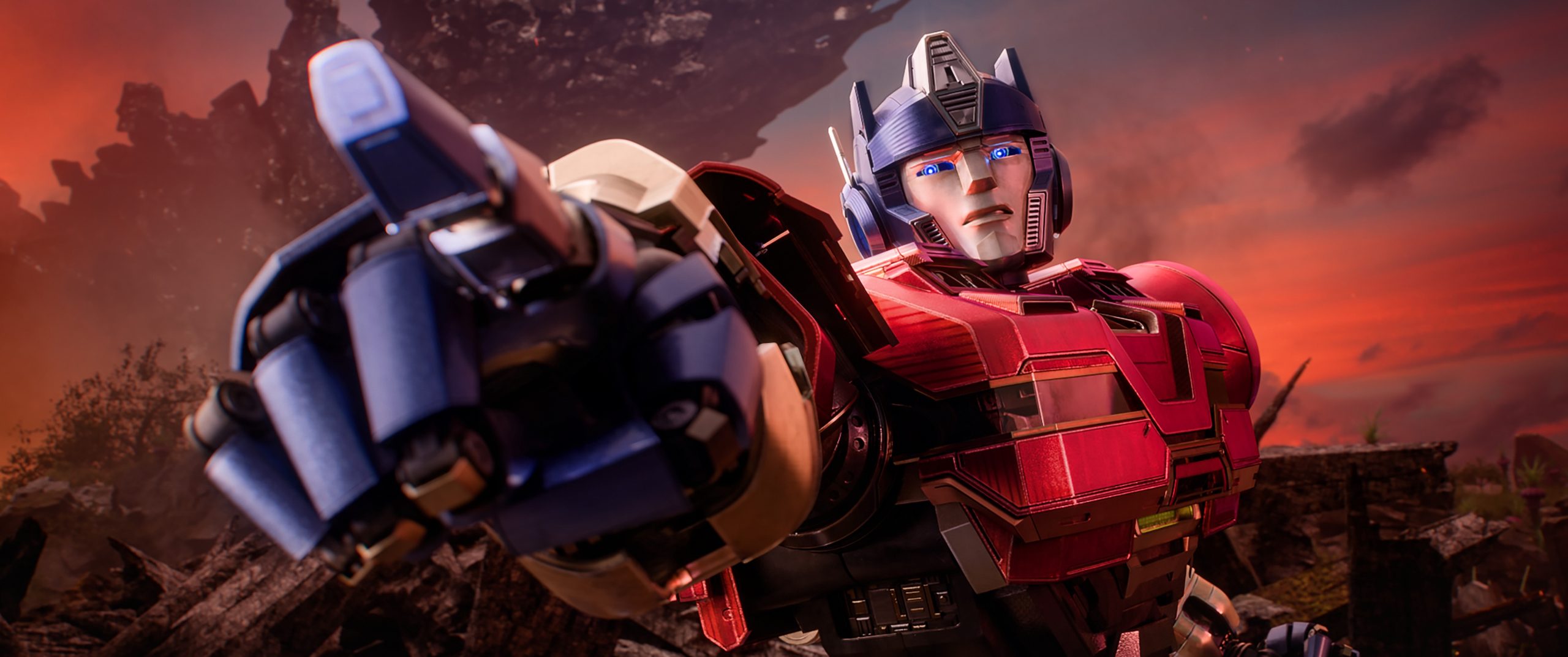
Optimus Prime (Credit: Paramount).
“Not having humans in our movie actually was a great plus for us,” King says. “The Transformers being 24 feet tall doesn’t mean anything to the characters, because that’s just how tall they are. That’s the world that they live in.”
To make the robotic characters feel nuanced and alive, the animation team relied heavily on physical reference. The animators themselves brought an additional layer of ownership to each shot.
“One of the great things about the movie is that all the reference was done by the animators themselves,” King explains. “Every shot, animators would act themselves or they’d get someone else to act out for them – and they would be able to put those performances into the character.”Even the mechanics of transformation – an iconic feature of the franchise – were reimagined through the lens of character logic and day-to-day function. “It was important to the director that this is like breathing for them – this is part of their day-to-day life,” says King. “So, we don’t need a five-second transformation every time. It’s what’s efficient for them, like getting on with their day.”
The result is a film that struck a chord with both critics and fans. Reviewers praised Transformers One for its emotional depth, strong character focus, and thoughtful storytelling, a refreshing change of pace for the franchise. Audiences responded just as warmly, celebrating its mix of high-octane action, humor, and heart. It is a reminder that even in a universe of sentient robots and shifting metal, the most powerful transformations happen within.
The Future of ILM Animation
With Transformers One and Ultraman: Rising showcasing ILM’s renewed investment in feature animation, the studio is now well-positioned to explore new creative territory. “There’s great interest,” Coleman says. “We’re just waiting for the right projects to land and get green-lit, but there’s certainly an appetite.”
“What this year [2024] has done with Ultraman and Transformers has really put ILM at the forefront of people’s minds,” King adds. “They’re calling cards to creators to say, ‘We can do whatever you want.’”
For Vig, the excitement lies in ILM’s ability to blend visual effects expertise with expressive storytelling. “Whether these guys are robots, giant kaiju, or something else, at the heart, if you have well-rounded, breathing characters, we can do them. And we’d all love to do more of it.”
From stop-motion animated creatures to fully animated features, Industrial Light & Magic’s journey has been one of constant reinvention and evolution. With its expanding tool kit and growing focus on animated storytelling, the studio’s influence is set to shape the next era of animation and visual effects.
ILM’s legacy in animation is secure, built on decades of innovation, artistry, and risk-taking. But the next chapter in animated storytelling is already underway, evolving frame by frame.
Jamie Benning is a filmmaker, author, and podcaster with a lifelong passion for sci-fi and fantasy cinema. He hosts The Filmumentaries Podcast, featuring twice-monthly interviews with behind-the-scenes artists. Visit Filmumentaries.com or find him on X (@jamieswb) and @filmumentaries on Threads, Instagram, and Facebook.
New series exploring ILM’s 50-year legacy kicks off with new interviews featuring original Star Wars animator Chris Cassidy and current ILM animation supervisors Rob Coleman and Hal Hickel.
By Jamie Benning
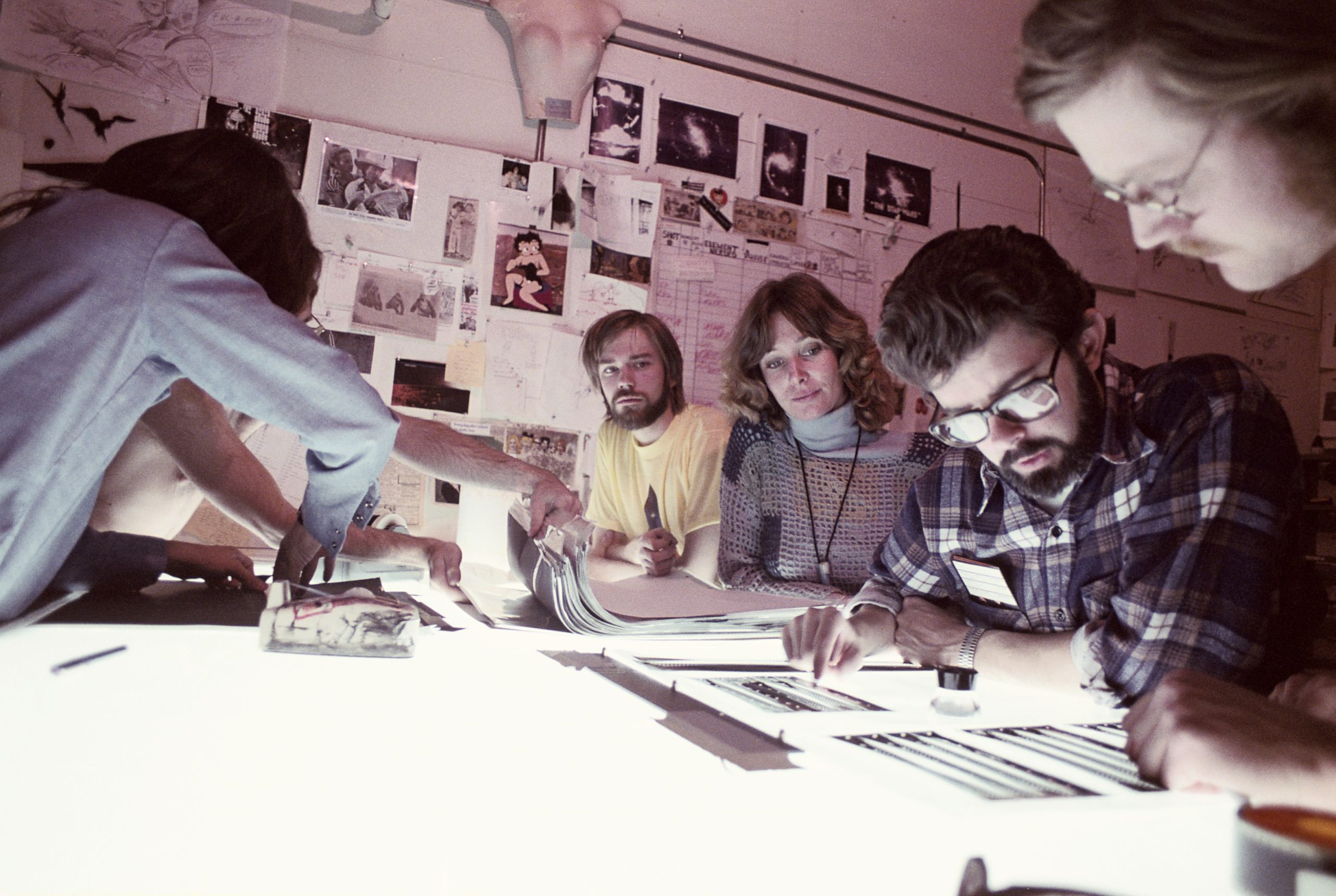
From left: animator Peter Kuran, production coordinator Rose Duignan, director George Lucas, animation and rotoscope supervisor Adam Beckett during production of Star Wars: A New Hope (1977) (Credit: ILM & Lucasfilm).
“ILM Evolutions” is an ILM.com exclusive series exploring a range of visual effects disciplines and highlights from Industrial Light & Magic’s first 50 years of innovative storytelling.
Animation has been woven into the DNA of Industrial Light & Magic’s story since its earliest days. From utilizing legacy techniques in Star Wars: A New Hope (1977) to the groundbreaking blend of live-action and animation in Who Framed Roger Rabbit (1988), ILM has continually redefined the possibilities of visual storytelling.
In this two-part article, we explore ILM’s journey from early work with rotoscoping, stop-motion, and go-motion to the development of sophisticated digital character animation in Jurassic Park (1993), the Star Wars prequel trilogy, and beyond. Part one focuses on the key innovations that culminated in Rango (2011), ILM’s first fully animated feature film. Part two examines how the studio expanded on these foundations in Transformers One and Ultraman: Rising(both 2024), solidifying its role as a leader not only in visual effects but also in feature animation.
Early Innovations and Handcrafted Beginnings
In 1975, as Star Wars, later retitled Star Wars: A New Hope, entered production, Industrial Light & Magic was a fledgling outfit assembled to help realize George Lucas’s ambitious vision. Animation quickly proved essential to the storytelling – Lucas’s needs were varied, including spaceship models firing laser bolts, glowing lightsaber blades, a holographic chess game, and stylized targeting displays.
To create the signature blaster bolts, California Institute of the Arts graduate Adam Beckett was hired in July 1975 to lead a small team in creating the animation and rotoscoping – including a young Peter Kuran. “I was initially shooting wedges and different colors for the laser beams and stuff like that. I was learning to use the equipment. We all were,” Kuran told The Filmumentaries Podcast.
“I actually did the first perspective beams,” said Kuran. “What was being tested was just kind of like back and forth – no perspective on it. I had suggested that we try that, and I actually got a very chilly response. So I decided to stay late one night and do a test and took it to the lab myself. It ran as a daily the next day, and [visual effects supervisor] John Dykstra liked it, so I wound up being the chief of that, at least for the time being.”
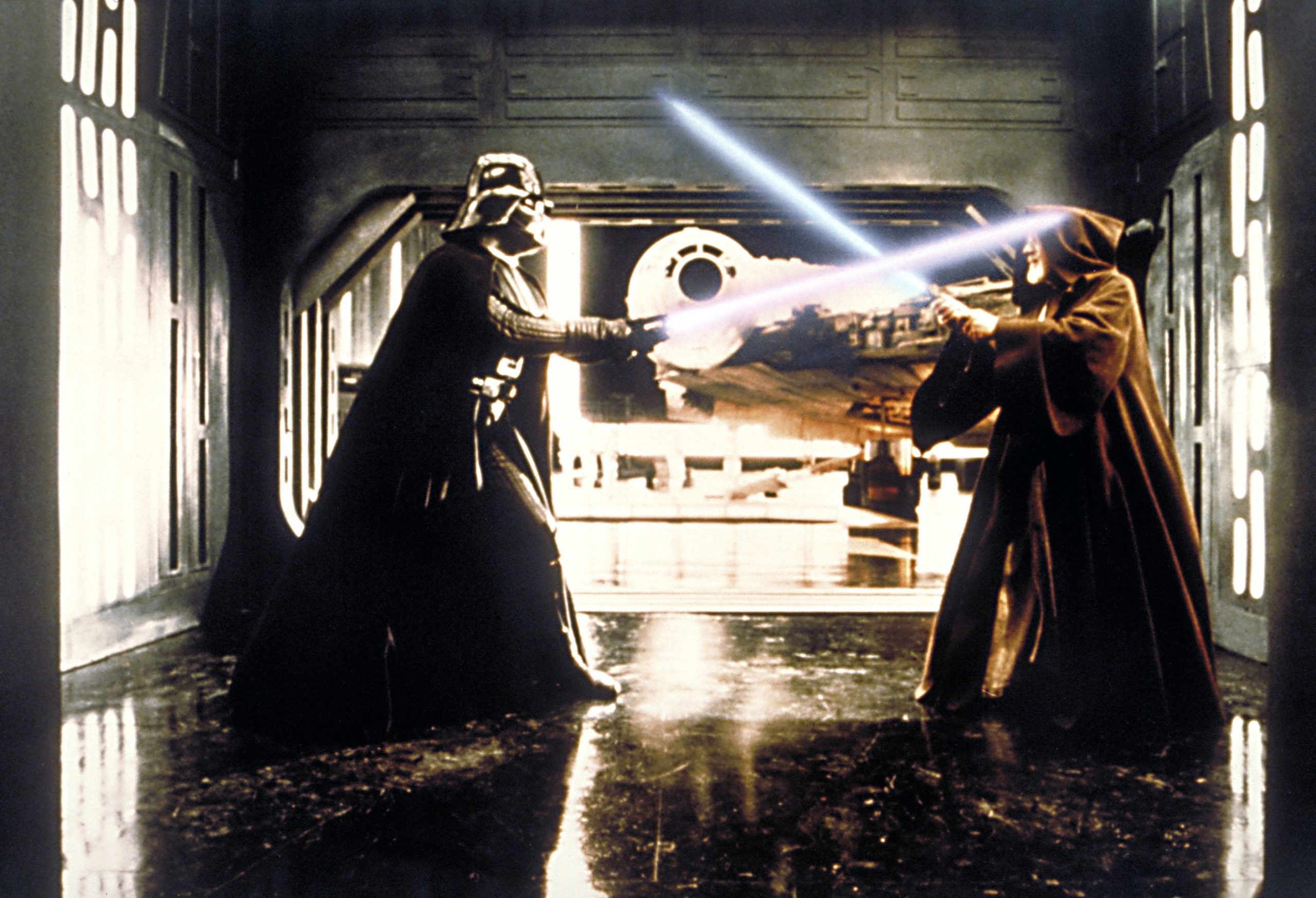
The iconic lightsaber effects were outsourced to Van Der Veer Photo Effects for the first film but later brought in-house at ILM. The process began by generating mattes from the live-action prop blades. Early experiments with retroreflective material and spinning poles proved too complex and were eventually streamlined. The mattes were rephotographed and colored frame by frame, with hues used to help audiences distinguish between each character’s weapon – blue for Obi-Wan Kenobi, red for Darth Vader – setting the look for the Star Wars saga for decades to come.
Lightsabers were created with hand-drawn animation in the original Star Wars trilogy, as seen here with Obi-Wan Kenobi (right, Alec Guinness) and Darth Vader (Bob Anderson/James Earl Jones) in Star Wars: A New Hope (Credit: ILM & Lucasfilm).
“At first, ILM didn’t have the resources to do all the opticals themselves,” animator Chris Casady tells ILM.com. “They sent shots out to Van Der Veer, Cinema Research, and Modern Film Effects. Those places were the old guard – they’d done work on Logan’s Run (1976), Soylent Green (1973), that kind of thing.
“But the goal was always to bring everything in-house,” Casady adds. “And once ILM got the optical department up and running in Van Nuys, the quality jumped. We had more control, and it just looked better.”
Beckett, as described by Casady, “was without a doubt a genius. Adam was extremely brilliant. He wanted to be able to put some of his psychedelic style into Star Wars. He thought it was almost an obligation to one-up 2001: A Space Odyssey [1968]. But Lucas wanted something more realistic.”
Casady noted Beckett’s work on the Death Star superlaser charging sequence, explaining that “Adam did a tremendous amount of work putting together that Death Star laser tunnel shot – all those rings and green things flashing down the middle. It’s built up of multiple passes, multiple exposures, multiple pieces of artwork.” The platform on which the live-action actors were standing was completely hand-drawn by Peter Kuran.
Casady added that “Adam’s signature work is the electrocution of R2-D2,” an entirely hand-drawn effect requiring precision to make the electricity feel convincing on screen.
“I really was brought in at a grunt level to make garbage mattes on the animation stand at night to free up the VistaVision cameras in the daytime,” Casady explained. “Every time they filmed the spaceship on stage … everything outside the blue is considered garbage; it’s got to be masked out. So, my job was to make this matte and block out the garbage.
“On film, my mattes fell below the threshold of black, so it became black,” Casady continues. “Famously, when the film was first released on VHS … my mattes were visible in the negative. … The audience saw my garbage mattes as irregular shapes that jumped every six or eight frames. So that’s the only time people got to see my work on the film!”The animation team also solved another subtle but crucial challenge: making the miniature spaceship models feel more plausible in their scenes.
“There was a shot of a TIE Fighter flying past the camera, and they were concerned it looked too flat,” said Casady. “So they asked if we could paint in some reflections – highlights that would suggest the ship was catching light from the environment. It wasn’t baked into the model photography, so we had to add those glints manually, frame by frame, right onto the animation cels. Just little touches of light to make it feel like the ship belonged in that space.”
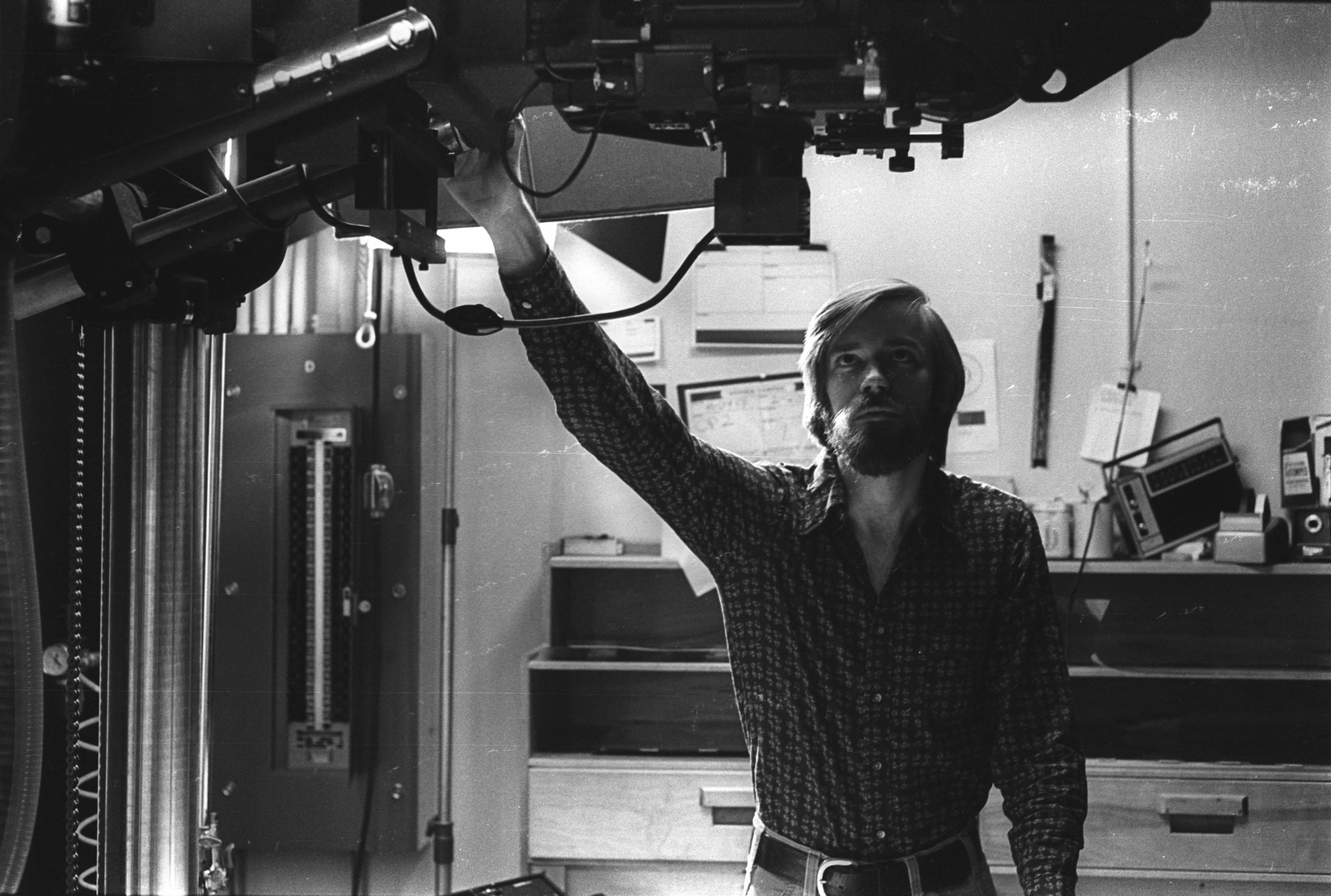
Animation and rotoscope supervisor Peter Kuran works with an animation camera during production of Star Wars: The Empire Strikes Back (1980) (Credit: Terry Chostner & ILM).
Kuran told The Filmumentaries Podcast, “I just thought that that was something that was needed.”
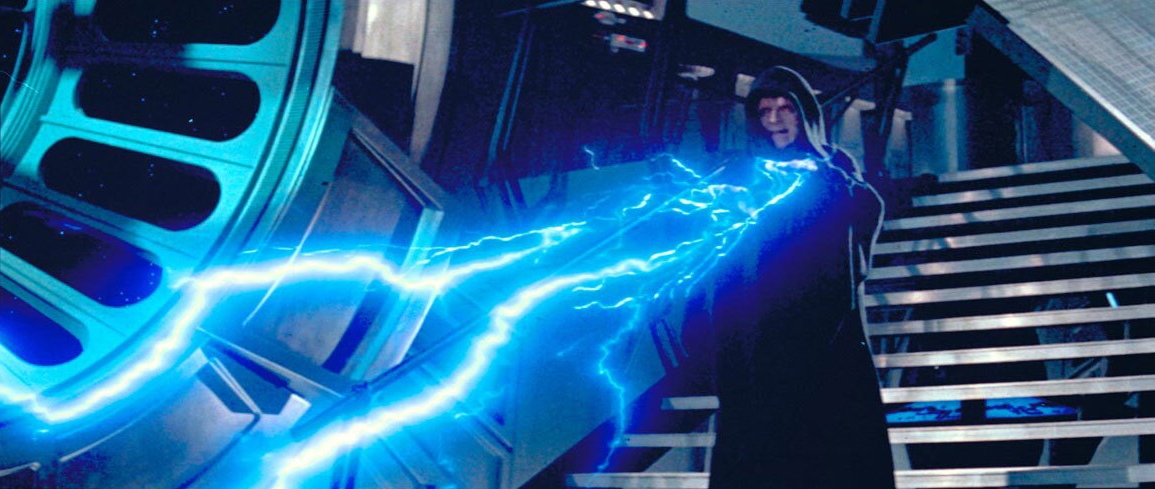
By the time Star Wars: Return of the Jedi (1983) came around, ILM was called on to create yet another iconic animated visual effect: Emperor Palpatine’s Force lightning. Composed of hand-drawn electrical arcs, the effect required animator Terry Windell to conjure a sense of living, dangerous energy – a visual shorthand for the raw power of the dark side. During his career, Windell brought his animation skills to Poltergeist (1982) and Ghostbusters (1984), among many others.
Though Peter Kuran had since left ILM, his company, Visual Concept Engineering, took on the painstaking task of rotoscoping each frame of the lightsaber combat between Luke and Vader. In total, 102 lightsaber shots were completed for the final film in the trilogy.
While rotoscoping and hand-drawn animation effects remained essential throughout the early 1980s, ILM was already looking ahead, seeking ways to evolve another time-honored technique: stop-motion animation.
As with the lightsabers and blaster bolts, the Emperor’s “Force lightning” in Star Wars: Return of the Jedi (1983) was also created with hand-drawn animation (Credit: ILM & Lucasfilm).
The Rise of Go-Motion
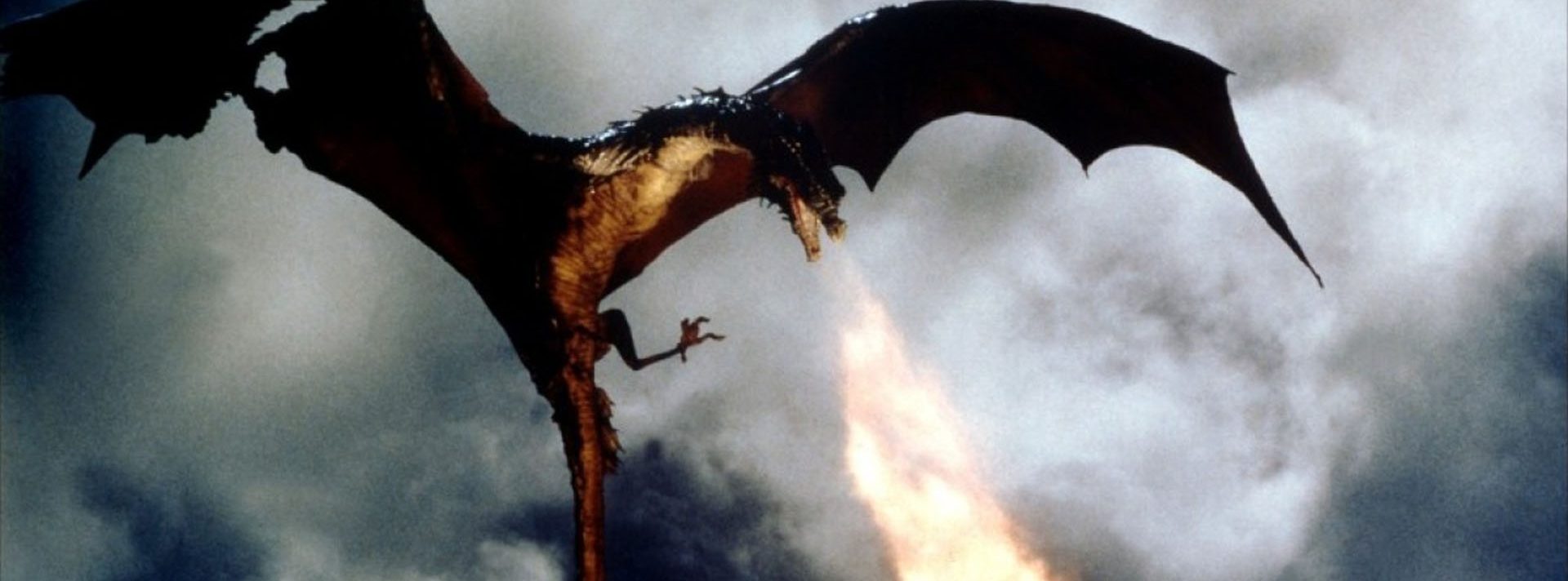
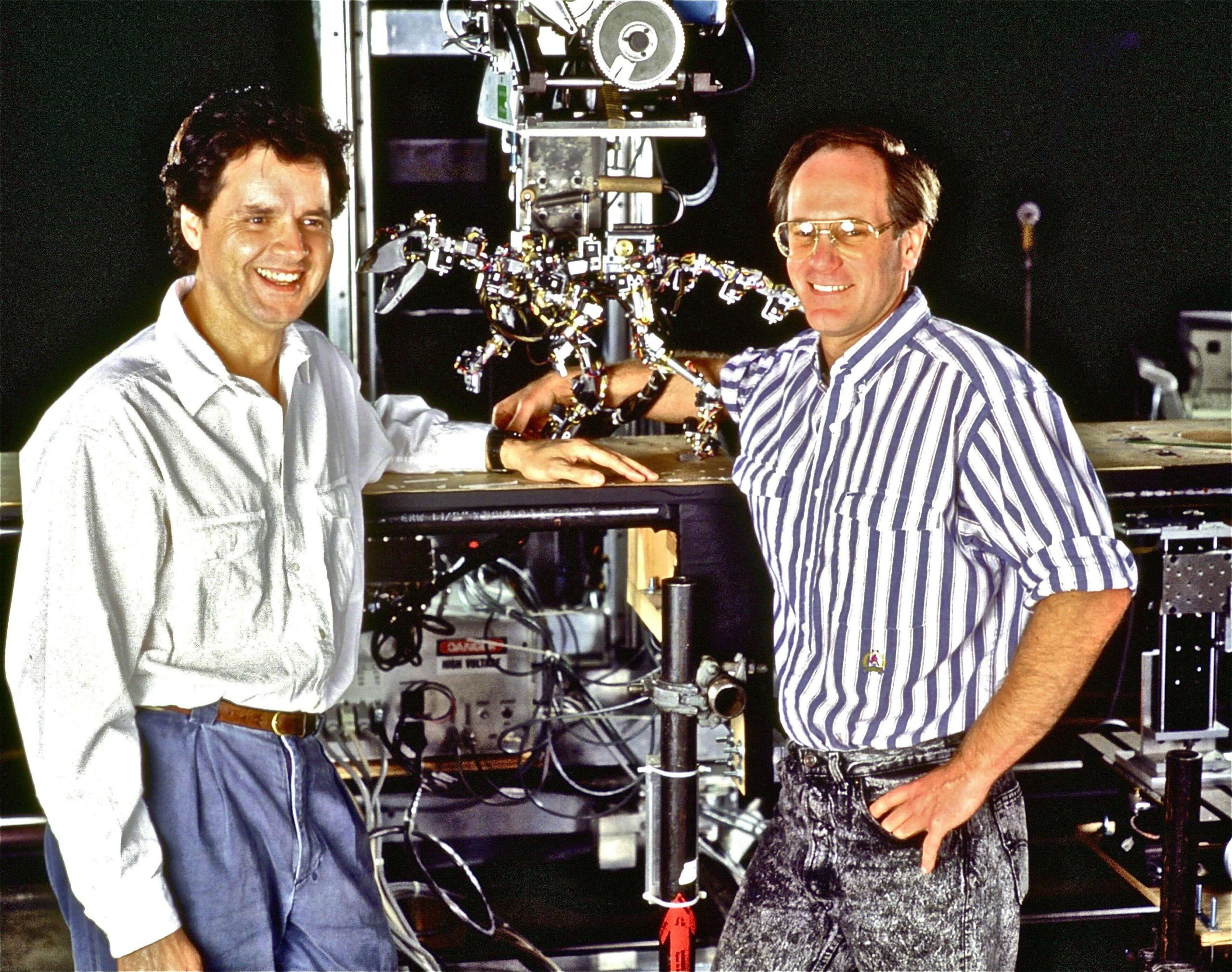
Before work began on Return of the Jedi, “Go-Motion” – a breakthrough in dimensional animation pioneered by ILM’s Dennis Muren, Phil Tippett, Stuart Ziff, and Tom St. Amand – offered a major refinement to traditional stop-motion by introducing motion blur, an effect crucial to achieving realistic movement. Unlike standard stop-motion, where models remain static during each frame’s exposure, go-motion employs stepper motors driven by a motion-control system. These motors subtly shift the puppet during the open-shutter phase, simulating the kind of motion blur found in live-action 24fps cinematography.
“The significance is that we got it working,” Ziff told Cinefex, downplaying the complexity of a system that required months of development before the first usable shot could be captured.
Ziff’s engineering expertise led to the development of a modular rig dubbed the “Dragon Mover,” which connected to the model’s limbs via rods and enabled precise, repeatable motion sequences. Tippett, St. Amand, and Ken Ralston meticulously animated both walking and flying versions of the puppet, blending mechanical precision with handcrafted nuance.
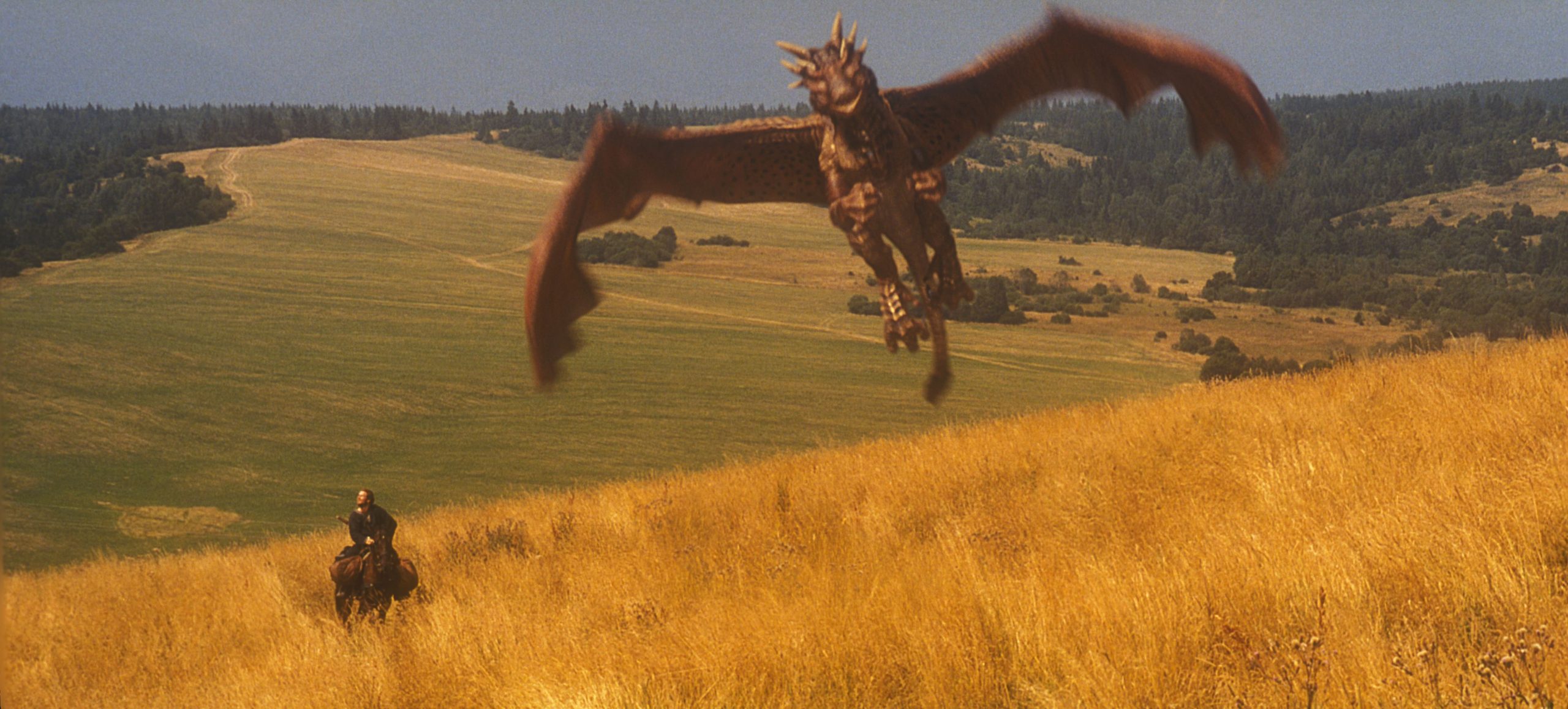
“We started off with some of the more complicated shots,” Tippett told Cinefex, recalling the weeks spent programming movement cycles before finally achieving a fluid, natural gait. This meant that the process became easier over time, a testament to the artists’ dual roles as problem solvers. The result was a new level of fluidity and realism, particularly evident in the scenes featuring the film’s dragon, Vermithrax Pejorative.
The Vermithrax Pejorative in Dragonslayer (1981) (Credit: ILM & Paramount).
Blending Animation with Live-Action: A New Frontier
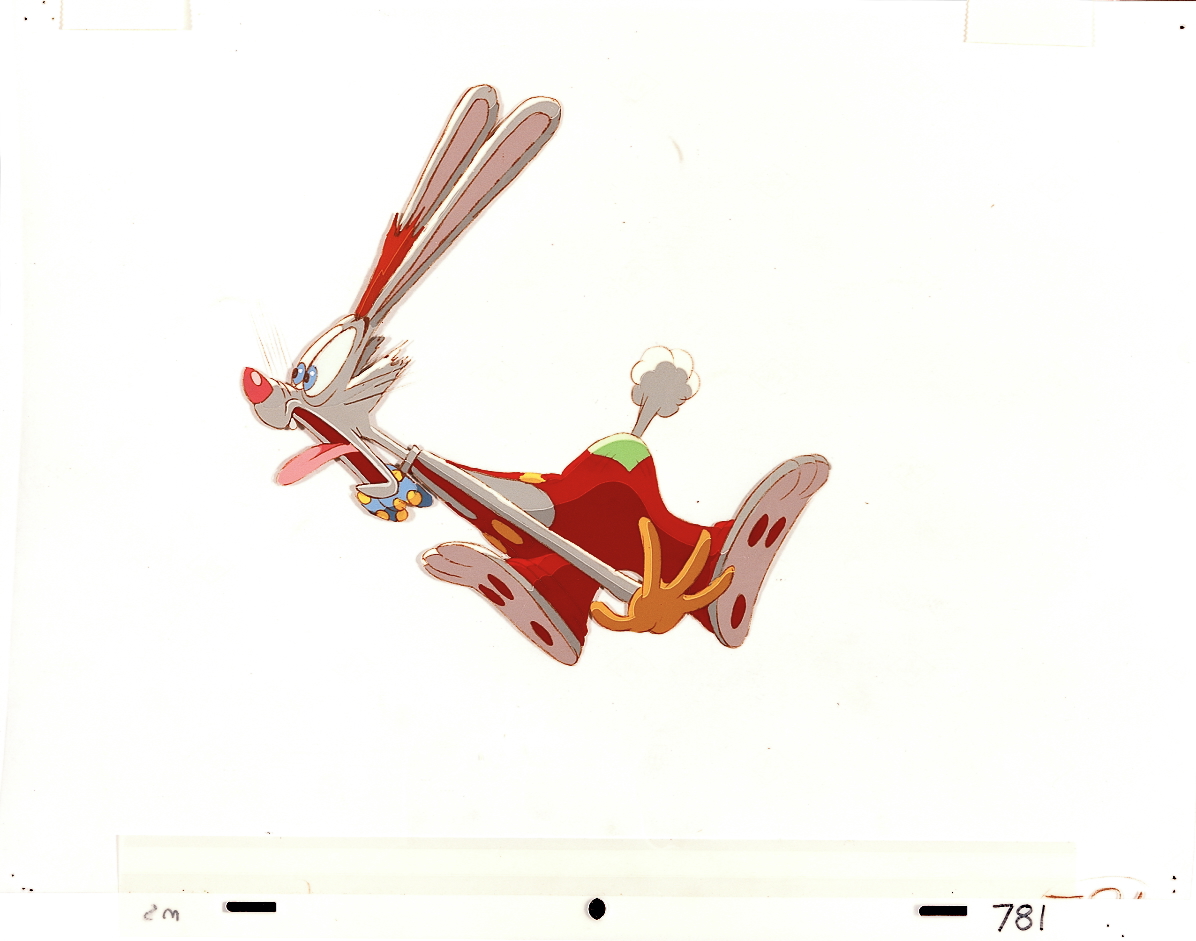
ILM’s reputation for innovation took a significant leap forward with Who Framed Roger Rabbit. Directed by Robert Zemeckis, the film demanded the seamless integration of hand-drawn, cel-animated characters with live-action performances and practical on-set effects. ILM’s task was to anchor the animated characters convincingly in the real world.
Visual effects supervisor Ken Ralston oversaw the technical and creative challenges of making cartoon characters interact believably with real environments. “The animation had to exist in a real world, with real lighting, perspective, and interaction. That had never been done before at this level,” Ralston told Cinefex.
“It was great for me because I am a huge fan of those early cartoons by the great Warner Brothers directors, Tex Avery and Chuck Jones. And when that showed up with the intent that Bob [Zemeckis] wanted for it, man, that was a match made in heaven. And it was brutal, but it was great at the same time. It keeps you going. And when you see results on something that’s finally coming together, it’s a blast,” Ralston explained to The Filmumentaries Podcast.
Marking a turning point in hybrid filmmaking, they also decided to discard the traditional locked-off camera in favor of dynamic movement. To support this, ILM developed new methods to track live-action camera motion and translate it into data that animators could use to maintain consistent character positioning and perspective. “The opening camera crane shot proved to be historic. … No one had ever done a crane drop with a live-action camera and planted an animated character firmly on the ground,” Zemeckis recalled to Cinefex.
An animation cel from Who Framed Roger Rabbit (1988), created by the team supervised by Richard Williams. ILM was then responsible for compositing the animated characters with the live-action footage (Credit: ILM & Disney).
ILM and the special effects team constructed practical rigs to simulate interactions between live-action props and invisible cartoon characters. In one sequence, when Roger Rabbit turns a water faucet, a hidden mechanism releases a perfectly timed spray – a practical effect used to sell the interaction.
To match the shifting light within live-action environments, ILM tracked moving shadows and highlights, ensuring the animated characters were illuminated just like the actors. “If a light in the scene was swinging, … then the Toon characters would have to be lit in exactly the same way,” said Ralston. Animators relied on detailed lighting references to maintain visual consistency frame by frame.
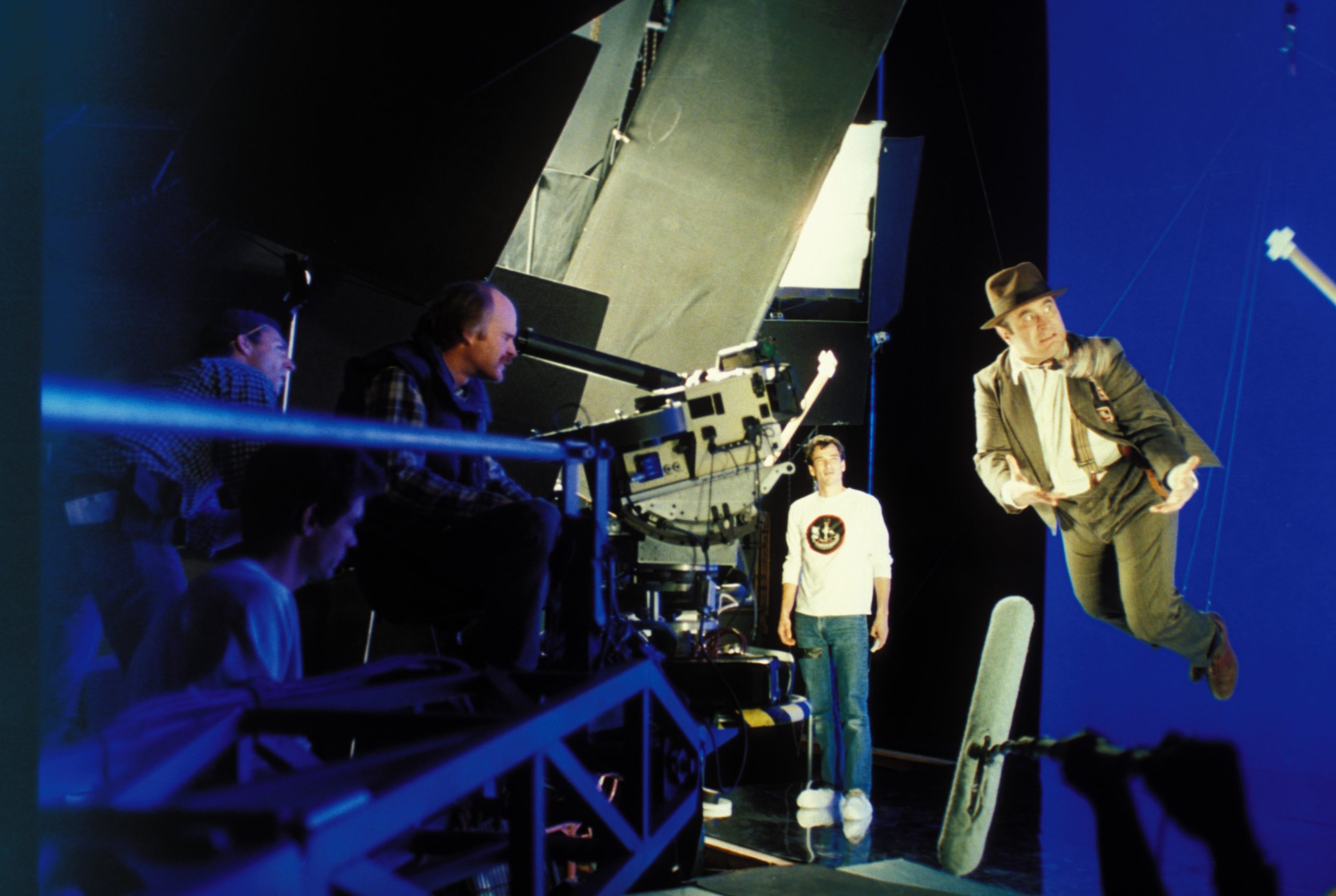
Performance presented its own challenges. Bob Hoskins, cast as Eddie Valiant, was required to act opposite characters that weren’t physically present. “What I had to do was spend hours developing a technique to actually see, hallucinate, virtually to conjure these characters up,” he told Cinefex. To assist, Charles Fleischer, the voice of Roger Rabbit, wore a full Roger costume off-camera and delivered his lines live. “Although he was on the other side of the camera, I was able to talk to him as if he were right next to me. We could even ad-lib together,” Hoskins said.
After principal photography wrapped, ILM tackled the complex process of optical compositing while Richard Williams’s animation team in London produced the character animation. ILM integrated those elements into the live-action footage. “Every frame had to go through multiple passes to create tone mattes, shadow mattes, and interactive lighting effects. It wasn’t just a matter of drawing the character,” explained optical supervisor Edward Jones. “Every single frame had to be drawn, rechecked, and composited with multiple elements to make sure the animation fit seamlessly into the live-action,” Zemeckis recalled.
The result was a groundbreaking fusion of animation and visual effects that redefined the possibilities in cinematic storytelling. It was a winning combination of traditional techniques and innovation that was widely praised. The film won Best Visual Effects and a Special Achievement Award at the 1989 Academy Awards. Many saw the film as the zenith of the photochemical era, even to the extent that it was perceived as too complex to repeat.
In fact, it wasn’t until a decade later that ILM revisited this hybrid format with The Adventures of Rocky and Bullwinkle (2000), applying many of the same techniques with enhanced digital compositing tools to a new generation of animated characters.
Actor Bob Hoskins (Eddie Valiant) is suspended before a blue screen on ILM’s main stage. In this sequence, his character interacts with animated co-stars Bugs Bunny and Mickey Mouse (Credit: ILM).
When Dinosaurs Ruled the Visual Effects World
While go-motion had proven a valuable innovation throughout the 1980s, it was the advent of computer graphics (CG) character animation that truly revolutionized ILM’s approach in the 1990s. In the last year of the decade, ILM laid the groundwork on James Cameron’s The Abyss (1989), animating the fully CG pseudopod – a water-based, tentacle-like entity. For Cameron’s next film, Terminator 2: Judgment Day (1991), ILM once again raised the bar with the liquid metal T-1000.
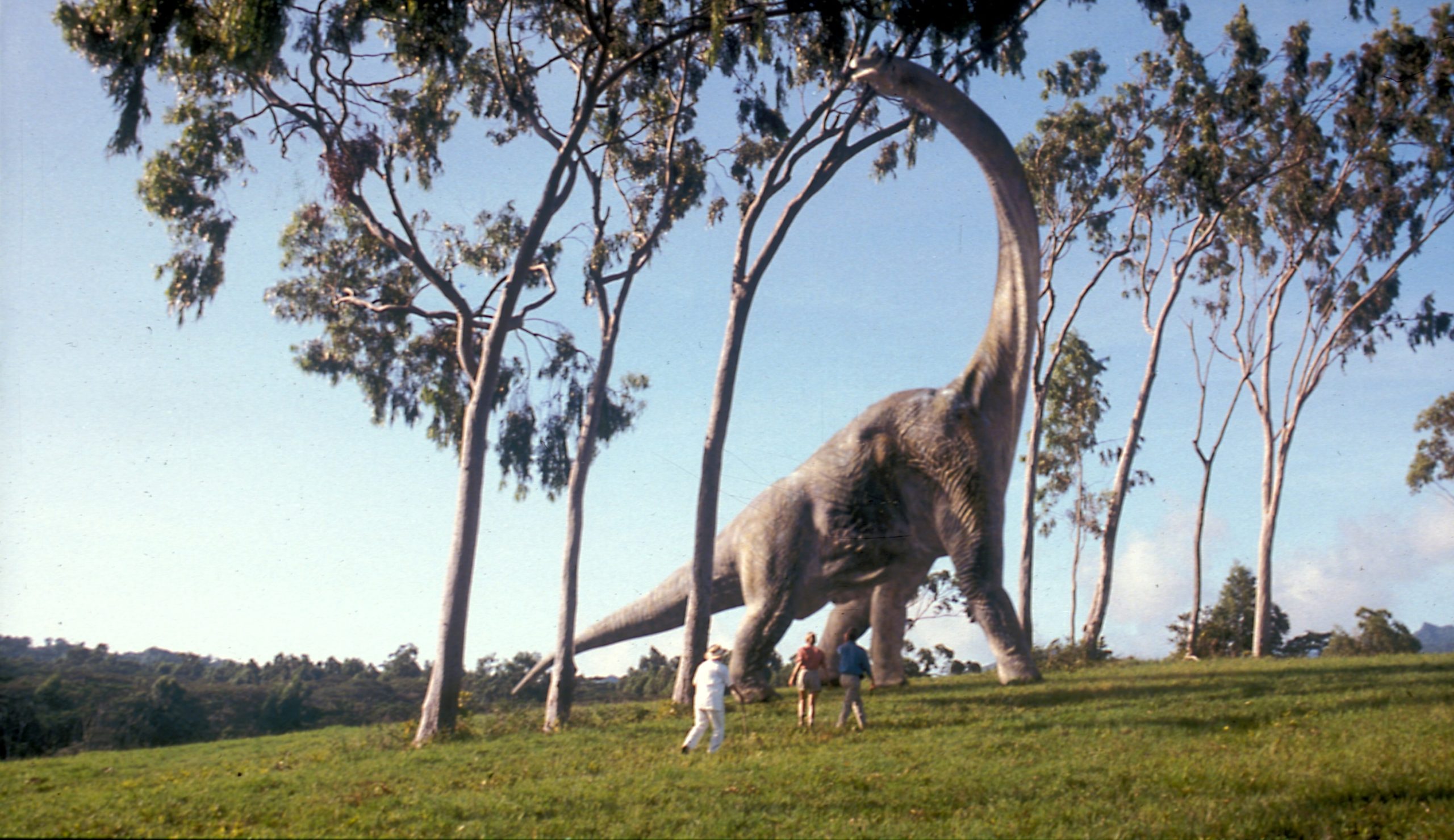
It was the digital dinosaurs in Jurassic Park that marked a true turning point – not just in terms of spectacle – but as a clear signal that traditional methods like stop-motion and go-motion were being eclipsed by a new era of photorealistic CG. ILM animator Steve Williams, who had previously worked with Mark Dippé on The Abyss and Terminator 2, pushed the idea of fully computer-rendered dinosaurs further. The results were astonishing. Steven Spielberg’s action-horror hybrid delivered creatures that felt real. Animals that moved and breathed with skin that stretched and muscles that flexed.
As a veteran stop-motion animator, Phil Tippett famously quipped at the time: “I’ve just become extinct.” The line – part joke, part reality – captured the profound shift unfolding across visual effects departments. Tippett’s line was given to the film’s Dr. Malcom, played by Jeff Goldblum.
A computer-graphics Brachiosaurus seen with live-action actors in the foreground in Jurassic Park (1993) (Credit: ILM & Universal).
By the time Jurassic Park hit screens, the industry had begun pivoting decisively toward digital techniques, a shift witnessed firsthand by animator Rob Coleman.
“There were only 6 animators at ILM for Jurassic Park,” he tells ILM.com. “It was the film that inspired me to cut my reel and send it in. … And I came in as ILM’s animator number 9 in October of ‘93 (4 months after the film’s release) when it was still very early days for computer graphics.”
To bridge the gap between stop-motion and computer animation, the team developed a hybrid technique known as the Dinosaur Input Device or D.I.D. This setup used a dinosaur armature fitted with sensors and encoders, allowing animators to physically manipulate the model while their movements were captured and translated into digital data. The goal was to combine the skill and experience of the traditional animators and strengths of the computer artists and technicians. While the results weren’t always ideal – much of the animation still had to be keyframed in the computer – it marked a pivotal step. The future of filmmaking was taking shape, frame by frame.
Animator Tom St. Amand (left) and lead animator Randy Dutra of the Tippett Studio pose with the Dinosaur Input Device (D.I.D.) used on Jurassic Park (Credit: ILM & Tippett Studio).
The Challenge of Digital Characters: The Star Wars Prequels
Following ILM’s work in the 1990s on films like The Flintstones (1994), Casper (1995), Forrest Gump (1994), and Jumanji (1995), George Lucas was getting ready to revisit the galaxy far, far away. This time, with a vision that demanded unprecedented integration of digital characters and live-action performances. The Star Wars prequels would become a proving ground for ILM’s rapidly expanding digital animation capabilities.
Leading that charge was Rob Coleman, by then an animation supervisor at ILM. He found himself tasked with something the company had never fully tackled before: nuanced, verbal performances from fully digital characters who needed to share the screen – and emotional space – with real actors.
“It was all those things, plus we didn’t have a staff that actually had spent their time learning how to do nuanced performances,” Coleman recalls. He would tell director Joe Johnston for Light & Magic Season 2 that it was Dragonheart (1996) that really set the groundwork. “That was a huge leap for us. George was watching, and when he saw Dragonheart, he said, … ‘We are ready to go.’
Draco the dragon (voiced by Sean Connery) flies towards Bowen (Dennis Quaid) in Dragonheart (1996) (Credit: ILM & Universal).
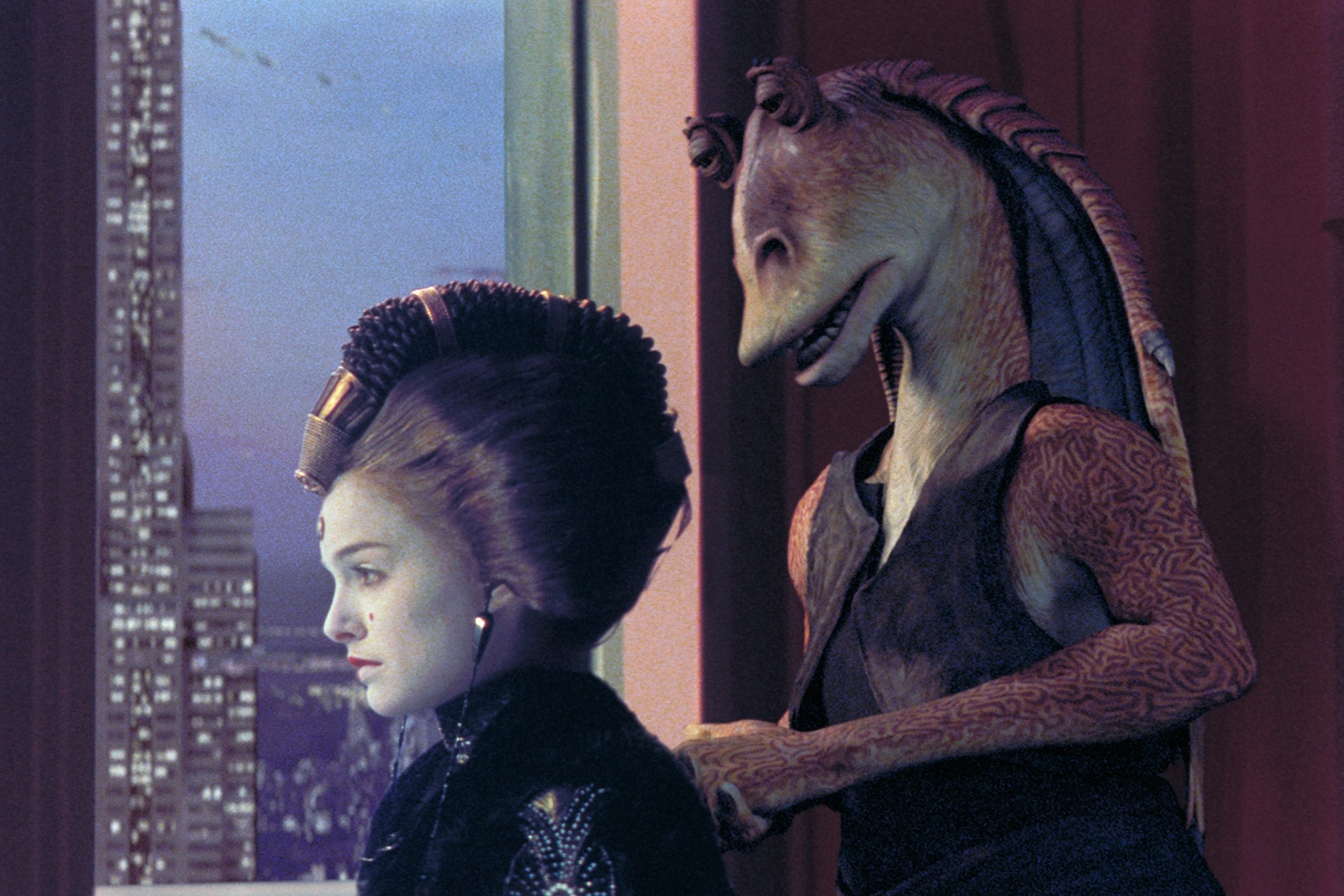
“Most of the people at ILM had been flying spaceships and doing robots and maybe having dinosaurs smash around,” Coleman adds, “but they weren’t doing verbal performances where they were to hold their own with Natalie Portman and Liam Neeson and Ewan McGregor.” And to bring multiple CG characters like Jar Jar Binks, Watto, and Sebulba to life in Star Wars: The Phantom Menace (1999), Coleman had to shift the team’s mindset. His growing team of 65 animators needed to think less like technicians and more like performers.
“We videotaped our actors so we had what they were doing physically, and we could look at them speaking to work out the lip sync. But pretty early on in Phantom Menace, I knew that I wanted to get into the subtext, not just the text. What’s going on inside the heads of the characters. If we could achieve that, we were gonna have believable performances, and the audience would have a connection with Watto, Jar Jar, Sebulba, and Boss Nass in that first film.”
The next major test came with Star Wars: Attack of the Clones (2002) and the digital resurrection of a beloved character: Yoda. Unlike Jar Jar or Watto, Yoda had already been established in the original trilogy as a practical puppet, sculpted by Stuart Freeborn and brought to life by puppeteer Frank Oz. Coleman’s team needed to preserve that legacy while updating the character with a broader range of expression.
“I went back and looked at Empire and it was nothing like I remembered because I’d grown up. It had changed what we expected,” Coleman says. “So what I was trying to achieve is what I remembered Yoda doing in terms of expressiveness and honoring how Frank moved him. Frank actually came by ILM, held up his hand, showed me the position of his fingers inside Yoda’s head. I had him pantomime some Yoda with me so I could see what he was doing.”
To ensure authenticity, Coleman and his team rigorously tested Yoda’s new digital incarnation. He recalls the moment he shared the first test with George Lucas. “There is footage of me presenting the first digital Yoda on the From Puppets to Pixels [2002] documentary. That is the real footage of me doing that, even though I asked the documentary not to shoot it. I’m so happy they did. I was really nervous, and I presented three speaking shots and three non-speaking shots on purpose because I was trying to show them that we could maintain performance without the crutch of dialogue. That was a focused decision because I knew from watching countless movies and TV, editors routinely cut to their action shots – the non-verbal reaction shot. I wanted to earn one of those, and we did.”
Jar Jar Binks (right, Ahmed Best) performs opposite Queen Amidala (Natalie Portman) in Star Wars: The Phantom Menace (1999) (Credit: ILM & Lucasfilm).
That approach paid off. One of Yoda’s most effective digital moments came not during a battle or speech but in a quiet reaction. “There’s a shot of Yoda in Palpatine’s office where Palpatine says something, Yoda’s leaving, and he turns, and he looks over his shoulder, and you can tell he doesn’t trust him,” Coleman notes. “And that’s all in facial performance, all keyframe, frame-by-frame animation. It ended up on the movie poster.”
Coleman’s work continued into Star Wars: Revenge of the Sith (2005), by which point ILM had solidified its reputation as a pioneer in digital character animation. The scope of the prequel work, in retrospect, still feels enormous to the animation director.“I kind of got swept up in it all. Jim Morris [ILM’s general manager from 1993 to 2005] had put me forward for the role. Jim had taken me aside, and he said, ‘I think you’ve got the right temperament to work with George.’ So he sent me over … and dropped me off in London for a two-week interview with George Lucas, which I passed.”
Decades later, Coleman is reflective about the experience. Even as ILM continued to push forward in their abilities to mimic life, it was paradoxically the artists themselves that felt like the imposters. “Twenty-five years on, it’s kind of surreal to think back that I actually did that. I know that’s me. There are pictures of a younger me doing it. And I have all the memories, but sometimes it feels like it was someone else.”
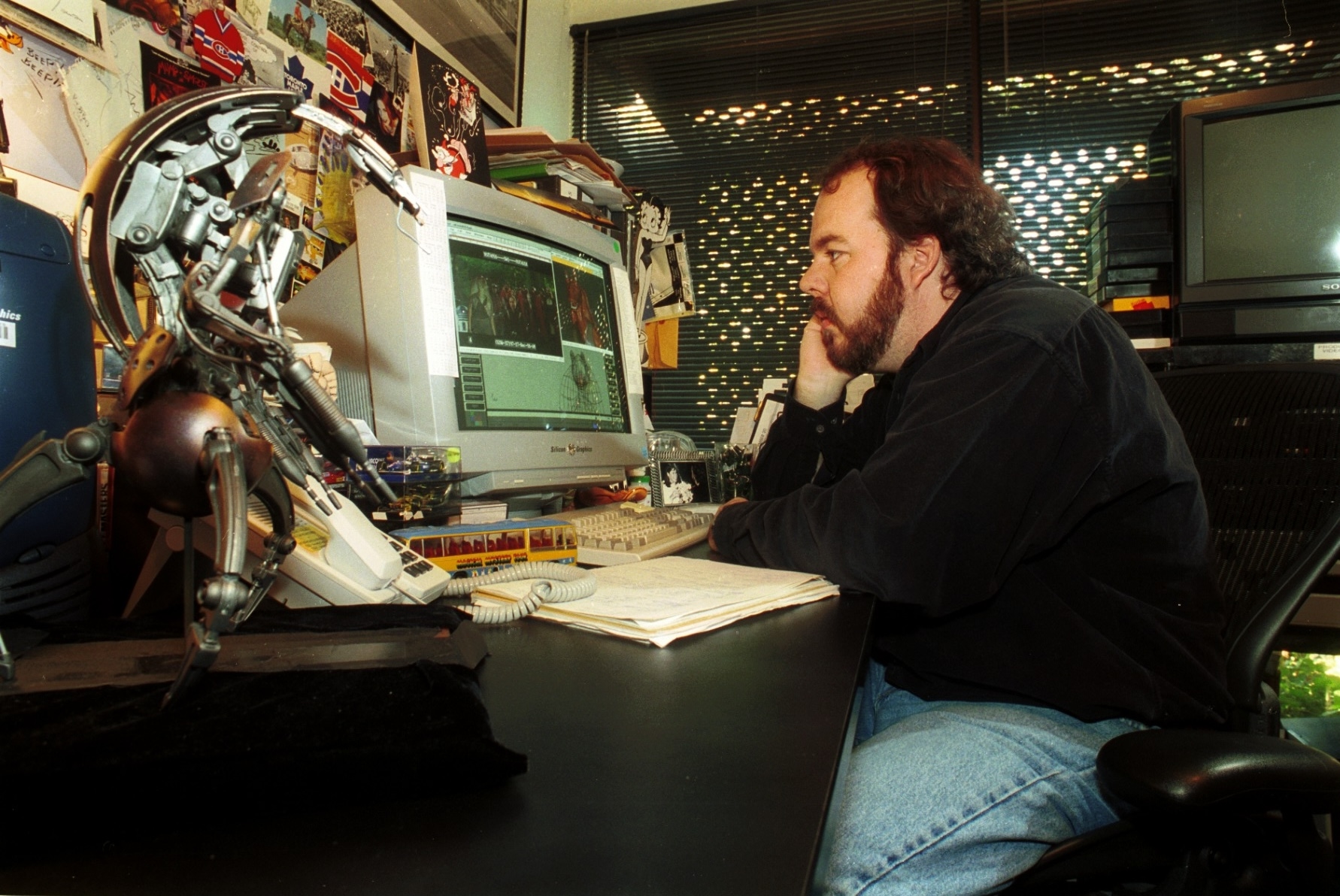
Animation director Rob Coleman at work on The Phantom Menace (Credit: ILM).
Cursed Flesh and Living Tentacles: The Pirates Breakthrough
When Pirates of the Caribbean: The Curse of the Black Pearl (2003) set sail, ILM faced a major challenge. Bringing the cursed crew of the Black Pearl to life wasn’t just about creating convincing skeletons – it was about making them believable next to live-action characters.
Hal Hickel, animation supervisor, explains to ILM.com that “It was a really complicated problem because the idea was that under moonlight these guys are skeletons, but in shadow, they’re flesh and blood.” Each shot became a complex blend of live-action photography and animation, requiring seamless transitions between the two. “You couldn’t just cut to them and show them in full skeletal form under neutral lighting,” he said. “It all had to be motivated by the lighting in the scene.”
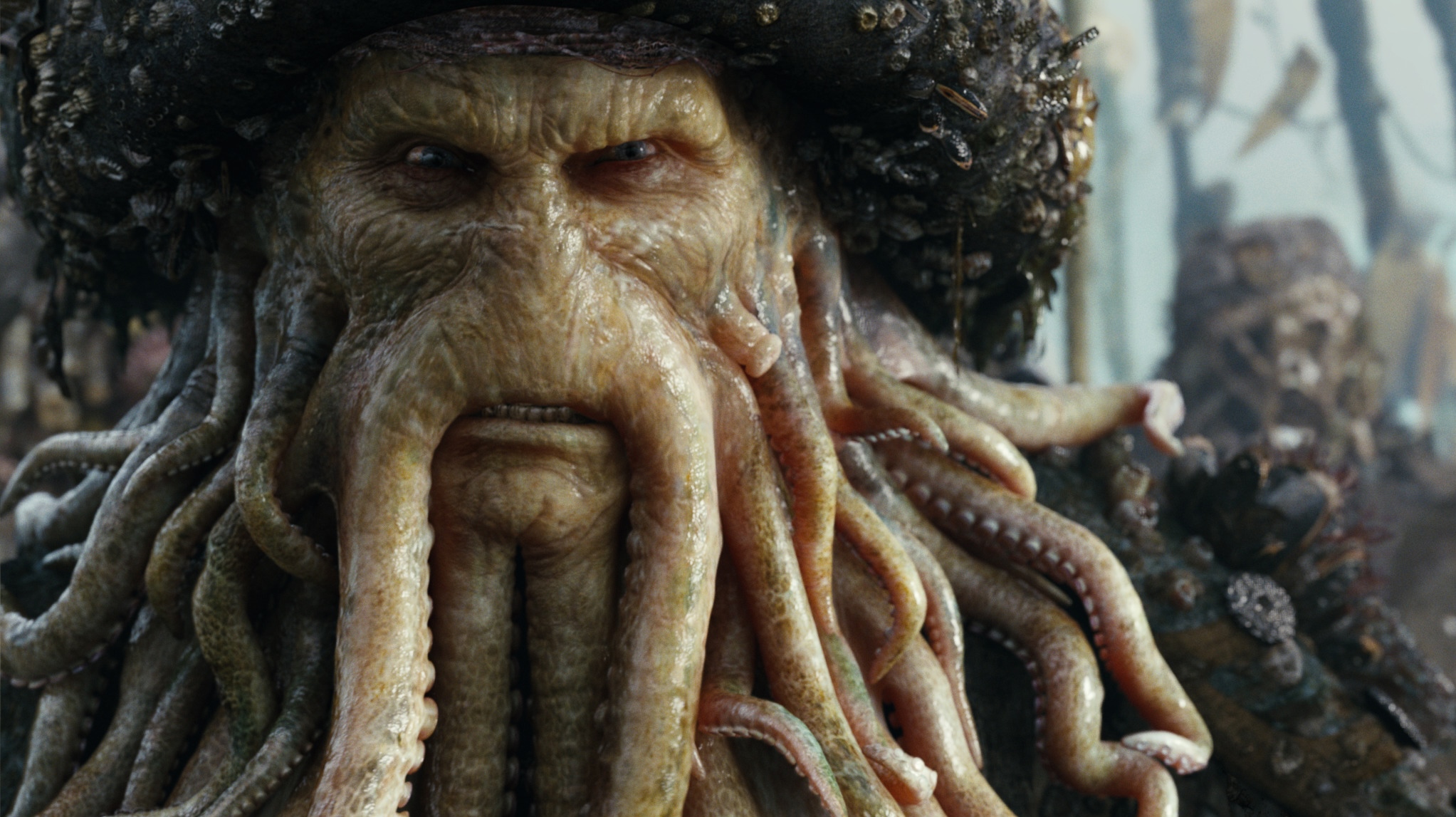
The work paid off, but it was only the beginning. For the sequel, Pirates of the Caribbean: Dead Man’s Chest (2006), director Gore Verbinski raised the bar with Davy Jones and his crew. These characters were fully digital – and fully expected to carry the emotional weight of their scenes.
Speaking about Bill Nighy’s portrayal of Davy Jones, Hickel notes that “Bill gave such a brilliant performance. We didn’t want to lose any of the little stuff. The slight squint of an eye, the tiny sneer.” Rather than relying solely on motion capture, the team blended Nighy’s reference footage with keyframe animation, ensuring that none of his subtle acting choices were lost. “We wanted the tentacles to feel alive but they had to support the emotion in his face, not steal focus.”
Davy Jones (Bill Nighy) in Pirates of the Caribbean: Dead Man’s Chest (2006) (Credit: ILM & Disney).
Animating Davy Jones’s tentacle beard posed its own technical challenges. “It was a mix of hand animation and simulation,” Hickel explains. “We animated parts of it for performance reasons, but we also let physics take over for the secondary motion, so it didn’t look fake or overly choreographed.” This approach required close collaboration between animators, rigging artists, and the simulation team to keep everything feeling realistic and responsive.
The complexity of Davy Jones and his crew pushed ILM to overhaul their pipeline. “We had to rethink a lot of how we built and rendered these characters,” Hickel says. Advances made for Pirates laid the foundation for ILM’s later work on projects like Transformers (2007) and The Avengers (2012).
Beyond the technical achievements, Pirates also marked a shift in how digital characters were treated on screen. As Hickel puts it, “It wasn’t just about creating spectacle. Gore trusted us to handle real character beats with these CG characters. It was an amazing opportunity.” Through a mix of performance, artistry, and cutting-edge technology, ILM helped create one of cinema’s most memorable digital villains. They had steered animation into entirely new waters.
The Leap to Full-Length Animation: Rango
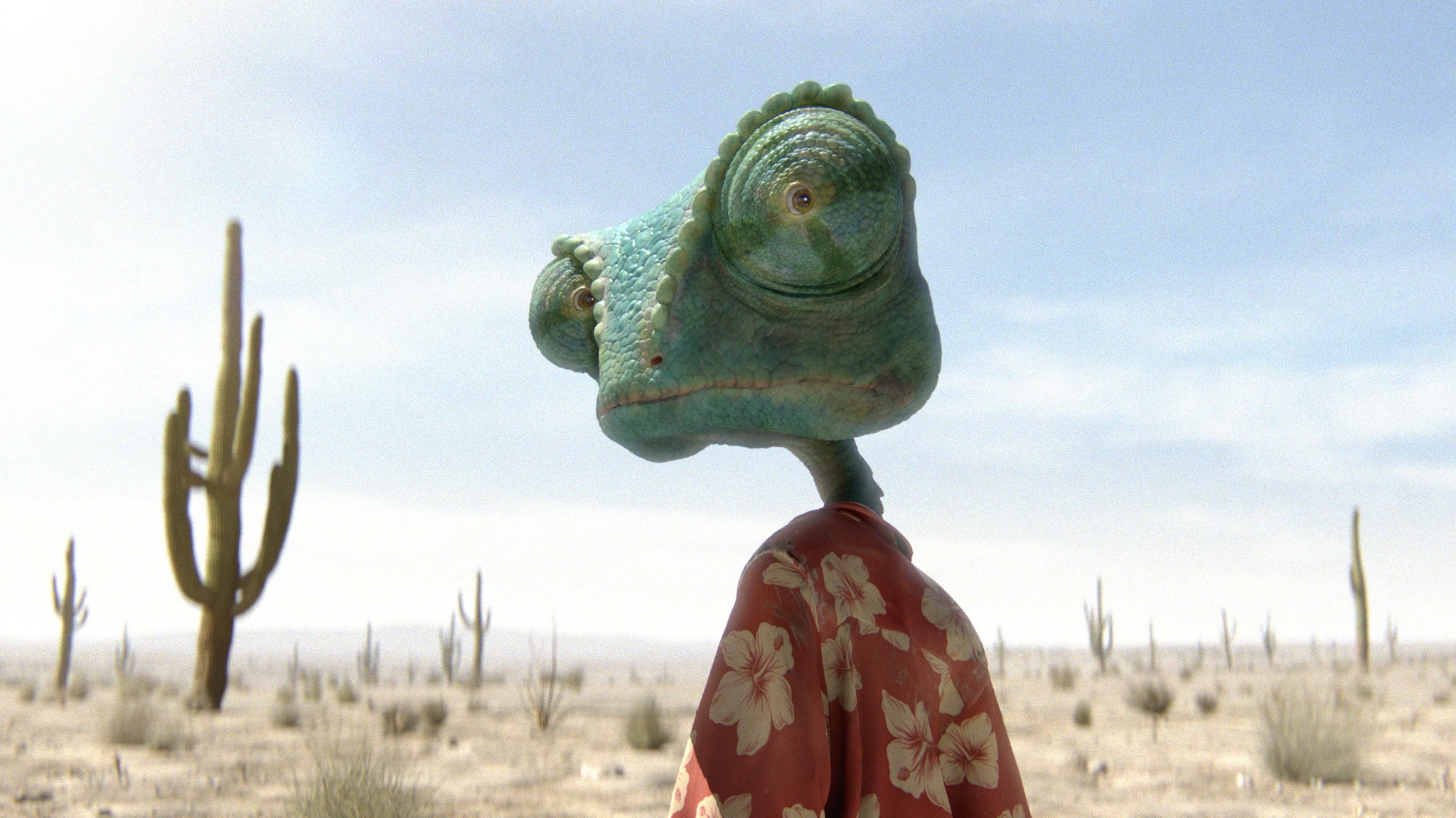
After working with Industrial Light & Magic on three Pirates of the Caribbean films, director Gore Verbinski approached the studio with an ambitious proposal: to produce a fully animated feature. He had been particularly impressed by ILM’s work on Davy Jones and believed the studio could bring that same level of sophistication to Rango – a surreal Western populated by anthropomorphic desert creatures.
“We approached Rango the way we approach live-action visual effects,” visual effects supervisor John Knoll told Cinefex, “building out environments with a cinematic mindset rather than adhering to the rigid, modular workflow of conventional animated features.”
A defining innovation was the film’s approach to lighting and cinematography. Renowned director of photography Roger Deakins consulted on the project, bringing principles of real-world filmmaking into the animated space. “We lit Rango the way we’d light a live-action film, with practical principles of cinematography in mind,” Deakins told Cinefex.
Rango‘s (2011) namesake, as voiced by Johnny Depp (Credit: ILM & Paramount).
ILM’s animation director, Hal Hickel, emphasized that they wanted the characters to inhabit their world with mass and texture. “We didn’t want our characters to feel overly polished or weightless,” he told Cinefex. “Gore wanted them to move with a slight awkwardness as if they truly existed in this dusty, unpredictable world.”
“He didn’t want to go head to head with Pixar or Disney or DreamWorks or Illumination. If they’re all over here, he wanted to go over there, aesthetically, in every way,” Hickel tells ILM.com. “Gore understood that the look of the film that he wanted to do was what we ended up calling ‘photographic.’ So not photoreal, but definitely not cartoony – the shot glass with whiskey in it, those kinds of things all had this patina of realism. So that seemed like a really good fit with us at ILM.”
Rather than using motion capture, Verbinski shot sessions with the actors performing together in a theatrical setting simply to inspire the animation. “It wasn’t about mapping motion one-to-one,” says Hickel. “It was about understanding the rhythm, the beats, the subtle mannerisms that would inform the final animated characters.” The result was a film that felt authored – visually distinct and emotionally resonant. For ILM, Rango marked another turning point.
“We knew this was an experiment,” said Knoll, “but we also knew it was an opportunity to redefine what ILM could do. Looking back, I think we did just that.”
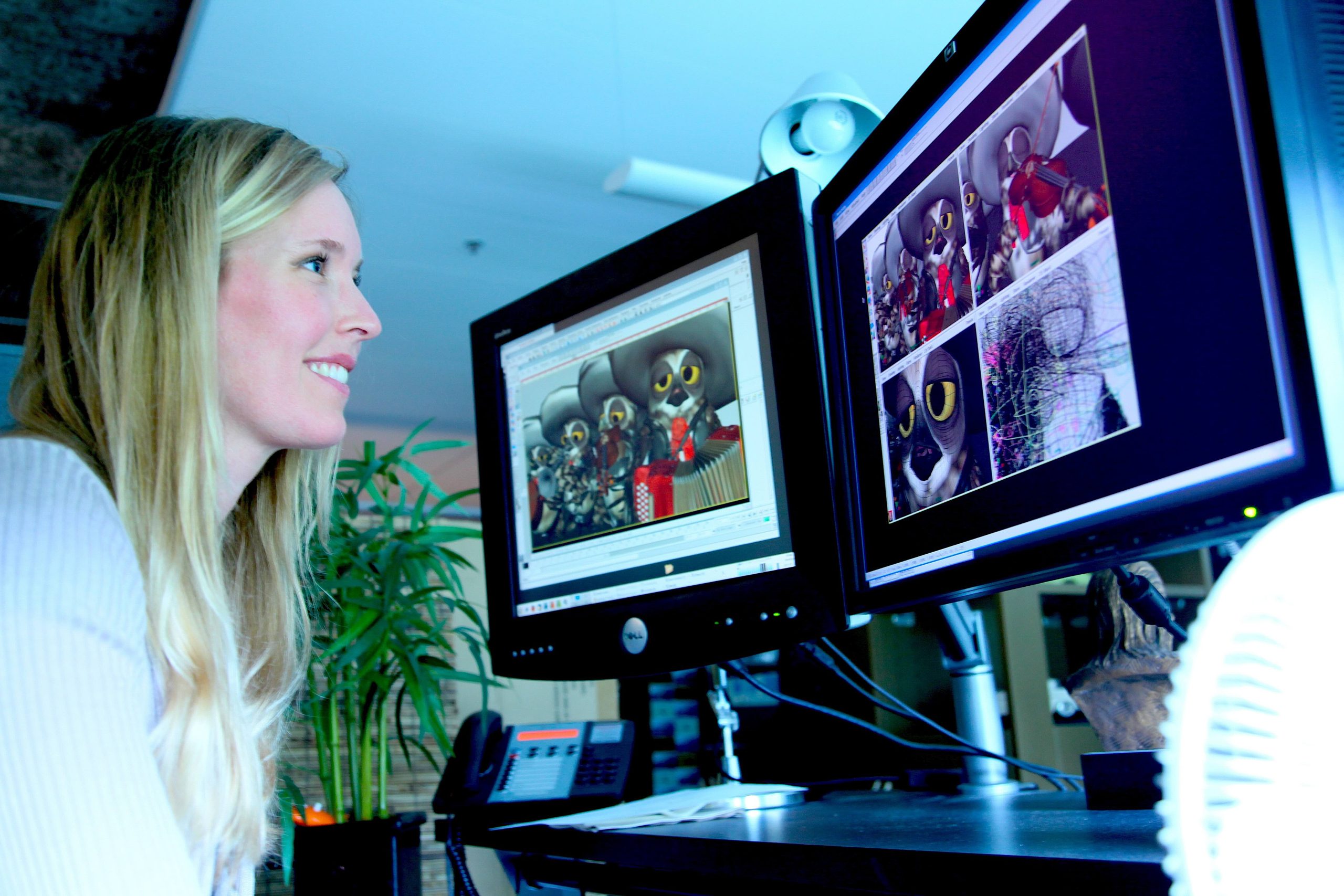
Lead animator Maia Kayser at work on Rango (Credit: ILM).
Having left ILM before production on the film, Rob Coleman is still captivated by Rango. “It came about because John Knoll and Hal Hickel built a fantastic relationship with Gore Verbinski,” he says, “and they demonstrated to him through Pirates of the Caribbean that ILM had acting animators, and Gore is an actor’s director. They needed the right director with the right focus and the right mixture of talents and just bravado to say, ‘Yeah, we’re going to do this.’ And to hit ILM at the right time to make it, I think it’s still a marvel. I went back and watched it a couple years ago. It’s incredible what they did and what they achieved.”
“Every animator I know who worked on Rango had a ball and tells me continuously, ‘Gosh. Let’s get another Gore film going,’” says Hickel. “Yeah, they ate it up. He just really wanted people to feel like we were all filmmakers. You’re not the visual effects people up there, and I’m the filmmaker down here. We’re all filmmakers. We’re making this movie together.” That sense of collaboration was an ethos that ILM started in 1975 and continues to carry forward to this day.
Rango went on to win the Academy Award for Best Animated Feature in 2012.
Jamie Benning is a filmmaker, author, and podcaster with a lifelong passion for sci-fi and fantasy cinema. He hosts The Filmumentaries Podcast, featuring twice-monthly interviews with behind-the-scenes artists. Visit Filmumentaries.com or find him on X (@jamieswb) and @filmumentaries on Threads, Instagram, and Facebook.