Director Travis Knight storyboarded every 6 frames of the film, and across 793 shots, Industrial Light & Magic found a director who spoke the animator’s language.
By Jamie Benning
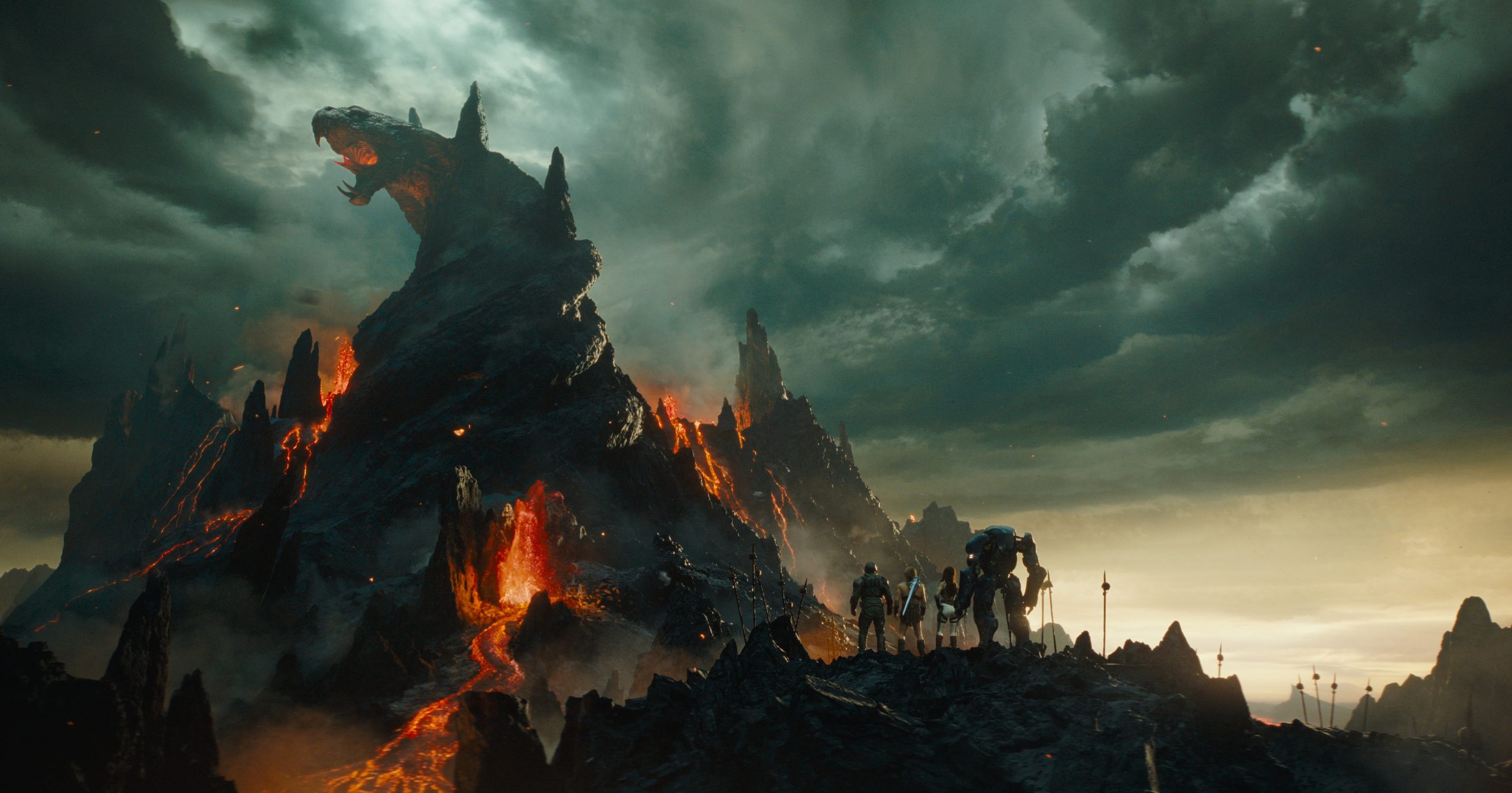
Masters of the Universe (2026) required 2,180 visual effects shots across 6 vendors. Industrial Light & Magic’sLondon and Mumbai studios took 793 of them over a period of 18 months. These included Beast Man, roughly half of Skeletor’s shots, He-Man’s transformation, as well as the environments of Subternia and Snake Mountain.
Production visual effects supervisor David Vickery found out how well one sequence landed when a journalist asked whether they had put an actor in a suit on set. “My heart sang,” he tells ILM.com. “There’s no suit; there was no reference head. It was a purely digital character throughout that sequence.”
Two things kept coming up when I asked the ILM crew how the show ran, and neither of them was technical: The film’s director is also an animator, and the vendors collaborated successfully by sharing notes and resources.
Masters of the Universe director Travis Knight is also the president and CEO of LAIKA Studios and a stop-motion animator by trade. Vickery, who joined the project in postproduction, went looking for storyboards, expecting to find what you typically get on a feature, “a sort of mishmash of different artists’ style drawings, two frames per shot,” as he says. “But what Travis made was every six frames of the film. He literally did an animatic. Wow, this is kinda like you’re making a stop-motion film, I thought. Hang on, that’s what he’s used to doing. Though it wasn’t just about frame and composition; it was about cadence, timing, and pacing.”
For ILM visual effects supervisor Pietro Ponti, that changed the job way before a shot or sequence was assigned. “When we were bidding and prepping, we actually knew whole sequences,” he says. “But not just with previs. It was with beautiful key poses drawn by really talented animators that were actually used by Michael to kickstart things.”
Michael is Michael Lum, ILM’s animation supervisor, who often presented work directly to Knight rather than through Vickery. “Travis wants to speak to animators,” says Vickery. “In the kindest possible way, he didn’t want to talk to me about animation. He wanted to talk to an animator. They have a very different language and shorthand that they all understand.”
Knight had a laser focus, rarely seen. But the team says that was really the best thing about the show. “He’s gone through the trenches,” says Lum. “He knows exactly what he wants. And once you show it to him, that’s it. It’s one of the rarest shows where we hardly had any changes. I really can’t think of any shots that we had to revisit because he changed his mind.”
Knight’s direction came at the very start. One of the earliest notes ILM received for its conceptual renders was that they were too pastel in style. Knight instead wanted the saturation of the 1983 Filmation cartoon. Vickery describes the problem in one shot of Castle Grayskull, which is gray, with a gray mountain in the background. “It wasn’t enough to just dial the contrast and saturation in a shot, because that just feels like a grade or a social media filter. That felt like cheating.”
The solution, therefore, was to color the world instead. Cooler grays on the castle walls, warmer green lichen growing over them, vibrant orange on the bridge uprights. “There was always very methodical thinking about how to serve the color,” Ponti says. “We would push, let’s say, the mossy greens on top of the rock a bit further. But we would leave the rock where it should be, and then maybe the blue would come into the haze in the distance.”
Knight’s other directive was that the film feel photographed. Softening the frame edge, adding grain and chromatic aberration along with physical optical flares. Those artifacts introduced more color and gave the six visual effects vendors a shared visual vocabulary.
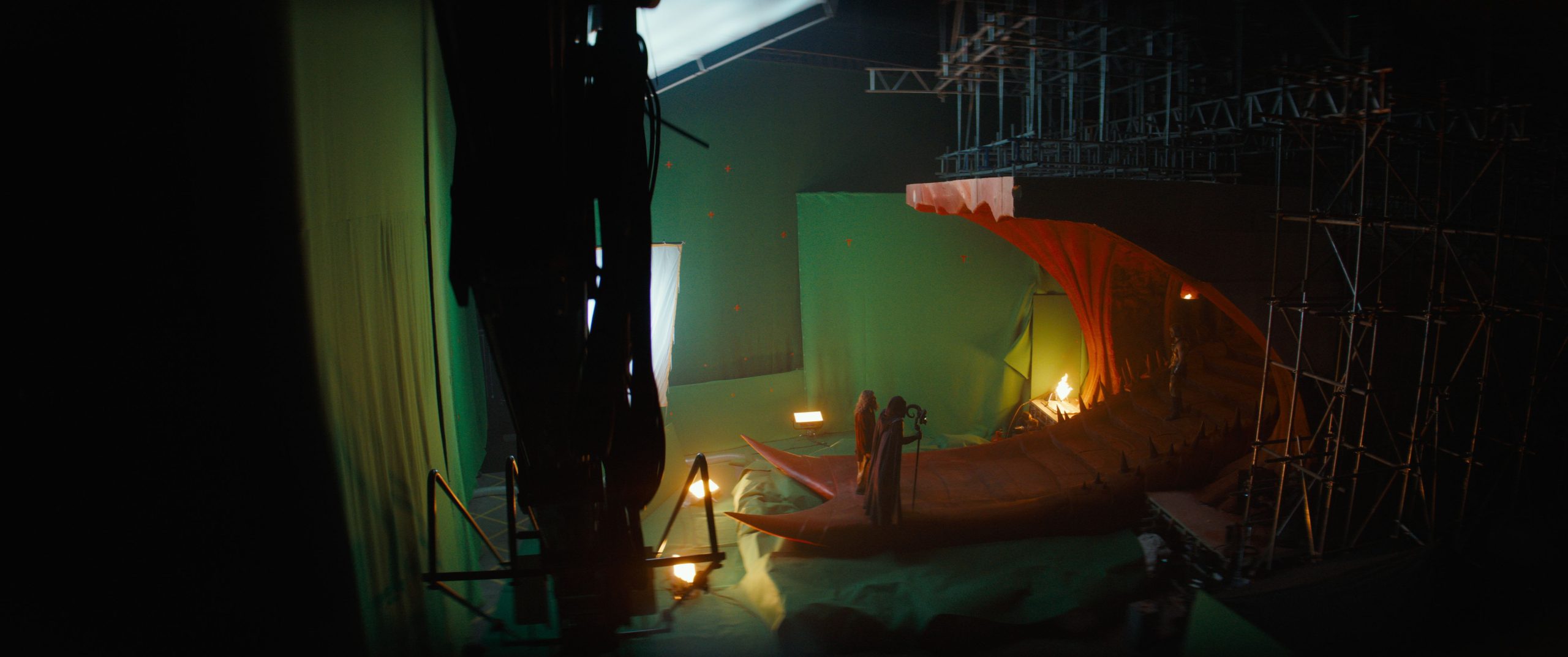
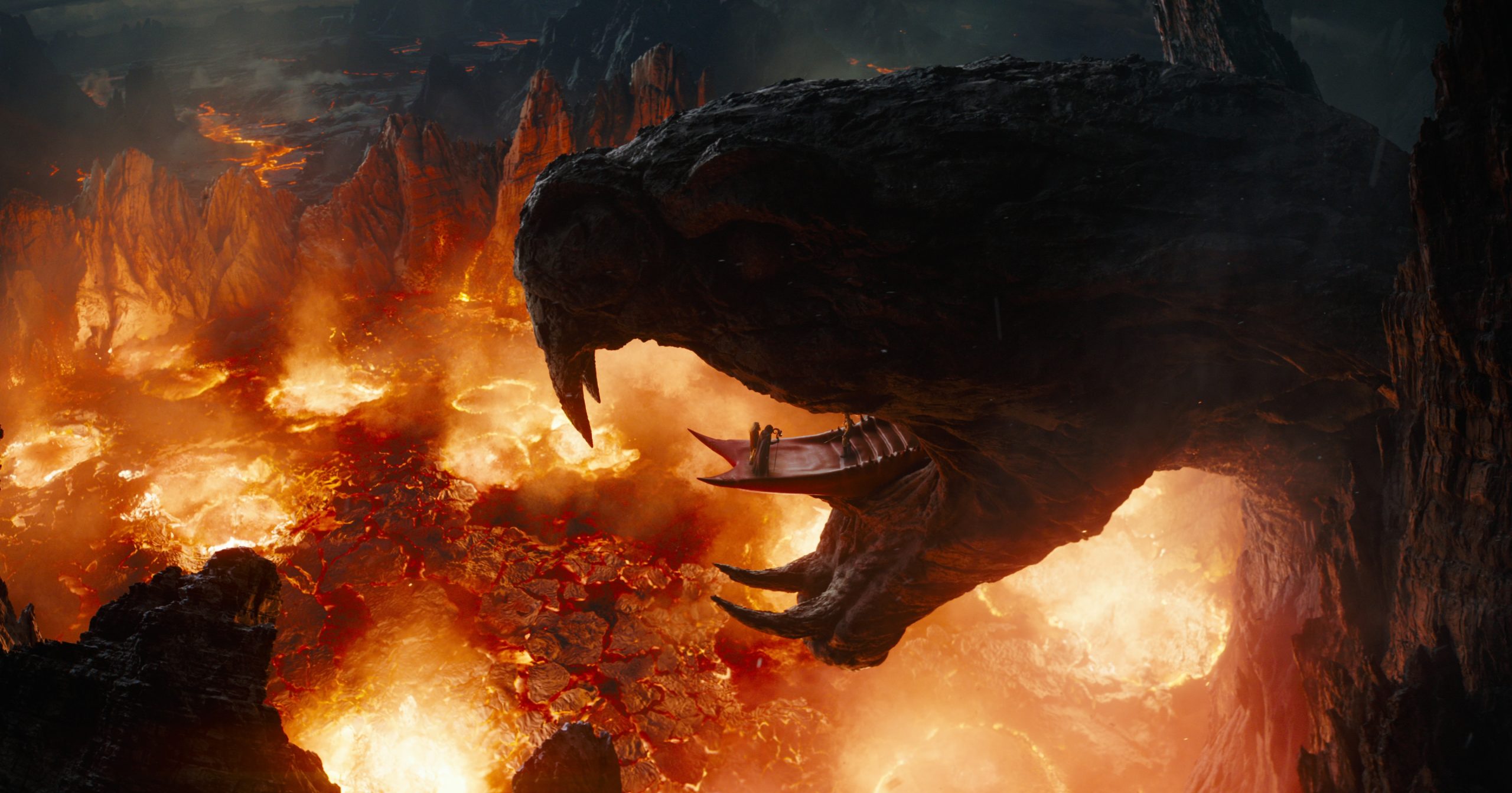
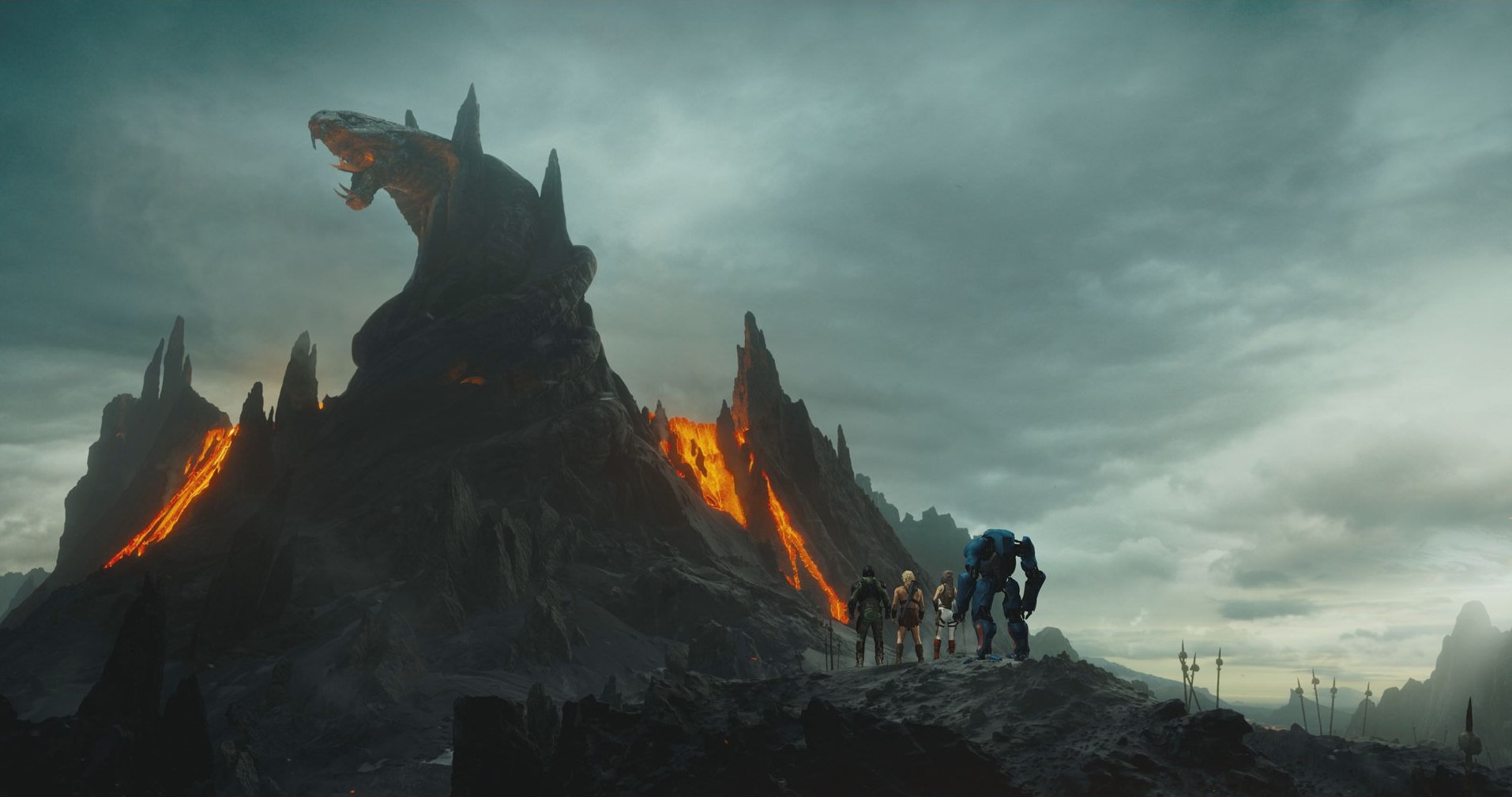
Serving the look and story mattered more than serving the map. Ponti admits Snake Mountain’s geography wouldn’t survive scrutiny. “The mountains just move around all the time. Every frame is good in its own right. Even if they don’t connect geographically, they work editorially, for the storytelling. But it doesn’t necessarily connect to the next frame, but it just works because it’s a cool shot first and a cool shot afterwards. You just want to feel that He-Man is in Snake Mountain.”
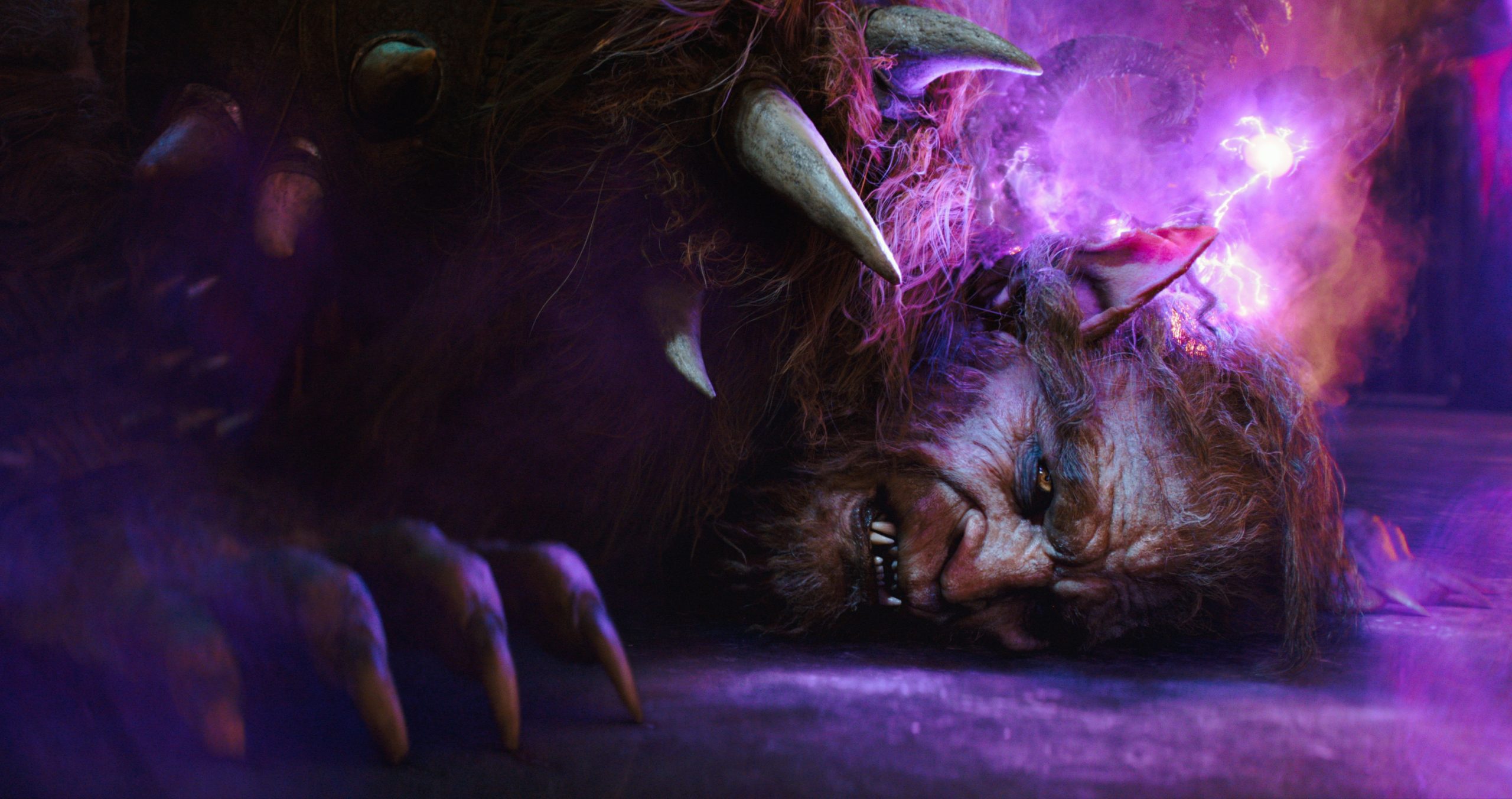
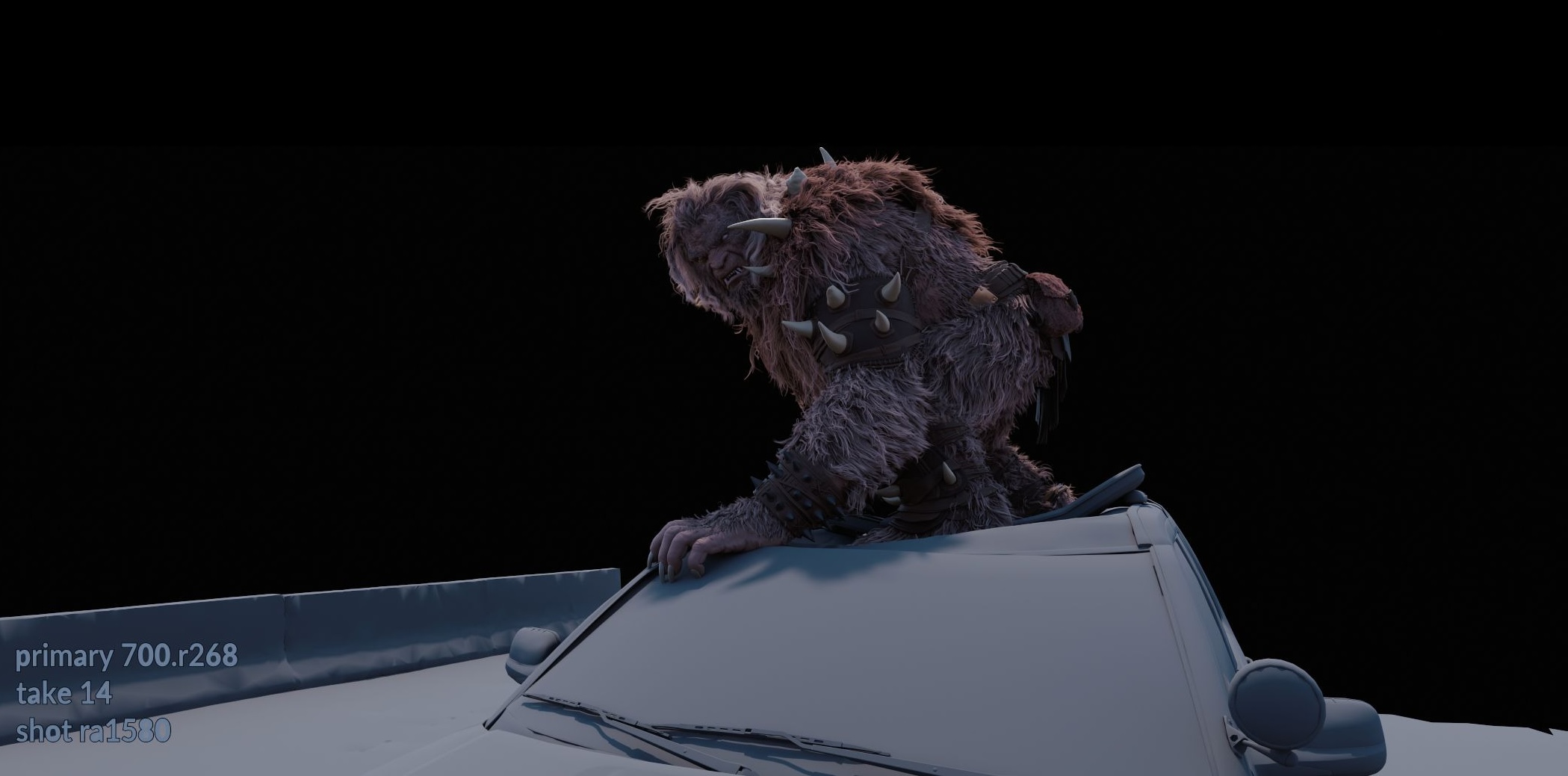
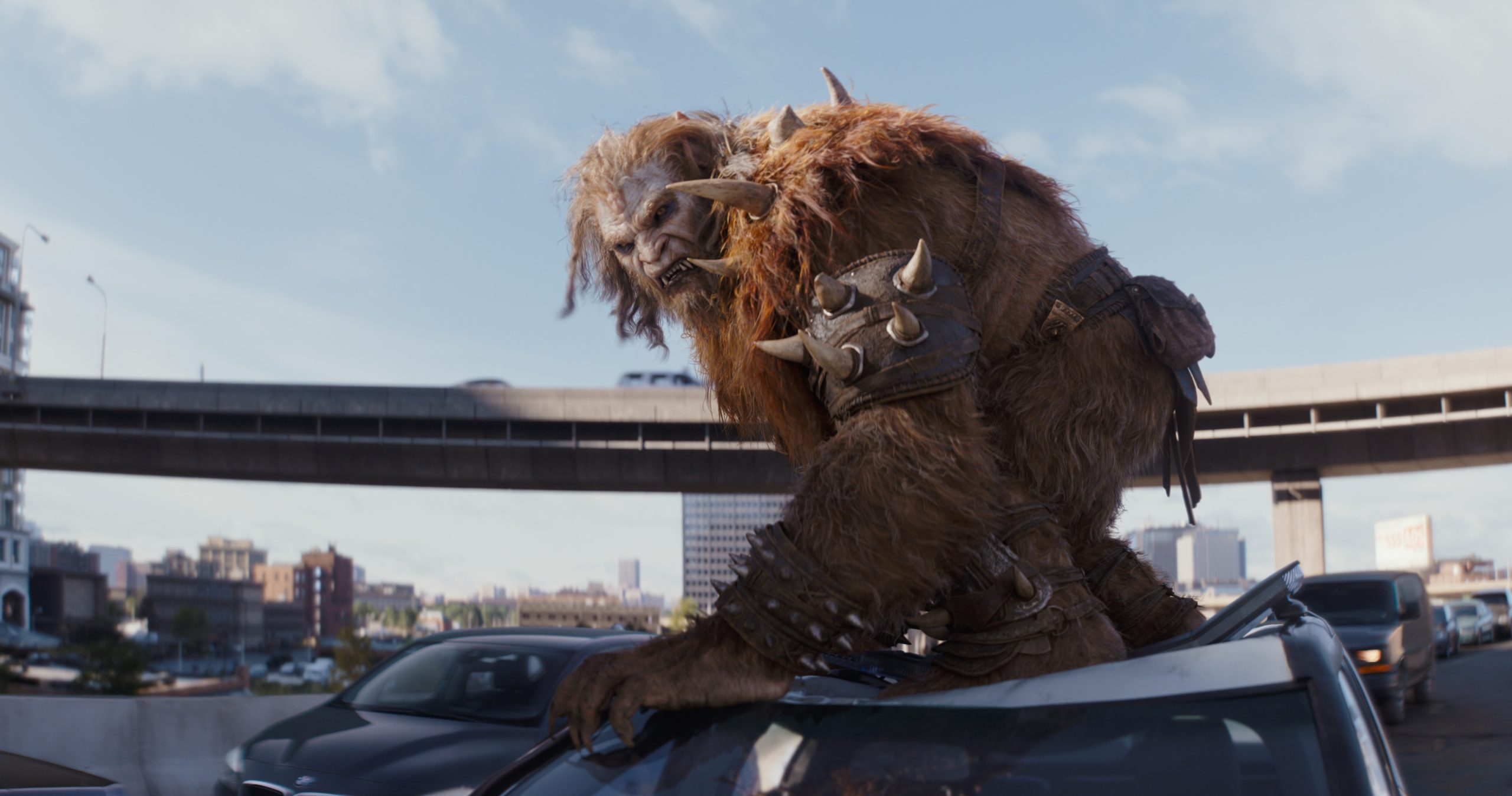
Beast Man was ILM’s first character work on the film, and the longest continuous run of animation, around 70 shots. Motion capture was tested, but didn’t survive.
“We captured some clips, and it looked fine; it looked realistic,” says Lum. “Our Beast Man, he had different proportions. He was meant to be simian; he was meant to be the beast, like a gorilla. And it just didn’t have that right character to it. So in the end we tried a few things, removed it all, and let the animators do what they do best.”
During the shoot, stunt doubles performed reference for the live-action plate, wearing gray suits with an eyeline pole. The animators then filmed themselves acting out the scenes. “A lot of the material that we used was the animators in their living rooms, pounding a mattress they’d placed on the ground. Just doing things the old-fashioned way,” Lum says, noting that the work really reads on screen. “Since they didn’t feel like they were just iterating on data that they’d ingested, they put a lot of themselves into it.”
ILM also took the character on earlier than the schedule required. “We had heavy interaction with the previs team for Beast Man,” says senior visual effects producer Sophie Dawes. “We actually took it over from the previs team and did it ourselves because we had the ability and the crew to do it at the time. That ended up saving us a lot of time in the bigger picture of things and also built the trust and the relationship with the client very early on, right at the beginning of the show. Although you might take a hit in your schedule or in your budget in areas, I think it was really valuable to do that. And actually it worked out in our favor in the end.”
Everything you see behind Beast Man is digital too. There is a re-construction of London’s Canary Wharf skirting the freeway, all fully built digitally with accurate photogrammetry, and based on multiple drone plates shot on location. The wider surrounds are built from geographical data of Oklahoma City. A made-up place, but one that you never question.

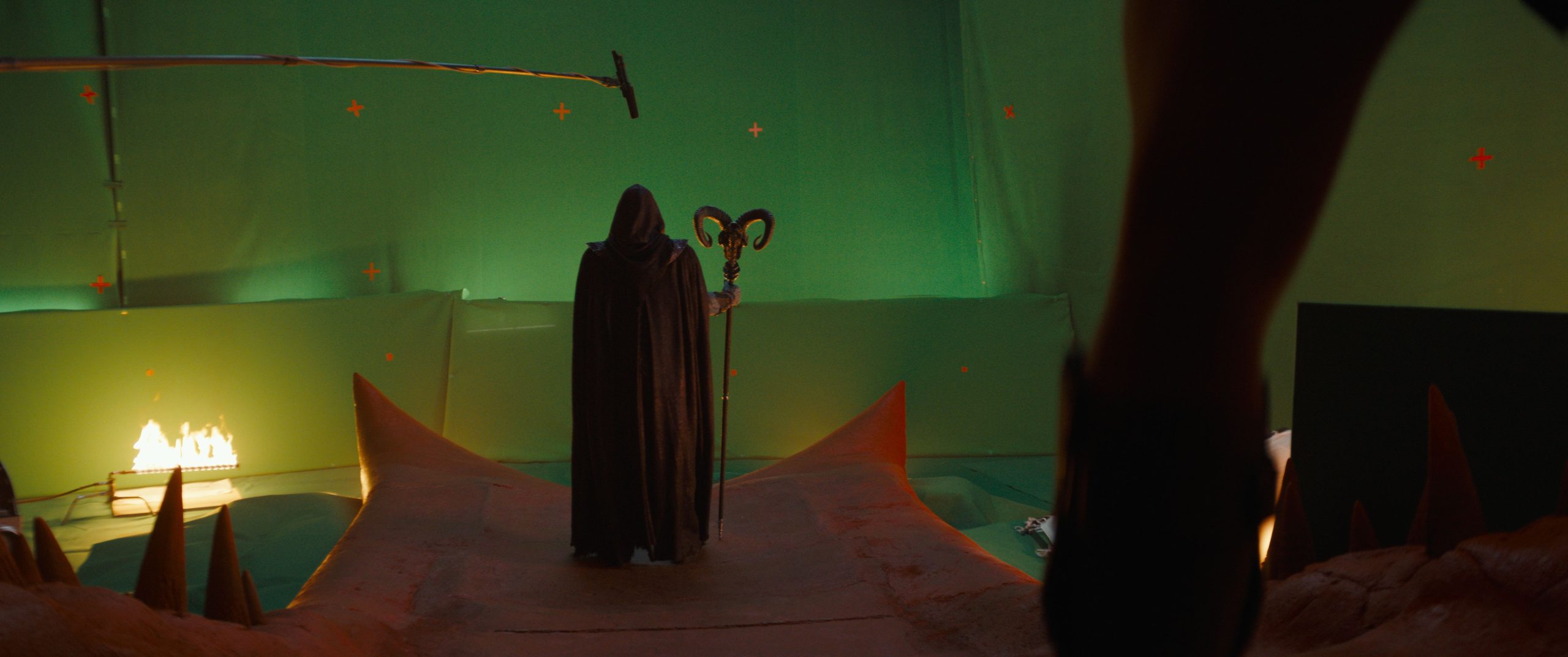
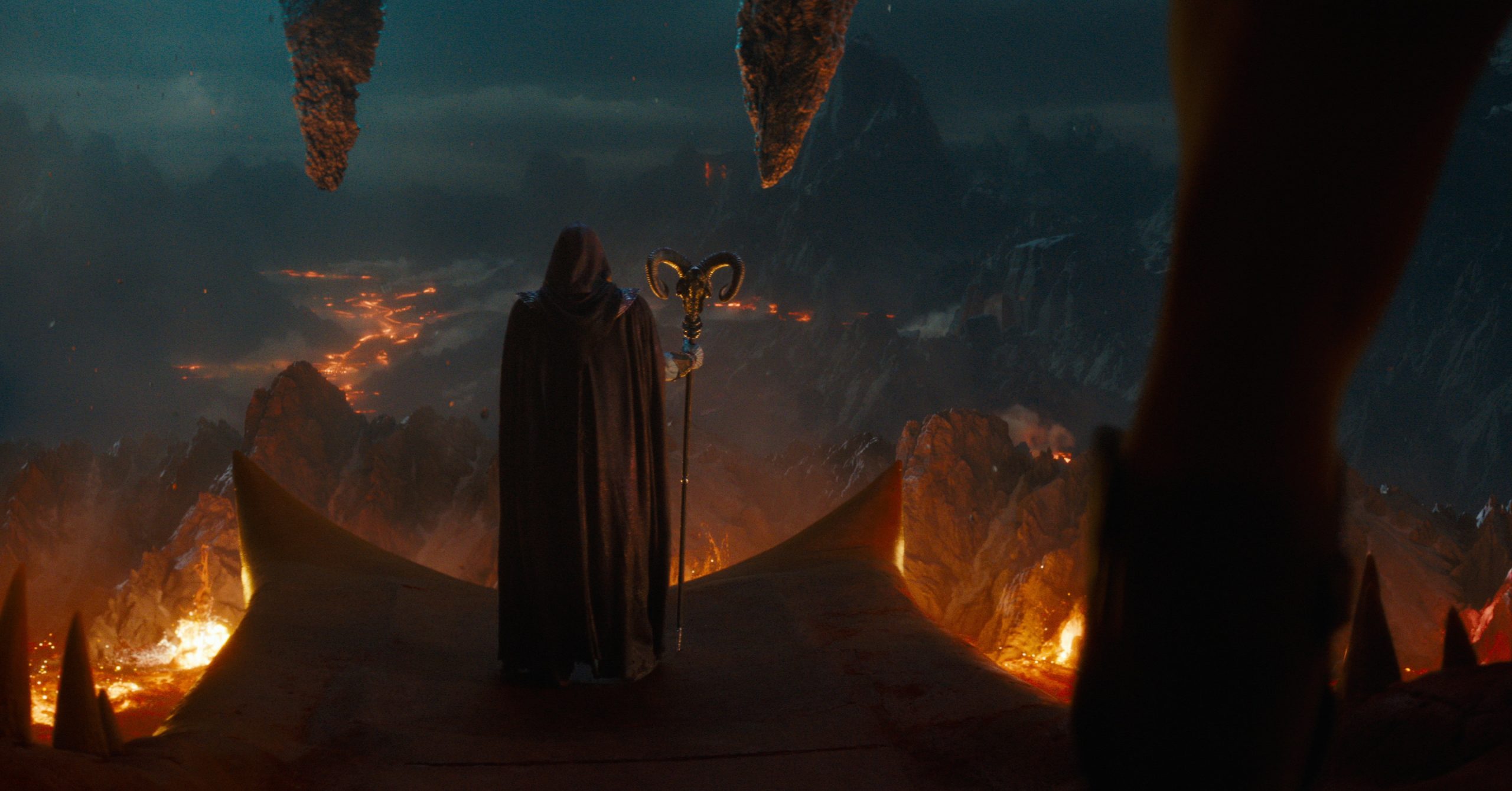
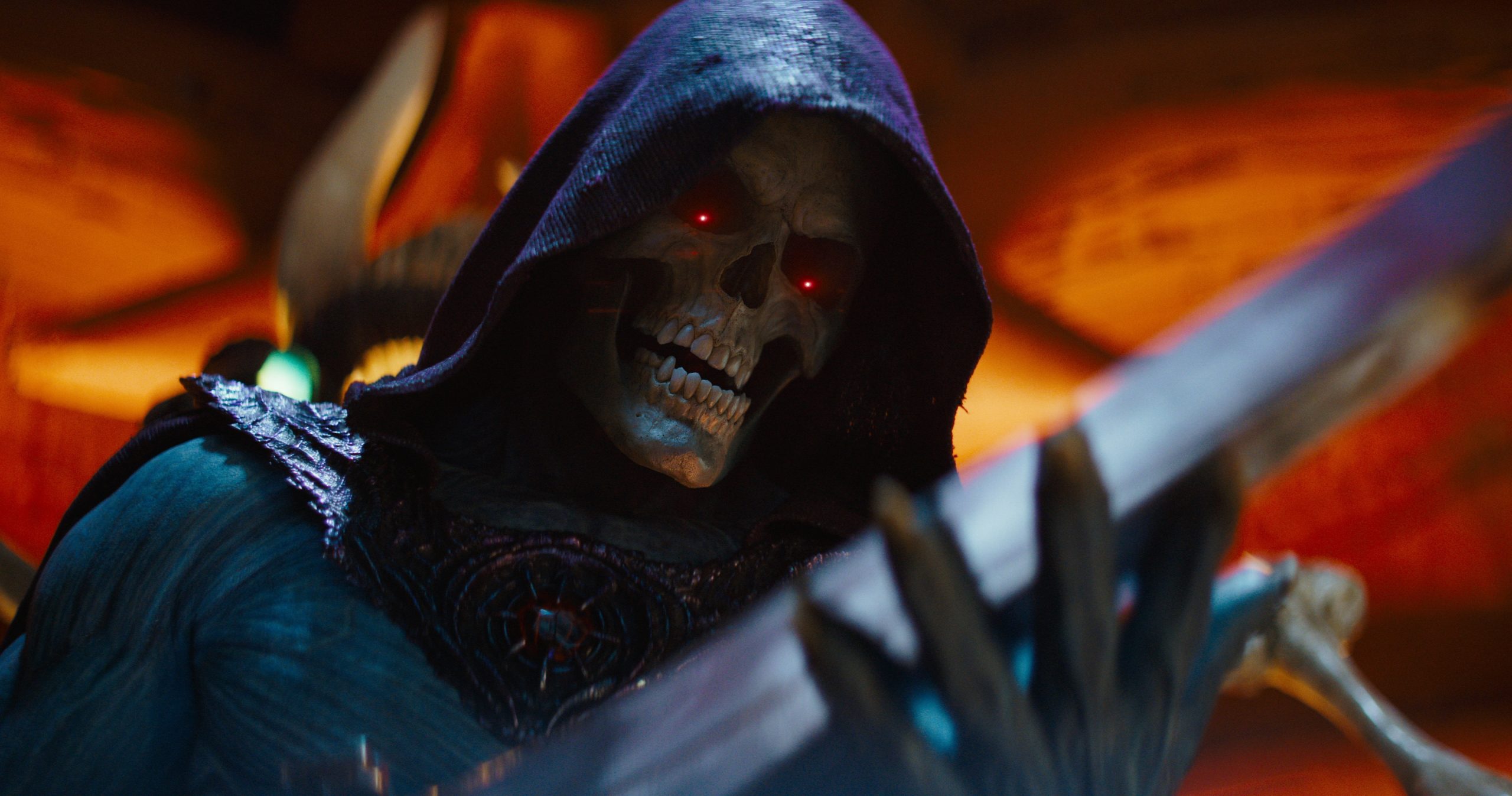
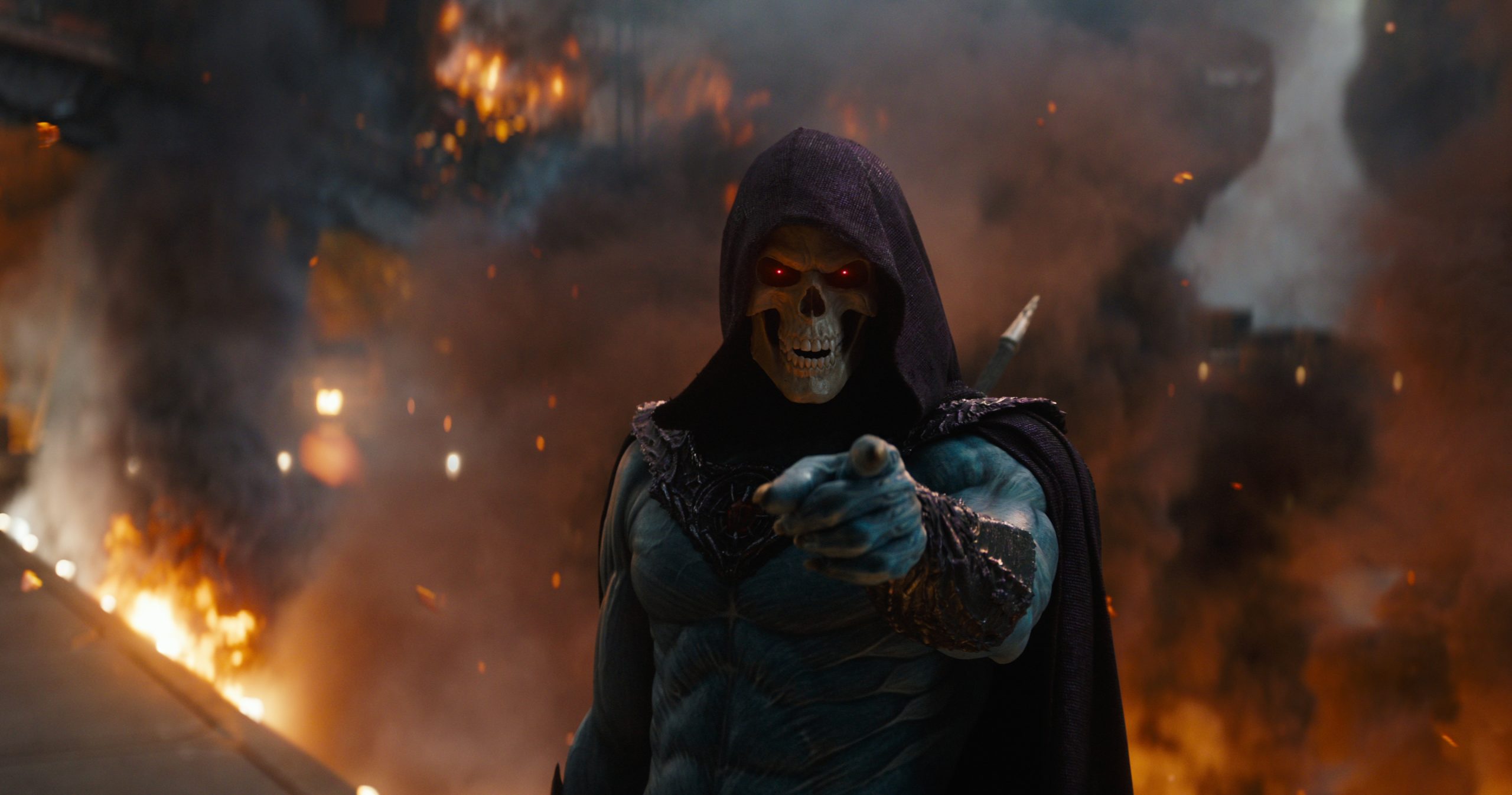
Skeletor is another great example of how this show was run. Very little of him is computer graphics, but it did have its own challenges. “It’s really just the head inside the hood that’s digital,” says Ponti. “Everything else is the costume.”
There are around 360 Skeletor shots, split pretty evenly between DNEG and ILM. DNEG took the lead on these shots and took on look development, initially matching a resin cast of the sculpted skull. Knight pushed the visual effects team to go farther. Ponti’s suggestion was to stop chasing the prop and build a real skull. The asset would need to deform in ways no skull can. DNEG packed up the model, textures, shading models, blend shapes, deformers, and rig, with turntables, so ILM could match it before altering anything. “You end up having to spend weeks initially just making sure that you can match what the other vendors have done,” says Vickery. “It’s a dangerous thing to do because if you’re not careful, you’re doubling the resources and time.”
During filming, Skeletor actor Jared Leto wore no facial marker or head-mounted camera. Plus, he was bearded, hooded, and mostly in shadow. “You’ve got a jaw that opens and closes,” says Vickery. “How can you animate a skull to convey all of that emotion and intent and performance without it feeling like a rubber skull?”
Lum’s team started off cautiously and kept pushing. “We’d be like, ‘Travis, tell us when you want us to stop here.’ It turned out his appetite for it was really good, so we pushed it further. Then, eventually, we did rein it back when things started looking a little bit too cartoony and malleable and too much like clay.”
That period of trial and error was not wasted time according to Lum. “There was a very fruitful period of time where we did a lot of experimentation just to find that right balance. The dialogue itself is somewhat abstract; you can’t just track exactly what Jared was doing with his jaw, and call it a day.” As the character has no lips, it was a matter of working out which movements and which shapes worked together to convey the dialogue. “There aren’t any lips to help shape the phonemes and words that are being said,”adds Lum. “So some interpretation is required. We needed to skip over sounds that would make the mouth chattery, and compensate with jaw thrust and roll flourishes to help bolster the speech.”
So many questions had to be asked as to how best to approach not just the movements, but also infusing character into Skeletor. “Do you fix Skeletor’s face in a certain emotional position and then cut to the next shot and he’s doing something different, like he’s really surprised?” asks Vickery. “That works in some instances. And in other instances, we had to wait for quick head motions to sort of crease the brow, and then you can hide it in head motion. Even that didn’t work for all the shots. So then we experimented with moving the brows on twos, so that it feels a little bit more stop-motion. Do you have it like it’s sort of stepped motion? That works sometimes. Do we actually deform the teeth line, the back jaw, and the shape of the mouth to try and get some of the o’s and r’s and e’s? You push it too far, and it looks crazy rubbery and broken; you don’t do it enough, and you don’t get the sync in the performance. So it’s a really fine line, and it was a shot by shot, literally. It worked in some shots and didn’t work in the next. We had to try something else, then that didn’t work in the next shot, so we had to try something else again. And you’re doing that with two different animation supervisors and dozens of animators.”
It ultimately worked because Knight spoke to Greg Fisher at DNEG and Michael Lum at ILM directly. Speaking the animator’s language was a great advantage.
So much experimentation has to be paid for somewhere. Visual effects producer Sophie Dawes built it into the shape of the schedule rather than the margins. “We try to break it down into phases of shots, to allow for time to review it with Travis, David, and everyone,” she says. “We just kind of build in stages across the period of the project all the way through to delivery, to make sure that we allow for that iteration and experimentation time.” Her word for it is simpler. “Buffering is the phrase I would use.”
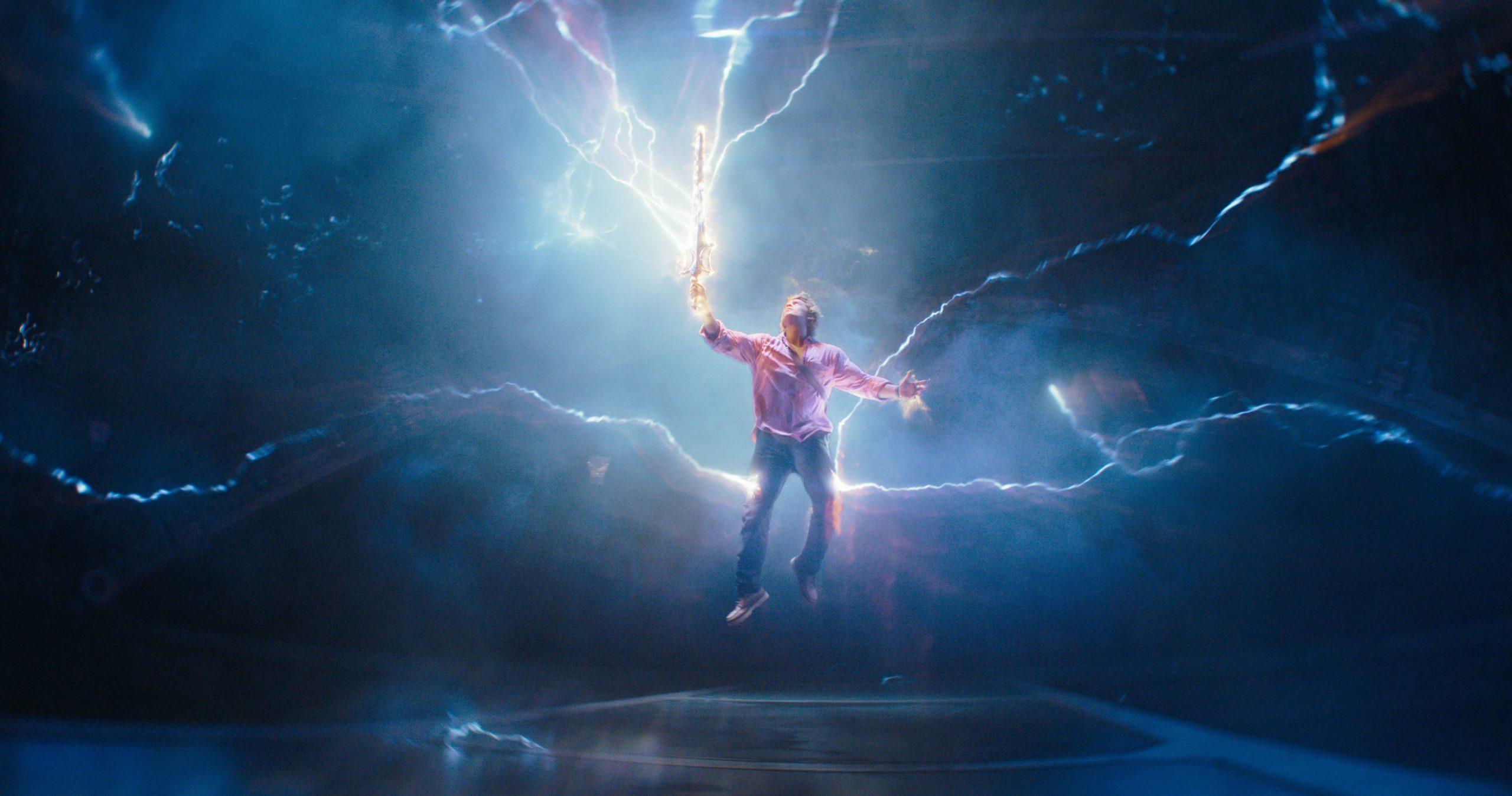
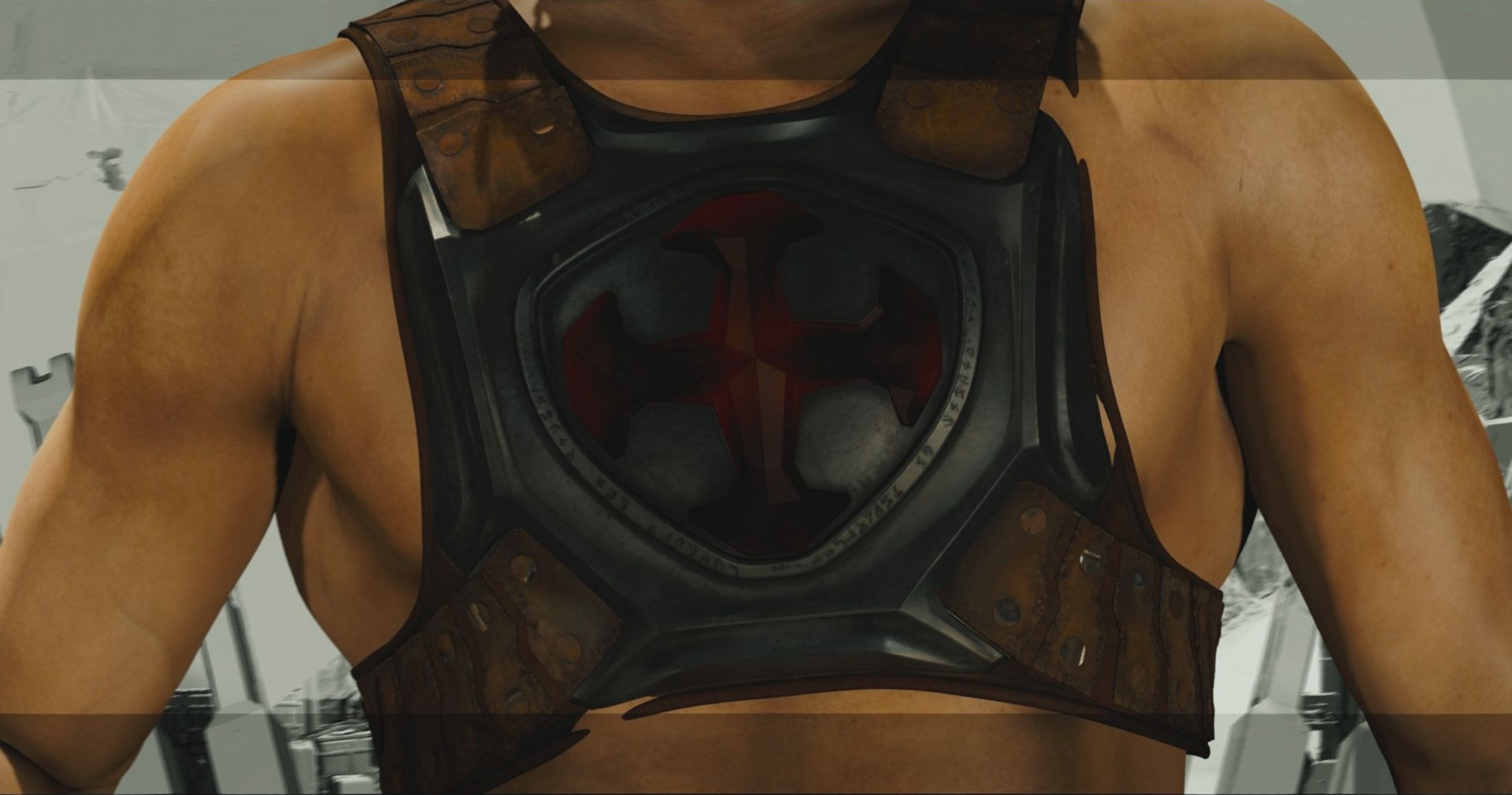
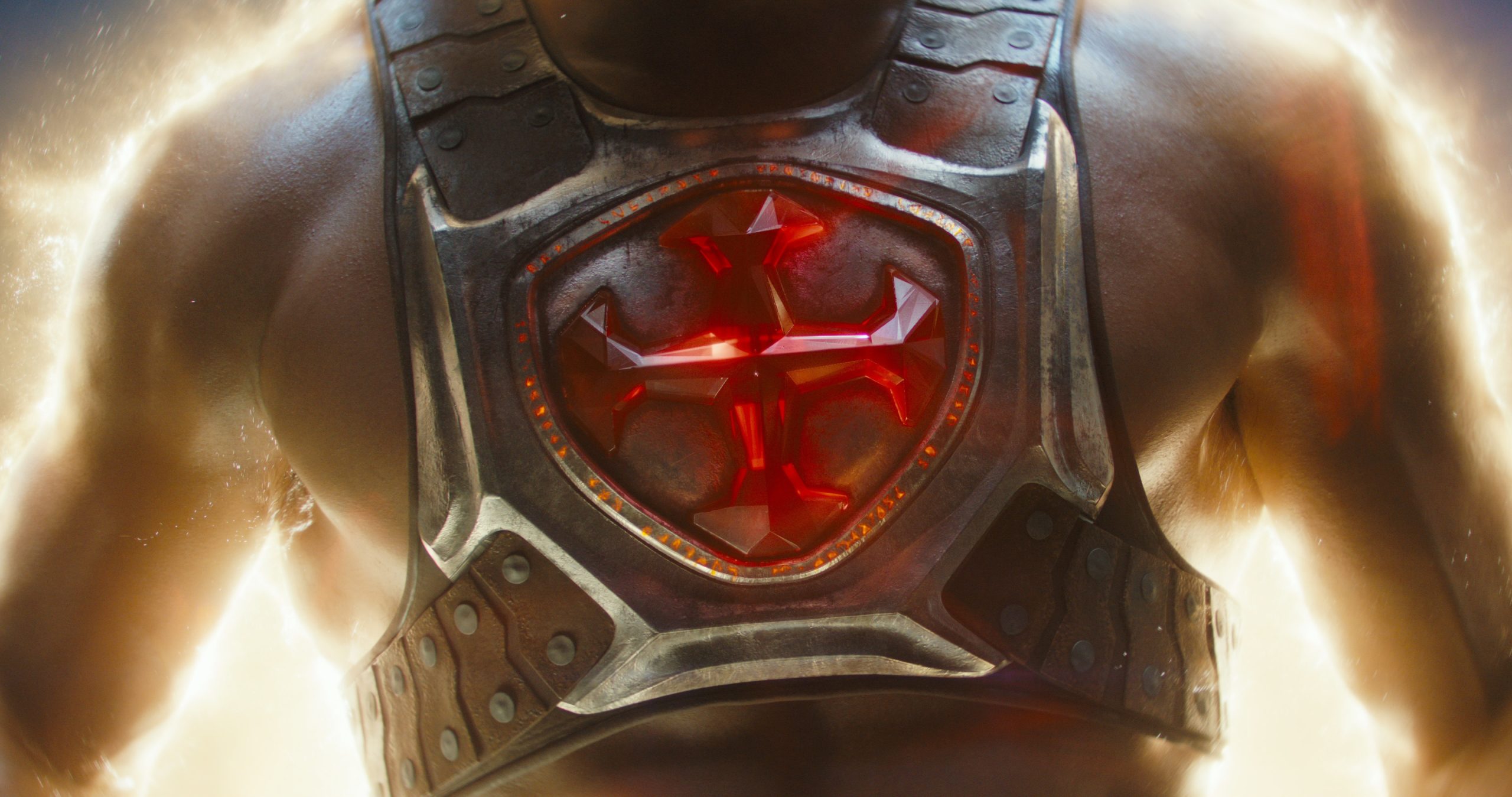
The transformation of Adam to He-Man lives in the memories of millions who grew up watching the 1980s TV cartoon. And it was a sequence that Knight defined early. He knew he didn’t want energy glowing inside Adam’s body. But he did want a nod to the Filmation opening. Castle Grayskull, seen briefly in the mist during the “I have the power!” moment, was ILM’s idea, proposed to Knight and approved almost immediately.
The main character is made entirely with computer graphics in the scene. “All the body transforming, all the super close-ups of his hands,” says Ponti. “All the transformation when he’s turning around is fully digital, the whole thing. To allow the lighting to work as well as it did, we went for fully digital.” Lum’s team animated it very closely to Nicholas Galitzine’s performance. “You wouldn’t really know unless you compared it with what was originally shot.”
Modeler Daniel Brkovic built an anatomically correct Adam, which included bone positions and accounted for how the muscles and tendons were attached, even fat depth, skin thickness, and veins. “We’re running creature simulations on top of all that to get the feeling of that muscle and bone all connected and sliding over the top of each other,” says Vickery. “And then you get into the groom of it because there are tiny little hairs all over that stand up.” The change had to be restrained, taking 80% of Galitzine’s mass to 130%. Enough for the audience to read, but not so much as to make He-Man impossible to photograph for the rest of the film.
The level of detail didn’t end there. The flares came from ILM compositor Miguel Santana da Silva, who shot them on his own lenses. “I think he’s one of the best compositors in the world,” says Vickery. Knight saw the sequence with those aberrations and told them they were done. So in the spirit of collaboration, the elements were handed out to the other vendors. “They had to replicate similar effects. Here’s the kit of stuff. Use it. Don’t try to do it all again.”
“I could bury myself repeating notes over and over and over to five different vendors, or I could bring everyone together,” explains Vickery. On shows of this complexity, that instinct became his organizing principle. Vickery has worked on films where vendors never see each other’s work. On Masters of the Universe, multiple vendors joined Knight for reviews, so each supervisor was able to see how the director responded to everyone else’s work. “You could really hear everyone’s feedback,” says Ponti. “And that was a desire of Travis, to have us all working together, making sure everyone is aware of what the vision is.”
Vendors owned environments outright and traded assets across them. “You did everything in that environment,” says Ponti, “and we would only share characters and vehicles, which is much simpler than sharing environments or sharing shots.”
ILM owned everything from Beast Man’s arrival through the rift, all of Subternia, all of the Snake Mountain exteriors, as well as the last three shots in the end credits reveal. DNEG took the bookend battles. They built Roboto and dropped it into ILM shots. Beast Man traveled in the opposite direction for the final fight. ILM’s London and Mumbai studios ran as one crew, with Ponti and Dawes spending a week in Mumbai. “That whole collaboration across the globe just worked,” says Dawes. “It just clicked.”
Asked what they would take forward from this project to the next, the three land in the same place, all from different directions. Dawes cites teamwork. Ponti says re-engaging with the filmmaking process and feeling involved. “You feel like you’re making a movie instead of just doing some renders.” Lum’s answer is caution about tools. “There’s a temptation for shiny new tools, things that you think will make things faster, look more realistic, which can sometimes take that human element out and lose that ownership from the artist. It might end up with a bit more sweat and tears and might be a little harder, but I think the outcome and the result is more authentic, and you just get a better, happier team. So that is something I want to carry forward, instead of going to the hot new thing, almost going back to the roots a bit more. Travis cared most about the story. So every choice you make should be in service of the story.”
For Vickery, the thing worth remembering is where the ideas came from. “Good ideas can come from anywhere in the room. And I truly believe that. It doesn’t matter whether it’s your job, who you are. It’s everyone’s place to have creative input.”
–
Jamie Benning is a filmmaker and author, and the creator of The Filmumentaries Podcast, where he interviews the industry’s behind-the-scenes talent. Find his work at Filmumentaries.com, or follow him at @jamieswb on X and @filmumentaries elsewhere.
Read more about Masters of the Universe here on ILM.com:
Inside the ILM Art Department: ‘Masters of the Universe’