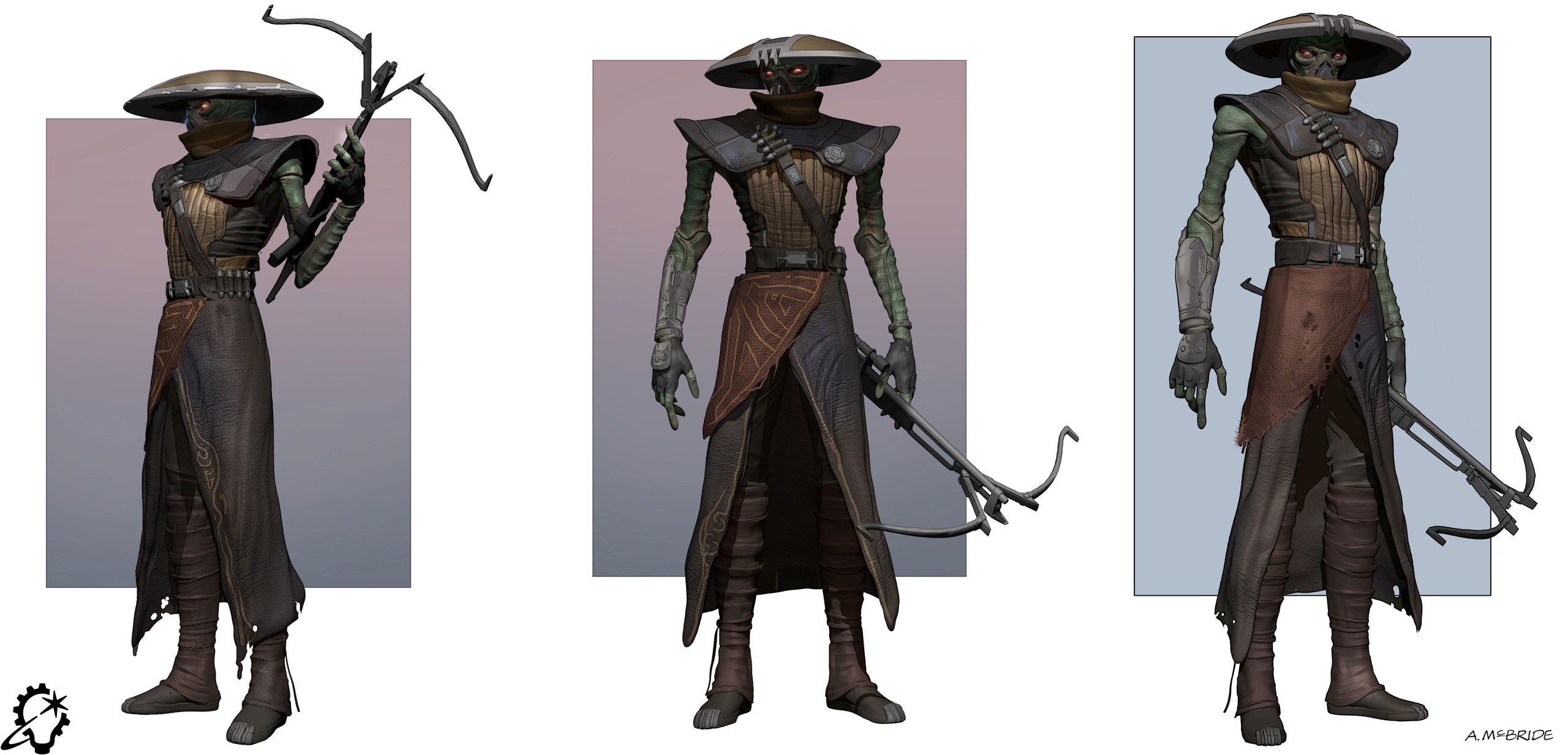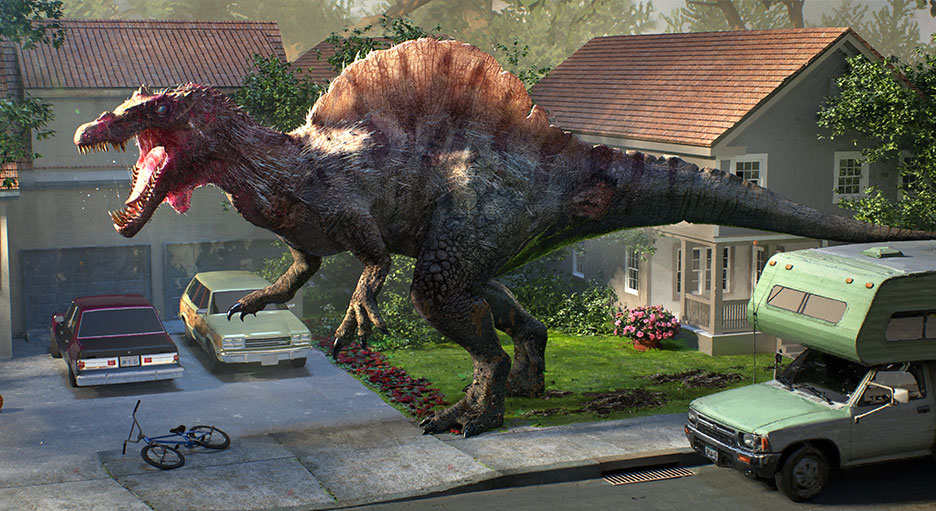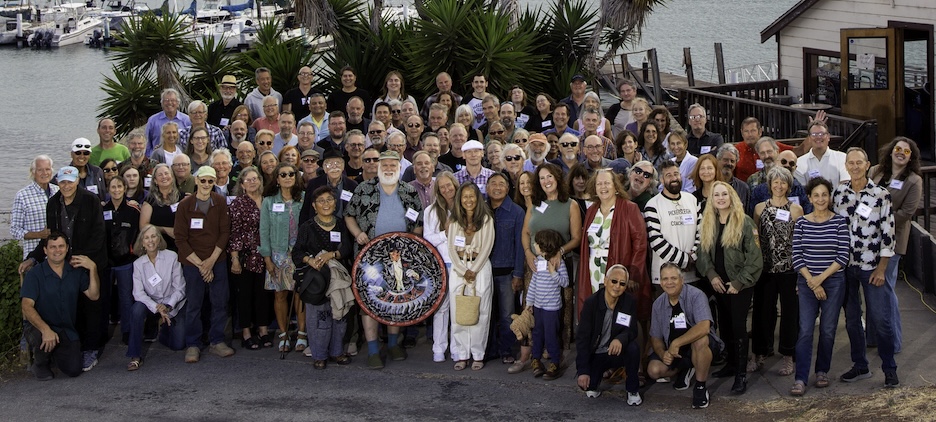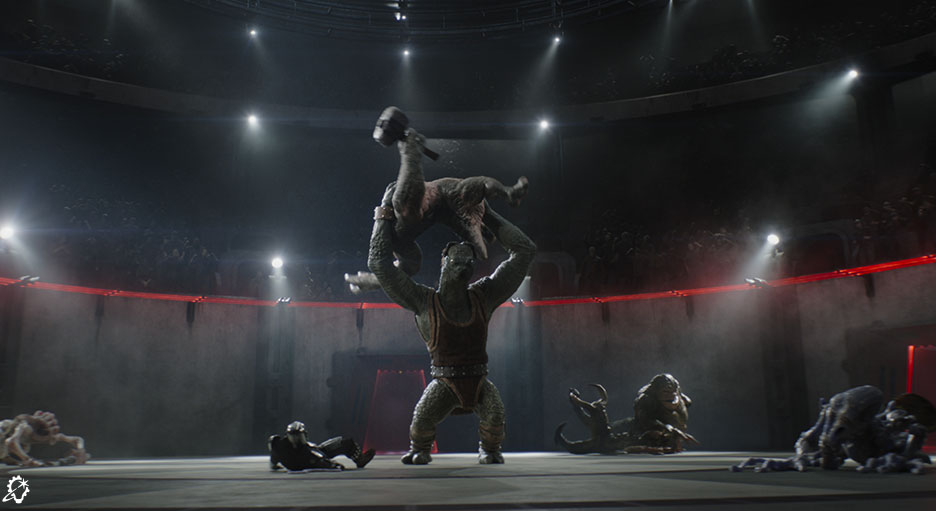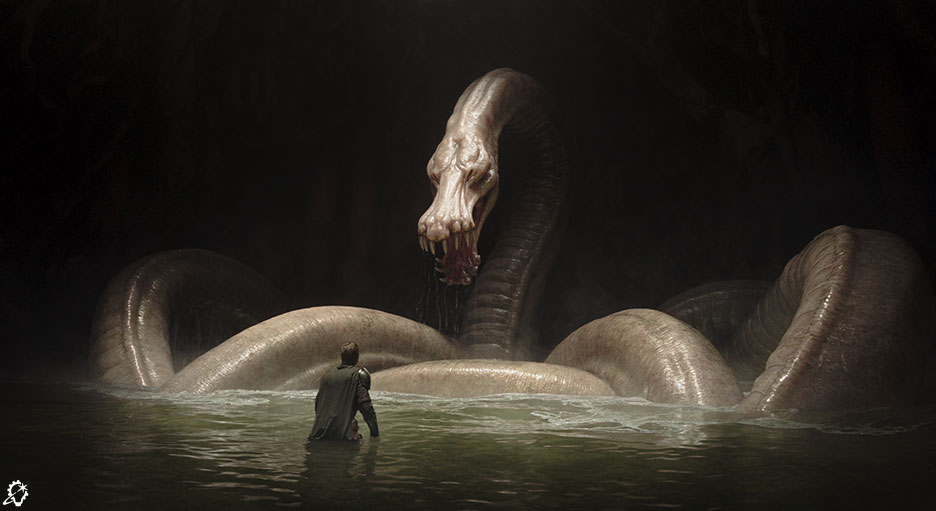
In just a few years with the company, the animator has worked across diverse productions from augmented reality and real-time to live action feature films.

Although she didn’t know it at the time, Libby Peterson’s journey to becoming an animator at Industrial Light & Magic began in a philosophy classroom while she was in college. “With philosophy, a big part is understanding someone’s point of view, their argument, and their underlying value system,” she tells ILM.com. “As an animator, that’s helpful for understanding characters. I need to know what motivates them, who they are, and how they think, so that I know how to move them appropriately.”
Earning a philosophy degree from a liberal arts college, at first Peterson “wasn’t sure what I wanted to do with it,” as she explains. Taking a work-study job while at university led to her discovery of the Disney College Program, where students or recent graduates serve in cast member roles at the Walt Disney World Resort in Florida. Peterson became an attraction operator on the Seven Dwarfs Mine Train at Magic Kingdom Park. Inspiration quickly struck.
“At Disney World I was exposed to storytelling and the richness of these animated characters and how they have an impact on people. I had taken drawing classes but didn’t have the skills to be a professional artist in that discipline. But I started reaching out to Disney animators and they gave me really good advice about schools, books, and websites that I should look into. So I decided to pursue animation.”
While still working in Florida, Peterson enrolled at the AnimSchool, a fully online program where many industry veterans serve as teachers. “I was inspired by a lot of their work,” she recalls. “Whenever I signed up for a new class, I would watch the teacher’s demo reel and see what movies they’d worked on. I’d frame through it all and really study their work, so that when I had them, I could ask them questions about their approach. My teachers had worked at places like Sony, DreamWorks, Pixar, and Disney, so I absorbed a lot from those different studios.”
Peterson joined Pixar Animation Studios as an animation intern in the summer of 2022. Her experience there only deepened her understanding of the animator’s craft, as she explains. “I didn’t appreciate how much an animator really has to author the performance and take ownership of it. It was something I struggled with at first, how to have a character make choices that are specific to their motivations, and not just a cliche.
“It really clicked when I was at Pixar when they had us do animation tests with characters from Toy Story,” Peterson continues. “The principal behind those characters is that they move in accordance with their physical material. Woody is fabric, so he can be more floppy, but Bo Peep is porcelain, so she’s more stiff and gentle. We also animated some Turning Red characters, and that was also helpful because I had one situation with the character Miriam, who is a tomboy, energetic, and a little sloppy. I animated a moment when she gently closes her locker at school. But that was me coming through, my own personality. Miriam wouldn’t care about the locker. She’d just slam it and move on. I learned how I need to separate myself from the characters I’m animating and embody them.”
Peterson was hired as a junior animator at ILM’s San Francisco studio in the fall of 2022, shortly after concluding her Pixar internship. She had not considered visual effects as a career path while studying animation, but her discovery of ILM proved a windfall.
“I was actually hired here because my reel had a super-cartoony shot of a lizard eating pizza,” Peterson reflects with a laugh. “There’s a lesson there. Studios are looking for your artistic voice and what you can bring to the table. Don’t be afraid to apply if you don’t fit the perceived house style or something like that. Put your voice out there, show what creative solutions you have, and show what you can say with your art, because that might be something they’re looking for. I happened to stumble into visual effects and I really like it. You never know how your career is going to turn out.”
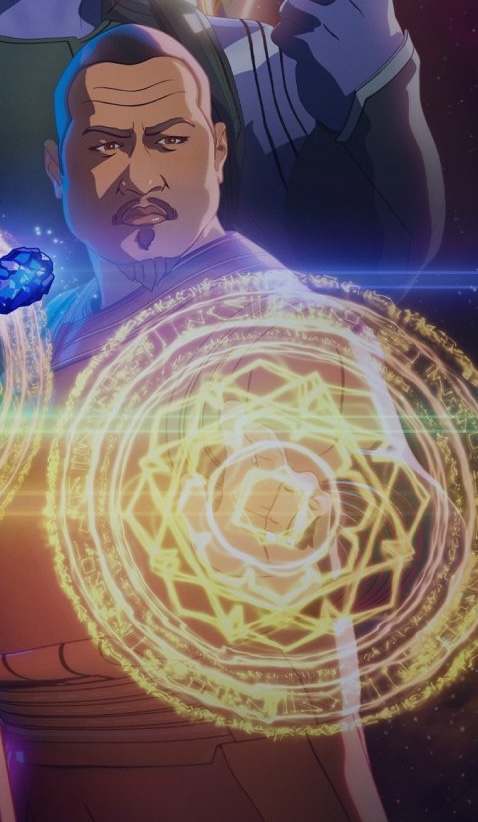
Among Peterson’s first ILM assignments was the interactive experience from Marvel, What If…? – An Immersive Story (2024), for which she animated characters like the sorcerer Wong and Taneleer Tivan, known as the Collector. It was also Peterson’s first opportunity to work with motion-capture performance data and reference in her animation.
“It was really cool to see our performers on the stage and then receive the animation data and learn how to work with that,” she explains. “All of my experience beforehand was in keyframe animation. It was interesting to watch the choices that the actors and actresses made. As an animator, I might have made a different choice, but I also liked their choices, so how could I use that? It’s a very collaborative process to make the characters come alive.”
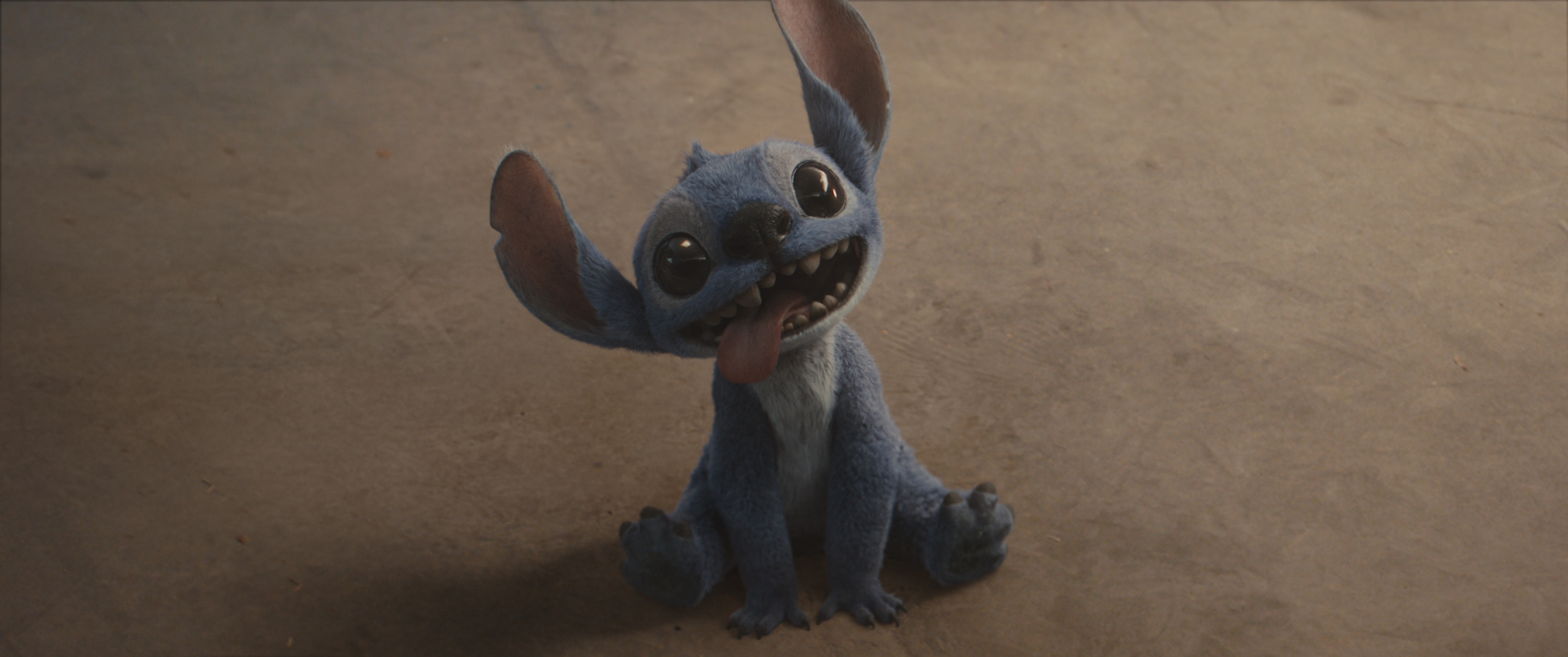
Disney’s Lilo & Stitch (2025) was Peterson’s first feature film assignment at ILM, as well as her first opportunity to collaborate with artists across ILM’s global network of studios. “The animation team included artists from Sydney, Vancouver, and here in San Francisco,” she notes. “No matter the team’s size, everyone wants to make the show the best it can be, so everyone is willing to help one another to get there.”
Working directly on the inimitable alien Stitch proved a significant opportunity for Peterson to grow in her craft as well as her technical skills. “Learning Stitch’s posing language and how he moves like an alien creature was really instructive,” she recalls. “He has the ‘diaper walk,’ as we called it, because he has a lower center of gravity, so he waddles with his bent knees, kind of like a toddler. It’s about understanding the specific ways that make characters feel unique. The principles of animation are easy to memorize, but actually using them to make a character real is another thing. So working with iconic characters like Stitch helped me get into that more.”
Lilo & Stitch was an unusual project in that Peterson could study the original hand-drawn animation from the 2002 film for inspiration, in addition to the animator’s typical approach of recording themselves performing specific moments and expressions. “Often acting it out yourself is the best way to test ideas very quickly,” she notes. Animation supervisor Matt Shumway also helped to mentor Peterson. “He’s very understanding of what it feels like when you’re struggling and he’s great at giving you ideas that could help prompt you when you feel stuck. He’s also really good at challenging you and pushing you to be better. Lilo & Stitch was a big growth moment for me. Matt’s feedback really helped me move from the junior animator role to animator.”
Peterson’s experience with Stitch would not be limited to the traditional feature, as she subsequently worked on the “Real-Time Stitch” interactive character that debuted at D23 in 2024. “That was very interesting animation to provide the face shapes and other details for,” she notes, “while the systems under the hood actually animate the movements.”
“I would say that for every show I work on at ILM, I have to learn new tools. It helps keep me sharp,” Peterson says. In her case, those toolsets have spread across a diverse string of projects, from interactive experiences to live action features to real-time visual effects in one of Peterson’s latest projects, the recent stylized Star Wars promotional material available on the Star Wars Kids YouTube channel. These distinct pieces of shortform animation are crafted entirely in Unreal Engine using a bespoke pipeline built within ILM under the direction of real-time principal creative Landis Fields.
“Because we were innovating with this new pipeline, there were so many different things to solve,” Peterson explains. “We were a small team. Christy Page did lighting, Joey Wittmann was our CG supervisor, and Isai Calderon and I were animators. All of us were throwing out ideas for tools, settings, and workflows. The collaboration at ILM really helps us to achieve the best that we can because we’re all willing to help each other. We put our egos to the side to have fun and create the best things that we can.”
Working on a relatively short schedule across dozens of pieces, Peterson herself animated some 30 cumulative minutes of performances. “Working on feature films, an animator might work on different projects for 10 years and have about 25 minutes of work to show in all because you have to put in more time on those assignments,” she adds. “But for something like this, I animated 30 minutes in less than a year.
“When you’re animating in real-time, it allows for faster collaboration with the environment artists, because you’re working in the set as they’re making it,” Peterson continues. “It’s also very helpful with communicating ideas more easily because we have access to tools like lights and particle effects. We can see the entire sequence because when we’re animating you have the master sequence and every shot within it. It’s easy to understand context and know what the entire short film is doing because it’s all right there. In a traditional tool, each shot is in its own place, so you have to open each one separately.”
It’s the very diversity of ILM projects that’s helped motivate Peterson to discover these new creative challenges. “It’s made me very curious as an artist and it makes me want to push myself and continue learning, rather than just do one thing. Working on What If…? made me interested in learning Unreal Engine, so I tried some things on my own, and that ended up giving me the skillset to join the team on the Star Wars promotional project. It’s been really cool to keep working in animation but develop a pretty diverse skillset within that. I can do game cinematics, gameplay animation, real-time animation, animated feature films, and visual effects. It’s helpful to wear those different hats. Sometimes on the Star Wars project, for example, I could put on my gameplay animator hat, which helped me create a bunch of cycles to quickly populate crowds and stuff like that.”
Peterson is keen to add that “Everyone at ILM is really collaborative and supportive of one another. They’re willing to help you when you get stuck with a technical or artistic challenge. And I’ve noticed that it’s like that no matter the type of show I’m working on.”
—
Lucas O. Seastrom is the editor of ILM.com and Skysound.com, as well as a contributing writer and historian for Lucasfilm.

Lucas O. Seastrom is the editor of ILM.com and Skysound.com, as well as a contributing writer and historian for Lucasfilm.