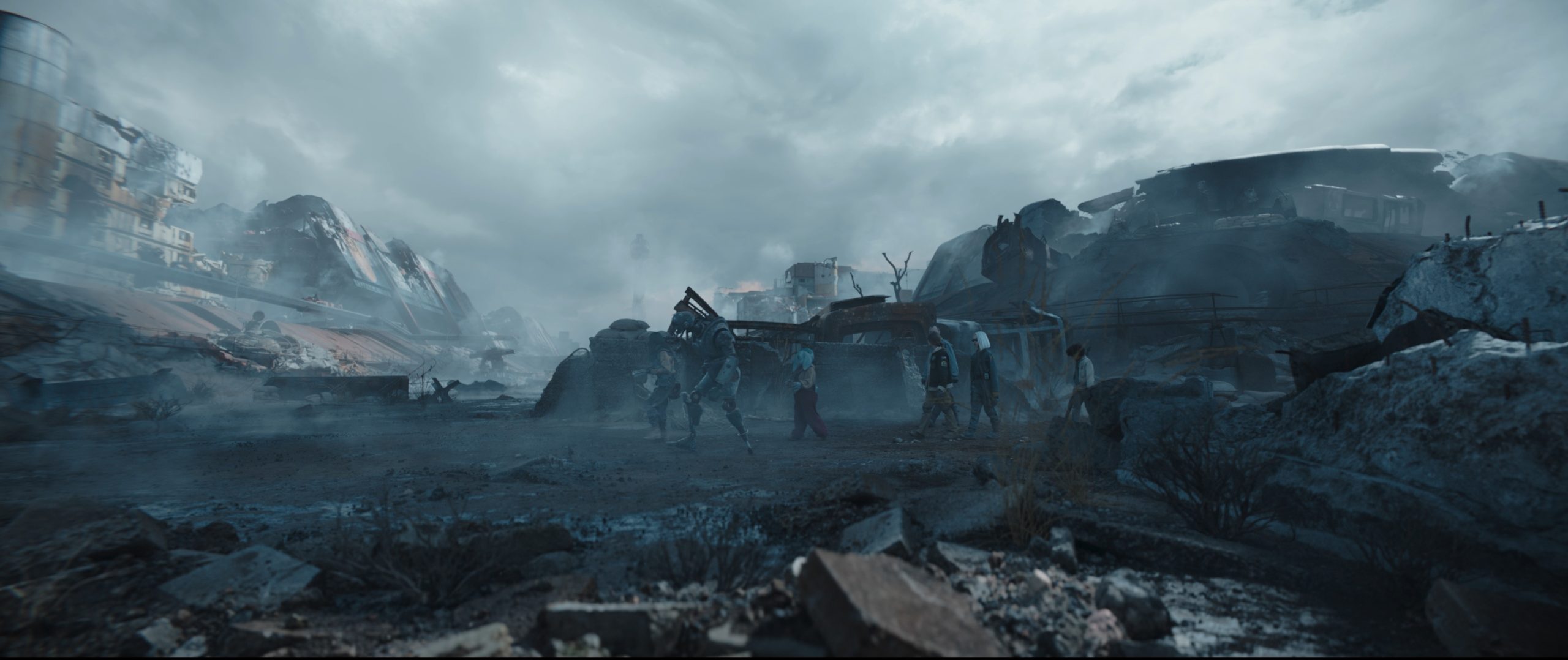
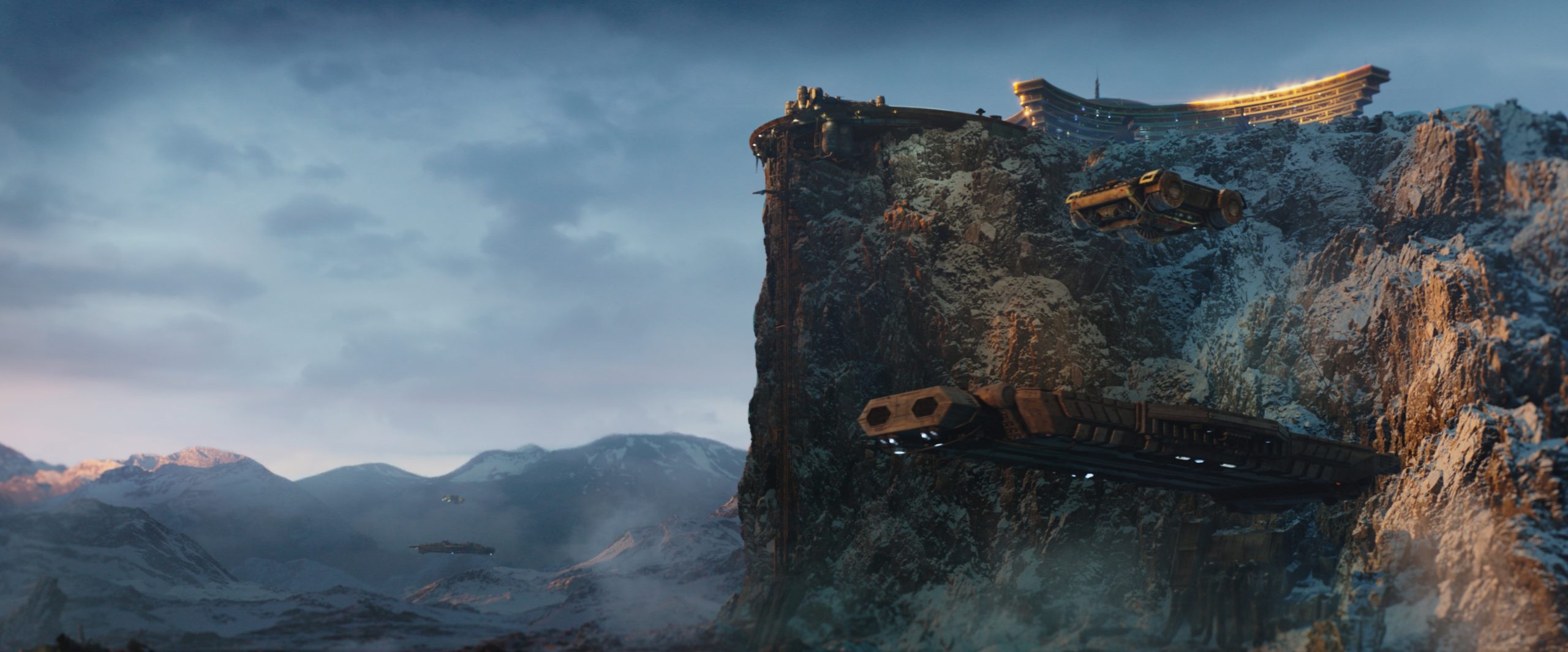
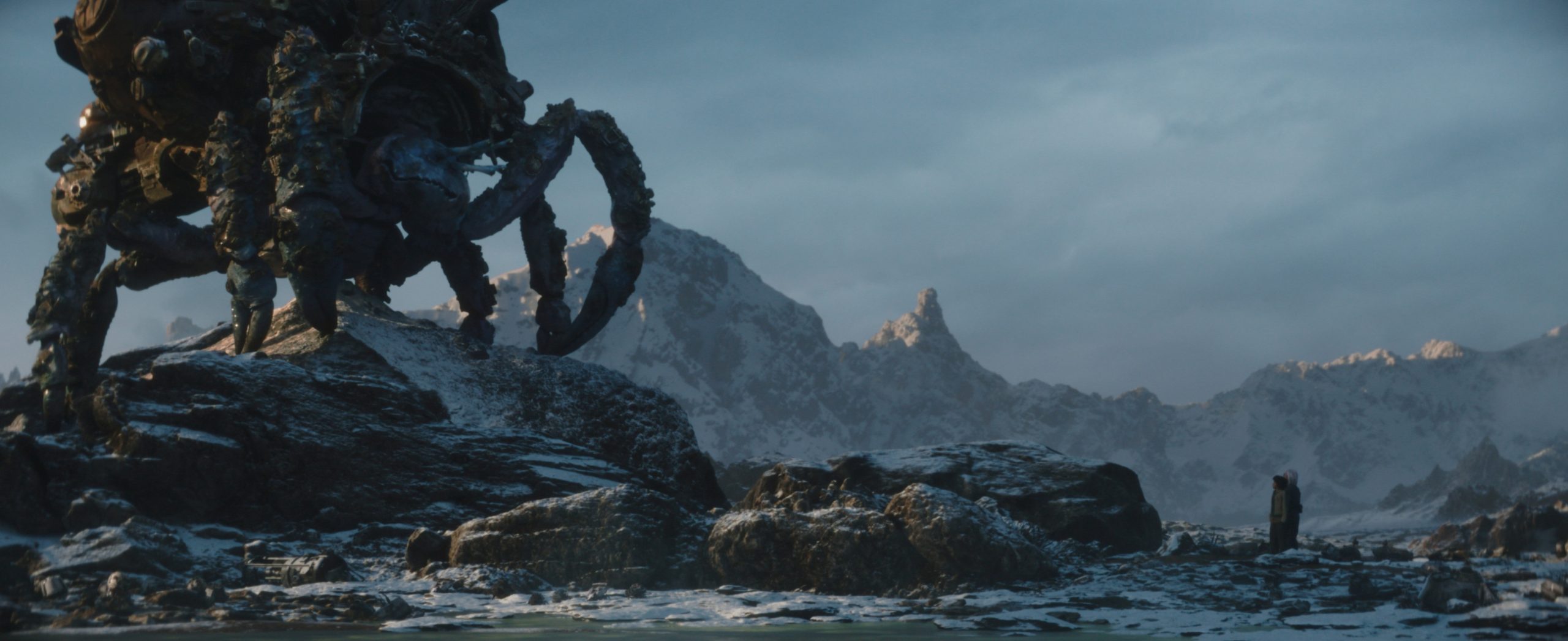
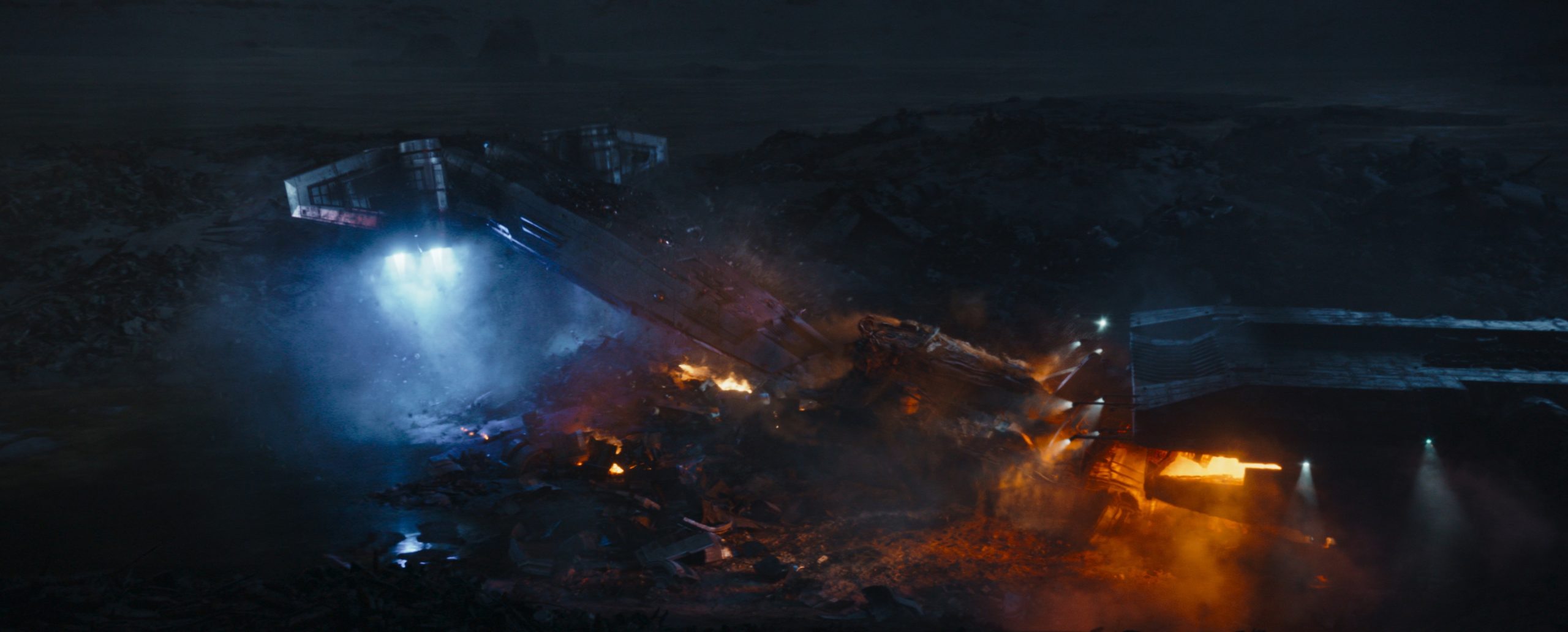
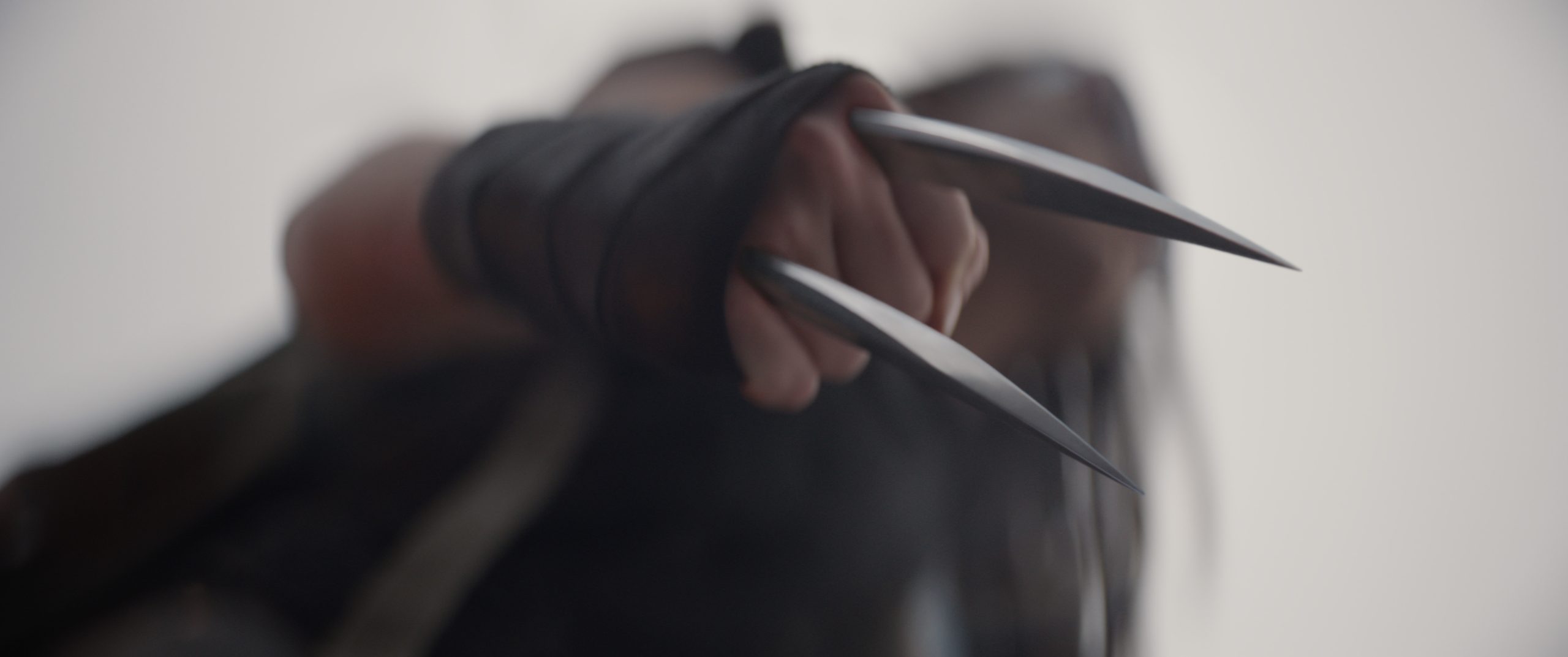
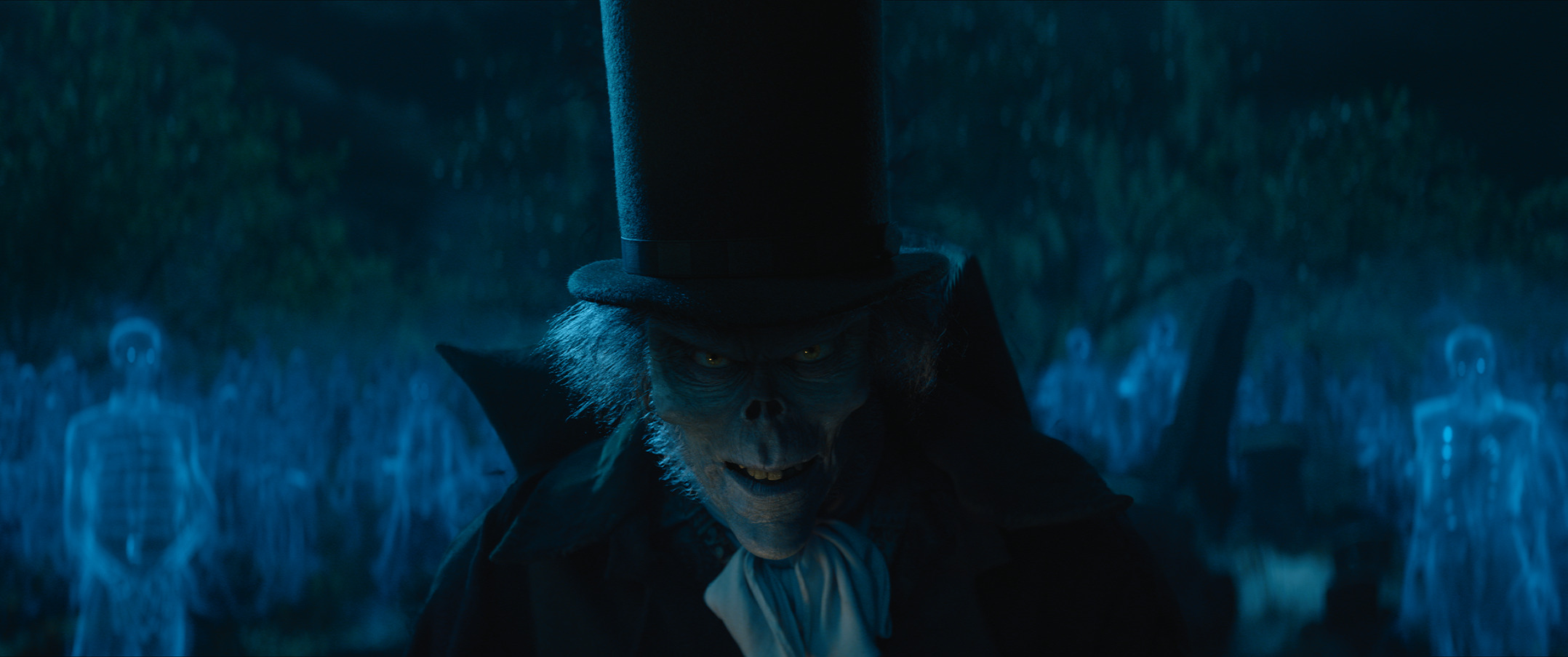
ILM.com is showcasing artwork specially chosen by members of the ILM Art Department. In this installment of a continuing series, eight artists from the San Francisco, Vancouver, London, and Sydney studios share insights about their work on the 2025 Disney production, Lilo & Stitch.
Art Director Cody Gramstad
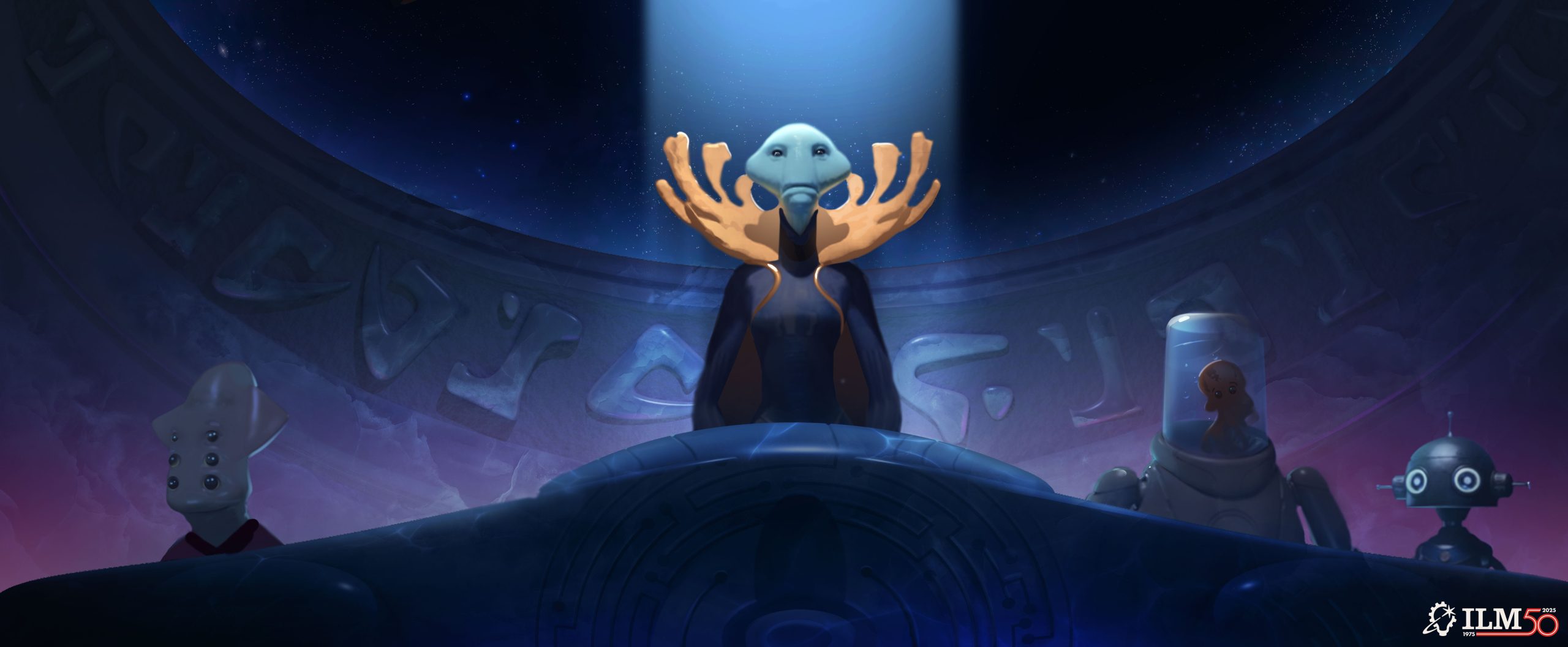
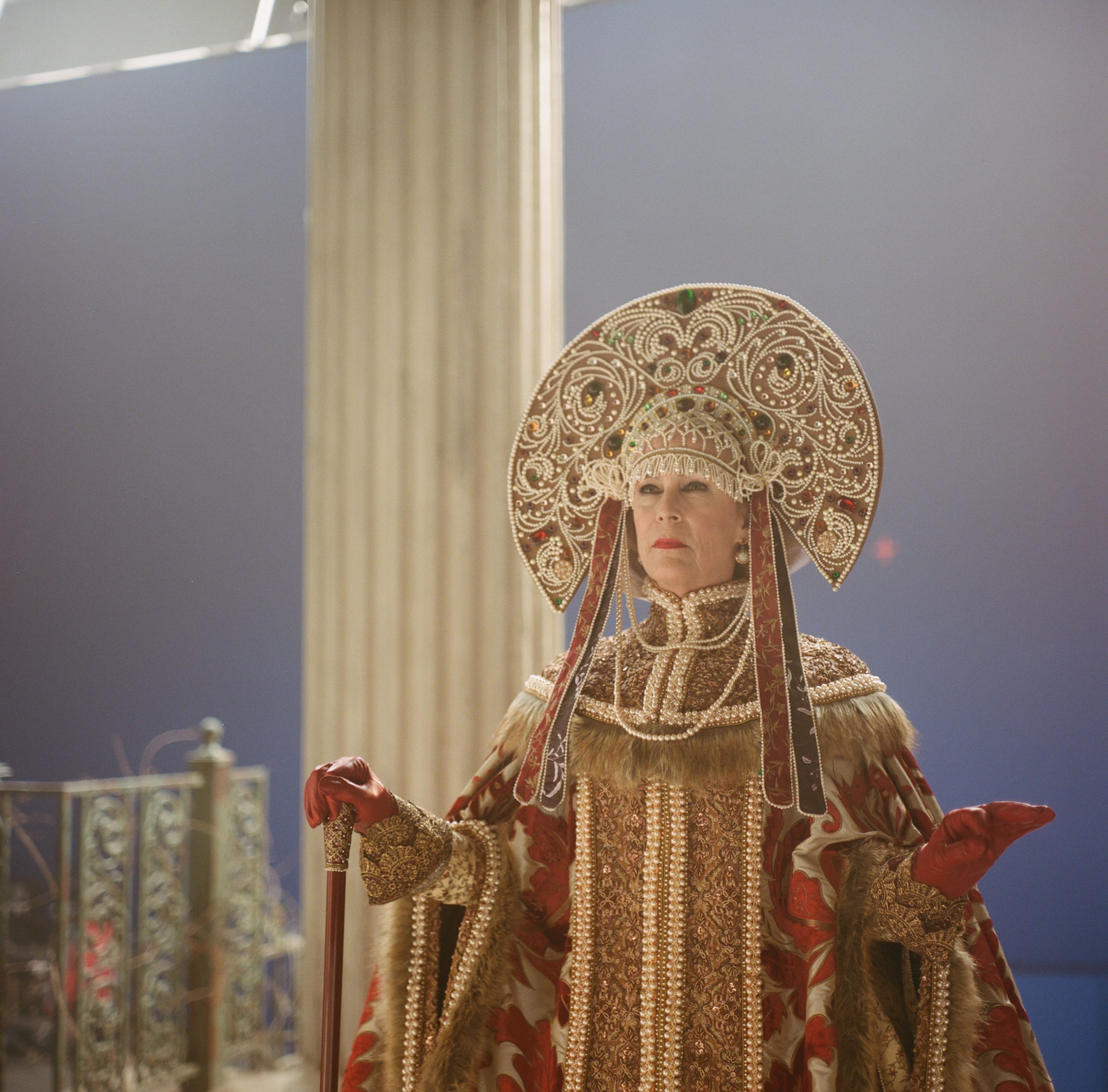
Gramstad: This concept was tackling two key problems for this scene. What should our balance be between Chris Sanders’s soriginal visual style and the limitations of live action expectations? At the same time, we could use this image to give practical design guidance for the environment team on how to stage the podium space so that the window both frames and provides value contrast to the Grand Councilwoman’s head for our primary focal point.
The iteration process for this concept was an evolution of a pre-existing previs set. From the original film we knew key staging, camera placement, and expected lighting direction. The iterations came in adjusting the environmental elements around the figures, exploring different shape languages and materials, and experiments in color and saturation to find a balance that maintains the personality of the original animated film but could exist in the lighting and material context of a more dimensional rendering approach.
My favorite part of this piece is the simplified value shape language. When this composition is refined down to its most basic fundamental art skills, it creates a graphic shape language that feels in character to the original film, while at the same time allows for a clear read of the primary focal point.
Senior Visual Effects Art Director Alex Jaeger
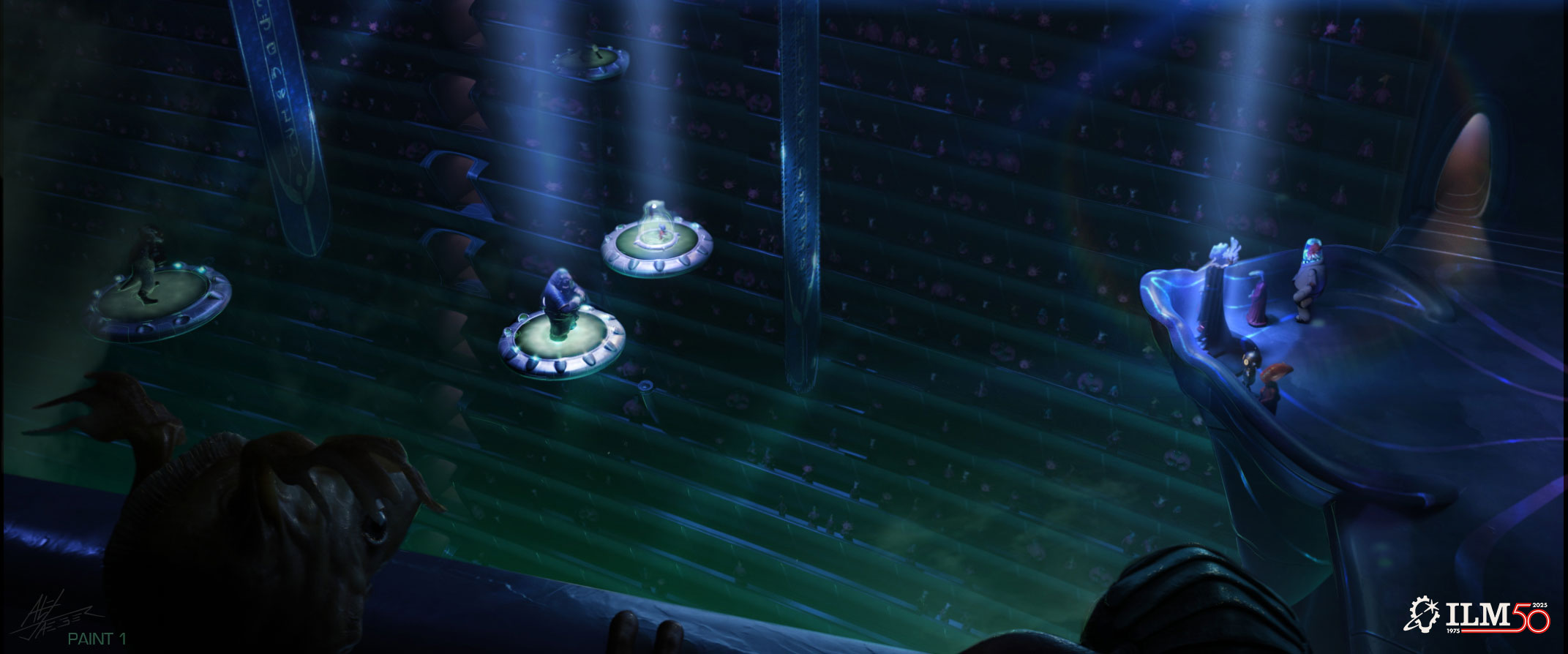
Jaeger: The main brief for Lilo & Stitch was to try out some ideas to pull it away from looking like an animated feature and make it feel more realistic while keeping all the main structures from the original film the same.
The work on this piece was done as part of a push to complete a set of shots early for the trailer. As part of the process it was also done in an effort to gain a bit more realism in this sequence and offer up some new suggestions and options for detail and lighting. So, after looking at the existing sequence, I found that the textures overall were soft and that a few indications of hard reflections might help.
One of the challenges was to not alter any of the models, but rather keep my alterations to lighting and texture. So I added more fall-off and texture to the spot lights, added a metallic line element to the platform railing and floor. I also added a more metallic glint to the threads in the banners. The hardest part was finding spots to add metallic elements that would be most effective for the added realism that the client requested, without altering major elements.
Concept Artist Mathilde Marion
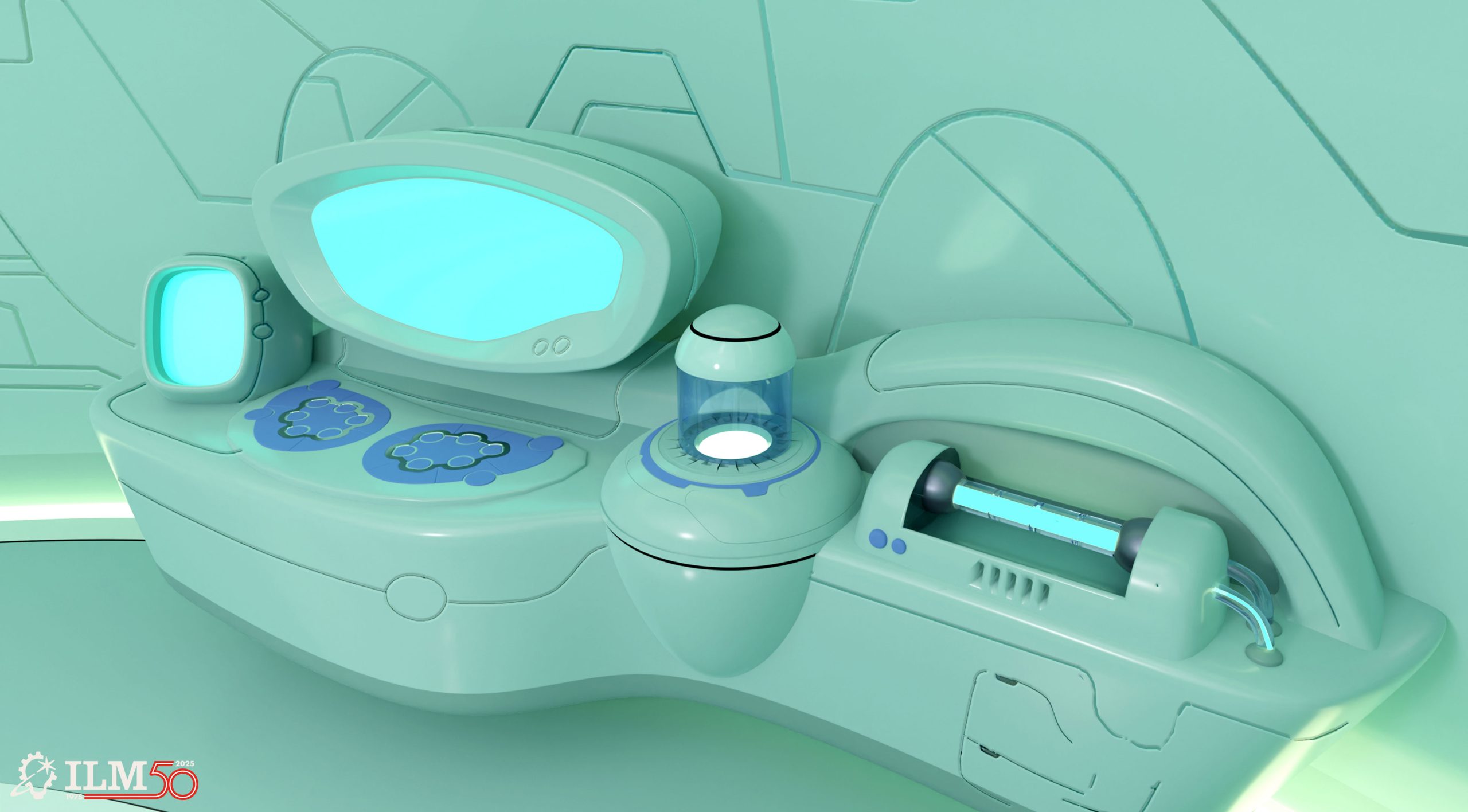
Marion: After his trial, Stitch is sent to a lab room where he is being tested upon, and from where he escapes. We needed to start from the client’s design of the room, and in the same spirit, expand a workstation into a DNA reading machine. We came up with a few variations of designs and how it would work, based on the client’s storyboards. This one is, in my opinion, the most successful.
This is a frame of the overall design, but it was actually designed and sent to the client as a series of close-up shots where we can see Stitch’s hair being processed and tested by the machine. There were primarily two challenges: designing a machine in the spirit of the original animated feature, all the while showing a sequence of mechanical events that are somewhat logical. Because the movie isn’t meant to be realistic, we had a bit of leeway, but it still needed to work within the chosen design and make sense story-wise.
I took inspiration from Chris Sanders’s original designs, and the original movie’s assets and weapons. I made a goal to try and match another artist’s style, which is not the easiest thing to do. My style is usually not as cartoony, and it was important for the story that everything was sitting in the right visual universe. A stylized-type of drawing is really tough, as it requires a perfect understanding of the basic shapes, values, and color relationship. You can’t hide behind details or processing in your image. I found that very interesting and had to challenge myself.
Senior Concept Artist Brett Northcutt
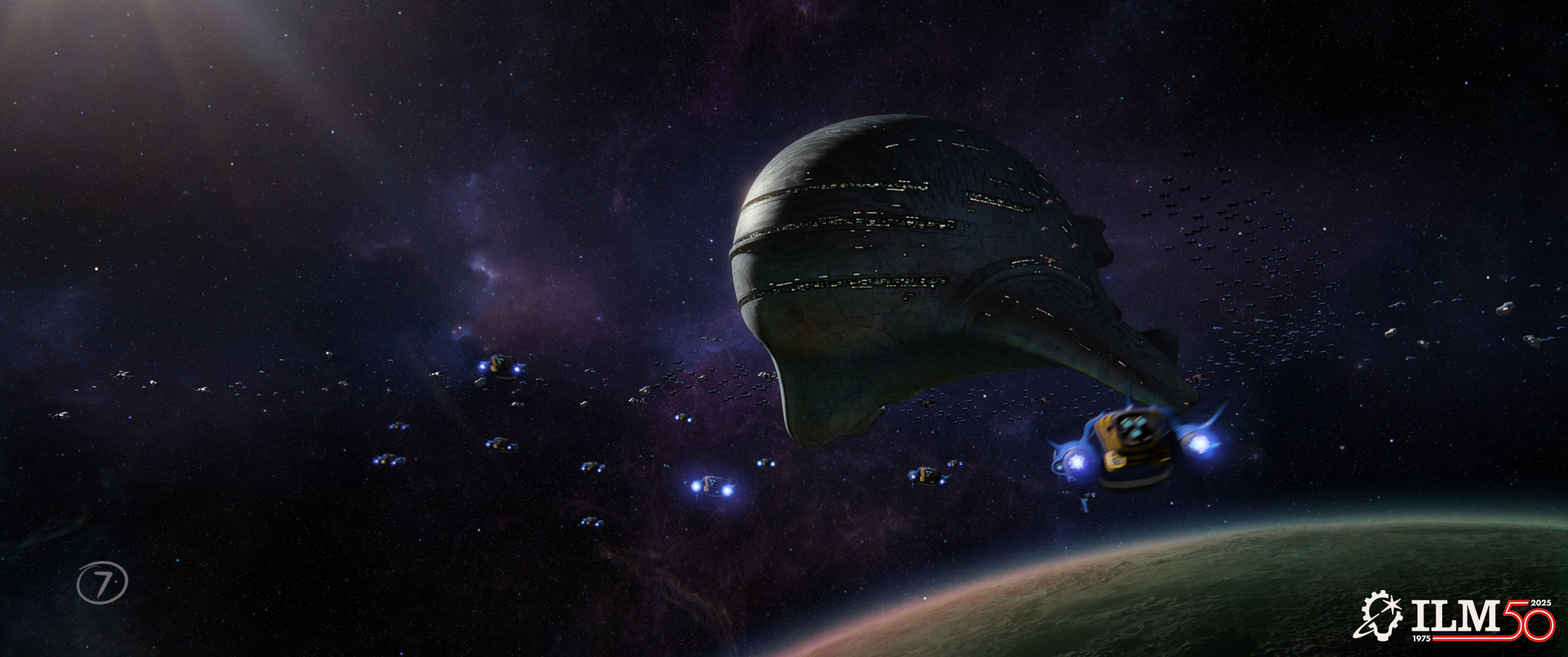
Northcutt: I worked on this piece late in the schedule trying to help with lighting and reality cues to improve the look of the shot.
This shot was originally front lit against space and I thought it looked a bit flat. I reversed the lighting to make it back lit, which really helped the mother ship look more imposing. With the ship now pretty dark, adding a nebulous background really helped to make it pop and also added visual interest. Finally, adding a planet to the lower right justified adding some unusual light reflection to the dark side.
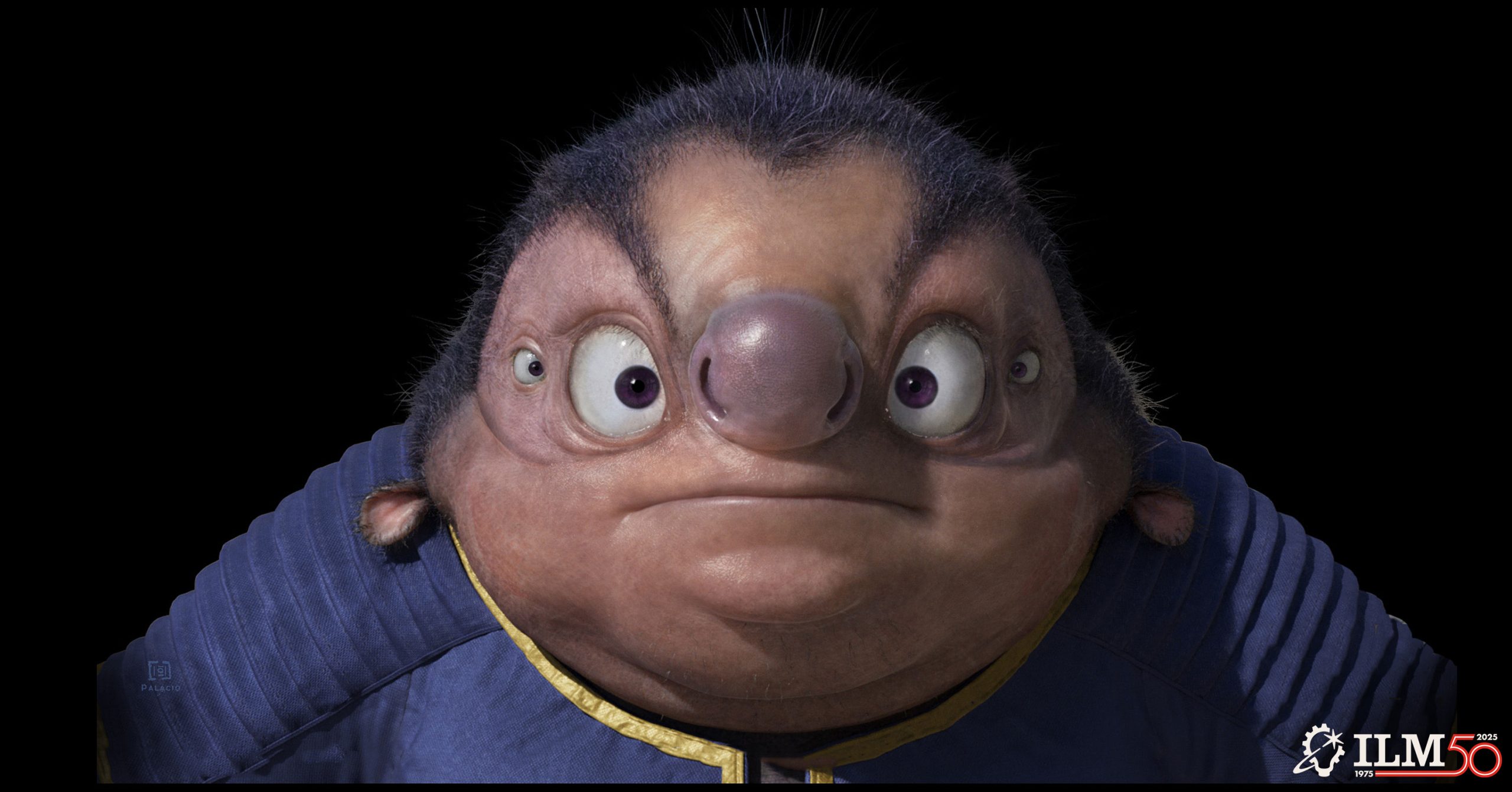
Supervising Art Director Fred Palacio
Palacio: The task was to make the character more appealing to a broader audience, while avoiding a design that may appear too frightening for some. The main challenge was the time constraint, as the character had already been modeled, textured, animated, and rendered, so any changes had to be made on the spot.
In situations like this, my approach is to assess where we are and iterate step by step through paintovers, gradually exploring the visual possibilities. For example, we might ask: what if we changed the shape of the pupil? Its size? Its color? What if the skin appeared softer, the color more uniform, or the hair density had more contrast?
Each adjustment was aimed at subtly shifting the character toward a more stylized, graphical direction, while still preserving the realistic quality the team had already achieved. It felt almost like sending Jumba to our makeup and hairstyling department. We also explored enhancing the clothing by injecting more saturation and slightly shifting the hues to evoke the distinctive palette of the 2002 film.
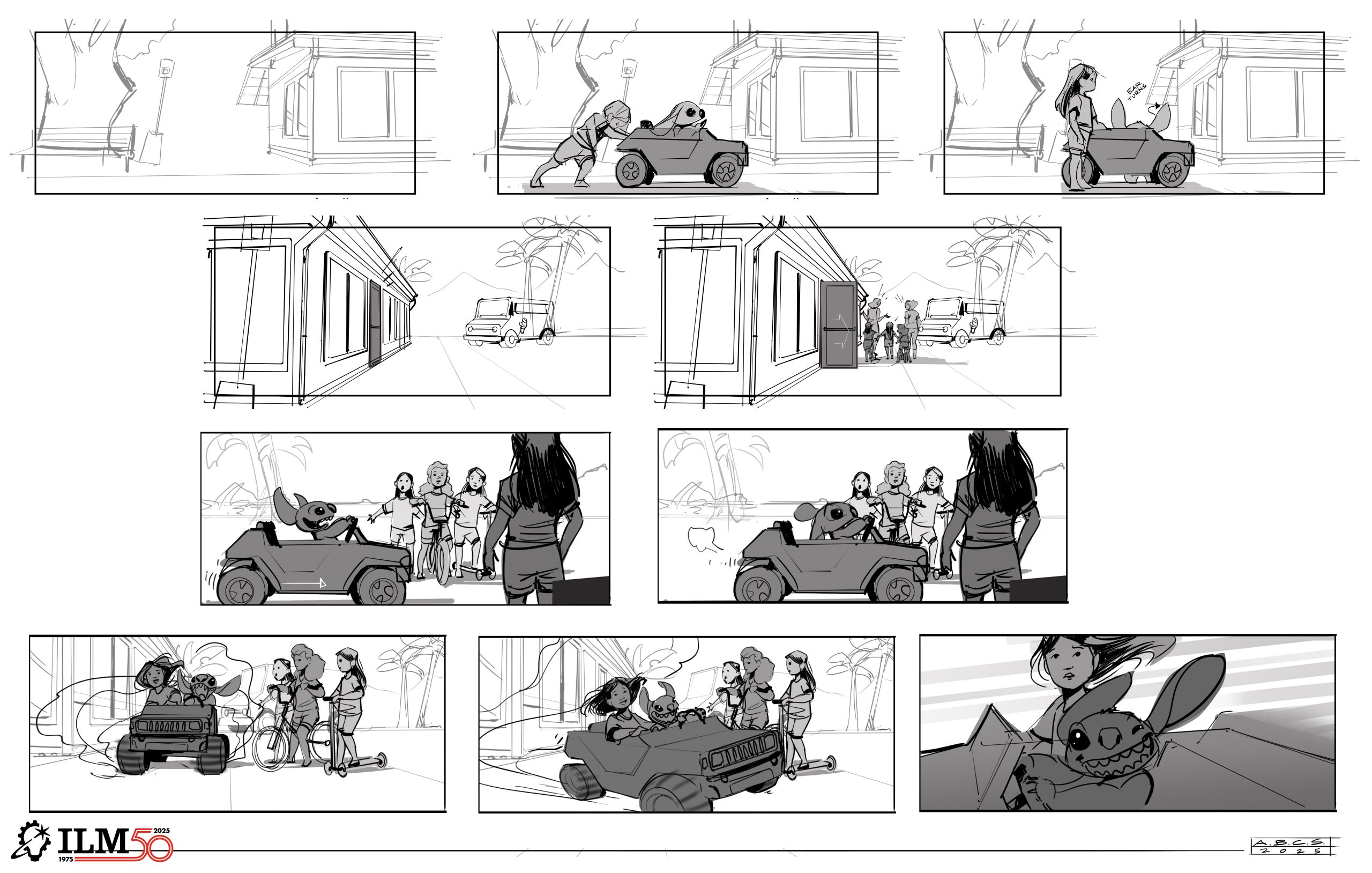
Art Director Amy Beth Christenson Smith
I worked closely with senior animation supervisor Hal Hickel under a fast deadline to get final boards ready for these sequences. The location had been scouted, so I had to make sure to match the scale and layout of it all. The most challenging part was also the best part: making sure Stitch had a lot of over-the-top personality and that the comedy would shine through.
The client shared reference for the scouted location, as well as some rough sketches for a few frames. The biggest inspiration came from the characters in the original animated movie, trying to match their body language and personality. I also took inspiration from my pet rabbit – having Stitch turn only his ears in the direction of the sound when the shop doors are opening came from how my rabbit’s ears twitch and turn when she hears any sound.
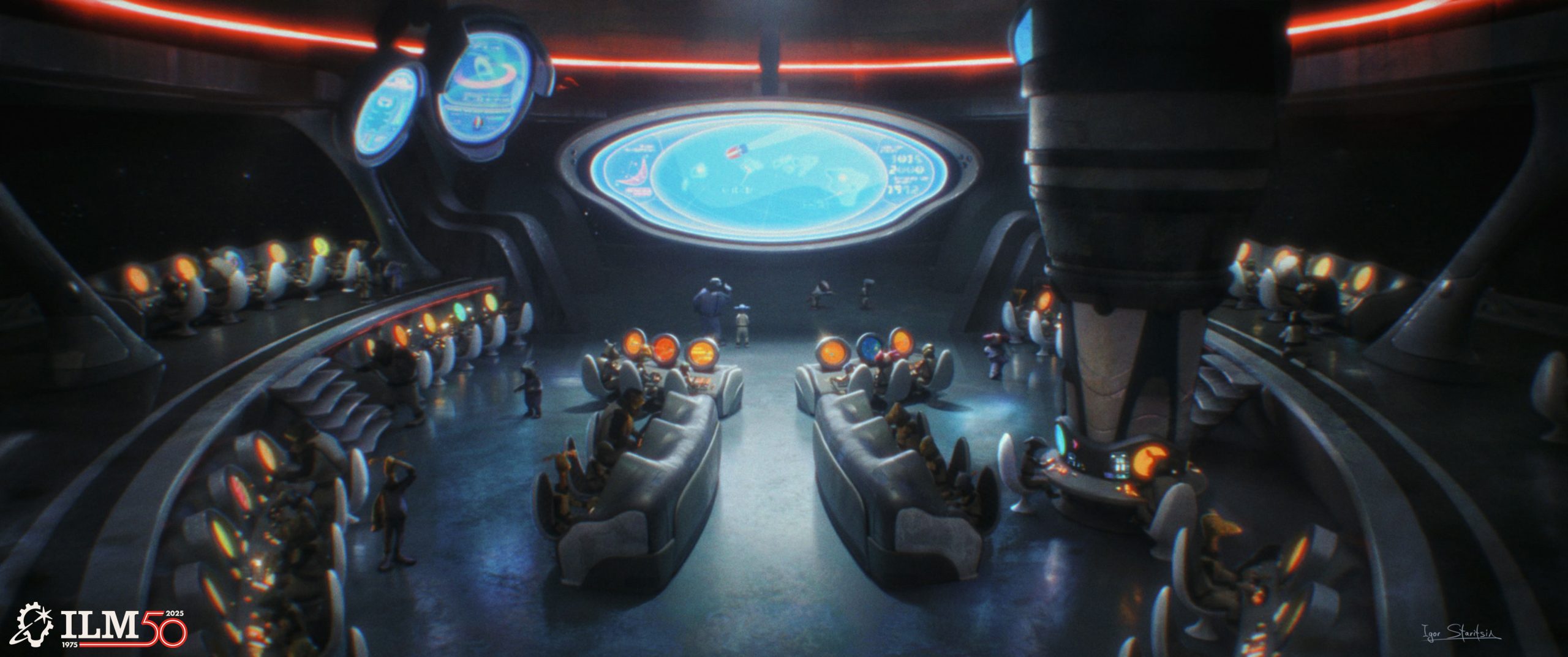
Art Director Igor Staritsin
This was an art direction shot paintover that was meant to help the visual effects team establish the look of the final shot. The main challenge for this sort of task is to make the concept as close as possible to the final quality of the shot, as if it was seen in the movie. It usually requires quite a bit of research on the subject matter, as we want to make sure that the decisions made are based on reality. For example, a good design is usually achieved not only by establishing a pleasing aesthetic look, but also a logical function. The same goes for shot paintovers. We want to play up the most important elements in the frame that help to tell the story and play down the rest.
For this shot I knew what I was going to do after gathering enough information from my prior research on the task. However, there are certainly moments when one might experience a bit of struggle when trying to find a solution. I think it is best to assess your design in the simplest way possible, meaning one shouldn’t try to go into details too soon and get lost there. It is important to make sure that big shapes read well. Proportions and distribution of shapes make for a pleasing arrangement. When the basics are in place then mindful distribution of details on top will bring the design home.
I really enjoyed adding small details, a variety of materials, and break-ups that made it all look more realistic in the end. Tiny things like halation, bloom, vignetting, and suppressing details in secondary areas, as well as increasing the attention around the focal point really helps to bring it all to life while telling the story in the shot.
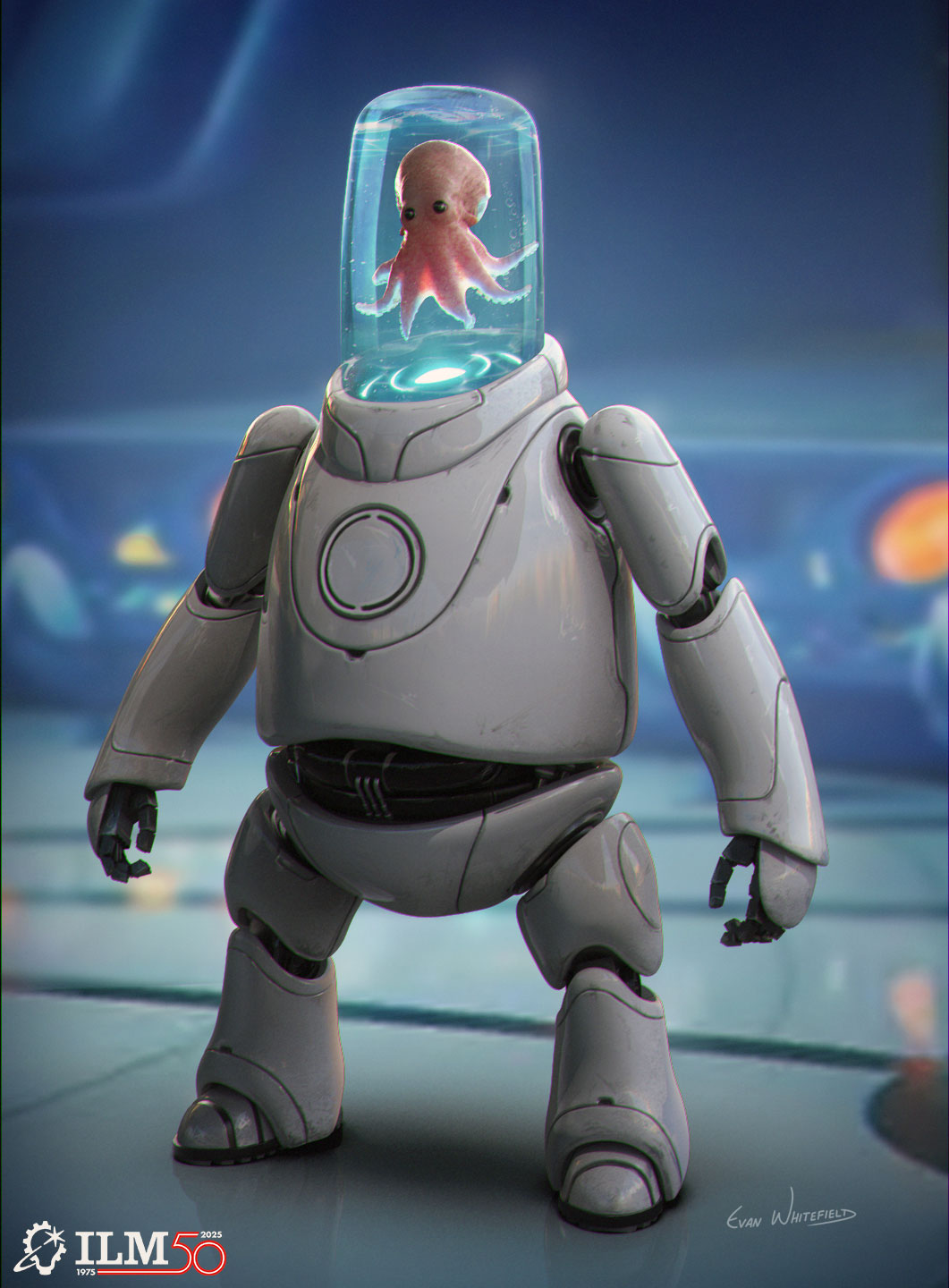
Concept Artist Evan Whitefield
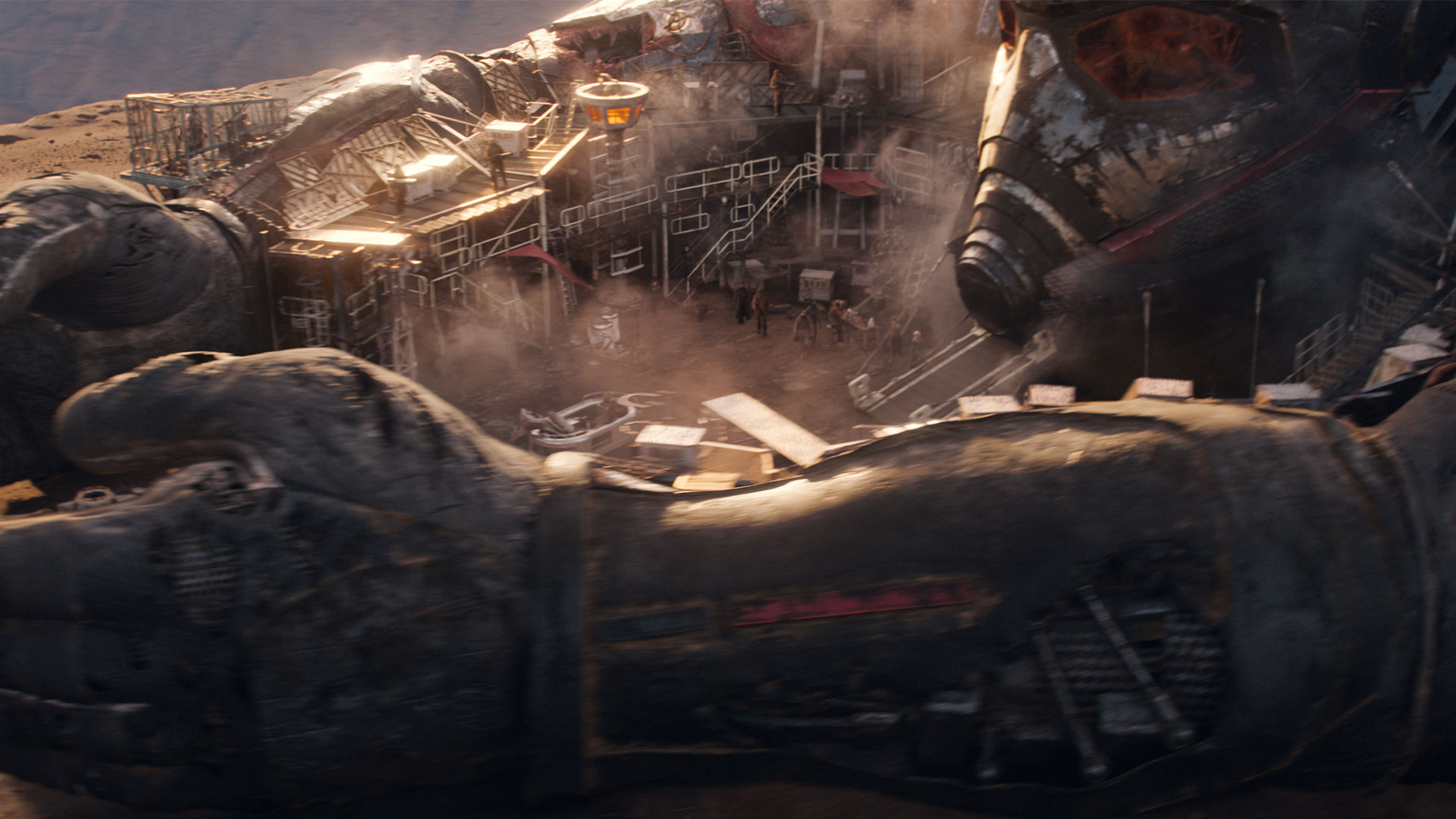
The squid-piloted robot was designed as a supporting but visually memorable background character in the Grand Council chamber. While not a primary character, it helped reinforce the sci-fi tone, scale, and advanced tech of the Galactic Federation. The design retained the creature-in-a-tank-helmet concept, evolving through multiple iterations to balance the charm of the original animated version with a more grounded, high-tech look for the live-action world.
When I first started exploring the design, my goal was to go all out with the initial concepts to really push the creativity and explore extreme ideas without limits. This helped uncover unique shapes and personalities for the squid-piloted robot. Once I had a strong range of options, I focused on pulling things back to create a more grounded, believable design that would fit seamlessly into the live-action world. That balance between bold exploration and practical refinement was key.
One of my favorite details is how the tank-like helmet functions as both a life-support system and a clear window into the squid’s personality, letting its expressiveness come alive. I also love the contrast between the squid’s relatively small size and its massive, bear-like robotic frame. The functional, mechanical design of the robot pairs beautifully with the organic shape of the squid, creating a compelling balance between technology and creature.
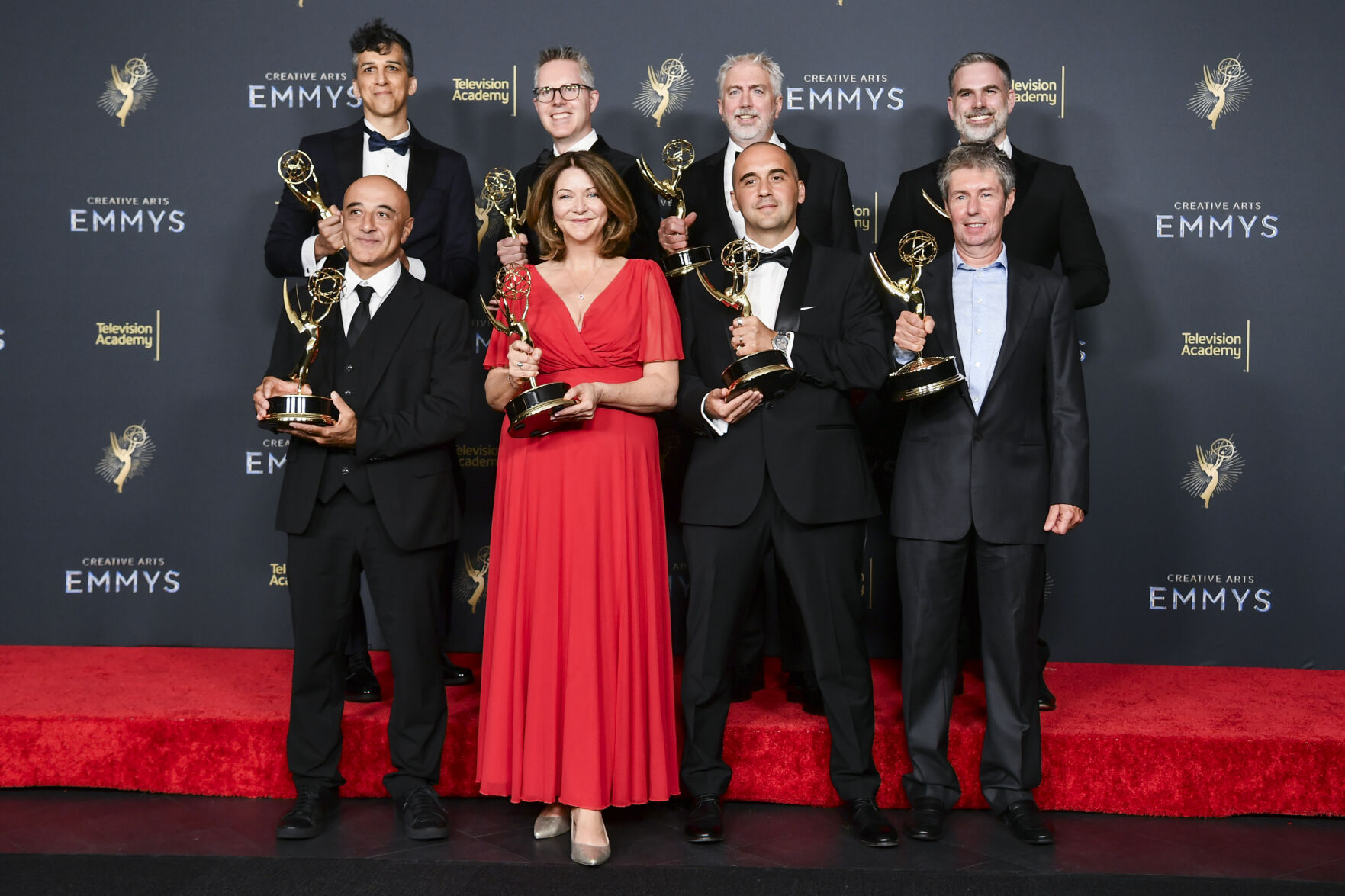
ILM’s Mohen Leo and Scott Pritchard and Lucasfilm’s TJ Falls are among the winners for “Outstanding Special Visual Effects in a Season or a Movie.”
The team from Andor pose in the press room with the award for outstanding special visual effects in a season or a movie during night one of the Creative Arts Emmy Awards on Saturday, Sept. 6, 2025, in Los Angeles. (Credit: Richard Shotwell/Invision/AP)
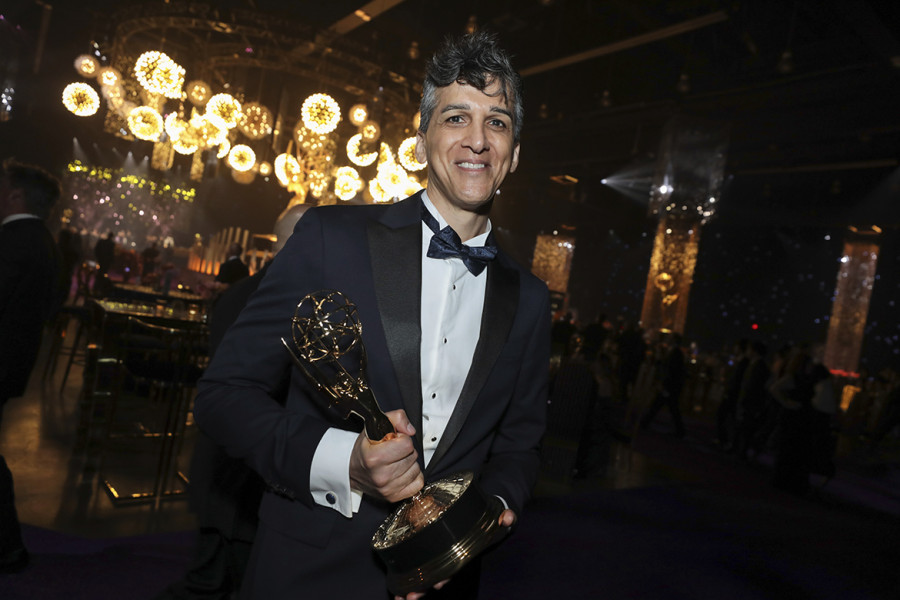
The 2025 Creative Arts Emmy Awards took place on September 6, and Lucasfilm’s Andorseries took home four wins, including “Outstanding Special Visual Effects in a Season or a Movie.” Industrial Light & Magic’s Mohen Leo – who served as Andor‘s production visual effects supervisor – took home the award along with ILM visual effects supervisor Scott Pritchard and Lucasfilm’s visual effects producer TJ Falls.
The other Emmy recipients for “Outstanding Special Visual Effects in a Season or a Movie” include special effects supervisor Luke Murphy, special creature effects lead Neal Scanlan, Hybride visual effects supervisor Joseph Kasparian, Scanline visual effects supervisor Sue Rowe, In-House visual effects supervisor Paolo D’Arco, and digital colorist Jean-Clément Soret.
ILM’s Mohen Leo, production visual effects supervisor of Andor, attends the Governors Gala at the 2025 Creative Arts Emmy Awards (Credit: Invision/AP).
—
ILM visual effects supervisors Mohen Leo and Scott Pritchard, along with members of their talented crew, discuss the process behind building the TIE Avenger as it journeyed from concept to screen.
By Jay Stobie
(Credit: ILM & Lucasfilm).
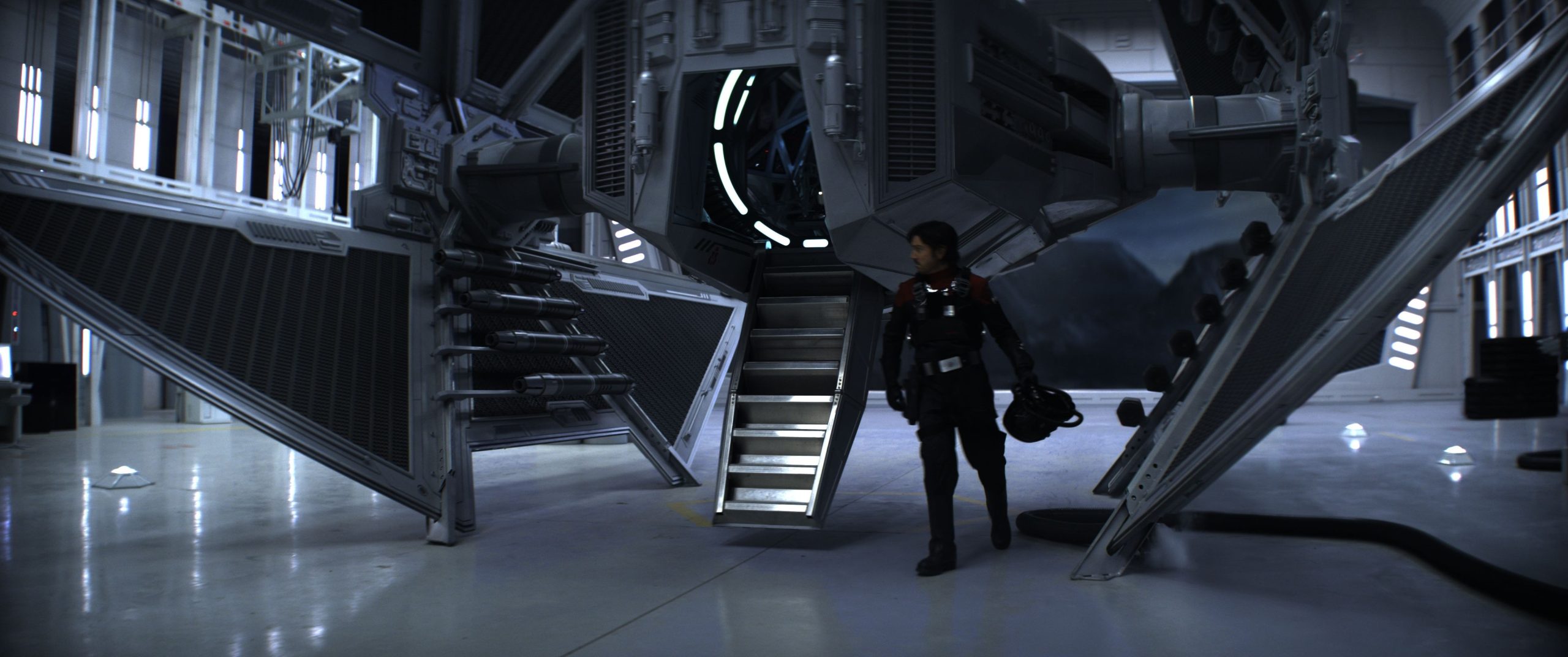
For many Star Wars enthusiasts, the word “avenger” conjures up images of Captain Needa’s Imperial Star Destroyer Avenger, the TIE Avenger starfighter featured in Lucasfilm Games’s Star Wars: TIE Fighter (1994) video game, or even Marvel’s prestigious superhero collective. The second season of Andor (2022-2025) has now pushed its own TIE Avenger to the forefront of that list, as the epic series chronicled Cassian Andor’s (Diego Luna) theft of the prototype craft from a Sienar Fleet Systems test facility. Outfitted with advanced armaments and a hyperdrive, the TIE Avenger transported Cassian to Yavin 4 before playing a key role in rescuing Bix Caleen (Adria Arjona) and Wilmon Paak (Muhannad Ben Amor) from Imperial forces on Mina-Rau.
Industrial Light & Magic’s Mohen Leo, whose resume boasts projects like Ant-Man (2015), The Martian (2015), and Rogue One: A Star Wars Story (2016), served as Andor’s production visual effects supervisor for both seasons of the series, while ILM visual effects supervisor Scott Pritchard (Star Wars: The Force Awakens [2015], Avengers: Infinity War [2018], Avengers: Endgame [2019]) oversaw the creative output of the work across ILM’s global studios in London, Vancouver, and Mumbai. Leo and Pritchard gathered alongside CG supervisor Laurent Hugueniot, modeler Owen Rachel, texture artist Emma Ellul, look development artist Renato Suetake, animation supervisor Mathieu Vig, and compositing supervisor Claudio Bassi to chart the TIE Avenger’s course from conceptualization to the completed sequences seen in season two.
Constructing the Concept
The TIE Avenger prototype is first unveiled at the beginning of season two, resting in its Sienar hangar bay before being commandeered by Cassian and embarking on a dramatic escape. “The idea for the opening sequence began with [showrunner] Tony Gilroy wanting to start season two off with a big, classic Star Wars action sequence,” Mohen Leo tells ILM.com. “That initially came out of an outline that Tony gave us in 2022. Early on, a big story point became that Cassian doesn’t know how to fly it, so the Avenger had to have completely unfamiliar controls, and the interior had to look different from any TIE fighter or ship that you’ve ever seen before.”
When it came to the Avenger’s look and layout, Leo worked closely with production designer Luke Hull. “Luke explored various prototype airplanes, and then we played around with the idea of what the ship needed to do in terms of the chase sequence. We wanted something that wasn’t just a dogfight. If he immediately jumps in and it’s just a chase, it’d be difficult to do something original with that,” adds Leo. “Luke had already decided to build a full-sized practical TIE Avenger. As far as its physical construction, the wings were inspired a bit by the TIE interceptor.” While Andor’s Avenger shares a name with the craft from the TIE Fighter game, it maintains its own design lineage. “I don’t think the previous ship was a strong influence,” Leo begins. “When we were designing our Avenger, how the ship functioned became something Luke and I reverse-engineered based on what we wanted the ship to do. That dictated the look.
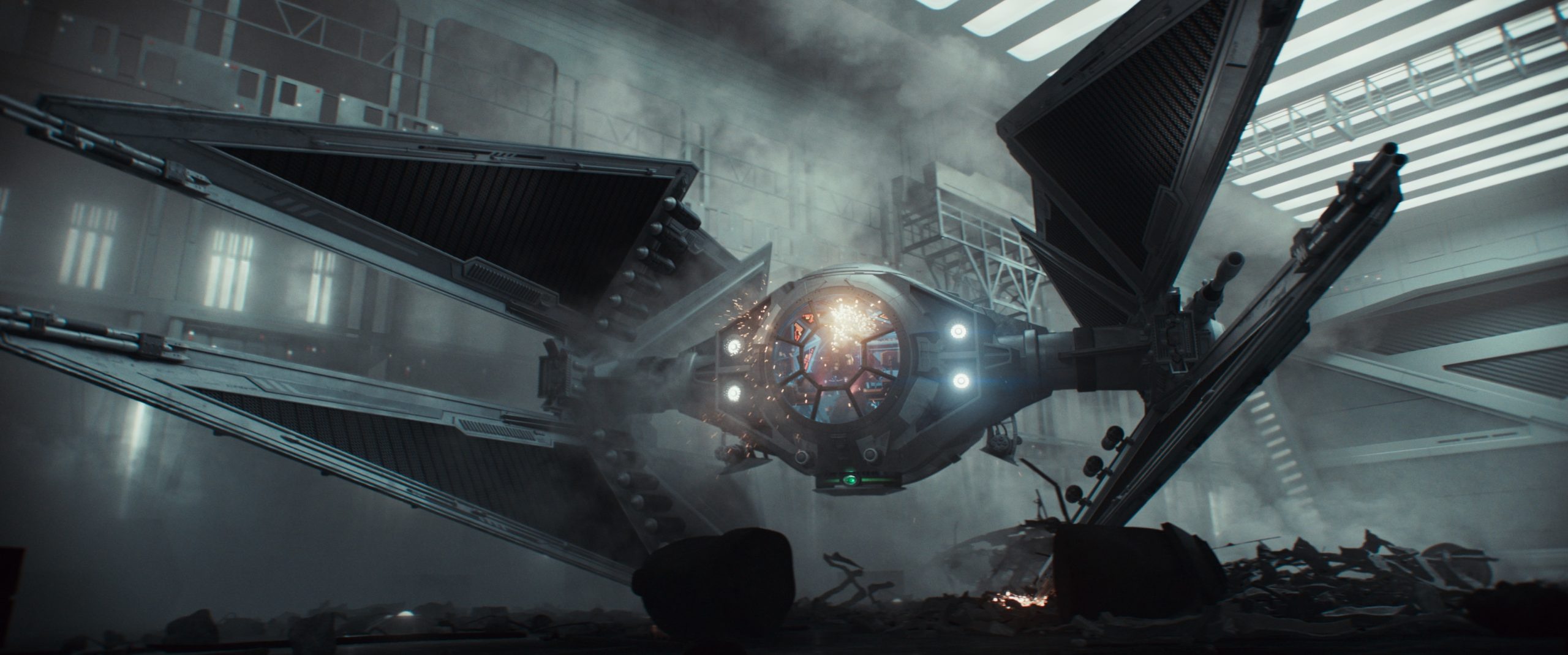
(Credit: ILM & Lucasfilm).
“I put together a pitch deck for the Avenger before we got into previs when the directors weren’t even on yet,” Leo continues. “I wanted to make sure that the ship and the weaponry, in particular, were based on real weapons and felt both dangerous and aggressive. The team based the TIE’s fold-out Gatling-like cannons on the United States military’s M61 Vulcan rotary cannon. Hull wanted the Sienar base itself to feel like a Skunk Works test facility or NASA’s Jet Propulsion Laboratory.
“It was a back-and-forth between previs and Luke Hull and the art department in terms of the ship’s design,” Leo notes. “We’d say, ‘We need guns that fold out,’ and then Luke would go, ‘Let me see where we can fit those in.’ It was almost as much driven by the necessity of the functionality as it was by the aesthetics.” Once the additional armaments, including external launchers and a powerful cannon below the cockpit, were set, the team pitched the action sequence to Tony Gilroy. “We blocked the whole sequence with a temp model, and Tony generally really liked it.”
Assembling the Avenger
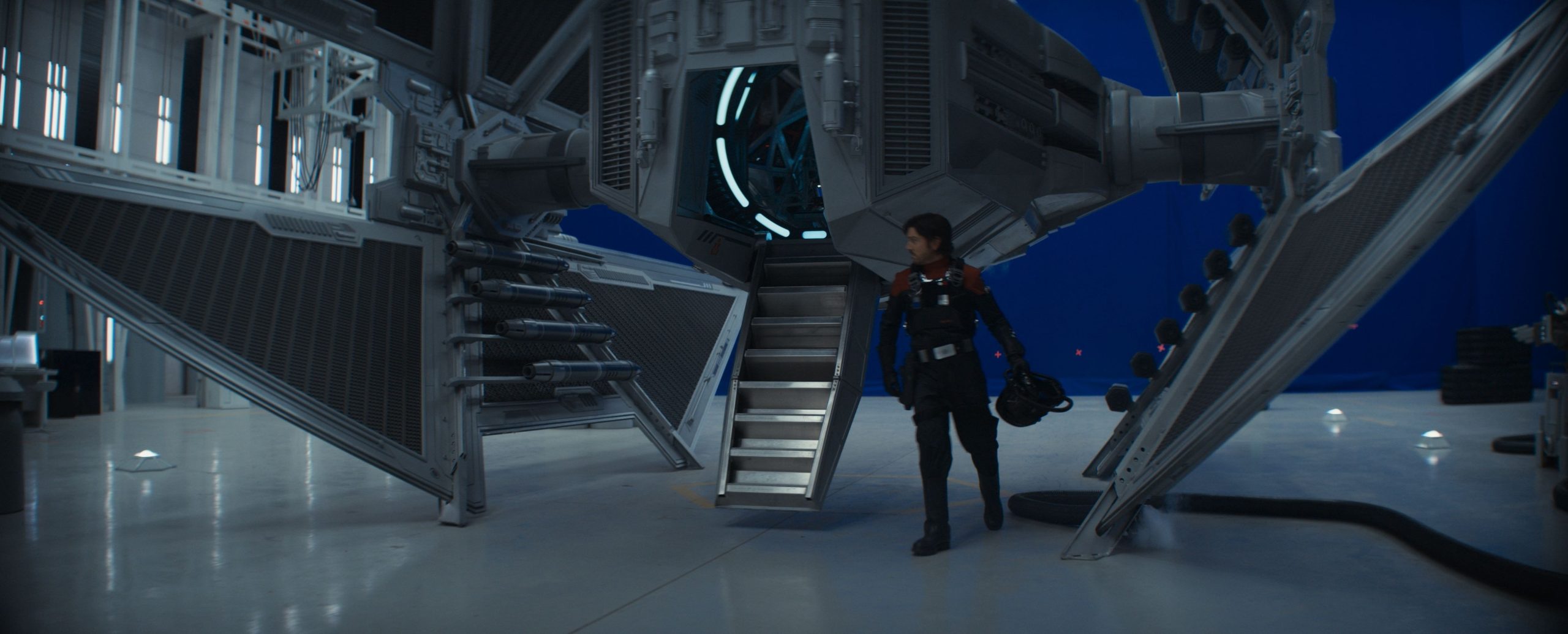
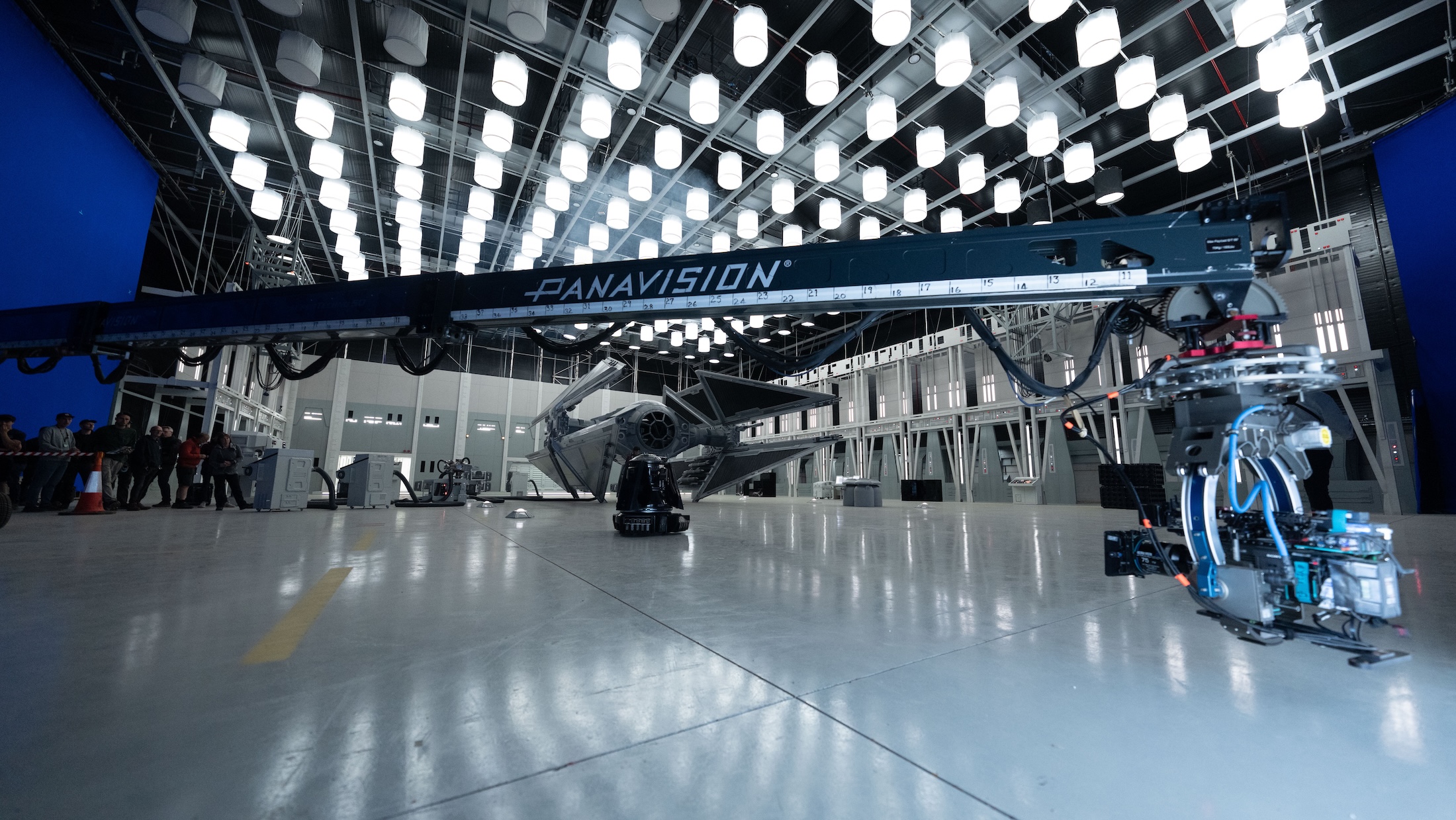
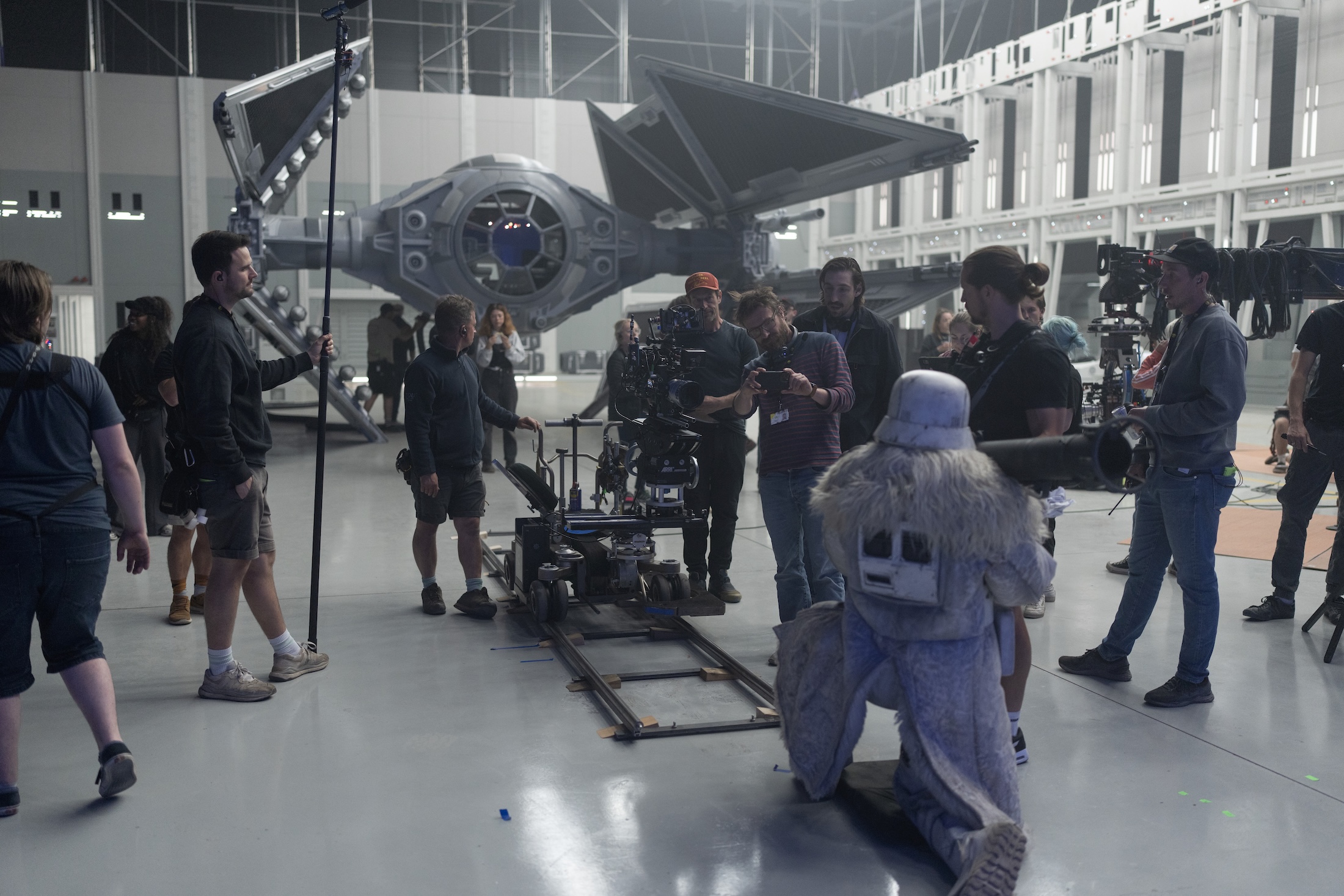
“As the studio-side visual effects supervisor, I was involved in pre-production through to the end,” Leo shares. “I also guided the previs development with The Third Floor’s Jennifer Kitching and collaborated with Luke Hull on how we would make the practical build service what we needed to do in the visual effects sequence.” The creative dialogue between the ILM visual effects team and the production designer was vital in ensuring that the computer graphics (CG) starfighter built by ILM would be identical to the full-sized practical ship that was constructed to be used on the Sienar hangar, Yavin 4, and Mina-Rau sets.
“Because we had a practical version of the Avenger during the shoot, we were able to scan that and provide lots of references,” Leo details. As such, the full-scale Avenger proved beneficial for Owen Rachel, the ILM modeler responsible for building the CG Avenger. “My job was to take [the practical model] and replicate it as a digital version. There wasn’t much design work that we had to do other than replace some structural bits, like the Gatling guns as they come down,” Rachel outlines. “We did have to create the laser cannon that comes out from underneath the cockpit. It’s an intricate design because it’s both delicate and powerful at the same time. It felt a bit like the inside of a watch,” recalls CG supervisor Laurent Hugueniot, who was in charge of the team’s 3D output.
The practical TIE Avenger prop on set at Pinewood Studios (Credit: ILM & Lucasfilm).
Texture artist Emma Ellul tackled the job of texturing the TIE Avenger. “We had great reference images, which was super helpful. I tried to focus on real-life objects, too, such as stealth planes. They’re quite smooth and angular, and I’d see how specularity affects the metal. Not every sheet of metal is made the same, so it has a slightly different bend or warping to it. I incorporated that, especially on the paneling on the outside of the wings,” Ellul relays. “There were a lot of nooks and crannies to look at and a lot of small decals everywhere, which I had to match one-to-one with the practical model. It was an awesome asset to texture. Who doesn’t want to texture a TIE fighter? And then I had to destroy it and chuck laser blasts all over it [laughs].”
Look development on the Avenger was handled by Renato Suetake, who asserts, “As a look dev artist, I get the model and textures so I can put them together and make the shaders. I make sure the shaders and materials react precisely like the reference we have in any situation or lighting condition. Certain shots jumped between the prop filmed on set and the CG version, so the digital Avenger had to be identical. At the same time, because the prop wasn’t made of metal, we still had to make it believable as an actual spaceship that flies.” From the Avenger’s weapons to the hangar explosions to the collapsing ice arch, Leo also credits the effects artists who contributed to the sequence, revealing, “In general, all of those things are just massive, complex simulation work.”
Pairing Computer Graphics and Practical Effects
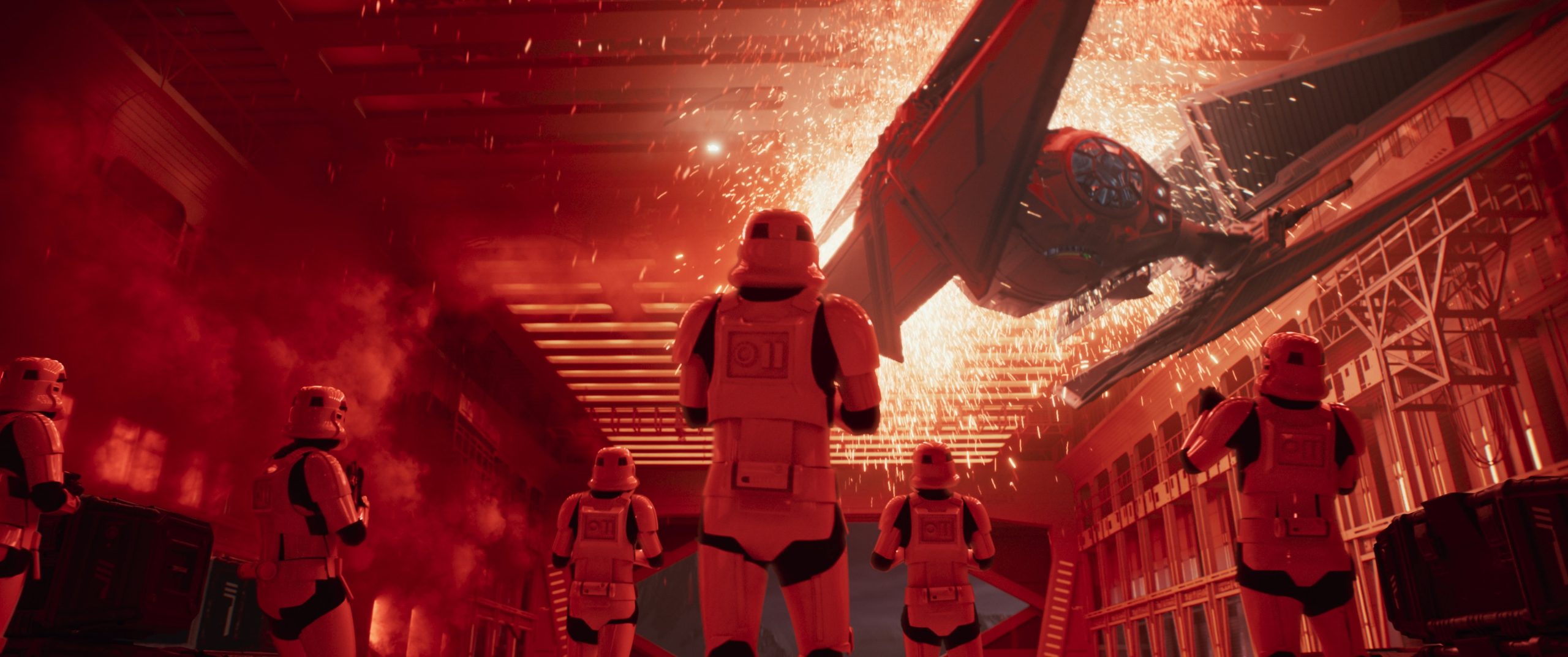
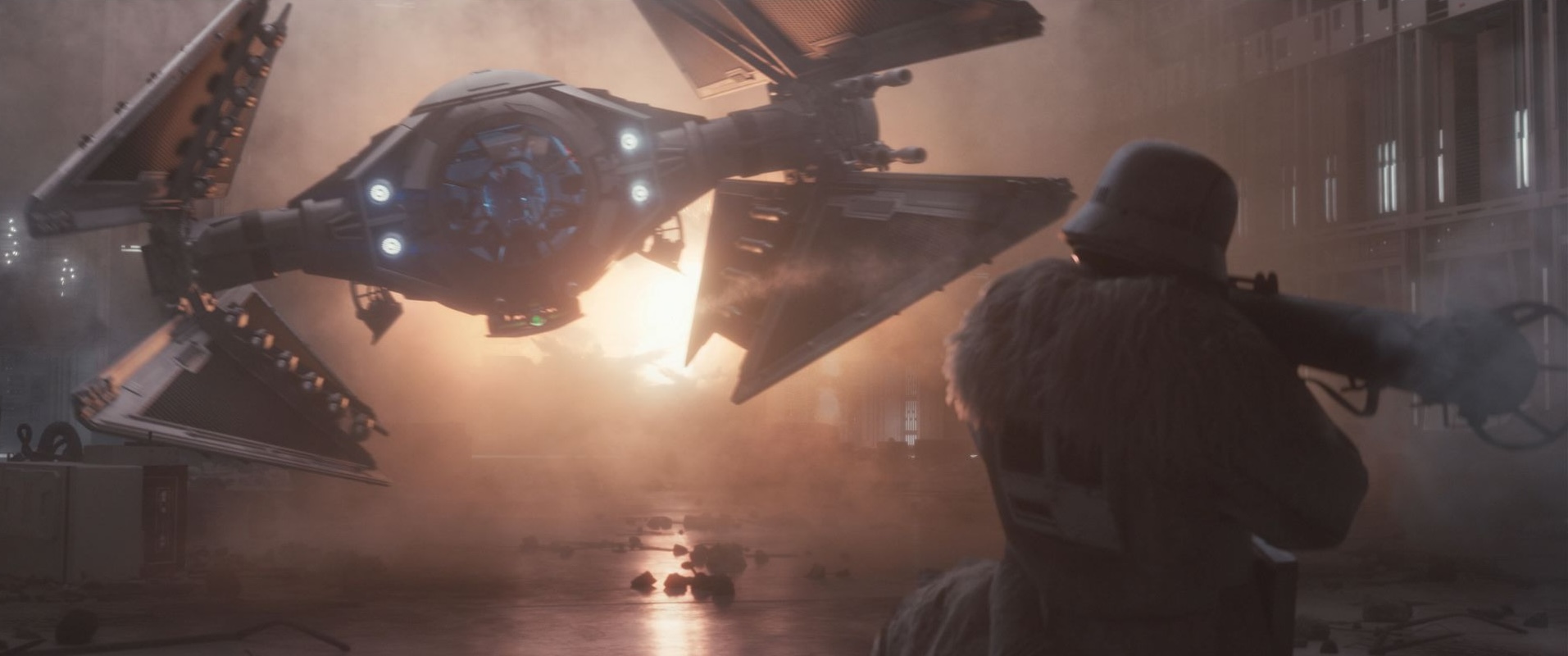
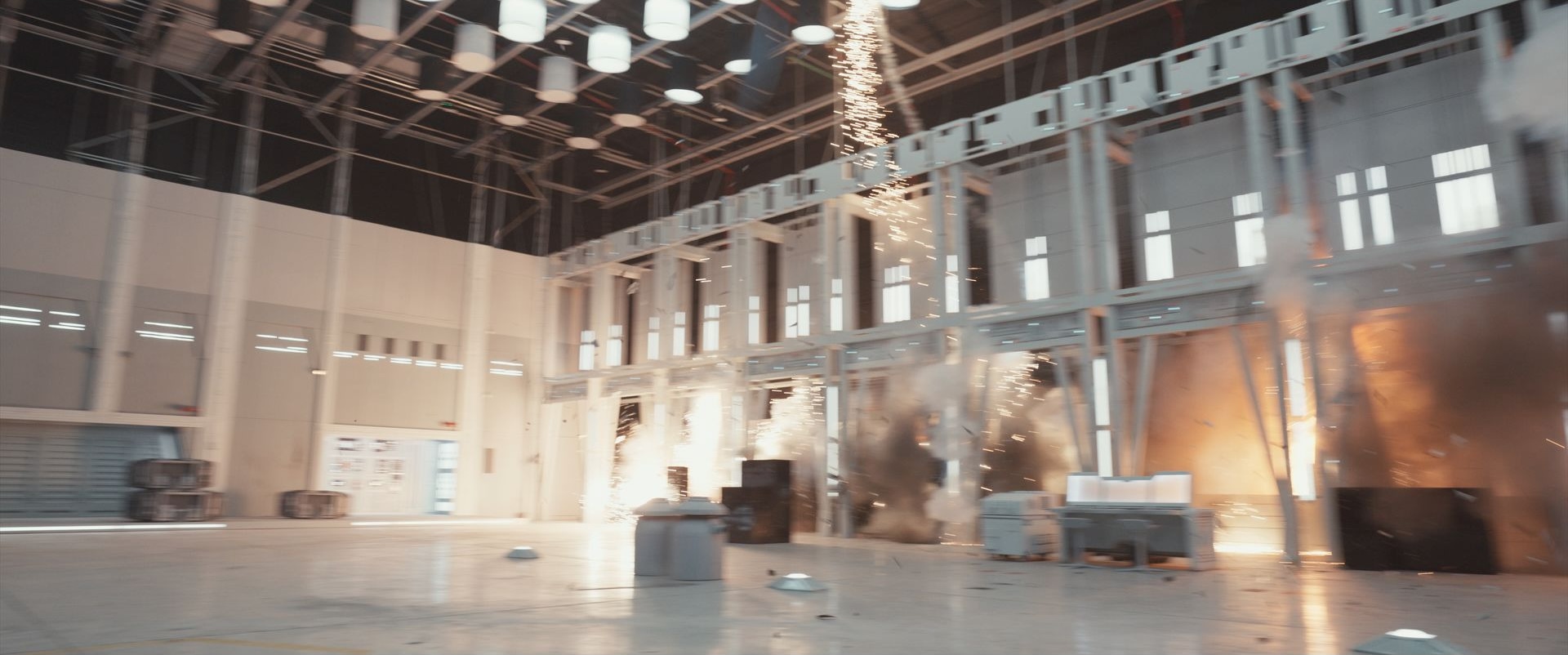
As Andor’s ILM visual effects supervisor, Scott Pritchard helmed his team at ILM’s London studio, while coordinating the work at ILM’s studios in Vancouver and Mumbai. When it came to the Avenger’s breakout from the Sienar hangar, Pritchard observes that the production sought to use the “best tool for the job,” often pairing ILM’s CG expertise alongside special effects supervisor Luke Murphy’s practical effects. Highlighting a shot where an Imperial range trooper takes aim at the Avenger, Pritchard beams, “There’s a huge staged explosion along the back wall that was done by hanging a line of charges. They explode in sequence, so they explode outwards from the center. That in itself is impressive because it gives us some great visual reference to go on and actual practical elements to incorporate into the final comp.
(Credit: ILM & Lucasfilm).
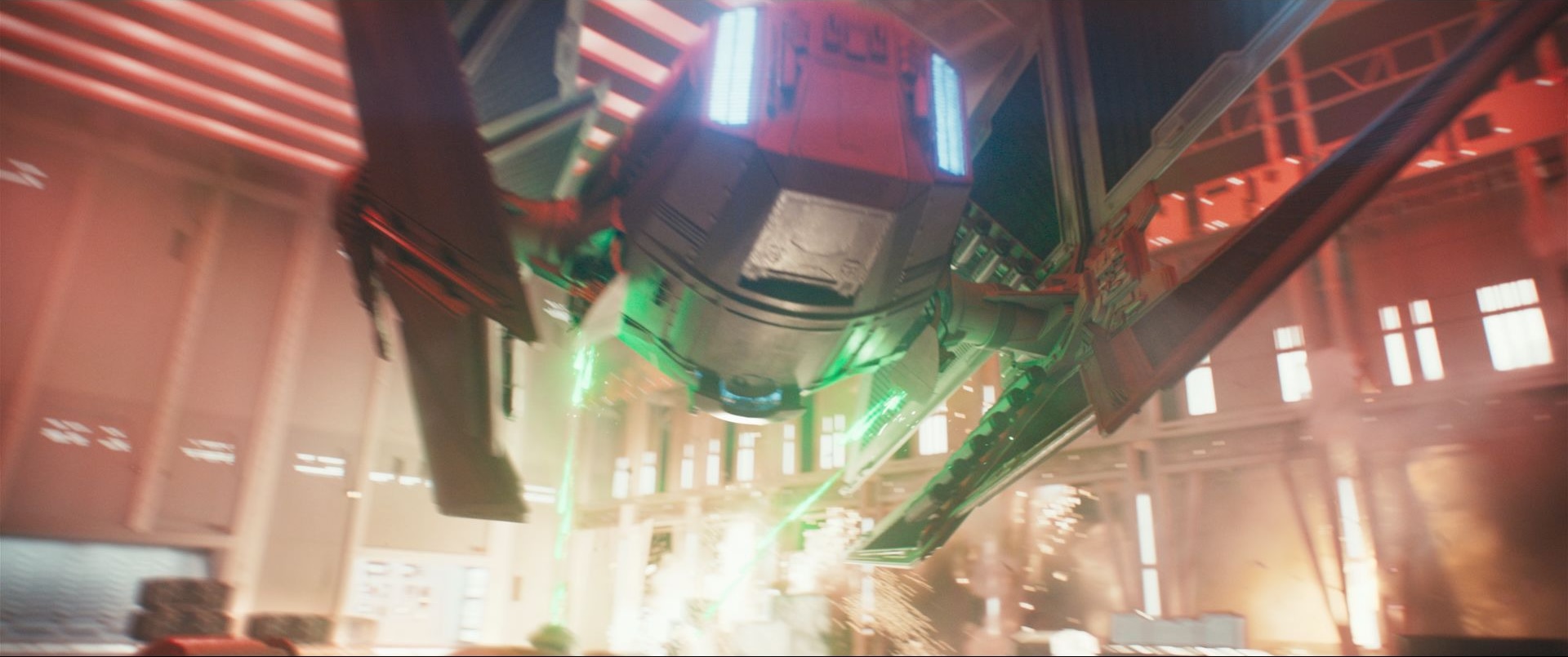
“There’s a significant amount of work involved in painting out the actual charges and all the little fragments that get blown off properly, as well. It gives you such a great base to work off when you’re putting together a shot like that,” continues Pritchard, who then shifts focus to the Avenger’s weapons blasting through the hangar. “A lot of these explosions are practical, but we’ve enhanced them by adding sparks and additional explosions in CG. Making all this work seamlessly is a great testament to the comp and effects team.”
Compositing supervisor Claudio Bassi concurs, believing that the practical effects supplied ILM with valuable reference for lighting purposes. Bassi also states that, despite the presence of the practical Avenger, the TIE’s wings during Niya’s (Rachelle Diedericks) inspection are actually CG. “The hangar set didn’t have a roof, so we often replaced the wings as it was easier to integrate the CG roof.” Although the hangar set was extremely large, Pritchard highlights the fact that ILM had to extend the hangar to an even greater width, and the entirety of the front section that opens toward the snowy exterior is also CG.
Maintaining a Match
Of course, having both a practical and digital Avenger presented its own challenges when it came to assuring that the details matched, particularly regarding how much damage the CG version sustained at Sienar in comparison to the practical model that was filmed on the Yavin 4 set. “Working with the art department, we knew that the Avenger had gone through the dogfight at Sienar base and should have scorch marks where lasers had hit it,” Leo remembers. “We counted the number of rockets it fired in the first sequence because there’s no way for him to restock in space. We took four specific missiles off the practical build, which we then reversed in digital effects to choose the four that he fires in the opening sequence.”
Hugueniot emphasizes that the same held true for the havoc wrought upon the Sienar hangar itself, commenting, “Not all shots are worked on one after another in story order. There’s a big job of keeping track of what’s going on in every shot. All the scorch marks on the walls, everything that’s been knocked down from the ceiling, and which lights are working in each shot. That was quite a job [laughs].” Bassi agrees, divulging, “We kept track of the marks where the Avenger scratched the floor and which lights broke, and we had a system to recognize them in shot order.”
(Credit: ILM & Lucasfilm).
That level of realism was reflected in animation supervisor Mathieu Vig’s mission to make the Avenger look “heavy and dangerous, and as if it’s made of metal, not just pixels.” Having the Avenger scrape along the deck helped achieve this. “We’re used to seeing them [TIE fighters] flying very gracefully,” Vig explains. “Usually, we don’t animate them bumping around, so setting the weight is harder than you might think. In a hangar setting, there are so many physical elements to consider, such as the actor in the cockpit doing specific movements that we have to take into account. All of this is a carefully interlocking puzzle.”
Diving Into the Details
While analyzing the projectiles under the practical Avenger’s wings to model them for its digital counterpart, Owen Rachel recognized an intriguing connection. “When we were trying to work out how the missiles fire, we realized the design on the set was similar to those seen in Star Wars: A New Hope [1977], as they go into the exhaust port on the Death Star,” conveys Rachel. As it turns out, the design was a one-to-one match, so Rachel subsequently modeled the Avenger’s projectiles after the proton torpedoes that Luke Skywalker (Mark Hamill) fired at the first Death Star. Effort was also invested in preventing the Avenger’s Gatling-style spray of laser fire from appearing as though it simply hovered in mid-air. “We gave them a bit of an offset and some randomness in both their position in the stream and in their x- and y-axis, so we could get more chaos into that stream,” Pritchard elaborates.
Even the red light that flashes along with the hangar’s klaxon alarm was not nearly as simple as one might assume. ILM had to maintain a perfect rhythm between the flashing lights and klaxon, occasionally analyzing where the visual effects team needed to extend or shift the red light so it all remained in sync. “Compositing is basically the last step in the visual effects pipeline that ensures that all elements are integrated and the CG matches with the plate that has been shot on set,” describes Bassi, who worked alongside Pritchard to successfully pitch the idea that the overall light energy of the hangar would get progressively darker and moodier as the Avenger knocked lights off the ceiling.
A live-action plate (top) was captured on the set with practical explosion elements, which were later integrated with ILM’s work (Credit: ILM & Lucasfilm).
Matching the interior views of the practical and CG Avenger cockpits proved to be another challenge. “ILM’s Vancouver studio did a hologram of Cassian in season one that was absolutely fantastic and so lifelike. We reused that for Cassian’s head,” Hugueniot recounts. Filming Diego Luna in the practical cockpit occurred toward the end of the shoot, as Leo clarifies, “That was the very last thing we shot on the whole project—Diego in a motion base cockpit that we could move around and rattle. I think Diego had a really good time shooting those bits [laughs].”
In Awe of the Avenger
With season two now streaming on Disney+, the visual effects team has been able to view the completed episodes and finally share their work on the TIE Avenger prototype with the world. “I couldn’t even tell which Avenger was CG and which wasn’t,” laughs Emma Ellul, referring to the Sienar sequence. “The blend between the hangar, the ship taking off, and the chaos unfolding is so seamless. It was such an exciting bit to watch.”
The audience’s overwhelmingly positive response to the opening scenes has been equally uplifting for ILM, as the sequence fulfilled what the team set out to do. “When we were talking in previs, part of the idea was that it should feel breathless. Every time Cassian has solved one problem, the next problem comes up. There should never be a moment for him to relax until it’s over,” says Mohen Leo, who praises the sound design provided by Skywalker Sound. “One of the things that always happens after we’re done but makes such an impact is the sound. The sound that Skywalker put to the engines, weapons, and all of that makes such a huge difference.”
The TIE Avenger’s action-packed escape consists of a relatively small amount of screen time—but as Leo and his team have outlined, ILM imbued each facet of the Avenger and its accompanying environments with an extraordinary amount of time, energy, and expertise. So, the next time you rewatch Andor, don’t be afraid to press pause amidst the thrilling moments and soak up the wonders that ILM worked to allow the Avenger to ascend to the stars.
Discover more about the visual effects of Andor on ILM.com:
Jay Stobie (he/him) is a writer, author, and consultant who has contributed articles to ILM.com, Skysound.com, Star Wars Insider, StarWars.com, Star Trek Explorer, Star Trek Magazine, and StarTrek.com. Jay loves sci-fi, fantasy, and film, and you can learn more about him by visiting JayStobie.com or finding him on Twitter, Instagram, and other social media platforms at @StobiesGalaxy.
The second, and final, part of an extensive look behind the scenes of the visual effects production for Lucasfilm’s pirate-themed Star Wars adventure series.
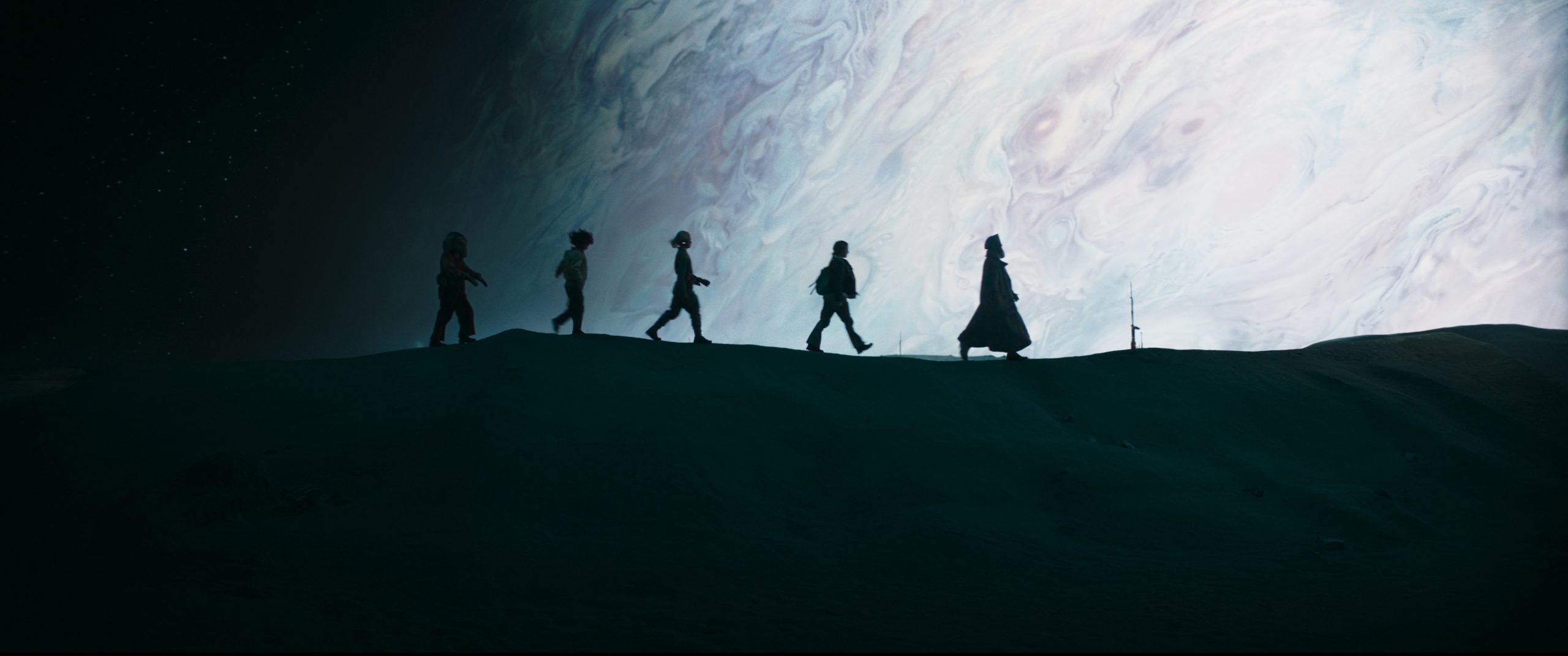
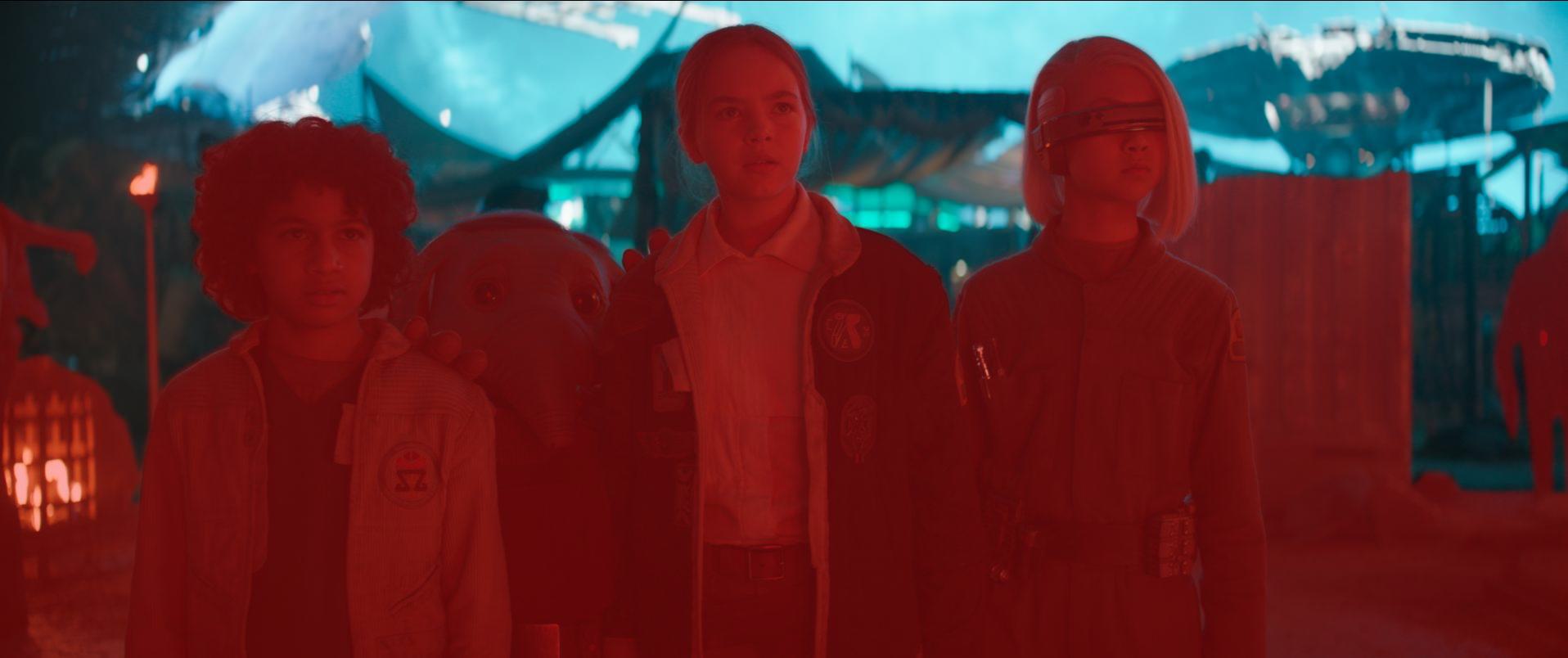
Still searching for At Attin’s coordinates, Jod (Jude Law) and the kids land the Onyx Cinder on the Observatory Moon, seeking help from an alien, owl-like astronomer named Kh’ymm (voiced by Alia Shawkat). The group treks from the ship to the observatory, a striking sequence that includes visuals of the characters silhouetted against a night sky dominated by a nearby planet.
The scenes were all captured in camera on the StageCraft volume, with the actors walking across a practically built dirt mound and the background displayed on the LED screens. “That was another one of our more successful volume shoots,” ILM visual effects supervisor Eddie Pasquarello says. “Perfect use of that, in my opinion.”
The volume also helped create the illusion of the observatory center rotating within the outer walls.
“That one was the most technically challenging,” says ILM virtual production supervisor Chris Balog. “We had to figure out multiple ways of tracking the camera to make sure that the wall was moving in conjunction with it. For some shots they had a circular dolly moving around the set. So we had to make sure that the wall was moving correctly too.”
The volume was used in 1,565 shots in all, Balog says, and 900 of those shots were in-camera finals.
Like Neel (Robert Timothy Smith), Kh’ymm was also realized using a combination of digital and practical techniques, depending on the scene. In some shots, a practical puppet created by Legacy Effects captured her performance entirely in camera. In other scenes, ILM collaborator Important Looking Pirates created a full computer graphics head composited on top of the puppeteered body or utilized a fully digital replica carefully animated to closely match the movements of the puppet.
The episode concludes with the arrival of a pair of familiar New Republic ships summoned by Kh’ymm. “Of course, we see our first X-wings,” Pasquarello smiles. “That was right in our wheelhouse and fun for everyone to do.”
(Credit: ILM & Lucasfilm)
Can’t Say I Remember No At Attin
The Onyx Cinder arrives at a world that initially looks a lot like At Attin but is actually the conflict-battered sister planet At Achrann, a place where children are trained as soldiers in a war between the Troik and Hattan clans. The kids hike through the decayed remains of a neighborhood and city that once looked like their own. Live-action scenes were shot with minimal sets against blue screen backgrounds and completed with extensive environments created by ILM partner DNEG, including dilapidated buildings and streets, a fully-digital armored assault tank, and a small herd of horned eopie creatures.
The heroes are challenged by a Troik warlord named General Strix (Mathieu Kassovitz) to prove their strength in battle. In exchange, Strix’s daughter Hayna (Hala Finley) takes them to an abandoned tower that may have the coordinates they need to get home. Inside the tower – another set that utilized the StageCraft volume – SM-33 (voiced by Nick Frost) reveals that his previous captain ordered him to destroy the coordinates to At Attin. Fern attempts to override his memory, triggering a hostile response and transformation sequence that required significant digital work by ILM’s Sydney studio.
“Whenever SM-33 goes into attack mode, he’s more CG versus the puppeteered, less-docile version of him,” Pasquarello explains. “When he has those armored plates on, or whenever he grows, that’s all CG.”
The abandoned tower set utilized a mix of 3D elements and backgrounds in the volume along with practical columns, floor, and set dressing.
“I thought it had a really amazing photographic feel to it,” says Balog. “Some of the biggest challenges are blending the volume with the real set. And that’s why the virtual art department is such a key factor, because they have to work hand-in-hand with the set department and the 3D content to make sure the textures on everything look the same.”
“ILM had a really great content team led by [visual effects associate supervisor] Dan Lobl, creating content that is believable and looks real,” Balog says. “We’re not successful unless they’re successful.”
The setting also provides subtle foreshadowing to events that unfold inside the At Attin Supervisor’s Tower in episode eight,” says Pasquarello. “The environment was unique and custom,” he explains. “There’s a deliberate tilt up to the ceiling, and you can see some cables hanging. Those are the remnants of their Supervisor, who’s been totally gutted and ripped out. I think it’ll be fun for people to watch the series again, and they’ll understand.”
(Credit: ILM & Lucasfilm)
Lanupa’s Luxury and Peril
Next stop is a mountain on the planet Lanupa, the site of an old pirate lair that SM-33 believes contains At Attin’s coordinates. It’s also the site of a lavish hotel and spa occupied by high-end patrons, including a Hutt who swallows a Troglof mud bath attendant and a massive, tentacled creature called Cthallops, both achieved digitally with the help of Important Looking Pirates.
Jod is captured by the pirate horde and sentenced to death. He’s allowed a few remaining minutes for a final appeal, measured by an hourglass filled with churning blue plasma. “It wasn’t a fully fleshed-out idea on set. We knew we needed an hourglass, and we would be doing it, but it was just kind of a fun adventure to figure out,” Pasquarello says. “We were trying to do some fun ideas with how the plasma would show the passage of time.”
Successfully navigating a series of booby traps, the children, Jod, and SM-33 enter the subterranean treasure lair of pirate captain Tak Rennod, another set that relied heavily on the StageCraft volume.
“They built the big skull throne that the pirate king sat on,” says Balog. “They had all the treasure in the room, four big columns, and the stairs and the rock when they walked in. Everything else in the cave was created with the volume.”
After finally discovering At Attin’s secret, as well as its location, Jod betrays the children, who escape the lair by sliding down a series of tunnels to the base of the mountain. As Wim (Ravi Cabot-Conyers), Neel, Fern (Ryan Kiera Armstrong), and KB (Kyriana Kratter) figure out how to get back to the Onyx Cinder, they encounter a cast of curious trash crabs.
“They’re not droids,” explains Pasquarello. “They’re literally crabs with garbage on their backs. And that was a lot of work to make that understandable. They’re not synthetic. It’s one of those sequences that is very rich in detail, and there’s a lot going on.”
While the baby crabs are digital, a massive mama crab was created as a detailed stop-motion puppet by Tippett Studio, the production company founded by original Star Wars animator and creature designer Phil Tippett. The beast’s jagged, rusty, junk-laden look prompted the Tippett crew to nickname it “Tet’niss.”
(Credit: ILM & Lucasfilm)
“We generally did the rough blocking of the shots at ILM first,” production visual effects supervisor John Knoll explains. “We figured out what the shots wanted to be, the pace, and how big the creature was going to be. Once we got all those layouts approved, it went to Tippett’s, including all the camera info so they could figure out where the camera was positioned relative to the set and the puppet.”
A low-resolution, untextured 3D model of the mama crab also helped animators work out the creature’s speed and movement in advance of shooting on the stop-motion stage.
“Since stop-motion is very labor intensive, you don’t want to have to go back and reshoot things,” Knoll says. “So we got approval on their preliminary animation, and then they would go in and do the detailed stop-motion. And that was a particularly complicated character because there are so many moving parts on it. Obviously, there are the eight legs, but then there are all kinds of little pieces on it that bounce and move when it starts to walk. I’m impressed that they were able to keep that all straight in their heads.”
The mama crab puppet weighed in at about 15 pounds, requiring support from a mechanical harness that was digitally erased in post-production.
(Credit: ILM & Lucasfilm)
Onyx Cinder Metamorphosis
The kids reach the Onyx Cinder just as an enormous scrapper barge closes in, threatening to pulverize the ship and ingest the remains into its fiery maw. “There’s sort of a tug-of-war between the ship and this garbage muncher,” Knoll explains. When the ship is snagged by one of the muncher’s claw-like arms, Fern decides their only hope for an escape is by triggering the emergency hull demolition sequencer.
A series of rapid explosions ripple down the hull, causing the Onyx Cinder to shed its worn outer shell. A smaller, silver-colored version of the ship is freed and rises out of the debris. “Our code was the ‘ironclad’ and the ‘sleek ship,’” Pasquarello says of the two Onyx Cinder variants. “We went around a lot with the shedding of the hull. We didn’t want it to all blow off and just be conveniently revealed. It had to come off like a snake’s skin.
“And the effects are just dialed up to 11,” continues Pasquarello, who hopes that fans notice a key storytelling detail of the ship’s metamorphosis. “One cool thing that I don’t think everybody knows is that when you transition between the ships, we don’t share all the same engines, but the engines that we do share between the ships change from a warm color to blue.
“One of our challenges was that the sleek Onyx Cinder is a cleaner-burning ship,” Pasquarello says. “The whole conceit was that the engines were that orange color because they were dirty and running bad oil. We kept debating: ‘When would it turn blue?’ The sequence is a very elegant transition shot where you see it sputtering away all of that oil and dirt to the cleaner burning blue that we got.”
Knoll says the transformation was one of the more “complicated” scenes to pull off. “There are a lot of simulation layers that are in there, and the sleek ship doesn’t actually fit inside the armored hull, so there was some sleight of hand that had to happen to make that appear to work,” he explains.
The end result is one of Pasquarello’s favorite sequences. “Every time I watch it, I still get chills,” he says. “It just speaks to the detail that the creators had about this show. They thought of everything. [Jon] Watts was very clear with us that this is why this is happening. And we just had to figure out how to execute that.”
(Credit: ILM & Lucasfilm)
The Return to AtAttin
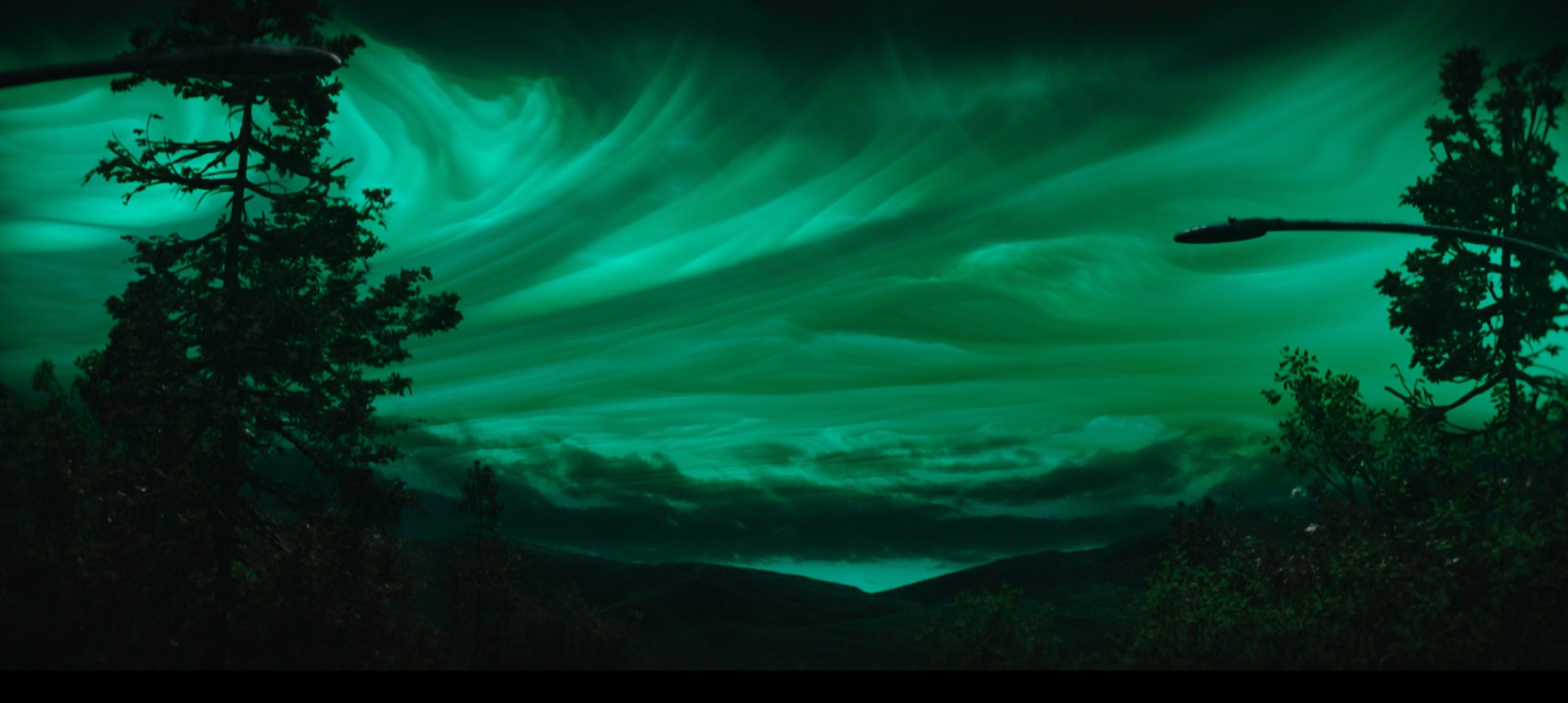
At Attin’s coordinates in hand, Wim, Fern, KB, and Neel arrive at their home planet aboard the transformed Onyx Cinder. A horde of pirates led by Captain Brutus (portrayed by Fred Tatasciore and performance artist Stephen Oyoung) are not far behind. But the pirates are stopped by the planet’s protective, nebula-like barrier. “Going through the barrier for us was a really big endeavor,” says Pasquarello. “It’s something that started early because it’s so effects-driven and heavy and large scale, and there’s a lot of story to be told in there.”
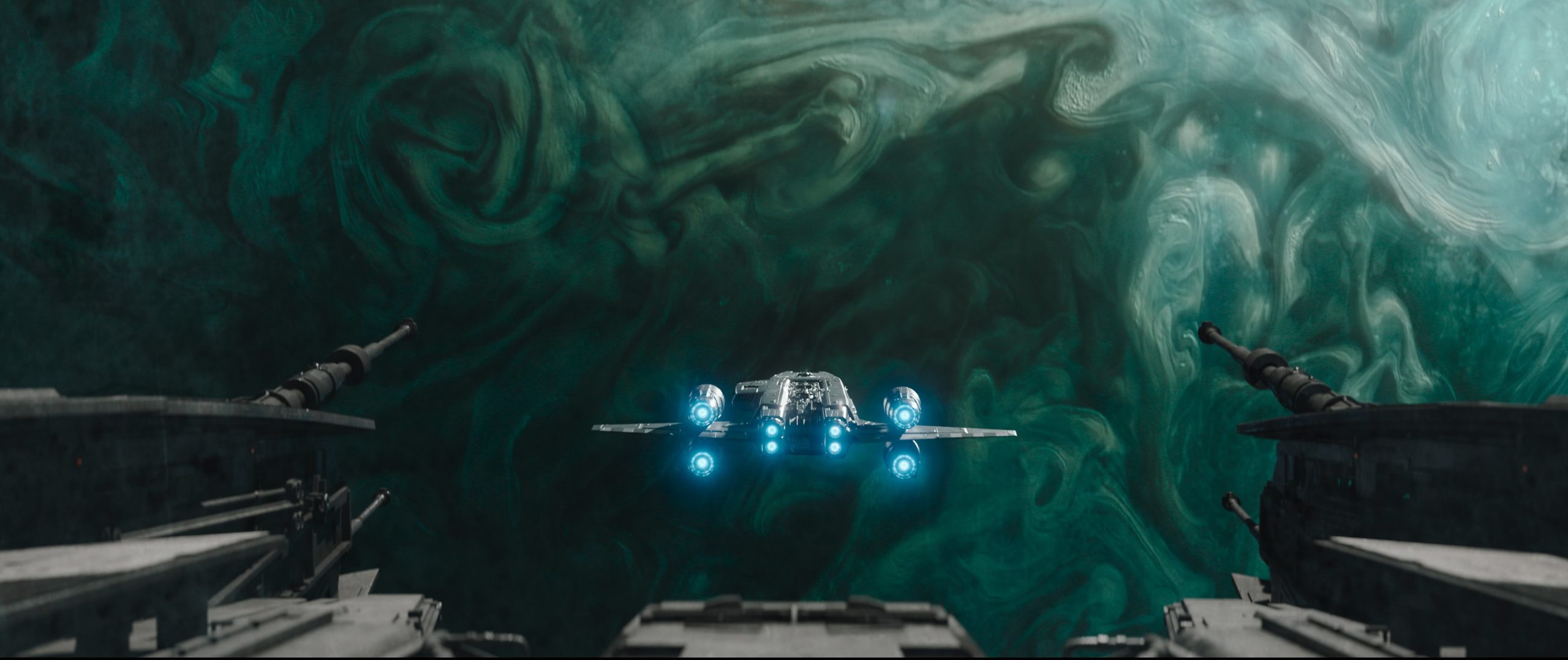
An array of satellites protect At Attin, blasting deadly arcs of lightning toward unauthorized ships. SM-33 reveals the Onyx Cinder is an At Attin vessel, which allows it to pass safely. The design and function of the satellites – crafted by ILM’s digital modeling department – evolved over time, says Pasquarello. “At one point, the satellites were actually emitting atmosphere. There were versions where you could literally see atmosphere coming out of them to create that cloudy environment,” he explains.
Pirate ships pursue the Onyx Cinder through a toxic swirl of greenish-blue gasses but are destroyed by the satellites. “There’s a lot of heavy, heavy sims [simulations] and work that went into that sequence, and then the landing on At Attin,” Pasquarello says, giving credit to ILM’s compositing and effects teams.
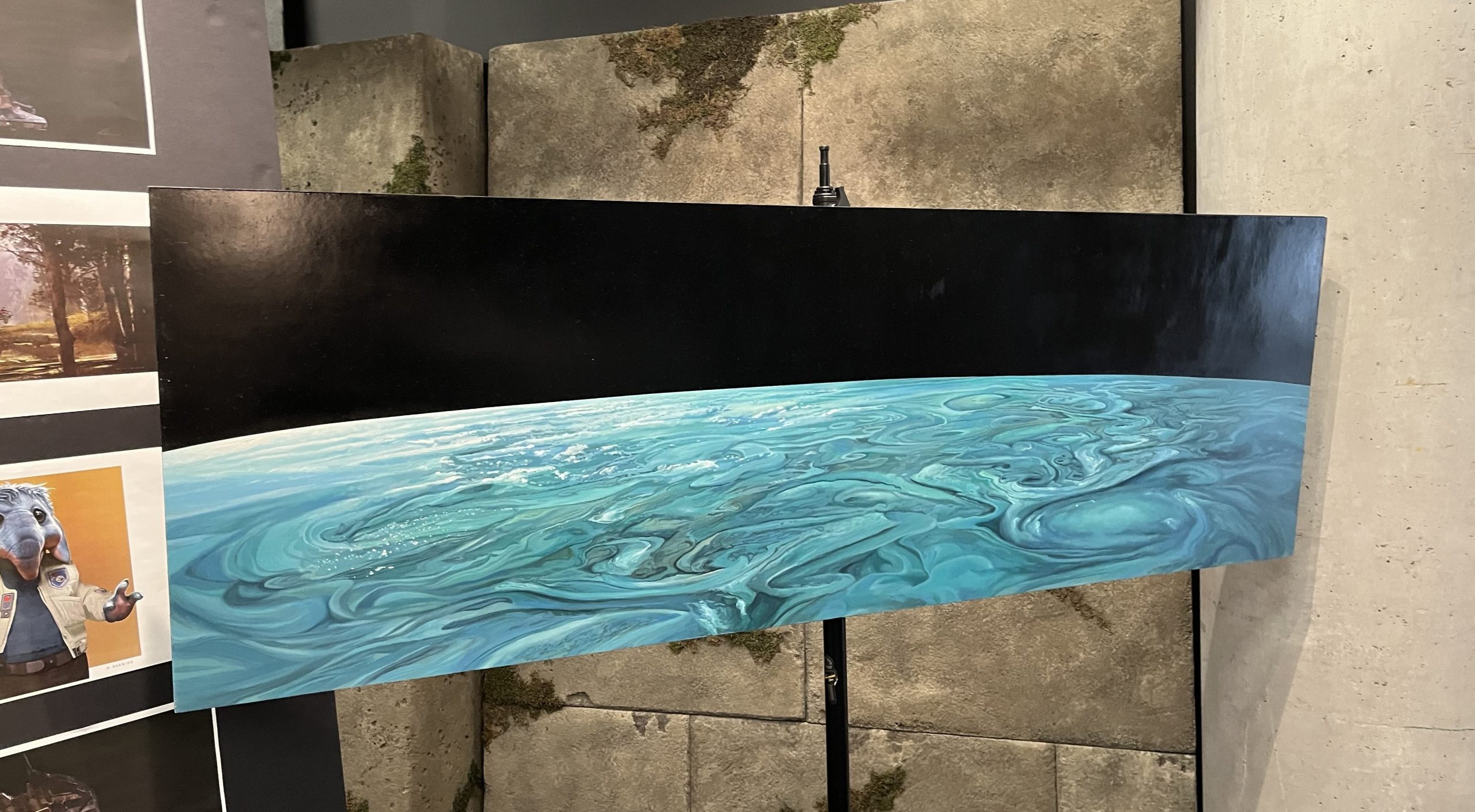
One element featured in the return to At Attin came along late in the production process. With shot delivery deadlines approaching faster than a ship in hyperspace, John Knoll got an email from Jon Watts. “He said, ‘We’ve done animatronic creatures, we’ve done rubber monsters, we’ve done stop-motion creatures. We did miniature and motion control. The only thing we haven’t really done from the old days is a traditionally-painted matte painting. Is it too late to do one?’” Knoll recalls.
With only two months to make it happen, Knoll reached out to former ILM artist Jett Green at her home in Hawaii and asked if she’d like to put her brushes to work creating a traditional oil matte painting of At Attin. Using paint instead of pixels to compose a matte image is something ILM hadn’t done in about 30 years, according to Knoll.
“I love being part of this history,” Green tells ILM.com. “John and I had this conversation about it being a planet. He had the references already, and he told me what he needed. I even built the Masonite panel for it, and it just felt really good.” Knoll now has the roughly six-by-two-foot painting displayed in his ILM office.
At Attin matte painting created by Jett Green (Credit: ILM & Lucasfilm)
Another ILM veteran, modelmaker Bill George, is also credited on Skeleton Crew. George first worked for ILM building models forStar Trek II: The Wrath of Kahn (1982). For fun, he once built a mashup of two similar ship designs: the concept for Han Solo’s original “pirate ship” from Star Wars: A New Hope (1977), and the Eagle from the sci-fi series Space 1999 (1975-1977). He called it the Millennium Eagle.
“Somebody at Lucasfilm saw it,” George says. “I got a request saying, ‘Hey, can you bring that model in? We want to scan it.’”
The computer graphics version of George’s Millennium Eagle model now appears among the ships docked at Port Borgo.
It’s not the first time one of George’s homemade models ended up in a galaxy far, far away. During production of Star Wars:Return of the Jedi (1983) ILM was in desperate need of a new Y-wing model. George offered to bring in the one he’d built years earlier. It was so good, it ended up being used in the film.
Posing as an emissary from the New Republic, Jod gains access to At Attin’s bountiful treasure: 1,139 subterranean, credit-filled vaults. The vault is an entirely digital environment that DNEG populated with security droids, industrial robotic arms, and a seemingly endless supply of golden computer graphics credits that line the walls and spill into Jod’s rapacious hands.
Jod, Fern, and her mother, Fara (Kerry Condon), ascend the Supervisor’s Tower. The Supervisor is revealed to be a large, domed droid with a red eye. Only a small part of the Supervisor droid was constructed physically, with the StageCraft volume completing the illusion.
“Virtual production is the future of visual effects,” says Chris Balog, a 20-year ILM veteran with a background as a digital compositing artist. “It’s where the next evolution is going. And if you can do it successfully, it’s an amazing tool.”
Jod destroys the Supervisor with a lightsaber, triggering a citywide power outage and disabling the barrier satellites, clearing the way for the massive pirate frigate to reach the planet’s surface.
The enormous frigate survives the barrier and floats ominously over the city. “The great effects work done with the frigate coming through the clouds was Travis Harkleroad, our effects supervisor,” Pasquarello says. “Those explosions all come from him and his people.”
The all-computer graphics frigate’s arrival is meant to evoke the alien-arrival feeling of films like Close Encounters of the Third Kind (1977) and Independence Day (1996). “There was no practical frigate,” Pasquarello says. “It’s a gorgeous ship. It’s a very complex-looking ship, and there’s a lower and upper deck that was built inside, and ships and skiffs that come out of that.”
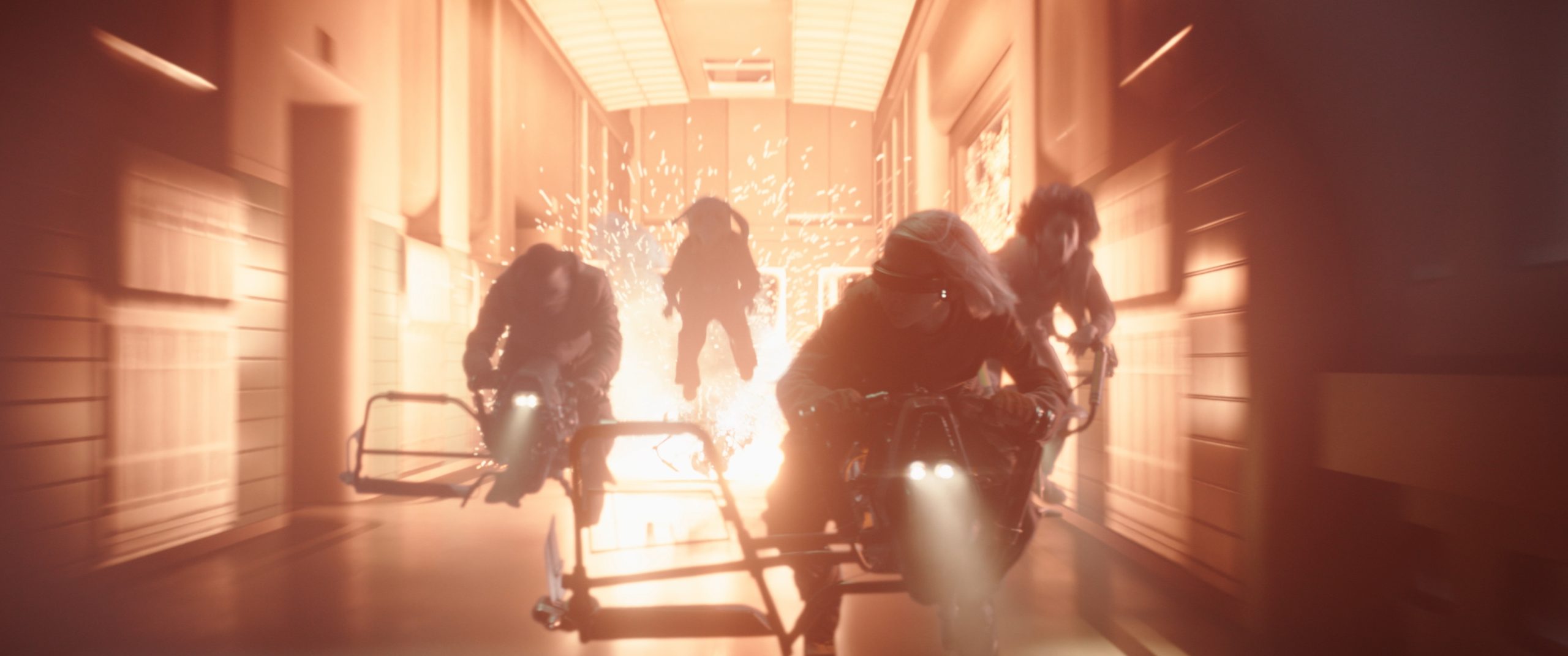
Wim, Neel, and KB devise a two-part plan to rescue Fern and call Kh’ymm for help. Jumping on speeder bikes and pursued by skiffs loaded with angry pirates, the kids – along with Wim’s dad, Wendel (Tunde Adebimpe), make their way across the city.
For close-up shots, the actors were shot on a blue screen stage, with the more dangerous action – like a perilous jump across a canyon – requiring the use of digital doubles. “The speeder bikes on this show were a real challenge in the sense that we can’t put kids into a lot of heavy stunt work,” says Pasquarello. “So there was a lot of work done to help the dynamics and the physics of that chase.”
The action continues through an all-computer graphics forest, through the city, to the school. Pasquarello praises ILM’s animation, layout, simulation, and environments teams for the extensive 3D build. “They’re going through an entirely CG environment, created by the environments team that you just don’t question,” he says. “Not one thing that they fly over or go through is real.”
Summoned by Kh’ymm, New Republic forces arrive at At Attin, attacking the pirate frigate and saving the day. The squadron of X-wings is backed up by B-wings, another fan-favorite fighter that first appeared in Star Wars: Return of the Jedi (1983) and later in Star Wars: Rebels (2014-2018).
“The B-wings were a favorite of mine as a kid, so I did my best to try to get them featured in some big, heroic moments,” says ILM animation supervisor Shawn Kelly. “Initially, we had them dropping bombs on the pirate ship, but [Lucasfilm chief creative officer] Dave Filoni had the great suggestion to try the ‘composite laser’ weapon. Honestly, I had no idea what that was at first. As soon as the meeting was over, I looked it up and realized it’s the ridiculously cool quadruple-beam attack seen in Rebels. I got so excited by the idea that I stayed up late and designed a new shot that could really show off that attack. I felt like I was 10 years old again, playing with my B-wing toy in the backyard!”
Balog would composite the B-wing shot himself, working in collaboration with the FX team to evoke the feeling of the laser as seen in Rebels, but with a more realistic style appropriate for live-action.
The battle-wounded pirate frigate makes a spectacular crash landing, a completely computer graphics sequence that Pasquarello says was carefully designed to depict minimal casualties. “The conceit is that everyone’s been rounded up to a specific space, so we know that everybody evacuated,” he explains. “You notice it doesn’t really tear into buildings as the frigate crashes; it’s just pulling up the street and abandoned cars. It crashes gently into the waterway.”
(Credit: ILM & Lucasfilm)
Galactic Global Effort
Bringing Skeleton Crew to life with its creative mix of old and new took a tremendous amount of effort from artists around the globe. “I worked with a team of 50 animators that were in San Francisco, Vancouver, Singapore, Sydney, and Mumbai,” says Pasquarello. “A big team. We’re one big happy family; we’re all working together to bring these characters to life.”
Knoll and veteran ILM modelmaker John Goodson say they feel lucky to still be bringing old-school ILM effects expertise to new productions. “You know, there’s only a few of us that still know how to do this stuff,” says Knoll. “And part of this for me was, I want to bring some younger people who are exposed to what we’re doing, who are trained up to use the gear so that when I’m not available to do this stuff there are people who know how to do it.”
“We both came here because we wanted to shoot spaceship models,” Goodson adds. “And we’re still getting this opportunity. It’s a phenomenal experience to be able to do this, to take advantage of some of the newer technologies, and revisit this stuff from our past, which is the reason we got in the business to begin with.”
For Shawn Kelly, a 28-year ILM veteran, working on Skeleton Crew was a career highlight. “Our review sessions on this project were by far the most enjoyable, fun, collaborative,” he says. “Watts and Ford are awesome. They have tons of great ideas. They’re really collaborative and open to ideas. It felt like a family just trying to make the best thing we can make all together.”
(Credit: ILM & Lucasfilm)
–
Clayton Sandell is a Star Wars author and enthusiast, TV storyteller, and a longtime fan of the creative people who keep Industrial Light & Magic and Skywalker Sound on the leading edge of visual effects and sound design. Follow him on Instagram (@claytonsandell) Bluesky (@claytonsandell.com) or X (@Clayton_Sandell).
The first part of an extensive look behind-the-scenes of the visual effects process for Lucasfilm’s pirate-themed Star Wars adventure series.
By Clayton Sandell
(Credit: ILM & Lucasfilm)
The sprawling, live-action seriesStar Wars: Skeleton Crew (2024-25) is like a map leading to a visual effects treasure chest. Open it, and you’ll find a trove of 3,200 visual effects shots that seamlessly blend the latest digital artistry along with traditional techniques that both innovate and honor the unique legacy of Industrial Light & Magic.
In creating a new adventure story set in our favorite galaxy far, far away, Skeleton Crew creators and executive producers Jon Watts and Christopher Ford set a delightfully retro tone for the series, which directly informed ILM’s approach to the visual effects.
“Very early on, it was apparent that a big part of the intended charm of the show was that it was going to have this sort of Amblin, ’80s movie sort of vibe to it,” Skeleton Crewproduction visual effects supervisor John Knoll tells ILM.com. “That extends to more than just how you tell the stories. It also extends to choices like embracing animatronics, monsters, and building miniatures and stop-motion creatures.”
Pulling it off would involve hundreds of talented artists at ILM studios around the globe, including San Francisco, Sydney, Mumbai, and Vancouver, along with a few outside visual effects partners.
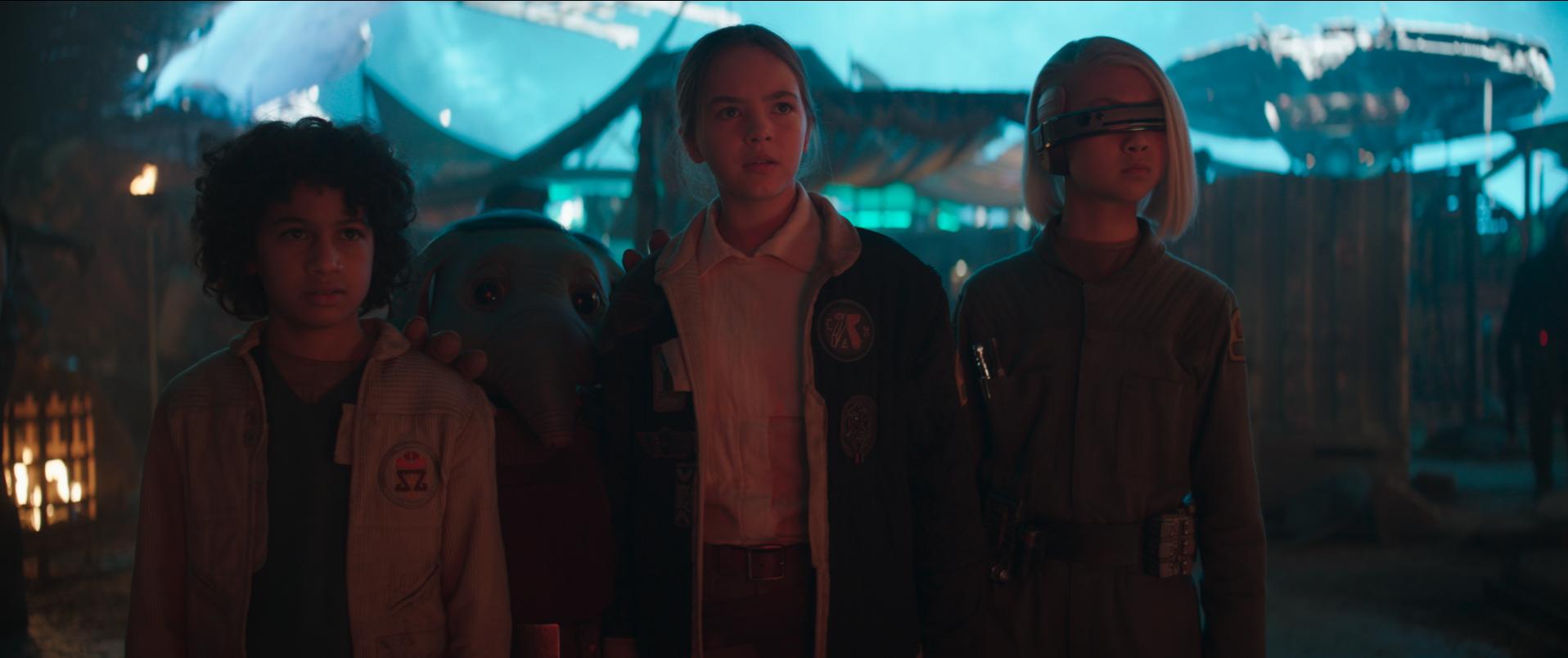
Over eight episodes, Skeleton Crew follows the adventures of Wim (Ravi Cabot-Conyers), Neel (Robert Timothy Smith), Fern (Ryan Kiera Armstrong), and KB (Kyriana Kratter)—four kids living a peaceful, if mundane, life on their home world of At Attin. After discovering a mysterious buried space cruiser, the four friends unintentionally launch themselves into hyperspace and must find their way home by navigating a dangerous galaxy of allies, enemies, pirates, and monsters.
Early in preproduction on Skeleton Crew, Knoll says the ILM team had to determine the best way to approach the show’s varied visual effects needs. “It just read like an expensive show because of all of the different planets we go to, all the different types of creatures, and the different environments,” explains Knoll, who also serves as ILM’s executive creative director and senior visual effects supervisor. “Trying to figure out how to make that affordable was one of the first things that faced the visual effects team.”
Following a methodology first established duringThe Mandalorian (2019-2023), Knoll says Skeleton Crew production was divided roughly into thirds. “About one-third of it was shot in our StageCraft LED volume, one-third was shot on soundstages with conventional sets, and then one-third was shot on a backlot,” Knoll reports.
Galactic Planet-hopping
Skeleton Crew unfolds across multiple worlds that are brand new to Star Wars, beginning with At Attin. The planet’s suburban-like residential neighborhoods utilized a minimal exterior set located near the California State University Dominguez Hills campus in Carson, California. “There was an undeveloped lot that was just adjacent to the campus that was available. So we shot on that,” Knoll says. The practical parts of the set consisted of only the street, a sidewalk, parts of a few houses, and a small patch of grass surrounded by a large blue screen background, says ILM visual effects supervisor Eddie Pasquarello.
“We added all the trees, houses, skies, and trams,” Pasquarello reveals. Even the street was narrowed. “Some things are not seen, and those are the ones that are the most impressive in my opinion, because you’re not saying, ‘Oh, that’s visual effects.’ We’re hoping people watch the actors and enjoy the story versus worrying about the environment.”
Wim and Neel board a tram for the ride to school, a sequence that introduces the more urban areas of At Attin. Artists digitally extended the school’s exterior—shot on another minimal set—and helped create an expansive cityscape designed to suggest At Attin’s backstory.
“[Jon] Watts wanted it to feel like a place that was built some time ago, but it’s been mostly kept up pretty well. And it’s a place where everyone more or less follows the rules,” says ILM animation supervisor Shawn Kelly.
On the ride to school, Wim stares out the tram’s back window as the vehicle drops into an underground tunnel. After the scene was shot, artists were asked to enhance the movement of both the tram and the camera, requiring complex digital layering work to achieve the right perspective. “We had to split apart all the kids inside the bus to get the proper parallax,” Pasquarello explains. “There’s a ton of artists that helped in layout, and comp and environment—all across the board—that made the shot work.”
Pasquarello says a number of ILM teams also worked throughout the production to develop the right look for At Attin’s city architecture. “This was a really Herculean effort,” he notes. “This is a huge environment build from the team. But it also takes the disciplines of animation and lighting.”
In one shot where a malfunctioning hoverbike leaves Fern and KB stranded on the side of the road, Jon Watts asked ILM to enhance the background with a custom building. “He sent us a photo of a mall,” Pasquarello says. “He said, ‘I kind of want it to look like the mall that I remember as a kid.’ And that’s what that is inspired by. We basically took that photo and ‘Star Wars-ified’ it.”
Neel Nation
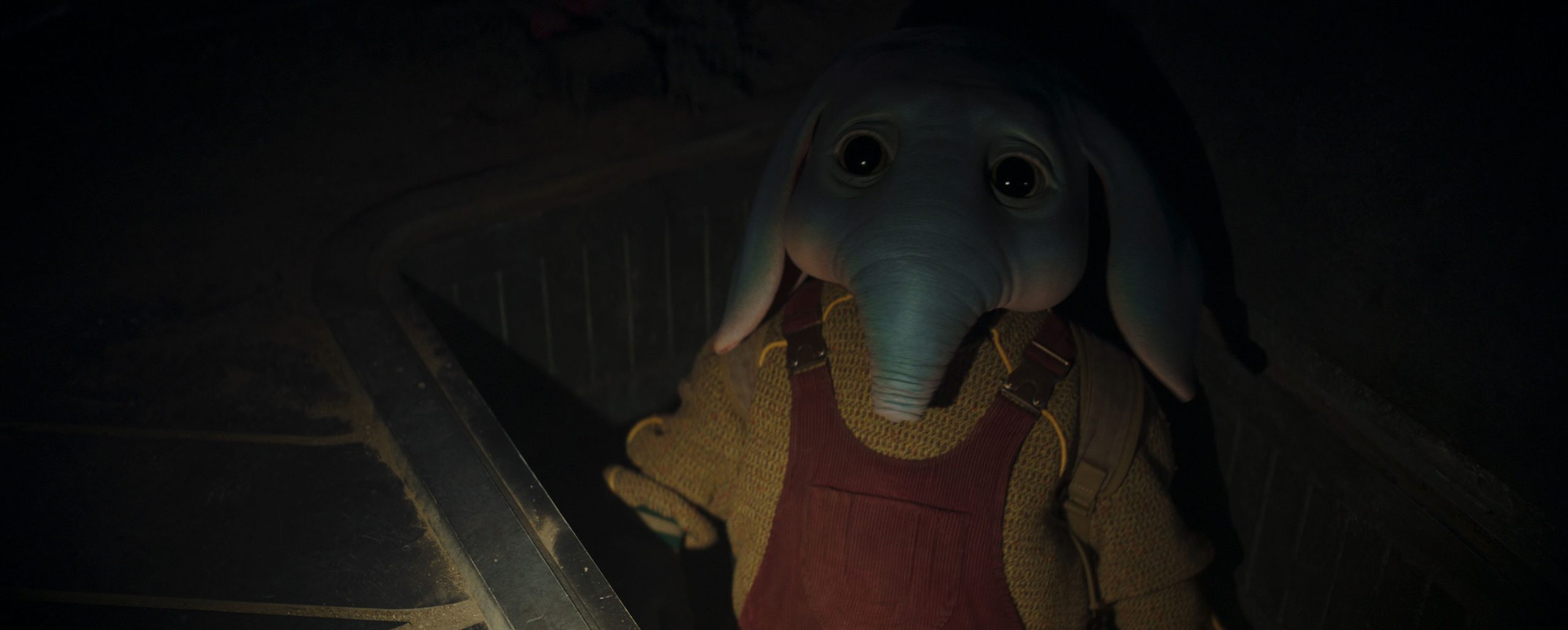
One of the earliest discussions among the Skeleton Crew creative team was how to bring Wim’s best friend Neel to the screen. “Neel was a fun and interesting challenge,” Kelly tells ILM.com, noting that the blue elephant-like character is a three-way creative partnership combining Smith’s voice and performance, the work of performance artist Kacie Borrowman, and extensive digital creativity.
“The production was feeling like Neel probably needed to be computer graphics throughout,” Knoll says, explaining that the hours spent applying makeup or prosthetics to Smith would have cut into the child performer’s limited shooting window. “Just seeing how often Neel was going to be on screen—he’s on every other page of every script—he was potentially going to be the most expensive part of the entire show,” recounts Knoll, who set a goal of reducing the all-digital Neel shots by half. “I thought, ‘there’s got to be some practical version of Neel that we can do, at least for over-the-shoulder and wide shots.’”
For that mission, ILM turned to Legacy Effects, a frequent collaborator on Star Wars projects includingAhsoka (2023 – present) andObi-Wan Kenobi (2022). “Neel’s head was built by Legacy as a fully animatronic puppet and was meant to do a lot of the heavy lifting of the performance,” says Pasquarello.
Credit: (ILM & Lucasfilm)
Neel’s many facial expressions developed from an innovative fusion between the Legacy puppet and considerable digital augmentation. “As they started filming the show, everyone fell in love with how the practical puppet face works,” Kelly recalls. “It’s very charming.”
Digital animation took over in scenes where the story called for subtle emotional expressions that were beyond the capability of the puppet, Kelly says, noting that roughly half of Neel’s shots are either digitally augmented or completely digital. “We came up with a bunch of facial expressions,” he explains. “There’s ‘worried.’ We’ve got ‘scared.’ We’ve got ‘sad’ Neel and ‘happy’ Neel, the Neel that we love. Sometimes we just really need to scrunch up his face and we could scrunch it up with or without his ears, things like that.”
Even in shots where the practical puppet head was used on-set, artists digitally erased a small mesh screen on Neel’s trunk that had allowed the performers inside to see and breathe more easily. ILM lead creature modeler Jonathan Sabella also helped digitally sculpt the computer graphics version of Neel to make sure it was identical to the puppet. “That might just be adjusting neck wrinkles or the trunk, and he can shape it back and make it just right or push the emotion even a little further than our out-of-the-box controls could do. Jonathan was a really key part of bringing this together,” says Kelly.
During shooting, facial capture technology created by ILM Technoprops was used to record Smith’s performance. “In the end, we didn’t use the facial capture directly,” Kelly says, explaining that Neel’s expressions were instead crafted by animators in order to more closely match the style of the puppet.
“We could have gone with a bigger performance,” Pasquarello adds, “but a lot of it was really leaning in and matching the aesthetic that was established. If we were to do something beyond that, it felt wrong because we were losing that kind of simple on-set practical aesthetic, which is a very Star Wars aesthetic. It’s always best to have this mix of different techniques happening at once. It creates the best illusion for the audience. It’s hard to pin down what’s going on if some of it’s real and some of it’s not.”
Rise of the OnyxCinder
At the bottom of a forest ravine, the kids discover the entrance to a long-buried, hidden starship called the Onyx Cinder. Wim unwittingly activates the dormant vessel, causing it to lurch skyward with the four kids still on board. As massive layers of soil, rocks and trees cascade off the rising ship, the kids try unsuccessfully to escape. “This was a sequence that went on for a while for us,” says Pasquarello. “Just moving all that earth and lifting that ship and having it turn over was a big challenge.”
Live action plates of the four young actors standing on a small set were completed with an entirely digital environment. “The hatch and the four kids. That’s all we had to work with,” Pasquarello remembers. “They were just standing on a small practical piece of the ship, and then everything else was added around them.”
Digital doubles were also created for all the characters and used throughout the sequence, especially useful for shots that might have been perilous for the young actors. “Sometimes when they’re hanging out of the open porthole, they’re animated,” Kelly says. “The animated Wim is waving to his dad.”
Various simulations—from tree leaves, to swirling embers, dust, and engine vortices kicking up dirt—help complete the sequence. “I think this really shows off the world-class effects team and environment team. I’m just always blown away by this sequence,” says Kelly, noting that many of the forest scenes were created with the help of artists in ILM’s Vancouver studio.
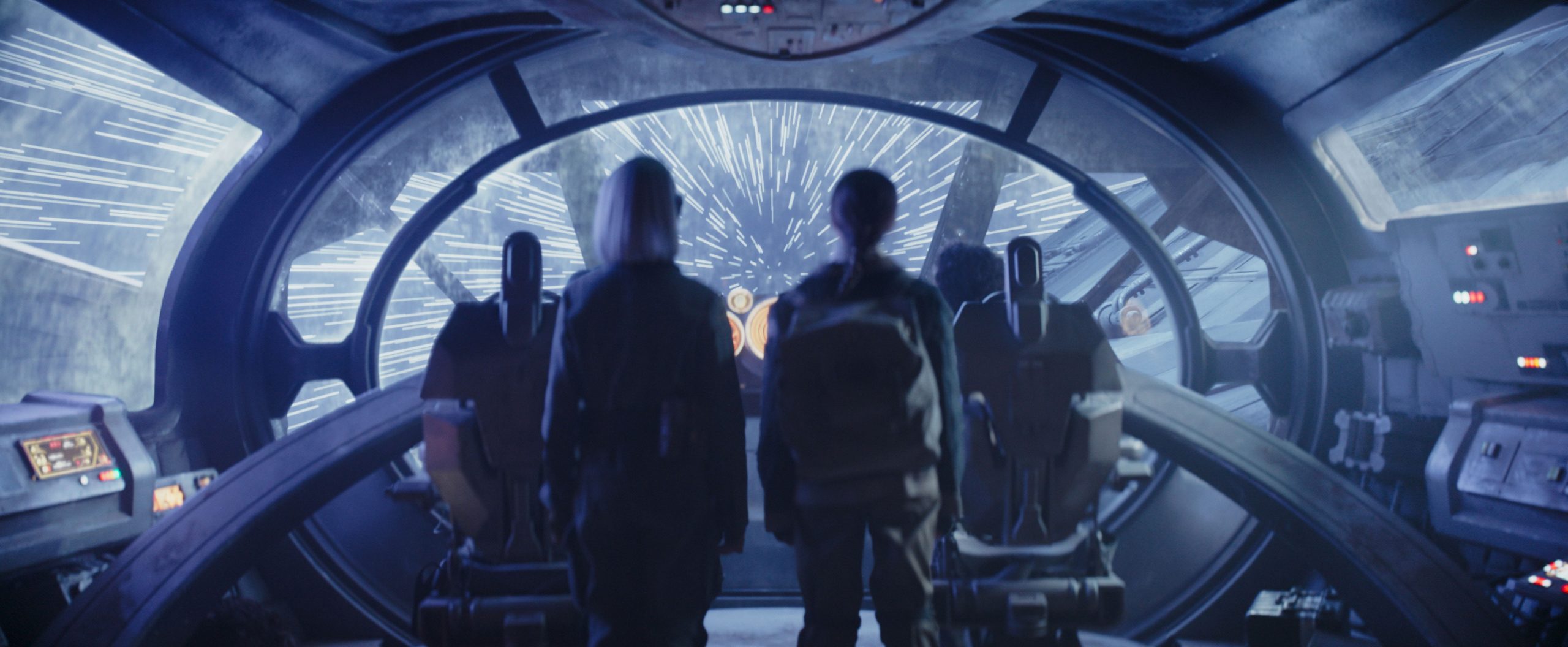
Once in space, the kids discover the ship’s first mate, a droid named SM-33 (voiced by Nick Frost). The character was realized using a Bunraku-style puppet (operated by performance artist Rob Ramsdell) and fully-digital versions, depending on the scene.
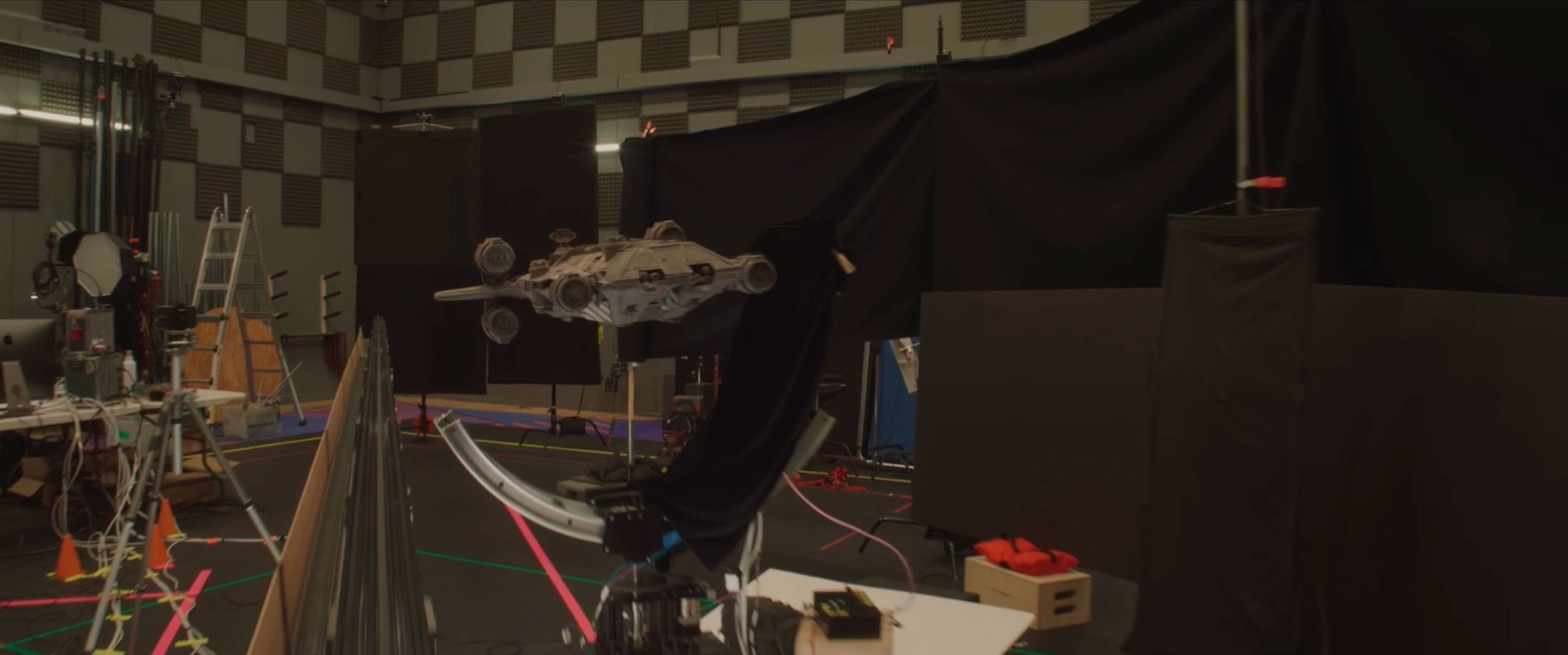
The Onyx Cinder first came to life as a 3D computer model built by Rene Garcia and Jay Machado and textured by Kim Vongbunyong. Veteran ILM modelmaker John Goodson then crafted a practical version that included rotating sections and flickering LED lights in the engines. “It’s very old school. It’s all handmade. There are a handful of model kit parts on it for detail. But even a lot of those are handmade,” Goodson says. “It’s styrene and acrylic with an aluminum armature inside of it.” Modelmaker Dan Patrascu also helped build the Onyx Cinder chassis and mounted motors inside the model.
“It gets designed in the art department,” Knoll says. “Then you validate the design, so everybody’s happy with it. John builds his version of it. And then we true up our computer graphics model to match what John did. Something I really liked about the model John built was that the paint finish was beautiful on it. And so that was very extensively photographed and then we re-textured the CG model, based on what John had done.”
The practical model was then mounted on a motion-control rig at ILM’s San Francisco studio, reminiscent of the original Dykstraflex system first pioneered during production of Star Wars:A New Hope (1977).
“[Executive producer] Jon Favreau was pretty enthusiastic about wanting to do this back for season one of The Mandalorian, and I was one of the few people still left at the company that used to do motion-control,” says Knoll. “And we figured, ‘We can make this work.’ Probably the biggest obstacle was budget. The reason that we don’t do this as often as we used to is that it’s more expensive than computer graphics. And the best way that I could figure out how to make this affordable for the show was if this was being done as a garage operation.”
Credit: (ILM & Lucasfilm)
Knoll repurposed the motion-control rig he built in his garage for The Mandalorian, adding the capability to drive more motors on the Onyx Cinder. “The system that I built for season one and two of Mando could drive eight motors,” Knoll recalls. “That gave me track, pan, tilt, and focus, and yaw-pitch-roll on the model. That was sufficient for everything we needed to do with the Razor Crest. But all the engines pivot on the Onyx Cinder, so there are four motorized axes built into the ship. Eight axes isn’t enough to drive all of that. So I expanded the electronics to drive 16 channels.”
Camera moves were first plotted out in Autodesk Maya, approved by the filmmakers, then translated to the motion-control system with a goal of matching a long-established Star Wars aesthetic. “Our approach for the shots that were going to be a miniature is, first—we animate it in the computer, and we figure out, ‘what’s the best way to tell this story?’” says Shawn Kelly. “What’s the coolest camera move that still feels like an original trilogy camera move that tells the story and has the mood that we want, and the ship has the motion that we need, in the path that we need?”
The motion-control system was operated by Lindsay Oikawa Pflum and utilized Canon DSLR camera technology. Each shot required a dozen or so passes to capture varieties in exposure and lighting to give compositing teams more options when layering the final image. And in another throwback to ILM’s early days, converters allowed the use of older Nikon lenses that were used to film models for Star Wars:Return of the Jedi (1983). The final result is a flawless collaboration between the real-world model and digital model, all paying homage to ILM’s legacy.
First Stop: Starport Borgo
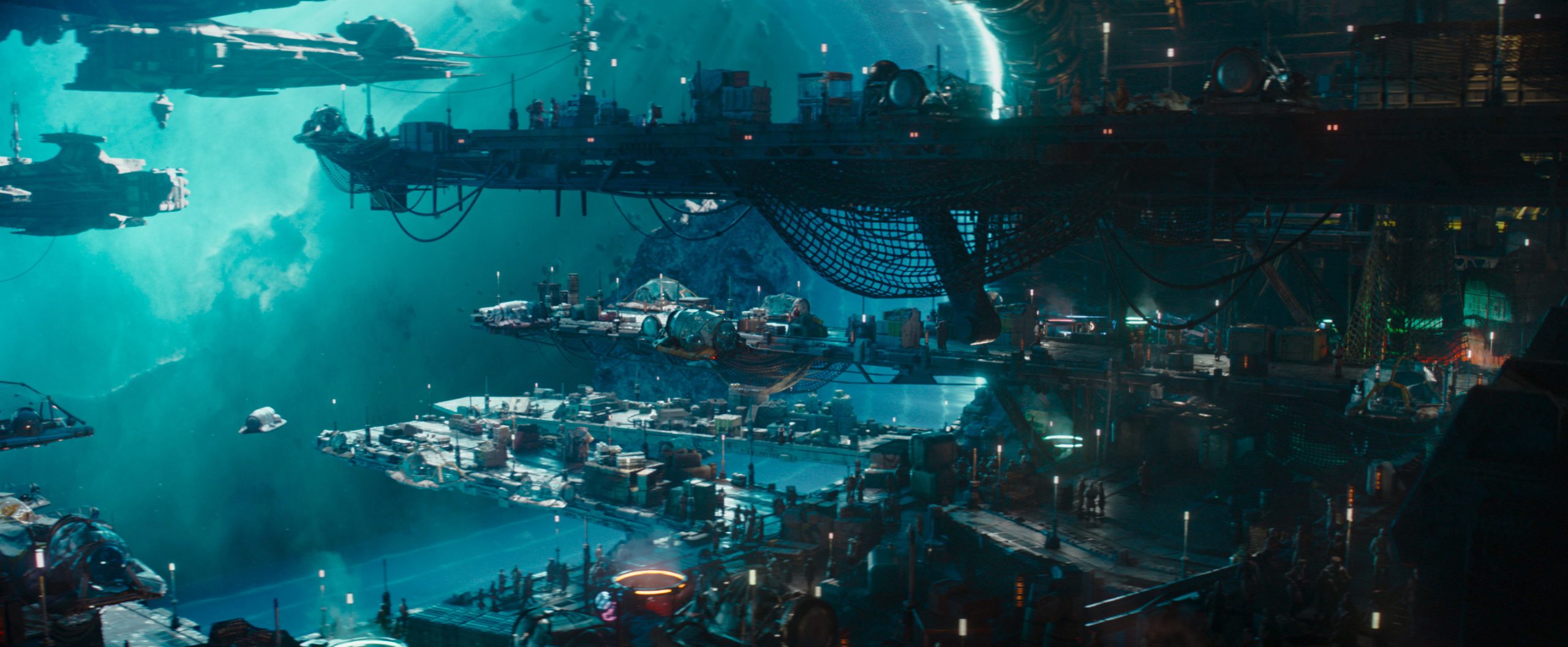
The Onyx Cinder docks at a nefarious pirate hideaway, a wretched hive called Starport Borgo where the kids hope to find directions back to At Attin. Built into an Outer Rim asteroid overlooking a sea-blue nebula, Borgo is filled with a host of untrustworthy pirates, creatures, and scoundrels. “It’s just a really beautiful, new place for Star Wars,” says Pasquarello. “Everything outside is computer graphics. When we’re inside in Port Borgo, it’s practical. There’s a lot of storytelling in a very small amount of space.”
Port Borgo scenes relied heavily on ILM’s StageCraft LED volume – located at the MBS Media Campus in Southern California. The environment came to life using a combination of practical sets and virtual backgrounds displayed on the volume screens. The virtual production team relied on two real-time rendering engines, depending on the scene: Unreal Engine from Epic Games and ILM’s proprietary software, Helios.
Skeleton Crew also took advantage of two powerful new StageCraft volume advancements: virtual depth of field and real-time virtual lighting. “Previously, when you used depth of field, the camera didn’t actually make the content go out of focus correctly when the depth of field changed as it just defocused the wall global,” says ILM virtual production supervisor Chris Balog. “Now we’ve added virtual depth of field. So when you change focus, the content defocuses in depth. So virtually now if the camera is focusing on something close to the wall, the 3D content in virtual space close to the stage will be sharper like the set in front of it, and everything in 3D space past that will defocus correctly in depth based on the lens’ focal length.”
A side-by-side comparison demonstrating the practical elements in the foreground (red) and volume elements in the background.(Credit: ILM & Lucasfilm)
The new depth of field capability came with the challenge of how to accurately represent the “bokeh” effect – the quality and appearance of blurred light sources in out-of-focus areas of a shot.
“It gives it more realism because it actually defocuses the way it should. Before, it would just get really soft,” Balog explains. “And now, we are able to do this in a way where it would photographically bokeh like real light sources.”
Real-time virtual lighting gave the Skeleton Crew cinematographers greater flexibility and speed when adjusting practical lights on set, making it easier to match their digital counterparts. “It used to be a much more labor-intensive process, because originally we were baking all the lighting into the original content,” Balog says. “Now, the DPs can get on set that day and say, ‘You know what? I just want to move that light a little bit.’ So we just move the virtual light to work in conjunction with it.”
Creating the content for the volume walls happened near the beginning of a production.
“There’s a team of generalists, or gen artists, who are talented in a lot of different aspects of computer graphics,” Shawn Kelly says. “And while they are working on the environments, me and a few other people are working on populating those environments.”
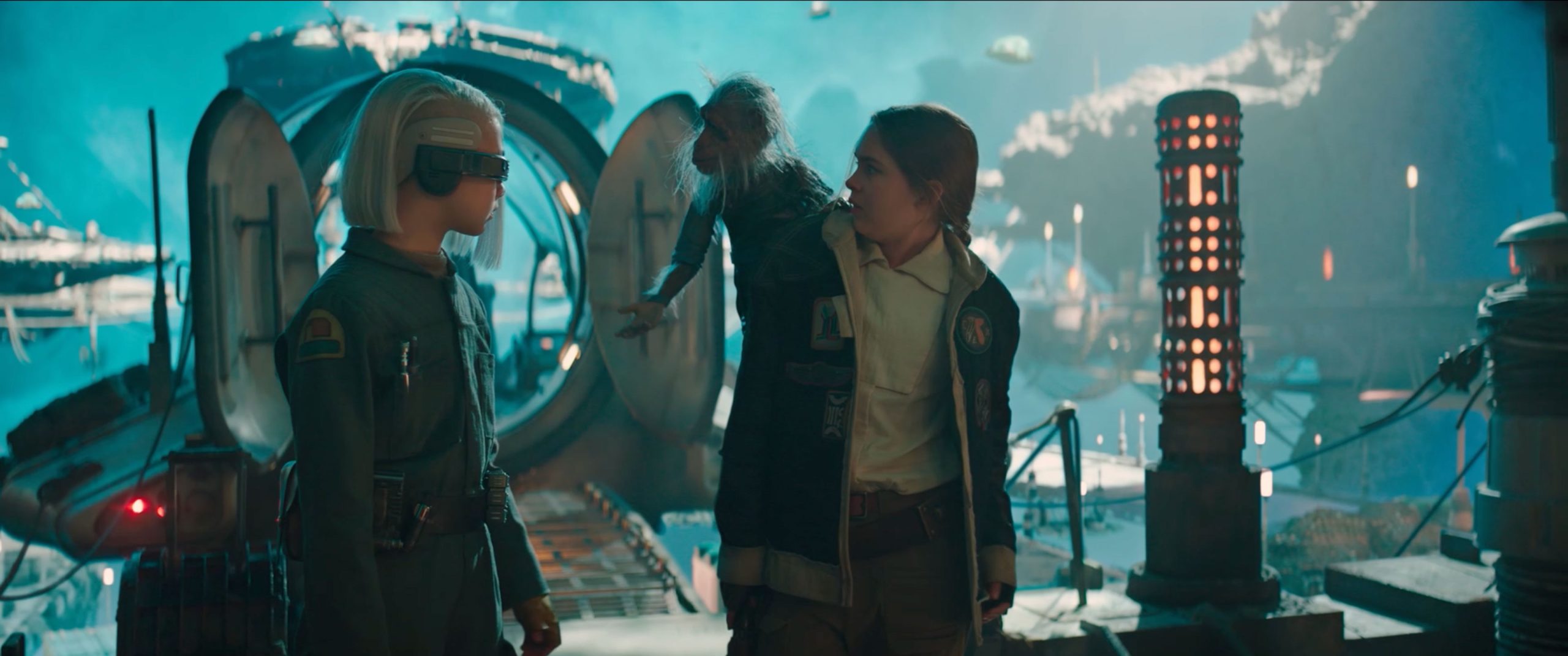
Wim, Fern, KB, and Neel disembark the Onyx Cinder and hitch a ride on a bubble-like dinghy piloted by a furry Teek ferryman. Dockside, the Teek jumps on Fern’s shoulder to demand payment—a sequence that demonstrates an invisible combination of digital and practical methods.
“He’s mostly a practical puppet up on her shoulder, but his arm is animated. His arm is computer graphics so we can do more delicate kinds of gestures with his fingers and hands,” explains Kelly, “but we still try to animate it in a way that feels like a puppet.”
“We have a great paint team here,” adds Pasquarello. “It was not a big deal to remove that arm and replace it.”
Once the Teek gets his money, he jumps down to leave—a shot that features a flawless “Texas Switch” between the practical and fully digital version of the character. “At the beginning, he’s a puppet. And once he goes behind Fern’s back, he’s animated,” Kelly reveals. The shot concludes with the ferryman scurrying away, mimicking the speedy movements of the original Teek that first appeared in Lucasfilm’s TV movie, Ewoks: The Battle for Endor (1985).
“He’s this little, very fast-moving kind of funny guy,” says Kelly. “It was really endearing and fun, especially when I was a kid. So we wanted to put a little bit of that fast movement into him. And this is a little example of how we kept that flavor.”
Credit: (ILM & Lucasfilm)
Motion Capture Cameos
Motion capture performers help populate the expansive setting with hundreds of pirates. “A place like Port Borgo needs to be a bustling port of pirates doing stuff,” says Kelly. “So we spent months at the beginning getting mocap performances and animating on top of those, and also key-framing guys selling stuff at stalls, or shopping at stalls. You’ll see guys in the background unloading a ship, and there’s a chain of guys throwing boxes to each other, stuff like that.”
The children pass by a seedy nightclub where four-armed aliens are dancing in reddish silhouette through frosted windows. It was Kelly’s job to direct the scene’s motion capture performers, including two unexpected names: Daniel Kwan and Daniel Scheinert, collectively known as The Daniels.
At the time, the directors were helming the fourth episode of Skeleton Crew and would soon win an Academy Award for Best Picture for their film Everything Everywhere All at Once (2022). “The Daniels wanted to perform the dance,” Kelly laughs, recalling how it became his job to direct two of his cinematic heroes on how to be better exotic dancers. “I’d say, ‘I think they want it to be sexier.’ They’d just burst out laughing, and do it again,” Kelly says. “They were really fun and funny.”
Credit: (ILM & Lucasfilm)
Escape from Port Borgo
Reluctantly teaming up with the mysterious Jod Na Nawood (Jude Law), the children escape from the pirate brig and navigate their way back to the Onyx Cinder. As the ship pulls away. it’s snagged by a refueling line connecting it to a floating buoy, snapping it back like a balloon on a string. Jod tries desperately to maneuver away, dragging several pirate vessels with it.
“They’re creating havoc,” Pasquarello says. “The whole idea of the pile up and pulling those ships together was a really fun sequence, because even Jon Favreau chimed in. Everyone had some ideas about how to make that really successful.”
The colliding ships are all-digital creations, with the action handled by a team of artists who are now part of ILM’s Sydney studio. “All of these ships are computer graphics, and the environment itself as well,” Pasquarello says. “These didn’t exist as models from a practical standpoint.”
As the pirates take aim at the Onyx Cinder with a tower cannon, Jod sends the ship into hyperspace. The fuel line snaps violently, whipping back and crashing into the crowded port. “You can see our animated pirates getting knocked down and running away,” Kelly says. Effects passes helped complete the shot with a variety of explosions, fire, and sparks.
The pileup sequence also gives eagle-eyed viewers a chance to catch a special Easter egg—a Starspeeder 1000 transport, well known to fans of the Star Tours attraction at the Disney Parks.
This story was updated with additional information on May 2, 2025.
–
Clayton Sandell is a Star Wars author and enthusiast, TV storyteller, and a longtime fan of the creative people who keep Industrial Light & Magic and Skywalker Sound on the leading edge of visual effects and sound design. Follow him on Instagram (@claytonsandell) Bluesky (@claytonsandell.com) or X (@Clayton_Sandell).
With ILM as a lead contributor, the Disney+ series took home the award for Outstanding Visual Effects for a Live Action Program at the 3rd Annual Children’s & Family Emmy Awards.
Based on the popular books by Rick Riordan, the Disney+ series Percy Jackson and the Olympiansearned eight wins on 16 nominations at the 3rd Annual Children’s & Family Emmy Awards in Los Angeles on March 15. Among them was “Outstanding Visual Effects for a Live Action Program,” for which Industrial Light & Magic was a lead contributor.
ILM’s Emmy winners include visual effects supervisors Jose Burgos and Jeff White, visual effects producer Katherine Chambers, executive visual effects producer Adele Jones-Venables, virtual production supervisor Sonia Contreras, associate visual effects supervisors Donny Rausch and Daniel Schmid, and associate visual effects producer Shawn Smolensky.
Congratulations to our ILM Emmy winners! Watch the trailer for Percy Jackson and the Olympians:
The visual effects supervisor talks Cassandra Nova, Gambit, and more.
By Dan Brooks
(Credit: Disney)
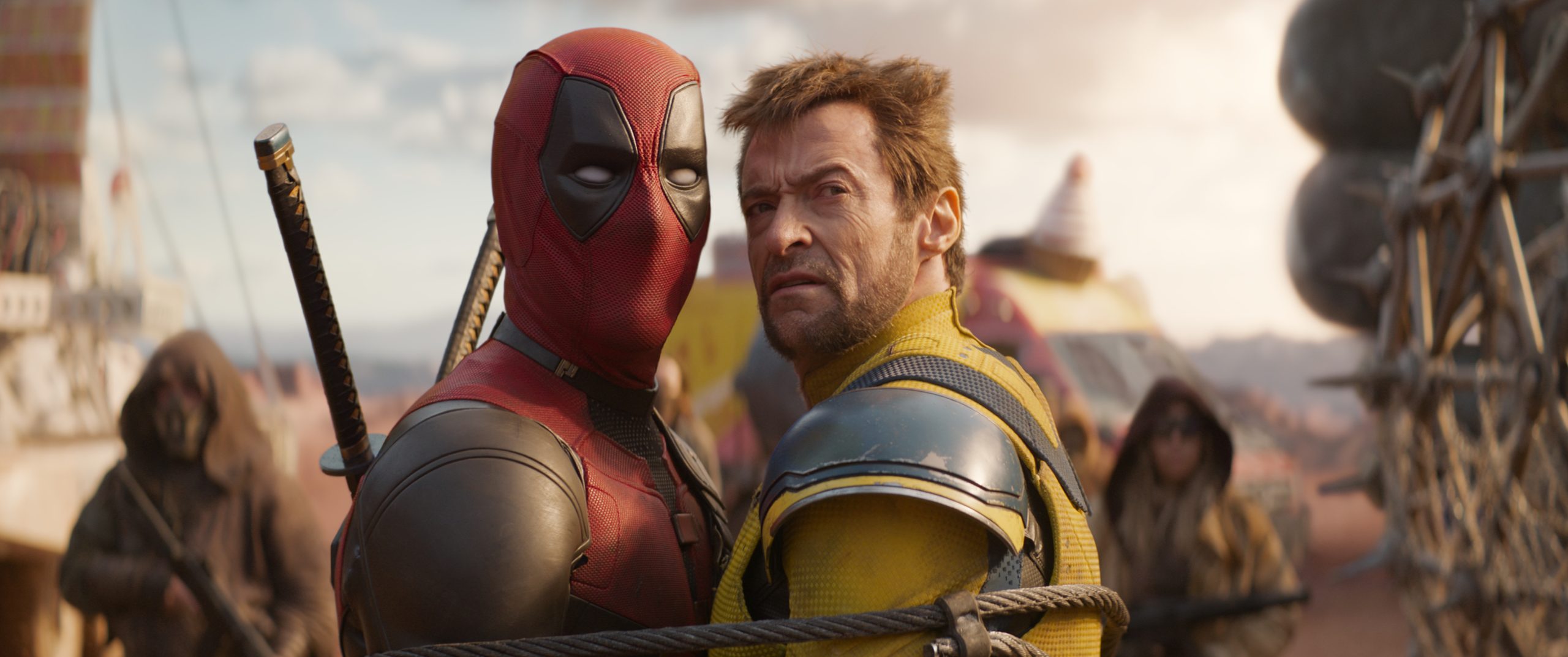
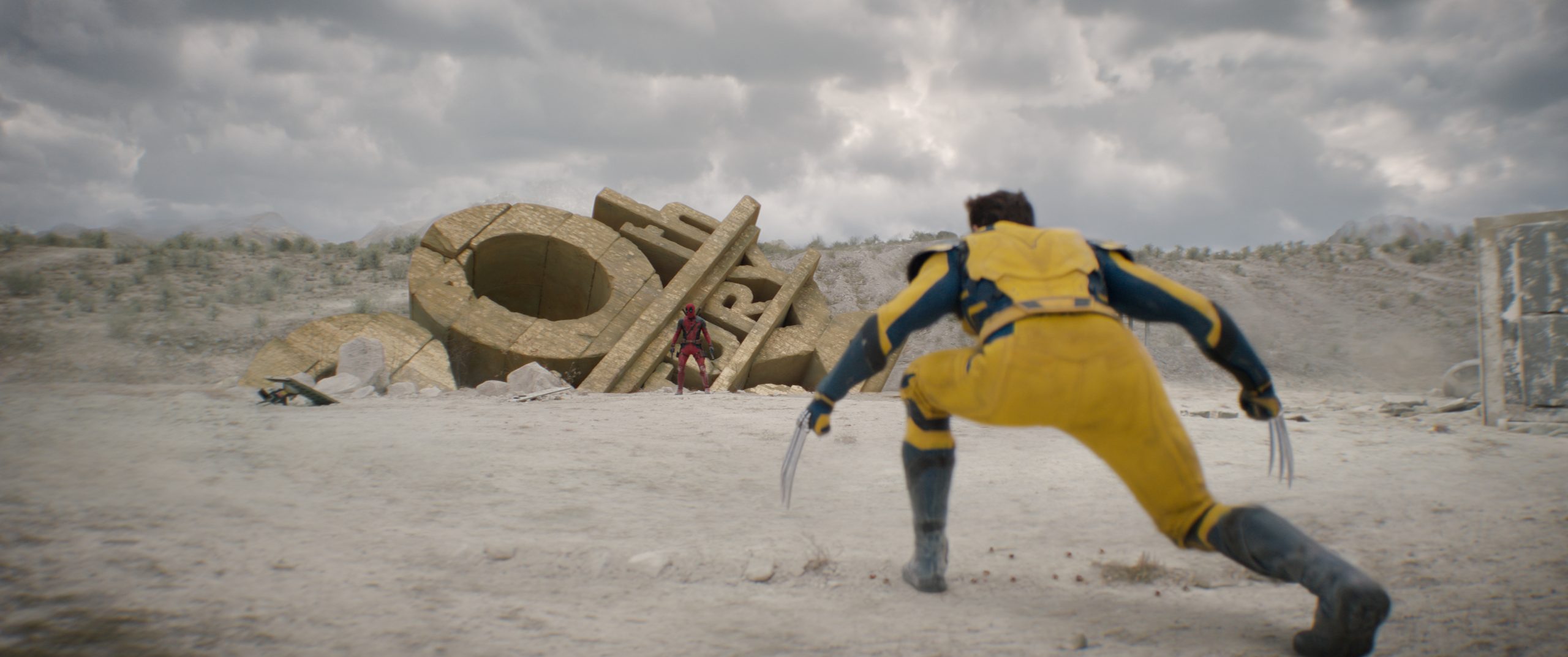
In a surprise twist midway through Deadpool & Wolverine, our titular protagonists are marooned in the Void: a Mad Max-like wasteland of desert and forgotten heroes. Their time in this multiverse purgatory takes up a significant chunk of the movie and features many of its greatest moments, from surprise character appearances to action set pieces, and Industrial Light & Magic was charged with bringing it all to the screen. Just from reading the script, visual effects supervisor Vincent Papaix knew that this section of Deadpool & Wolverine would be key to the movie’s overall success.
“Everybody was super motivated,” he tells ILM.com, “and we all knew that this movie was going to be special.”
Deadpool & Wolverine went on to become the biggest R-rated movie of all time following its theatrical release this summer, a true cinematic event during a challenging time for the film industry. To mark its arrival on Disney+, ILM.com caught up with Papaix to discuss how ILM realized some of the blockbuster’s impressive visual effects in the Void sequences. Grab a chimichanga and join us.
(Credit: Disney)
A sunny day in the Void
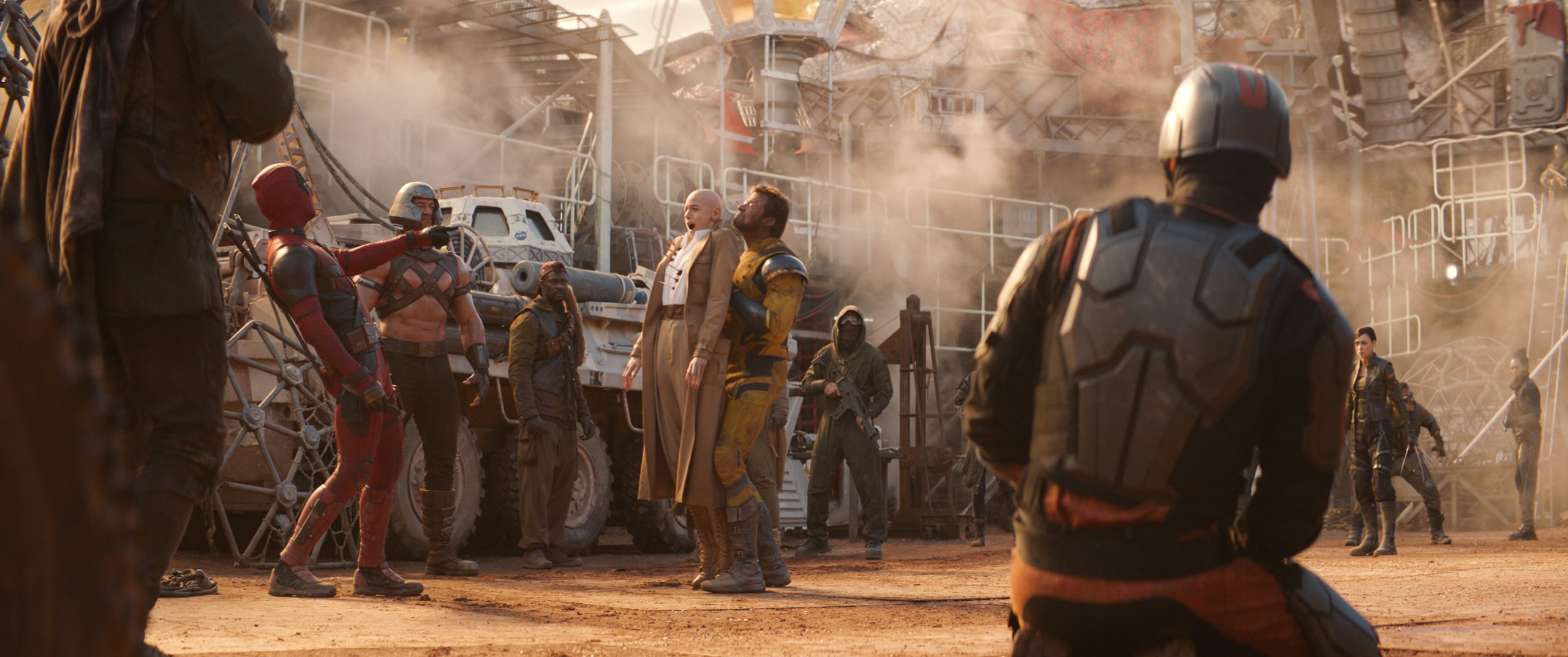
As fantastical as the Void may sound, director Shawn Levy and star/producer Ryan Reynolds (Deadpool) aimed to make it a believable setting and something that fans could relate to. “They really wanted it to feel as grounded and real as possible,” Papaix says. To achieve this, the filmmakers started the old-fashioned way, more or less.
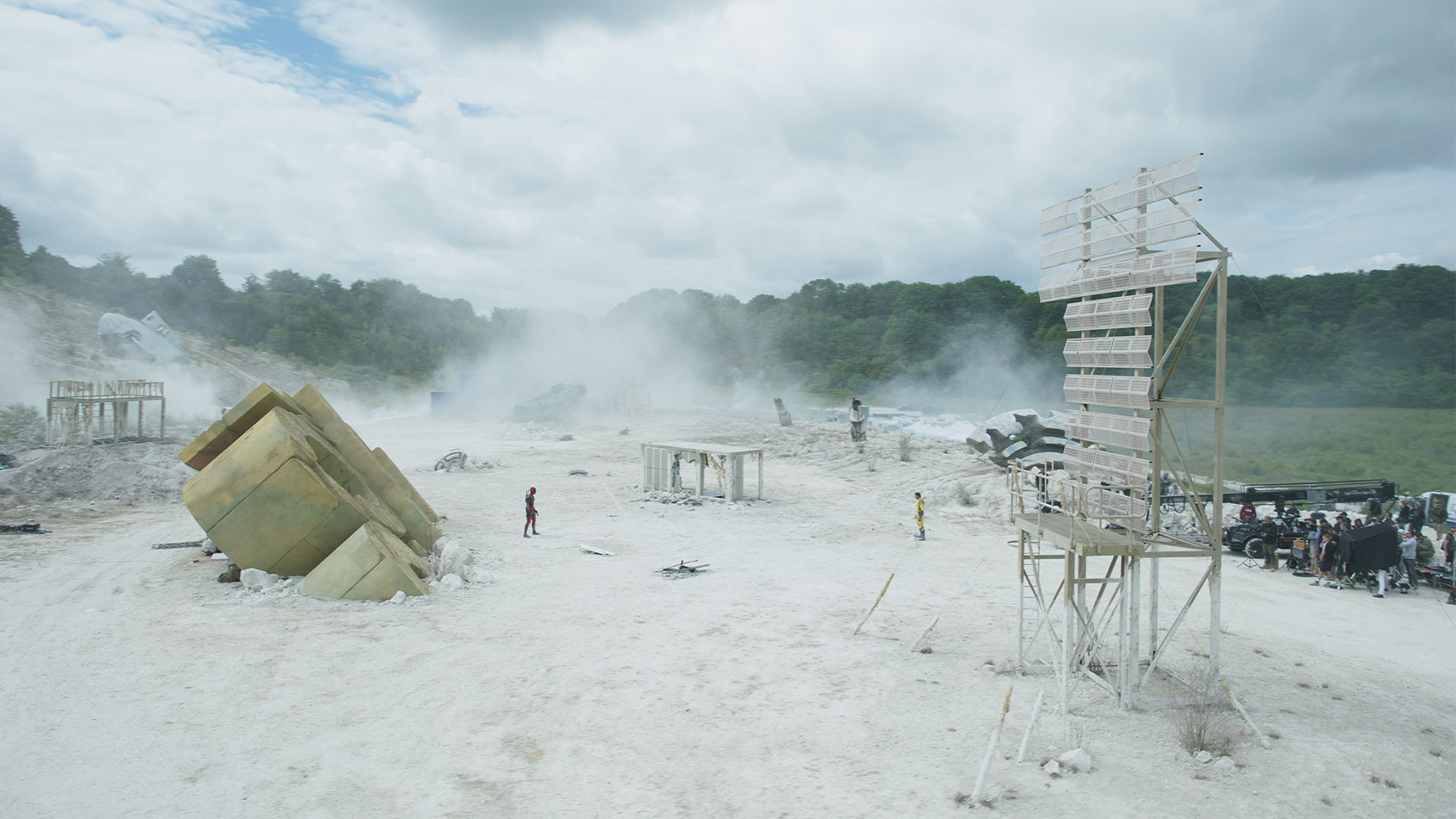
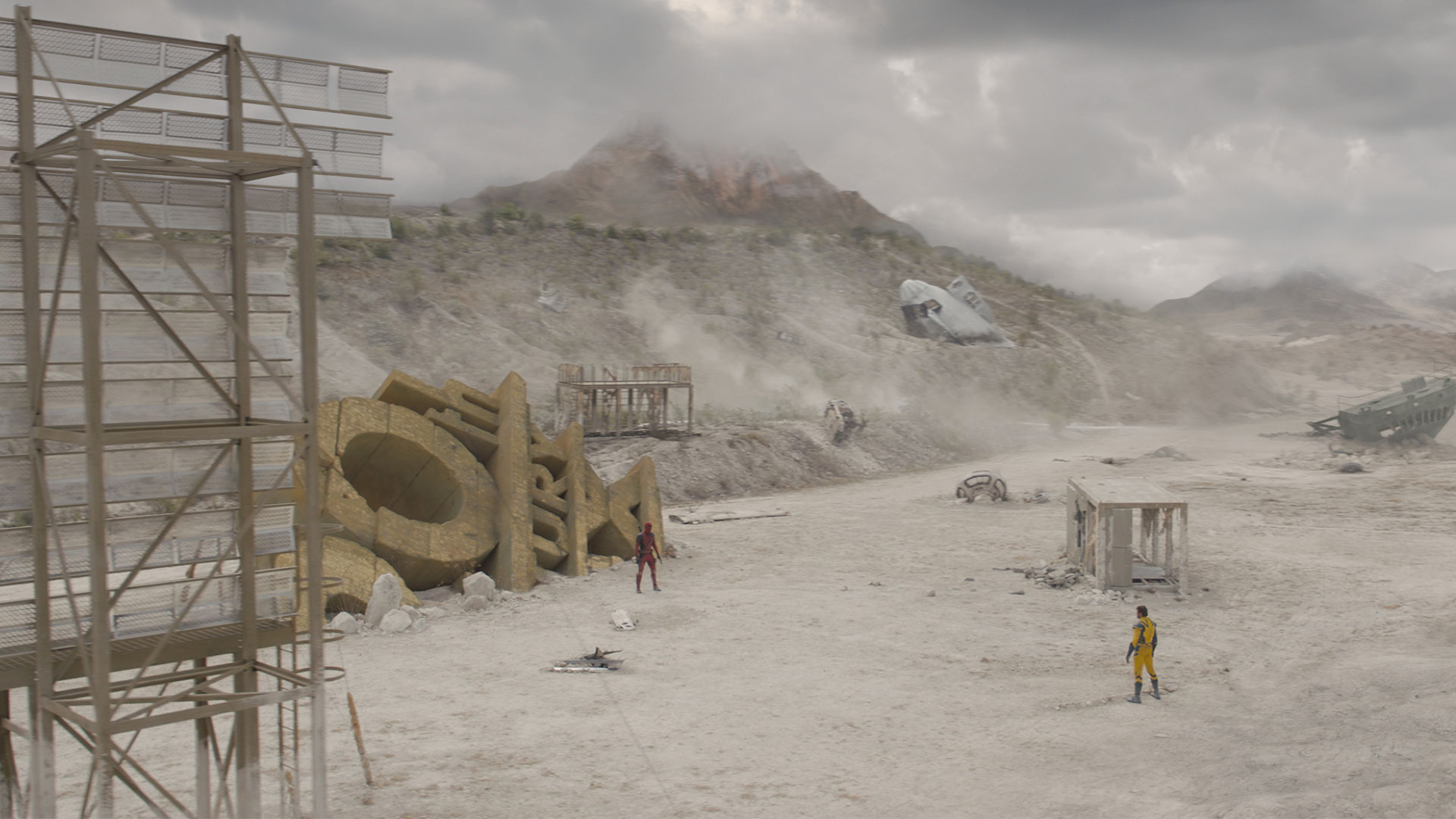
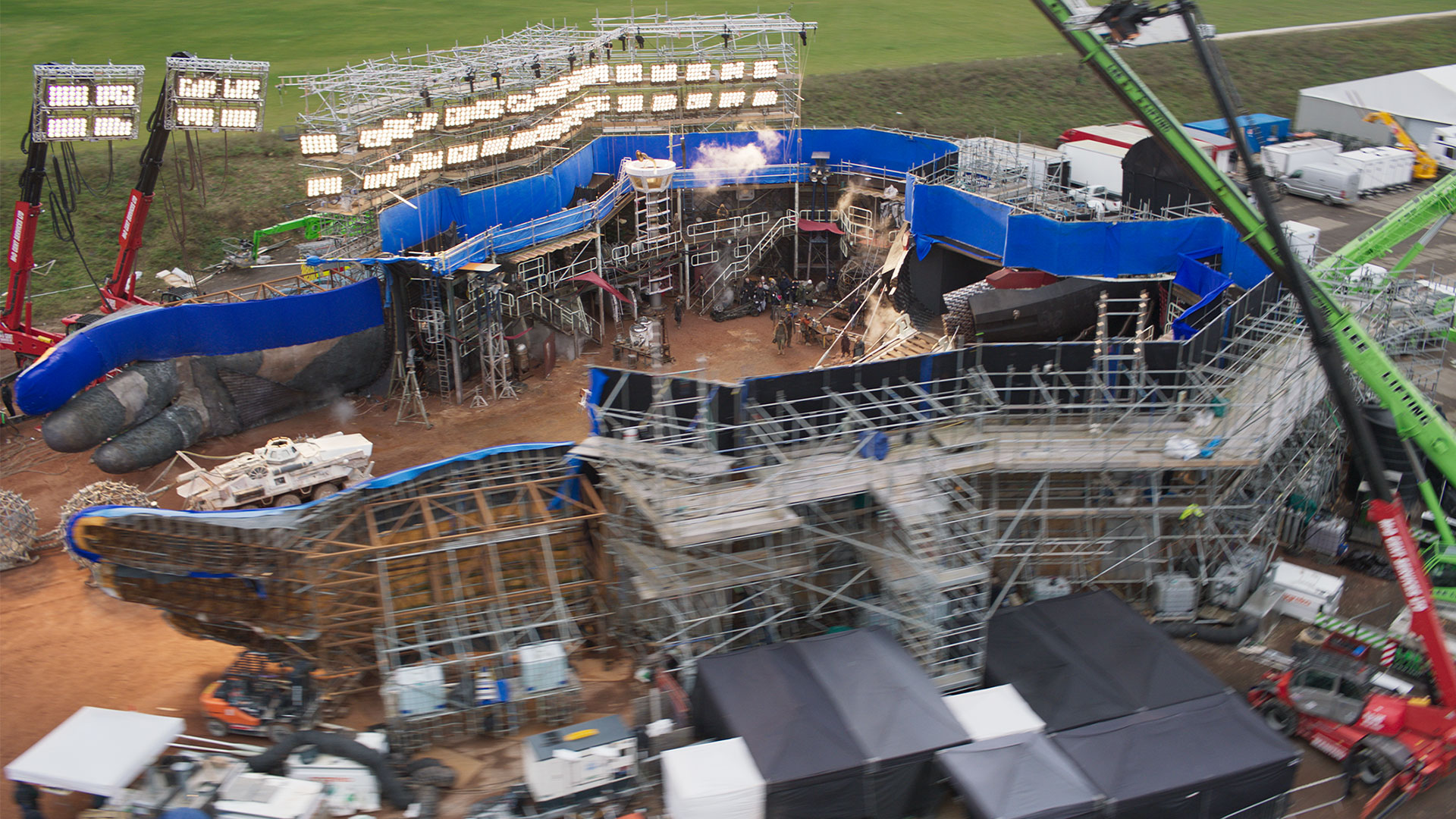
“One thing for them was to shoot in natural conditions. That’s why most of the shoot was outdoors,” Papaix says. “So they shot in a landfill in the UK and in various locations in the UK to get that kind of natural light feel.”
This did create certain challenges, however. “You don’t control the elements,” Papaix says simply.
When Deadpool and Wolverine (Hugh Jackman) first arrive in the Void, they quickly proceed to beat the tar out of each other. This fight was shot outdoors in summer 2023 and then, due to the writers’ and actors’ strikes, finished in winter 2024. As a result of the pause and change in seasons, the color of the sky appeared slightly different. Though Levy and Reynolds initially hoped to digitally correct any inconsistencies in the look of the sky, ILM encouraged the filmmakers to keep this to a minimum. “One thing that was great about working with Shawn and Ryan and [Marvel visual effects supervisor] Swen Gillberg was that they are very collaborative,” Papaix says. “We did a few shots and a few tests and we realized the best outcome was to embrace the plate. So, based on the plate, if it’s sunny, let’s try to augment that. If it’s stormy, let’s try to be more stormy and then we’ll look at how it plays in the cut. And every shot was kind of hard to direct in that way. It’s making sure that it plays nicely, but if you look at the sequence, there’s some variation as you would have in a natural daylight. You can be in an area and within 10 minutes it can be from sunny to cloudy to stormy, depending on what is happening. So we focused on making it look as real as you can.”
Finally, to increase the grandeur of the Void, from scale to background elements, ILM came in to digitally augment what was captured in-camera.
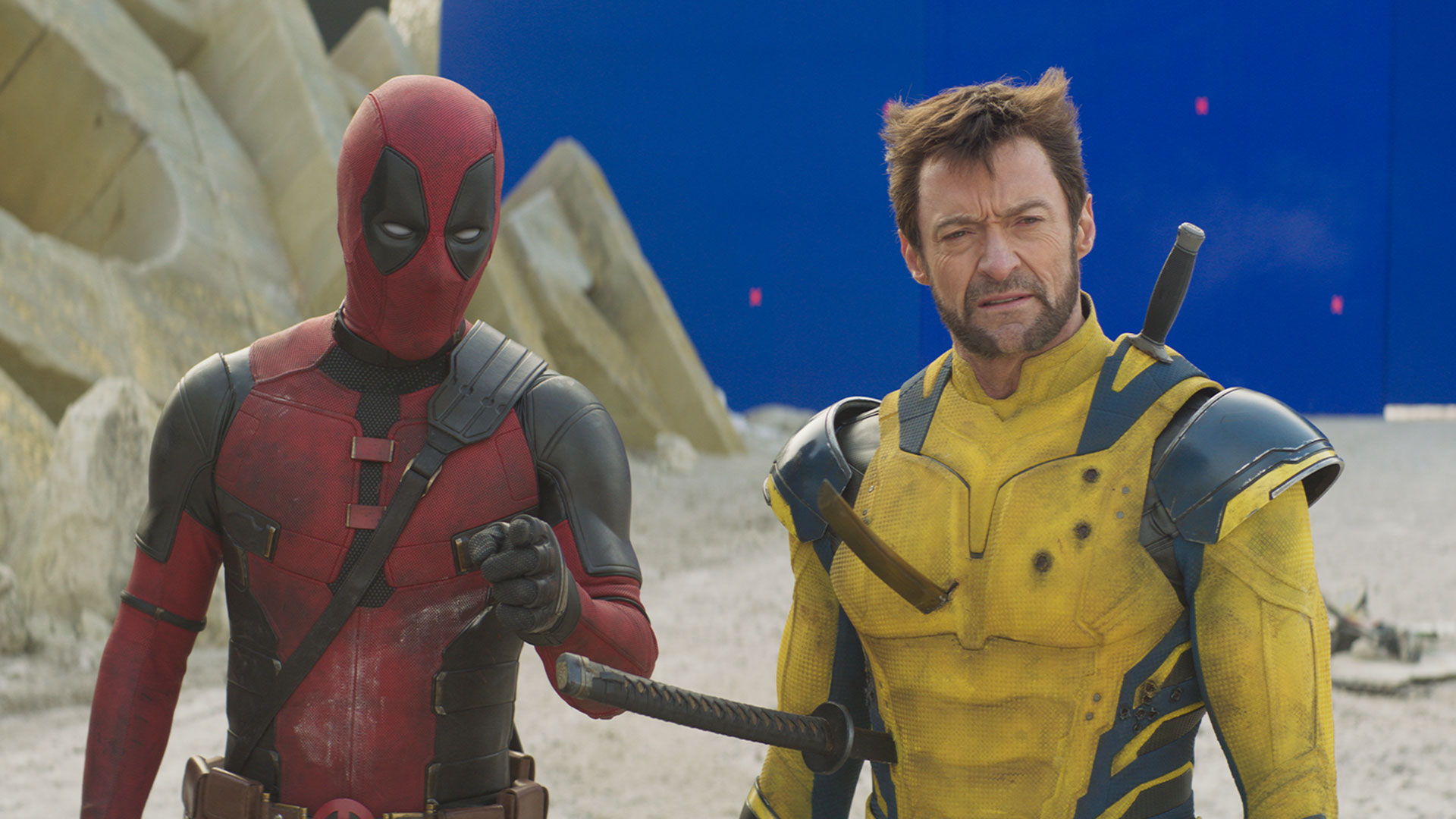
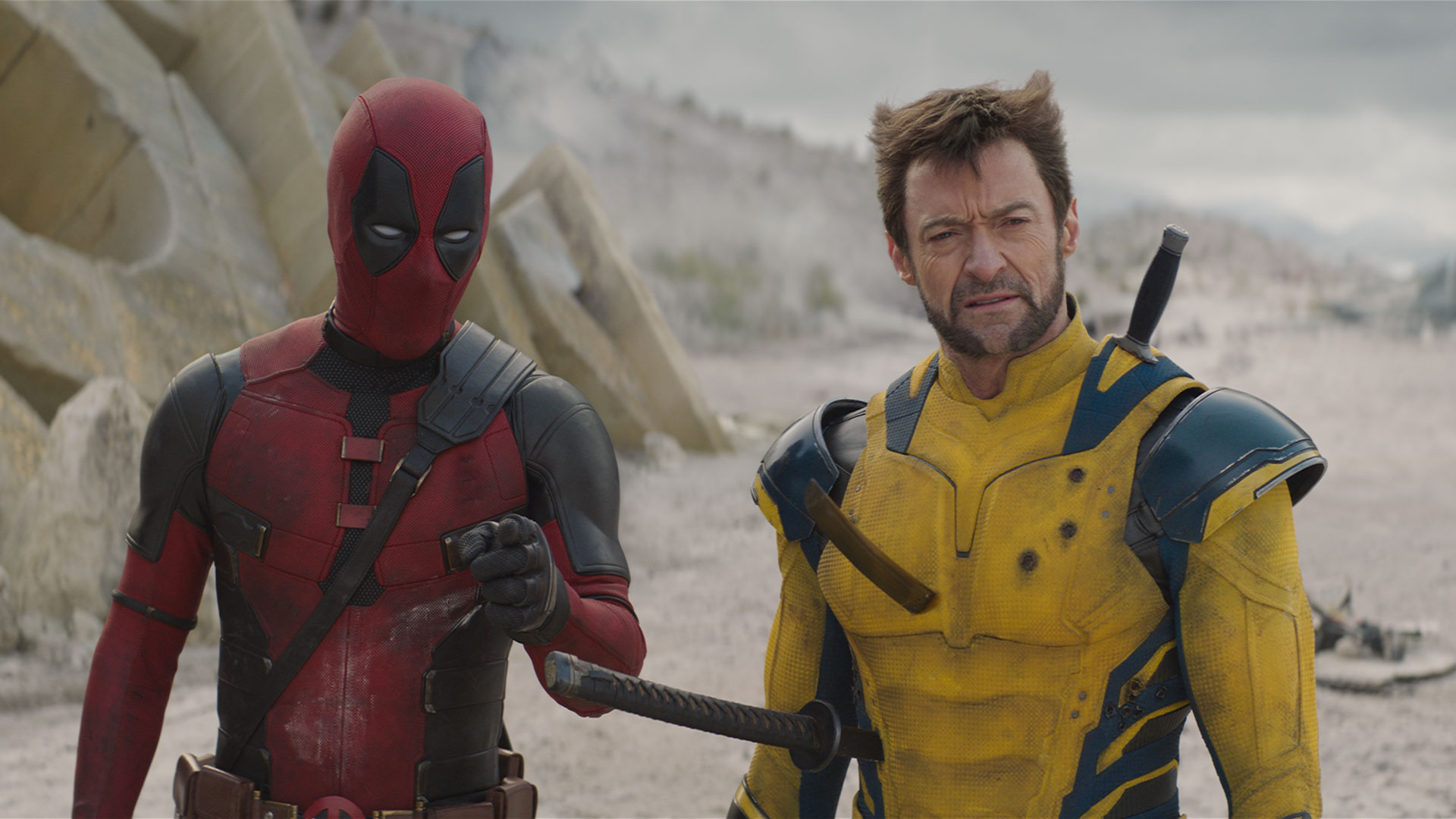
“Our work was focusing on creating a seamless transition from the foreground set to a CG extension of the Void,” Papaix says. “Overseeing adding everything that was needed to the Void, including the detritus. There are all those different objects scattered throughout the Void. So obviously [we were] making sure they integrated, but the Void needed to feel real, and not feel like the foreground was on a stage in bluescreen extended into a CG world.”
(Credit: Disney)(Credit: Disney)
A new villain emerges
The evil twin of Charles Xavier, Cassandra Nova (Emma Corrin) debuts in Deadpool & Wolverine as the ultimate authority in the Void. Unpredictable and hugely powerful, she’s a frightening villain that Wolverine and Deadpool must overcome. With guidance from Levy and Reynolds, ILM set out to illustrate her abilities in a subdued but unnerving way.
“She can control a lot of things with her mind,” Papaix says. “They wanted something fairly subtle to not overpower what was the power. It was important to show what it was doing to the people and not too much to [show] the power itself, not too much magic or anything. So it was more a subtle distortion to explain that there’s something happening.”
And what Cassandra does is indeed creepy: She seems to have a predilection for passing her fingers through the skulls of her enemies, including the Merc with a Mouth.
“We went through different aspects, from being creepy and caressing his face with almost spider-like fingers. All that was digital and a very complex simulation to kind of deform the masks in CG. What gets tricky is that it’s easy to do a collision, but we had to do a half collision and half penetration going through. So that’s actually a very complex simulation to control. And it was fully art-directed, meaning we had to control every aspect of the effect. We started with the performance of the fingers, and once we had the right emotion, then we worked on the simulation of how the mask should deform and, at the same time, kind of breaks open to let the finger go through.” In the end, Papaix was more than happy with the result.
“I read a lot of great reactions. People felt an itch, a little bit. It feels creepy but in a good way, because that’s definitely what the filmmakers were after.”
(Credit: Disney)
Johnny Storm’s quick exit
Cassandra sends Johnny Storm (Chris Evans reprising his original Marvel role from the Fantastic Four films) to a truly unfortunate demise, ripping off his skin and driving him into the ground. It’s a shocking moment—gruesome with a dark sense of humor—in a movie full of them.
“This was part of the script from day one,” Papaix says. “That was a moment that was very important for the filmmakers.” But where to begin for an effect so unlike anything previously seen in a Marvel movie? “Ripping out the skin was very graphic, so we had to study images.”
ILM turned to Real Bodies: The Exhibition, a long-running museum showcase that features actual human specimens, for reference. It made for a decidedly unique creative process. “The real [body in the exhibit] is very dry and has been preserved. We wanted to make it look fresh, so we had to add a lot of blood and liquids to make sure we felt that this just happened. So we are dripping blood, dripping fat. That was very gross. The daily session with the artists was always interesting.”
Once ILM knew how the effect should look, they began building a digital Johnny.
“The way we proceeded with this was creating an asset,” Papaix explains. “So a skeleton asset, we called it, with all the flesh and all the organs in there. We based everything, all the proportions, on Chris Evans. We have his scan. We created a digital version of Chris for Johnny Storm, even for the Human Torch version when he was on fire.”
Then it was time to get down to the de-skinning business.
“So we started from that and then we ripped off his skin. It’s pretty much what you can imagine, but in CG,” Papaix says with a laugh. “The shell of the clothes and skin were removed, revealing the skeleton with all the flesh. We tried to create some strings of blood coming out of him.” In an effort to maintain the series’ comedic tone, ILM added some elements to hopefully make this scene a little more Looney Tunes and less Hellraiser.
“It was kind of a cartoony moment, but in a good way — he has that moment blinking his eyes, and it’s like, ‘What just happened to me?’ And then he drops.”
(Credit: Disney)(Credit: Disney)
Gambit gets his day
The Void segment culminates with Deadpool, Wolvie, and a band of fan-favorite heroes launching a siege against Cassandra and her forces. While fans delighted at seeing each back in action, one required visual effects that are essential to the character.
“A lot of attention was put to Gambit [Channing Tatum],” Papaix says. “We studied a lot of the comic books to see what was happening with his cards and [mutant power].” In the comics and iconic X-Men cartoon, Gambit charges playing cards, resulting in a purple glow; when he tosses them, they leave a trail and explode on impact. “We went for a various range of showcasing the power to the point that I remember a version where we probably went too far — too glowy and too flamey-looking. And that’s something that was not pleasing to Shawn, for good reason. He wanted to be grounded, again, to reality. So the cards — it’s the X-Men and all, but it’s important to have the cards telling the story.”
As a solve, ILM illustrated a slower buildup of Gambit’s mutant power. “We were focusing mostly on the card and the energy within the card. There was a closeup in the cavern, when you see the card activating, and it’s within the pattern of the card. For the battle, we made some trails to be able to see it, because a card is very small. True to the comic.”
(Credit: Disney)(Credit: Disney)
A lasting collaboration
Deadpool & Wolverine is a success for Papaix on several levels, from the commercial and critical reception to more personal reasons.
“I had the chance to work on the first Deadpool in 2016. Time flies. So this one already was quite special in my career, and having the opportunity to supervise the third one was also quite special. Knowing that Hugh Jackman was attached as Wolverine, there were so many good things.”
But looking back at the film, he seems to mostly value the time with Levy, Reynolds, and Marvel. “They were great collaborators. Obviously, he’s a director and he makes his call, but he was very keen on hearing people’s suggestions. But the collaboration for me is one of the highlights of the show with Swen and with Marvel, and pitching those ideas to Shawn and Ryan. They also thanked us. We know that’s something that not every filmmaker does, but at the end of the project we got a thank you video from Ryan and Shawn to share with our team at ILM, and it’s always fun to see that they appreciate the work. Obviously, they see the people on set, but when you do post-production, they receive the image. So they don’t really realize that we were 275 people making this happen. We did about 30 minutes of the movie, 614 shots, but it was a global team. It was mostly Vancouver and San Francisco, but also other ILM sites working with us. But it was 275 people. That’s quite a big group of people making it up to show those crazy visual effects on screen.”
(Credit: Disney)
—
Dan Brooks is a writer who loves movies, comics, video games, and sports. A member of the Lucasfilm Online team for over a decade, Dan served as senior editor of both StarWars.com and Lucasfilm.com, and is a co-author of DK Publishing’s Star Wars Encyclopedia. Follow him on Instagram at @therealdanbrooks and X at @dan_brooks.
ILM’s Sydney studio took on everything from digital creatures to CG environments for this adaptation of a beloved Disney Parks attraction.
By Lucas O. Seastrom
The Hatbox Ghost, performed by Jared Leto. (Credit: Disney)
For nearly 40 years, Industrial Light & Magic has had a close relationship with Disney Parks. They have not only created visual effects for attractions themselves, from Captain EO and Star Tours in the 1980s to Star Wars: Rise of the Resistance and Guardians of the Galaxy: Cosmic Rewind in recent years, but have also worked on feature film adaptations of attractions such as Pirates of the Caribbean: Curse of the Black Pearl (2003) and Jungle Cruise (2021).
2023’s Haunted Mansion is another adaptation of a beloved attraction, which first premiered at Disneyland in 1969 and later at Walt Disney World in 1971. Director Justin Simien brought distinctly apt qualifications to the project, having worked as a Disneyland Resort cast member during his film school days at Chapman University. “Whenever I was in Disneyland, it was like being inside of a movie,” he tells ILM.com. “I would go on the rides over and over again, and I’d get chills in the same spots and catch my breath in the same places. I realized that this was cinema. It’s a theme park that’s physically happening around me, but the tools of the trade are the same.
“There’s production design, sound design, lighting, dialogue, character, and story,” Simien continues. “It sounds like something you’d say in a press interview, but it’s true – I remember going on The Haunted Mansion and Pirates of the Caribbean and thinking, ‘I need to figure out how to translate this to what I want to do as a filmmaker.’ Walt Disney and his artists brought us into these fantasy places. That’s the art. That’s the thing I needed to figure out. So for me, it all felt very complementary. Working at Disneyland was just another way of escaping into the movies.”
Simien’s approach to bringing Haunted Mansion to the screen was as complex as the vision of the attraction’s original creators. “I was really fascinated by the constant conversation that the Imagineers had about how scary it should be or how funny it should be,” Simien comments. “It was such an interesting way to make something unique. It’s not horror in the traditional sense. You’re not walking through a haunted house at Universal Horror Nights or something like that. But it’s not straightforward Disney either. It’s very subversive and there’s a lot of hidden, kind of dark stuff going on.”
Jamie Lee Curtis as Madame Leota approaches the Mansion’s front door with a bluescreen extension behind her. (Credit: Justin Simien/Disney)
Simien and his team were able to visit the Disneyland Haunted Mansion in the off-hours, where current Imagineers helped them to understand its distinct narrative brilliance. “When you’ve made your way up through the Mansion, you’ve turned a corner, and you’re looking down into the dining room,” Simien explains. “All of the swirling dancing ghosts are there and ghost heads are coming out of the organ. It’s a culmination of all the different effects in the ride, the Pepper’s Ghost effect in particular. Even as an adult, when I know how it’s done, it takes my breath away. There are a couple of moments in the movie where we’re working from the same point of view. We pay homage. The ride has this build-up with specific timing and pacing.”
Simien took his cinematic leads from works in the 1980s and ‘90s, such as Ghostbusters (1984) and Little Shop of Horrors (1986) and the films of Tim Burton. He also went back to source material shared by the Disney Imagineers, including Robert Wise’s The Haunting from 1963. “There are so many parallels in the production design of that movie and the attraction,” he notes. “You see very subtle elements in our movie that are like that. There are slanted mirrors and shots where you look through a doorway and it’s a kind of off-angle. You get a claustrophobic ‘things are not right with the world’ feeling without really doing anything, just designing things a certain way.”
From a visual effects standpoint, Simien envisioned a mix of practical and digital techniques. “I wanted as many practical effects as I could get,” he says, “which I knew was always going to be a battle [laughs]. The movie is so fantastical. This wasn’t a typical horror movie where you hide the monster. It’s a Disney movie. There’s an expectation that you’ll get to see the ghosts. I wanted them to have a physicality, to be people in make-up and costumes moving on wires. We needed to ground the movie as much as possible in those things.”
ILM was one of multiple effects vendors on the project, and initially planned to contribute a modest sum of around 400 shots, overseen by Sydney-based visual effects supervisor Bill Georgiou and visual effects producer Arwen Munro. American-born, Georgiou spent nearly 15 years at Rhythm & Hues, climbing the ranks from rotoscope artist to compositing supervisor and sequence supervisor. He later worked as the onset visual effects supervisor on the DisneyXD program, Mighty Med, before joining ILM and moving to Australia in October 2021.
Coincidentally, Georgiou was an apt choice for Haunted Mansion, having known production visual effects supervisor Edwin Rivera for many years at Rhythm & Hues, not to mention Justin Simien himself. They had met through a mutual friend, editor Phillip Bartell, who cut Simien’s Dear White People (2014), as well as Haunted Mansion. “Edwin is very supportive and collaborative,” Georgiou tells ILM.com. “At the beginning, we were doing mostly set extensions, which is pretty straightforward. I think that he and Justin were impressed by the level of photorealism we were able to achieve, especially with the Mansion. Every shot of the Mansion has some CG, including the grounds around it. Another vendor, DNEG, was also doing some interior work, and we’d help create the views out the windows.”
A first-floor exterior of the Mansion was constructed onset. (Credit: Justin Simien/Disney)A final frame shows the complete Mansion with ILM’s extensions. (Credit: Disney)
Initially, Georgiou’s Sydney team worked only with ILM’s former Singapore studio, which being closer in time zones, shared the same schedule. “ILM has the best of the best,” Georgiou says. “Everyone was an amazing collaborator and shared their opinions. It was very open.” Principal photography had taken place in Georgia back in the United States, where ILM’s Andrew Roberts acted as onset visual effects supervisor. Georgiou and Munro also made a visit to Los Angeles to meet directly with the client, something Georgiou describes as essential to their continued partnership as the workload grew unexpectedly.
Reshoots would require further effects work involving an elaborate scene at the movie’s climax, where Ben (LaKeith Stanfield) confronts the villainous Hatbox Ghost (Jared Leto). “All of a sudden, we had more than twice as many shots as we started with,” Georgiou explains, “a CG human-like ghost character, and digi-doubles. It became an immense project, with over 1,000 shots. With a very short schedule, I think ILM knocked it out of the park. We had about 700 new shots, and Sydney became the hub for London, Vancouver, and San Francisco, as well as an additional vendor, Whiskytree. It became a global team. For my first real experience starting a project from the beginning at ILM, it was one of the best.
“When I first started on Stuart Little in 1998,” Georgiou continues, “one of the compositors who came in was R. Jay Williams, and he ended up being a senior compositor on Haunted Mansion [out of ILM San Francisco]. He had taught me so many things as a young roto artist, one of which was how to be nice to everybody. He always said hello and goodbye to everybody, one of the nicest, classiest people I’ve met in the industry, and I was able to finally tell him that on this project. It was so cool.”
During principal photography, a large portion of the Mansion was constructed as a physical set. “Mentally, psychologically, it was important to have a real mansion to shoot in,” Simien explains. “We could all get used to that physical space.” Other portions of the house incorporated bluescreen, including the sequence when Ben enters the ghost realm, a sort of alternate dimension within the Mansion where the hallways shift and rotate. This was amongst the work ILM received in the additional batch.
Actors Chase Dillon (left) and LaKeith Stanfield onset behind the first-floor exterior of the Mansion. (Credit: Justin Simien/Disney)
“It was quite interesting work,” Georgiou says. “Not only were we matching scans of the hallway reference that had been captured onset, but we were also matching the look to some of the previous work that DNEG had done. We then created animation for the rotations and how they would section off. The way they’d filmed onset with bluescreen was really well done, which made our work easier. The lighting was a challenge because there are candles and sconces on the wall, so you have these pools of light. The D.P. [Jeffrey Waldron] had very specific notes about how it should look. The chandeliers are swinging. Many puzzles to figure out, which is one of the best parts of visual effects. Overall, that sequence was one of the most successful, and it’s so cool that they used it in the poster.”
Of course, the appearance of 999 happy haunts would be the core element of Haunted Mansion’svisual effects. “Edwin Rivera used this term, ‘ectoplasmic effervescence’ for the ghosts, which has a Ghostbusters feel to it,” explains Georgiou. “It was fun to look through the history of cinema to find inspiration, but also figure out how we wanted to do things differently and create something that was fresh. Justin has such an incredible cinematic vocabulary. He’s looking at Kubrick and Hitchcock, and you can see that in how he’s framing shots. I felt like I was gaining plenty of knowledge.”
Another reference for Georgiou was Poltergeist (1982), one of ILM’s first client productions. “Poltergeist was very influential for me, especially when we were creating these skeletal ghosts that fly around. That was all connected to Poltergeist and the style they used for the ghost who comes right to camera. It feels really light-based but then there’s a skeleton face. Also, the way they use flares in Poltergeist was very influential for the last sequence of Haunted Mansion.”
A number of the prominently featured ghosts were performed by actors in costume and make-up. At times, ILM used digital doubles to replace them, each of which had to be modeled and textured. Others were entirely created with computer graphics, including the swarm of skeletal ghosts in the finale, which were original designs by the ILM Art Department. “The ghosts had a sort of x-ray feel to them,” says Georgiou. “It wasn’t a straightforward bone texture. We had to come up with how they glowed, both in day and night environments. They all had various types of clothing. Some had armor, or robes, or hoods. With all that comes a lot of creature work to get the costumes flowing properly. Then there are shots with hundreds and hundreds of them, as many as 600 or 700 at a time, which required crowd work. Our animation crew did hero shots, and they had the best time animating them. When they flank the Hatbox Ghost, they aren’t just standing there, but they’re chomping their teeth or doing little things with their hands. It’s subtle but it’s all there.”
A CG ghost moves through the Mansion’s library. (Credit: Disney)
The fan-favorite Hatbox Ghost is part of the lore of the Disney Parks attraction, and as the film’s chief villain, many different components went into his creation. “On the set, we had a great stuntperson named Colin Follenweider,” explains Simien. “We spent a lot of time discussing the physicality of the Hatbox Ghost, why he would walk a certain way. So he was in a suit on the set with a blue face. Then with Jared [Leto], we captured his voice. Then all of that goes into a blender at ILM where we have a team of animators fine-tuning every aspect of the performance. It’s a real amalgamation of a few different traditions.”
Georgiou explains that ILM’s fellow vendor, DNEG, had created the initial character model to produce an early batch of shots. “But it was never meant to be seen in bright lighting or anything like that,” he continues. “Every plate had the stunt actor. A human face with flesh and skin is very different from a more skeletal face. We had to figure out things like, how does the neck work? A skeletal neck wouldn’t fit around the wide neck of a human stunt performer. We were able to hide a lot of that behind the scarf he’s wearing. We had to figure out how the hat sat on his head. Onset, it was a little too low, but if it was too high, it looked more like a cowboy hat. There were a lot of challenges.
“Then there’s the clothing,” Georgiou continues. “In that final sequence, the earth is breaking apart, all of these ghosts are rising up. He has 999 ghosts, and he’s trying to get the last one so he can bring the ghost realm into the human realm. There’s a lot of shaking and wind. The stunt actor was on wires, and the clothing didn’t have much movement. In some shots, we kept the body and clothing and did a face and hat replacement. For around half of the shots we used a fully-CG Hatbox Ghost. The look development team worked very hard to match it to the actor onset. It’s pretty seamless.”
The Hatbox Ghost attempts to pull Ben into his ghostly realm. (Credit: Disney)
Georgiou explains how the character model was given new animation controls for his expanded performance. “We built that whole rig and made small controls for the wrinkles under the eyes, really small details in the face. It was really exciting. Our animation supervisor, Chris Marshall, helped us develop a lot of the facial performance for the Hatbox Ghost. I can’t wait to do another character like that.
“I kind of grew up doing shows like Garfield, Scooby-Doo, The Lion, the Witch, and the Wardrobe, and The Golden Compass where there are so many different types of visual effects,” Georgiou continues. “Haunted Mansion is very similar. We had ocean surfaces, a tsunami wave in an apartment along with its destruction, both interior and exterior. There were various effects elements, set extensions, digital doubles, crowd work, so many different kinds of shots. The Hatbox Ghost was a dream come true. Doing CG characters and placing them in live action was what I was raised on. It was a great opportunity to work on it. I’m so proud of our entire team. We have some incredible artists and I was the one who was lucky to be able to work with them.”
For Simien, the chance to tell a fantasy story laden with visual effects fulfilled his childhood dreams. “I grew up on effects-heavy films,” he says. “I’d lose myself in Star Wars, Star Trek, and X-Men. There wasn’t language for being a filmmaker when I was a kid. No one in my family talked about being a director. But what I would do is get home with the house to myself (I was a latch-key kid), put on a John Williams soundtrack, and pick up action figures and make them fight in these epic battles. I’d keep one eye closed to control the depth of field [laughs]!
“I didn’t know that I was directing,” Simien concludes. “I didn’t know that was a thing you could get paid for, but that’s what I did for fun. Having that big canvas is just part of my DNA. My first film was made for just over a million dollars, but it looks like it was made for more. To me, scale and cinematic spectacle is part of the fun of it. No matter what kind of story I’m telling, whether it’s something small and emotional or big and crazy like Haunted Mansion, I’m always going to push to see more in the world.”
The Hatbox Ghost takes his final plunge. (Credit: Disney)