ILM teams from around the world earn recognition for projects as diverse as Wicked, Gladiator II, Ultraman: Rising, Deadpool & Wolverine, and What If…? – An Immersive Story.
Today, the Visual Effects Society announced their nominations for the 23rd Annual VES Awards, recognizing visual effects artistry and innovation in features, animation, television, commercials, games, and new media. Both ILM and ILM Immersive received 20 nominations in total.
In the Outstanding Visual Effects in a Real-Time Project category, ILM Immersive received a nomination for What If…? – An Immersive Storyand the D23 Real-Time Rocket.
ILM has received nominations in many other categories including Outstanding Environment in a Photoreal Feature for Rome in Gladiator IIand the Emerald City in Wicked, as well as Outstanding Environment in an Animated Feature for Transformers One’s Iacon City. Alien: Romulus, Deadpool & Wolverine, and Gladiator II have each picked up nominations for Outstanding Model in a Photoreal or Animated Project, while Venom: The Last Dancejoins Twisters with nominations for Outstanding Effects Simulations in a Photoreal Feature.
A complete list of all of the VES nominations may be viewed at this link. The VES Awards will be held on February 11, 2025, at The Beverly Hilton Hotel in Los Angeles. Congratulations to our ILM and ILM Immersive teams!
The visual effects supervisor talks Cassandra Nova, Gambit, and more.
By Dan Brooks
(Credit: Disney)
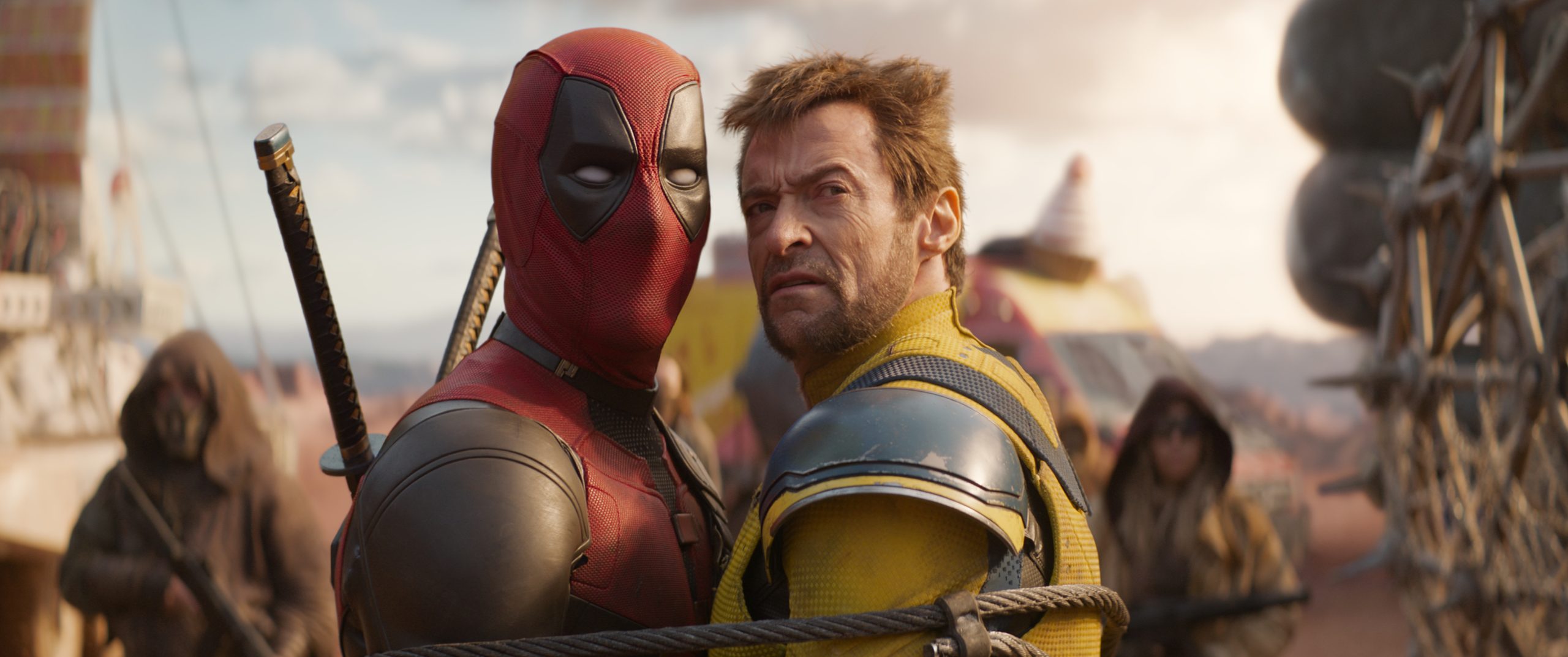
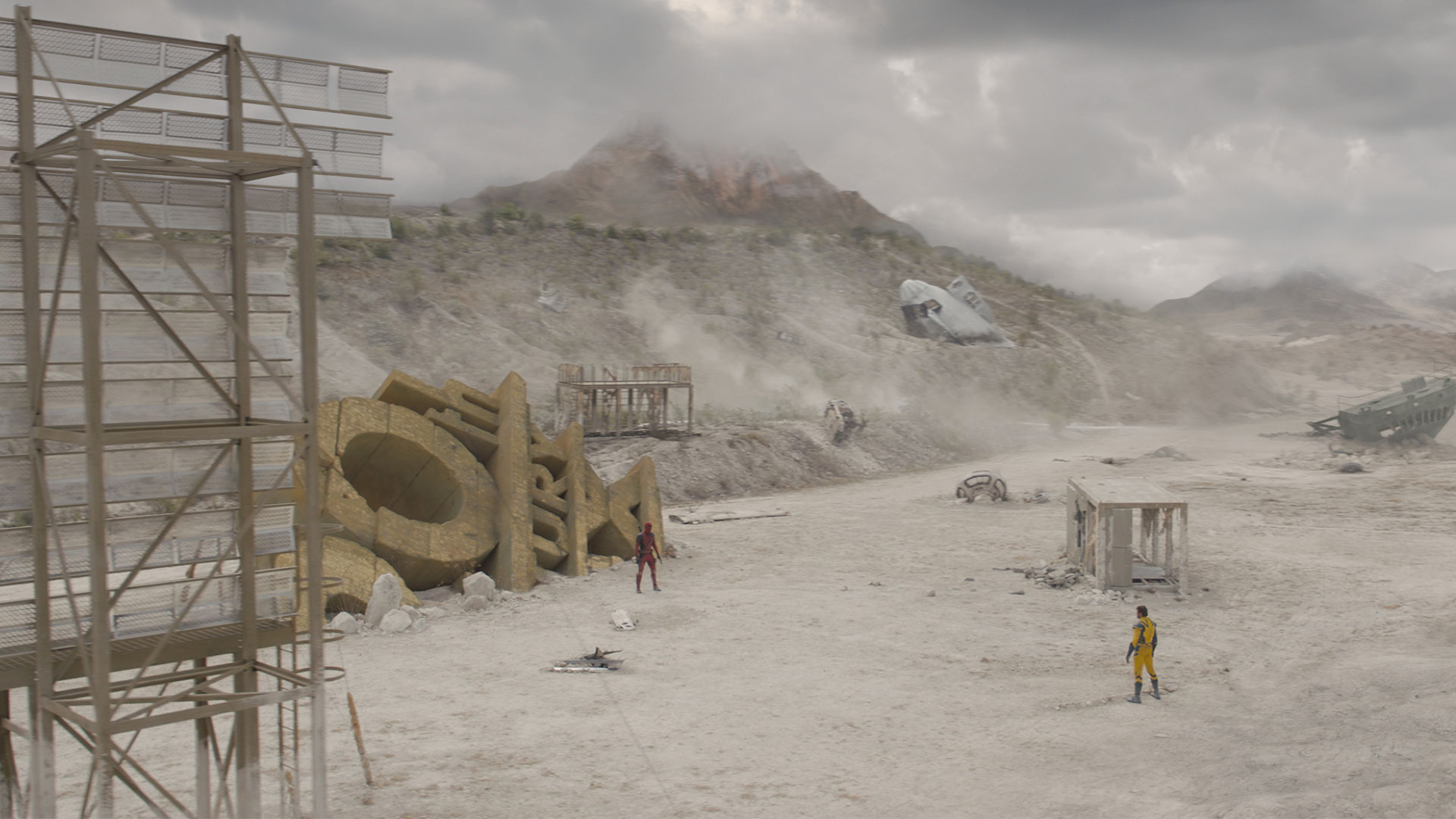
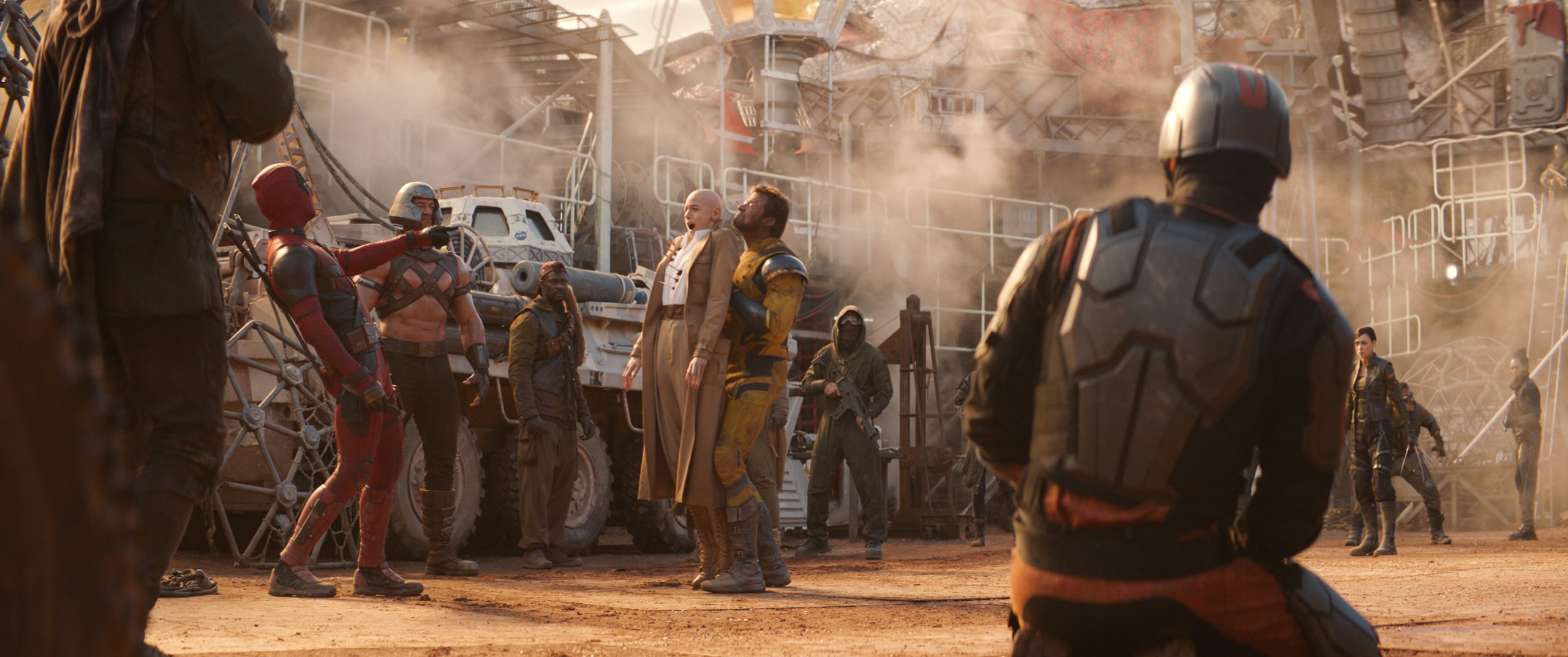
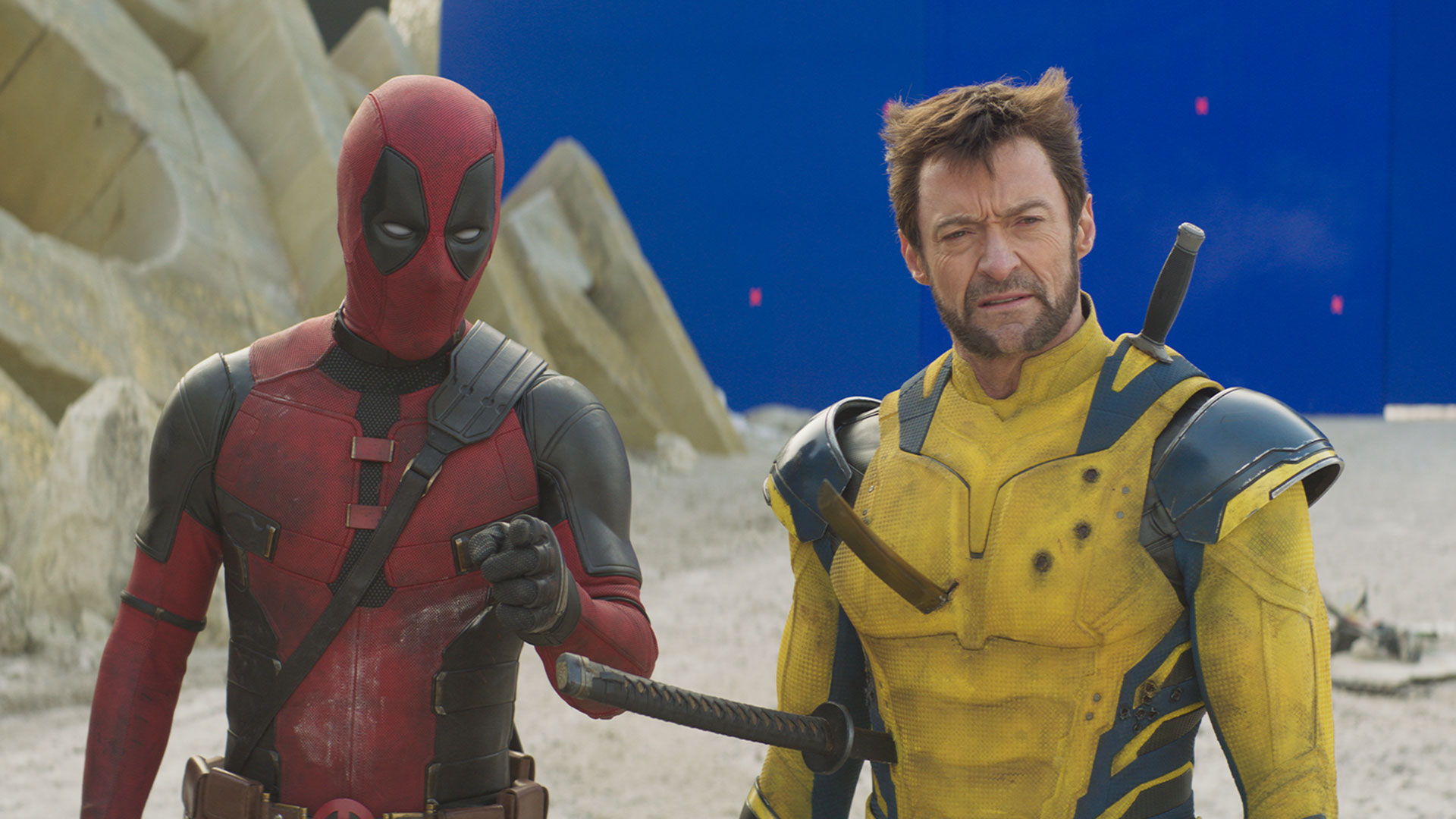
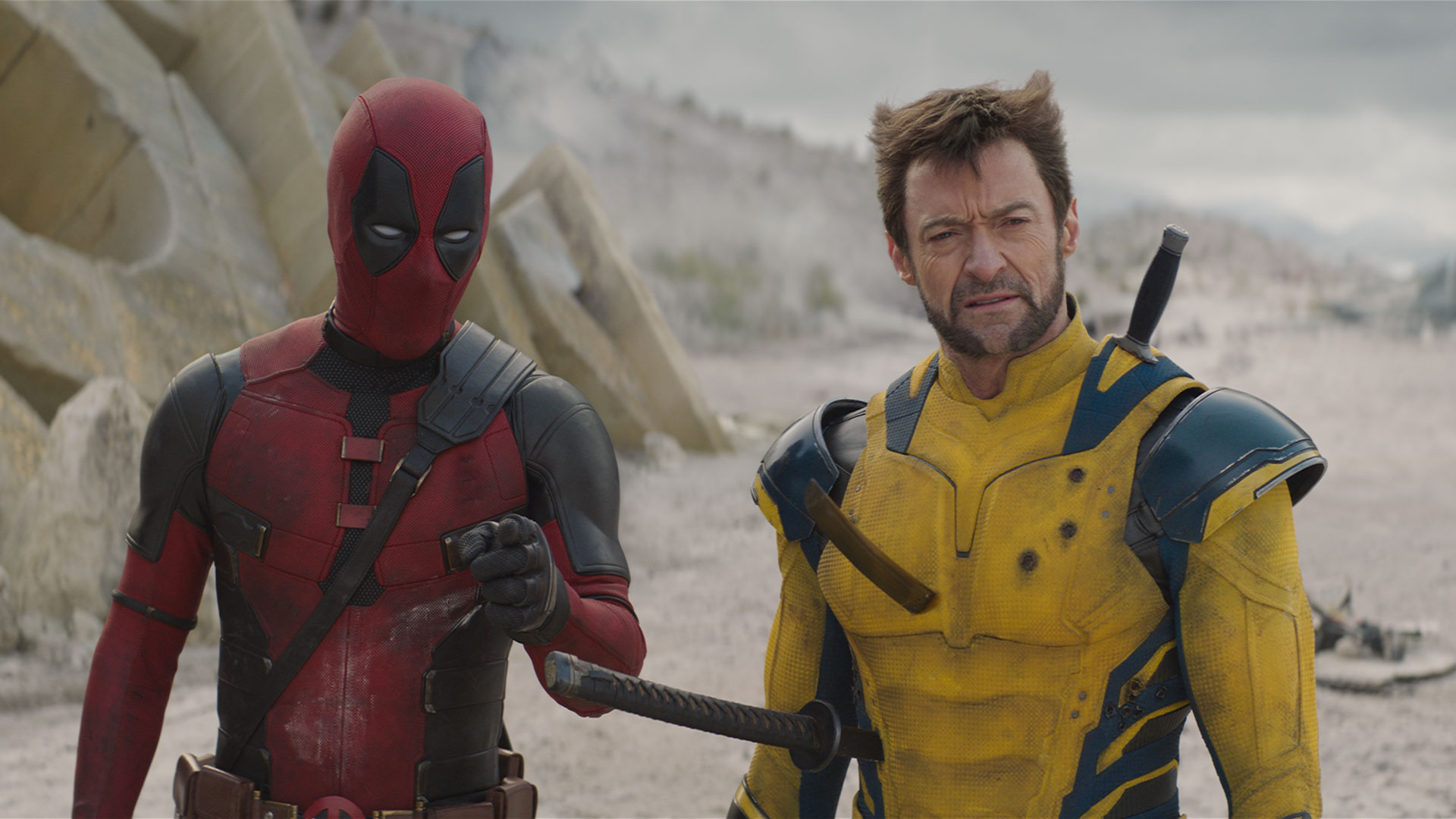
In a surprise twist midway through Deadpool & Wolverine, our titular protagonists are marooned in the Void: a Mad Max-like wasteland of desert and forgotten heroes. Their time in this multiverse purgatory takes up a significant chunk of the movie and features many of its greatest moments, from surprise character appearances to action set pieces, and Industrial Light & Magic was charged with bringing it all to the screen. Just from reading the script, visual effects supervisor Vincent Papaix knew that this section of Deadpool & Wolverine would be key to the movie’s overall success.
“Everybody was super motivated,” he tells ILM.com, “and we all knew that this movie was going to be special.”
Deadpool & Wolverine went on to become the biggest R-rated movie of all time following its theatrical release this summer, a true cinematic event during a challenging time for the film industry. To mark its arrival on Disney+, ILM.com caught up with Papaix to discuss how ILM realized some of the blockbuster’s impressive visual effects in the Void sequences. Grab a chimichanga and join us.
(Credit: Disney)
A sunny day in the Void
As fantastical as the Void may sound, director Shawn Levy and star/producer Ryan Reynolds (Deadpool) aimed to make it a believable setting and something that fans could relate to. “They really wanted it to feel as grounded and real as possible,” Papaix says. To achieve this, the filmmakers started the old-fashioned way, more or less.
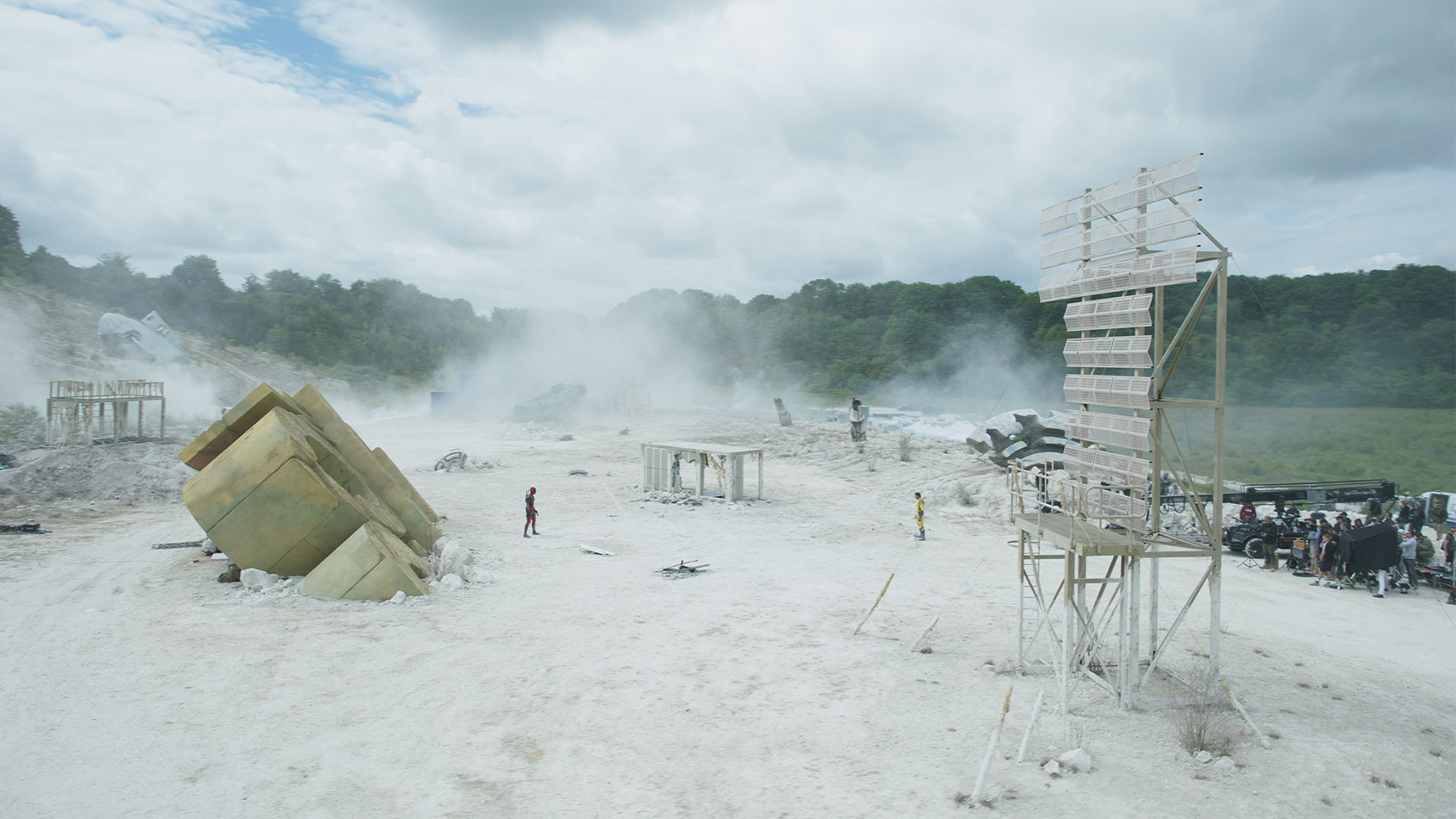
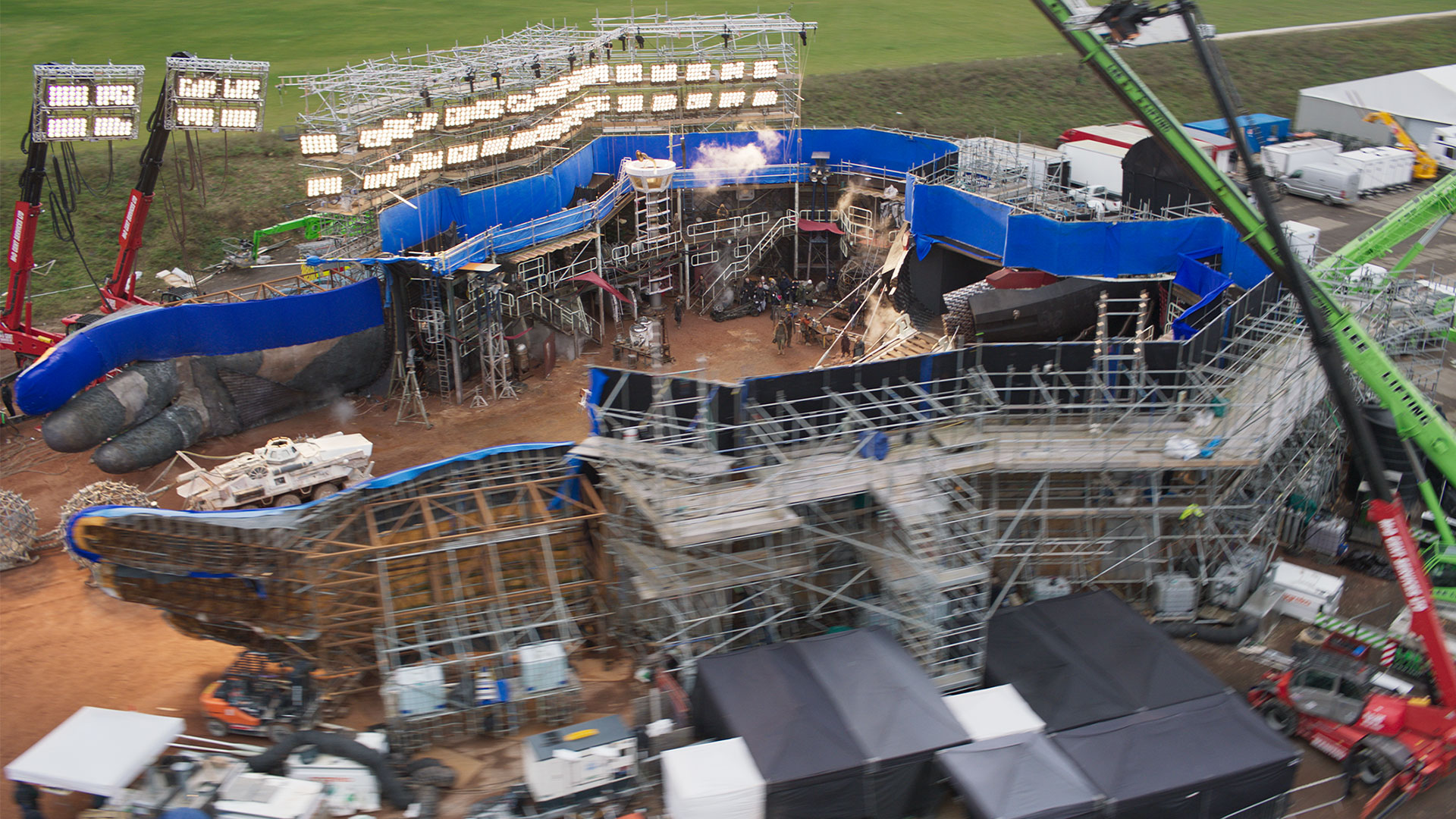
“One thing for them was to shoot in natural conditions. That’s why most of the shoot was outdoors,” Papaix says. “So they shot in a landfill in the UK and in various locations in the UK to get that kind of natural light feel.”
This did create certain challenges, however. “You don’t control the elements,” Papaix says simply.
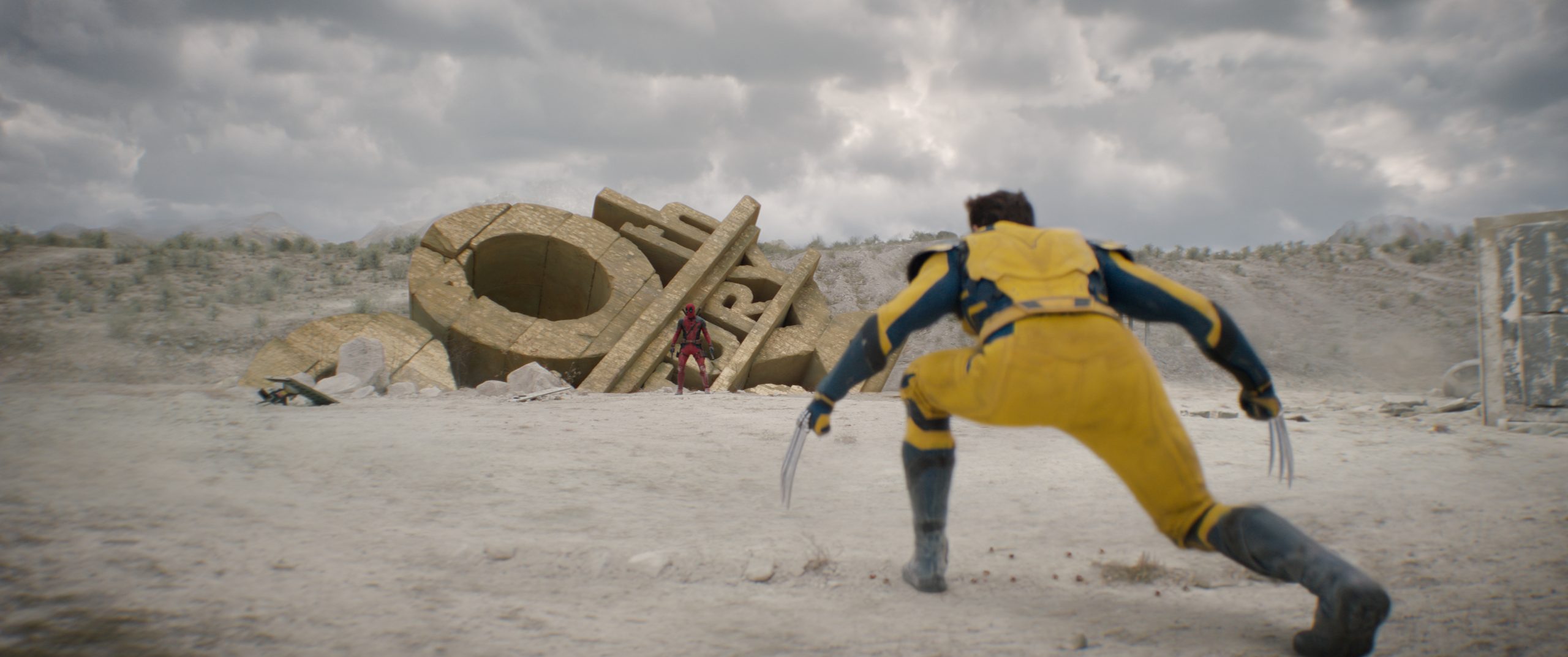
When Deadpool and Wolverine (Hugh Jackman) first arrive in the Void, they quickly proceed to beat the tar out of each other. This fight was shot outdoors in summer 2023 and then, due to the writers’ and actors’ strikes, finished in winter 2024. As a result of the pause and change in seasons, the color of the sky appeared slightly different. Though Levy and Reynolds initially hoped to digitally correct any inconsistencies in the look of the sky, ILM encouraged the filmmakers to keep this to a minimum. “One thing that was great about working with Shawn and Ryan and [Marvel visual effects supervisor] Swen Gillberg was that they are very collaborative,” Papaix says. “We did a few shots and a few tests and we realized the best outcome was to embrace the plate. So, based on the plate, if it’s sunny, let’s try to augment that. If it’s stormy, let’s try to be more stormy and then we’ll look at how it plays in the cut. And every shot was kind of hard to direct in that way. It’s making sure that it plays nicely, but if you look at the sequence, there’s some variation as you would have in a natural daylight. You can be in an area and within 10 minutes it can be from sunny to cloudy to stormy, depending on what is happening. So we focused on making it look as real as you can.”
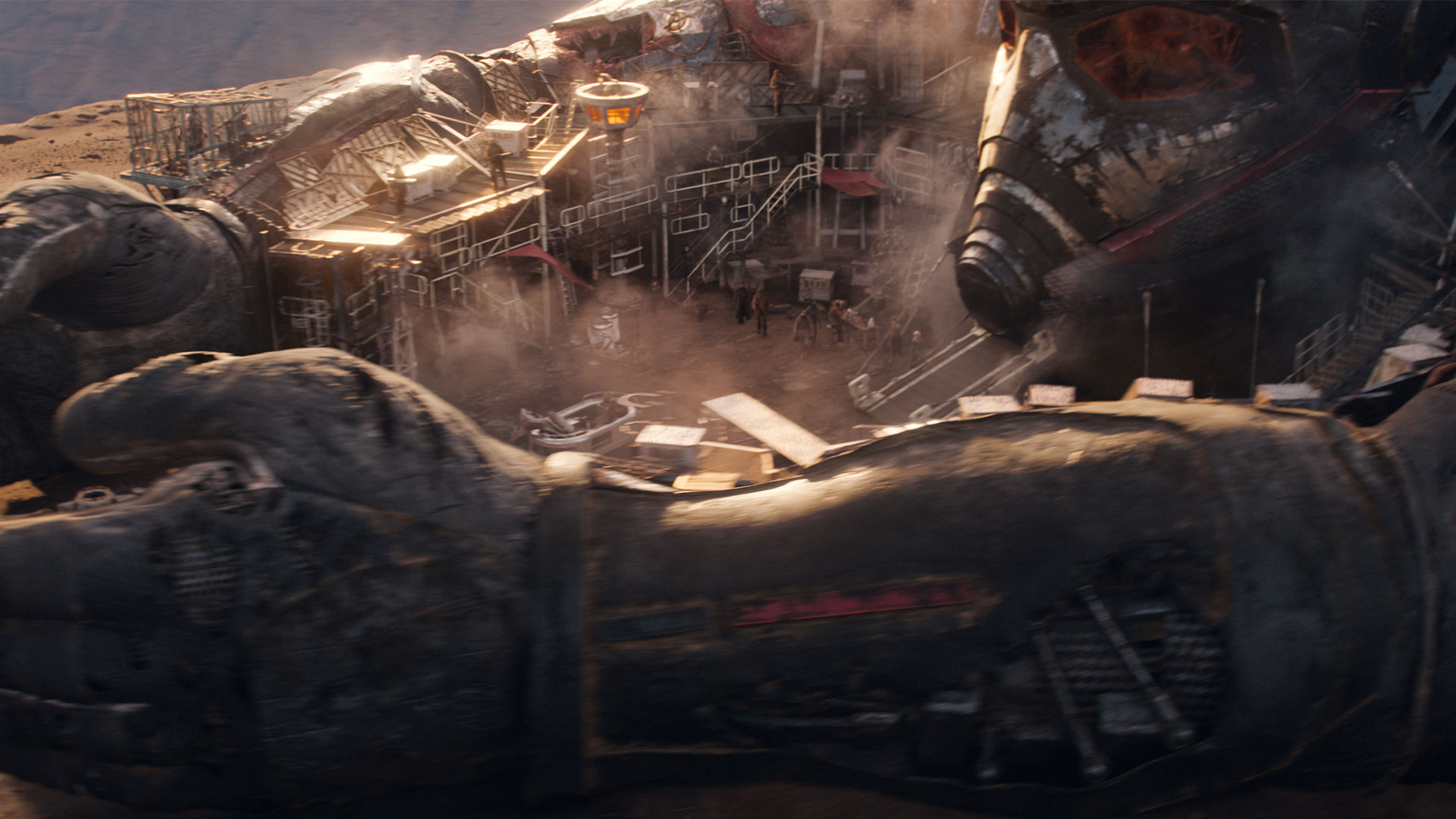
Finally, to increase the grandeur of the Void, from scale to background elements, ILM came in to digitally augment what was captured in-camera.
“Our work was focusing on creating a seamless transition from the foreground set to a CG extension of the Void,” Papaix says. “Overseeing adding everything that was needed to the Void, including the detritus. There are all those different objects scattered throughout the Void. So obviously [we were] making sure they integrated, but the Void needed to feel real, and not feel like the foreground was on a stage in bluescreen extended into a CG world.”
(Credit: Disney)(Credit: Disney)
A new villain emerges
The evil twin of Charles Xavier, Cassandra Nova (Emma Corrin) debuts in Deadpool & Wolverine as the ultimate authority in the Void. Unpredictable and hugely powerful, she’s a frightening villain that Wolverine and Deadpool must overcome. With guidance from Levy and Reynolds, ILM set out to illustrate her abilities in a subdued but unnerving way.
“She can control a lot of things with her mind,” Papaix says. “They wanted something fairly subtle to not overpower what was the power. It was important to show what it was doing to the people and not too much to [show] the power itself, not too much magic or anything. So it was more a subtle distortion to explain that there’s something happening.”
And what Cassandra does is indeed creepy: She seems to have a predilection for passing her fingers through the skulls of her enemies, including the Merc with a Mouth.
“We went through different aspects, from being creepy and caressing his face with almost spider-like fingers. All that was digital and a very complex simulation to kind of deform the masks in CG. What gets tricky is that it’s easy to do a collision, but we had to do a half collision and half penetration going through. So that’s actually a very complex simulation to control. And it was fully art-directed, meaning we had to control every aspect of the effect. We started with the performance of the fingers, and once we had the right emotion, then we worked on the simulation of how the mask should deform and, at the same time, kind of breaks open to let the finger go through.” In the end, Papaix was more than happy with the result.
“I read a lot of great reactions. People felt an itch, a little bit. It feels creepy but in a good way, because that’s definitely what the filmmakers were after.”
(Credit: Disney)
Johnny Storm’s quick exit
Cassandra sends Johnny Storm (Chris Evans reprising his original Marvel role from the Fantastic Four films) to a truly unfortunate demise, ripping off his skin and driving him into the ground. It’s a shocking moment—gruesome with a dark sense of humor—in a movie full of them.
“This was part of the script from day one,” Papaix says. “That was a moment that was very important for the filmmakers.” But where to begin for an effect so unlike anything previously seen in a Marvel movie? “Ripping out the skin was very graphic, so we had to study images.”
ILM turned to Real Bodies: The Exhibition, a long-running museum showcase that features actual human specimens, for reference. It made for a decidedly unique creative process. “The real [body in the exhibit] is very dry and has been preserved. We wanted to make it look fresh, so we had to add a lot of blood and liquids to make sure we felt that this just happened. So we are dripping blood, dripping fat. That was very gross. The daily session with the artists was always interesting.”
Once ILM knew how the effect should look, they began building a digital Johnny.
“The way we proceeded with this was creating an asset,” Papaix explains. “So a skeleton asset, we called it, with all the flesh and all the organs in there. We based everything, all the proportions, on Chris Evans. We have his scan. We created a digital version of Chris for Johnny Storm, even for the Human Torch version when he was on fire.”
Then it was time to get down to the de-skinning business.
“So we started from that and then we ripped off his skin. It’s pretty much what you can imagine, but in CG,” Papaix says with a laugh. “The shell of the clothes and skin were removed, revealing the skeleton with all the flesh. We tried to create some strings of blood coming out of him.” In an effort to maintain the series’ comedic tone, ILM added some elements to hopefully make this scene a little more Looney Tunes and less Hellraiser.
“It was kind of a cartoony moment, but in a good way — he has that moment blinking his eyes, and it’s like, ‘What just happened to me?’ And then he drops.”
(Credit: Disney)(Credit: Disney)
Gambit gets his day
The Void segment culminates with Deadpool, Wolvie, and a band of fan-favorite heroes launching a siege against Cassandra and her forces. While fans delighted at seeing each back in action, one required visual effects that are essential to the character.
“A lot of attention was put to Gambit [Channing Tatum],” Papaix says. “We studied a lot of the comic books to see what was happening with his cards and [mutant power].” In the comics and iconic X-Men cartoon, Gambit charges playing cards, resulting in a purple glow; when he tosses them, they leave a trail and explode on impact. “We went for a various range of showcasing the power to the point that I remember a version where we probably went too far — too glowy and too flamey-looking. And that’s something that was not pleasing to Shawn, for good reason. He wanted to be grounded, again, to reality. So the cards — it’s the X-Men and all, but it’s important to have the cards telling the story.”
As a solve, ILM illustrated a slower buildup of Gambit’s mutant power. “We were focusing mostly on the card and the energy within the card. There was a closeup in the cavern, when you see the card activating, and it’s within the pattern of the card. For the battle, we made some trails to be able to see it, because a card is very small. True to the comic.”
(Credit: Disney)(Credit: Disney)
A lasting collaboration
Deadpool & Wolverine is a success for Papaix on several levels, from the commercial and critical reception to more personal reasons.
“I had the chance to work on the first Deadpool in 2016. Time flies. So this one already was quite special in my career, and having the opportunity to supervise the third one was also quite special. Knowing that Hugh Jackman was attached as Wolverine, there were so many good things.”
But looking back at the film, he seems to mostly value the time with Levy, Reynolds, and Marvel. “They were great collaborators. Obviously, he’s a director and he makes his call, but he was very keen on hearing people’s suggestions. But the collaboration for me is one of the highlights of the show with Swen and with Marvel, and pitching those ideas to Shawn and Ryan. They also thanked us. We know that’s something that not every filmmaker does, but at the end of the project we got a thank you video from Ryan and Shawn to share with our team at ILM, and it’s always fun to see that they appreciate the work. Obviously, they see the people on set, but when you do post-production, they receive the image. So they don’t really realize that we were 275 people making this happen. We did about 30 minutes of the movie, 614 shots, but it was a global team. It was mostly Vancouver and San Francisco, but also other ILM sites working with us. But it was 275 people. That’s quite a big group of people making it up to show those crazy visual effects on screen.”
(Credit: Disney)
—
Dan Brooks is a writer who loves movies, comics, video games, and sports. A member of the Lucasfilm Online team for over a decade, Dan served as senior editor of both StarWars.com and Lucasfilm.com, and is a co-author of DK Publishing’s Star Wars Encyclopedia. Follow him on Instagram at @therealdanbrooks and X at @dan_brooks.
The visual effects supervisor sheds light on the process behind developing the series’ fantastical realm.
By Jay Stobie
The Two Trees of Valinor in a shot from Season One (Credit: Amazon).
Based on the work of J.R.R. Tolkien, Prime Video’s The Lord of the Rings: The Rings of Power (2022-Present) stands out as a sweeping epic taking place during Middle-earth’s Second Age, a period which predates the timeframe depicted in The Lord of the Rings (2001-2003) and The Hobbit (2012-2014) film trilogies by thousands of years. In order to bring a cinematic scale to the streaming series, The Rings of Power team enlisted Industrial Light & Magic’s own Jason Smith to be the production visual effects supervisor.
With a formidable résumé that includes work on everything from Star Wars: Revenge of the Sith (2005) and Transformers (2007) to The Revenant (2015) and Bumblebee (2018), Smith brought his accumulated expertise to bear as he guided ILM and the series’ other visual effects studios on their journey through seasons one and two. Smith graciously took some time to speak to ILM.com in order to discuss his work on The Rings of Power and highlight ILM’s extensive contributions to crafting showrunners J.D. Payne and Patrick McKay’s vision for Middle-earth.
An Epic Endeavor
“As the senior visual effects supervisor on the project, my job is to work with the showrunners to help them put their story visually on the screen,” Smith tells ILM.com. This monumental responsibility encompasses hiring vendor studios and planning out the work, being on set and instructing the shoot during principal photography, and shepherding the shots through post-production. “So it kind of includes everything. It’s a real privilege because, on this project, I was one of the first handful of people who joined. We got to take on some challenges in Middle-earth that hadn’t been done yet, like Númenor and the living Khazad-dûm.”
With a background in blockbuster films, Smith has witnessed how studios’ approaches to episodic and theatrical productions have grown more alike in recent years. “The bar has been raised by so many great shows over the last 10 or 15 years that the expectation is that [series] quality is film quality,” Smith observes. Nevertheless, there are notable distinctions involved in making a series that Smith also treasures, such as the approval process and the collaborative spirit of the showrunners, in this case J. D. Payne and Patrick McKay. “There’s quite a lot of freedom to throw out ideas, to suggest things, and to help to guide the visual storytelling with those guys. Our work with the directors is more about prep and being on set, truly. So that’s a key difference there. It leads to a little bit more autonomy in post, which I really appreciate and love.”
Such a rapport is essential, especially given the volume of visual effects shots associated with The Rings of Power. “Nothing can prepare you for the number of shots on one of these shows,” Smith shares. “Because let’s say you’ve got 6,000 shots, and at the peak, maybe you have half of those in play. If you just imagine what it’s like when 3,000 shots have one-minute reviews crossing your desk, if you do the math, it catches up with you very, very quickly. It turns the whole thing into this ballet, and it gives me a lot of respect for the production teams at the vendors and here [at Amazon]. It’s astoundingly good, they keep us all organized in spite of ourselves.” Smith estimates that, in the first season, ILM worked on around 1,000 effects shots under the supervision of Nigel Sumner. “ILM was our lead house on season one and did a lot of work, along with Wētā [FX], Method [Studios], and others.”
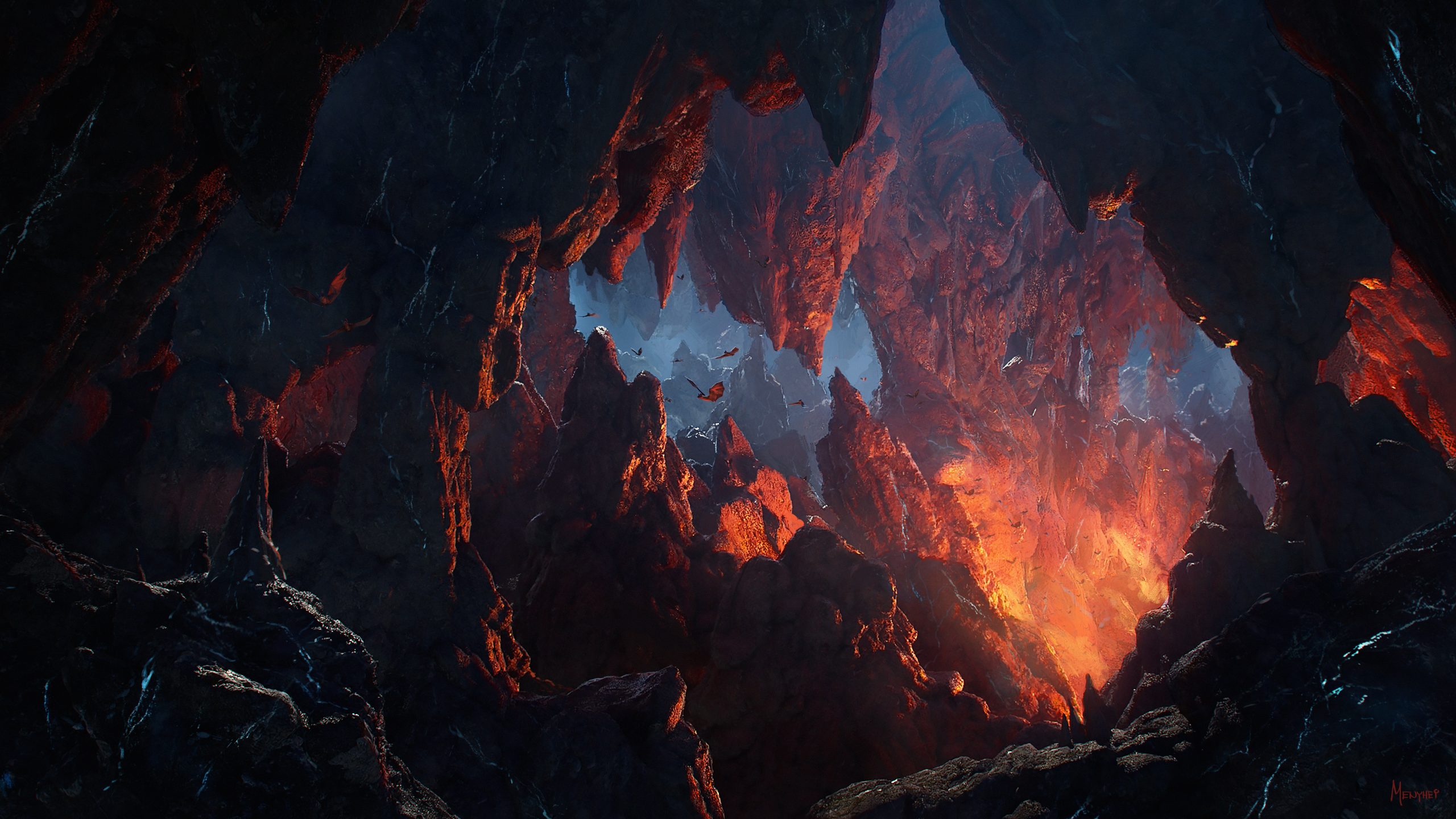
Season Two concept art by Saby Menyhei (Credit: ILM & Amazon).
ILM’s Innovations
A capacity for collaboration proved to be a vital strength demonstrated by Smith and ILM, particularly when it came time for Mount Doom to unleash a volcanic eruption and transform the Southlands into the infamous region of Mordor. “ILM played a huge role in the volcano. We went into that with complete ownership of it,” Smith recalls. The volume of shots that came in for the sequence necessitated that the work involve three vendors. “We had Weta doing some really big pyroclastic cloud shots that cut back to back with ILM shots, and ILM and Weta both cutting back-to-back with RSP [Rising Sun Pictures] for some pyroclastic clouds and raining lava bombs.”
The challenge of coordinating with other studios resulted in a clever solution whose ingenuity was defined by its simplicity. “We treated all three companies like they were the same company, no secrets, sharing everything fearlessly,” Smith states. For the vendors, sharing their works-in-progress amongst one another provided a common frame of reference for the elements they were bringing to life, whether that be the darkness of a cloud or the intensity of an ember. “Everybody pulled it off amazingly well,” Smith beams. “Most people who see [those scenes] would never actually detect the different styles in play, as those shots cut back-to-back. It’s a testament to those teams being willing to work together.”
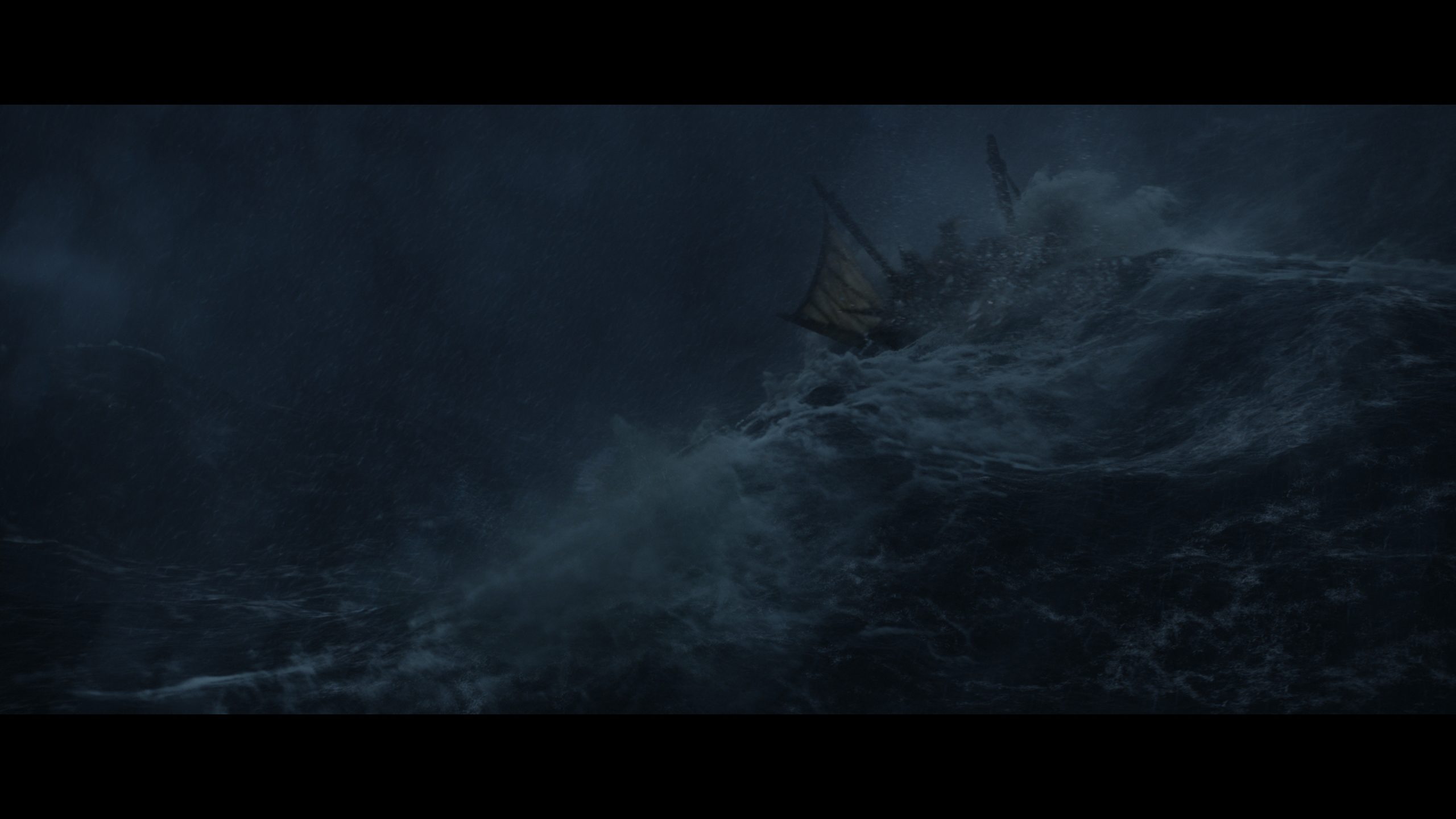
Early in season one, the scenes involving Galadriel (Morfydd Clark) and Halbrand (Charlie Vickers) adrift on the Sundering Seas required yet another imaginative remedy from ILM. “When we read the scripts for season one, an amazing amount of it took place on the ocean. So I immediately wanted to go to ILM with that work,” Smith details. “They created a setup — we called it a ‘machine’ so people outside of visual effects could sink their teeth into it – it was a very robust procedural ocean — that let them tune the [water’s] parameters, like the wind and height of the waves. [ILM visual effects supervisor] Nigel Sumner was leading the charge on that.” Smith was impressed by the “Ocean Machine,” as it allowed the team to turn out photoreal plates once the scene’s parameters were set.
However, Smith adds that “of course, there’s artistic work involved in every single one of those [plates]. In our show, every time the ocean is there, it’s telling a story, so we had adjustments to make across the board. At the extreme end of the spectrum , there was a gigantic storm – one with an epic Middle-earth scale – but all of that stuff came out of that same engine with the same artistry behind it.” Smith teases that ILM’s season one advances also paid dividends for water-related shots in season two. “I will say that, without knowing exactly what’s coming — except for having read Tolkien’s books [laughs] — I would anticipate that we should be getting a lot more use out of the ocean machine.”
A Season One shot depicts Galadriel and Halbrand aboard wreckage on the Sundering Seas (Credit: Amazon).
Season Two Sensations
After praising ILM for its marvelous work across both seasons, the latter of which was supervised by Daniele Bigi, Smith shifts his focus to his favorite contributions from ILM that have shown up in the early episodes of season two. For instance, the show’s sophomore effort affords us an opportunity to meet the Elven elder, Círdan (Ben Daniels), who resides on an idyllic shoreline. “There’s a matte shot, an environment shot, pulling back from Círdan’s boathouse at the Grey Havens, and the work is just so photographic-looking,” Smith elaborates. In an interesting twist, the tranquil locale was actually built upon a set standing in the parking lot next to an industrial park. “The water is flawless, the fjords are so beautiful, the lighting is wonderful, and the composition is great. That is one [shot], when people see it, we already have people asking, ‘Wait, where did you build that?’ They were wondering where that was [in the real world], so I think that’s a testament to the artistry at ILM.”
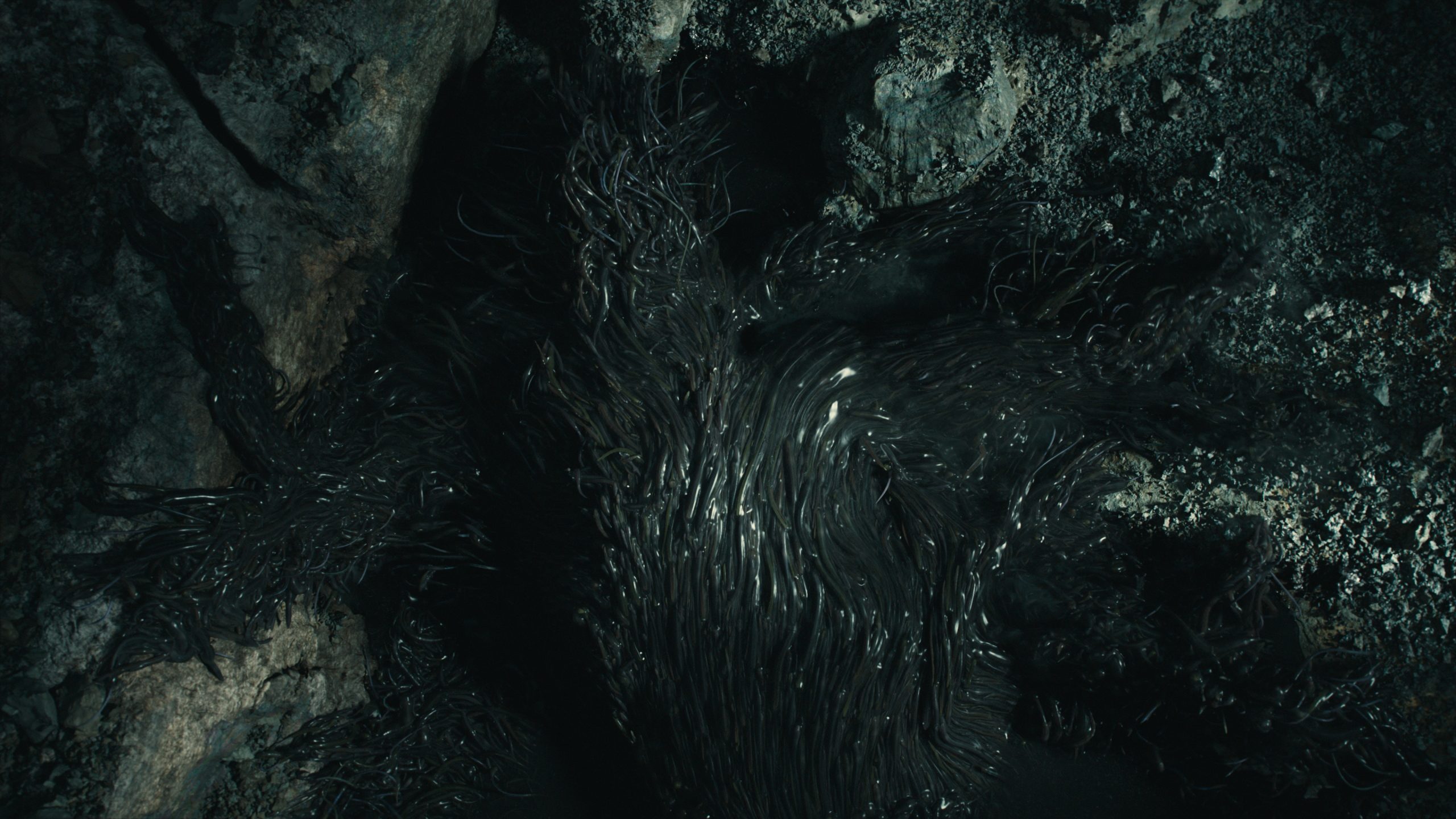
Smith’s gratitude for ILM’s craft extends to one of season two’s most complex sequences. The premiere begins with a flashback to Sauron’s apparent death, when his rival Adar (Sam Hazeldine) orchestrates a coup against him. Initially reduced to a viscous goo that oozes into Middle-earth’s cavernous depths, Sauron’s enduring form subsists on passing rodents and insects until it is able to free itself from its tomb. The squirming coalescence gradually makes its way toward civilization, consuming a traveler and allowing Sauron to assume the human form known as Halbrand. “ILM had the guts to take on one of the weirdest things in the whole show, and I mean that with the most excitement that I can communicate,” Smith says in regard to the eerie endeavor. “It is such an incredible challenge of simulation, and creature rigging, and complex animation, and rendering, and basically every single discipline. [ILM] really hit the ball out of the park with that.”
Despite these fantastical qualities, Smith sees the importance of grounding such creatures with the properties of real-world references. “We found a species of worm that formed colonies and that will contract almost like a muscle themselves, and we combined that with reference of horsehair worms, which are really unsettling in their own way. The final result is really beautiful to watch, and gut-wrenching in a way. It looks like animated SpaghettiOs. We’re always looking for references like that, because those are the little handholds into reality that take these creatures to the next level.” Storytelling is another key factor in ensuring that the visual effects showcasing Sauron’s resurrection resonate with audiences. “It’s so intertwined with the story, it’s exactly the story that needs to be told about that character. It interacts with an animal, too, which I think is also beautiful work. That’s one of the things I’m excited for people to see.”
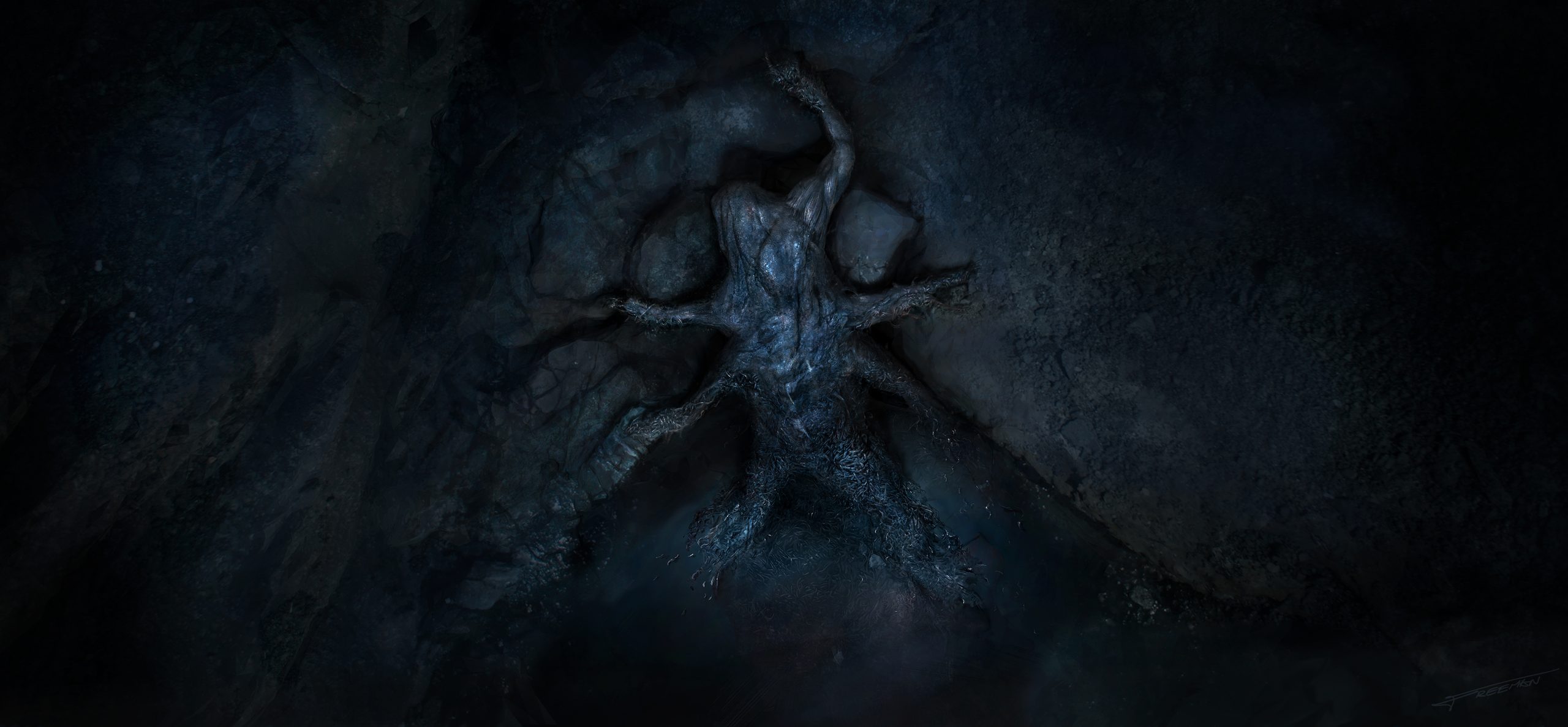
Concept art by Dave Freeman (Credit: ILM & Amazon).Final frame (Credit: Amazon).
The Wonders of Worldbuilding
Smith’s passion for Middle-earth and its wealth of creatures can be traced back to his childhood. “When I was growing up, the world of Tolkien was a huge deal to me. I loved it,” Smith explains, believing Peter Jackson’s movies to be some of the best ever made. “They really captured my heart. And, being a creature kid at the same time, it’s a match made in heaven.” Citing a popular Tolkien quote — “I wisely started with a map, and made the story fit” — that originated in a letter penned by the writer, Smith emphasizes the need to start with the realm’s foundation, whether that be its geographical details or the intricacies of a fictional language. “When we’re doing fantasy, especially when it’s a little more imaginative, we have to have that anchor.”
From hypothesizing how Ents emote to his own attachment to the hill-troll, Damrod (voiced by Benjamin Walker and Jason Smith), Smith reflects back to the moment he learned he’d get the chance to deal with more creatures in season two. “Patrick McKay said to me that, this season, we’re going to battle a lot more creatures. Things are getting darker, and we have a story-based need to really bring some of these other creatures into play.” A reverence for the natural world was also key for McKay and Payne, as their desire to remain enveloped in the story meant that any magic displayed in the series could not have too much, as Smith puts it, “razzmatazz.” Smith recounts that the magic of the first season involved beings who manipulated flames, kicked up winds, and threw rocks about. “It’s almost like the beings who are working with the magic have access to another chapter of the laws of nature, so what looks like magic is their interaction with more advanced, but still physical and grounded, laws,” Smith postulates.
“It’s all caught up into these elemental ties,” Smith continues. “Even on set, when we’re filming scenes with magic, Daniel Weyman, who plays the Stranger, and I would stand there and pick each others’ minds a little bit. [I’d tell] him, ‘I think that to increase the threat, I’m going to have rocks picked up in the wind, so that when you’re thrown against the wall, some rocks are hitting all around you. It makes it look like it really hurts.’” Weyman reciprocated the brainstorming sessions, and Smith himself remains grateful that he’s able to bring his ILM experience to the table. “I feel really lucky that I got into ILM render support when I did, and that I’ve been able to work with the people that I have at ILM. To be mentored by people like [ILM visual effects supervisor] Scott Farrar, [ILM executive creative director] John Knoll and [ILM consulting creative director] Dennis Muren is a real privilege, and I take a lot of the wisdom those guys have said over the years into all of these different interactions and challenges.”
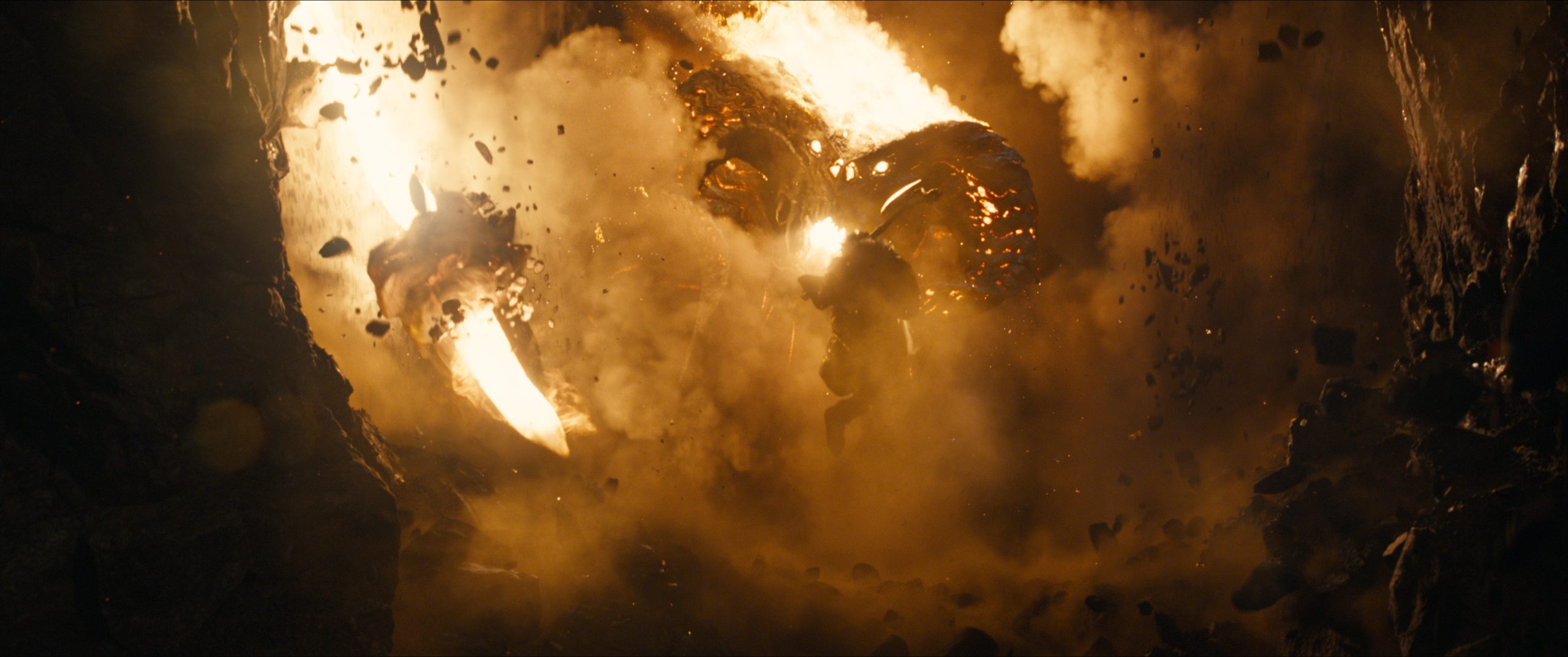
The Balrog from Season Two (Credit: Amazon).
Travels and Triumphs
Collaborating with the showrunners and cast members is not the only one of Smith’s duties as the show’s senior visual effects supervisor that audiences may be unaware of. “I shoot all the aerials for [The Rings of Power],” Smith reveals. “We’ve got some drone stuff that happens without me, but so far, I’ll say, I’ve shot all the helicopter work for the show. Which is great, because then when we’re designing shots, I have the shots in my head.” Traveling around New Zealand and the United Kingdom, Smith found real-world sights — frozen rivers, tundras, green valleys, cliffs, waterfalls, and more — that fit with the series’ vision and could be inserted into its story.
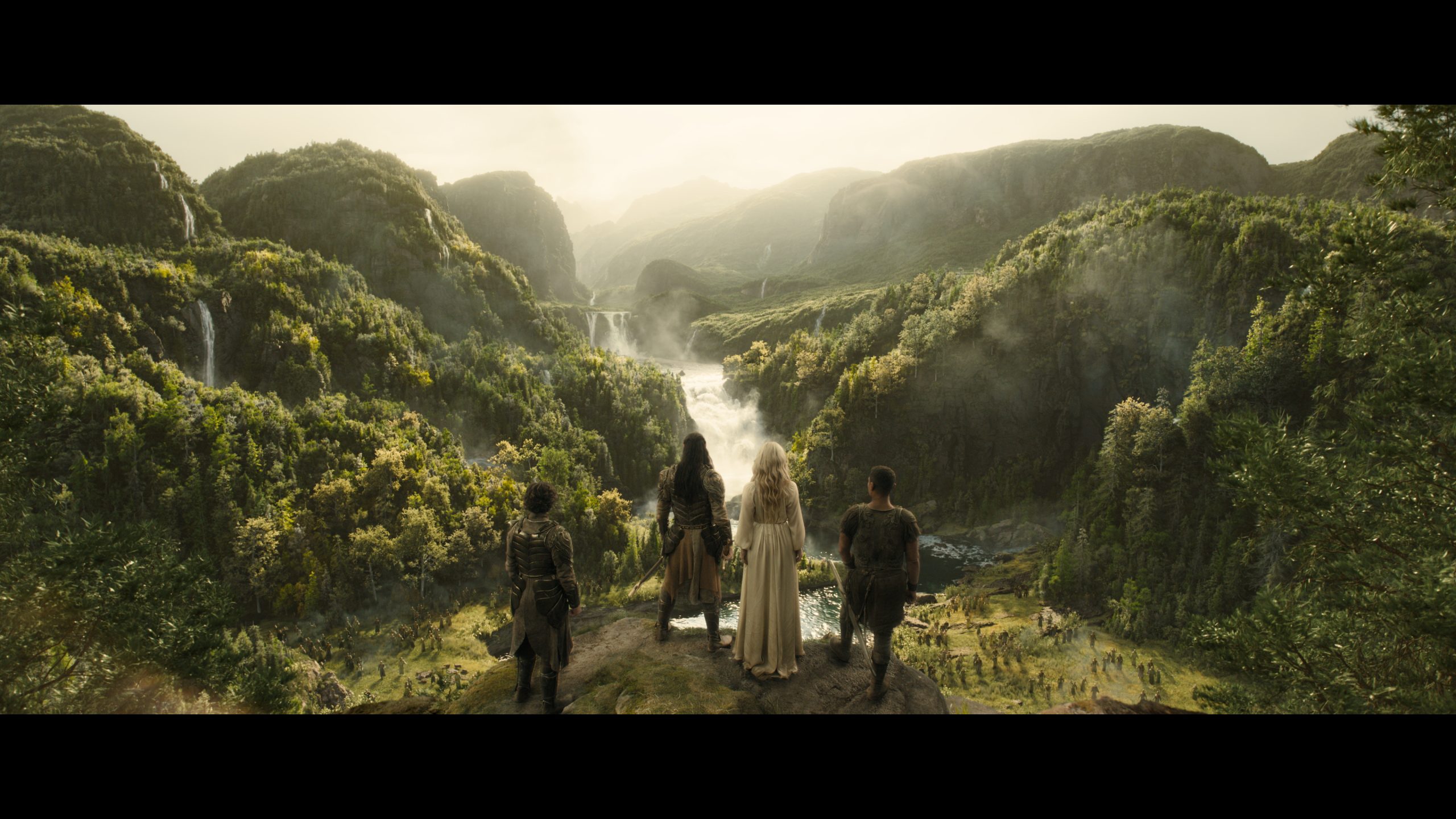
“If you look at the big CG [computer-graphics] establishing shots, almost without fail, they are all based on those aerials,” Smith declares. ILM handled such a shot in the season two premiere, “Elven Kings Under the Sky,” in which High King Gil-galad (Benjamin Walker), Galadriel, and Círdan don their rings of power under the cliffside tree. “We see a final wide [shot] of that [scene]. That is just a plate we shot not knowing what exactly would be placed there [laughs], and I think ILM did beautiful work of making it look like it was all on purpose the whole time, placing the court of Lindon there at the top of the cliffs.” Smith is thankful for the professional atmosphere fostered by the showrunners and producers which permitted him to be a part of those creative solutions. “There’s an openness to solutions presented in service of the story. There’s a healthy openness to improvements regardless of the source. I think that creates an environment that’s a lot of fun to work in. It’s very busy, but it’s also incredibly rewarding.”
A wide shot from Season Two (Credit: Amazon).
A Philosophy for Visual Effects
Smith’s overall approach to the visual effects of Middle-earth has been greatly influenced by his work with The Rings of Power season one producer Ron Ames and their colleagues. Smith understands that there are common misconceptions about what visual effects experts bring to the process of filmmaking, alluding to the laughter among crew members that tends to arise when on-set visual effects teams bring out the gray reference balls utilized for computer-graphics shots. “When we’re doing the visual effects, or we’re doing previz [previsualization], we’re making the movie. We’re not delaying things with previz, we’re making the movie,” Smith asserts, describing visual effects as no longer being a process that you stamp on at the end, like a postage stamp being affixed to an envelope. “Visual effects is the pulp that’s tying the paper together. It’s touching everything, it’s influenced by everything, and it really determines so many different ways that you can or can’t tell the story.”
Serving as The Rings of Power’s senior visual effects supervisor has made Smith excited for what is on the horizon for his profession. “This project has been eye-opening to me. It’s incredible the things that we can do and add to make the story more fun. There’s a bright future in front of us where we’re going to see the lines [between the story and visual effects] blur more and more, and that’s actually a good thing. I think people are going to understand that visual effects are there, and that it’s okay [laughs],” Smith assures. “Visual effects do exist, and it’s alright, everyone.”
Centering his thoughts on the step in the visual effects process that he hopes will become more widely embraced, Smith circles back to the writhing creature that emerged from Sauron’s corpse in the season two premiere’s flashback sequence. Stressing that the use of reference by visual effects artists is not just for “help-in-case-you-get-stuck” situations, Smith theorizes that the right reference can elevate the efficacy of a visual effects team’s sheer talent. “And I’ll tell you what, ILM has talent. We have the top talent in the world. But, what I’ve learned is, even with that top talent, if you spend time and effort getting the right reference, then your talent is picking up the baton at maybe 90% and having to carry it to 100%, instead of picking it up at 20% and having to carry it, gasping for air, to 90 or 95%. That’s the truth of it.”
Smith’s outlook on his duty to The Rings of Power and its fans is encapsulated in his final remarks. “These projects [have] finite time schedules, and visual effects is a finite resource. That’s where I see my job. I want to make sure that every visual effects artist that’s on the show is really putting pixels on the screen that matter, that are telling the story,” Smith concludes. “I think that my value is trying to emulate Tolkien in laying the best foundation of reality for our audience that we can. Finding as much in our world to resonate with Middle-earth as we possibly can, just like he did with his writing. When he wrote about his big monsters, sometimes it’s just a spider that’s big. I think we’ve been able to have some fun with that, too. We have one creature in the mud here that was done by ILM in the second season that is along those lines. I think some people will recognize the shared DNA with a small but brutal predator from here on Earth when they see it, and the result is not something I’d want to encounter. We try to learn from the way that [Tolkien] approached things and take that on as a mantra.”
–
Jay Stobie (he/him) is a writer, author, and consultant who has contributed articles to ILM.com, Skysound.com, Star Wars Insider, StarWars.com, Star Trek Explorer, Star Trek Magazine, and StarTrek.com. Jay loves sci-fi, fantasy, and film, and you can learn more about him by visitingJayStobie.com or finding him on Twitter, Instagram, and other social media platforms at @StobiesGalaxy.
Industrial Light & Magic brings creative commotion to the creatures and New York cityscape of A Quiet Place: Day One.
By Clayton Sandell
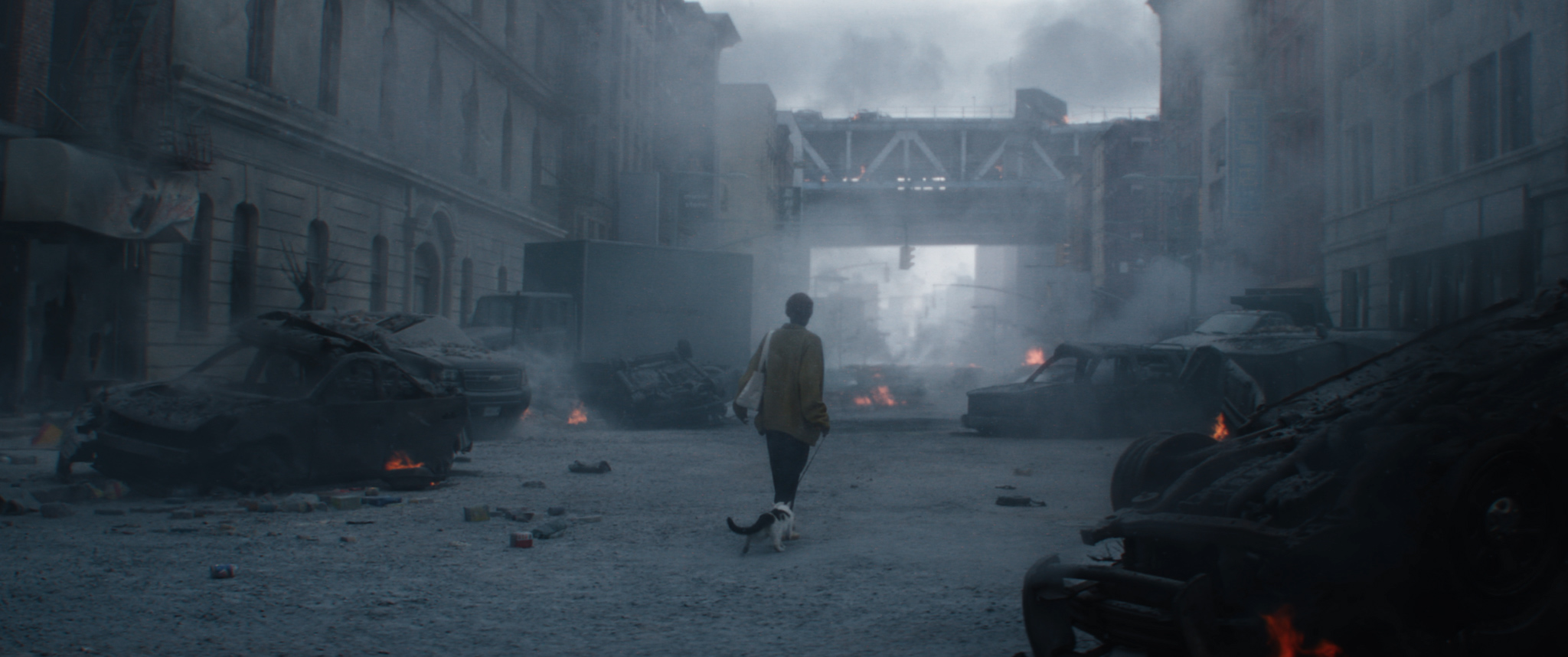
Alex Wolff as “Reuben” in A Quiet Place: Day One (Credit: Paramount Pictures).
Surviving the extra-terrestrial terror of A Quiet Place: Day One (2024) depends on the critical ability to stay absolutely silent.
Setting the third installment of the acclaimed film series in noisy New York City, however, brought an entirely new level of fear to the post-apocalyptic horror world first introduced to audiences in John Krasinski’s A Quiet Place (2018), while simultaneously presenting a welcome challenge for the visual effects team at Industrial Light & Magic.
ILM visual effects supervisor Malcolm Humphreys says early discussions with director Michael Sarnoski focused on how to bring unique and unexpected aspects to the frightening alien invaders that use a preternatural sense of hearing to stalk their human prey.
Among the thousands of New Yorkers running for their lives is Sam, a terminally-ill cancer patient played by Academy Award-winner Lupita Nyong’o. Trying to escape the city as the monsters close in, Sam and her cat Frodo eventually encounter Eric, an English law student portrayed by Joseph Quinn. Sam is determined to get a slice of her favorite pizza before she dies.
“He wanted to make a narrative about how two different people deal with this situation in a big city,” Humphreys says of Sarnoski. “So this was an interesting take about trying to make something about two strangers that meet while all this chaos is happening.”
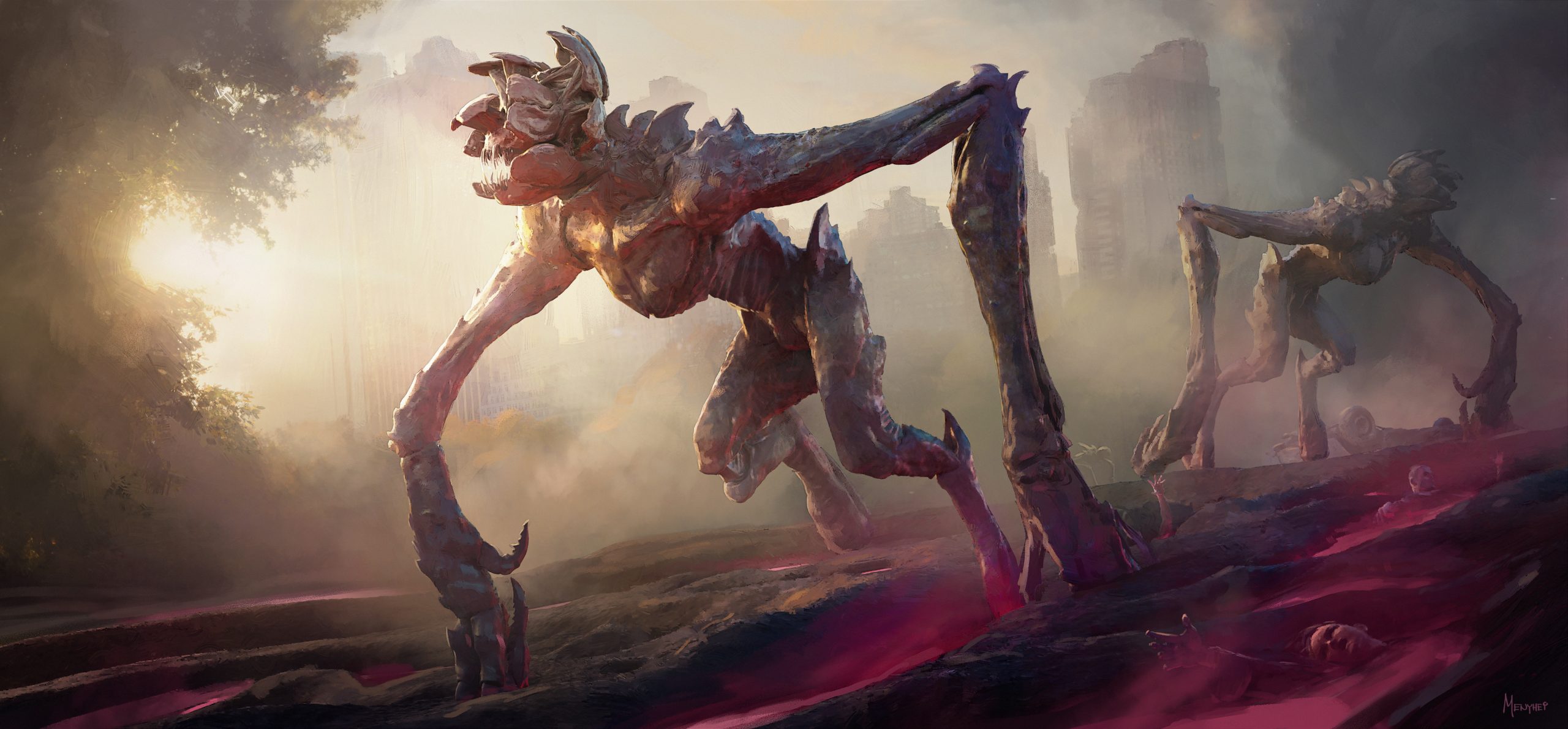
Concept art by Szabolcs Menyhei (Credit ILM & Paramount).
A visual effects veteran of films including Ant-Man and the Wasp: Quantumania (2023), The Batman (2022), and Star Wars:The Rise of Skywalker (2019), Humphreys and his team helped guide Sarnoski and cinematographer Pat Scola through the complex process of making a film that required a large number of visual effects sequences. Sarnoski and Scola previously collaborated on the award-winning film Pig (2021) starring Nicolas Cage.
“Part of the job at ILM is just understanding the story and where we want to go, and just trying to build a bespoke solution depending on the different types of shots we’re doing,” Humphreys tells ILM.com.
One challenge, Humphreys says, was determining how the creatures with hypersensitive hearing might move and behave in a city environment like New York.
“In the previous films, they’re either just stealthing on a single character or they’re sort of doing a snatch-and-grab,” explains Humphreys. “So Michael was very keen on expanding that a little bit more. For example, ‘how do they act with each other?’”
During a nighttime sequence set at a construction site, the creatures behave almost like a family gathering for dinner, ripping apart and devouring a fungus-encrusted pod for food. Behind the scenes, the ILM team came to refer to the monsters by the name “Happy.”
“They’re not very happy creatures, so calling them ‘Happy’ is kind of fun,” Humphreys says. “There’s a really big mom that’s all caked in white, and then you’ve got the little baby happies. The little ones have slightly bigger heads. They’re smoother.”
(Credit: Paramount)
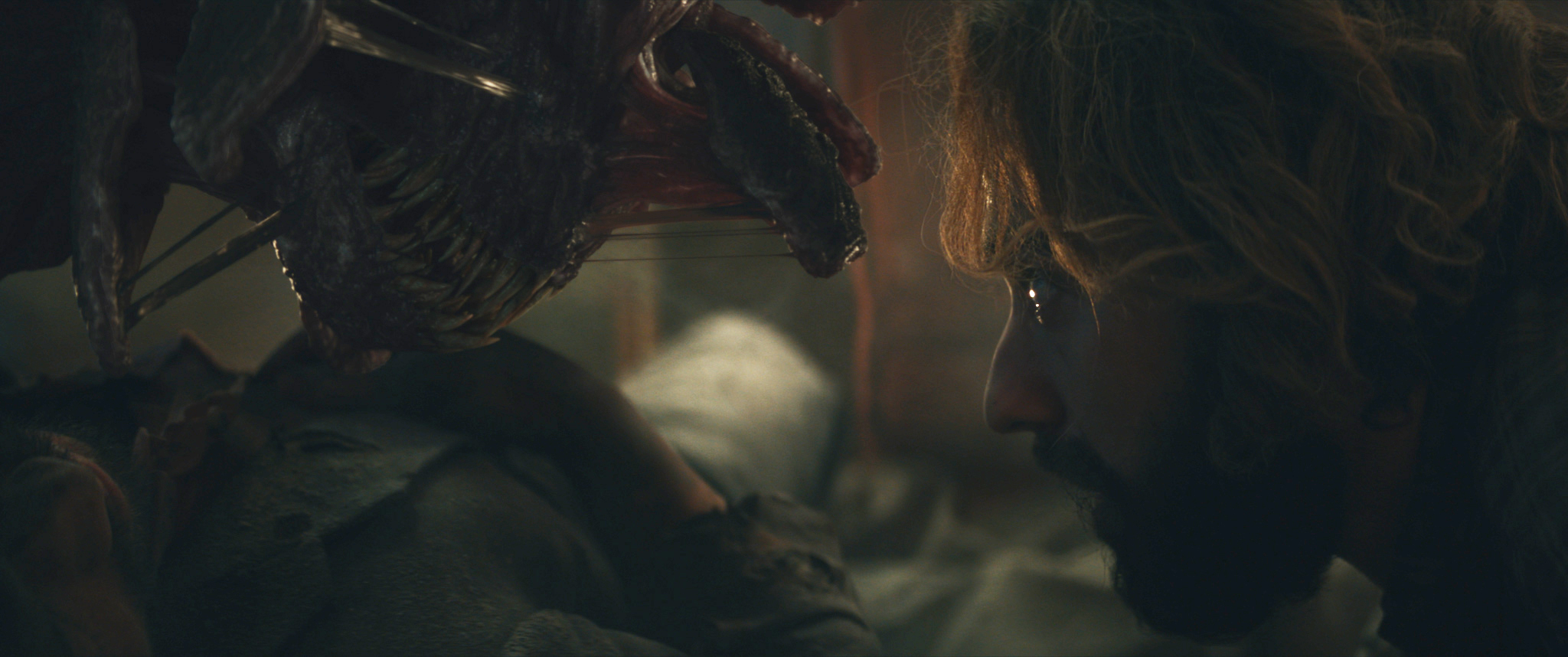
When Eric accidentally makes a noise, a nearby creature is alerted and exposes its slimy, pulsating inner ear to listen more closely. It’s a tense, relatively long shot that Humphreys says is also one of the film’s most complex.
“There’s an immense amount of detail that the modelers, the texture artists, and the effects artists have done,” he says. “There’s the eardrum that’s fluctuating. You’re actually hearing Eric’s heartbeat, and we’re pulsing the eardrum and the heartbeat together.
“You want to get an emotional reaction from the audience, so we want to sit on this shot for quite a while,” Humphreys continues. “I really, really love this shot.”
Humphreys credits animation supervisor Michael Lum with helping develop the right movement for the creatures as they do things audiences have never seen before, like scrambling up and over Manhattan buildings.
“All of the creatures are hand-animated,” Humphreys reveals. “There’s no crowd system or anything like that. They’re all handcrafted, which is amazing.”
Building out New York City was another major aspect of ILM’s work on A Quiet Place: Day One that may not be apparent to many audiences, and that’s exactly the goal.
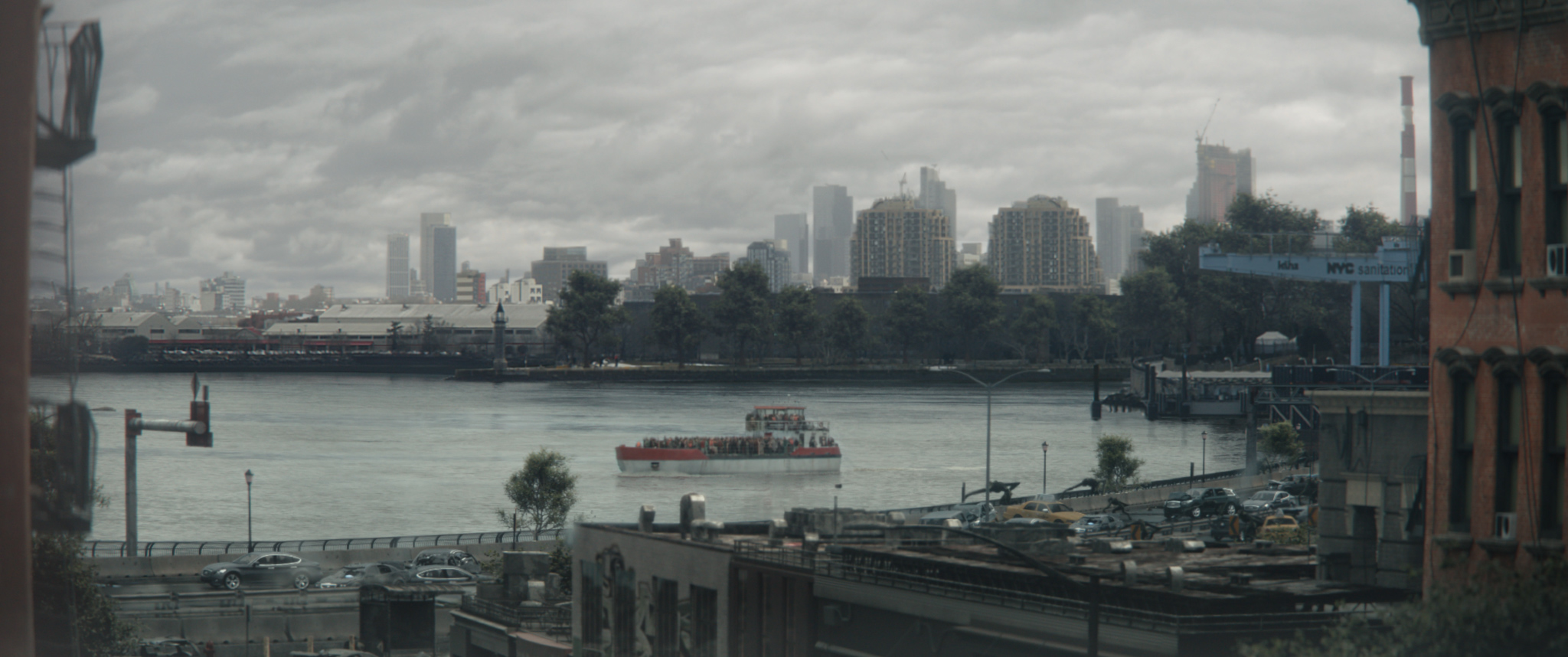
The areas of New York that appear in the film— including the Lower East Side, Chinatown, Midtown, and Harlem—were realized as a massive partial backlot set built at Warner Bros. Studios Leavesden near London. Production designer Simon Bowles and his team built two intersecting streets that could be modified and dressed into new locations as Sam, Eric, and Frodo make their way through the city.
Most of the backlot structures, however, were only built two stories tall, requiring ILM artists to digitally extend the height of buildings, lengthen streets, and fill in backgrounds.
Lupita Nyong’o as “Samira” in A Quiet Place: Day One (Credit: Paramount).
“We did an immense amount of data capture,” Humphreys explains, a process that required 14 days in New York so the team could scan and photograph more than a hundred real buildings in high resolution. “We go through a whole process of building out those facades so that they can be used on many, many shots.
“For certain bits, we’ve changed quite significantly what you see in the backlot set,” Humphreys reports. “There’s a huge amount of augmentation and replacement.”
While Frodo the cat is entirely practical (played by two different feline stars, Schnitzel and Nico), a scene requiring the animal to weave through a frantic crowd running from the aliens required extensive digital artistry from ILM.
“Michael was adamant that he wanted to use the real cats,” Humphreys recalls. “There was a little bit of, ‘how are we going to do a shot like this? We can’t have a whole lot of people trampling over a cat.’”
The solution was to photograph just the cat’s performance separately at first, then add people and additional elements later.
“That shot is actually an amalgamation of hundreds of layers of different crowd people, and really timing and trying to build that shot up so that as an audience member, you get the sense of the chaos, but you also see Frodo enough for him to register,” Humphreys adds.
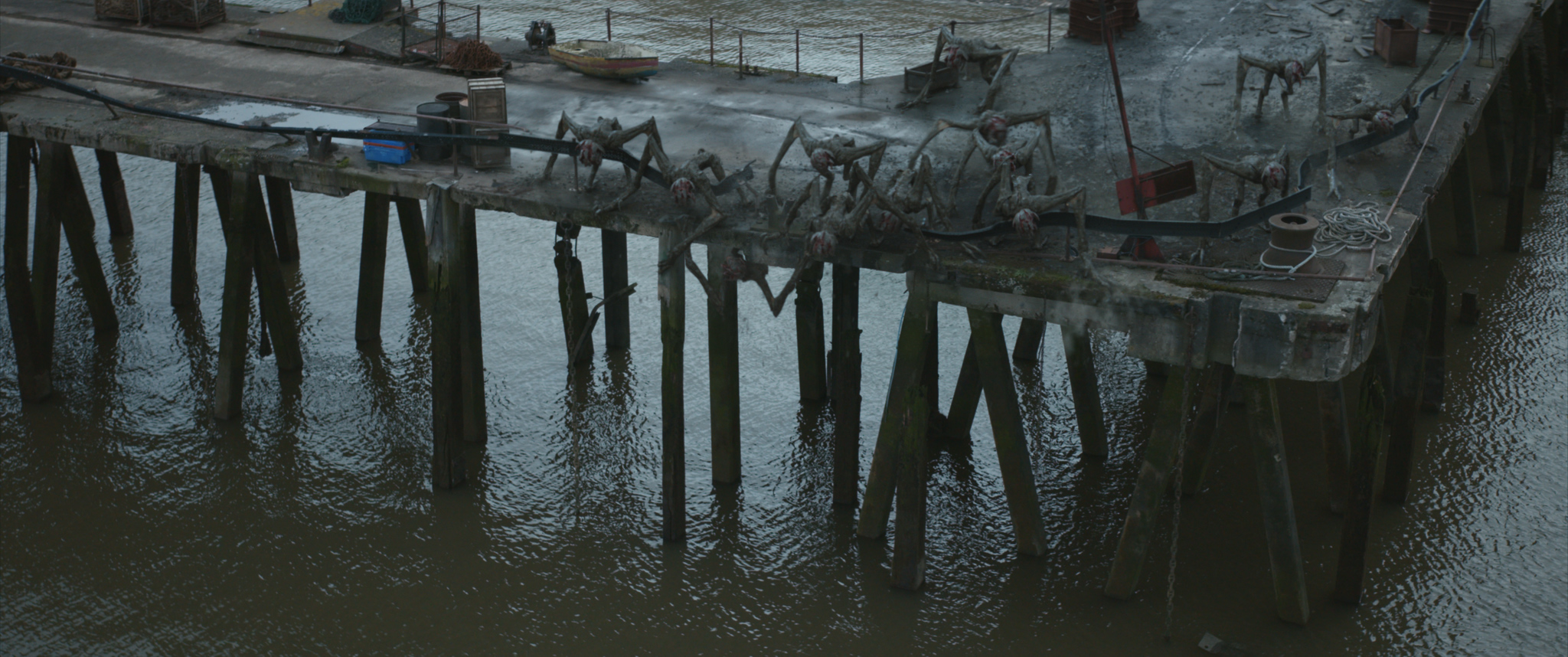
The film’s finale has Sam, Eric and Frodo desperately trying to reach a boat on the East River filled with survivors making their escape from New York. The sequence is built from several different locations, including part of an airfield dressed as a deserted FDR Drive, a pier along the Thames river, a moored boat, and a water tank at Pinewood Studios.
(Credit: Paramount)
“It was a lot of fun, but a lot of moving pieces,” Humphreys laughs. “We’re sort of shooting component pieces and hoping that they all go together.”
Humphreys says his favorite visual effect is the very last scene in the film. As Sam walks down a Harlem street listening to music, the camera sweeps 360 degrees around her in a single shot lasting nearly 40 seconds. Originally shot on the backlot, Humphreys notes the sequence required complex rotoscoping and compositing, with artists ultimately replacing as much as 70 percent of the original background with images created using the data ILM gathered in New York.
“We actually captured three or four blocks of Lexington Avenue, so there’s a huge amount of data capture for that one shot,” Humphreys says. “I’m really proud of that one.”
Humphreys joined ILM in 2016 and is based at the company’s London studio. But he says the work on A Quiet Place: Day One was a truly global effort.
“I got to work with a lovely team in Vancouver, in London, Mumbai, and San Francisco,” he says. “I think we’re just good creative partners.
“The one thing you get out of ILM,” Humphreys believes, “is that it still operates very much like a smaller company in terms of communication and collaboration, which is really refreshing.”
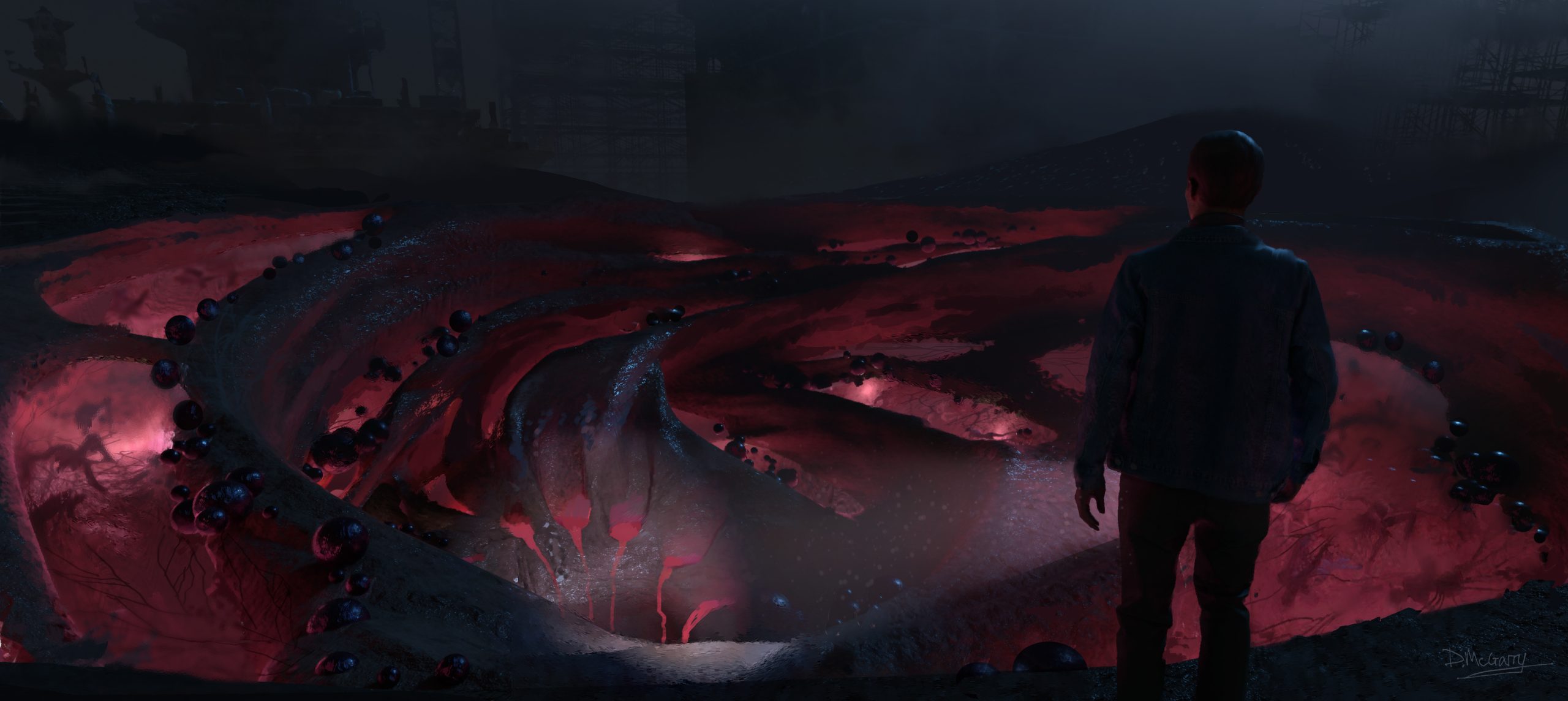
Concept art by Daniel McGarry (Credit: ILM & Paramount).
–
Clayton Sandell is a television news correspondent, a Star Wars author and longtime fan of the creative people who keep Industrial Light & Magic and Skywalker Sound on the leading edge of visual effects and sound design.
Heads still roll 25 years later in the Tim Burton classic Sleepy Hollow(1999). Revisit all of the eerie magic behind Industrial Light & Magic’s work that brought Washington Irving’s folktale to life and reintroduced audiences to one of cinema’s greatest on-screen monsters, the headless horseman.
By Adam Berry
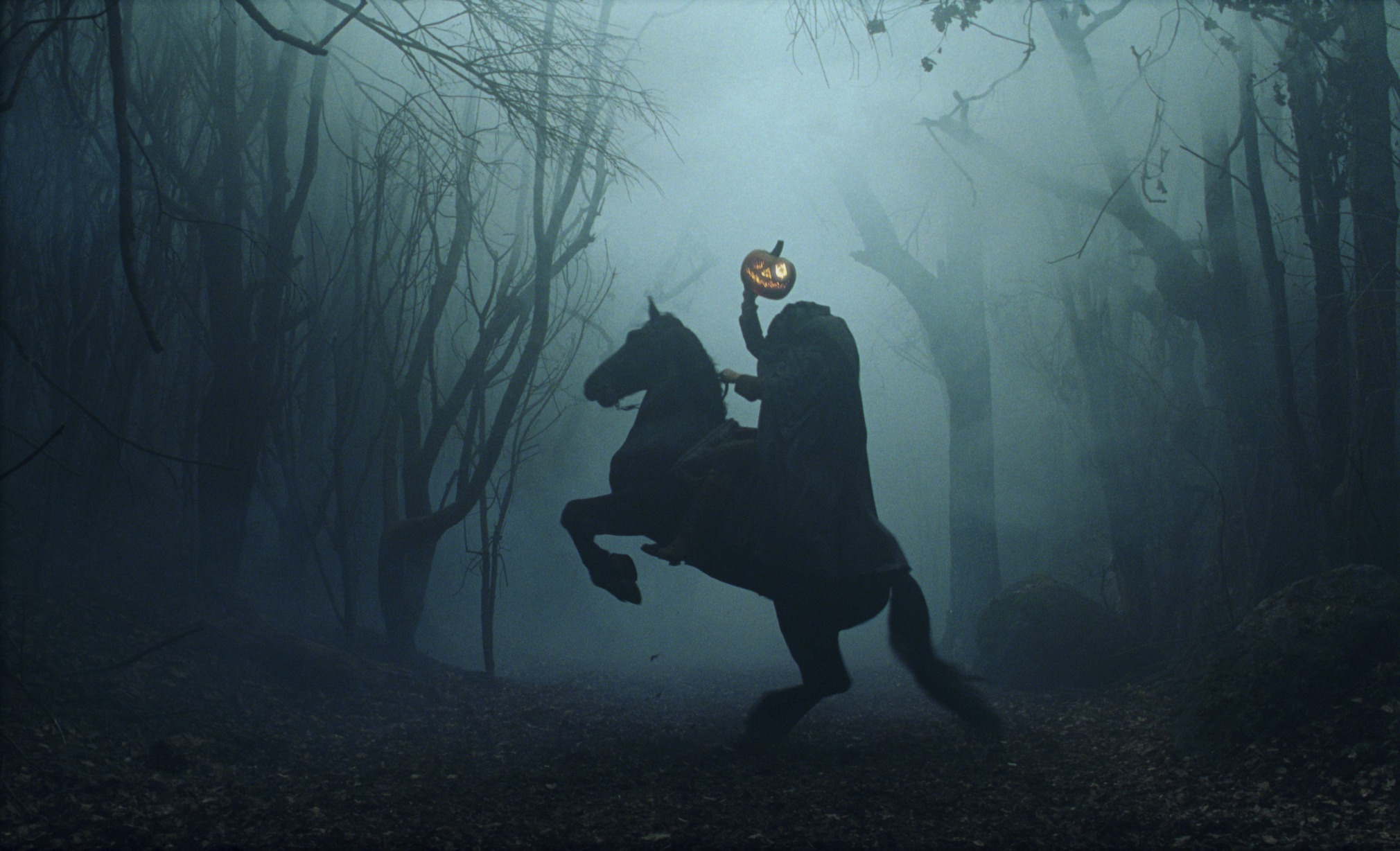
The headless horseman pursuing Ichabod Crane in the Western Woods. (Credit: Paramount)
On October 5th, 1949, the Walt Disney Studios released a feature film that reimagined two classic pieces of literature through the guise of The Adventures of Ichabod and Mr. Toad (1949). While the first half retells the whimsical story of Kenneth Grahame’s The Wind in the Willows (1908), it is the second half that left a long-lasting impression on young audiences as they were introduced to American writer Washington Irving’s eerie folktale, The Legend of Sleepy Hollow (1820).
Released just in time for Halloween that year, this feature would go on to be recognized as one of Disney’s classics due to its memorable songs, beautiful animation, and the unforgettable visualization of Irving’s ghostly antagonist, the headless horseman. The unsettling imagery of a headless man riding horseback with a sword in one hand and a flaming jack-o’lantern in the other allowed the legend to evolve as film versions were passed down to new generations. 50 years later, The Legend of Sleepy Hollow would once again evolve on screen, and explore the story in new ways, re-introducing audiences to Irving’s horrific tale of the undead horseman.
To take this classic into a tangible world, a highly imaginative and visual mind was necessary to capture the fantastical elements of this story while rooting it in a sense of reality. Tim Burton, director of such films as Beetlejuice (1988)and Edward Scissorhands (1990),was keen to step in as he was a fan of the Disney film. Burton told American Cinematographer, “I was really familiar with the original story because I’d seen the Disney cartoon…. I actually didn’t read the source novel until after I had read the script.” Burton’s own history with Disney, including attending the California Institute of the Arts on a Disney scholarship, and working at Walt Disney Studios as an animator on projects such as The Black Cauldron (1985),destined him to take on the challenge of creating a fresh retelling of Sleepy Hollow.
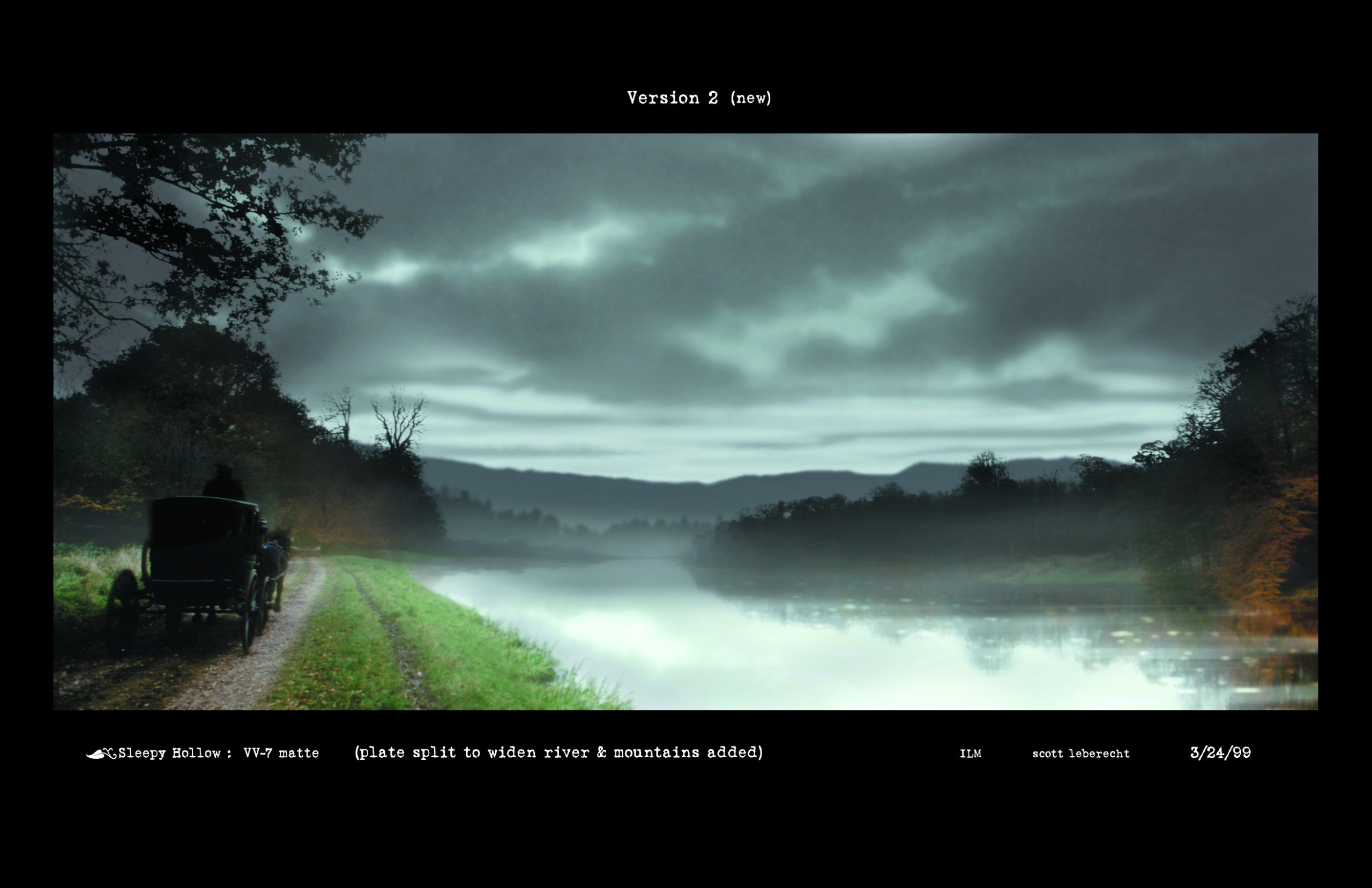
Concept art by Scott Leberecht depicts an eerie atmosphere shrouded in fog on the road to Sleepy Hollow. (Credit: Paramount & ILM)
Burton’s vision was to create a fantasy world that felt real in which the headless horseman could exist. The aesthetic needed to emulate, but not copy, the atmosphere of the classic Hammer Studios horror films such as Dracula (1931)or Frankenstein (1931) with their moody and gothic tones that left the audience in a state of unease. With that being said, Italian director Mario Bava’s Black Sunday (1960) was the core inspiration for the film, giving Sleepy Hollow (1999) a classic movie feel while adding elements that were pictorial and synthetic.
To achieve his vision of what Sleepy Hollow needed to look like, Burton knew there had to be a balance between the use of traditional special effects and digital visual effects. “Digital technology is very interesting and certainly has its place in filmmaking, but when you’re watching a movie like Black Sunday you really feel as if you’re there,” said Burton. While he was resistant to using visual effects at first, he relied on the artists at Industrial Light & Magic (ILM) to help realize the full scope of his vision, particularly when it came to bringing the headless horseman into existence as a living, breathing creature.
ILM visual effects supervisor Jim Mitchell was tasked with solving how the horseman could exist in the film as a real man without having to rely on older methods. Tricks like having the coat propped up on the actor’s shoulders didn’t work as the proportions were wrong, eliminating the appearance that the horseman was indeed a man. Mitchell said, “Tim and I knew that something just wasn’t going to be right with that approach. We eventually decided that our Headless Horseman would be an actual person riding the horse and flailing his axe around, except that we’d just digitally erase his head.”
The most complex shots for ILM involved removing the horseman’s head. There were about 300 horseman shots altogether, with ILM creating 220 and London’s Computer Film Company contributing the rest. To convincingly convey that the horseman was real, the ILM team innovated a special blue hood for stunt actor Ray Park to wear during action sequences that the ILM artists could later isolate and erase from the shot. Blue was used as it is easily keyed from the plate so the effects team could restore the background in place of the head.
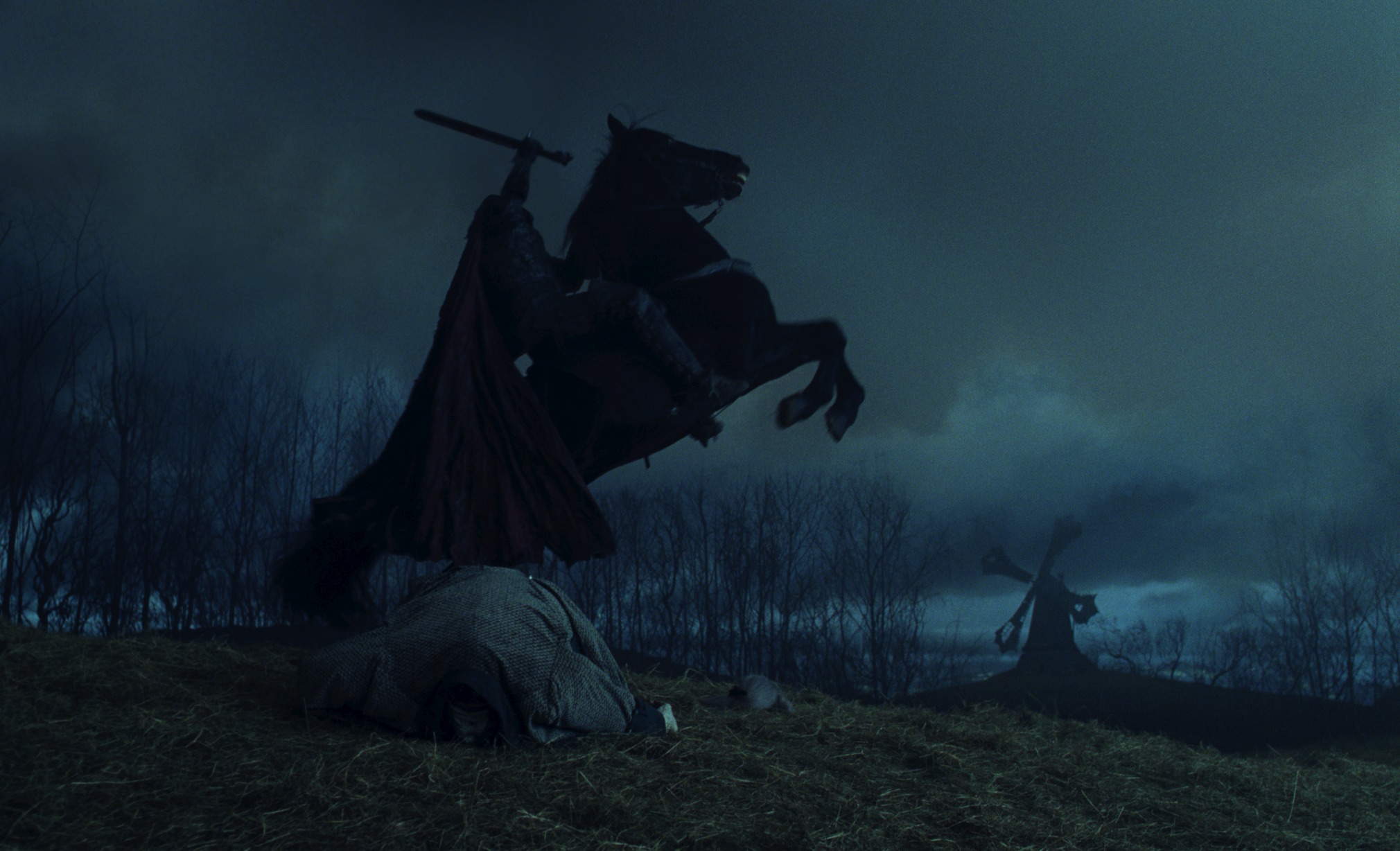
The headless horseman claims his next victim. (Credit: Paramount)
To fill the space where the actor’s head was taken out, a clean background plate of the sequence was shot, but the artists noticed that one element was still missing as the horseman has a large cape with a collar around his neck. “It was not only necessary to replace the background where his head would have been, but to also make a digital collar in the computer that was then matched to his movements,” shared computer graphics artist Sean Schur in Paramount Pictures’ Behind the Legend documentary. By using actors and replacing heads digitally, the horseman presents as a living and breathing creature.
Achieving this effect was particularly challenging during fight sequences with actors Johnny Depp and Casper Van Dien as their faces would be blocked out by the horseman actor’s blue hood. Once ILM erased the horseman’s head, they would also have to go back and eliminate the other actors’ heads as well. Mitchell shared, “I would have Johnny or Casper go through the same actions without the Horseman in there, and we’d just put their head into any frames where the horseman’s head was blocking theirs. It’s a tricky process, but it was actually pretty effective.”
Equally as challenging were the beheading scenes throughout the film. Creature effects artist Kevin Yagher created prosthetic heads of the actors for use in these pivotal moments while ILM was able to digitally recreate the scene using a series of three plates to blend together and form one cohesive shot. Using the scene in which the menacing Lady Van Tassel (Miranda Richardson) decapitates her bewitching sister as an example, Richardson would be filmed going through the motions of swinging her axe to dead air, then the prosthetic head flying off the body of her sister would be filmed separately, and finally the digital capture of that scene would be created. Once all three plates were finished, ILM would blend these together to make a seamless sequence for each beheading, making it feel all the more real for the audience. This was not an easy task for the artists as the film has ten decapitation sequences.
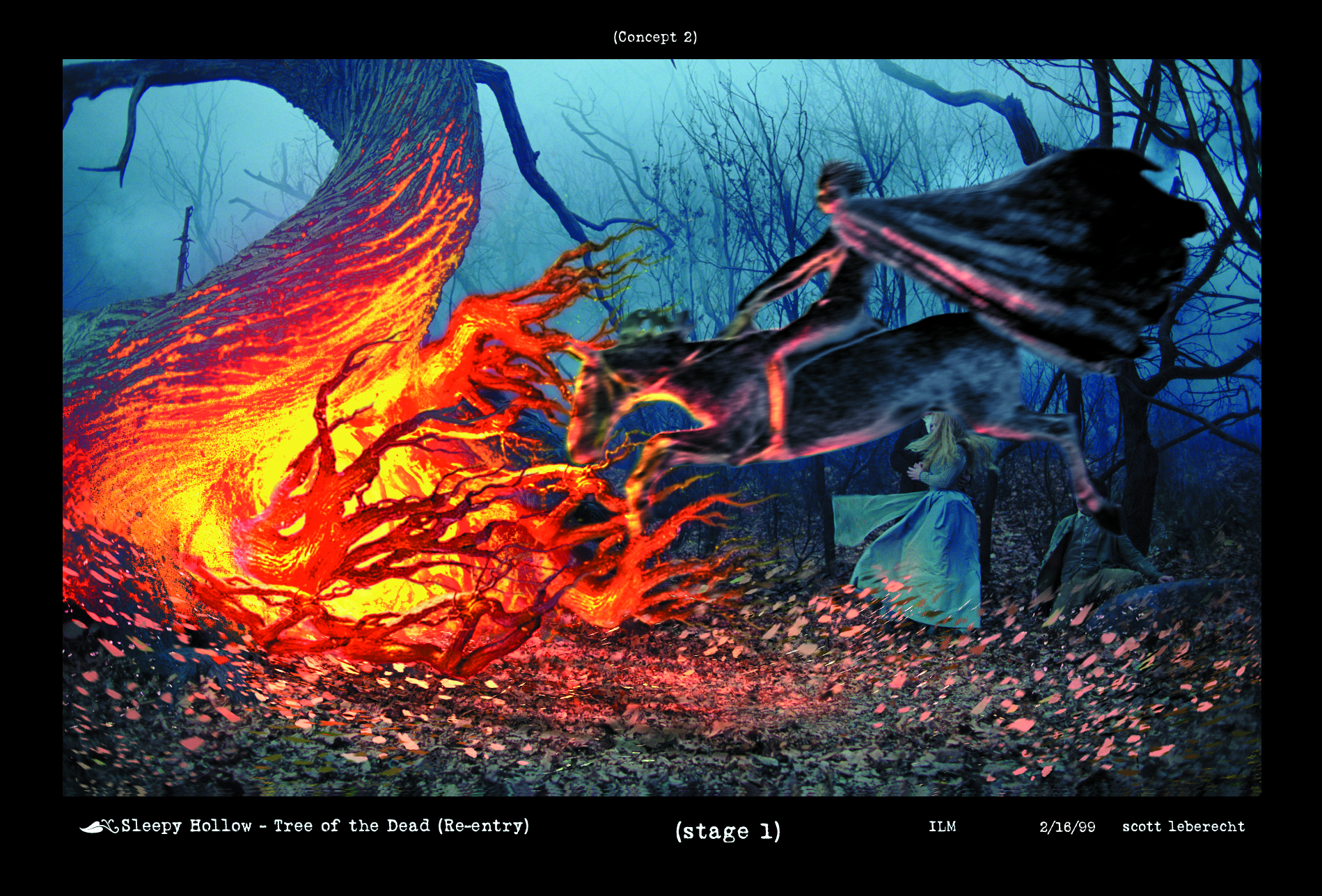
Concept art by Scott Leberecht shows ILM’s approach to depicting the headless horseman’s return to hell. (Credit: Paramount & ILM)
Burton wanted to convey suspense and a sense of impending doom throughout the film and tasked ILM with a series of subtle visual effects shots that added to the unsettling feeling when the horseman would appear. Most notable is the disturbing scene where the horseman pursues a family at their home. Killian (Steven Waddington) sits at his table with a crackling fire, which spontaneously erupts into larger flames seconds before the horseman crashes down the door. Sequence Supervisor Joel Aron shared, “I took the skull, which is the headless horseman’s skull, so I pulled up the eyebrows giving it this demonic look with a strong forehead, curling up the corners of the mouth and bringing the jaw around to continue to sculpt what would be the fire so that I knew when the fire would come off it would have an irregular shape.” It’s a blink-and-you-will-miss-it effect, but if you look closely you can see 13 demonic faces emerge within the flames in a quick flash which is meant to indicate that evil is present. It’s so subtle that it was intended for audiences to question whether they really saw the faces or not.
Natural elements were also added and utilized to punctuate the horseman’s presence. The subtle introduction of thick fog and flashes of lightning appear every time the horseman gallops toward his next victim in pure cinematic fashion. Sleepy Hollow was shot mostly on location in a small town called Marlow, just outside of London, which meant the environment presented Burton with an ideal setting for the gloomy atmosphere. These elements could be viewed by some as cheap tricks in a major film but the use of heavy smoke for fog makes the atmosphere more haunting and interesting. “In the Western Woods set and at some of the other locations, you can definitely see the smoke – it looks like the fog they used in the old Frankenstein and Mummy movies,” said director of photography Emmanuel Lubezki.
While using smoke allowed the filmmakers to get a consistent movie look, it presented challenges for the ILM team as once they were finished adding actors’ heads back into the shots they would also have to build back in the foggy backgrounds and natural elements in each scene. “The big problem for us was [that] every shot involving the horseman also had lightning and fog,” explained Jim Mitchell, “which was constantly moving and always changing, as opposed to trees and buildings, which are rigid. Whenever lightning hit the Horseman, we had to make sure that when we replaced his collar or any other parts of his suit that his head was blocking, we put the same lighting effect on it.”
To simplify this, Mitchell asked Burton and Lubezki to shoot the scenes as though the actors’ heads were already removed despite the level of complexity it would add for the ILM team to ensure the elements moved organically with the actors as they rushed through the fog, or horse hooves galloped through the settled leaves on the ground. “There are all kinds of things we’d prefer to stay away from when we’re doing this type of work, but if you lose those [atmospheric] touches, all of a sudden it’s not the same sort of visual, and it doesn’t have the same power,” concluded Mitchell.
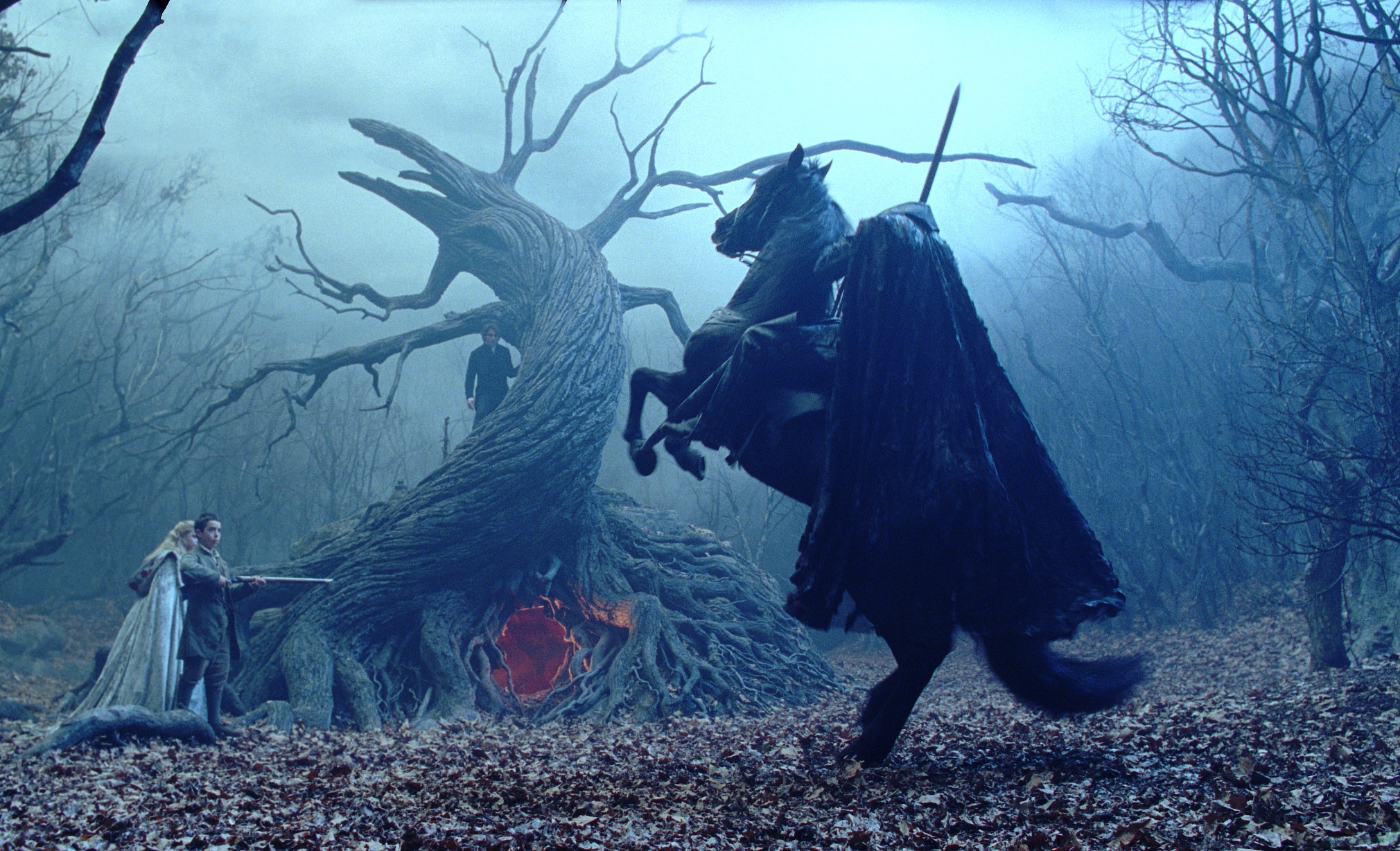
The headless horseman emerges from the tree of the dead. (Credit: Paramount)
This is especially apparent during a highly intense scene mid-film when the protagonists discover the tree of the dead, which is the horseman’s resting place and gateway to hell. The combination of the natural elements like fog and tree leaves with digital effects cemented the believability of this scene as the horseman enters from the base of the tree in a bloody and terrifying fashion. There were multiple plates used to build this effect. Firstly, a blue screen plate of the horse and jumping rider was shot. Next, a background shot of the forest environment, with the tree of the dead and actors standing close to where the horse emerges. Finally, a shot of the fog and leaves being disturbed creates the effect of the horseman jumping out of the tree. ILM didn’t have a bluescreen shot of an actual horse, so they had to create one in the computer, as well as the headless horseman, which are both digital elements. Similarly to the decapitation sequences, artists layered all of these separate plates on top of each other to form the singular shot making a scene that might have been unrealistic feel very believable instead.
It has been 25 years since its initial theatrical release, and rewatching Sleepy Hollow you can witness firsthand how ILM’s work remains timeless and able to reach new generations. The eerie and suspenseful atmosphere that Sleepy Hollow pulls audiences in and stands as a formidable achievement of classic Hollywood filmmaking, adding another iconic cinematic monster with the headless horseman, who is equally as feared standing next to other horror icons such as the unnerving Count Dracula, and misunderstood Frankenstein monster. Washington Irving’s The Legend of Sleepy Hollow lives on through the visionary work of artists from each generation. For Burton’s retelling, ILM wielded the eerie magic that gave life to the undying legend of the headless horseman.
—
Adam Berry is the Studio Operations Manager for the ILM Vancouver studio. His passion for film led Adam to ILM in 2022, coming from an extensive career across different sectors of the hospitality industry including cruise ships, luxury hotels and resorts. If he’s not at the movies or traveling to new destinations, you can find Adam staying active and exploring Vancouver.
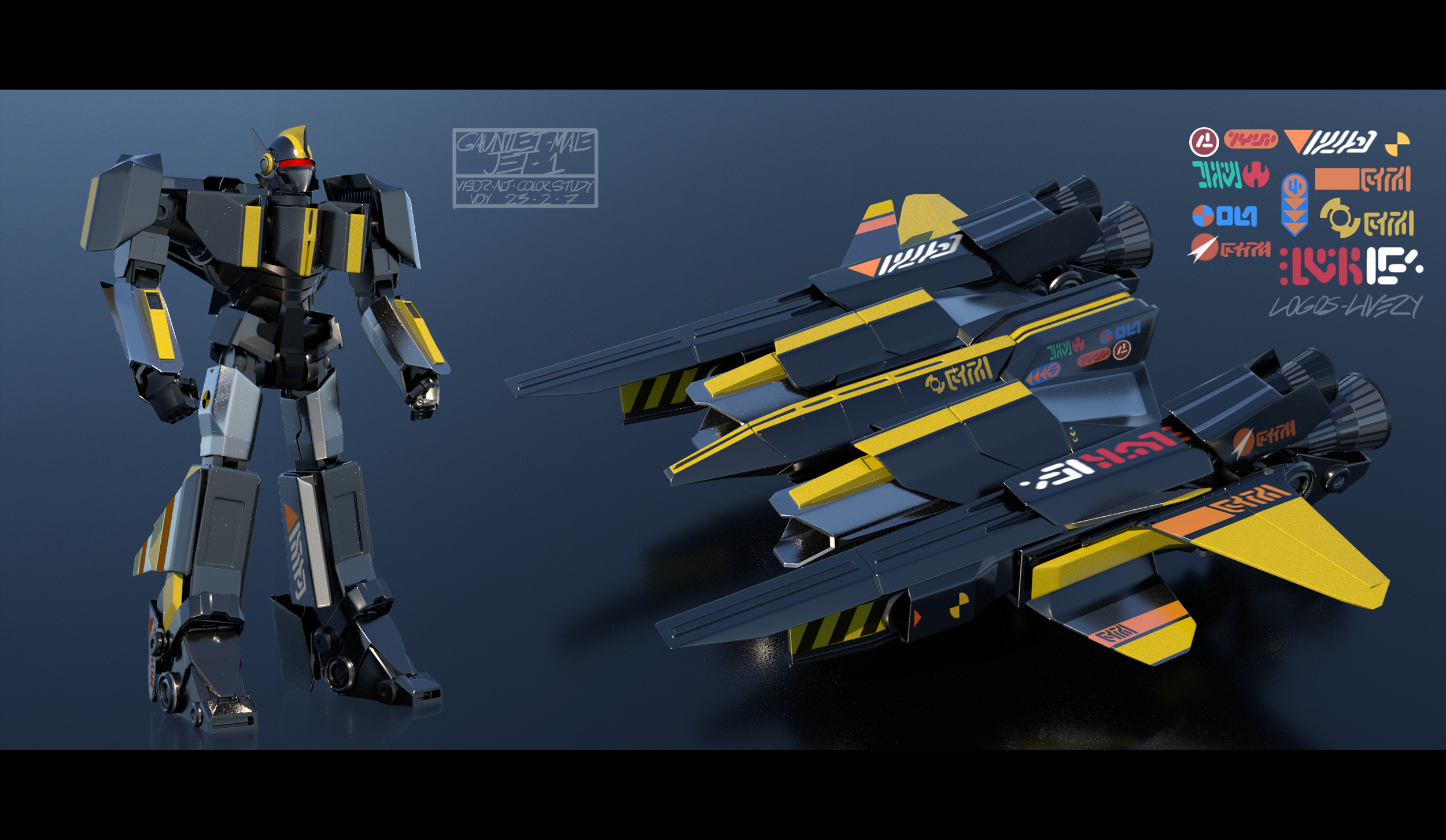
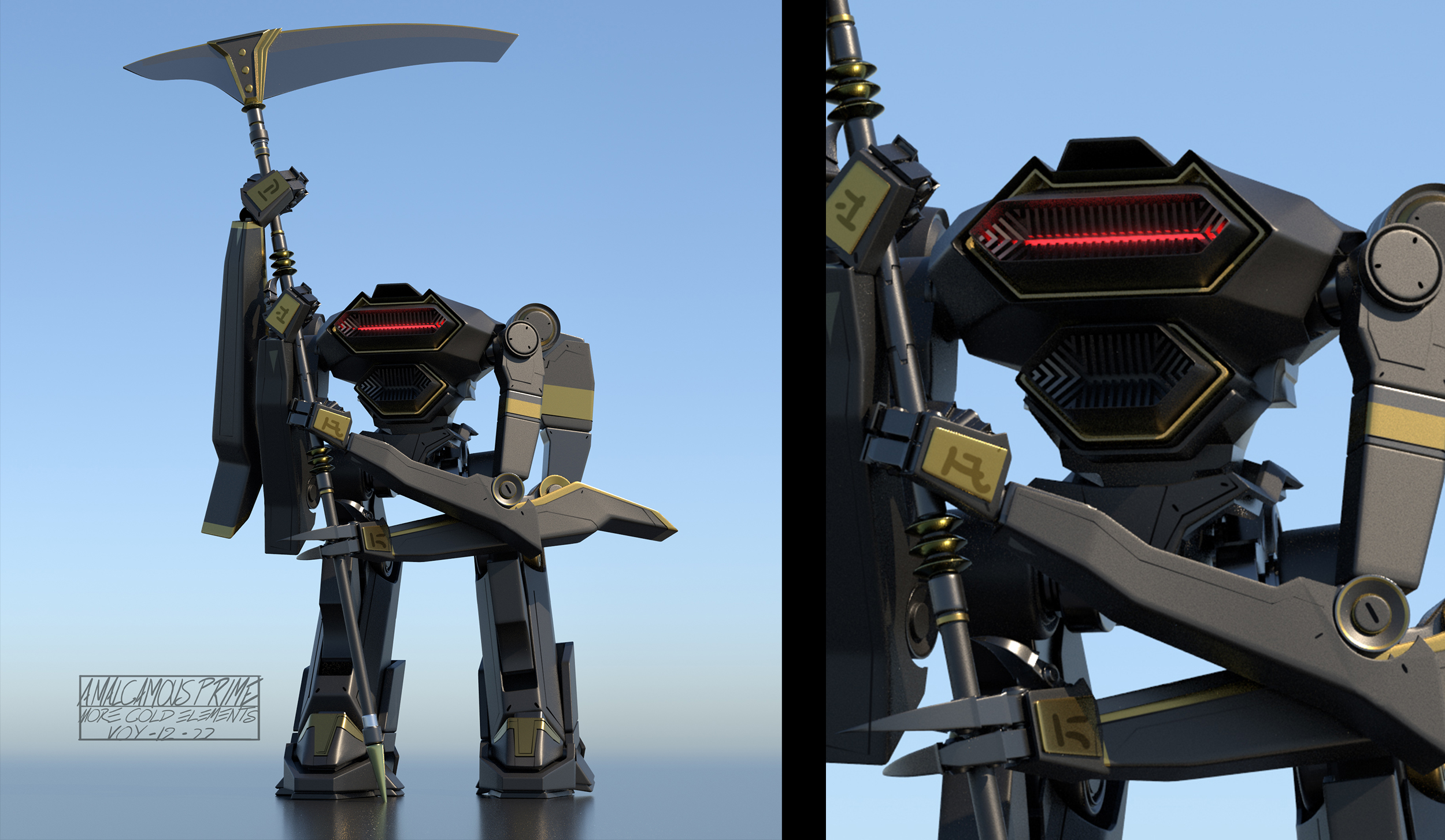
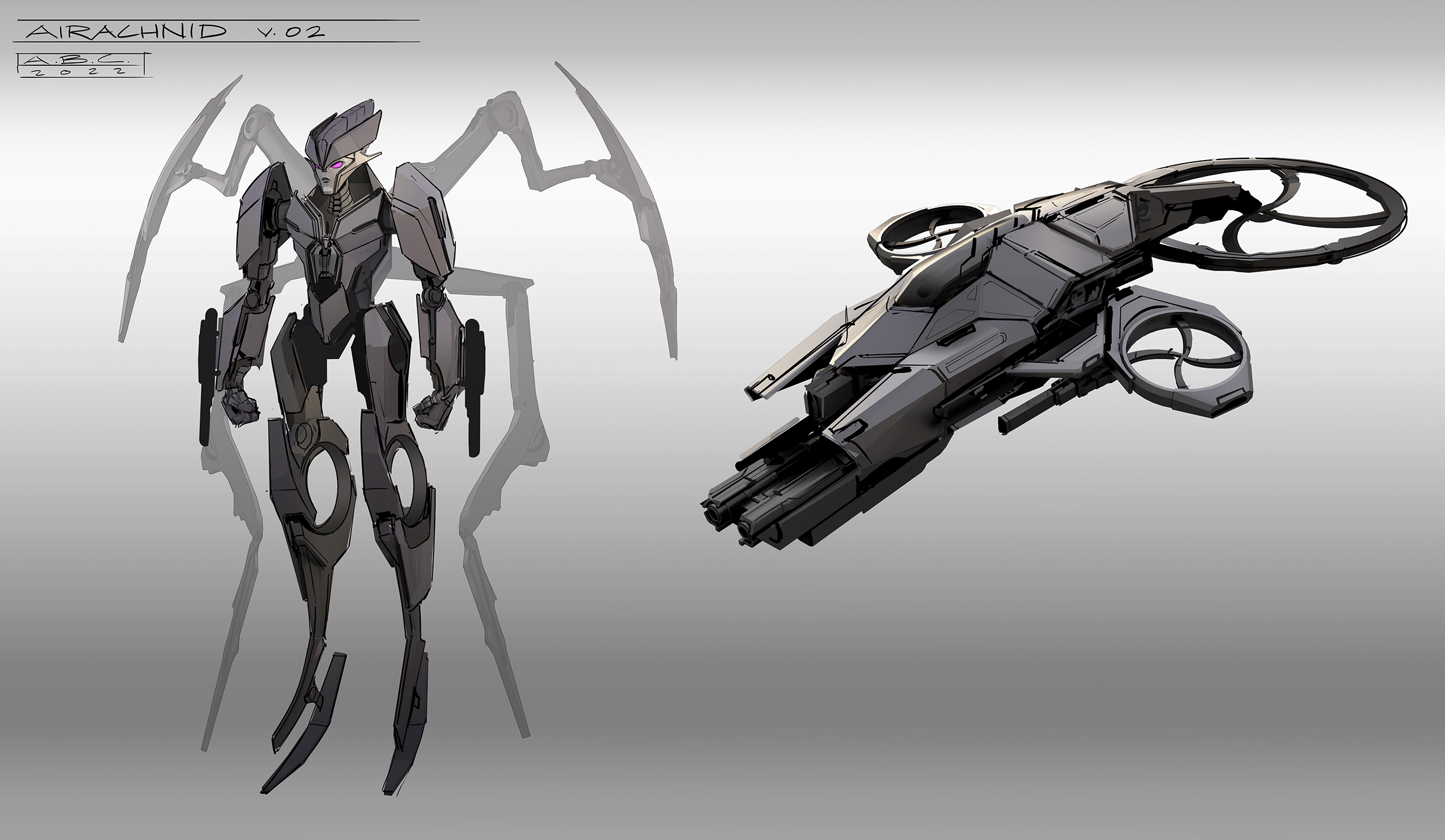
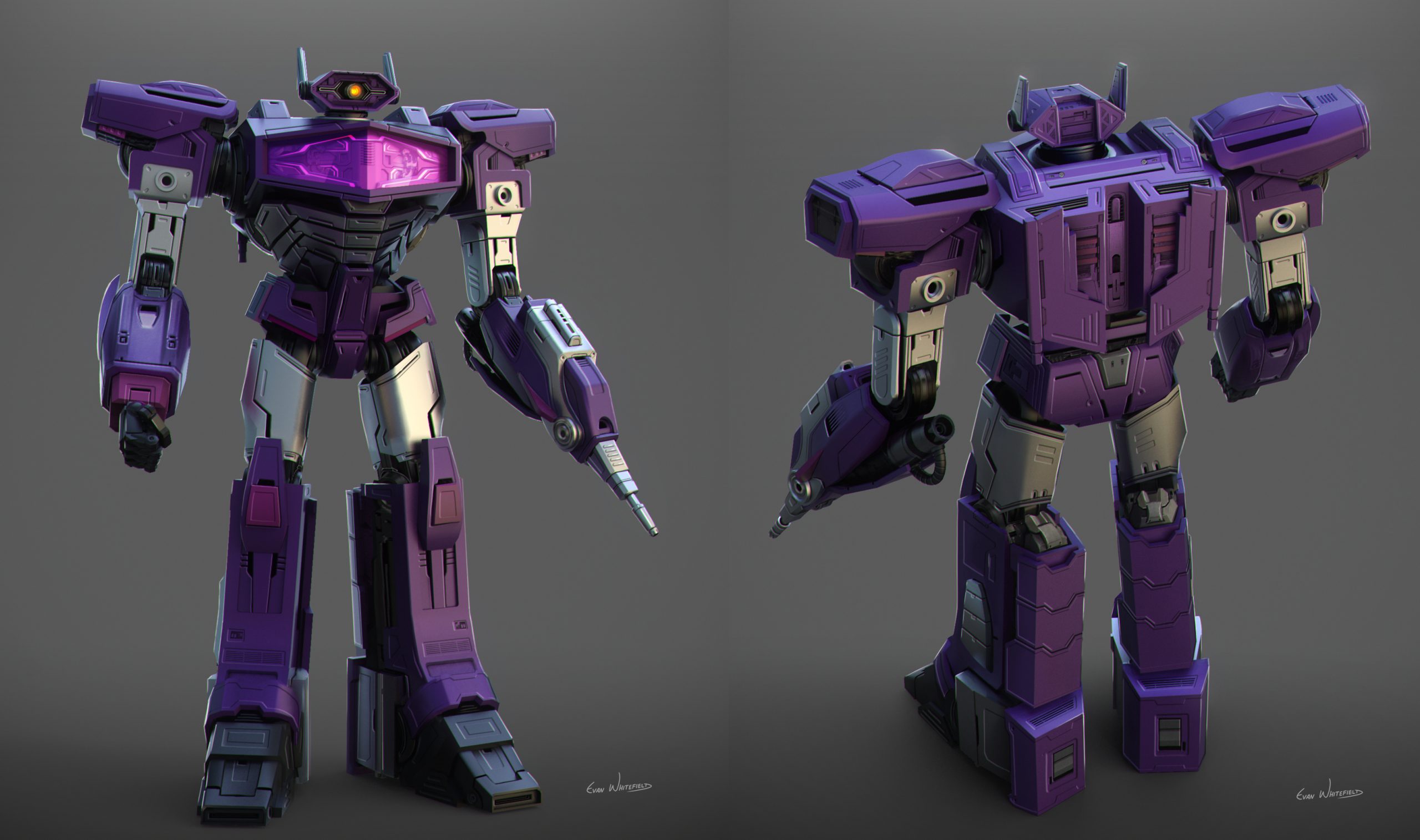
For Transformers one, the art department aimed to create shapes and silhouettes that appeared clean and simple from a distance, yet included intricate, purposeful details up-close, such as cut lines in the panels, smaller inset geometry, and layered panel work. Given that iconic Transformer designs often stem from their helmet shapes, the art department worked to seamlessly integrate faces into the helmets, enhancing their expressiveness while maintaining a mechanical, rigid aesthetic.
After 38 years, the veteran effects artist is retiring.
By Lucas O. Seastrom
First opening in 1987, the original Star Tours attraction at Disneyland included what was the most complex optical composite created at Industrial Light & Magic up to that time. A “view” out the window of a starspeeder was in fact a state-of-the-art flight simulator developed by Walt Disney Imagineering (WDI) and Rediffusion Simulation with miniature effects by ILM. Among the thrilling encounters for passengers onboard was a harrowing trip through a cluster of icy comets which the crew dubbed “ice-teroids.”
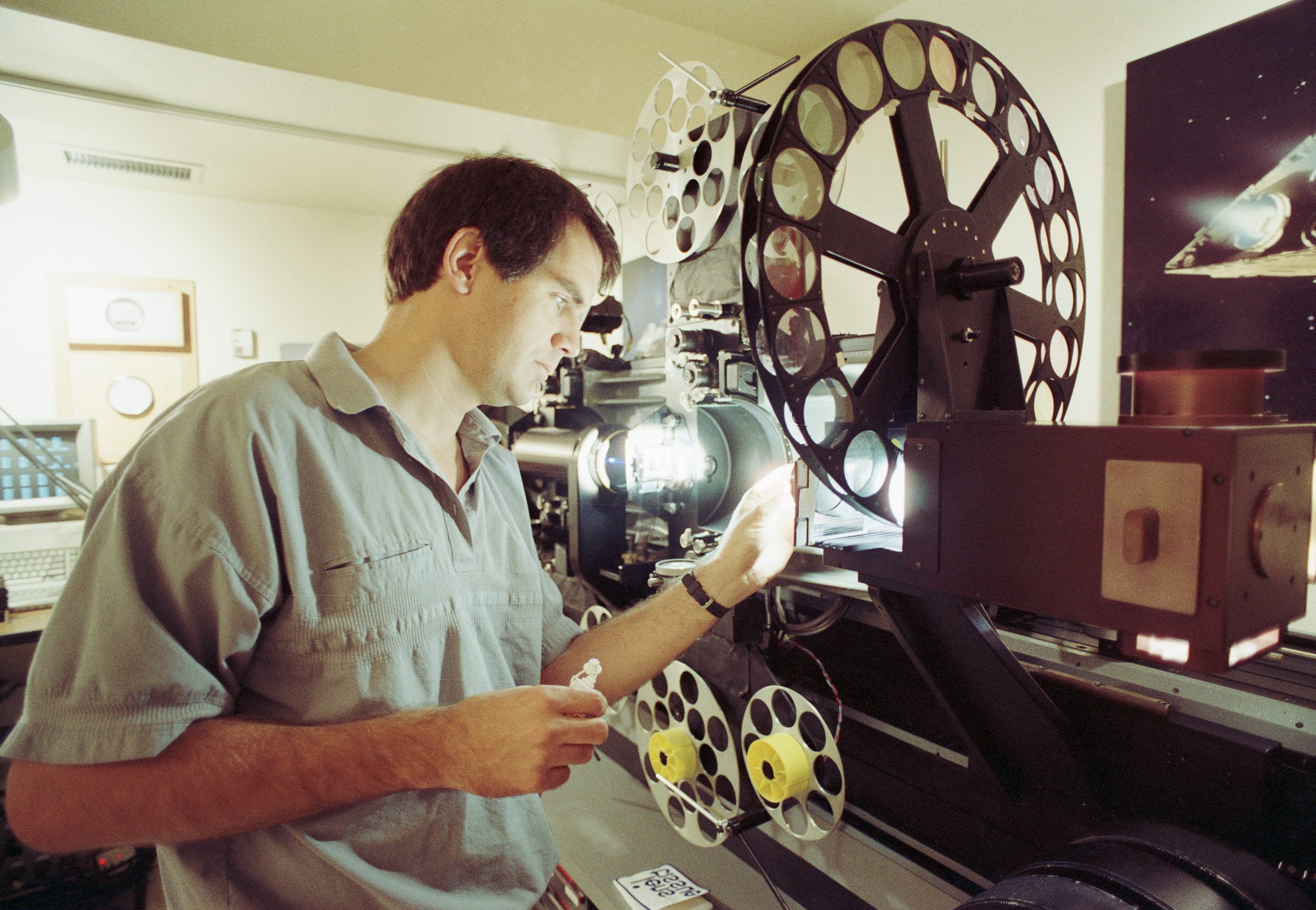
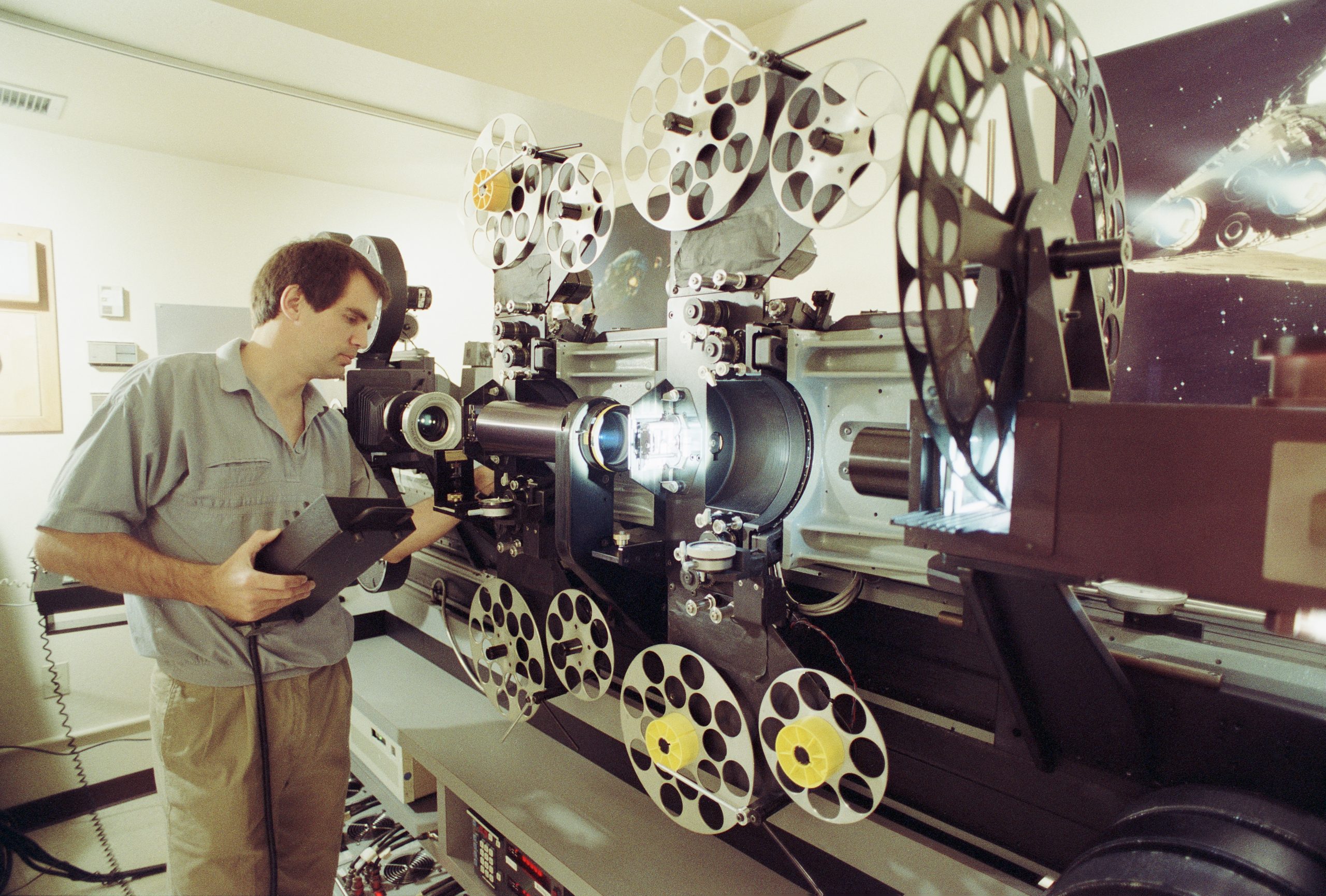
Compositing in this photochemical era involved a piece of equipment known as an optical printer. With iterations dating back to the earliest days of cinema, optical printers combined separately-photographed elements by recapturing them – one frame and one layer at a time – onto a new roll of film negative. Optical printers and the artists who operated them created the final effect one viewed onscreen with everything carefully (and painstakingly) blended together. Going back to Star Wars: A New Hope (1977), ILM had developed the most sophisticated compositing techniques yet seen, allowing for even greater refinement and finesse.
The ice-teroid shot in Star Tours combined some 60 elements of individual sections of film. By comparison, the most complex shot of a space battle in Star Wars: Return of the Jedi (1983) just a few years earlier had little more than half the number. One of the two optical printer operators to work on the new shot for Star Tours was Jon Alexander, hired only that year in 1986.
“Don Clark and I worked on the shot together on the Anderson Optical Printer,” Alexander tells ILM.com, “and once you started, you couldn’t stop. Once you started a shot all the motors warmed up and they needed to stay on. If they were turned off you risked the machine cooling down and settling into a misalignment of the earlier passes. It took 24 hours to make all the elements so we split 12 hour shifts.
“The Anderson was an old-style optical printer,” Alexander continues, “where if you wanted to add any movement to the shot you had to crank little knobs by hand with an accuracy at best of a couple hundreds of an inch. Some years later ILM acquired the MC [motion-control] printer which was accurate to within a couple ten-thousandths of an inch, which is crazy. It’s like throwing a baseball from here in San Francisco and hitting the Empire State Building in New York.”
38 years later, Jon Alexander has now decided to retire, and ILM is celebrating his storied tenure with the company that stretches over dozens of films, series, attractions, and special venue projects – not to mention quite a lot of technological change.
Back in the late 1970s, Alexander had what he calls “a wandering college career” while studying at Ohio State University. With a background in both engineering and cinematography, he arrived in Southern California in 1980 to work at Calico Creations, an active commercial house. There, Alexander gained experience with motion-control camera systems, innovative tools that combined the latest computer technology with mechanical engineering. “This was before personal computers were readily available,” he notes. “We were doing programming with machine tools to create motion graphics for around 50 commercials a year. Everyone wanted something like 2001: A Space Odyssey [1968], the slit-scan style. It was a very manual process.”
These tools were used for everything from photographing miniatures to shooting hand-drawn cels on an animation stand. In conjunction with the team at Calico was Bill Tondreau, an accomplished engineer who designed his own motion-control systems, which Alexander learned to use.
“The system that ILM used on Star Wars was very analog,” Alexander explains. “You could speed up or slow down, but it was very hard to hit specific points. It was an art for those guys to get used to. They were flying in space so it didn’t have to be as precise. They got really good at it, but it wasn’t as adaptable as what Bill Tondreau later developed, which used stepper motors. ILM was switching over to this style, and my colleague Rob Burton at Calico was hired by ILM for Howard the Duck [1986], and they had so much work that they needed more operators. They had to be Tondreau-system operators, so they recommended me. They were looking for someone to do this specific thing, and hired me for three months. I have milked that for 38 years.”
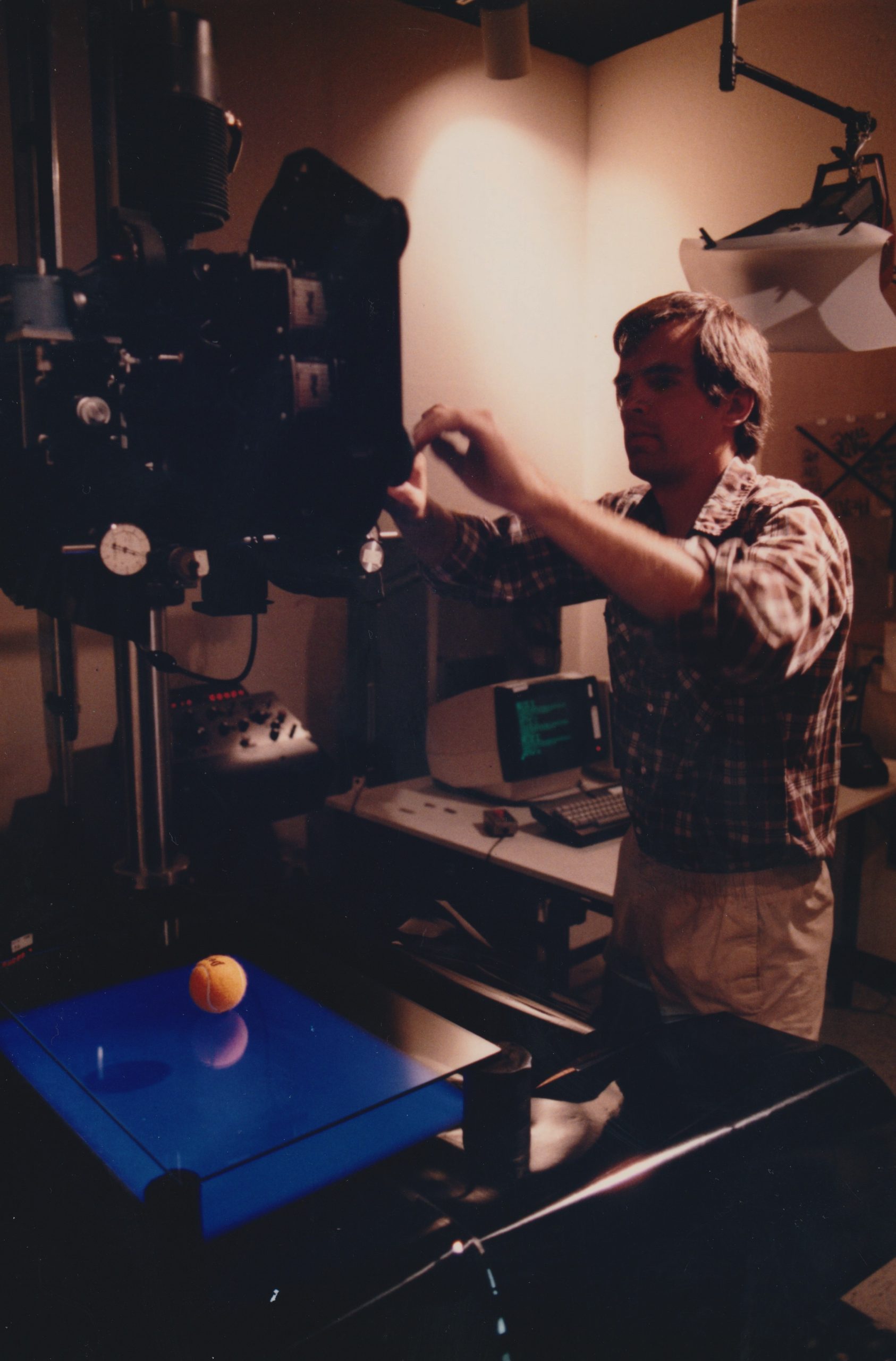
Alexander works at an animation stand on one of his early ILM productions, The Witches of Eastwick (1987).
Initially, Alexander worked in the animation department, photographing cels with a down-shooting system. Among these projects was The Witches of Eastwick (1987), for which Alexander shot a tennis ball as a lone element for a scene involving a doubles match. This was required because, as Alexander recalls it, only the actress Cher knew how to play tennis, so the cast mimed the game without a ball.
“It was while working on this camera for Eastwick that I met Michael Jackson,” Alexander says. “I was working late and no one else was in the back of D Building [at ILM’s Kerner facility]. I was leaning over and adjusting the tennis ball when I got this feeling someone was right behind me. I turned my head and he was about three feet away with two of the biggest men – security guards – I’d ever seen. [Producer] Patty Blau popped around the guards and said, ‘Hi, this is Michael. He was wondering what you were doing.’ This was around the time ILM was finishing up [Disneyland attraction] Captain EO.”
Alexander’s technical experience once again necessitated a move, this time to the optical department, where a new optical printer was being refined. The aforementioned “MC,” or motion-control printer had been developed by Los Angeles-based Mechanical Concepts as a first of its kind device.
“It was a motion-control printer, but when it got here, it didn’t work,” Alexander explains. “Everything was project to project in those days, but optical was always going and it looked like they needed more folks. When I heard about this new printer, I went up to Kenneth Smith, who was running optical at the time, and explained that I could put a Tondreau system on it. I had done some optical work in L.A., so it wasn’t entirely foreign, but ILM was off the charts in terms of the people and equipment they had.”
Alexander collaborated with machinist Udo Pampel to reconfigure the MC printer to run on the system. The result was arguably ILM’s most sophisticated optical printer that allowed artists to create not only incredibly precise composites, but recreate shots entirely by adding movements or zooms. An early assignment for the Academy Award-winning Innerspace (1987) required Alexander to simulate the bouncing undulations of the camera “inside” the body of actor Martin Short.
“They were cutting back and forth between Martin Short running and this smooth motion-control inside the body, and [visual effects supervisor] Dennis [Muren] thought it looked weird,” Alexander says. “But at that point they couldn’t go back out on stage and reshoot everything. Dennis asked me if I could do something that had the same up and down motion of running. It was a tough thing to do on the stage, but it wasn’t particularly tough on the MC Printer because I could project onto the wall, track something specific like a button at the center of his chest, which then provided a curve like someone running along. So when I did the composite, it matched up. It was no problem to do that because of the way the printer was set up. I used to do a lot of that kind of match-moving stuff to project onto the wall and track something in a minute way. That’s entry-level now, but to do that in post at the time was almost impossible because there were so few motion-control printers around. We had one of the first.”
Alexander at work on the motion-control or “MC” optical printer.
As Alexander notes, for a handful of years, his position was among the most significant in ILM’s pipeline, considering that most everything had to be funneled through the MC printer. “Looking back at these things, it wasn’t a big deal to accomplish,” he admits. “It was just that people hadn’t done it before. Supervisors like Dennis or Ken Ralston could expand what they wanted to do creatively, and people like me were a great set of hands to help them.”
Change was in the air, however, and computer graphics (CG) effects were steadily on the rise. At a time when many traditional artists and technicians were making decisions about whether to embrace the change, Alexander lept in headfirst. “At that time, there were no BFA’s in computer graphics,” he explains. “You had to come out of an engineering school just to do anything. It fostered this new kind of collaboration. We on the film side knew what the final product had to look like and the programmers knew the math and physics to make it possible.”
Alexander remains very matter-of-fact about the transition. “CG helped eliminate the painful aspects of working on film. You’d work for hours on something, moving and adjusting things. It was so choreographed that you had to put the filters in the exact same order each time to get the same result. Then after you shot it, you’d go to the dark room, turn the lights out, unload the magazine and put the film in a can, and then you’d turn the lights on and realize you’d forgotten to close the can…and what you just shot was gone. In CG, if you make a mistake, you press ‘Undo.’”
Among Alexander’s first CG projects were Fire in the Sky (1993), The Flintstones (1994), and Forrest Gump (1994). A personal standout shot came in 1998’s Meet Joe Black when he had to help create the shocking death of actor Brad Pitt’s character, a young man who is hit by two cars while crossing a street. “They shot the different elements with bluescreen,” Alexander says. “The cars came in slow because it was too dangerous to go fast and I timed everything to match it all together. The director [Martin Brest] asked to make him flip in the air, which I then did.” A compositing supervisor at that stage, he enjoyed the opportunity to “test things and try out ideas,” from large elements to minuscule details.
Alexander at work on a digital composite for Star Wars: The Phantom Menace (1999).
Alexander’s last major shift came around 2008 when visual effects supervisor Bill George organized a unit to assist WDI with a reimagined Star Tours, ultimately opening in 2011 with 3D digital imagery. Eventually, Alexander stayed with George’s rides unit full-time, contributing to everything from Disney’s Soarin’ Over the World and Star Wars: Rise of the Resistance to Universal’s Race Through New York Starring Jimmy Fallon. In every case, he was able to work in a diverse array of image and presentation formats. More recently, Alexander has contributed to special venue projects for the Sphere in Las Vegas, including Dead & Co.’s Dead Forever concert series (2024) and Darren Aronofsky’s Postcard from Earth (2023).
“The Sphere is like being in a VR headset but massive,” Alexander says. “Something like 17,000 people can interact with the screen at one time. I was talking with Darren Aronofsky about how it opens up the possibilities about how to tell a story. You no longer set the direction for people to look. Something could be going on in one area, and then you put something up in another area. Maybe some people notice and others don’t. It’s a different way of thinking about it, like in a game, where you influence the way the story goes. To me, it’s really cool to move into this new space where you’re not limited by being in a movie theater where you can only look in a certain direction.”
As his ILM journey comes to a close, it’s poignant to consider that Star Tours in particular has formed bookends to the many productions Alexander has been involved with. In fact, he and Imagineer Tom Fitzgerald are the only two people to have worked on every iteration of Star Tours to date. Just recently, Alexander spent six months with WDI to help oversee the installations of the ride’s latest update in Disney Parks in California, Florida, and France. With characteristic humility, he’s keen to point out that he made a small mistake way back on that fabled ice-teroid shot in the original 1987 version. A matte for one of the dozens of ice-teroids was slightly misaligned, a detail too small for most viewers to even notice, but something that Alexander’s children would never fail to mention, much to his own amusement.
Alexander at work in 3D for an update to the Disney Parks attraction, Star Tours.
“I came into this with different expectations, like we all do,” Alexander reflects. “You think they’ll write a book about you one day. No one’s going to write a book about me. Then you think, maybe I’ll get a chapter in the book. But most of us just become footnotes. We’re part of a team. My dad and my uncles were all sergeants in the military. I got an appointment to the Air Force Academy. When I went there for induction a just-graduated 2nd Lieutenant was showing us around, and the Master Sergeant came by, an older guy with the stripes on his arm, and gave a crisp salute to this new 2nd Lieutenant as he walked by.
“The Lieutenant said, ‘There’s a lesson for you,’” Alexander continues. “‘This guy has to salute me because I’m his superior officer, but he’s a sergeant and he does everything. I can’t do anything that he does. He organizes all of the enlisted men to do what we need, so I have to listen to him and trust him to get it done.’ I kind of feel like I’m a Master Sergeant. I’m fortunate enough to have gotten to the point where I’m involved at this level, and I feel like there’s not a shot that I can’t fix. It’s not just me; it’s my position. That’s what a compositing supervisor is supposed to do. If there’s a shot with a problem, and you can’t go back and change anything, yes I can fix it for you. I find that particularly gratifying. I’ve stayed at this level in part because it’s about life-balance. If I were to go higher, I’d be away for four months at a time, and I didn’t want to do that to my family. I’ve got like five Oscars on the family side of stuff.
“George Lucas chose people really well, and those people chose their hires really well,” Alexander concludes. “George trusted people like Dennis Muren to get anything done for him, and Dennis trusted people like me to get him whatever he needed. George and Dennis and those types of people were magnanimous enough to let people like me in the room. Because of that, I’ve tried to share as much as I can when new folks come in so they feel like they’re part of it. To me that’s the most important thing, making people feel like they’re part of a team. The beauty of this place has been how collaborative it is.”
—
Lucas O. Seastrom is a writer and historian at Lucasfilm.
Exploring the technical innovations and behind-the-scenes stories that brought Slimer to life in Ghostbusters 2, reaching new heights in animatronics and practical effects at Industrial Light & Magic.
By Jamie Benning
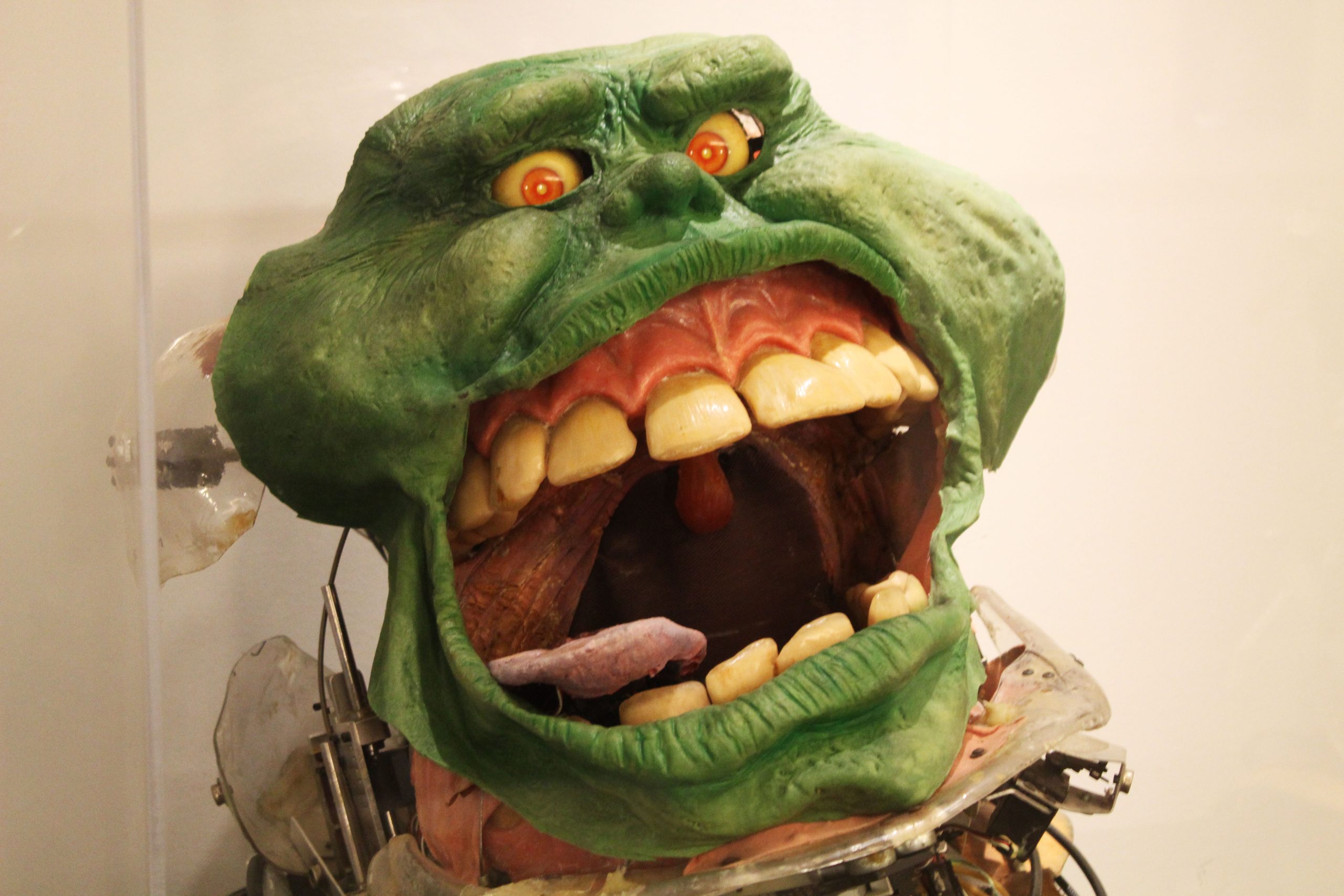
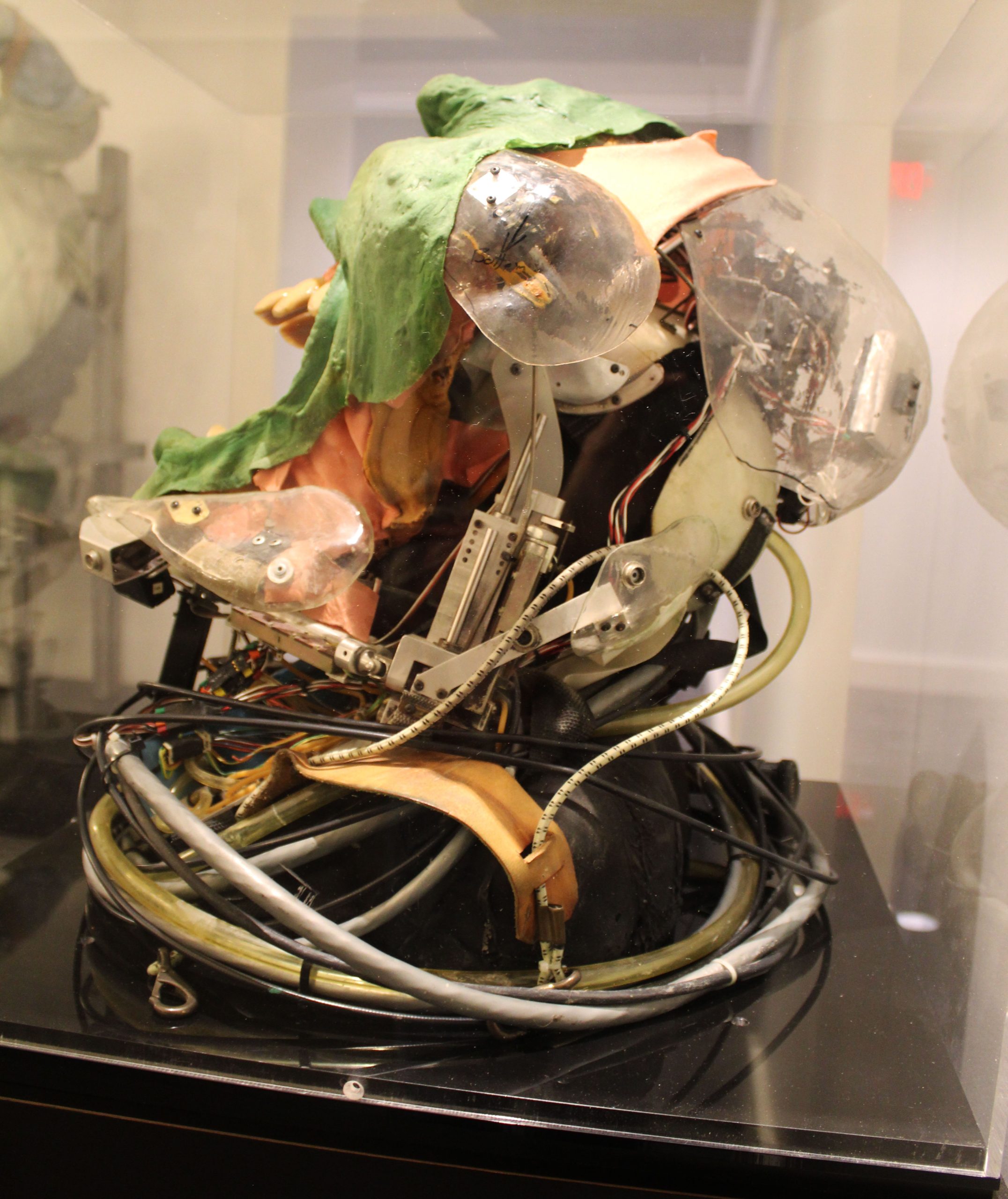
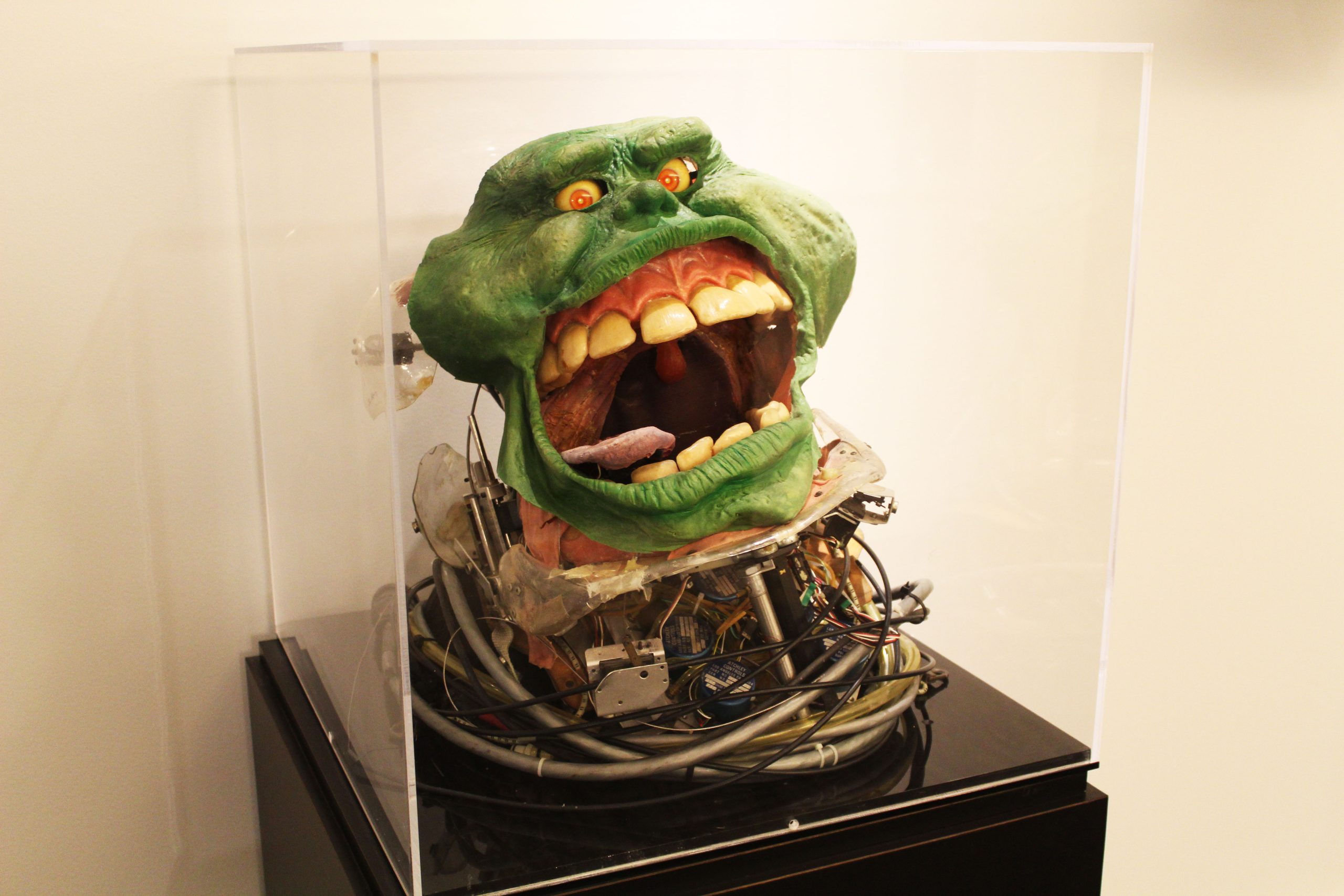
The original Slimer head on display at Lucasfilm headquarters in San Francisco.
When Ghostbusters (1984) premiered, it became an instant classic. With a star-studded cast—Bill Murray, Dan Aykroyd, Harold Ramis, and Ernie Hudson—alongside Sigourney Weaver, Rick Moranis, and Annie Potts, the film combined supernatural elements with groundbreaking visual effects and perfect comedic timing, captivating audiences worldwide. The film grossed $282 million in its initial theatrical run, cementing its place in film history.
Beyond the popular human cast, one standout element was the ghost originally named “Onionhead.” Special effects artist Steve Johnson, credited as the sculptor, likely drew inspiration for the name from its vegetable-like appearance. This gluttonous green ghost, classified as a Class 5 Full-Roaming Vapor, made a brief but memorable appearance that delighted audiences. Designed to be grotesque and chaotic, Onionhead unexpectedly became a fan favorite. Bill Murray’s famous line, “He slimed me!” as Peter Venkman, became one of the most quoted phrases of 1984. Onionhead’s popularity only grew with The Real Ghostbusters (1986) animated series, where he was reimagined as a mischievous yet lovable, pet-like character.
In the eleventh episode of The Real Ghostbusters, titled “Citizen Ghost,” which first aired in November 1986, Onionhead finally got his new name. The episode’s flashback shows how the Ghostbusters became friends with the little green ghost, with Ray Stantz giving him the fitting nickname “Slimer.” The name endured, becoming a permanent fixture in all subsequent Ghostbusters projects. Ghostbusters 2 (1989) sought to bring the evolved version of Slimer to the big screen, balancing the charm of the original character with the expectations of younger fans familiar with the cartoon. With the baton passed from Boss Film Studios to ILM for the sequel, visual effects supervisor Dennis Muren described the task ahead of them to Cinefex. “We had the opportunity to create a whole new array of ghostly images,” he explained, using all the tools at their disposal. An early idea of using a rod puppet was quickly dismissed, with Muren preferring to opt for a fresh take on the “man in a suit” approach.
With the technological advances made in the five years since the original film, the goal was not just to capture the original magic but to push the boundaries of animatronics, puppetry, and practical effects.
Slimer concept art for Ghostbusters 2 by Henry Mayo. (Credit: Columbia/Sony & ILM)
Reimagining Slimer
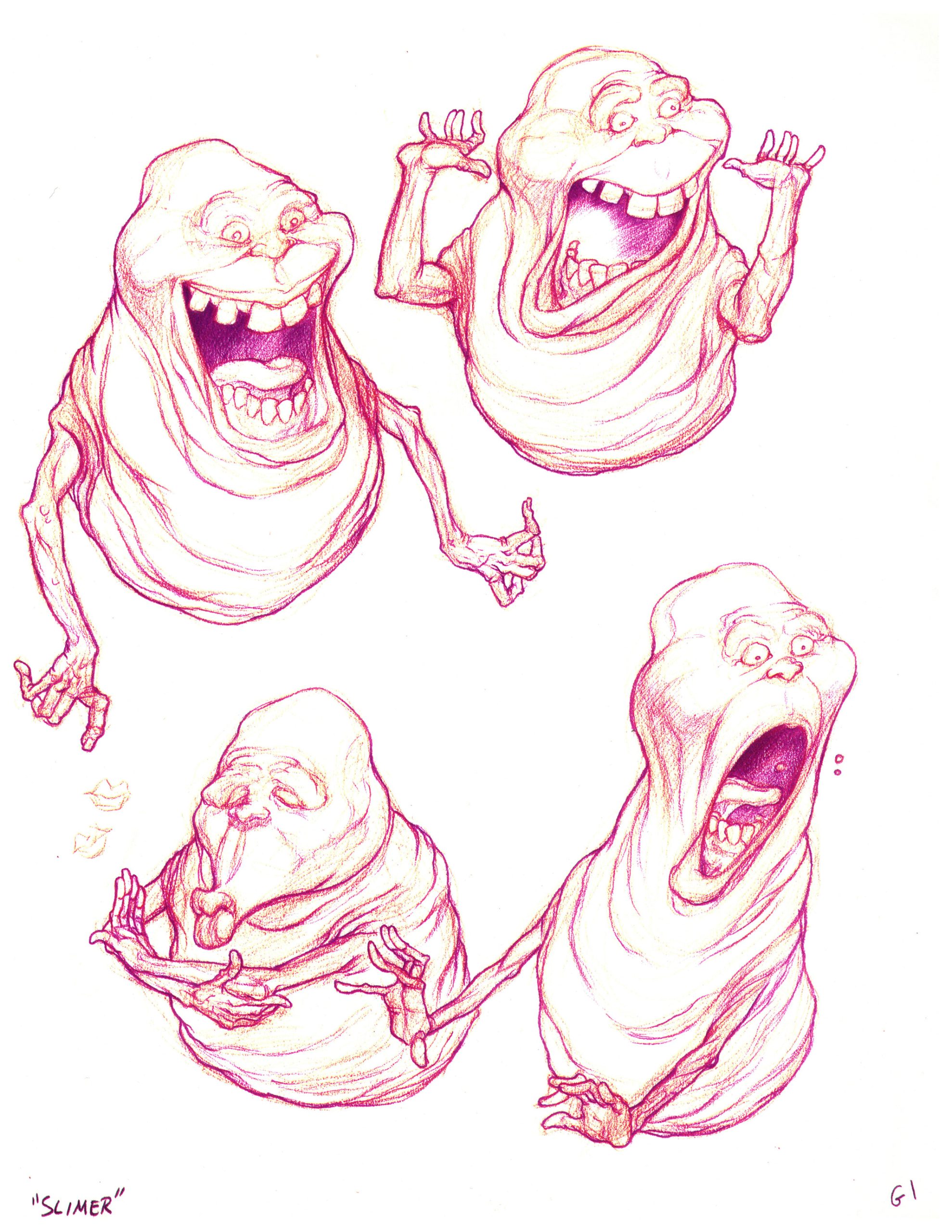
For the sequel, Slimer needed to embody the more playful, cartoonish persona.“[Executive Producer] Michael [C. Gross] wanted elements from the cartoon version incorporated as well, and to this end he had Thom [Enriquiez] do the new series of drawings – which were fabulous,” creature and makeup designer Tim Lawrence explained to Cinefex.
Mark Siegel, a key contributor to Slimer’s original creation, was brought to ILM for Ghostbusters 2 to resculpt the character and adapt him for the film’s lighter tone. Siegel had been deeply involved in the creation of the original Onionhead ghost, sculpting his teeth, tongue, and inner mouth, as well as the complete replacement head for a second puppet with a wider, more frightened look to the mouth. He also puppeteered the tongue and eyebrows for the majority of the shots.
The sculpting process for the design maquette was a collaborative effort, with Siegel primarily handling Slimer’s body, head, and face while fellow crew member and performer Howie Weed focused on the arms and hands. For the full-sized puppet Siegel sculpted the head and the arms.
The character of Onionhead in Ghostbusters wasn’t just an arbitrary creation. His mannerisms and chaotic energy were directly inspired by the late John Belushi, specifically his portrayal of Bluto in Animal House (1978). This connection was not merely symbolic; it was a tangible part of his design and performance. Mark Siegel recalls how Harold Ramis and Dan Aykroyd made it clear to the team that Slimer was a representation of their close friend Belushi’s comedic spirit.
The team didn’t just envision this; they meticulously pored over Belushi’s scenes. “We studied frame by frame old VHS tapes of Belushi’s Animal House scenes, focusing on his expressions,” Siegel elaborates. This analysis allowed them to incorporate Belushi’s signature movements and broad, exaggerated physicality into Slimer’s performance for the first film. According to Siegel, it was Belushi’s expressive style that truly captured the blend of charm and grotesqueness that defined Slimer’s character.
“When I first started sculpting the new Slimer, I thought, ‘Well, that’s cute,'” Siegel admits. But the evolution of the character, from disgusting blob to family-friendly ghost, presented some challenges. “I felt we were losing some of the raw, chaotic energy that made Slimer memorable in the first film.”
The sculpting process was a collaborative effort, with Siegel primarily handling Slimer’s body, head and face while fellow crew member and performer Howie Weed focused on the arms and hands.
Scenes originally envisioned for Slimer in Ghostbusters 2 included him eating various types of food around the station house while Louis (Rick Moranis) tried in vain to catch him. Then later, when Louis straps on a backpack and tries to help the Ghostbusters, he finds Slimer driving a bus. Louis hitches a ride and the two eventually become friends. An early storyboard also shows Slimer flying around the Statue of Liberty for the final shot of the movie, mirroring the first film’s finale. But, as is often the case in artistic pursuits, things were adapted, changed, and even removed along the way, all for a multitude of reasons.
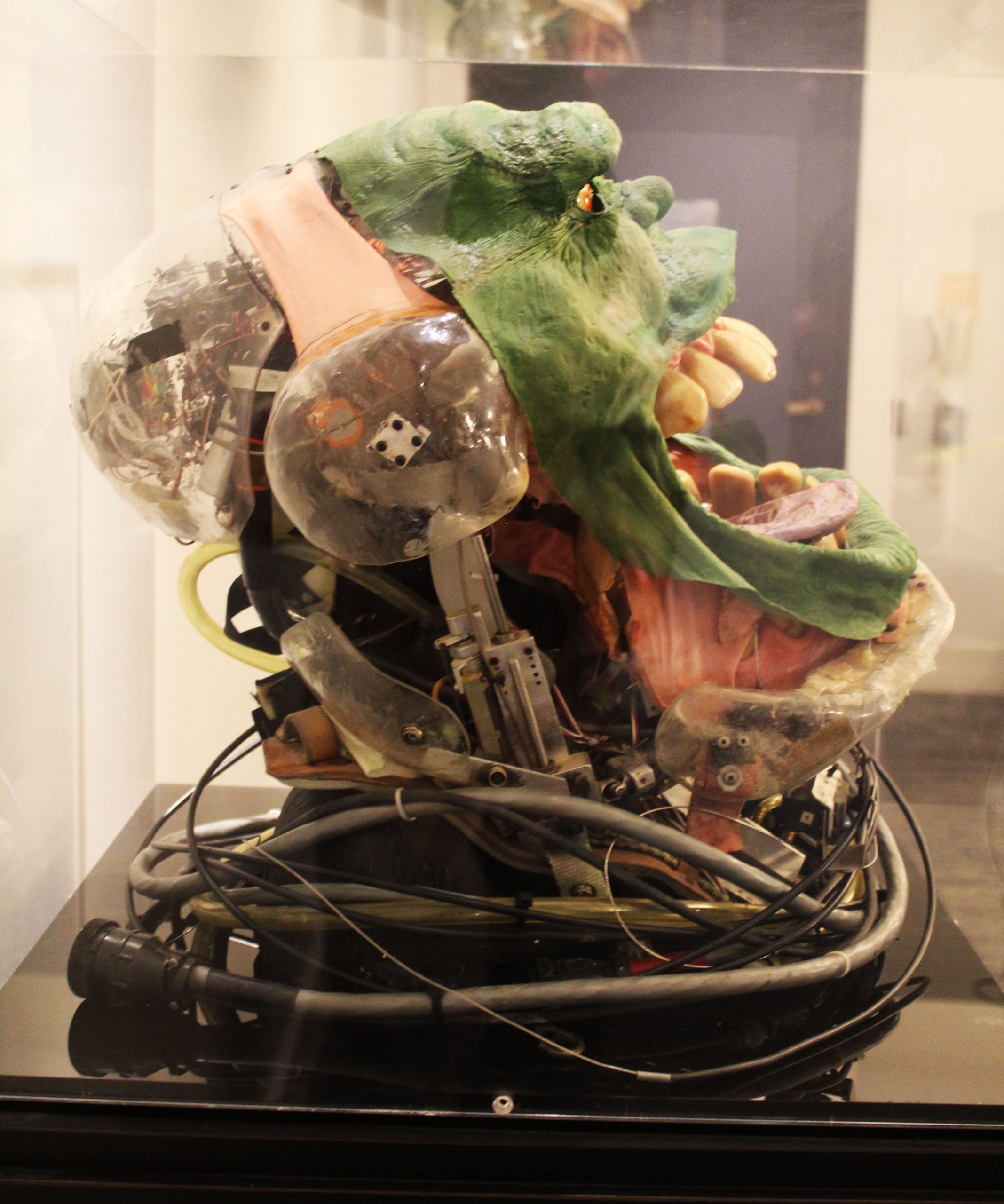
The original Slimer head on display at Lucasfilm headquarters in San Francisco.
Technical Innovations: Pioneering Animatronics
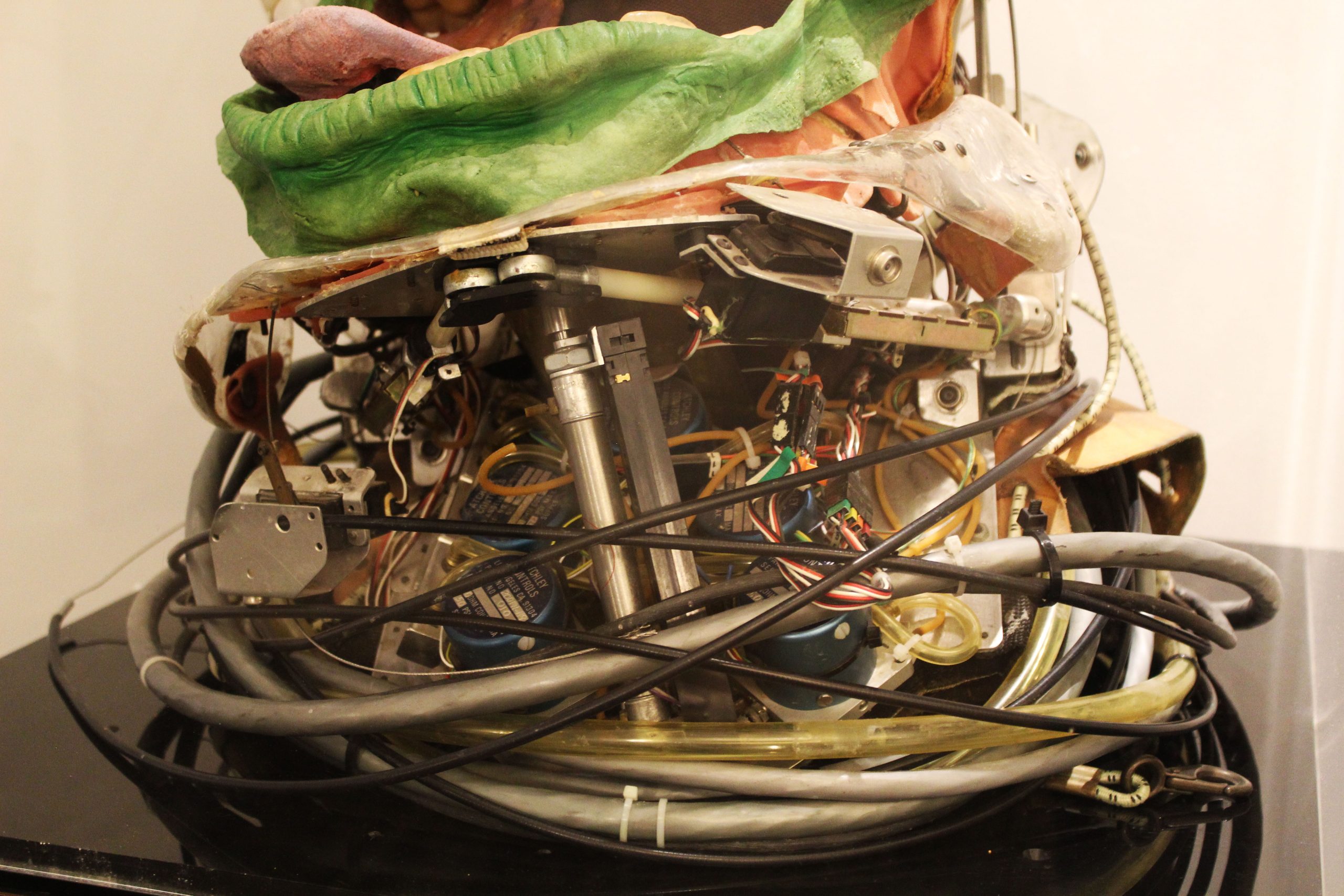
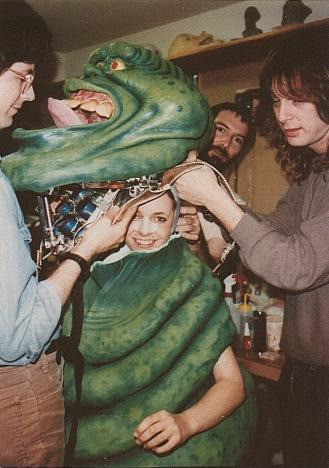
One of the key advancements in Ghostbusters 2 was the shift from manual cable-controlled puppetry to the use of radio-controlled servos for Slimer’s facial expressions. Al Coulter, an ILM animatronics engineer, led the effort to remotely automate Slimer’s face, allowing for more nuanced performances. “Al wanted to mechanize Slimer’s expressions,” Siegel says. “The SNARK system (reported as both Serial Networked Actuator Relay Kit and Synthetic Neuro-Animation Repeating Kinetics module) allowed us to control multiple servos simultaneously, meaning that expressions could be achieved more easily, with fewer people.” This system was a technological leap forward, offering new possibilities for nuanced expressions, though it brought its own set of challenges.
One of the key motivations for this advancement was to streamline post-production, which had been a challenge in the original film. “In Ghostbusters, we had to deal with puppeteers in the frame, which meant removing them during post-production,” Siegel recalls. That was both time consuming and costly.
Coulter notes that while the servos were originally designed for consumer RC airplanes, significant customization was required to make them work for Slimer’s facial movements. “The joystick stuff from Hobby World caused a lot of problems when we went onstage, because there was so much interference from all the lights and the wires and the machinery…that we needed to be able to connect our character to something direct, hardwired. So we had this guy build control boards which we bundled together and plugged into a PC. And that PC would then have software on it, custom again, and it would record our performance.” It was a major advancement for the time, in a way following in the footsteps of the leaps ILM had made in motion-control in the mid 1970s for the spaceships in George Lucas’ Star Wars: A New Hope (1977).
Coulter reflects that working with the technology of the time, particularly the slow computing speeds, was a challenge in itself. “We were working with computers that ran at 24 MHz—slow by today’s standards, but cutting edge at the time.” Despite this, the SNARK system was a pioneering achievement in real-time, computer-controlled puppetry, allowing for repeatable and detailed performances. “The facial expression, eyebrows, eyes, I think we had a nose wiggle…being updated to radio control servos, that was a great idea,” Siegel adds.
Behind-the-scenes videos posted by William Forsche (another crew member) show the incredible range of facial contortions that could be achieved with the new Slimer, from sad to happy to curious in a matter of seconds. While motion-control’s precision was essential for the spaceships in Star Wars, it wasn’t yet clear how well the recording and playback of Slimer’s facial movements would work.
Ultimately the servos introduced their own set of challenges. While the system allowed for greater control, it limited some of the more exaggerated movements that defined the original Slimer. As Siegel explains, “In the first film, Slimer’s jaw was controlled manually, allowing for more exaggerated, chaotic movements. The sculpture was extremely soft and flexible. There was no structure in the lower jaw at all. Just a little metal rod in the lower lip and a puppeteer down below could pull it, just stretch that rubber way wide, twist it from side to side and get a whole variety of expressions, make him chew and stuff…. While the servos and pneumatics we used in Ghostbusters 2 gave us more precise control over the facial expressions, they also introduced limitations in terms of flexibility and range.”
The head wasn’t the only challenge. In trying to replicate the exaggerated, cartoon-like appearance and movements of Slimer’s body from the animated series, the crew encountered more hurdles.
The original Slimer head on display at Lucasfilm headquarters in San Francisco.
Innovating Slimer’s Body Design
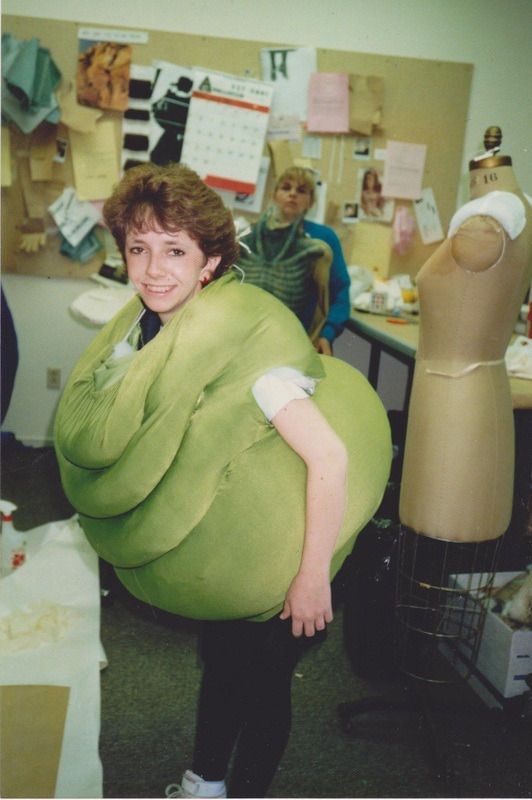
While the animatronics used for Slimer’s facial expressions were groundbreaking, if beginning to become troublesome, the team also had to experiment with new ways to animate Slimer’s body. Tim Lawrence proposed constructing the body out of spandex with bean-bag-like filling, aiming to give Slimer a more fluid, exaggerated range of motion similar to the stretch-and-squash effect seen in his cartoon form.
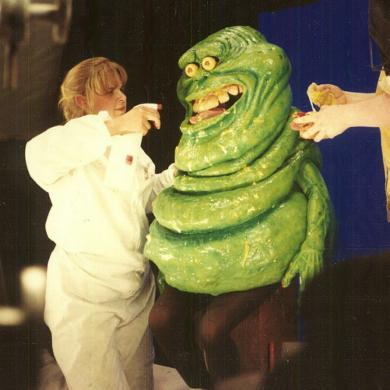
However, this idea quickly ran into practical issues, as Siegel explains. “It might have been a couple of days before we were shooting and Dennis Muren came in and looked at the whole puppet assembled, and he wisely said well that spandex is going to look entirely different on camera than that rubber head. For some reason that had never occurred to anyone before. So in a mad rush we took that spandex bean bag body into our spray ventilation booth, and I had to mix up big batches of foam latex and we actually spatulated it onto that entire body. And that’s really hard to do because the foam latex has a limited time before it sets. And then it had to be baked in an oven. So it was thrown together at short notice in less than one day. When the rubber was cured over the bean bag it made the body a lot less stretchy and flexible than Tim had intended it to be.” The problems were beginning to mount.
Robin Shelby tests the Slimer body costume. (Credit: Columbia/Sony & ILM)
Robin Shelby: The Heart Inside Slimer
While ILM envisioned the technological advancements to play a key role in bringing the reimagined Slimer to life in Ghostbusters 2, it was Robin Shelby (then Robin Navlyt), the performer inside the suit, who truly embodied the character’s spirit.
Previously known by ILM for her role as a troll in Ron Howard’s Willow (1988), she took over the role of Slimer for Ghostbusters 2 after the original actor, Bobby Porter, became unavailable. As Shelby recalls, “They had someone cast, then they wrote Slimer out of the script…and then they wrote him back in, but the original actor had taken on another project.” At just 20 years old, Shelby was tasked with bringing a new version of Slimer to life, despite the suit’s heavy and cumbersome design. But she was up for the challenge!
“I grew up doing musical theater, a lot of dance. So I was very aware of my body…and that helped a lot. I didn’t have any stunt experience at the time, but a lot of movement and dance experience,” remarks Shelby. Reflecting on her first impression of the suit, she adds, “They were still building it when I came in. It wasn’t all painted and set. They had to do a cast of my face and head so they could fit it to me. But when I first saw it with the motors, it was a little scary. The weight was extraordinary. But, the crew was amazing.”
With Shelby performing inside the suit and the expressions operated remotely, production became more efficient. By using a bluescreen and having Shelby wear a black leotard, ILM eliminated the need for puppeteer removal in post-production, just as originally planned.
Shelby and the team had about five to six weeks of rehearsal to help her adjust to the suit and coordinate with the puppeteers operating the animatronic features. The suit itself came in three interlocking segments: the main body, the gloves for the hands and arms, and the head. “I couldn’t see anything really. So what we would do is rehearse, they would shoot it, and then they would have me watch it. So I could see what it was all looking like. So, I knew in my head what we were all doing,” Shelby explains.
The physical demands of the suit were intense. Al Coulter praises her resilience, noting that the weight of the suit left marks on her nose: “As soon as you said action, she was right back there, just banging it out every time. Amazing!”
“The suit was probably over a third of my own body weight,” Shelby recalls. “I probably weighed like 95 pounds when we shot that, and it was probably 35 pounds. People ask, was it hot? It was hot, but probably the worst part of it was the weight.”
Michael C. Gross, the executive producer, visited the set to see how Shelby’s performance was going. “He said, ‘Don’t be the dancer that I know you are, just get in there and be gritty and be mean. Just go out and have fun.’ So I was just trying to rough it up a lot on the set, make it not so dainty or perfect or dance-like, just to try and make it work for the character. It was so much fun, and they really allowed me to play with it,” Shelby enthuses.
Still, even enthusiasm has its limits. “We’d worked for about an hour, and they’d say, okay, we’re gonna take a break. They’d take the head off. I wouldn’t get out of the costume, but they’d take the head off so I could have water, get some air, and sit down. There was a time that I pushed it because we were in the middle of the scene and I didn’t want to stop. They’re like, ‘Are you okay? You’re alright?’ I’d say, ‘Yeah, yeah, let’s just keep shooting. We’re almost done.’ And then Tim is directing me, ‘Okay, Robin, we need you to turn around and go left. Robin? Robin!!’ And I wasn’t even answering. ‘Get her out,’ they shouted.
“You try to be the trooper…when you’re new and just want to please everybody. But lesson learned, yeah, absolutely,” Shelby admitted. “But I’d do it all again,” she adds.
Despite the technical challenges and physical demands, there were plenty of lighthearted moments on set as well.
Robin Shelby in costume on the bluescreen stage. (Credit: Columbia/Sony & ILM)Robin Shelby prepares to don Slimer’s head. (Credit: Columbia/Sony & ILM)
Bill Murray’s Antics
Bill Murray was known to be an unpredictable presence on set, providing some much-needed levity during the intense production process. One day, he arrived at the effects shop. “I didn’t realize how tall Bill Murray is (he’s 6’ 2”),” says Siegel. “And he was messing around with Robin, who’s tiny (4′ 11″), and he was picking her up like a child, and dancing around with her. He was hilarious.” For Shelby it was a surreal moment, “I was a big Saturday Night Live fan, I still am. And so he was one of my heroes at the time…so it was pretty amazing…. He asked if he could pick me up. And he picked me up over his head…. He was actually very sweet to me. You just never knew what he was going to do next.”
Effort vs. Outcome
With the crew rehearsals helping them find the limitations of the suit and the animatronic head, they began to hone the performance with some impressive results.
As Tim Lawrence told Cinefex, “Once we saw the subtlety of the expression that was possible, Slimer suddenly had an incredible life to him that I had never seen in such a character before. To see his face light up from very sad to very happy was a wonderful thing. The scene I was most happy with was one that they just threw at us. I wasn’t sure we could even do it because it was a 30-second shot without a cutaway. In it, Louis gets off the bus and heads off down the sidewalk. At this point, Slimer and he are on friendlier terms. Suddenly, Slimer enters frame, rushes intently up to Louis and pats him on the shoulder. From his motions, it is obvious he wants to go with Louis really badly, but Louis tells him he can’t and Slimer gets all sad. Then Louis tells him something that makes him happy, and Slimer gives Louis a big wet kiss with his tongue coming out and licking him. Then he does a spin and flies off. Well, we did that all in one cut and it looked wonderful. I had never seen a rubber character do what Slimer had done.” “For that scene, they gave me a tape of it because it was shot in New York. And I had to listen to the dialogue so I could know the exact timing. I had probably listened to that hundreds of times just to get Rick Moranis’ dialogue and timing,” explains Shelby.
“Michael just flipped – he thought the performance was excellent. But at the same time, he told us that they might not be able to use the shot – and ultimately it did not make it into the film,” Lawrence had noted.
Despite completing all of the storyboarded shots, Slimer’s role in the final cut of the film was indeed scaled back considerably. Gross again explained in Cinefex: “Whenever he was in there, it seemed like he was really an intrusion. At first we thought the answer was to add more of him, so we had an ongoing confrontation between Louis and Slimer in which Louis was constantly trying to catch him. We thought it would be funny and at screenings we expected the audience to cheer and laugh when they saw him again. But nothing. No reaction. The audience was looking at it as a fresh movie. There were a lot of kids who loved to see him, so we knew we could not abandon him completely, but he never really worked with the audience the way we expected. Ultimately we decided less was better, and in the final film we limited him to two very quick shots.”
Siegel takes a philosophical approach, “From my own experience working in the business as long as I have, I just assume that some of the work’s gonna be cut…. His presence in the movie was questionable from the beginning. So again, I wasn’t surprised if some of his shots were removed.”
The disappointment is palpable for Shelby. “I think that’s probably the most bummed out I was…. Everybody just did such a great job on putting that all together.” But for the 20-year-old, little did she know that one day she’d get a call from Paul Feig to reprise the role in the 2016 reboot Ghostbusters: Answer the Call, this time providing the voice for “Lady Slimer.”
The original Slimer head on display at Lucasfilm headquarters in San Francisco.
A Legacy of Experimentation
The experience of working on Ghostbusters 2, was always about the spirit of experimentation. Slimer’s evolution from the chaotic “ugly little spud” in the original Ghostbusters to a more cartoonish, mechanized character in Ghostbusters 2 stands as a testament to ILM’s relentless pursuit for innovation. Despite the technological limitations of the time, Slimer’s creation helped pave the way for future advancements in animatronics and practical effects. As Siegel concludes, “Every project has its challenges, but the lessons you learn set the stage for the next big breakthrough.”
While ILM pushed the envelope with cutting-edge animatronics, the process also highlighted the enduring importance of human performers. As Coulter reflects, “We overreached a bit. The software itself was very rudimentary. Everything was so experimental back then.” He highlighted that, despite the ability to program precise facial movements, human performers remained more adaptable and agile in responding to the creative needs of a scene. “At one point they brought the director and he looked at it and kind of went, ‘Could you make him incredulous at this one point?’ Er…. We don’t have an incredulous button here. It’s like turn the computer off, bring the puppeteers back in, and off we go again. A computer is not going to have any idea how to convey anger or emotion,” Coulter remarks, noting that even today, animators still rely heavily on human actors for motion capture, using them as the source for animation.
An Ongoing Partnership Between Practical and Digital
ILM’s current director of research and development Cary Phillips explains that physical puppets still hold a vital role in modern productions. “We often get called on to build digital models of physical puppets that perform on set, to execute performances that the physical models can’t. Grogu [from The Mandalorian] is a recent example. Physical models are an inspiration for the actors and everyone on set, as well as for animators who bring the digital version to life.”
He adds that some directors also prefer digital puppets that retain the movement style of their physical counterparts. “I think our human eyes are attuned to certain qualities of movement that we find appealing and comfortable because they suggest a physical medium at work. But that’s done by hand; there’s usually no automatic connection between the physical model and the digital.”
The challenge remains how to make a puppet, digital or physical, feel alive. “A frequent criticism of computer animation, sometimes legit and sometimes not, is that it can look too polished and smooth,” says Phillips, “lacking the spontaneity of a live performance, the unintentional quirks that make a character seem alive. Great animators can create this, but it’s hard. That’s one of the lasting appeals of motion capture, although it also introduces an entirely new set of technical challenges and limitations. Ideally, capture devices are simply an alternative to the keyboard and mouse as a way of describing movement, for use when appropriate.”
Phillips further reflects on the legacy of those who came before him and the evolving boundaries, or lack thereof, in modern visual effects. “Discovery is a vital part of the creative process. Something might feel like a mistake while it’s happening but turn out afterwards to have an appealing quality. The best tools let artists experiment quickly and work iteratively. One of the benefits of a computer graphics model is that it can do things that a physical model can’t, and we often get asked to make models and characters move in ways that violate the laws of physics. Leap tall buildings in a single bound. Cheat to get the action in the frame. So, there are no absolute boundaries—you can make it do anything. Even move in a way that would rip a real person apart. It’s an awesome power, but it takes real artistry to keep it looking plausible and appealing, even if it doesn’t look technically ‘real.’”
At Lucasfilm and ILM’s headquarters at the Presidio in San Francisco are halls lined with artifacts from the company’s rich history—matte paintings, spaceship models, and optical effects equipment. And around one corner, encased in acrylic, lies Slimer from Ghostbusters 2. His still vibrant green latex skin, now shrunken with age, reveals the servos and pneumatic cylinders beneath. It serves as a poignant reminder to all who pass by that character animation has deep roots in the physical world.
–
Jamie Benning is a filmmaker, author, podcaster and life-long fan of sci-fi and fantasy movies. Visit Filmumentaries.com and listen to The Filmumentaries podcast for twice-monthly interviews with behind the scenes artists. Find Jamie on X @jamieswb and as @filmumentaries on Threads, Instagram and Facebook.