Immersive

50 Years | 500+ Film and TV credits | 135+ Awards

SINCE 1975

ILM’s new Mixed Reality Playset is available on Meta Quest 3 and 3S headsets.

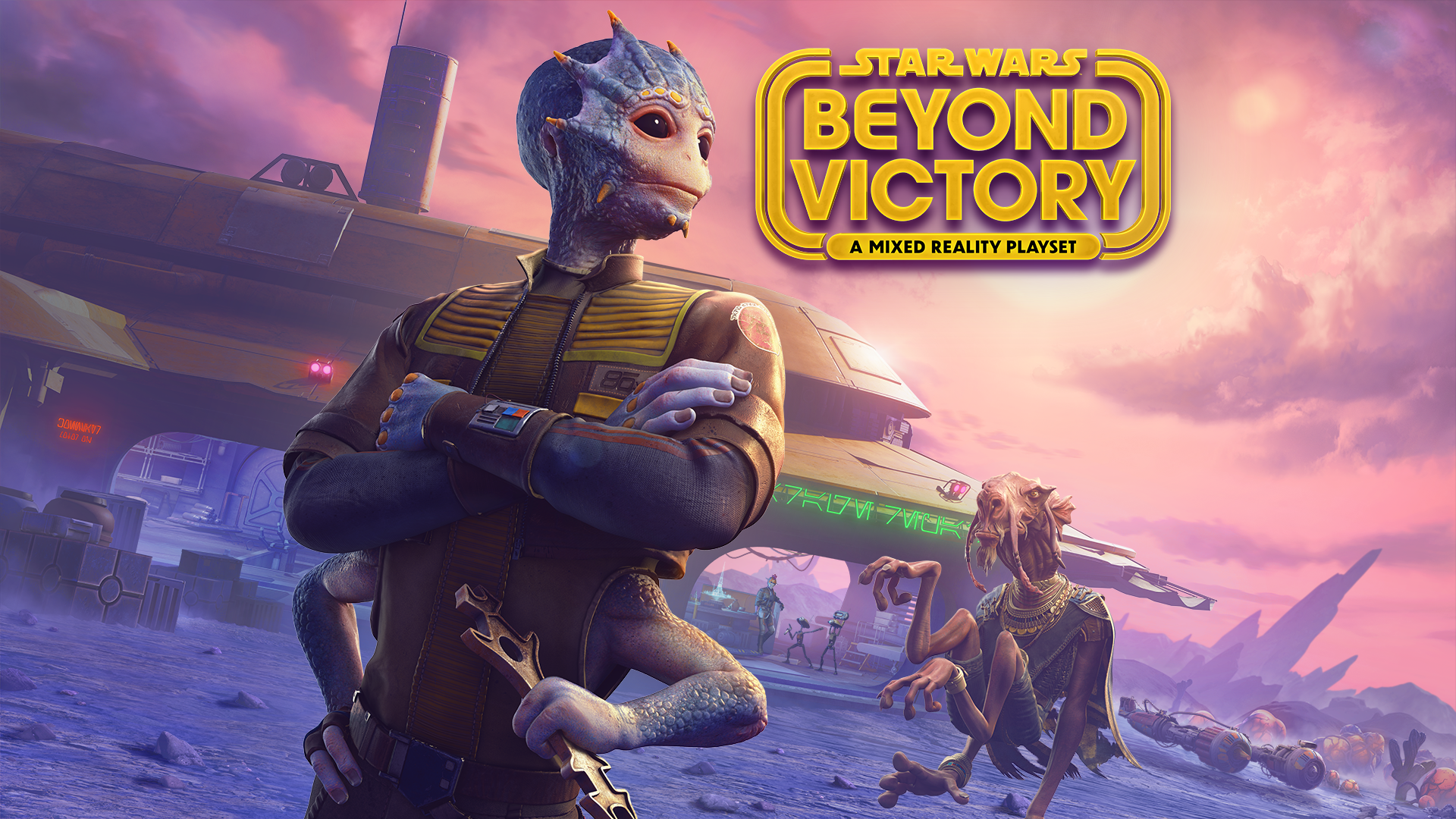
From the team that brought you Vader Immortal and Tales from the Galaxy’s Edge comes ILM’s next bold chapter in interactive Star Wars storytelling: Star Wars: Beyond Victory – A Mixed Reality Playset. Now, you can start this adventure yourself on the Meta Quest 3 and 3S headsets.

Set during the Reign of the Empire, Beyond Victory introduces players to an original story that blends the thrilling world of podracing, a stellar cast, powerful narrative and mixed reality play. To celebrate the launch, we sat down with Beyond Victory‘s director, Jose Perez III, for an exclusive behind-the-scenes look at the creative vision, development journey and personal influences that shaped this experience.
Let’s start with the basics, for those who haven’t heard yet, what is Star Wars: Beyond Victory – A Mixed Reality Playset and what makes it different from previous Star Wars experiences?

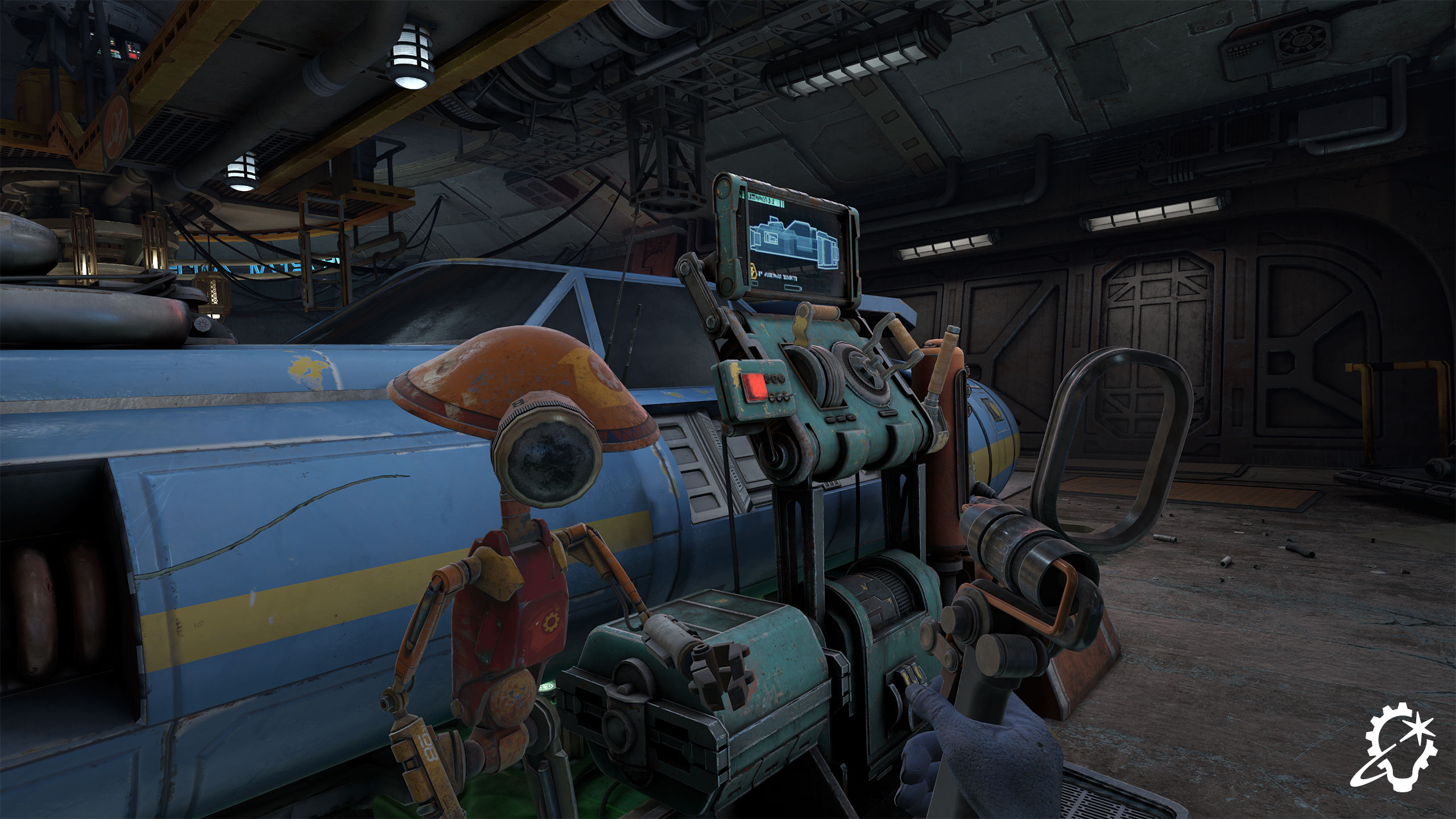
Star Wars: Beyond Victory is a mixed reality playset that gives you three ways to experience the fun of the Star Wars galaxy. We have Adventure mode, a short story about an up-and-coming Podracer who’s struggling with grief and the desire for fame. Then we have Arcade mode, which is a really fun, replayable experience that gives you a taste of old-school arcade games with a new mixed reality (MR) twist. And finally, we have Playset mode, where you can literally bring your favorite Star Wars toys to life, scale them up, and have them interact with each other. This is our first time experimenting with mixed reality at this scale, and we wanted to mix it up, no pun intended.

Can you tell us your role in bringing this project to life?

I am the director of Star Wars: Beyond Victory. My job was to work with all the talented artists, programmers, designers, writers, and actors to help bring this experience to life. I get to wear a lot of different hats over the course of development, which keeps me really excited. I came up with the original story, and then worked with our writers and the story team to help flesh it out and give it texture. In this role, I assisted with casting, and I directed the performance capture and voiceover. I was there every day working with the designers, production designers, and artists to help shape the look of the experience and how it feels to move around in mixed reality or drive your Podracer. It’s one of the best jobs in the world, and I’m a very lucky person to have it.
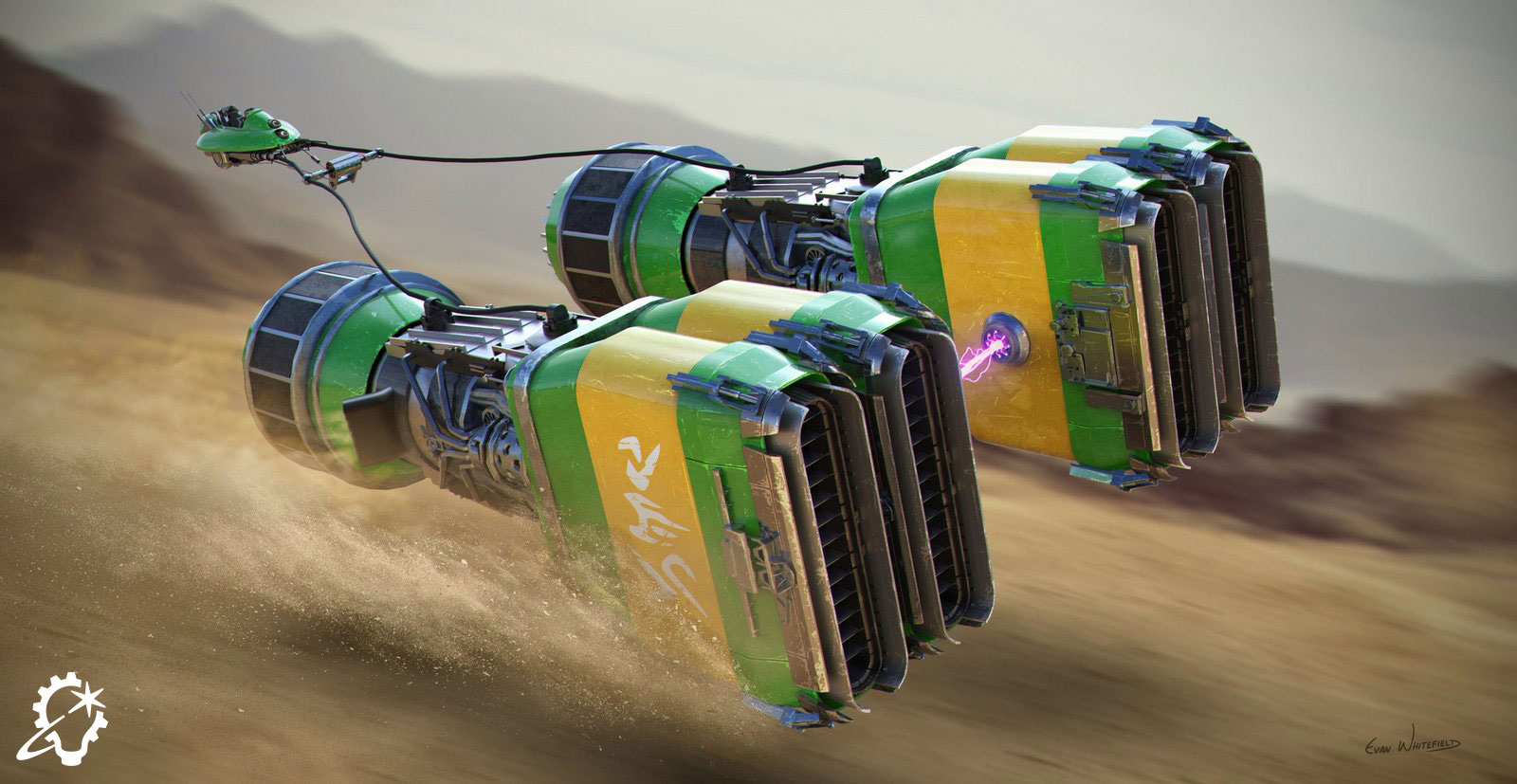
Concept art by Evan Whitefield (Credit: ILM & Lucasfilm).

Piggybacking on that, could you describe how your core team at ILM is organized and how you work together in developing a production like this?

Our team is highly cross-disciplinary. The key roles include designers, engineers, and programmers. We have the entire ILM Art Department and a fantastic production team that helps us pull all of this stuff together. We also have marketing folks who join us, especially as we get towards the end of the project to help show our work to the public. I think how we develop it is where things get most interesting. We like to maintain a culture of kindness, but we also like to be honest when something isn’t working and do our best to make it better. It’s a very iterative, humbling, and egoless process. It’s a lot of really smart, intelligent people working together to try and make the best thing they can on the hardware that we have. We try to keep it honest so everyone should be able to say what they need to say, and we really focus on what’s on the screen — what is the best experience for our guests.

Where did the original idea for a mixed reality Star Wars playset come from? Was this always envisioned as an MR experience?

The original idea was actually a virtual reality (VR) playset for filmmakers to help them visualize and compose scenes. It was a tool I created with a few friends in the Advanced Development Group at Lucasfilm and ILM, for directors working on big Hollywood movies. We found that it was a simple, fun tool for them, and when mixed reality became a viable technology, we knew it could be a cool experience that would easily translate to digital action figures.

Can you tell us about why you decided to make the podracing in this experience something that’s top-down on a holotable in third-person vs. a first-person POV?

It’s not truly ‘top-down’ as much as it is a 3D diorama when you’re standing next to it. It was definitely a conscious choice to make it third-person to fit into what we were trying to do here, which is pushing the boundaries of mixed reality. Early on, we knew we wanted to lean into the “Toy” vibe of the Playset and do something unique with the technology. This approach felt like the natural way to achieve that. I’m a big fan of 1980s retro games, so for me, this was about taking those classic arcade concepts and adding a whole new dimension.
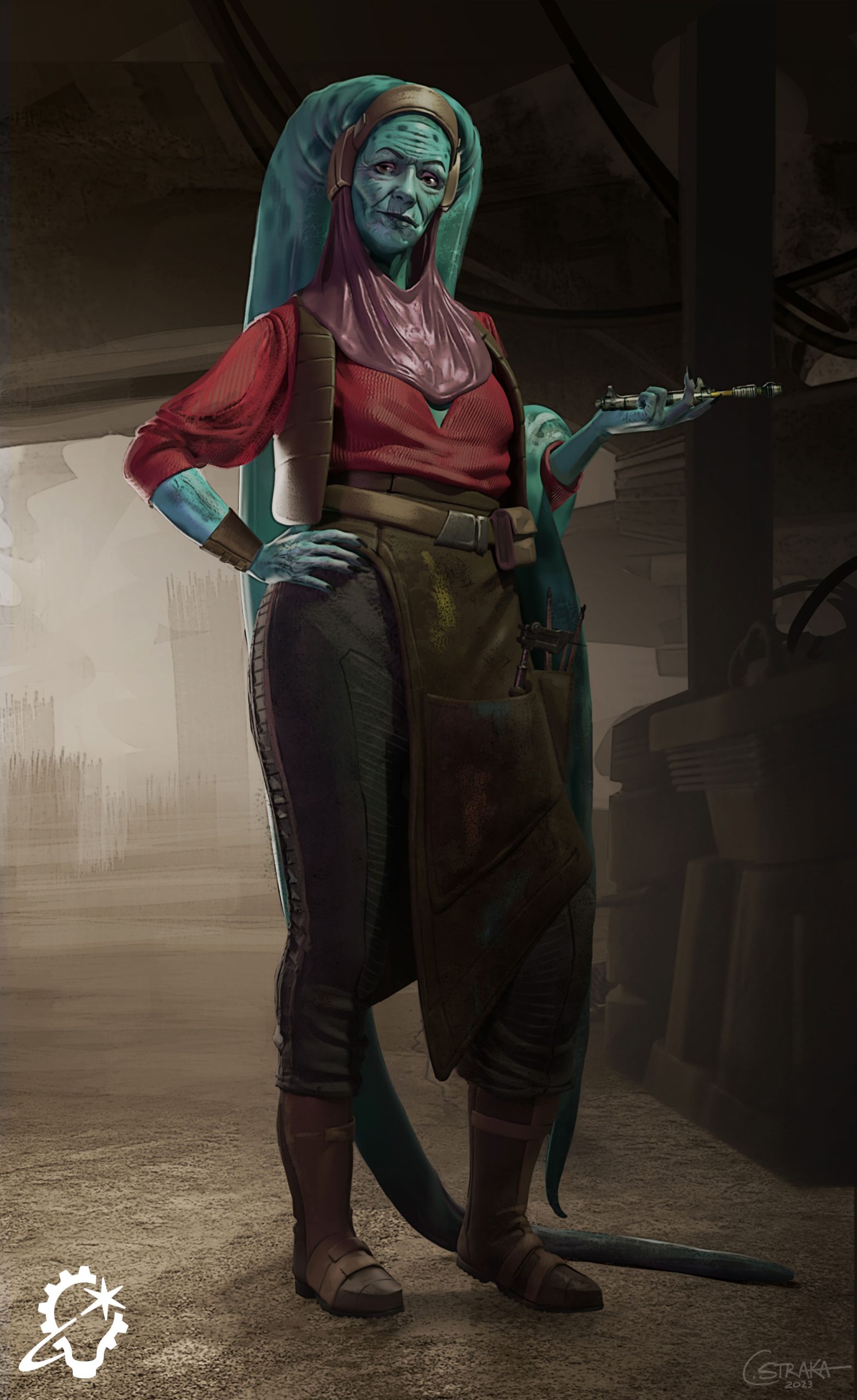
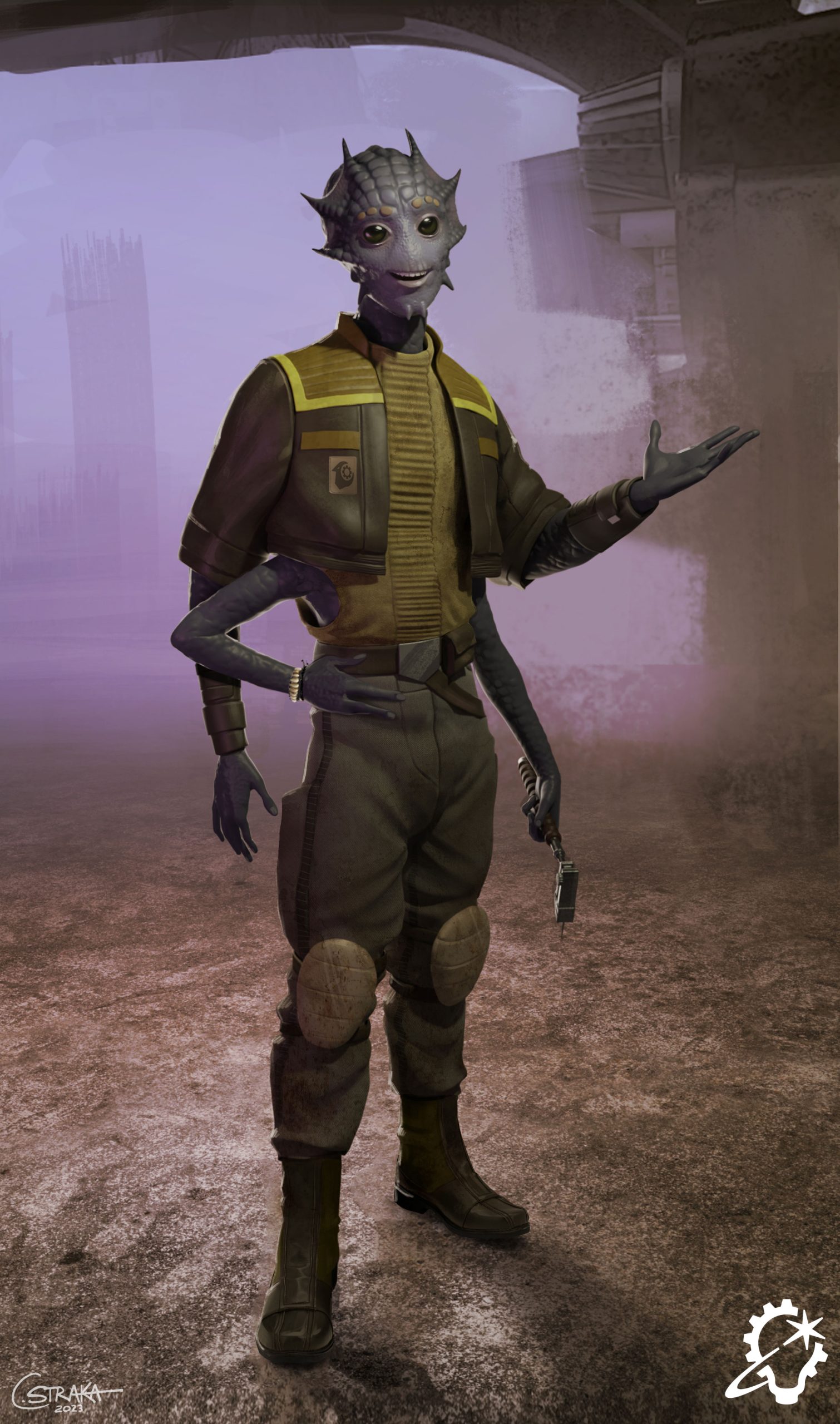
How did you balance innovation with staying true to the Star Wars legacy and canon?

I’m a huge Star Wars fan, so I love working within the established canon. Our innovation came from the way we approached storytelling. This isn’t a galaxy-spanning event; it’s a smaller, personal story. Telling a story in mixed reality is hard, and we made some big choices, like letting the camera cut to express the narrative while you’re looking at miniatures. The key was to balance this innovation with ensuring all the characters and the world fit seamlessly within the broader Star Wars galaxy.

Were there any particular Star Wars films, shows or eras that inspired the tone and style of this experience?

The main inspiration was definitely The Phantom Menace [1999] and the podracing scene. Beyond that, we used the Star Wars galaxy as a palette to tell stories that were interesting to us and that would deepen the world.

Can you explain how you landed on the three distinct modes? How do you balance development for them all since they’re all so different?

We settled on three modes to offer players a variety of experiences. Adventure mode is for those who want a guided story, while Arcade is for replayability and pure fun. Playset is the ultimate sandbox for creativity. The three modes mirror how I experienced Star Wars as a kid: I’d go see the movie (story), hit up the arcade afterward to play the latest Star Wars game, and then go home to play with my toys. This is just a way of bringing a modern version of that nostalgic experience to people today. Balancing development was a challenge because they are so different, but we approached each one as its own mini-project while maintaining a consistent visual style and user interface across all three. This allowed our teams to focus on the unique requirements of each mode without starting from scratch every time.
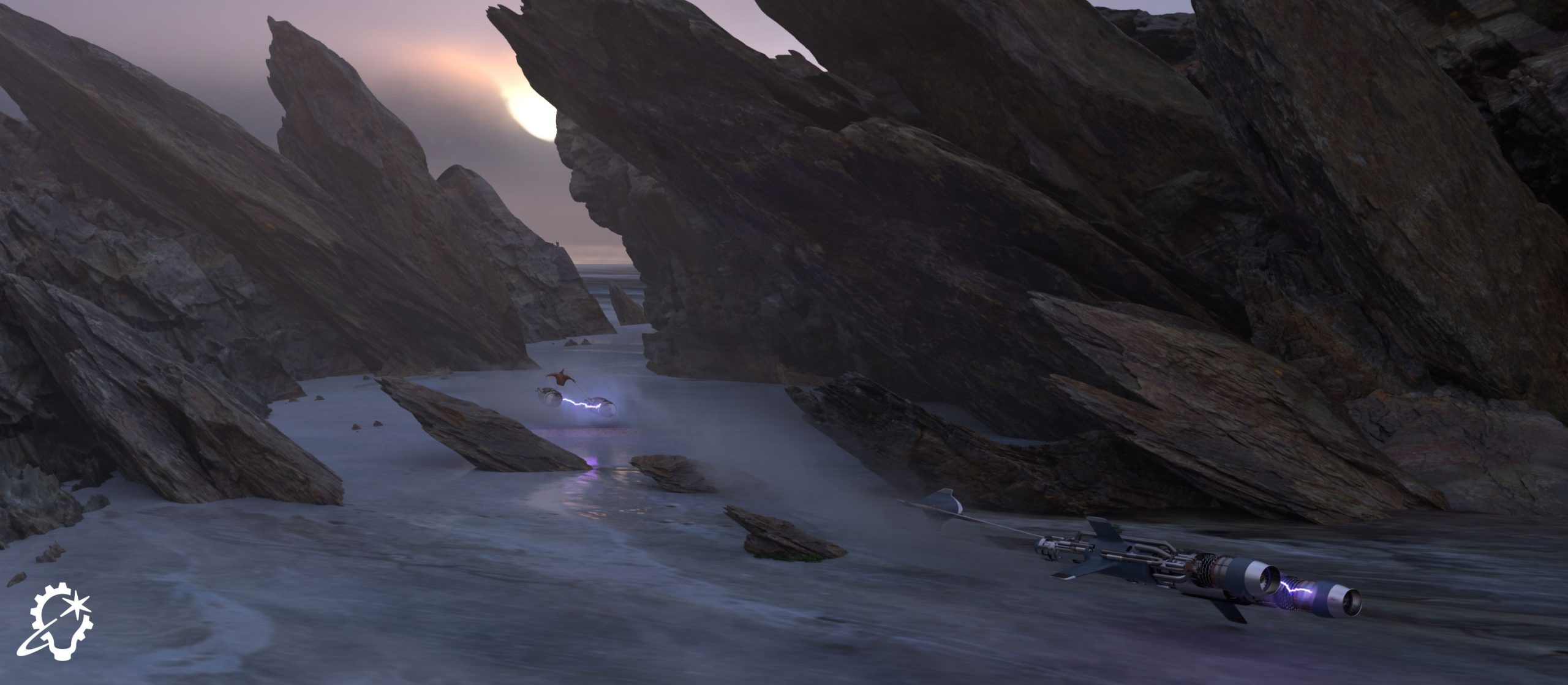
Concept art by Chris Voy (Credit: ILM & Lucasfilm).

Mixed reality is still new to a lot of fans. How did you approach that, especially for younger players or those new to immersive tech?

Mixed reality is definitely new, and that’s actually really exciting for us. One of the things we love to do here at ILM is really push on new technologies, so it’s a joy to work with Meta and continue to push the boundaries of mixed reality, virtual reality, and, hopefully in the future, augmented reality. For this experience, we knew we had to make it intuitive and accessible. We treat every one of our experiences like it’s the first time someone has ever put on a headset, and this was no different. Making it accessible and user-friendly is something we always come back to; we want to politely walk you through the experience and ensure it’s enjoyable in the most delightful way possible.

Was there a moment during development that made you feel, “This is it. This is Star Wars.”?

Anytime you work on a Star Wars project with ILM and Lucasfilm, you’re going to have those moments. For this one, a couple of moments stand out, especially during the voice recording sessions. Hearing Greg Proops doing the voice for Fode, or Lewis MacLeod voicing Sebulba — it felt like we were right there, talking to those characters! Those performances and the incredible vibe they brought were instantly recognizable. The score was done by Joe Trapanese and Clark Rhee, and what was so awesome about them doing it is that they brought their own unique vibe to the music. We were also able to include some of composer John Williams’ music, and when you mix that in with the new score, you get a fresh, new version of Star Wars that is still very much Star Wars. It’s very exciting.

The audio in this experience is exceptional. Can you talk about what it was like working with Skywalker Sound on Beyond Victory?

Working with the team at Skywalker Sound is always an amazing experience — I’ve been collaborating with them for over a decade now, and they just always bring the heat. They are masters of their craft. It was a true collaboration; they didn’t just provide us with sounds — they worked with us to build a rich, immersive soundscape that elevates the entire experience. They have an incredible library of assets they can pull from across all the films and animated shows. The audio they created for the Podracing alone makes the experience so much more beefy and visceral. Additionally, Kevin Bolin, who is one of the main audio supervisors, provided a lot of great suggestions and even co-directed a couple of parts of this experience. They are truly the best.
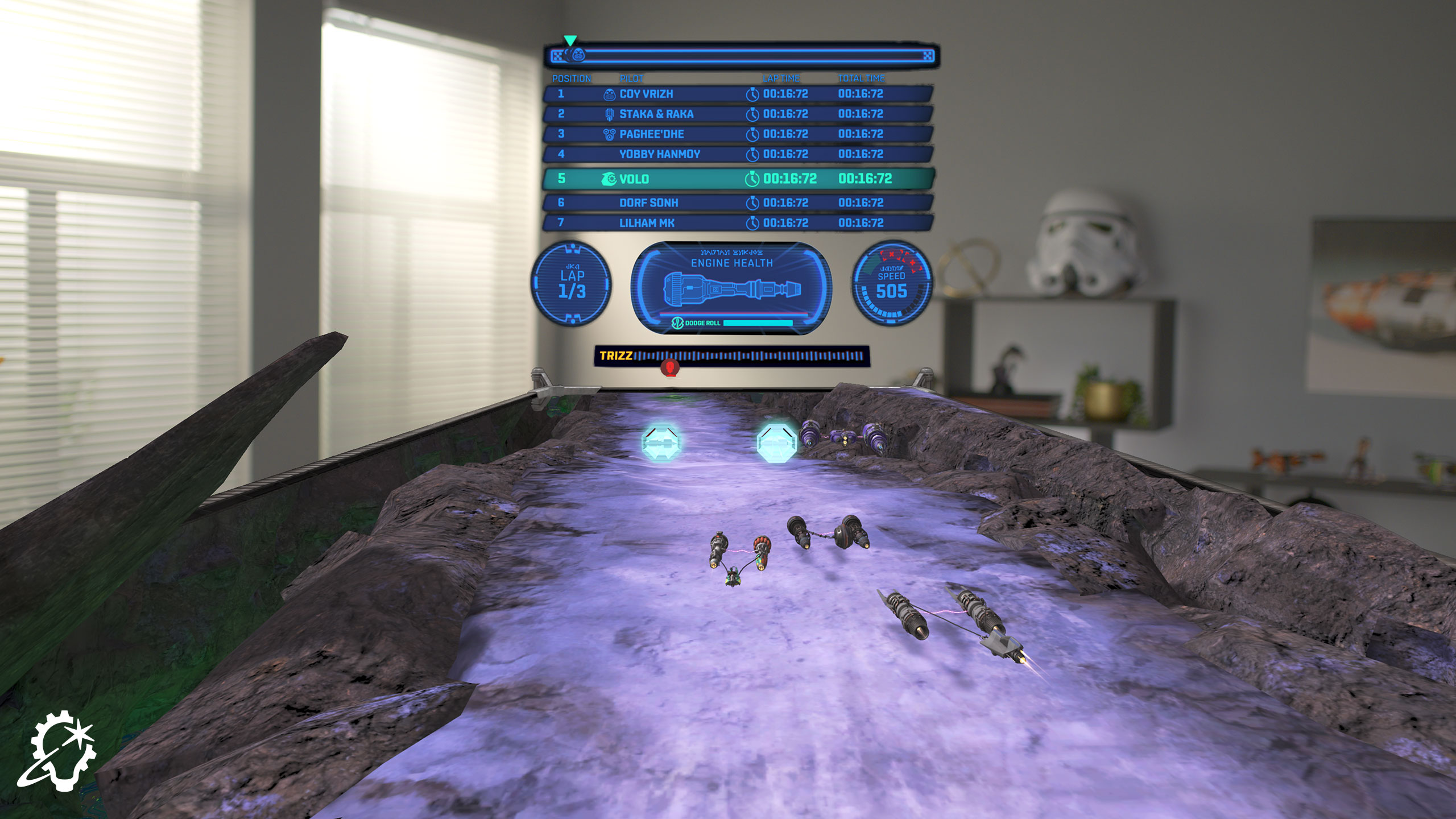
(Credit: ILM & Lucasfilm).

Speaking of sound, let’s talk about the cast of Beyond Victory. What was it like working with such a stellar cast? Were they only involved in the voiceover or did any also do motion capture work?

We are always fortunate to get an amazing cast of voice actors, and this was no different. Between Greg Proops, Fin Argus, Lewis MacLeod, as well as Lilimar Hernandez and Bobby Moynihan — we just had such a great time. One of the things that was so fun is that we actually did a full performance capture for this. The audio that you hear was captured at the same time as they were doing the mocap, so it was super fun to see Greg Proops, Bobby Moynihan, Fin Argus, and all these people in the same room collaborating to bring this to life. They all did such an amazing job and they really elevated the entire experience. 

And that’s not even counting the loop group! At Skywalker Sound, we have a loop group of great voice actors who come together to help fill in the world, doing a bunch of background voices and stormtrooper voices. They always do such an amazing job and have worked on the cartoons and films, which brings an authentic Star Wars feel because you’re hearing voices familiar from other Star Wars stories as well. Yes, we had an amazing cast.

I felt like I was reliving my childhood while playing in Playset mode. Were you a fan of the toys growing up and was the intention of Playset to bring some of that nostalgia to life?

Oh yeah, I was a huge fan of Star Wars toys growing up and I’m a huge fan of Star Wars toys now. When I was a kid, I had a bunch of different ones — I had the Ewok Village, I had the Millennium Falcon for a little bit. One of my saddest memories is when I was heading into fourth grade and I gave all my Star Wars toys to Goodwill because I thought I was too old for them, and I immediately regretted it afterwards. It feels like I’ve spent my whole life trying to rebuild that collection! So, this is probably me just tapping into some childhood trauma and trying to bring some of that back [laughs]. Today, my office is full of Star Wars toys.

This must have been a massive cross-disciplinary effort. Can you talk a bit about the collaboration between designers, engineers, writers and the teams at Lucasfilm & Skywalker Sound?

It is a real undertaking. We have a lot of really smart people with a lot of opinions, and getting everybody onto the same page and making sure that we’re working on something we are all proud of is hard to pull off, but I think we did a really good job. Our production team is a big part of that, making sure that all the different disciplines are talking and coming together for the proper meetings. It is a massive cross-disciplinary effort, not just within the people working on Beyond Victory, but you have to remember that we need to fit into the entire Star Wars galaxy. So, we have to be cognizant of all the other projects going on and make sure we fit in that world, too, without breaking canon. A lot of work goes into pulling all of this together, and a great team and production process made it all happen.
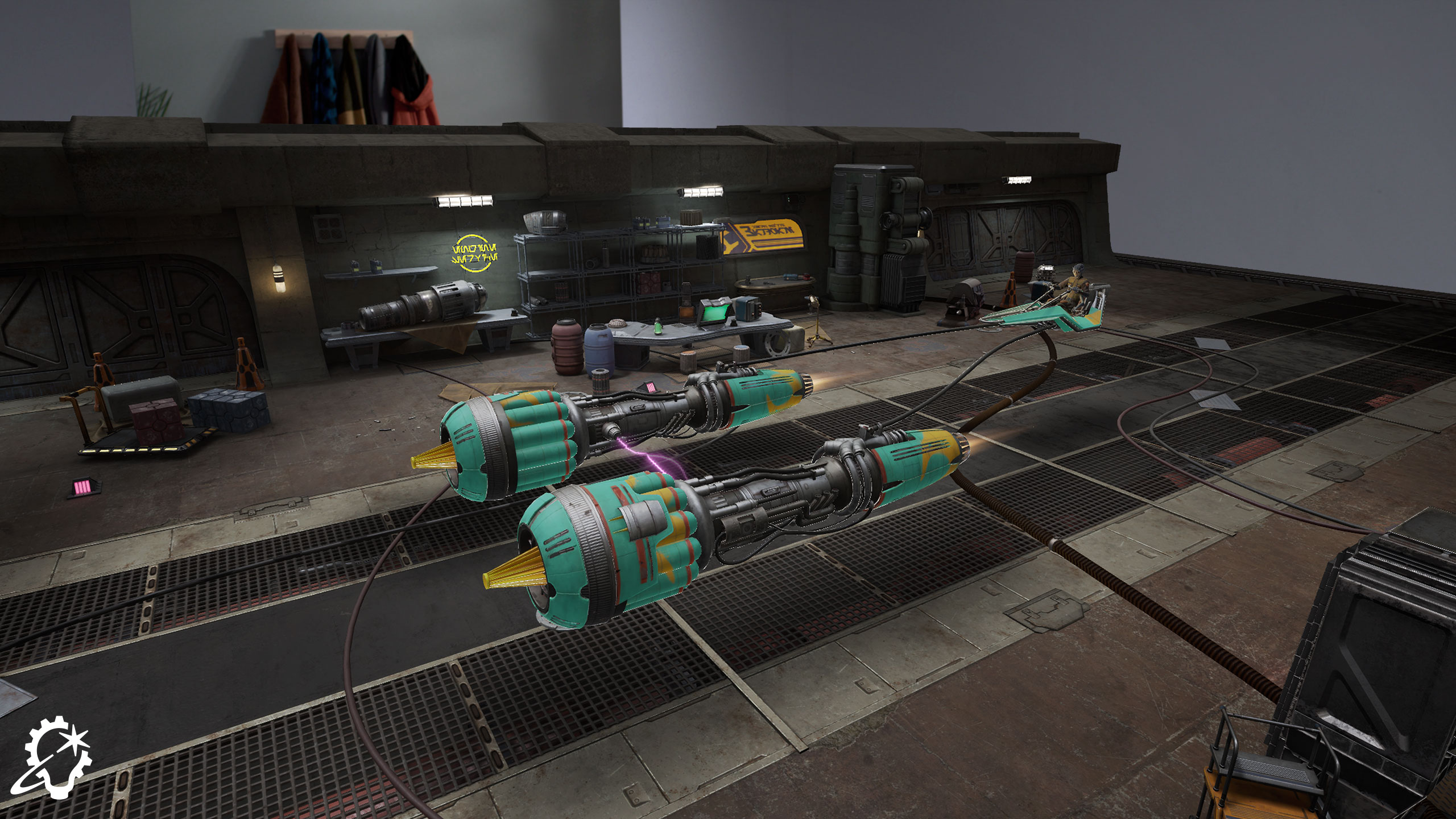
(Credit: ILM & Lucasfilm).

We absolutely love seeing Star Wars comics character Grakkus the Hutt in this. Without getting too spoiler-y, is there a moment in this experience that you think fans are especially going to love? Something that will make them pause and smile?

Hopefully there are a couple of moments like that! Grakkus the Hutt is amazing. He was awesome in the comic books, and we just knew we had to bring him into this experience — he’s just too cool. I can’t wait for people to see him in all his glory when he’s standing above you; he’s literally like 12 feet tall! But I think for me, the real moment was getting to see Sebulba in person. Watching him walk around, just seeing the creature that Sebulba is — for me, as someone who loves The Phantom Menace and the prequels so much, it was really cool. It definitely brought me a lot of nostalgia.

ILM celebrates its 50th anniversary this year, and interactive experiences have continued to play an important role in ILM’s diverse range of storytelling. How does Beyond Victory help carry this interactive legacy forward?

It’s incredible to be celebrating our 50th anniversary this year. We’ve done a lot of interactive work through Lucasfilm and ILM, but Beyond Victory marks a new step for us. We’re breaking technological ground by pioneering at this scale in mixed reality. It also, in an unusual way, echoes our early film history, when we were working with miniatures and seeing the world through that lens. As far as carrying our interactive legacy forward, I hope that people see this project as a successful push into new territory. This is the first mixed reality Star Wars project with a full, integrated experience — a cohesive story, an arcade mode, and a customizable playset. At the heart of this, like all ILM projects, is really the story, and I hope people really appreciate it and that these characters can go forward into the galaxy. We’re always trying to do something different, and we hope the community appreciates this push.

Any final message you’d like to share with ILM.com’s readers?

Thank you to the entire Star Wars and ILM fan community. We’re thrilled by the love we’ve received as we explore new realms like mixed reality. We couldn’t do this without you!
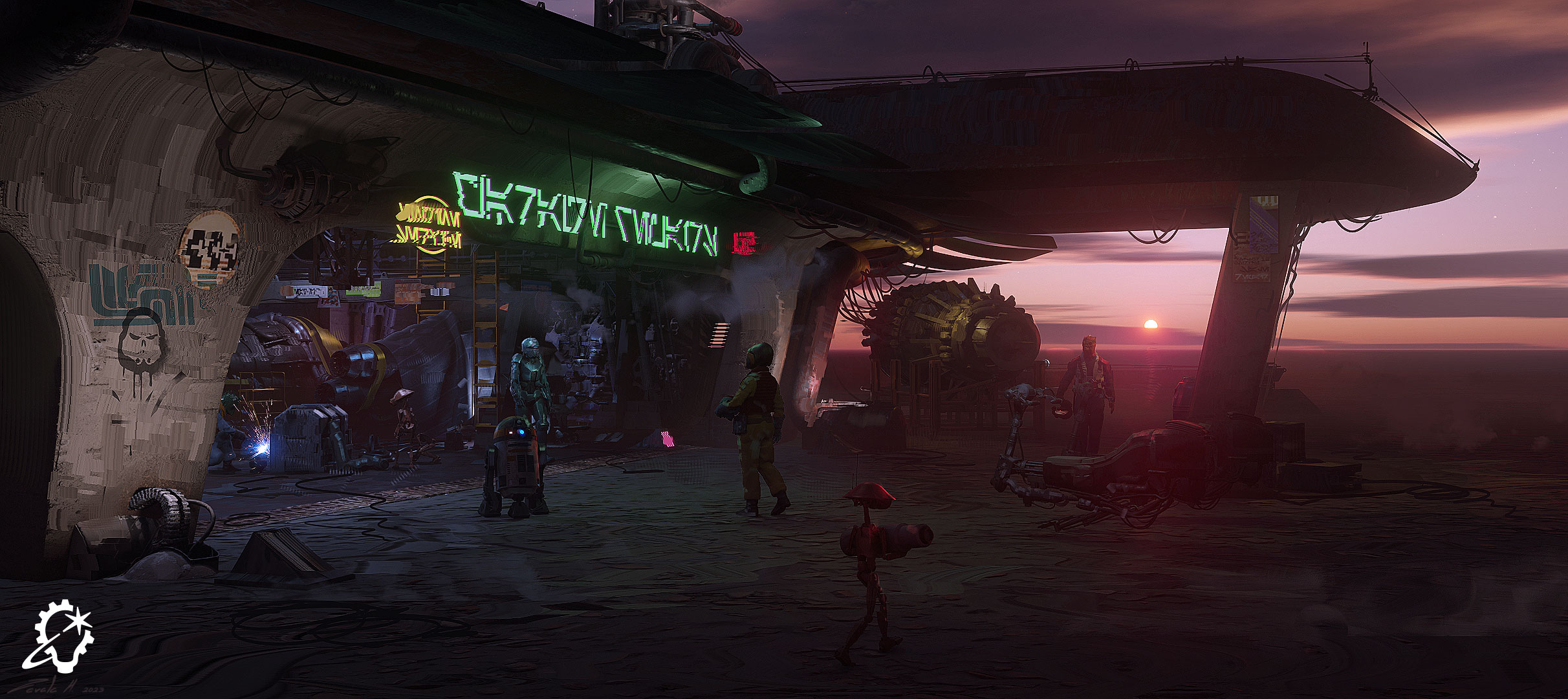
Concept art by Stephen Zavala (Credit: ILM & Lucasfilm).

Play Star Wars: Beyond Victory – A Mixed Reality Playset now on Meta Quest 3 and 3S headsets.

Learn more about Beyond Victory’s unveiling at Star Wars Celebration 2025.
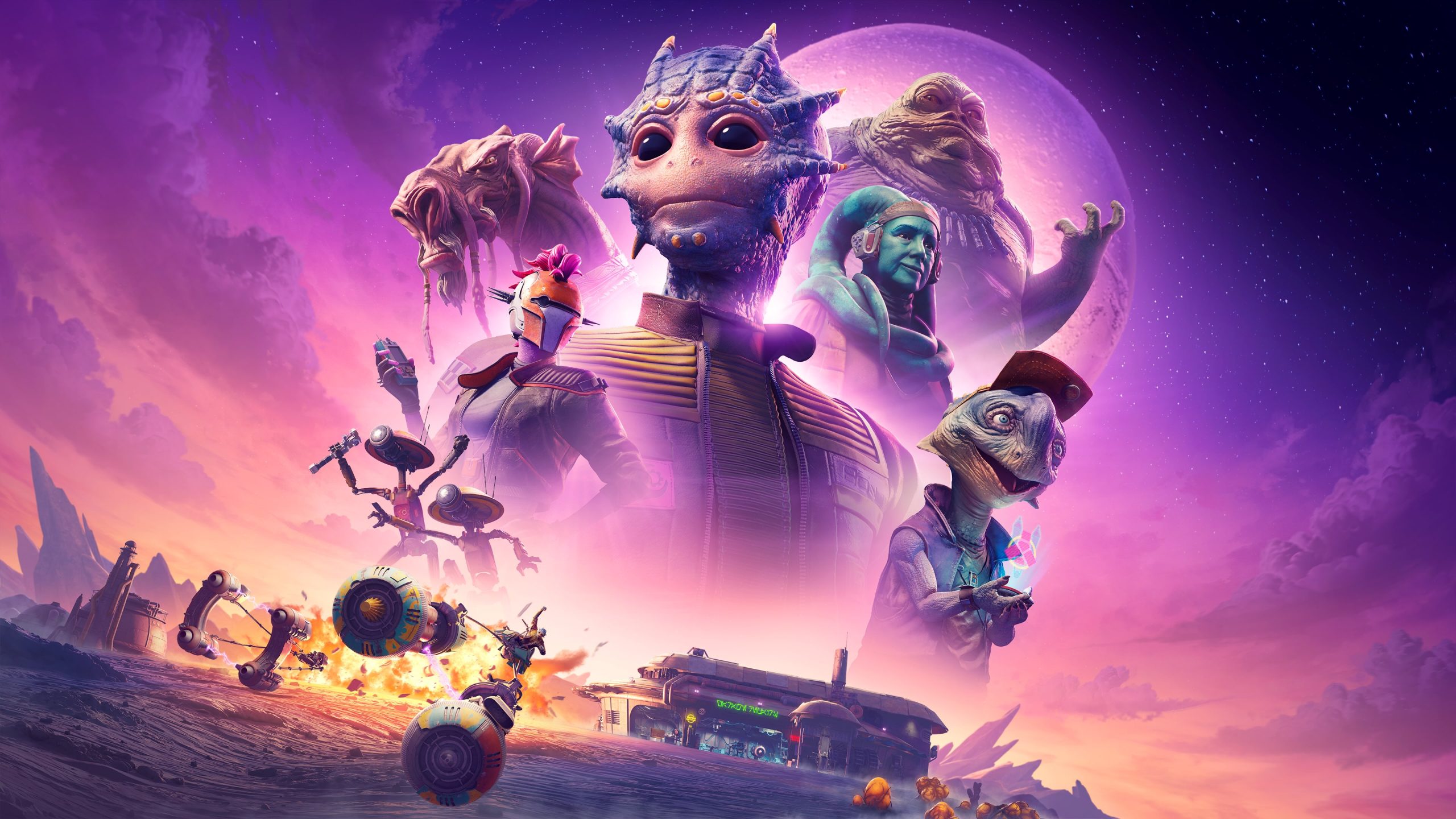
Industrial Light & Magic has unveiled a new trailer and key art for the podracing adventure that’s coming this fall.

Industrial Light & Magic and Lucasfilm announced today that Star Wars: Beyond Victory – A Mixed Reality Playset, the next groundbreaking entry in interactive Star Wars storytelling, will launch on October 7, 2025, exclusively for Meta Quest 3 & 3S headsets.

“This experience is designed to celebrate storytelling, action, imagination and everything we love about Star Wars,” said director Jose Perez III. “We wanted to give players a new way to step inside the galaxy and make it their own.”

Watch the new trailer below:

Visit StarWars.com to learn more about the exciting new voice cast and distinct gameplay modes for Star Wars: Beyond Victory.

Don’t miss all of the latest updates from Industrial Light & Magic on the ILM.com Newsroom.

Celebrating Ten Years of Immersive Entertainment at ILM

By Amy Richau

“ILM Evolutions” is an ILM.com exclusive series exploring a range of visual effects disciplines and highlights from Industrial Light & Magic’s 50 years of innovative storytelling.

In immersive stories, the fan is the hero.

Industrial Light & Magic (ILM) has always been at the forefront of innovation, drawing audiences into new worlds by pushing technological boundaries. As part of our special series, “ILM Evolutions,” ILM.com talked with Vicki Dobbs Beck (vice president, immersive content innovation), Julie Peng (director of production), Tim Alexander (visual design director), Ben Snow (senior visual effects supervisor), and Shereif Fattouh (executive producer) about the past, present, and future of ILM’s immersive storytelling.

ILM’s LiveCGX team, including visual effects supervisor Mohen Leo (bottom).

A New Way to Tell Stories

“Let’s invite our fans to step inside our stories in ways that had never before been possible.”

 – Vicki Dobbs Beck

While ILMxLAB was formally established in 2015 to explore the possibilities of immersive storytelling, the seeds of this endeavor actually began much earlier for Vicki Dobbs Beck. In the 1990s, Beck worked at Lucasfilm Learning, where a certain prototype caught her attention. “It was called Paul Parkranger and the Mystery of the Disappearing Ducks,” Beck tells ILM.com. “And what was really cool about all of the projects we were doing at that time is they really did sit at the intersection of storytelling, interactivity, and high-fidelity media – such that it was back then – all through an educational lens.”

Fast-forward to Beck’s time at ILM as head of strategic planning, she started bringing together talent from ILM and LucasArts (now Lucasfilm Games). “It was kind of this little rebel unit that was doing some pioneering R&D [research and development] in high-fidelity, real-time graphics,” says Beck. “Their success gave us confidence that the foundation was in place to build an immersive storytelling studio, expanding on the R&D work done by teams like the Lucasfilm Advanced Development Group (ADG).”

In 2015, ILM and Lucasfilm announced the formation of ILM’s Experience Lab (ILMxLAB) – a new division that would combine the talents of Lucasfilm, ILM, and Skywalker Sound. Lynwen Brennan, then Lucasfilm executive vice president and ILM president, announced that “The combination of ILM, Skywalker Sound, and Lucasfilm’s story group is unique and that creative collaboration will lead to captivating immersive experiences in the Star Wars universe and beyond. ILMxLAB brings together an incredible group of creatives and technologists together to push the boundaries and explore new ways to tell stories. We have a long history of collaborating with the most visionary filmmakers and storytellers, and we look forward to continuing these partnerships in this exciting space.”

The Holocinema team.

From its inception, a studio telling immersive stories with emerging technology platforms made ILMxLAB an appealing destination. Julie Peng, who worked in Lucasfilm Animation as a production manager for projects like Star Wars: The Clone Wars (2008-13) and Strange Magic (2015), was looking to break into the emerging interactive storytelling space when she received a call about a new ILM division that would focus on technology like augmented and virtual reality. “When we started, we were five people,” remembers Peng. “I did my best to take care of any need that arose, big and small, from developing the production infrastructure to writing job descriptions, to ordering pizza and running to the store for batteries. It was about doing whatever was needed to build a team and start exploring what we could bring to the immersive entertainment space.”

In 2016, the studio debuted its first VR experience, Star Wars: Trials on Tatooine, where the Millennium Falcon lands in front of players, and they help R2-D2 and Han Solo with repairs. This was an important step in the studio’s goal of creating a living world. “Everybody was just so blown away by the scale,” says Beck, “because that’s something that VR is so good at – delivering scope and scale.”

Looking to the future was also always a part of the plan. “Because we were so early in the whole immersive storytelling space, we really wanted to help drive the industry,” says Beck. “So we actually very consciously shared our prototypes in public. We spoke about them. We made them available to people because we wanted to actively inspire others to create in this space alongside us.”

Over time, the team evolved into a mix of creatives from the film industry and people with backgrounds in games and interactive development. While bringing in developers with both backgrounds was essential, it also brought challenges for Peng in her role as production manager. “Early on, I realized that they spoke two different dialects,” says Peng. “They used similar terminology, but their approaches to making a creative product were quite different in terms of process and priorities. I found myself becoming a bridge, translating concepts and driving the development of a common language so we could all communicate effectively.”

The team also had to be comfortable with fluidity as the technology they were working with was constantly evolving. Peng noted staying abreast of what was going on in the industry was key, as well as the leadership team being willing to take some risks. “I always call it ‘holding hands and jumping off the cliff together’.”

The First Big Leaps

“It [VR] really is like stepping into a different world, and it feels totally natural once you’re there.”

– Julie Peng

Visual effects supervisor Tim Alexander became involved with ILMxLAB after a history in traditional visual effects, including the 2015 blockbuster Jurassic World. He was also a lifelong gamer intrigued by the work ADG was pioneering at the time: bringing real-time, game engine-type techniques into visual effects. When director Alejandro G. Iñárritu approached ILM about a collaboration on a virtual reality project, Alexander came aboard as visual effects supervisor. The result was CARNE y ARENA, which debuted in 2017.

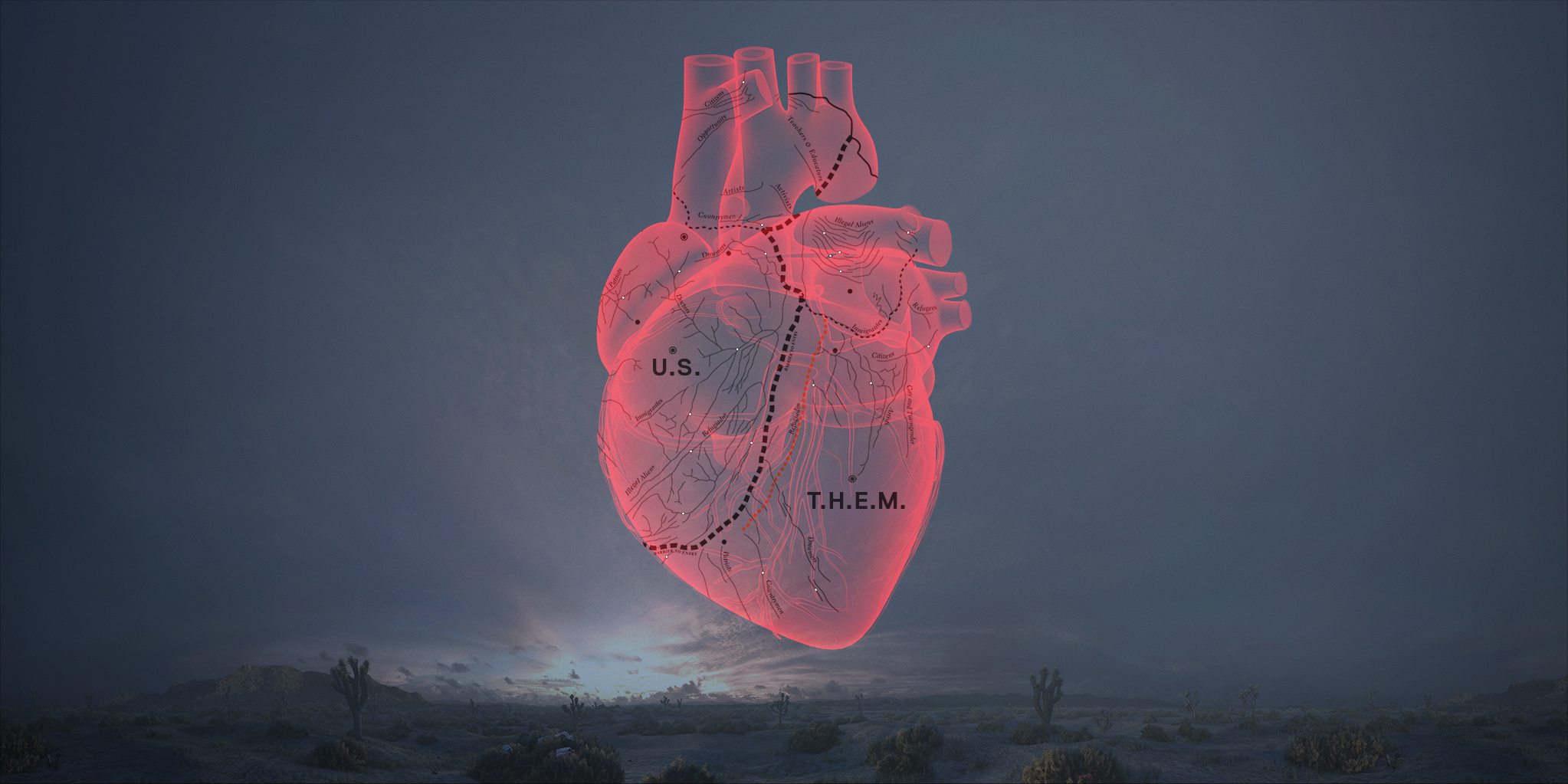
Still early in ILMxLAB’s history, CARNE was an ambitious project involving a short VR piece bookended by physical experiential rooms that put the audience into a story of immigrants being detained while crossing the border from Mexico to the United States. At the beginning of the experience, participants are brought into a physical holding cell (where the temperature inside is cold) where they have to remove their shoes and items like backpacks. “There are ambient noises and real artifacts like abandoned shoes that have been found in the desert, from people crossing,” notes Alexander.

The key art for CARNE y ARENA.

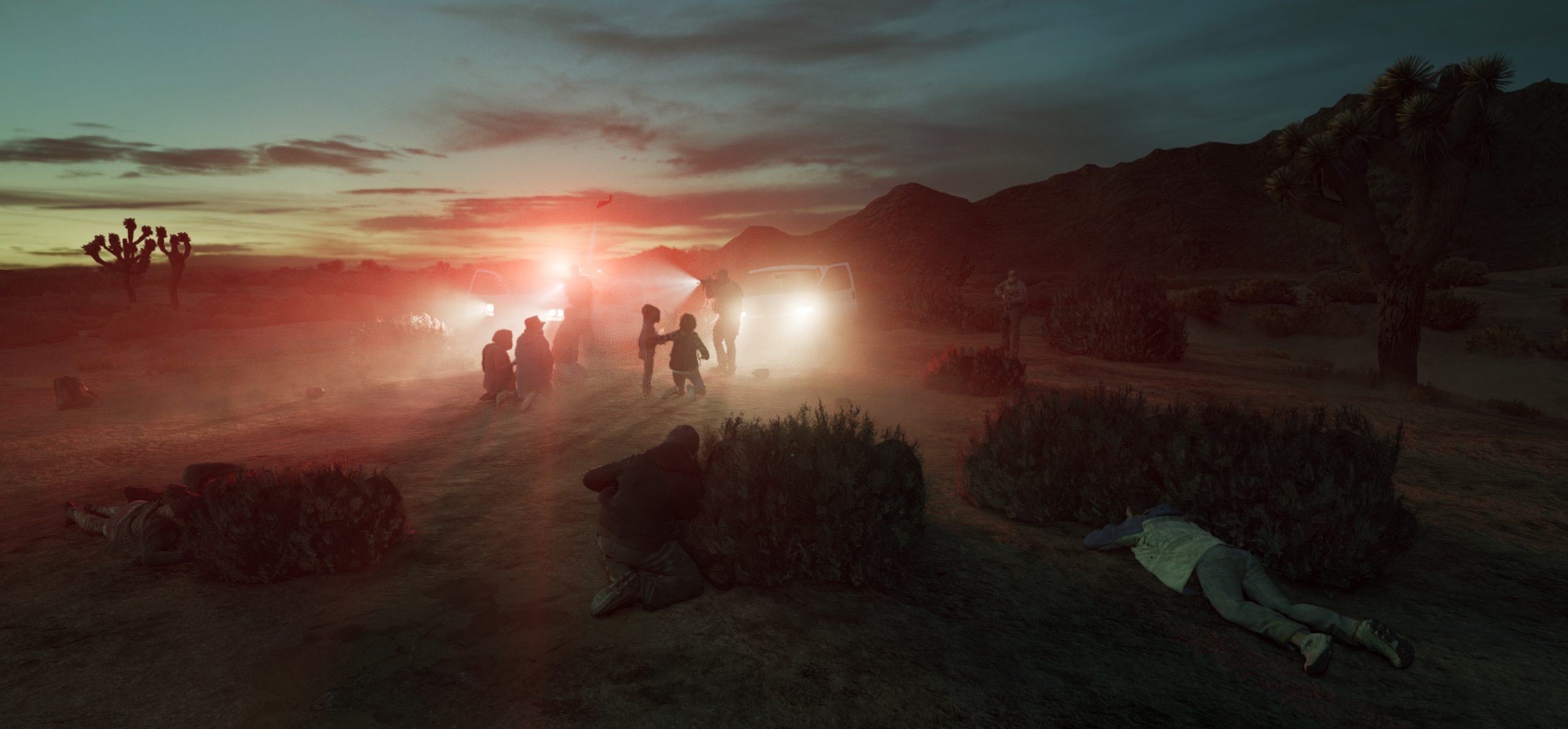
Participants are fitted with a VR headset and led barefoot into a 50-foot-by-50-foot room full of sand. In the VR portion of the experience, they assume the role of a group of immigrants attempting to cross the U.S.-Mexico border at night when they are stopped by U.S. Border Patrol agents. After the VR story, participants exit and are led down a hallway where video monitors play interviews of the real people CARNE is based on. “He [Iñárritu] cast people that had crossed the border as the people within this experience and wove a story around that, so you actually see the real people and hear their experiences,” says Alexander.

CARNE was a challenge from an artistic and engineering standpoint. What Iñárritu and Alexander wanted to do was sometimes hindered by the current technology. Wanting the images to appear as photoreal as possible, the team realized the immersive film’s computing requirements outweighed what was possible in headsets at the time, so Lutz Latta, ADG graphics engineer, designed a supercomputer with four high-end GPUs (graphics processing unit) to handle work such as calculating shadows in the film.

Other challenges included allowing participants to traverse and turn around in a 50-foot-by-50-foot room. “At the time, there was no way to really run a VR headset over more than 100 feet. You were lucky if you could get five feet away because of the HDMI cables and all kinds of things,” remembers Alexander. VR tracking abilities at the time were also far below where ILM’s engineers wanted them to be. “So then we started mixing in stuff that we know from visual effects of how to track cameras in large spaces. A motion capture stage was built to track the headset instead of what we would usually track the camera in. So it started becoming a mixture of different things that we knew how to do for different reasons, and kind of applying it to this situation.”

A final frame from CARNE y ARENA.

The newness of the technology and the goals the team wanted to achieve with CARNE meant everyone had to adapt and be ready for anything. “It was the first project in my career that I was actually concerned that I would not be able to deliver,” says Peng. “Because in all of my past projects, I would have a production plan, A, B and C, D and E in my back pocket. We were working with new technology and making something that had never been created before. There was no model of how to do that, which made me feel like I was operating without a parachute. That can be very nerve-wracking but also exhilarating when you actually finish the project. That sense of completion and accomplishment was huge.”

Audience reactions to the very visceral experience were all over the map. “We had people that really wanted to get into the middle of it, and they would look at every character and perhaps even jump behind a virtual bush to hide, while others might hang back to observe the scene, whether due to fear or other emotions that came up,” says Alexander. “The overall sense that I got was that people really understood what Alejandro was trying to say,” notes Alexander. “They heard it, and they understood what he was trying to express through that story.”

The studio’s debut with The VOID, Star Wars: Secrets of the Empire, also took place in 2017. At The VOID, up to four fans would suit up with their gear: a VR headset connected to a backpack laptop and haptic vest. From there, teams of fans were immersed in ILM’s digital world; in this case, Secrets connected to Rogue One: A Star Wars Story (2016), giving fans an adventure of a lifetime on Mustafar near Vader’s castle. While infiltrating an Imperial base, they would traverse the facility together and try to recover a key artifact.

Dropping Into the Story

“If we’re creating an experience, we want people to feel like they’re genuinely in a Star Wars project.”

– Ben Snow

Vader Immortal: A Star Wars VR Series

While working on Secrets of the Empire, Ben Snow (visual effects supervisor for Star Wars: Attack of the Clones [2002] and Iron Man [2008]) was recruited to work on a connected story that was in development for home use, Vader Immortal. In the project’s early days, a prototype was put together to see what it was like to be in the same (virtual) space as Darth Vader – spoiler: it’s terrifying. At the same time, Oculus was quietly working on the first Quest headset, revolutionary with its tetherless execution, which ultimately influenced the amount of lightsaber play in the story. The stars and companies aligned, and Oculus Quest became the platform partner for release.

In Vader Immortal, fans take the role of an unnamed pilot who finds themself inside Darth Vader’s castle on Mustafar. The fan’s interactions with Vader were, of course, key to the success of the project. “Mustafar should be scary,” notes Snow. “The confrontation of meeting Vader should be scary. Because that’s what he is.” The Immortal team used scans of Vader’s costume from Rogue One (based on the original 1977’s Star Wars: A New Hope) and built on them with new scans to push the realism even further.

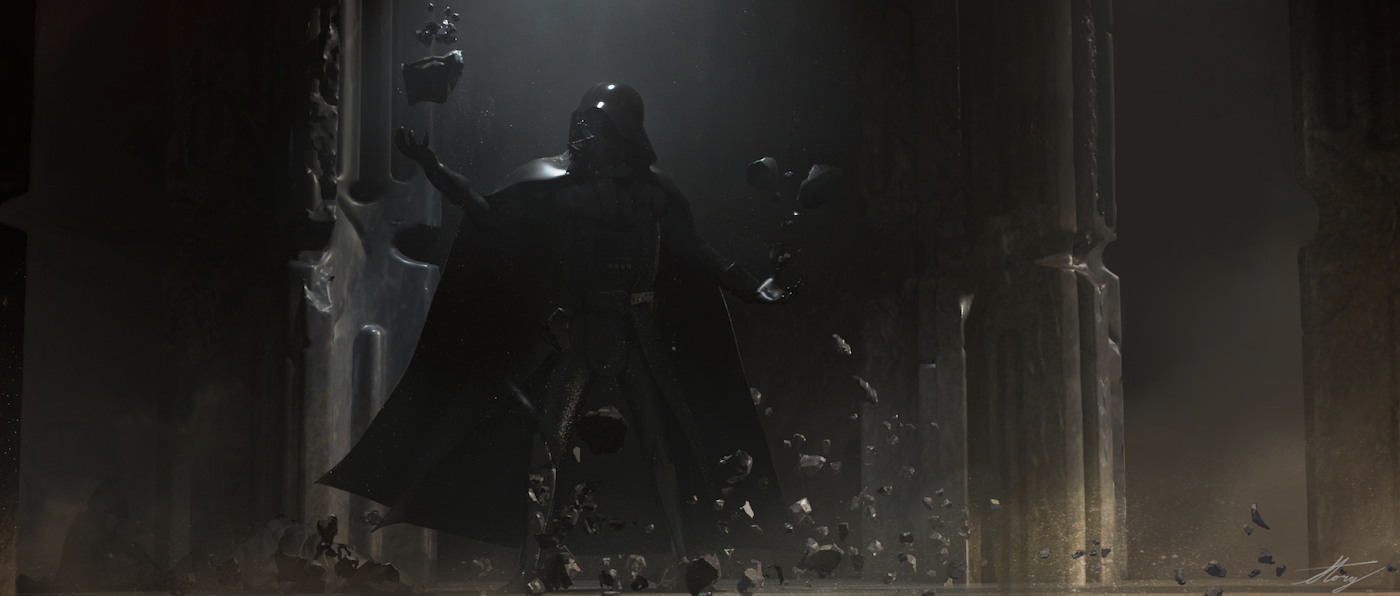
Concept art from Vader Immortal: A Star Wars VR Series by Russell Story.

The team worked internally with Lucasfilm to develop story ideas for three episodes. David S. Goyer, screenwriter of The Dark Knight Rises (2012), wrote scripts around them, injecting his own characters. These were similar to traditional film scripts, which then had to be made more interactive by adding lines of dialogue for the fan to perform certain tasks. The production brought together the film and games world as they put it all together. “In film visual effects, you get a script, you break it down. These are the assets you have to build,” explains Snow. “Interactive entertainment is much more free form and evolutionary. It was an interesting blend between those two mediums.”

The goal with Immortal was always the same: create an experience unique to virtual reality that you couldn’t experience by watching a movie. “One of the things that excited us,” says Snow, “was this was a chance to eavesdrop on Vader a little bit. We had the moment where Vader takes off his helmet, and he’s looking at a memory, almost, of Padmé. You’ve been climbing around, find yourself in Vader’s chamber, and you’re peering through these walls at him. We felt that moment of actually being an interloper, and seeing a side of the character you hadn’t seen before was something that was unique to what we could do in VR.”

Another element distinct to Immortal was making Vader the fan’s own teacher during the experience. The Sith Lord’s introduction is fittingly terrifying for such an iconic character. Initially, when Vader stepped up to the fan, he had a few lines of dialogue. But those lines were eventually cut after some internal tests of the experience. “Vader’s in the distance, and he comes toward you, and you hear the heavy breathing and footfalls,” says Beck, “and he keeps walking toward you, and it becomes more and more intimidating. Almost no one heard the dialogue because you’re so overwhelmed by his presence that it’s all that you can absorb.” Adding to the power of that moment was the eye-tracking in the experience, so no matter the height of the fan, Vader was looking right at you. “And the fact that you’re being acknowledged by a character like Vader is just mind-blowing,” adds Beck.

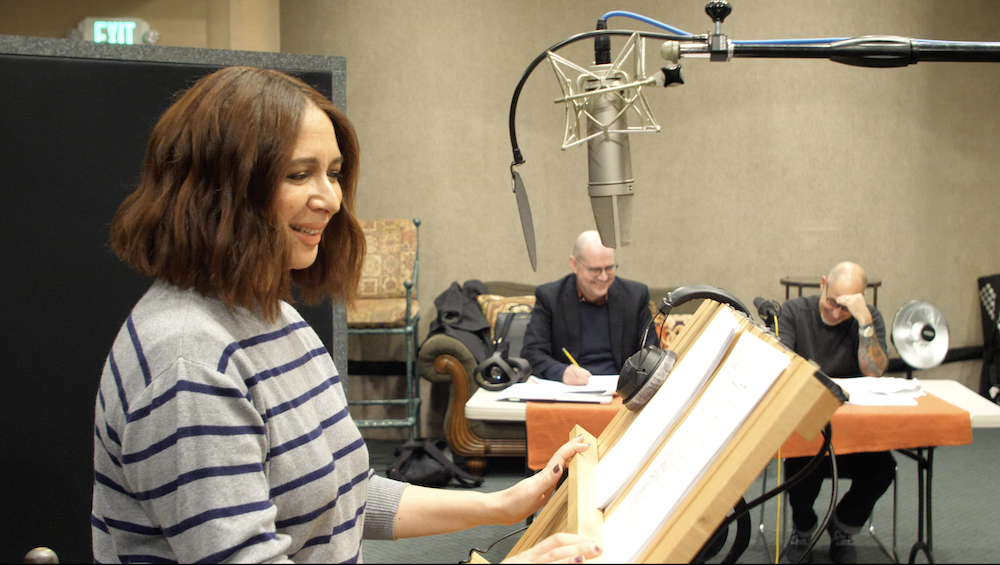
Actor Maya Rudolph (left) performs the voice ZOE-3 in Vader Immortal as director Ben Snow (middle) and writer and executive producer David S. Goyer look on.

What If…? – An Immersive Story

Shereif Fattouh came to ILM from an AAA games (high-budget, high-profile games from large studios) background, working on titles like Battlefield and Dead Space at Electronic Arts. Interested in story-driven projects, Fattouh worked on The VOID projects Ralph Breaks VR (2018) and Avengers: Damage Control (2019). The development of a new headset, the Apple Vision Pro, led to Fattouh’s involvement in What If…? – An Immersive Story (2024), an experience that uses both mixed reality and virtual reality in addition to hand and eye-tracking through Apple’s innovative headset technology.

Marvel Studios’ What If…? series gave the developers a great amount of freedom in one of the most popular story worlds on the planet – the Marvel Cinematic Universe. “What If…? is such a great vehicle from the comic books and then to the animated show, where you get to just play in a sandbox,” says Fattouh. “What if this happened, and it’s a completely different version of it, and that kind of creative freedom just allowed us to tell the story that we wanted.”

Similar to previous ILM projects,the What If…? team was working on a project without the tech they would need to bring the experience to fans, as the Apple Vision Pro was being created in parallel. “We started development really early on,” says Fattouh. “It was a great collaboration with Marvel Studios, Disney+, and Apple, but we were definitely doing early, early testing and kind of figuring it out as we went.”

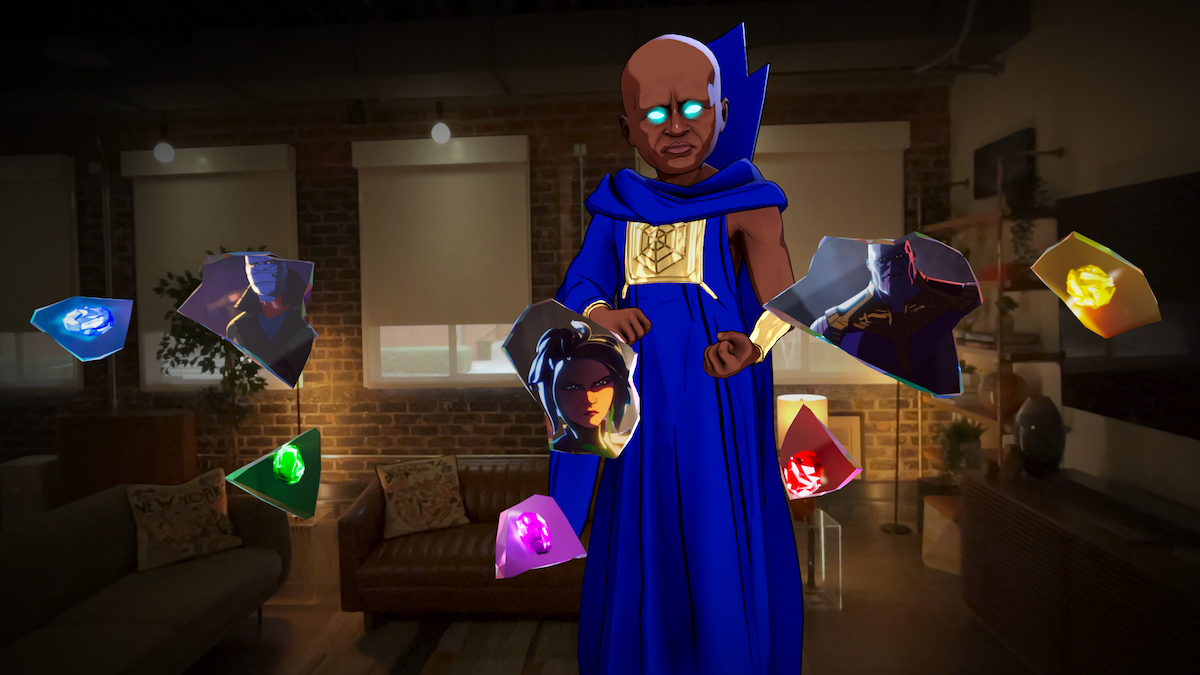
A final frame from What If…? – An Immersive Story.

What If…? – An Immersive Story took about 18 months from the conception of this particular idea as an experience to arriving in fans’ hands. Getting there involved finding the balance between the fans watching the story unfold and directly engaging with the characters and environments. “It’s really subjective,” says Fattouh. “There’s no right answer. How much do we want the audience to really observe this amazing story that’s being told and being kind of talked at versus going in and doing things and impacting the narrative? So that was really one of the biggest challenges throughout the whole life cycle. Playtesting it and figuring out, ‘Okay, is it feeling right? Is this beat too long? Is it too short? Do we want to have people jump in and get into the action a little bit faster?’”

During What If…? – An Immersive Story, the Watcher enters the room where a fan is situated. Throughout the story, fans see and interact with versions of some of their favorite Marvel heroes and villains, including Wong, Thanos, Hela, and Wanda. Fans are active participants in the story and get to use iconic items from the Marvel universe, like the Time Stone, to move the story forward.

Fattouh also notes how What If…? gives fans a unique way to experience a familiar Marvel moment near the beginning of the experience. “You don’t really know what’s going on because it starts with a disembodied voice, and you’re in space,” says Fattouh, “and then we kind of kick off in a very Marvel way, where it has that iconic Marvel logo flip book entry. But we did a very 3D spatialized version, where it’s coming into your living room. Just getting to see the smile on people’s faces when they saw something they’ve seen a lot in the films, but to see it really coming out in your living room … it set the right tone of, ‘Oh, this is something different.’”

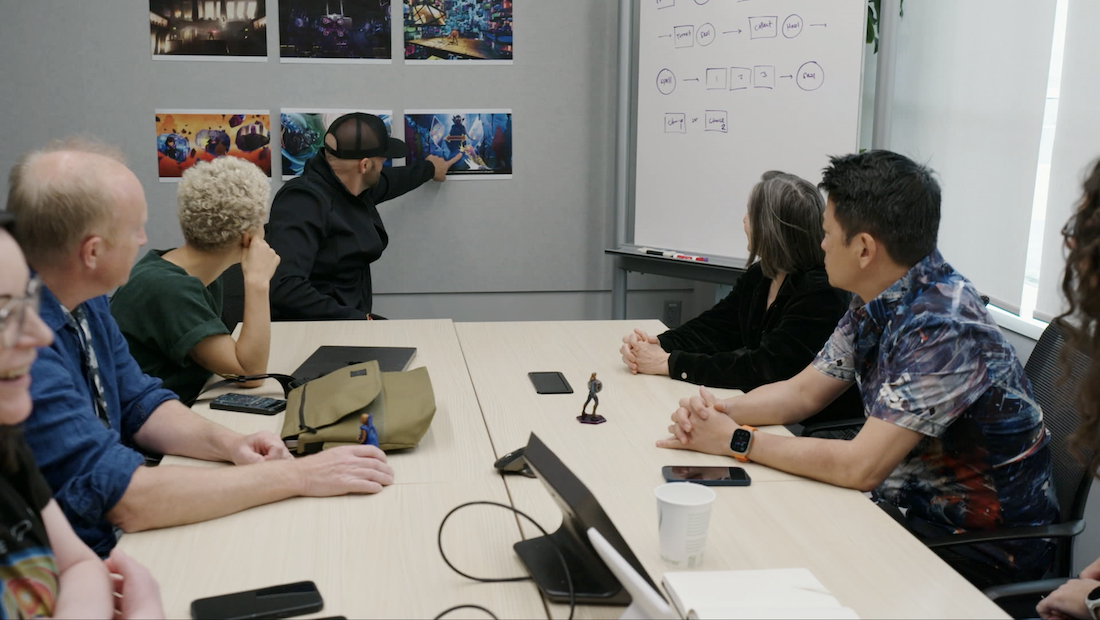
Marvel director Dave Bushore (center) confers with Immersive crew members during production of What If…?, including: Maya Ramsey, Patrick Conran, Marissa Martinez-Hoadley, Indira Guerrieri, and Joe Ching.

What the Future Holds

After ten years, the team remains small, retaining its nimbleness on a quest for innovative excellence. Working with multiple partner studios and collaborators, the immersive team staggers projects, with typically two in production at a time, and with a production timeline of between 12 to 24 months. “I think over time, our goal will be to expand that capacity and capability,” says Beck. “It might mean expanding it in other studio locations – maybe in London or in Vancouver. The size of the team we have is really nice because everybody knows each other. We can iterate together, and that’s a really important part of interactive, immersive experience development.”

The immersive team has high hopes looking to the future as the technology reaches a wider group of people. “Venues like Star Wars Celebration are always amazing,” says Peng, “because the technology is still growing, and it gives us a chance to share our stories directly with fans. It’s also rewarding to see the accessibility of our experiences making it feel entirely organic and inclusive for everyone.”

Beck looks forward to hands-free AR glasses that can deliver a high-fidelity image with a wide field of view. “We are very excited about this idea of storyliving at city or world scale,” says Beck. “Geo-located content where you could be out in the world in your glasses and little story moments would unfold in the real world.” Beck also sees more people who don’t consider themselves gamers gravitate towards immersive stories. “And I think that’s really great for us because we’re interested in that intersection of story and interactivity and putting you at the center of that experience.”

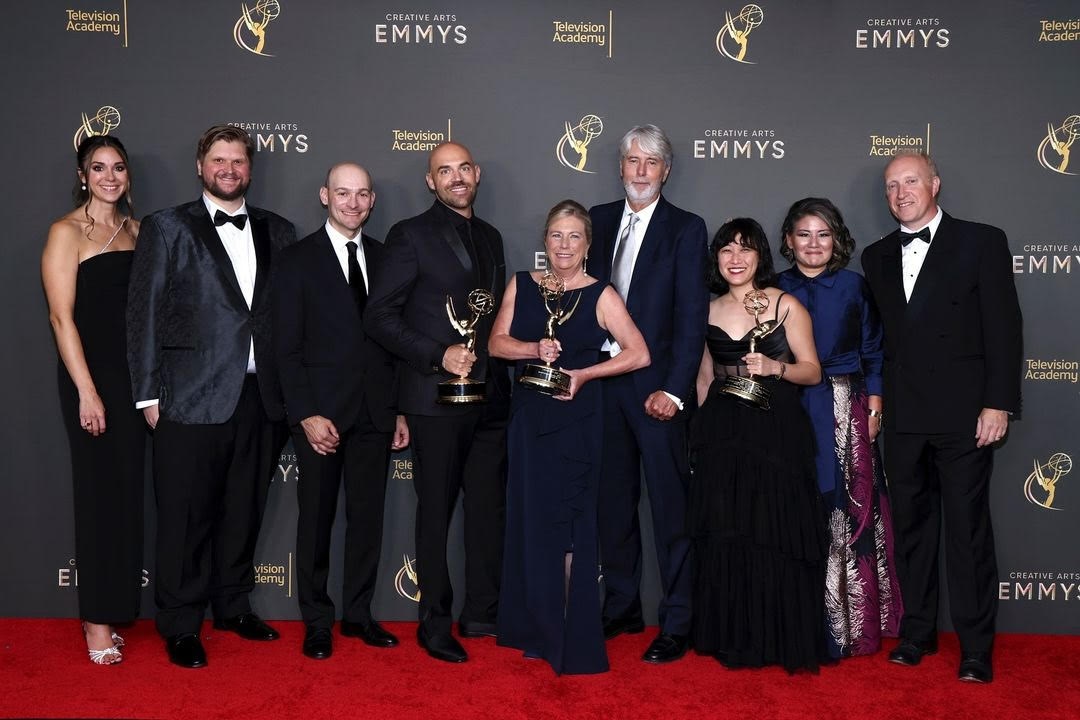
ILM’s team on What If…? won an Emmy for Outstanding Innovation In Emerging Media Programming. From left: Elizabeth Walker, Ian Bowie, Lutz Latta, Marvel’s Dave Bushore, Vicki Dobbs Beck, Mark Miller, My-Linh Le, Julie Peng, Pat Conran.

Looking ahead, the future of immersive stories is limited only by the imaginations of writers, designers, and engineers devoted to bringing these experiences to audiences. “I think that there’s a huge opportunity for ILM in immersive entertainment broadly defined,” notes Beck. “When we first started, the word “immersive” almost always meant virtual reality, then it included augmented reality, and eventually mixed reality. But now, it’s being used to include linear content or pre-rendered content, but that’s very immersive through screen technology, like Abba Voyage (2022), as an example. The opportunity is to take our talents across the global studios, which include the highest quality visuals and sound, and couple that with the real-time understanding and capability, bringing those things together. I think that we’re going to start to see an increasing desire for interaction, where you are actually in an experience, doing something meaningful that makes the overall experience even more personal. And beginning to understand what that is and taking steps toward a storyliving future. I think that’s the big opportunity for ILM.”

Currently in development in partnership with Meta Quest is Star Wars: Beyond Victory – A Mixed Reality Playset which takes players into the fast-paced, high stakes life of a podracer.

Read more “ILM Evolutions” stories here on ILM.com.


Amy Richau is a freelance writer and editor with a background in film preservation. She’s the author of several pop culture reference books including Star Wars Timelines, LEGO Marvel Visual Dictionary, and Star Wars: The Phantom Menace: A Visual Archive. She is also the founder of the 365 Star Wars Women Project – that includes over 90 interviews with women who have worked on Star Wars productions. Find her on Bluesky or Instagram.

The new experience for the Meta Quest headset will be introduced to fans at Star Wars Celebration Japan.

Industrial Light & Magic and StarWars.com have revealed the newest immersive experience coming to the galaxy far, far away…

Star Wars: Beyond Victory – A Mixed Reality Playset is currently in development for Meta Quest headsets and takes players into the fast-paced, high stakes life of a podracer. Sporting various modes of play, the experience will be introduced to fans at Star Wars Celebration Japan from April 18-20 at the Makuhari Messe Convention Center near Tokyo.

“We’re beyond excited to share an early look at this new experience with the incredible Star Wars community at Star Wars Celebration this year,” says director Jose Perez III. “Our goal at ILM has always been to find new and exciting ways for players to experience Star Wars stories. Focusing on mixed reality has opened several fascinating doors from an immersion standpoint and allows us to literally bring a galaxy far, far away right into the comfort of players’ homes in a way that’s unlike anything we’ve done before.”

Star Wars: Beyond Victory is the latest initiative in ILM’s continued efforts to fully integrate immersive storytelling and interactive experiences across the entire company.

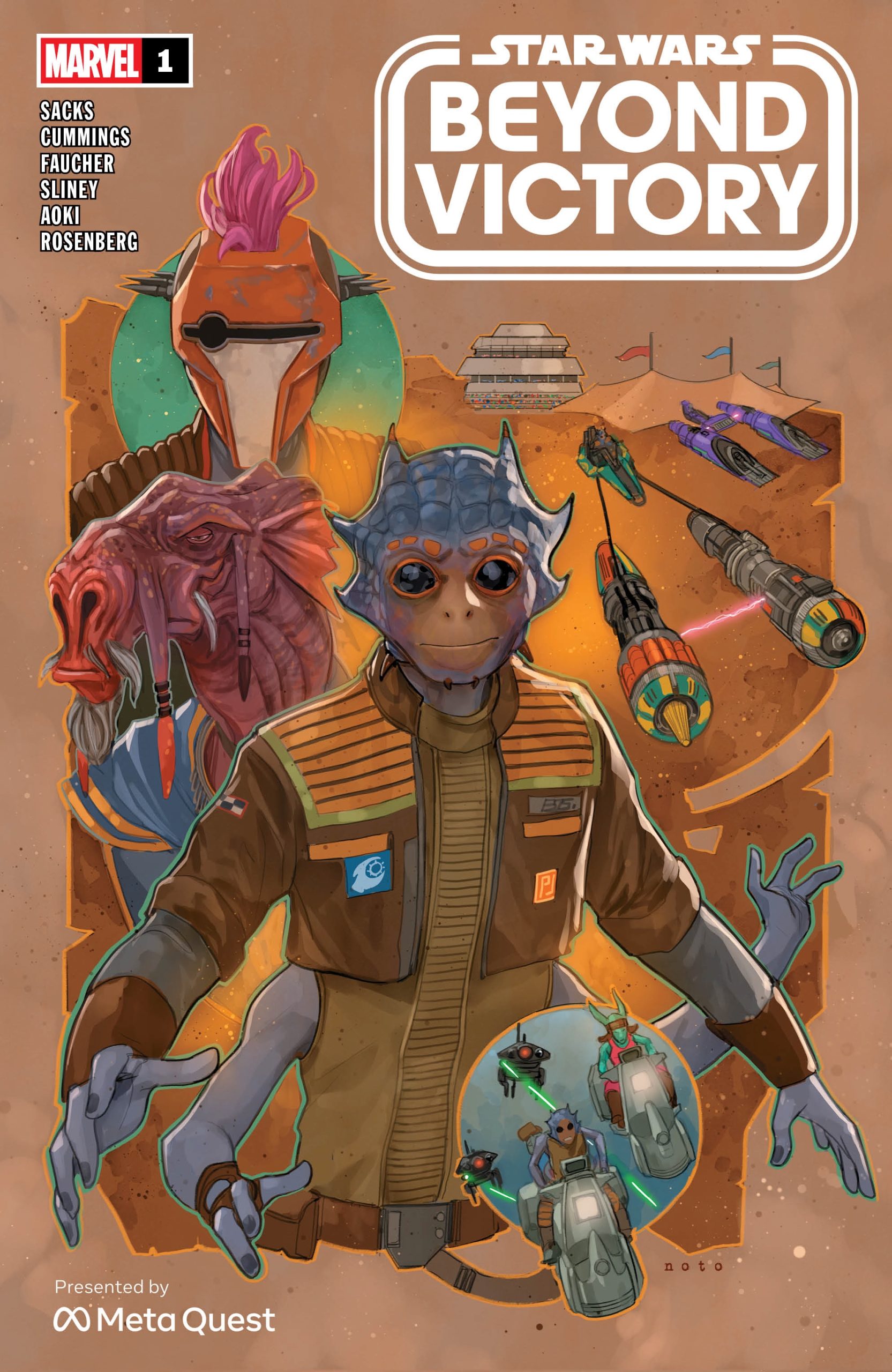
Fans attending Star Wars Celebration will find the ILM/Meta activation at Hall 4, Booth #20-5. Along with an introduction to Beyond Victory, they can pick up an exclusive giveaway Marvel comic of the same name. The prequel story to the mixed reality playset is written by Ethan Sacks with cover art (pictured below) by Phil Noto and interior illustrations by Will Sliney, Steven Cummings, and Shogo Aoki.

The Marvel comic book cover for Star Wars: Beyond Victory, featuring new podracer characters.

To learn more about Star Wars: Beyond Victory – A Mixed Reality Playset, visit StarWars.com, and for the latest about ILM’s work in immersive entertainment, visit ILM.com/Immersive.

Industrial Light & Magic’s immersive entertainment team will be fully integrated with the rest of the company to inspire new innovations in cross-platform storytelling.

50 years since its founding, Industrial Light & Magic has never rested on its laurels. A hallmark of ILM’s endurance over half a century and counting has been its knack for adapting to change and embracing new creative opportunities. “ILM was created by George Lucas because there was no other way for him to realize his vision for Star Wars,” senior vice president and general manager Janet Lewin tells ILM.com. “From the beginning, our mission has been to make the impossible a reality.”

The ILM spirit that’s evolved over five decades and at studios in as many different countries is “motivated by the opportunity for reinvention, evolution, innovation, and resilience,” as Lewin puts it. ILM’s ability to “react and adapt to the changing dynamics” of an ever-changing industry has been key. Time and again, ILM has increasingly broadened its creative output. “We’re known for our work-for-hire visual effects in feature films,” says Lewin, “but we’ve also branched out into streaming series, feature animation, and of course, the incredible work that Vicki Dobbs Beck has championed with immersive storytelling.”

“ILM was created by George Lucas because there was no other way for him to realize his vision for Star Wars. From the beginning, our mission has been to make the impossible a reality.” -Janet Lewin, Senior Vice President & General Manager, ILM

As vice president of immersive content for ILM and Lucasfilm, Beck co-founded ILMxLAB (later ILM Immersive) some 10 years ago. What was initially a move to experiment with storytelling in the emerging fields of virtual reality, augmented reality, and mixed reality has since yielded broader implications for the way ILM will do business. “This opportunity allowed us to participate directly in the success of a project and drive these experiences from concept to launch, delivery, and support,” notes Beck.

Building on work first pioneered by Lucasfilm’s Advanced Development Group, the immersive team leveraged the highest quality visuals and sounds combined with meaningful interactive principles to create stories with groundbreaking potential. These have included productions like PGA Innovation Award winner Vader Immortal: A Star Wars VR Series and Emmy-winning “What If…? – An Immersive Story,” as well as projects made with creative partners like Alejandro González Iñárritu’s Academy Award®-winning CARNE y ARENA. 

“We see opportunities for social experiences that are associated with our stories,” explains Beck. “We started by inviting audiences to ‘Step Inside Our Stories’ in ways they’d thought were impossible. We’re now transitioning from storytelling to storyliving, which is a much bigger idea. You’re in a world and you’re making meaningful choices that drive the narrative forward. That’s the gateway to take advantage of new technologies that are coming on the scene.”

ILM is now “seizing the moment,” as Lewin puts it, to include all of ILM in this undertaking. “Immersive storytelling is becoming more and more relevant to our audiences and our partners. On the visual effects side, ILM has been involved in projects like ABBA Voyage – a first-of-its-kind – and the content we made for Sphere Las Vegas. We started to see that the projects coming out of our immersive line of business had a natural convergence of techniques, talent, and opportunity with those of our visual effects business. 

“We’re now transitioning from storytelling to storyliving, which is a much bigger idea. You’re in a world and you’re making meaningful choices that drive the narrative forward. That’s the gateway to take advantage of new technologies that are coming on the scene.” -Vicki Dobbs Beck, Vice President, Immersive Content, ILM & Lucasfilm

“We can proactively leverage the strengths of our visual effects artists, pipeline, and storytelling passion with those of our immersive artists who are true experts in interactivity,” Lewin continues. “We see this ‘storyliving’ concept as the key growth opportunity. Not only do we want to market ourselves as one brand for audiences and clients, but we also want to empower our artists. This will allow for more cross-pollination of techniques, more opportunities for artists to move between types of projects, whether it’s an animated feature or our collaboration, “What If…? – An Immersive Story,” with Marvel Studios. If we can provide those opportunities, it allows us to keep attracting the very best talent in the industry.”

With every group now aligned under the ILM brand, the company will pursue an integrated portfolio that includes film, television, attractions, interactive products, and live events. For the immersive team, it’s a milestone following a decade of concerted effort, and for ILM as a whole, it’s the newest chapter in the company’s pioneering story. “We are poised for the next 50 years of ILM’s existence,” says Beck. 

ILM’s position as a storied entity with a globe-spanning team of artists, designers, and engineers opens up limitless possibilities. “The world is our oyster,” as Lewin puts it. “This is a time for growth and expansion. I’m really excited about the ideas that we’re exploring. This is a moment when we can redefine who ILM is in the market, be more consumer-facing, and continue to be the industry leader. I also love the idea of having more efficiency and refining a better process. These moments allow us to examine the way we work and improve it. We can bring fresh, new ideas to the table.”

And as Beck describes, this is not only an opportunity to position ILM as the best creative partners and visual storytellers, but also as “aspirational leaders” who will inspire the next generation of storytellers. “This is a way for ILM to drive its destiny in a way that has not been possible in the past. To embrace cross-platform storytelling is what we are uniquely positioned to do. If we can take advantage of that capability and build ecosystems of experiences that cross different types of media, it gives us an incredible canvas to paint on.”

“This is a time for growth and expansion…. This is a moment when we can redefine who ILM is in the market, be more consumer-facing, and continue to be the industry leader.” -Janet Lewin, Senior Vice President & General Manager, ILM


To discover more about ILM’s work in immersive storytelling, visit ILM.com/Immersive. And for all the latest news and stories from the company, visit the ILM.com Newsroom.

ILM teams from around the world earn recognition for projects as diverse as Wicked, Gladiator II, Ultraman: Rising, Deadpool & Wolverine, and What If…? – An Immersive Story.

Today, the Visual Effects Society announced their nominations for the 23rd Annual VES Awards, recognizing visual effects artistry and innovation in features, animation, television, commercials, games, and new media. Both ILM and ILM Immersive received 20 nominations in total. 

Nominations in the overall film and television categories include Outstanding Visual Effects In A Photoreal Feature for Twisters, Outstanding Visual Effects In an Animated Feature for Transformers One and Ultraman: Rising, and Outstanding Visual Effects In A Photoreal Episode for Star Wars: Skeleton Crew and The Lord of the Rings: The Rings of Power (Season 2). Additionally, Blitz was nominated for Outstanding Supporting Visual Effects in a Photoreal Feature.

In the Outstanding Visual Effects in a Real-Time Project category, ILM Immersive received a nomination for What If…? – An Immersive Story and the D23 Real-Time Rocket

ILM has received nominations in many other categories including Outstanding Environment in a Photoreal Feature for Rome in Gladiator II and the Emerald City in Wicked, as well as Outstanding Environment in an Animated Feature for Transformers One’s Iacon City. Alien: Romulus, Deadpool & Wolverine, and Gladiator II have each picked up nominations for Outstanding Model in a Photoreal or Animated Project, while Venom: The Last Dance joins Twisters with nominations for Outstanding Effects Simulations in a Photoreal Feature.

A complete list of all of the VES nominations may be viewed at this link. The VES Awards will be held on February 11, 2025, at The Beverly Hilton Hotel in Los Angeles. Congratulations to our ILM and ILM Immersive teams!