2010s

50 Years | 500+ Film and TV credits | 135+ Awards

SINCE 1975

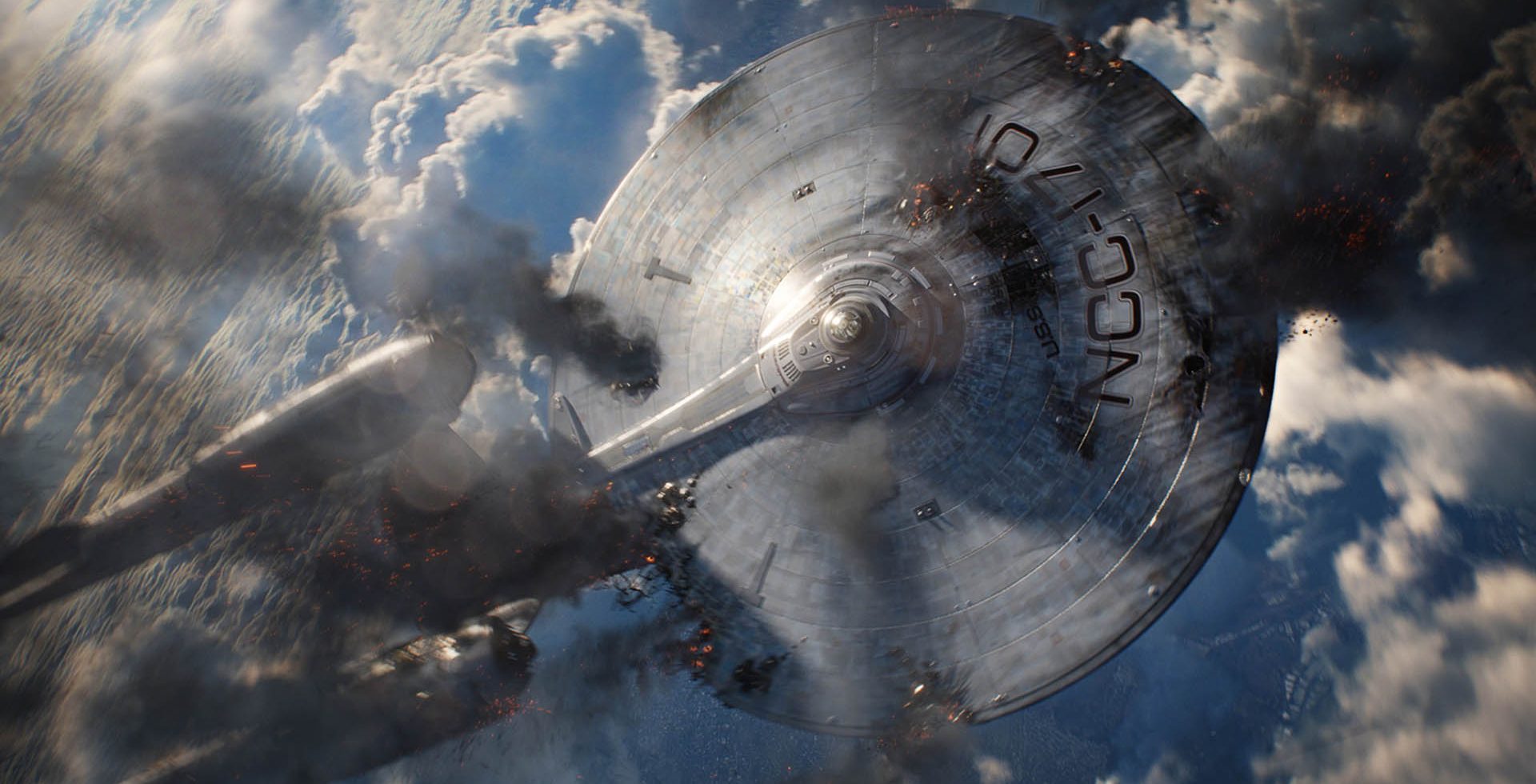
The visual effects work on Star Trek into Darkness plays a pivotal role in creating this highly designed world, producing a scale and scope suitable for a space adventure. A large proportion of the movie was shot in the larger IMAX film format (almost half the final run time of the film), which was intercut with the standard anamorphic film format. The higher resolution of the IMAX frame, and the added 3D Stereo exhibition format added a considerable workload but the ILM team was up to the challenge.

ILM contributed over 700 of the film’s effects shots including the interior and exterior scenes of the volcanic planet Nibiru which erupts in the opening sequence, the secret Federation ship the Vengeance and its subsequent destruction as it crashes into San Francisco Bay and its resulting skid across the city, the street chase between Spock and Khan, and the flying truck sequence. The team also created the iconic Enterprise.

Our model, texture and lighting team created hundreds of buildings to fill out the city, and guided by our art director, Alex Jaeger, created a living, breathing city with a striking sense of design and vision of the future.

The film received Academy Award and BAFTA nominations for Best Visual Effects as well as two VES Award and two Annie Award nominations.

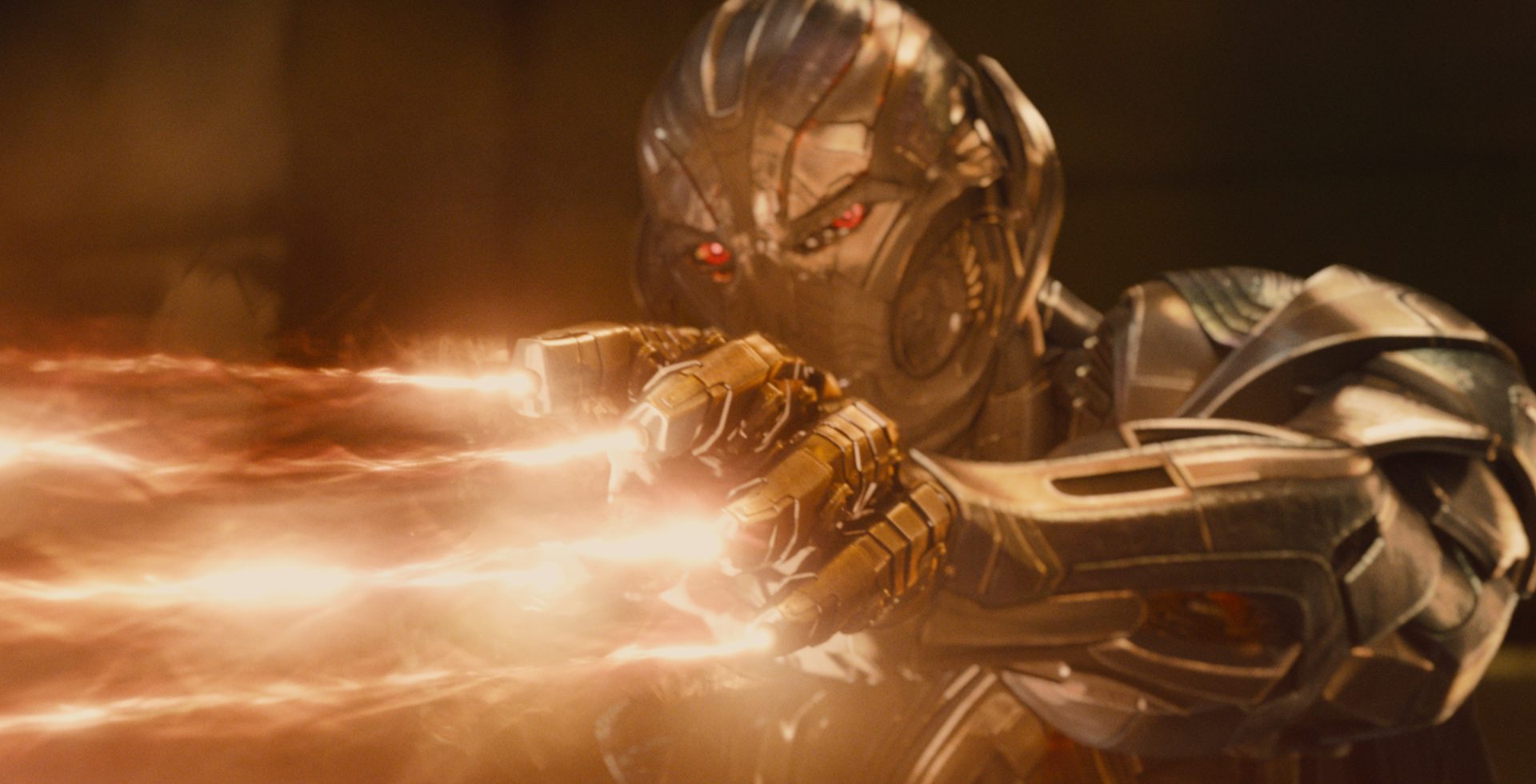
ILM contributed over 800 shots for Avengers: Age of Ultron, including the epic opening motorcycle chase through the snow-covered forest.

Guided by visual effects supervisors Ben Snow and Mike Mulholland and ILM visual effects art director Alex Jaeger, the visual effects team also created the shots featuring The Hulk, Ultron, Iron Man, War Machine, Hulkbuster, the Helicarrier, and Sarcovia itself, as well as a variety of shots requiring highly detailed digital doubles of each of the film’s lead characters.

A madcap fairy tale musical of a fanciful forest turned upside down. Inspired by A Midsummer Night’s Dream, we are introduced to Bog King, leader of the Dark Forest, who hates the notion of love and has ordered the destruction of all primroses, which are an essential ingredient of love potions.

However, when he meets Marianne, a feisty fairy princess whose heart was broken by a philandering fiance, he begins to change his mind. Meanwhile, an elf named Sunny makes his way to the Dark Forest to collect enough primrose petals for a potion of his own.

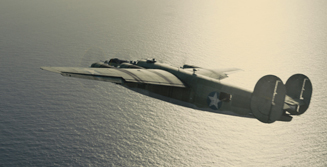
Angelina’s Jolie’s Unbroken sought to implement cutting-edge special effects in a story-driven tale.

The film required complex plane battles, crashes, environments, crowd extensions, and even sharks to help tell the story of bombadier Louis “Louie” Zamperini’s imprisonment in a Japanese POW camp after his B-24 Liberator crew crashed in the South Pacific.
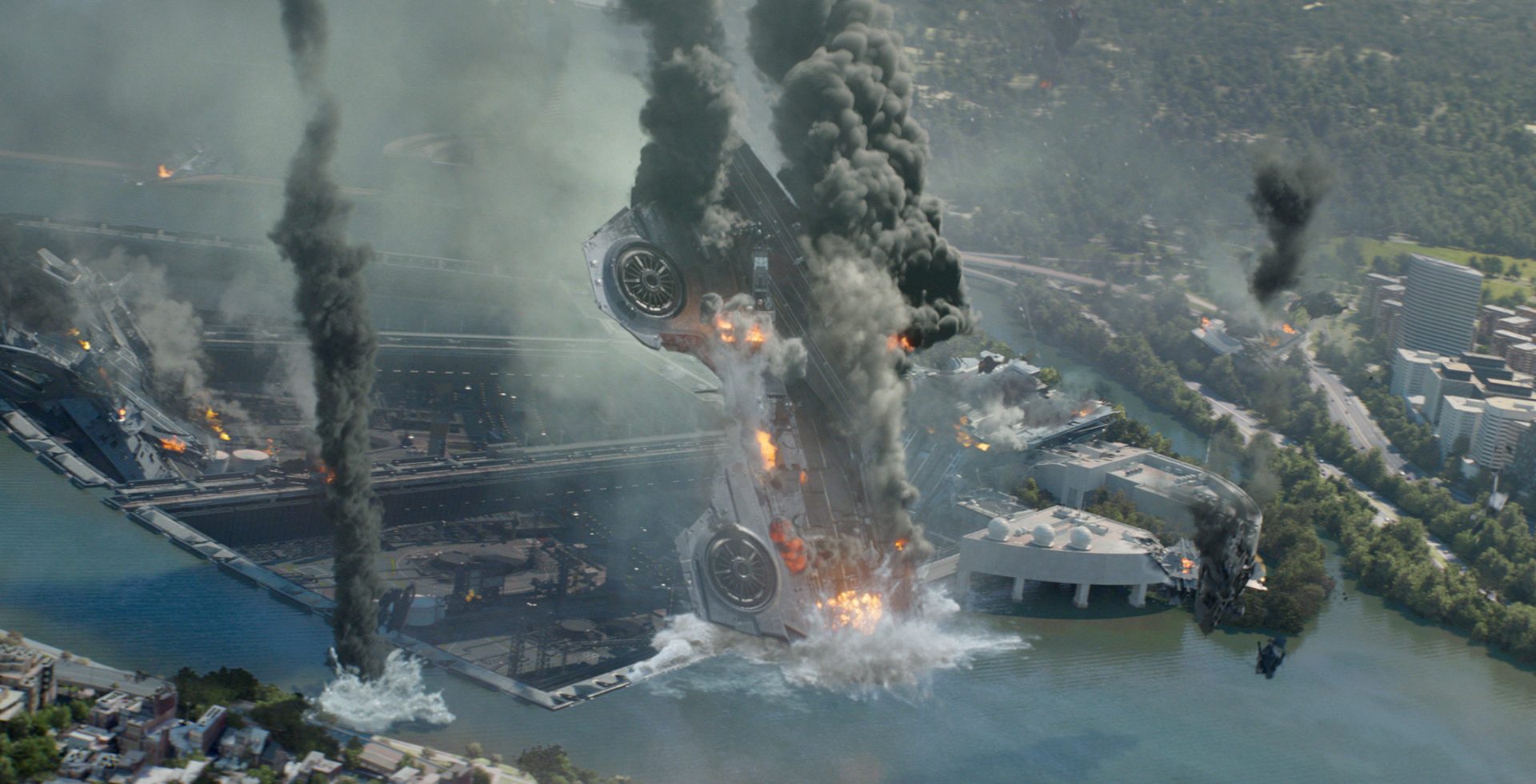
The main body of work that ILM was tasked to take on for Captain America: The Winter Soldier involved the reimagined Helicarriers, Falcon, S.H.I.E.L.D. Headquarters, and the massive third act battle. Directors Joe and Anthony Russo were clear from the beginning that everything needed to be grounded in reality.

ILM’s visual effects team created fully 3D digital environments including Washington D.C., the Helicarrier Bay, and the Triskelion building, and signature effects such as Black Widow’s digital veil reveal, Falcon flying, and the dramatic Helicarrier battle which ends in the final carrier tearing into the Triskelion building. As you might imagine, this final sequence involved massive amounts of simulated weapons and destruction. The team added detail like the carrier engines wobbling upon being hit, or the carrier hulls having subtle bends and wobble when being torn apart. For this, we used our flesh sim engine. The gunfire smoke and debris as well as all the large explosions, missile trails, and tracers were also simulated to have proper integration into the action. Individual shots had as many as fifty plus explosion simulations, plus smoke, particulate, and rigid body dynamics. Even small details like the quinjet tethers and remove-before-flight tags were simmed in the destruction shots.

As the carriers are destroyed, they drop nose down into the Potomac and crash violently back into the helicarrier bay. The walls come crashing down as millions of gallons of simulated water pour into the underground facility.

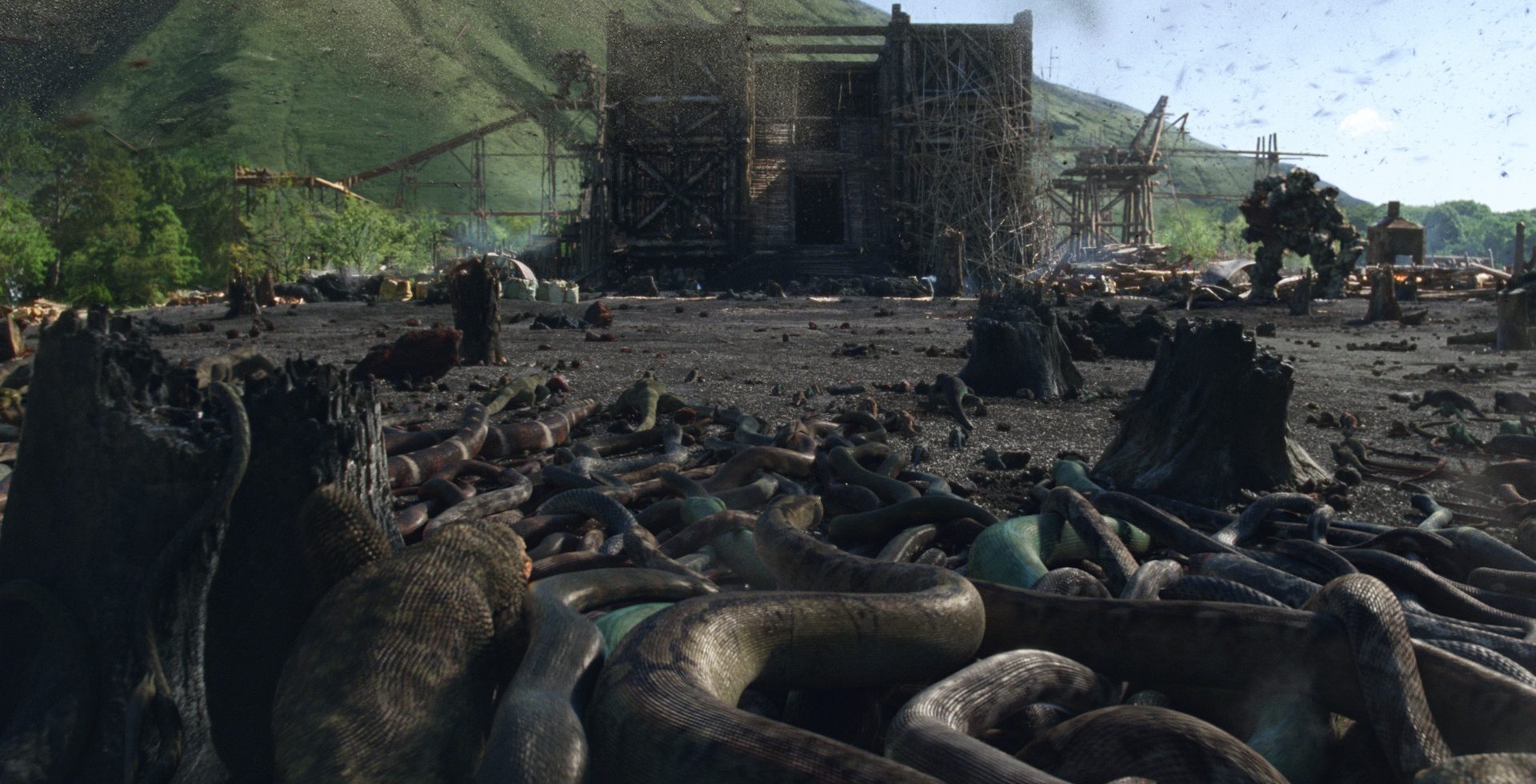
In addition to creating the Ark and the great flood as depicted in the biblical epic, ILM was tasked with helping Darren Aronofsky envision creatures such as the Watchers.

Another challenge posed by the director was how to create a time-lapse depiction of 14 billion years of evolution. That took some time.
Sometime years after Jurassic Park, the theme park is open. Colin Trevorrow’s take on what happens when the park is fully operational has a genuine nostalgia for the original films but takes the series in a new direction. The film grabs at some deeper ideas like what the world would be like if dinosaurs were commonplace, and the relationship of humans and animals, but still has fun with dinosaurs running amuck. 

From a visual effects perspective, there was an immense pressure to live up to the beloved, original film. ILM visual effects supervisor Tim Alexander and team consulted with visual effects greats like Dennis Muren and Phil Tippet as well as Legacy Effects to discuss the making of the original film. Ultimately, our approach was to shoot as much as possible in real world locations and to use maquettes and stand-ins onset to represent the dinosaurs; a basic approach, but time proven and effective. Along the way we also integrated motion capture into the post production pipeline and it became the primary tool for raptor animation. 

ILM San Francisco, Singapore and Vancouver were among the five studios to contribute to Jurassic World’s 988 shots. Miniatures and physical effects were an important part of our process as we wanted the world to feel as grounded in reality as possible. We choose to build a 1/3 scale, 30 foot tall version of the jurassic world gates. Additionally, in an effort to make our dinosaurs unique, our muscle and skin simulations were heavily used. This allowed the dinosaur’s flex and slide movement to be seen in detail.

Jurassic World was a difficult show due to its nostalgia factor. We tried to pay homage to the roots of a franchise that brought many of us into Visual Effects but bring this film into the future as both special and visual effects have changed greatly over the past 20 years. Every chance possible we opted for physical effects and real world reference to help ground the film and attempt to make us believe, once again, that dinosaurs walk the earth, even if they are commonplace.

As the Visual Effects Supervisor for ILM, Jeff White supervised the creation of 700 shots that encompassed a wide variety of sequences. During production, he collaborated on-set with production VFX supervisor Janek Sirrs to oversee plate photography for ILM shots. Because we were limited with principal photography in New York, White was part of the team that planned and executed the largest photography shoot ILM had ever undertaken to capture the material used as a basis for building an entirely virtual New York City. 

ILM created the Chitauri alien race as well as the new Mark VII Iron Man suit, Stark Tower, the Quinjet, and the Helicarrier. Some of the most difficult work on the show however was the creation of the Hulk. Hulk’s creation was a complex process of data acquisition for the asset build, on-set motion capture for body and facial performances of Mark Ruffalo, and the development of new skin and hair shaders and simulation systems to accurately represent skin motion.

The film received Academy Award and BAFTA nominations for Best Visual Effects, six VES Award nominations and two wins, was nominated for two Annie Awards winning one, and won both the Hollywood Film Award for Visual Effects of the Year, and an HPA Award for Outstanding Compositing.