2010s

50 Years | 500+ Film and TV credits | 135+ Awards

SINCE 1975

To help Luc Besson visualize how the title character, Lucy (Scarlett Johansson), unlocks the full potential of her brain after an apparent overdose of an experimental drug through no fault of her own, we had to think differently. This wasn’t a typical visual effects film; it was much more abstract so we took a design-centric approach. One scene shows Lucy in a small holding room where she is being kept against her will. She is violently thrown around the room by an unseen force and ILM’s artists created the all-CG shots depicting what’s occurring inside her body. In another scene, as the drugs take effect Lucy locks herself inside an airplane lavatory she begins to dissolve into particles. The team mapped Scarlett’s performance onto our digital double of her and animate the particles to create the desired effect.

The biggest challenge on Lucy was the incredible range of work we had over a relatively small number of shots, 220 to be exact. A fully CG prehistoric human, cells dividing, the creation of the earth, time-lapse shots of New York City over hundreds of years, inside the body shots, animal eyes, black tendrils, abstract big bang imagery, and that’s not all of it. One artist described it as working on 10-15 completely different TV commercials all at the same time. In most typical productions you solve your design issues in the first third of production, the second third is mastering the process and starting to run shots and the last third is pure shot production. On this show our design process was continuous. We were constantly building custom workflows as the designs evolved making it a rewarding aspect of the show.

Luc Besson was a dream director to collaborate with. The visual effects team explored ideas together and every artist working on the show had the chance to design and experiment to achieve the desired effect. Luc came to ILM to engage with the artists and wanted our input and ideas. It was a wonderful opportunity for ILM and it made working on the film very special. He brought his ideas and communicated his desire for us to continue to push the look of the effects in the same direction or use it as a jumping-off point and develop something completely different.

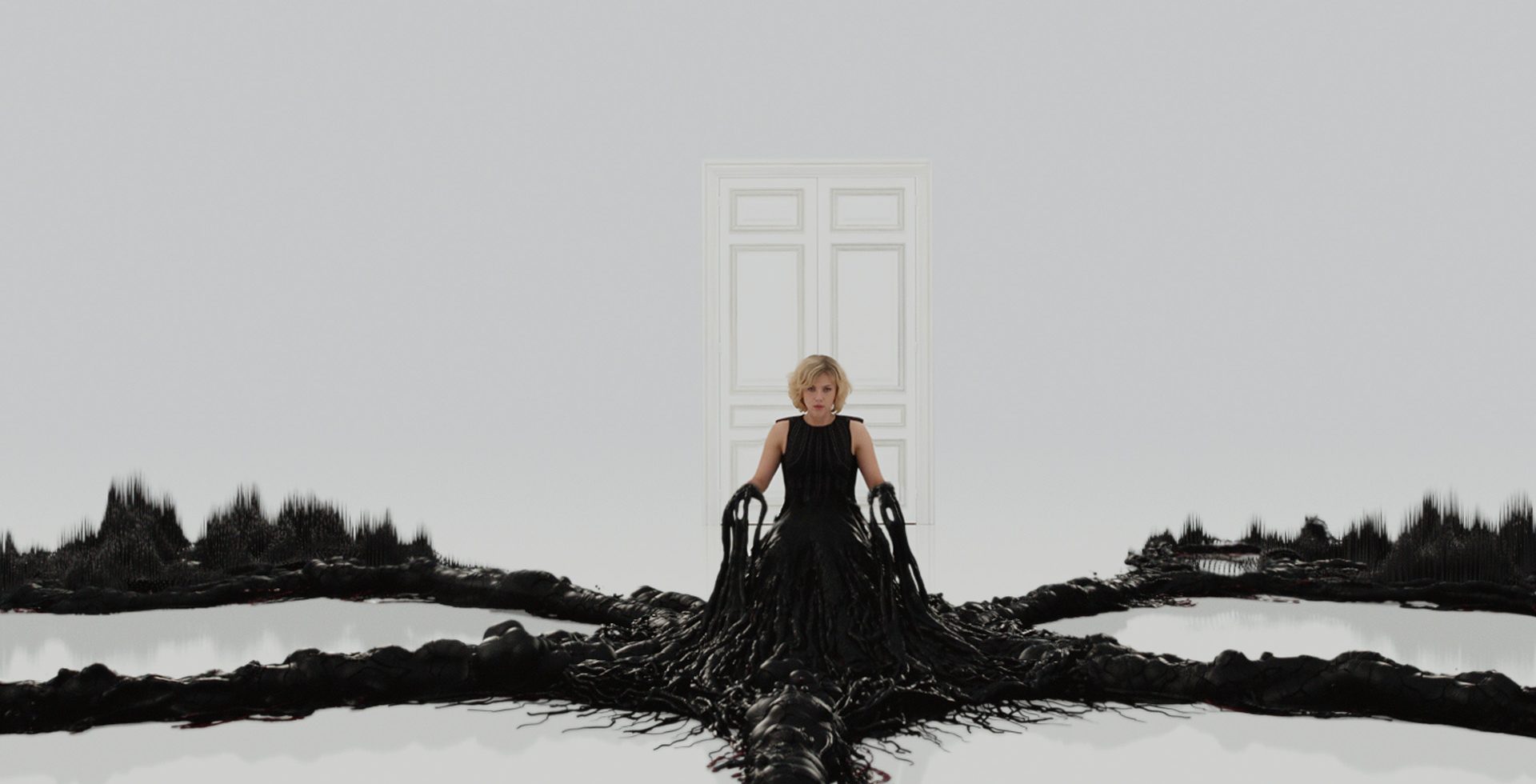
Toward the end of the film, when Lucy’s brain reached 100 percent of its potential, she transforms into a black substance that takes the form of a supercomputer. ILM visual effects supervisor Richard Bluff and his team choose to approach the effect by leveraging a procedural technique where they created a program that would determine mathematically where the substance would go and then they would use chemical reactions and various fluid simulations to give it an interesting feel.

We contributed a variety of sequences to the film including the stylized timelapse sequence that resolves with Lucy sitting in Times Square, the big bang sequence, and the prehistoric human sequence.

In addition to creating a variety of photorealistic environments for the film, ILM was charged with bringing TMNT’s four eponymous characters — Raphael, Michelangelo, Leonardo, and Donatello — their sensei and adoptive father, Splinter, and their nemesis Shredder to life for a combined 43 minutes of screen time.

To do so, ILM developed and deployed ILM Muse, the highest resolution, most flexible facial performance capture system produced to date.

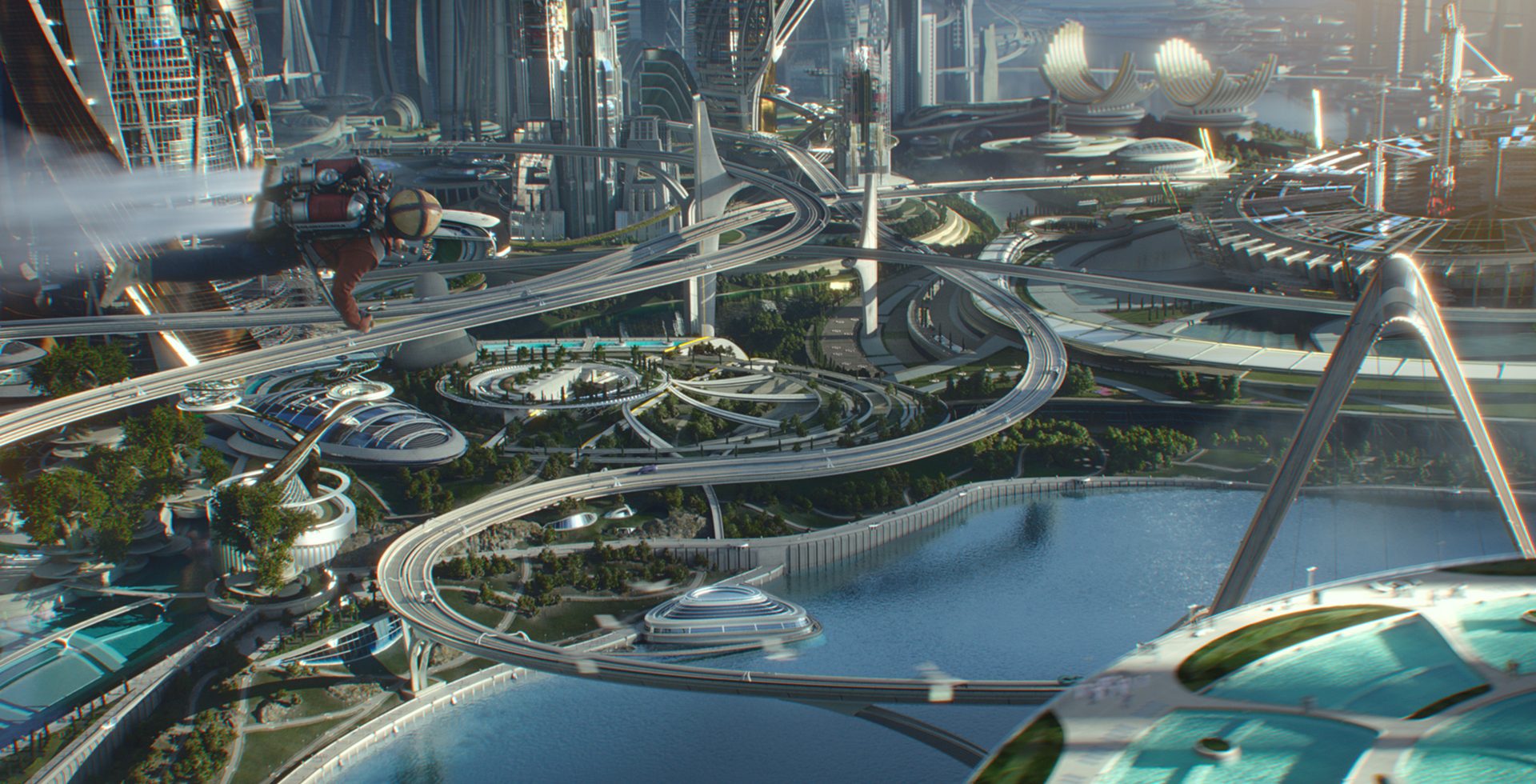
Early in pre production director Brad Bird and his team of filmmakers decided that Tomorrowland would push to be the first movie to be authored for Dolby’s new extended HDR format of Dolby Vision and in 4K. From an effects standpoint that was exciting, but also a bit daunting. There’s no doubt that a more vivid image with expanded brightness, contrast and color would make even the most basic photographic footage better, but it would also bring greater demands on the visual effects work as it now had a much broader palette to have to match into.

ILM’s San Francisco and Vancouver teams contributed 1,008 visual effects shots to the film including 7 unique scenes of vast global environmental devastation, including fire tornadoes, volcano eruptions, nuclear destruction, glacial melting and the oceanic reclamation of New York and Florida which we would project into the space of The Monitor sphere. To accomplish this we collaborated with our director of photography, Claudio Miranda, to design a cylindrical LED panel rig with an LED ceiling that would surround our actors and provide interactive lighting. 

In addition, ILM provided a variety of effects for the house attack sequence, the toy store destruction, jetpack flying sequences, and more, including creating Tomorrowland itself as seen in three distinct time periods in the city’s evolution: 1964, 1984 and 2014. Collaborating closely with production designer Scott Chambliss, the final result was a true, a functioning version of the place that Walt and Disney Imagineering alluded to in Disneyland’s original Tomorrowland while also incorporating Brad’s and writer Damon Lindelof’s vision of the city. 


From the invading alien race that threatens life on Earth as we know it, to the Autobots that rise up to protect humanity, the scope of the visual effects work for Transformers: Age of Extinction was both wide-ranging and technically challenging. Each film in the franchise has presented a series of challenges that eclipse those faced in the previous film by an order of magnitude and Age of Extinction is no different. The film, the most difficult and complicated so far, represented a new beginning for the franchise in virtually every way – new cast, new locations and a host of new characters to be realized by the visual effects team.

The ILM crew played a pivotal role in defining and creating this highly designed world, producing a scope and scale suitable for a science fiction epic. The film contains over 700 visual effects shots created by Industrial Light & Magic, in San Francisco and Singapore.

The film contains a wide scope of work. From the Transformers themselves, to simple set extensions, to complete CG environments, the environment work was paramount to creating a believable world for our Transformers to exist. Spaceships, cities, forests, bodies of water, buildings and everything in them had to be designed and built by the effects team to tell this larger than life story. We also revamped our destruction and simulation pipelines to create some of the most detailed destruction sequences in the company’s history. 

Age of Extinction also features more fully CG sequences than in any Transformers film. The Knightship interior was one such virtual environment. It was immense and extremely complex in terms of architecture. Director Michael Bay captured many of the sequences himself operating a virtual camera in our motion capture volume with ILM’s real-time render engine. This system provided immediate feedback for the Transformers, whose motion was driven live by stunt performers and the environment itself. This not only sped up the workflow, but it ensured that Michael’s vision for each shot would be carried from initial capture though to the final render.