2010s

50 Years | 500+ Film and TV credits | 135+ Awards

SINCE 1975

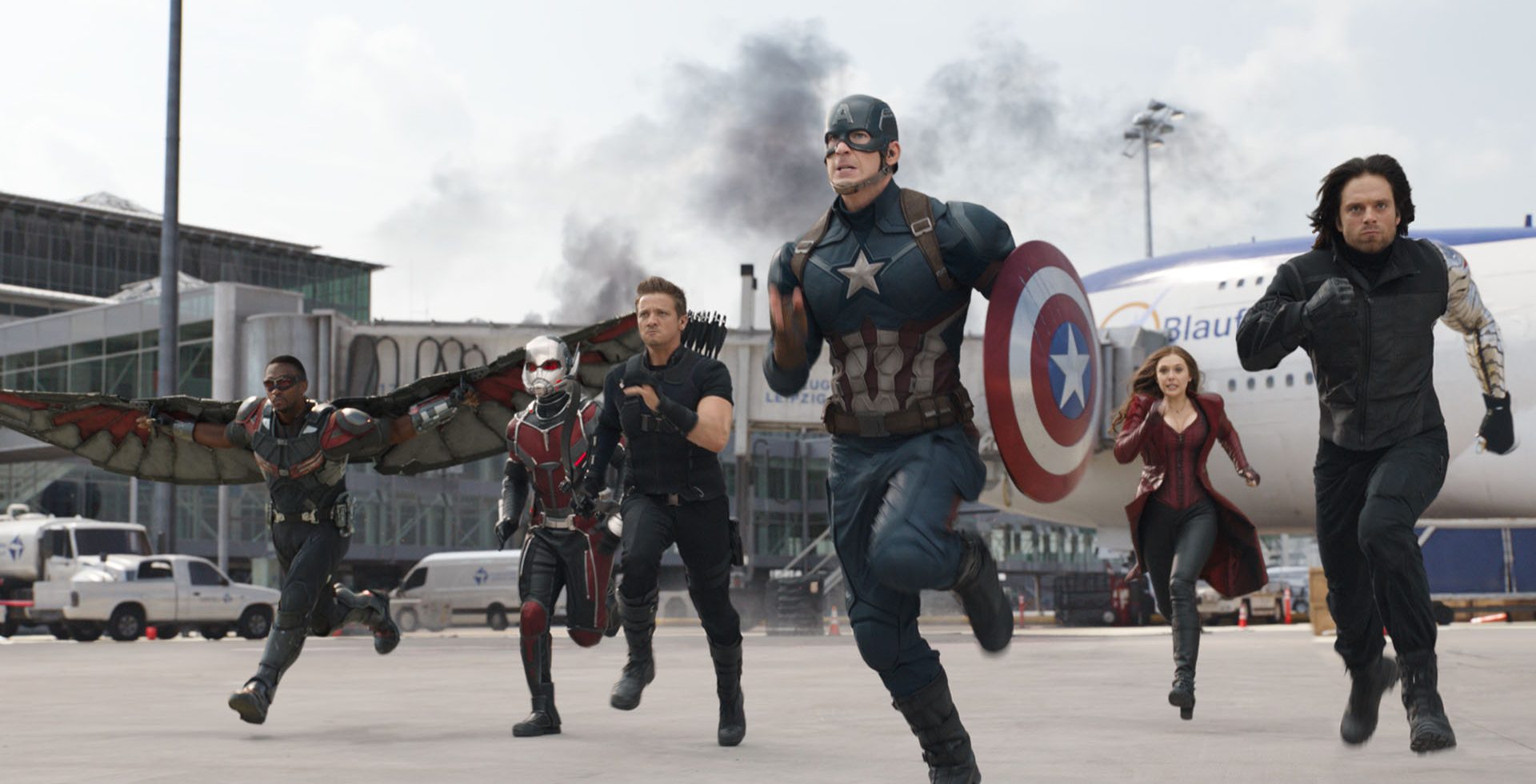
For Civil War ILM’s visual effects team supervised by Russell Earl, and animation supervisor Steve Rawlins, were charged with creating a massive action set piece, known as the Splash Panel in graphic novel parlance, that would sit right in the middle of the film. The sequence runs approximately 20-minutes as the two sides face off in Germany and required the construction of an entire CG airport environment based on scans of the Leipzig Airport, and digital versions of many of the characters including Black Panther, Spider-Man, War Machine, Falcon, Iron Man, Captain America, Vision, Ant-Man, Giant-Man, and others.

During production plates containing the actors were filmed on relatively small sections of concrete both at Pinewood Studios and at Germany’s Leipzig/Halle Airport which our teams extracted them from and composited them into our CG airport environment. The digital build was extremely highly detailed and rendered with full global illumination to directly match the practical lighting found in the plates. Characters would seamlessly transition from real to digital back to real numerous times throughout the sequence as stunts, superhero moves, weapons, and superpowers were incorporated into the battle. Mapping all of the damage was also a challenge on a sequence of this scale. Every dent, scratch, explosion and ding leaves a mark (or worse) and those all need to be there throughout to maintain continuity.

In total, ILM produced around 625 shots for the battle. Besides the Airport Battle, ILM was responsible for creating a submersible prison known as The Raft, which appeared surrounded by a digital ocean. The work earned ILM an Annie Award for Outstanding Achievement in Character Animation in a Live Action Production and an HPA Award nomination for Outstanding Visual Effects.

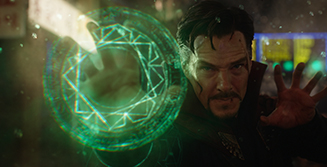
Working with Marvel visual effects supervisor, Stefane Ceretti, ILM visual effects supervisors Richard Bluff and Mark Bakowski along with their teams in Vancouver, San Francisco, and London, were primarily responsible for contributing 300 shots for two key set pieces of the film: a mind bending kaleidoscopic New York sequence done in Vancouver and San Francisco, and the destruction and subsequent time reversal rebuilding of Hong Kong done in London.

Both sequences had unique artistic and technical challenges. For New York, it was taking the concept of fractals and designs depicted in M.C. Esher’s artwork and twisting and bending a photoreal city to fit. For Hong Kong it was reengineering our entire destruction pipeline so the destruction of the buildings could be reversed on camera, something we’ve never been asked to do before.

Doctor Strange was nominated for both a  BAFTA and an Academy Award for Outstanding Visual Effects as well as 5 VES Awards. The film won the VES Award for Outstanding Created Environment, the Annie Award for Outstanding Achievement in Animated Effects in a Live Action Production and the Hollywood Award for Visual Effects.

An American Ambassador is killed during an attack at a U.S. compound in Libya as a security team struggles to make sense out of the chaos.
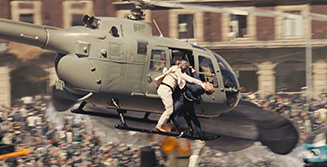
Directed by Sam Mendes, Spectre is the twenty-fourth film in the legendary James Bond franchise. For the opening chase through Mexico City during the Día de los Muerto festival, ILM’s team led by visual effects supervisor, Mark Bakowski, combined special effects elements of a section of the building being destroyed that had been created by SFX supervisor Chris Corbould and his team of technicians with a massive digital explosion that toppled down atop Bond himself. Chasing his nemesis, Sciarra, through the parade, Bond joins him on a waiting helicopter where a fist fight over Zócalo square ensues. To create the dramatic chase sequence, the visual effects team had to painstakingly stitch together plates to create a seamless flow from Mexico City to Pinewood Studios and back several times throughout the course of the action-packed sequence. 

Daniel Craig had earlier injured his knee during the production and could not perform every part of the sequence – this necessitated the use of stuntmen and therefore ILM head replacements and digi-doubles. 

In addition to the stitches, we performed extensive clean-up to parts of the Día de los Muerto parade. There were thousands of extras so it was a challenge to capture the perfect shot because someone is always looking at the camera so beyond stitching everything together and adding crowds, there was a lot of work fixing faces and putting masks and sunglasses on people.

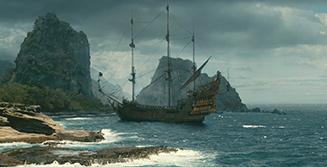
Jack Sparrow and Barbossa embark on a quest to find the elusive fountain of youth, only to discover that Blackbeard and his daughter are after it too.
2011 Academy Award® nominee for Best Achievement in Visual Effects.

The Autobots learn of a Cybertronian spacecraft hidden on the moon and race against the Decepticons to reach it and learn its secrets.
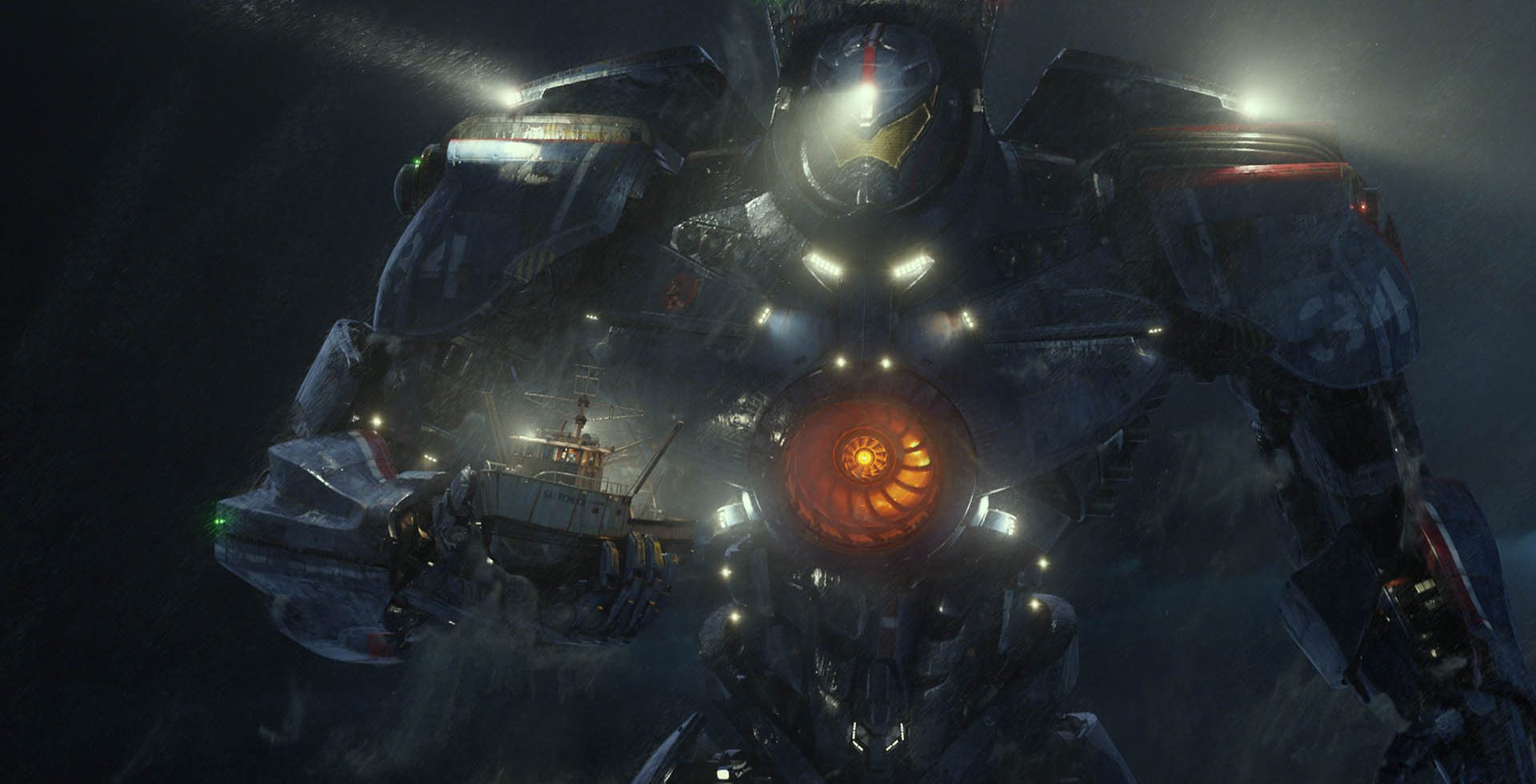
As a war between humankind and monstrous sea creatures wages on, a former pilot and a trainee are paired up to drive a seemingly obsolete special weapon in a desperate effort to save the world from the apocalypse.

The number one challenge for ILM on Pacific Rim was scale. Virtually every frame of Guillermo del Toro’s apocalyptic epic involved computer-generated characters, creatures, or environments and in many cases, all three together.

When working in a world full of giant robots and subterranean sea creatures VFX artists had to pay special attention to the balance between the science and logistics of moving giant aliens and machines realistically and giving those robots and creatures human and animal elements to make them more relatable and better serve the story and the audience.

If giant robots and monsters were not enough, then recreating cities – and destroying them – became additional challenges. For Hong Kong, which bears the brunt of a fight mid-town and in its docks area, ILM scouted the city and shot moving footage and stills with which the team could recreate any element required for a given shot. The team received a BAFTA nomination for Best Special Visual Effects for their contribution to the film.

The IMF is shut down when it’s implicated in the bombing of the Kremlin, causing Ethan Hunt and his new team to go rogue to clear their organization’s name.

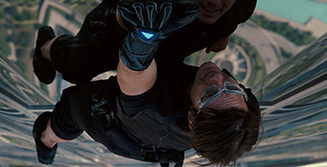
With the high number of complex live-action stunts in Mission: Impossible – Ghost Protocol, ILM’s job involved a high number of shot alterations to eliminate safety equipment and fill in the blanks on action sequences.

Specifically, ILM’s work on the Burj sequence — eliminating safety equipment and creating CG extensions — and the sandstorm car chase sequence — utilizing Plume GPU (an accelerated simulation rendering application) to even out and augment the dust to make the shot more consistent and hide background elements — were especially challenging. With Tom Cruise climbing the side of the tallest building in the world and riding on the back of a car during a sandstorm, ILM’s mission focused on supporting the story by making these shots seem as realistic as possible.

This film was ILM’s first foray into production with Katana (the scene management and lighting tool) rendered in Arnold. Lighting in Katana is a different way of thinking because it’s all about deferred loading and it’s a big node graph-based application for 3D objects. Utilizing Katana’s Ray tracing was especially useful for all of the computer-generated vehicles in the final scene.