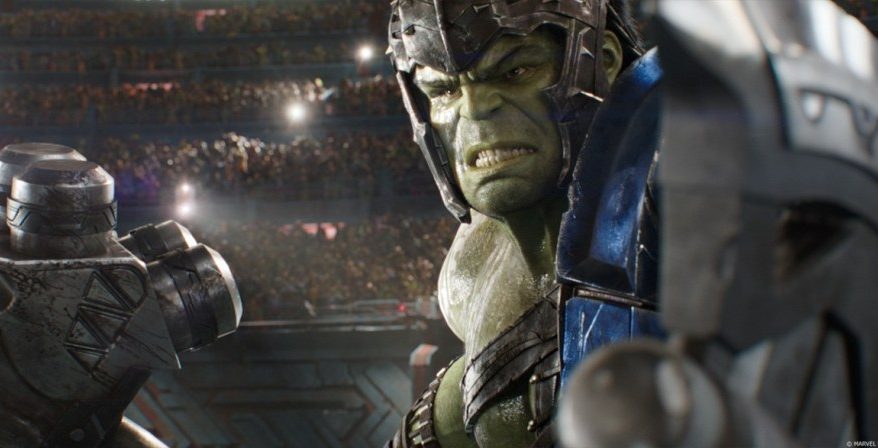
You can always count on filmmaker Taika Waititi to find the humor in almost any situation and Thor: Ragnarok is no exception. In addition to putting an undersized Thor against an oversized Hulk in an alien gladiatorial arena, the director himself performed and voiced the wisecracking rock man, Korg. Anytime your director is keen to suit up in a mocap suit you know you’re going to have some fun.
ILM’s animation team combined motion capture and keyframe animation to create the action packed fight sequence. This incarnation of Hulk is more comfortable in his own skin than we’ve seen in the past and in full control of his movements. Our model team resculpted Hulk’s face shapes based on Mark Ruffalo’s performance. We leveraged ILM’s Academy Award-winning facial performance capture system to lock on to every detail in Mark’s performance so we could translate it back through Hulk.
ILM artists constructed the massive arena and then filled it to the brim with a digital crowd that couldn’t get enough of the fight between the opposing heroes. Amping up the fight, our team referenced everything from martial arts films to MMA fights to a wrestling battle royal matches. Mixing the massive action moments with humor brings humanity to an otherwise brutal match.
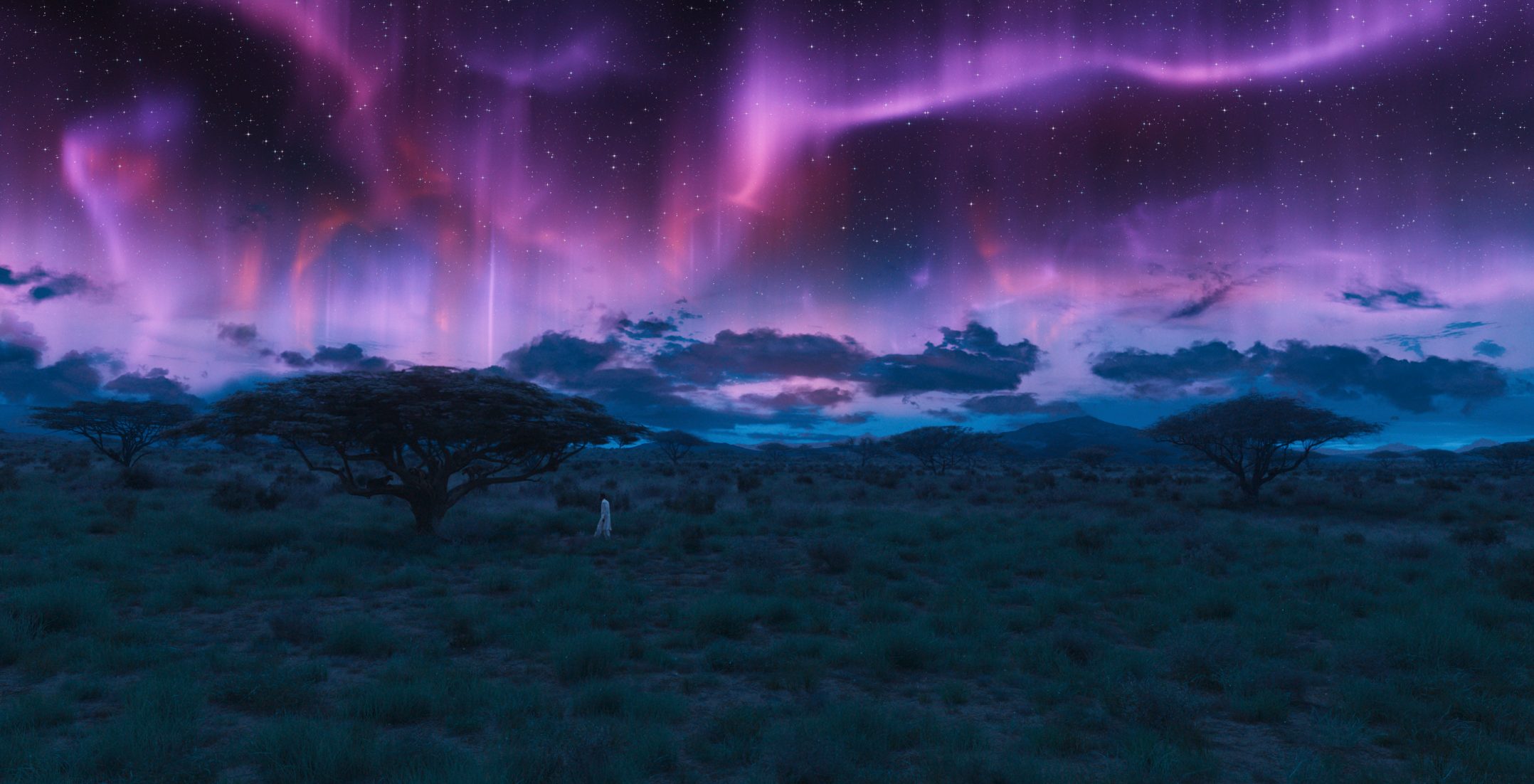
Collaborating with director Ryan Coogler, production visual effects supervisor Geoffrey Baumann, and production designer Hannah Beachler, cinematographer Rachel Morrison and costume designer Ruth E. Carter, ILM was charged in large part with creating the legendary city of Wakanda as well as the surrounding countryside. Under ILM visual effects supervisor Craig Hammack, the team would augment and enhance the ground level practical sets that had been constructed for the production with digital extensions and fully digital environments to provide the bustling city the story called for. It’s a technologically advanced kingdom that holds firm to its African-inspired roots. The team sought to bring a tactile nature to the world building so audiences could feel the hustle and bustle of the thriving city and sense the greatness of the culture that created it.
The team was also responsible for the Astral Plane where T’Challa (Chadwick Boseman) is joined by his ancestors, and the dynamic dog fight sequence in skies above Wakanda. Black Panther was honored with the BAFTA Awards for Special Visual Effects and received a Saturn Award nomination as well.
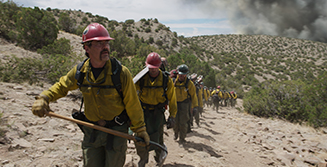
Only the Brave tells the real-life story of the Granite Mountain Hotshots, an elite group of firefighters from Arizona that distinguished themselves under the leadership of a grizzled veteran named Eric Marsh (Josh Brolin). ILM was responsible for the hyper-realistic wildfire sequences. ILM’s Vancouver studio took the lead on the project which was shot and finished in HDR 4K.
The team never wanted the fire to take the spotlight – this is a very real story of some incredibly heroic individuals and we wanted to honor their legacy – the best effects are always those in service of the story. To that end the approach was always to capture as much in-camera as possible to do safely. While there was an immense amount of fantastic fire created by the special effects team, visual effects played a key role in bringing that fire even closer to the actors and magnifying its scope and scale for the sequences where the fire was so intense and moving at such a high rate of speed that the director, Joseph Kosinski, leaned into the work of the visual effects team. We wanted audiences to feel the fire even though they were experiencing the story from the safety of a movie theater.
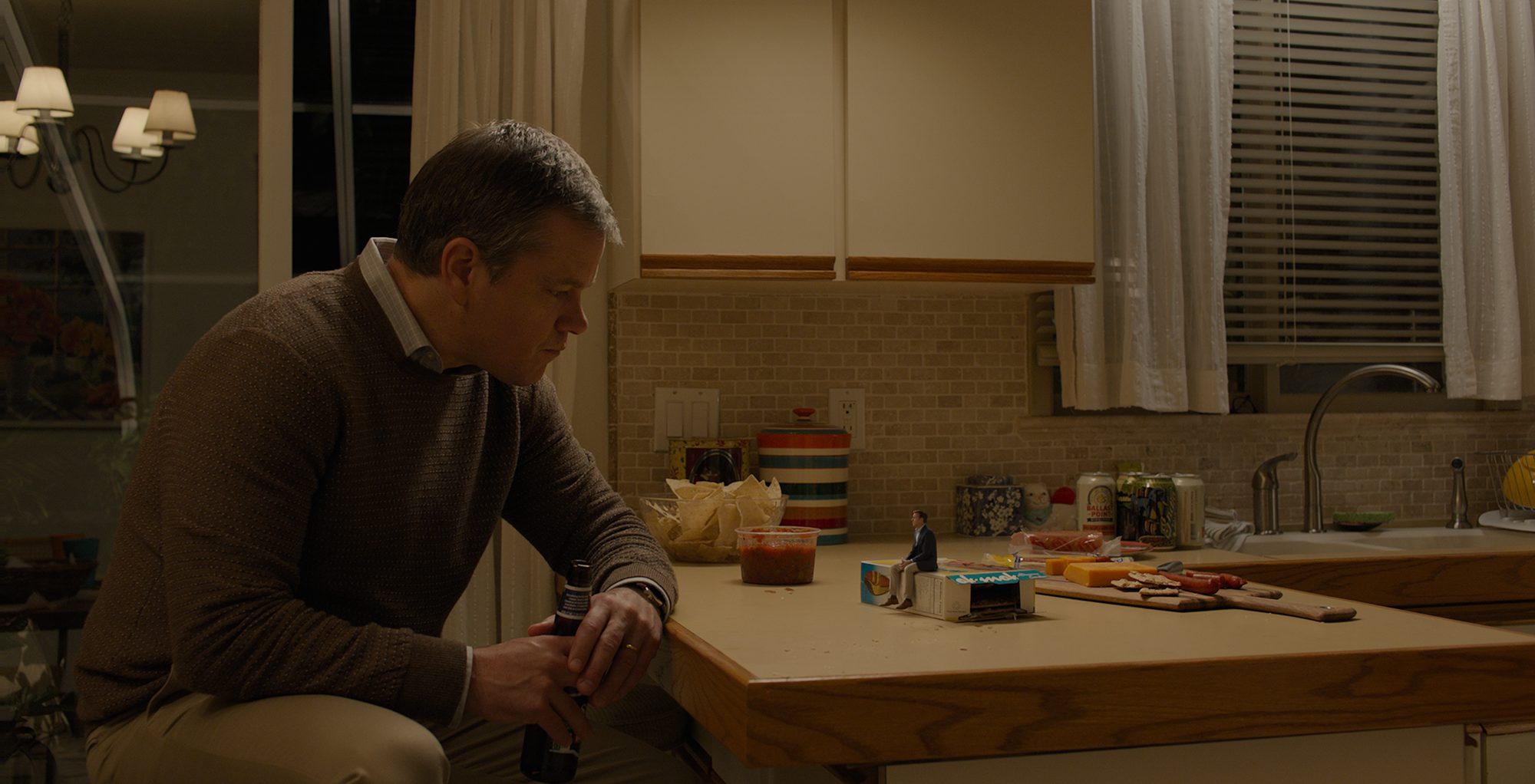
“Downsizing” follows a kindly occupational therapist who undergoes a new procedure to be shrunken to four inches tall so that he and his wife can help save the planet and afford a nice lifestyle at the same time.
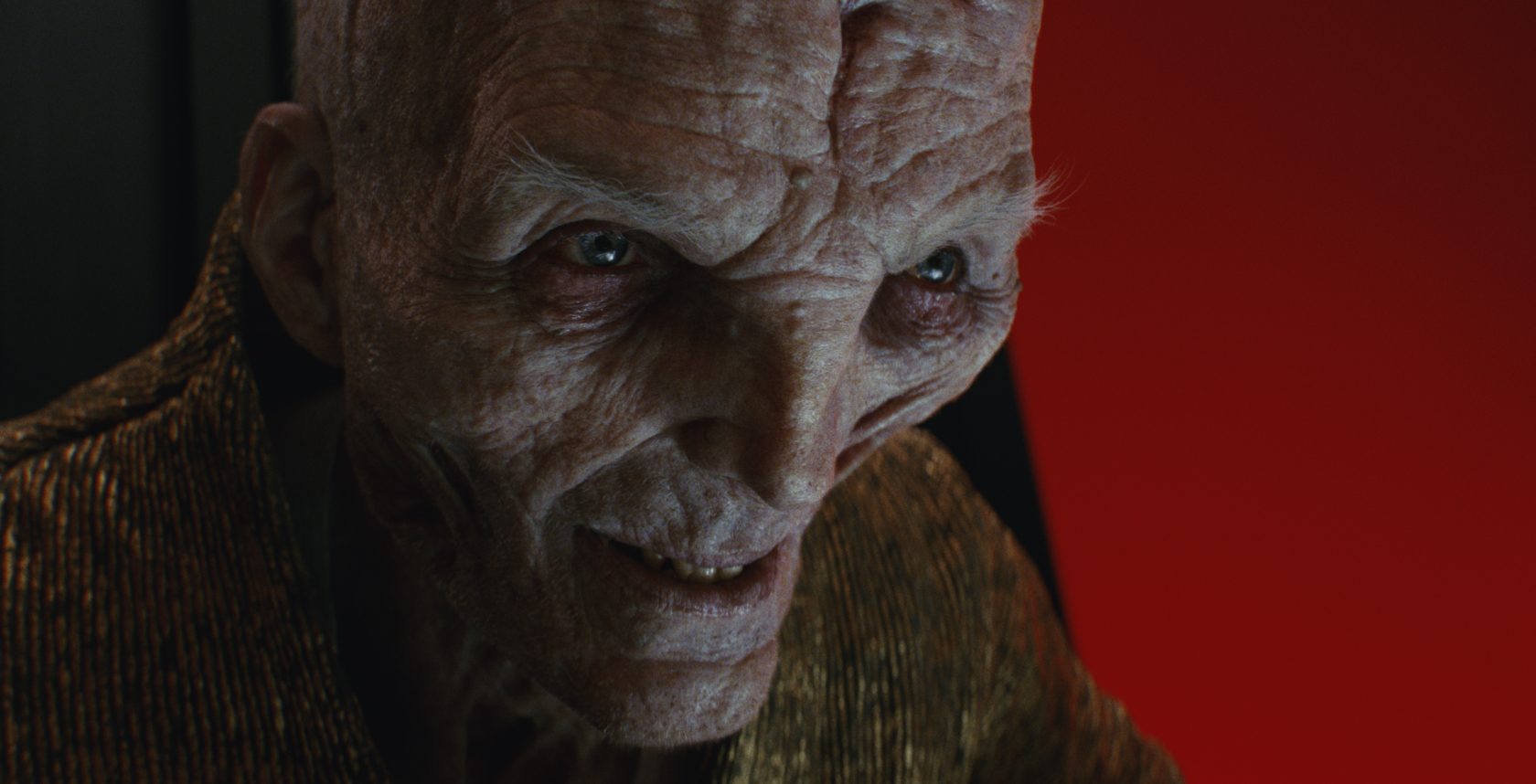
The 8th episode in the Skywalker saga brought a host of unique challenges for visual effects supervisor Ben Morris, visual effects producer Tim Keene, and the global ILM team.
As has become a tradition with the Star Wars films, we embraced a rich mix of cutting-edge digital visual effects, combined with Neal Scanlan’s practical creatures and Chris Corbould’s special effects. In concert with the filmmakers, our approach would be to try and achieve as much using in-camera effects as possible. Even when the team knew for conceptual, aesthetic, or practical reasons a shot would need to be heavily augmented or created entirely as a digital effect, they aimed to shoot plates, stand-in character performances , and reference photography to help ground our CG images in reality.
For this reason, The Last Jedi was predominately shot in real-world locations and exterior practical sets in daylight whenever possible, giving the settings an authenticity that can be challenging to replicate and light believably on stage.
Featuring over 2,000 effects shots our creative team was truly global, with over 1,000 VFX artists based out of all 4 Industrial Light & Magic studios in London, San Francisco, Vancouver, and Singapore and an additional 10 VFX vendors from around the world.
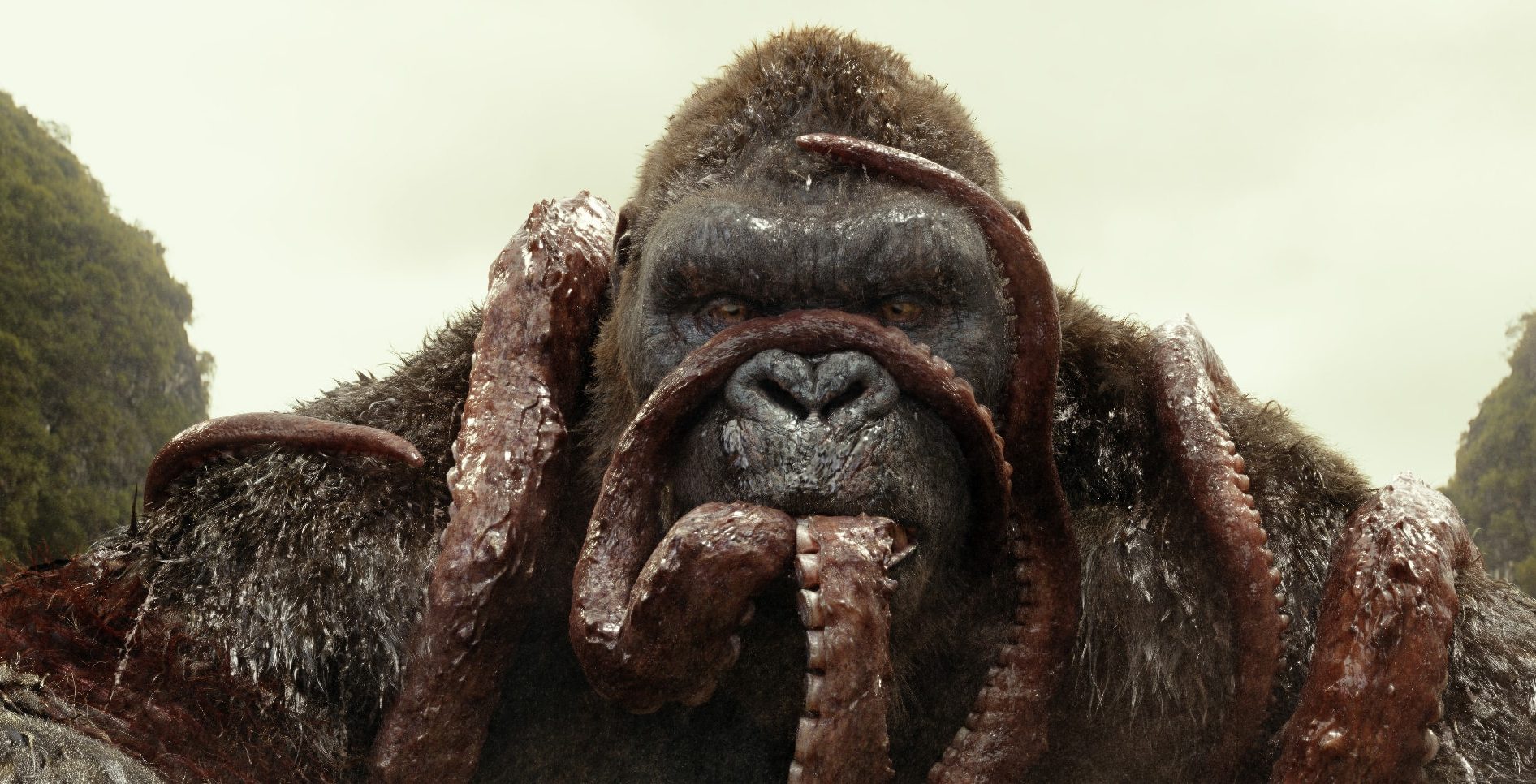
The ILM Art Department got involved in Kong: Skull Island early on to develop and design key moments of the reimagined version of the classic King Kong narrative in collaboration with director Jordan Vogt-Roberts. ILM’s visual effects and animation team in San Francisco, Singapore, and Vancouver, created the models for the film’s title character, Kong, the Skullcrawlers, stick spiders, a massive water buffalo, and a variety of the film’s other prehistoric looking creatures. Collectively the team created 1,048 shots for Skull Island representing approximately 50-minutes of screen time.
Animation supervisor Scott Benza was responsible for all of the animation on the film. Balancing the immense scale of Kong while keeping the shots dynamic and full of action was a constant challenge. While motion capture helped provide reference, Kong was entirely key frame animated. The subtlety and nuance of the facial performances that makes Kong such a compelling character are on full display in numerous scenes throughout the film. At 110-foot tall, the scale of Kong required an eye towards keeping the physics grounded in reality even while pushing the bounds of what could actually occur in reality.
In computer graphics accurately simulating things such as destruction, water, hair, and fire are a challenge. Kong had all of those to contend with, often in the same shot. Accurate hair simulation is difficult but add to it the fact that patches of the hair have been burnt, singed, bloodied, and are constantly being submerged in water, and the fact that we’re going to see it from above and below the water’s surface, and the task gets that exponentially more difficult. ILM’s digital groomers leveraged the company’s Academy Award-winning hair simulation system, HairCraft, to create the vast array of related effects having to do with Kong’s 19-million hairs.
ILM’s environments team also had their hands full as they augmented plates shot in Vietnam and elsewhere, performed set extensions, and created full digital environments for numerous sequences such as the fight between Kong and Skull Crawler in the lake and the end battle.
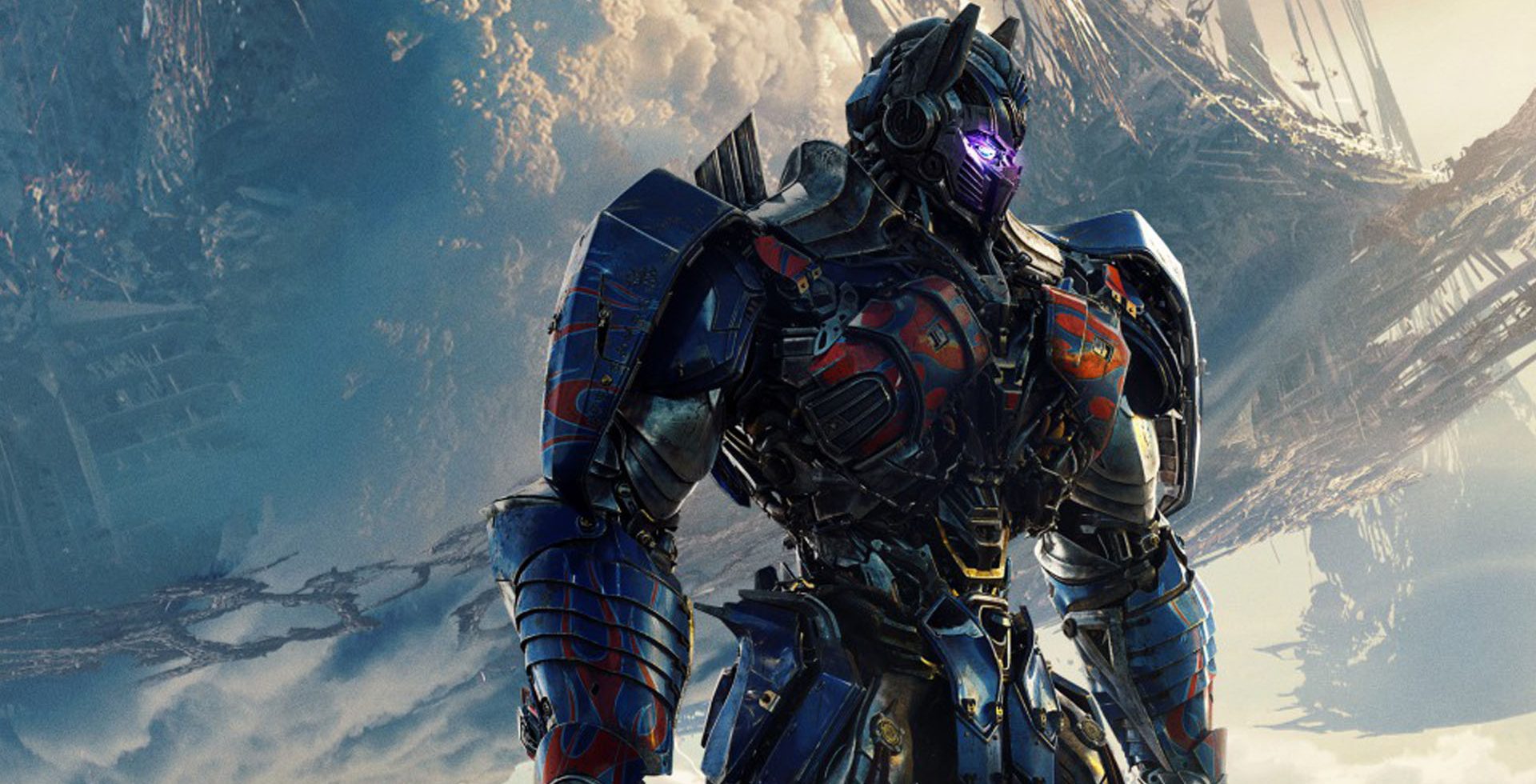
The Last Knight marked the fifth film in the Transformers series and one which had ILM reprising its role as lead visual effects house. Like each of the films that preceded it The Last Knight was chock full of massive action set pieces, explosions, destruction, and nuanced robot performances delivered through the combined talents of the all-star voice actors and ILM’s global animation team supervised by Paul Kavanagh and Rick O’Connor.
With senior visual effects supervisor Scott Farrar leading the charge, ILM VFX supervisors Jason Smith and Dave Fogler led a team of over 500 artists and engineers in San Francisco, London, Singapore, and Vancouver, to create the film’s extensive visual effects.
In the film various scenes are set on Cybertron, the home world of Transformers. ILM art director Ryan Church spent months developing concepts with production designer Jeffrey Beecroft which would guide ILM’s environment artists in constructing the world.
Yet another major challenge was designing and building the Knight Ship, a massive ship so large it actually generates its own atmosphere. The effects team had to not only build the exterior of the ship but also a complete interior where a variety of scenes would take place.