
Releasing January 13, 2026, the landmark book is now available for pre-order.
By Lucas O. Seastrom
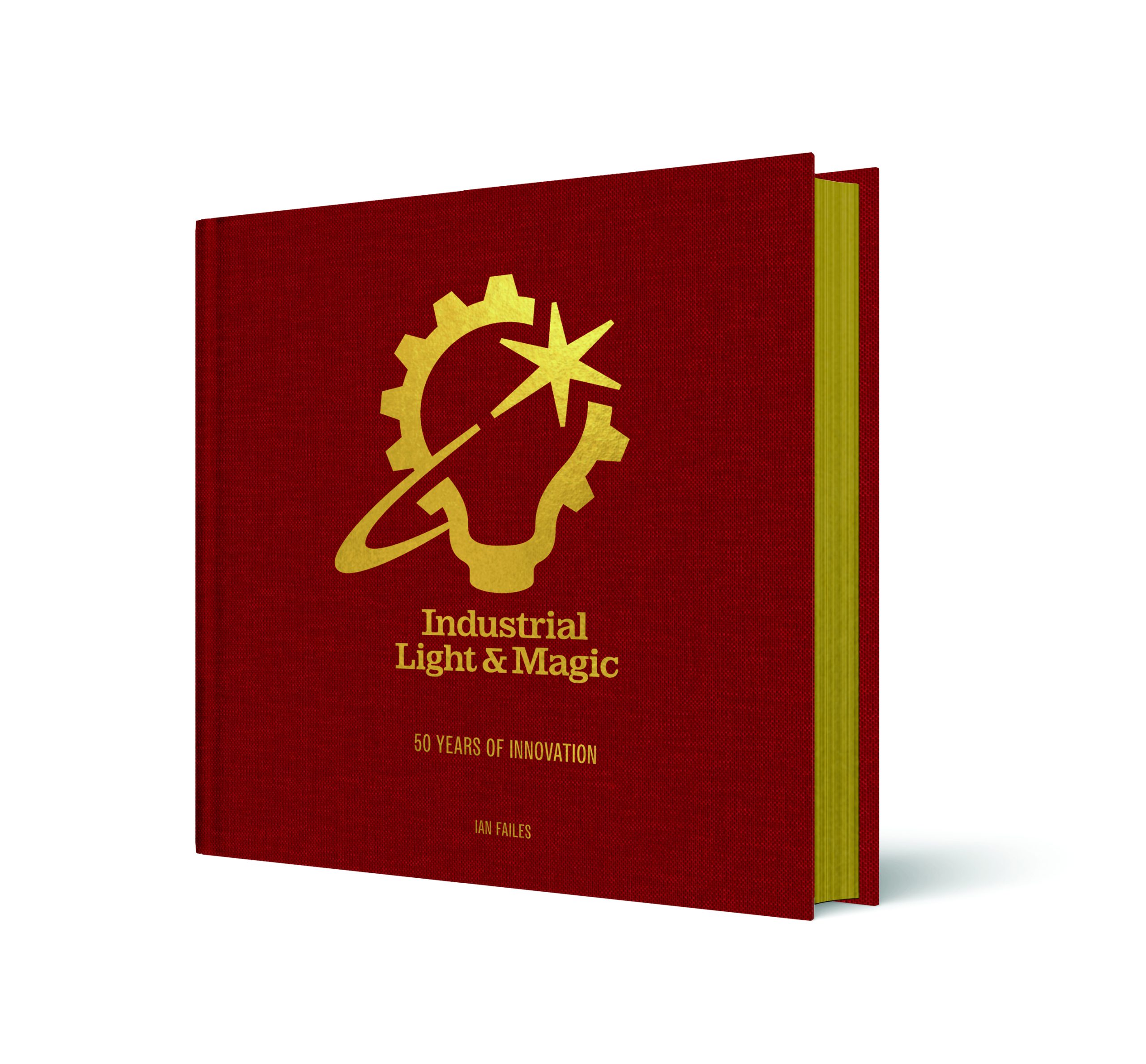
Although Ian Failes was surprised when offered the chance to write Industrial Light & Magic: 50 Years of Innovation, he’d seemingly been preparing for it much of his life.
Growing up just south of Sydney, Australia, Failes was an avid fan of ILM productions, including the Star Wars and Indiana Jones series, the Back to the Future trilogy (1985-90), and Jurassic Park (1993). But it was 1994’s Forrest Gump that piqued his curiosity about the visual effects craft. Watching a behind-the-scenes documentary included with the film’s VHS release, Failes became enraptured with the process of how these visual effects marvels were created by the ILM team.
“I saw plenty of films growing up, but I didn’t really understand that visual effects was an industry,” he tells ILM.com. “As you see this behind-the-scenes material, you realize that people actually work on this stuff. It was towards the end of high school that I started to be obsessed with visual effects, and ILM in particular.”
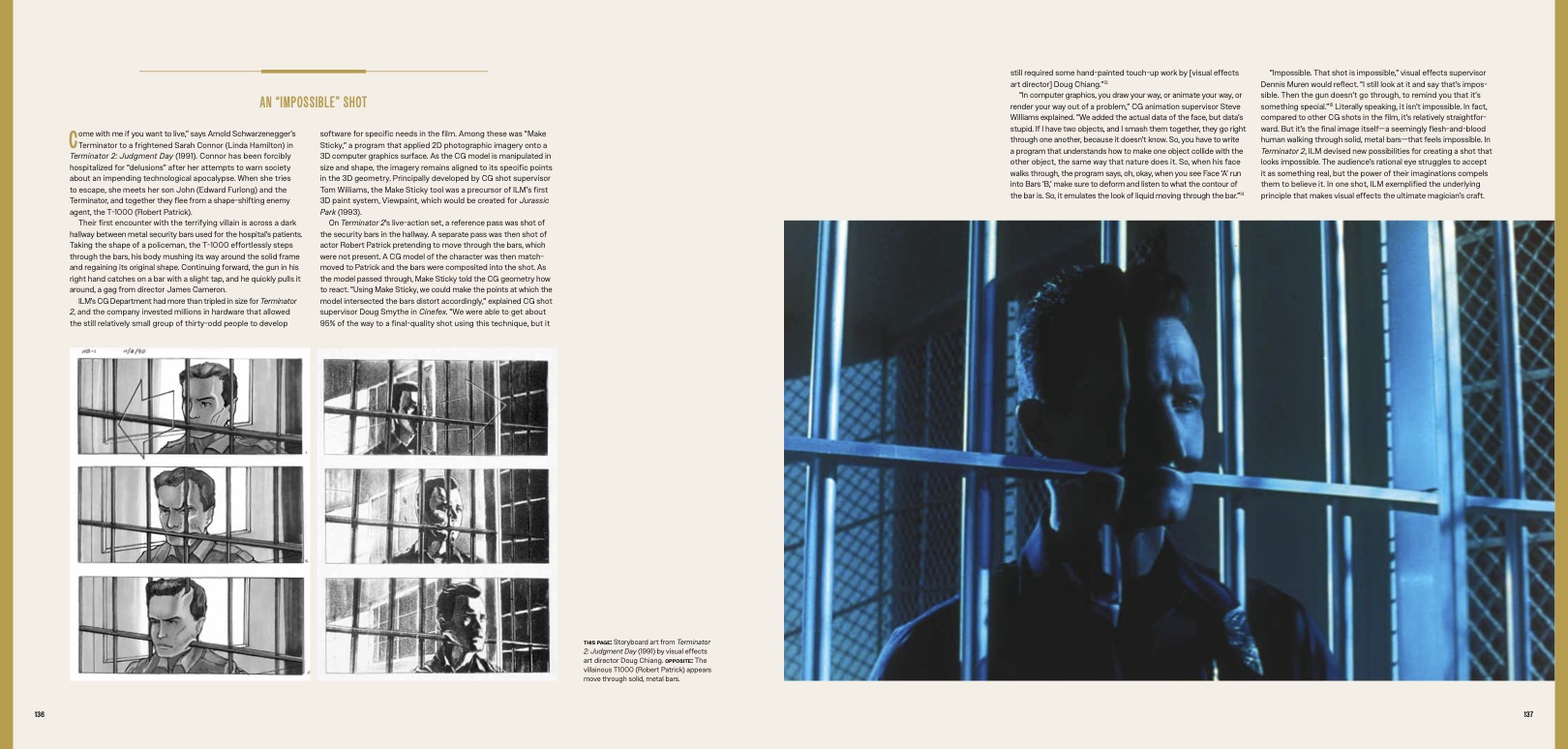
Failes admits “I don’t think I’ve reread a book as much as I have Into the Digital Realm,” in reference to the 1996 publication about ILM by Mark Cotta Vaz and Patricia Rose Duignan. That book was the second in an ongoing series showcasing ILM’s story, which has also included Thomas G. Smith’s The Art of Special Effects (1986) and Pamela Glintenkamp’s The Art of Innovation (2011). Failes’s own 50 Years of Innovation from Lucasfilm Publishing and Abrams Books carries the tradition forward with its release in January 2026.
A Self-Taught Storyteller
“Those early ILM books were huge parts of my formation as a visual effects journalist, but also just to spur on my interest in visual effects before that,” says Failes. His current vocation as founder and editor of the visual effects publication, befores & afters, was inspired by his passion for reading about the art form in magazines like the iconic Cinefex. Studying law and information technology, he began his career as a lawyer while blogging about visual effects on the side.
“In some ways, I was more obsessed with the journalism of visual effects than visual effects itself,” Failes notes. “But I am in Australia, and back then, I didn’t think it was possible to cover the visual effects industry from here. I would go to work as a lawyer, come home, and blog more about visual effects, conversing with people on the internet. Then I started doing interviews, usually at five or six a.m. from Australia, and transcribing them from a tape. Over time, it was clear to others, and then eventually to me, that that’s what I was passionate about. It wasn’t clear how I could have an income and a career from this. But then I started to find ways to do it.”
Initially working for the publication fxguide, Failes is largely self-taught both as a journalist and in his knowledge of filmmaking craft. He authored the book Masters of FX in 2015, which included interviews with a number of ILM visual effects supervisors like Dennis Muren, Scott Farrar, and John Knoll. He soon founded befores & afters as his own independent outlet. “Celebrating the artists” is his chief priority.
“Personally, I think visual effects is an art form that doesn’t always get its due,” explains Failes. “My mandate with befores & afters is simply to report how a movie, a sequence, or a shot was created. I’ve found that it’s a really good antidote to some of the discourse online, which can include misinformation about how things were made. If I can report it accurately, then my goal is to be the source for accuracy in the visual effects community, not that anyone else isn’t doing that. But I really want to try and rally against the misinformation. The artists do such incredible work. They’re a big part of these huge films that we get to watch.”
Crafting ILM’s Narrative
“I don’t think I’ve ever said ‘yes’ faster than when I was asked to write this book,” Failes recalls with a laugh. ILM’s 50th anniversary “crept up on me,” as he says. “Visual effects companies don’t normally last that long. This isn’t a common thing.”
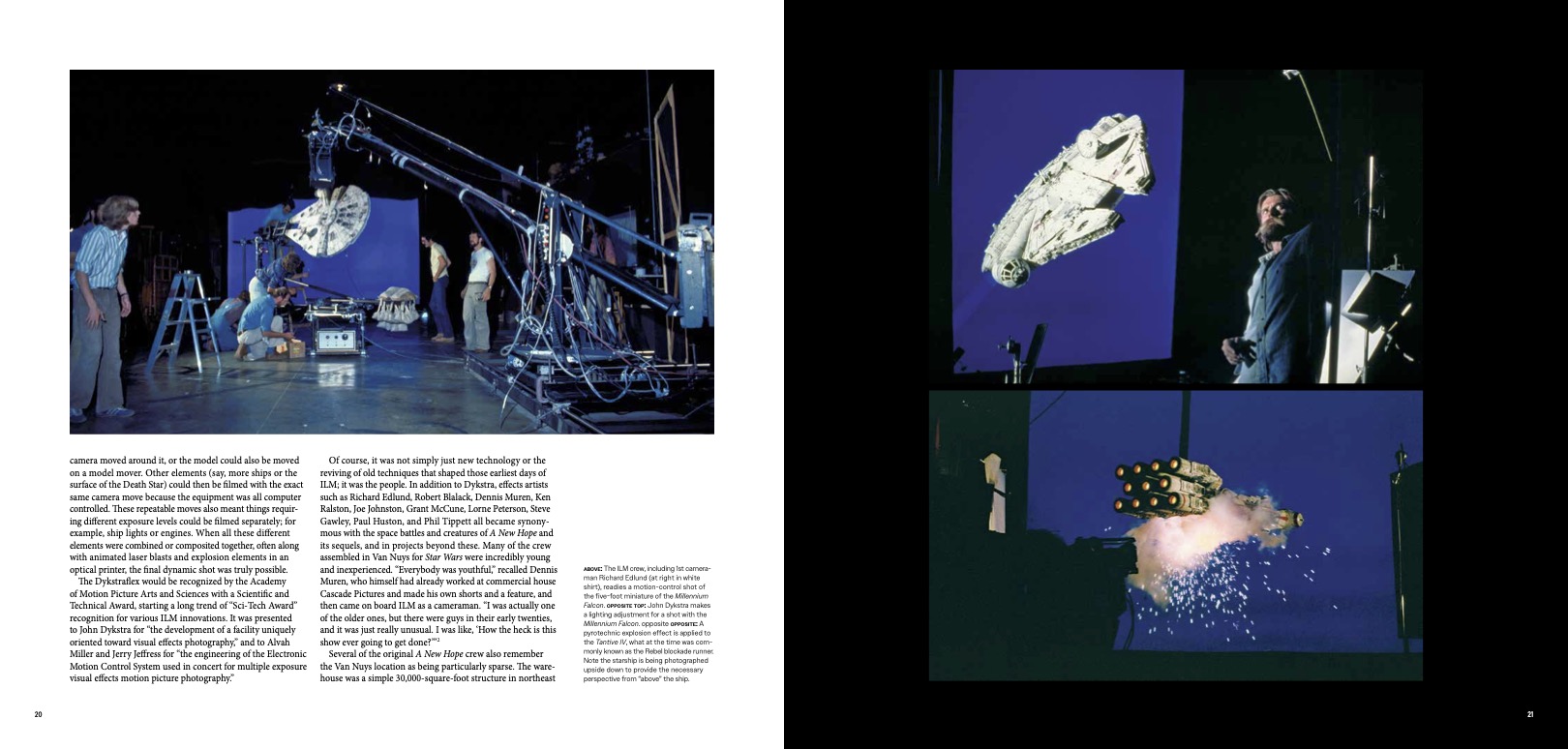
In discussing the book’s story with ILM’s leadership and publicity team, Failes worked to identify the company’s many eras, each full of creativity and transformation. ILM didn’t reach its 50th anniversary without constantly embracing changes in technology, filmmaking trends, and an expanding, global industry. The company itself has played a significant role in shaping that industry, making ILM’s story a 50-year history of the visual effects art form in itself. In the end, Failes is pleased with the resulting book in which readers “can see the progression of work and changes over the years,” as he explains.
“There are great stories about people embracing change,” Failes says. “There were artists who were practical modelers or painters, and they realized that they needed to move into the digital realm to keep their jobs. As those individuals had to adapt, ILM as a whole has had to as well. The good thing is that ILM has jumped on big changes all the time. Digital was one of those, but virtual production is another one, with ILM StageCraft and how that’s been used on The Mandalorian [2019-23] and elsewhere.
“What interests me is that these changes were not brand new inventions,” Failes continues. “There are all these nice threads in ILM’s history linking a past development to what they’re currently doing. The virtual production work has its roots in older rear projection methods, and ILM has dabbled with this kind of thing a lot over the years. So many different tools and techniques come together. Because ILM is a place full of innovation, they can put the best and brightest onto these projects and make them happen. So I hope that when people read the book, they can see that we’ve connected some of those threads together.”
It’s All in the Details
Conducting a number of original interviews for 50 Years of Innovation, Failes was able to go deep into some long-held questions, such as the origins of digital compositing in the late 1980s and early ’90s. “Many of us know about these three huge films – The Abyss [1989], Terminator 2 [1991], and Jurassic Park [1993] – and the incredible innovations achieved in CG modeling, animation, and rendering of different creatures,” the author says. “But an enormous part of why they worked was because of digital compositing.
“I got to chat with [visual effects supervisor] Dennis Muren about this topic,” Failes continues, “things I haven’t read much about before, including the methods created for ingesting film and outputting digital images back out onto film, plus the actual compositing approach. The book has allowed me to fill in some of these details that I didn’t know.”
Throughout the book, many sidebars expand on various details from specific tools and methods to characters and films. “Members of the ILM Publicity team contributed to these sidebars,” notes Failes. “They’re incredible gems of information that haven’t really been talked about elsewhere.”
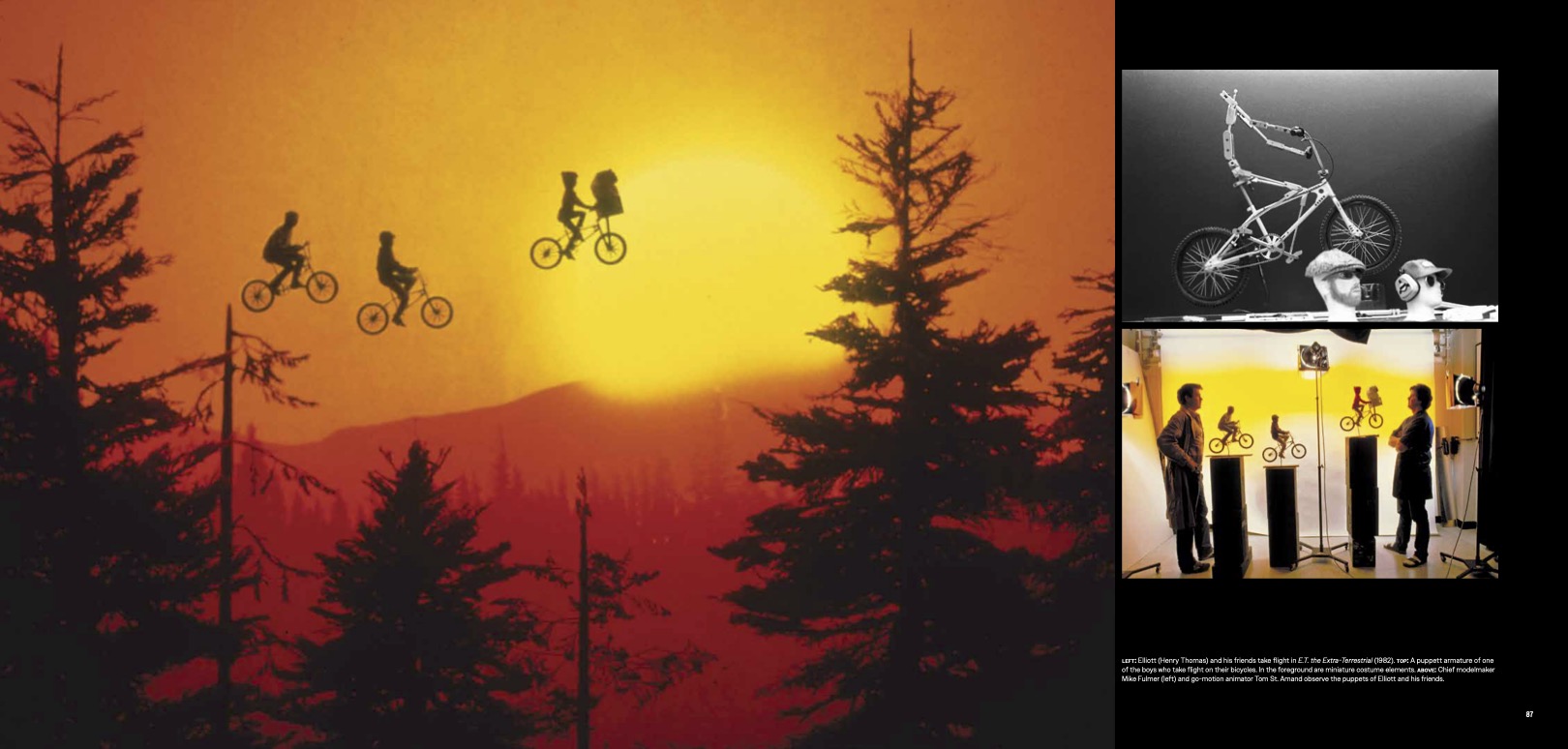
Pulling it all together are upwards of 1,000 images from the ILM archives, something Failes considers to be the book’s marquee feature. “The images involved a team of people at ILM spending countless hours poring through image libraries, scanning 35mm slides and negatives, and then captioning all of them. The images really make this book what it is, a coffee table book that you can flip through a thousand times because you’ll see so many cool things.”
Supporting Voices
ILM’s founder, George Lucas, contributed a brand new foreword to 50 Years of Innovation that captures the spirit of the intrepid company in its earliest years. Filmmaker Bryce Dallas Howard also penned an introduction, bringing not only her lifelong admiration of ILM’s work, but her direct experience collaborating with the team as a director on The Mandalorian and other Lucasfilm series. “She’s really familiar with ILM’s process, in particular StageCraft,” adds Failes, “so we have a filmmaker’s perspective.”
ILM’s current senior vice president and general manager, Janet Lewin, penned the book’s afterword. Lewin helped to craft the book’s story and perspective. “Janet herself has a long history with ILM,” notes Failes. “She is a champion for artists and many of the changes ILM has had to go through over the years. It’s important for her to be a big part of the book.
“Janet really cares about how artists feel inside the company,” Failes adds. “That’s a bit of a secret weapon of this book. It’s not just about the films and shows that the company has worked on, but it’s also about what it’s like inside ILM. What’s the culture? Why has this studio persevered for so long? It’s there in the book, and that comes in part from Janet’s influence.”
Capturing the ILM Spirit
Over five decades and some 500 productions across film, television, theme parks, and interactive and immersive experiences, ILM’s story leaves a lot to cover, perhaps even too much for any one volume. It’s something Failes laments on behalf of his fellow visual effects fans. “That will always be in the back of my mind,” he explains, “and I apologize to those who were looking for a major discussion about a film that isn’t in there. We can’t cover everything, so maybe we’ll just have to do another [laughs].”
The number of ILM shows has particularly swelled in recent decades with the company’s global expansion that began some 20 years ago in Singapore, and now extends to studios in Vancouver, London, Sydney, and Mumbai. Having visited a number of ILM’s locations, Failes is impressed by the company’s ability to maintain its culture between each studio. “You feel like you’re at ILM at each one. That’s not always easy to do. The book showcases ILMers from these different parts of the world.”
As the industry’s oldest visual effects studio, ILM is also arguably its best known, in part as a result of its part within Lucasfilm and association with Star Wars and George Lucas. But that’s not the whole story, according to Failes.
“ILM’s notoriety comes from constantly proving their skill and innovation,” the author says, “as well as their collaboration with filmmakers. Visual effects is a service industry, but it’s also an art form. Film and TV are amazing ways of combining lots of different art forms, and ILM has a seat at the table, and that comes through in all of their amazing projects.”

From Pirates to Matte Paintings
Whether they’re experienced artists working in the visual effects industry, or brand new to the craft, readers of 50 Years of Innovation will encounter a menagerie of iconic characters and spellbinding visuals, from Yoda and E.T. to the Hulk and Davy Jones. The latter pirate captain has always been a favorite of Failes. “There’s something about the combination of Bill Nighy’s performance and ILM’s digital character work led by John Knoll and Hal Hickel. It’s so watchable, and it stands out in the book.”
Another personal highlight for Failes is the chance to write more about the infant Sunny Baudelaire from A Series of Unfortunate Events (2004). “When that film came out, so many people didn’t realize that in certain scenes she’s completely digital,” says Failes. “Who knows how ILM pulled that off [laughs], though we do cover it in the book, of course. The integration of that character is so effective. The big films are in the book, but people might be surprised at some of the smaller projects in there that are big moments in their own right, and that includes Sunny Baudelaire.”
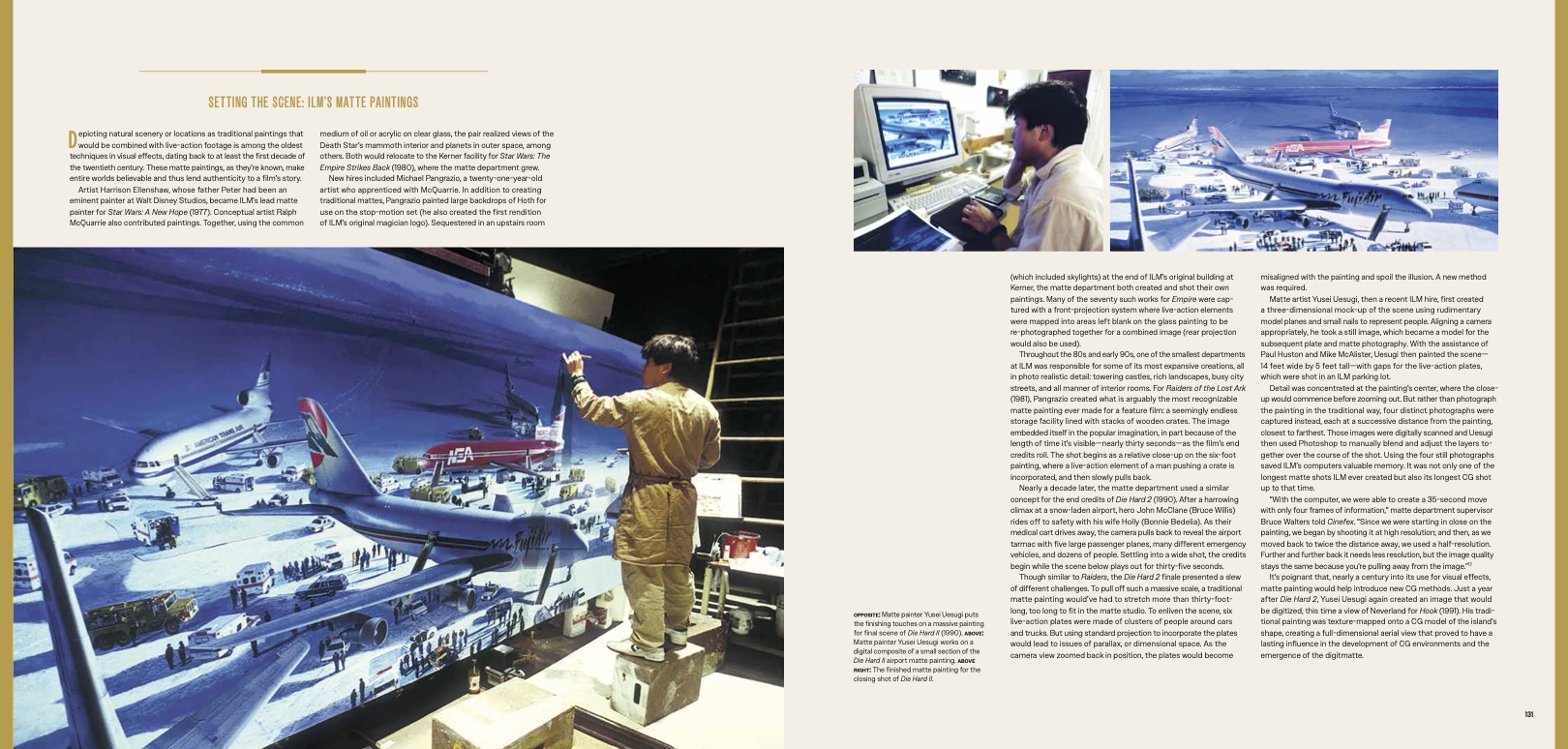
One of the most “magical” elements for Failes is the traditional matte paintings created by ILM artists in the photochemical era. “A lot of people who’ve just come to visual effects cannot quite believe that it was actually painted on glass or some other surface. Sometimes it’s a full painting in the final film, sometimes it’s a painting integrated with live action, and sometimes it’s a moving shot. The fact that that kind of work could be done pre-digital still just blows my mind.”
All of this and much, much more is to be found in Industrial Light & Magic: 50 Years of Innovation, from Lucasfilm Publishing and Abrams Books, and written by Ian Failes. The book is available everywhere January 13, 2026.
Pre-order the book now from Abrams, Bookshop.org, Amazon, and Barnes & Noble.
Read more from Ian Failes at befores & afters.
—
Lucas O. Seastrom is the editor of ILM.com and Skysound.com, as well as a contributing writer and historian for Lucasfilm.