
Vision & Craft

50 Years | 500+ Film and TV credits | 135+ Awards

SINCE 1975

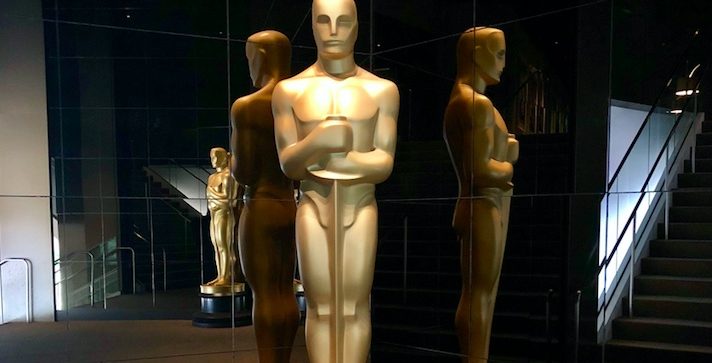
We are thrilled to report that Rob Bredow, Executive Creative Director & Head of Industrial Light & Magic, is among the six newly elected members to join the Academy of Motion Pictures Arts and Sciences’ 2020-2021 Board of Governors. Additionally, Jessica Teach, San Francisco Executive in Charge, and 12 individuals from our artist and engineering ranks have been invited to join The Academy.

“I’m supportive of many of the positive changes that have been made within the Academy recently, and I want to focus on continuing this positive momentum,” said Bredow, adding, “I believe the VFX Branch will be stronger if we are more inclusive. A number of brilliant and accomplished visual effects experts are joining the Academy, including a few from ILM who I am excited to work alongside in this capacity. There is still much to be done. I’m excited to be joining the board of governors in this time of change.”

Bredow, who helped start the Academy Software Foundation and serves as chair, is also passionate about sharing  “I think as leaders in our field, we have the honor and responsibility to share what we’ve learned for the next generation of filmmakers.”

The 2020 Academy Invitees from ILM:
MEMBERS-AT-LARGE
Jessica Teach

VISUAL EFFECTS BRANCH
Jon Alexander – Avengers: Age of Ultron, Noah
Tami Carter – Star Wars: The Rise of Skywalker, Lucy
Karin Cooper – Star Wars: The Rise of Skywalker, Kong: Skull Island
Ryan Church – Transformers: The Last Knight, Avengers: Age of Ultron
Leandro Estebecorena – The Irishman, Kong: Skull Island
Stephane Grabli – The Irishman, Jurassic World: Fallen Kingdom
Douglas Moore – 12 Strong, Ant-Man
Nick Rasmussen – Ready Player One, Star Wars: The Last Jedi
David Seager – Aladdin, Terminator: Dark Fate
Amy Shepard – Playing with Fire, Doctor Strange
James Tooley – Star Wars: The Rise of Skywalker, Teenage Mutant Ninja Turtles
Paige Warner – Terminator: Dark Fate, Pirates of the Caribbean: Dead Men Tell No Tales

For a full list of the 2020 Academy Invitees, click here and for a full list of the current 2019-2020 Academy governors, click here.

What is your name, what do you do and how long have you been working at ILM Sydney?
My name is Rebecca Kuo, and I used to work in ILM Singapore as a Pipeline Technical Director for three years. I recently transferred to ILM’s Sydney studio.
 
What is your biggest passion outside of work?
I love traveling, exploring new things and enjoying good food. I always try to arrange at least two trips in a year just to see different parts of the world. I am also a theme-park person. I’ve been to Universal Studios Singapore 4-5 times in six months and hope that one day I can visit all Disneylands and Universal Studios around the world.
 
What kickstarted your career in VFX?
I used to play different kinds of games since I was a kid, from Gameboy, NES, to online games on Windows XP. Around high school time, I was attracted by the interior design, and I almost chose to study it as a professional. However, my father guided me into computer science as that was part of his daily life. Eventually, I graduated from a tech background, but deep in my mind still have the idea to do something related to art. So, I kept looking for what I wanted to focus on, then computer graphics made me very interested. After graduating from university, I worked in a mobile game studio as a programmer. During that time, I’ve watched many Marvel movies, I observed all the pretty and realistic images but I knew it’s fake, that made me want to switch from the game industry to visual effects. Because I wanted to find out how visual effects movies were made.  
 
What do you love about working in the industry?
I really enjoy the production work from green screen plates to the final movie. Each project has different requirements, working in a position like Pipeline Technical Director, I have to understand each step in our workflow. When I’m watching movies together with friends or family, I can explain to them how something has been made. I think it is super cool.
 
If you could give one piece of advice to a young woman wanting to join or starting out in VFX, what would it be?  
Everyone starts from something that you are not confident about, but never be afraid or doubt yourself without even giving a try.

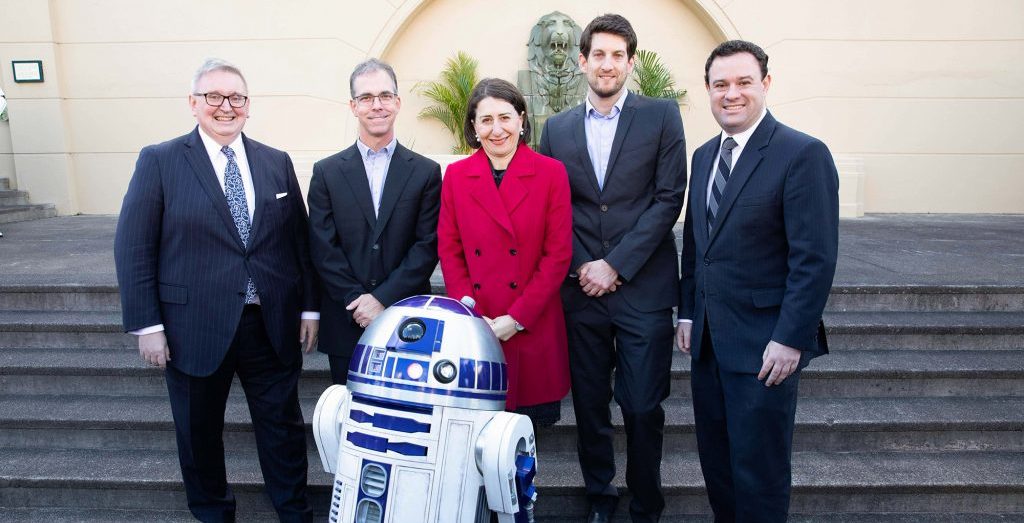
Industrial Light & Magic (ILM), the visual effects division of Lucasfilm Ltd., announced today that the company would be expanding its global footprint to Australia. The studio is opening a new studio in Sydney to better serve its clients and complement its current operations in San Francisco, where the company is headquartered, Singapore, Vancouver, and London.

“Sydney is an ideal location for our fifth studio,” noted Rob Bredow, Executive Creative Director and Head of ILM, adding, “there is abundant artistic and technical talent in the region which are both keys to ILM’s culture of innovation. It’s particularly exciting that the first film our new studio will contribute to will be Star Wars: The Rise of Skywalker.”

Gretchen Libby, ILM VP of Production said, “We are always looking for ways to enhance our offering to clients and the Australian Federal PDV Offset coupled with the new NSW PDV rebate is sure to attract significant interest from filmmakers around the world. Our studio in Sydney will allow us to offer that opportunity while providing the quality effects work that is synonymous with Industrial Light & Magic.”

“It’s an amazing opportunity for local Australian talent to join established ILM staff from around the globe and collaborate on high-end animation and visual effects,” noted Luke Hetherington who will expand his responsibilities to serve as the studio’s Executive in Charge. “At ILM they can do so while working on the kind of projects that inspired so many of us to start out in this industry, like Star Wars, Avengers, Jurassic Park, and many more.”

ILM’s Sydney studio joins the company’s global studios in offering award-winning visual effects and animation and the artistry and creative problem solving that the company has become known for. The studio will work on projects including feature films, television, immersive entertainment and themed attractions.

To apply for open roles at our Australia studio, click here.

Today, ILM Senior Compositor, Charmaine Chan explains her visual inspiration for the Kylo and Luke confrontation after the Battle of Crait in Star Wars: The Last Jedi. 
Kylo Ren
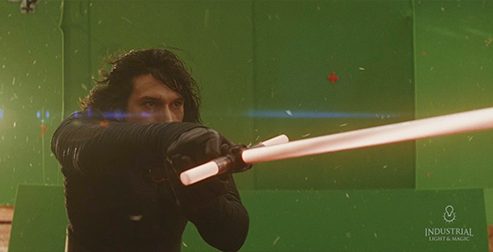
These days, majority of blockbuster films are shot in front of a giant green/blue screen. Taking an actor in front of a screen and grounding them into a scene to help promote their development and storyline is always a tough challenge. On Star Wars: The Last Jedi, I got tasked with such a scenario, specifically the scene where Kylo and Luke finally confront one another after the Battle of Crait. It’s a tense moment and I was assigned to handle the Kylo Ren shots under the direction of VFX Supervisor Eddie Pasquarello and my sequence lead Peter Demarest.
The scene we were set out to create was right after a giant battle has just occurred, the land was all torn up, ash and salt flying everywhere, and we needed to create a sense of intensity, passion, and rage from the duality built up between Kylo and Luke.
Kylo Ren
The first time I saw the plates they reminded me a lot of the sparring sequence from Kurosawa’s Seven Samurai. It actually happens to be the 65th anniversary of Seven Samurai this year, so its only appropriate to give a nod to the film and cinematography that has influenced so many other films, including this one!

Toho Productions


The main thing I noticed within Seven Samurai is the simplicity and stillness of each shot and angle. Yet the way the subject is framed leaves us in anticipation of their next move. We wanted to do the same within our shots, where the backgrounds were not distracting us from focusing in on the two main actors.
We had the AT-M6’s in the back at a complete stand still waiting for orders, and a dramatic landscape that was subtlety changing as time passes by during their exchange. We represented this change via two major factors: the sun setting and the buildup of salt over the red kyber crystal floor.
Kylo Walking
When Kylo first approaches Luke, we set the backdrop very warm with saturated orange and reds and a strong contrast. We went through many iterations of both the sky color and FX animation of smoke/dust wisps over the floor. We then slowly transitioned the sky color to be less saturated, and used the animated smoke to create even more salt on the ground. By the time Kylo is ready to fight Luke, we’ve created a very different aesthetic that’s both cool toned and diffused.
The Last Jedi
What transpired next is probably one of my favorite saber duels, and being able to help set the mood right before that fight was a great refresher on visual storytelling.

OpenEXR, a widely-adopted HDR image file format, and OpenCue, a recently launched render manager, join the growing roster of Academy Software Foundation projects.
We’re thrilled to announce that the Academy Software Foundation (ASWF), a neutral forum for open source software development in the motion picture and media industries, today announced that OpenEXR and OpenCue have been accepted by the Technical Advisory Committee (TAC) as Academy Software Foundation projects alongside OpenVDB and OpenColorIO.
Initially developed by ILM, OpenEXR is an Academy Scientific and Technical Award winning high dynamic-range (HDR) image file format for use in computer imaging applications. It is a widely-adopted standard in computer graphics for linear and interactive media.
OpenCue is a fully featured, open source render manager for media and entertainment that can be used to break down complex jobs into individual tasks. Developed in collaboration by Google Cloud and Sony Pictures Imageworks, OpenCue is an evolution of Sony’s internal queuing system, Cue 3.
“This announcement marks a new phase for the Academy Software Foundation. We’ve achieved our initial goal of accepting OpenVDB, OpenColorIO, and OpenEXR – projects which greatly influenced the Foundation’s formation – and we are now ready to support and drive collaboration around newer projects like OpenCue,” David Morin, Executive Director of Academy Software Foundation. “Studios and developers are finding value in having a neutral home for the open source projects that our industry relies on, and we look forward to growing our projects and continuing to find new ways to support to the broader open source community.”
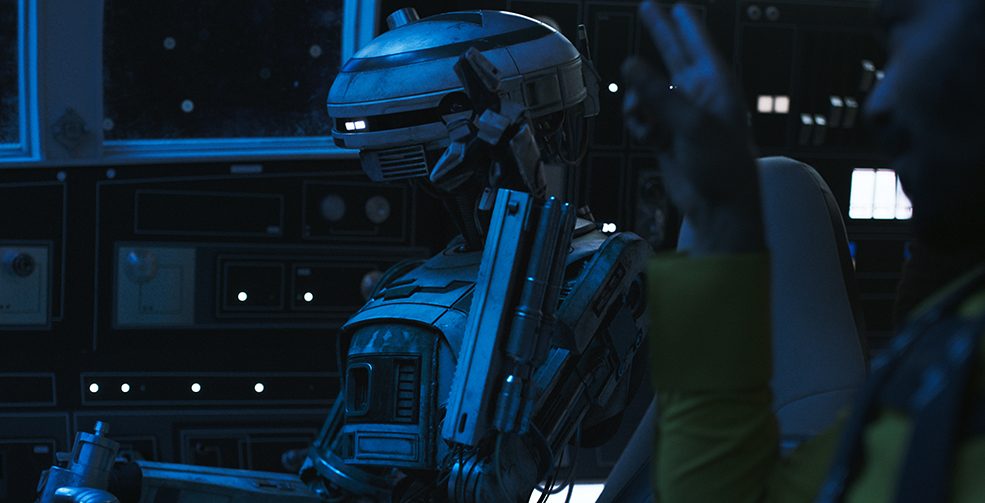
L3 and Lando
OpenEXR and OpenCue join OpenVDB and OpenColorIO as projects in the incubation stage at the Academy Software Foundation. All newly accepted projects start in incubation while they work to meet the high standards of the Academy Software Foundation and later graduate to full adoption. This allows the Academy Software Foundation to consider and support projects at different levels of maturity and industry adoption, as long as they align with the Foundation’s mission to increase the quality and quantity of contributions to the content creation industry’s open source software base.
Cary Phillips, Lucasfilm Research & Development Supervisor and Academy Science and Technology Council member noted, “The Academy Software Foundation was created with OpenEXR in mind, recognizing that there’s a natural life cycle to software projects: original architects and developers move between companies, expertise spreads throughout the industry, and the entire VFX technology ecosystem rapidly evolves. The ASWF has brought together virtually every major company in the industry, and it provides a vital forum to discuss sensible, practical solutions that should ensure that OpenEXR continues to serve the industry as a stable and reliable standard.”
OpenEXR
One of the foundational technologies in computer imaging, OpenEXR is a standard HDR image file format for high-quality image processing and storage. It features higher dynamic range and color precision than existing 8- and 10-bit image file formats, and the latest version of OpenEXR supports multiple image compression algorithms, stereoscopic workflows, multi-part files and deep data.
“For us, the single most important thing we create are the images that we put on screen, and we’ve all come to trust the OpenEXR format with our most precious data. ILM’s decision over 15 years ago to make EXR available as an open source project for the filmmaking community arguably set in motion an industry-wide trend that fostered collaboration and shared advancement, eventually culminating in the creation of the Academy Software Foundation. We’re proud to contribute OpenEXR to a new home to ensure it remains a robust and stable project for years to come,” said Francois Chardavoine, Head of Production Technology, Industrial Light & Magic.
Wakanda
OpenEXR was developed in 1999 by ILM in response to the demand for higher color fidelity in the visual effects industry. It was released to the public as an open source library in 2003, and it has since been widely-used and maintained through code contributions from companies including Weta Digital, Walt Disney Animation Studios, Sony Pictures Imageworks, Pixar Animation Studios, Autodesk, and DreamWorks, among others. OpenEXR was honored with an Academy Scientific and Technical Award in 2007.
OpenEXR is ILM’s main image file format and has been used in all motion pictures that ILM contributes visual effects work to since 2000. The first movies to employ OpenEXR were Harry Potter and the Sorcerer’s Stone, Men in Black II, Gangs of New York, and Signs. Recent films include Solo: A Star Wars Story, Avengers: Infinity War, Black Panther, and Star Wars: The Last Jedi.
Developers interested in learning more or contributing to OpenEXR can visit the OpenEXR Github page.

Today our guest writer is Todd Vaziri, Lead Artist at ILM who chronicles how the Blockade Runner engine shot from Rogue One: A Star Wars Story went from idea to reality:

I was thrilled to get to work on this shot with my friend and frequent collaborator, ILM lighter Tom Martinek. (Leia’s Blockade Runner escapes, tying Rogue One directly to the start of Star Wars (1977)? Yes, please!) We loved bringing this moment to life. It was a thrill to be able to help create the updated look of a classic ship we haven’t seen on screen since 1977. Also, it’s fun to realize that pretty much no one agrees how to pronounce “Tantive IV.”

Our first task was to study those first fleeting glimpses of the Tantive IV from the original Star Wars. Replicating the engine look of the engines *precisely* from the first film would not work for our movie. This was a recurring theme for the design challenges we took on for Rogue One.

Smoke Blockade Engine - Rogue One

Blockade Engine Distance - Rogue One

I created the Blockade Runner ‘engine look’ to appear the way you *think* you remember it from Star Wars, not the way it actually appeared — honoring the spirit of the original look and updating it to fit modern sensibilities and the stylistic signature of our new film.

First, I matched the hue of the engine glow from the original film. From there, I wanted to add an organic “jet engine” texture to the inside of each engine, so I rotoscoped and stabilized some footage from a Bell 209 helicopter engine, which had a lot of built-in dynamic energy.

I placed the texture inside the engine geometry of each of the eleven engines so we could get peeks at it when looking down the tunnel, and offset and rotated the helicopter engine footage for each engine (so each engine would have an unique energy signature).

Tom developed a flickery cucoloris effect to create the interactive light from the engine cast onto the inside of the chamber–I split that into 11 passes to animate them separately. Then I had to come up with a way for the engines to ignite as if from a cold start.

Blockade Engine - Rogue One

I knew we never saw a Blockade Runner power up in any of the movies, but I asked Pablo Hidalgo (Lucasfilm) and others to see if there was any precedent set in any of the animated series. Apparently, there was none! So, I thought it would look cool if the four corner engines fired up first for stability. Then the other seven engines followed up behind. I didn’t want the shot to become a big lens flare show, so I only had a few crisp flares peek through (taking my cues from the original trilogy X-wing engine flares).

This engine look became a quick-start setup for the other Blockade Runners you see in the film. Finally for this shot, I added a hopefully-subtle camera rumble as the engines ignited.

Radar Dish Rotation Examples.

We had a lot of fun talking about the rotating dish atop the Tantive IV. Look carefully at it in the original Star Wars (1977)–in shot 1, it’s not visible. In shot 2, it’s rotating counter clockwise. In shot 3, it’s rotating clockwise! For Rogue One, we animated the dish counterclockwise.

Rogue One (2016), visual effects by Industrial Light & Magic. Visual effects Supervisor John Knoll. Full ILM credits.

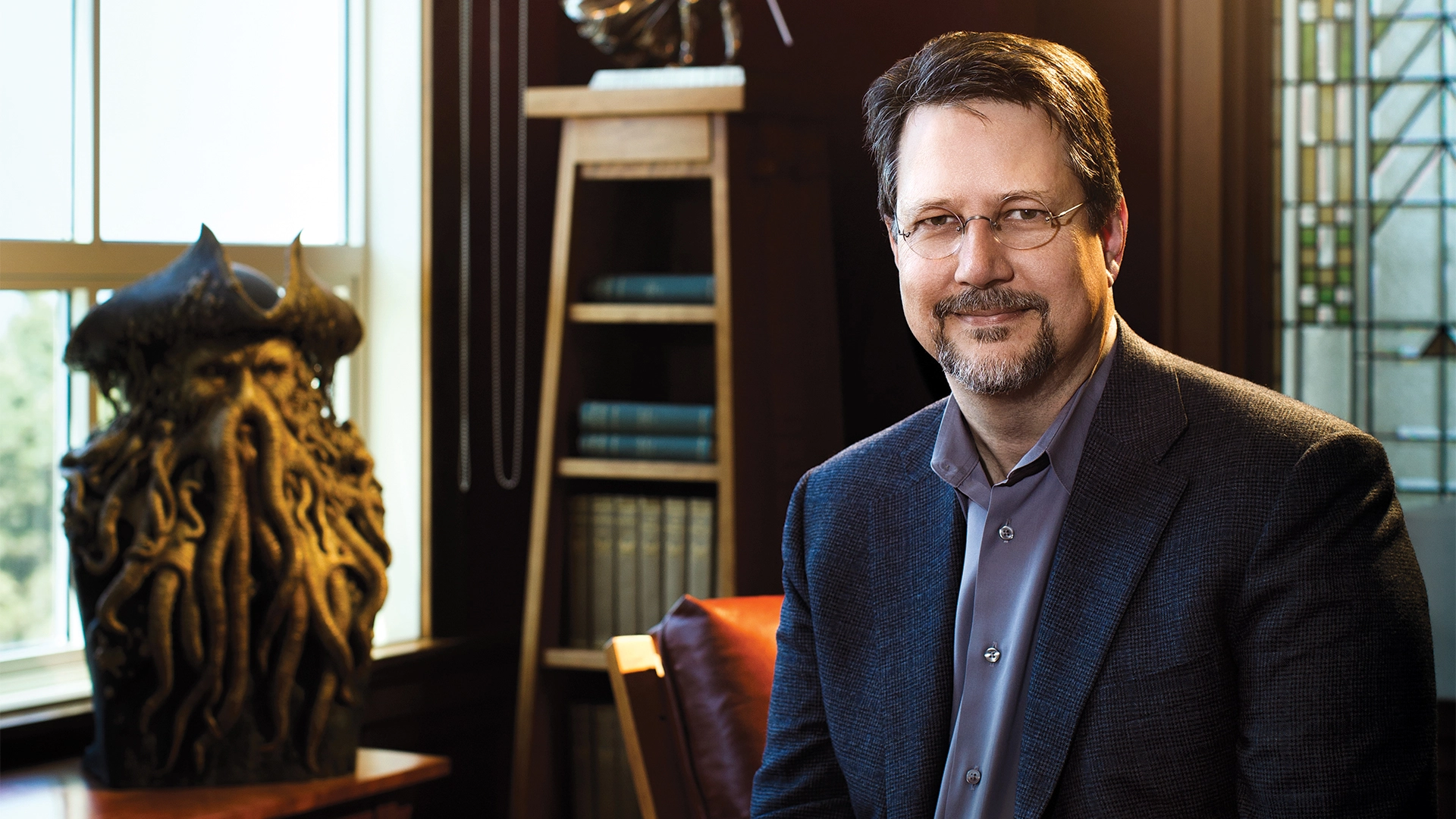
ILM’s Chief Creative Officer, John Knoll was among those honored by the Academy of Motion Picture Arts and Sciences at this year’s Sci Tech Awards.
Watch David Oyelowo present Scientific and Engineering Awards to Thomas Knoll and John Knoll for the original architecture, design and development, and to Mark Hamburg for his continued development and engineering of Adobe Photoshop:

Congratulations to John, Thomas, Mark and all of those honored this year.

Early this morning the Academy announced the nominees for the 91st Oscars and we’re so excited that ILM artists worked on three of the five films in the Achievement in Visual Effects Category.
AVENGERS: INFINITY WAR
Dan DeLeeuw
Kelly Port
Russell Earl
Dan Sudick
READY PLAYER ONE
Warner Bros. Pictures
Roger Guyett
Grady Cofer
Matthew E. Butler
David Shirk
SOLO: A STAR WARS STORY
Rob Bredow
Patrick Tubach
Neal Scanlan
Dominic Tuohy
Other nominated films:
CHRISTOPHER ROBIN
Christopher Lawrence
Michael Eames
Theo Jones
Chris Corbould
FIRST MAN
Paul Lambert
Ian Hunter
Tristan Myles
J.D. Schwalm
And here are some early reactions from a few of our newly-minted nominees:
Solo: A Star Wars Story
Rob Bredow, Overall VFX Supervisor – “We pretty much freaked out! All of us were gathered around the TV. It was pretty exciting. It’s such a great list of nominees, so it was amazing to see us on the list.”
Patrick Tubach, VFX Supervisor – “I’m incredibly excited to be nominated for the VFX work on Solo. Like many, I’ve been waiting to hear this story ever since some hot shot pilot bragged about it over a table in a seedy backwater cantina, but there’s a extra special thrill in being one of the lucky group of artists who finally got to tell it. Seriously- never tell me those odds!”
Ready Player One 
Roger Guyett, VFX Supervisor – “I’m really thrilled about the nomination – we worked so hard and had an incredible team working on the project. I’m sharing this with our huge crew who put so much love into this project. Its an honour and great recognition from our peers for the work we did on RPO.”
Grady Cofer, VFX Supervisor – “I’m delighted to hear that Ready Player One has been nominated for Best Visual Effects. It’s a testament to all the hard work that went into it. From day one this has been a dream project. Steven’s passion for the story, fueled by his endless creative energy, made it all possible. I am honored to join my fellow nominees and represent this film at the Oscars.”
Avengers: Infinity War  
Russell Earl, VFX Supervisor – “I’m just really happy to be nominated and feel lucky to be able to represent the whole team that worked on the film. It’s been a really exciting morning.”
The Oscars are February 24th. Congratulations to all the nominees!