
Singapore News

50 Years | 500+ Film and TV credits | 135+ Awards

SINCE 1975

The filmmaker and Lucasfilm legend talks to ILM.com to reflect on what drew him to tell the story of the hit Disney+ series, “Light & Magic”.

Screenwriter and director Lawrence Kasdan.

How did you get involved with Light & Magic?
Several years ago my wife and I made a short documentary about a little diner that we used to eat at all the time that suddenly closed. In making that documentary with her, and cutting it with terrific people, it made me realize how much I liked the documentary format. I had never done that. We set out to meet some documentary people and I met Justin Wilkes at Imagine Entertainment. He asked me what I was interested in doing and I suggested a history of visual effects, because even though I had been around visual effects throughout my career, it occurred to me that I didn’t know much about them. The second thing that interested me were the people of Industrial Light & Magic that I had been working around for over forty years. So we both agreed that that would be a great story to tell: the history of visual effects, and the personal stories of these people. What drove these people, what was their life like, what made them want to stay at ILM as long as they did? Everyone loved the idea, so we went to work.

Lawrence Kasdan, center, on the set of Star Wars: The Empire Strikes Back.

What was your vision for the documentary?
From my very first film until today, I’ve always considered myself a humanist filmmaker. I’m interested in what happens between people, and why people make certain decisions in their lives. What chance is involved? What fate? What luck? So from the very beginning of this I was interested in learning what brought these people to this work. What were the relationships that they made when they arrived? Why did they continue to work there much longer than they expected, some for nearly half a century? What has all that meant to these amazing advancements in technology? It’s about people, and their gifts, and out of those gifts came technological advancements that boggle the mind.

Dennis Muren, left, and Phil Tippett, right, review images with Joe Johnston.

Why did you think this story should be told?
Because it’s great to see artists at work. The commitment of great craftsmen. I love to see people that have mastered a skill, and try to make it better, and don’t settle. I think it’s great to see expertise and this pure devotion to discipline, and that is always a good story to see. Dennis Muren, left, and Phil Tippett, right, review images with Joe Johnston.

John Dykstra and a fleet of miniature TIE, X-wing, and Y-wing starfighters.

How did you approach the research, and what resources did you use?
We had a fabulous team that Imagine Documentaries put together, some internal to the company, and some that were freelancers. They really knew their stuff, so it was a great luxury for me as a director. There were so many things that I wanted to ask during interviews, but the input from this incredible group of producers and writers and editors stimulated me all of the time to go in different directions during interviews.

ILM’s Paul Huston and Larry Tan on the set of Star Wars: Return of the Jedi.

For those that have yet to watch it, can you tell readers what the timeline of the series is?
Over the six hours we see the very birth of ILM, what happened as it came together during the production of Star Wars: A New Hope, and then off of the success of that film, how it was launched into a nearly fifty-year enterprise. We mainly follow it chronologically, but we do jump around a bit to serve the story. Part of the kick for me was that we had such a trove of archival footage, so these people might be talking about something from forty or fifty years ago, and we had stills from that moment in their career. It was incredible to be able to cut from one to the other across time, to hear them talking about a problem, and then see footage of them finding a solution. A huge part of ILM’s legacy is finding solutions to problems.

Peter Kuran, Rose Duignan, and George Lucas review effects shots for Star Wars: A New Hope.

How did you select the filmmakers that were featured in the documentary?
They are all giants, and they have all used ILM in the most expressive and innovative ways. They put pressure on themselves and then turned to ILM and said, “can you do this? Can you create something for me that I have never seen before?” ILM would always say yes. And sometimes it might be a struggle, and sometimes it might be a long process, and sometimes it might be an instantaneous solution where one of these genius people that work there would say, “I know what we could do”. These are major filmmakers that have contributed to the zeitgeist. Jim Cameron, Steven Spielberg, Bob Zemeckis, J.J. Abrams, and at the heart of it, of course, is George Lucas.

Lawrence Kasdan and J.J. Abrams on the set of Star Wars: The Force Awakens.

What was the most interesting thing you learned throughout the process of creating Light & Magic?
I think I learned what goes into creating something new, working with people you respect and depend on, and how this personal relationship then impacts the professional work. There is something beautiful about the generosity of the people that work at ILM, and through that generosity they are able to discover new frontiers and break new grounds that no one has ever been able to do.

All episodes of Light & Magic are streaming now on Disney+.

ILM | A legacy of innovative and iconic storytelling.

“I wanted to make sure we brought the magic back to the ILM logo,” noted John Knoll, Industrial Light & Magic’s Executive Creative Director, participating in one of the dozens of interviews completed over the course of the fourteen-month rebranding project for the renowned visual effects and animation studio founded by George Lucas. 

“We wanted our new branding to pair closely with ILM’s mission statement, We are visual storytellers who create iconic moments to inspire the imagination”, explained Janet Lewin, SVP General Manager, ILM, “At ILM, we prioritize our culture of collaboration and community and we truly value innovation and quality. These core ideals allow us to confidently take risks and embrace the unknown on the challenging projects we seek out.”

Knoll was one of over a thousand ILM employees who provided input to twin sisters Amy and Jen Hood who own the Southern California brand identity and type design studio, Hoodzpah. As part of their exploration of ILM, its employees, its legacy, and its values, the interviews revealed fascinating insights into the company and how it has managed to keep both its creative team inspired and its technology on the cutting edge of innovation for nearly five decades. Knolls’ sentiment struck a chord and it became an oft-referred phrase as the Hoodzpah team collaborated with a core group of ILM leaders on how best to capture the company’s incredible legacy while building a unique identity system that would serve it well into the future.

“ILM has several different logos in the past forty-eight years,” explained Rob Bredow, SVP and Chief Creative Officer for ILM, “and all have incorporated the core elements from the company’s original logo, the famous wand-wielding magician framed by a large gear with the letters ‘ILM’ originally illustrated by Michael Pangrazio in the late 1970s and later finalized in a painting by renowned artist, Drew Struzan. The company and the industry have evolved substantially in the past eighteen years and we felt the time was right to develop a new brand identity that captured the global studio we’ve become.”

Now with six global studios—San Francisco, Singapore, Vancouver, London, Sydney, and Mumbai—ILM has not only revolutionized the field of visual effects with groundbreaking innovations in digital effects, performance capture, previsualization, and digital humans, and has most recently innovated in areas as diverse as real-time rendering, immersive entertainment, and virtual production with it’s Emmy Award-winning StageCraft platform.

Hoodzpah began the assignment by getting to know the company through individual and group interviews with key members of ILM’s leadership team and representatives of the employee base across all strata of the studio and each of ILM’s globe locations. Then came the task of distilling the information into key learnings. “It was remarkable given the sheer number of people we interviewed that there was such cohesion in terms of what the employees felt the brand represented and where they aspired to be,” said Jen Hood.

The new dynamic glyph and custom wordmark combine to draw from the company’s illustrious legacy while carrying it into the future. Amy Hood, explained, “The mark utilizes negative space within the silhouette of a gear giving the impression of a lightbulb contained within, both elements existed in the company’s original logo by Pangrazio and Struzan. We incorporated a swoosh trailing a spark of magic in the new mark which represents the global nature of ILM’s talent base and studios. Paired with the mark is the Industrial Light & Magic wordmark designed and set in a bold customized serif face evocative of the abbreviated type in the company’s original logo.” The team also developed updated logos for sub-brands ILM Art, ILM StageCraft, ILM Technoprops, and ILM Immersive (formerly ILMxLAB). The supporting visual identity uses cinematic colors inspired by ILM projects over the years, as well as bold type, and stark minimal layouts. The rebrand scope spanned deck templates, social media assets, a new homepage redesign, logo animations, swag, and more.

Now in its 48th year of existence, ILM continues to be a creative partner to storytellers and filmmakers alike. The talented artists, technicians, and production teams ensure that the company remains on the cutting edge as they continue to develop new techniques and technologies that allow audiences the world over to be immersed in the visuals and experiences the company helps to create.

Six-Part Docuseries Debuts Exclusively on Disney+ July 27

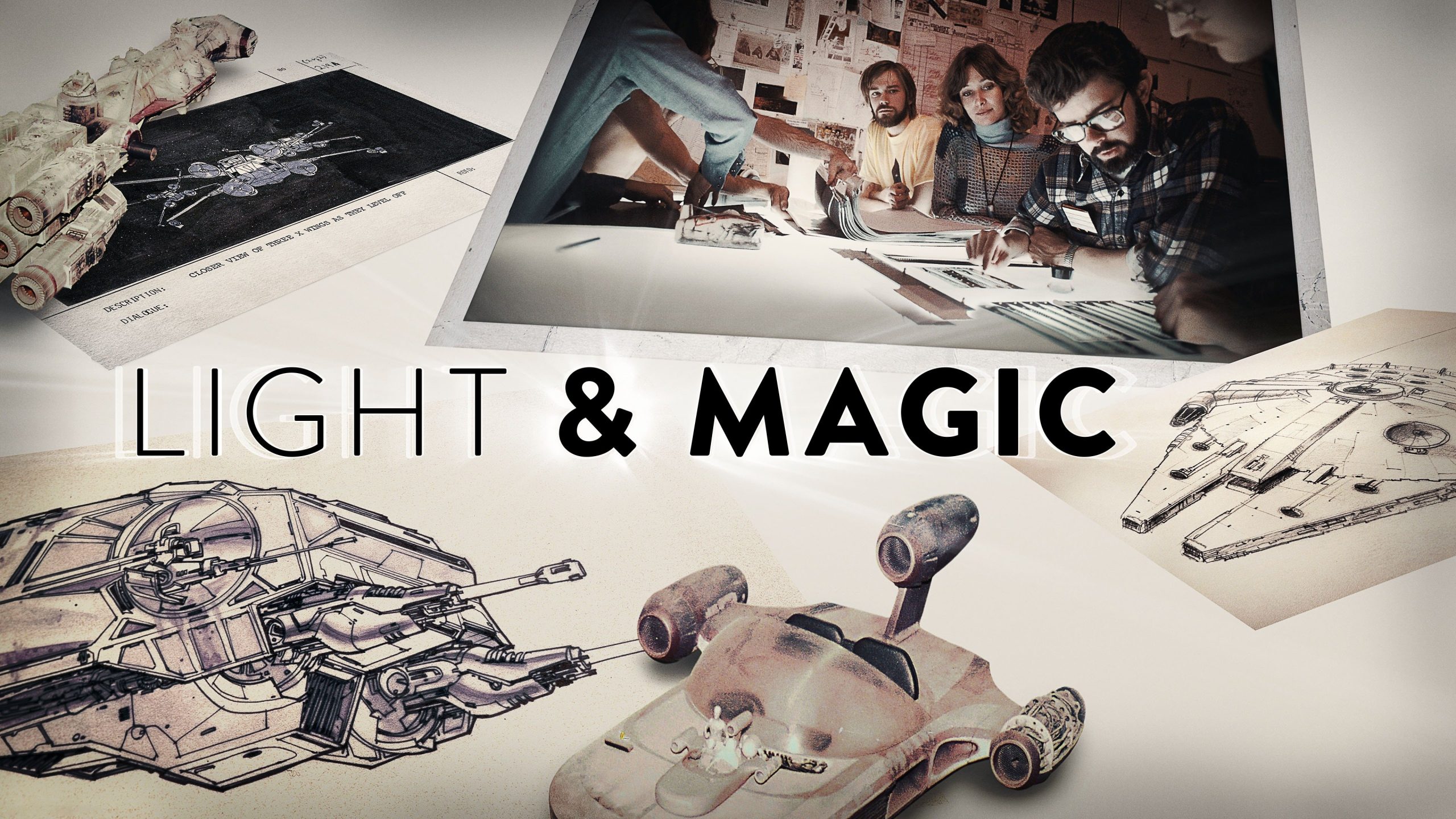
Disney+ released the trailer and key art for Lucasfilm and Imagine Documentaries’ “Light & Magic,” an immersive series that chronicles the untold history of world-renDisney+ released the trailer and key art for Lucasfilm and Imagine Documentaries’ “Light & Magic,” an immersive series that chronicles the untold history of world-renowned Industrial Light & Magic (ILM), the special visual effects, animation and virtual production division of Lucasfilm.

Granted unparalleled access, Academy Award®-nominated filmmaker Lawrence Kasdan takes viewers on an adventure behind the curtain of Industrial Light & Magic. Learn about the pioneers of modern filmmaking as we go on a journey to bring George Lucas’ vision to life. These filmmakers would then go on to inspire the entire industry of visual effects.  

The series is directed by Lawrence Kasdan, and the executive producers are Ron Howard, Brian Grazer, Justin Wilkes, Lawrence Kasdan, Kathleen Kennedy and Michelle Rejwan. 

All six episodes of “Light & Magic” premiere on July 27, exclusively on Disney+.

Twitter@DisneyPlus@ILMVFX
Instagram@DisneyPlus@ILMVFX
Facebook@DisneyPlus@ILMVFX
TikTok@DisneyPlus
Hashtag: #DisneyPlus

ABOUT DISNEY+

Disney+ is the dedicated streaming home for movies and shows from Disney, Pixar, Marvel, Star Wars, and National Geographic, along with The Simpsons and much more. In select international markets, it also includes the new general entertainment content brand, Star. The flagship direct-to-consumer streaming service from The Walt Disney Company, Disney+ is part of the Disney Media & Entertainment Distribution segment. The service offers commercial-free streaming alongside an ever-growing collection of exclusive originals, including feature-length films, documentaries, live-action and animated series, and short-form content. With unprecedented access to Disney’s long history of incredible film and television entertainment, Disney+ is also the exclusive streaming home for the newest releases from The Walt Disney Studios. Disney+ is available as a standalone streaming service or as part of The Disney Bundle that gives subscribers access to Disney+, Hulu, and ESPN+. For more, visit disneyplus.com, or find the Disney+ app on most mobile and connected TV devices.

MEDIA CONTACTS

Disney+ Media Relations
Shelby Cotten
Shelby.b.cotten@disney.com

Walt Disney Studios Global Publicity
Global Publicity (NY)
Derek Del Rossi        
derek.del.rossi@disney.com

Lucasfilm Publicity
Ian Kintzle 
ikintzle@ilm.com

Join employees across Industrial Light & Magic, Lucasfilm, ILMxLAB, and Skywalker Sound as they share stories on discovering their passions, beginning their careers, and the challenges and satisfactions of working in their current roles and departments. We hope their personal stories and recommendations inspire the next generation of young artists to break into and make their impact on the entertainment industry.

To learn more about Get in the Door, visit GetInTheDoorProject.com and watch the trailer below.

The Hollywood Professional Association announced the nominees for its annual HPA Awards for post-production, an honor that promotes outstanding creative artistry, and recognizes the achievement of talent, innovation, and engineering excellence. ILM is thrilled to have contributed to three shows nominated in the Outstanding Visual Effects category this year. Nominees include Richard Bluff, Hal Hickel, Jeff Capogreco, Abbigail Keller, and Joe Bauer for The Mandalorian – “Chapter 9: The Marshal”, David Seager, Alexandra Greene, George Kuruvilla, Dan Mayer, and Dan DeLeeuw for Loki – “Journey Into Mystery”, and Chad Wiebe for his work on Jungle Cruise.

“It is an absolute honour to have been nominated for our work,” said Alexandra Greene, Visual Effects Producer at ILM. “It’s hard to put into words the gratitude I have for all the ILM artists and production crews who poured their heart and souls into bringing the “Void” to life on Loki, along with all of the larger-than-life creatures that reside there. Every day I find myself amazed by both the innovation and creativity that comes from our teams here at ILM, including the work by our fellow ILM nominees for The Mandalorian, and Jungle Cruise. Congratulations are in order!”

Janet Lewin, ILM’s General Manager and Senior Vice President notes, “I could not be more proud of the nominees and their teams that worked on these incredible shows,” adding, “I’m continually in awe of our team’s technical ingenuity, imagination, and relentless spirit, and I’m so pleased to see their hard work recognized by the HPA.”

The annual HPA Awards are returning as an in-person event this year, presented at a live gala on Thursday, November 18th at the historic Hollywood Legion Theater. Tickets are on sale now.

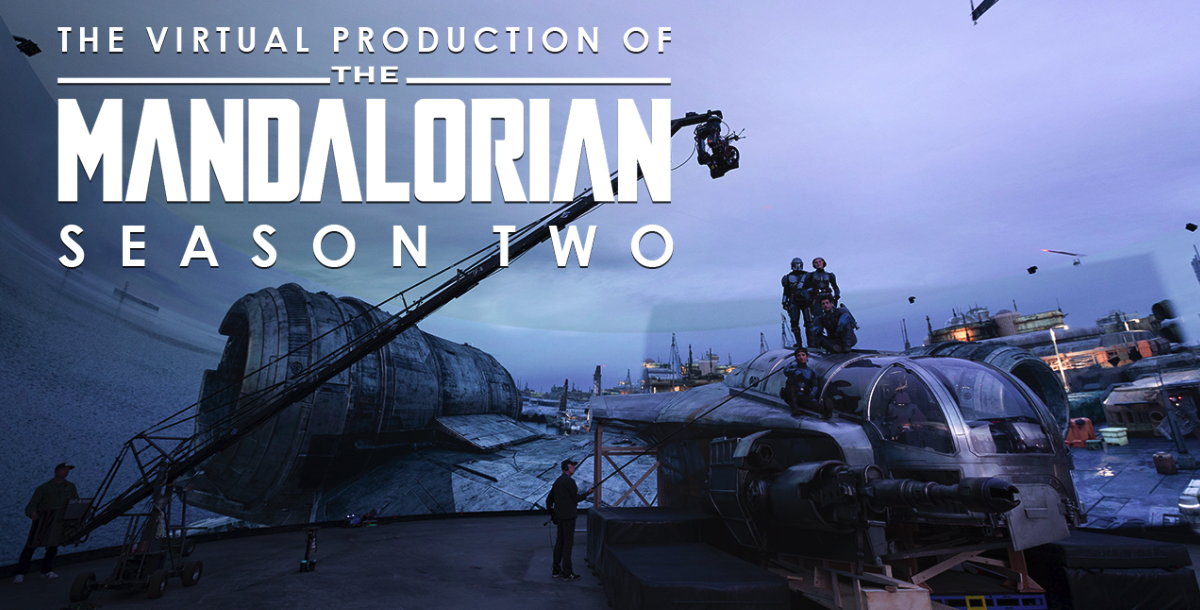
In a new video released by ILM on our YouTube channel, join Visual Effects Supervisor, Richard Bluff, as he shares a peek behind the curtain of the effects of The Mandalorian: Season 2, winner of 7 Emmy® Awards including Special Visual Effects, Sound Mixing, Cinematography, Prosthetic Makeup, Stunt Coordination, Stunt Performance, and Music Composition.

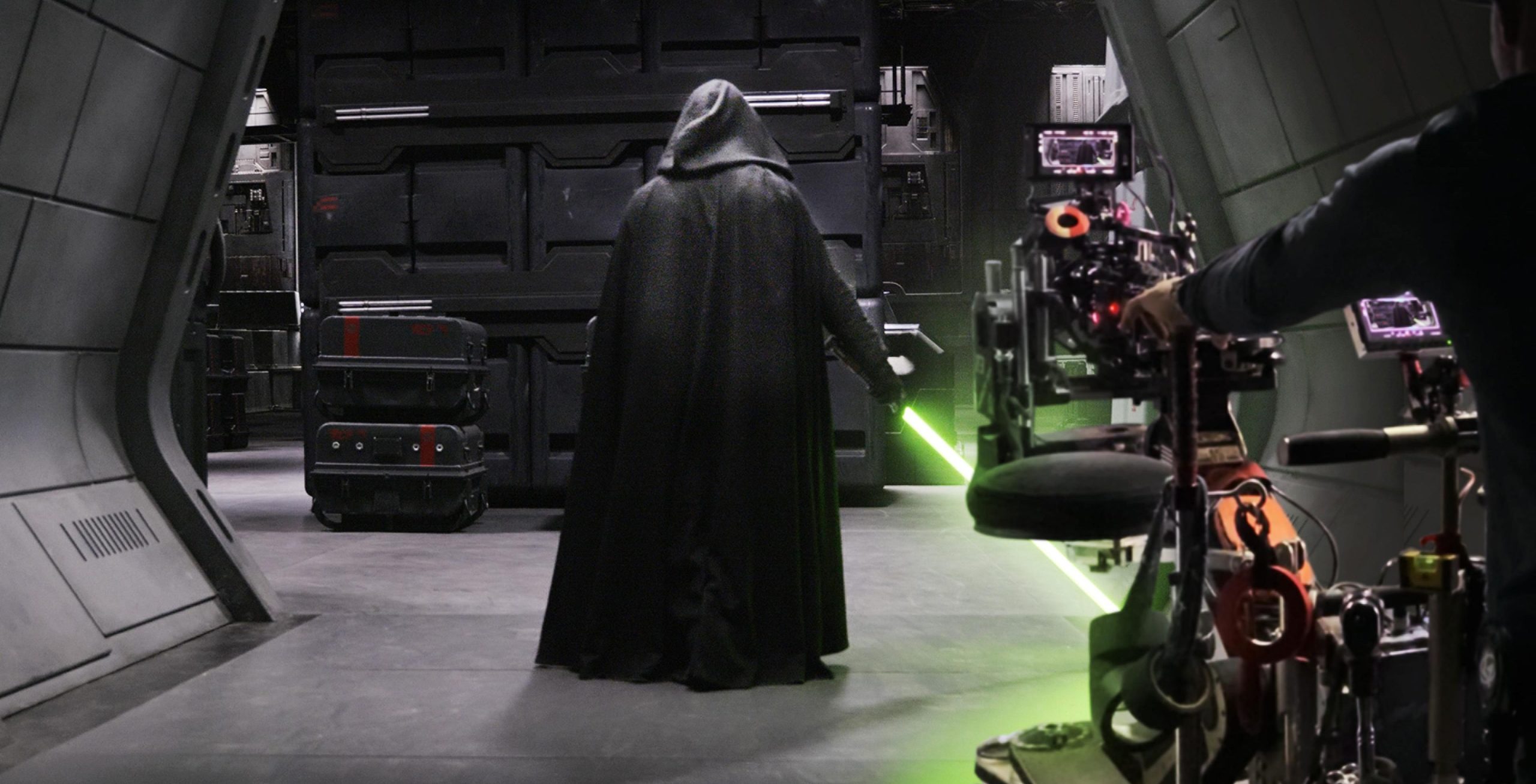
For its sophomore outing, Lucasfilm’s hit Disney+ series built upon the groundbreaking technical and artistic achievements accomplished during season one, combining traditional methodologies, with ever-advancing new technologies. The team also increased the physical size of the ILM StageCraft™ LED Volume which would again be used for over half of all scenes. This season also marked the debut of ILM’s state-of-the-art real-time cinema render engine called, Helios. The high-resolution, high-fidelity engine was used for all final pixel rendering displayed on the LED screens and offers unmatched performance for the types of complex scenes prevalent in today’s episodic and feature film production.

Practical creature effects have been a vital part of the aesthetic and charm of the Star Wars universe since 1977, and for season two, the effects team realized over 100 puppeteered creatures, droids, and animatronic masks, which included the beloved Tatooine Bantha, realized as a ten-foot-high puppeteered rideable creature. 

Practical miniatures and motion control photography were used once again for scale model ships, as well as miniature set extensions built for use in ILM’s StageCraft LED volume. Stop-motion animation was also utilized for the Scrap Walker at the Karthon Chop Fields. The greater Krayt dragon on Tatooine was realized as a six-hundred-foot computer-generated creature that would swim shark-like through the sand environment by way of a liquefaction effect, wherein the sand would behave like water. 

We would like to acknowledge the care and dedication that the team here at ILM put into the show, along with our partners at Legacy Effects, Hybride, Image Engine, Important Looking Pirates, Ghost VFX, Lola, Stereo D, Tippett Studios, Base FX, Raynault, Virtuous, and Yannix. 

We hope you enjoy this look inside The Mandalorian: Season 2.

The Television Academy announced its winners for the 73rd Annual Primetime Creative Arts Emmy® Awards over the weekend, celebrating a diverse group of talent from across television. ILM’s creative teams were honored with an award for Outstanding Special Visual Effects in a Season or a Movie for The Mandalorian, alongside nominations for their contributions on The Boys, WandaVision, and The Falcon and the Winter Soldier.  This is the second year in a row that the hit Lucasfilm series has received the Emmy Award for Special Visual Effects, a testament to the groundbreaking work that the show is known for.
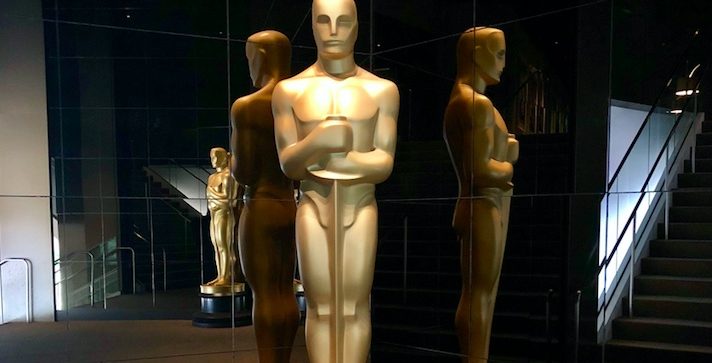
Animation Supervisor Hal Hickel, VFX Producer Abbigail Keller, VFX Supervisor Joseph Kasparian (Hybride), and Environments Supervisor Enrico Damm in attendance at the 73rd Annual Primetime Creative Arts Emmy® Awards.

The visual effects team representing this win, included: Joe Bauer, Richard Bluff, Abbigail Keller, Hal Hickel, Roy K. Cancino, John Knoll, Enrico Damm, John Rosengrant, and Joseph Kasparian. Special recognition is also in order for ILM Producer Stacy Bissell, ILM Animation Supervisor Paul Kavanagh, and the entire StageCraft team for their incredible contributions.

Richard Bluff, Visual Effects Supervisor on The Mandalorian, added, “I want to take this opportunity on behalf of the visual effects team to congratulate all the artists, production, and the technical support staff who contributed to the Visual and Special Effects on season two of The Mandalorian. We continue to be in awe of the spectacular work and the effortless partnerships we enjoy with all of our vendor partners. The time and effort invested in the visuals by ILM, Hybride, Image Engine, Important Looking Pirates, Ghost VFX, Lola, Stereo D, Tippett Studios, Base FX, Raynault, Virtuous, and Yannix has been exceptional and this recognition is fully deserved. Everyone associated with the show couldn’t be happier or more grateful for what we all achieved together.”

In addition, The Mandalorian was also recognized with Emmys in the following categories: Sound Mixing, Cinematography, Prosthetic Makeup, Stunt Coordination, Stunt Performance, and Music Composition.

The 73rd Emmy Awards will be hosted by Cedric the Entertainer at  L.A. Live in Downtown Los Angeles, California. Executive Producers Reginald Hudlin and Ian Stewart and Director Hamish Hamilton have been selected to helm the show for production companies Done+Dusted and Hudlin Entertainment. Highlights from the 73rd Annual Creative Arts Emmy Awards will be broadcast on Saturday, Sept. 18 (8:00 PM ET/PT) on FXX. The 73rd Primetime Emmy Awards will be broadcast live on Sunday, Sept. 19 (5:00-8:00 PM, PST) on the CBS Television Network, and as well as streaming live and on-demand on Paramount+.

What does a VFX Supervisor do?

As a VFX Supervisor it’s my responsibility to navigate the VFX crew through the show’s technical and artistic challenges, with the goal of meeting or exceeding our client’s vision and delivering world class visual effects.

How many years have you been working in VFX?

I started my career in 2003 at C.O.R.E. Feature Animation on a movie for Walt Disney called The Wild. It was directed by Steve “Spaz” Williams, who happens to be one of the VFX pioneers behind Jurassic Park and Terminator 2.

What inspired you to get into VFX?

I can’t point to one singular film that has inspired me to get into VFX work. Blade Runner, Jurassic Park, Terminator 2 and the original Star Wars trilogy were all truly inspirational VFX films. I suppose what really drew me into working in visual effects was the feeling of the endless potential this filmmaking technique had. The thought of pioneering new things audiences had not yet seen was very exciting.

Can you talk us through a few of your career highlights?

I’ve been lucky enough to work with many of the film directors that inspired me as a child, and even as a working adult. I have had the opportunity to work on films directed by James Cameron and Steven Spielberg. Also modern pioneers like Peter Jackson,  J.J. Abrams, Jon Favreau, Colin Trevorrow, Joe and Anthony Russo. Each one of these projects helped me grow as a professional and I tried to sponge up as much knowledge as I could from these amazingly talented filmmakers.

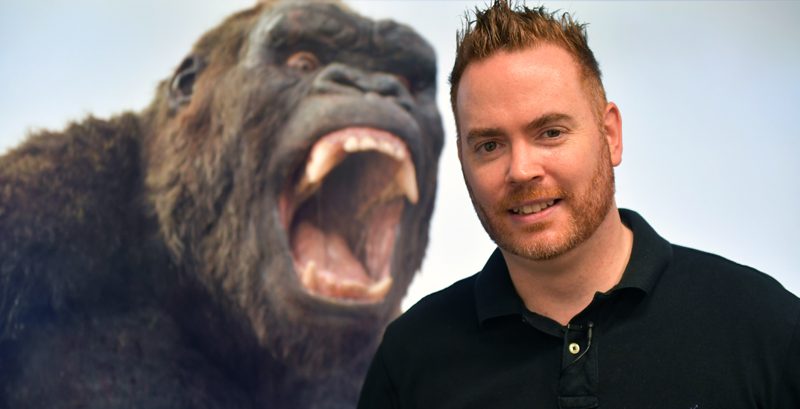
Filmmaker Joe Russo captures a selfie with members of his Avengers VFX team including Associate Visual Effects Supervisor, Jeff Capogreco (far left).

Most memorable sequence you worked on?

It’s a bit hard to pick one…so I have a few: 

The “Riddles in the Dark” sequence for The Hobbit: An Unexpected Journey was an opportunity to both upgrade and bring Gollum back to life. I was a massive fan of the original book as a kid. Gollum as a character fascinated me with his bi-polar personality. I enjoyed perfecting his look, lighting, integration and we did our best to preserve Andy Serkis’ facial and body performance.

Jeff with Actor/Director Andy Serkis at the VES Awards.

The “Flight of the Valkyries” sequence in Kong Skull: Island

Such a bonkers project. Loaded with explosions and non-stop action as audiences are reintroduced to KONG in an epic way. It was a very satisfying creative process led by VFX Supervisor Jeff White.

The “Dead Drop” sequence in Star Wars Episode 9: The Rise of Skywalker

Tie fighters and the Millennium Falcon in a high-paced chase sequence, down very detailed ice corridors, was a childhood dream come true. Collaborating with Sr. VFX supervisor Roger Guyett was an amazing experience. I learned a lot.

The “Krayt Dragon” sequence in The Mandalorian: Season 2: The Marshal

Very technically challenging to pull off. A large creature turning up huge volumes of dust sand and spewing acid. Such a large volume of work on a short schedule and done all while working remotely was very hard, but the results turned out quite well. It was a personal career goal to collaborate with Sr. VFX Supervisor John Knoll on this project.

The” Golden Gate Bridge” sequence – Rise of the Planet of the Apes

This sequence was my first big VFX supervisory role in my career. Loaded with a lot of technical challenges it was an amazing effort from everyone involved. Even our crowd apes had full sets of fur to render. It took a tremendous amount of rendering power and personal dedication to get that sequence through.

What is your favorite part of the job?

I really enjoy the collaboration between myself and the artists and working on trying to problem-solve shots, including shot approach and technology. It’s important to highlight that the visual effects process takes a huge team effort. I’m fortunate to be able to represent the crew before clients or other internal supervisors, but it’s the whole team that gets the work done. To be surrounded by so many talented and dedicated artists who truly love their jobs is exceedingly rare. I can’t imagine having another career.

Favorite movie of all time?

So hard. Let’s break it into categories:

CG Animated Feature: The Incredibles

2D  Animated Feature: Aladdin

SciFi Film: Star Wars: The Empire Strikes Back (Episode V)

Drama: The Shawshank Redemption, Schindler’s List

If you hadn’t become a VFX supervisor you would be working as? 

Visual effects for me wasn’t at all on my initial career path. I actually wanted to be IN movies as an actor. I attended high school at Victoria School for the Arts in Edmonton, Canada to develop my acting skills. In addition to theatre, I became involved in television arts, learning how to do offline editing, on location camera work, lighting and getting a basic understanding of how broadcast news operated. I soon found myself more interested in what went on behind the camera, rather than in front of it. 

Do you have any skills that your co-workers might not know about?

I play a bit of guitar. I also build and paint plastic model kits with my kids on rainy days.

Best advice you can give to someone who wants to become a VFX supervisor?

Learn from your mistakes. Be humble. Listen and ask relevant questions. Be inclusive. Collaborate and engage with others. Learn how to speak comfortably with people. Have confidence in yourself and your abilities. Maintain a positive outlook and try not to get too stressed!