San Francisco News

50 Years | 500+ Film and TV credits | 135+ Awards

SINCE 1975

Concept Artists Christian Alzmann, Brett Northcutt, and Stephen Todd were among the artists to receive a 2020 Concept Art Award on Saturday, September 12th. Additionally, Alzmann was honored with the LBX Concept Art Luminary Award, recognizing the impact of his work on The Child for The Mandalorian.
Check out the winning artwork alongside each honoree’s reaction.

2020 LBX CONCEPT ART LUMINARY AWARD: CHARACTER, LIVE-ACTION SERIES 
The Child by Christian Alzmann 
Star Wars: The Mandalorian

“It’s very humbling to be recognized in an industry that is producing so much amazing artwork. I did not anticipate that The Child would be loved by so many and I’m so happy that he has been a bright spot for fans over the last year. I look forward to seeing more art and artists honored at The Concept Art Awards in years to come.” – Christian Alzmann

ENVIRONMENT, LIVE ACTION FILM AWARD
Death Star Wreckage Duel by Brett Northcutt 
Star Wars: The Rise of Skywalker

“I am humbled to have won the Live-Action Film Environment award from the Concept Art Association. I have dedicated more than half of my life to imagining environments for movies and to receive an award directly from some of the top concept artists in the industry is truly an honor.” – Brett Northcutt


VR KEYFRAME AWARD
Windfall Crash by Stephen Todd 
Vader Immortal: A Star Wars VR Series

“Whoa! What an honor to even have my work voted on by my peers and judges whom I hold in high regard, let alone to receive the award. Thank you to the Concept Art Association and everyone who voted! Thank you to the ILM team who made this possible. I would not be here without all the help of my peers in the Art Department. Congrats to all the other winners!” – Stephen Todd 

Congratulations to all the 2020 Concept Art Award finalists! 

Industrial Light & Magic today announced the next phase of its global expansion plan for the company’s virtual production and StageCraft LED volume services. This expansion of services is tied to a proactive initiative for increasing diversity in the industry by combining ILM’s growth in this innovative methodology with a global trainee program geared for underrepresented VFX talent.

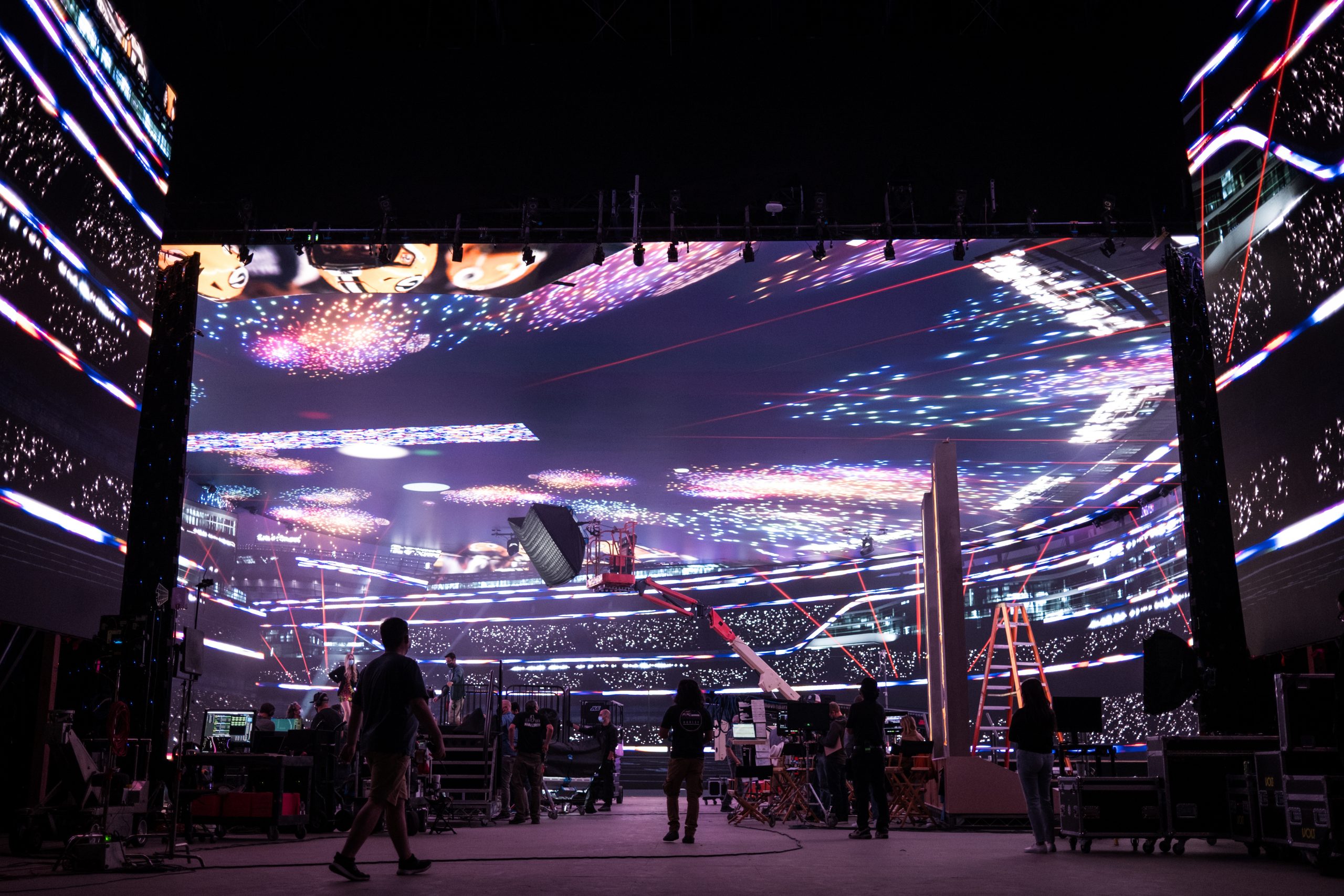
ILM’s existing StageCraft volume set at Manhattan Beach Studios (MBS) was used for the Emmy nominated series The Mandalorian and will soon be joined by a second permanent StageCraft volume set at the studio, servicing a variety of clients in the greater Los Angeles area. In addition, ILM is building a third permanent StageCraft volume at Pinewood Studios in London, and a fourth large-scale custom volume at Fox Studios Australia to be used for Marvel’s highly anticipated feature Thor: Love and Thunder directed by Taika Waititi. ILM will also continue to provide “pop up” custom volumes for clients as the company recently did for the Netflix production The Midnight Sky, directed by George Clooney.

An end-to-end virtual production solution, ILM StageCraft is a production-hardened technology that provides a continuous pipeline from initial exploration, scouting, and art direction, traditional and technical previsualization, lighting, and of course, real-time production filming itself, with the innovative StageCraft LED volumes. Lucasfilm’s hit Disney+ series, The Mandalorian, and a highly anticipated feature film took advantage of the full complement of ILM StageCraft virtual production services. Other projects such as Avengers: Endgame, Aquaman, Jurassic World: Fallen Kingdom, Battle at Big Rock, Rogue One: A Star Wars Story, Kong: Skull Island, Solo: A Star Wars Story, Ready Player One, and Rango, have utilized aspects of the toolset as well.

By every measure, the new stages are vast improvements over the original ground-breaking LED volume developed for the first season of The Mandalorian in 2018. Physically, the new stages are larger, utilizing substantially more LED panels than ILM’s original stage and also offering both higher resolution and smooth wall to ceiling transitions – this directly results in better lighting on set as well as many more in-camera finals. ILM’s proprietary solutions for achieving groundbreaking fidelity on the LED walls at scale allows for higher color fidelity, higher scene complexity, and greater control and reliability.

“With StageCraft, we have built an end-to-end virtual production service for key creatives. Directors, Production Designers, Cinematographers, Producers, and Visual Effects Supervisors can creatively collaborate, each bringing their collective expertise to the virtual aspects of production just as they do with traditional production,” explained Janet Lewin, SVP, GM ILM. Rob Bredow, CCO, ILM added “Over the past 5 years, we have made substantial investments in both our rendering technology and our virtual production toolset. When combined with Industrial Light & Magic’s expert visual effects talent, motion capture experience, facial capture via Medusa, Anyma, and Flux, and the innovative production technology developed by ILM’s newly integrated Technoprops team, we believe we have a unique offering for the industry.”

Alongside the new stages, ILM is rolling out a global talent development initiative through the company’s long-standing Jedi Academy training program. The program, which is part of the company’s larger Global Diversity & Inclusion efforts, offers paid internships and apprenticeships on productions with seasoned ILM Supervisors and Producers who serve as mentors. The program is intended to fill roles across the virtual production and VFX pipeline with those from traditionally underrepresented backgrounds; ILM has posted expressions of interests for jobs across the spectrum, from virtual art department teams and production management to engineering and artist roles. The goal with this initiative is to attract diverse junior talent and create a pipeline for them to become future Visual Effects artists, technicians, and producers who will be “ILM trained” and uniquely qualified to work in this new, innovative way of filmmaking.

“There is a widespread lack of diversity in the industry, and we are excited to leverage our global expansion in this game-changing workflow to hire and train new talent, providing viable, exciting, and rewarding jobs across many of our locations,” noted ILM VP, Operations, Jessica Teach, who oversees the company’s Diversity and Inclusion initiatives. “We believe this program can have a multiplier effect, attracting even more diverse talent to the industry and creating a pipeline for visual effects careers. We know that bringing more diversity into the industry is a critical part of strengthening and expanding our storytelling potential.”
ILM expects to have the new stages up and running for production in London in February of 2021 and in Los Angeles in March, with a mix of projects from features to commercials in line to take advantage of them. The company is currently fielding inquiries for future bookings by studios and filmmakers. For more information or to express interest in the Jedi Academy program visit our careers site.

We are thrilled to report that Rob Bredow, Executive Creative Director & Head of Industrial Light & Magic, is among the six newly elected members to join the Academy of Motion Pictures Arts and Sciences’ 2020-2021 Board of Governors. Additionally, Jessica Teach, San Francisco Executive in Charge, and 12 individuals from our artist and engineering ranks have been invited to join The Academy.

“I’m supportive of many of the positive changes that have been made within the Academy recently, and I want to focus on continuing this positive momentum,” said Bredow, adding, “I believe the VFX Branch will be stronger if we are more inclusive. A number of brilliant and accomplished visual effects experts are joining the Academy, including a few from ILM who I am excited to work alongside in this capacity. There is still much to be done. I’m excited to be joining the board of governors in this time of change.”

Bredow, who helped start the Academy Software Foundation and serves as chair, is also passionate about sharing  “I think as leaders in our field, we have the honor and responsibility to share what we’ve learned for the next generation of filmmakers.”

The 2020 Academy Invitees from ILM:
MEMBERS-AT-LARGE
Jessica Teach

VISUAL EFFECTS BRANCH
Jon Alexander – Avengers: Age of Ultron, Noah
Tami Carter – Star Wars: The Rise of Skywalker, Lucy
Karin Cooper – Star Wars: The Rise of Skywalker, Kong: Skull Island
Ryan Church – Transformers: The Last Knight, Avengers: Age of Ultron
Leandro Estebecorena – The Irishman, Kong: Skull Island
Stephane Grabli – The Irishman, Jurassic World: Fallen Kingdom
Douglas Moore – 12 Strong, Ant-Man
Nick Rasmussen – Ready Player One, Star Wars: The Last Jedi
David Seager – Aladdin, Terminator: Dark Fate
Amy Shepard – Playing with Fire, Doctor Strange
James Tooley – Star Wars: The Rise of Skywalker, Teenage Mutant Ninja Turtles
Paige Warner – Terminator: Dark Fate, Pirates of the Caribbean: Dead Men Tell No Tales

For a full list of the 2020 Academy Invitees, click here and for a full list of the current 2019-2020 Academy governors, click here.

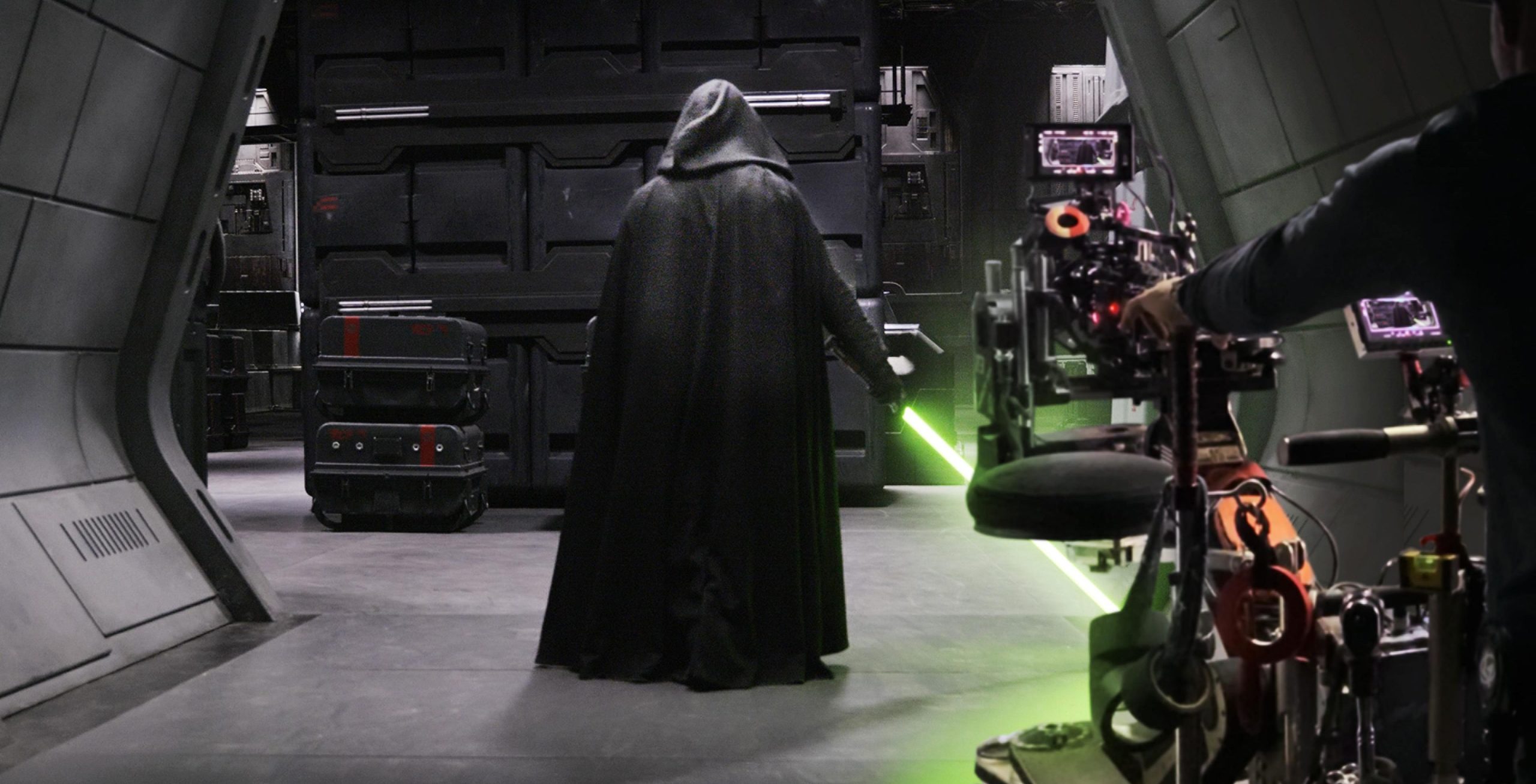
Starting May the 4th viewers have been treated to a closer look at the groundbreaking technology at work behind the scenes of The Mandalorian and more when Disney+ pulls back the curtain on the live-action Star Wars series with Disney Gallery: The Mandalorian. The eight-episode docuseries, hosted by creator and executive producer Jon Favreau, promises insightful commentary from actors including Pedro Pascal and Gina Carano, anecdotes from the directors who helmed episodes in the first season, ILM’s visual effects team, and an exploration into what it means to be a part of telling stories in the Star Wars galaxy and honoring George Lucas’s legacy.

Check out the official trailer for Disney Gallery.

Industrial Light & Magic (ILM), and Epic Games (maker of the Unreal Engine), together with production technology partners Fuse, Lux Machina, Profile Studios, NVIDIA, and ARRI unveiled a new filmmaking paradigm in collaboration with Jon Favreau’s Golem Creations to bring The Mandalorian to life. The new virtual production workflow allows filmmakers to capture a significant amount of complex visual effects shots in-camera using real-time game engine technology and LED screens to represent dynamic photo-real digital landscapes and sets with creative flexibility previously unimaginable.

Over 50 percent of The Mandalorian Season One was filmed using this ground-breaking new methodology, eliminating the need for location shoots entirely. Instead, actors in The Mandalorian performed in an immersive and massive 20’ high by 270-degree semicircular LED video wall and ceiling with a 75’-diameter performance space, where the practical set pieces were combined with digital extensions on the screens. Digital 3D environments created by ILM played back interactively on the LED walls, edited in real-time during the shoot, which allowed for pixel-accurate tracking and perspective-correct 3D imagery rendered at high resolution via systems powered by NVIDIA GPUs. The environments were lit and rendered from the perspective of the camera to provide parallax in real-time, as if the camera were really capturing the physical environment with accurate interactive light on the actors and practical sets, giving showrunner Jon Favreau, executive producer and director Dave Filoni, visual effects supervisor Richard Bluff, and cinematographers Greig Fraser and Barry “Baz” Idoine, and the episodic directors the ability to make concrete creative choices for visual effects-driven work during photography and achieve real-time in-camera composites on set.

The technology and workflow required to make in-camera compositing and effects practical for on-set use combined the ingenuity of partners such as Golem Creations, Fuse, Lux Machina, Profile Studios, and ARRI together with ILM’s StageCraft™ virtual production filmmaking platform and ultimately the real-time interactivity of the Unreal Engine platform.

“We’ve been experimenting with these technologies on my past projects and were finally able to bring a group together with different perspectives to synergize film and gaming advances and test the limits of real-time, in-camera rendering,” explained Jon Favreau adding, “We are proud of what was achieved and feel that the system we built was the most efficient way to bring The Mandalorian to life.”

“Merging our efforts in the space with what Jon Favreau has been working towards using virtual reality and game engine technology in his filmmaking finally gave us the chance to execute the vision,” said Rob Bredow, Executive Creative Director and Head of ILM. “StageCraft has grown out of the culmination of over a decade of innovation in the virtual production space at ILM. Seeing our digital sets fully integrated, in real-time on stage providing the kind of in-camera shots we’ve always dreamed of while also providing the majority of the lighting was really a dream come true.”

Richard Bluff, Visual Effects Supervisor for The Mandalorian added, “Working with Kim Libreri and his Unreal team, Golem Creations, and the ILM StageCraft team has opened new avenues to both the filmmakers and my fellow key creatives on The Mandalorian, allowing us to shoot principal photography on photoreal, virtual sets that are indistinguishable from their physical counterparts while incorporating physical set pieces and props as needed for interaction. It’s truly a game-changer.”

Today, ILM Senior Compositor, Charmaine Chan explains her visual inspiration for the Kylo and Luke confrontation after the Battle of Crait in Star Wars: The Last Jedi. 
Kylo Ren
These days, majority of blockbuster films are shot in front of a giant green/blue screen. Taking an actor in front of a screen and grounding them into a scene to help promote their development and storyline is always a tough challenge. On Star Wars: The Last Jedi, I got tasked with such a scenario, specifically the scene where Kylo and Luke finally confront one another after the Battle of Crait. It’s a tense moment and I was assigned to handle the Kylo Ren shots under the direction of VFX Supervisor Eddie Pasquarello and my sequence lead Peter Demarest.
The scene we were set out to create was right after a giant battle has just occurred, the land was all torn up, ash and salt flying everywhere, and we needed to create a sense of intensity, passion, and rage from the duality built up between Kylo and Luke.
Kylo Ren
The first time I saw the plates they reminded me a lot of the sparring sequence from Kurosawa’s Seven Samurai. It actually happens to be the 65th anniversary of Seven Samurai this year, so its only appropriate to give a nod to the film and cinematography that has influenced so many other films, including this one!

Toho Productions


The main thing I noticed within Seven Samurai is the simplicity and stillness of each shot and angle. Yet the way the subject is framed leaves us in anticipation of their next move. We wanted to do the same within our shots, where the backgrounds were not distracting us from focusing in on the two main actors.
We had the AT-M6’s in the back at a complete stand still waiting for orders, and a dramatic landscape that was subtlety changing as time passes by during their exchange. We represented this change via two major factors: the sun setting and the buildup of salt over the red kyber crystal floor.
Kylo Walking
When Kylo first approaches Luke, we set the backdrop very warm with saturated orange and reds and a strong contrast. We went through many iterations of both the sky color and FX animation of smoke/dust wisps over the floor. We then slowly transitioned the sky color to be less saturated, and used the animated smoke to create even more salt on the ground. By the time Kylo is ready to fight Luke, we’ve created a very different aesthetic that’s both cool toned and diffused.
The Last Jedi
What transpired next is probably one of my favorite saber duels, and being able to help set the mood right before that fight was a great refresher on visual storytelling.

OpenEXR, a widely-adopted HDR image file format, and OpenCue, a recently launched render manager, join the growing roster of Academy Software Foundation projects.
We’re thrilled to announce that the Academy Software Foundation (ASWF), a neutral forum for open source software development in the motion picture and media industries, today announced that OpenEXR and OpenCue have been accepted by the Technical Advisory Committee (TAC) as Academy Software Foundation projects alongside OpenVDB and OpenColorIO.
Initially developed by ILM, OpenEXR is an Academy Scientific and Technical Award winning high dynamic-range (HDR) image file format for use in computer imaging applications. It is a widely-adopted standard in computer graphics for linear and interactive media.
OpenCue is a fully featured, open source render manager for media and entertainment that can be used to break down complex jobs into individual tasks. Developed in collaboration by Google Cloud and Sony Pictures Imageworks, OpenCue is an evolution of Sony’s internal queuing system, Cue 3.
“This announcement marks a new phase for the Academy Software Foundation. We’ve achieved our initial goal of accepting OpenVDB, OpenColorIO, and OpenEXR – projects which greatly influenced the Foundation’s formation – and we are now ready to support and drive collaboration around newer projects like OpenCue,” David Morin, Executive Director of Academy Software Foundation. “Studios and developers are finding value in having a neutral home for the open source projects that our industry relies on, and we look forward to growing our projects and continuing to find new ways to support to the broader open source community.”
L3 and Lando
OpenEXR and OpenCue join OpenVDB and OpenColorIO as projects in the incubation stage at the Academy Software Foundation. All newly accepted projects start in incubation while they work to meet the high standards of the Academy Software Foundation and later graduate to full adoption. This allows the Academy Software Foundation to consider and support projects at different levels of maturity and industry adoption, as long as they align with the Foundation’s mission to increase the quality and quantity of contributions to the content creation industry’s open source software base.
Cary Phillips, Lucasfilm Research & Development Supervisor and Academy Science and Technology Council member noted, “The Academy Software Foundation was created with OpenEXR in mind, recognizing that there’s a natural life cycle to software projects: original architects and developers move between companies, expertise spreads throughout the industry, and the entire VFX technology ecosystem rapidly evolves. The ASWF has brought together virtually every major company in the industry, and it provides a vital forum to discuss sensible, practical solutions that should ensure that OpenEXR continues to serve the industry as a stable and reliable standard.”
OpenEXR
One of the foundational technologies in computer imaging, OpenEXR is a standard HDR image file format for high-quality image processing and storage. It features higher dynamic range and color precision than existing 8- and 10-bit image file formats, and the latest version of OpenEXR supports multiple image compression algorithms, stereoscopic workflows, multi-part files and deep data.
“For us, the single most important thing we create are the images that we put on screen, and we’ve all come to trust the OpenEXR format with our most precious data. ILM’s decision over 15 years ago to make EXR available as an open source project for the filmmaking community arguably set in motion an industry-wide trend that fostered collaboration and shared advancement, eventually culminating in the creation of the Academy Software Foundation. We’re proud to contribute OpenEXR to a new home to ensure it remains a robust and stable project for years to come,” said Francois Chardavoine, Head of Production Technology, Industrial Light & Magic.
Wakanda
OpenEXR was developed in 1999 by ILM in response to the demand for higher color fidelity in the visual effects industry. It was released to the public as an open source library in 2003, and it has since been widely-used and maintained through code contributions from companies including Weta Digital, Walt Disney Animation Studios, Sony Pictures Imageworks, Pixar Animation Studios, Autodesk, and DreamWorks, among others. OpenEXR was honored with an Academy Scientific and Technical Award in 2007.
OpenEXR is ILM’s main image file format and has been used in all motion pictures that ILM contributes visual effects work to since 2000. The first movies to employ OpenEXR were Harry Potter and the Sorcerer’s Stone, Men in Black II, Gangs of New York, and Signs. Recent films include Solo: A Star Wars Story, Avengers: Infinity War, Black Panther, and Star Wars: The Last Jedi.
Developers interested in learning more or contributing to OpenEXR can visit the OpenEXR Github page.

Today our guest writer is Todd Vaziri, Lead Artist at ILM who chronicles how the Blockade Runner engine shot from Rogue One: A Star Wars Story went from idea to reality:

I was thrilled to get to work on this shot with my friend and frequent collaborator, ILM lighter Tom Martinek. (Leia’s Blockade Runner escapes, tying Rogue One directly to the start of Star Wars (1977)? Yes, please!) We loved bringing this moment to life. It was a thrill to be able to help create the updated look of a classic ship we haven’t seen on screen since 1977. Also, it’s fun to realize that pretty much no one agrees how to pronounce “Tantive IV.”

Our first task was to study those first fleeting glimpses of the Tantive IV from the original Star Wars. Replicating the engine look of the engines *precisely* from the first film would not work for our movie. This was a recurring theme for the design challenges we took on for Rogue One.

Smoke Blockade Engine - Rogue One

Blockade Engine Distance - Rogue One

I created the Blockade Runner ‘engine look’ to appear the way you *think* you remember it from Star Wars, not the way it actually appeared — honoring the spirit of the original look and updating it to fit modern sensibilities and the stylistic signature of our new film.

First, I matched the hue of the engine glow from the original film. From there, I wanted to add an organic “jet engine” texture to the inside of each engine, so I rotoscoped and stabilized some footage from a Bell 209 helicopter engine, which had a lot of built-in dynamic energy.

I placed the texture inside the engine geometry of each of the eleven engines so we could get peeks at it when looking down the tunnel, and offset and rotated the helicopter engine footage for each engine (so each engine would have an unique energy signature).

Tom developed a flickery cucoloris effect to create the interactive light from the engine cast onto the inside of the chamber–I split that into 11 passes to animate them separately. Then I had to come up with a way for the engines to ignite as if from a cold start.

Blockade Engine - Rogue One

I knew we never saw a Blockade Runner power up in any of the movies, but I asked Pablo Hidalgo (Lucasfilm) and others to see if there was any precedent set in any of the animated series. Apparently, there was none! So, I thought it would look cool if the four corner engines fired up first for stability. Then the other seven engines followed up behind. I didn’t want the shot to become a big lens flare show, so I only had a few crisp flares peek through (taking my cues from the original trilogy X-wing engine flares).

This engine look became a quick-start setup for the other Blockade Runners you see in the film. Finally for this shot, I added a hopefully-subtle camera rumble as the engines ignited.

Radar Dish Rotation Examples.

We had a lot of fun talking about the rotating dish atop the Tantive IV. Look carefully at it in the original Star Wars (1977)–in shot 1, it’s not visible. In shot 2, it’s rotating counter clockwise. In shot 3, it’s rotating clockwise! For Rogue One, we animated the dish counterclockwise.

Rogue One (2016), visual effects by Industrial Light & Magic. Visual effects Supervisor John Knoll. Full ILM credits.