San Francisco News

50 Years | 500+ Film and TV credits | 135+ Awards

SINCE 1975

The actor who voiced and supplied the motion capture performance for Volo Bolus discusses their collaboration with ILM for the mixed reality playset.

By Jay Stobie

In Star Wars: Beyond Victory – A Mixed Reality Playset’s Adventure Mode, players follow the journey of up-and-coming podracer Volo Bolus, whose plight to become famous leads them to team up with the infamous Sebulba. ILM.com sat down with actor Fin Argus, who voiced and provided the motion capture performance for Volo Bolus, to learn more about their approach to portraying the character, their time collaborating with Industrial Light & Magic, their thoughts on the interactive gameplay experience, and much more.

A Star Wars Story

Argus’s zest for Star Wars stretches back as long as they can remember, with cherished memories ranging from watching their original trilogy gold VHS box set to carrying around a Darth Vader backpack filled with figurines. “I also dressed as Jar Jar Binks in my preschool’s costume contest for Halloween, and I was robbed,” Argus jokes. “The first video game I ever completed was, in fact, LEGO Star Wars, and it’s still one of my favorites. Star Wars was the first fantasy world I fell in love with. It is epic and vast, and I was convinced that I was destined to be a Jedi. Joke’s on me – I was actually destined to be a podracer!”

When Argus finally had the opportunity to audition to become that podracer, the information they were provided about Volo Bolus was understandably limited. “Such is the nature of the things for stories as huge as Star Wars,” Argus relays. “All I knew is they were a non-binary podracer with a good sense of humor. Part of the audition scene was just the directive: ‘Act like you’re working on things like an engine,’ so I grabbed a spatula and ladle and started banging them around in my living room. I’d say that’s the energy I honed in on for the whole of the project: just some kid banging spatulas together hoping something great comes of it!”

(Credit: ILM).

Motion Capture Magic

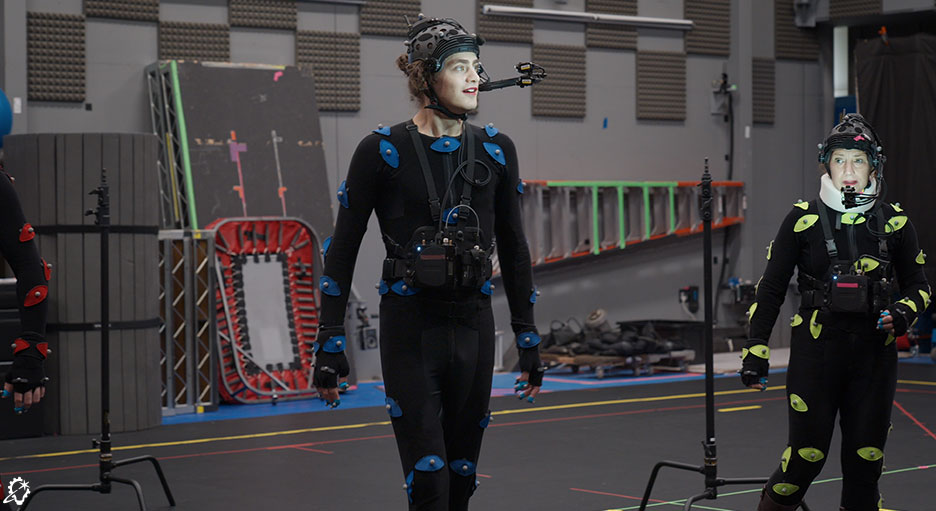
Once they landed the role, Argus dove right into the motion capture process at Industrial Light & Magic. “I was brand new to the mo-cap world, so I learned on the job. Luckily, I was with a team of seasoned professionals who made it fun and easy. I got into my little outfit, which is a skin tight body suit. Then I get velcroed in from the outside while people add reflective balls to any point on my body that has a joint so they can track my body movements in the studio.

“I also had to wear bright red lipstick so the camera that pointed directly at my face from the helmet they put on me could make out the contrast of my lips to use for the animators to add on to my character design,” Argus explains. “We then go through a series of motions on the stage, almost like an aerobics class, that calibrates my avatar with my own body. There’s a ‘magic mirror’ that then shows you your character design reflected back to you – that’s where I practiced my character’s ‘walk’ and learned how long Volo’s limbs are so I could reach for objects in the mo-cap world accurately. Learning the dimensions of my new body was the hardest part of the job for me, but by the end of the first week it was second nature. After that, it was off to the races!”

Argus’s favorite element of the motion capture work involved collaborating on setbuilding scenes with multiple actors. “There’s a scene where I hop up onto Sebulba’s ship to join his crew and pilot for them. Our team had to build a multi-level structure of perfect proportions so the dimensions of our characters’ bodies fit perfectly on the ‘ship’ and still allowed my character’s movement to look natural,” Argus declares. “It makes so much sense in retrospect, but I was surprised to learn that, because all of our characters are such different sizes, we as actors had to interact with the set very differently to make our characters land in the right locations. For example, for two actors in the same scene, the cockpit of the ship could be in totally different locations on the stage, because our characters are different sizes, relatively speaking.”

(Credit: ILM).

Volo’s Voice and Movements

When it came to developing Volo Bolus’s voice, Argus harnessed their younger years for inspiration. “Their voice is basically just me as a teenager! A little more animated than I am in everyday life, but the game is still very much grounded. I just got to tap into how a younger version of myself would speak and react in those situations, while hanging on to that sense of humor to cope with all the chaos that ensues for them,” Argus outlines.

As far as their four-armed character’s movements, Argus lightheartedly proclaims that “with all respect, Volo and I are both pretty gangly, and I leaned into the floppiness of my arm movements to highlight their youthfulness and draw attention to their four arms. How fun is having four arms? Very,” Argus quips.

“I didn’t have to worry too much about the second pair of arms, as those were controlled entirely by animation. I only controlled the top two, which I guess you could say are Volo’s ‘dominant arms.’ The bottom two were mainly doing auxiliary tasks or in use while piloting when every single arm had a job to do at once. I would say the most I thought about having four arms is when I was imagining all the very specific choreography they could do. I hope I can test this theory someday, but I think it would be very hard to beat Volo in a dance battle.”

(Credit: ILM).

An ILM Experience

Speaking on their time collaborating with ILM, Argus credits their colleagues for creating such a special experience. “A huge shout out to [Beyond Victory director] Jose Perez III for his direction and the passion he brought to the project,” the actor says. “He set a tone of excitement and drive that kept everyone on set happy to be there, and to tell the story. [Writer] Ross Beeley turned out an amazing script and kept us focused on the heart of the story throughout a process where we had to jump around and film different parts of the story, 

“Big shoutout to [motion capture performer] Nathan Camp for not only delivering a sensational performance as Coy Vrizh, but also as so many other characters for mo-cap. He taught me and a lot of other actors how to navigate mo-cap performances with so much kindness and patience,” Argus continues. “The ILM team is a dream to work with every step of the way, and I feel lucky to have done my first video game with such an all-star group of creatives and professionals.”

(Credit: ILM).

From Performer to Player

Given Argus’ dedication to their craft and enthusiasm for all things Star Wars, it’s no surprise that they took Beyond Victory for a test drive as soon as it was available on Meta Quest. “I was so blown away by the immersiveness and game mechanics. It was strange hearing my own voice in my ears and seeing the game from ‘my own’ perspective, but as the character. It felt nostalgic, like I was reliving the filming experience but peeling back the layers to see the reality of what we were making. It felt like watching a dream come true in real time,” Argus beams. “I’m still not over it, and I probably never will be.”

Argus takes great joy in their character, revealing, “Volo is a total sweetheart and goofball, but I think I may have brought a slight edge to them through my performance. Maybe ‘sass’ is a better word, actually?” The actor also admits that their initial playthrough of Beyond Victory might have been forever enshrined, as “I’m pretty sure my friends have a video of me playing for the first time and jumping up and down, screaming, when I first heard and saw Volo within the game.”

For as grand in scope as the Star Wars galaxy is, Argus ultimately believes that the slightest details are what truly stand out, observing, “It may sound a little silly, but I’m most proud of seeing the really specific things come to life: like a shot where I had to open a dumpster to a jump scare of a droid popping out. When we filmed, it was tough to get the placement of my hand and timing of the reaction just right, so seeing those moments of attention to detail pay off to create such an immersive, exciting, and beautiful game makes me so proud of the entire Star Wars: Beyond Victory team, and I hope we get to do it again!”

On Meta Quest, dive into three unforgettable adventures with Vader ImmortalTales from the Galaxy’s Edge and Star Wars: Beyond Victory — A Mixed Reality Playseteach 50% off, or get all three together for $30 from April 28 to May 5.

Read more about Star Wars: Beyond Victory here on ILM.com:

Bobby Moynihan Takes Us Behind the Scenes of ‘Star Wars: Beyond Victory’

Inside the ILM Art Department: ‘Star Wars: Beyond Victory’

‘Star Wars: Beyond Victory’ Now Available and Director Jose Perez III Takes Us Behind the Scenes

Jay Stobie (he/him) is a writer, author, and consultant who has contributed articles to ILM.com, Skysound.com, Star Wars Insider, StarWars.com, Star Trek Explorer, Star Trek Magazine, and StarTrek.com. Jay loves sci-fi, fantasy, and film, and you can learn more about him by visiting JayStobie.com or finding him on Twitter, Instagram, and other social media platforms at @StobiesGalaxy.

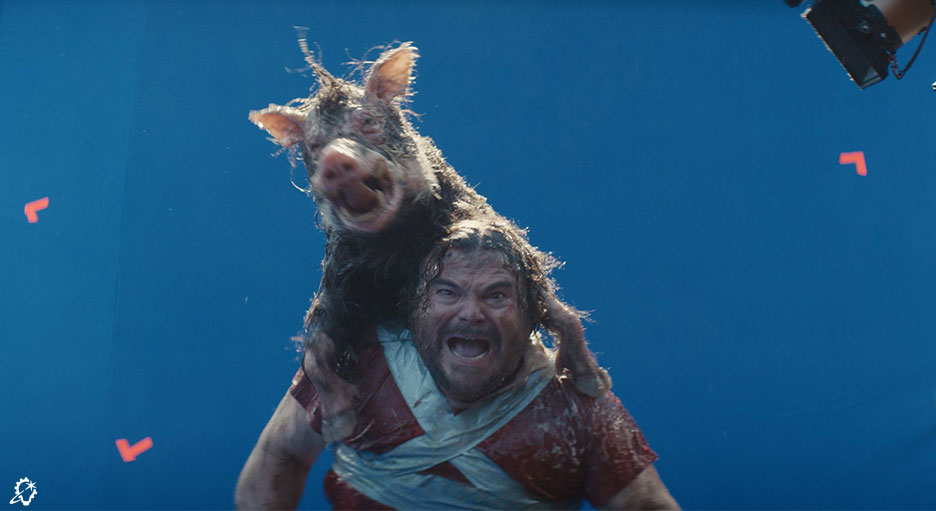
Industrial Light & Magic artists Marc Whitelaw and Maia Kayser discuss the studio’s work on director Sam Raimi’s Send Help, and how its rampaging boar sequence evolved into something bloodier and funnier.

By Jamie Benning

(Credit: ILM & 20th Century Studios).

There’s a moment in Send Help (2026) when the film shows its hand. What begins as a familiar survival setup quickly escalates into something far more chaotic. Stranded on a desert island, Linda Liddle (Rachel McAdams) is attacked by a wild boar. After an extended moment of intensity, the audience settles into laughter, waiting to see what comes next.

It’s a tonal balancing act rooted in the filmmaking of Sam Raimi. Across films like The Evil Dead (1981) and Drag Me to Hell (2009), Raimi has consistently pushed horror into a space where shock and humor sit side by side. The violence is heightened, the reactions are exaggerated, and the audience is invited to laugh as much as recoil.

ILM’s work focused on bringing the boar to life and shaping the escalation of the attack, balancing physical realism with increasingly exaggerated behavior. The challenge was not simply to create a believable creature, but to understand how far that believability could be stretched.

Escalation as a Creative Process

What defines the sequence is not just how extreme it becomes, but how deliberately that escalation was shaped by the filmmakers. It doesn’t begin at full intensity. It builds, step by step, each beat pushing the limits of what feels plausible before extending beyond it.

That progression emerged through iteration. Early versions of the work aimed for something grounded, integrating the creature naturally into the environment. But with each pass, it became clear that realism alone wasn’t going to carry the scene.

Marc Whitelaw, lead digital artist and compositor at Industrial Light & Magic, explains how quickly that restraint fell away once the tone of the film began to assert itself. “We started off fairly reserved, holding things back and integrating the creature into the plates,” he tells ILM.com. “But throughout production, it just kept going further and further until we were essentially making blood. We added so much blood.”

What’s notable is that this escalation wasn’t something the team had to fight for. In many productions, there’s a point where things are pulled back, where excess is trimmed in favor of control. Here, the opposite happened. Each version went further, and the response was to go further still.

“It felt like no matter how far we went, the response was always ‘yes, yes, yes,’” notes Whitelaw. That direction often came down to a simple note from Raimi: “kill, kill, kill.” It became something of a guiding principle for the sequence, not just in terms of violence, but in how far each moment could go.

That kind of feedback loop changes how a sequence is built. Instead of working toward a fixed target, the team was discovering the tone in real time, using each iteration to redefine what felt appropriate. By the end of the process, ideas that might once have seemed excessive became essential. “We even had an eyeball pop out of its socket, and it all seemed to work,” Whitelaw adds. “Sam clearly knew what he was looking for, and I think we delivered that.”

Director Sam Raimi and actor Rachel McAdams (Photo by Brook Rushton © 2025 20th Century Studios All Rights Reserved).

A Different Kind of Production

That freedom to push the boundaries was shaped in part by the scale of the project itself. Coming off a large production, Whitelaw found that the transition to a smaller team immediately changed the way the work developed. Fewer layers meant faster feedback and a more direct exchange of ideas between departments. “I finished on Tron: Ares (2025) before joining Send Help. It was a huge project with a big team, so moving onto something much smaller was a really nice contrast. Even though there was still a lot of work to get through, it felt very different.”

Where larger shows can become segmented, this environment allows ideas to move more fluidly. Departments were working in constant dialogue, shaping the sequence collectively rather than handing it off stage by stage. “We worked very closely together. It was collaborative and quite intimate between departments, with a lot of cross communication and shared problem solving,” says Whitelaw.

Just as important was the proximity to the filmmakers. Rather than reacting to notes after the fact, the team was seeing those reactions in real time, adjusting and evolving the work as the tone became clearer. “Being in client calls with Sam Raimi and seeing his reactions firsthand, then watching him take ideas and run with them, made it a really fun project. I had a great time.”

Alongside the digital work, the filmmakers also captured practical elements on set to help sell the interaction. Blood hits were captured directly with Rachel McAdams, giving the sequence a tactile base that could then be enhanced further in post.

For animation supervisor Maia Kayser, that same dynamic extended to how performances were built on set. “Well, they had an on-set head in the last scene where you see it drop in. That was a practical element,” she tells ILM.com. “And then they also had this dummy on rollers that they used, which helped with the interaction and the timing. Everything gelled, both with the client and within the ILM team. We fed off each other, brainstormed ideas, and it created a really fun environment where a lot of great ideas came from.”

The practical boar puppet used live on the set (Photo by Brook Rushton © 2025 20th Century Studios All Rights Reserved).

From Realistic Animal to Wild Character

At the center of the sequence is the boar, and its shift from realism into exaggeration sets the tone for what follows. The starting point was realism. A believable animal, behaving in a way audiences would recognize. But as the sequence developed, it became clear that realism alone was limiting what the scene could achieve.

“The original idea was a hyperrealistic boar, so we started in a more subdued place,” notes Kayser. That approach quickly gave way to something more expressive once early versions were reviewed. The direction shifted toward aggression, exaggeration, and comic performance.

“As we showed our first takes, the direction became clear – we needed to push it further, and make it more aggressive,” Kayser says. “It was so great to have very clear direction from Sam Raimi. It’s about finding those comedic pauses, at least in animation. It’s all about timing. It’s all about finding those right pauses.”

That timing is what allows the sequence to pivot from tension to release. The boar drops. The audience breathes. Then it rears back up again, taking everything further into excess – with snot, blood, and movement all exaggerated to the point where the violence tips into comedy. Kayser points to the spearing moment as one example of how far the sequence could go.

“I remember when the beast first gets speared. Initially, the way we animated it, we had him just going and running right into the spear, and then Sam Raimi was like, ‘No, you gotta take this much further. We really want to make this funny.’ So we had him literally run at the spear, and he gets lifted off the ground and lands again. It worked. It made it funnier.

“We also started adjusting the model, so it became grittier, dirtier, and more injured,” Kayser adds. “It was interesting to see how it evolved and became increasingly gory.” This shift is crucial. Moving away from strict realism, the team created space for exaggeration, allowing the animation to carry both threat and humor without breaking the audience’s suspension of disbelief.

(Credit: ILM & 20th Century Studios).

Building Through Collaboration

Many of the sequence’s defining moments didn’t originate from a single department. They emerged through conversation, evolving across reviews as ideas were picked up, challenged, and developed further. In one case, what began as a relatively contained moment of violence quickly escalated into something far more extreme, as each iteration built on the last.

Kayser explains how those ideas would often take shape in discussion before finding their way into the work. “It would be just randomly in these meetings where we talk. At first the gore and violence was actually happening in the ear.”

That initial idea didn’t last long. As the work developed, the team began looking for ways to push the moment further, both visually and tonally. “And then that evolved. She [McAdams] holds onto one ear and starts stabbing the other ear. Well, it had to be even gorier,” Kayser says.

From there, the moment shifted again, moving beyond what had originally been planned. “This whole thing came about with the eye. And Marc was saying, ‘Well, what if we just have the eye kind of pop out and roll down?’” Kayser says.

What followed is a clear example of how the sequence came together across departments, with each layer adding to the final result. “So we integrated that in animation. And then comp started squirting all the blood out,” Kayser explains. “It was really over the top, but it was so fun because there was such a great collaboration with the client and also internally, brainstorming and really trying to go with these ideas and push the envelope.”

(Credit: ILM & 20th Century Studios).

Timing the Chaos

For all its intensity, the sequence works because of control. Not control of scale, but control of timing. The humor doesn’t sit outside the action. It is embedded within it, often arriving in the pause before the next escalation. Those pauses give the audience just enough space to catch a breath and process what they’re seeing before the sequence escalates again.

“The comedic side, especially in animation, is all about timing,” says Kayser. “It’s about finding the right pauses.” Those moments are carefully shaped, often by pushing them further than instinct might initially suggest. “Sam would say, ‘Take this much further, we want this to be funny.’”

One moment in particular captures that shift from realism into exaggeration. “I remember thinking it might not play when we had the boar run into the spear, get lifted off the ground, and then land again. But it worked. It made the moment funnier.”

The success of that moment depends on the design of the creature itself. Because it sits slightly outside strict realism, the audience accepts that level of exaggeration. “If the asset had been fully realistic, it might have looked strange,” Kayser notes. “But because it was stylized, we could exaggerate the animation and make it work. Make it over the top and still believable.”

(Credit: ILM & 20th Century Studios).

The Audience Test

For all the iteration and refinement, the final measure of the sequence is simple. It either lands with an audience, or it doesn’t. That reaction can’t be simulated in a review or a client call. It only becomes clear when the film is played in front of a crowd. “It’s always fun in the theatre, you get to watch how people react,” says Kayser.

When the sequence played, the response confirmed what the team had been building toward. “I love that moment where the boar kind of dies, and then Linda breathes, and then it cuts to a close-up of her, and then it rears up again and snot continues to fly. Once the scene is finished, you know, there was that moment of release, and everyone started laughing,” says Whitelaw. In that moment, the balance between horror and comedy, realism and exaggeration, finally clicks into place. “I remember thinking, ‘It worked.’ It looked great.”

(Credit: ILM & 20th Century Studios).

The Throughline

What runs through the work on Send Help is not just technical craft, but the way that craft is shared. The sequence works because it was shaped across departments, with ideas passed around, refined, and developed by artists working toward the same goal.

For Marc Whitelaw, that collaborative approach is not unique to this project, but something fundamental to how ILM operates. Even on larger productions, where teams are more segmented and timelines tighter, he sees it as the key to unlocking better work. “One of our core principles at ILM is collaboration, and I’d love to see that continue on every project I work on,” he says. “On bigger shows, when teams are trying to hit deadlines, it can be harder to try new ideas and approaches. But whenever there’s an opportunity, it’s one of ILM’s strengths.”

That mindset was particularly evident on Send Help, where the smaller team allowed ideas to move more freely and evolve more quickly. For Whitelaw, it wasn’t just the scale of the work that stood out, but the level of care that went into it at every stage. “The smallest of details never got overlooked,” he explains. “Even things that no one asked for would get improved, just because people wanted it to look as good as it could.”

Sam Raimi studies the production’s storyboards while on location (Photo by Brook Rushton © 2025 20th Century Studios All Rights Reserved).

Kayser sees that same idea on the animation side, but also in terms of what artists take away from working in that environment. For her, one of the defining aspects of ILM is the depth of talent across the studio, and the way each project becomes an opportunity to learn from the people around you. “What’s so great about ILM is the talent that we have here, and every project you learn so much from your peers and your teams,” she says. “And that makes everything better and the product better.”

That shared investment shows up in the work itself. As the sequence developed, details were added and refined across every department, from animation through to fur and compositing, each layer building on the last. “When you have a project like that, and everybody’s motivated and passionate, the work that comes out of it is incredible,” Kayser adds. For her, the eye-stabbing moment stands as the clearest example of that collective effort, where multiple departments contributed ideas that shaped the final result.

“One of the eye-stabbing shots was one of those things, one of those shots that really felt like a shot where every department came together…and came up with these different ideas and details,” says Kayser. “And that’s where ILM is so good and strong.”

In that sense, the sequence becomes more than just a showcase for creature work or spectacle. It reflects a way of working – one where ideas are shared, details are pushed, and the final result is shaped collectively. And in the case of Send Help, that collective push often came down to a simple directive: Go further. Push harder. Kill, kill, kill.

Send Help begins streaming on Hulu on May 7, 2026.

Jamie Benning is a filmmaker, author, and podcaster with a lifelong passion for sci-fi and fantasy cinema. He hosts The Filmumentaries Podcast, featuring twice-monthly interviews with behind-the-scenes artists. Visit Filmumentaries.com or find him on X (@jamieswb) and @filmumentaries on Threads, Instagram, Facebook, and YouTube.

The team joins their Lucasfilm counterparts in the win for Special, Visual and Graphic Effects.

Last night at the BAFTA TV Craft Awards in London, the team from Industrial Light & Magic and Lucasfilm took home the win for Special, Visual and Graphic Effects for their work on the second season of Andor.

Lucasfilm’s vice president of visual effects TJ Falls accepted alongside fellow winners, including production visual effects supervisor Mohen Leo and ILM visual effects supervisor Scott Pritchard. Along with ILM as a whole, the other individual recipients included special effects supervisor Luke Murphy, creature and droid effects supervisor Neal Scanlan, and senior digital colorist Jean-Clément Soret.

Congratulations to all of our ILM and Lucasfilm winners!

Read more about Andor on ILM.com:

“Like Eating an Elephant One Bite at a Time”: TJ Falls and Mohen Leo on the Visual Effects of ‘Andor’ Season 2

“Let the Experts Be the Experts”: TJ Falls and Mohen Leo on the Visual Effects of ‘Andor’ Season 2

Assembling a Starfighter: Exploring ILM’s Role in Creating the TIE Avenger from ‘Andor’

‘Andor’ Wins Visual Effects Emmy


In the spring of 1971, George Lucas quietly established a new company to carry his future projects.

By Lucas O. Seastrom

Imagery from the early 1970s captures George Lucas’ work on his debut feature film THX 1138 (1971), and his rising status among young filmmakers (Credit: Warner Bros. & Pete Vilmur).

55 years ago today on April 20, 1971, Industrial Light & Magic’s parent company, Lucasfilm, was established by then 26-year-old George Lucas in Mill Valley, California. It was a relatively quiet moment, more of necessity than anything else. There were no formal announcements. For months the company would remain little more than a name on a legal document, but its promise was greater than anyone could have imagined at the time.

A rising star amongst his generation of young filmmakers, George Lucas had previously co-established the independent company American Zoetrope with Francis Ford Coppola and a group of fellow filmmakers in San Francisco. Empowered by their self-made creative freedom, they pursued an audacious vision to make films that challenged established Hollywood norms. 

Lucas’ own THX 1138 (1971) was Zoetrope’s first feature to be completed and released. The film’s powerful depiction of one man’s attempt to escape from an oppressive society anticipates themes in the director’s future work. Lucas was deeply troubled, however, by distributor Warner Bros.’ efforts to remove scenes from THX. The film’s struggle to gain commercial footing upon its March 1971 release exacerbated financial pressures within Zoetrope. While Coppola planned to direct an adaptation of the popular crime novel by Mario Puzo, The Godfather, Lucas decided to set out on his own. 

Initially, Lucasfilm was solely an imprint which the filmmaker could employ on his future projects. It was not necessarily destined to become a large organization with many divisions and enterprises. Within a month of the company’s founding, Lucas was striking an early development deal with United Artists for what became Lucasfilm’s first production, American Graffiti (1973). He also secured an interest in a vague but rapidly growing concept for what the filmmaker called “a space-opera fantasy film in the vein of Flash Gordon.”

Graffiti’s surprise commercial success in 1973 helped cement Lucas’ opportunity to make what became Star Wars: A New Hope (1977). That new production would necessitate the creation of a visual effects division within Lucasfilm, Industrial Light & Magic. Much of ILM’s initial funding came directly from the earnings of the ever popular Graffiti, and thus the upstart effects crew was inseparably wound up in the fortunes of this essentially small town company still just a few years old. 

On this special day, the artists and technicians of Industrial Light & Magic salute Lucasfilm and its rich legacy that continues to inspire audiences the world over.

Lucas O. Seastrom is the editor of ILM.com and Skysound.com, as well as a contributing writer and historian for Lucasfilm.

ILM.com is showcasing artwork specially chosen by members of the ILM Art Department. In this installment of a continuing series, three artists from the San Francisco and Sydney studios share insights about their work on the 2025 production from Universal, Wicked: For Good.

Art Director Tyler Scarlet

(Credit: ILM & Universal).

We wanted to give the bison a whimsical look so I played around with stylizing their fur to give them facial hair as well as to exaggerate the shape of their horns. I also wanted to humanize them a bit so I worked on the shape of their eyes and exaggerated their eyebrows to be more expressive. 

Since the Bison were forced to work against their will, we wanted to show some signs of injury. I worked on finding the right amount of scaring, bruising, etc. Some of my early versions went too far and looked a little too sad so I had to pull that back a bit and find the right balance. I really enjoyed exaggerating their different personalities.

Art Director Chris Voy

(Credit: ILM & Universal).

This image is part of a series for the sequence where we follow the train from the Ozian countryside and see how Glinda’s influence sweeps through the Emerald City, which is represented by her characteristic pink color in flags, streamers, and confetti. This shot shows the banners unfurling from the tall towers with the train crossing the river in the distance. Later the train’s color was switched to pink.

Across both films are several wide establishing shots of the Emerald City. They are usually from different angles and show something new in the story. For each of these we’d design and build out a bit more to fill in the gaps. On the first film I put some time (maybe too much!) into figuring out a layout for the little Ozian gardens and streets, but you never really got a chance to see any of it very well. Fortunately the second film added this epic tower-view shot where we see right down into the surrounding city where all those little details are on display.

This sequence shows several new parts of the city along with areas that the audience would hopefully recognize from the first film. Of course, everything needed to be consistent from shot to shot as we traveled from the countryside up through the center of the city. I did some rough sketches to discuss ideas but it became necessary to keep most of the work in 3D to ensure it all fit together with existing parts of the city and worked from the perspective of each shot. Then I was able to pass that geometry on for use in the shot.

Concept Artist Mathilde Marion

(Credit: ILM & Universal).

We wanted to offer some visuals for a forest sequence in which Elphaba is being chased by the flying monkeys. We had some plates but were worried that it was not going to look Ozian enough and that we would need to either augment or replace them. So the main point was to build an environment that would feel Ozian, all the while respecting the fast-pace and the tension of a chase sequence.

We used the previs as a base, choosing the shots that seemed to be the most important story-wise and that could best describe the environment. I started painting them as black and white thumbnails to make sure I’d stay visually consistent through the sequence. Once that was done, we picked a couple that we wanted to build up to a fully finished concept. These were to go along with the thumbnails to sell the look and atmosphere to the client. The main challenge was with how fast the chase was. Visually, it had to be striking enough that it would immediately appear as part of the magical land of Oz. In order to do that, we relied on the strange shapes of the twisted Ozian trees, and created a magical atmosphere through color and lighting. 

A lot of great production design work had already been done on the first movie. I used that and the sets as a starting point, and then did some more reference gathering. There are many interesting images in landscape photography, with locations like Broceliande’s forest in France, or the goblin forest in New Zealand. Photographs in the morning fog, with a very diffuse bright lighting, were the ones that talked to me the most.

See the complete gallery of concept art from Wicked: For Good here on ILM.com.

Read more about Wicked: For Good:

“Preparation is the key to success”: Pablo Helman on the complexity of making ‘Wicked: For Good’

Mirrors on the Walls: Reflecting on ‘Wicked: For Good’s’ ‘The Girl in the Bubble’

The acclaimed director of photography discusses collaborating with the visual effects artists at Industrial Light & Magic.

By Mark Newbold

Actors Christopher Lloyd (Doc Brown) and Michael J. Fox (Marty McFly) shot blue screen elements at ILM’s Kerner facility (Credit: ILM & Universal).

“When I was a kid, I was interested in magic,” remembers Dean Cundey, the Academy Award-nominated cinematographer behind Romancing the Stone (1984) and Who Framed Roger Rabbit (1988), who sat down with us recently to reminisce about another Robert Zemeckis classic, Back to the Future (1985). “When I got my first little magic set for Christmas, I enjoyed the idea of fooling people, using magic to create an illusion of the impossible or the unexpected. I think that mindset coincided perfectly with what I did in film. It was all about making the audience believe something impossible, like traveling in time.”

That mindset married perfectly to the goals of Industrial Light & Magic, which by 1985 had not only won six Academy Awards for their groundbreaking visual effects, but was forging on into the future after the end (for the time being) of Star Wars and into a new realm where the potential of digital visual effects grew more promising by the day. Exciting times, but then as now, technical prowess needed to be married to a strong vision and a story worth telling. ILM was brought in to provide a total of 27 visual effects for a new Steven Spielberg-produced action comedy called Back to the Future, and that innovation and thirst for an engaging audience experience needed to be front and center.

Enter Ken Ralston, one of just five visual effects supervisors at ILM at the time, tasked with helping bring to the screen the unique requirements of a time-travel story that took us from 1985 to 1955 and back again.

“I took the project initially because there were a lot of pyrotechnics in it,” Ralston told American Cinematographer back in 1985. “In the first draft of the script, to get back to the future Marty had to go through one of the first A-bomb testing sites and drive into an A-bomb that’s dropped on him. That really intrigued me because we were going to have to duplicate all the old footage you’ve seen where the blast rips those buildings and houses out of the ground. I thought, great! And, as usual, as soon as I was on the show it changed dramatically.”

Budget and technology led to a number of alterations, but good old-fashioned spitballing brought one of the film’s most memorable concepts to life: the DeLorean ripping through time at 88 miles per hour as it leapt forward or backward in time. ILM animation supervisor Wes Takahashi and his team were handed the task of bringing this concept to life on celluloid. With Zemeckis, the ILM crew explored multiple iterations of a so-called “time slice” created by the vehicle.

“No one can describe what they want in a shot like Bob Zemeckis can,” Ralston told Cinefex.
“He wanted something really powerful – everything in the show had to be very fast and very violent. The way he put it was: ‘Time travel is not pretty.’”

Speaking recently with ILM.com, Dean Cundey agrees with what Ralston said 40 years ago. “Bob Zemeckis was very much a visual storyteller, who was open to suggestions and embellishments on how to implement the vision he had for a scene.”

Cundey explains the cinematographer’s place in the creation of a scene. “I’ve always looked at the cinematographer as the bridge between the technical stuff and telling the story. Typically, the director is at the forefront of storytelling and the emotion that the audience sees and experiences, and the cinematographer is the one who implements that vision using cameras, lights, and so forth. Those two sides have to blend in the middle for the audience to experience the movie. Sometimes the director will rely on the cinematographer for inspiration; how wide is the shot, should the camera move, that kind of stuff.”

That ease of collaboration between director and cinematographer, a partnership that would continue throughout the Back to the Future trilogy, was a creative gold mine that freed up both Zemeckis and Cundey to bring their very best work to the show. “I think Bob realized that I was very much interested in the storytelling as opposed to ‘What’s a cool way to light this shot?’ I’ve always been interested in immersing the audience in the scene as opposed to just creating a striking image.

“One of my techniques is I’d watch a rehearsal,” Cundey continues, “speak with the actors, and have a preliminary conversation with the director about the scene and the images that would tell the story of the scene, as well as evoking the proper emotional response from the audience. Bob would describe a scene to the actors and then work on the staging and how the characters react, and every now and then, he would turn to me and then say, ‘Okay, what do I want to do here?’ Which was a very, very nice way of saying, ‘What suggestions do you have?’”

Cundey continues, “Rather than standing next to the director, I would go and stand off to one side, or in a different spot to see if there was anything from that position that told the story as far as character relationships and movement. I very much appreciated the fact that I could watch and interpret on my own, and then present some of these thoughts and ideas to Bob, so I could understand what he wanted from the scene, the characters, and the storytelling.”

With less than 30 visual effects judiciously placed throughout the movie, the focus in Back to the Future is placed on a trio of key sequences: the parking lot of Twin Pines Mall in 1985 and the initial jump forward when Doc Brown’s dog, Emmett, is successfully sent a minute forward in time without creating a paradox; the iconic clock tower sequence in 1955 as Doc Brown has to connect an elaborately rigged series of events, timed to perfection, to send young Marty McFly back to his present in 1985; and the final scene as Doc returns from the future of 2015 to collect Marty and his girlfriend Jennifer, where we see a future version of the DeLorean fly down the road and turn, roaring towards the camera as the credits roll.

Let’s start in Hill Valley and the parking lot of Twin Pines Mall at 1:15 a.m. on October 26, 1985. Speaking with American Cinematographer back in 1985, Ken Ralston described the process of capturing the moment when Doc Brown and the DeLorean return from a minute in the future.

Twin Pines Mall

(Credit: ILM & Universal).

“The professor is talking and suddenly he grabs Marty and starts to spin him out of the way of the camera,” Ralston explained to American Cinematographer. “That’s all blue screen. The actors were blue screened separately from the background. We pan off as the car is forming and skids into the shot and spins around, then it’s frozen as it comes back into the present. That was certainly one of the better blue screen things.”

Ralston continued with Cinefex. “There were lots of little tiny details that no one ever sees. The time slice shots are quick, but that makes them work nicely, too. They don’t feel like effects shots, just kind of like ‘wham’ and suddenly the thing’s going. Bob never wanted the audience to get ahead of what his gags were. He never wanted you to be able to think about what was happening, he wanted the car gone by the time you had figured it all out.”

Forty years later, Dean Cundey thinks back to ILM’s approach, a mindset that has remained consistent for over half a century.

“ILM were so great at finding new ways and even old ways that had been pioneered back in the earliest days of filmmaking, but embellishing and improving it so that it became even more believable. It fooled you completely.”

The Clock Tower

(Credit: ILM & Universal).

Towards the conclusion of the film, as Doc struggles to ensure Marty returns to 1985, we find Doc hanging off a cable attached to the Hill Valley Clock Tower, waiting for the inevitable bolt of lightning that would strike at 10:04 p.m. on November 12, 1955. Filmed on the Universal backlot on a set designed by production designer Lawrence G. Paull and his crew, Wes Takahashi and ILM’s animation department created the bolts of lightning, something that carried huge expectations.

“The script had called for ‘the largest bolt of lightning in cinematic history,’” explained Takahashi to Cinefex. “It was initially intended that the bolt should last for over a hundred frames, but to have the thing flash over any length of time makes it clear that the shot is obviously animated.”

It was Zemeckis who found the solution, identifying a specific frame from the lightning footage and describing to Takahashi how he wanted the strike to look, “to travel in this S-shape and hit.” And hit it did, landing cinema’s most famous lightning strike.

The Final Scene

(Credit: ILM & Universal).

Combining live-action filmed in Arleta, California, miniature work by veteran modelmaker Steve Gawley (with Ira Keeler, Mike Fullmer, and anyone else available to pitch in), ILM’s visual effects, and the cinematography of Dean Cundey, the DeLorean’s flight into 2015 left audiences hungry for more. Steve Gawley explained to Cinefex the process for bringing that model to life and making it fly.

“Because we didn’t have any existing model kits to use, the entire car was built from scratch. We had looked into an eighth-scale Corvette model and perhaps using its tires, but we decided that wasn’t going to work either. So we ultimately built our own model, which turned out to be one-fifth scale of a real DeLorean – about 32 inches – and used the photographs we got from the existing stunt car for reference.”

The marriage between background plates shot on ILM’s VistaCruiser motion-control camera system in a windy Arleta, and the ILM model was a hefty undertaking, especially given the less-than-direct route the crane was required to go.

Matching the crane shot was straightforward enough, but plotting out where the car would be in a specific frame required plotting out the move with graph paper on a Movieola and lining up all the points, a process that stretched the rig to its capacity. With the car completely turning around and accelerating back towards the camera, it had to be mounted so audiences never lost sight of the car, right up to the moment it leaps through time towards 2015.

Animator Ellen Lichtwardt explained to Cinefex the intense work that went into that final shot of the DeLorean passing under the trees of Lyon Drive. “About ten people from rotoscope and animation worked day and night on it for about a week, and that was aside from the motion control work.”

With all of these elements brought together for a shot no one would ever forget, there was still time for an 11th-hour idea from Zemeckis to be added in, as Ralston explained to American Cinematographer.

“At the last moment, Bob Zemeckis thought it would be funny to put a little turn signal on the car when it goes back and does the turnaround. I don’t know if anyone sees it, but it’s there – a little tiny thing blinking on and off. It was done in animation because we didn’t have that when the scene was shot.”

The final completed shot was taken from the lab and printed, without the shadows of the trees being added to the car as it flew under them, despite Ralston and his team having the assets to complete the shot. As is often the case, time was the enemy.

Looking back, Dean Cundey remembers the end sequence well. “Ken Ralston came to us one day and said, ‘We think we can make this DeLorean fly, here’s what we’re going to do. Put it on cables, and then we’re going to remove the cables.’ He talked a little bit about it, shooting the shot twice and all of that, but the first film was about the storytelling, as opposed to the effects.”

In terms of ILM matching their miniature photography to the onset look Cundey had established, there was constant collaboration. “I was always interested and paid a lot of attention to the techniques and the technology that ILM was creating, and did my best to understand or keep abreast of the creations that were happening, so it was very much a two-way street of me understanding and then talking to the ILM people that were involved to understand the technology and their techniques. For example, I didn’t have to know how to run an optical printer, but I would understand its purpose.”

The Post-Production Rush

Modelmaker Ira Keeler at work on a wooden sculpture of the DeLorean that would be used as a mould for the final miniature (Credit: ILM & Universal).

With the film in the can and visual effects work well underway, the comparatively brief but ultimately very efficient post-production period began, with all corners of the production racing to assemble this time-shifting jigsaw puzzle in time to arrive at the film’s release on July 3, 1985. That meant all hands to the pump, even hands belonging to former key ILM team members, like post-production supervisor Art Repola, who’d started at ILM as a production coordinator. With a tight turnaround, the team had roughly eight weeks to complete the film after principal photography wrapped.

Ken Ralston remembered that even more brutal schedule, speaking with American Cinematographer. “They cut about two weeks out of our schedule because they moved up the release date. They handed out thousands of those buttons, “On July 19 we’re going BACK TO THE FUTURE,” but it was really July 3! So we killed ourselves for a few days getting the thing shot.”

Cundey fondly remembers his association with ILM, which also included his part in a monumental leap forward in visual effects on Steven Spielberg’s Jurassic Park (1993). “I really enjoyed working with ILM so often because they’re the people who are most interested in furthering the illusion that cinema could do. If you look at my filmography with ILM, so much of it is all about finding new ways to create the illusion.”

Cundey gives insight into how he explains the collaborative process to film students eager to inhale any knowledge they can from the industry veteran.

“I often say to film students, you can have a canvas and oils, go in your garage and create by yourself, or sit in front of your typewriter and write a novel by yourself, but when you get into feature films, it’s a huge collaboration, it’s one of the artforms that requires a great number of people and visions. You hope that the substance of it – the story, the plot and the characters – are good, and that this ensemble of skilled and talented and hardworking people can contribute and bring together these separate visions under the guidance of the director.”

Modelmaker Steve Gawley at work on the DeLorean with its futuristic upgrades (Credit: ILM & Universal).

Back to the Future’s sense of legacy and of making a film of substance was something Cundey was aware of during its production. He also treated it as a learning experience in a career that began over 50 years ago.

“You hope that what you’re working on at the moment is going to be a great success, and you always approach it that way,” he remembers. “Back to the Future was such a unique story, and with Michael J. Fox and Christopher Lloyd, you had such a great set of characters. I thought, ‘We’re really on to something interesting and unique here,’ and here we are 40 years later with so many people still engaged.

“I don’t know how many times I go somewhere and someone says, ‘Oh my gosh, Back to the Future is one of my favorite movies,’” Cundey says. “I just showed it to my kids. They’re passing on this tradition, this adventure, and even though it’s set in a particular time and place where 1955 was the past, well, 1985, that’s the past too, even though it was supposed to be the present when it first came out. They’re willing to overlook the fact that they’re looking at 1985 because there’s something about the characters, the situations, the places that still apply. People can empathize with it.”

Ultimately, as with all great films, be they financial and cultural smashes or overlooked gems, cinema is the canvas that creatives like Cundey, Zemeckis, and the artists at ILM paint on, along with numerous other cast and crew. It’s a magic trick, an illusion not unlike ones found inside that “little magic set” Cundey was gifted for Christmas all those years ago.“

When you think about it, you go into a big room and in front of you is a flat white wall. Then they project moving images on it that so many people have been part of creating, and hopefully the audience get so immersed that they believe what they’re watching. Then, when the film is over, the white wall comes back, and they leave having experienced this magical, intangible thing. Hundreds of people are involved, from the early writing and pre-production through production, post-production, all bringing their best to make that intangible thing. That’s the thing about Back to the Future. The believability of the illusion is there, so people continue to follow it.”

The DeLorean miniature is photographed by ILM’s Vista Cruiser motion-control camera system (Credit: ILM & Universal).

Mark Newbold contributed to Star Wars Insider magazine for twenty years, is a 4-time Star Wars Celebration stage host, avid podcaster, and the Editor-in-Chief of FanthaTracks.com. Online since 1996. You can find this Hoopy frood online @Prefect_Timing.

The ILM visual effects supervisor discusses helping craft the world…and the Creature…of Frankenstein for the Netflix production.

By Mark Newbold and Jay Stobie

(Credit: ILM & Netflix).

Written and directed by Guillermo del Toro, Netflix’s Frankenstein (2025) delivers a vibrant take on Mary Shelley’s classic story, with Oscar Isaac and Jacob Elordi supplying masterful performances in their respective roles as Dr. Victor Frankenstein and The Creature. Industrial Light & Magic’s visual effects contributions to the film were overseen by ILM visual effects supervisor Ivan Busquets (Bumblebee [2018]; The Irishman [2019]; Aquaman and the Lost Kingdom [2023]), who sat down with ILM.com to reflect on his work, from the real-world references used to create Frankenstein’s environments and animals, to utilizing visual effects as a way to supplement the film’s practical elements, and much more.

Frankenstein’s ‘Filmscape’

“ILM was one of the two main visual effects vendors on the show, alongside MR. X,” Busquets tells ILM.com. “ILM was assigned around 200 shots, primarily dealing with some of the icescape sequences at the beginning and end of the movie, as well as a lot of the creature work, both for The Creature itself and also the deer, wolves, and mice.” While a portion of the mouse shots were handled by ILM’s Mumbai studio, the vast majority of the work was split between the Vancouver and San Francisco studios. “Logistically, being in the same time zone made sharing work seamless. As long as we were in the same time zone, it didn’t matter whether we were in one location or the other.”

Busquets began his tenure on Frankenstein in August 2023 in preliminary meetings with Guillermo del Toro and production visual effects supervisor Dennis Berardi. “We were lucky to have an asset early on – production provided ILM with what they called the ‘filmscape,’ a document compiled by their production design department,” Busquets recalls. “Created by production designer Tamara Deverell and her team, the filmscape featured everything from location references to artwork, sketches, and even storyboards. From the early stages, we had access to that visual reference, whether it was for sequences that we were going to be working on or others. It supplied an exceptional overview of the movie’s style.”

The filmscape provided ILM with an idea of the final image the filmmakers sought, leading Busquets to praise the director and his team, emphasizing, “In terms of tasking and determining what would be required of ILM, the filmscape was super valuable. Oftentimes, when we’re prepping, in the absence of a document like that, what we’d normally do is go out and find real-world references for the sequences we set out to do.” Although ILM did gather such references for this project, the filmscape expedited the process. “For example, we had the Carpathian Alps environment around the millhouse where The Creature stays. We could’ve scouted a location or photographed mountains, but Guillermo gave us references of landscape painters like Albert Bierstadt. While we based our matte paintings on real photography, we started by studying what Guillermo liked about the filmscape’s visual references.”

(Credit: ILM & Netflix).

Creature Features

ILM’s depiction of the dinosaurs in Jurassic Park (1993) was a seminal moment in visual effects history, presenting the capacity to create authentic animals that would delight audiences. The challenge of organic elements like fur and feathers was still beyond early 1990s technology. Jumanji (1995) saw the first computer graphics photo-realistic hair and fur, bringing lions and monkeys to life as they stampeded through Joe Johnston’s classic adventure film. As the tech and their mastery of these elements developed, ILM was able to bring creatures from this world and beyond to the screen, crafting a menagerie of wildlife that would dazzle even the great John Hammond. For Frankenstein, ILM was tasked with bringing a trio of very real animals to life, and as Busquets explains, that took some work.

“There’s a wolf trainer in Alberta called Andrew Simpson, who’s worked extensively in the industry. The production cast seven wolves to be the pack in the movie, and myself and ILM animation supervisor Adrian Millington went to his ranch during preproduction to gather photographic and video reference of the wolves.

“They trained the wolves for months to do specific actions,” Busquets continues, “so the whole scene had been prepped and blocked for the choreography of the fight. We had the advantage of not only taking high-resolution close-ups of fur, teeth, and claws, but also to film them performing those actions while they were training.” 

In parallel with this intense training period for the wolves, the ILM team “always knew there was a percentage of those wolves that would become CG,” as Busquets explains. “But the real wolves were able to actually perform those actions, so we had the perfect reference from the real world.”

(Credit: ILM & Netflix).

The menagerie extends beyond the wolves’ feral nature. Other animals encounter The Creature in the snow-covered woods, and just as the lupine ferocity of the wolves had been studied, so was the gentle nature of the inquisitive mice and deer.

“The approach to both was a little bit different,” explains Busquets. “We always knew there was going to be a deer in there, but in pure Guillermo fashion, it couldn’t be just any deer. He brought in a deer from a taxidermy artist that he loves and trusts.” Truly, the film was stuffed with granular detail. “It had to be that species of deer. It essentially became the perfect reference that we could have on set for lighting, likeness, and everything.” 

They had their del Toro-approved cervine muse. Now the task turned to bringing it back to life. “Our task was to create a digital version of it and animate it. Guillermo was so detailed in describing the deer that he wanted that even in early conversations, he had pushed us to consider the idea of using some part of the puppet in the movie.” An interesting request, but one that ultimately didn’t happen. “In the end, it was more practical for us to match it closely and replace the whole thing. That’s how specific he was about it.”

In Frankenstein, the mice are a charming curiosity, but their creation was very much after-the-fact, as Busquets explains. “The mice weren’t an afterthought, but they were a later addition. They didn’t exist in the script, but as the movie evolved, Guillermo listened to what the movie was asking for, and he felt he needed to add something to the arc of The Creature to show his connection to nature. Nature isn’t afraid of him, even though humans are.”

Added in postproduction, the mice still needed a motivation, as Busquets explains. “There’s a group of mice living in the millhouse that aren’t necessarily scared but are apprehensive of him. As the days go by, they get more comfortable, and they end up crawling all over him and sleeping with him.” 

With a story in place, the attention turned to the animation. “Because the shots weren’t created with that intent, it was a very interesting exercise in choosing plates and thinking, ‘Okay, how could mice be interacting with The Creature here?’ Guillermo gave us an initial brief, but beyond that, he gave the artists at ILM a lot of room to come up with ideas and interpretations and pitch ideas to him, so visual effects had a lot of creative input. There’s one shot where The Creature’s hand is cupped, and the mouse is hanging out. It looks like it was shot for that specific purpose.”

(Credit: ILM & Netflix).

A Shipshape Standard

Beyond ILM’s animal contributions, the company also brought its expertise to the events on Captain Anderson’s (Lars Mikkelsen) sailing ship. These sequences demonstrate how visual effects function in tandem with their practical counterparts. “It all begins with the integration of assets that exist and are tactile, which production did very successfully in this film. The physical sets were grandiose with a high degree of detail, and an amazing amount of work went into them,” Busquets divulges. “A life-size, full-scale version of the ship was built on a gimbal, which I believe rotated nine degrees from side to side. In the shots where you see The Creature pushing the ship, there’s a weight and tactile nature to it that would have been tricky for the actor to mime.

“The counter side is that the set was installed in a parking lot in Toronto, so there were plenty of visual effects to be incorporated around it,” Busquets continues. “ILM handled some extensions for the ship, such as the sails and the masts. For the ground or the ice sheet surrounding the ship, set decoration did an excellent job of putting out snow blankets and dressing it up with tents and props. The immediate area next to the ship was covered with set decoration, but we extended the environment from there. Our goal was to blend into what they had placed, and production did a splendid job of scanning and giving us photo references of everything on set – the barrels, tents, shovels, and the tools that they used to try to free themselves from the ice.”

Busquets indicates assets that ILM focused on, explaining, “There’s a ladder on the side of the ship that, towards the end, when the ship gets pushed, is knocked over. That ladder was CG. There were practical objects that existed, but we ended up replicating and extending a few of them for various reasons. For instance, we replicated tents because we had to extend that environment a little further. The ship was built practically up to a certain height with a bit of rigging, but we extended the masts and added sails and extra rigging.”

(Credit: ILM & Netflix).

Frozen at Sea

Pivoting toward the ice that freezes to the ship’s hull, Busquets notes, “We created the ice that encased the ship, which is an important story point because the expedition was stuck and couldn’t leave were it not for the kindness of The Creature at the end. The heavy lifting is done with the practical set, but breaking ice is not something that you can easily do practically. It would be incredibly difficult to reset after each take, so using visual effects in that case allows them to do what you can’t accomplish otherwise. The way ILM approached the ice fracturing – both the fissures that open beneath The Creature and the ice cracking as he pushes the ship – was to ground things in reality. We studied footage of ice breakers, as well as the dynamics of large formations of ice breaking.”

As critical as factoring in simulation tools for real-world physics was to ILM’s process, they were not the only elements to be considered. “Our ability to art direct the timing and shape of the fractured pieces to match the pre-broken shards, which production designer Tamara Deverell had, was crucial for Guillermo,” Busquets shares. “We needed to tie into that visual language, so it wasn’t so much about finding reference for breaking ice, but making ice break so it ended up looking like what we had on set. It’s a different challenge, in that it was more keyframe animation rather than simulation-driven.”

Busquets reflects on the complexity, noting that “Once we had the building blocks and the timing and shapes that Guillermo preferred, then every single piece of ice had to break into smaller pieces. There was snow on top of the ice and water beneath. I remember someone on my team described it as a game of ‘rock, paper, scissors,’ but with states of matter – we had ice pushing snow, snow melting into water, and then water displacing the ice again. Our work involved studying how each element interacted and pushed everything else, and it all stemmed from art-directed animation.”

(Credit: ILM & Netflix).

Choosing the Right Tool

The marriage between on-set practical special effects and postproduction visual effects is at the heart of many major productions, forming the connection between set, actor, and the final shots visible on-screen. Understanding how important that marriage between departments is, Busquets explains how the two work in concert to bring sequences to life.

“Visual effects is a tool that adds to every other craft, it’s not a replacement. Even if it’s like, ‘Oh, why did we do all of that? We ended up replacing it anyway?’ I think it makes a difference.” On set, the presence of physical props, rain, fire, wind, and other tangible assets all help to place the actors in the scene, and Busquets appreciates the value of that. “When a film crew sees a blue screen, and nobody knows what it’s going to be – they’ll figure it out later in post – there’s a sense of, ‘What we’re doing doesn’t matter.’ By contrast, when special effects and makeup show up on the day, you’d be surprised with the things that, with some ingenuity, end up working.” As students of real life, visual effects artists constantly learn from what they see on set. “Things that might not work on the set teach you lessons about how to fix it in post.”

A primary location that frames the film, the ice-trapped ship required significant departmental overlap.

“A good example is the gimbal. There’s a point in the story where the crew intentionally fires at the ice to break it. It creates a fissure, and The Creature falls into the water.” A scene that sounds simple, but as with most cinematic moments, there was more to it than meets the eye. “The fall into the ice was a platform that was rigged on set above a pool of water. The shot where he drops in the ice and slides in was shot practically on that platform. We then replace the surface to make it look more ice-like.” 

Despite all the planning, safety checks, and preparation, things can still go wrong, as Busquets reveals. “That stunt ended up breaking his jaw. The shot where that happened is in the movie and has a great physicality to it, and I’m not advocating that people put themselves in that situation, but the alternative to that is we do it in CG, and the impact wouldn’t feel the same.”

Another sequence that required a practical element is when The Creature hurls a crew member onto a burning log fire. “That was a practical, pull-rig stunt. We added augmentation of the embers and made it a bigger fire, along with extending the environment and adding atmospherics like snow and flurries, but by and large, the stunt was all practical.”

(Credit: ILM & Netflix).

Fight or Flight

Once The Creature has fallen through the ice near the ship, his body descends into the depths amidst air bubbles and his own blood. “That was shot dry-for-wet, following a technique that both Dennis and Guillermo had used on The Shape of Water [2017] to great effect. When the shot came up, we wondered if we should shoot it dry-for-wet or inside of a tank, but production said they’d done the former successfully in the past,” Busquets explains. “The actor was on a suspension rig and dropped away from the camera along with a light projection – the idea being to keep the element of The Creature and have ILM replace what’s around him to make it appear as if he’s in deep water. We added the bubbles and – because he’s just come through the ice-covered surface – we placed lots of floating ice chunks. At that point, he’s heavily wounded, so we added blood trickling and mixing with the water, too.”

We eventually see a flashback to The Creature’s pursuit of Victor Frankenstein, learning that a portion of his wounds originated from allowing a stick of dynamite to go off against his body. This offered ILM another opportunity to pair its visual effects prowess with the expertise of another department. “The majority of the looks of The Creature’s wounds were established by the makeup department. They did incredible work,” Busquets declares. “ILM only stepped in a bit with things like negative space, for example. You can’t do negative space makeup, gouge somebody’s eye out, or hollow the inside of their ribcage [laughs].

“After the dynamite goes off, the camera pushes in, and there’s makeup work already done for the wounds,” Busquets continues. “We just replaced the rib cage so that you could see it hollow. The Creature’s hand gets blown off, so half of his hand was a CG replacement as well, so that we could show bones. Basically, ILM’s contributions were additive on top of the makeup department’s work. The same goes for The Creature’s injured eye. They made a tremendous prosthetic eye, but they obviously couldn’t scrape it into the actor’s head, so it bulged out. However, Guillermo really loved the design of that eye, so our job was to replace it while also making it look exactly like the prosthetic.”

(Credit: ILM & Netflix).

Monster Moments

It’s not the fairest of questions, given the hours, teamwork, and craft required to layer in what constitutes a great shot, but Busquets points to a couple of moments that stood out for him. “After the ship gets pushed to freedom by The Creature, there’s a wide shot of the ship sailing out to sea. I like that shot for a number of reasons. One, all of the environment is CG, but we still used the part of the ship that was practical.” Incredibly, amongst that most Arctic of vistas, part of what we see was literally shot in a car park. “It’s the same ship that was in a parking lot on a gimbal, but the gimbal only allowed it to rotate side to side, meaning you couldn’t physically move it front and back.” To enable the use of the landlocked ship, older methods were employed. “We used a very old technique. We can’t move the ship, but we can move the camera. So we were able to keep the ship from the plate and pretend that it was moving,” explains Busquets. “You’re making the camera travel twice the distance. In post, we halve the distance and put the rest on the ship. That technique worked incredibly well because when we first looked at that plate, we thought we’d have to replace the whole ship.”

It was an elegant solution to the problem, but one that still needed the thumbs-up from the film’s director. “This was a shot that needed to be auditioned, so to speak. Dennis shot this plate and told us, ‘Guillermo is not keen on having drone-like shots because it’s not in the language of the movie, but this environment looks so beautiful that I think we can earn it.’ We did the shot not knowing if it was going to go in the movie or not, but from one of the first iterations, it had a lot of potential. It showed a beautiful environment, and it matched the emotion of the sequence that Guillermo was going for, so he cut it in.” Busquets smiles at the memory. “I’m proud of it for that reason. It’s a shot that originated in visual effects and earned its way into the movie.”

Busquets has another memorable moment from the show, the “spark of life” shot when The Creature first comes to life. “It’s a journey inside of The Creature’s body. The shot starts practical on the set with The Creature, and then we go through the battery, into the heart, and into a blood vessel. We end up in a cavern that has a lymph node that starts to glow.” It’s a beautifully crafted scene, inspired by Mary Shelley, a writer born in 1797 who changed the landscape of modern fiction when, at age 20, she wrote Frankenstein; or, The Modern Prometheus in 1818. “The lymphatic system is where the movie says that life starts. Essentially, it’s visualizing that spark of life in the lymph node.”

Beyond ILM’s impressive work, Busquets saw a deeper connection to the sequence. “What I like about it are the parallels between the creative process for the shot and the creative process for Victor creating The Creature. Victor had human pieces that he stitched together, and I can imagine it was a process of trial and error, and it was similar for us. We were prepared to do a full CG journey, and we had laparoscopic footage that we used as reference, but what’s more visceral is to use the footage itself and project it onto our inner organ assets. It took a lot of exploration to decide which parts needed to be CG and which needed to use real footage, and there were plenty of ways to assemble it. It took a while to get there.” 

Like the mad doctor, Busquets felt a similar sense of triumph when the scene came together. “I always equated it to how Victor must have felt when creating The Creature, so it was worth it.”

(Credit: ILM & Netflix).

A Visionary Director

In the annals of cinematic history, few directors have such an instantly recognizable style as Guillermo del Toro, a flair and vision he used to full effect in Frankenstein.

“For me personally, it was not a hindrance,” explains Busquets. “It was extremely helpful to have someone with such a strong vision. Even if you didn’t know anything about his previous body of work, one thing that stood out to me was that every time we showed him something, he reacted quickly and decisively.” That decisiveness was a boon to the production. “That was a clear indication to me that he already had a clear vision of what he was going for. It was exploratory in terms of how we’re going to get there, but the vision was there from the beginning.”

In ILM’s quest to deliver realistic and engaging visual effects, was that clear vision a help or a hindrance? “It only makes it more difficult if you try to fight it!” says Busquets, laughing as he continues. “We often try to ground things in reality, and that’s very important, but in this film, it was even more important to ground things in the visual language, themes, and the design that were set forth by Guillermo and production design. Staying true to those themes trumped trying to do something physically accurate and photographic. As long as you’re willing to accept that with Guillermo, then his direction is helpful for visual effects artists, and it’s also very satisfying to work for a director like that.” 

Busquets gives an example. “I like that he never told us ‘Go 20% brighter or 50% faster.’ He never gave us notes like that. Instead, he would paint a picture or direct you to another example or bring up obscure references. He has such a database in his head of visual reference; he’d direct you to things that aren’t exactly the thing he wants but are inspirations for it. For artists, that’s gold. It puts you in his head a little bit. Then it’s like ‘Now you give me your interpretation,’ which I thought was brilliant.” 

That would lead to some satisfying interactions with the Academy Award-winning director. “Sometimes he also gets surprised – ‘Oh, I like this idea. I hadn’t thought of that, but I love it, and it’s going in the movie!’ I really appreciate that style of directing.”

(Credit: ILM & Netflix).

Serving the Story

Busquets reinforces the notion that ILM’s primary goal is to craft visual effects that support the story filmmakers wish to tell. Referring back to his previous statement that having ILM encase the sailing ship in ice became key to the vessel’s inability to flee from The Creature, “That scene is a perfect example of visual effects in service of the story, which is the best use of visual effects, in my opinion. On a number of occasions, Guillermo insisted to us that he didn’t want to make eye candy – he wanted to make eye protein, as he called it,” Busquets beams. “Yes, we need the visuals, but those visuals need to give people something more meaningful behind them.”

Citing the film’s stylized nature as an indication of the metaphors and connections that del Toro baked into it, Busquets comments, “There are countless visual metaphors in Guillermo’s movies. There are strong visual connections with color, such as the color red being tied to Victor Frankenstein’s mother. If visual effects can tack onto that and further the story, that’s terrific. On the other hand, if you’re just trying to give him something flashy for the sake of being flashy – and that might serve the purpose for other types of stories – it’s not what Guillermo is looking for. Visual effects are important to Frankenstein’s story because Guillermo wouldn’t have had it any other way.”

Busquets believes the visual effects community as a whole must strive to convey a more accurate picture of their on-screen contributions to the public, asserting, “We have a ways to go when it comes to informing audiences and showing what our work actually is. In the past few years, there’s been a trend to consider that anything done with CG is somehow less authentic. There are valid points in that, but I think that criticism often comes from only seeing the CG that’s visible – and not the parts that are invisible. The way I see it, CG and visual effects should be treated as another tool in the toolbox.

“If you try to use the wrong tool for the job, it’s not going to come together. I always equate visual effects to other departments in a movie. A film is not ‘more than’ or ‘less than’ because it uses makeup or stunts – and that goes for every department,” Busquets concludes. “I would love for visual effects to be understood as just another player at the table. Sometimes, visual effects work out in certain situations more so than others, and that’s totally fair. But the theory that ‘CG equals bad’ – we have to aim to correct that.”

(Credit: ILM & Netflix).

Watch Frankenstein on Netflix.

Mark Newbold contributed to Star Wars Insider magazine for twenty years, is a 4-time Star Wars Celebration stage host, avid podcaster, and the Editor-in-Chief of FanthaTracks.com. Online since 1996. You can find this Hoopy frood online @Prefect_Timing.

Jay Stobie (he/him) is a writer, author, and consultant who has contributed articles to ILM.com, Skysound.com, Star Wars Insider, StarWars.com, Star Trek Explorer, Star Trek Magazine, and StarTrek.com. Jay loves sci-fi, fantasy, and film, and you can learn more about him by visiting JayStobie.com or finding him on Twitter, Instagram, and other social media platforms at @StobiesGalaxy.

Visual effects supervisors Pablo Helman and Anthony Smith dive deep into one of ILM’s most challenging shots for the magical sequel.

By Brandon Wainerdi

Even audience members intimately familiar with Wicked’s source material were in for a new experience when they finally sat down to watch Wicked: For Good (2025). “The Girl in the Bubble” was a brand new song written by the original composer, Tony-winner Stephen Schwartz, expressly for the sequel movie – it had never appeared before on stage. And so, with no previous Broadway blocking to use as a jumping off point, how do you then show the inner turmoil of Glinda (played effortlessly once again by Ariana Grande)?

Initially, director Jon M. Chu envisioned the sequence simply: Glinda would deliver the new number while singing to herself in the mirror in her private Ozian abode. One mirror. But it quickly evolved into a much more complex idea, engineered and solidified by director of photography (and longtime Chu collaborator) Alice Brooks. As production visual effects supervisor Pablo Helman recounts to ILM.com, “She [Brooks] used a lot of props like bananas, toys, iPhones, and all sorts of things to understand what we then needed for pre-vis.” Helman’s fellow visual effects supervisor at ILM, Anthony Smith, added, “Alice worked out the concept of the sequence on her breakfast table with everyday objects, which I thought was such a great way to block out the initial idea.”

When it was all finally laid out, the mid-movie musical sequence became a “oner,” effortlessly following Glinda across her two-story apartment, through different rooms, and through different mirrors. With multiple mirrors situated around her sprawling home, the camera would need to travel into a mirror’s reflective surface and come out the other side – multiple times.

The seamless, singular appearance of this shot was anything but – it required over three years of work from multiple teams, resulting in a sequence that, for lack of a better word, ended up feeling magical. “It was a real collaboration,” says Helman. “We started that first week by shooting ‘The Girl in the Bubble’ because we knew it was going to take three years to finish.” And, in fact, it did. As Smith notes, “I believe it was one of the longest shots, not just in terms of frame range, but also in terms of production time. It was one of the first things shot at the beginning of the combined principal photography, and it was one of the last things finished for the second movie. It was a very, very long period for a very, very long shot, coming in at 4,767 frames long – 3 minutes and 18.5 seconds.” (For reference, the average visual effects shot is in the 3-4 second range.)

A Brief History

When the shots finally arrived at Industrial Light & Magic, Smith worked closely with Chu to make sure they followed the director’s vision as closely as possible. The brief from the filmmakers to ILM was straightforward: “We were provided with the selected takes and a rough assembly from editorial, which was a great initial brief in itself. Watching the assembly for the first time, I knew it was going to be a special shot. Then, watching it for the second time, my brain started trying to process all the different technical challenges that a oner like this creates, one of them being that, because the shot is a song, the timing is locked. We couldn’t slip the timing of any of the elements to make those transitions easier,” recounts Smith.

The actual nuances about how it should feel were learned along the way through discussions with Chu. “I knew we could solve the technical challenges with the shot, but there were a few key creative choices that I wanted to explore with Jon,” remembers Smith. “I love working with him because he is able to explain his ideas in such vivid detail that it’s easy to visualize what he’s looking for, and trusts that we will execute; but the important thing for me with ‘Girl in the Bubble’ was getting a really good understanding of how Jon wanted the mirror transitions to feel. It was important to him that there was a smooth flow to the shot, that the transitions were subtle, and that the viewer could become so captivated by Ariana’s performance without distractions that those transitions were magically invisible. I absolutely loved this aesthetic, and part of the joy of working on a shot like this was having the opportunity to translate the feeling that Jon described into an actionable to-do list for our artists.” 

Of course, tricky “mirror shots” have been attempted throughout much of cinematic history, including one of the most famous and beloved: the early mirror moment from Contact (1997), an ILM project. “I have always loved the subtlety of that shot,” says Smith. “You really don’t realize that you have gone through the mirror until the cabinet is opened. But by the time you start to even analyze it in your brain, the shot is gone, and you have to watch it again. That feeling was something that I was very attracted to when it came to this shot and is one of the reasons why I work in visual effects today!”

(Credit: ILM & Universal).

Dirty Work

One of the first challenges that needed to be worked out was something rather simple: Just how dirty are mirrors in Oz? “Yes, the camera could go through a mirror, but to achieve the right level of subtlety, we needed to understand what the surface of the glass needed to look like to best work for the shot,” said Smith. “If it was a very dirty surface with dust and smudges all over it, the surface would be too obvious as the camera approached and passed through it, breaking the illusion, so finding the right level of dirt on the mirrors was key. We ended up with some light smudges and little bits of dust to catch the reflected light. That surface texture actually included real fingerprints from our Production team, so their fingerprints are literally all over the shot. We spent a lot of time in the composite making sure we accurately matched the camera’s depth of field. This meant that the detail on the glass surface beautifully dropped out of focus as the camera got close, which added to the elegance of the transitions. For the closet mirror, we gave Jon a bunch of options for the vertical divisions between the three sections of mirror – different placements and sizes – which again, was all about finding the right level of subtlety for Jon.”

However, mirrors inherently create a bit of filmmaking chaos. Because of a person’s innate familiarity with reflections, if something doesn’t feel right (there it is again – feel), an audience is rather immediately able to tell if a reflection isn’t correct. “None of the plates were shot with motion control, which was an intentional choice that contributed to the success of the shot – the handheld and crane movements really helped to ground it and make it feel like we were there, moving around the space with Glinda – but they also created challenges with the transitions. Each take had to be camera tracked and manipulated to align correctly with the one it was transitioning to or from. The Layout team did some great work to create a solid technical base so we could then make creative decisions. For example, for the first transition, we used a CG Glinda on the other side of the mirror as a reference to make sure we knew exactly where the reflection should be. Then we moved the reflection plate to match that position,” says Smith. “Another challenge with the first transition was that Glinda’s eyeline on the other plate wasn’t correct, so she wasn’t looking at her own reflection. To fix this we actually warped her eye direction in the reflection to make it feel like she was gazing at herself, rather than towards the camera. It only needed a very subtle change to achieve this – if we moved her pupil even a single pixel, it was too much.”

(Credit: ILM & Universal).

Making Room

While there was talk about creating and utilizing a digital double for Glinda, it was decided that the ILM team could complete the shot with only the real performance and some “really clever 2D work.” It was all Ariana Grande. But her room, built and shot practically, had its own physical limitations. “One of the most challenging parts of the whole shot was the transition that takes place when the camera reverses through Glinda’s closet,” Smith explains. “There was a physical closet on set, but only half of it had been built, and at the end of it, there was a blue screen filling the back wall, which is where the floor-to-ceiling mirror would go so that, combined with its reflection, the closet would seem to be double its length.”

The team recreated parts of the apartment digitally, and then used pieces of it to flesh out the previously filmed set. The movie had been shot anamorphic, with a very specific “squeeze” on some lenses Alice Brooks used, which meant the team didn’t have much extra frame to work from. “We decided to build a CG version of some parts of the set because once we started our Layout process, we were able to assess how much we would need to manipulate what was shot to achieve each transition, and it became clear where things then needed to be fixed,” said Smith. “The foundation of the build was the LiDAR scan of the space. For some transitions, we were able to project the shot footage onto the geometry and render it from the manipulated camera positions. For the closet transition, this was our main methodology. Our Environments team did an incredible job of producing a huge number of camera projections to recreate all of the layers of dresses, shoes and boxes in the closet.”

(Credit: ILM & Universal).

And although the ILM team was able to use the room’s geometry and high-dynamic-range photography taken on set, Smith mentions, “Texture projections would only get us so far with some of the transitions. There were parts of the room that simply had to be CG extensions. A completely CG balustrade was needed because the practical one had to be removed on set to allow the camera crane to move correctly through the space. The ceiling and its mirror were completely digital too, again because they didn’t exist on set.”

But, even though there was a real floor on set, it also sometimes needed to be replaced, as Smith explains. “When deviating from the original camera position to achieve a successful transition, one of the first things that breaks with the texture projection approach is reflective surfaces – where reflected light no longer sits in the correct screen space – and all of Glinda’s apartment floors were quite reflective. So we recreated the floors in the main apartment space and the closet to be able to move the camera away from where it was on set and still get the correct reflections. This was key for the ceiling mirror transition, where the ceiling height of the set prevented the camera from shooting Ariana from the correct height for her reflection element, so we moved her element further from camera and digitally extended the room all around her.”

There was one additional tell for eagle-eyed viewers: “Obviously, the room was never actually physically inverted. There was only ever one room. So whenever we went from the real world into the mirror world, the entire image flopped. The idea was that there was no clue there and it just felt completely seamless all the way through.”

Not all the work is “showy,” but it all has a special place in the film and in Smith’s heart: “There’s a moment after Glinda reaches the top of the stairs where there’s a really successful transition that no one is really aware of – as she walks past the camera, we did a morph blend and lots of paint work. Her walking gait – the timing of her steps – was different between the two takes we joined, so her actual step timing had to be manipulated to get them in sync. We completely extracted her from both backgrounds to do this and achieved it with some really top-notch comp and paint work.  It’s one of the transitions I’m the most proud of because no one ever spots it.”

“Isn’t it high time for her bubble to pop?”

Even near the end of the process, ILM had to be flexible and communicative to deliver the final shots. As Smith remembered, “When we were a couple of months from finishing, Jon and his editor Myron Kerstein asked us if we could swap out two of the takes for alternate Ariana performances. This was not a small ask at that point because the waterfall effect of dependencies of each transition were significant, but as it was so important for the shot to get this right, we immediately started reworking them. The good thing was that we knew the feeling we had to hit with each of them, so it was only a matter of reworking the technical side of things to hit the same creative notes. The team did such an awesome job with that, and getting Jon’s approval on that camera rework for such a long shot was a really important milestone for us!”

After all of that work, “The Girl in the Bubble” cemented itself as one of the movie’s most memorable moments. “It’s kind of the reason why I love visual effects – it’s something that makes you think,” explains Helman. “Sometimes you’re working with others, and you’re in the meeting trying to solve a difficult science problem, and sometimes you can’t solve it! ILM is a perfect place for it because we are allowed to sit at a table and say, ‘Forget about what we did before, forget about everything. What if we did this thing? Would it work?’ And then I realize how lucky I am to have a job that is so creative.”

Read more about both Wicked films here on ILM.com:

“Preparation is the key to success”: Pablo Helman on the complexity of making ‘Wicked: For Good’

Defying Expectations: How ILM’s Collaborative DNA Helped Bring the World of ‘Wicked’ to Life

Brandon Wainerdi is a writer and interviewer, whose work can be found in Star Wars Insider, on StarWars.com, and inside the iconic horror magazine, FANGORIA. He is the author of two Star Wars books, including the recent Star Wars Encyclopedia of Starfighters and Other Vehicles. He is also the host of Talking Bay 94, a long-running behind-the-scenes podcast that interviews the cast and crew of the Star Wars saga. You can find him on Twitter and Instagram.