Vision & Craft

50 Years | 500+ Film and TV credits | 135+ Awards

SINCE 1975

ILM’s Vancouver & London studios realized everything from ingenious facial replacements to a challenging plate composite for one cohesive action shot.

By Adam Berry

After the events of Marvel’s Hawkeye left Maya Lopez in an intense standoff with the powerful Kingpin, she finds herself now on the run from her criminal life, returning to her roots where she must confront her past and discover her true power; becoming the hero known as Echo (Alaqua Cox). 

As with any Marvel production, big action set pieces and storytelling are promised elements that bring the massive scope of these heroes’ lives from page to screen. As Echo is a formidable hand-to-hand combatant, with unique abilities not yet seen in the Marvel Cinematic Universe (MCU), the action needed to deliver.

Industrial Light & Magic was called upon to create some of the biggest action sequences in the show, with work being shared between the London and Vancouver studios. All together, ILM contributed an amazing 467 shots, from start to finish, with a fast turnaround of only six months.

ILM was awarded some really fun sequences to work on. From a thrilling train heist with a full CG environment, digidoubles and CG train; to a roller rink brawl requiring many face replacements and fight enhancements; a huge warehouse explosion and a photoreal CG woodpecker.”

Steven Godfrey, Visual Effects Supervisor
Daredevil joins the fight in an epic faceoff against Maya during “The Oner”.
Daredevil joins the fight in an epic faceoff against Maya during “The Oner”. 

Echo is the first MCU project to be released under the TV-MA rating for mature audiences, so the visual effects team had a lot of freedom to play around with the blood and gore for the fight sequences. At the client’s request, the stylistic violence and gore from the John Wick films were used as a reference for the show.

One pivotal action sequence that ILM was tasked with creating, known as “The Oner,” was particularly complex for the team. The work on this sequence was to stitch together multiple plates and takes as the action progresses. The scene follows Maya as she makes her way along a series of hallways, fighting off a group of security guards; knocking them to the ground one by one, showcasing her martial arts capabilities. As the security guards lay unconscious, Maya is led into a larger room by a mysterious new adversary, resulting in the main fight. The action intensifies and reveals her new opponent as none other than the man without fear, another Marvel favorite, Daredevil (Charlie Cox). The two then face off in an epic duel that moves between a large open space and a tighter caged area full of weapons.

To make the scene as visceral as possible, there was a combination of making multiple plates blend seamlessly between takes. With multiple face replacement shots for the actors, blood spurts and destruction added to the environment, “The Oner” is among the most exciting sequences from the whole show. 

It was challenging work for the team to get the plates to stitch together seamlessly; to hide transition points while ensuring that the action is still flowing throughout. By using a combination of wipes, warps, retimes and some manual tracking of multiple takes, ILM was able to stitch together all of these elements to form one cohesive shot.

Maya sends a deadly message to Kingpin’s army that ends with an explosive warehouse scene during Episode 2.
Maya sends a deadly message to Kingpin’s army that ends with an explosive warehouse scene during Episode 2. 

The biggest challenge for the team on this sequence, and others throughout the show, was face replacement work. The shots required would be fairly close to the camera and require a lot of facial performance during the intense fighting sequences. ILM became involved with the project after principal photography on Echo had wrapped, so there was limited data capture available to work with. Face replacements were especially needed for the fight sequences involving Alaqua Cox. As she is relatively new to the industry, there wasn’t a lot of data available to reference, or a Facial Action Coding System (FACS) session to capture her facial expressions, so only the footage taken during filming could be utilized. 

In total, there were about 35 shots of face replacement work throughout the show. There were different approaches taken to emulate Cox’s likeness, such as trying a 2D replacement, building a 3D digidouble and using ILM’s FaceSwap.

There wasn’t enough coverage from takes to use a 2D replacement; not enough time to build a digidouble to the standard that the showrunners wanted, and not enough footage of Cox to use for an accurate Face Swap. With limited data, there was some experimentation required to figure out how to best achieve the most accurate facial performance possible.

This was vital because Cox is very expressive during the action sequences, so the facial expressions needed to have the same energy otherwise it might feel lifeless jumping between cuts.

The plan came down to using a 3D digidouble while training a Face Swap in the background, just in case it could provide anything of use. The Face Swap took three weeks to build, and was based on only 20 minutes of footage of Cox.

After some experimentation, the solution was for ILM to utilize a combination of Face Swap with a traditional digi-base setup to accurately replicate Cox’s likeness.

The results were great and provided a better likeness of the actress, adding a photographic level of realism that was difficult to achieve using only the digidouble.

“I feel like the work done here to overcome this challenge has strengthened, or expanded how we can implement something like this again.” – Tristan Myles, Visual Effects Supervisor

In Episode 3 Maya faces off against some of Kingpin’s assassins in a chaotic roller rink melee.
In Episode 3 Maya faces off against some of Kingpin’s assassins in a chaotic roller rink melee. 

ILM’s contributions brought the explosive action sequences to life, while also making them feel grounded and realistic. The action continued onto a roller rink brawl, involving work to remove cables for stunt rigging, crash mattes and tricky crew removal from reflective surfaces, such as a giant disco ball; to an epic fight on a moving train, which needed extensive environment and animation work; then finally, a warehouse explosion calling for the team to replace the skyline, create explosions and augment explosion element plates. 

The fight sequences and action only got bigger throughout the show, delivering some of the most thrilling sequences from any MCU project yet. The vision of bringing the pulse-pounding action of this iconic character to life was fully realized by the talented crew with artistry that only visual effects can create.

Maya sabotages a train car by planting a bomb during a heist that sends her flying to escape before it’s too late.

Adam Berry is the Studio Operations Manager for the ILM Vancouver studio. His passion for film led Adam to ILM in 2022, coming from an extensive career across different sectors of the hospitality industry including cruise ships, luxury hotels and resorts. If he’s not at the movies or traveling to new destinations, you can find Adam staying active and exploring Vancouver. 

The visual effects supervisor was practically a one-man operation as he joined director Gareth Edwards and crew in Thailand and the United Kingdom.

By Lucas O. Seastrom

Andrew Roberts captures an image at sunset on location of The Creator.
Roberts captures an HDRI at sunset while on location in Thailand.

Industrial Light & Magic visual effects supervisor Andrew Roberts was already a fan of writer/director Gareth Edwards when the opportunity to work on The Creator came knocking. In 2022, Roberts would join the crew on location in Thailand as ILM’s onset visual effects supervisor. Edwards had organized a streamlined team to work quickly and efficiently. 

“Originally, Gareth explained that he was hoping for it to be a small team, maybe six vans driving around Thailand,” Roberts tells ILM.com. “His hope was that we’d see a location, jump out and film it. There might not be time to capture all of the typical reference material and photography that you normally would, but we’d get certain things before moving on to the next location. It was quite a guerrilla, lightweight, indie approach.”

Although The Creator did require more infrastructure than Edwards’ dream of a six-van guerrilla unit, the principle remained the same, and Roberts was the only visual effects representative onset. “There wasn’t the typical visual effects support where you have someone focusing on HDRIs, and a wrangler keeping track of the data, and a coordinator,” explains Roberts. “I would fulfill all of those responsibilities. For anything onset, I’d be there to advise and give recommendations to Gareth. But then at the same time, I was also trying to capture as much information as I could to provide a snapshot for the visual effects team. I recorded the lens, distance from the characters, lighting conditions and so forth.

“I spoke to [ILM chief creative officer] John Knoll before I went onset,” Roberts continues, “and he discussed his experiences on Rogue One [Edwards’ previous collaboration with ILM]. He said it would be lean, pretty indie-style, and you won’t get everything. So be prepared to accept that and trust that the team will be able to execute the shots and use whatever you can gather for them. That was reassuring, though obviously I agonized and wanted to get everything. But I had to let things go. My primary role was to be there for Gareth and make sure he had the support he needed.”

A final frame from The Creator.

Admittedly, it was a lot to manage, but an assignment that kept Roberts constantly engaged with the director, cinematographers Greig Fraser and Oren Soffer, and other crew members from departments as varied as makeup and special effects. And his work continued  with the end of each shooting day. 

“Each night I’d transfer everything into a folder structure that listed the relevant information for each image,” Roberts says. “There were prop scans, weapons, environments, vehicles, locations, even just a plate behind an actor. It was all organized. So when I returned to L.A., I cleaned it up so that it could work inside ILM’s structure and enable people to easily find the information.” Using FilemakerPro for his information structure, Roberts had captured some six terabytes of reference single-handedly over the course of production, which wrapped around May of 2022. 

Before starting on The Creator, Roberts had a long career in visual effects across film and television, including stints at Pixomondo, Scanline VFX, and Digital Dimension, among others. He joined ILM to work on Obi-Wan Kenobi (2022) as part of the ILM StageCraft virtual production team. He’d also done onset work for projects like Babylon (2022)Haunted Mansion (2023) and Killers of the Flower Moon (2023). It was during his work on Mansion that he began preparation for The Creator. “Knowing that I was going to be the only visual effects person onset, observing the Haunted Mansion team was really helpful,” Roberts says. “They were very efficient. I watched them, asked questions and took lots of notes. They were doing a lot of shooting in low light, which I knew would also be the case for The Creator. I was able to learn which settings worked well, particularly when capturing HDRI’s.”


As was the case with the ILM crew in general, one of Roberts’ earliest concerns was how to tackle the full-body replacement of live actors with artificially-intelligent robots. “Integrating photoreal robots seemed to be the biggest challenge,” he explains. “There were storyboards, but Gareth didn’t want anyone to get pigeon-holed in following them. They were  aspirational, a general sketch. We’d ultimately find the shot  on the day. Actors would be fulfilling the roles of these robots, and they needed to be removed from the footage, and replaced with digital robots. In environments where there is a lot of smoke, that can be really difficult. The convincing integration of the robots was something I was talking to [visual effects supervisor] Jay Cooper about a lot.”

Production designer (and former ILM concept artist) James Clyne worked with Edwards throughout production to revise the look and mechanics of both the full-body A.I. robots and simulants. The latter – A.I. beings who appear human, save for a bundle of gadgetry at the back of their heads – were another key challenge for ILM, in particular for Roberts onset. “We only had a sketch of what the mechanics in the simulants’ heads would eventually look like,” he notes. “It was also described in the script, how it would reflect the character’s emotions. How to track where that geometry sat and ensure it was convincingly integrated was another thing we spent time thinking about how to achieve.”

Edwards was unwilling to let his actors be covered in elaborate tracking markers, especially in the case of Madeleine Yuna Voyles, a child actor who plays the central character, Alphie. “The makeup department assisted me with the placement of just a handful of subtle tracking dots,” Roberts explains. “We thought about creating a template so that the marks would be in the same position for everyone. But because the actors were different sizes, it was more about just observing the individual and placing the dots where it worked best for them. That was a daily process whenever there was a simulant on the call sheet.”

Alphie the simulant child in The Creator, played by Madeleine Yuna Voyles.
A final frame of Madeleine Yuna Voyles as Alphie.

Of less concern were a number of traditional, hard-surface sci-fi elements including tanks, aerial vehicles, and environments which the ILM team would incorporate into plates captured on location. “That’s ILM’s bread and butter,” as Roberts says. “Based on James Clyne’s designs, we’d end up with beautiful shots.” Among these was an elaborate sequence when a large American tank attacks a village along with a mix of supporting vehicles and soldiers, including automated bombs programmed to run into the enemy fray and detonate. 

“The tank battle was a situation where I was able to assist,” Roberts points out. “We had storyboards that described eight to ten-feet tall bomb robots. There was a stuntman, and we found a pole that was about five feet tall. We strapped it to his upper body so it was sticking out above his head, making him closer to ten feet. Gareth could frame for the larger character. We also added some tracking marks to the stuntman’s limbs in case we needed to track his movement. We didn’t know if the robot would be running like a person or a dog. The animation team ended up developing a great run.”

Alphie attempts to stop a running a bomb robot in The Creator.
Alphie has an encounter with one of the running bomb robots.

Throughout principal photography, Roberts covered a lot of ground, often more than the main crew, which itself typically shot at more than one location per day. “During a given day we’d be at the farmhouse, and then at night we’d move to the location where the soldiers raid the A.I. base,” he explains. “There were occasions like that when Gareth would finish, the crew would start preparing a company move, and it was my opportunity to do a scan, take measurements, but then I’d hear on the radio that Gareth needed me. So we’d go and talk about the next setup and what was needed. But I still needed all those measurements! I would catch a ride back to the previous location to finish gathering as much as I could, then rush back to where Gareth was shooting. There were some moments when it was triage – what’s the one thing I can get that the artist will need the most?”

Among Roberts’ favorite locations was an abandoned industrial plant used as a facility that destroys A.I. robots. “It was really grungy, with rusty steps,” he recalls. “It had so much history to it. There were holes in the ceiling and lots of dust, so shafts of light would come through.” Another was a mining quarry used as ground zero, the location of a nuclear blast back on American soil. Roberts describes a “huge place where you’d drive this spiral road down into a quarry. Big gray walls, very stark, almost alien. There was a physical set of a few destroyed cars, which ILM then extended. The Thai crew mentioned a number of times that they’d never been there before. Gareth was the first person to shoot in a number of those locations.”

At times, “some last-minute things would come up, and you learned to pivot and adjust,” as Roberts says. “This included some of the driving scenes, like when Allison Janney [Colonel Howell] and Marc Menchaca [McBride] are in the police van and they overhear on the radio the suspects they’re pursuing have been seen. For those types of scenes, we shot on  a soundstage and used a poor man’s process. We had a 4K projector, put some screens up, and Gareth selected some stock driving footage for the specific locations. Oren realized that the running time on the plate was only two minutes, but Gareth needed it to run for ten. So I took that material, loaded it into Adobe After Effects, and set it to loop, blend, and dissolve at the best points. I connected my laptop to the projector, they angled the screen to sit outside the van window, and special effects had a little hose where they sprayed rain on the windows which helped with refraction and really sold those driving shots.”

Roberts points out that “Gareth is very scrappy and that’s the ILM ethos as well. We go with the flow and are there as a creative partner, whether it’s high-concept, high-tech, or just using duct tape and bamboo sticks. Whatever the filmmaker needs, we’re there.”

Andrew Roberts deploys a drone on location for The Creator.
Roberts deploying a drone on location to capture plate elements.

Near the end of the main shoot, cast and crew assembled at Pinewood Studios in Roberts’ native United Kingdom where they primarily shot on the ILM StageCraft virtual production volume for scenes aboard the suborbital craft, NOMAD. “Having worked on Obi-Wan Kenobi, getting back on the StageCraft stage was very refreshing and familiar,” Roberts says. “The environments were created in Helios, our real-time rendering system. The team works on measurements of the physical set and then do the layout and tracking to extend from the physical into the digital. 

“For me, it was interesting to be on the client side this time,” Roberts continues. “For Obi-Wan, I was on the stage team. We’d get in early before the director, cast and crew. They’d bring their material in and we’d accommodate, making adjustments based on what the D.P. and director needed. Then they shoot for the day and leave. On The Creator, I was on that crew coming in. It was interesting seeing things from that perspective and observing what ILM provided, not only in terms of the technical and creative wizardry of the Stagecraft volume, but also in their meticulous planning and careful communication, ensuring every department had  what they needed.”

Before they had completed work in Thailand and moved to England, Roberts had an opportunity to direct second unit work on The Creator, which he describes as “a blessing” and “something I did not anticipate. We were in Northern Thailand, at the location where Joshua’s getaway car broke down at the crossroads. While Gareth was shooting conversations, there were these beautiful hills in the background. He came to me and explained that he needed background footage for the jetcopters when they’re flying, taking off, and landing, and could I take the drone team and shoot that material? It was wonderful to see some of that material make it into the film.”

After the main unit wrapped, Roberts collaborated with CG supervisor Adam Watkins in organizing all the reference information and preparing summary documents for the incoming visual effects crew. Before leaving the project, he even had the chance to contribute to a few early shots aboard the NOMAD, pulling on his skills developed in earlier roles as a generalist artist. “We had a version of that set created with Unreal Engine, which Gareth used to plan camera moves and framing,” Roberts notes. “I was able to import that real-time model into 3ds Max, and using gen tools I painted textures and got it into a good starting position. I didn’t finish any shots, but enjoyed working  on a couple of those angles.”

Looking back on the experience, Roberts explains that it “really changed me in a number of ways. I was able to observe Gareth, who made the transition from visual effects artist to director, has maintained his love for sci-fi, and creates great works of art. It’s inspirational to get to know someone like that. He’s very down to earth and remains close to the art and craft of visual effects. The experience has improved my confidence in my own abilities. There were areas when I was stretched beyond what I had anticipated, more than anything I’d done before. In the past, I’d expected to have support from a couple of people, but seeing what I was able to do myself, and seeing what beautiful work ILM was able to achieve without the full compliment of resources, will stay with me. 

“It’s not ideal, of course,” Roberts continues, “but it is possible to get shots done without all of the information, which is sort of the old school way. It recalibrates what is absolutely necessary for me. It’s also made me look at filmmaking slightly differently. Gareth often said that he didn’t want all of those instruments and accouterments to get in the way of the director and the actors. On other film sets, people might be watching from a video village, the signal goes down and they tell the director to stop. Gareth didn’t want any external factors to interfere with his process, so if the signal stopped, he kept shooting to maintain that pure moment with the actors. He often kept the video village out of sight so that he could rotate 360°. There were times when Oren, myself and a few crew members would be shuffling behind Gareth so he could perform a sweeping 180° camera move.

“It was really refreshing to see this approach,” Roberts concludes. “I’ve opened up my mind to what’s possible. Those ideas of being scrappy and not thinking there’s only one way to do things will keep informing me on future projects.”

Andrew Roberts captures location data on location for The Creator, including with actor Ken Watanabe.
Roberts capturing onset data while on location in Thailand, including with actor Ken Watanabe.

Read more from Roberts and his fellow ILM crew members on The Creator.

Lucas O. Seastrom is a writer and historian at Lucasfilm.

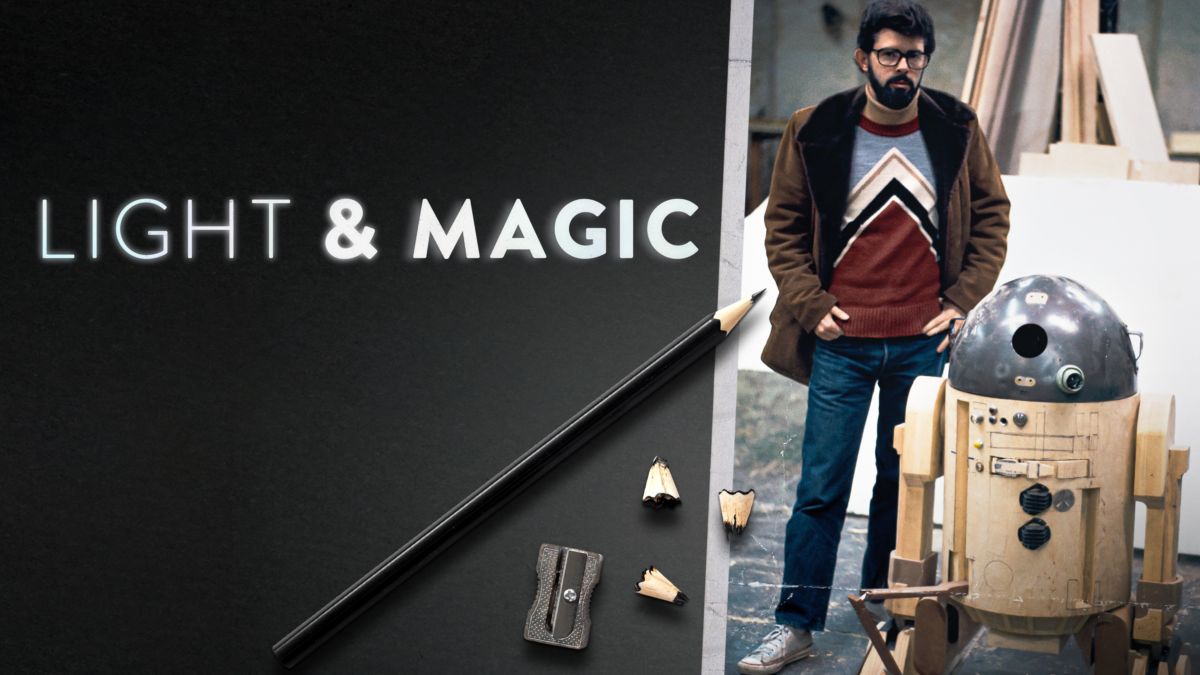
The filmmaker and Lucasfilm legend talks to ILM.com to reflect on what drew him to tell the story of the hit Disney+ series, “Light & Magic”.

Screenwriter and director Lawrence Kasdan.

How did you get involved with Light & Magic?
Several years ago my wife and I made a short documentary about a little diner that we used to eat at all the time that suddenly closed. In making that documentary with her, and cutting it with terrific people, it made me realize how much I liked the documentary format. I had never done that. We set out to meet some documentary people and I met Justin Wilkes at Imagine Entertainment. He asked me what I was interested in doing and I suggested a history of visual effects, because even though I had been around visual effects throughout my career, it occurred to me that I didn’t know much about them. The second thing that interested me were the people of Industrial Light & Magic that I had been working around for over forty years. So we both agreed that that would be a great story to tell: the history of visual effects, and the personal stories of these people. What drove these people, what was their life like, what made them want to stay at ILM as long as they did? Everyone loved the idea, so we went to work.

Lawrence Kasdan, center, on the set of Star Wars: The Empire Strikes Back.

What was your vision for the documentary?
From my very first film until today, I’ve always considered myself a humanist filmmaker. I’m interested in what happens between people, and why people make certain decisions in their lives. What chance is involved? What fate? What luck? So from the very beginning of this I was interested in learning what brought these people to this work. What were the relationships that they made when they arrived? Why did they continue to work there much longer than they expected, some for nearly half a century? What has all that meant to these amazing advancements in technology? It’s about people, and their gifts, and out of those gifts came technological advancements that boggle the mind.

Dennis Muren, left, and Phil Tippett, right, review images with Joe Johnston.

Why did you think this story should be told?
Because it’s great to see artists at work. The commitment of great craftsmen. I love to see people that have mastered a skill, and try to make it better, and don’t settle. I think it’s great to see expertise and this pure devotion to discipline, and that is always a good story to see. Dennis Muren, left, and Phil Tippett, right, review images with Joe Johnston.

John Dykstra and a fleet of miniature TIE, X-wing, and Y-wing starfighters.

How did you approach the research, and what resources did you use?
We had a fabulous team that Imagine Documentaries put together, some internal to the company, and some that were freelancers. They really knew their stuff, so it was a great luxury for me as a director. There were so many things that I wanted to ask during interviews, but the input from this incredible group of producers and writers and editors stimulated me all of the time to go in different directions during interviews.

ILM’s Paul Huston and Larry Tan on the set of Star Wars: Return of the Jedi.

For those that have yet to watch it, can you tell readers what the timeline of the series is?
Over the six hours we see the very birth of ILM, what happened as it came together during the production of Star Wars: A New Hope, and then off of the success of that film, how it was launched into a nearly fifty-year enterprise. We mainly follow it chronologically, but we do jump around a bit to serve the story. Part of the kick for me was that we had such a trove of archival footage, so these people might be talking about something from forty or fifty years ago, and we had stills from that moment in their career. It was incredible to be able to cut from one to the other across time, to hear them talking about a problem, and then see footage of them finding a solution. A huge part of ILM’s legacy is finding solutions to problems.

Peter Kuran, Rose Duignan, and George Lucas review effects shots for Star Wars: A New Hope.

How did you select the filmmakers that were featured in the documentary?
They are all giants, and they have all used ILM in the most expressive and innovative ways. They put pressure on themselves and then turned to ILM and said, “can you do this? Can you create something for me that I have never seen before?” ILM would always say yes. And sometimes it might be a struggle, and sometimes it might be a long process, and sometimes it might be an instantaneous solution where one of these genius people that work there would say, “I know what we could do”. These are major filmmakers that have contributed to the zeitgeist. Jim Cameron, Steven Spielberg, Bob Zemeckis, J.J. Abrams, and at the heart of it, of course, is George Lucas.

Lawrence Kasdan and J.J. Abrams on the set of Star Wars: The Force Awakens.

What was the most interesting thing you learned throughout the process of creating Light & Magic?
I think I learned what goes into creating something new, working with people you respect and depend on, and how this personal relationship then impacts the professional work. There is something beautiful about the generosity of the people that work at ILM, and through that generosity they are able to discover new frontiers and break new grounds that no one has ever been able to do.

All episodes of Light & Magic are streaming now on Disney+.

ILM | A legacy of innovative and iconic storytelling.

The Television Academy announced its winners for the 74th Annual Primetime Creative Arts Emmy® Awards over the weekend, celebrating today’s talent and their groundbreaking work. ILM’s creative teams were honored with an award for Outstanding Special Visual Effects in a Season or a Movie for The Book of Boba Fett, alongside nominations for their work on The Witcher. This is third win for a Lucasfilm series in this category, a testament to the cutting edge work that ILM is known for.

Six-Part Docuseries Debuts Exclusively on Disney+ July 27

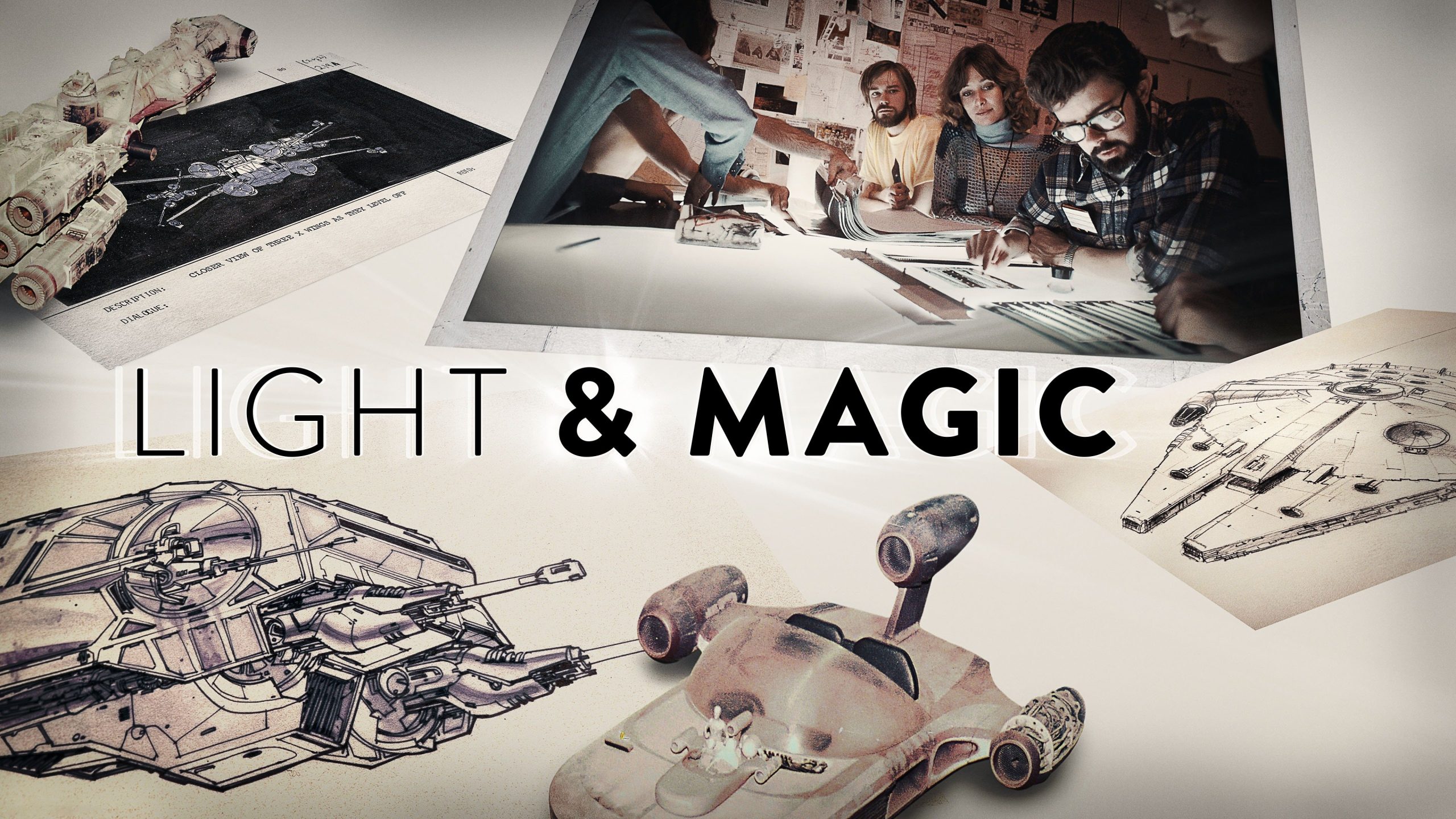
Disney+ released the trailer and key art for Lucasfilm and Imagine Documentaries’ “Light & Magic,” an immersive series that chronicles the untold history of world-renDisney+ released the trailer and key art for Lucasfilm and Imagine Documentaries’ “Light & Magic,” an immersive series that chronicles the untold history of world-renowned Industrial Light & Magic (ILM), the special visual effects, animation and virtual production division of Lucasfilm.

Granted unparalleled access, Academy Award®-nominated filmmaker Lawrence Kasdan takes viewers on an adventure behind the curtain of Industrial Light & Magic. Learn about the pioneers of modern filmmaking as we go on a journey to bring George Lucas’ vision to life. These filmmakers would then go on to inspire the entire industry of visual effects.  

The series is directed by Lawrence Kasdan, and the executive producers are Ron Howard, Brian Grazer, Justin Wilkes, Lawrence Kasdan, Kathleen Kennedy and Michelle Rejwan. 

All six episodes of “Light & Magic” premiere on July 27, exclusively on Disney+.

Twitter@DisneyPlus@ILMVFX
Instagram@DisneyPlus@ILMVFX
Facebook@DisneyPlus@ILMVFX
TikTok@DisneyPlus
Hashtag: #DisneyPlus

ABOUT DISNEY+

Disney+ is the dedicated streaming home for movies and shows from Disney, Pixar, Marvel, Star Wars, and National Geographic, along with The Simpsons and much more. In select international markets, it also includes the new general entertainment content brand, Star. The flagship direct-to-consumer streaming service from The Walt Disney Company, Disney+ is part of the Disney Media & Entertainment Distribution segment. The service offers commercial-free streaming alongside an ever-growing collection of exclusive originals, including feature-length films, documentaries, live-action and animated series, and short-form content. With unprecedented access to Disney’s long history of incredible film and television entertainment, Disney+ is also the exclusive streaming home for the newest releases from The Walt Disney Studios. Disney+ is available as a standalone streaming service or as part of The Disney Bundle that gives subscribers access to Disney+, Hulu, and ESPN+. For more, visit disneyplus.com, or find the Disney+ app on most mobile and connected TV devices.

MEDIA CONTACTS

Disney+ Media Relations
Shelby Cotten
Shelby.b.cotten@disney.com

Walt Disney Studios Global Publicity
Global Publicity (NY)
Derek Del Rossi        
derek.del.rossi@disney.com

Lucasfilm Publicity
Ian Kintzle 
ikintzle@ilm.com

Granted unparalleled access, Academy Award®-nominated filmmaker Lawrence Kasdan takes viewers on an adventure behind the curtains of Industrial Light & Magic, the special visual effects, animation and virtual production division of Lucasfilm. Learn what inspired some of the most legendary filmmakers in Hollywood history, and follow their stories from their earliest personal films to bringing George Lucas’ vision to life. From Imagine Documentaries and Lucasfilm, and executive produced by Brian Grazer and Ron Howard, the six-part documentary series premieres exclusively on Disney+ July 27.

Phil Tippett puts the finishing touches on the Rancor from Star Wars: Episode VI – Return of the Jedi.

On Friday, May 27, attendees of Star Wars Celebration will be among the first in the world to get a sneak peek at “Light & Magic” with an “illuminating”  discussion panel featuring Lawrence Kasdan and Ron Howard, joined by VFX titans Dennis Muren, Phil Tippett, Joe Johnston and Rose Duignan, and Lynwen Brennan, Lucasfilm executive vice president and general manager.

Join employees across Industrial Light & Magic, Lucasfilm, ILMxLAB, and Skywalker Sound as they share stories on discovering their passions, beginning their careers, and the challenges and satisfactions of working in their current roles and departments. We hope their personal stories and recommendations inspire the next generation of young artists to break into and make their impact on the entertainment industry.

To learn more about Get in the Door, visit GetInTheDoorProject.com and watch the trailer below.

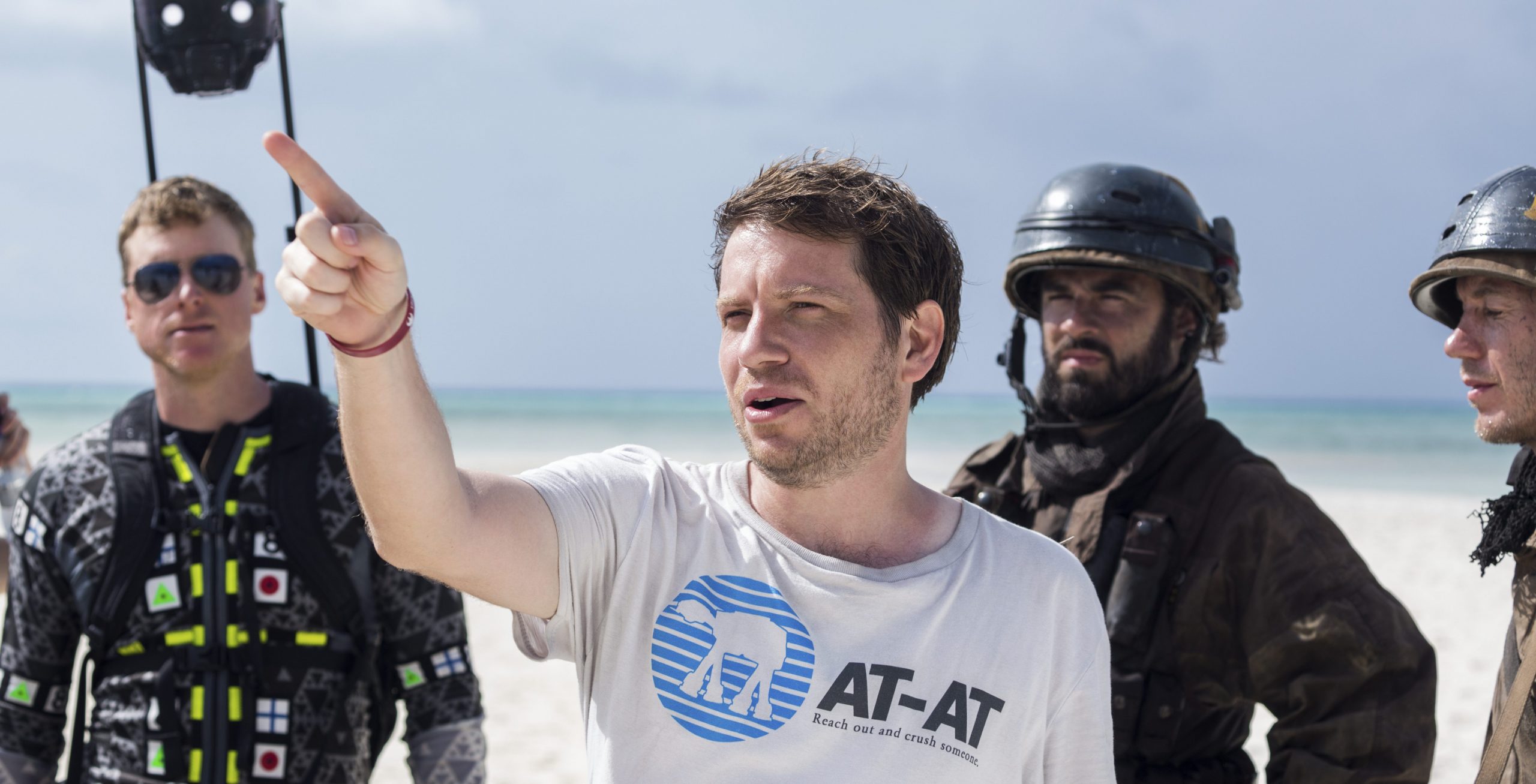
Gareth Edwards on the set of Rogue One: A Star Wars Story.

Join Gareth Edwards and the Publicity Group at Industrial Light & Magic as we look back at his time directing Rogue One: A Star Wars Story. Gareth discussed the cutting-edge virtual production used for the film, and the ways in which George Lucas inspired him as a filmmaker.

Tell me about the freedom you found in the virtual production-aspects of Rogue One?
John Knoll was very crucial for this, because he and the team at ILM devised a virtual environment where we could go in and look for shots. My entryway into filmmaking was through visual effects, so I understand it a bit, but a lot of VFX is kind of dark arts, which causes clients to come to visual effects companies and see VFX as magic, because no one understands what they do. The downside to that is that they can ask for things or approach scenarios in such a way that is really back-to-front, and doesn’t produce the best result. I find that storyboarding shots is really useful, but at a certain point it becomes somewhat limiting, because you’re having to invent every single detail about that shot. Whereis, in the real world, what you tend to do is you have a space, because it already exists. The light hits objects in this space a certain way, and going in, you knew you’d do a close up of someone’s face, but if you were to have them look down a little bit, and maybe move to the right, suddenly you have this beautiful composition that you wouldn’t have found with storyboarding. The trick with VFX is having that opportunity, and going, “this was the plan, but now that the ingredients are here in front of us, doing this would actually be better.” So figuring out a seamless way to do that without it being painful for the artists is important. There’s lots of ways to achieve that, but when you’re in space with spaceships, the only real way to do it—unless you’re doing what George did, which was taking footage of WWII aerial combat that would represent the final shot—is what John Knoll and Industrial Light & Magic were pushing for. 

John Knoll and Alan Tudyk, in his mocap costume, on the set of Rogue One: A Star Wars Story.

And what was John pushing for?
It was pre-viz animation of each section of the battle sequence. They then figured out a set up where they had an Apple iPad, with a game controller attached to it. When you moved the iPad, it could tell where it was in 3D space. They would then just loop these twenty or thirty-second chunks of animation, and I would get to hang out in these spots and just film it again and again, generating hours of footage. Then I’d go home on my MacBook and select my favorite takes, and then try to cut something together. It would be very jittery, and handheld, and not perfect. For each one we’d smooth it out by filming from another spaceship, and for another we’d keep some of that handheld-look. It felt like the process of getting those virtual shots was how we were getting the live action shots, which was, “light a space and find the shot,” versus, “tell us the shot, and we’ll invent all the pieces to create it.” It always feels more real with the first approach.

The Death Star’s Mk I Superlaser is set into place.

Like that shot of the Star Destroyer emerging from the shadow of the Death Star.
Exactly. That was a great example of John Knoll and ILM pushing for this new technology. If I remember correctly, we needed a shot of the Death Star for the trailer, but they needed it in only a few days. I remember that John got the iPad, and set up a model of the Death Star and some Star Destroyers. The important thing when devising a shot like that, is that the idea of scale is only relevant to something bigger in the shot. A typical thing you do in matte paintings, is when something needs to look really big, you paint a little human in there. It’s a trick that they used to great effect in The Empires Strikes Back. When you want something to feel big, you need to set something up to feel really big, and then show a new thing that’s even bigger than that. The idea was to have a ship that you know the scale of, like a TIE fighter, and then reveal the Star Destroyer, which feels huge, and then you reveal the Death Star which feels impossibly massive. I remember asking them, “can you do real-time shadows on this?” Once I learned that that was possible, it became so fun to reveal and conceal the ships in shadow, and find that moment where the dish slides into place. Within a few hours, we had the shots that went into the trailer, and that never would have been possible without the real-time technology that ILM was using. 

An Imperial I-class Star Destroyer emerges from the shadow of the Death Star’s Mk I Superlaser.

Since Rogue One, you’ve gotten to visit ILM’s StageCraft volume in person. Having that experience, did it make you think about how you may have captured any shots differently?
I think that’s always true of technological advances in filmmaking, so yes. For sure. It feels like filmmaking in general is an archaic process. It’s over a century old, and in some ways, it hasn’t changed hardly at all – and yet this digital revolution, which is happening all around us, should drastically change the ways we make movies, but it’s been a slow process. There is so much we could do to utilize the technology we have to be more creative, and allow us to do things we couldn’t have done before. StageCraft though is a massive leap. It’s game-changing. It’s moving the industry forward.

ILM’s StageCraft in use on The Mandalorian Season Two.

What do you think will stay the same?
Storytelling, regardless of the medium. From the time of early humans, a million years ago until today, we have an innate need to sit around a campfire and listen to a story. Whether it’s a story about something interesting that happened that day, theorizing about why the world is the way it is. It’s absolutely hardwired into us. There’s this little glowing light. The need to paint a picture or sing a song about another person or another place. I don’t believe that that is going away anytime soon. We’ll always have an appetite for storytelling. Strangely, what I find funny is that a movie is around two hours long, and that’s about the length of time it takes for a campfire to burn out. It’s so embedded in us. That’s what cinema is, it’s us being able to dream out loud, or watch another person’s dream in real-time. I hope that stays with us. I hope in five-hundred years, people are still watching Star Wars.

The DS-1 Orbital Battle Station prepares to fire on Jedha City.

In getting into the making of film and working with Lucasfilm and Industrial Light & Magic, were there ever moments where you needed to pinch yourself, because you were given the ability to create nearly anything you could dream up?
Funny enough, it almost felt like we had too much power, so we needed to be careful that we limit ourselves so it felt like the original trilogy. One of the early things that we did with John Knoll and ILM was the kitbashing, using the original models just like the original films. We went and bought some of the original model kits, lots of WWII, vintage-collector stuff. We started scanning those model parts in so that we could stick them onto the models we were building. What’s interesting is the subsurface scattering that goes on with those model pieces. It’s not like metal. So we were trying to recreate that model kit feeling on our ships. What’s funny though, when you get into that scenario, you realize that your memory is a little bit better than reality with some of the sets and props. The golden rule became, “let’s not do it how it was, let’s do it how we remember.” We wanted it to look and feel like how you “thought” those models looked. Also, going through the Lucasfilm Archives, the models are everywhere, and there were some designs in there that looked really cool. Those were good keys for us, because we were making something before A New Hope, but what did that mean, stylistically? Doug Chiang had a really hard task before all of us while doing Star Wars: Episode I – The Phantom Menace. They took a real leap on that film from both a timeline and stylistic standpoint. It was much more Art Deco. The streamlined nature of the ships felt much more like The Rocketeer and Flash Gordon; those types of serials that inspired George Lucas to make Star Wars in the first place. And that makes sense because it takes place over 30 years before A New Hope. But for us, aesthetically, it was just before A New Hope, yet we still wanted it to feel distinct. What we did for inspiration, is we looked at the Ralph McQuarrie artwork, and the early models that had been made for A New Hope; things that had been either abandoned or improved. We sort of “reversed the car” back into that space, and where they went left, we went right. One example is that really slender, aspirational Stormtrooper that Ralph painted. He made that without a care in the world about how it would be actually realized by the costume department. We kept pointing at that, because traditionally when you put someone in armor, it can start to feel a bit bulky. We wanted something that looks like it could sprint and cause some serious damage. We tried to make armor that was slightly bendable, so it could sit just over top of the skin. We tried to cast towards that look of the troopers, someone tall and lanky. What that eventually became was the Death Trooper. That’s where the Death Troopers started. To answer your original question, we tried not to be kids in a candy store, we tried to temper that and work off the design language that existed. “With all of those limitations, what would they have done?” 

The UT-60D U-wing, ‘LMTR-20’, heads for Eadu during Operation Fracture.

Did you and Greig Fraser try to match some of the old-school camera moves seen in the original trilogy?
We did. We tried to keep the vocabulary of any shots featuring Krennic and the Empire the same as those old school cinematographers. The way when someone walks by, how they would push in again to recompose based on the new position of the actors. All of these little things that would happen that were common in the late 1970s, things we don’t do so much now. 

Darth Vader (voiced by James Earl Jones) from a scene in the trailer for Rogue One: A Star Wars Story.

This year being the 50th anniversary of Lucasfilm, I wanted to know what George Lucas means to you?
A lot of things come to mind. As crazy as it sounds, I think he’s underrated. I know that sounds crazy with all of his accolades. When I was a little kid, I didn’t ever really watch THX 1138 or American Graffiti. But as I got older, I would revisit those films constantly. THX is an incredible debut. It’s just an absolutely fantastic film, and one of the strongest films that came out of a first-time filmmaker in all of cinema. In terms of how bold and completely brand new it was. So many things made their way to Star Wars too. That fuzzy comms chatter. The clinical corridors. The look and feel. There was no Ralph McQuarrie, but it felt so much like George. He has such a great aesthetic and an amazing eye. It took a lot for him to make that film. Then he goes and makes the films that have inspired you, and me, and everyone like us. Even if that was all he ever did, it would have been enough. But then he goes and pushes harder, and pushes the digital technology further. Because of him, I was able to make my first film on a digital camera. I wouldn’t have been able to make my first film if it required film stock. I wouldn’t have been able to make my first film without George. Him pushing HD, and all the work he did with the technology used for the prequels, and the digital camera technology. I got into digital effects because of that, and I wouldn’t have been able to if it wasn’t for George building up everything at Industrial Light & Magic. He inspired me to want to become a filmmaker, and he gave me the tools to do it. At the end of that journey, I got to make a Star Wars film. He gave me Rogue One.

George Lucas on the set of Star Wars: Episode IV – A New Hope filming a scene aboard the ‘Tantive IV’.

Have you gotten to spend time with him?
A handful of times. This next story I say with the utmost love and admiration for the entirety of the Star Wars catalogue. But when I had my office at Pinewood, I was putting a lot of pressure on myself to make this film. Everyone had The Empire Strikes Back, and A New Hope posters in their offices. To help elevate that, and to remind myself that this was Star Wars, and that I was making a Star Wars spinoff film, and I needed to have fun, I put up framed prints from The Holiday Special and Caravan of Courage: An Ewok Adventure. Those were the first spinoff films. [laughs]. Well, one day, George came to Pinewood, and he was sweet enough to come up to my office. I worked really hard to distract him while we spoke so he wouldn’t see the posters. I was really animated, and tried to lead him through the back. It was like a comedy skit as I tried to keep him away from the posters. I didn’t want him to get the wrong idea about Rogue One. [laughs]. We got to hang out for a few hours that day, and I got to tour him around. I got to spend time with my hero. It was a surreal experience. He’s the Paul McCartney of film. 

Gareth Edwards on location for Rogue One: A Star Wars Story. Photo courtesy of Greig Fraser. All Rights Reserved.

And you got to spend time at Skywalker Ranch, yeah?
Yes. When I was there, the projectionist was so sweet. They said, “ when we would project the Star Wars reels, George would sit right there.” And they pointed over at a seat. “Would you like to sit there?” I got to sit there throughout the sound mix on Rogue One. It felt like I was sitting on the throne of the film world. The funny thing is, if you’re so intimidated by it, it can paralyze you. You have to let that fall away. But let me tell you, that was the best job in the world. That beautiful drive through the trees and hills on the way to Skywalker Ranch. Past Lake Ewok. It was so utopian. We were making a Star Wars movie. It was everything I’ve ever dreamed of. It’s surreal to think it even happened to begin with. You dream about this stuff as a kid, but it shouldn’t actually happen. What’s funny is, when it comes to Industrial Light & Magic, and Lucasfilm, and the team at Skywalker Sound, you see it in everyone that works there. We all have the same story. You and me, we grew up with the same story. The trinkets on your desk are the same ones I have at home. Those Ralph McQuarrie prints behind you. I feel like we all have a lot in common. I feel like if I was going to hang out with people outside of work, it would be with the people at ILM. Everyone is a mini-filmmaker, and even though we grew up in different places all around the world, if we went to the same school as kids, we’d be mates – and then suddenly all of these people wound up at Skywalker Ranch & Industrial Light & Magic. When Covid is through, I hope everyone can come together and see each other again. 

Gareth Edwards on location for Rogue One: A Star Wars Story. Photo courtesy of Greig Fraser. All Rights Reserved.

I love that. Last question. John Knoll and Hal Hickel wanted me to ask you about Area 51?
[Laughs]. So I was in Las Vegas watching John Knoll, Hal Hickel, and Matthew Wood, from Skywalker Sound, during a panel at NAB for Star Wars. After it was through, I told them all, “we are only a few hours away from Area 51. We will never get this chance again.” [Laughs]. We drove several hours in the dead of night, through Rachel, Nevada, and walked right up to that fence where you couldn’t go any further. We went to  Area 51. We stayed just long enough to scare ourselves, and then we got out of there.” [Laughs].

Gareth Edwards on location for Rogue One: A Star Wars Story. Photo courtesy of Greig Fraser. All Rights Reserved.