
Industrial Light & Magic artists Marc Whitelaw and Maia Kayser discuss the studio’s work on director Sam Raimi’s Send Help, and how its rampaging boar sequence evolved into something bloodier and funnier.
By Jamie Benning
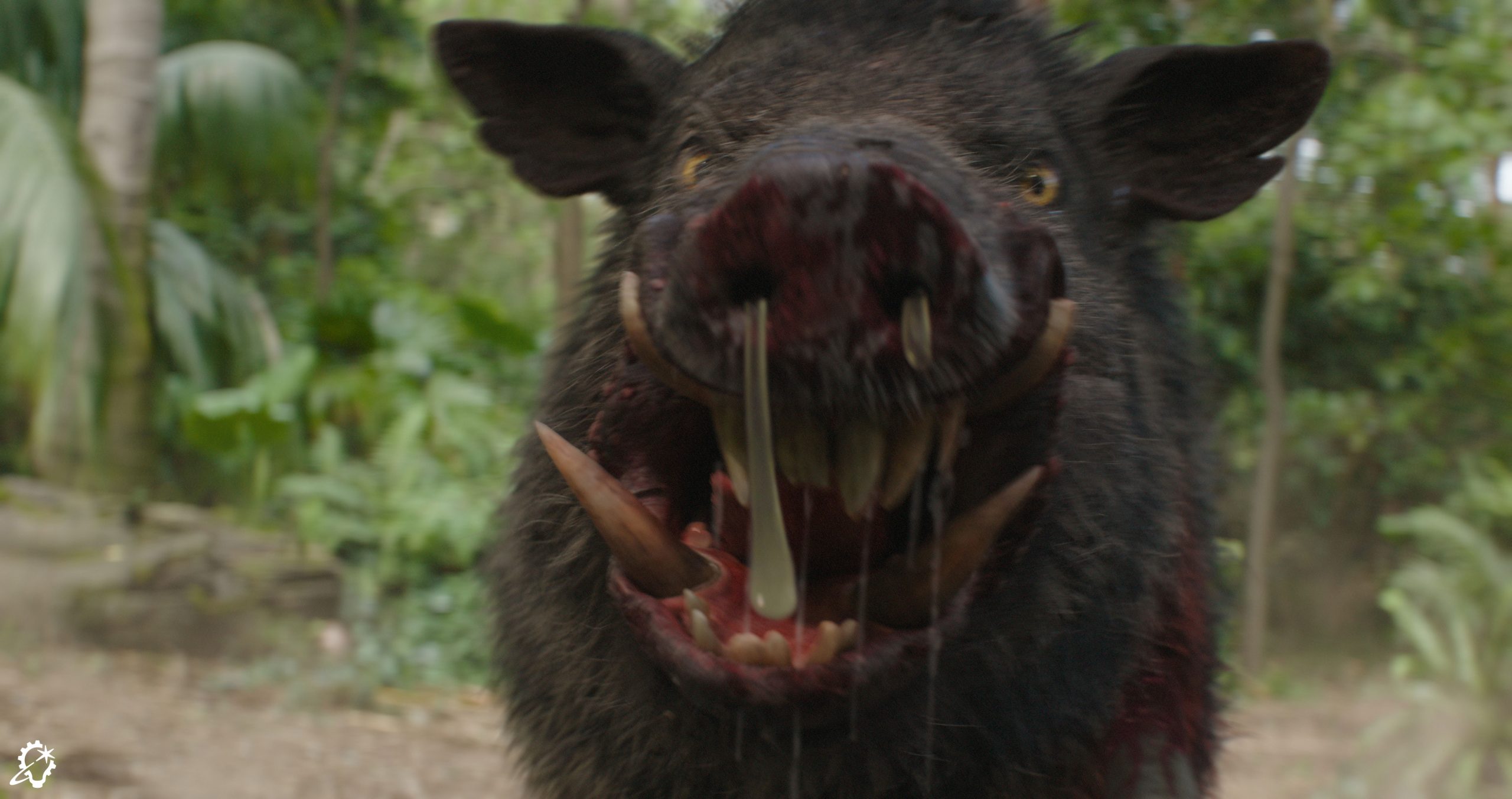
There’s a moment in Send Help (2026) when the film shows its hand. What begins as a familiar survival setup quickly escalates into something far more chaotic. Stranded on a desert island, Linda Liddle (Rachel McAdams) is attacked by a wild boar. After an extended moment of intensity, the audience settles into laughter, waiting to see what comes next.
It’s a tonal balancing act rooted in the filmmaking of Sam Raimi. Across films like The Evil Dead (1981) and Drag Me to Hell (2009), Raimi has consistently pushed horror into a space where shock and humor sit side by side. The violence is heightened, the reactions are exaggerated, and the audience is invited to laugh as much as recoil.
ILM’s work focused on bringing the boar to life and shaping the escalation of the attack, balancing physical realism with increasingly exaggerated behavior. The challenge was not simply to create a believable creature, but to understand how far that believability could be stretched.
Escalation as a Creative Process
What defines the sequence is not just how extreme it becomes, but how deliberately that escalation was shaped by the filmmakers. It doesn’t begin at full intensity. It builds, step by step, each beat pushing the limits of what feels plausible before extending beyond it.
That progression emerged through iteration. Early versions of the work aimed for something grounded, integrating the creature naturally into the environment. But with each pass, it became clear that realism alone wasn’t going to carry the scene.
Marc Whitelaw, lead digital artist and compositor at Industrial Light & Magic, explains how quickly that restraint fell away once the tone of the film began to assert itself. “We started off fairly reserved, holding things back and integrating the creature into the plates,” he tells ILM.com. “But throughout production, it just kept going further and further until we were essentially making blood. We added so much blood.”
What’s notable is that this escalation wasn’t something the team had to fight for. In many productions, there’s a point where things are pulled back, where excess is trimmed in favor of control. Here, the opposite happened. Each version went further, and the response was to go further still.
“It felt like no matter how far we went, the response was always ‘yes, yes, yes,’” notes Whitelaw. That direction often came down to a simple note from Raimi: “kill, kill, kill.” It became something of a guiding principle for the sequence, not just in terms of violence, but in how far each moment could go.
That kind of feedback loop changes how a sequence is built. Instead of working toward a fixed target, the team was discovering the tone in real time, using each iteration to redefine what felt appropriate. By the end of the process, ideas that might once have seemed excessive became essential. “We even had an eyeball pop out of its socket, and it all seemed to work,” Whitelaw adds. “Sam clearly knew what he was looking for, and I think we delivered that.”
A Different Kind of Production
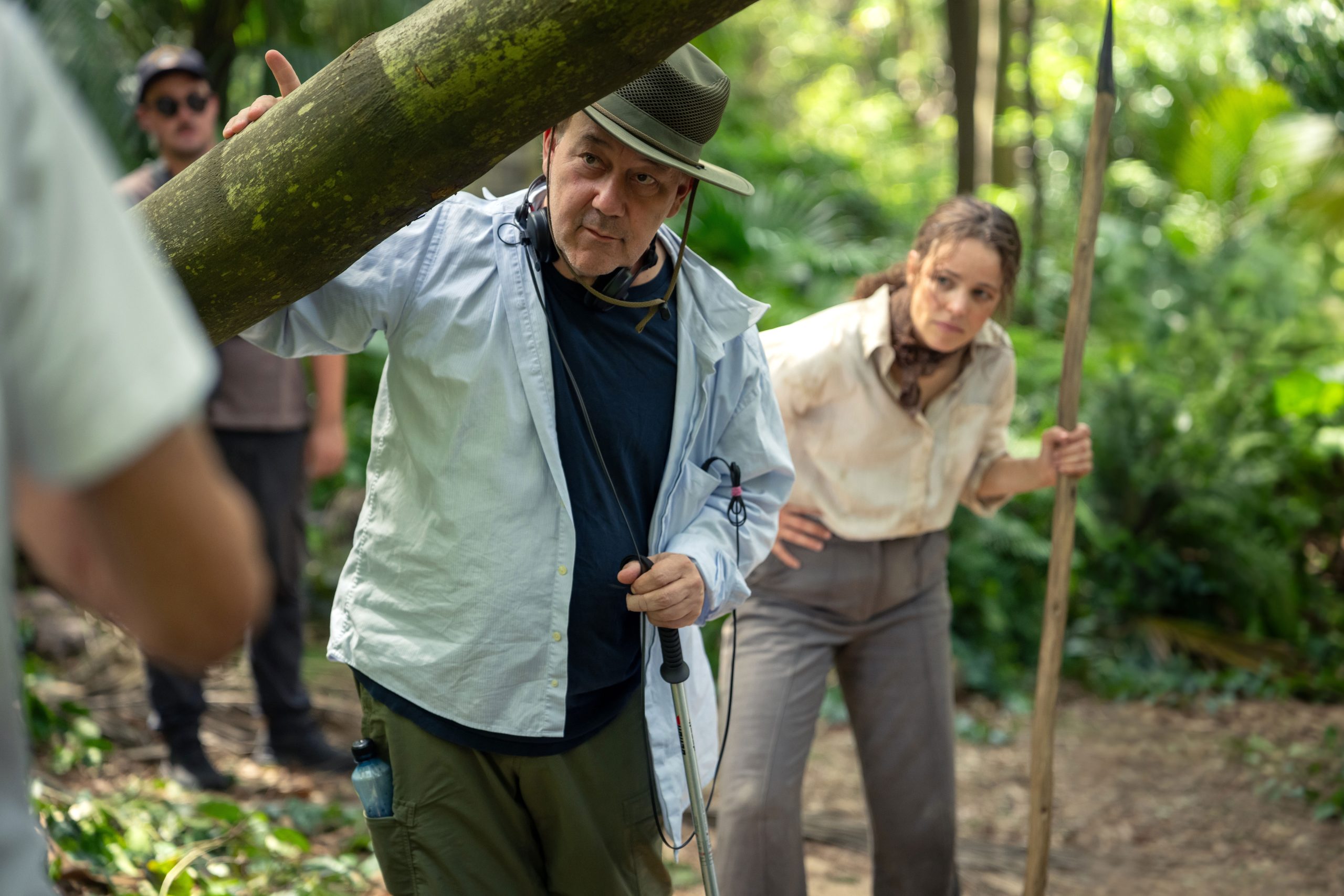
That freedom to push the boundaries was shaped in part by the scale of the project itself. Coming off a large production, Whitelaw found that the transition to a smaller team immediately changed the way the work developed. Fewer layers meant faster feedback and a more direct exchange of ideas between departments. “I finished on Tron: Ares (2025) before joining Send Help. It was a huge project with a big team, so moving onto something much smaller was a really nice contrast. Even though there was still a lot of work to get through, it felt very different.”
Where larger shows can become segmented, this environment allows ideas to move more fluidly. Departments were working in constant dialogue, shaping the sequence collectively rather than handing it off stage by stage. “We worked very closely together. It was collaborative and quite intimate between departments, with a lot of cross communication and shared problem solving,” says Whitelaw.
Just as important was the proximity to the filmmakers. Rather than reacting to notes after the fact, the team was seeing those reactions in real time, adjusting and evolving the work as the tone became clearer. “Being in client calls with Sam Raimi and seeing his reactions firsthand, then watching him take ideas and run with them, made it a really fun project. I had a great time.”
Alongside the digital work, the filmmakers also captured practical elements on set to help sell the interaction. Blood hits were captured directly with Rachel McAdams, giving the sequence a tactile base that could then be enhanced further in post.
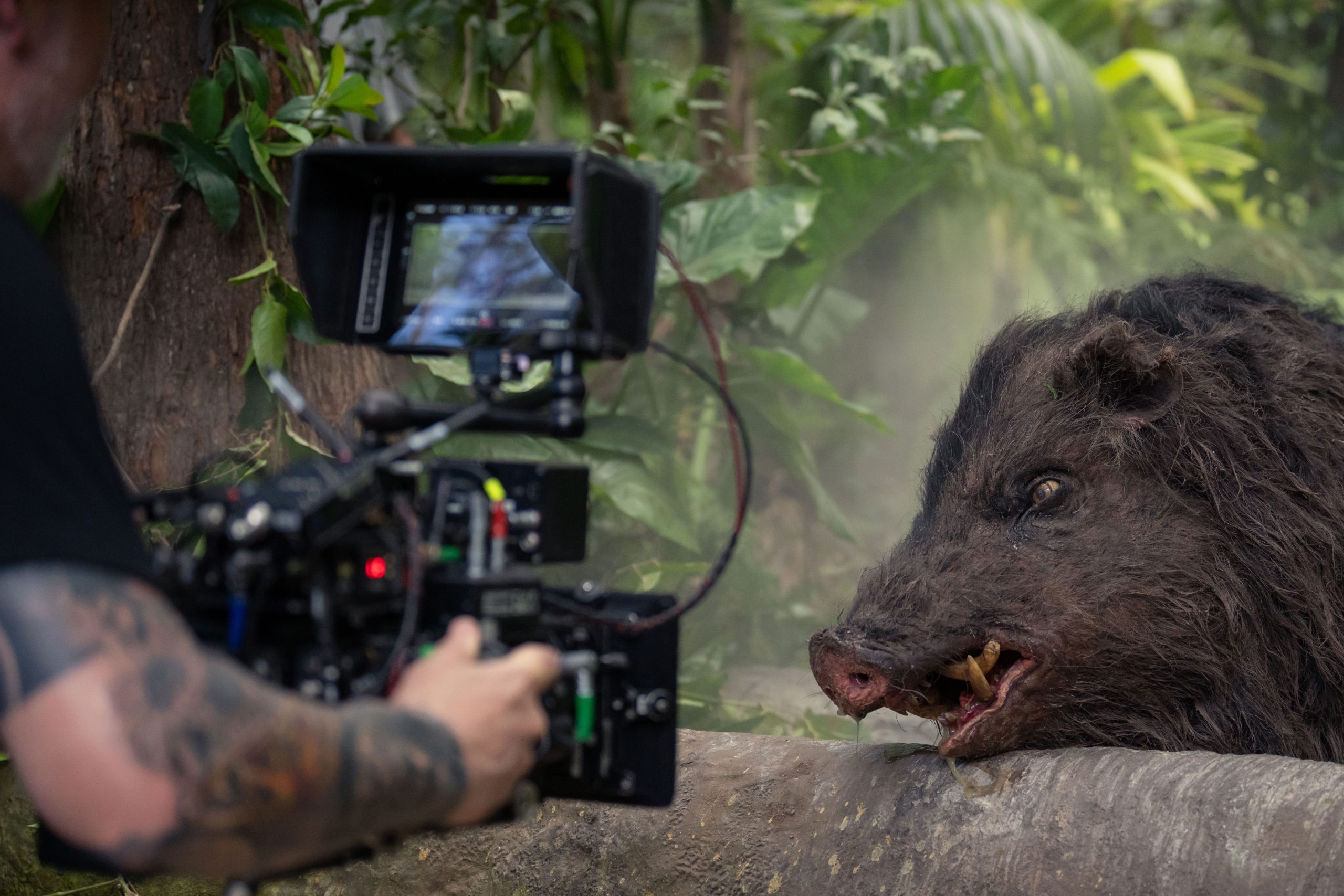
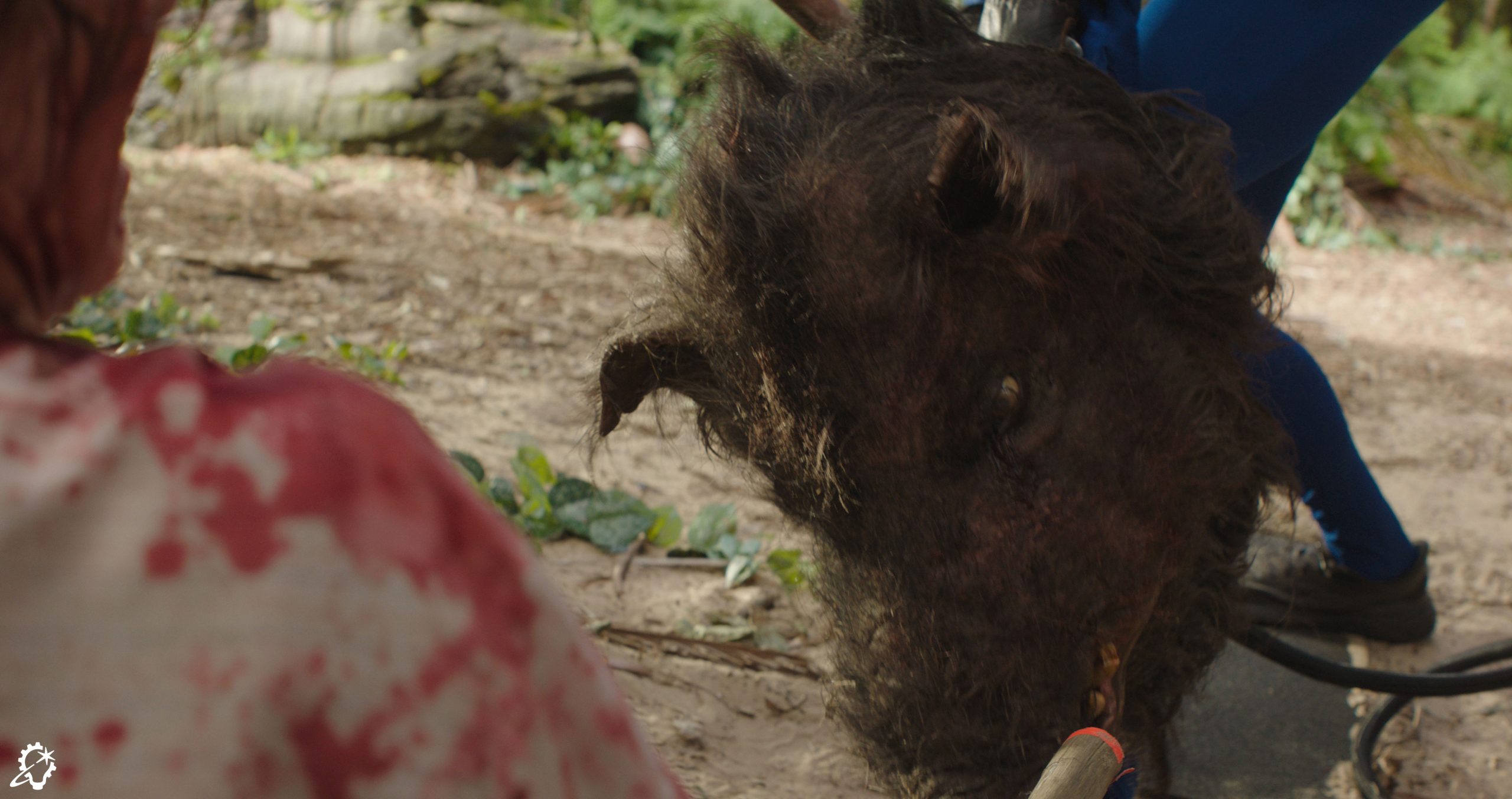
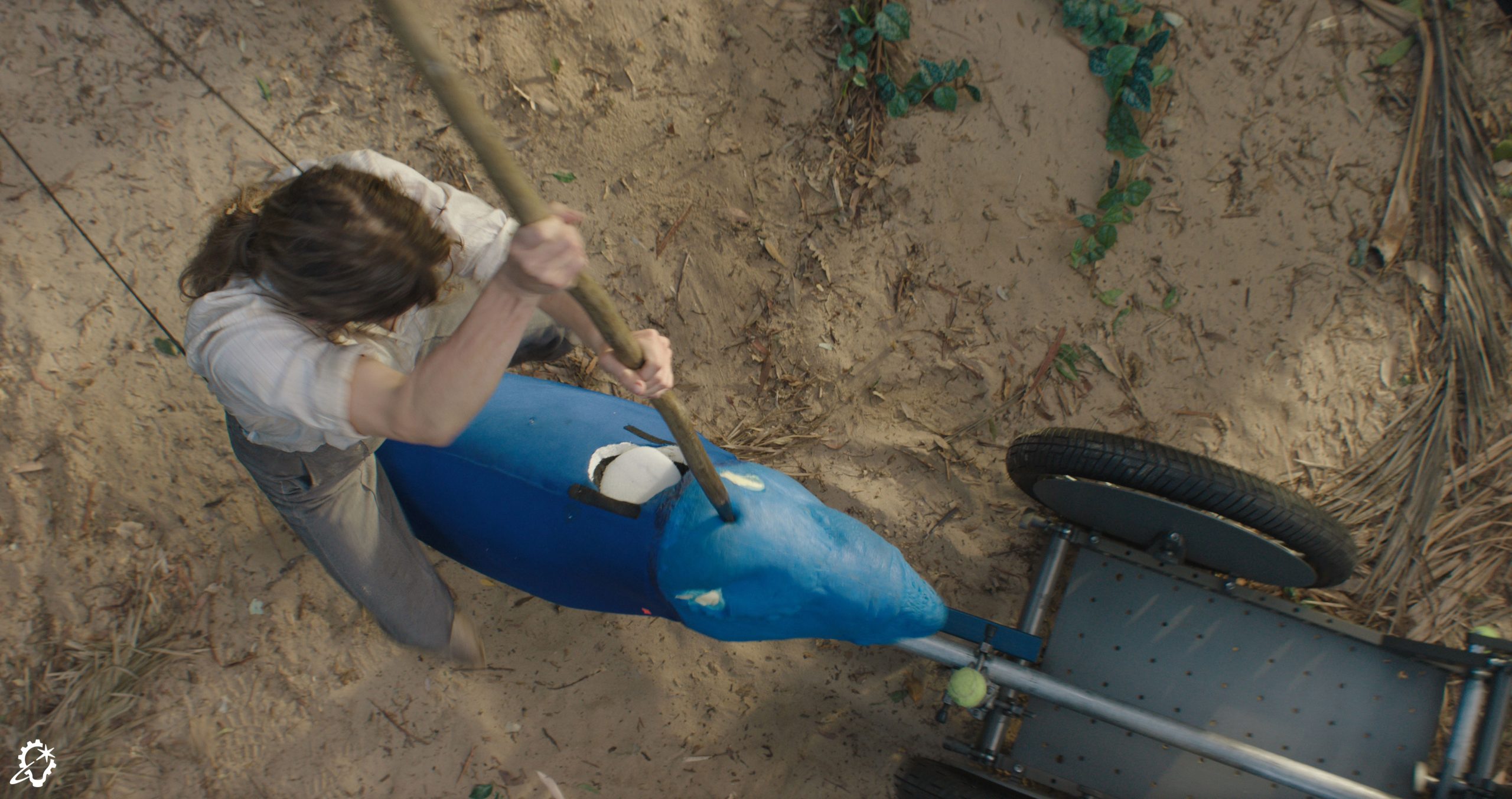
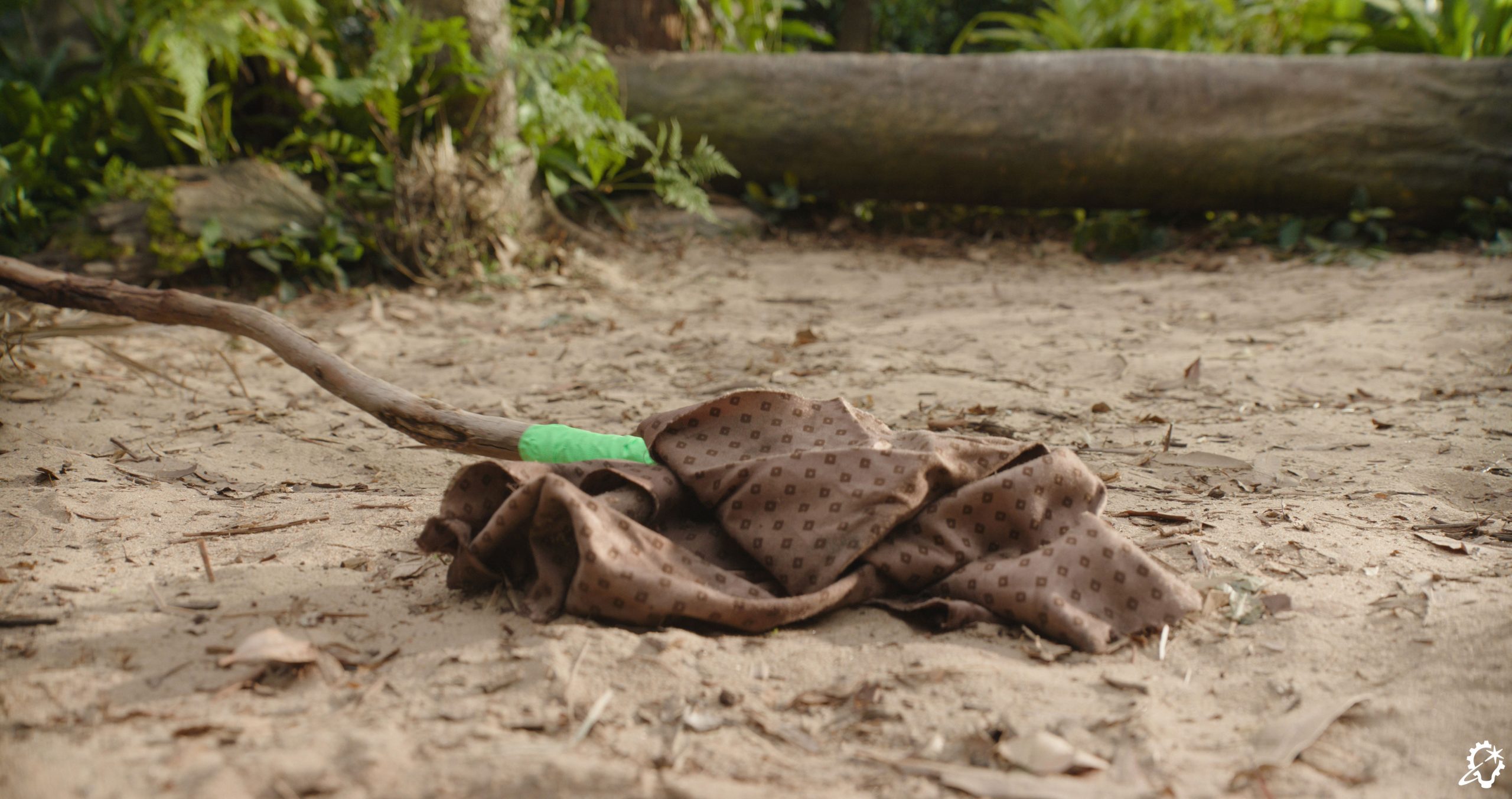
For animation supervisor Maia Kayser, that same dynamic extended to how performances were built on set. “Well, they had an on-set head in the last scene where you see it drop in. That was a practical element,” she tells ILM.com. “And then they also had this dummy on rollers that they used, which helped with the interaction and the timing. Everything gelled, both with the client and within the ILM team. We fed off each other, brainstormed ideas, and it created a really fun environment where a lot of great ideas came from.”
From Realistic Animal to Wild Character
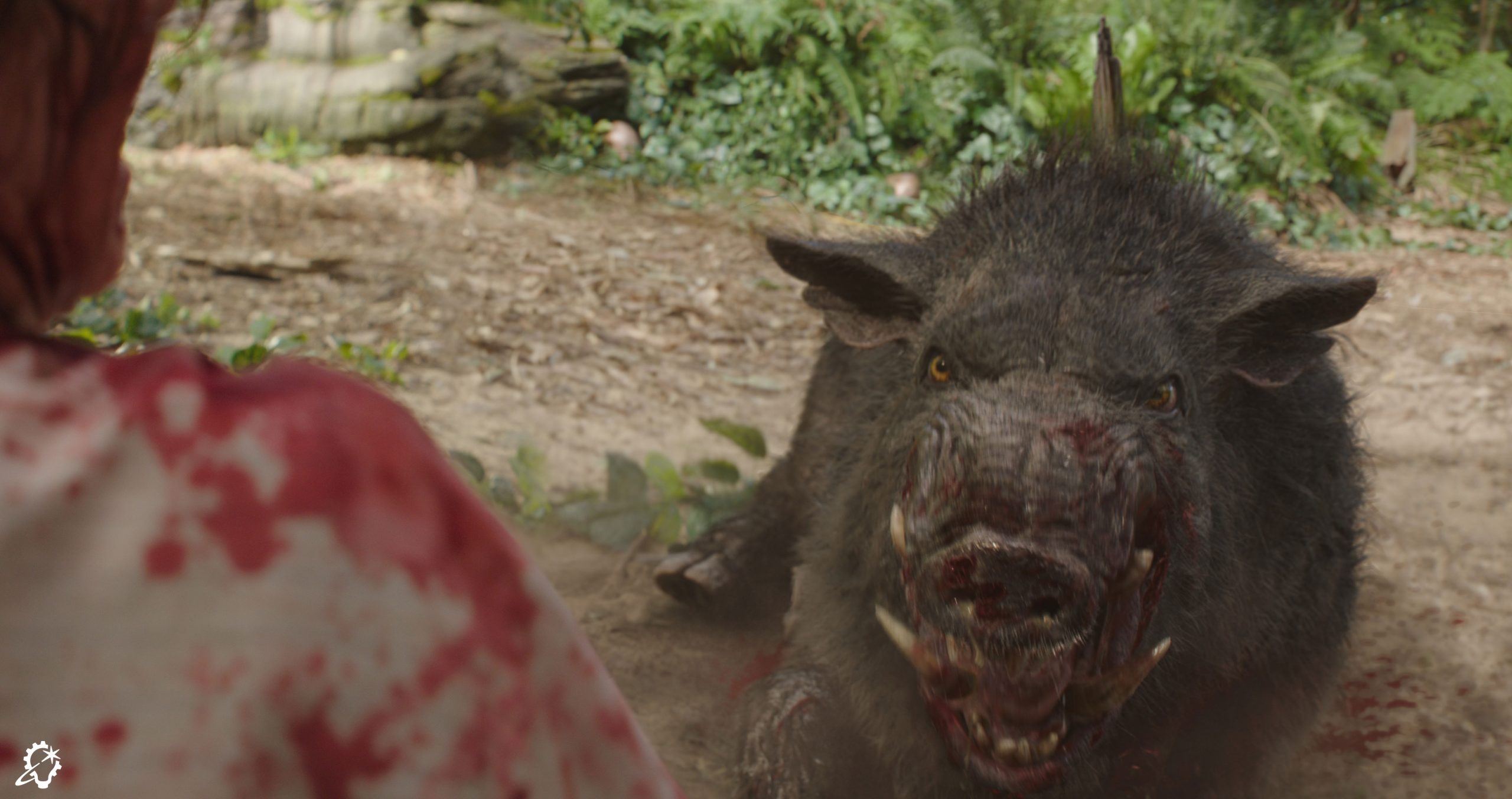
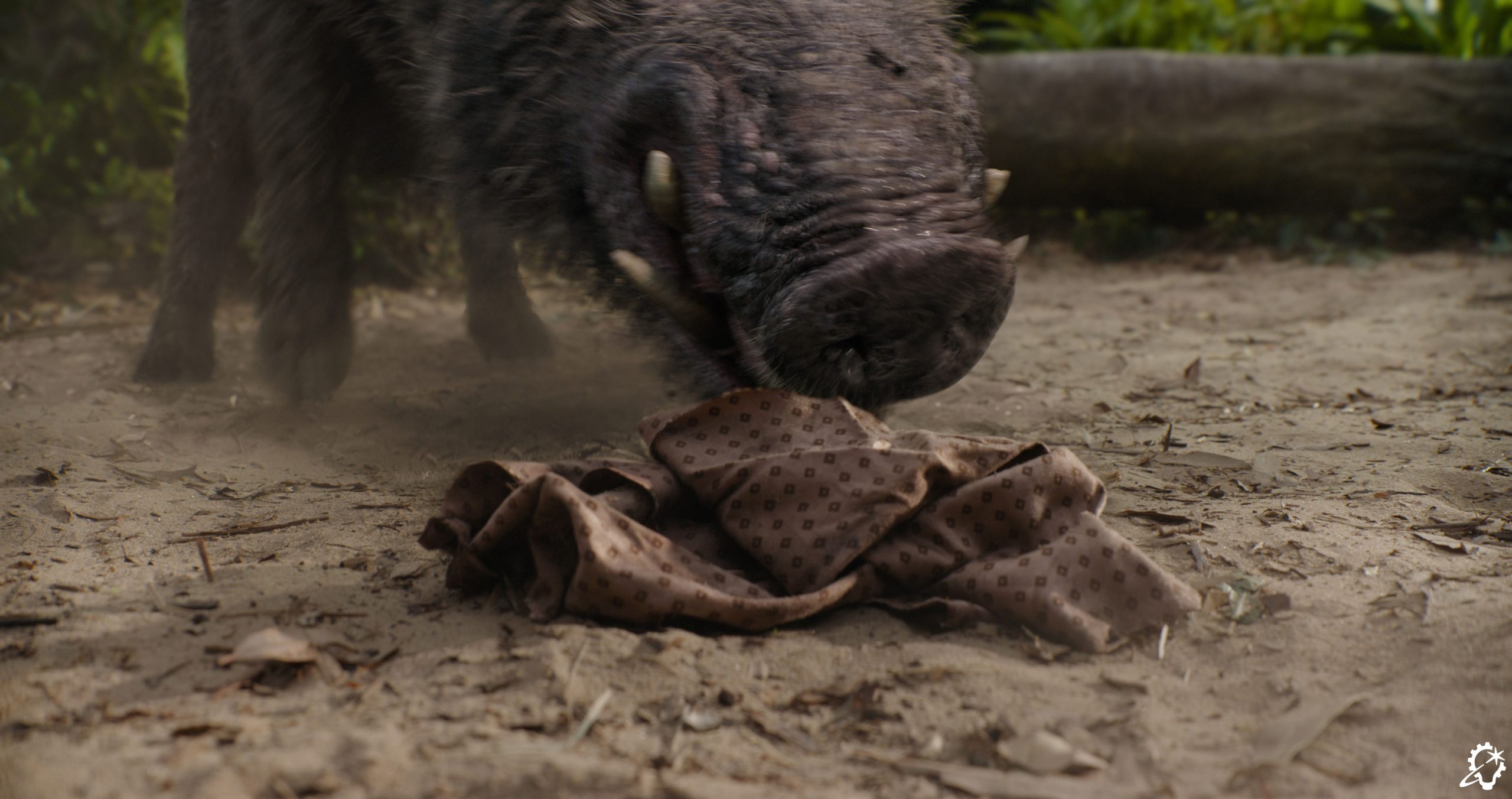
At the center of the sequence is the boar, and its shift from realism into exaggeration sets the tone for what follows. The starting point was realism. A believable animal, behaving in a way audiences would recognize. But as the sequence developed, it became clear that realism alone was limiting what the scene could achieve.
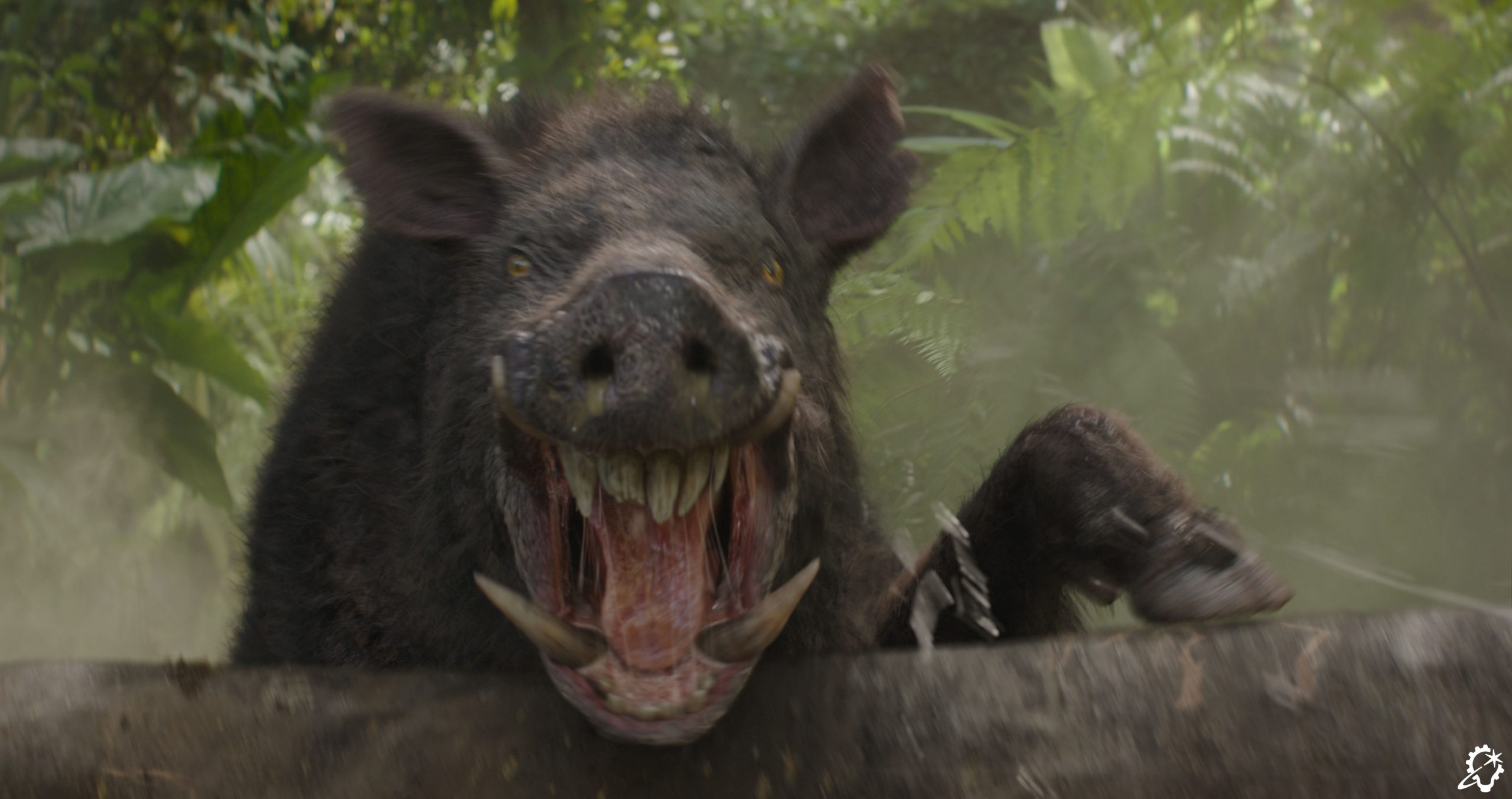
“The original idea was a hyperrealistic boar, so we started in a more subdued place,” notes Kayser. That approach quickly gave way to something more expressive once early versions were reviewed. The direction shifted toward aggression, exaggeration, and comic performance.
“As we showed our first takes, the direction became clear – we needed to push it further, and make it more aggressive,” Kayser says. “It was so great to have very clear direction from Sam Raimi. It’s about finding those comedic pauses, at least in animation. It’s all about timing. It’s all about finding those right pauses.”
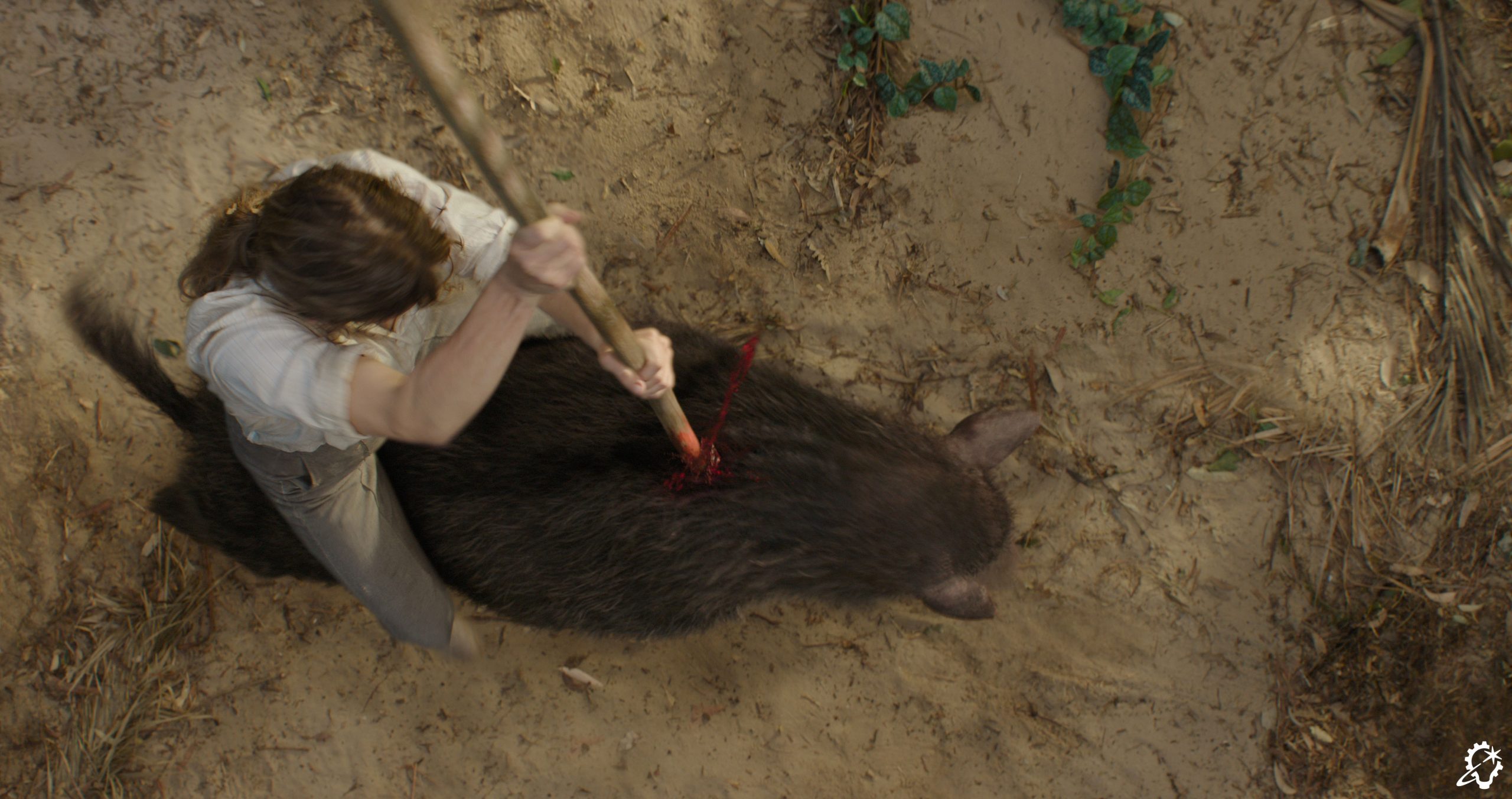
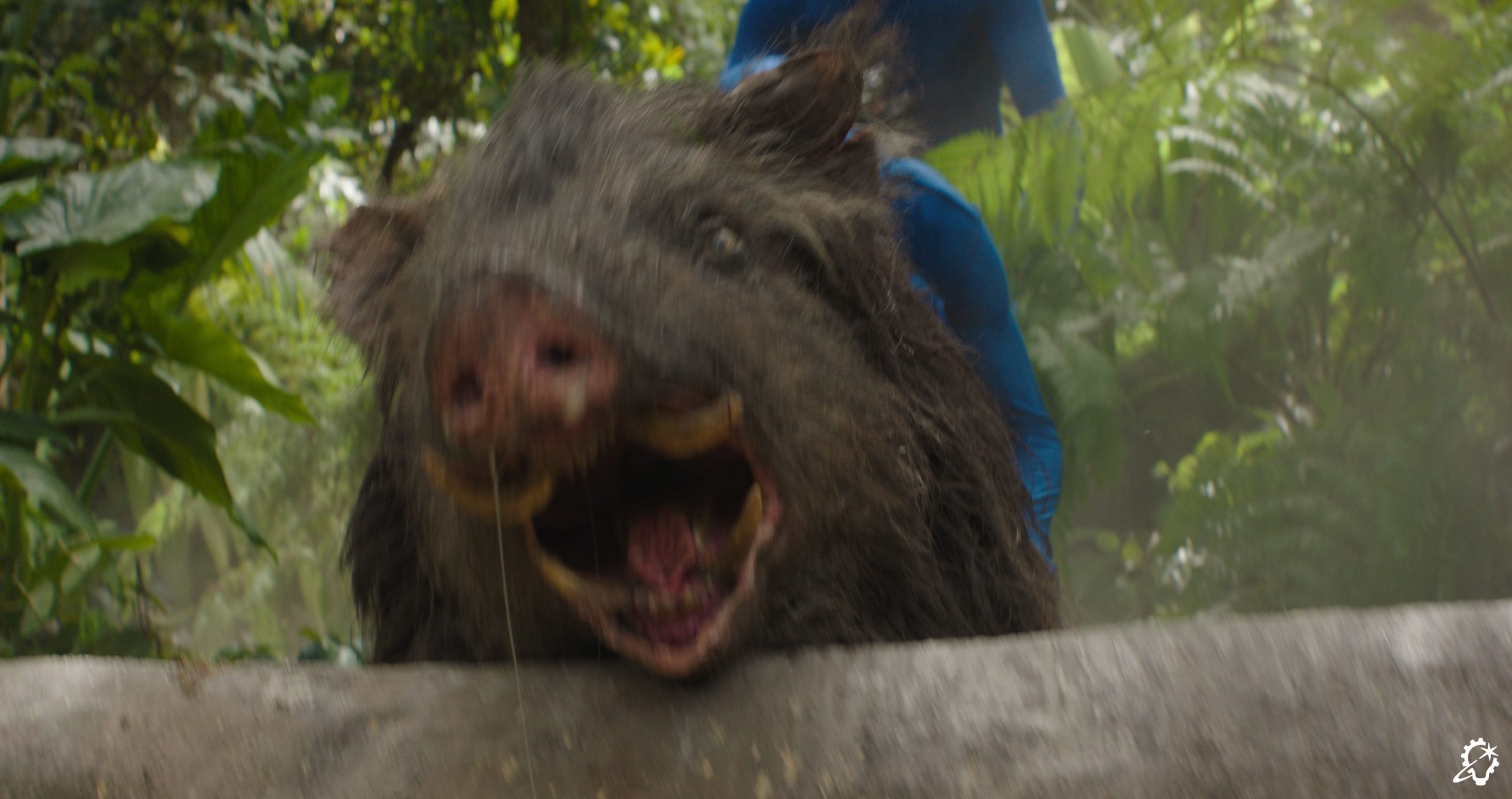
That timing is what allows the sequence to pivot from tension to release. The boar drops. The audience breathes. Then it rears back up again, taking everything further into excess – with snot, blood, and movement all exaggerated to the point where the violence tips into comedy. Kayser points to the spearing moment as one example of how far the sequence could go.
“I remember when the beast first gets speared. Initially, the way we animated it, we had him just going and running right into the spear, and then Sam Raimi was like, ‘No, you gotta take this much further. We really want to make this funny.’ So we had him literally run at the spear, and he gets lifted off the ground and lands again. It worked. It made it funnier.
“We also started adjusting the model, so it became grittier, dirtier, and more injured,” Kayser adds. “It was interesting to see how it evolved and became increasingly gory.” This shift is crucial. Moving away from strict realism, the team created space for exaggeration, allowing the animation to carry both threat and humor without breaking the audience’s suspension of disbelief.
Building Through Collaboration
Many of the sequence’s defining moments didn’t originate from a single department. They emerged through conversation, evolving across reviews as ideas were picked up, challenged, and developed further. In one case, what began as a relatively contained moment of violence quickly escalated into something far more extreme, as each iteration built on the last.
Kayser explains how those ideas would often take shape in discussion before finding their way into the work. “It would be just randomly in these meetings where we talk. At first the gore and violence was actually happening in the ear.”
That initial idea didn’t last long. As the work developed, the team began looking for ways to push the moment further, both visually and tonally. “And then that evolved. She [McAdams] holds onto one ear and starts stabbing the other ear. Well, it had to be even gorier,” Kayser says.
From there, the moment shifted again, moving beyond what had originally been planned. “This whole thing came about with the eye. And Marc was saying, ‘Well, what if we just have the eye kind of pop out and roll down?’” Kayser says.
What followed is a clear example of how the sequence came together across departments, with each layer adding to the final result. “So we integrated that in animation. And then comp started squirting all the blood out,” Kayser explains. “It was really over the top, but it was so fun because there was such a great collaboration with the client and also internally, brainstorming and really trying to go with these ideas and push the envelope.”
Timing the Chaos
For all its intensity, the sequence works because of control. Not control of scale, but control of timing. The humor doesn’t sit outside the action. It is embedded within it, often arriving in the pause before the next escalation. Those pauses give the audience just enough space to catch a breath and process what they’re seeing before the sequence escalates again.
“The comedic side, especially in animation, is all about timing,” says Kayser. “It’s about finding the right pauses.” Those moments are carefully shaped, often by pushing them further than instinct might initially suggest. “Sam would say, ‘Take this much further, we want this to be funny.’”
One moment in particular captures that shift from realism into exaggeration. “I remember thinking it might not play when we had the boar run into the spear, get lifted off the ground, and then land again. But it worked. It made the moment funnier.”
The success of that moment depends on the design of the creature itself. Because it sits slightly outside strict realism, the audience accepts that level of exaggeration. “If the asset had been fully realistic, it might have looked strange,” Kayser notes. “But because it was stylized, we could exaggerate the animation and make it work. Make it over the top and still believable.”
The Audience Test
For all the iteration and refinement, the final measure of the sequence is simple. It either lands with an audience, or it doesn’t. That reaction can’t be simulated in a review or a client call. It only becomes clear when the film is played in front of a crowd. “It’s always fun in the theatre, you get to watch how people react,” says Kayser.
When the sequence played, the response confirmed what the team had been building toward. “I love that moment where the boar kind of dies, and then Linda breathes, and then it cuts to a close-up of her, and then it rears up again and snot continues to fly. Once the scene is finished, you know, there was that moment of release, and everyone started laughing,” says Whitelaw. In that moment, the balance between horror and comedy, realism and exaggeration, finally clicks into place. “I remember thinking, ‘It worked.’ It looked great.”
The Throughline
What runs through the work on Send Help is not just technical craft, but the way that craft is shared. The sequence works because it was shaped across departments, with ideas passed around, refined, and developed by artists working toward the same goal.
For Marc Whitelaw, that collaborative approach is not unique to this project, but something fundamental to how ILM operates. Even on larger productions, where teams are more segmented and timelines tighter, he sees it as the key to unlocking better work. “One of our core principles at ILM is collaboration, and I’d love to see that continue on every project I work on,” he says. “On bigger shows, when teams are trying to hit deadlines, it can be harder to try new ideas and approaches. But whenever there’s an opportunity, it’s one of ILM’s strengths.”
That mindset was particularly evident on Send Help, where the smaller team allowed ideas to move more freely and evolve more quickly. For Whitelaw, it wasn’t just the scale of the work that stood out, but the level of care that went into it at every stage. “The smallest of details never got overlooked,” he explains. “Even things that no one asked for would get improved, just because people wanted it to look as good as it could.”
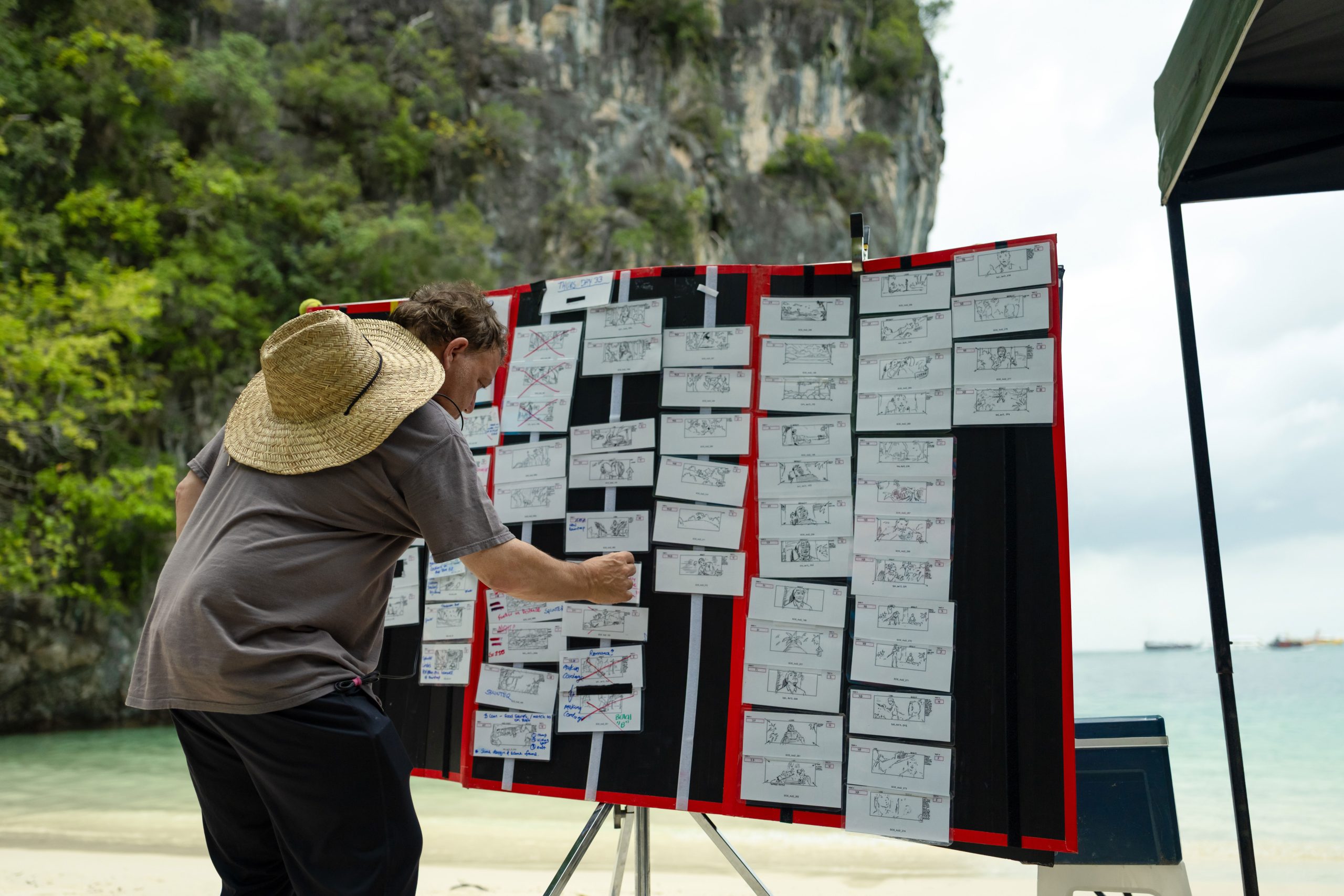
Kayser sees that same idea on the animation side, but also in terms of what artists take away from working in that environment. For her, one of the defining aspects of ILM is the depth of talent across the studio, and the way each project becomes an opportunity to learn from the people around you. “What’s so great about ILM is the talent that we have here, and every project you learn so much from your peers and your teams,” she says. “And that makes everything better and the product better.”
That shared investment shows up in the work itself. As the sequence developed, details were added and refined across every department, from animation through to fur and compositing, each layer building on the last. “When you have a project like that, and everybody’s motivated and passionate, the work that comes out of it is incredible,” Kayser adds. For her, the eye-stabbing moment stands as the clearest example of that collective effort, where multiple departments contributed ideas that shaped the final result.
“One of the eye-stabbing shots was one of those things, one of those shots that really felt like a shot where every department came together…and came up with these different ideas and details,” says Kayser. “And that’s where ILM is so good and strong.”
In that sense, the sequence becomes more than just a showcase for creature work or spectacle. It reflects a way of working – one where ideas are shared, details are pushed, and the final result is shaped collectively. And in the case of Send Help, that collective push often came down to a simple directive: Go further. Push harder. Kill, kill, kill.
Send Help begins streaming on Hulu on May 7, 2026.
–
Jamie Benning is a filmmaker, author, and podcaster with a lifelong passion for sci-fi and fantasy cinema. He hosts The Filmumentaries Podcast, featuring twice-monthly interviews with behind-the-scenes artists. Visit Filmumentaries.com or find him on X (@jamieswb) and @filmumentaries on Threads, Instagram, Facebook, and YouTube.