
The ILM visual effects supervisor discusses helping craft the world…and the Creature…of Frankenstein for the Netflix production.
By Mark Newbold and Jay Stobie
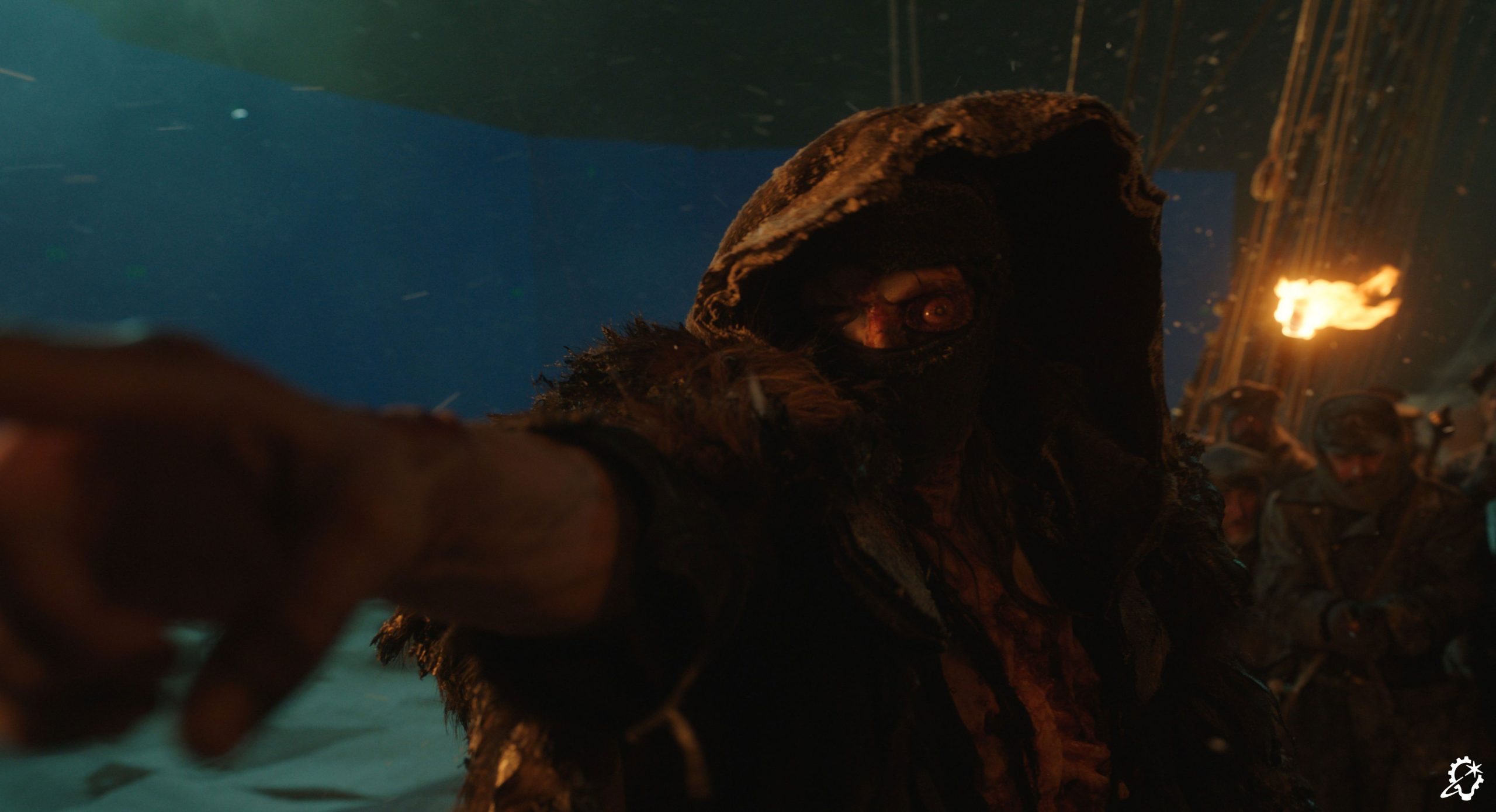
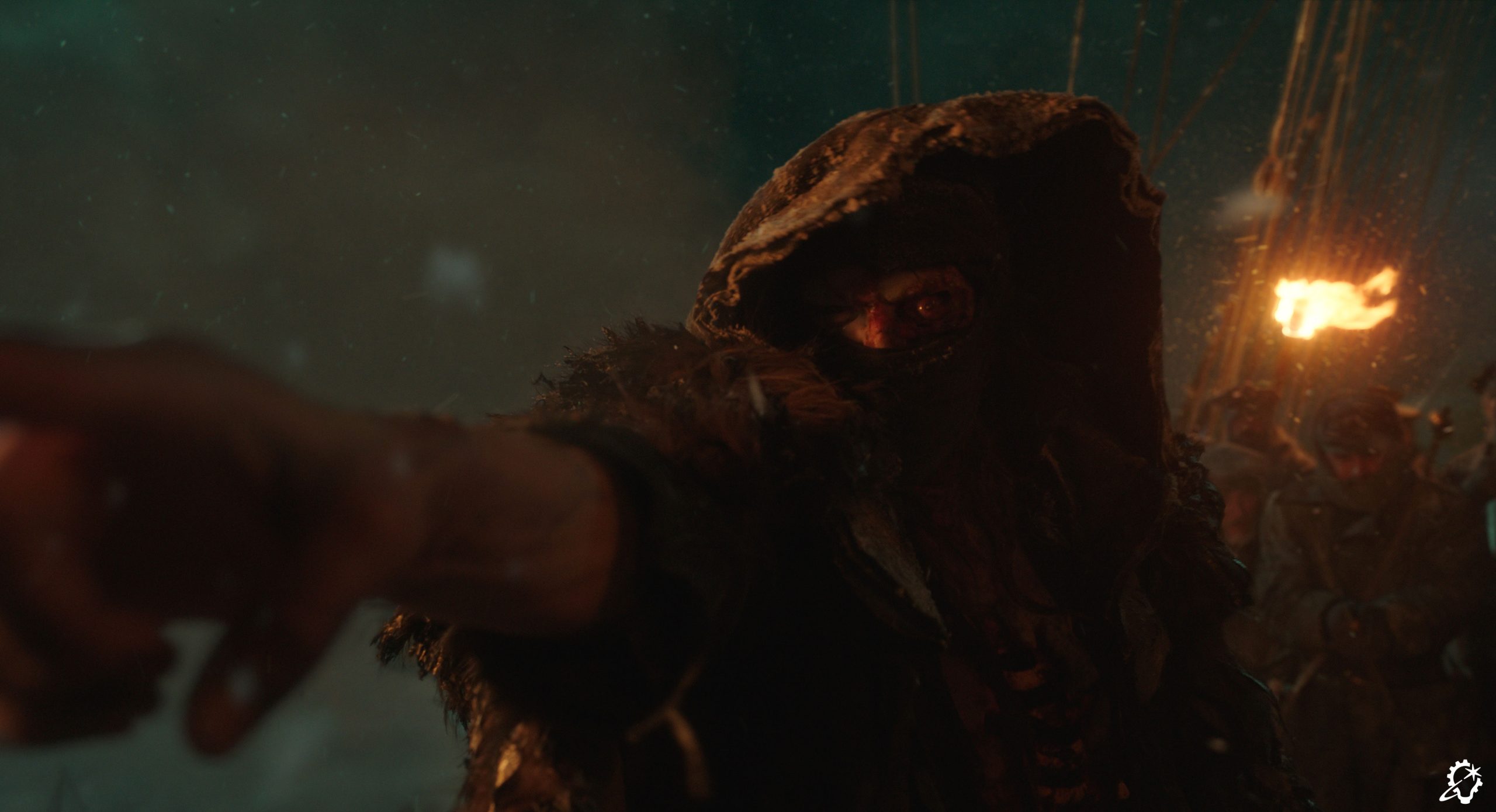
Written and directed by Guillermo del Toro, Netflix’s Frankenstein (2025) delivers a vibrant take on Mary Shelley’s classic story, with Oscar Isaac and Jacob Elordi supplying masterful performances in their respective roles as Dr. Victor Frankenstein and The Creature. Industrial Light & Magic’s visual effects contributions to the film were overseen by ILM visual effects supervisor Ivan Busquets (Bumblebee [2018]; The Irishman [2019]; Aquaman and the Lost Kingdom [2023]), who sat down with ILM.com to reflect on his work, from the real-world references used to create Frankenstein’s environments and animals, to utilizing visual effects as a way to supplement the film’s practical elements, and much more.
Frankenstein’s ‘Filmscape’
“ILM was one of the two main visual effects vendors on the show, alongside MR. X,” Busquets tells ILM.com. “ILM was assigned around 200 shots, primarily dealing with some of the icescape sequences at the beginning and end of the movie, as well as a lot of the creature work, both for The Creature itself and also the deer, wolves, and mice.” While a portion of the mouse shots were handled by ILM’s Mumbai studio, the vast majority of the work was split between the Vancouver and San Francisco studios. “Logistically, being in the same time zone made sharing work seamless. As long as we were in the same time zone, it didn’t matter whether we were in one location or the other.”
Busquets began his tenure on Frankenstein in August 2023 in preliminary meetings with Guillermo del Toro and production visual effects supervisor Dennis Berardi. “We were lucky to have an asset early on – production provided ILM with what they called the ‘filmscape,’ a document compiled by their production design department,” Busquets recalls. “Created by production designer Tamara Deverell and her team, the filmscape featured everything from location references to artwork, sketches, and even storyboards. From the early stages, we had access to that visual reference, whether it was for sequences that we were going to be working on or others. It supplied an exceptional overview of the movie’s style.”
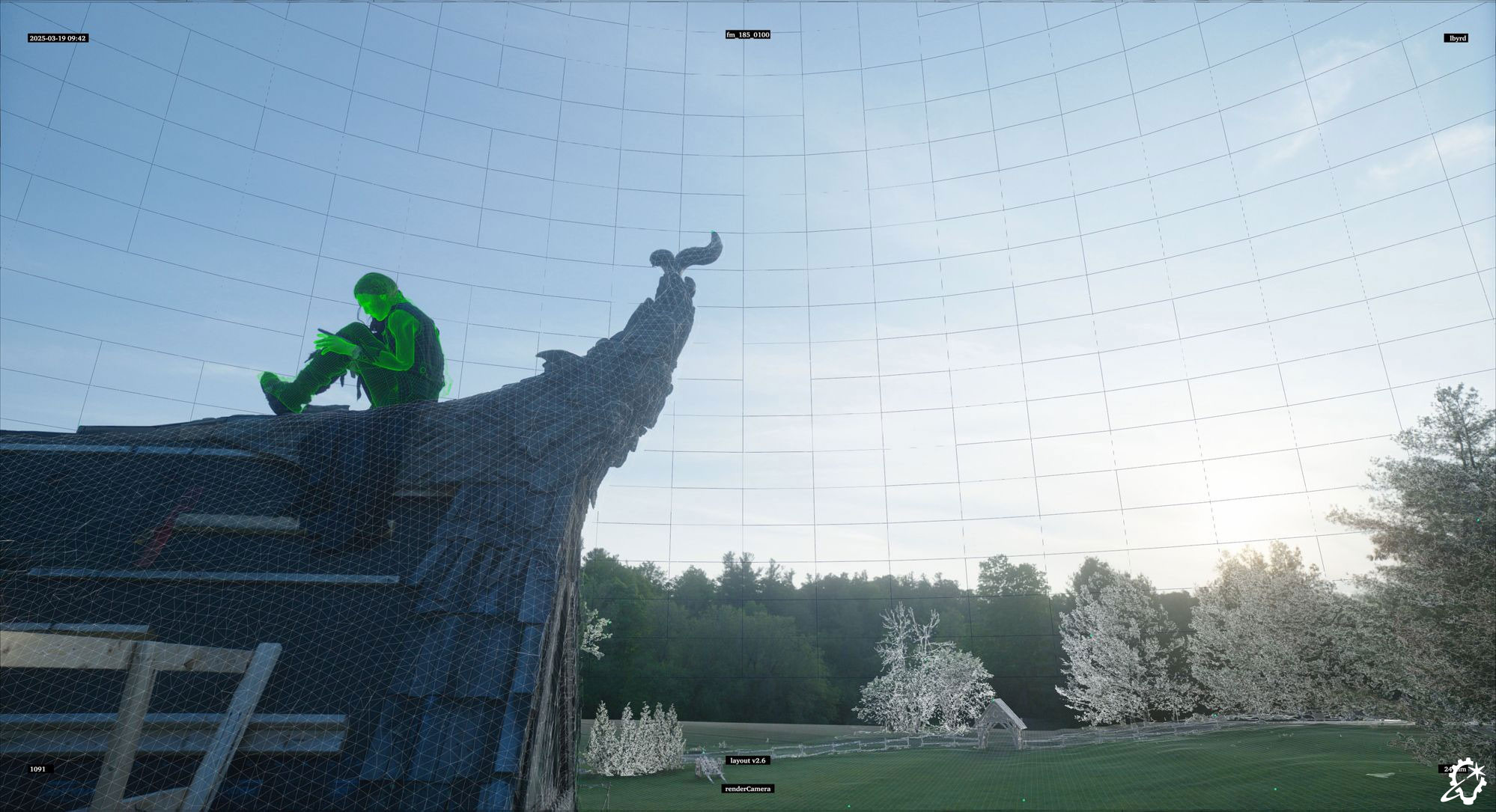
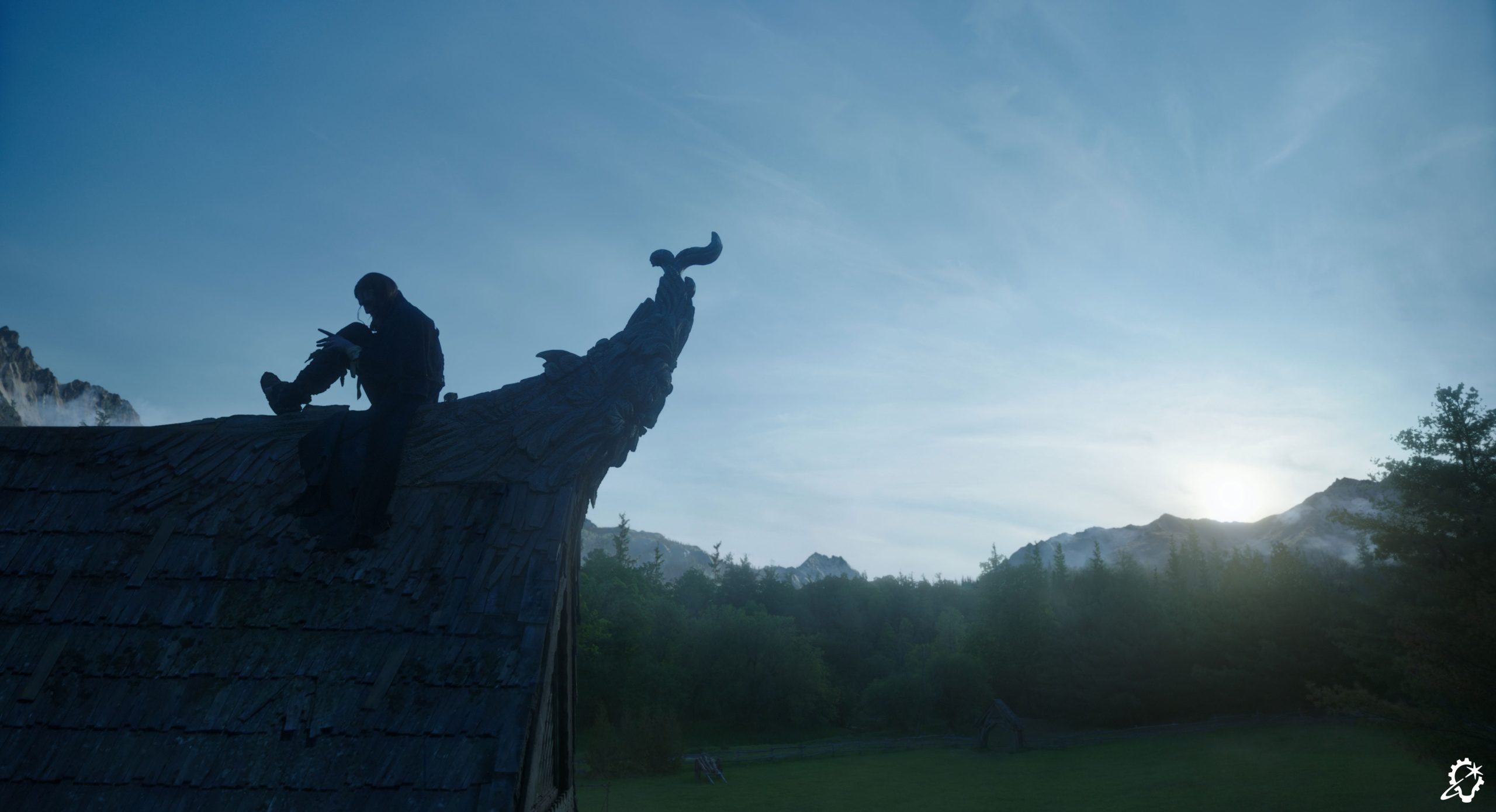
The filmscape provided ILM with an idea of the final image the filmmakers sought, leading Busquets to praise the director and his team, emphasizing, “In terms of tasking and determining what would be required of ILM, the filmscape was super valuable. Oftentimes, when we’re prepping, in the absence of a document like that, what we’d normally do is go out and find real-world references for the sequences we set out to do.” Although ILM did gather such references for this project, the filmscape expedited the process. “For example, we had the Carpathian Alps environment around the millhouse where The Creature stays. We could’ve scouted a location or photographed mountains, but Guillermo gave us references of landscape painters like Albert Bierstadt. While we based our matte paintings on real photography, we started by studying what Guillermo liked about the filmscape’s visual references.”
Creature Features
ILM’s depiction of the dinosaurs in Jurassic Park (1993) was a seminal moment in visual effects history, presenting the capacity to create authentic animals that would delight audiences. The challenge of organic elements like fur and feathers was still beyond early 1990s technology. Jumanji (1995) saw the first computer graphics photo-realistic hair and fur, bringing lions and monkeys to life as they stampeded through Joe Johnston’s classic adventure film. As the tech and their mastery of these elements developed, ILM was able to bring creatures from this world and beyond to the screen, crafting a menagerie of wildlife that would dazzle even the great John Hammond. For Frankenstein, ILM was tasked with bringing a trio of very real animals to life, and as Busquets explains, that took some work.
“There’s a wolf trainer in Alberta called Andrew Simpson, who’s worked extensively in the industry. The production cast seven wolves to be the pack in the movie, and myself and ILM animation supervisor Adrian Millington went to his ranch during preproduction to gather photographic and video reference of the wolves.
“They trained the wolves for months to do specific actions,” Busquets continues, “so the whole scene had been prepped and blocked for the choreography of the fight. We had the advantage of not only taking high-resolution close-ups of fur, teeth, and claws, but also to film them performing those actions while they were training.”
In parallel with this intense training period for the wolves, the ILM team “always knew there was a percentage of those wolves that would become CG,” as Busquets explains. “But the real wolves were able to actually perform those actions, so we had the perfect reference from the real world.”
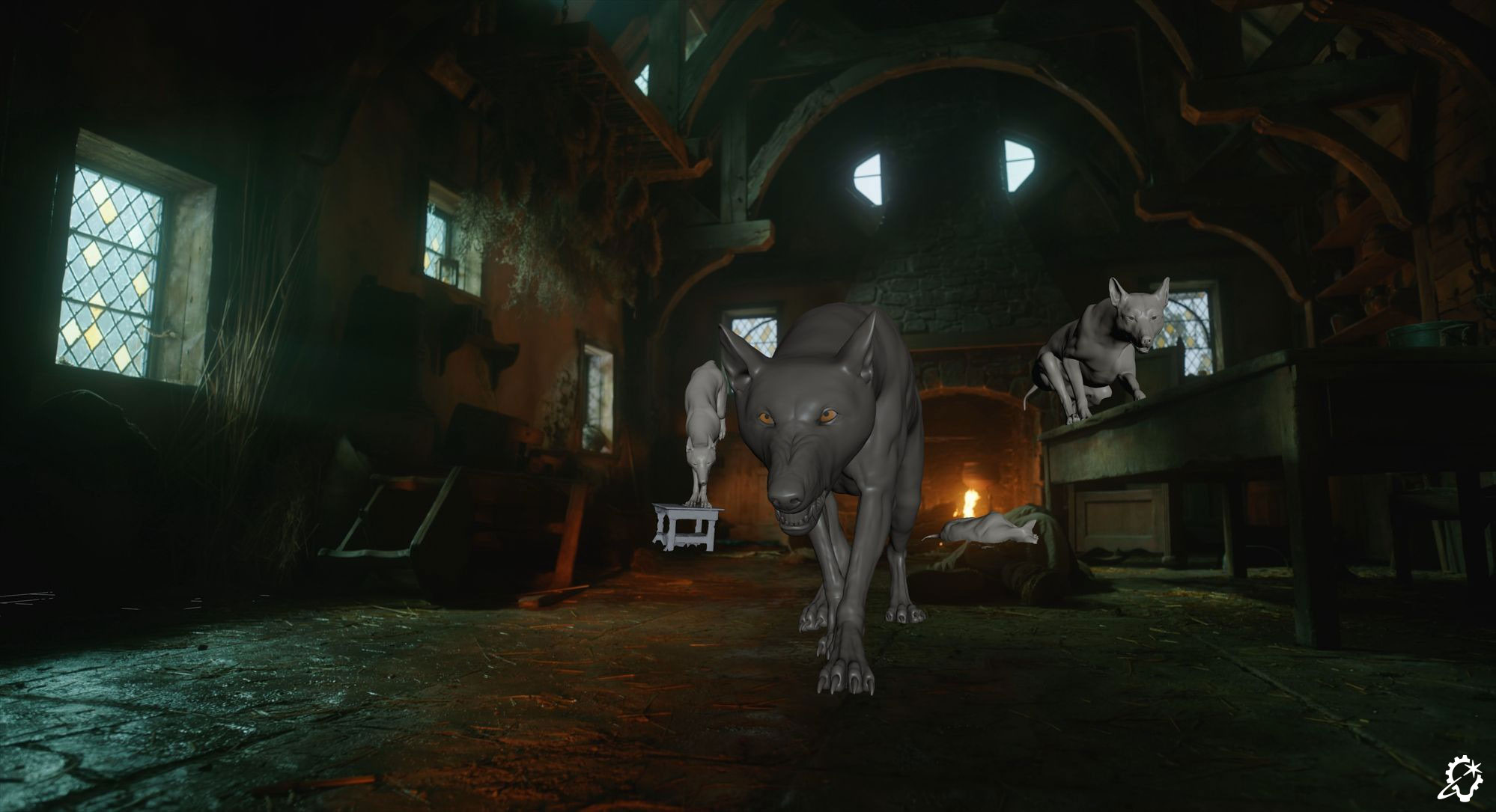
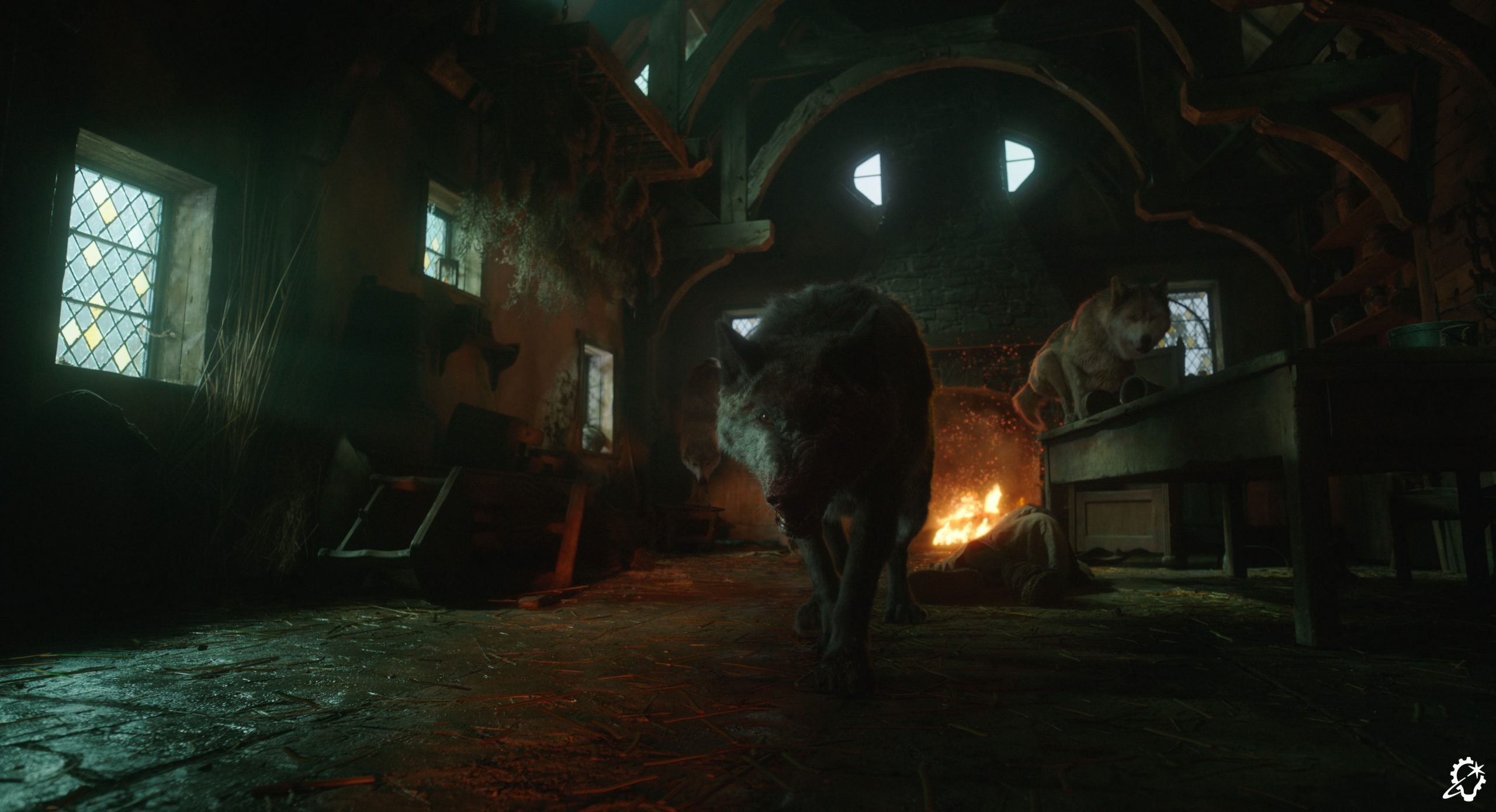
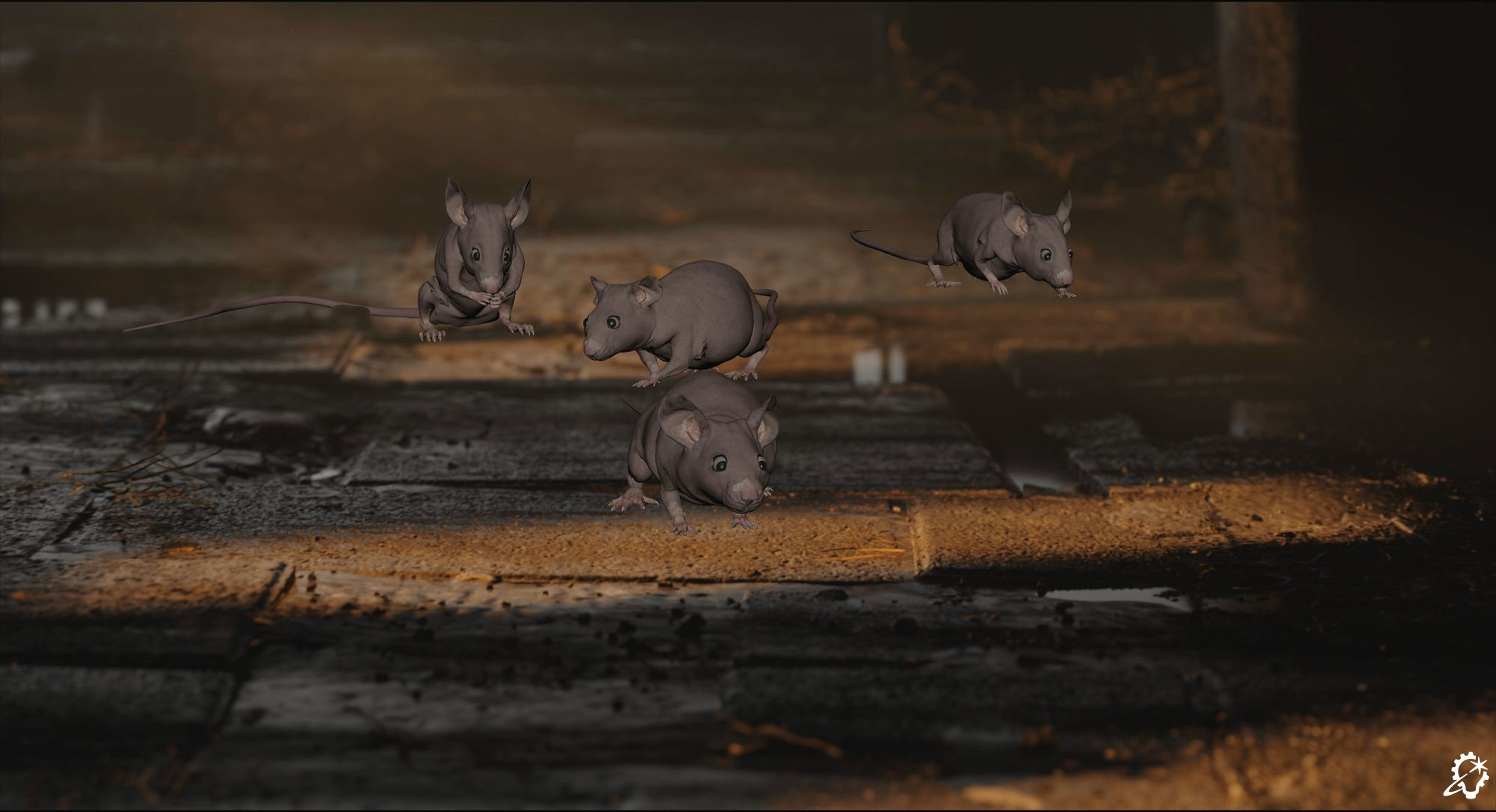
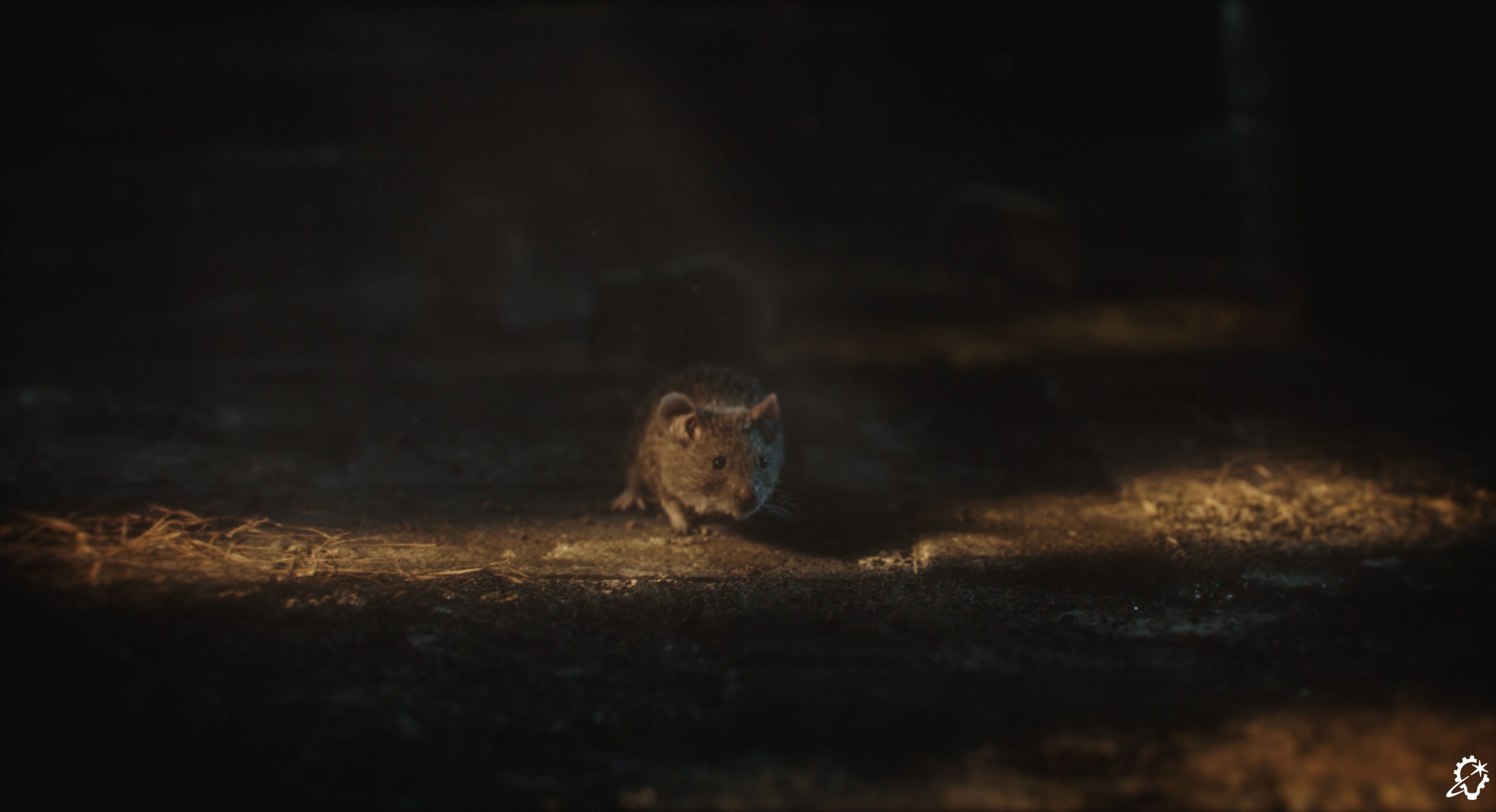
The menagerie extends beyond the wolves’ feral nature. Other animals encounter The Creature in the snow-covered woods, and just as the lupine ferocity of the wolves had been studied, so was the gentle nature of the inquisitive mice and deer.
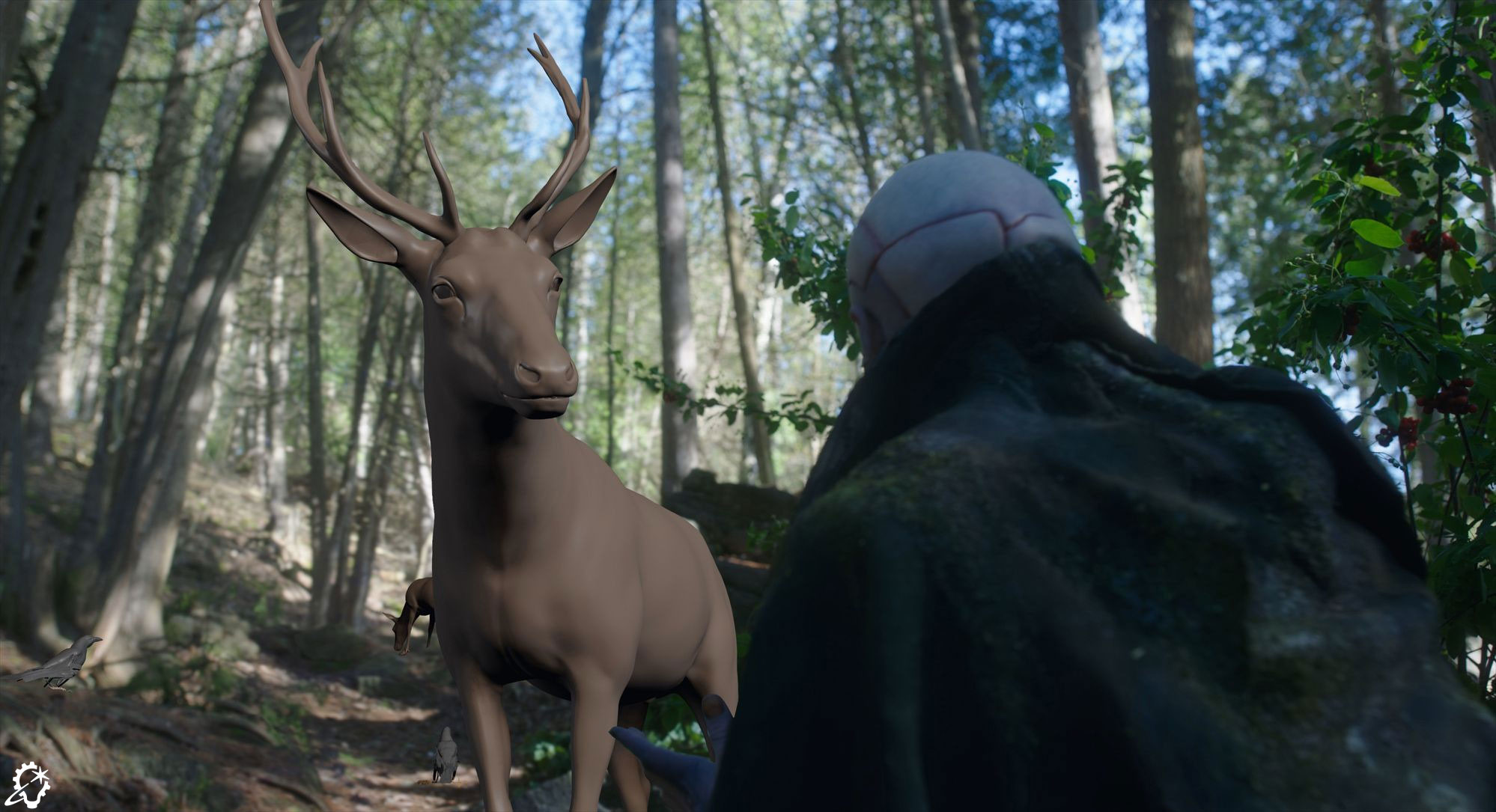
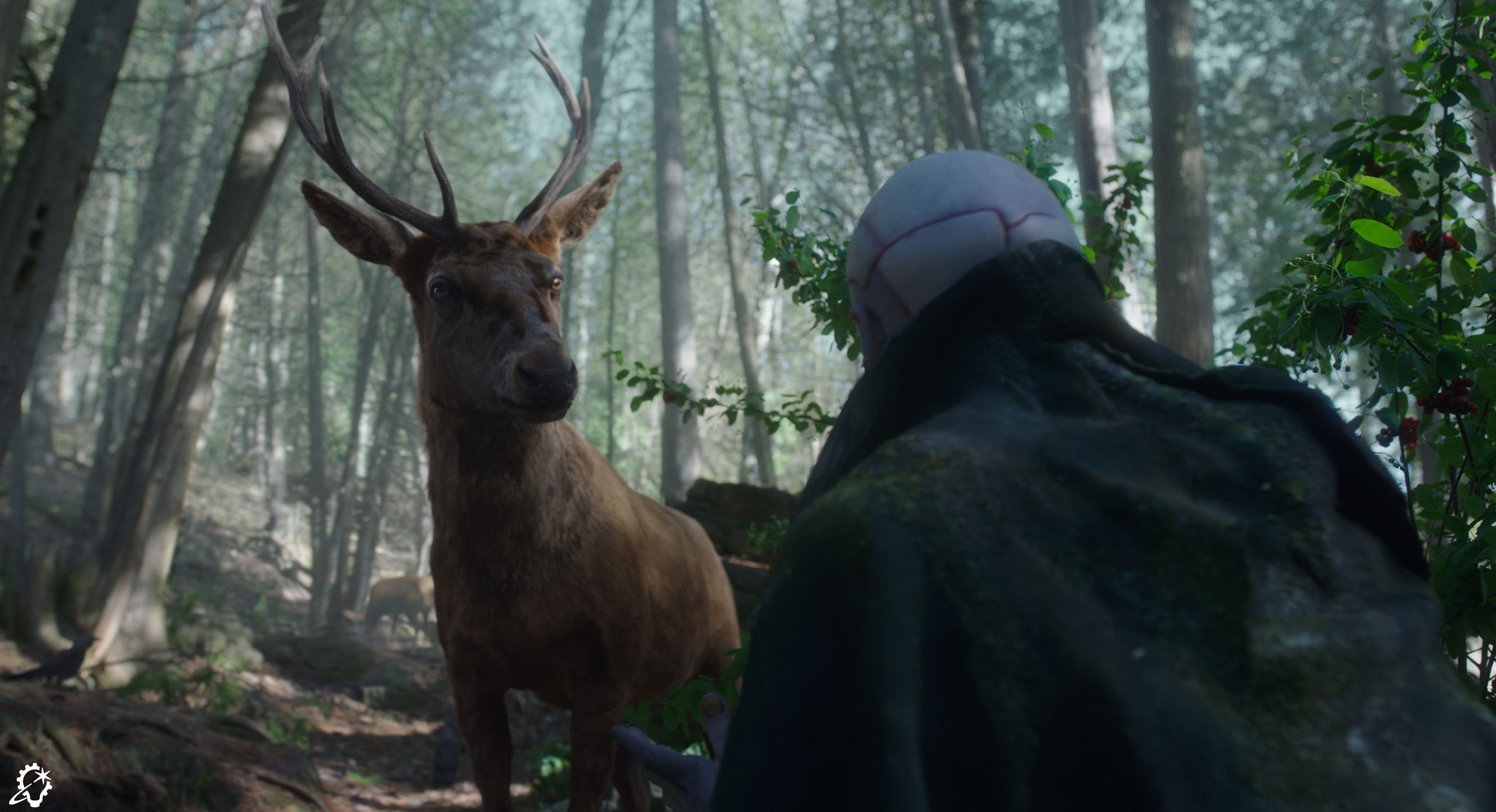
“The approach to both was a little bit different,” explains Busquets. “We always knew there was going to be a deer in there, but in pure Guillermo fashion, it couldn’t be just any deer. He brought in a deer from a taxidermy artist that he loves and trusts.” Truly, the film was stuffed with granular detail. “It had to be that species of deer. It essentially became the perfect reference that we could have on set for lighting, likeness, and everything.”
They had their del Toro-approved cervine muse. Now the task turned to bringing it back to life. “Our task was to create a digital version of it and animate it. Guillermo was so detailed in describing the deer that he wanted that even in early conversations, he had pushed us to consider the idea of using some part of the puppet in the movie.” An interesting request, but one that ultimately didn’t happen. “In the end, it was more practical for us to match it closely and replace the whole thing. That’s how specific he was about it.”
In Frankenstein, the mice are a charming curiosity, but their creation was very much after-the-fact, as Busquets explains. “The mice weren’t an afterthought, but they were a later addition. They didn’t exist in the script, but as the movie evolved, Guillermo listened to what the movie was asking for, and he felt he needed to add something to the arc of The Creature to show his connection to nature. Nature isn’t afraid of him, even though humans are.”
Added in postproduction, the mice still needed a motivation, as Busquets explains. “There’s a group of mice living in the millhouse that aren’t necessarily scared but are apprehensive of him. As the days go by, they get more comfortable, and they end up crawling all over him and sleeping with him.”
With a story in place, the attention turned to the animation. “Because the shots weren’t created with that intent, it was a very interesting exercise in choosing plates and thinking, ‘Okay, how could mice be interacting with The Creature here?’ Guillermo gave us an initial brief, but beyond that, he gave the artists at ILM a lot of room to come up with ideas and interpretations and pitch ideas to him, so visual effects had a lot of creative input. There’s one shot where The Creature’s hand is cupped, and the mouse is hanging out. It looks like it was shot for that specific purpose.”
A Shipshape Standard
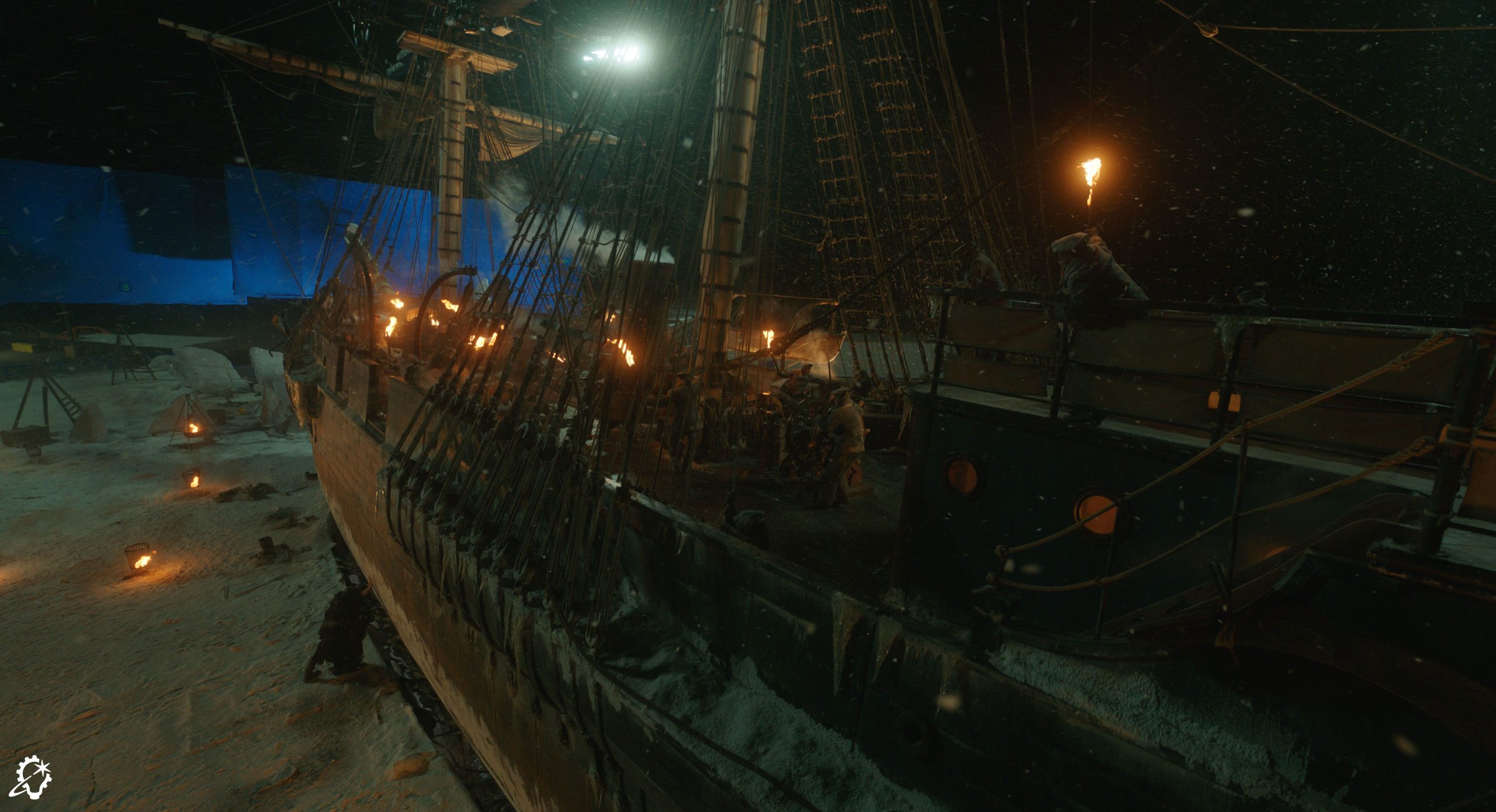
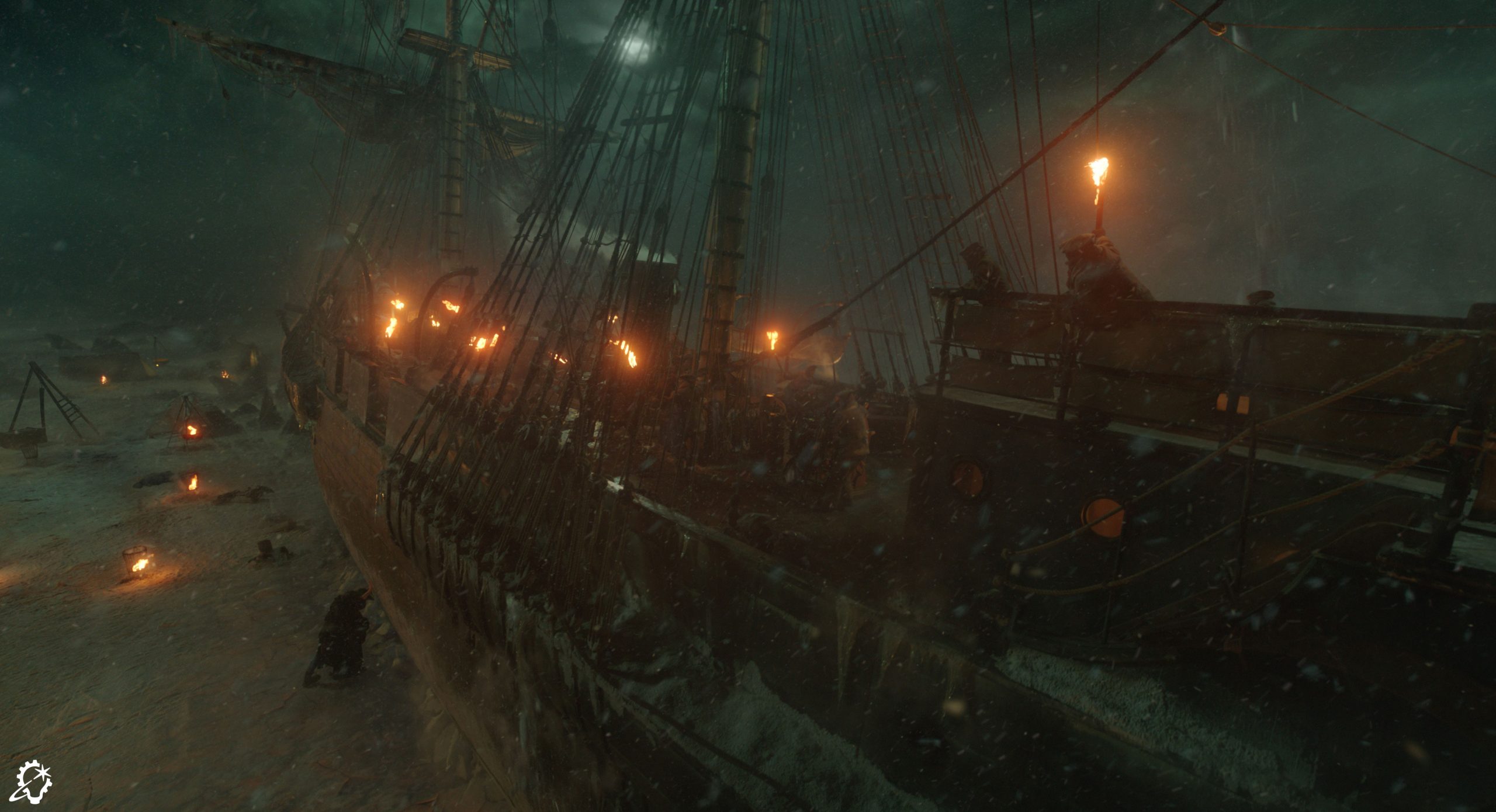
Beyond ILM’s animal contributions, the company also brought its expertise to the events on Captain Anderson’s (Lars Mikkelsen) sailing ship. These sequences demonstrate how visual effects function in tandem with their practical counterparts. “It all begins with the integration of assets that exist and are tactile, which production did very successfully in this film. The physical sets were grandiose with a high degree of detail, and an amazing amount of work went into them,” Busquets divulges. “A life-size, full-scale version of the ship was built on a gimbal, which I believe rotated nine degrees from side to side. In the shots where you see The Creature pushing the ship, there’s a weight and tactile nature to it that would have been tricky for the actor to mime.
“The counter side is that the set was installed in a parking lot in Toronto, so there were plenty of visual effects to be incorporated around it,” Busquets continues. “ILM handled some extensions for the ship, such as the sails and the masts. For the ground or the ice sheet surrounding the ship, set decoration did an excellent job of putting out snow blankets and dressing it up with tents and props. The immediate area next to the ship was covered with set decoration, but we extended the environment from there. Our goal was to blend into what they had placed, and production did a splendid job of scanning and giving us photo references of everything on set – the barrels, tents, shovels, and the tools that they used to try to free themselves from the ice.”
Busquets indicates assets that ILM focused on, explaining, “There’s a ladder on the side of the ship that, towards the end, when the ship gets pushed, is knocked over. That ladder was CG. There were practical objects that existed, but we ended up replicating and extending a few of them for various reasons. For instance, we replicated tents because we had to extend that environment a little further. The ship was built practically up to a certain height with a bit of rigging, but we extended the masts and added sails and extra rigging.”
Frozen at Sea
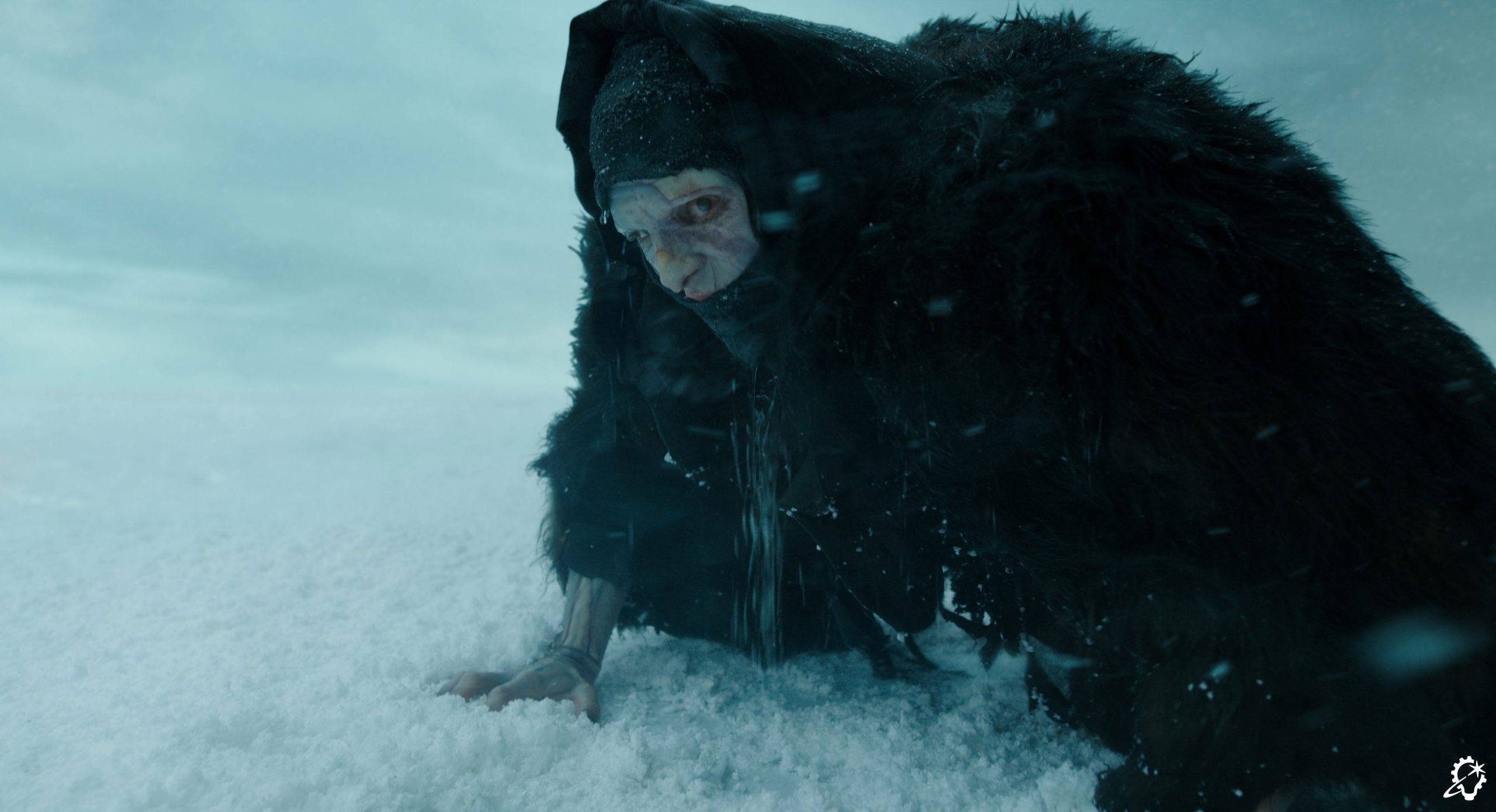
Pivoting toward the ice that freezes to the ship’s hull, Busquets notes, “We created the ice that encased the ship, which is an important story point because the expedition was stuck and couldn’t leave were it not for the kindness of The Creature at the end. The heavy lifting is done with the practical set, but breaking ice is not something that you can easily do practically. It would be incredibly difficult to reset after each take, so using visual effects in that case allows them to do what you can’t accomplish otherwise. The way ILM approached the ice fracturing – both the fissures that open beneath The Creature and the ice cracking as he pushes the ship – was to ground things in reality. We studied footage of ice breakers, as well as the dynamics of large formations of ice breaking.”
As critical as factoring in simulation tools for real-world physics was to ILM’s process, they were not the only elements to be considered. “Our ability to art direct the timing and shape of the fractured pieces to match the pre-broken shards, which production designer Tamara Deverell had, was crucial for Guillermo,” Busquets shares. “We needed to tie into that visual language, so it wasn’t so much about finding reference for breaking ice, but making ice break so it ended up looking like what we had on set. It’s a different challenge, in that it was more keyframe animation rather than simulation-driven.”
Busquets reflects on the complexity, noting that “Once we had the building blocks and the timing and shapes that Guillermo preferred, then every single piece of ice had to break into smaller pieces. There was snow on top of the ice and water beneath. I remember someone on my team described it as a game of ‘rock, paper, scissors,’ but with states of matter – we had ice pushing snow, snow melting into water, and then water displacing the ice again. Our work involved studying how each element interacted and pushed everything else, and it all stemmed from art-directed animation.”

Choosing the Right Tool
The marriage between on-set practical special effects and postproduction visual effects is at the heart of many major productions, forming the connection between set, actor, and the final shots visible on-screen. Understanding how important that marriage between departments is, Busquets explains how the two work in concert to bring sequences to life.
“Visual effects is a tool that adds to every other craft, it’s not a replacement. Even if it’s like, ‘Oh, why did we do all of that? We ended up replacing it anyway?’ I think it makes a difference.” On set, the presence of physical props, rain, fire, wind, and other tangible assets all help to place the actors in the scene, and Busquets appreciates the value of that. “When a film crew sees a blue screen, and nobody knows what it’s going to be – they’ll figure it out later in post – there’s a sense of, ‘What we’re doing doesn’t matter.’ By contrast, when special effects and makeup show up on the day, you’d be surprised with the things that, with some ingenuity, end up working.” As students of real life, visual effects artists constantly learn from what they see on set. “Things that might not work on the set teach you lessons about how to fix it in post.”
A primary location that frames the film, the ice-trapped ship required significant departmental overlap.
“A good example is the gimbal. There’s a point in the story where the crew intentionally fires at the ice to break it. It creates a fissure, and The Creature falls into the water.” A scene that sounds simple, but as with most cinematic moments, there was more to it than meets the eye. “The fall into the ice was a platform that was rigged on set above a pool of water. The shot where he drops in the ice and slides in was shot practically on that platform. We then replace the surface to make it look more ice-like.”
Despite all the planning, safety checks, and preparation, things can still go wrong, as Busquets reveals. “That stunt ended up breaking his jaw. The shot where that happened is in the movie and has a great physicality to it, and I’m not advocating that people put themselves in that situation, but the alternative to that is we do it in CG, and the impact wouldn’t feel the same.”
Another sequence that required a practical element is when The Creature hurls a crew member onto a burning log fire. “That was a practical, pull-rig stunt. We added augmentation of the embers and made it a bigger fire, along with extending the environment and adding atmospherics like snow and flurries, but by and large, the stunt was all practical.”
Fight or Flight
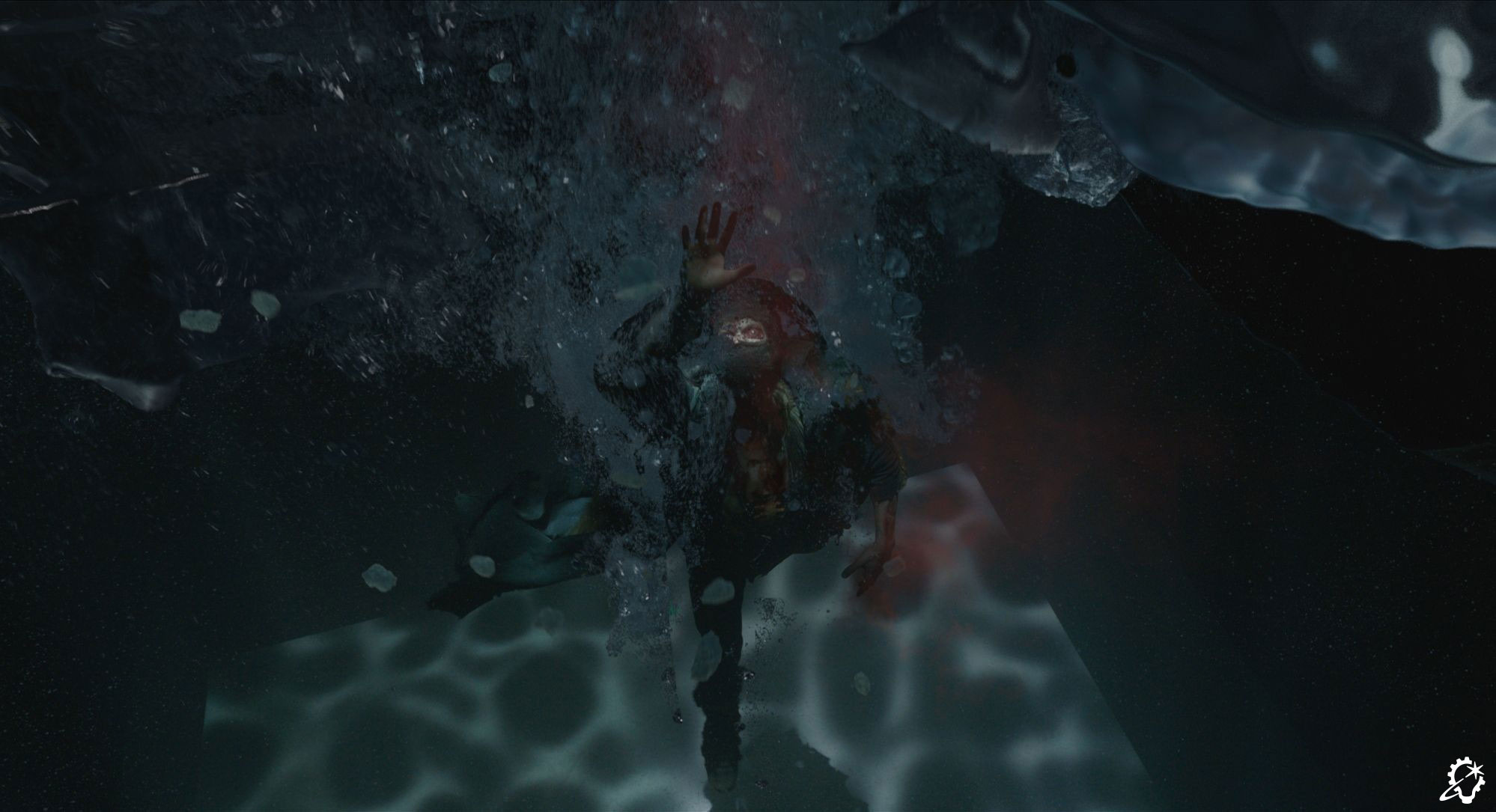
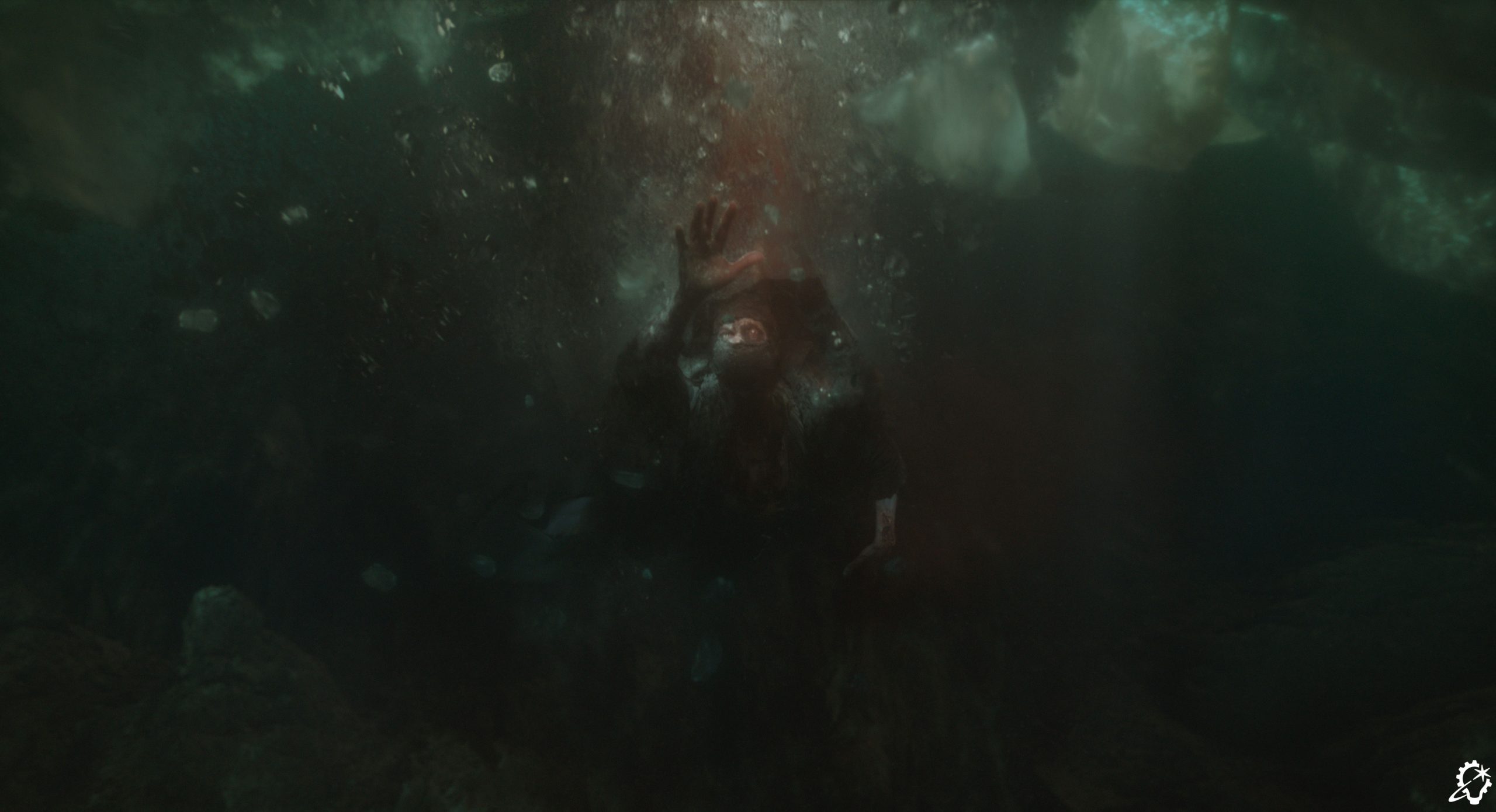
Once The Creature has fallen through the ice near the ship, his body descends into the depths amidst air bubbles and his own blood. “That was shot dry-for-wet, following a technique that both Dennis and Guillermo had used on The Shape of Water [2017] to great effect. When the shot came up, we wondered if we should shoot it dry-for-wet or inside of a tank, but production said they’d done the former successfully in the past,” Busquets explains. “The actor was on a suspension rig and dropped away from the camera along with a light projection – the idea being to keep the element of The Creature and have ILM replace what’s around him to make it appear as if he’s in deep water. We added the bubbles and – because he’s just come through the ice-covered surface – we placed lots of floating ice chunks. At that point, he’s heavily wounded, so we added blood trickling and mixing with the water, too.”
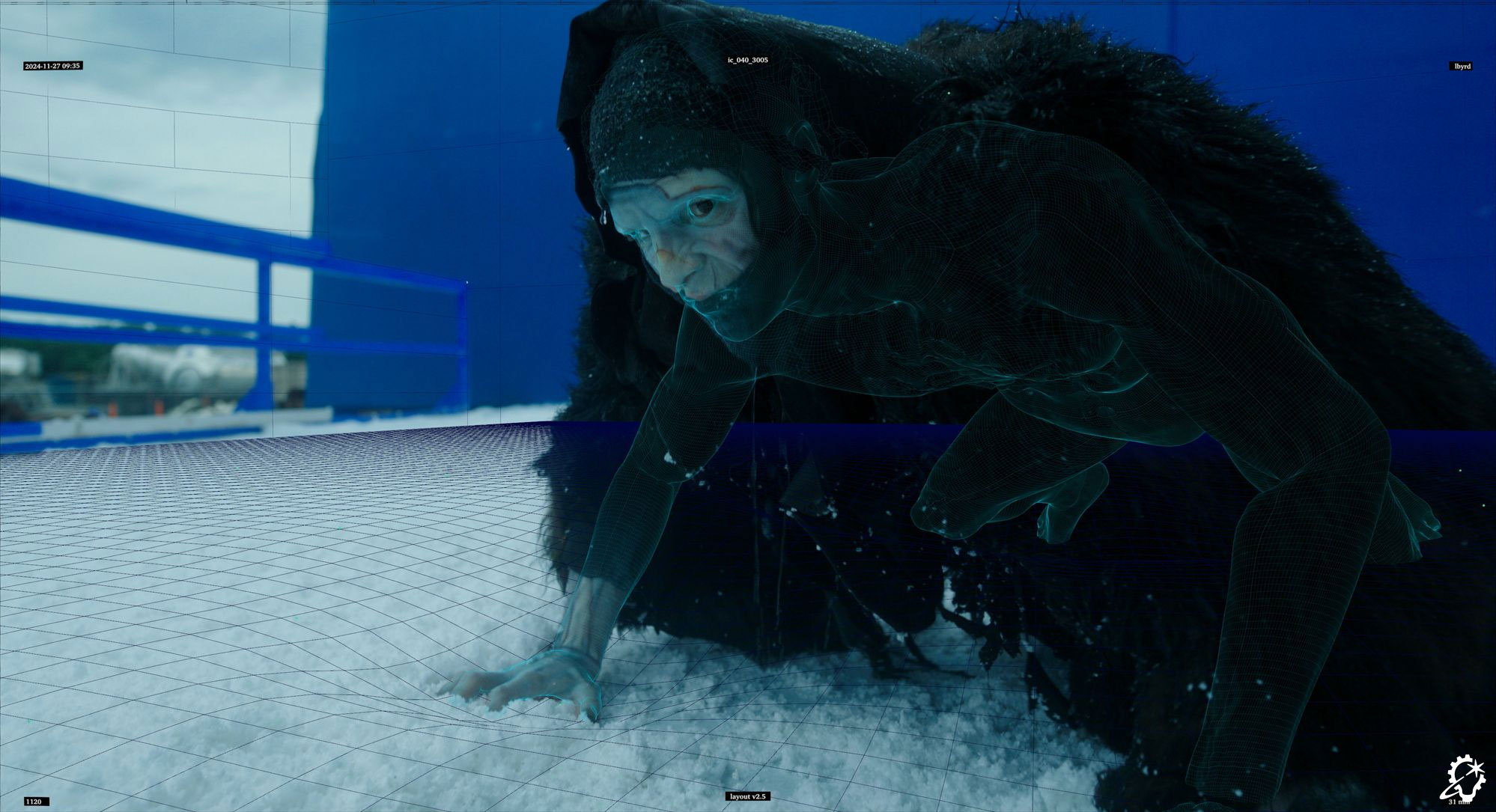
We eventually see a flashback to The Creature’s pursuit of Victor Frankenstein, learning that a portion of his wounds originated from allowing a stick of dynamite to go off against his body. This offered ILM another opportunity to pair its visual effects prowess with the expertise of another department. “The majority of the looks of The Creature’s wounds were established by the makeup department. They did incredible work,” Busquets declares. “ILM only stepped in a bit with things like negative space, for example. You can’t do negative space makeup, gouge somebody’s eye out, or hollow the inside of their ribcage [laughs].
“After the dynamite goes off, the camera pushes in, and there’s makeup work already done for the wounds,” Busquets continues. “We just replaced the rib cage so that you could see it hollow. The Creature’s hand gets blown off, so half of his hand was a CG replacement as well, so that we could show bones. Basically, ILM’s contributions were additive on top of the makeup department’s work. The same goes for The Creature’s injured eye. They made a tremendous prosthetic eye, but they obviously couldn’t scrape it into the actor’s head, so it bulged out. However, Guillermo really loved the design of that eye, so our job was to replace it while also making it look exactly like the prosthetic.”
Monster Moments
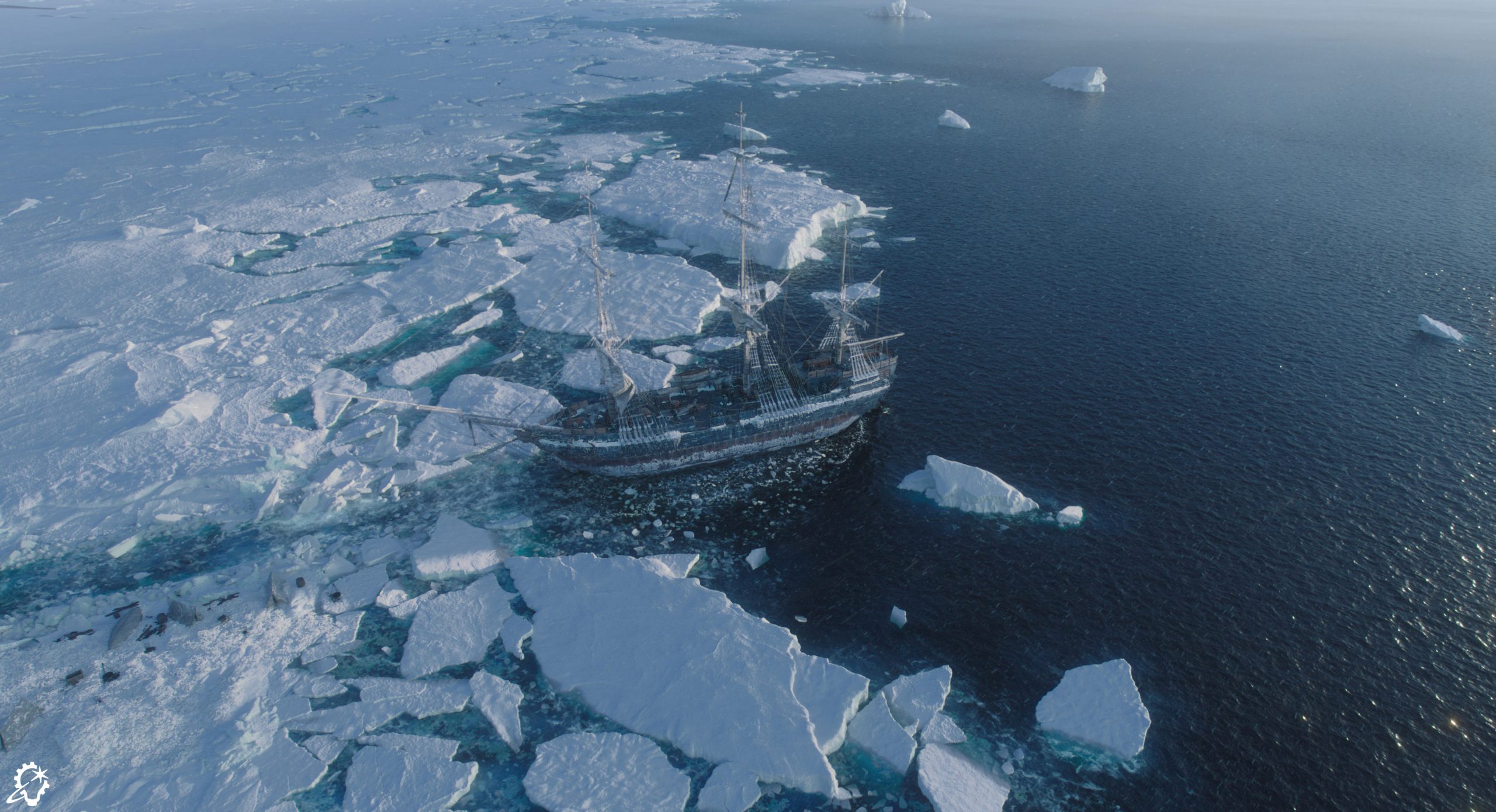
It’s not the fairest of questions, given the hours, teamwork, and craft required to layer in what constitutes a great shot, but Busquets points to a couple of moments that stood out for him. “After the ship gets pushed to freedom by The Creature, there’s a wide shot of the ship sailing out to sea. I like that shot for a number of reasons. One, all of the environment is CG, but we still used the part of the ship that was practical.” Incredibly, amongst that most Arctic of vistas, part of what we see was literally shot in a car park. “It’s the same ship that was in a parking lot on a gimbal, but the gimbal only allowed it to rotate side to side, meaning you couldn’t physically move it front and back.” To enable the use of the landlocked ship, older methods were employed. “We used a very old technique. We can’t move the ship, but we can move the camera. So we were able to keep the ship from the plate and pretend that it was moving,” explains Busquets. “You’re making the camera travel twice the distance. In post, we halve the distance and put the rest on the ship. That technique worked incredibly well because when we first looked at that plate, we thought we’d have to replace the whole ship.”
It was an elegant solution to the problem, but one that still needed the thumbs-up from the film’s director. “This was a shot that needed to be auditioned, so to speak. Dennis shot this plate and told us, ‘Guillermo is not keen on having drone-like shots because it’s not in the language of the movie, but this environment looks so beautiful that I think we can earn it.’ We did the shot not knowing if it was going to go in the movie or not, but from one of the first iterations, it had a lot of potential. It showed a beautiful environment, and it matched the emotion of the sequence that Guillermo was going for, so he cut it in.” Busquets smiles at the memory. “I’m proud of it for that reason. It’s a shot that originated in visual effects and earned its way into the movie.”
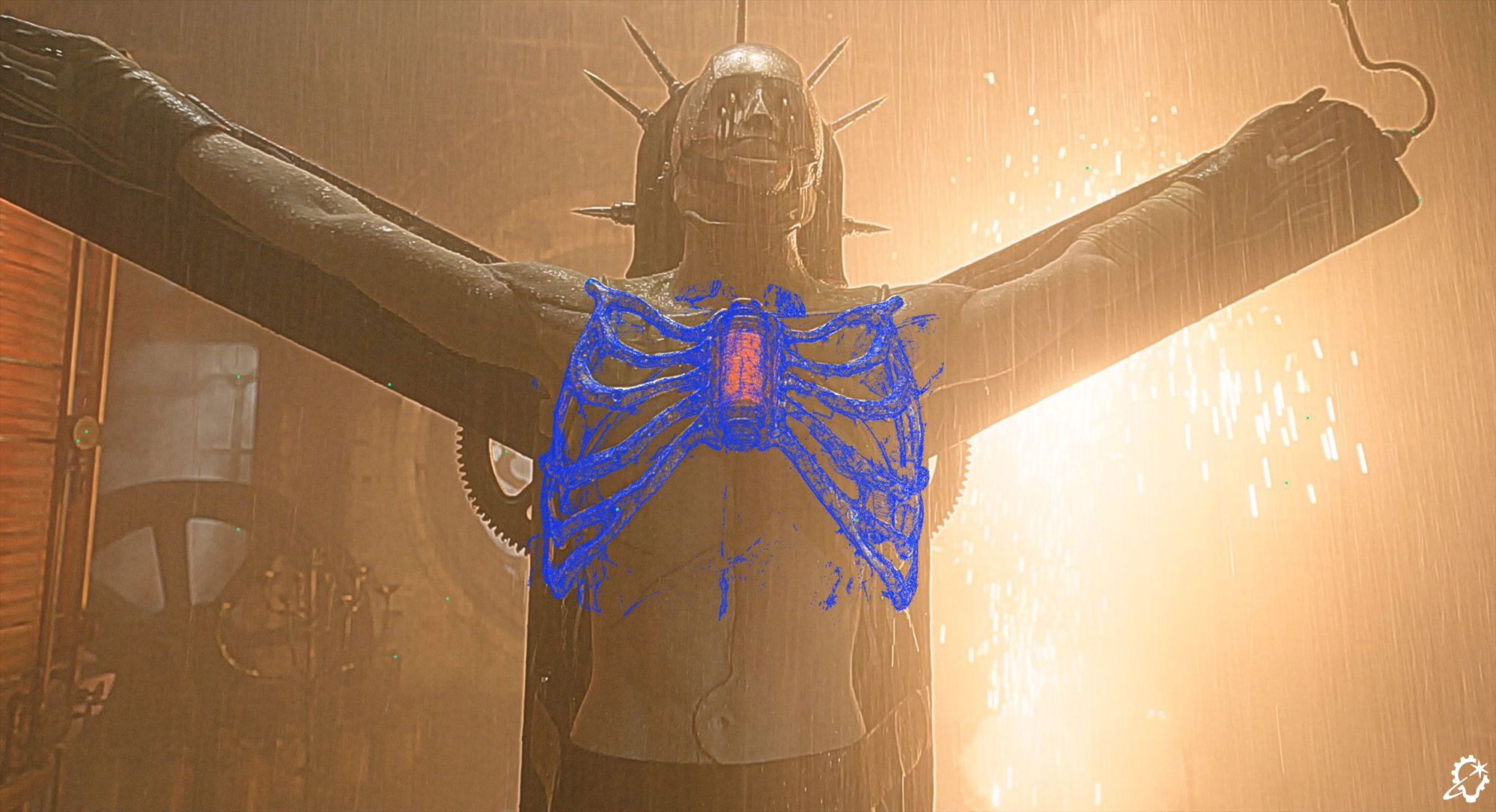
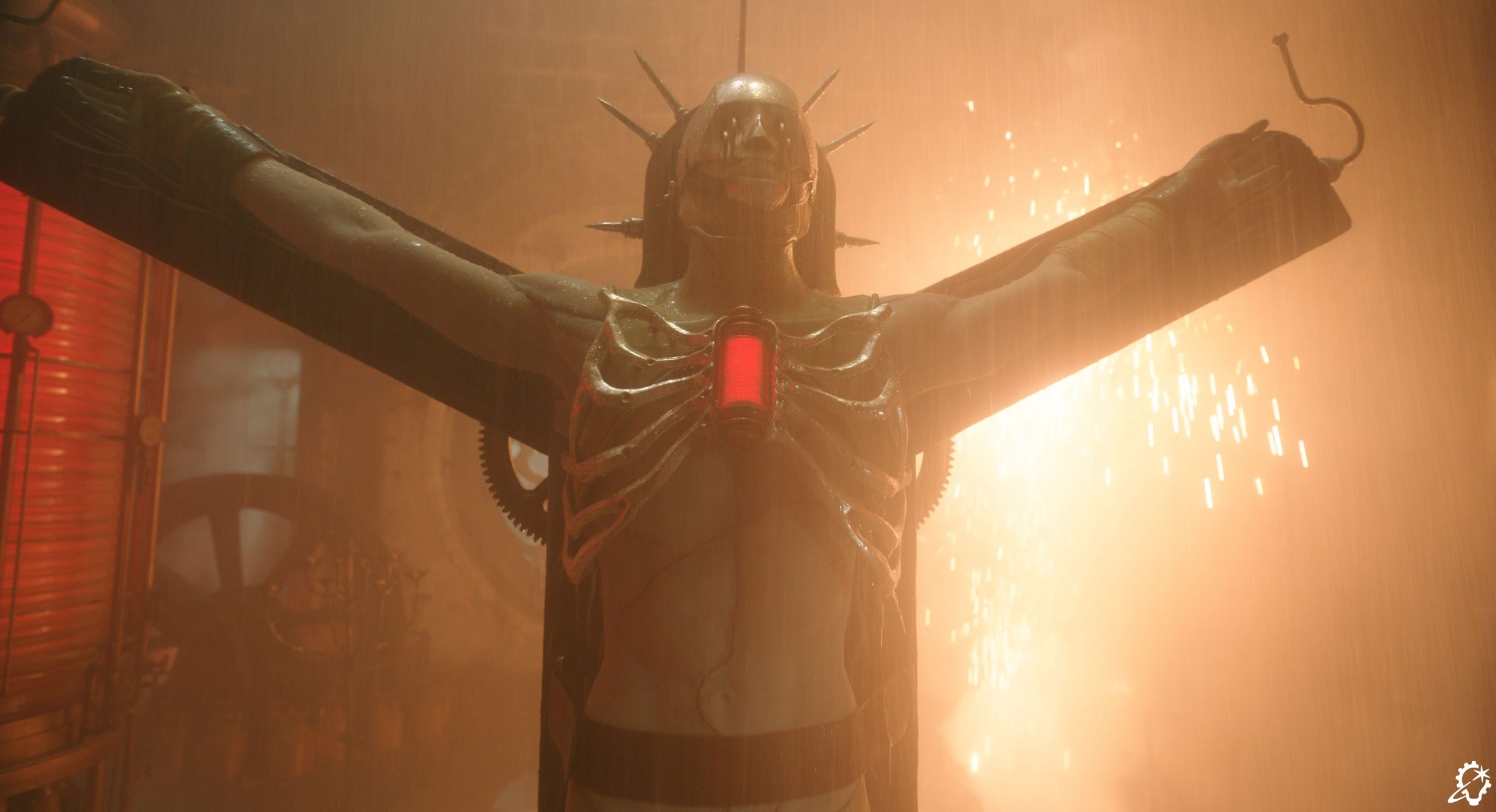
Busquets has another memorable moment from the show, the “spark of life” shot when The Creature first comes to life. “It’s a journey inside of The Creature’s body. The shot starts practical on the set with The Creature, and then we go through the battery, into the heart, and into a blood vessel. We end up in a cavern that has a lymph node that starts to glow.” It’s a beautifully crafted scene, inspired by Mary Shelley, a writer born in 1797 who changed the landscape of modern fiction when, at age 20, she wrote Frankenstein; or, The Modern Prometheus in 1818. “The lymphatic system is where the movie says that life starts. Essentially, it’s visualizing that spark of life in the lymph node.”
Beyond ILM’s impressive work, Busquets saw a deeper connection to the sequence. “What I like about it are the parallels between the creative process for the shot and the creative process for Victor creating The Creature. Victor had human pieces that he stitched together, and I can imagine it was a process of trial and error, and it was similar for us. We were prepared to do a full CG journey, and we had laparoscopic footage that we used as reference, but what’s more visceral is to use the footage itself and project it onto our inner organ assets. It took a lot of exploration to decide which parts needed to be CG and which needed to use real footage, and there were plenty of ways to assemble it. It took a while to get there.”
Like the mad doctor, Busquets felt a similar sense of triumph when the scene came together. “I always equated it to how Victor must have felt when creating The Creature, so it was worth it.”
A Visionary Director
In the annals of cinematic history, few directors have such an instantly recognizable style as Guillermo del Toro, a flair and vision he used to full effect in Frankenstein.
“For me personally, it was not a hindrance,” explains Busquets. “It was extremely helpful to have someone with such a strong vision. Even if you didn’t know anything about his previous body of work, one thing that stood out to me was that every time we showed him something, he reacted quickly and decisively.” That decisiveness was a boon to the production. “That was a clear indication to me that he already had a clear vision of what he was going for. It was exploratory in terms of how we’re going to get there, but the vision was there from the beginning.”
In ILM’s quest to deliver realistic and engaging visual effects, was that clear vision a help or a hindrance? “It only makes it more difficult if you try to fight it!” says Busquets, laughing as he continues. “We often try to ground things in reality, and that’s very important, but in this film, it was even more important to ground things in the visual language, themes, and the design that were set forth by Guillermo and production design. Staying true to those themes trumped trying to do something physically accurate and photographic. As long as you’re willing to accept that with Guillermo, then his direction is helpful for visual effects artists, and it’s also very satisfying to work for a director like that.”
Busquets gives an example. “I like that he never told us ‘Go 20% brighter or 50% faster.’ He never gave us notes like that. Instead, he would paint a picture or direct you to another example or bring up obscure references. He has such a database in his head of visual reference; he’d direct you to things that aren’t exactly the thing he wants but are inspirations for it. For artists, that’s gold. It puts you in his head a little bit. Then it’s like ‘Now you give me your interpretation,’ which I thought was brilliant.”
That would lead to some satisfying interactions with the Academy Award-winning director. “Sometimes he also gets surprised – ‘Oh, I like this idea. I hadn’t thought of that, but I love it, and it’s going in the movie!’ I really appreciate that style of directing.”
Serving the Story
Busquets reinforces the notion that ILM’s primary goal is to craft visual effects that support the story filmmakers wish to tell. Referring back to his previous statement that having ILM encase the sailing ship in ice became key to the vessel’s inability to flee from The Creature, “That scene is a perfect example of visual effects in service of the story, which is the best use of visual effects, in my opinion. On a number of occasions, Guillermo insisted to us that he didn’t want to make eye candy – he wanted to make eye protein, as he called it,” Busquets beams. “Yes, we need the visuals, but those visuals need to give people something more meaningful behind them.”
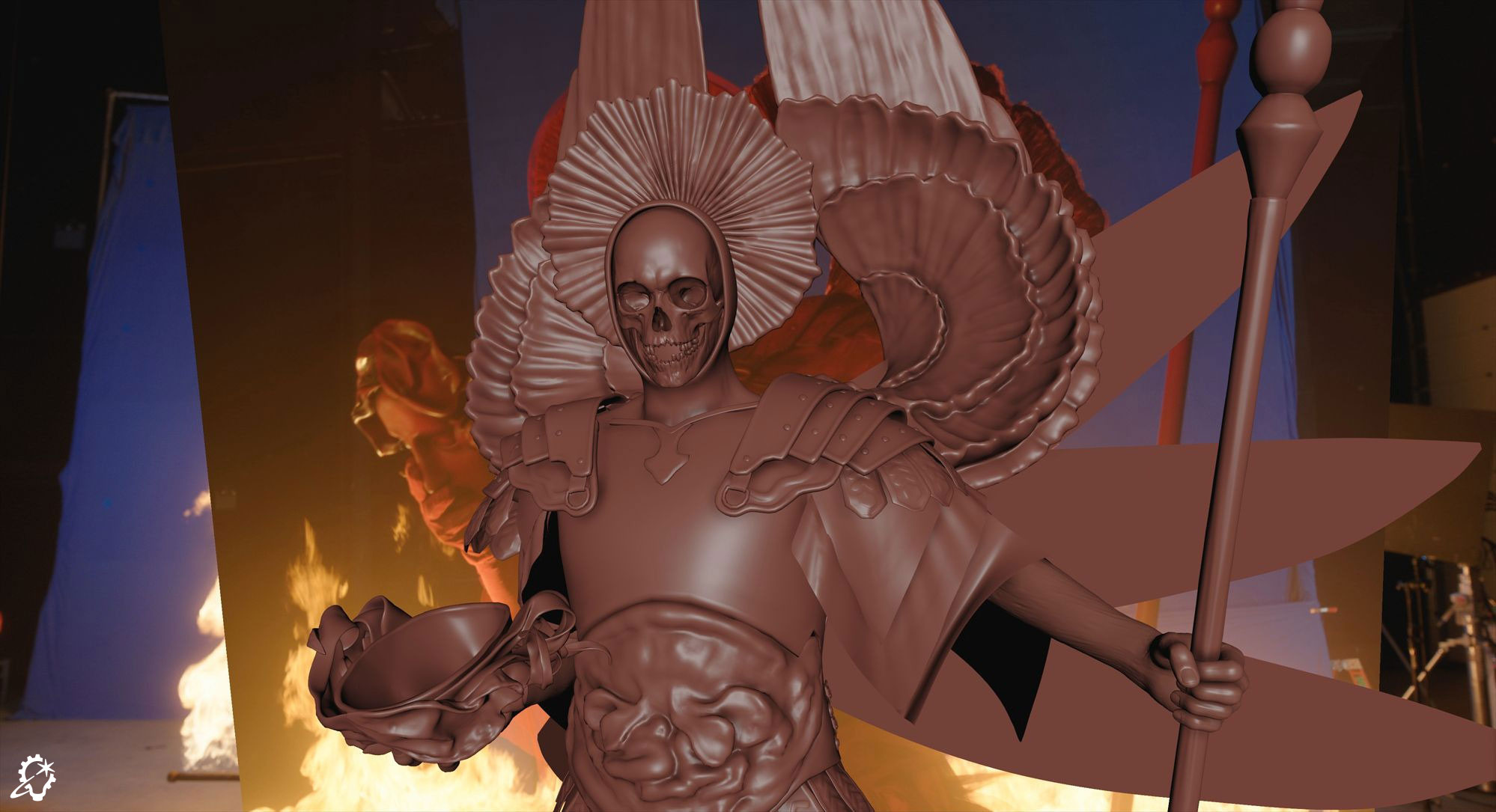
Citing the film’s stylized nature as an indication of the metaphors and connections that del Toro baked into it, Busquets comments, “There are countless visual metaphors in Guillermo’s movies. There are strong visual connections with color, such as the color red being tied to Victor Frankenstein’s mother. If visual effects can tack onto that and further the story, that’s terrific. On the other hand, if you’re just trying to give him something flashy for the sake of being flashy – and that might serve the purpose for other types of stories – it’s not what Guillermo is looking for. Visual effects are important to Frankenstein’s story because Guillermo wouldn’t have had it any other way.”
Busquets believes the visual effects community as a whole must strive to convey a more accurate picture of their on-screen contributions to the public, asserting, “We have a ways to go when it comes to informing audiences and showing what our work actually is. In the past few years, there’s been a trend to consider that anything done with CG is somehow less authentic. There are valid points in that, but I think that criticism often comes from only seeing the CG that’s visible – and not the parts that are invisible. The way I see it, CG and visual effects should be treated as another tool in the toolbox.
“If you try to use the wrong tool for the job, it’s not going to come together. I always equate visual effects to other departments in a movie. A film is not ‘more than’ or ‘less than’ because it uses makeup or stunts – and that goes for every department,” Busquets concludes. “I would love for visual effects to be understood as just another player at the table. Sometimes, visual effects work out in certain situations more so than others, and that’s totally fair. But the theory that ‘CG equals bad’ – we have to aim to correct that.”
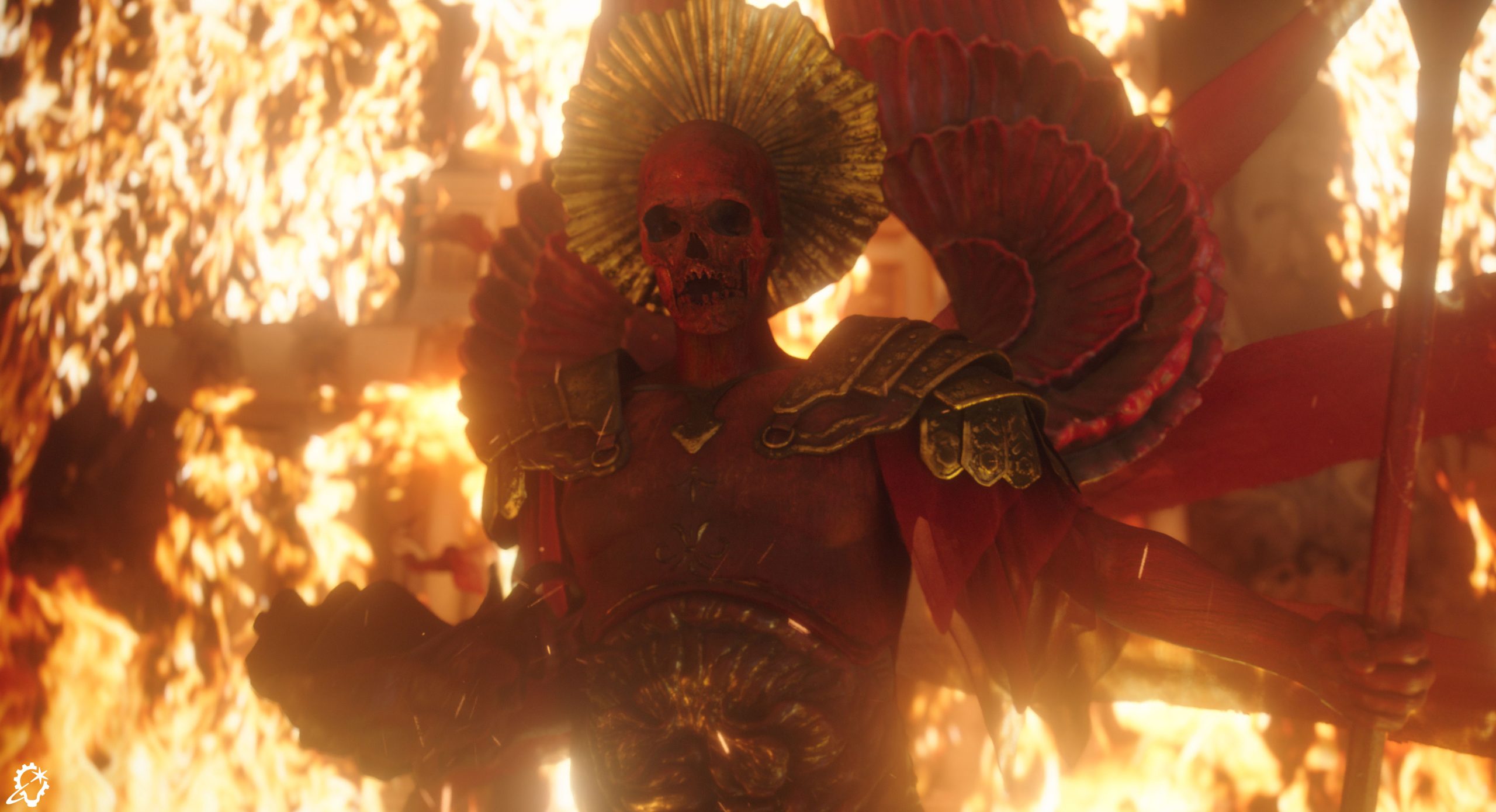
Watch Frankenstein on Netflix.
–
Mark Newbold contributed to Star Wars Insider magazine for twenty years, is a 4-time Star Wars Celebration stage host, avid podcaster, and the Editor-in-Chief of FanthaTracks.com. Online since 1996. You can find this Hoopy frood online @Prefect_Timing.
Jay Stobie (he/him) is a writer, author, and consultant who has contributed articles to ILM.com, Skysound.com, Star Wars Insider, StarWars.com, Star Trek Explorer, Star Trek Magazine, and StarTrek.com. Jay loves sci-fi, fantasy, and film, and you can learn more about him by visiting JayStobie.com or finding him on Twitter, Instagram, and other social media platforms at @StobiesGalaxy.