Vision & Craft

50 Years | 500+ Film and TV credits | 135+ Awards

SINCE 1975

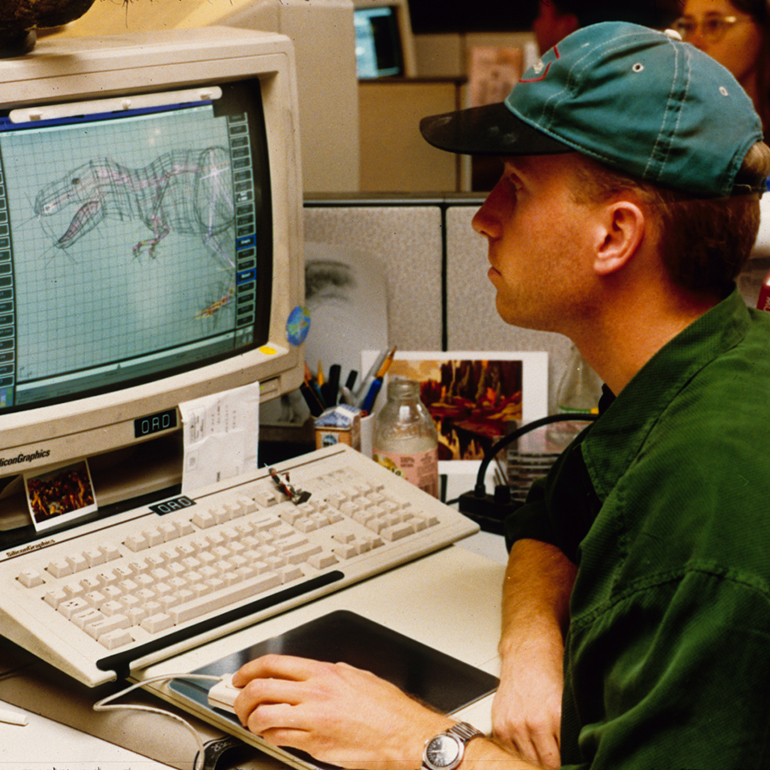
While the film may have been 65 million years in the making, the visual effects crew would have substantially less time to create what would later be recognized as a seminal moment in the annals of cinema history. Jurassic Park represented a massive leap forward in the use of computers to create imagery for the screen. For the first time living, breathing creatures had successfully been created using the then nascent technology known as computer graphics.
Though commonplace today, the use of computer graphics (CG) in film was not at all common in the early 1990s. With Jurassic Park, director Steven Spielberg masterfully combined Stan Winston’s practical puppetry with ILM’s fully computer-generated dinosaurs. Visual Effects Supervisor Dennis Muren gives much of the credit to CG Animator, Steve ‘Spaz’ Williams, and Co-Visual Effects Supervisor, Mark Dippe, for pushing the innovations that ultimately showcased what could be done in creating photo-real, CG dinosaurs. Although the original plan called for the dinosaurs to be animated using traditional stop-motion animation, once an initial test had been shown to the director it became clear that the plan would change, and with less than one year before the film’s eventual release date it was going to be a race to the finish.

Even though stop motion would no longer be used for the final-effects work, Phil Tippett and his team — led by Tom St. Amand and their years of animation experience — would prove invaluable to the endeavor. Working with ILM’s machine shop and R&D group, St. Amand came up with the idea to produce traditional stop-motion armature equipped with motion encoders that, when paired with ILM’s Tondreau Go-Motion™ system, would enable the translation of stop-motion moves into digital data that the ILM team could apply to the CG models in Softimage. The technology proved to be a unique bridge between analog artistry and the new digital frontier.
All told, the final cut of Jurassic Park contained just six minutes of CG dinosaurs (cutting seamlessly with nine minutes of the practical puppets), but the resulting spectacle is something that forever changed the visual effects business and by extension cinema itself. For filmmakers, a world of possibility was now open for to explore.

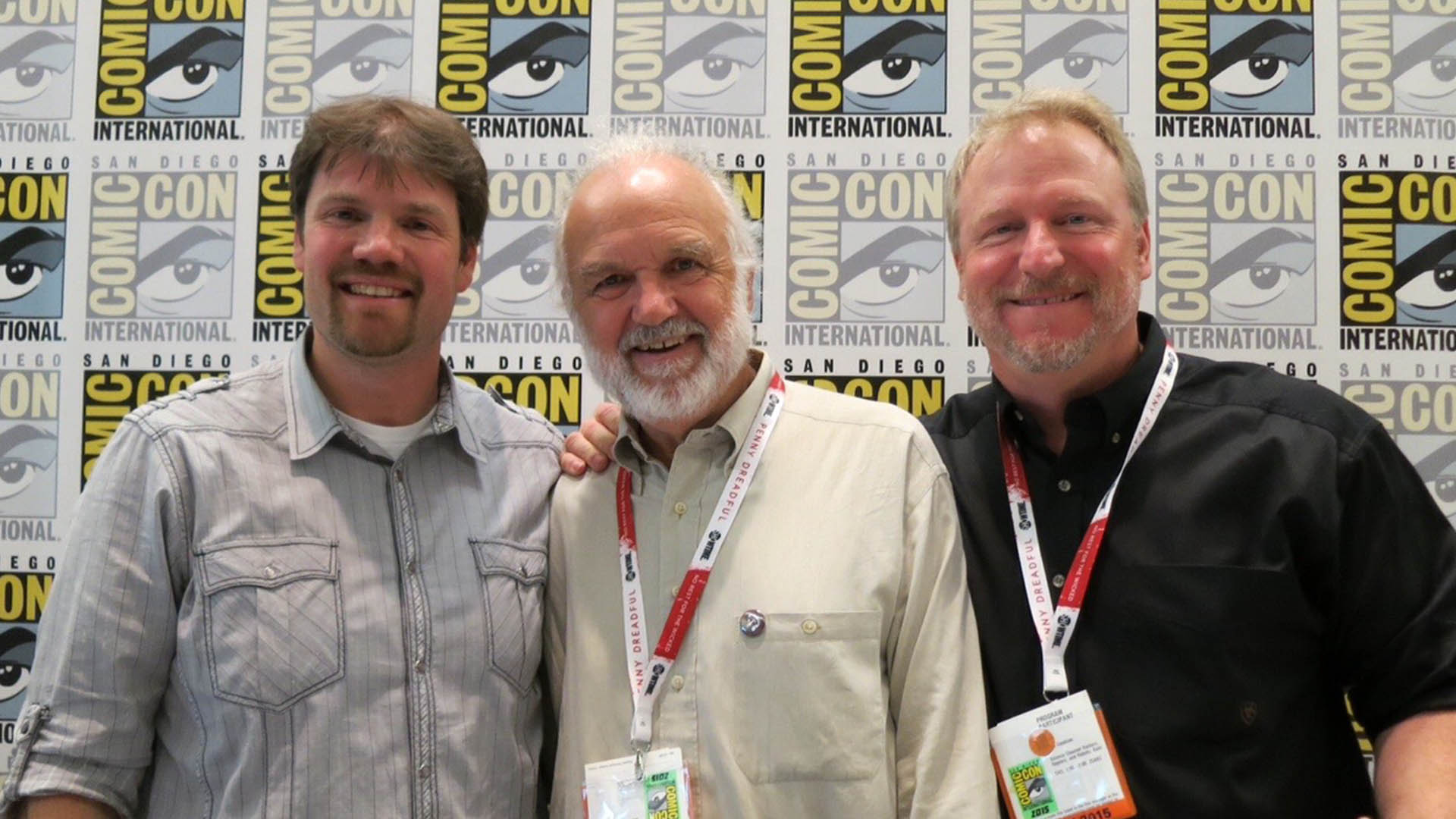
ILM and Science Channel joined together to celebrate ILM’s 40th Anniversary at Comic-Con International in San Diego this year. Industrial Light & Magic Visual Effects Supervisor, Jeff White, legendary ILM model maker, Lorne Peterson, and model maker and digital artist, John Goodson, spoke on a sold-out panel delving into the company’s 40-year history and how films the company has contributed to have inspired and been inspired by actual science. From astronauts to paleontologists, the Science Channel’s one-hour program covers a wide range of topics that include 3D laser scanning, artificial limbs, holograms, and of course, hoverboards.