Vision & Craft

50 Years | 500+ Film and TV credits | 135+ Awards

SINCE 1975

TELL US ABOUT YOUR ROLE AT ILM, AND HOW LONG YOU’VE BEEN IN THE FILM INDUSTRY.

I’m currently a Visual Effects Producer at ILM London. A Producer’s job is to ensure the project delivers on time and on budget – that’s the definition of the role, but there is so much more to it than that…

My daily routine consists of managing the Artists, Supervisor and Leads, and the rest of the Production Team, along side supporting the Visual Effects Supervisor, making sure he/she has everything they need to do their job. I spend a lot of time sitting in Dailies with the Supervisors, keeping an eye on the feedback and requests that come through from Artists and the various departments. Producing is thinking on your feet and knowing who you need to talk to to get the information you need, and ultimately constantly evolving to make sure all the plates keep spinning.

I have been in the film industry for only 7 years, just now coming into my 8th. I’m not going to shy away from the fact that I have progressed very quickly. I have just tried to be myself throughout and stick closely to my morals. I value hard work, honesty, trust and collaboration. These are the foundations of every project I manage.

WHAT IS YOUR BACKGROUND? WHAT WAS YOUR MAIN COURSE OF STUDY IN SCHOOL?

I studied Illustration and Animation at Winchester School of Art. I have a very heavy artistic background, and all through school, college and university I had every intention of becoming an illustrator.

WHAT INSPIRED YOU TO GO INTO VISUAL EFFECTS?

As time went on at University I realised my strengths were in organisation and people skills. My now Husband, graduated a year before me and was already working at a Visual Effects Studio in Soho. Although I knew what it was I had no idea what the day to day pipeline consisted of, all i knew was that the VFX artists put the cool giant robots or magic effects into the films. I was very naive. By the time of graduation I had decided I no longer wanted to focus on being an artist, and my husband actually suggested trying out production as a career, as a good fit for my obsession with organisation. A post for a Production Assistant role came up at the same company and I had previously undertaken some work experience at a Post-Production House and quite enjoyed it, so I applied. The interview went really well, I got the job and never looked back.

I accepted very early that it would be a constant learning curve, so I just got stuck in and absorbed the knowledge and advice coming from all around me, and just did the best I could. Before I knew it, 7 years later and I’m producing my own shows. I don’t feel anything has really changed, I still work the same way, except now I have some experience to back me up too.

Sometimes I look back and wonder ‘what if’ I did become an artist, I do miss it. Some people would argue that Production isn’t an artistic role, for the most part it’s not, but I have found that my creative background and intuition has helped me understand the intricate pipelines I have to manage, and also understand the creative demands the Artists and Supervisors are under. I can help steer the ship to ultimately delivering the clients vision and I do feel a swell of satisfaction when I see the beautiful images we create up on the big screen, knowing I helped make them.

WHAT WAS THE MOST CHALLENGING POINT IN YOUR CAREER AND HOW DID YOU RISE ABOVE IT AND PERSEVERE?

The most challenging point of my career was when I had to step a out of the cocoon of safety of my superiors, and start to really think for myself. I suddenly realised as a Producer that a lot was riding on me to deliver the project, everyone was looking to me, and I had to deal with all kinds of problems that I had never faced before, or even imagined I would have to. I tried to deal with the problems head on and didn’t shy away from the challenge, be prepared to make mistakes (but obviously try not to). It sometimes took a lot out of me, energy and emotionally, but I always came out stronger on the other side and I have learned a great deal.

DID YOU HAVE SPECIFIC FEMALE MENTORS OR ROLE MODELS THAT HELPED PUSH YOU FORWARD?

Yes I have had many, I have had the honour of working with some amazing women over the past 7 years, and before that at university, and in my life in general. It’s going to sound really cheesy but my main mentors and role models are in my family, both in my Grandmother and my Mum, they are both extremely hard workers and have achieved a phenomenal amount in their lives so far, with extremely successful careers. I think growing up around strong women has made me who I am today.

In a professional capacity, I have been fortunate enough to work with Ann Podlozny at 2 facilities. Very early on she took me under her wing. Ann is about as strong as you can get, and I still to this day seek out and value her opinions and guidance.

WHAT’S YOUR FAVORITE MOTIVATIONAL MANTRA?

‘It will be worth it in the end, look at what you have achieved so far’.

‘it will be fine’

‘it’s nearly over’

HOW DO YOU THINK THE FILM INDUSTRY CAN BETTER ENCOURAGE GIRLS AND WOMEN OF ALL AGES TO GET INVOLVED IN FILMMAKING?

More exposure at a young age, I never knew the film industry was so big when I was at school. I wanted to be an artist but I didn’t think that could extend to working in movies. More school talks, and not just from Supervisors but from Producers, Production was never a job I thought existed and you never really knew about the hundreds of people that work on one Hollywood movie.

WHAT ADVICE WOULD YOU GIVE TO WOMEN CONSIDERING FILM, AND SPECIFICALLY VISUAL EFFECTS, AS A CAREER CHOICE?

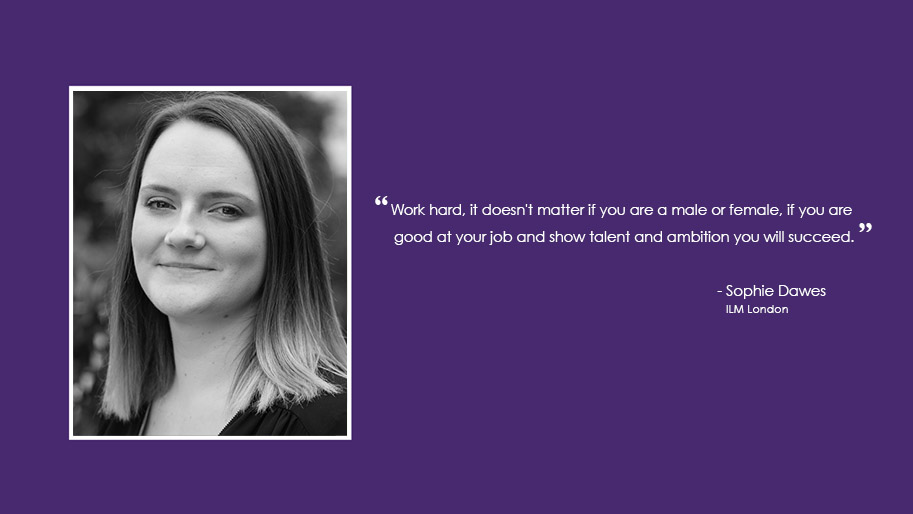
Work hard, it doesn’t matter if you are a male or female, if you are good at your job and show talent and ambition you will succeed. Try and forget about the division in gender, we are lucky enough to be in a world now where the division is reducing, use it to your advantage, women worked hard to get us to this place and we should continue to push for them.

WHAT ADVICE WOULD YOU GIVE TO SOMEONE WHO WANTS TO TAKE HER CAREER TO THE NEXT LEVEL?

Your time will come, even if it feels unfair that others may be moving up around you, it’s always for a reason. Patience, consistency and reliability are extremely valuable assets for an employer, never forget about the role you are currently being paid to do. Continue to work hard, and show them why you should be considered for the next level.

HOW CAN MEN BE BETTER ALLIES TO WOMEN IN THE WORKPLACE?

I personally don’t think it comes down to men being allied with women, I think it’s about colleagues being allied with each other no matter what your gender. I feel it is becoming too easy to tie ourselves up in a ‘women v men’ attitude, and the sooner we just see each other as equals the better. If you enter a situation already acting as an equal, which works both ways, you are bypassing a divide which might not have even been there.

I am not ignorant to the fact that sexism still happens in areas of the industry, but bar some potential sub-conscious bias, I feel very comfortable working with the progressive men and women I currently work with at ILM. I have and still receive a lot of help and guidance from men and a women in positions of power, not because I am a girl, but because I am a colleague and I am good what I do.

TELL US ABOUT YOUR ROLE AT ILM, AND HOW LONG YOU’VE BEEN IN THE FILM INDUSTRY.

ILM was my first step into the film industry! I joined ILM as a production accountant in May 2015 working alongside the production and global finance teams to set and forecast the budgets for feature productions.

In late 2017, I transitioned into a financial analyst role where I work with department leaders providing financial support and analyses to local teams.

WHAT IS YOUR BACKGROUND? WHAT WAS YOUR MAIN COURSE OF STUDY IN SCHOOL?

My main course of study in university was accounting. I obtained my Chartered Professional Accounting (CPA) Designation articling at the global accounting firm, PwC, specializing in audit and tax for a number of industries, including technology and mining.

WHAT INSPIRED YOU TO GO INTO VISUAL EFFECTS?

I always found the world of visual effects extremely fascinating! The ability to transform imagination into realism portraying things that would only exist in one’s mind has always been something by which I was awestruck. When I saw the job posting for a position at ILM, I knew I could not pass this opportunity up. I am continuously amazed by the magic our artists create. Working alongside such great talent on the daily inspires me to do better and be better, and to constantly improve. The strides they take to achieve the impossible are inspirational and truly out of this world!

WHAT WAS THE MOST CHALLENGING POINT IN YOUR CAREER AND HOW DID YOU RISE ABOVE IT AND PERSEVERE?

When I left public practice accounting and started at ILM, it was a huge change. I was learning about an industry I didn’t previously know much about, using new tools, and working alongside people who had totally different career backgrounds than me. I was fortunate to have great support from both our local and global teams, so while it was challenging initially, I got comfortable pretty quickly!

DID YOU HAVE SPECIFIC FEMALE MENTORS OR ROLE MODELS THAT HELPED PUSH YOU FORWARD?

While I was articling at PwC, I worked with a team of amazing female leaders who encouraged me to seek opportunities that best suited my skill set, even if that meant taking on an uncomfortable role/project. They challenged me in new ways to further my development, including coaching younger staff, involving me in important meetings with clients and having me present issues to them, and hosting/teaching webinars to seasoned tax practitioners.

WHAT’S YOUR FAVORITE MOTIVATIONAL MANTRA?

If we don’t change, we don’t grow. If we don’t grow, we are not really living. – Gail Sheehy

Don’t estimate me. I know more than I say, think more than I speak, & notice more than you realize. – Unknown

HOW DO YOU THINK THE FILM INDUSTRY CAN BETTER ENCOURAGE GIRLS AND WOMEN OF ALL AGES TO GET INVOLVED IN FILMMAKING?

The industry needs to showcase and celebrate their female successes more prominently. The advertisement of equal opportunity in the industry alone is simply not sufficient. The industry could sponsor events that cater to a female demographic, put on courses/sessions for women, and produce featurettes on female-driven productions for circulation online, in print, or on cable. The industry needs to take action and make efforts to ensure that the policies in place to promote equal opportunity.

WHAT ADVICE WOULD YOU GIVE TO WOMEN CONSIDERING FILM, AND SPECIFICALLY VISUAL EFFECTS, AS A CAREER CHOICE?

If you are an extremely creative and talented woman, the visual effects industry offers many amazing and exciting career opportunities allowing you to work alongside many other brilliant individuals in a technologically cutting-edge field. The industry is very inclusive and employs a broad range of people coming from various ethnicities, cultures, and backgrounds. The industry is challenging and ever-evolving, as the technology and the roles within it are always changing. The opportunities in this industry are indefinite and only limited by one’s imagination and determination.

WHAT ADVICE WOULD YOU GIVE TO SOMEONE WHO WANTS TO TAKE HER CAREER TO THE NEXT LEVEL?

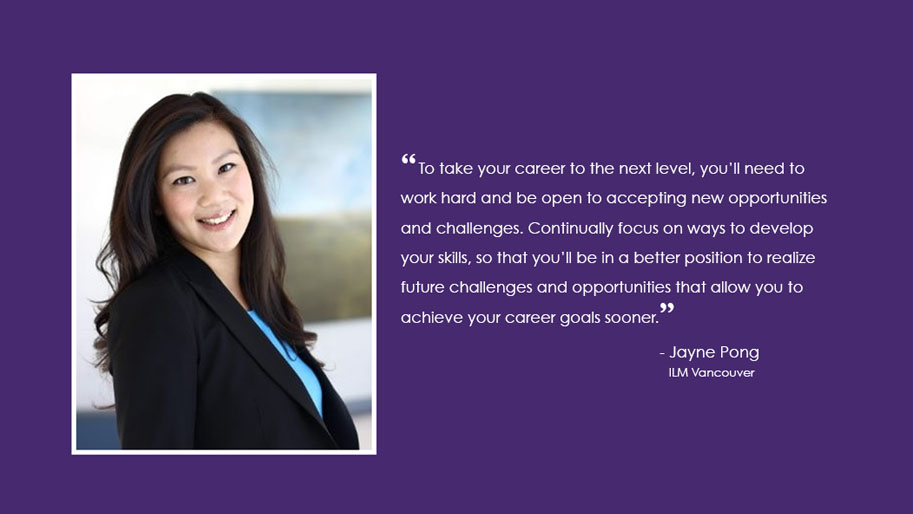
I’d advise anyone that in order to take your career to the next level, you’ll need to work hard and be open to accepting new opportunities and challenges. Celebrate your major accomplishments and achievements with your team and management. Continually focus on ways to develop your skills, so that you’ll be in a better position to realize future challenges and opportunities that allow you to achieve your career goals sooner.

HOW CAN MEN BE BETTER ALLIES TO WOMEN IN THE WORKPLACE?

Men can be better allies to women in the workplace by celebrating their female colleagues’ successes and accomplishments in order to boost their confidence and encourage a more positive outlook in the workplace, and encouraging women to advance into greater roles.

TELL US ABOUT YOUR ROLE AT ILM, AND HOW LONG YOU’VE BEEN IN THE FILM INDUSTRY.

I am a Color & Imaging Scientist at ILM San Francisco. Our team works with every production and client to make sure image processing standards are of the highest quality throughout film production for all four of ILM’s global locations. This includes writing and maintaining the pipeline for colorspace transforms, camera profiling, image re-formatting and filtering, camera RAW processing and media encoding standards. I’ve been in the film industry for five years – four of which have been at ILM. I started as a Technical Assistant, and worked my way up through several roles to where I am now.

WHAT IS YOUR BACKGROUND? WHAT WAS YOUR MAIN COURSE OF STUDY IN SCHOOL?

Most of my professional career has been at ILM. I studied Film & Digital Media, as well as Computer Science at the University of New Mexico. While in college, I interned at Sandia National Laboratories, where I did everything from software development for an AutoCAD-like proprietary software to full stack web development. After graduating, I worked for Pivot VFX, a boutique VFX company started in Albuquerque by several Sony Imageworks alums. It was a great introduction into the world of VFX – because it was a small company, I wore multiple hats: pipeline engineering, animation coordination, editing, compositing.

WHAT INSPIRED YOU TO GO INTO VISUAL EFFECTS?

I was homeschooled through high school, and computers played a big part in my education from a young age. My dad taught me basic programming for arithmetic on MS-DOS. At the same time, my mom put me in ballet lessons when I was three, and dance became a huge passion for me all the way through college. I wanted to find a field where I could combine my love for both the arts and technology. At 16, I took my first computer animation class, and I never looked back.

WHAT WAS THE MOST CHALLENGING POINT IN YOUR CAREER AND HOW DID YOU RISE ABOVE IT AND PERSEVERE?

Almost a year ago, my first mentor in the world of color science told me he was leaving ILM. I was (and still am) very new to the field, and it was hard to imagine a future without him as an anchor and teacher. I took it one day at a time, and relied on the amazing support structure of supervisors and friends who wanted to see me succeed. I still have so much to learn, but the opportunity to dive in headfirst to that challenge has made me so much stronger.

DID YOU HAVE SPECIFIC FEMALE MENTORS OR ROLE MODELS THAT HELPED PUSH YOU FORWARD?

I’ve been incredibly lucky to have several female mentors in my time at ILM. Maria Brill, Director of Studio Technology for ILM SF, has been a wonderful role model and support system throughout my time at ILM, but specifically in this last year in my new role – helping me make connections, get the technical mentorship I need, and giving me opportunities for exposure to our global locations, all of which have increased my development immeasurably. Melissa Abad has been my manager since I started at ILM and has always encouraged me in my big goals and worked on how to get there. I remember running ideas by her in my first years at ILM, and her responses were almost always “sure, that sounds great, let’s talk about how you’re going to do it.” There was never any doubt that I could. Cristin Pescosolido, now a VFX Supervisor at Lytro, is a consistent example for me of a woman making it work in this male-dominated industry – going from a compositor to a lead to a VFX supervisor in the short time I’ve known her, but still making time to teach, mentor, and motivate.

WHAT’S YOUR FAVORITE MOTIVATIONAL MANTRA?

“You can do anything if you put in the work.” I think it was my years as a dancer that first instilled this in me – like any sport or art, ‘talent’ only gets you so far – you have to put in the work. However, if you’re willing to put in the time and energy, I firmly believe you can achieve anything you set out to do.

HOW DO YOU THINK THE FILM INDUSTRY CAN BETTER ENCOURAGE GIRLS AND WOMEN OF ALL AGES TO GET INVOLVED IN FILMMAKING?

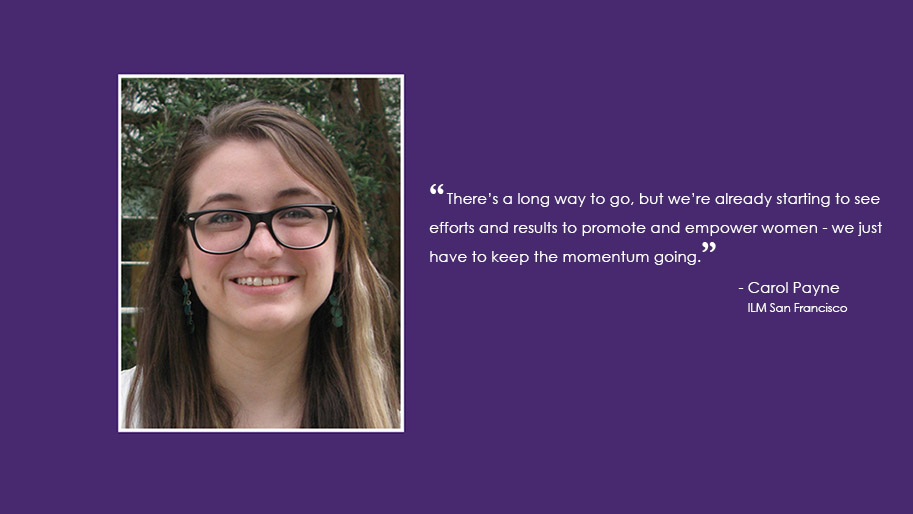
I think the industry as a whole needs to keep working to dispel the ‘boys club’ mentality. There’s a big problem still with the men at the top working with and promoting other men, because it’s what they’re used to. I think the big production companies can get involved and put a focus on equal gender representation for the people making their films. Once women and younger girls see other women in these roles, it will encourage them to know that they too can make it. The web series I am a part of, “Women in Visual Effects”, shares this goal – expose the talent and work of the amazing women in our industry. There’s a long way to go, but we’re already starting to see efforts and results to promote and empower women – we just have to keep the momentum going.

WHAT ADVICE WOULD YOU GIVE TO WOMEN CONSIDERING FILM, AND SPECIFICALLY VISUAL EFFECTS, AS A CAREER CHOICE?

Speak up for yourself! There is nothing wrong or controversial about vocalising your goals, as well as being confident in your skills. Women tend to let their work speak for itself and count on that being enough – and in an ideal world, it is. However, as we work toward that ideal gender balanced workforce, I’ve realized that being clear about what I want in my career is key.

HOW CAN MEN BE BETTER ALLIES TO WOMEN IN THE WORKPLACE?

The best male allies are the ones that acknowledge the bias and actively recognize and support the women around them – whether it be his peer, his boss, or his subordinate. It may seem obvious, but in my experience, it is not. One of the best examples I can think of is in the midst of all of the fallout over Harvey Weinstein and the many men that have come since as being perpetrators of sexual harassment in the workplace and film industry, one of the male supervisors made a point to stop by my desk and simply state that he had my back, that he respected me and that he couldn’t do the work he did without me. Those few sentences will stick with me forever.

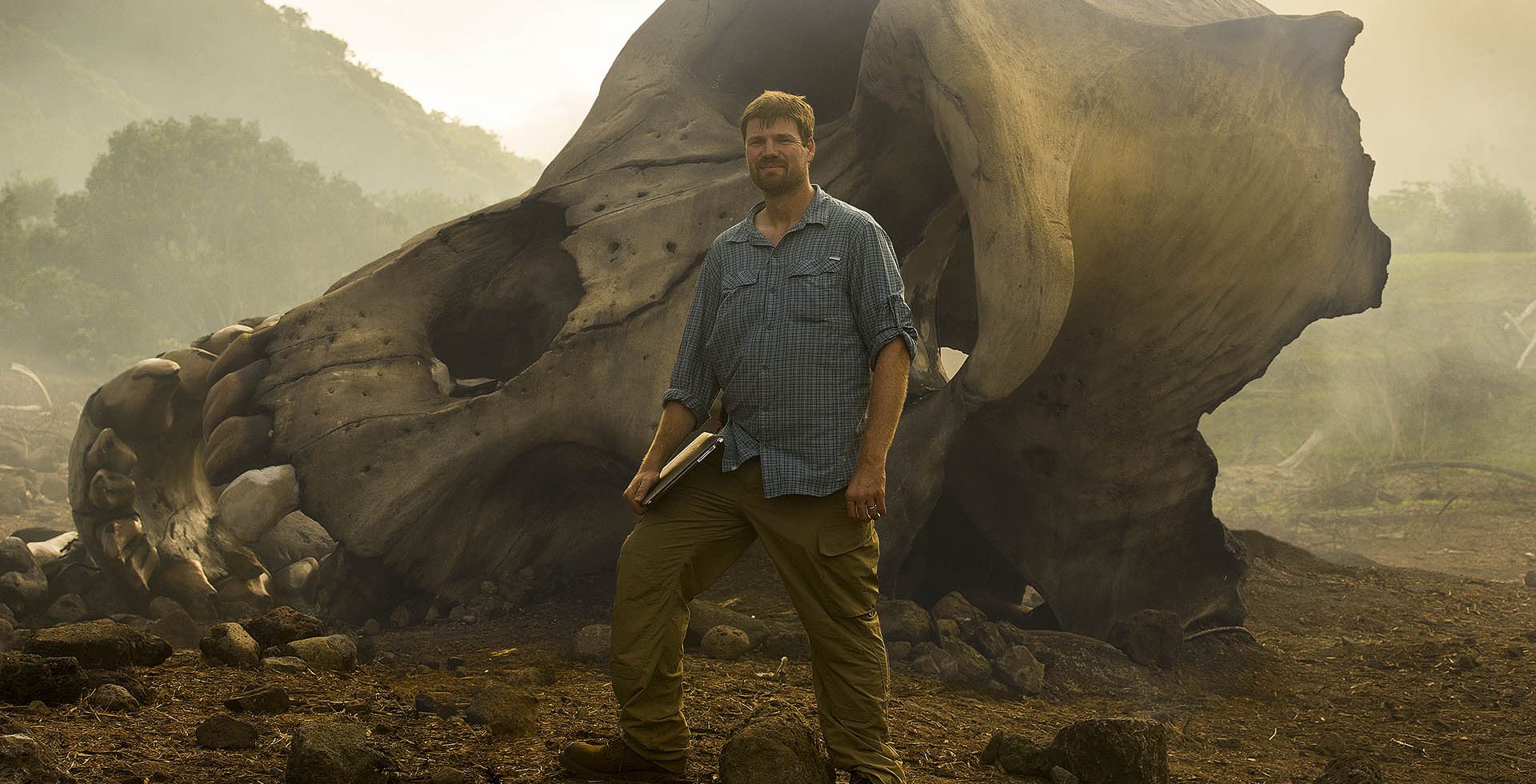
Recently, the Academy of Motion Picture Arts and Sciences honored White and three colleagues with a Technical Achievement Award for his original design of ILM’s procedural rigging system, Block Party. He is also nominated for an Academy Award for Visual Effects for his contribution to Kong: Skull Island.

Jeff White joined Industrial Light & Magic in 2002 as a Creature Technical Director, working on a variety of films including the Academy Award-winning Pirates of the Caribbean: Dead Man’s Chest, as well as War of the Worlds and Star Wars: Episode III “Revenge of the Sith”.

In 2012, White served as the ILM Visual Effects Supervisor on Marvel’s The Avengers directed by Joss Whedon and earned both an Academy Award nomination and BAFTA nomination for his visual effects work. He also received the Hollywood Film Award for visual effects for the work. White also served as a Visual Effects Supervisor on Duncan Jones’ 2016 sci-fi epic, Warcraft, based on the well-known video game World of Warcraft by Blizzard Entertainment.

“Jeff has truly done it all,” noted Randal Shore, Executive-in-Charge in Vancouver. “He is an extremely talented visual effects supervisor possessing both deep technical knowledge and a keen artistic eye, making him an ideal person to join our executive team and help lead our growing studio.”

Lynwen Brennan, GM of Lucasfilm, added, “I have worked with Jeff for many years now and have always been in awe of his combination of creative, technical and leadership skills. He exudes a confidence and grace under pressure that is quite unique and has made him one of most successful Visual Effects Supervisors. I am excited for Jeff to bring all those skills to our Vancouver studio and help lead it from strength to strength.”

“I’m thrilled to join ILM Vancouver and to work with Randal and the executive team as we continue to grow the studio and expand our client offerings,” explained White.

“Having worked with many of the artists here in Vancouver on a number of films including Kong: Skull Island, I know firsthand the amazing artistic and technical talent we have to offer and I couldn’t be more excited to share what I know and collaborate with them on all manner of projects.”

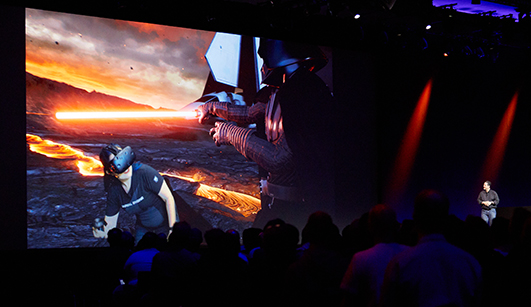
ILM Chief Creative Officer John Knoll took the stage at Apple’s Worldwide Developer Conference to share a cutting edge VR demonstration created by ILMxLAB and Epic Games utilizing Unreal Engine running on the newly-announced iMac computer. The demo showcased how realtime VR tools such as Unreal Engine running on powerful hardware are being used to enhance visual development in filmmaking.

Products such as the new iMac and iOS  11 will no doubt enable ILMxLAB to share incredible experiences with hundreds of millions of people around the world and that’s really exciting.

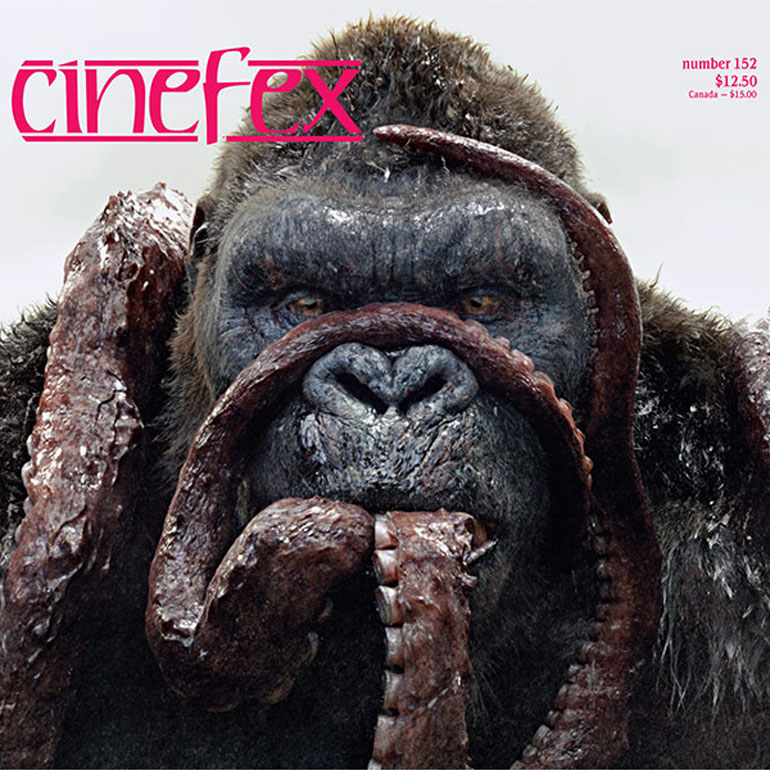
Cinefex Magazine issue 152 has made its debut and the latest and greatest incarnation of Kong graces the cover. The issue features the publication’s trademark in-depth coverage of 2 films for which ILM was the primary visual effects company Kong: Skull Island and The Great Wall.


Cinefex continues to be the periodical of record for the visual effects industry and remains an invaluable resource to filmmakers around the world. Kong: Skull Island was covered by Senior Staff Writer, Graham Edwards, while the feature story on The Great Wall was written by Editor in Chief, Jody Duncan.

HOW LONG HAVE YOU BEEN WITH ILM AND WHAT IS YOUR ROLE?

I’ve been at ILM for a year and a half as a Media Systems Engineer and have supported movies from Teenage Mutant Ninja Turtles to Star Wars: The Force Awakens. What is a media systems engineer you ask? Good question; I’m still trying to figure that out! All kidding aside, we support everything from editorial to motion capture – building machines, creating global workflows and everything in between.

My role specifically is lead editorial engineer across the ILM and Lucasfilm family. I make technical recommendations and implementations for best editorial practices.

WHAT GOT YOU INTERESTED IN THE ENTERTAINMENT INDUSTRY?

I’ve literally had a video camera in my hands since the age of two. I love art in all its forms, so it only made sense to follow my passion into the entertainment industry. What really solidified my interest in entertainment was a live studio television class I took in college. Sitting in the director’s chair cutting a live show was exhilarating. I knew from that moment I would never give up on chasing my dreams. I joked with my parents that my name would be in the credits one day; ten years later it became a reality.

WHAT DO YOU ENJOY MOST ABOUT YOUR JOB?

I think the thing I enjoy most about my job is being able to interface with so many different people and divisions within not only the Lucasfilm family, but the greater Disney family. My role has afforded me the opportunity to work on a multitude of projects within different divisions where I am able to meet some really amazing, smart and passionate people. I love learning about the different pieces of the entertainment industry puzzle and meeting the people that truly make the magic happen.

IF YOU COULD OFFER YOUR YOUNGER SELF ONE PIECE OF CAREER ADVICE, WHAT WOULD IT BE?

I would tell my younger self that networking is extremely important and to get involved in film and television organizations as early as college. It would make choosing a career path and finding mentors so much easier. It would also provide a deeper understanding of the complexities of the entertainment industry.

WHAT KEEPS YOU INSPIRED?

Every Friday we have a program called “Friends & Family” when employees can invite guests for a tour of our facility as well as watch a demo reel of some of our more recent movies, which breaks apart the visual effects of a movie from green screen to final shot. I try to make it a point to watch the demo reel once a quarter and am always amazed. We sometimes lose sight of the big picture because we are so wrapped up in our day to day tasks, but watching this reel reminds me of how much work we put into making movies and how much talent there is at ILM. That reminder is what keeps me inspired and excited to work here.

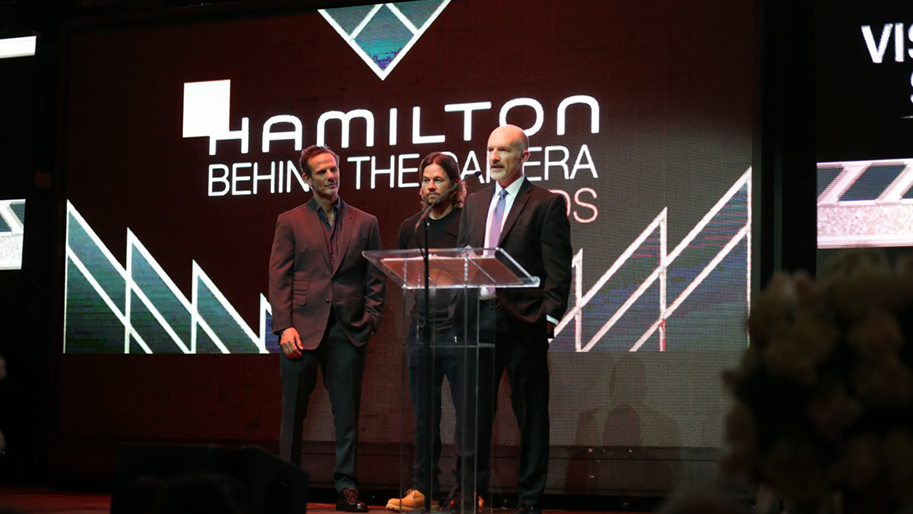
ILM Visual Effects Supervisor Craig Hammack was honored at the Hamilton Behind the Camera Awards for Extraordinary Achievement in Film. The ceremony took place on November 6th, 2016 at Exchange LA.
Hammock was recognized for his contribution to the visual effects of Peter Berg’s ‘Deepwater Horizon’. Both Berg and lead actor Mark Wahlberg presented the award to Hammack. In Hammack’s acceptance speech he noted,

 “You know, when you work on a project like this and you get to know some of the people who lived the tragedy it quickly turns from a job to an honor and a responsibility. Hopefully we did justice to this story and the individuals and families who were impacted by this catastrophe.

He continued, “effects of this nature just don’t work without great collaboration with all departments and a good crew. We had both and I’d like to thank them for all their help and patience during the difficult shoot.
I’d also like to thank the Hamilton Awards on behalf of the hundreds of artists back at ILM and around the world who worked with us and with whom I share this amazing honor.”