Vision & Craft

50 Years | 500+ Film and TV credits | 135+ Awards

SINCE 1975

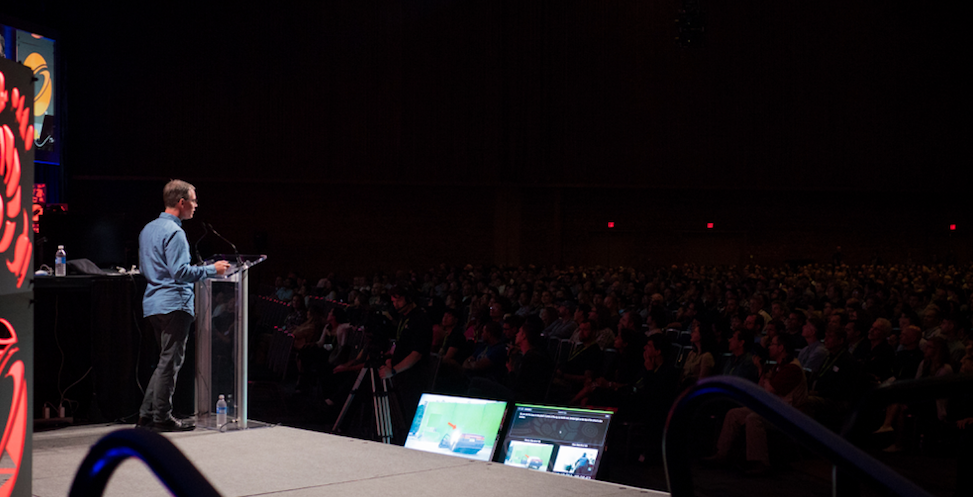
Join SVP, Executive Creative Director and Head of ILM, Rob Bredow for his keynote address from this year’s SIGGRAPH Conference in Vancouver. Bredow shares his unique understanding of how media and technological innovation can join forces to tell great stories and create groundbreaking experiences.

Watch:
TELL US ABOUT YOUR ROLE AT ILM, AND HOW LONG YOU’VE BEEN IN THE FILM INDUSTRY.
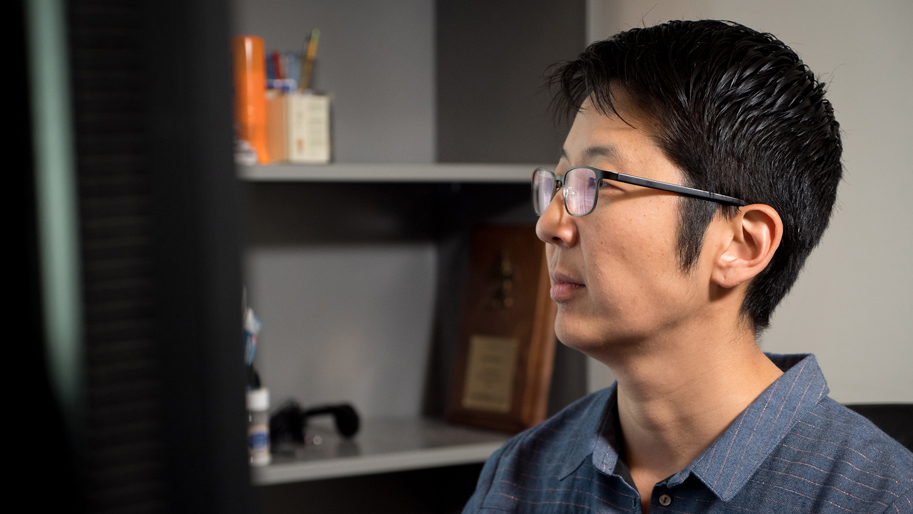
As CG Technology Supervisor of ILM, I work with the CG artist leads across our global studios, internal engineering groups, as well as with outside partners, to define and drive short and long-term technology strategy for ILM. I have 14 years of experience in the film industry as a vfx professional.

WHAT IS YOUR BACKGROUND? WHAT WAS YOUR MAIN COURSE OF STUDY IN SCHOOL?
I majored in Philosophy and Comparative Literature at Brown University, then went on to be a senior management consultant at a business consulting firm for several years, before switching careers into the vfx field. My technical and CG skills are all mostly self-taught with some combination of “as-needed” courses taken at NYU and UC Berkeley, and of course “on the job” learning once I got my first job in vfx at Rhythm & Hues working as a character rigger.

WHAT INSPIRED YOU TO GO INTO VISUAL EFFECTS?
I had always had a love of film and art and technology. An introductory 3D computer graphics class I took at NYU really made me realize how much I enjoyed CG work – both for the creative and technical aspects.

WHAT WAS THE MOST CHALLENGING POINT IN YOUR CAREER AND HOW DID YOU RISE ABOVE IT AND PERSEVERE?
The biggest challenge for me was switching careers from business consulting to vfx. I had a liberal arts degree that had very little to do with computer science or computer graphics, and all of my professional experience to date had been in an unrelated field. I went about learning as much as I could as broadly as I could about the vfx field, and most importantly, I formulated my own “learning path;” I managed to cherry-pick a few classes that I felt would expedite my learning, and filled in the rest with just learning on my own time. There are so many publicly available resources for learning both programming as well as computer graphics that it is really possible to teach yourself and get from point A to B quickly without enrolling in a lengthy, costly program or having some official certificate.

DID YOU HAVE SPECIFIC MENTORS OR ROLE MODELS THAT HELPED PUSH YOU FORWARD?
My mentors on the artist and technical side have all been men, but they have all been exceptional in giving me advice, development opportunities and encouragement. My most powerful female role model is my mother, who had a very successful professional career as a designer and is the artist I most admire. Art is an essential part of her being and way of living, but she has also always pursued her passion with incomparable moral integrity. Just as valuable to me is the role my father played in my upbringing. He also worked as a designer, but was very involved as a parent. I have many fond memories of him being involved at my school and taking me to and from my Japanese Saturday school, and teaching me things and being creative together. I think for opportunities for women in society to really change, girls need to see strong, successful women thriving in their chosen professions, but they also need to see that if they choose to raise children with a partner, that partner can be supportive and complementary of their needs. I think that paradigm shift can be liberating for many men as well, whose societal roles and expectations may in some cases constrain them from having richer relationships with their children.

WHAT’S YOUR FAVORITE MOTIVATIONAL MANTRA?
I do not have a particular mantra, but my children are all the reminder I need to give my best professionally and personally so that I can be the parent they deserve, and do my part to leave the world a better place for their generation.

HOW DO YOU THINK THE FILM INDUSTRY CAN BETTER ENCOURAGE GIRLS AND WOMEN OF ALL AGES TO GET INVOLVED IN FILMMAKING?
It needs to start very early – my own children even at 3 or 4 years old have noticed and asked why certain professions or activities are “all boys” – whether it’s something they noticed in a book or observing the real world around them. Whether they ask about it explicitly or not, those models are being reinforced (and therefore more likely to be replicated) from a very early age. I think providing opportunities to girls in school with filmmaking projects, classes, camps etc. is essential to getting more girls interested in a field that otherwise appears very homogenous and prohibitive. And I think telling the positive stories of female filmmakers and other women in the industry is also critical, to show girls and young women that it is possible to succeed and enjoy a career in this field.

WHAT ADVICE WOULD YOU GIVE TO WOMEN CONSIDERING FILM, AND SPECIFICALLY VISUAL EFFECTS, AS A CAREER CHOICE?
It is a continually evolving field so it is important to be flexible, curious, and enjoy being a constant learner. Follow and pursue the kind of work that you truly feel joy and excitement doing.

WHAT ADVICE WOULD YOU GIVE TO SOMEONE WHO WANTS TO TAKE HER CAREER TO THE NEXT LEVEL?
Always listen inwardly to what it is you want to be doing and how you want to be growing and let that define what “the next level” is for your career at your own pace; what you want may not exist directly in that next box up on the org chart – it may be somewhere else. Or it may be something that is not a box at all, that you end up drawing up on your own! Career success would be being able to develop, hone and expand the ways in which you as an individual can uniquely create value, and feeling fulfilled in doing so. Don’t be afraid to find and even create the opportunities for yourself that meet those needs.

Industrial Light & Magic (ILM), a Lucasfilm Ltd. company, announced today respected industry veteran Rob Bredow has been appointed SVP, executive creative director & head of ILM. In addition, it was announced that Gretchen Libby, has been promoted to vice president, marketing & production. Bredow will be in charge of all of ILM’s 4 global studios and report to Lucasfilm General Manager Lynwen Brennan, and Libby will report to Bredow.

Bredow joined Industrial Light & Magic as a visual effects supervisor in 2014 and shortly thereafter was named vice president of new media and head of Lucasfilm’s Advanced Development Group. Bredow was instrumental in launching a new division, ILMxLAB, in 2015, combining the talents of Lucasfilm, ILM, and Skywalker Sound to develop, create, and release story-based immersive entertainment. In 2016, Bredow was promoted to CTO of Lucasfilm, overseeing technical operations and partnerships as well as the company’s technology roadmap. Currently, Bredow is serving as the visual effects supervisor and co-producer on Solo: A Star Wars Story directed by Ron Howard, which releases on May 25, 2018.

“I’ve been working very closely with Rob over the past two years on Solo,” says Kathleen Kennedy.  “I have witnessed his leadership skills and creative abilities first-hand and I’ve been extremely impressed. Filmmaking is often about problem solving and Rob comes to every challenge with a strong creative point of view and the ability to find the best solution every time. This and his business acumen make him an ideal candidate to lead ILM, which has always stood at the crossroads of technology and artistry.”

“I am thrilled that Rob is going to be leading ILM into the future.  He is the perfect fit for the role combining creativity, innovation and business savvy”, says Lynwen Brennan, Lucasfilm general manager. “He is also a wonderful leader who builds great, trusting relationships within the company and with the filmmakers and studios we work with.”

“I’m honored to take on this role for Industrial Light & Magic,” says Bredow. “From my involvement with the launch of ILMxLAB to supervising the visual effects team on the soon-to-release Solo: A Star Wars Story, I can honestly say the people at this company are some of the most passionate, creative, and dedicated people I’ve had the privilege of collaborating with. I’m thrilled to help guide ILM’s legacy of innovation and excellence on a global scale.”

Prior to joining ILM, Bredow was the CTO and visual effects supervisor at Sony Pictures Imageworks. He has worked on films such as Independence Day, Godzilla, Stuart Little, Castaway, Surf’s Up, Cloudy With A Chance of Meatballs, and many others.

Bredow is a member of the Academy of Motion Pictures Arts & Sciences (Visual Effects Branch) and the AMPAS Scientific and Technical Council and, in 2010, was nominated for a Visual Effects Society Award Outstanding Effects Animation in an Animated Feature Motion Picture.

Gretchen Libby started at ILM in 1997 as a production manager. A year later, she was promoted to associate visual effects producer for A Perfect Storm and then to visual effects producer on Star Wars: Attack of the Clones two years later. In her previous role, Libby had focused on the company’s global expansion, which included opening studios in Singapore, Vancouver and London, and was the key marketing point of contact for ILM’s clients. Libby’s focus will remain on client marketing, overseeing all global production and strategic relationships.  Prior to ILM, Libby worked in visual effects film production at Pacific Data Images in Palo Alto, Calif. and in visual effects commercial production in New York.

“Gretchen is a key member of our executive team and has been instrumental in numerous strategic initiatives in recent years, from marketing the studio to our global expansion,” noted Brennan. “She brings depth of production understanding that is prized within the company and continues to be invaluable to our clients.”

“In my 21 years at the company I have seen firsthand the tremendous impact ILM has had, and continues to have, on the industry,” says Libby. “I’m excited to help ILM continue to evolve as we take on new challenges and provide new and exciting ways for storytellers to share their visions.”
Libby is a member of the Producers Guild of America and formerly served on the board of directors of the Visual Effects Society of which she remains a member. She is also a member of Women in Film and has served as a producer on 29 feature films, eight of which received Academy Award® nominations for visual effects.

TELL US ABOUT YOUR ROLE AT ILM, AND HOW LONG YOU’VE BEEN IN THE FILM INDUSTRY.
I have been in the industry for almost 10 years and my 7.5th year at ILM Singapore. I’m currently a production manager.

WHAT IS YOUR BACKGROUND? WHAT WAS YOUR MAIN COURSE OF STUDY IN SCHOOL?
I majored in communications, media arts and production.

WHAT INSPIRED YOU TO GO INTO VISUAL EFFECTS?
I have always loved Japanese Anime ever since I was a young girl I dreamed of being involved in the creation of it. Over the years, I (sadly) came to the realization that I lack the artistic skills to create these beautiful images. So, I decided that being in a production role is probably the best thing I can do to get close to my dream. I started in a feature animation studio in Hong Kong and moved into the visual effects world when I joined ILM. I’m so glad that it worked out :)

WHAT WAS THE MOST CHALLENGING POINT IN YOUR CAREER AND HOW DID YOU RISE ABOVE IT AND PERSEVERE?
It was quite stressful when I first moved into the managerial role – there were more decisions to be made, more responsibilities and more difficult conversations to handle. It took me a while to realize that it’s okay not to be perfect, as long as I can learn from my mistakes. And sometimes you just have to push yourself out of your comfort zone, and that’s what will make you grow.

DID YOU HAVE SPECIFIC FEMALE MENTORS OR ROLE MODELS THAT HELPED PUSH YOU FORWARD?
Yes I did. My first production manager at ILM taught me a lot about VFX when I had no idea on what this industry is about. I was able to find my own management style based on everything I learned from her. I’m thankful to meet her at the early stage of my career (you know who you are :))

WHAT’S YOUR FAVORITE MOTIVATIONAL MANTRA?
“Do. Or do not. There is no try” – from our famous Yoda!

HOW DO YOU THINK THE FILM INDUSTRY CAN BETTER ENCOURAGE GIRLS AND WOMEN OF ALL AGES TO GET INVOLVED IN FILMMAKING?
Would love to see more female directors and producers to be part of the big budget productions.

WHAT ADVICE WOULD YOU GIVE TO WOMEN CONSIDERING FILM, AND SPECIFICALLY VISUAL EFFECTS, AS A CAREER CHOICE?
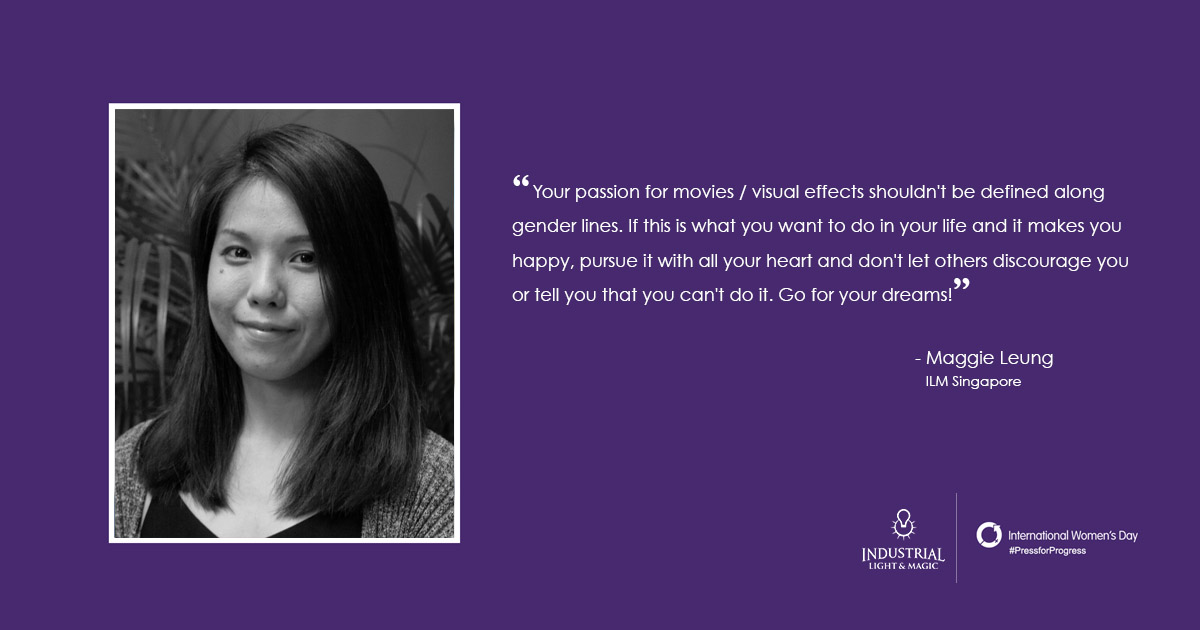
Your passion for movies or visual effect shouldn’t be defined along the gender lines. If this is what you want to do in your life and it makes you happy, pursue it with all your heart and don’t let others discourage you or tell you that you can’t do it. Go for your dreams!

WHAT ADVICE WOULD YOU GIVE TO SOMEONE WHO WANTS TO TAKE HER CAREER TO THE NEXT LEVEL?
There is no shortcut to success. Identify areas that can be improved on and give it 110%. Continue to deliver great work, be open to feedback and always willing to learn.

TELL US ABOUT YOUR ROLE AT ILM, AND HOW LONG YOU’VE BEEN IN THE FILM INDUSTRY.
I am the HR Advisor in the London studio. I started as HR Coordinator back in May 2014 when there were only three of us in HR, Recruitment and Talent. This gave me the opportunity to help shape the structure of our department. Now along with knowing the systems and processes inside and out, I’m working on more defined HR projects. Although I’ve been working in creative industries for over a decade, ILM London is my first job in the film industry.

WHAT IS YOUR BACKGROUND? WHAT WAS YOUR MAIN COURSE OF STUDY IN SCHOOL?
My journey into HR wasn’t exactly straightforward! When I first attended University in Canada, I enrolled in a general Bachelor of Arts programme, eventually switched to Jazz studies and then finally graduated with an Arts and Entertainment Management certificate. When I moved to London, I had been working in the music industry in Vancouver as Business Affairs Coordinator and was looking for a bigger industry pool to learn from. That’s when the wonderful world of VFX snapped me up and I haven’t looked back since! Since being at ILM, I’ve graduated with a Level 5 diploma in Human Resources Management through the CIPD.

WHAT INSPIRED YOU TO GO INTO VISUAL EFFECTS?
One thing I knew from a very young age was that I love the creative industries and believe they have an important role in the world. Music and creative writing were always my strengths and so I followed those passions. One of the parts of my job whilst working at the record label in Vancouver was to obtain approval for our music to be featured in film and television. I was in contact with many studios, including Disney, and started to realise how many people it took to create the final film that we see in the theatres.

When I started at ILM London, that realisation became even more apparent! The work that our employees do is incredible, to say that the films would not be the same without them is an understatement. Being a part of the visual effects industry might not have been the driving force in my career like it has been for so many of our employees but I am inspired everyday by the amazingly talented people I get to work with. They inspire me to be the best I can be at my job, to ensure that they feel supported and have a positive experience working at ILM.

WHAT WAS THE MOST CHALLENGING POINT IN YOUR CAREER AND HOW DID YOU RISE ABOVE IT AND PERSEVERE?
The biggest challenge I’ve had to face was finding the strength to give up an amazing job that I loved but had grown out of in order to push forward and progress my career. I knew that I needed to make a change but change is scary and difficult – and who wants to deal with that stress! After a trip to Europe, I realised that in order to take that next step I needed to leap so I applied for my work Visa, quit my job, packed up my life and moved from Canada to the UK. It is by far the best thing I’ve ever done. Not only have I successfully progressed in my career but I have also learned so much about myself as a person. As hard as it was, and as hard as it still can be, it was beyond worth it. Risks are worth it. No challenge is too difficult, there’s always a way to overcome.

DID YOU HAVE SPECIFIC FEMALE MENTORS OR ROLE MODELS THAT HELPED PUSH YOU FORWARD?
I’ve always been surrounded by, or maybe surrounded myself with, strong female role models. My family not only taught me but showed me that women can do anything and be anything. The women in my family have worked and flourished in industries that have had the stigma of being predominantly male, namely the police and fire departments. I’ve watched my Mother work hard and navigate through the fire department from being a desk clerk at the fire hall to communications officer to Captain to training the new recruits at the academy.

That level of influence carried over into my career. My first job was working in a dog grooming shop owned and operated by a woman, my first office job was receptionat at an all-female law firm and now at ILM I’m surrounded by some of the strongest, smartest and most driven women I’ve ever encountered.

All of these women amaze me but they’re just people. The fact that they’re women is something I celebrate and recognise now but hopefully there will come a day where these types of achievements are looked at as just that, as achievements and not break-throughs.

WHAT’S YOUR FAVORITE MOTIVATIONAL MANTRA?
‘Wake up. Kick Ass. Be Kind. Repeat.’

HOW DO YOU THINK THE FILM INDUSTRY CAN BETTER ENCOURAGE GIRLS AND WOMEN OF ALL AGES TO GET INVOLVED IN FILMMAKING?
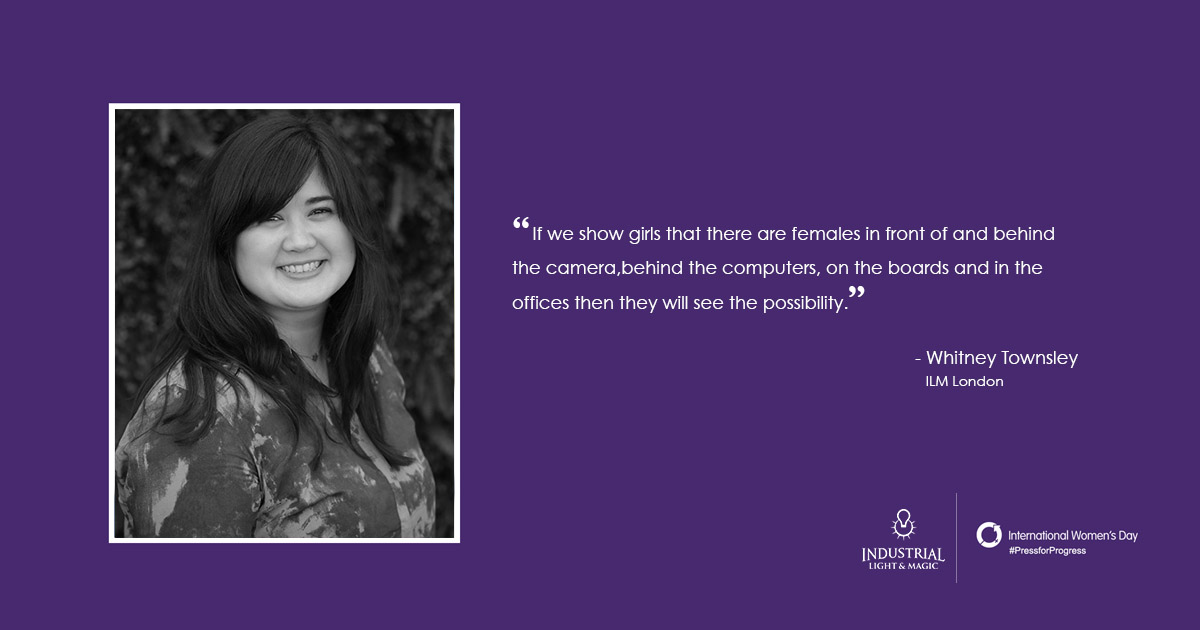
The film industry is one that actually has the power and the presence to make an impact. If we show girls that there are female driven films (actor, director, producer, writer, artist, editor) then they will see the possibility. There’s a reason why everyone got the ‘Rachel’ haircut, enrollment in forensic science courses is through the roof and everyone wants to own a husky – they saw it on their screens. If we show girls that there are females in front of and behind the camera, behind the computers, on the boards and in the offices then they will see the possibility. Let’s go into schools and encourage girls to be interested in creative arts, technology, science and math. We’ve got the power to make this change.

WHAT ADVICE WOULD YOU GIVE TO WOMEN CONSIDERING FILM, AND SPECIFICALLY VISUAL EFFECTS, AS A CAREER CHOICE?
Believe in your aspirations! Research schools, network and collaborate with like-minded individuals and look for work experience or internship opportunities. Most applicants for our work experience are females, our running team is 50/50 and we have females in each of our departments, a career in visual effects is well within reach.

WHAT ADVICE WOULD YOU GIVE TO SOMEONE WHO WANTS TO TAKE HER CAREER TO THE NEXT LEVEL?
You have to want it, be confident in your desires and abilities and be prepared to work for it. Some people get places without putting much effort in but I’m of the belief that nothing is worth anything unless you had to work for it. Put the hours in, keep learning, ask for help, if you fail then find another way and follow your instinct. In a perfect world, I’d give the same advice to both genders!

We’ll get there.HOW CAN MEN BE BETTER ALLIES TO WOMEN IN THE WORKPLACE?
The same way that they can be allies to each other and we can be allies to each other. Every colleague, no matter their gender, race, religion, age or sexual orientation, deserves to be treated equally. I would expect all of my colleagues to respect and support each other, act collaboratively when the task calls for it, exercise compassion or patience if the moment asks for it, provide constructive feedback or show appreciation when required and accept each others differences and not let them get in the way of achieving magnificent work. In short, treat them exactly as you should anyone else!

TELL US ABOUT YOUR ROLE AT ILM, AND HOW LONG YOU’VE BEEN IN THE FILM INDUSTRY
I have been in the film industry for 16 years. It is surprising how fast time goes when you are genuinely having a fun time. My role at ILM is a VFX Producer role. I oversee the schedule and budget for several projects by partnering with the VFX and CG Supervisors. I recently finished ‘Ready Player One’ and I am working on delivering ‘Solo: A Star Wars Story.

’WHAT IS YOUR BACKGROUND? WHAT WAS YOUR MAIN COURSE OF STUDY IN SCHOOL?
I studied a Bachelor of Arts (Communications) at The University of Newcastle in Australia and I knew back then I wanted to be a Producer. I remember my Dad telling me a Science Degree would be a better option. It is funny how I have ended up in such a scientific part of film making in computer graphics.

WHAT INSPIRED YOU TO GO INTO VISUAL EFFECTS?
My original dream was to Produce live action projects. I grew up in 80s and we would watch films like ‘The Goonies,’ ‘Neverending Stor’y and ‘The Labrynth’ over and over. I was obsessed. My first “real” role in the industry was as a Production Assistant working in Animation at DisneyToon Studios and I fell in love with the process. It was a natural progression to combine live action and my computer graphics animation experience and move into visual effects.

WHAT WAS THE MOST CHALLENGING POINT IN YOUR CAREER AND HOW DID YOU RISE ABOVE IT AND PERSEVERE?
Every project has its own specific challenges and that is regardless of where you are in your career. It is what I love about the job – trying to understand all the different personalities and how to get a team to work together with the same creative vision. On a personal level, my husband is in the industry and we have moved countries twice and had two children while maintaining full time careers so that has been challenging for us both to juggle. I have had great support.

DID YOU HAVE SPECIFIC FEMALE MENTORS OR ROLE MODELS THAT HELPED PUSH YOU FORWARD?
I have worked with some incredible women in all types of roles over the years. A lot of the times it is the people you work alongside who help you grow because you are working to help them also deliver their portion of the project. I would call out a few specific ladies who were my direct managers and who really helped me grow over the years: Danielle Legovich, Kara Piersimoni, Sandra Scott and Amber Naismith.

WHAT’S YOUR FAVORITE MOTIVATIONAL MANTRA?
Just keep swimming.

HOW DO YOU THINK THE FILM INDUSTRY CAN BETTER ENCOURAGE GIRLS AND WOMEN OF ALL AGES TO GET INVOLVED IN FILMMAKING?
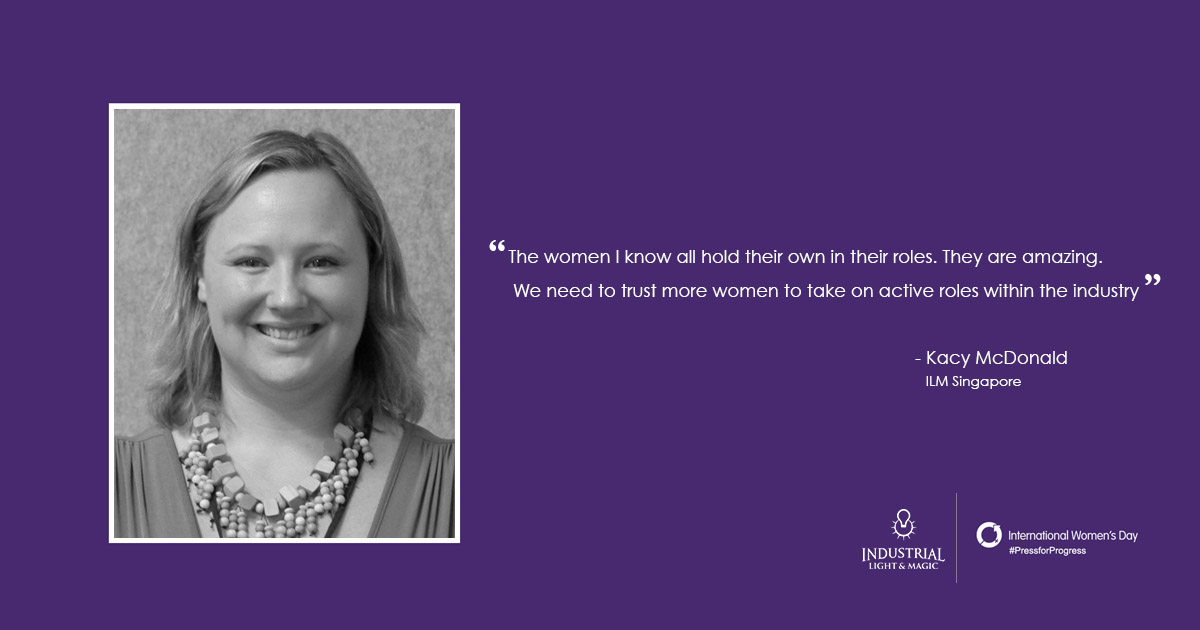
The women I know all hold their own in their roles. They are amazing. We need to trust more women to take on active roles within the industry and keep allowing women in the industry to talk about their experiences and share their knowledge to inspire the next generation of filmmakers.

WHAT ADVICE WOULD YOU GIVE TO WOMEN CONSIDERING FILM, AND SPECIFICALLY VISUAL EFFECTS, AS A CAREER CHOICE?
Do it. There is no limit to creativity. You will breathe the films you are working on for all hours of the day (and night), but it will be worth when you see it for the first time on the big screen. Every person on a project has a part to play. Remember you have a voice even when you think you don’t. Have fun.

WHAT ADVICE WOULD YOU GIVE TO SOMEONE WHO WANTS TO TAKE HER CAREER TO THE NEXT LEVEL?
Work hard at the job and prove you are the best at your current level. You won’t get promoted before you can do your current role well. Try and focus on the people around you: listen to them, learn from them, watch them.

HOW CAN MEN BE BETTER ALLIES TO WOMEN IN THE WORKPLACE?
I have been lucky to work with some fantastic men in my career and foster great trust and partnerships. We could hire more women in visual effects – especially in creative and technical roles – and men have a role to play in that, the same as other women do.

TELL US ABOUT YOUR ROLE AT ILM, AND HOW LONG YOU’VE BEEN IN THE FILM INDUSTRY.

I’ve been with the company about one and a half years now. This past September I became a developer in ILM’s Research & Development group, my focus is mainly with the crowds department. My focus is more in helping the artists, leads and supervisors establishing new and/or expanding and upgrading existing workflows. Before that I was a pipeline developer supporting Ready Player One, but with almost a sole focus on the crowd department.

I started my career with a small company in Brussels working on an animation film (Walking the Dog) and I stayed with them for a bit more than a year and a half. After that, I moved to London and started with MPC where I worked with their techanim (characterFX) department for the next 3 years before joining ILM London. So about 6 years in the industry.

WHAT IS YOUR BACKGROUND? WHAT WAS YOUR MAIN COURSE OF STUDY IN SCHOOL?

After high school I joined the army (I wasn’t made out for it, so I was there only very shortly), before going to university to study engineering. Engineering didn’t turn out to be a great fit either, but I found out that I absolutely loved programming and that I was pretty good at it. I switched tracks to study Informatics, finished my bachelor and started my Masters in Mathematical Informatics (it was the closest study they had related to artificial intelligence).

Just before my thesis year started I heard about a game development study at a sister university and I enrolled in both studies (my final year and the new one track). Three years later I graduated as a Bachelor in Multimedia and Communication Technology – Major Digital Arts and Entertainment – Minor Game Development (try saying that 5 times fast in a row), and went to work.

WHAT INSPIRED YOU TO GO INTO VISUAL EFFECTS?

After graduation I took a month holiday before starting to look around for a job. At the end of my time off one of my friends contacted me and asked me if I wanted to help him out with a feature animation movie for about 3 months. I thought: it’s close enough to video games, and the experience would look good on my resume and I can look for a job in game development after that. One and a half years later I left the company to work in London for MPC.

It was never my intention to stay in visual effects this long, but I like it here. It’s challenging, demanding, but also fun and the people you get to work with are amazing.

WHAT WAS THE MOST CHALLENGING POINT IN YOUR CAREER AND HOW DID YOU RISE ABOVE IT AND PERSEVERE?

There are different kinds of challenges, all having their unique issues and resolutions. I’ve had a few situations where if it didn’t work out it was probably game over or at the very least a major setback for my career, they just never felt that way when I was in the situation. It was something needed to be done and nobody was coming up with a feasible plan, so I did the best with what I knew and put it forward to my seniors to examine and discuss it. In general since starting in this industry I’ve been working on new parts of a pipeline or updating existing ones without much of a back up plan in some cases (sink or swim) and sticking my neck out and saying: I can do this, just give me the opportunity.

I worked with a CG supervisor that seemed to do the opposite of what common sense dictated and trying to shield the artists from the effects of that wasn’t easy. Communicating clearly with the production people involved and the supervisor’s superiors was what resolved the situation in the end (that and the artists were a bit more shielded from the supervisor).

I’ve stepped up to the CEO of the first company I worked and told him I was going to sit on the bench outside (in their back garden) reading my book because there weren’t enough licenses for something and he needed the artists to finish their work more than I needed to implement a new tool (trailer delivery). That if they needed me they could call me on my phone or yell out the windows. We got some extra licenses before the day was over.

Three times now I’ve been in a situation where I had to lead a team of more junior people through a new part of the pipeline (smallest team was 2 people, biggest was 6, going from a few weeks to months), while keep on developing that pipeline and supporting the existing tools in order to finish a show. That involved a balancing act of priorities (post it’s so far are by far the best scheduling tool that I worked with – at least for managing myself) and working some evenings and weekends.

Any of those situations could have backfired, but I would like to think that because of communicating clearly and knowing what my limits are, how to manage myself and who I could rely on if/when needed (if only to vent frustration), it worked out.

DID YOU HAVE SPECIFIC FEMALE MENTORS OR ROLE MODELS THAT HELPED PUSH YOU FORWARD?

As a mentor and a role model that would be Ceylan Shevket, my former boss at MPC, without her I don’t think I would be where I’m at now. She saw something in me and gave me the opportunities to prove that I was capable of doing more. I’ve learned a lot from her and I still talk often with her.

In general I do find that I can learn or admire something in most of my colleagues (both female and male), you never know where that Eureka! moment can come from.

WHAT’S YOUR FAVORITE MOTIVATIONAL MANTRA?

I’m more of a frustration venting kind of girl (not suitable for sensitive ears) rather than a motivational mantra one, I think the closest thing I have to something vaguely motivating is counting down the weeks till the end of the project or holidays (x more weeks till it’s over).

HOW DO YOU THINK THE FILM INDUSTRY CAN BETTER ENCOURAGE GIRLS AND WOMEN OF ALL AGES TO GET INVOLVED IN FILMMAKING?

I think it boils down to the same question as how to get more women in technical areas in general. As usual there isn’t a fixed answer, but rather a combination of things.

Almost all industries (if not all) already have women, some not much, but it does mean that it is possible. Have some of those speak at schools and show the students (can be high schools as junior years) that it can be done and preferably even that it’s normal to have a women in what would be considered a man’s job. As soon as you make a fuss about it that it’s a special person in a special role, people (and especially younger girls) will see it as something that is outside of the group or norm, and who at that age wants to be singled out? But also the opposite, have some men talk about their jobs that are viewed as more fit for a woman.

I heard that some of the studies started doing some summer courses for women only so they can get their technical skills/levels improved before starting the actual studies. That seems like a good thing also, although you would need to be careful as to not make them feel singled out. It could give them a confirmation or a little boost in self insurance to know that they are capable of doing this and if not that they can ask the teachers for help.

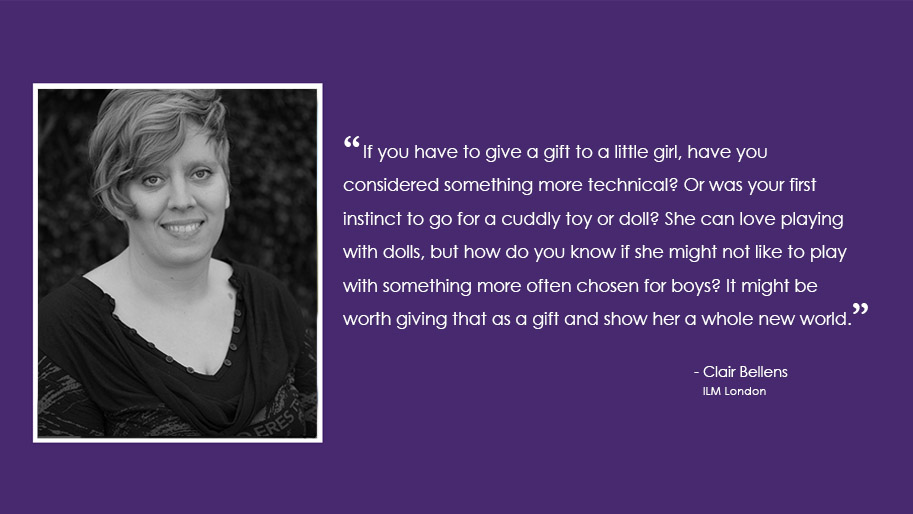
Even going younger, if you have to give a gift to a little girl you know, have you considered something more technical? Or was your first instinct to go for a cuddly toy or doll? She can love playing with dolls, but how do you know if she might not like to play with something more often chosen for boys (Lego, …). If you don’t know, there are some ‘girly’ variants on some of the boys’ toys, it might be worth giving that as a gift and show her a whole new world.

WHAT ADVICE WOULD YOU GIVE TO WOMEN CONSIDERING FILM, AND SPECIFICALLY VISUAL EFFECTS, AS A CAREER CHOICE?

It’s the same advice I would give to men also: it’s hard work, if you are looking for a 9-5 job, you are not likely going to find it here. There will be moments where you will be asked to work late or weekends (you are not obliged to do so). The work will be frustrating at moments, you might work on something for days or weeks only to hear that it’s been canceled from the show, but it will also be rewarding: you get to see your work on the big screen and your family and friends will be able to watch it. The people you get to work with are in general amazing.

It’s not a conventional job and it’s a small world, people move around a lot and soon enough you know someone in the different companies and countries. I can’t say this enough: it’s a small world and people talk. I’ve been contacted already by companies that I’ve never heard of, but someone there worked with me before and they put my name forward.

WHAT ADVICE WOULD YOU GIVE TO SOMEONE WHO WANTS TO TAKE HER CAREER TO THE NEXT LEVEL?

Speak up, be polite, friendly and respectful of course, but do speak up and be as direct as you can about it. Throwing subtle hints and hoping that the other party will pick up on it and give you the role rarely works in my experience. Speak up, say why you think you are fit for the role or why you would deserve this chance. Women tend to be more unsure about ourselves and in general hope that our superiors notice our worth and give us that role. But if you have never said that you are interested in growing further in the company, or even in what direction, how will your superior know? So speak up, you have a ‘no’, but you might get a ‘yes’, you will never know until you ask. What’s the worst that can happen? You might not get the job, but if that’s the case, ask for feedback, what areas you should work on, … At least at that point your boss will know that you want to grow and if he/she didn’t knew this before, you are still better off.

HOW CAN MEN BE BETTER ALLIES TO WOMEN IN THE WORKPLACE?

I think first women need to become better allies to themselves. There is a difference between men and women, and there probably will always be one, communication is one of the biggest. Men tend to be more direct, while women are in general more subtle in expressing themselves. We would need to communicate more directly instead of relying on hints and hoping that the other party will pick it up. With a more direct communication everybody involved know where they are at and the hints can’t be ignored or misinterpreted.

How men can be better allies to women, it’s difficult to say. So far on the work area itself I rarely had an issue with a guy just because I am a woman (so far in my career I had it once, and that guy has learned the hard way not to make that mistake again). The only moments where I did feel like me being female was part of the equation is when you talk with some of the higher ups (usually men) about a certain role and potentially getting that role. Somehow people always assume you want to get a baby (or multiple) as soon as possible and just after giving you that role and that always gives you a downside that for instance a male candidate won’t have.

I have to say though that of the places where I worked so far, that ILM has more women in leading roles.

TELL US ABOUT YOUR ROLE AT ILM, AND HOW LONG YOU’VE BEEN IN THE FILM INDUSTRY.

I am a production manager at ILM Vancouver, which means I’m responsible for the crewing and schedule of the show. I’ve been at ILM for 4 years. I coordinated on shows in some amazing legacy franchises like ‘Jurassic World’ and ‘Star Wars: The Force Awakens’ before becoming a PM. My first show in my current role was ‘Transformers: The Last Knight.’

WHAT IS YOUR BACKGROUND? WHAT WAS YOUR MAIN COURSE OF STUDY IN SCHOOL?

I went to the University of Illinois and got a B.Sc. in Media Studies. While I was at University, I worked at the local PBS station, WILL-TV. That’s where I learned how rewarding it is to work on projects that reach a wide audience. After I graduated, I worked as a videographer/editor at Wolfram Research, the technical computing software firm that makes Mathematica and Wolfram|Alpha. We made videos highlighting the developers the made and the scientists/engineers that used our software. I felt very privileged to have so much access to these amazing people- to ask questions, learn, and then share their stories. Being in production is very much the same in that I get to talk to everyone, make the connections and help the plan come together.

WHAT INSPIRED YOU TO GO INTO VISUAL EFFECTS?

I was one of those Star Wars obsessed kids. And I knew from my time of at Wolfram that I loved working around extremely smart people using tech in innovative ways. When I heard ILM had opened a studio in Vancouver and was hiring, I was really excited about the possibility of working with the best in the biz.

WHAT WAS THE MOST CHALLENGING POINT IN YOUR CAREER AND HOW DID YOU RISE ABOVE IT AND PERSEVERE?

The step up from production coordinator to production manager was a big one. I was used to being in the trenches- planning task by task and shot by shot with my artists. To suddenly zoom way out and take responsibility for the schedule and the crew and the budget gave me vertigo at first. But I asked a lot of questions, got a lot of answers and then tried to make the best choice for the show. It was a close collaboration between the awesome production teams in SF and Vancouver that made it all work.

DID YOU HAVE SPECIFIC FEMALE MENTORS OR ROLE MODELS THAT HELPED PUSH YOU FORWARD?

I’m lucky to have a lot of strong female mentors in my orbit! First of all is my mother, Cindy Shepherd. She modeled strong and loving leadership my entire life. There’s also Jilyan Landon, who was the video producer I worked with at Wolfram Research. She taught me how to listen and ask questions to piece together the solution to a problem. She also showed me how rewarding work can be when you have a strong connection with your team of co-workers. Another important one is Emily Williams, who was the PM on the first show I ever worked and is now my direct manager. She’s always believed in me when I told her I was ready to take the next step and given me the opportunities to do so.

WHAT’S YOUR FAVORITE MOTIVATIONAL MANTRA?

How do you eat a giant? One bite at a time.

HOW DO YOU THINK THE FILM INDUSTRY CAN BETTER ENCOURAGE GIRLS AND WOMEN OF ALL AGES TO GET INVOLVED IN FILMMAKING?

Hire them. Fund them. Screen their films.

WHAT ADVICE WOULD YOU GIVE TO WOMEN CONSIDERING FILM, AND SPECIFICALLY VISUAL EFFECTS, AS A CAREER CHOICE?

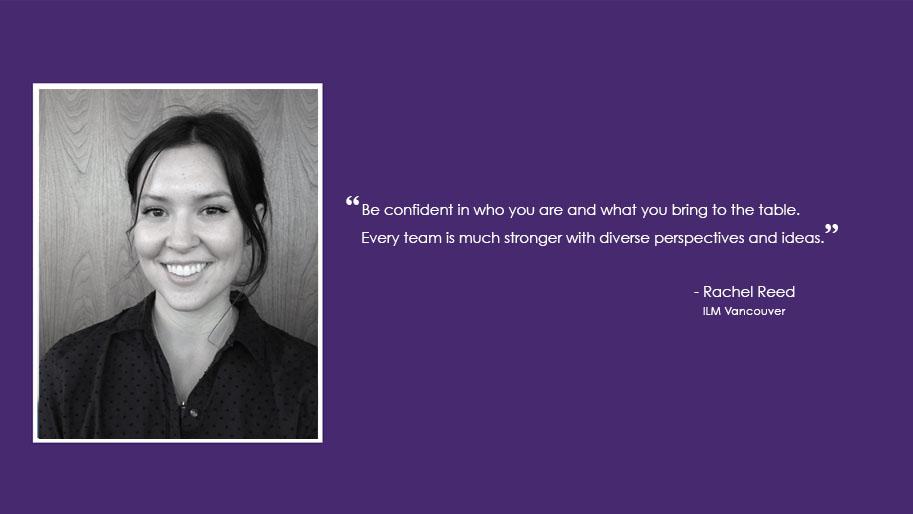
Be confident in who you are and what you bring to the table. Every team is much stronger with diverse perspectives and ideas.

WHAT ADVICE WOULD YOU GIVE TO SOMEONE WHO WANTS TO TAKE HER CAREER TO THE NEXT LEVEL?

Make your contributions visible. I think there are a lot of extremely talented women doing excellent work who think that means their managers will automatically notice. Don’t expect or wait for them to. You’ve got to let them know what you are doing and how it helps the project.

HOW CAN MEN BE BETTER ALLIES TO WOMEN IN THE WORKPLACE?

Make opportunities for women to speak and actively listen. If you have hiring power, make a conscious effort to bring in more female candidates. And one smaller thing, let’s all cool it with comments like “You look stressed” or “You are looking under the weather”. Unless someone has personally told you that they aren’t feeling well, even these well-meaning comments can remind that their appearance is being scrutinized.