
ILM’s innovative approach leads the way for more than 1,700 visual effects shots, helping bring Wright’s dystopian action thriller to life.
By Clayton Sandell
When director Edgar Wright was gearing up to make The Running Man (2025) and considered the extensive visual effects the story would require, he turned to a fellow filmmaker for advice.
“I’m friends with Gareth Edwards, and I was really taken with the work on The Creator,” Wright says in an interview with ILM.com. “Especially the idea of shooting on location and then designing the environments after the fact. I was really impressed by how the visual effects work was put into more naturalistic, grounded camerawork. I wanted to pick his brain about how exactly it was done.”
In The Running Man, a science-fiction thriller set in a near-future dystopian America, blue-collar worker Ben Richards (Glen Powell) desperately needs money to buy medicine for his baby daughter. He signs up with a TV network, hoping to compete on one of their game shows. He is picked for the most dangerous one: where contestants try to evade capture for 30 days in exchange for $1 billion.
After chatting with Edwards, Wright decided The Running Man should utilize the same unconventional approach that ILM brought to The Creator, winner of multiple awards for best visual effects, including from the Visual Effects Society.
Shooting on The Running Man began in early November 2024. With a release date rapidly approaching just a year later, the pressure to meet deadlines was on every department, including visual effects. Wright says he was happy the project reunited him with Academy Award-winning production visual effects supervisor Andrew Whitehurst. The two worked together on Wright’s 2010 film Scott Pilgrim vs. the World. “I remembered very fondly working with Andrew, so that was just an amazing, fortuitous bit of kismet,” Wright says.
The filmmaker credits Whitehurst and visual effects producer Sona Pak for preproduction planning, which kept everything on track. “Andrew and Sona were very clear on how to make this work, and how it would even be possible to turn around something this quickly with so many visual effects shots,” Wright recalls. “They had a very clear idea of what we were trying to achieve before we started shooting. What was really good was making decisions early on and sticking to them. I think where things can go awry – especially on a compressed schedule – is if you’re still working out what you want to do after you’ve finished filming.
“I’m frankly really amazed that we managed to do everything we did in time,” Wright adds.
Ben Richards’ 30-day fight to survive begins in Co-Op City, with the journey taking him to New York and Boston. Exterior scenes were shot mostly in real locations in London, England and Glasgow, Scotland, as well as on practical and backlot locations in Sofia, Bulgaria.
“Most of the initial meetings and discussions were centered around the places we were thinking of shooting, and the things we were thinking of building,” Whitehurst explains. “When that started to solidify, it became much clearer who was actually going to do what, and what was physically buildable, and what wasn’t.”
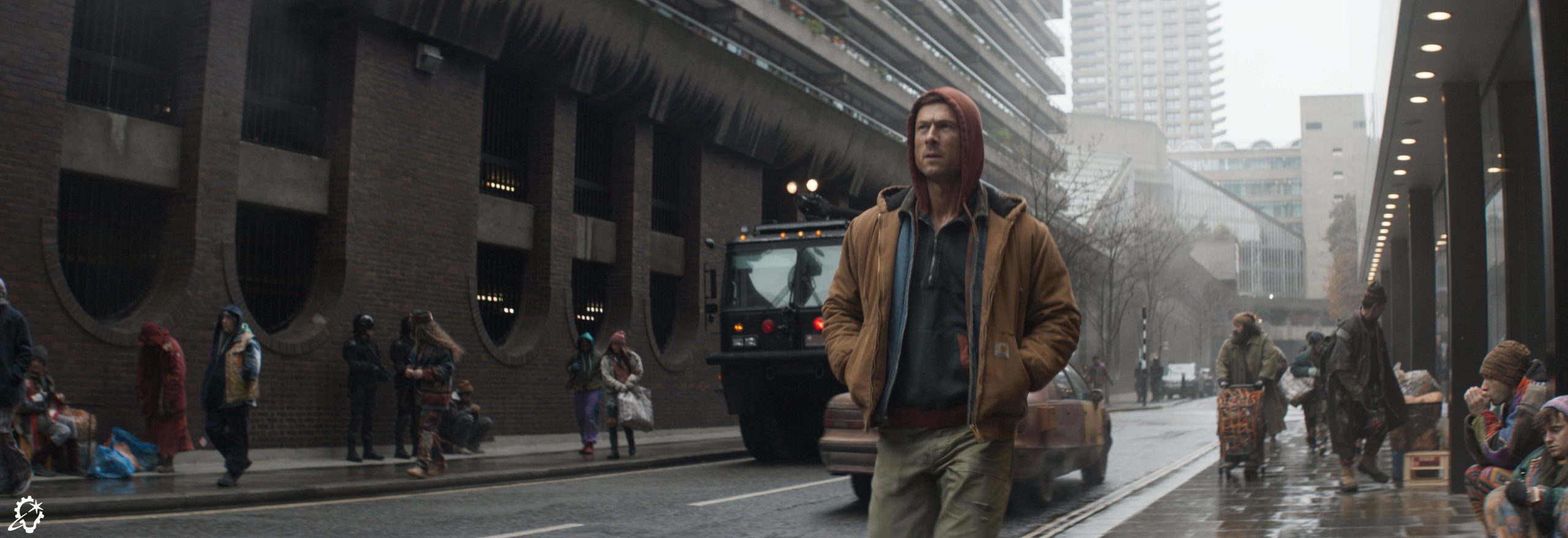
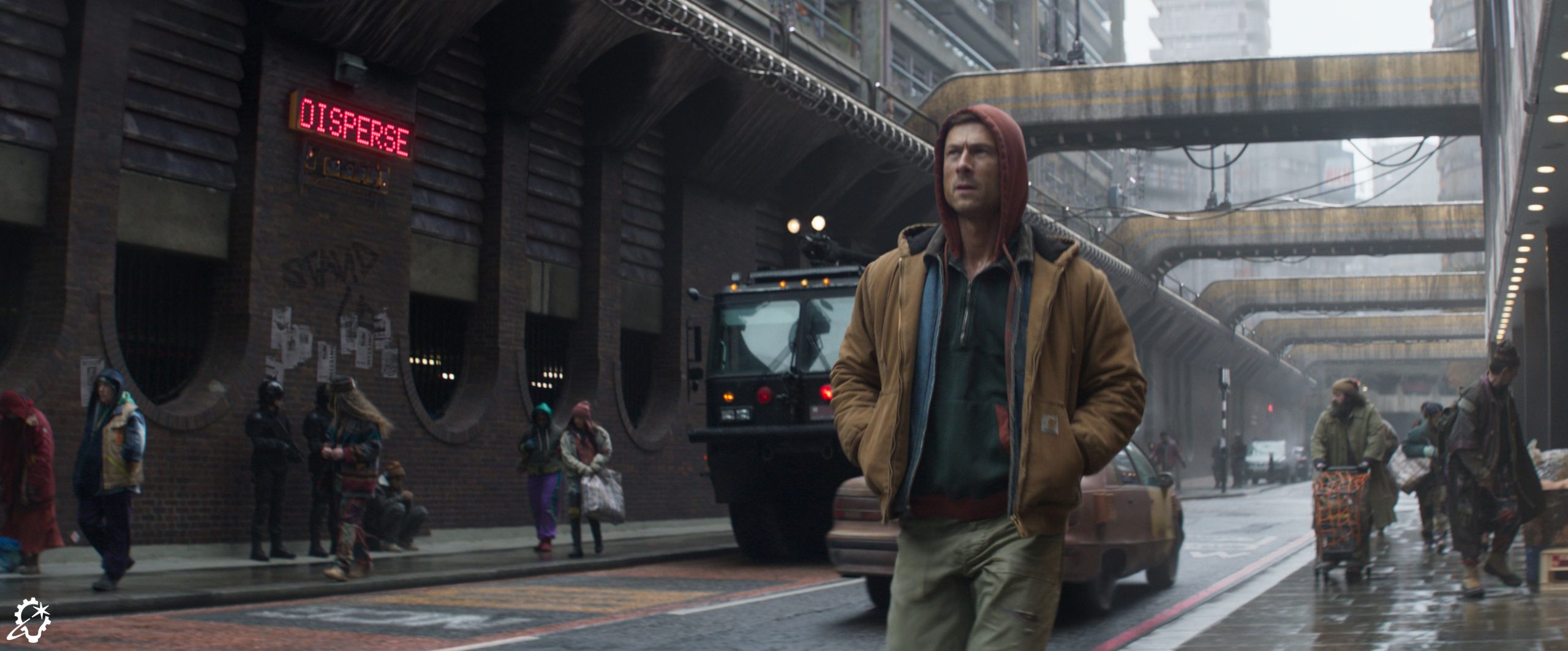
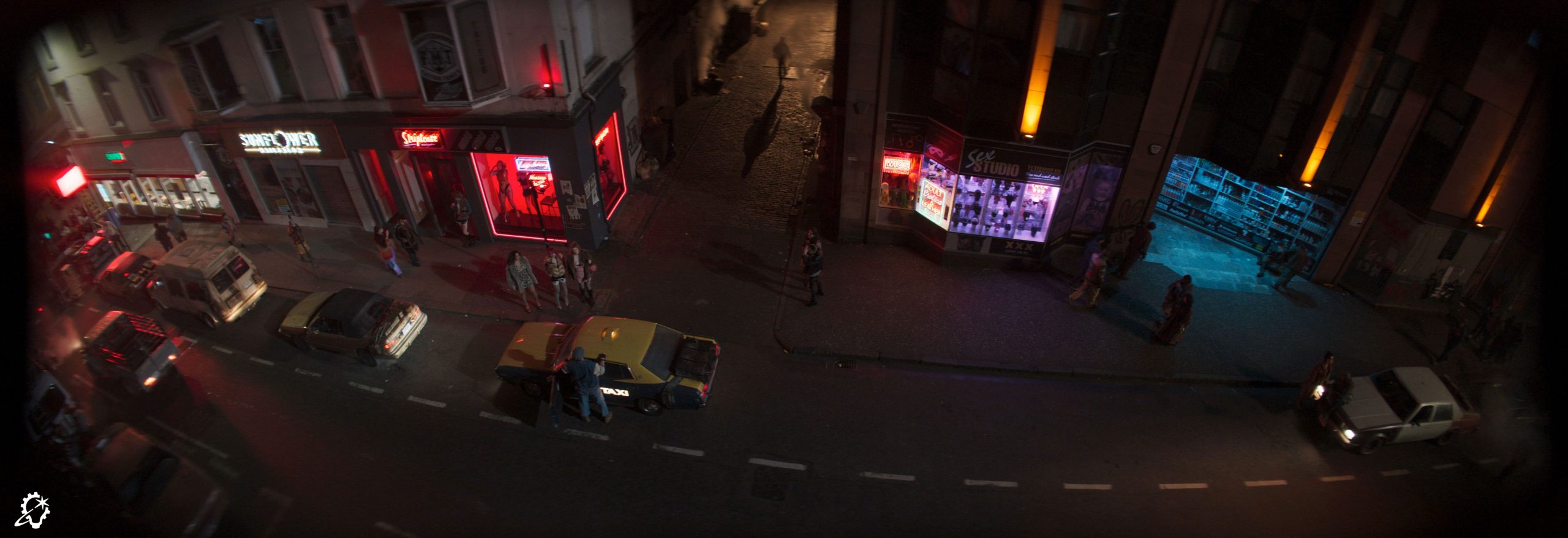
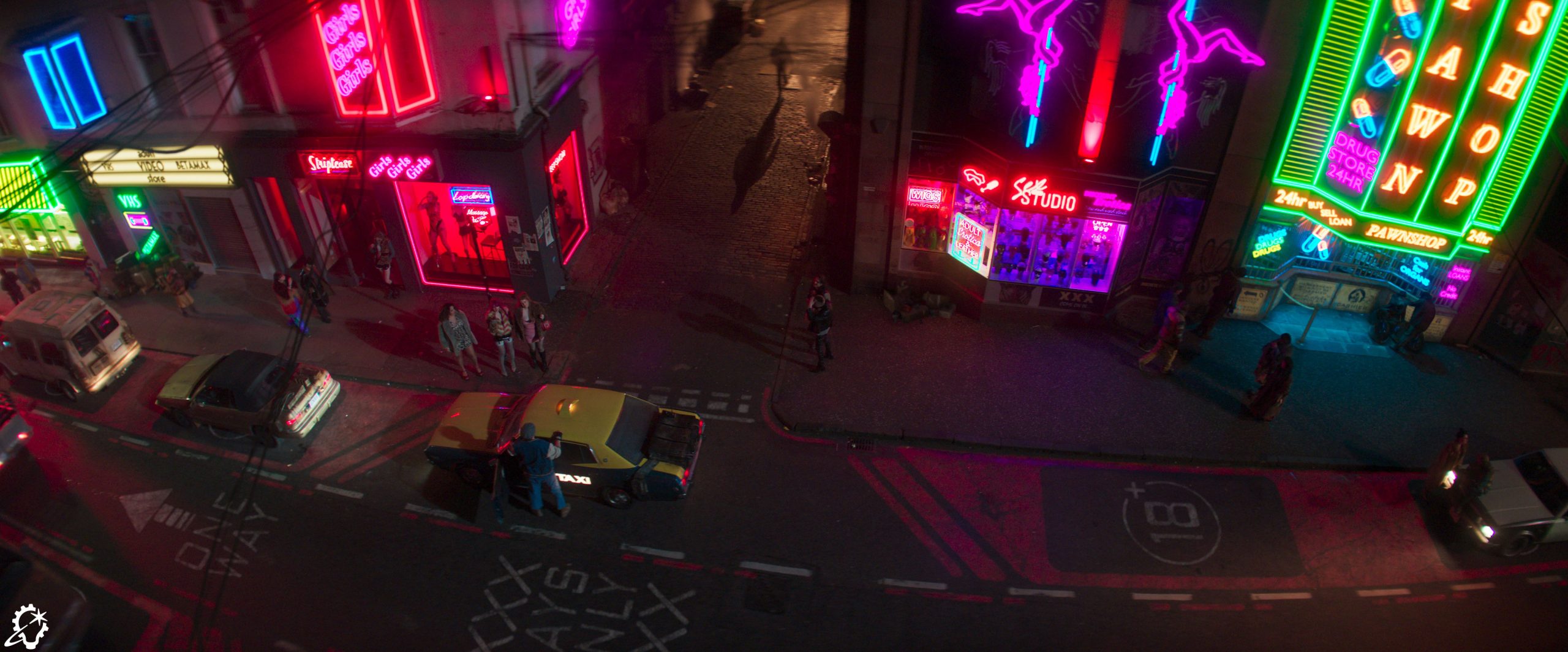
Fans of Andor (2022-25) may notice that the Canary Wharf section of London makes an appearance in The Running Man, disguised by a number of digital enhancements. “We did have nicely filmed places where the majority was real, which is always a great starting point,” says ILM visual effects supervisor Dave Zaretti. “Then you’re extending upwards into the distance. You can change the sky a little bit, but it was based on truth and reality, and nicely chosen locations. The team had a blast.”
Another shot set outside the fictional network headquarters begins at the real entrance steps leading to Wembley Stadium, but then transitions to a completely CG skyscraper as the camera tilts up. “It’s very funny to me to take one of London’s most famous landmarks and digitally erase it from the movie,” Wright laughs. “That’s an example where we’re starting with a real shot of Glen Powell and all the extras walking up the steps, and then the camera just keeps going and going. That was really the methodology throughout. It was about keeping it grounded, because the perspective of the story is that you’re very much seeing it from Ben Richards’s viewpoint.”
Visual effects contributed significant digital building extensions, crowds, street signs, lampposts, traffic lights, and even flying mailboxes. Cars from the 1980s era were digitally augmented with designs that more closely fit the story’s futuristic aesthetic. “James Mohan and Ashley Pay deserve huge credit for taking on the lion’s share of world-building, from city extensions to augmented traffic lights, road markings, and uptown car augmentation,” Zaretti says.
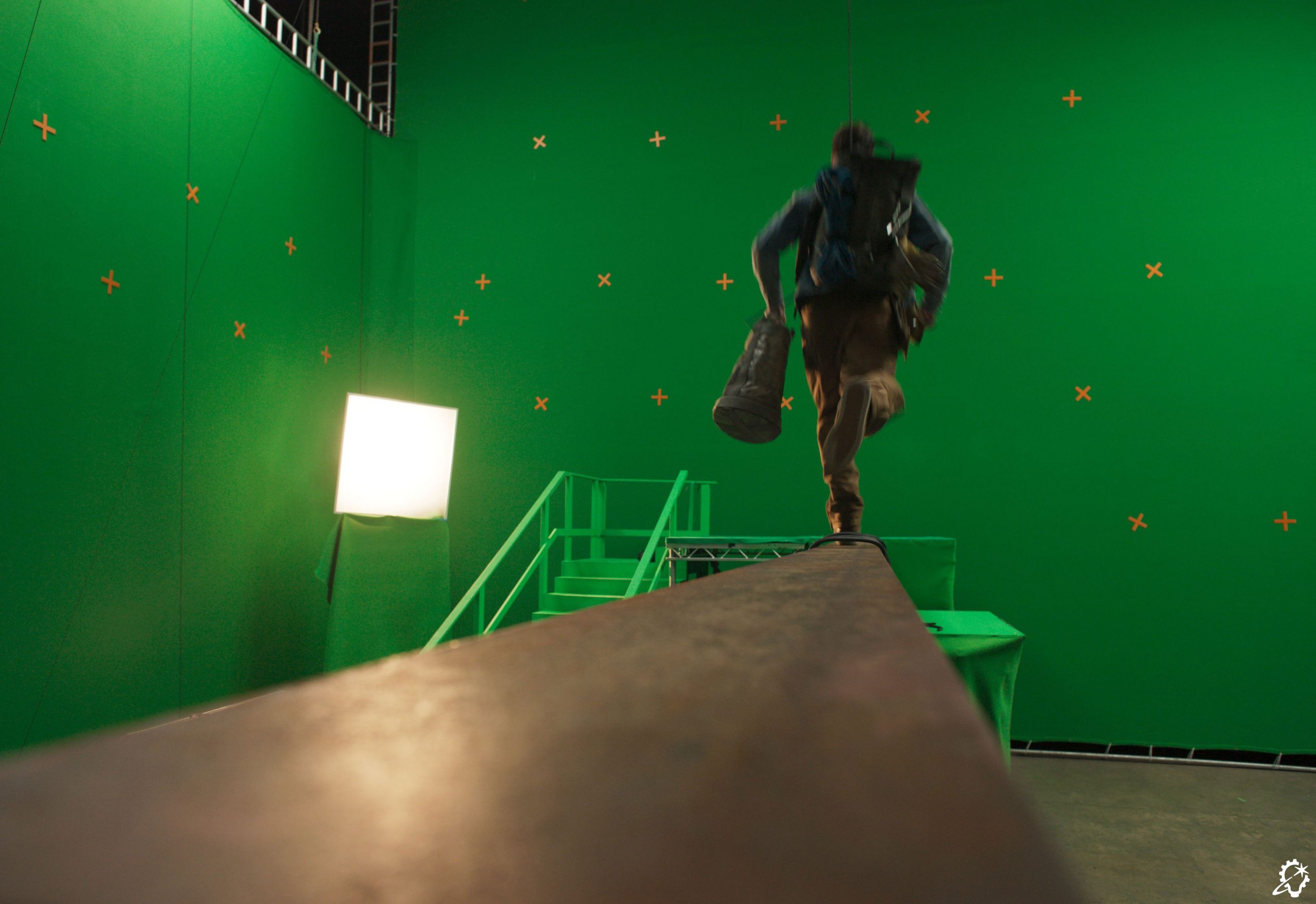
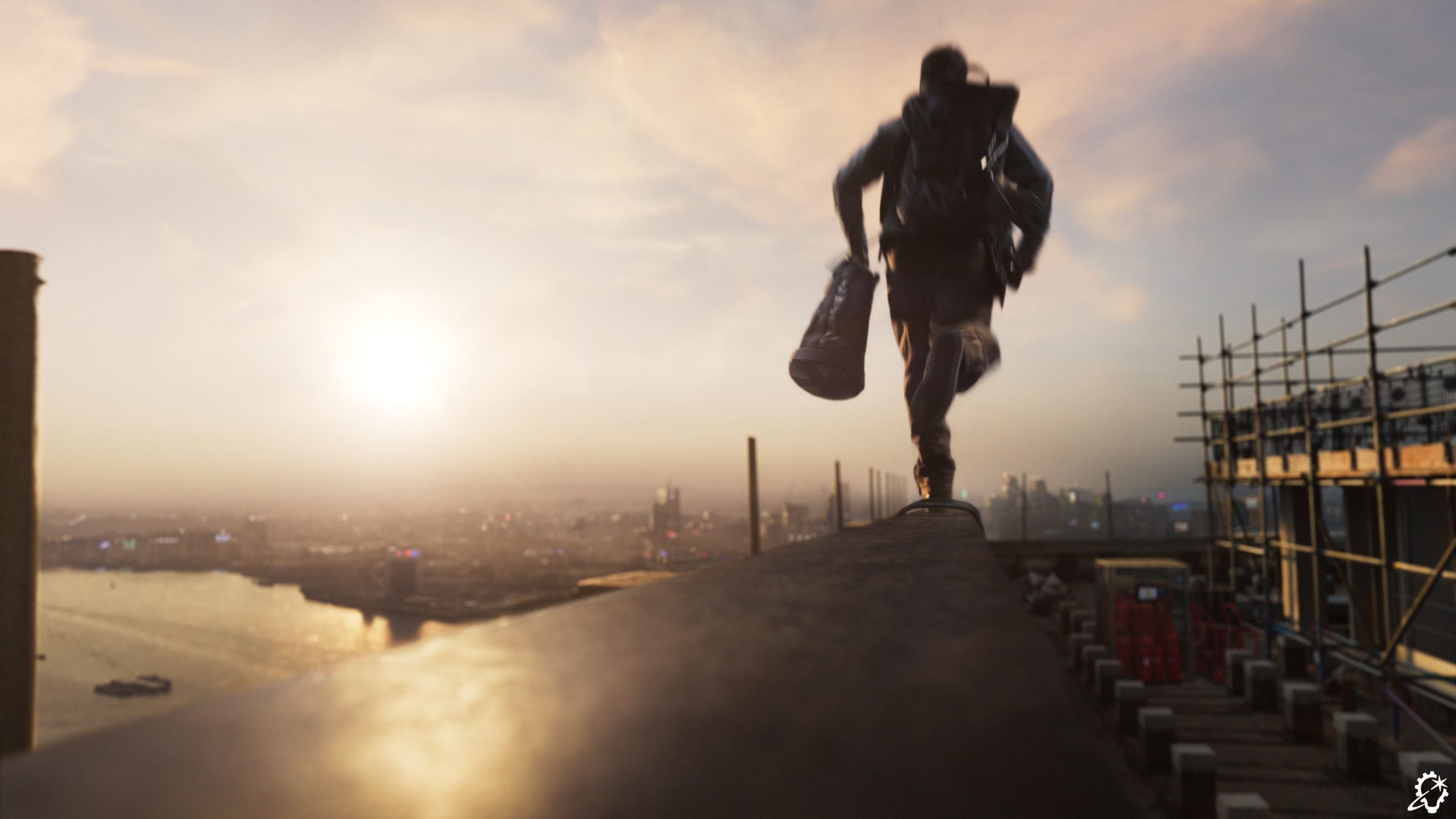
For a rooftop sequence where Richards tries to escape from a Boston hotel, full CG city recreations were combined with live-action footage shot on a partial set against a green screen. Another scene that appears to be a single take is actually three, completed with digital seams. In Boston, Richards runs out of an apartment and down a hallway – dodging gunfire and heroically sliding into an elevator – before reappearing to smash the lens of a pursuing rover camera.
“That was three separate takes that we had to marry together,” says Whitehurst, revealing that Powell appears in the first and last parts of the shot, while a stunt performer completed the floor slide in the middle. “That stuff is pure invisible effects. You need to get them all into position and use CG where you need to. We had a CG digi-double take over between the different poses that weren’t quite matching across the takes. It was a fun shot.
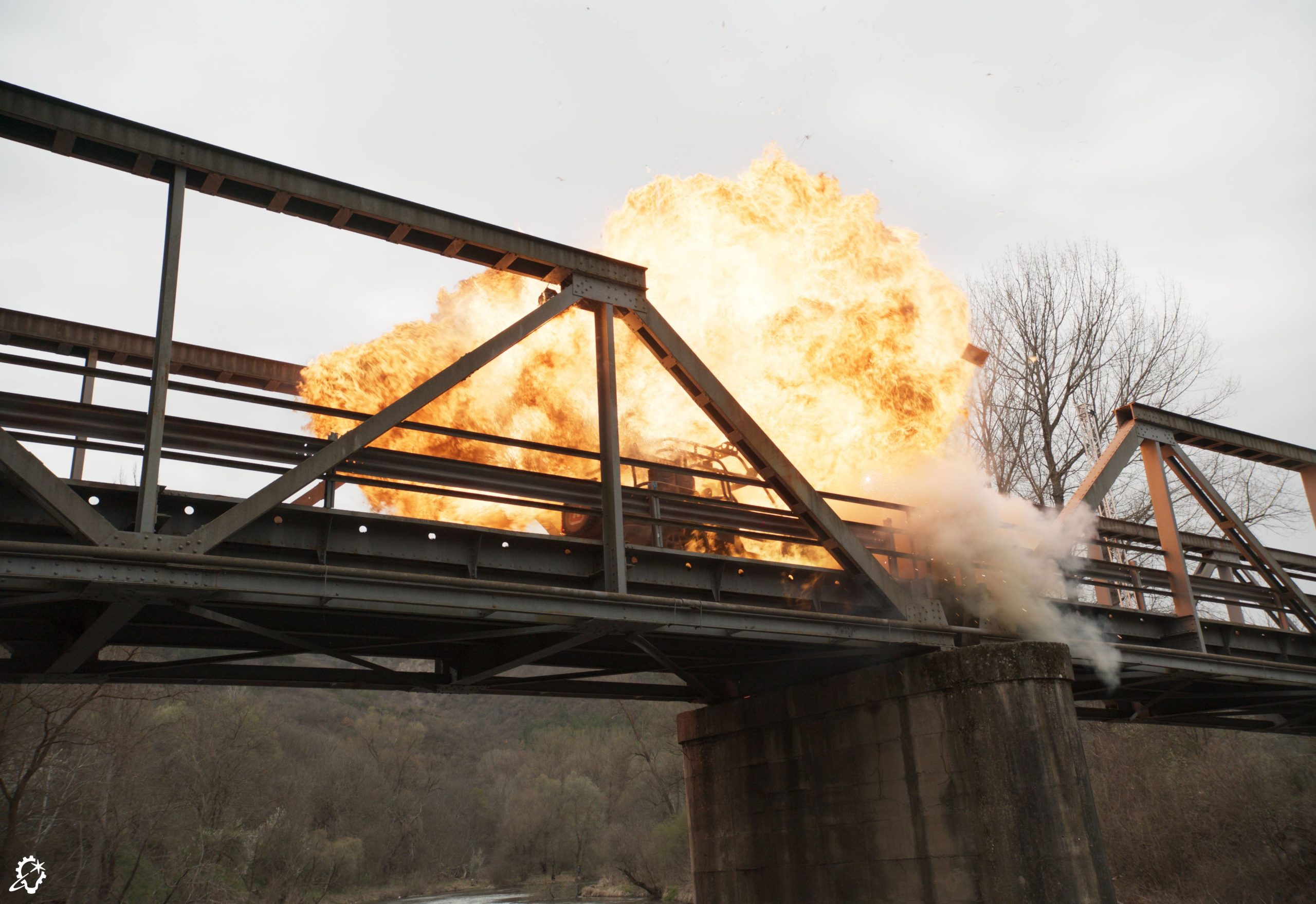
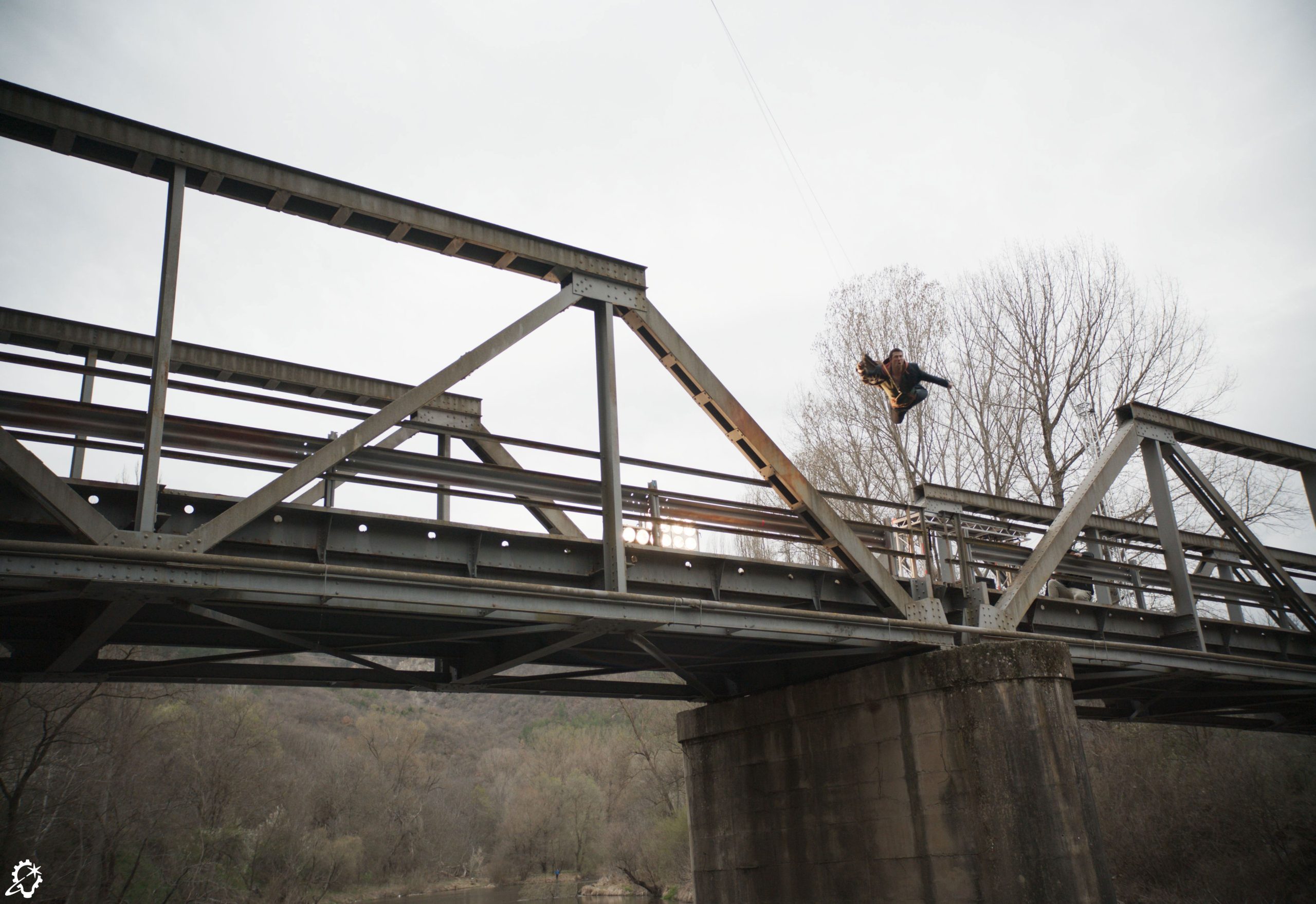
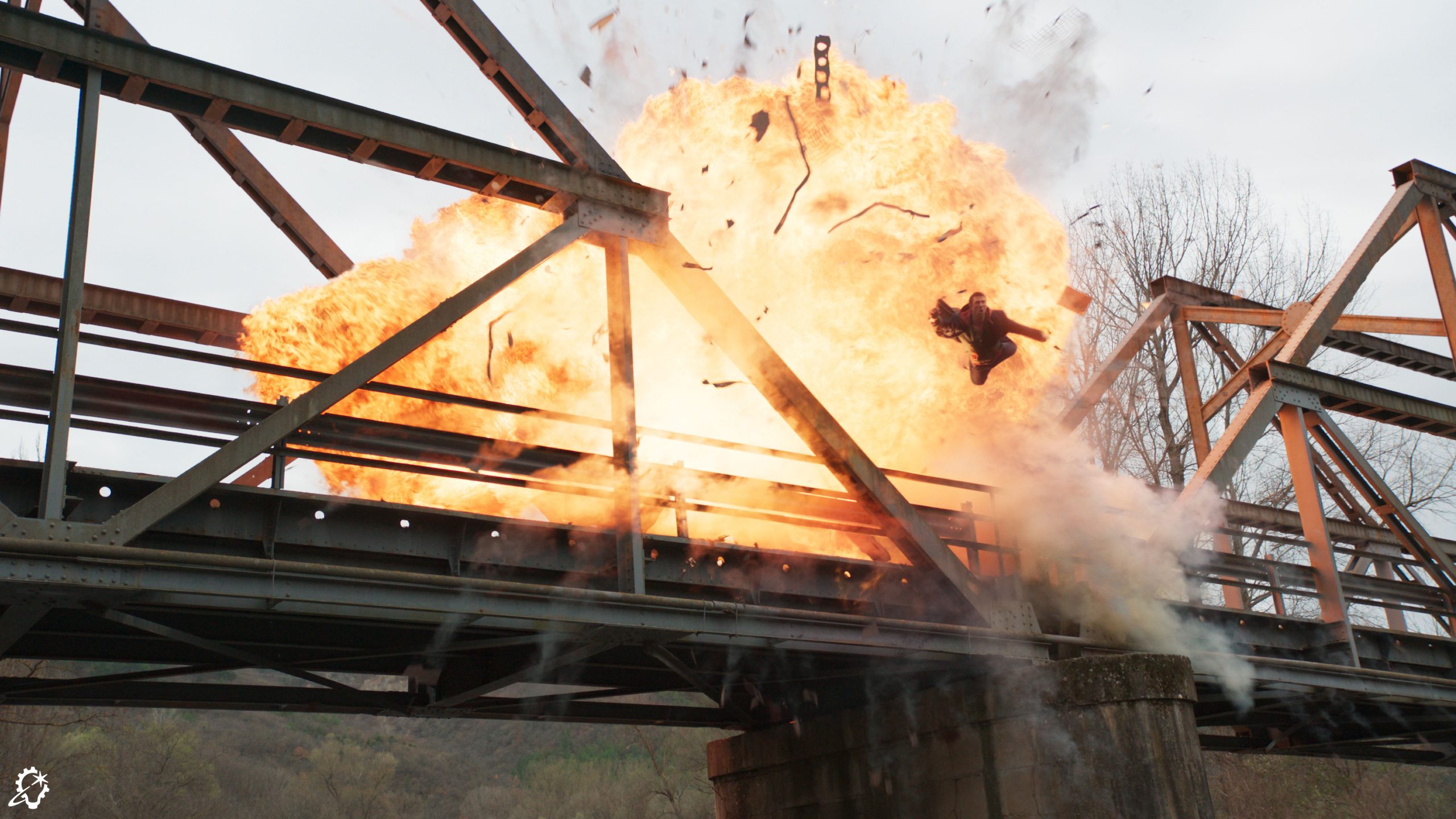
Digital doubles and extensive face replacements were used during chases and a pivotal moment where Richards narrowly escapes an explosive head-on collision, plunging from a bridge into the river below. The film’s finale features a completely CG V-Wing airplane, digital explosions, and spherical roving cameras capturing the action.
“Most of the time they’re hanging around like vultures,” Wright says, “and in some sequences there are three of them buzzing around. And in those cases, we had to constantly work out the choreography of where they were.”
The roving cameras provide live coverage for the audience watching the show on TV. But they also presented a visual effects challenge whenever a rover-eye view was simultaneously displayed on an in-world monitor. To maintain continuity, artists had to make sure that the angle seen in the rover’s video feed properly matched its constantly changing position.
“Steve Hardy deserves a medal,” notes Dave Zaretti, “for not only looking after the big exterior shots of the V-Wing, but also the hundreds of shots inside of it – keeping track of which rover cams should be seen where, not only in the main plates but also in the TV inserts.”
All of it adds up to a film jam-packed with tons of action and more than 1,700 visual effects shots.
“The effects work is huge, and subtle at the same time,” says Wright. “There’s a shot where Glen is in a New York hotel and gets into an elevator, and in the background is Times Square. But because the focus is on Glen the entire time, this amazing futuristic Times Square vista, with all of the screens, is completely out of focus. It’s a show where I feel there’s an enormous amount of work in the background, but out of focus. I think it’s really cool.”
A short sequence depicting Richards saving the life of a fellow oil-rig worker is only four shots, but is described by network executive Dan Killian (Josh Brolin) as “the most thrilling 10 seconds of video I’ve seen all year.” “We were very much beholden to deliver the most exciting 10 seconds of footage,” Whitehurst quips. “No half measures.”
The oil rig, crashing waves, lightning, and rain were fully digital elements. The actors were shot against a green screen. “We had two very dry actors dangling from a string,” adds Zaretti. “So we had to try and integrate them into the scene. But I think those shots worked really well.”
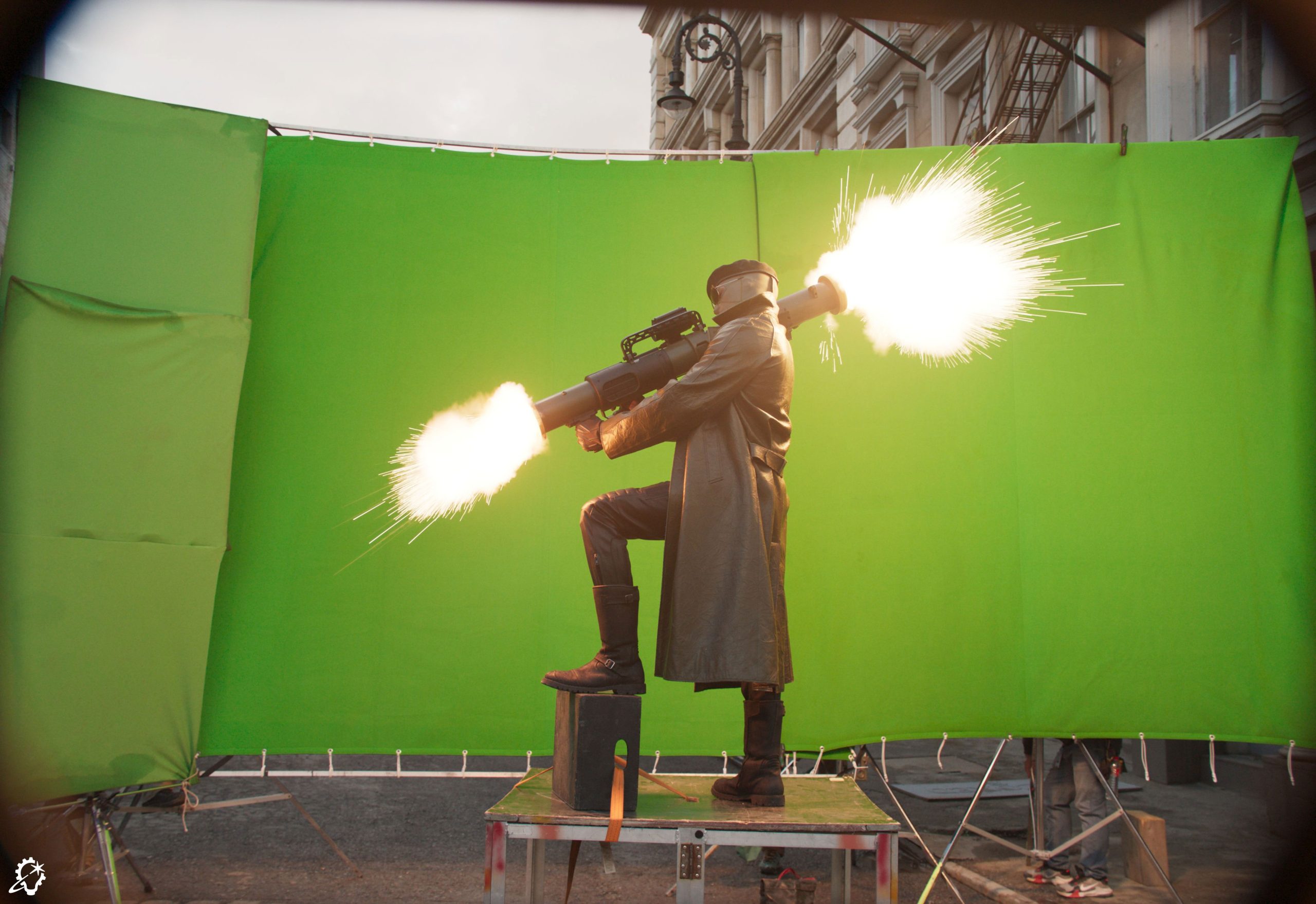
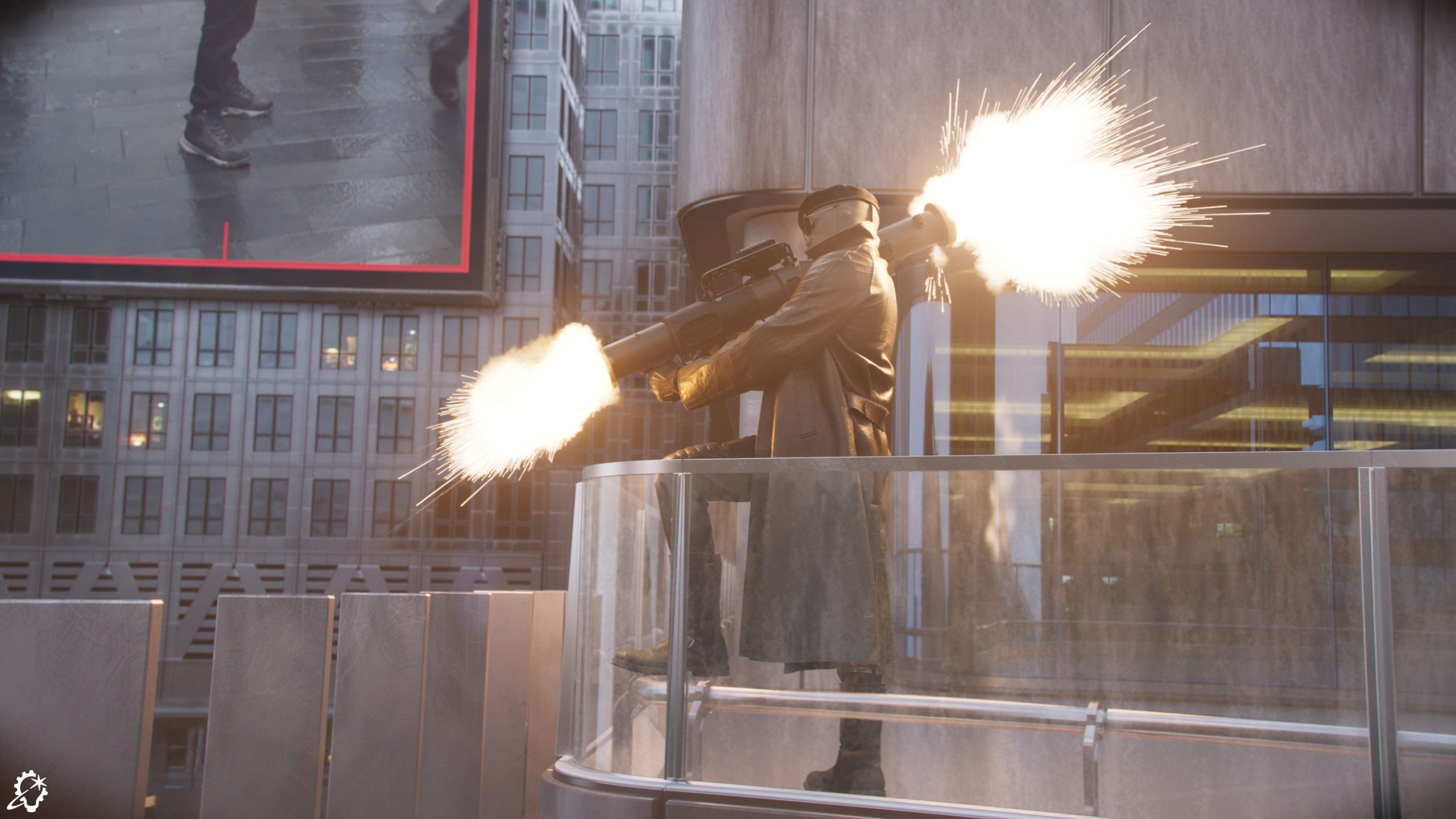
Work on The Running Man was hubbed out of ILM’s London studio, with further contributions from ILM artists based in Mumbai. Rodeo FX and Untold Studios completed additional shots. The key to a great end result, Wright believes, is all departments working together in sync.
“There’s incredible work by Andrew and ILM in the movie,” Wright says. “But it’s always in conjunction with something else – whether it’s the camera, an amazing location, what production design has done, what physical effects are doing. And the thing I’m really proud of in the movie is that all of this is people working together out of mutual respect.
“There are very few entirely green screen shots,” continues Wright. “And I think what people misunderstand about great visual effects is, they say, ‘It’s all CG.’ But of course, the best work is where it’s actually a collaboration.”
Whitehurst and Zaretti believe Wright’s style and approach to directing help bring the best ideas to life. “There was creative wiggle room,” Zaretti says. “And that’s nice, because you don’t always have that creative breathing space. So enjoy it and let the artists shine.”
“Absolutely,” concurs Whitehurst. “Edgar is definitely somebody who is very open to being shown something he was not expecting. It’s great seeing his enthusiasm when we show him stuff for the first time, and seeing him relax and go, ‘Oh, it’s going to be okay.’”
Wright says he’s most impressed by the world-building in the film, full of details that may only appear for a few seconds but make a lasting impression on the audience. “I wonder whether we set a dangerous precedent for ourselves by actually delivering in under a year,” the director laughs. “I’m really, really proud of the work, and I think some of the shots are just exceptionally beautiful and rich and detailed. What I also like about it is, it doesn’t feel like a lot of the effects are grandstanding.”
At the end of the day, Whitehurst says he is continually impressed by the ILM team’s innovative spirit that brought The Running Man over the finish line.
“ILM is a very refreshing place to work because there is so much experience, but it’s always in the service of making beautiful pictures that help tell the story,” he says. “I’m agnostic about what technology we use. I just want to use the right pencil for the job. But ILM has all of the pencils, and more importantly, the people who know how to use all of those pencils.”
Pre-order The Running Man Limited Edition Steelbook now.
—
Clayton Sandell is a Star Wars author and enthusiast, Celebration stage host, and a longtime fan of the creative people who keep Industrial Light & Magic and Skywalker Sound on the leading edge of visual effects and sound design. Follow him on Instagram (@claytonsandell), Bluesky (@claytonsandell.com), or X (@Clayton_Sandell).