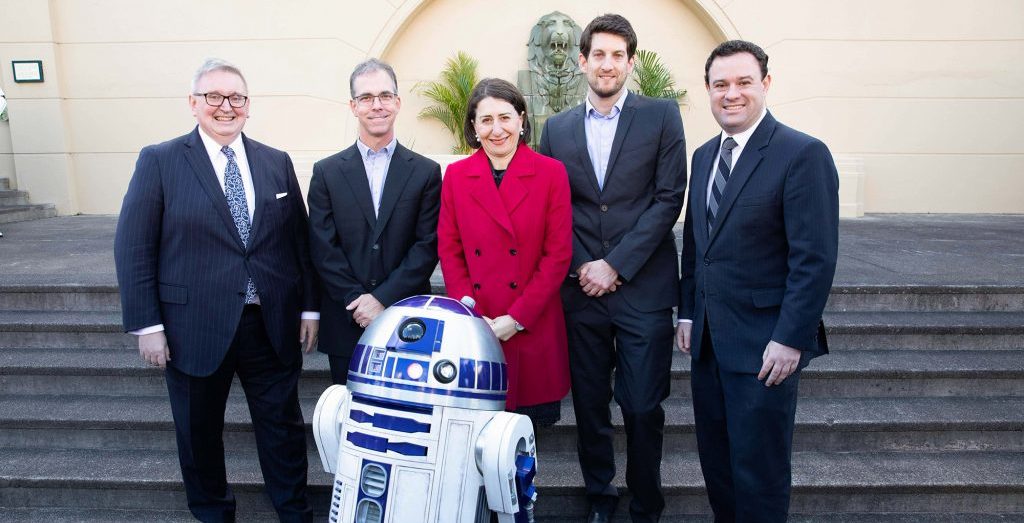
Industrial Light & Magic announced today that Rob Coleman has rejoined the company as a Key Creative for Feature Animation at ILM’s Sydney studio, building on thirty-five years of craftsmanship, innovation, and leadership in visual effects and animation. ILM is also announcing the return of Randal Shore, who will be rejoining the company’s Vancouver studio as an Executive Producer in Feature Animation.
Both Coleman and Shore are joining at a crucial chapter of innovation at Industrial Light & Magic, overseen by Janet Lewin, who now helms ILM as both Senior Vice President and General Manager, alongside Rob Bredow, ILM’s Senior Vice President and Chief Creative Officer. With the recent expansion of ILM’s virtual production and StageCraft technology, as well as the accelerated growth of the company’s studios around the world, they could not be arriving at a better time.
Award-winning Animation Supervisor Rob Coleman joins ILM’s Sydney.
“Rob Coleman has a long history at Industrial Light & Magic, having worked alongside George Lucas on the prequel trilogy, and Dave Filoni on The Clone Wars,” said Bredow. “With a 35-year tenure in the industry, he is a terrific mentor and powerhouse animation supervisor, with endless enthusiasm for the craft. In his new role, he will continue to deliver the unparalleled creativity that has continued to define him as a leader. Rob’s many years of creative supervision in animation make him the ideal fit for our upcoming projects, rejoining us at the perfect time as we work on multiple animated features in addition to a large number of visual effects shows. I’m so happy Rob is back – he typifies the best of what we do here at ILM.”
Coleman has had a long and celebrated history at ILM as an Animation Supervisor before focusing on work within Lucasfilm Animation. He was twice nominated for the Academy Award for his work on Attack of the Clones and The Phantom Menace and received two BAFTA Awards for his work on Men In Black and The Phantom Menace. Prior to this, Coleman worked as an Animator on projects such as The Mask, The Indian in the Cupboard, and Dragonheart to name a few. He moved to Lucasfilm Animation in 2005 providing development leadership on Star Wars: The Clone Wars. Most recently, he worked as an Animation Director at Dr. D. Studios on Happy Feet Two, and as Head of Animation at Animal Logic, supporting The LEGO Movie, The LEGO Batman Movie, and Peter Rabbit.
“I could not be more excited or humbled to be back at ILM,” said Coleman. “In my time in animation, I’ve been lucky enough to work on some truly industry-defining films, but the pipeline of projects that ILM has ahead of it is exhilarating, and I’m thrilled to be a part of it.”
Executive Producer Randal Shore rejoins ILM’s Vancouver studio.
During his tenure at Industrial Light & Magic, Randal Shore was the Executive in Charge of ILM’s Vancouver studio, playing an instrumental role in both launching the studio and managing its growth over the years, as well as providing executive leadership on No Time to Die, Jungle Cruise, Black Widow, and The Mandalorian. Prior to joining ILM, Shore held high-level positions at two other Canadian visual effects houses: The Moving Picture Company (MPC) and Prime Focus. At MPC, Randal was Head of Production overseeing films such as Life of Pi, which was awarded the Oscar for Outstanding Achievement in Visual Effects in 2013. During his tenure at Prime Focus as Executive Producer, he oversaw the company’s expansion from 45 artists to over 150, and worked on such films as Tree of Life and Tron Legacy.
“Every project Randal oversees benefits from his collaborative stewardship, and we’re thrilled that his journey has brought him back home to ILM,” said Janet Lewin, ILM’s SVP and GM. “Randal’s wide breadth of executive leadership and animation experience make him the perfect person to step into this new role. He will be developing and growing our Feature Animation strategy while partnering with our clients to guide their projects through to completion.”
Most recently, Shore was Head of Production for Tangent Animation where he oversaw the upcoming Maya and the Three for Netflix, bringing him back to his creative roots of producing animation. With Coleman’s and Shore’s return to ILM, they will both play a key role in the company’s continued push into animation.
“I am absolutely thrilled to be back at Industrial Light & Magic,” said Shore. “We have some incredible feature animation projects in production, and I’m looking forward to both expanding our portfolio, and leveraging our best-in-class global studios.”
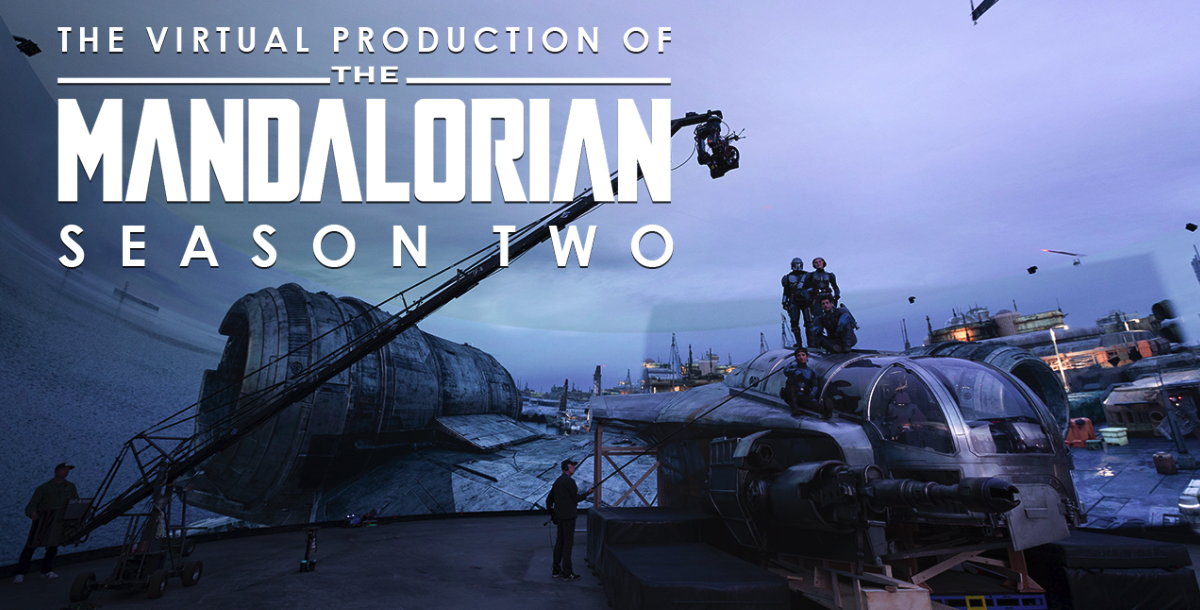
In a new video released by ILM on our YouTube channel, join Visual Effects Supervisor, Richard Bluff, as he shares a peek behind the curtain of the effects of The Mandalorian: Season 2, winner of 7 Emmy® Awards including Special Visual Effects, Sound Mixing, Cinematography, Prosthetic Makeup, Stunt Coordination, Stunt Performance, and Music Composition.
For its sophomore outing, Lucasfilm’s hit Disney+ series built upon the groundbreaking technical and artistic achievements accomplished during season one, combining traditional methodologies, with ever-advancing new technologies. The team also increased the physical size of the ILM StageCraft™ LED Volume which would again be used for over half of all scenes. This season also marked the debut of ILM’s state-of-the-art real-time cinema render engine called, Helios. The high-resolution, high-fidelity engine was used for all final pixel rendering displayed on the LED screens and offers unmatched performance for the types of complex scenes prevalent in today’s episodic and feature film production.
Practical creature effects have been a vital part of the aesthetic and charm of the Star Wars universe since 1977, and for season two, the effects team realized over 100 puppeteered creatures, droids, and animatronic masks, which included the beloved Tatooine Bantha, realized as a ten-foot-high puppeteered rideable creature.
Practical miniatures and motion control photography were used once again for scale model ships, as well as miniature set extensions built for use in ILM’s StageCraft LED volume. Stop-motion animation was also utilized for the Scrap Walker at the Karthon Chop Fields. The greater Krayt dragon on Tatooine was realized as a six-hundred-foot computer-generated creature that would swim shark-like through the sand environment by way of a liquefaction effect, wherein the sand would behave like water.
We would like to acknowledge the care and dedication that the team here at ILM put into the show, along with our partners at Legacy Effects, Hybride, Image Engine, Important Looking Pirates, Ghost VFX, Lola, Stereo D, Tippett Studios, Base FX, Raynault, Virtuous, and Yannix.
We hope you enjoy this look inside The Mandalorian: Season 2.
The Television Academy announced its winners for the 73rd Annual Primetime Creative Arts Emmy® Awards over the weekend, celebrating a diverse group of talent from across television. ILM’s creative teams were honored with an award for Outstanding Special Visual Effects in a Season or a Movie for The Mandalorian, alongside nominations for their contributions on The Boys, WandaVision, and The Falcon and the Winter Soldier. This is the second year in a row that the hit Lucasfilm series has received the Emmy Award for Special Visual Effects, a testament to the groundbreaking work that the show is known for.
Animation Supervisor Hal Hickel, VFX Producer Abbigail Keller, VFX Supervisor Joseph Kasparian (Hybride), and Environments Supervisor Enrico Damm in attendance at the 73rd Annual Primetime Creative Arts Emmy® Awards.
The visual effects team representing this win, included: Joe Bauer, Richard Bluff, Abbigail Keller, Hal Hickel, Roy K. Cancino, John Knoll, Enrico Damm, John Rosengrant, and Joseph Kasparian. Special recognition is also in order for ILM Producer Stacy Bissell, ILM Animation Supervisor Paul Kavanagh, and the entire StageCraft team for their incredible contributions.
Richard Bluff, Visual Effects Supervisor on The Mandalorian, added, “I want to take this opportunity on behalf of the visual effects team to congratulate all the artists, production, and the technical support staff who contributed to the Visual and Special Effects on season two of The Mandalorian. We continue to be in awe of the spectacular work and the effortless partnerships we enjoy with all of our vendor partners. The time and effort invested in the visuals by ILM, Hybride, Image Engine, Important Looking Pirates, Ghost VFX, Lola, Stereo D, Tippett Studios, Base FX, Raynault, Virtuous, and Yannix has been exceptional and this recognition is fully deserved. Everyone associated with the show couldn’t be happier or more grateful for what we all achieved together.”
In addition, The Mandalorian was also recognized with Emmys in the following categories: Sound Mixing, Cinematography, Prosthetic Makeup, Stunt Coordination, Stunt Performance, and Music Composition.
The 73rd Emmy Awards will be hosted by Cedric the Entertainer at L.A. Live in Downtown Los Angeles, California. Executive Producers Reginald Hudlin and Ian Stewart and Director Hamish Hamilton have been selected to helm the show for production companies Done+Dusted and Hudlin Entertainment. Highlights from the 73rd Annual Creative Arts Emmy Awards will be broadcast on Saturday, Sept. 18 (8:00 PM ET/PT) on FXX. The 73rd Primetime Emmy Awards will be broadcast live on Sunday, Sept. 19 (5:00-8:00 PM, PST) on the CBS Television Network, and as well as streaming live and on-demand on Paramount+.
Why did you decide to move to Sydney from London?
My wife’s Australian so we’d been thinking about it for a while and the Australian government is getting very serious about incentivising and supporting film production, VFX and animation. It seemed like the perfect time to come.
What has been your impression of the Australian VFX & film industry so far?
It’s been great working at Fox Studios Australia, it’s a busy hub and I can definitely see it being globally attractive. I think the demand for film studio space, crews, and VFX will outstrip supply here for a while. Build it and they will come!
“SEEING STAR WARS: A NEW HOPE AT THE CINEMA LITERALLY CHANGED MY LIFE.”
What makes ILM’s Sydney studio special?
Churchill on set at Fox Studios Australia
I think we can offer something unique to filmmakers who want to make their films in Australia. We’re based on the Fox studio lot and recently wrapped production on Marvel’s Thor: Love and Thunder, a production for which we built a bespoke StageCraft LED volume. In sharing work with our other offices around the globe we’re working while you’re asleep! There’s been a huge amount of talent at ILM and tremendous innovation happening here and it’s an honor to have been invited into the family.
What inspired you to get into VFX?
Like many people my age I sat in a movie theatre in 1977. The lights went down, the curtains opened and an enormous Star Destroyer flew over my head. Mind instantly blown and here I am many years later trying to recreate that experience for others. Seeing Star Wars: A New Hope at the cinema literally changed my life.
What excites you the most about VFX?
The creative possibilities are endless. Helping filmmakers realize their vision and having that vision exist forever in popular culture is a very powerful drug.
We got to the point in VFX a few years ago where we didn’t need to spend all of our time and effort trying to make things ‘look real’. Realism can be achieved much earlier in the process and can ultimately be guaranteed so we’ve become freer to be more creative and not wholly in thrall to the gods of photo-realism.
If you hadn’t become a VFX Supervisor, you would be working as?
A music producer. Making music is a great way to spend your time.
Your biggest passion outside VFX?
Travel, music and movies.
“HELPING FILMMAKERS REALIZE THEIR VISION AND HAVING THAT VISION EXIST FOREVER IN POPULAR CULTURE IS A VERY POWERFUL DRUG.”
What is the most unique/challenging location you have filmed in?
Aerial photography is always exciting. I recently shot a lot of aerials over New York City, with legendary pilot Al Cerullo. He’s a Vietnam veteran and is a seriously skilled pilot. I asked him for some very acrobatic shots over the East River. We got very low and very close, something I’ll never forget. NYC looks incredible from above.
The Sahara Desert was also memorable, getting caught in a sandstorm and a plague of locusts were just a couple of the challenges it threw at us.
Talk us through a few of your career highlights:
Being a founding member of DNEG was inspiring. As a bunch of runaway renegades from MPC it felt like we were in uncharted waters. We were all close friends and it was satisfying working together and seeing the company grow.
Children of Men was somewhat defining for me as a young VFX Supervisor. My work with Edgar Wright and his filmmaking team on Scott Pilgrim vs the World and The World’s End was also formative. Tim Burton liked The World’s End so much he hired me for Miss Peregrine’s Home for Peculiar Children and working with him was an incredible experience.
Churchill on stage in Sydney performing camera capture testing.
MEET THE FACILITIES MANAGER HELPING GROW ILM’S SYDNEY STUDIO
Can you tell us your role and summarize your day-to-day responsibilities?
I am the Facilities Manager for Industrial Light & Magic’s (ILM) Sydney studio. I oversee everything involving the facilities and operations for the studio. That includes maintaining supplies, stationery, and the kitchens, to onboarding new employees, which is a big job at the moment because we’re still a relatively new studio, with a big growth projection. I have a Facilities Coordinator that recently started. Between the two of us, we look after all the basic day-to-day needs, making sure there are snacks in the kitchens and lamps on their desks, and anything that assists in ensuring they are comfortable at work.
When I first started, I had to fit out new office spaces and bring them online very quickly for people to start working. Since then, we’ve built out space, making it a nice place to work. With the pandemic situation in the last year, we’ve had to implement new policies and procedures to make sure that we’re all safe, including sanitizing workspaces. Now we’re managing logistics and configurations for a post-COVID world. I think there were about 25 to 30 people when the pandemic started. Now there are 250+ people. We’ve grown significantly. People are working with a new hybrid model, coming into the office two to four days a week. It’s been an extremely busy time, and it has its challenges, but it’s always very exciting and that’s one of the reasons I applied for this job.
It sounds like you have to make many different types of decisions in your role, from the large scale to the small scale.
Yes, it’s an amazing opportunity to be part of something right from the very start and build up all the necessary policies, facilities, desks, and everything that’s required. One thing I love about the company is its team culture. Even though my role is extremely varied and all-consuming to a certain extent, I never feel that I’m on my own. Not only locally with the Sydney team, but globally across all of ILM, everyone’s willing to help out and answer questions. I’ve worked in a global company before, but not for one where everyone’s so collaborative and willing to give their time.
Could you tell us about your background and the path that led you to ILM?
After a couple of years at college to get a Business Administration certificate, I went straight into work. I applied for a copywriting job at The Body Shop, which is a perfume, soap, and toiletry company headquartered in my hometown on the south coast of England. I was offered a job with the founder Dame Anita Roddick as her team assistant and administrator. Over my ten years there, I moved into a personal assistant level with her and she taught me a lot. She was not only the head of a global company, but she did a lot of things for animal and human rights, and that helped shaped my own values about the types of places where I’d like to work.
When Dame Anita Roddick decided to step back and sell The Body Shop to L’Oreal, I thought that would be a great opportunity to pursue my dream of traveling. I came to Australia on a work travel visa and I managed to get a job here as an Executive Assistant for a private financial company. I then managed to get my Permanent Residency to stay in the country, and it’s been 14 years now. I stayed in the financial sector for a few years, then I managed to get a role at a media company, one of the largest in Australia. I started off as the Executive Assistant to four senior executives. After I left to have my son, the company had grown and decided that they needed a facilities and office manager to help put policies and procedures in place. I then returned to the company in that role.
One day I was locked in work and the daily media news came up on the screen, as it did every day. There was a line that said Lucasfilm’s ILM was opening an office in Sydney. I just had to read the article and at the bottom was a link to the job listings. I don’t know why, but I just thought I’d have a look and at the top was a Facilities Manager role. It was one of those opportunities that I just couldn’t pass up, it felt like one of those now or never opportunities. I applied and heard back the next day. After a series of interviews and a matter of days, I was being offered the role! I immediately accepted and the next thing I knew, I went straight into fitting out the first office space, getting the builders set up, and jumping straight in. My first two months were a baptism of fire!
“GLOBALLY ACROSS ALL OF ILM, EVERYONE’S WILLING TO HELP OUT AND ANSWER QUESTIONS. I’VE WORKED IN A GLOBAL COMPANY BEFORE, BUT NOT FOR ONE WHERE EVERYONE’S SO COLLABORATIVE AND WILLING TO GIVE THEIR TIME.”
And what was your familiarity with Lucasfilm before you were hired?
I definitely knew about Lucasfilm and what the company does. One of my best memories is Saturday evenings with my dad watching Indiana Jones. The two of us absolutely loved watching that together. More recently, my son has started getting into Star Wars and The Mandalorian and he got the costume for his birthday this year. I’m sort of following what I did with my dad and now I’m doing it again with my son, which is lovely.
Can you explain a little more about ILM’s Sydney facility and when it was established?
We’re at Fox Studios Australia, occupying space that used to be production offices for the shooting stages below. Our ILM studio was officially launched in July, 2019. I started at the beginning of October. There were about six people in a core group, including a visual effects supervisor and some compositors. They were at one end of the facility working on a few shots for Star Wars: The Rise of Skywalker while we fitted out everything else. One nice detail about our space is that we have an outdoor area that we call the skybridge with seating and plants. Also we have a cool feature, a glass case that explores some of the history of Fox Studios, including a photo of George Lucas when he was here filming of Star Wars: Attack of the Clones and Revenge of the Sith!
And how did the studio adapt to the global pandemic in 2020?
At the beginning of 2020, we were very excited because the projected growth was amazing. We started getting everything planned out and then bang it kind of hit us. Initially, it was all about making sure that everybody was set up at home because we just didn’t have any idea how long it was going to continue. A few months later when things started looking better, the conversations started about how it would look to bring people back. It kind of shifted again from getting people set up at home and making sure that they were coping OK to starting back on the facility.
The fact that the studio grew considerably over that time must have been a real challenge.
Yes, we went from a brand-new environment, leaving it at 25 to 30 people, and bringing it back with 100 or so people, and it keeps growing. It’s been incredible how everybody’s come together. Massive kudos to the talent and recruitment team for how they’ve continued to build the studio. It’s been an incredible journey. I feel like I’ve had to relearn what facilities work is to a certain extent, because there are aspects that are different now to what it used to be.
“WE WENT FROM A BRAND NEW ENVIRONMENT LEAVING IT AT 25 TO 30 PEOPLE, AND BRINGING IT BACK WITH 100 OR SO PEOPLE, AND IT KEEPS GROWING. IT’S BEEN INCREDIBLE HOW EVERYBODY’S COME TOGETHER.”
Following that, is there anything about your job that people might find surprising?
I think people underestimate the amount of customer service that is required in a facilities role. If people don’t really know what we do, we’re doing a really good job because it covers a lot of the stuff that people shouldn’t have to think about, like where something is or why it’s missing. If we’re doing our job, it just happens. Those customer service relationships become very important. Across the board you need to work well with everyone because it’s a role that impacts the entire company.
And how do you translate that to the personal level?
Communication goes hand in hand with customer service. Being able to easily build good relationships with people is very important. I think also you need to be organized and have good awareness. It’s quite a caring role. I think you need to be someone who has pride in what you do, wants to create a great space, and cares for the people in it.
As we’ve been celebrating Earth Month, how do you work to main sustainable practices at ILM Sydney?
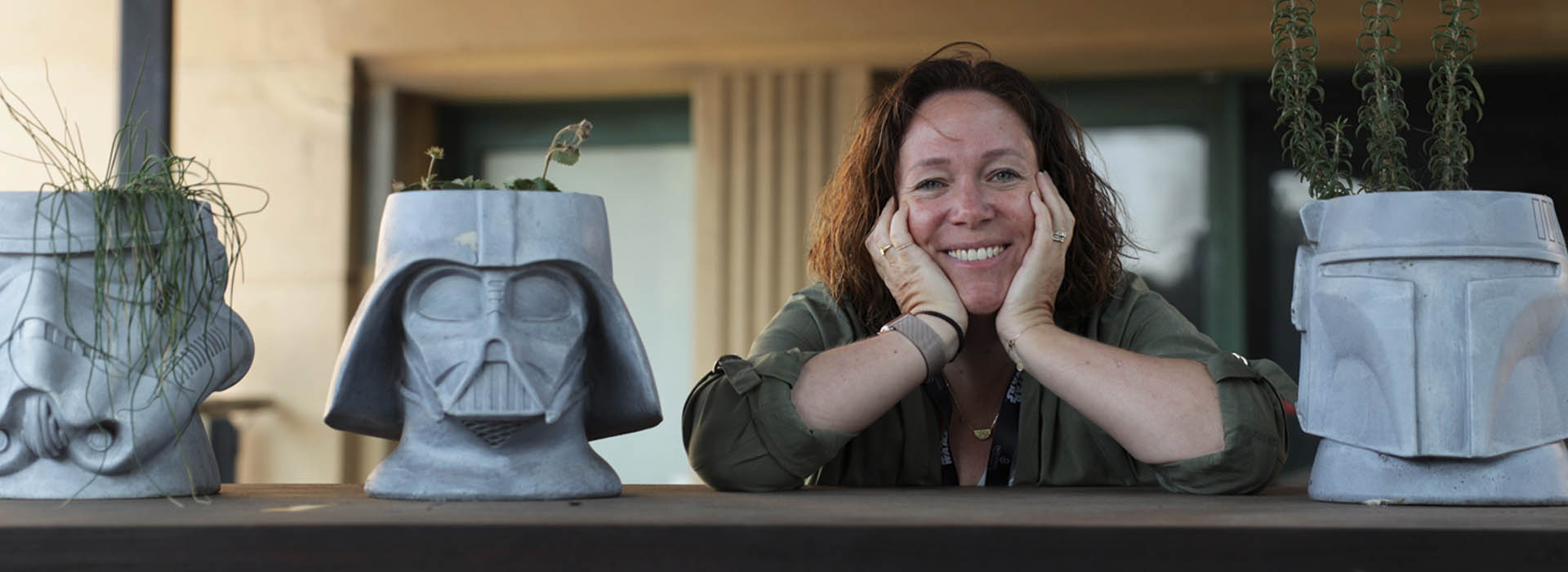
From the very start, I was thinking about making the workspace as sustainable and green as possible. So, we have no trash bins in offices or at desks. We’ve implemented stations with general, recycling, organic, and paper bins. It’s very hard to introduce a different way for people to do things, so I thought we’d try to properly manage our waste right from the start. I’m always thinking about how can we do things that are good for the environment but that also get people thinking about that side of things. Now we have a Green Team and we’re looking at our electricity supply and how that can be better. We’ve got some pots with strawberries, mint, and rosemary on our skybridge, which we are hoping to start growing with stored rainwater. And we talk with the Fox Studios team to find out how we can collaborate. One thing I learned back when I worked with Dame Anita Roddick was that if each person does just one small thing, that can make a massive difference.
And now you’re a part of the creation of these movies!
I know! It still feels so weird, like it doesn’t feel real. I pinch myself. My dad is so proud. He’s such an important part of my life, and I love the fact that he’s proud of where I am.
Do you have any advice for those who aspire to join a company like ILM and Lucasfilm?
Being part of a studio from the starting point and seeing who they’re employing across the board, I think passion comes first. It doesn’t matter whether it’s facilities, or being a production assistant or being a production lead or an artist or whatever you are, be passionate about what you do. That really shines through when you’re applying for something. That would be my one and only advice to anyone who’s wanting to breakthrough. This is definitely a company that respects your passion.
For the second season of Lucasfilm’s hit Disney+ series, The Mandalorian, Industrial Light & Magic reengineered their StageCraft virtual production platform rolling out version 2.0 in which ILM introduced among other things, Helios, Industrial Light & Magic’s first cinematic render engine designed for real-time visual effects. Engineered from the ground up with film and television production in mind, Helios offers incredible performance, high fidelity real-time ray tracing, the ability to rip through scenes of unparalleled complexity, all while leveraging ILM’s unrivaled color science, and was designed from the start to work seamlessly with ILM StageCraft.
The purpose-built, production-hardened platform allows filmmakers to explore new ideas, communicate concepts, and execute shots in a collaborative and flexible production environment.
“I strive to make it easier to innovate — to create a supportive environment for groundbreaking creativity and excellence in production,” explains Janet Lewin, SVP and general manager of Industrial Light & Magic.
Formerly vice president of Visual Effects at Lucasfilm, Lewin has spent a combined 26-years at the two companies. She currently oversees the visual effects and StageCraft business at Lucasfilm as well as ILM’s five studios, focusing primarily on operations and production. Lewin is an experienced executive and producer with numerous credits to her name, most recently serving as a producer on both seasons of Lucasfilm’s ground-breaking hit series, The Mandalorian for Disney+. A graduate of Boston University with a degree in PR and Mass Communications, Lewin explains, “I always knew I wanted to work in film and entertainment.” She recalls being mesmerized by the visual effects work she saw in Terminator 2: Judgment Day, “I remember watching it and I just couldn’t understand how T-1000 walked through the bars in the psychiatric hospital. I was so taken by what I had seen that I watched all the behind the scenes and that’s where I learned about ILM, Dennis Muren and what his team had created.”
In 1994, she was hired as a temporary assistant in ILM’s purchasing department. “The job consisted mostly of filing purchase orders,” she recalls. “But it was my first real exposure to filmmaking and visual effects at the same time. All the brilliant people and incredible projects at ILM hit the sweet spot for my interest in production, innovation, and the business of filmmaking.”
Lewin spent the next two decades of her career at ILM working her way up the ranks to ultimately become Global Head of Production in 2010. In 2013, she moved to Lucasfilm to oversee Visual Effects for the newly rebooted Production studio, at the same time serving as the overall visual effects producer on all of the new Star Wars films, collaborating with directors such as JJ Abrams, Rian Johnson, Gareth Edwards, and Ron Howard over the next seven years. “It was a fantastic opportunity for me to partner directly with filmmakers and gain studio-side knowledge and empathy for that side of the coin,” she mentions.
That experience, combined with her vast tenure at ILM, positioned her well to take on this new adventure as GM at ILM, partnering with ILM Chief Creative Officer, Rob Bredow, to run the global organization. “I’m mostly excited about the incredible talent we have at ILM, the innovative StageCraft technology, our entree into episodic work with our amazing television division, ILM TV, and the diverse content on the horizon – not only from Lucasfilm, but from all of our clients. We are in a unique position to push the boundaries of what’s possible in real-time visual effects, immersive entertainment, and animated features, while we continue to innovate and grow our capabilities with regard to our traditional effects work.”
On her collaboration with Bredow, Lewin says, “We work just like a visual effects producer and supervisor but on a much larger scale. I focus more on how to execute the business and shows successfully while Rob’s focus is more on innovation and technology. We have a similar aptitude for driving projects and passion for the business that overlap in both areas, so combined with our different experiences and styles, that makes for a great partnership.”
“So often ILM is on the bleeding edge in terms of developing technologies that go on to change how stories can be told — and never has that been more true than with StageCraft,” explains Lewin. Originally developed with inspiration from Jon Favreau for The Mandalorian, ILM StageCraft is a suite of virtual production tools that encompass all aspects of production from design, scouting, and previsualization in the virtual art department to principal photography on ILM’s StageCraft LED volumes. The system proved to be a gamechanger on season one of The Mandalorian and since have been used on feature films, music videos and commercials.
ILM isn’t resting on its laurels, the team took everything they learned on season one and combined that with 45-years of filmmaking and visual effects experience and reengineered StageCraft from the ground up for season two of the series. “We identified all of the shortcomings in the system and areas where we needed more flexibility and enhanced functionality, designing StageCraft 2.0 with filmmaking and production needs at its core.” notes Lewin. Lewin credits many of her role models and mentors, including Lynwen Brennan, General Manager, Lucasfilm, for setting great examples. “I’ve kept an eagle eye on the way Lynwen leads, how inclusive she is and how unflappable. She is always approachable and makes people feel welcome… a real creative problem-solver and I admire that.”
With a Player-Coach leadership style, Lewin explains, “I like to be part of solving problems, being in the trenches and supporting my teams so they can do their best. I don’t communicate a broad vision and then expect everyone to just figure it out.” Lewin continues adding, “I’ve grown into someone who tries to be curious as a leader, really engage with stakeholders and I try to inspire the people who are going to be the ones to make the change.” She makes clear, “I do have a strong point of view but I want to also be open, and allow the best idea to get elevated.”
Lewin, who feels strongly about bringing on a diverse workforce and creating an inclusive environment, is also a part of Lucasfilm and ILM’s Diversity, Inclusion, and Belonging team, helping executive initiatives both internally and externally. “The work we are doing through our employee resource groups is providing more connection points to different people within different communities. It really benefits the work we do – to have a welcoming and inclusive environment for diverse storytellers, production, creatives, and executives – it makes us bring our ‘A’ game because we all feel seen and recognized as individuals.” Lewin adds, “We care for each other and want to make sure everyone is thriving.”
One thing is clear, with Lewin and Bredow at the helm, we’re sure to see great things from the company for many years to come.
Industrial Light & Magic today announced the next phase of its global expansion plan for the company’s virtual production and StageCraft LED volume services. This expansion of services is tied to a proactive initiative for increasing diversity in the industry by combining ILM’s growth in this innovative methodology with a global trainee program geared for underrepresented VFX talent.
ILM’s existing StageCraft volume set at Manhattan Beach Studios (MBS) was used for the Emmy nominated series The Mandalorian and will soon be joined by a second permanent StageCraft volume set at the studio, servicing a variety of clients in the greater Los Angeles area. In addition, ILM is building a third permanent StageCraft volume at Pinewood Studios in London, and a fourth large-scale custom volume at Fox Studios Australia to be used for Marvel’s highly anticipated feature Thor: Love and Thunder directed by Taika Waititi. ILM will also continue to provide “pop up” custom volumes for clients as the company recently did for the Netflix production The Midnight Sky, directed by George Clooney.
An end-to-end virtual production solution, ILM StageCraft is a production-hardened technology that provides a continuous pipeline from initial exploration, scouting, and art direction, traditional and technical previsualization, lighting, and of course, real-time production filming itself, with the innovative StageCraft LED volumes. Lucasfilm’s hit Disney+ series, The Mandalorian, and a highly anticipated feature film took advantage of the full complement of ILM StageCraft virtual production services. Other projects such as Avengers: Endgame, Aquaman, Jurassic World: Fallen Kingdom, Battle at Big Rock, Rogue One: A Star Wars Story, Kong: Skull Island, Solo: A Star Wars Story, Ready Player One, and Rango, have utilized aspects of the toolset as well.
By every measure, the new stages are vast improvements over the original ground-breaking LED volume developed for the first season of The Mandalorian in 2018. Physically, the new stages are larger, utilizing substantially more LED panels than ILM’s original stage and also offering both higher resolution and smooth wall to ceiling transitions – this directly results in better lighting on set as well as many more in-camera finals. ILM’s proprietary solutions for achieving groundbreaking fidelity on the LED walls at scale allows for higher color fidelity, higher scene complexity, and greater control and reliability.
“With StageCraft, we have built an end-to-end virtual production service for key creatives. Directors, Production Designers, Cinematographers, Producers, and Visual Effects Supervisors can creatively collaborate, each bringing their collective expertise to the virtual aspects of production just as they do with traditional production,” explained Janet Lewin, SVP, GM ILM. Rob Bredow, CCO, ILM added “Over the past 5 years, we have made substantial investments in both our rendering technology and our virtual production toolset. When combined with Industrial Light & Magic’s expert visual effects talent, motion capture experience, facial capture via Medusa, Anyma, and Flux, and the innovative production technology developed by ILM’s newly integrated Technoprops team, we believe we have a unique offering for the industry.”
Alongside the new stages, ILM is rolling out a global talent development initiative through the company’s long-standing Jedi Academy training program. The program, which is part of the company’s larger Global Diversity & Inclusion efforts, offers paid internships and apprenticeships on productions with seasoned ILM Supervisors and Producers who serve as mentors. The program is intended to fill roles across the virtual production and VFX pipeline with those from traditionally underrepresented backgrounds; ILM has posted expressions of interests for jobs across the spectrum, from virtual art department teams and production management to engineering and artist roles. The goal with this initiative is to attract diverse junior talent and create a pipeline for them to become future Visual Effects artists, technicians, and producers who will be “ILM trained” and uniquely qualified to work in this new, innovative way of filmmaking.
“There is a widespread lack of diversity in the industry, and we are excited to leverage our global expansion in this game-changing workflow to hire and train new talent, providing viable, exciting, and rewarding jobs across many of our locations,” noted ILM VP, Operations, Jessica Teach, who oversees the company’s Diversity and Inclusion initiatives. “We believe this program can have a multiplier effect, attracting even more diverse talent to the industry and creating a pipeline for visual effects careers. We know that bringing more diversity into the industry is a critical part of strengthening and expanding our storytelling potential.”
ILM expects to have the new stages up and running for production in London in February of 2021 and in Los Angeles in March, with a mix of projects from features to commercials in line to take advantage of them. The company is currently fielding inquiries for future bookings by studios and filmmakers. For more information or to express interest in the Jedi Academy program visit our careers site.