Join employees across Industrial Light & Magic, Lucasfilm, ILMxLAB, and Skywalker Sound as they share stories on discovering their passions, beginning their careers, and the challenges and satisfactions of working in their current roles and departments. We hope their personal stories and recommendations inspire the next generation of young artists to break into and make their impact on the entertainment industry.
To learn more about Get in the Door, visit GetInTheDoorProject.com and watch the trailer below.
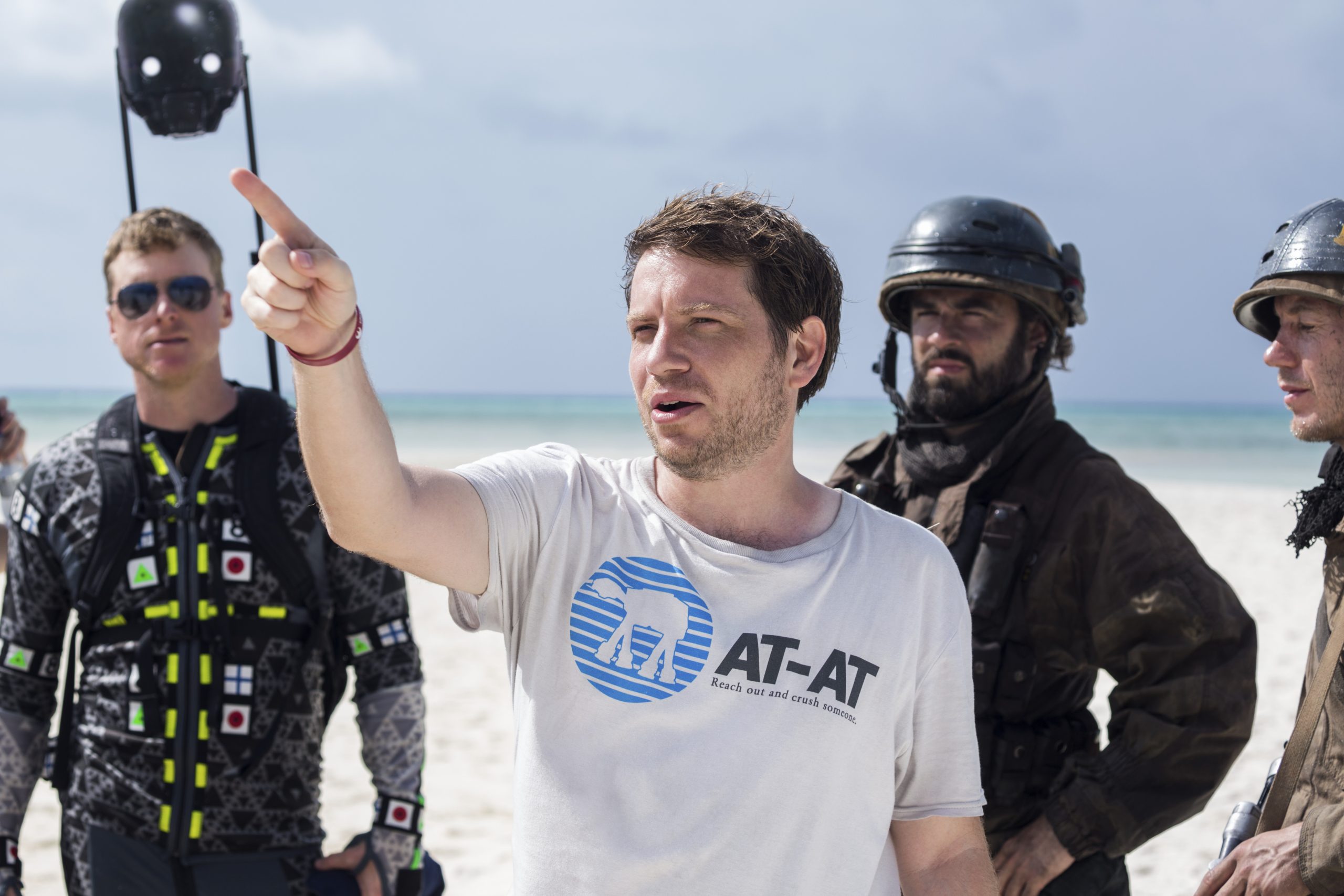
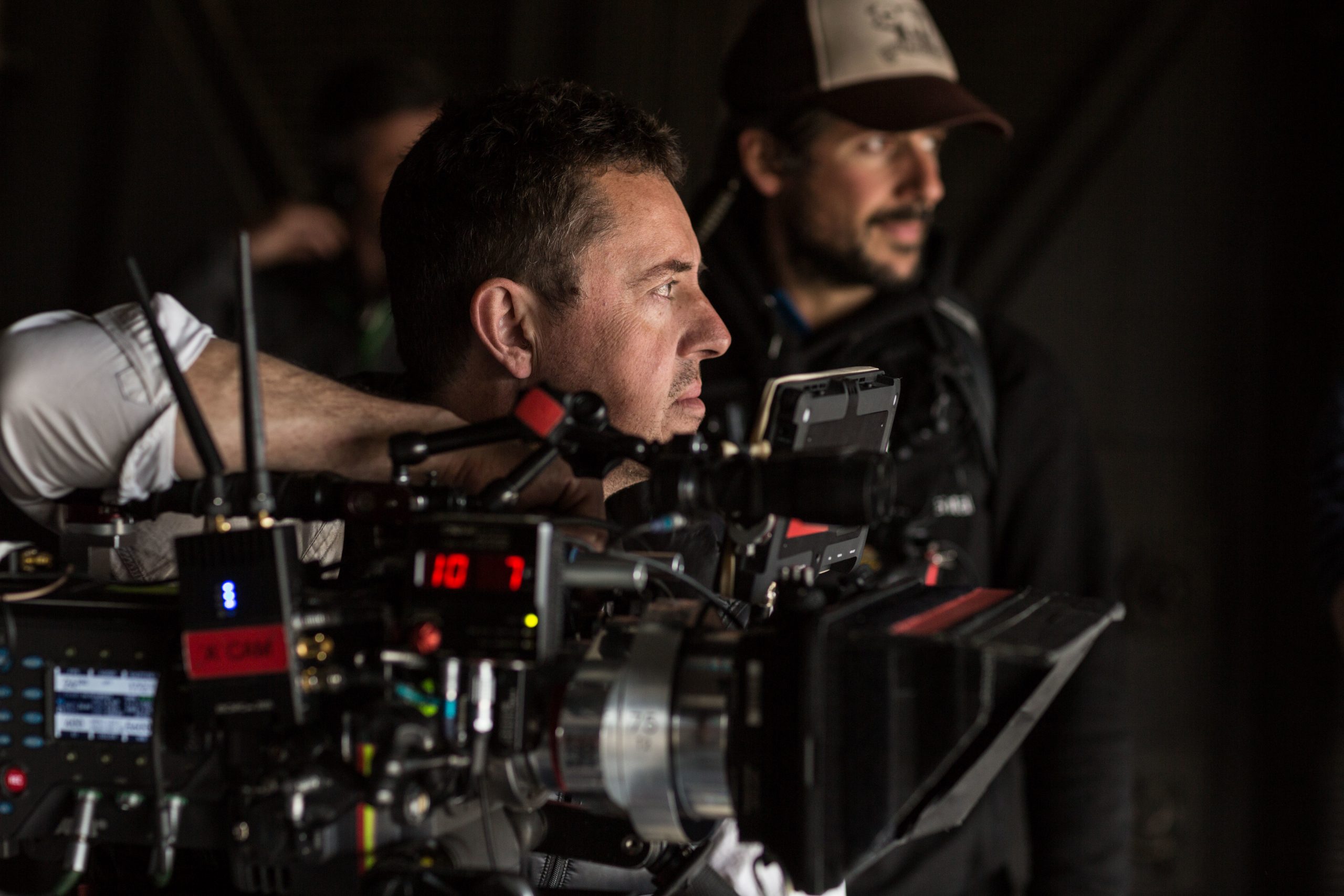
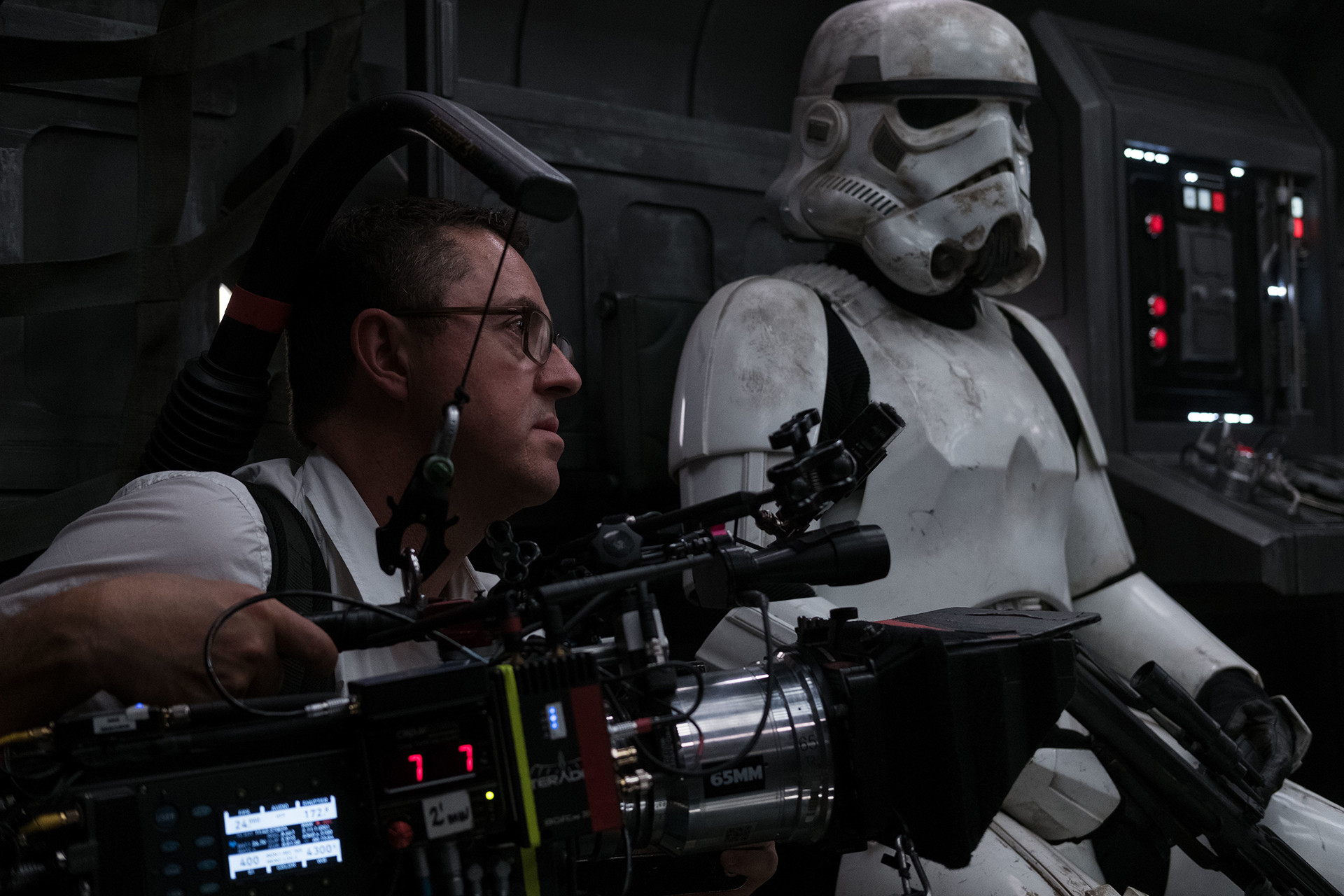
Gareth Edwards on the set of Rogue One: A Star Wars Story.
Join Gareth Edwards and the Publicity Group at Industrial Light & Magic as we look back at his time directing Rogue One: A Star Wars Story. Gareth discussed the cutting-edge virtual production used for the film, and the ways in which George Lucas inspired him as a filmmaker.
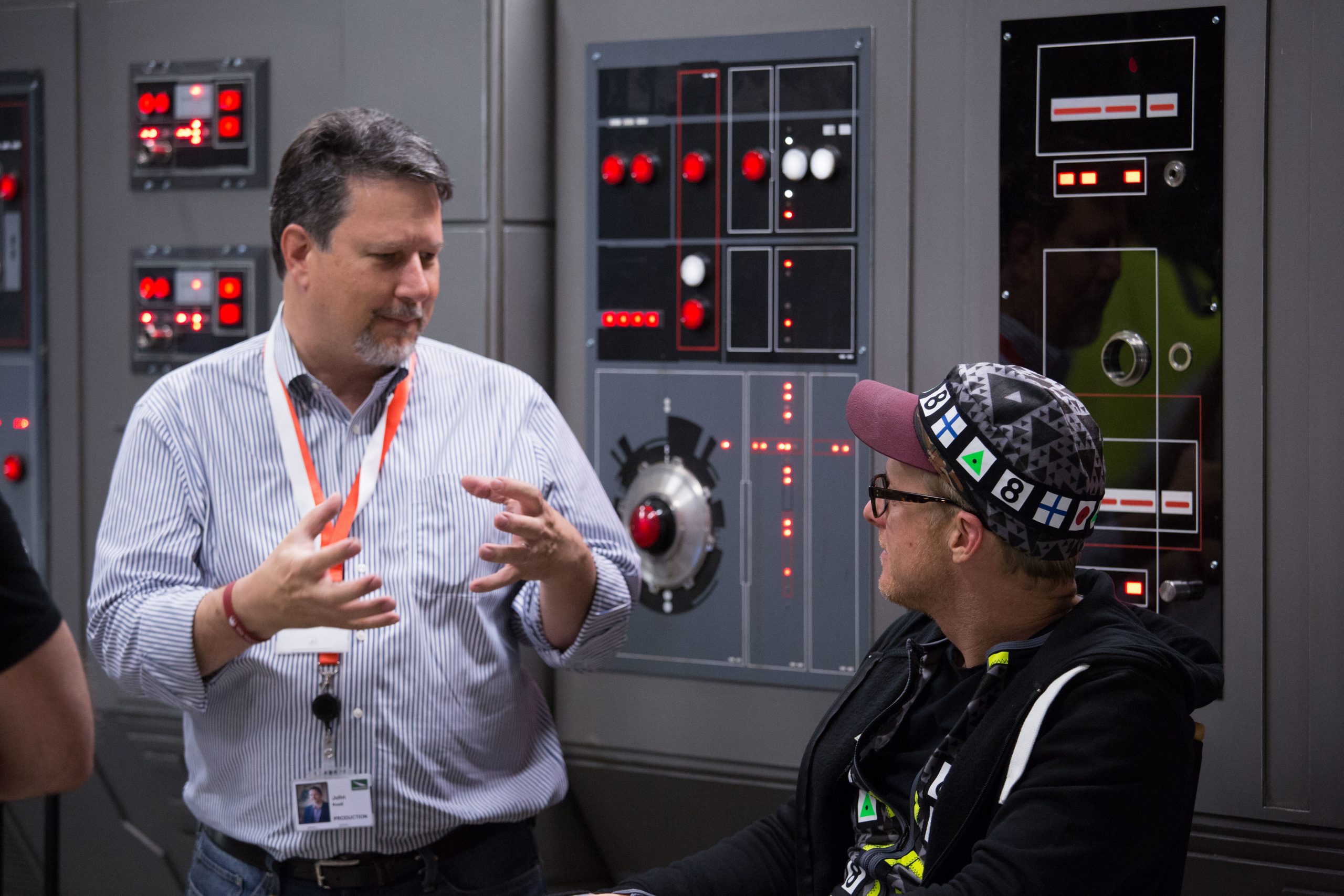
Tell me about the freedom you found in the virtual production-aspects of Rogue One? John Knoll was very crucial for this, because he and the team at ILM devised a virtual environment where we could go in and look for shots. My entryway into filmmaking was through visual effects, so I understand it a bit, but a lot of VFX is kind of dark arts, which causes clients to come to visual effects companies and see VFX as magic, because no one understands what they do. The downside to that is that they can ask for things or approach scenarios in such a way that is really back-to-front, and doesn’t produce the best result. I find that storyboarding shots is really useful, but at a certain point it becomes somewhat limiting, because you’re having to invent every single detail about that shot. Whereis, in the real world, what you tend to do is you have a space, because it already exists. The light hits objects in this space a certain way, and going in, you knew you’d do a close up of someone’s face, but if you were to have them look down a little bit, and maybe move to the right, suddenly you have this beautiful composition that you wouldn’t have found with storyboarding. The trick with VFX is having that opportunity, and going, “this was the plan, but now that the ingredients are here in front of us, doing this would actually be better.” So figuring out a seamless way to do that without it being painful for the artists is important. There’s lots of ways to achieve that, but when you’re in space with spaceships, the only real way to do it—unless you’re doing what George did, which was taking footage of WWII aerial combat that would represent the final shot—is what John Knoll and Industrial Light & Magic were pushing for.
John Knoll and Alan Tudyk, in his mocap costume, on the set of Rogue One: A Star Wars Story.
And what was John pushing for? It was pre-viz animation of each section of the battle sequence. They then figured out a set up where they had an Apple iPad, with a game controller attached to it. When you moved the iPad, it could tell where it was in 3D space. They would then just loop these twenty or thirty-second chunks of animation, and I would get to hang out in these spots and just film it again and again, generating hours of footage. Then I’d go home on my MacBook and select my favorite takes, and then try to cut something together. It would be very jittery, and handheld, and not perfect. For each one we’d smooth it out by filming from another spaceship, and for another we’d keep some of that handheld-look. It felt like the process of getting those virtual shots was how we were getting the live action shots, which was, “light a space and find the shot,” versus, “tell us the shot, and we’ll invent all the pieces to create it.” It always feels more real with the first approach.
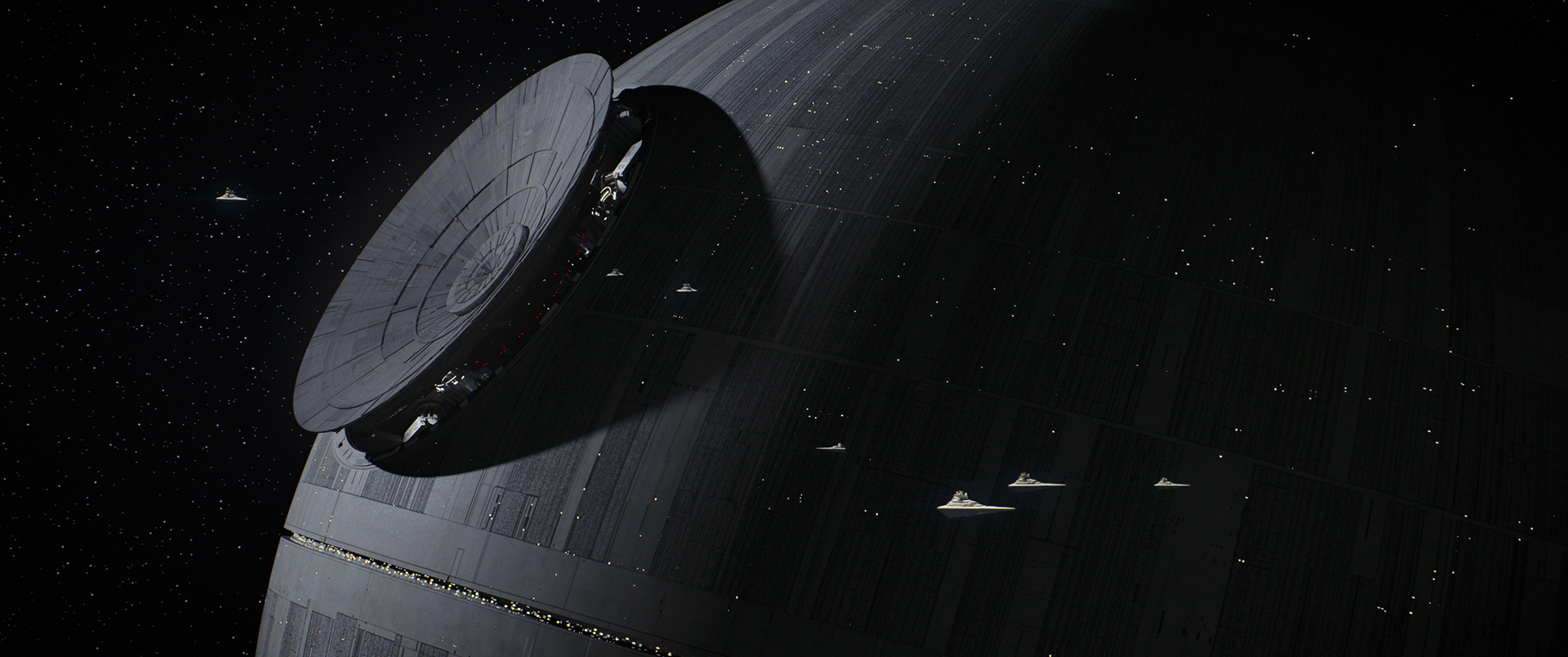
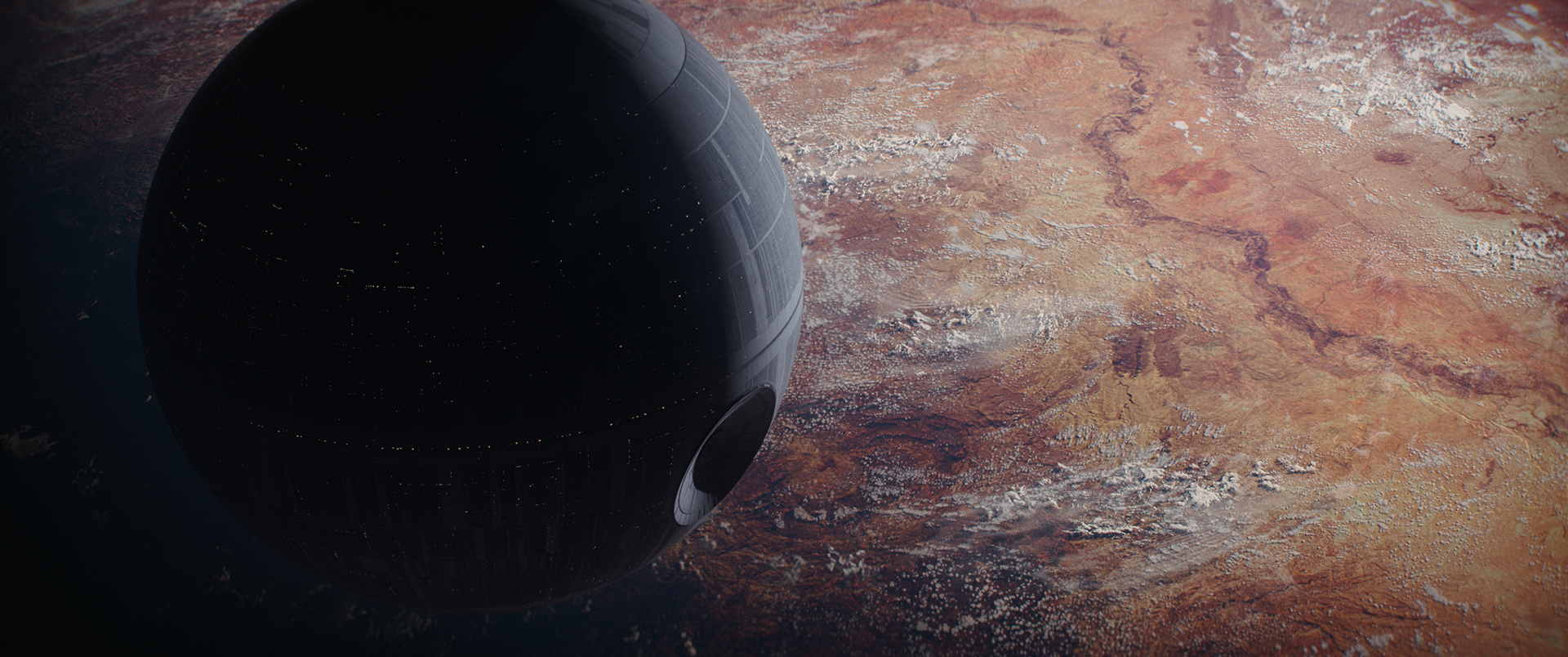
The Death Star’s Mk I Superlaser is set into place.
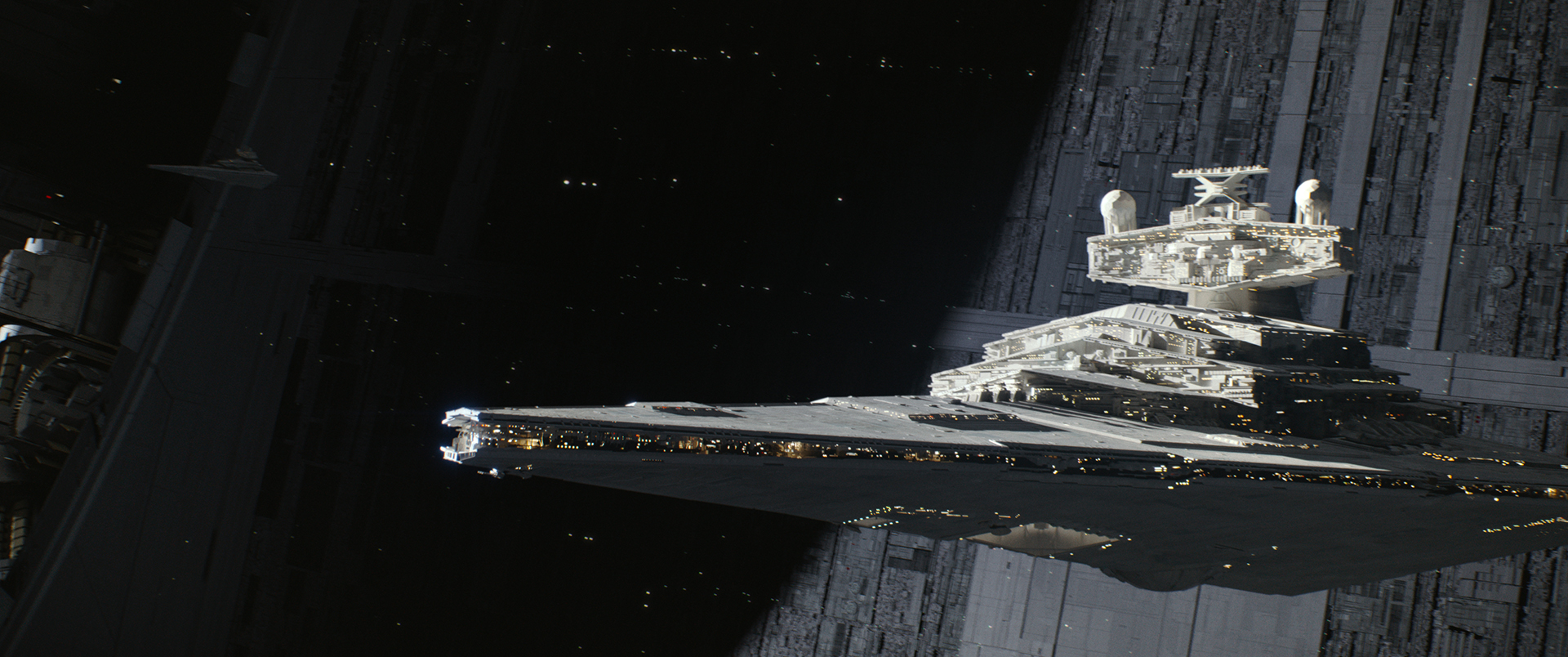
Like that shot of the Star Destroyer emerging from the shadow of the Death Star. Exactly. That was a great example of John Knoll and ILM pushing for this new technology. If I remember correctly, we needed a shot of the Death Star for the trailer, but they needed it in only a few days. I remember that John got the iPad, and set up a model of the Death Star and some Star Destroyers. The important thing when devising a shot like that, is that the idea of scale is only relevant to something bigger in the shot. A typical thing you do in matte paintings, is when something needs to look really big, you paint a little human in there. It’s a trick that they used to great effect in The Empires Strikes Back. When you want something to feel big, you need to set something up to feel really big, and then show a new thing that’s even bigger than that. The idea was to have a ship that you know the scale of, like a TIE fighter, and then reveal the Star Destroyer, which feels huge, and then you reveal the Death Star which feels impossibly massive. I remember asking them, “can you do real-time shadows on this?” Once I learned that that was possible, it became so fun to reveal and conceal the ships in shadow, and find that moment where the dish slides into place. Within a few hours, we had the shots that went into the trailer, and that never would have been possible without the real-time technology that ILM was using.
An Imperial I-class Star Destroyer emerges from the shadow of the Death Star’s Mk I Superlaser.
Since Rogue One, you’ve gotten to visit ILM’s StageCraft volume in person. Having that experience, did it make you think about how you may have captured any shots differently? I think that’s always true of technological advances in filmmaking, so yes. For sure. It feels like filmmaking in general is an archaic process. It’s over a century old, and in some ways, it hasn’t changed hardly at all – and yet this digital revolution, which is happening all around us, should drastically change the ways we make movies, but it’s been a slow process. There is so much we could do to utilize the technology we have to be more creative, and allow us to do things we couldn’t have done before. StageCraft though is a massive leap. It’s game-changing. It’s moving the industry forward.
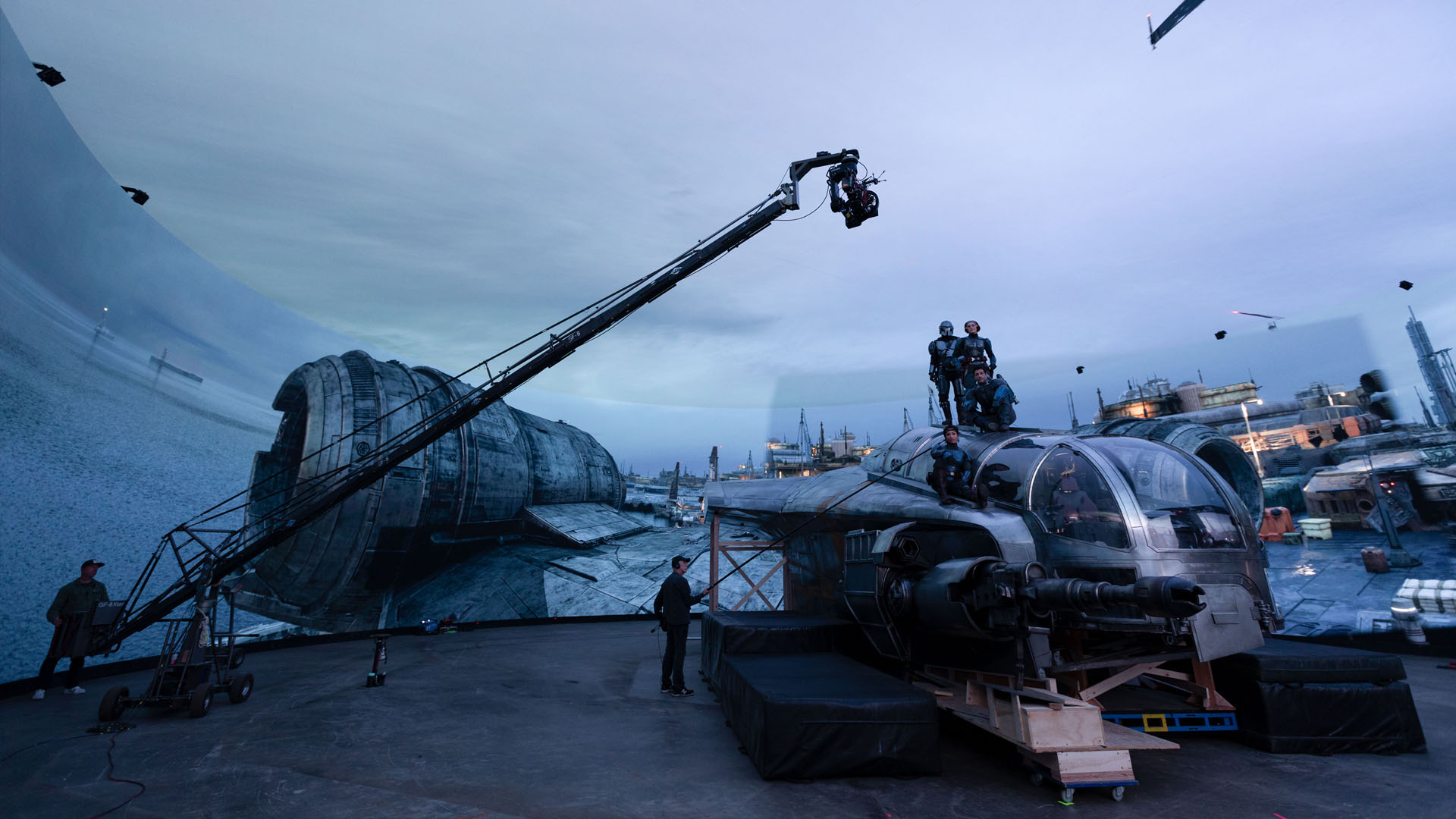
ILM’s StageCraft in use on The Mandalorian Season Two.
What do you think will stay the same? Storytelling, regardless of the medium. From the time of early humans, a million years ago until today, we have an innate need to sit around a campfire and listen to a story. Whether it’s a story about something interesting that happened that day, theorizing about why the world is the way it is. It’s absolutely hardwired into us. There’s this little glowing light. The need to paint a picture or sing a song about another person or another place. I don’t believe that that is going away anytime soon. We’ll always have an appetite for storytelling. Strangely, what I find funny is that a movie is around two hours long, and that’s about the length of time it takes for a campfire to burn out. It’s so embedded in us. That’s what cinema is, it’s us being able to dream out loud, or watch another person’s dream in real-time. I hope that stays with us. I hope in five-hundred years, people are still watching Star Wars.
The DS-1 Orbital Battle Station prepares to fire on Jedha City.
In getting into the making of film and working with Lucasfilm and Industrial Light & Magic, were there ever moments where you needed to pinch yourself, because you were given the ability to create nearly anything you could dream up? Funny enough, it almost felt like we had too much power, so we needed to be careful that we limit ourselves so it felt like the original trilogy. One of the early things that we did with John Knoll and ILM was the kitbashing, using the original models just like the original films. We went and bought some of the original model kits, lots of WWII, vintage-collector stuff. We started scanning those model parts in so that we could stick them onto the models we were building. What’s interesting is the subsurface scattering that goes on with those model pieces. It’s not like metal. So we were trying to recreate that model kit feeling on our ships. What’s funny though, when you get into that scenario, you realize that your memory is a little bit better than reality with some of the sets and props. The golden rule became, “let’s not do it how it was, let’s do it how we remember.” We wanted it to look and feel like how you “thought” those models looked. Also, going through the Lucasfilm Archives, the models are everywhere, and there were some designs in there that looked really cool. Those were good keys for us, because we were making something before A New Hope, but what did that mean, stylistically? Doug Chiang had a really hard task before all of us while doing Star Wars: Episode I – The Phantom Menace. They took a real leap on that film from both a timeline and stylistic standpoint. It was much more Art Deco. The streamlined nature of the ships felt much more like The Rocketeer and Flash Gordon; those types of serials that inspired George Lucas to make Star Wars in the first place. And that makes sense because it takes place over 30 years before A New Hope. But for us, aesthetically, it was just before A New Hope, yet we still wanted it to feel distinct. What we did for inspiration, is we looked at the Ralph McQuarrie artwork, and the early models that had been made for A New Hope; things that had been either abandoned or improved. We sort of “reversed the car” back into that space, and where they went left, we went right. One example is that really slender, aspirational Stormtrooper that Ralph painted. He made that without a care in the world about how it would be actually realized by the costume department. We kept pointing at that, because traditionally when you put someone in armor, it can start to feel a bit bulky. We wanted something that looks like it could sprint and cause some serious damage. We tried to make armor that was slightly bendable, so it could sit just over top of the skin. We tried to cast towards that look of the troopers, someone tall and lanky. What that eventually became was the Death Trooper. That’s where the Death Troopers started. To answer your original question, we tried not to be kids in a candy store, we tried to temper that and work off the design language that existed. “With all of those limitations, what would they have done?”
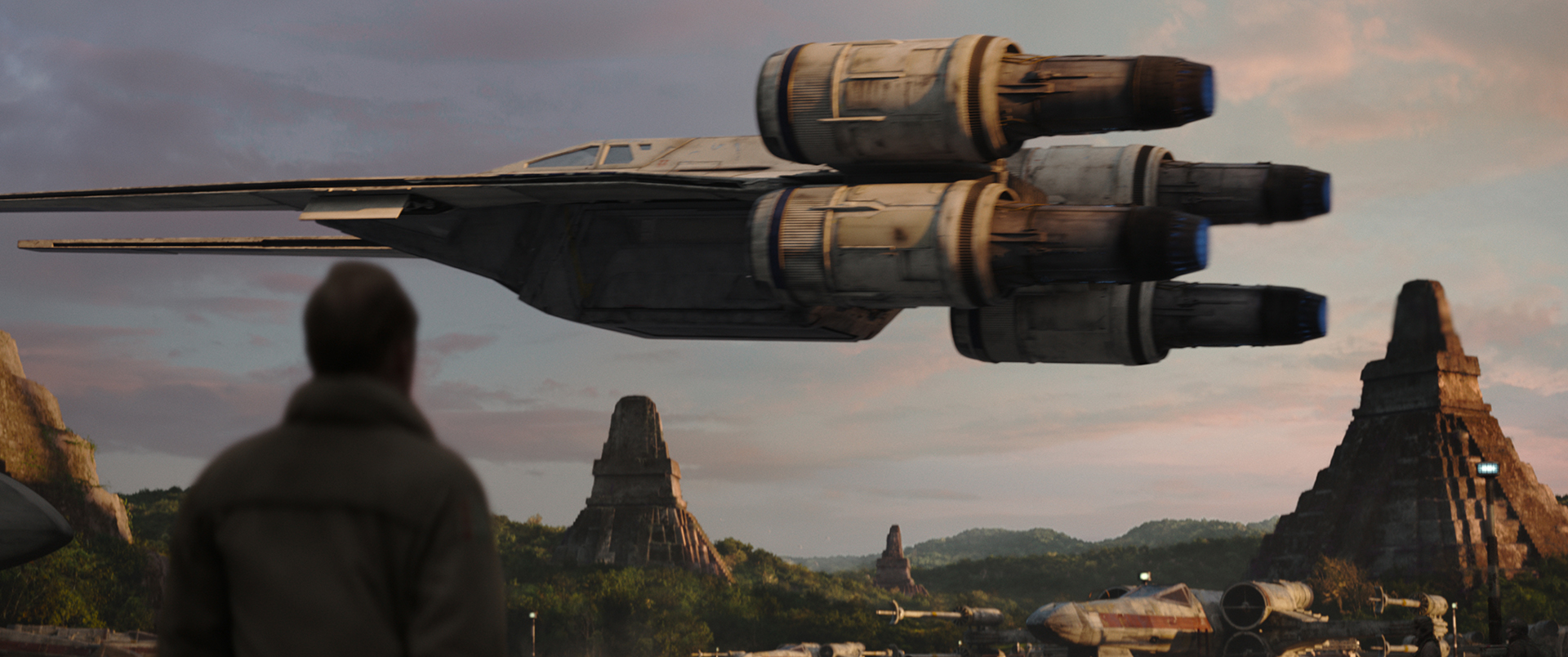
The UT-60D U-wing, ‘LMTR-20’, heads for Eadu during Operation Fracture.
Did you and Greig Fraser try to match some of the old-school camera moves seen in the original trilogy? We did. We tried to keep the vocabulary of any shots featuring Krennic and the Empire the same as those old school cinematographers. The way when someone walks by, how they would push in again to recompose based on the new position of the actors. All of these little things that would happen that were common in the late 1970s, things we don’t do so much now.
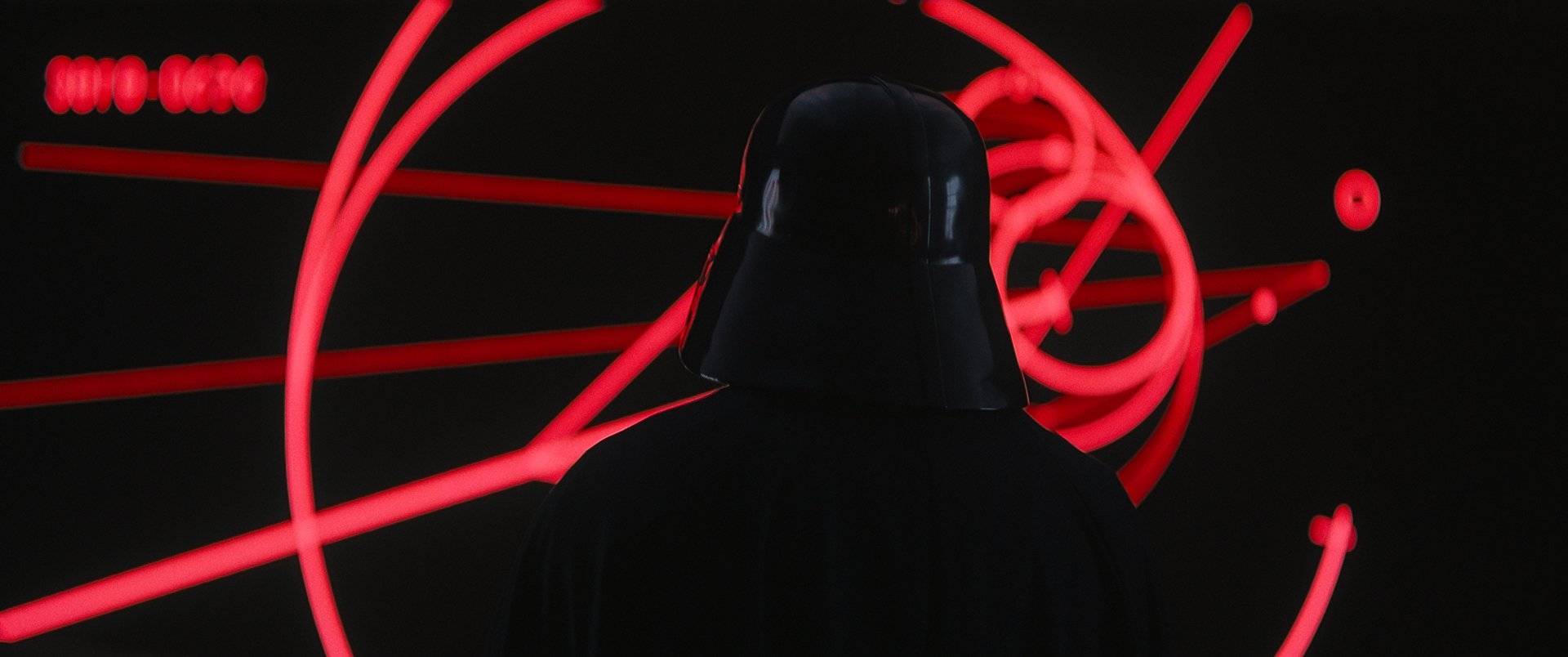
Darth Vader (voiced by James Earl Jones) from a scene in the trailer for Rogue One: A Star Wars Story.
This year being the 50th anniversary of Lucasfilm, I wanted to know what George Lucas means to you? A lot of things come to mind. As crazy as it sounds, I think he’s underrated. I know that sounds crazy with all of his accolades. When I was a little kid, I didn’t ever really watch THX 1138 or American Graffiti. But as I got older, I would revisit those films constantly. THX is an incredible debut. It’s just an absolutely fantastic film, and one of the strongest films that came out of a first-time filmmaker in all of cinema. In terms of how bold and completely brand new it was. So many things made their way to Star Wars too. That fuzzy comms chatter. The clinical corridors. The look and feel. There was no Ralph McQuarrie, but it felt so much like George. He has such a great aesthetic and an amazing eye. It took a lot for him to make that film. Then he goes and makes the films that have inspired you, and me, and everyone like us. Even if that was all he ever did, it would have been enough. But then he goes and pushes harder, and pushes the digital technology further. Because of him, I was able to make my first film on a digital camera. I wouldn’t have been able to make my first film if it required film stock. I wouldn’t have been able to make my first film without George. Him pushing HD, and all the work he did with the technology used for the prequels, and the digital camera technology. I got into digital effects because of that, and I wouldn’t have been able to if it wasn’t for George building up everything at Industrial Light & Magic. He inspired me to want to become a filmmaker, and he gave me the tools to do it. At the end of that journey, I got to make a Star Wars film. He gave me Rogue One.
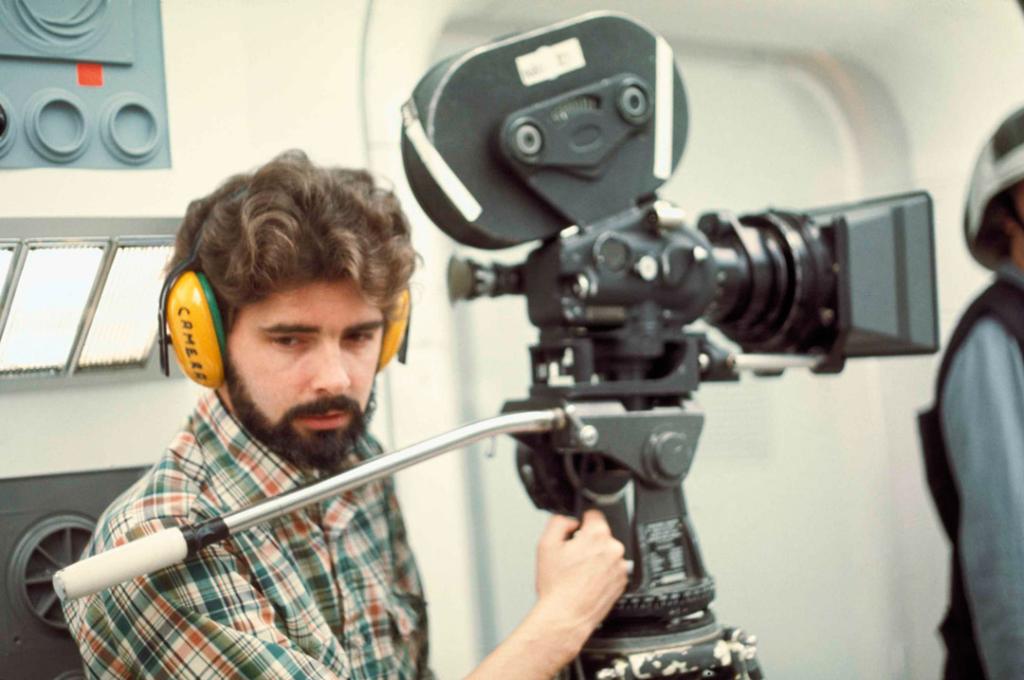
George Lucas on the set of Star Wars: Episode IV – A New Hope filming a scene aboard the ‘Tantive IV’.
Have you gotten to spend time with him? A handful of times. This next story I say with the utmost love and admiration for the entirety of the Star Wars catalogue. But when I had my office at Pinewood, I was putting a lot of pressure on myself to make this film. Everyone had The Empire Strikes Back, and A New Hope posters in their offices. To help elevate that, and to remind myself that this was Star Wars, and that I was making a Star Wars spinoff film, and I needed to have fun, I put up framed prints from The Holiday Special and Caravan of Courage: An Ewok Adventure. Those were the first spinoff films. [laughs]. Well, one day, George came to Pinewood, and he was sweet enough to come up to my office. I worked really hard to distract him while we spoke so he wouldn’t see the posters. I was really animated, and tried to lead him through the back. It was like a comedy skit as I tried to keep him away from the posters. I didn’t want him to get the wrong idea about Rogue One. [laughs]. We got to hang out for a few hours that day, and I got to tour him around. I got to spend time with my hero. It was a surreal experience. He’s the Paul McCartney of film.
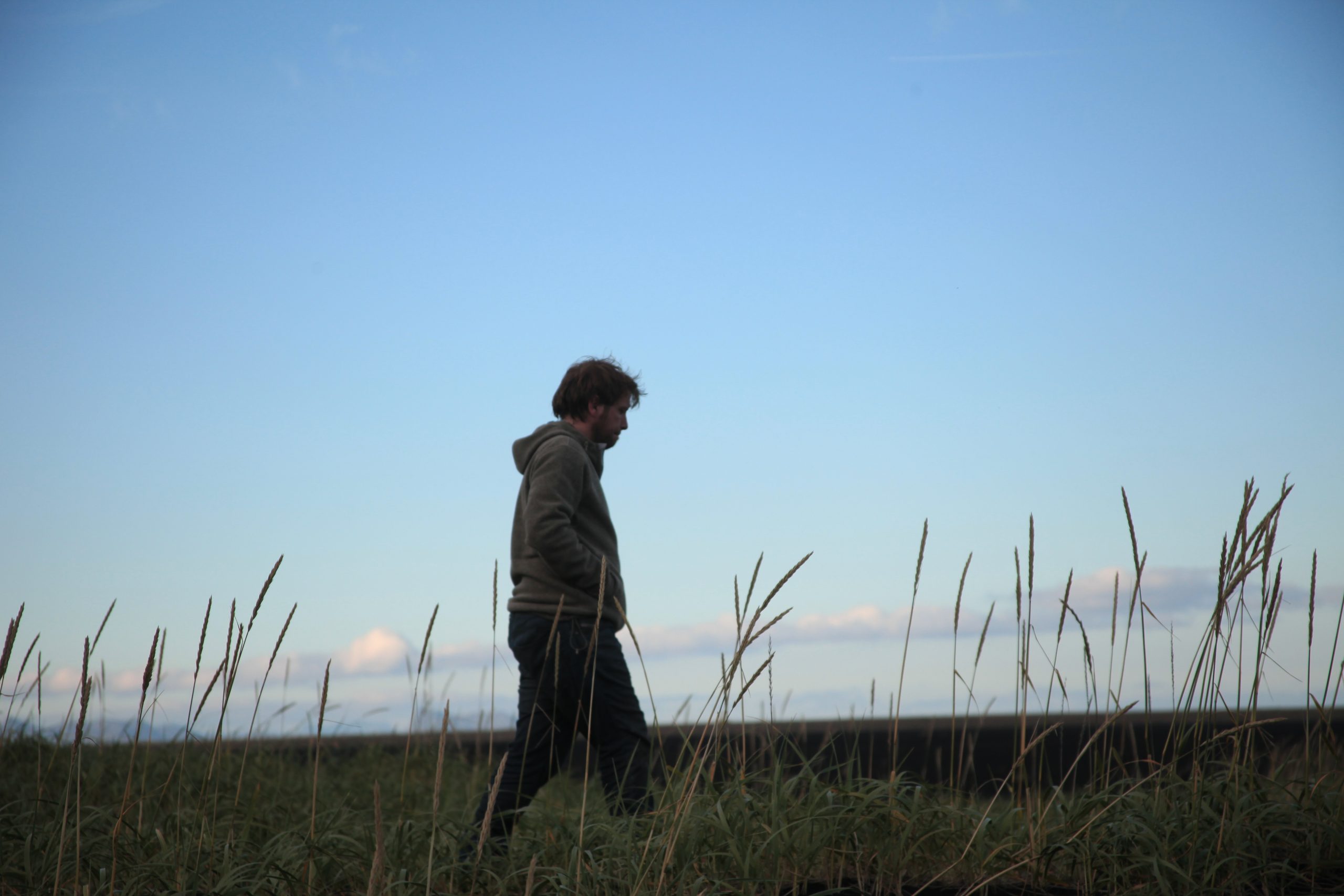
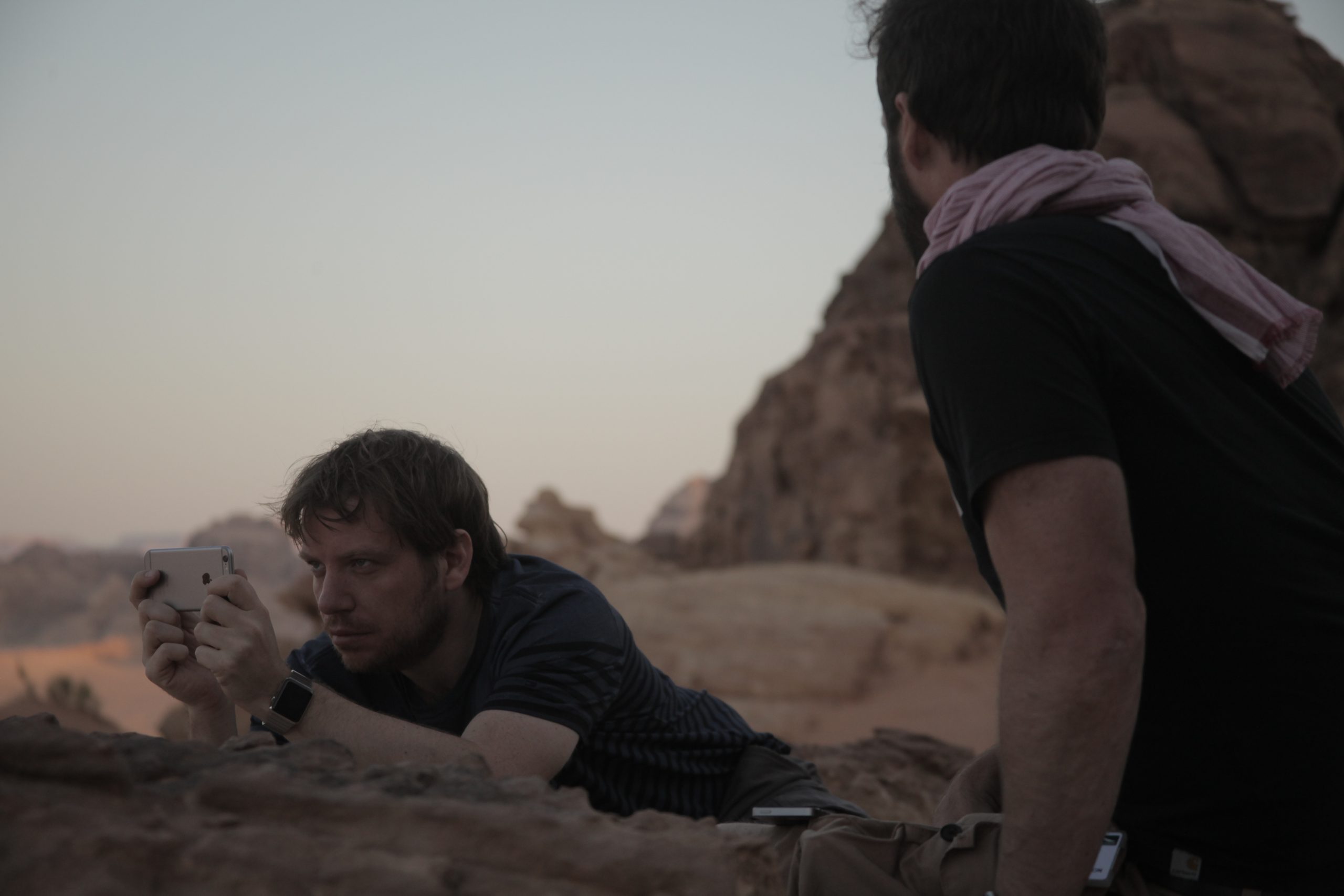
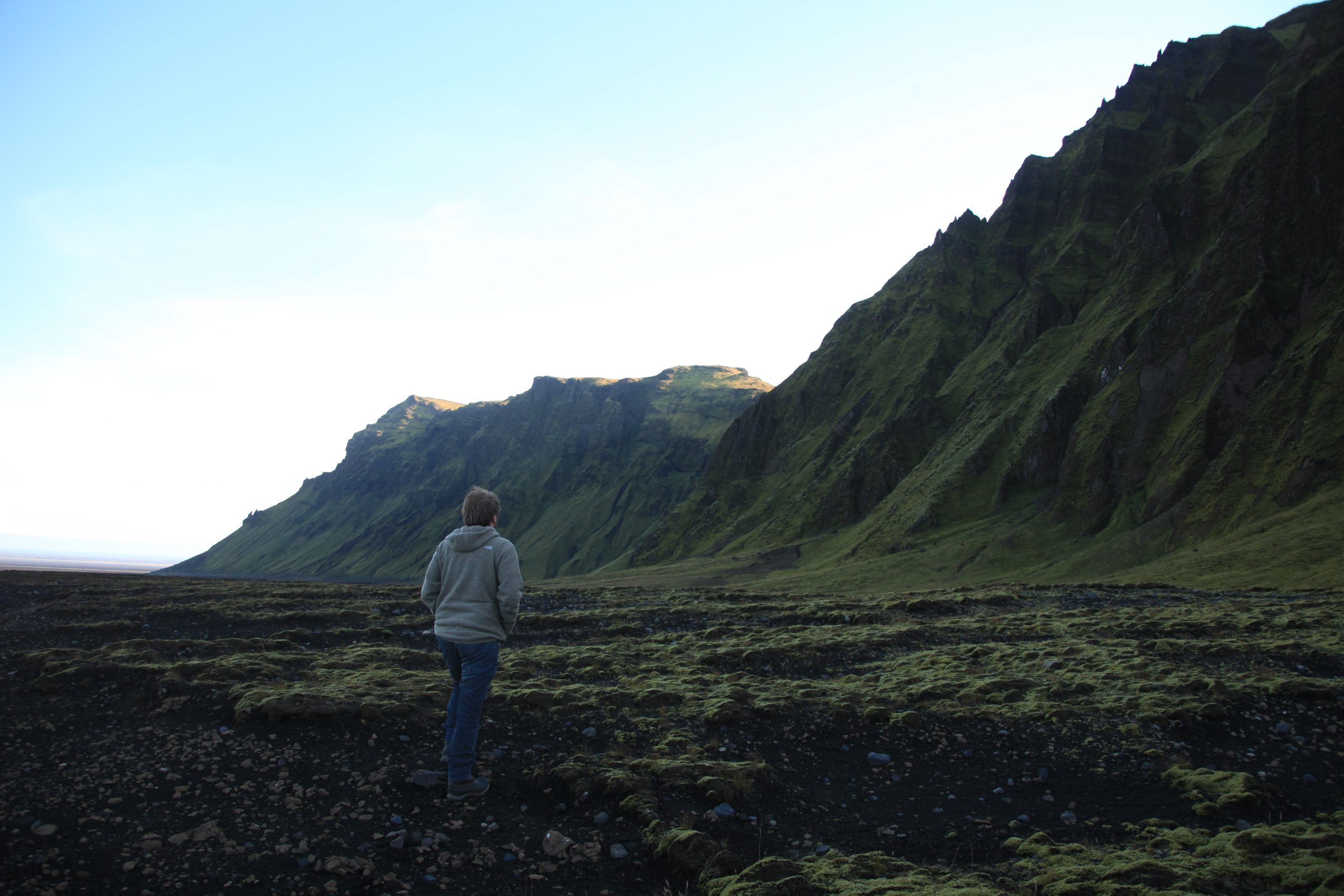
Gareth Edwards on location for Rogue One: A Star Wars Story. Photo courtesy of Greig Fraser. All Rights Reserved.
And you got to spend time at Skywalker Ranch, yeah? Yes. When I was there, the projectionist was so sweet. They said, “ when we would project the Star Wars reels, George would sit right there.” And they pointed over at a seat. “Would you like to sit there?” I got to sit there throughout the sound mix on Rogue One. It felt like I was sitting on the throne of the film world. The funny thing is, if you’re so intimidated by it, it can paralyze you. You have to let that fall away. But let me tell you, that was the best job in the world. That beautiful drive through the trees and hills on the way to Skywalker Ranch. Past Lake Ewok. It was so utopian. We were making a Star Wars movie. It was everything I’ve ever dreamed of. It’s surreal to think it even happened to begin with. You dream about this stuff as a kid, but it shouldn’t actually happen. What’s funny is, when it comes to Industrial Light & Magic, and Lucasfilm, and the team at Skywalker Sound, you see it in everyone that works there. We all have the same story. You and me, we grew up with the same story. The trinkets on your desk are the same ones I have at home. Those Ralph McQuarrie prints behind you. I feel like we all have a lot in common. I feel like if I was going to hang out with people outside of work, it would be with the people at ILM. Everyone is a mini-filmmaker, and even though we grew up in different places all around the world, if we went to the same school as kids, we’d be mates – and then suddenly all of these people wound up at Skywalker Ranch & Industrial Light & Magic. When Covid is through, I hope everyone can come together and see each other again.
Gareth Edwards on location for Rogue One: A Star Wars Story. Photo courtesy of Greig Fraser. All Rights Reserved.
I love that. Last question. John Knoll and Hal Hickel wanted me to ask you about Area 51? [Laughs]. So I was in Las Vegas watching John Knoll, Hal Hickel, and Matthew Wood, from Skywalker Sound, during a panel at NAB for Star Wars. After it was through, I told them all, “we are only a few hours away from Area 51. We will never get this chance again.” [Laughs]. We drove several hours in the dead of night, through Rachel, Nevada, and walked right up to that fence where you couldn’t go any further. We went to Area 51. We stayed just long enough to scare ourselves, and then we got out of there.” [Laughs].
Gareth Edwards on location for Rogue One: A Star Wars Story. Photo courtesy of Greig Fraser. All Rights Reserved.
Greig Fraser on the set of Rogue One: A Star Wars Story. All Rights Reserved.
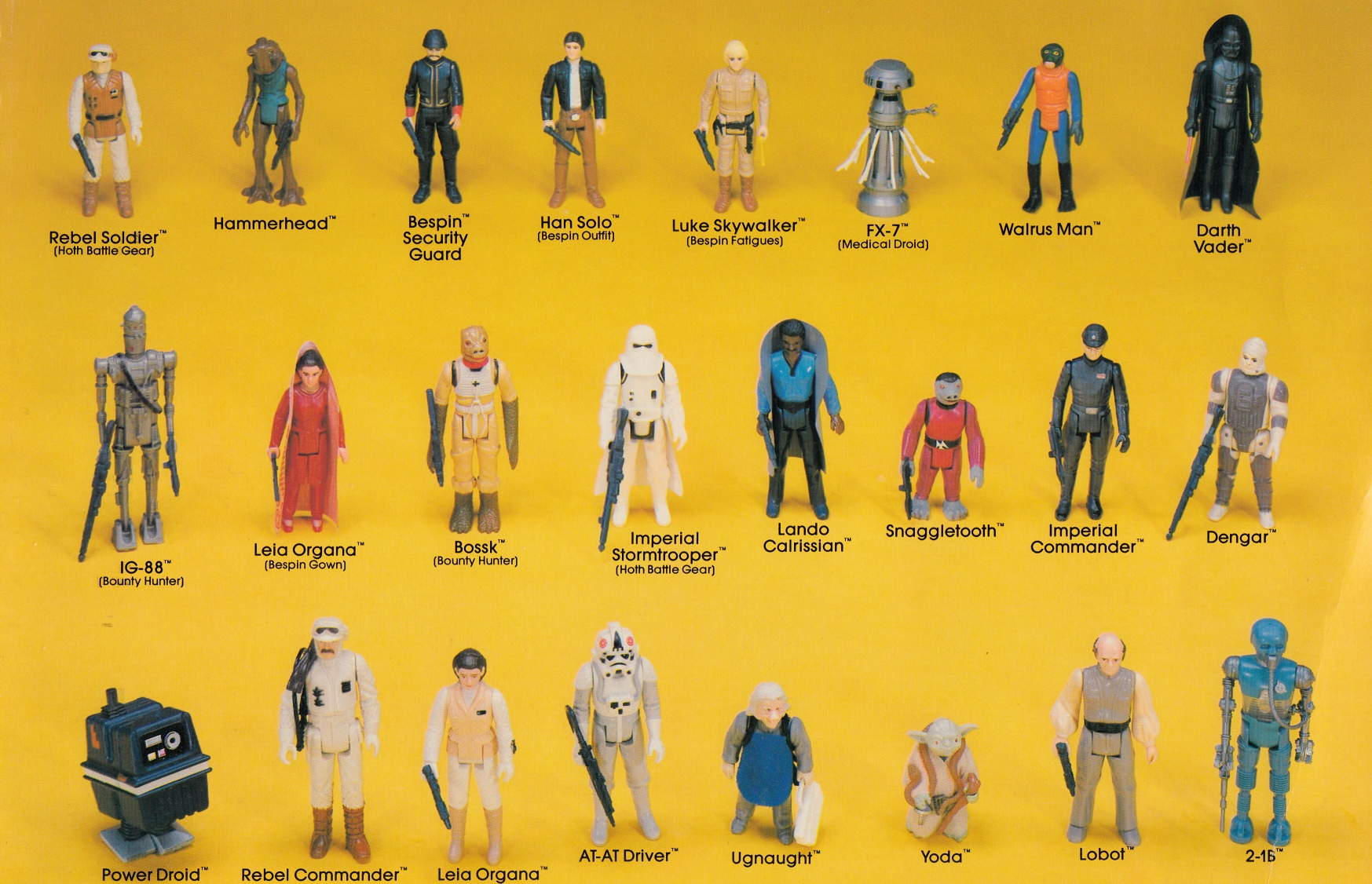
The cinematographer for Denis Villeneuve’s Dune, and Matt Reeve’s The Batman, joins Industrial Light & Magic’s Publicity Group to discuss his work on Rogue One: A Star Wars Story. Greig shares how the early Kenner action figures inspired his love of Star Wars, and the influences he found in 1970s cinema, the works of Andrei Tarkovsky, and the film The French Connection.
What was your introduction to Star Wars? If I think back about how I was first introduced to Star Wars, I think it had to be through the toys. I genuinely think it was the toys that got me going there. I was two years old when Star Wars came out, and five when The Empire Strikes Back premiered. You couldn’t really call me a “film fan” at that point, but the franchise definitely existed in my universe. I read some of the comics later on, but the thing I loved the most back then were the toys. A few years after, I think ‘82, Star Wars came to Betamax and VHS, and then the year after that, in 1983, I finally saw Return of the Jedi in theaters. It was mind-blowing, because the visual effects that ILM did for it were so revolutionary and groundbreaking. Then over the course of the next ten or fifteen years, I think I watched A New Hope, The Empire Strikes Back, and Return of the Jedi literally hundreds of times.
A selection of Star Wars Kenner action figures available in the early 1980s.
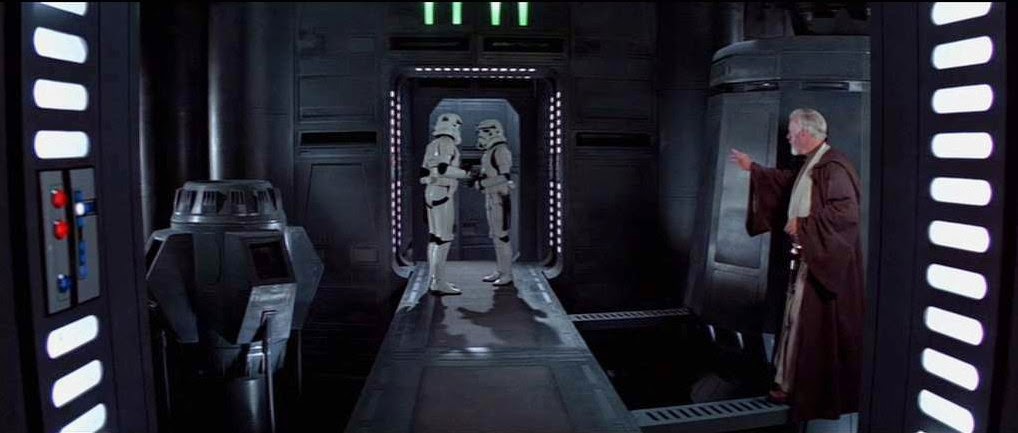
How did the experience of watching the original trilogy influence your work on Rogue One? The funny thing is, when it comes to Star Wars, there is a very particular visual language with the way the films are made. From the way they climb aboard the Millennium Falcon, to the wide shots of the Millennium Falcon going past the camera. There is a visual language that exists that, unless you’re studying it, you don’t really notice it. That occurred to me when we started Rogue One, when Gareth basically told me, “we’re not remaking Star Wars. We’ll make this movie the way we would want to make this movie.” But the thing is, what was great about that, is that we could channel Star Wars. Normally you try to hide your influences; you don’t wear them on your sleeve when you make a movie. You try to become a little more nuanced, a little more “clever” about sort of fooling people into what your influences are. “No, I didn’t actually watch Steven Spielberg films to make this ‘Spielbergian’ movie.” Those sorts of things. But what was great about Rogue One is that we were making a film that actually connected directly into Star Wars: Episode IV – A New Hope, by design. So if we wanted to reference anything from Episode IV, Episode V, or Episode VI, we could. We were actively encouraging ourselves to do it. For me that was a huge revelation, because normally, on any other film, you wouldn’t do that. For example, when we went back and watched Obi-Wan’s sequences aboard the Death Star, we would study how Sir Alec Guinness would move throughout the corridors, and it was very influential in the way that we did some of our movement through the Imperial security complex on Scarif. We took for granted that it was such a big place, and that the Imperials would be minding their own business and doing their own thing, and that you could have these Rebel spies, and have them actively infiltrate this heavily-fortified complex.
Obi-Wan Kenobi uses a Jedi trick to distract a pair of TK Stormtroopers aboard the DS-1 Orbital Battle Station.
Was there a lot of conversations around trying to match the aesthetic of A New Hope? There was. Growing up, you got used to watching Star Wars on Betamax and VHS, on a home television format. For research for this film, I was able to watch a 4K scan of one of the earlier films, and the conversation turned to, “is that our North Star? Do we make it look exactly like that? Do we shoot it on film, with those same lenses?” Sometimes your memory of something can be slightly different from reality, so what we did for Rogue One, is we tried to match it to the aesthetic of our “mind’s eye”, and what we remember from Star Wars growing up. For us, thinking about that look – it wasn’t super sharp, but it had depth and clarity. It was soft at times, but not defunct. That is why we chose the format that we did, the ARRI ALEXA 65, paired with these old lenses. For Gareth and I, it felt like it was showing us the film that we remembered as kids.
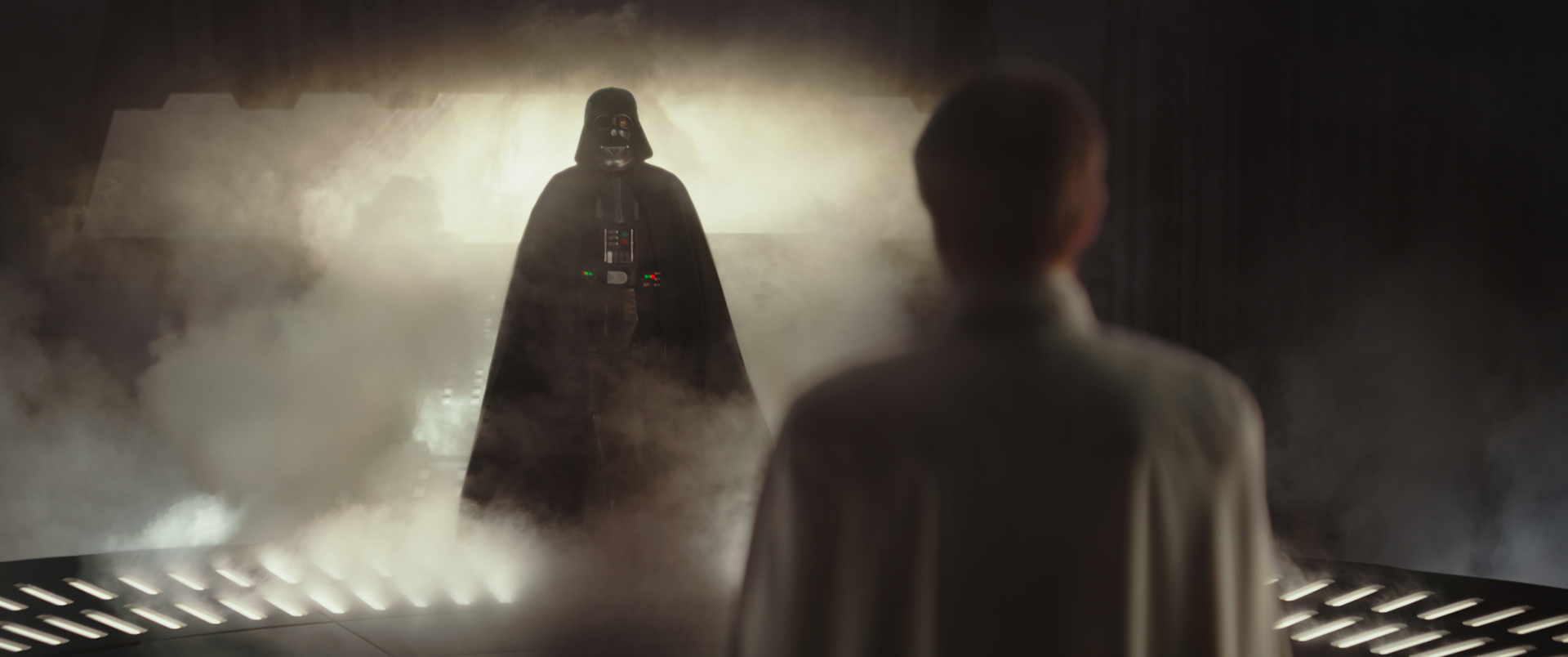
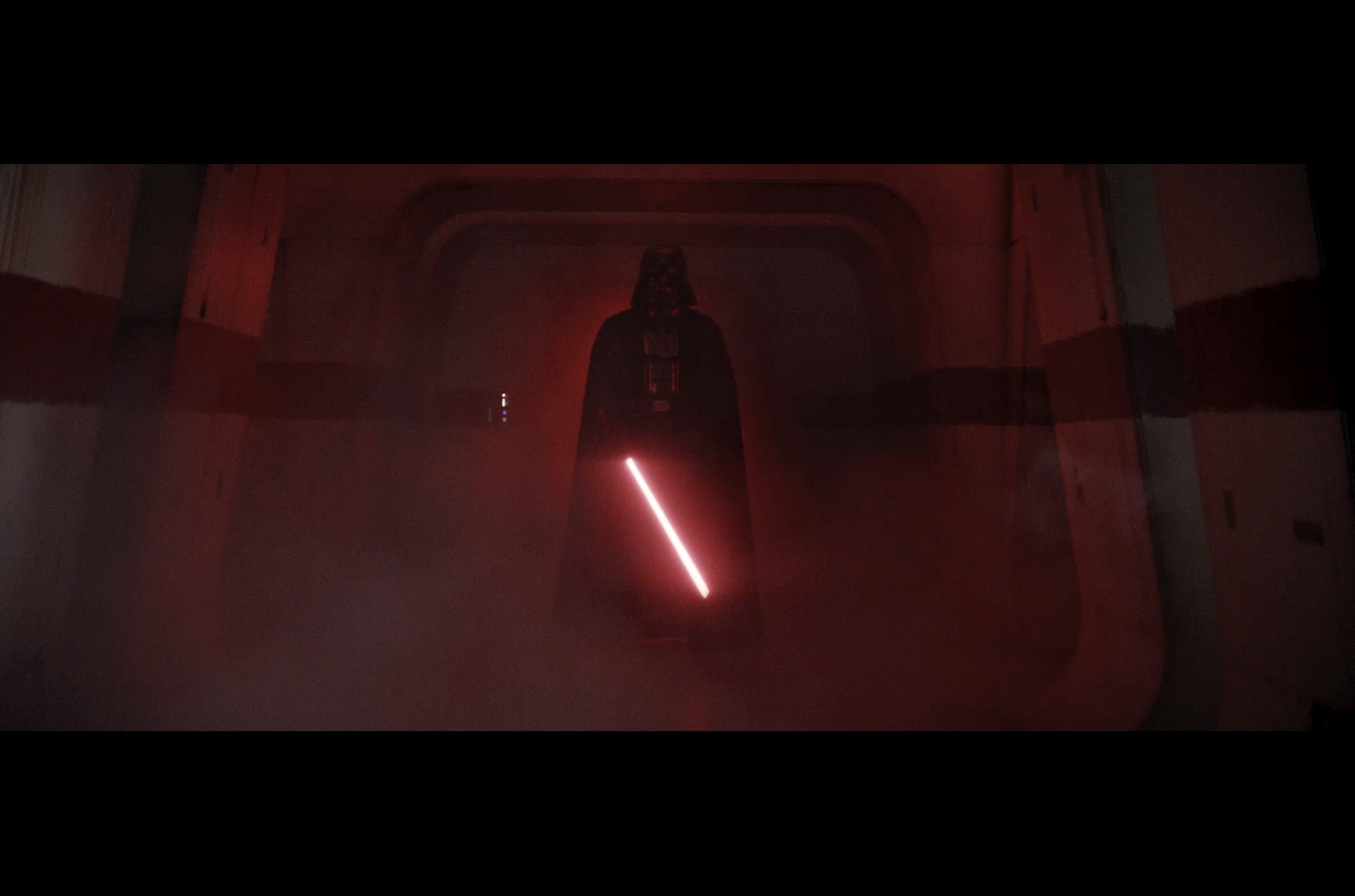
Director Krennic is confronted by Darth Vader at Fortress Vader on Mustafar.
Did you find other advantages to shooting digital? Was there ever a conversation of shooting it on film? There were a number of factors. The look we were trying to achieve was one factor, but the other thing that we had to balance towards was the fact that Gareth Edwards is a very hands-on filmmaker. He loves to operate the camera. Watch his film Monsters, which, coincidentally, was the whole reason I wanted to meet Gareth in the first place. When I was called up to do the interview for Rogue One—and of course, I was so excited for the opportunity—I thought, “even if I don’t get this job, I will get to meet the guy that made Monsters. I’ll get to shake his hand, and I’ll get to tell him about the mad respect I have for him and his film.” So when he explained to me that he wanted to make Rogue One with the same spirit that he used to make Monsters, I got really excited. That decision was also part of the reason we chose the ALEXA 65. It had all the film qualities of a much bigger camera, but it was in this bitesize package that you could throw around, and put in cockpits, without having to destroy too many things to get the shot you needed. It was a series of factors, but it all worked in our favor.
A shot from Gareth Edwards’ film, MONSTERS. Photo courtesy of Magnet.
Gareth has a unique style of shooting, where he’ll go from one take to the next without slating. How did your style integrate with that? I found it very exciting. In some ways, even though Gareth was my director, he was also my camera operator. I loved helping him build a world where he could achieve anything that he wanted to achieve; be that handheld shots, or very specific tracking shots. That’s what I loved about Rogue One, and how Gareth wanted to make it. There were considerations, of course, but there were moments of freedom – both in freedom of movement, and freedom of camera. It kept everyone on their toes. He would pick up these small moments, maybe something an actor was doing, and he would get the camera in there and capture it.
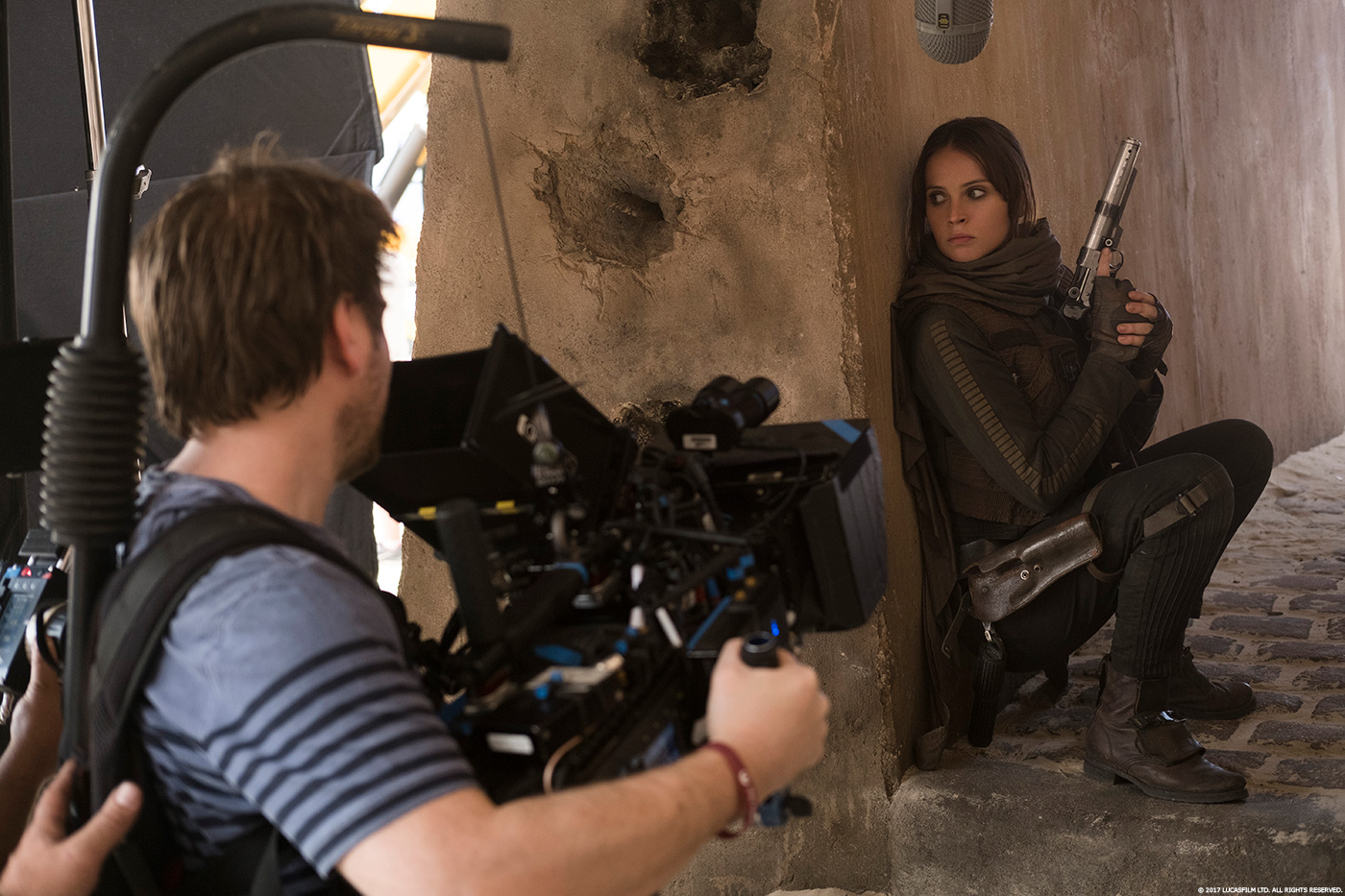
Gareth Edwards shoots a scene of Jyn Erso (Felicity Jones) on the set of Rogue One: A Star Wars Story.
Greig, your photography has such a distinct style. What influences did you pull from in designing the palette of Rogue One? I’m a big fan of world cinema, and I’m a big fan of ‘70s cinema. I love Andrei Tarkovsky. I think the way that he makes movies is so beautiful, and so strong. But I also love the way that Kathryn Bigelow shoots her films. I love The French Connection, and the way that it was shot. For Rogue One, we mined the depths of our interests, and the types of films that we loved to watch. Lawrence of Arabia was another influence. These massive, David Lean-style battles. These big frames, and tracking shots, and static shots. Then you combine that with modern-day filmmaking, which, if you look at the evolution of cameras, has changed drastically. Back in the 1950s and ‘60s, the cameras were much larger than they are today, and harder to move around. Therefore, films looked a certain way. When you get into the 1970s, when George Lucas was shooting Star Wars, there was not a lot of handheld in that film either. The cameras were not really malleable, and, stylistically, that wasn’t really what he was after anyway. What was good for us though is that we were able to combine our interests and influences. Gareth and I clearly love Star Wars, but that is not the only thing we’re influenced by. French cinema, documentaries, all of that played a part for us.
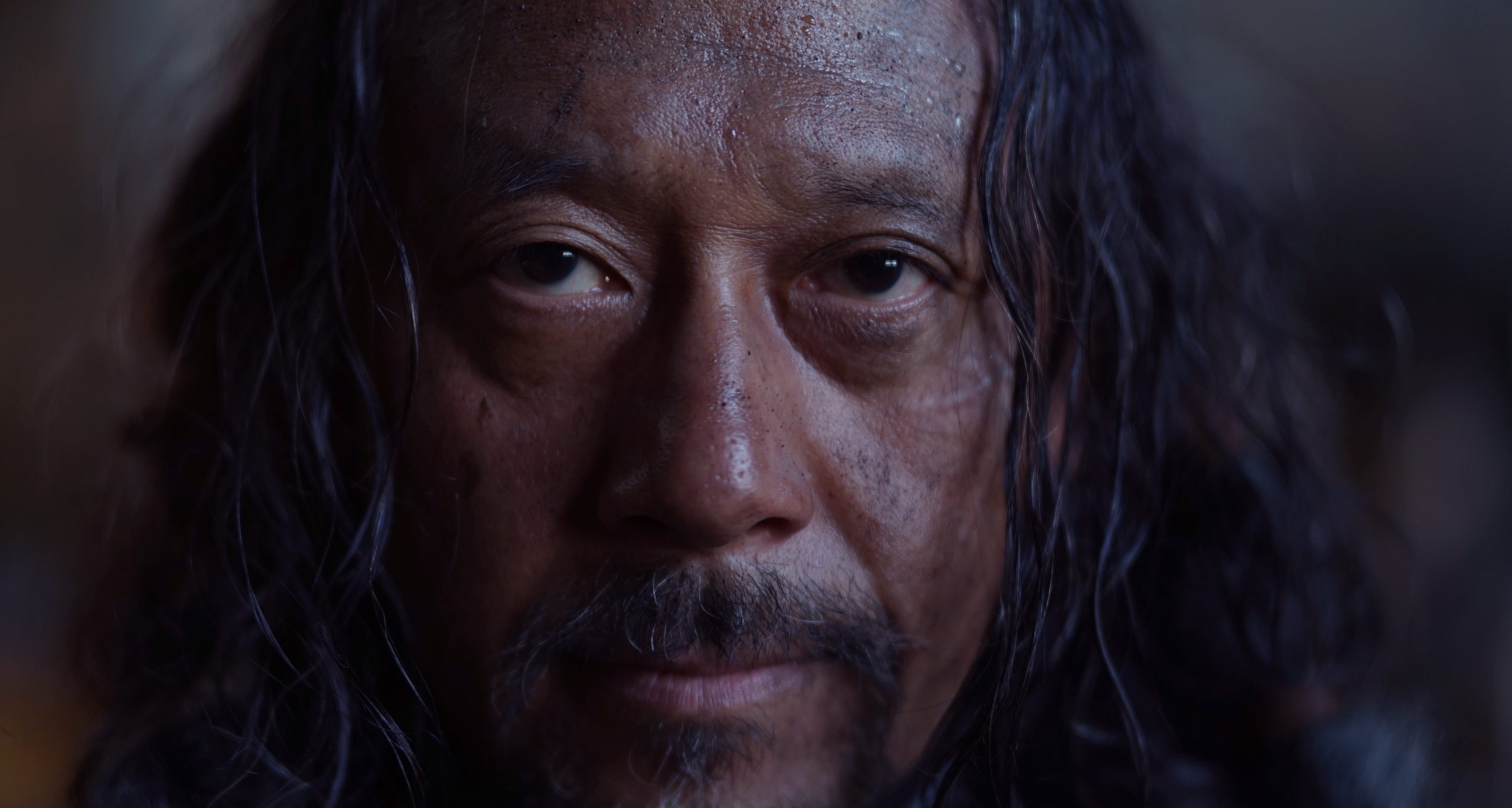
An image of Baz Malbus (Jiang Wen). Photo courtesy of Greig Fraser. All Rights Reserved.
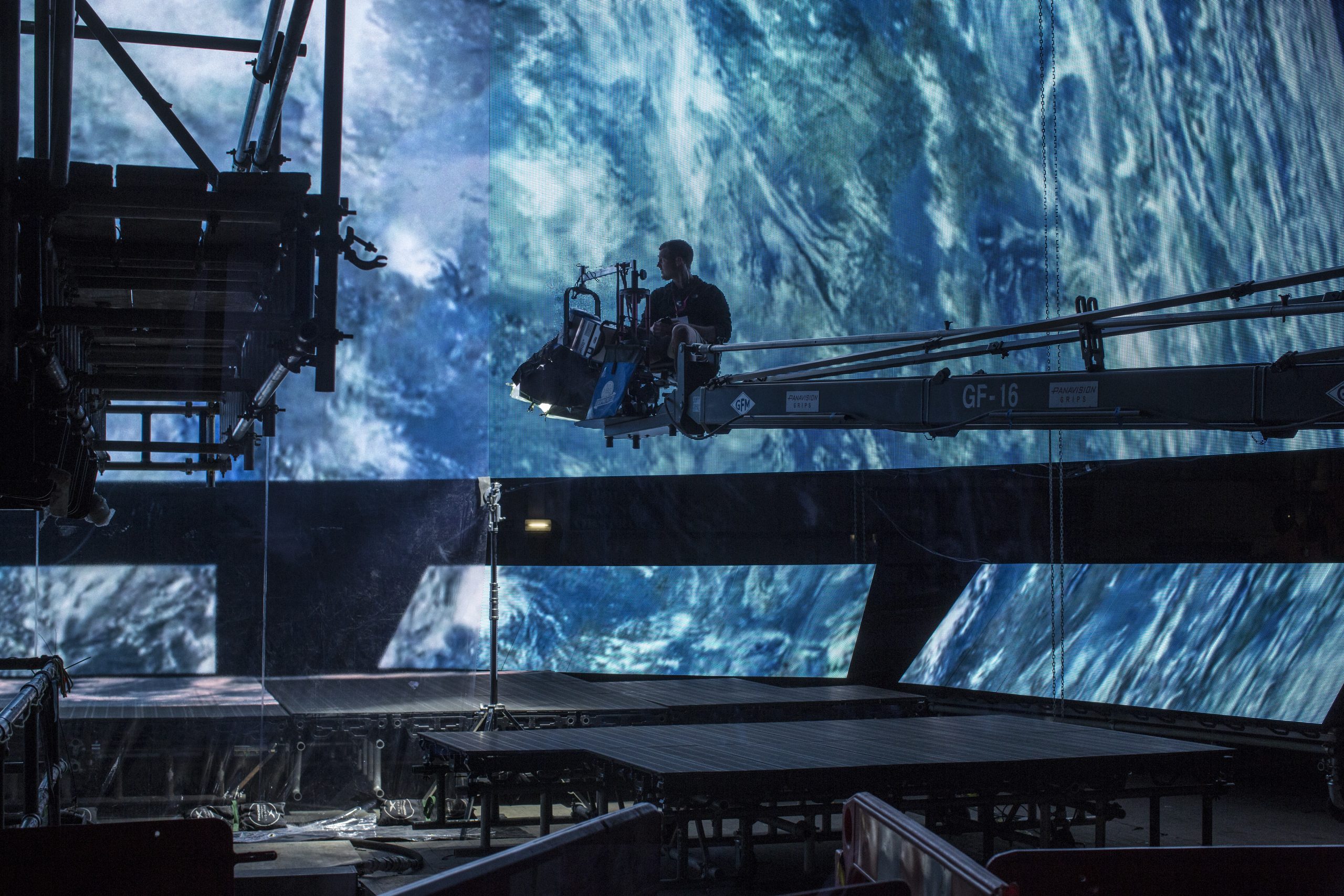
Tell me about the early conversations around virtual production and LED walls on Rogue One, and how that got us to today with ILM’s StageCraft? This is where having amazing partners, like Industrial Light & Magic and John Knoll, was very integral. What we were pitching was not a common thing. Emmanuel “Chivo” Lubezki had played around with something similar on the film Gravity, with putting actors in an LED box, but we were talking about putting people into ships and big environments. It all stemmed from a lighting problem, and the problem goes like this: “you’ve got somebody in an X-wing above a planet. We’ll use Earth as our stand-in for Scarif. You’ve got a sun source, you’ve got ambient light bounce from Earth, and then you have black space. When you’re in the atmosphere, you have all of this beautiful light coming from above, and below, and from your sun source. That type of scenario is really easy to light. But what happens when you’ve got no ambience above, some ambience below, and then a sun source? Now, imagine those lighting conditions, and pretend you’re in the cockpit of that X-wing, and you do a barrel roll. As you spin around, it’ll transition from light to shadow on your face and around the cockpit. To try and do that in a studio environment, with the lighting we have, is very difficult. You have to put diffusion on all sides to make it nice and soft, so when you sequence the lights over the top, you get the illusion of camera and lighting movement. But what happens when you push light through the diffusion? It bounces back from the other side. With that said, I needed a black side and a light side, but then, of course, that wouldn’t have worked for the barrel rolls, because the light would have needed to move. The one thing we had at the time that could account for all of this were LED screens. When the light turns off on an LED screen, it’s pitch black. It’s the perfect lighting tool for that type of thing. That then progressed into the next question, “if we’re going to use that tool, for that one instance, can it work for other scenarios? Like flying across Jedha, or soaring through the atmosphere of Scarif?” That’s where this tool, this LED volume, became immensely helpful. People like John Knoll, and the people at ILM, are extremely integral to getting the quality right for something like this. Good VFX can live or die by bad lighting. That’s why ILM’s StageCraft is such a powerful tool for DP’s. Because DP’s know, if you can get the lighting right, you’re halfway there to getting a good final image.
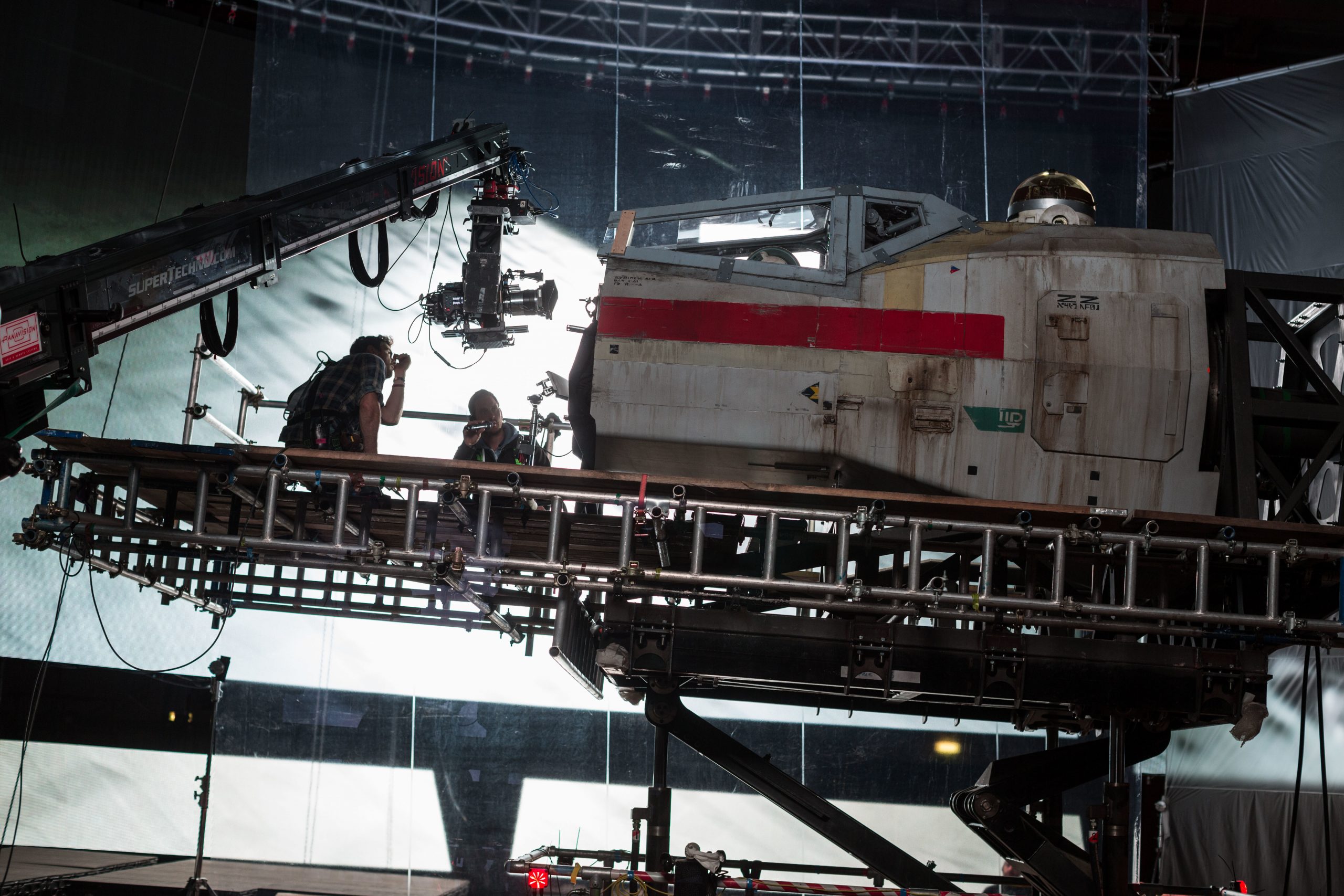
The partial hull of a T-65B X-wing starfighter used for shooting on the set of Rogue One: A Star Wars Story.
That must have been exciting to figure out? It was such a great project, because it really upheld the vision that George Lucas had for the future of filmmaking, the “stage of the future”. George theorized that, years down the road, there might come a time when a filmmaker could walk onto a stage, and they could project whatever they wanted up onto the walls, or that those walls could have color-changeable light. They wouldn’t have to light for it, they’d only need to flick a switch. That was the hopeful future that George was thinking about, and now, years later, ILM made that a reality with StageCraft. Filmmakers now have the ability to put any high fidelity, real-time image up on the LED volume. Rogue One was the proof-of-concept for lighting, and that evolved into what ILM, John Favreau, and the Lucasfilm team are doing on The Mandalorian, along with so many other exciting projects.
An early LED volume used on the set of Rogue One: A Star Wars Story.
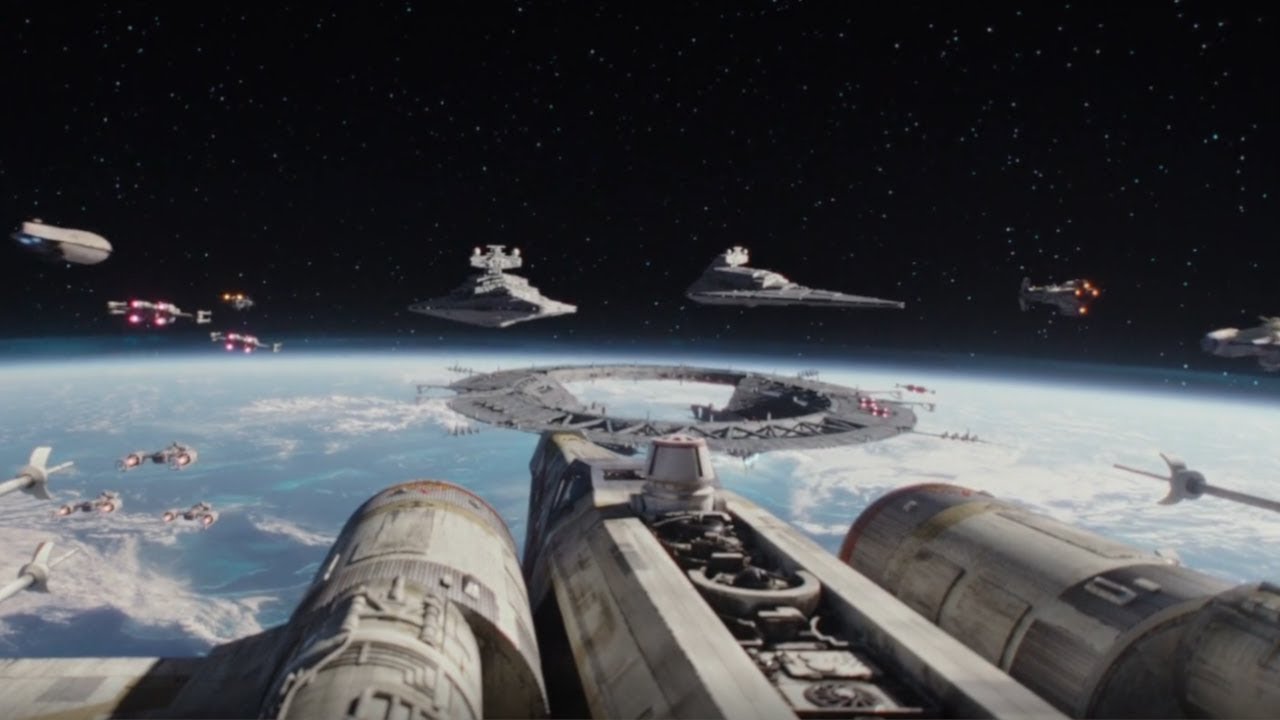
George referenced a lot of things for his aerial combat, including old WWII gun camera footage. How did you approach the ships flying in Rogue One? While we were shooting, it became obvious where the camera could be, and where it couldn’t be. In Star Wars, there were never any mid-shots of people sitting in cockpits. You don’t have Han Solo in a mid-shot, shooting from outside of the cockpit. You never had a camera floating in space for a shot like that. The camera was always fixed inside the cockpit, or super-wide. There was no in-between. It would never go from a super-wide, into a mid-shot, into a closeup. The only example of that might be the final shot of the Millennium Falcon, just before Lando departs the Medical Frigate, at the end of The Empire Strikes Back. With that said though, we tried to maintain those parameters for Rogue One, and we didn’t want the audiences to have to think about it. I haven’t spoken to George Lucas about it personally, and maybe if he would have had infinite resources he might have shot it differently, but we wanted our film to match A New Hope, and we loved the look. It built our visual understanding of what a Star Wars film should be.
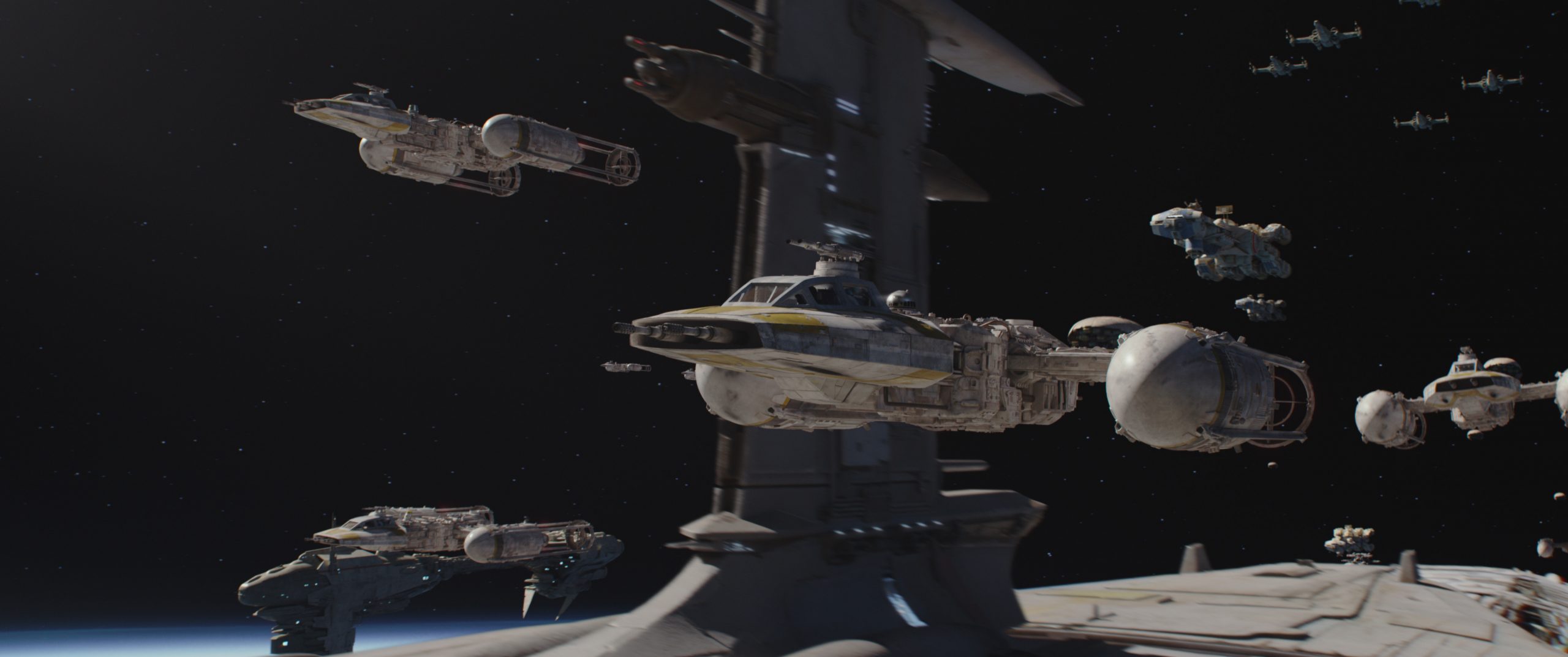
Jon Vander’s “Gold Squadron” forms up as they prepare for their assault on the Shield Gate during the Battle of Scarif.
There’s something intimate about it. When I think about old WWII air combat movies, they did the same thing. Exactly. And they were forced to shoot like that. You either had a camera in the cockpit, or a camera on another plane. You couldn’t get a plane in close enough to get a reaction from a pilot, or you’d have planes crashing into each other. It was either super-wide, or close. It was purely pragmatic.
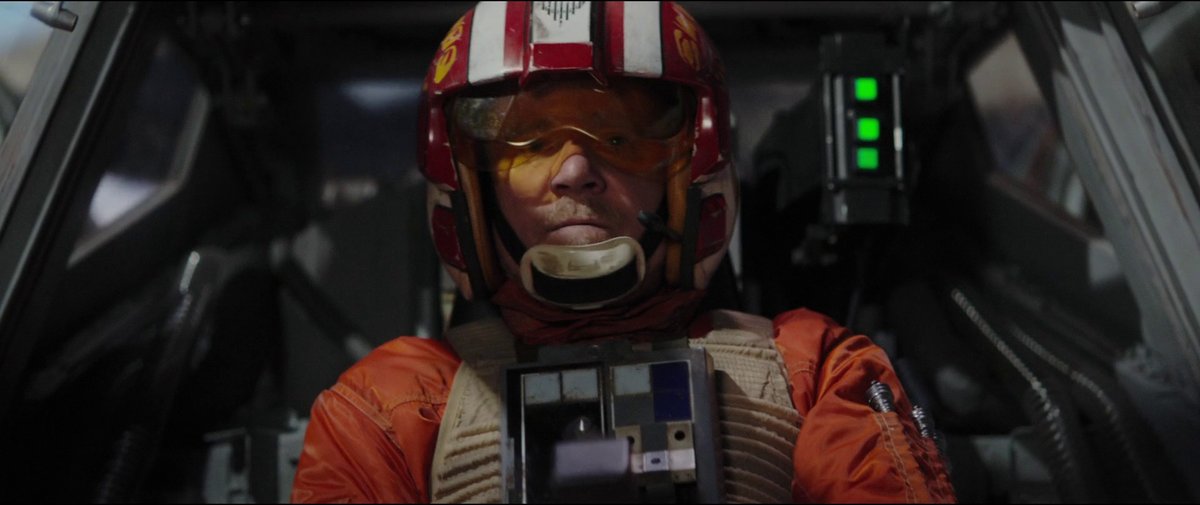
Red Twelve (Richard Glover) participates in the Battle of Scarif.
You did have a unique shot that was used a few times that I loved, and that was the one of the camera fixed on the X-wings and Y-wings, directly behind the astromech droid. Gareth was clever, because even though we had these rules on how we would shoot the ships, we would work off moments from the earlier films to devise new things. There’s that shot of R2-D2 getting blown up in A New Hope by Vader in the Death Star’s meridian trench, and this was kind of an evolution of that shot, while still keeping one foot planted in that A New Hope aesthetic.
A T-65C-A2 X-wing starfighter drops out of lightspeed at the Battle of Scarif.
How did it feel with The Force Awakens shooting alongside your film, and to a degree, The Last Jedi too, when you were shooting pickups? It was fun. We were all sharing buildings and in each other’s worlds. I’m such a big fan of Star Wars, and I could have walked on set and spoiled everything for myself, but I chose not to. I just wanted to enjoy them as a fan. I did have one thing spoiled for me… someone walked up and told me the scene regarding Han Solo, and my first reaction was, “how dare you do that to me! I wanted to see that in theaters!” [laughs]. We shared some crew from time to time, but we generally had blinders on for Rogue One. While they were making their films in the Skywalker Saga, decades in the future, we were leading right into A New Hope, so ours was almost the equivalent of a period film, in our language. I found that to be very exciting.
Greig Fraser on the set of Rogue One: A Star Wars Story.
What’s your favorite shot, moment, or sequence in the film? One of my favorites is that wide tracking shot of Jyn Erso (Felicity Jones) making her way through the Massassi outpost on Yavin 4 after she’s “rescued” from the Wobani Labor Camp. I also love the final sequence with Vader aboard the ‘Tantive IV’. When Gareth rang me to tell me we were going to do that, I was ecstatic. It’s such a wonderful sequence. We had the time to prepare it properly. We had the time to rehearse all the action, and to do the lighting tests. We also spent a lot of time figuring out how best to light Vader. As a kid in a grown man’s body, that blew me away. Vader, this dark “shape”, terrified us as kids. It was a dream come true to add to his iconography. I felt very honored and very blessed. Another moment I loved was seeing the full-sized X-wing props in person for the first time. I was transported back to being a kid again, playing with my toy X-wings, but then, of course, my filmmaker brain would kick on, and let me tell you, moving full-sized X-wings around on a set is pretty difficult [laughs].
Vader ignites his lightsaber in an attempt to capture the stolen plans to the Death Star aboard Admiral Raddus’ star cruiser.
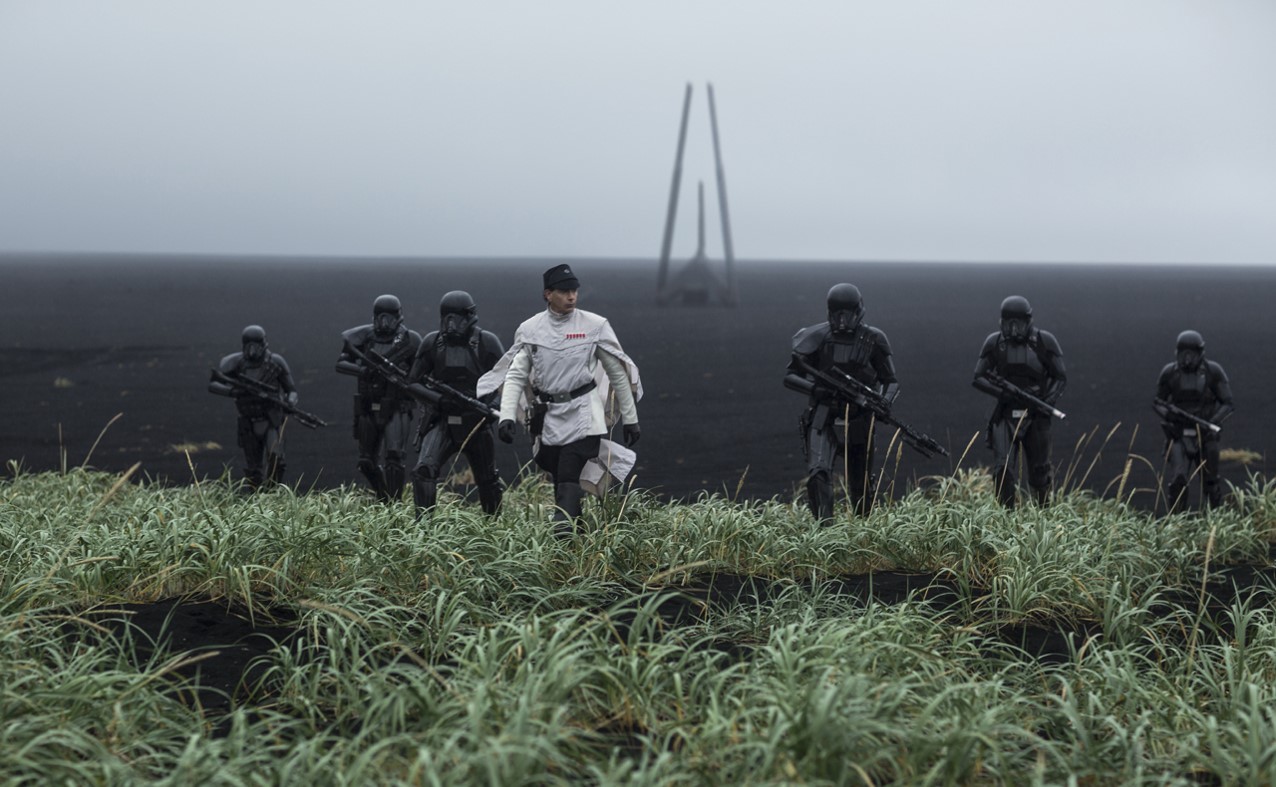
I love the sequence you shot in Iceland of Orson Krennic and the Death Troopers making the long trek up to the Erso homestead from the shuttle. His cape flapping in the wind, it was incredible. I love that shot too. An interesting thing about that sequence is how we found that location. In that part of Iceland, there’s all of this black sand, so they plant this weed to prevent it from blowing onto the roads and destroying the cars. It’s basically useless outside of keeping the sand from blowing about. We found that location on Google Earth while we were driving around, location scouting. I thought it looked so unusual and interesting. As soon as we dropped the moisture vaporators in, those weeds started looking like crops that the Erso’s were farming, and it instantly became Star Wars.
Director Krennic and his personal attachment of Death Troopers storm the Erso homestead on Lah’mu.
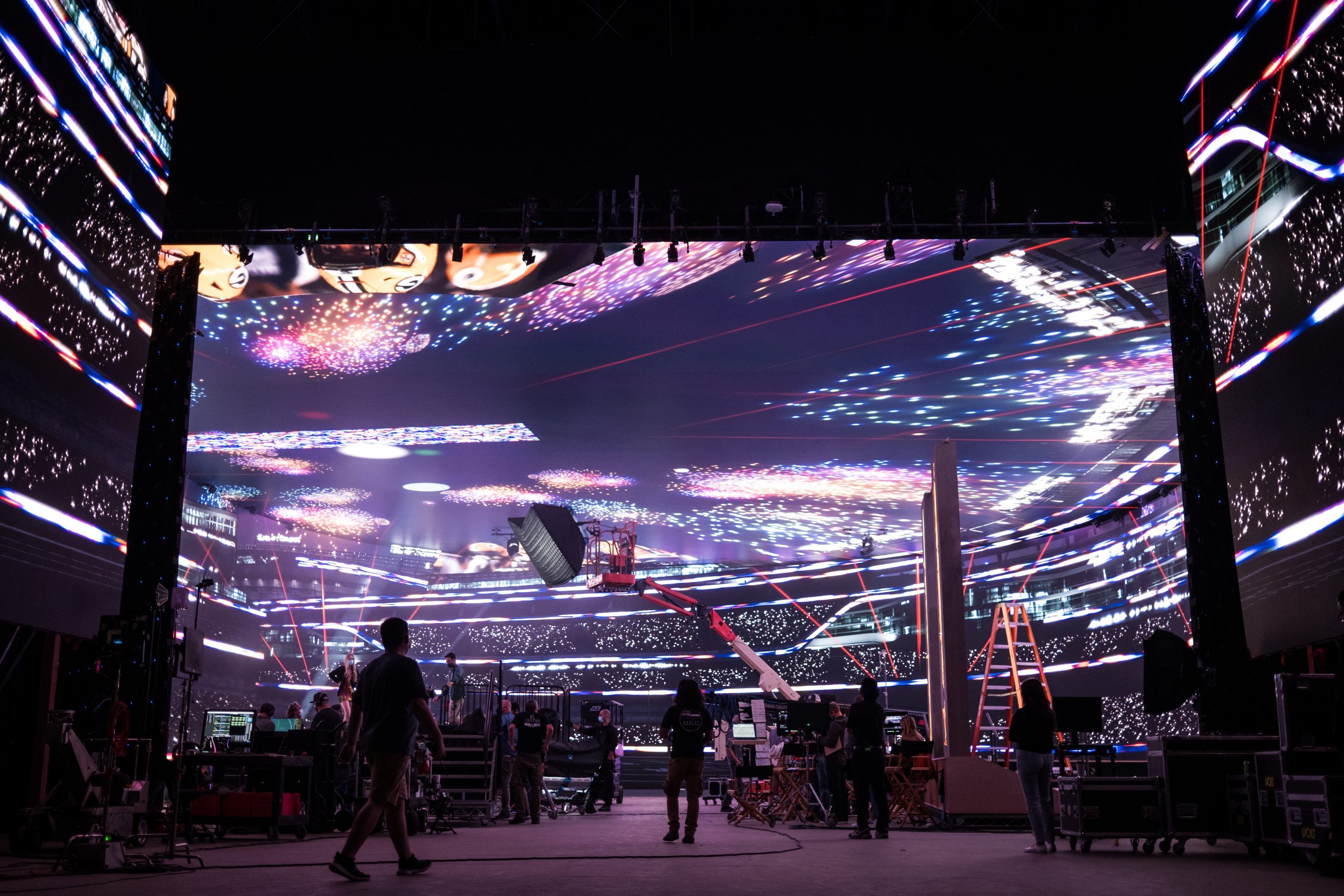
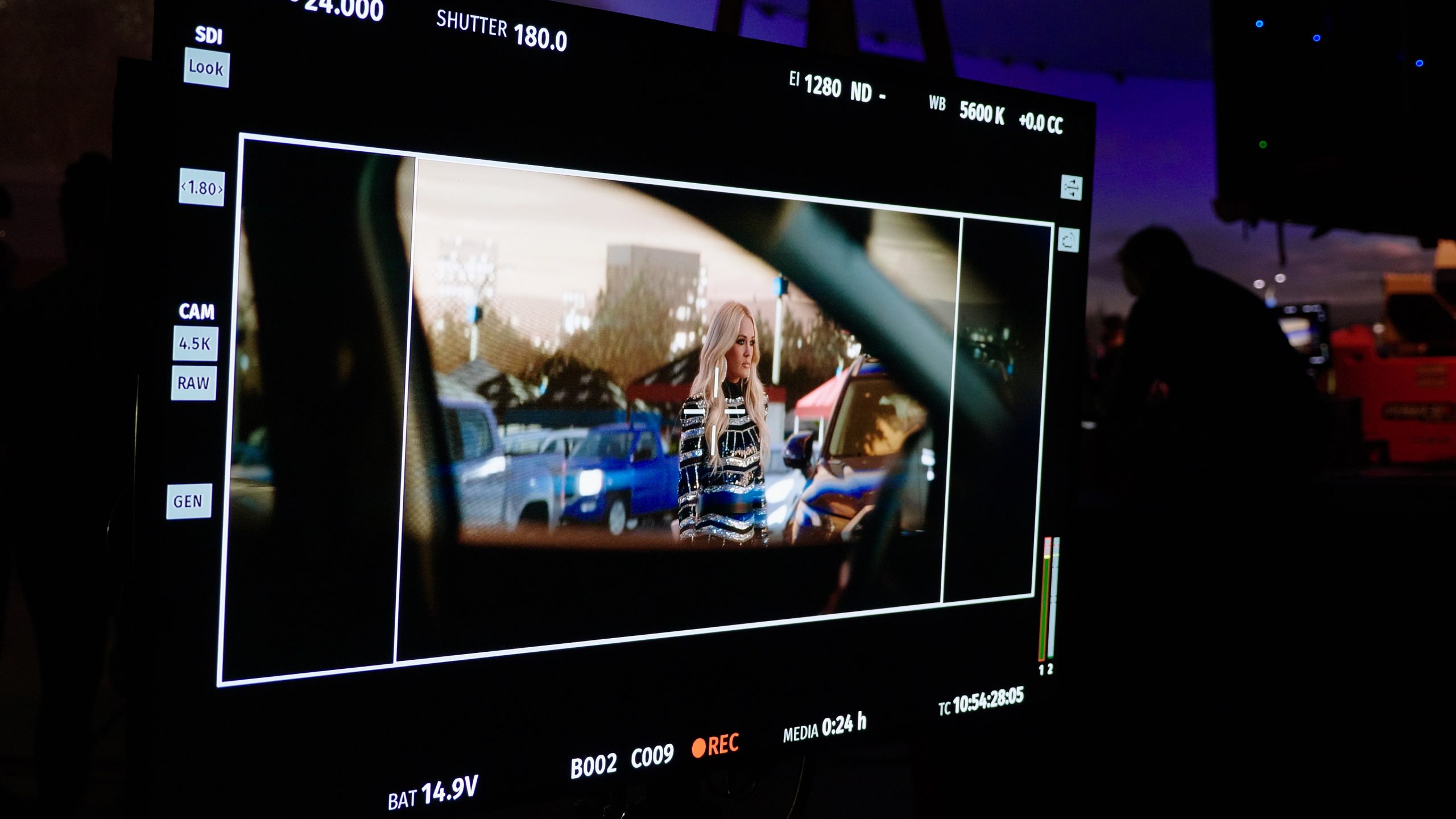
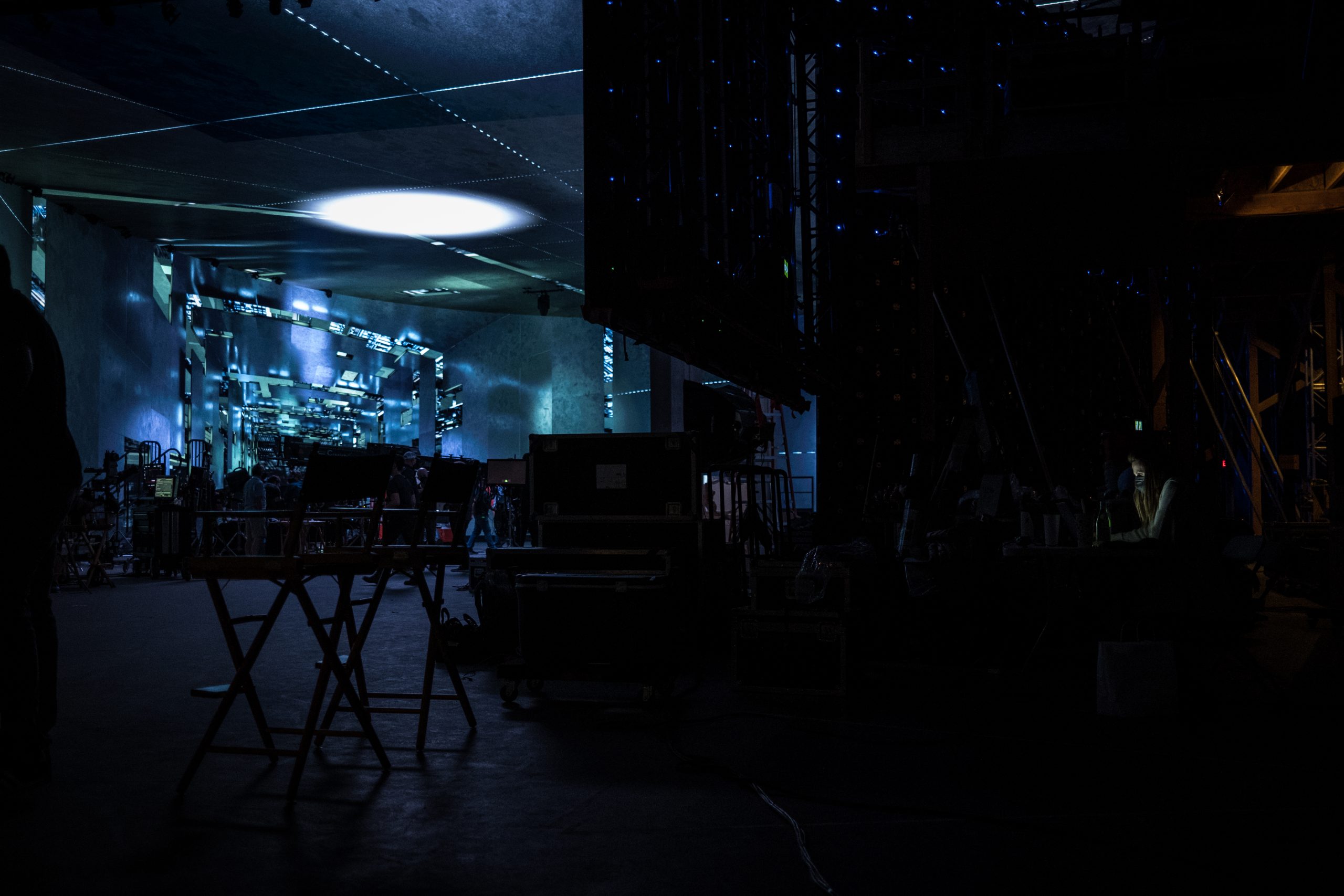
In a new “Behind the Magic” video released on YouTube and Instagram, enjoy a glimpse behind the virtual production of NBC Sports’ Sunday Night Football show opening, featuring country music star Carrie Underwood.
“This was yet another successful demonstration of the end-to-end services available through ILM’s virtual production platform, ‘StageCraft™’,” says Chris Bannister, Executive Producer of Virtual Production at Industrial Light & Magic. “Partnering with the creative team from art concept all the way through principal photography, we were able to offer both the creative resources and real-world virtual production experience that maximized the scope and results for the project in a way that only ILM StageCraft can deliver.”
Shot on the StageCraft LED volume by Industrial Light & Magic.
The show opening is the key introduction each week to NBC’s flagship sports broadcast, and each year the creative team at NBC looks for innovative ways to top itself. 2021 was no exception, as they ideated ways to push the boundaries beyond the green screen and inject a new layer of authenticity and integration into the opener. That’s where ILM StageCraft came in.
“It was particularly important to Tripp Dixon and his creative team at NBC Sports to celebrate NFL fans coming back together,” notes Jonathan Howard, Associate Virtual Production Manager at ILM. “This unique opportunity allowed ILM to showcase both the agility, and production-hardened scalability of StageCraft 2.0, evident in the team’s ability to adapt the platform to the compressed schedule of a broadcast package.”
Shot on the StageCraft LED volume by Industrial Light & Magic.
Across the entire production, ILM was able to find unique ways to match the energy and excitement that Sunday Night Football fans are used to, while also expanding upon it in distinct ways. “This was such a rare creative project for me, because I’m typically working with creatures, droids, and spaceships,” said Hal Hickel, Animation Supervisor at ILM. “It was fun in that way though, because it got me out of my wheelhouse, while also allowing me to craft some exciting elements in a grounded production.”
What makes StageCraft’s application for the Sunday Night Football show opening different from previous applications of the technology, is that this project is designed to look both indistinguishable from the real world, and also fantastical in its execution. Hayden Landis, Visual Effects Supervisor at ILM explains, “We had some incredible streaming elements like fireworks, along with dynamic moving components that we’ve never used before on the volume. Between the creative and technical wizardry that the StageCraft crew conjured up on the day, and the passionate support of the NBC Sports team, I think we really created something special.”
Shot on the StageCraft LED volume by Industrial Light & Magic.
Even with all the magic happening on screen, it can be easy for viewers to miss StageCraft’s sleight of hand because it is so convincing. Hal Hickel elaborates, “To let them backstage in a creative way, we came up with the idea to have Carrie enter the studio in one take, walk up onto the set, and then have the entire StageCraft Volume power-up around her. That small addition really drove home the magic of StageCraft.”
Check out the “Behind the Magic” video below, and don’t miss the show opening this Sunday, October 17 at 5:20pm PST on NBC as the Seattle Seahawks face off against the Pittsburgh Steelers.
Behind the Magic – Sunday Night Football
The Hollywood Professional Association announced the nominees for its annual HPA Awards for post-production, an honor that promotes outstanding creative artistry, and recognizes the achievement of talent, innovation, and engineering excellence. ILM is thrilled to have contributed to three shows nominated in the Outstanding Visual Effects category this year. Nominees include Richard Bluff, Hal Hickel, Jeff Capogreco, Abbigail Keller, and Joe Bauer for The Mandalorian – “Chapter 9: The Marshal”, David Seager, Alexandra Greene, George Kuruvilla, Dan Mayer, and Dan DeLeeuw for Loki – “Journey Into Mystery”, and Chad Wiebe for his work on Jungle Cruise.
“It is an absolute honour to have been nominated for our work,” said Alexandra Greene, Visual Effects Producer at ILM. “It’s hard to put into words the gratitude I have for all the ILM artists and production crews who poured their heart and souls into bringing the “Void” to life on Loki, along with all of the larger-than-life creatures that reside there. Every day I find myself amazed by both the innovation and creativity that comes from our teams here at ILM, including the work by our fellow ILM nominees for The Mandalorian, and Jungle Cruise. Congratulations are in order!”
Janet Lewin, ILM’s General Manager and Senior Vice President notes, “I could not be more proud of the nominees and their teams that worked on these incredible shows,” adding, “I’m continually in awe of our team’s technical ingenuity, imagination, and relentless spirit, and I’m so pleased to see their hard work recognized by the HPA.”
The annual HPA Awards are returning as an in-person event this year, presented at a live gala on Thursday, November 18th at the historic Hollywood Legion Theater. Tickets are on sale now.
In a new video released by ILM on our YouTube channel, join Visual Effects Supervisor, Richard Bluff, as he shares a peek behind the curtain of the effects of The Mandalorian: Season 2, winner of 7 Emmy® Awards including Special Visual Effects, Sound Mixing, Cinematography, Prosthetic Makeup, Stunt Coordination, Stunt Performance, and Music Composition.
For its sophomore outing, Lucasfilm’s hit Disney+ series built upon the groundbreaking technical and artistic achievements accomplished during season one, combining traditional methodologies, with ever-advancing new technologies. The team also increased the physical size of the ILM StageCraft™ LED Volume which would again be used for over half of all scenes. This season also marked the debut of ILM’s state-of-the-art real-time cinema render engine called, Helios. The high-resolution, high-fidelity engine was used for all final pixel rendering displayed on the LED screens and offers unmatched performance for the types of complex scenes prevalent in today’s episodic and feature film production.
Practical creature effects have been a vital part of the aesthetic and charm of the Star Wars universe since 1977, and for season two, the effects team realized over 100 puppeteered creatures, droids, and animatronic masks, which included the beloved Tatooine Bantha, realized as a ten-foot-high puppeteered rideable creature.
Practical miniatures and motion control photography were used once again for scale model ships, as well as miniature set extensions built for use in ILM’s StageCraft LED volume. Stop-motion animation was also utilized for the Scrap Walker at the Karthon Chop Fields. The greater Krayt dragon on Tatooine was realized as a six-hundred-foot computer-generated creature that would swim shark-like through the sand environment by way of a liquefaction effect, wherein the sand would behave like water.
We would like to acknowledge the care and dedication that the team here at ILM put into the show, along with our partners at Legacy Effects, Hybride, Image Engine, Important Looking Pirates, Ghost VFX, Lola, Stereo D, Tippett Studios, Base FX, Raynault, Virtuous, and Yannix.
We hope you enjoy this look inside The Mandalorian: Season 2.
The Jedi Academy is a unified, global, 12-week junior talent paid internship and trainee program at Lucasfilm, Industrial Light & Magic, and ILMxLAB created for students and graduates. The program is a once-in-a-lifetime experience to learn in a dynamic and creative production environment, focused on developing the next generation of diverse talent across art, public relations, and technology.
After playing Vader Immortal, I knew that I wanted to help make those kinds of games and tell those kinds of stories,” said Gary Walker, intern at ILMxLAB. “So if you want to do something, go for it. Ask how you can get there because there are people willing to help you if you’re willing to go out and you’re willing to do it.”
Jedi Academy interns are able to gain valuable, real-world experience through hands-on training and mentorship across day-to-day production work. Trainees also gain valuable skills through intensive classes and immersive learning modules taught by industry experts from a variety of disciplines. The trainees are exposed to fundamental artistic concepts as well as key business skills that support their transition into the industry.
“Coming into this I was very interested in a lot of things; VR, animation, video production, film production,” said Jared Tan, Video Production Intern at Lucasfilm. “And now coming out of the internship, I know what skills I need to polish so hopefully one day I can come back here to work and help this ecosystem of filmmakers and creative people at this amazing company.”
Lucasfilm is committed to improving the diversity of our studios, and programs like our Jedi Academy help us provide opportunities to a broad range of applicants at the start of their careers. The experience is perhaps best described by Alexandria Frank, Studio Talent Group Intern at Lucasfilm, “Just the sheer intention and passion that comes with everyone working here, it radiates through everything.”
The most recent Jedi Academy interns for ILM focused on virtual production and the company’s StageCraft technology, an ever-growing part of the company’s business. The company is preparing to launch another Jedi Academy focused on the San Francisco and Vancouver studios soon.
Would you like to Join the Force? Keep your eyes peeled on our Careers page for when we announce our next Jedi Academy.
The Television Academy announced its winners for the 73rd Annual Primetime Creative Arts Emmy® Awards over the weekend, celebrating a diverse group of talent from across television. ILM’s creative teams were honored with an award for Outstanding Special Visual Effects in a Season or a Movie for The Mandalorian, alongside nominations for their contributions on The Boys, WandaVision, and The Falcon and the Winter Soldier. This is the second year in a row that the hit Lucasfilm series has received the Emmy Award for Special Visual Effects, a testament to the groundbreaking work that the show is known for.
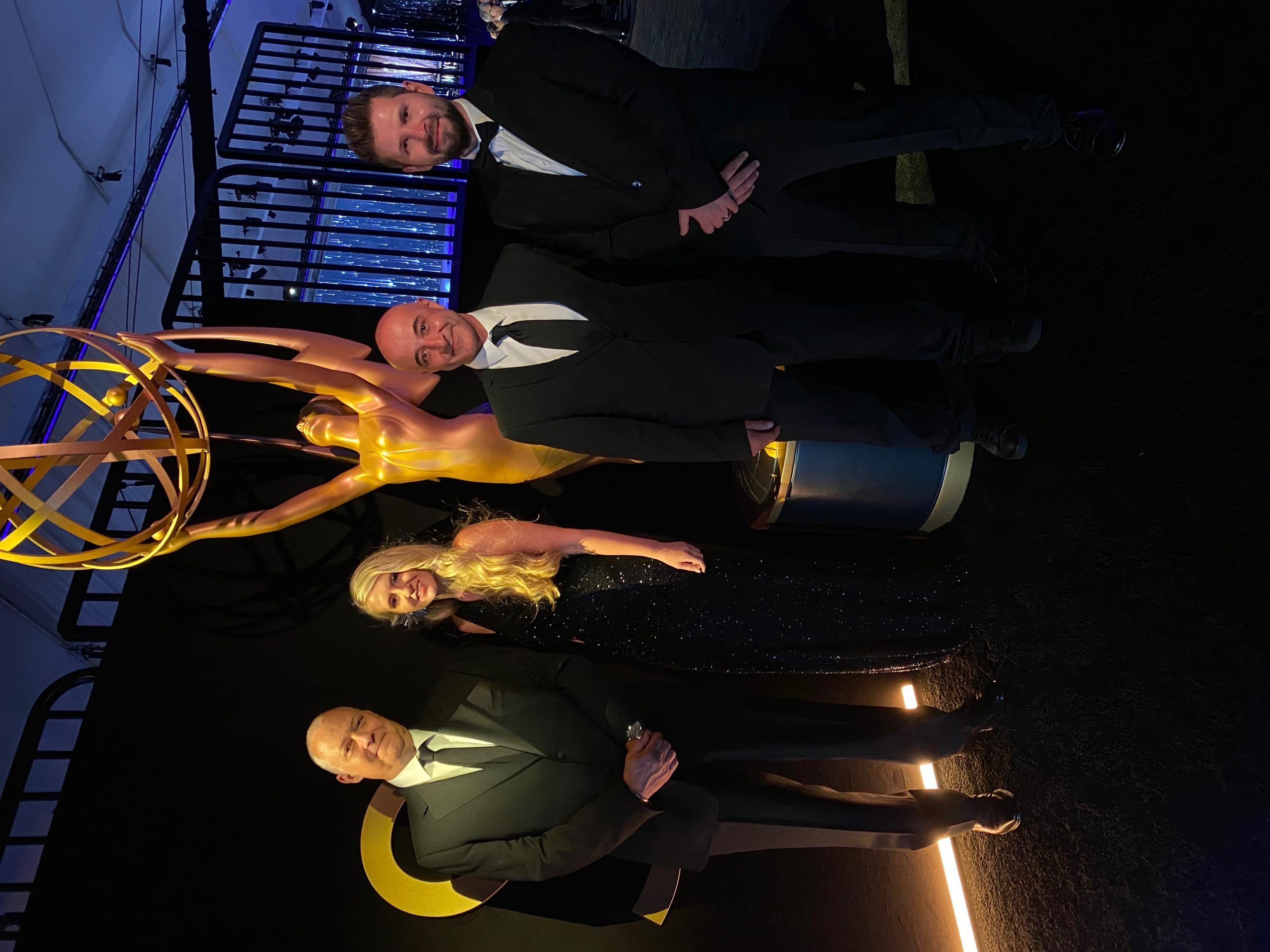
Animation Supervisor Hal Hickel, VFX Producer Abbigail Keller, VFX Supervisor Joseph Kasparian (Hybride), and Environments Supervisor Enrico Damm in attendance at the 73rd Annual Primetime Creative Arts Emmy® Awards.
The visual effects team representing this win, included: Joe Bauer, Richard Bluff, Abbigail Keller, Hal Hickel, Roy K. Cancino, John Knoll, Enrico Damm, John Rosengrant, and Joseph Kasparian. Special recognition is also in order for ILM Producer Stacy Bissell, ILM Animation Supervisor Paul Kavanagh, and the entire StageCraft team for their incredible contributions.
Richard Bluff, Visual Effects Supervisor on The Mandalorian, added, “I want to take this opportunity on behalf of the visual effects team to congratulate all the artists, production, and the technical support staff who contributed to the Visual and Special Effects on season two of The Mandalorian. We continue to be in awe of the spectacular work and the effortless partnerships we enjoy with all of our vendor partners. The time and effort invested in the visuals by ILM, Hybride, Image Engine, Important Looking Pirates, Ghost VFX, Lola, Stereo D, Tippett Studios, Base FX, Raynault, Virtuous, and Yannix has been exceptional and this recognition is fully deserved. Everyone associated with the show couldn’t be happier or more grateful for what we all achieved together.”
In addition, The Mandalorian was also recognized with Emmys in the following categories: Sound Mixing, Cinematography, Prosthetic Makeup, Stunt Coordination, Stunt Performance, and Music Composition.
The 73rd Emmy Awards will be hosted by Cedric the Entertainer at L.A. Live in Downtown Los Angeles, California. Executive Producers Reginald Hudlin and Ian Stewart and Director Hamish Hamilton have been selected to helm the show for production companies Done+Dusted and Hudlin Entertainment. Highlights from the 73rd Annual Creative Arts Emmy Awards will be broadcast on Saturday, Sept. 18 (8:00 PM ET/PT) on FXX. The 73rd Primetime Emmy Awards will be broadcast live on Sunday, Sept. 19 (5:00-8:00 PM, PST) on the CBS Television Network, and as well as streaming live and on-demand on Paramount+.