Research & Development

50 Years | 500+ Film and TV credits | 135+ Awards

SINCE 1975

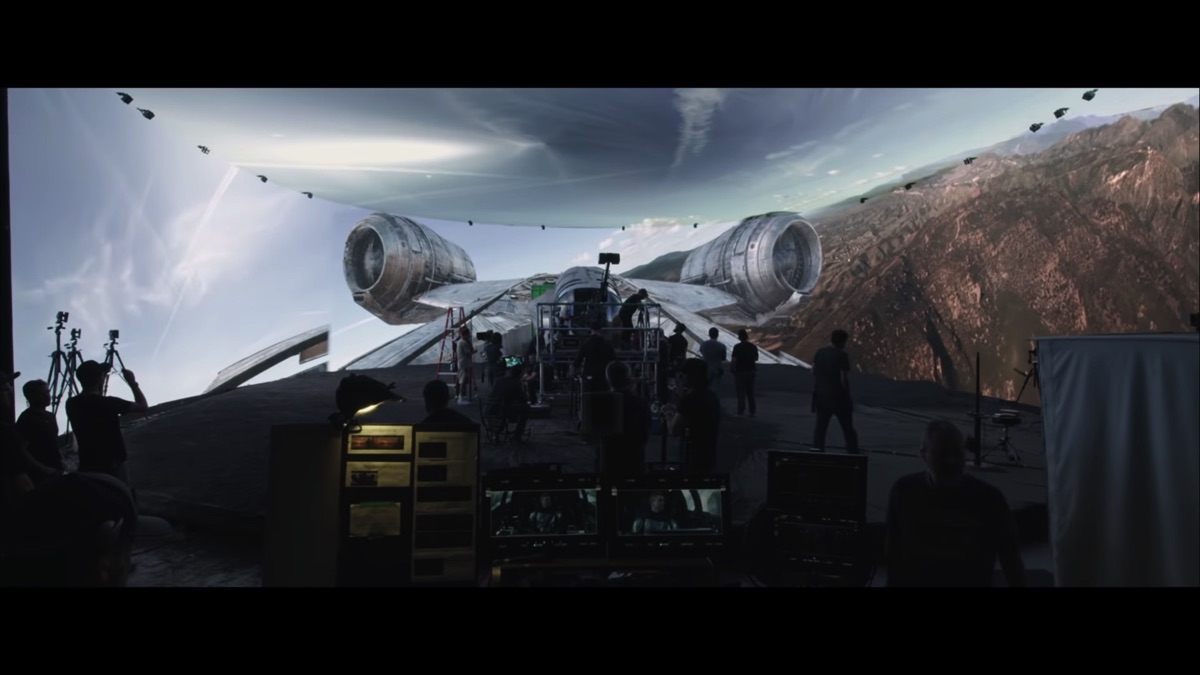
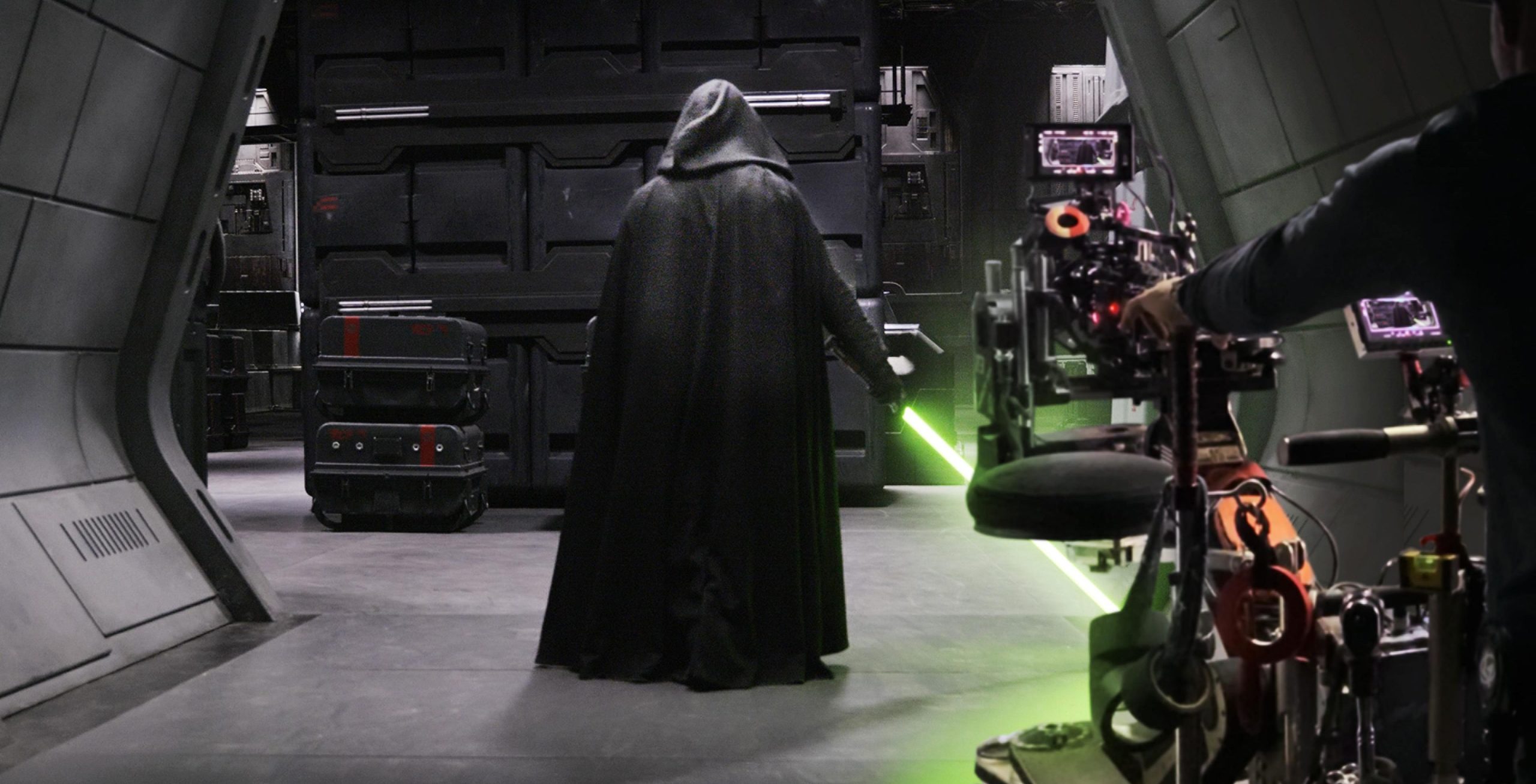
In a new video released by ILM on our YouTube channel, join Visual Effects Supervisor, Richard Bluff, as he shares a peek behind the curtain of the effects of The Mandalorian: Season 2, winner of 7 Emmy® Awards including Special Visual Effects, Sound Mixing, Cinematography, Prosthetic Makeup, Stunt Coordination, Stunt Performance, and Music Composition.

For its sophomore outing, Lucasfilm’s hit Disney+ series built upon the groundbreaking technical and artistic achievements accomplished during season one, combining traditional methodologies, with ever-advancing new technologies. The team also increased the physical size of the ILM StageCraft™ LED Volume which would again be used for over half of all scenes. This season also marked the debut of ILM’s state-of-the-art real-time cinema render engine called, Helios. The high-resolution, high-fidelity engine was used for all final pixel rendering displayed on the LED screens and offers unmatched performance for the types of complex scenes prevalent in today’s episodic and feature film production.

Practical creature effects have been a vital part of the aesthetic and charm of the Star Wars universe since 1977, and for season two, the effects team realized over 100 puppeteered creatures, droids, and animatronic masks, which included the beloved Tatooine Bantha, realized as a ten-foot-high puppeteered rideable creature. 

Practical miniatures and motion control photography were used once again for scale model ships, as well as miniature set extensions built for use in ILM’s StageCraft LED volume. Stop-motion animation was also utilized for the Scrap Walker at the Karthon Chop Fields. The greater Krayt dragon on Tatooine was realized as a six-hundred-foot computer-generated creature that would swim shark-like through the sand environment by way of a liquefaction effect, wherein the sand would behave like water. 

We would like to acknowledge the care and dedication that the team here at ILM put into the show, along with our partners at Legacy Effects, Hybride, Image Engine, Important Looking Pirates, Ghost VFX, Lola, Stereo D, Tippett Studios, Base FX, Raynault, Virtuous, and Yannix. 

We hope you enjoy this look inside The Mandalorian: Season 2.

The Jedi Academy is a unified, global, 12-week junior talent paid internship and trainee program at Lucasfilm, Industrial Light & Magic, and ILMxLAB created for students and graduates. The program is a once-in-a-lifetime experience to learn in a dynamic and creative production environment, focused on developing the next generation of diverse talent across art, public relations, and technology. 

After playing Vader Immortal, I knew that I wanted to help make those kinds of games and tell those kinds of stories,” said Gary Walker, intern at ILMxLAB. “So if you want to do something, go for it. Ask how you can get there because there are people willing to help you if you’re willing to go out and you’re willing to do it.”

Jedi Academy interns are able to gain valuable, real-world experience through hands-on training and mentorship across day-to-day production work. Trainees also gain valuable skills through intensive classes and immersive learning modules taught by industry experts from a variety of disciplines. The trainees are exposed to fundamental artistic concepts as well as key business skills that support their transition into the industry. 

“Coming into this I was very interested in a lot of things; VR, animation, video production, film production,” said Jared Tan, Video Production Intern at Lucasfilm. “And now coming out of the internship, I know what skills I need to polish so hopefully one day I can come back here to work and help this ecosystem of filmmakers and creative people at this amazing company.”

Lucasfilm is committed to improving the diversity of our studios, and programs like our Jedi Academy help us provide opportunities to a broad range of applicants at the start of their careers. The experience is perhaps best described by Alexandria Frank, Studio Talent Group Intern at Lucasfilm, “Just the sheer intention and passion that comes with everyone working here, it radiates through everything.”

The most recent Jedi Academy interns for ILM focused on virtual production and the company’s StageCraft technology, an ever-growing part of the company’s business. The company is preparing to launch another Jedi Academy focused on the San Francisco and Vancouver studios soon.

Would you like to Join the Force? Keep your eyes peeled on our Careers page for when we announce our next Jedi Academy.


Industrial Light & Magic (ILM), continues to push the boundaries of what’s possible in virtual production with StageCraft. In a new video released by ILM on our YouTube channel, we shed light on the process and advances made for the second season of the series with interviews from a variety of the key filmmakers involved. “(StageCraft) gives us the opportunity to bring that production scale, size, scope; that kind of expansive storytelling that we have never been able to shoot before”, said Kathleen Kennedy, President of Lucasfilm Ltd.

Rob Bredow added, “It really is an end-to-end solution; everything from the early stages of previz and working with the art department, all the way through motion capture, and now, working with live pixels on set. What you see on that LED wall is actually what goes straight into the show.” This toolkit also enables filmmakers like Jon Favreau, and Dave Filoni, to realize their vision faster and more efficiently. “We could actually get in-camera, finished visual effects that would really help us with the quick turnaround that television requires,” said Favreau.

Now with StageCraft version 2.0, advancements have been made across the platform, including the addition of a suite of tools specific to filmmaking and ILM’s groundbreaking real-time cinema render engine, Helios. Filmmakers are now able to capture high-fidelity visual effects that are rendered in real-time, and indistinguishable from the physical environment. This provides a deeply immersive experience for both filmmakers and actors alike, enabling them to harness seamless interactive light on the physical environment, and thousands of in-camera visual effects finals.

“The DP’s, the directors, and the actors can now see the world they’re in, and interact with that world the way they would if they were out in a real location,” said Richard Bluff, Visual Effects Supervisor on The Mandalorian. Adding, that filmmakers can leverage traditional techniques such as “ Focus pulling, pushing a real camera, getting the interaction from the lighting from the LED’s onto the actors.”

This incredible immersion also extends to how these environments are scouted and blocked. Bryce Dallas Howard, Director of The Mandalorian explains, “Locations are created, because they’re digital assets, essentially, so the way that you scout is you do it in VR; basically blocking out your scene in this virtual world.” Taika Waititi, voice actor for IG-11, and Director of The Mandalorian adds with a laugh, “It’s just a fresh new way of looking at stuff, and the way that you can decide on the landscape as well. It’s a great throwback to a time when people would make decisions before post.”

For more information about StageCraft or to discuss your project, contact us at: contact-StageCraft@ilm.com

Interested in joining our Virtual Production team? Visit our Careers page to see the current opportunities.

ILM StageCraft 2.0 and Helios combine to bring unprecedented fidelity, power, and flexibility to the filmmakers on the second season of Lucasfilm’s Emmy Award-winning hit Disney+ series.

Industrial Light & Magic today announced the next phase of its global expansion plan for the company’s virtual production and StageCraft LED volume services. This expansion of services is tied to a proactive initiative for increasing diversity in the industry by combining ILM’s growth in this innovative methodology with a global trainee program geared for underrepresented VFX talent.

ILM’s existing StageCraft volume set at Manhattan Beach Studios (MBS) was used for the Emmy nominated series The Mandalorian and will soon be joined by a second permanent StageCraft volume set at the studio, servicing a variety of clients in the greater Los Angeles area. In addition, ILM is building a third permanent StageCraft volume at Pinewood Studios in London, and a fourth large-scale custom volume at Fox Studios Australia to be used for Marvel’s highly anticipated feature Thor: Love and Thunder directed by Taika Waititi. ILM will also continue to provide “pop up” custom volumes for clients as the company recently did for the Netflix production The Midnight Sky, directed by George Clooney.

An end-to-end virtual production solution, ILM StageCraft is a production-hardened technology that provides a continuous pipeline from initial exploration, scouting, and art direction, traditional and technical previsualization, lighting, and of course, real-time production filming itself, with the innovative StageCraft LED volumes. Lucasfilm’s hit Disney+ series, The Mandalorian, and a highly anticipated feature film took advantage of the full complement of ILM StageCraft virtual production services. Other projects such as Avengers: Endgame, Aquaman, Jurassic World: Fallen Kingdom, Battle at Big Rock, Rogue One: A Star Wars Story, Kong: Skull Island, Solo: A Star Wars Story, Ready Player One, and Rango, have utilized aspects of the toolset as well.

By every measure, the new stages are vast improvements over the original ground-breaking LED volume developed for the first season of The Mandalorian in 2018. Physically, the new stages are larger, utilizing substantially more LED panels than ILM’s original stage and also offering both higher resolution and smooth wall to ceiling transitions – this directly results in better lighting on set as well as many more in-camera finals. ILM’s proprietary solutions for achieving groundbreaking fidelity on the LED walls at scale allows for higher color fidelity, higher scene complexity, and greater control and reliability.

“With StageCraft, we have built an end-to-end virtual production service for key creatives. Directors, Production Designers, Cinematographers, Producers, and Visual Effects Supervisors can creatively collaborate, each bringing their collective expertise to the virtual aspects of production just as they do with traditional production,” explained Janet Lewin, SVP, GM ILM. Rob Bredow, CCO, ILM added “Over the past 5 years, we have made substantial investments in both our rendering technology and our virtual production toolset. When combined with Industrial Light & Magic’s expert visual effects talent, motion capture experience, facial capture via Medusa, Anyma, and Flux, and the innovative production technology developed by ILM’s newly integrated Technoprops team, we believe we have a unique offering for the industry.”

Alongside the new stages, ILM is rolling out a global talent development initiative through the company’s long-standing Jedi Academy training program. The program, which is part of the company’s larger Global Diversity & Inclusion efforts, offers paid internships and apprenticeships on productions with seasoned ILM Supervisors and Producers who serve as mentors. The program is intended to fill roles across the virtual production and VFX pipeline with those from traditionally underrepresented backgrounds; ILM has posted expressions of interests for jobs across the spectrum, from virtual art department teams and production management to engineering and artist roles. The goal with this initiative is to attract diverse junior talent and create a pipeline for them to become future Visual Effects artists, technicians, and producers who will be “ILM trained” and uniquely qualified to work in this new, innovative way of filmmaking.

“There is a widespread lack of diversity in the industry, and we are excited to leverage our global expansion in this game-changing workflow to hire and train new talent, providing viable, exciting, and rewarding jobs across many of our locations,” noted ILM VP, Operations, Jessica Teach, who oversees the company’s Diversity and Inclusion initiatives. “We believe this program can have a multiplier effect, attracting even more diverse talent to the industry and creating a pipeline for visual effects careers. We know that bringing more diversity into the industry is a critical part of strengthening and expanding our storytelling potential.”
ILM expects to have the new stages up and running for production in London in February of 2021 and in Los Angeles in March, with a mix of projects from features to commercials in line to take advantage of them. The company is currently fielding inquiries for future bookings by studios and filmmakers. For more information or to express interest in the Jedi Academy program visit our careers site.

OpenEXR, a widely-adopted HDR image file format, and OpenCue, a recently launched render manager, join the growing roster of Academy Software Foundation projects.
We’re thrilled to announce that the Academy Software Foundation (ASWF), a neutral forum for open source software development in the motion picture and media industries, today announced that OpenEXR and OpenCue have been accepted by the Technical Advisory Committee (TAC) as Academy Software Foundation projects alongside OpenVDB and OpenColorIO.
Initially developed by ILM, OpenEXR is an Academy Scientific and Technical Award winning high dynamic-range (HDR) image file format for use in computer imaging applications. It is a widely-adopted standard in computer graphics for linear and interactive media.
OpenCue is a fully featured, open source render manager for media and entertainment that can be used to break down complex jobs into individual tasks. Developed in collaboration by Google Cloud and Sony Pictures Imageworks, OpenCue is an evolution of Sony’s internal queuing system, Cue 3.
“This announcement marks a new phase for the Academy Software Foundation. We’ve achieved our initial goal of accepting OpenVDB, OpenColorIO, and OpenEXR – projects which greatly influenced the Foundation’s formation – and we are now ready to support and drive collaboration around newer projects like OpenCue,” David Morin, Executive Director of Academy Software Foundation. “Studios and developers are finding value in having a neutral home for the open source projects that our industry relies on, and we look forward to growing our projects and continuing to find new ways to support to the broader open source community.”
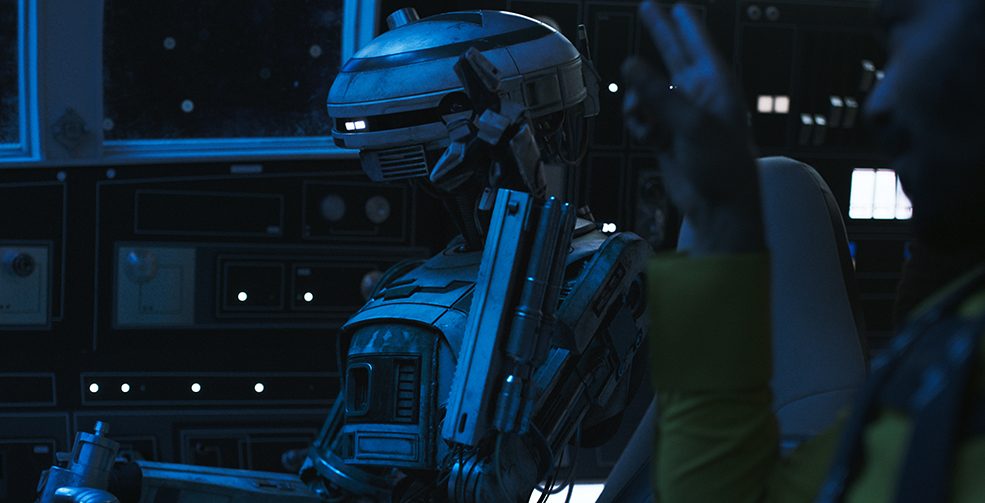
L3 and Lando
OpenEXR and OpenCue join OpenVDB and OpenColorIO as projects in the incubation stage at the Academy Software Foundation. All newly accepted projects start in incubation while they work to meet the high standards of the Academy Software Foundation and later graduate to full adoption. This allows the Academy Software Foundation to consider and support projects at different levels of maturity and industry adoption, as long as they align with the Foundation’s mission to increase the quality and quantity of contributions to the content creation industry’s open source software base.
Cary Phillips, Lucasfilm Research & Development Supervisor and Academy Science and Technology Council member noted, “The Academy Software Foundation was created with OpenEXR in mind, recognizing that there’s a natural life cycle to software projects: original architects and developers move between companies, expertise spreads throughout the industry, and the entire VFX technology ecosystem rapidly evolves. The ASWF has brought together virtually every major company in the industry, and it provides a vital forum to discuss sensible, practical solutions that should ensure that OpenEXR continues to serve the industry as a stable and reliable standard.”
OpenEXR
One of the foundational technologies in computer imaging, OpenEXR is a standard HDR image file format for high-quality image processing and storage. It features higher dynamic range and color precision than existing 8- and 10-bit image file formats, and the latest version of OpenEXR supports multiple image compression algorithms, stereoscopic workflows, multi-part files and deep data.
“For us, the single most important thing we create are the images that we put on screen, and we’ve all come to trust the OpenEXR format with our most precious data. ILM’s decision over 15 years ago to make EXR available as an open source project for the filmmaking community arguably set in motion an industry-wide trend that fostered collaboration and shared advancement, eventually culminating in the creation of the Academy Software Foundation. We’re proud to contribute OpenEXR to a new home to ensure it remains a robust and stable project for years to come,” said Francois Chardavoine, Head of Production Technology, Industrial Light & Magic.
Wakanda
OpenEXR was developed in 1999 by ILM in response to the demand for higher color fidelity in the visual effects industry. It was released to the public as an open source library in 2003, and it has since been widely-used and maintained through code contributions from companies including Weta Digital, Walt Disney Animation Studios, Sony Pictures Imageworks, Pixar Animation Studios, Autodesk, and DreamWorks, among others. OpenEXR was honored with an Academy Scientific and Technical Award in 2007.
OpenEXR is ILM’s main image file format and has been used in all motion pictures that ILM contributes visual effects work to since 2000. The first movies to employ OpenEXR were Harry Potter and the Sorcerer’s Stone, Men in Black II, Gangs of New York, and Signs. Recent films include Solo: A Star Wars Story, Avengers: Infinity War, Black Panther, and Star Wars: The Last Jedi.
Developers interested in learning more or contributing to OpenEXR can visit the OpenEXR Github page.

Lucasfilm and Industrial Light & Magic (ILM) announced the inaugural Open Source release of the MaterialX Library for computer graphics. MaterialX is an open standard developed by Lucasfilm’s Advanced Development Group and ILM engineers to facilitate the transfer of rich materials and look-development content between applications and renderers.

Industry-leading companies including Autodesk, Inc. and Foundry have voiced support for MaterialX.

Chris Vienneau, Director of Media and Entertainment at Autodesk noted, “Autodesk is very pleased to be a contributor to the MaterialX project and we are looking forward to adding native support for MaterialX workflows to our digital content creation tools. As with other open formats, MaterialX is going to improve collaboration and help make production pipelines more efficient, so we are thankful that Lucasfilm have chosen to share their technology with the community through open source software.”

“Foundry is happy to see the MaterialX project reach this latest milestone,” said Jordan Thistlewood – Senior Product Manager: Look Development and Lighting at Foundry. “The possibilities for smoothing the transfer of look development information between our own applications is exciting. The broader principle of open source projects and multi-vendor data exchange are important for the industry as a whole.  Thus we look forward to including MaterialX powered workflows in future releases of our applications.”

Originated at Lucasfilm in 2012, MaterialX has been used by ILM in feature films such as Star Wars: The Force Awakens and Rogue One: A Star Wars Story, and real-time immersive experiences such as Trials On Tatooine. The MaterialX team will host a ‘Birds of a Feather’ meeting at the ACM SIGGRAPH Conference in Los Angeles, CA on Monday July 31 2017, 9:30-11:00am, in room 511BC of the Los Angeles Convention Center.

Workflows at Computer Graphics production studios require multiple software tools for different parts of the production pipeline, and shared and outsourced work requires companies to hand off fully look-developed models to other divisions or studios which may use different software packages and rendering systems. There are currently high-quality solutions (e.g. USD, Alembic) for exchanging scene hierarchies and geometric data between tools, but no effective solutions for exchanging rich material content. MaterialX addresses the current lack of a common, open standard for representing the data values and relationships required to transfer the complete look of a computer graphics model from one application or rendering platform to another, including shading networks, patterns and texturing, complex nested materials and geometric assignments.  MaterialX provides a schema for describing material networks, shader parameters, texture and material assignments, and color-space associations in a precise, application-independent, and customizable way.

Lucasfilm is no stranger to open source projects having developed and released key projects over the years. The company has played a key role in developing Alembic, co-developed with Sony Imageworks and released in 2012, and OpenEXR, which was developed by ILM in 2000. Both have become industry standards and continue to be developed by the open source community.

MaterialX is an Open Source project released under a modified Apache license. For more information visit the MaterialX website: www.materialx.org and follow MaterialX on Twitter @MaterialXCG for the latest news.