San Francisco News

50 Years | 500+ Film and TV credits | 135+ Awards

SINCE 1975

ILM’s innovative approach leads the way for more than 1,700 visual effects shots, helping bring Wright’s dystopian action thriller to life.

By Clayton Sandell


When director Edgar Wright was gearing up to make The Running Man (2025) and considered the extensive visual effects the story would require, he turned to a fellow filmmaker for advice.

“I’m friends with Gareth Edwards, and I was really taken with the work on The Creator,” Wright says in an interview with ILM.com. “Especially the idea of shooting on location and then designing the environments after the fact. I was really impressed by how the visual effects work was put into more naturalistic, grounded camerawork. I wanted to pick his brain about how exactly it was done.”

In The Running Man, a science-fiction thriller set in a near-future dystopian America, blue-collar worker Ben Richards (Glen Powell) desperately needs money to buy medicine for his baby daughter. He signs up with a TV network, hoping to compete on one of their game shows. He is picked for the most dangerous one: where contestants try to evade capture for 30 days in exchange for $1 billion.

After chatting with Edwards, Wright decided The Running Man should utilize the same unconventional approach that ILM brought to The Creator, winner of multiple awards for best visual effects, including from the Visual Effects Society.

Shooting on The Running Man began in early November 2024. With a release date rapidly approaching just a year later, the pressure to meet deadlines was on every department, including visual effects. Wright says he was happy the project reunited him with Academy Award-winning production visual effects supervisor Andrew Whitehurst. The two worked together on Wright’s 2010 film Scott Pilgrim vs. the World. “I remembered very fondly working with Andrew, so that was just an amazing, fortuitous bit of kismet,” Wright says.

The filmmaker credits Whitehurst and visual effects producer Sona Pak for preproduction planning, which kept everything on track. “Andrew and Sona were very clear on how to make this work, and how it would even be possible to turn around something this quickly with so many visual effects shots,” Wright recalls. “They had a very clear idea of what we were trying to achieve before we started shooting. What was really good was making decisions early on and sticking to them. I think where things can go awry – especially on a compressed schedule – is if you’re still working out what you want to do after you’ve finished filming.

“I’m frankly really amazed that we managed to do everything we did in time,” Wright adds.

(Credit: ILM & Paramount).

Ben Richards’ 30-day fight to survive begins in Co-Op City, with the journey taking him to New York and Boston. Exterior scenes were shot mostly in real locations in London, England and Glasgow, Scotland, as well as on practical and backlot locations in Sofia, Bulgaria.

“Most of the initial meetings and discussions were centered around the places we were thinking of shooting, and the things we were thinking of building,” Whitehurst explains. “When that started to solidify, it became much clearer who was actually going to do what, and what was physically buildable, and what wasn’t.”

Fans of Andor (2022-25) may notice that the Canary Wharf section of London makes an appearance in The Running Man, disguised by a number of digital enhancements. “We did have nicely filmed places where the majority was real, which is always a great starting point,” says ILM visual effects supervisor Dave Zaretti. “Then you’re extending upwards into the distance. You can change the sky a little bit, but it was based on truth and reality, and nicely chosen locations. The team had a blast.”

Another shot set outside the fictional network headquarters begins at the real entrance steps leading to Wembley Stadium, but then transitions to a completely CG skyscraper as the camera tilts up. “It’s very funny to me to take one of London’s most famous landmarks and digitally erase it from the movie,” Wright laughs. “That’s an example where we’re starting with a real shot of Glen Powell and all the extras walking up the steps, and then the camera just keeps going and going. That was really the methodology throughout. It was about keeping it grounded, because the perspective of the story is that you’re very much seeing it from Ben Richards’s viewpoint.”

Visual effects contributed significant digital building extensions, crowds, street signs, lampposts, traffic lights, and even flying mailboxes. Cars from the 1980s era were digitally augmented with designs that more closely fit the story’s futuristic aesthetic. “James Mohan and Ashley Pay deserve huge credit for taking on the lion’s share of world-building, from city extensions to augmented traffic lights, road markings, and uptown car augmentation,” Zaretti says.

For a rooftop sequence where Richards tries to escape from a Boston hotel, full CG city recreations were combined with live-action footage shot on a partial set against a green screen. Another scene that appears to be a single take is actually three, completed with digital seams. In Boston, Richards runs out of an apartment and down a hallway – dodging gunfire and heroically sliding into an elevator – before reappearing to smash the lens of a pursuing rover camera.

“That was three separate takes that we had to marry together,” says Whitehurst, revealing that Powell appears in the first and last parts of the shot, while a stunt performer completed the floor slide in the middle. “That stuff is pure invisible effects. You need to get them all into position and use CG where you need to. We had a CG digi-double take over between the different poses that weren’t quite matching across the takes. It was a fun shot.


Digital doubles and extensive face replacements were used during chases and a pivotal moment where Richards narrowly escapes an explosive head-on collision, plunging from a bridge into the river below. The film’s finale features a completely CG V-Wing airplane, digital explosions, and spherical roving cameras capturing the action.

“Most of the time they’re hanging around like vultures,” Wright says, “and in some sequences there are three of them buzzing around. And in those cases, we had to constantly work out the choreography of where they were.”

The roving cameras provide live coverage for the audience watching the show on TV. But they also presented a visual effects challenge whenever a rover-eye view was simultaneously displayed on an in-world monitor. To maintain continuity, artists had to make sure that the angle seen in the rover’s video feed properly matched its constantly changing position.

“Steve Hardy deserves a medal,” notes Dave Zaretti, “for not only looking after the big exterior shots of the V-Wing, but also the hundreds of shots inside of it – keeping track of which rover cams should be seen where, not only in the main plates but also in the TV inserts.”

All of it adds up to a film jam-packed with tons of action and more than 1,700 visual effects shots.

“The effects work is huge, and subtle at the same time,” says Wright. “There’s a shot where Glen is in a New York hotel and gets into an elevator, and in the background is Times Square. But because the focus is on Glen the entire time, this amazing futuristic Times Square vista, with all of the screens, is completely out of focus. It’s a show where I feel there’s an enormous amount of work in the background, but out of focus. I think it’s really cool.”

A short sequence depicting Richards saving the life of a fellow oil-rig worker is only four shots, but is described by network executive Dan Killian (Josh Brolin) as “the most thrilling 10 seconds of video I’ve seen all year.” “We were very much beholden to deliver the most exciting 10 seconds of footage,” Whitehurst quips. “No half measures.”

The oil rig, crashing waves, lightning, and rain were fully digital elements. The actors were shot against a green screen. “We had two very dry actors dangling from a string,” adds Zaretti. “So we had to try and integrate them into the scene. But I think those shots worked really well.”


Work on The Running Man was hubbed out of ILM’s London studio, with further contributions from ILM artists based in Mumbai. Rodeo FX and Untold Studios completed additional shots. The key to a great end result, Wright believes, is all departments working together in sync.

“There’s incredible work by Andrew and ILM in the movie,” Wright says. “But it’s always in conjunction with something else – whether it’s the camera, an amazing location, what production design has done, what physical effects are doing. And the thing I’m really proud of in the movie is that all of this is people working together out of mutual respect.

“There are very few entirely green screen shots,” continues Wright. “And I think what people misunderstand about great visual effects is, they say, ‘It’s all CG.’ But of course, the best work is where it’s actually a collaboration.”

Whitehurst and Zaretti believe Wright’s style and approach to directing help bring the best ideas to life. “There was creative wiggle room,” Zaretti says. “And that’s nice, because you don’t always have that creative breathing space. So enjoy it and let the artists shine.”

“Absolutely,” concurs Whitehurst. “Edgar is definitely somebody who is very open to being shown something he was not expecting. It’s great seeing his enthusiasm when we show him stuff for the first time, and seeing him relax and go, ‘Oh, it’s going to be okay.’”

Wright says he’s most impressed by the world-building in the film, full of details that may only appear for a few seconds but make a lasting impression on the audience. “I wonder whether we set a dangerous precedent for ourselves by actually delivering in under a year,” the director laughs. “I’m really, really proud of the work, and I think some of the shots are just exceptionally beautiful and rich and detailed. What I also like about it is, it doesn’t feel like a lot of the effects are grandstanding.”

At the end of the day, Whitehurst says he is continually impressed by the ILM team’s innovative spirit that brought The Running Man over the finish line.

“ILM is a very refreshing place to work because there is so much experience, but it’s always in the service of making beautiful pictures that help tell the story,” he says. “I’m agnostic about what technology we use. I just want to use the right pencil for the job. But ILM has all of the pencils, and more importantly, the people who know how to use all of those pencils.”

Pre-order The Running Man Limited Edition Steelbook now.

(Credit: ILM & Paramount).

Clayton Sandell is a Star Wars author and enthusiast, Celebration stage host, and a longtime fan of the creative people who keep Industrial Light & Magic and Skywalker Sound on the leading edge of visual effects and sound design. Follow him on Instagram (@claytonsandell), Bluesky (@claytonsandell.com), or X (@Clayton_Sandell).

One of the biggest days in American sports is equally renowned for its iconic commercial spots.

The artists from Industrial Light & Magic have contributed visual effects to two original commercials as part of the broadcast of Super Bowl LX, the celebrated championship game of America’s National Football League.

Lucasfilm’s newest feature film from the Star Wars galaxy, The Mandalorian and Grogu, is set to premiere on May 22, 2026, and the original spot directed by Jon Favreau, “A New Journey Begins,” provided audiences with a touching moment between the production’s namesakes. ILM’s contributions include bringing the icy world of Hoth, along with a group of tauntaun creatures, to the screen alongside the beloved characters.

For another spot, ILM returned to one of its most iconic visual effects achievements with Steven Spielberg’s Jurassic Park (1993). For the new commercial directed by Taika Waititi in partnership with Xfinity, ILM created a Tyrannosaurus rex, Dilophosaurus, and a herd of Gallimimus, all inspired by the company’s work on the classic film.

Watch “A New Journey Begins”:

Watch “Jurassic Park…Works”:

Read more about the latest artistry and innovation from Industrial Light & Magic here on ILM.com.

The visual effects supervisor discusses ILM’s contributions to director Ryan Coogler’s supernatural sensation, which is nominated for “Outstanding Supporting Visual Effects in a Photoreal Feature” at the VES Awards.

By Jay Stobie

(Credit: ILM & Warner Bros.)

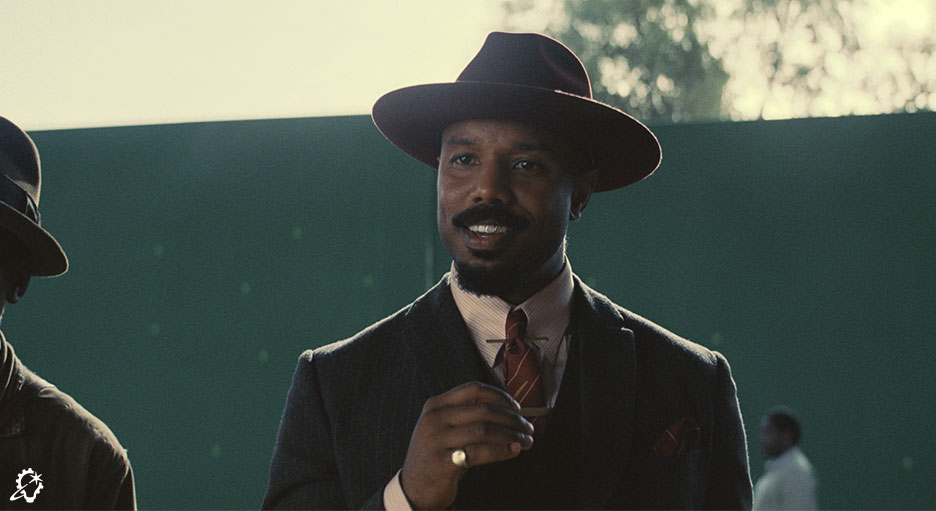
Helmed by writer/director Ryan Coogler, Warner Bros.’ Sinners (2025) defies the boundaries of traditional genres, telling the story of Elijah “Smoke” and Elias “Stack” Moore (both played by Michael B. Jordan) as they return home to establish their own juke joint. Forced to deal with the cruel inequalities of 1930s Mississippi and a ravenous vampire named Remmick (Jack O’Connell), the twin brothers’ exploits are paired with an exhilarating blues soundtrack and live performances. ILM visual effects supervisor Nick Marshall (The Last of Us [2023], Dune: Part Two [2024]) joined ILM.com to outline Industrial Light & Magic’s visual effects contributions to the film, which included a near-fatal encounter with a symbolic rattlesnake and a train’s entrance into a bustling station.

A Bewildering Briefing

“As the ILM visual effects supervisor on the film, I looked after a small body of work, by ILM’s standards, as we handled just under 100 shots covering two different sequences,” Marshall explains to ILM.com. ILM’s work on Sinners took place at ILM’s Vancouver studio, and Marshall recounts how the first story overview he received left him slightly perplexed.

“Early on, people were quite tight-lipped over what this movie was. We had an excellent collaboration with the filmmakers in terms of the technical understanding of the visual effects we were going to do, but the bigger picture was kept close to the chest. Sinners was outlined to us as a period movie with a gangster element to it, and racial segregation was also an important plot point. At the same time, it’s got a big supernatural element, and Michael B. Jordan is playing twins. And, as all of this is going on, the heart of the movie is about blues music.

“When we got this initial brief, we thought it was a bit bizarre but sounded very interesting,” Marshall continues. “There were so many elements to the story that it got to the point where I asked the client if it was going to be a comedy [laughs]. They said, ‘No, it’s actually a serious horror movie.’ As we progressed with our work, the plot unfolded, and we understood a lot more. Even though we didn’t necessarily know exactly what the movie was about until a long way into production, there was such a passion from everyone going into it. We could tell we were working on a pretty special project with a clear vision behind it.”

Rumble with a Rattlesnake

The first ILM sequence to appear in the film centered upon the twins discovering a rattlesnake concealed in their truck bed, leading Smoke to stab the snake with a knife and toss its bleeding body onto the ground. “Ryan described this moment as foreshadowing, as it echoes the moment when Smoke has a standoff with Cornbread [Omar Benson Miller] outside of the juke joint later in the movie. The snake scene is the first time you get a sense that there’s something off and maybe even supernatural about this world that they’re in, so we went deep into trying to give that meaning. The idea of familiars foreshadowing bad events repeats often in Sinners – there are ravens, crows, and vultures which appear throughout the film and establish that there’s a tension building.”

In terms of the snake itself, the ILM team had plenty of information to base their visual effects on, as Marshall notes, “Ryan Coogler is an avid snake collector and knows a lot about them, so we were going to have to do justice to the real thing. Ryan told us how snakes that are shedding their skin get more aggressive – they’re in a heightened state because they’re weakened by it – and that they get a layer of skin that creates a cloudy-eyed look, which ties in nicely to the tapetum lucidum effect that the vampires’ eyes have in Sinners. Production shot a real timber rattlesnake in the back of the truckbed for us as reference, and the one place where we deliberately made a creative change which differed from the real snake, was to give the eyes that shedding-skin appearance. [Animation lead] Agata Matuszak sat down for weeks looking through internet references to find every perfect snake attack shot that she could locate – snakes striking into the camera, at a mouse, or toward balloons and seeing how quickly they move. She became a brilliant source on snake locomotion.”

The scope of ILM’s contributions to the snake sequence changed over time as the edit continued to evolve, with Marshall declaring, “The reference served us well as far as providing a snake to visually match to, but we were originally only supposed to do a single shot of the snake. They were going to capture the snake being uncovered, waking up, and all of that practically, and we would take over when the snake had to be stabbed. However, they couldn’t get a performance out of the real snake on the day of – it was happily toodling around in the truck bed – so we took over and delivered around 10 shots of the snake. Not all of those shots made it into the movie, because they were still experimenting with ideas for what actions they wanted from the snake.”

(Credit: ILM & Warner Bros.)

The ‘Pool Noodle’ Process

ILM’s approach to the snake sequence needed to factor in the reality that Smoke would be interacting directly with the knife and the animal itself. Marshall relays, “For lighting purposes, we had to make sure that the knife was blocked accurately when Smoke brought it down over the top of the snake’s head. We did a basic digital double version of Smoke and reprojected some of the plate back onto that so – if you ever saw anything in a reflection – it had the correct texture of his hands and suit. We kept the knife as practical as we could but eventually took it over because the knife very visibly enters the snake’s head. We reconstructed the knife prop and used that for the reflections of our CG assets and blood interaction.”

Turning to the blood that pours from the rattlesnake, Marshall says, “Our effects team did amazing blood simulations for the blood spatter, and when you see all of the interaction with the knife. When the knife pins the snake’s head, you get blood leaking out from underneath and spreading across the truck bed, as well. Our effects team totally nailed it. The lone aspect we came in to touch up was the blood pumping out of its neck wound when it’s tossed into the long grass. You get a few shots of it writhing around as it’s dying. That ended up being a combination – the effects simulations for the blood spatter as it hits the ground, and we also did a practical blood element shoot at the last minute to sell the sense of the viscous blood pooling on the surface and trickling down the sides.”

This impromptu ILM shoot involved an unexpected tool, as Marshall shares, “We shot it in my backgarden, where it was a construction using a pool noodle that had been hacked apart to represent the snake. We rigged up blood packs to pump blood out of an artificial wound that we had cut into the pool noodle. Our comp team, under the supervision of Okan Ataman, made the best of it and pulled it together using the most successful elements from our effects simulation and our practical shoot. That combination got us over the line, and the client was extremely happy with it.”


Locomotive Magic

The second sequence ILM presided over focused on a train arriving at a Mississippi station. “We did a lot of photorealistic reconstructions of the Clarksdale train station,” Marshall begins. “When we started discussing it, production was going to have a real locomotive come into the station. We were just going to do environment extensions. As it turned out, they struggled to make it work with the timing and location, so we took over the train component too. That became a big deal for us, because we had assumed the practical train would block a lot of our environment throughout the sequence.

“The train wound up being full CG itself, and we were shooting directly into the green screen – which is daunting with visual effects because it can telegraph itself,” Marshall divulges. “Fortunately, production assisted us by building the green screen to the exact height of the train so we’d get correct shadows. Since the train was green as well – which is true to the period – a small amount of green spill contaminating the environment wasn’t necessarily the worst thing. Normally, that would be bad for us, but here it served as a fantastic reference for where the top of the train should sit. It gave us the correct shadow and lighting for what came over the top of the train once we put the train in to replace the green screen. This allowed us to have wonderful light interaction with the characters.”

Real-world references are essential to visual effects work, particularly when dealing with such a distinct time period. “We had tremendous art department concepts that production designer Hannah Beachler put together in collaboration with our production visual effects supervisor, Michael Ralla. Those served as the basis for the broader design of the streets, the kind of signage we would get, and other specifics like that. We supplemented them with our own research for period details about the streetlighting and electronics you’d expect around the trains. At that point, they were going through the transition from steam locomotives to electricity. [Environment supervisor] Anton Borisov pored over old photographs to see what Clarksdale really looked like in the 1930s. We went into an extensive research period to figure out the mechanisms that were active on the rail at that point and how the carriages looked, right down to the numbers you see on the side,” Marshall reveals.

The film’s setting had an impact on ILM’s responsibilities, as Marshall elaborates, “In collaboration with the client, we ensured there was a sense of racial segregation to the environment, so you could see a clear delineation between the side of the tracks reserved for whites and the side that was designated for Black people. It was a key plot point for the movie, and we wanted to do justice to it. Beyond that, our goal was to make everything look as photoreal as possible. The client wanted our work to blend seamlessly so no one would notice that they occasionally relied heavily on visual effects. In certain cases, the visual effects took over the majority of the frame, but it always had to disappear and be completely invisible.”

(Credit: ILM & Warner Bros.)

Buildings, Automobiles, and Bystanders

Although production built a full-scale physical train station to be used on the set, ILM nevertheless offered support in post-production. “We did a bit of repair work on the train station itself, which they did shoot practically. Production put significant time and effort into the building with the understanding we’d handle the majority of the environment extensions. There were a few places where tiles were missing and shingles fell off, and we did the train tracks that the train rolls in on,” Marshall adds.

Research and reference entered play once again when it came time to outfit the environment with traffic and pedestrians. “As far as the cars you see, we sought to add life to the background,” Marshall remarks. “We didn’t want the set extension to feel static, so we researched Ford automobiles from around that time. Cars were fairly limited in their color palette in that era, as you’d tend to mostly have black paint, so we didn’t have to do too much variance in colors for the automobiles.

“Our CG supervisor, Anthony Zwartouw, gathered reference photography and basic assets, then we pieced together the design of the vehicles,” Marshall continues. “Then, we went about building them, and our animation team did a phenomenal job of making the cars seem as if they were trundling over uneven ground. Our compositing team led by Michael Ranalletta, was outstanding too – they went in and fleshed out the background with 2D sprites of people. Production shot a ton of 2D elements of people milling around, holding luggage, talking, and walking about. We used those to populate the backgrounds and achieve the busy, lived-in environment that they wanted.”

(Credit: ILM & Warner Bros.)

“Invisible” Involvement

Marshall indicates that Sinners was shot on large format film, and the shots which ILM worked on were shot on System 65, “a super-wide format that’s been used on movies like The Hateful Eight [2015]. Since film is shot infrequently these days, we had to rebuild and relearn certain parts of the pipeline to be able to cope with that. What might’ve been simple requests in a digital workflow, such as additional takes of a particular shot or extending a frame range, became quite complex and expensive. They had to order those frames to be re-scanned, and there aren’t many people who do it anymore. Certain points were tricky, as it can be difficult to naturally ingest physical film into our digital pipelines. [Color scientist] Matthias Scharfenberg did remarkable work to give us a color process that allowed us to progress with the movie.”

“Along with that, there’s a physical quality to the way Sinners was shot that we needed to emulate too. [Director of photography] Autumn Durald Arkapaw shoots on deliberately de-tuned lenses, and she’ll send them off to have little abnormalities and subtle effects appear in the lenses because she wanted them to have character. Where a lens might customarily be uniform across its surface, hers had slight shape changes. Our compositing team with [comp supervisor] Okan Ataman and [comp lead] Michael Ranalletta did some significant lens profiling work, because things would warp in strange ways and go in and out of focus in places you wouldn’t expect.”

“[Digital artist] Florian Sanchez literally sat for over a month just profiling our lenses to see if we could set the tooling internally, which took a perfect CG render and added those subtle changes. When we’d get our perfect CG renders to come out, we then applied all these effects that were – in many cases – degrading the actual image. However, that made it feel exactly like it was this real film format that could’ve been used to shoot this movie 40 years ago. We’d add tons of grain and noise over the top, plus small dust hits here and there. We wanted our work to not look digital in what was otherwise a sort of analog movie, so we had to reapply those details to our CG.”

Other less-obvious contributions which ILM made to their assigned sequences tied in to the director of photography’s preferred approach to lighting shots, as Marshall conveys, “Autumn shoots with a lot of negative fill – she’ll put up huge black flags and canopies just out of camera to block light and create shaping on the characters’ faces. It’s a more natural way of working, but it meant that the 360-degree high-dynamic range images we’d usually use to light our scenes had massive black canopies in them. When they filmed at the station, they didn’t have a representation of the train when they shot it for real, so when we put the train in, we started getting reflections of those canopies. [CG supervisor] Anthony Zwartouw made sure the lighting across the sequence was solid. Anthony helped us come up with a good system for lighting these shots in a way that let us do a big pass at taking that stuff out digitally and projecting the results onto a low resolution LiDAR scan of the location, so we had a clean digital set which we could use to light our assets.”

(Credit: ILM & Warner Bros.)

Motion Picture Partners

Marshall’s effusive praise for his ILM team extends to the client-side filmmakers, as the visual effects supervisor beams, “My direct contacts on Sinners were Michael Ralla and visual effects producer James Alexander. Not far into our work, I understood that they had a super collaborative team who valued our input. Michael made regular efforts to stop us from referring to ourselves as a vendor. Michael said, ‘You aren’t a vendor, you’re a partner in this process, so let’s scrap that word from the playbook right now.’ To their credit, they walked the walk. When they were out on set, they’d call us to consult on critical decisions. ‘We’ve hit this problem, so do you want us to put a green screen here or there?’ They wouldn’t be able to do both because of budget or time constraints, but they’d involve us in those conversations.”

These discussions benefited ILM’s workflow immensely, as Marshall asserts, “We weren’t waiting to receive plates and unaware of what we’d be getting to work with. We were incorporated into the decision-making and could plan what we had to do.” Marshall attributes the collaborative spirit that permeated the production’s departments to the director, observing, “Ryan’s a collaborative filmmaker, and he’s always present – he’s engaged and drives the film. There was so much respect between the departments, and we each tried to resolve issues you may not even think about.”

Marshall credits the members of his ILM production team for keeping them on schedule and adapting to editorial needs. “Ryan was making adjustments to the timing of the cut as it’s the first time Smoke and Stack separate from each other in the movie, so we built our process to be flexible and allow Ryan the freedom in the edit room.. Our producer Alan Cummins, [project manager] Kaisha Williams, and the production team worked tirelessly to guarantee that we were left with enough time to fit in everything that we needed to do, which enabled the filmmakers to continue making those last-minute changes.”

(Credit: ILM & Warner Bros.)

Valuing Visual Effects

Marshall emphasizes Ryan Coogler’s appreciation for visual effects, professing, “In recent years, you’ve seen a continued trend toward pretending there’s no visual effects involvement in films. Ryan bucks that trend. Ryan shot as much as he could for real on Sinners, but he’s a huge proponent for visual effects being a part of the process. For Ryan, visual effects are absolutely indispensable to the team. It’s nice when a director goes out of their way to give credit to the visual effects companies as another department that brings their vision to life. We never felt as if our contributions were being downplayed.”

Speaking to the role of visual effects in filmmaking as a whole, Marshall says, “All visual effects artists and supervisors want to do is deliver the best work and help people tell interesting stories. Keeping visual effects as part of the conversation is something to be championed, and Sinners definitely did it right. The more that those conversations happen out in the open, the better. When we wrapped our last shot, Ryan sent us a video to thank the team and recognize us for our work. Sinners was a special show to be on in that way.”

The thoughtfulness displayed by Coogler and the entire Sinners crew made the experience of working on the project an exceptional one for Marshall, who concludes by offering his perspective on the completed film, affirming, “Ultimately, there’s so much symbolism in Sinners that I hope people can keep digging back into it and watch the movie again and again. There are so many intriguing parallels and nods to later scenes scattered throughout, and a great deal of history and culture that are crucial to the movie. So much thought went into every frame, and every shot has a purpose and a meaning. Because of that, and because ILM was brought into the loop to aid in making it that way, I hope Sinners will be one of those movies that stands the test of time. In 10 to 20 years, people can rewatch it and say, ‘I’ve never caught that moment even though I’ve already seen it five times. That’s a really nice detail!’”

Watch an ILM exclusive deleted scene from Sinners:

Jay Stobie (he/him) is a writer, author, and consultant who has contributed articles to ILM.com, Skysound.com, Star Wars Insider, StarWars.com, Star Trek Explorer, Star Trek Magazine, and StarTrek.com. Jay loves sci-fi, fantasy, and film, and you can learn more about him by visiting JayStobie.com or finding him on Twitter, Instagram, and other social media platforms at @StobiesGalaxy.

ILM artists share their insights about this distinct installation now on view at Somerset House in London.

By Jamie Benning

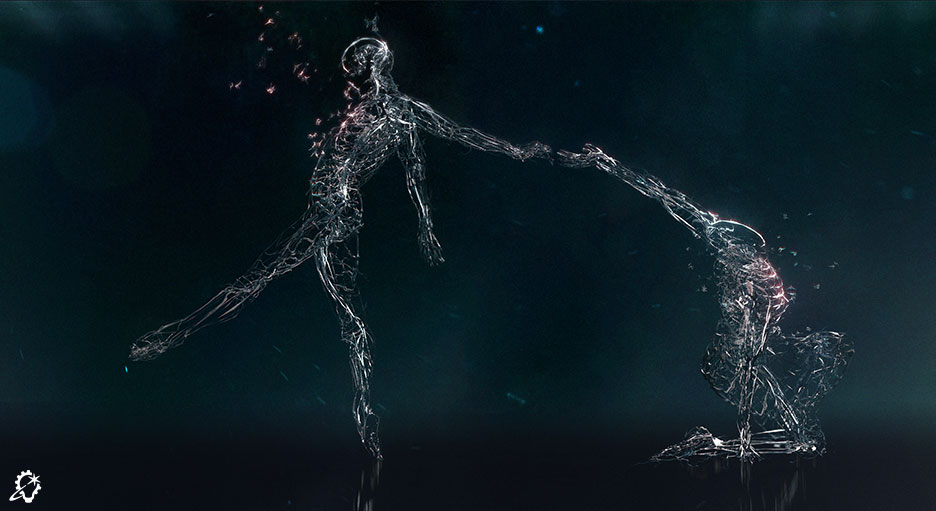
The first thing visitors encounter inside Wayne McGregor: Infinite Bodies at London’s Somerset House is darkness. A vast LED screen fills the room, its shifting light reflected across the faces of those watching. The space is quiet at first, then sound begins to breathe into the room. Two figures slowly emerge. Their bodies twist, merge, and reform, suspended in a deep digital expanse that feels both intimate and endless. It is OMNI, a collaboration between choreographer Wayne McGregor and Industrial Light & Magic, and it sets the emotional, thematic, and sensory tone for everything that follows.

As an entry point, OMNI does not explain itself in conventional terms. It does not offer narrative, character, or spectacle in a familiar cinematic sense. Instead, it presents presence. Motion without edges. Energy without beginning or end. Viewers gather instinctively. Some stand for seconds. Others for many minutes. The work opens and closes in cycles, dissolving into darkness before returning again, as if inhaling and exhaling. It is an installation that encourages stillness before it encourages movement.

Reuniting McGregor with the creative teams and technologists at ILM for the first time since their work together on ABBA Voyage in 2022, OMNI invites viewers into what McGregor calls “a choreographic exploration of the infinite potential of human connection.” Using ILM’s performance capture and simulation technologies, dancers Rebecca Bassett-Graham and Salvatore De Simone perform an unending duet of energies. Their movement is captured, transformed, and re-presented inside a boundless digital plane, a place where the distinction between human and virtual becomes beautifully uncertain.

You do not see the performers themselves, but ghost-like representations and shadows of their digital footprint. Luminous networks of the skeletal and nervous systems glow and decay in cycles of light. Around them, murmuration-like particles drift and swirl, sometimes responding to the dancers’ movements, and at other moments seeming to lead them, creating a shifting dialogue between motion and environment. Form appears, dissolves, reforms. It is at once biological and architectural, organic and synthetic.

The installation was created with ILM visual effects artists Matt Rank, Xavier Martin Ramirez, Edward Randolph, Arnaud Mavoka-Tama, Mike Long, Julien Ducoin, Oscar Dahlén, Alessandro Pieri, and Bimpe Alliu, with generous support from ROE Visual and Studio Wayne McGregor. Positioned deliberately as the first work visitors encounter, the piece anchors the exhibition and mirrors Somerset House’s broader mission to explore the intersection of art, technology, and society.

Concept art by Bimpe Alliu (Credit: ILM).

Conceptualizing Motion

Concept artist Bimpe Alliu was brought onto the project at a very early stage to help shape those initial visual directions. “I was going through the ideas with Matt [visual effects supervisor Matt Rank], and learning more about what the project was going to entail,” she said. “I was playing around with storyboarding a lot of potential movement ideas.”

Rather than beginning with dancers as recognizable figures, the creative team quickly gravitated toward abstraction. For Alliu, the use of murmurations became central to expressing motion without relying on literal anatomy. “It is a beautiful way of capturing movement while still existing as a solid form. There is all this motion and synergy happening at the same time,” she explained. “It also allows for a lot of natural push and pull, which is really exciting when you are thinking about animation.”

Her design process embraced freedom over prescription. “It is fun because it is nice to do something that is a little more abstract. It gets the brain thinking in different ways and allows you to deconstruct form and how to portray it,” she said. “You can tap into other references and use them in different ways. You might think, ‘I can approach this in a completely different way from how I usually would.’ You have a wider park to play within. There is no wrong idea. They are just ideas, and either they land, or they do not.”

Although OMNI was always destined for a monumental screen, Alliu said it was vital not to let format dictate imagination. “You start big, knowing it is going to be on a screen, but you do not let that stop you,” she said. “There was never a point where it felt like, because it is on the screen, you cannot do this or that. It was very much ‘blue sky’ thinking.”

Concept art by Bimpe Alliu (Credit: ILM).

Somerset House and the Culture of Collaboration

Introducing the exhibition, Somerset House director Jonathan Reekie described Infinite Bodies as a perfect embodiment of the institution’s ethos. “Wayne McGregor and Infinite Bodies, in so many ways, encapsulates what Somerset House is all about. Most visibly, Somerset House has been about reimagining the historic building for the future. We developed a cultural program that sits between different art forms, the intersection of culture, technology, and society at large. We are conscious that we are in an ever-changing creative landscape, and therefore, artists are changing and working in different ways all the time. We need to create a space for that.”

Reekie also pointed to the importance of community in shaping new ideas. Somerset House is home to a creative community of nearly 3,000 artists, makers, and entrepreneurs, and collaboration sits at the core of its identity. “We don’t believe great ideas always come from an individual working on their own in a room. They come from community, from groups of people coming together and making great things,” he said. “That’s the way Wayne works.”

For McGregor, this collaborative model has defined his career. His studio, based in East London’s Olympic Park, has long operated as a laboratory for experimentation with scientists, technologists, and other artists. Infinite Bodies brings together more than three decades of his interdisciplinary works and investigations into the subtleties of movement, both human and non-human. Each work within the exhibition operates as an experiment, a proposition about the body’s potential and how technology might allow us to perceive it differently.

Dr. Cliff Lauson, director of exhibitions at Somerset House and co-curator of Infinite Bodies, recalled that McGregor’s polymathic approach was one of the defining reasons he wanted to collaborate. “It was several years ago, and that impulse that I felt about Wayne’s work, and what might make for an interesting exhibition at Somerset House, now has been so gratifying to see after so many years,” he said. “Interesting ideas come out during conversation and collaboration. It doesn’t help anybody to be working in silos.”

Physical Intelligence

When Wayne McGregor took the microphone at the exhibition launch, he spoke with warmth and generosity about the complex process of translating live choreographic practice into a gallery environment. “I want to say thank you to Somerset House and to Cliff and Jonathan and to all my team at Studio Wayne McGregor because it’s been a huge challenge,” he said. “I’m used to making. I’ve made something like 200 pieces at this stage. That’s been a huge passion for my kind of choreographic practice. But I’ve always had a parallel practice, and that parallel practice has been in research and testing ideas around the notion of physical thinking.”

At the heart of Infinite Bodies is McGregor’s long-standing interest in what he describes as physical intelligence. The exhibition invites visitors to reconsider their own physical awareness and their relationship to technology. “Technology is not outside of ourselves,” McGregor said. “The body is the most technologically advanced thing we’re looking at. I’ve not seen any form of technology that surpasses the living body, its ability to create, to respond, to be spontaneous, to feel.”

This tension between embodiment and computation, between instinct and algorithm, runs through OMNI in particular. It reframes dance through light and motion while still preserving the physical presence and emotional weight of performance.


From Film to Immersive Space

For ILM, OMNI provided a rare opportunity to apply cinematic tools to an environment that does not behave like cinema. “I’ve spent my career digitising the real world, real people, real environments, and turning that into assets that we can use in CG,” said Matt Rank, ILM’s visual effects supervisor on the project. “My role has taken me full circle. Now we’re taking computer graphic content and displaying it back in the real world.”

Rank’s work sits at the intersection between traditional visual effects, virtual production, and emerging immersive media. “What we found from ABBA Voyage and with Infinite Bodies is that shared experience, people coming together is what matters,” he said. “That’s where we’re pushing our content and technology, a shared, meditative experience that people can have together.”

Working with McGregor offered a fundamentally different creative starting point. “We’re used to working with studios and directors who have very specific briefs on where they want the creative to be led. Working with Wayne was a blank canvas. We spent a lot of time understanding what this piece should be, and maybe more time understanding what it shouldn’t be,” Rank said. “He didn’t necessarily want to see the form or the shape of his performers, but how their movement reflected through the body. That became the first aesthetic for the piece. From his feedback, we then started work with our own art department, bringing these ideas and concepts to life to present back to Wayne in more unique visual forms that would set the tone of the final piece.”

Rank described OMNI as “… an abstract piece, but it is quality, it feels photographic. Even though there’s real-world elements about it, it kind of sits within your psyche. It doesn’t make you feel uncomfortable either.” He also pointed to natural phenomena as key influences. “There is a nod to how birds flock and dance in the sky, and how plankton can emit light when it is disturbed by movement, and these carried through into the final piece, represented by the murmurations seen across the two looks.”

ILM Beyond the Frame

Reflecting on ILM’s wider creative mission, Rank said, “We’re all storytellers. We love collaborating with directors, but doing that in new forms and new mediums is incredibly exciting. Our world is becoming ever more interconnected, and we’re keen to explore what we can do in those spaces. With a smaller team, you can be really agile and get to results faster.”

For Alliu, projects like OMNI underline the breadth of what ILM represents today. “It showcases to people that want to work with companies like ILM that there are so many different kinds of projects we create,” she said. “People do not just think of ILM as one kind of thing anymore. They start to see that there is a much broader range of work.”


Seeing the completed exhibition in sequence gave Alliu a new perspective on how OMNI functions within the wider narrative of Infinite Bodies. “Coming straight out of seeing the work that we did and then going into everything else, it suddenly felt like being grounded back in the physical space again,” she said. “It was really nice seeing all the different interpretations of movement and communication, the role digital plays in that, and the fact that it still very much needs the physical. It still very much needs the body, the person, and the movement.”


She also sees that visibility as vital to the industry’s future. “It gives people the understanding and the option to think, ‘This is something I could do,’ and they start to think about careers in this space,” she said. “We still need that human input. You still need that eye, that instinct, and that creativity behind it all.

“Art and science have always co-existed on many levels, and technology is also a part of that, especially as a lens by which we’re able to understand, explore and conceptualise both,” Alliu added. 


As Reekie observed, Somerset House’s role is to provide artists with the space to imagine new futures. “It’s up to the artists to tell us what the future might look like because they’re the best people to help us navigate it,” he said.

Infinite Bodies offers one such vision. A space where choreography, light, and digital craft meet. A reminder that innovation is not just about machines, but about the bodies, instincts, and creative impulses that continue to drive them. ILM continues to explore how those instincts and tools translate beyond film and into shared physical spaces.

Concept art by Bimpe Alliu (Credit: ILM).

Jamie Benning is a filmmaker, author, and podcaster with a lifelong passion for sci-fi and fantasy cinema. He hosts The Filmumentaries Podcast, featuring twice-monthly interviews with behind-the-scenes artists. Visit Filmumentaries.com or find him on X (@jamieswb) and @filmumentaries on Threads, Instagram, Facebook, and YouTube.

ILM.com is showcasing artwork specially chosen by members of the ILM Art Department. In this installment of a continuing series, four artists from the San Francisco, Vancouver, and London studios share insights about their work on the 2025 Netflix production, The Eternaut.

Supervising Art Director Fred Palacio

During pre-production, one of the key ideas here was to show how the characters were trapped in the city, isolated from the external world. The snow here is the first lethal weapon that killed most of the population, but something else is happening. A barricade along the Puente Saavedra shows that something else is happening, something more extraordinary. This keyframe shows the character isolated against all the odds, the snow, the loneliness, the urban chaos. 

One of the most important things working on the project was to have the vision of the people who live there when this is happening. The Client and the novelist were from Argentina where the film is played. So the first step for authenticity was to become immersed in the Argentinian world. Diving into memories of the city I visited and merging with an exact location, walking through street views online. Finally, translating the situation into a frame, one by isolating the character, but also using the bridge to undermine his power, the point of view and camera position is determinant to sell the situation of the character. 

The resilience to overcome the giant wall made of all sorts of human-made things to suggest the Alien presence, even the sign in the bridge is a message to the viewer translating “everything has a prelude.” The element here needs to reflect how an ordinary man in an ordinary world resists all the extraordinary events and obstacles. The green bag means a forward action, the red light tells not to go back, the perspective of the bridge points back to the car and another figure hinting to cohesion…all these elements tell something about the story but also about the character’s attitude toward those obstacles.

Art Director Amy Beth Christenson

This is an early study for a specific neighborhood in Buenos Aires, just after the snowfall, where Juan is discovering the aftermath. I worked to position cars and people so that it conveyed a sense that what happened was sudden and unexpected. I researched the original comic quite a bit, and also did a lot of research to make sure that the specific neighborhood was accurate so that it felt very real.

I like the sense of a rosy pre-dawn, almost peacefulness to the scene, which is a contrast to what has happened. Looking at the day-to-day life images of people, and thinking about what it would look like if they were taken mid-stride, gave me ideas, like a woman walking her dog, people carrying groceries, etc., which helped the images feel more eerie.

I was on the project just for the very early initial concepts, specific to the immediate aftermath of the snowfall, and what those moments might look and feel like, and didn’t iterate beyond these. At these early stages, I wanted to get ideas for lighting and composition down early, and worry about details later.

Art Director Tyler Scarlet

This piece depicts alien creatures that are about two feet tall and who can work in a pack. The client really liked the look of microscopic dust mites, so I used that as a starting point and expanded from there. They responded to different elements from my first round, so I worked on combining the hard-shelled version with one that looked similar to a dust mite. The next step was to show it in action. I explored concepts of it attacking people, wrapping bodies in its web, and dragging them away. They are also scavengers so I did an illustration showing that as well. 

For the first pass I wanted to give the client a range of different types of creatures while still fitting the brief of a six-limbed dust mite-like creature. One version was very close to a realistic, large dust mite, another version had a hard shell, jointed legs and claws at the end of its limbs to grip onto its prey, and the third version was more aerodynamic and looked like it was built to move fast. I like how it looks when it’s coiling its web around its victim! [laughs]

This client was one of my favorites I have worked with. They came to every meeting with such excitement, passion, and appreciation. 

See the complete gallery of concept art from The Eternaut here on ILM.com.

Learn more about the ILM Art Department.

Frankenstein and The Lost Bus are recognized while ILM also contributes to two other nominated films.

The BAFTA Film Awards announced their 2026 nominees today, and artists from Industrial Light & Magic have earned two nominations in Outstanding Visual Effects for their work on Frankenstein and The Lost Bus.

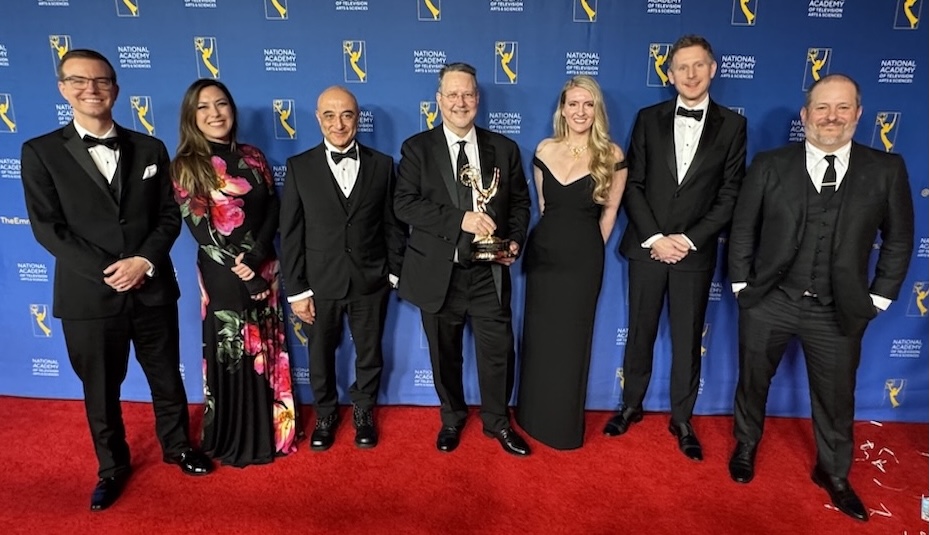
ILM visual effects supervisor Ivan Busquets joins fellow visual effects supervisors Dennis Berardi and Ayo Burgess and model effects supervisor José Granell for director Guillermo del Toro’s Frankenstein.

And for The Lost Bus from director Paul Greengrass, ILM visual effects supervisor David Zaretti joins production visual effects supervisor Charlie Noble and special effects coordinator Brandon K. McLaughlin.

Additionally, ILM contributed to other Outstanding Visual Effects nominees Avatar: Fire and Ash and F1.

Congratulations to our ILM nominees! The 2026 BAFTA Film Awards will be held on February 22 in London. Read the full list of nominations here.

Read more about The Lost Bus here on ILM.com:

Rendering a Rescue: ILM’s Dave Zaretti on the Visual Effects of ‘The Lost Bus’

ILM artists for Jurassic World Rebirth and The Lost Bus earn nominations.

Nominations for the 98th Oscars were announced today in Los Angeles, and Industrial Light & Magic contributed to all five nominees in the Best Visual Effects category: Avatar: Fire and Ash, F1, Jurassic World Rebirth, The Lost Bus, and Sinners.

Artists from Industrial Light & Magic earned two nominations in the category.

For Jurassic World Rebirth, our ILM nominees include production visual effects supervisor David Vickery, animation supervisor Stephen Aplin, and ILM visual effects supervisor Charmaine Chan, along with special effects supervisor Neil Corbould.

“Still wrapping my head around the Oscar nomination for visual effects on Jurassic World Rebirth,” Vickery tells ILM.com. “I’m immensely proud of the work. Thank you to everyone who voted for us, but above all – well done to everyone who poured their hearts, souls, and creativity into this special project. You all deserve this!!!”

Aplin adds that “this nomination is such a fantastic reflection on the hard work and dedication the entire ILM team has contributed to the visual effects of Jurassic World Rebirth. Personally, my passion for this craft was jump-started after watching the original Jurassic Park when it first came out in theaters, so getting to play in that world and receive such a fabulous honor is a dream come true. Thank you, and congratulations to all nominated in this category.”

“To be nominated for our visual effects on Jurassic World Rebirth is an absolute honor,” says Chan. “Like so many in this industry, the original Jurassic Park was the film that made me believe the impossible is possible. That motto rang true across our global ILM teams as they passionately created stunning imagery to bring Gareth Edwards’ vision to life. ​I am incredibly proud of what we accomplished together and thank the Academy for this recognition.”

The Jurassic World Rebirth nominees at the recent visual effects bake-off event in Los Angeles (Credit: ILM).

For The Lost Bus, ILM visual effects supervisor David Zaretti has been nominated along with production visual effects supervisor Charlie Noble, beloFX visual effects supervisor Russell Bowen, and special effects coordinator Brandon K. McLaughlin.

“Wow! What an honor to be recognised by the Academy for the work we did retelling the story of Paradise,” Zaretti tells ILM.com. “I’m so proud of the whole team for their hard work and creativity. It was a great experience to work with Paul Greengrass, helping him do what he does best. Given the quality of the visual effects across the board this year, it feels extra special to make it this far.”

The Lost Bus nominees at the recent visual effects bake-off event in Los Angeles (Credit: ILM).

Congratulations to all of our ILM teams for their work on this year’s nominated films, and best of luck to our ILM nominees!

Read more about Jurassic World Rebirth and The Lost Bus here on ILM.com:

“What Do We Have To Do To Make it an 11 out of 10?”: Visual Effects Supervisor David Vickery on ‘Jurassic World Rebirth’

Rendering a Rescue: ILM’s Dave Zaretti on the Visual Effects of ‘The Lost Bus’


Cutting-edge digital artistry, modern inspiration, and retro callbacks help launch the latest Tron adventure from the cyber world into reality.

By Clayton Sandell

Light Cycles, Super Recognizers, and Programs roar off the Grid and into the real world for the first time in Tron: Ares (2025), a four-decades-in-the-making moment that challenged Industrial Light & Magic to deploy a full creative arsenal to make the impossible real.

ILM’s David Seager served as the production visual effects supervisor for the third entry in a franchise that began with the original 1982 film Tron and continued with 2010’s Tron: Legacy. The first Tron movie follows the adventures of software engineer Kevin Flynn (Jeff Bridges), who is trapped inside a neon digital realm where computer programs appear as human avatars.

Then-nine-year-old Seager became an instant Tron devotee. “I was very excited when this opportunity came along, so I definitely jumped at it,” he tells ILM.com. “Tron, for me, was right up there with the Star Wars franchise and many of those types of films.”

Directed by Joachim Rønning, Tron: Ares stars Jared Leto as the titular hero, a sophisticated Master Control Program reporting to Dillinger Systems executive Julian Dillinger (Evan Peters). Ares is billed as the ultimate soldier and the first artificial intelligence being – or construct – to appear in the real world. But outside of the Grid, Ares can only live for 29 minutes, sending Dillinger and rival company ENCOM on a quest to find Flynn’s long-lost Permanence Code that will extend a construct’s lifespan. When ENCOM CEO Eve Kim (Greta Lee) discovers the code first, Dillinger dispatches Ares and his second-in-command, Athena (Jodie Turner-Smith), to track her down and steal it.

Inspired by Modern Tech

Inside a massive Dillinger complex hangar, Ares and Athena– along with their Light Cycles – are brought into physical form by an array of rapid-firing red particle lasers attached to robotic arms.

“Using lasers to get to and from the Grid has been part of Tron since the beginning,” Seager explains. “So we knew there was going to be a laser component to it. But also, I thought it was a great opportunity to show that the Dillinger company isn’t making games anymore. They’re more a part of the military-industrial complex, so it was always important that it had an industrial feel.”

During preproduction, design inspiration came from a 3D printer purring away in the art department. “It was in one of our meetings where we just happened to look over, and there was a print in progress,” recalls Seager. “And it had the support structure surrounding it, this kind of ‘jig’ structure, as we called it.”

Incorporating the concept of 3D printing helped ground the sequence in a visual language people are familiar with, Seager explains. There’s even an added storytelling flourish when the mass of rough, excess jig pieces builds up and suddenly collapses, exposing the object underneath. “We wanted it to feel messy, and then it just falls away, and there’s the creation. It was one of those happy accidents,” Seager says. “It became a really great reveal.”

Concept art by Jason Horley (Credit: ILM & Disney).
(Credit: ILM & Disney).

Cycles and Walls of Light

Riding their Light Cycles at high speed through nighttime city streets and across bridges, Ares and Athena pursue Eve in a sequence largely shot on location in Vancouver, Canada. “It became very evident that we all wanted to go shoot as much as possible on location,” Seager recalls. “You get a million little things that happen organically.”

On set, modified Harley Davidson electric motorcycles stood in as proxies for the Light Cycles, outfitted with practical lighting to cast realistic reflections and glow onto the wet pavement. “It became our job in visual effects to go in and replace the proxies that we created for the Light Cycles,” says Seager. “We had to replace 100% of them.” The special effects department also built hero versions of the Light Cycles for shooting close-ups of the actors, either against a blue screen or an LED screen.

During the chase, the Light Cycles emit a signature Tron element in their wake: lethal ribbons of reddish, semi-transparent light. The challenge, Seager explains, was making the light walls work visually in a non-Grid environment.

“That was more traditional look development work – adjusting the amount of refraction, reflection, and brightness and those types of things,” according to Seager. “There’s a little bit of heat distortion. We want it to feel hot. And because it was very easy for it to feel glassy, and there’s a certain brittleness that comes with glass, you’re like, ‘Oh, we don’t want that.’”

(Credit: Disney).

In one of the film’s most memorable shots, a light wall slices a police cruiser into perfect halves, an effect that uses a combination of practical and digital techniques.

“That was a real car,” Seager reveals. “The special effects team was like, ‘Oh, we could build this!’ So they took a car and chopped it right down the middle lengthwise. It was a repeatable stunt, and there was limited steering they could do after the split. We ended up having to shoot it a couple of times, but the vast majority of what you see is the stunt that we shot. And then we have to go in and make the edges seem glowing hot – like it just got cut – and add steam and those types of things coming out.

“Light Cycles are to Tron like lightsabers are to Star Wars,” Seager adds with a smile. “I’m so proud of what we achieved in the Light Cycle chase.”

One of Seager’s favorite moments in the sequence is a Light Cycle sideways slide that pays homage to an iconic shot in the landmark 1988 anime action film, Akira. “I’m a lifelong anime fan and fell in love with Katsuhiro Otomo’s manga of Akira and was one of the first kids in town to obtain a VHS copy of the anime,” Seager says. “Needless to say, it is very rare to be able to work on a project that combines two influential films from your childhood.”

A climactic street battle between Ares’s and Athena’s armed Dillinger sentries features a weapon that proved to be one of the more challenging effects to pull off: the Light Staff.

“It’s the fun new weapon that was introduced in our film. The idea is a staff that you could fight with, and the ends emit a white ribbon four or five inches wide,” Seager explains. “We came up with the idea that you’d have this almost dial-up lifespan, so the light ribbon could last a second, or two seconds, or five. We knew Joachim always wanted them as long as possible, but there were times when they had to go away.”

The Light Staff fight required complex coordination between the actors and stunt performers on set, but the frenetic pace of the action sometimes created unavoidable visual conflicts. “I’d be sitting there going, ‘Wait a second, if they swipe like this and then they run forward, their head just hit the thing,’” remembers Seager. “You have to almost think in terms of, ‘Oh, I need to duck under this.’ I think everyone did a great job of trying to choreograph the fights.

“We got as close as we could during shooting,” Seager continues. “And then in postproduction, we went in there and started tracking the staff and emitting the beam from it. We just started going, ‘Oh, there’s a problem there.’ And you just have to go try other things.”

Seager says some fun and unexpected ideas also popped up during shooting. “The stunt team came up with the idea of characters making a light ribbon and using it to jump off of,” he says. “So there are cool moments where Ares basically creates terrain for himself.”

Another visual quandary came with the Super Recognizer, a massive flying security transport that Athena pilots into the city as she searches for Eve. “The design work was beautiful. I think our biggest challenge was how big it was,” Seager says. “We had our LiDAR and survey data of real Vancouver streets, and when we put those two together for the first time, we’re like, ‘Okay, the Recognizer doesn’t fit into any street.’

“There’s a fair amount of digital surgery where we had to kind of wipe the city away because if you make the Recognizer too small, the threat goes away,” continues Seager. “So we were trying to find that balance. But the main work we did there was trying to find ways to make it fit.”

(Credit: Disney).

Enter the Grid(s)

Much of the look of the ENCOM and Dillinger Grids is inspired by designs established in Tron: Legacy by production designer Darren Gilford, who returned for Ares.

“The Dillinger Grid – the red one – definitely followed the aesthetic of Tron: Legacy with a dark, shiny, almost wet look to it. It’s atmospheric, and it has a stormy feeling,” says Seager. “Darren always talked to me about that Grid being inspired by circuit boards.”

For both Grids, the production built a combination of complete and partial sets on a Vancouver soundstage. “Most of the big sets that we built were for the Dillinger Grid,” Seager says. “There were two major red rooms. One we called the ‘extraction’ room, which is where Eve is printed into the Grid and where Ares later escapes. And then there was what we call the ‘regeneration’ room.”

Seager credits the production art department for crafting beautiful, practical sets that, in many cases, only needed minimal digital enhancement, like adding ceilings or extending walls. “Early on in the show, I took some pictures as we were building the set and doing walkthroughs, and I sent them to one of my fellow ILM supervisors because they were very pretty. And they were like, ‘Oh, that’s great looking concept art.’ I was like, ‘That’s not concept art!’” Seager laughs.

For a sequence in which Ares and his team infiltrate the blue-tinted ENCOM Grid, ILM took on extensive digital world-building. “That was a little more traditional blue screen work,” says Seager. “We built minimal floors and then expanded from there because the characters had to cover a great distance. We built the staircase that we could shoot against, but in post, we did the rest of the environments.”

Seager explains that the ENCOM Grid also offered a chance to break from a traditional nighttime look to portray a more daylight setting. “We just wanted it to feel thematically brighter,” he says. “It’s the sunny, good-guy Grid. It’s still overcast, but it’s not quite darkness. That has its own challenges because light lines look great when it’s dark out, but if you turn the lights up and also have a competing bright scene, now you’re trying to make the bright light lines work.”

(Credit: Disney).

Still hunting for the Permanence Code, Ares is transported inside Flynn’s original server,

providing audiences a nostalgic visit to the relatively primitive digital landscapes of the 1982 classic. “It was a lot of fun, and I actually consider it one of the more challenging developments on the show,” explains Seager. “ ‘Challenging’ usually means ‘big, big, big.’ And this one was challenging going the other way. It’s stripping away, it’s simplified.”

Executing the retro look of the Flynn Grid fell to the team at Distillery Visual Effects in Vancouver, which worked to incorporate updated versions of the distinctive visual artifacts from the 1982 film, like flickering faces, desaturated skin tones, and backgrounds marked by noticeable “frozen grain.”

“In visual effects, if you have frozen grain, your shot is broken,” Seager notes. “In our shots, we intentionally added frozen grain to the background to try to make it look that way. The light suits built by WETA Workshop were immaculate, but we actually made them kind of flicker and the edges kind of wobble because we wanted to have a little bit of a hand-rotoscoped feel.”

Seager says the Flynn Grid is loaded with Easter eggs – including an appearance by the binary guide known as Bit – that he hopes fans will pick up on. One of his favorite throwbacks can be seen as Ares takes control of a classic yellow Light Cycle and follows Bit off the Game Grid through the same jagged hole used by Flynn and his companions to make an escape back in 1982.

“We went in, and we looked at that exact break pattern. True fans hopefully can see that it’s the one they made 40 years ago,” Seager says.

(Credit: ILM & Disney).

Opening the Complete ILM Toolbox

ILM Stagecraft’s LED volume technology proved invaluable for scenes set in very different exterior and interior environments. Assembled on a soundstage at Mammoth Studios near Vancouver, the volume completed the snowy landscape around a remote mountain station in Alaska, where Eve and her partner, Seth Flores (Arturo Castro), use the Permanence Code to assemble an orange tree in the real world.

“There were also two offices. Dillinger’s office, which overlooks the transfer bay, was built maybe 16 feet up, then we hung LED screens outside the windows. And the scene out there was a fully realized 3D version of the transfer bay,” Seager says. “The ENCOM office set also had an LED cityscape when you looked out the windows.”

The production employed the same volume ILM used for season one of the Disney+ series Percy Jackson and the Olympians (2023-present). Scenes inside the Grid featuring Ares speaking with Julian Dillinger’s digital visage utilized MEDUSA, the Academy Award-winning facial capture system developed by ILM and Disney Research Studios. For action scenes, ILM FaceSwap tools were used extensively to put an actor’s likeness onto a stunt double.

Director Joachim Rønning and actor Jared Leto (Ares) on the set (Credit: Disney).

The Home Team Advantage

Work on Tron: Ares was primarily divided between ILM’s Vancouver and Sydney studios, with additional contributions from Distillery Visual Effects, Lola Visual Effects, Image Engine, Prologue, GMUNK, Imaginary Forces, and OPSIS. Seager, who lives in Vancouver, says having Tron: Ares shoot in his home city provided a rare opportunity for the ILM team to observe the production process up close.

“For the artists, it’s huge,” Seager insists, “because it’s really hard to get experience on set for up-and-coming talent. We had a great relationship with the production team, so I was able to bring a lot of the folks out to get their first-ever on-set exposure. We tried to take advantage of that as much as possible.”

Seager adds one more Vancouver factoid: When an F-35 fighter plane slams into the Super Recognizer, the massive craft crash-lands in front of a building that in real life is only half a block from ILM’s Vancouver studio.

(Credit: Disney).

Now You See Him, Now You Don’t

Tron: Ares contains just over 2,100 visual effects shots, but Seager says there’s one illusion the audience will never notice. Early in the film, Dillinger introduces Ares to a group of shareholders. Appearing for the first time inside a Dillinger Systems Amphibious Rapid Response Tank, or DART, he wears a black Light Suit with glowing red accents and a highly reflective helmet hiding his face.

But when the scene was first shot, Jared Leto was not wearing a helmet at all.

“An idea came in postproduction to have him be this faceless automaton that reveals at the right moment,” Seager says, explaining that it was up to digital artists to craft a highly reflective CG helmet from scratch, matching it perfectly with the Light Suit and practical environment. Adding to the challenge: Leto had long hair that needed to be painted out of every shot.

“I don’t think people will ever know the work we did,” remarks Seager. “The camera is inches from his face in some of the shots where we had to track the helmet in there. In that entire scene, those helmets are all digitally added shot-by-shot.”

(Credit: ILM & Disney).

End of Line

Seager has much praise for the hundreds of artists and collaborators who made working in the Tron universe such a rewarding challenge, and especially director Joachim Rønning.

“Paramount to Joachim’s vision was that he never wanted this to feel bigger than life. It’s really easy to toss a lot of gimmicks at something set in the real world, and all of a sudden it starts to not feel as grounded. So it was trying to find that sweet spot where it felt like you could believe you’re watching from the street corner.”

Instead of watching from a distance, however, Seager found himself at the creative center of the Tron universe, drawing on 40-plus years of fandom to help bring the latest chapter to the big screen. “It was a dream come true,” he says.

Read more about Tron: Ares here on ILM.com:

ILM’s Jeff Capogreco and Jhon Alvarado Take Us Into the Grid of ‘Tron: Ares’

Inside the ILM Art Department: ‘Tron: Ares’

Clayton Sandell is a Star Wars author and enthusiast, Celebration stage host, and a longtime fan of the creative people who keep Industrial Light & Magic and Skywalker Sound on the leading edge of visual effects and sound design. Follow him on Instagram (@claytonsandell), Bluesky (@claytonsandell.com), or X (@Clayton_Sandell).