London News

50 Years | 500+ Film and TV credits | 135+ Awards

SINCE 1975

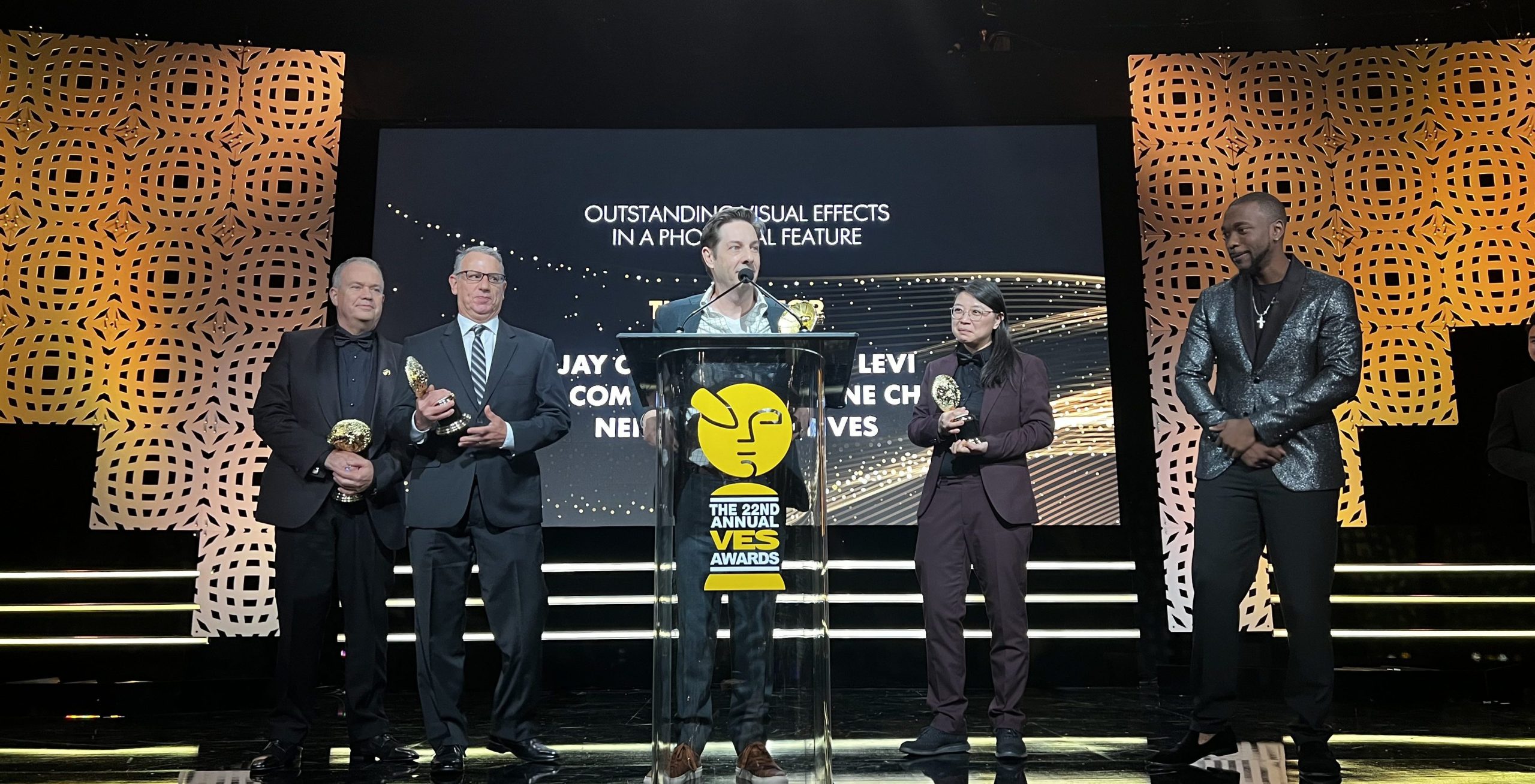
Wednesday evening, the Visual Effects Society (VES), the industry’s global professional honorary society, held the 22nd Annual VES Awards, the prestigious yearly celebration that recognizes outstanding visual effects artistry, and innovation in film, animation, television, commercials, video games, and special venues.

ILM’s work on The Creator earned six nominations and won four awards including the coveted top prize Outstanding Visual Effects in a Photoreal Feature, Outstanding Created Environment in a Photoreal Feature, Outstanding Model in a Photoreal of Animated Project, and Outstanding Effects Simulations in a Photoreal Feature, with a partner company winning a fifth award for the film for Outstanding Compositing and Lighting in a Feature.

ILM’s work on Darren Aronofsky’s groundbreaking film Postcard from Earth won for Outstanding Visual Effects in a Special Venue Project while The Mandalorian (Season 3) won for Outstanding Effects Simulations in an Episode, Commercial, Game, Cinematic or Real-Time Project.

“It’s a true testament to our amazing global teams that our work was honored by our industry colleagues on the winning shows noted above as well as the ILM shows that were nominated, including Indiana Jones & The Dial of Destiny, Ahsoka, Willow, Mission: Impossible, Dead Reckoning Part One, Dungeons & Dragons: Honor Among Thieves, Napolean, Killers of the Flower Moon and Guardians of the Galaxy, Vol. 3” said Janet Lewin, ILM General Manager, “I couldn’t be more proud of our teams.” 

Visual effects supervisors Jay Cooper, Andrew Roberts, Charmaine Chan, and Ian Comley take us behind-the-scenes of an unusual visual effects challenge.

By Lucas O. Seastrom

Ever since George Lucas and John Dykstra sat down in 1975 to discuss the former’s vision of capturing dynamic aerial dogfights between miniature spaceships in Star Wars: A New Hope (1977), Industrial Light & Magic (ILM) has made an art of solving creative problems in close partnership with filmmakers. As Lucas’ vision challenged ILM’s capabilities nearly 50 years ago, The Creator (2023) writer/director Gareth Edwards proposed an unconventional approach to filmmaking that would keep the visual effects crew on their toes.  

Proof of Concept

Edwards first collaborated with ILM on Rogue One: A Star Wars Story (2016), channeling the same rebel spirit of Lucas’ A New Hope. Envisioning his own science-fiction tale in The Creator, he would also channel Lucas’ audacity for pushing the limits of ILM’s capabilities. It began some years ago when he asked ILM’s executive creative director John Knoll (who supervised the visual effects for Rogue One) if the company was able to assist with a test reel that would demonstrate Edwards’ vision for a movie about a futuristic Earth where humans and artificial-intelligence lived side-by-side.

“Gareth and his producer [Jim Spencer] went to Asia on what he described as a scout, but he also brought a camera along,” explains Jay Cooper, who would become The Creator’s overall visual effects supervisor for ILM. “He shot in a number of different locations to create a sort of think-piece, very documentary-style footage. Then he came to us asking to put some 50 shots together, which John supervised.”

Edwards provided his footage only. There was no accompanying data, no lidar scans, no HDRI captures of environments, none of the usual resources that visual effects artists rely upon. The challenge was to integrate digital elements – characters, vehicles, and locations – into the existing footage, including the replacement of real people, or components thereof, with robotic technology. “We tried to create rapid prototypes of what shots could look like by doing them in a more heavily-2D way,” Cooper explains. “We’d take frames, do a draw-over with James Clyne, who became the film’s production designer, and with a bit of fast projection work, get them into shots. We got a really convincing look with a modest amount of effort. Gareth explained that shots that usually take two or three months of work could be seen in three or four days.” 

The proof-of-concept not only sold Edwards’ backers to make the film, but gave ILM a model for developing effects on a feature-length scale in this unusual, after-the-fact method. The Creator would be shot primarily on location in Thailand with a small crew and fewer resources. “Gareth wanted to shoot this ambitious movie,” says Cooper. “The artwork was phenomenal, but the catch was that we’d be really uncomfortable because we wouldn’t be given the things we were used to. We wouldn’t stop for a clean pass every time. We wouldn’t always know what all the shots we’re going to be because those would be determined in the edit. There were enormous designs for the scope of the movie. This was a big swing, it was sink or swim. So off we went.”

On the Ground in Thailand

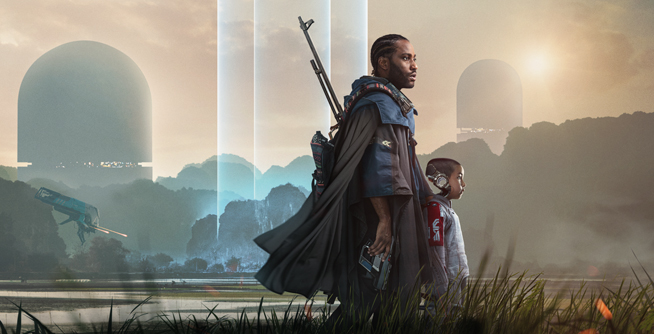
Edwards remained committed to maintaining a fast, improvisational shooting style, often handling the camera himself. He would not inhibit his ability to engage in the moment with his actors, who included John David Washington as the protagonist Joshua, a world-weary soldier in search of his lost love, and Madeleine Yuna Voyles as Alphie, an artificial simulant in the form of a young girl who acts as both the story’s heroine and MacGuffin. Instead of the usual small team of visual effects personnel, ILM would send just one representative to Thailand, visual effects supervisor Andrew Roberts.

Roberts would be responsible for both consulting with Edwards and crew, including cinematographers Greig Fraser and Oren Soffer, as well as capturing as much data for each respective shot as he possibly could. “I was there to help make sure that things were filmed in a way that would give ILM the best chance of producing great, photoreal work,” Roberts says. “I wasn’t going to get in Gareth’s way.

“Early on, we had scenes with robots and humans existing together,” Roberts continues. “I asked Gareth which of the actors would be made into robots so I could mark them. Even if we’re not putting them in the motion-capture suits, I could take measurements and make a turntable, all to give the team information. Gareth looked at me and said, ‘Don’t know.’ It wasn’t something he wanted to focus on. He would pick actors to make into robots later. I wasn’t sure how aggressively he was going to create negative space with these characters. It turned out that their bodies were more or less the same, and you’d mainly see the mechanism when it came to their arms and their heads. But I still didn’t know at the time, so I recorded the information about where Gareth was pointing the camera and determining what backgrounds I needed to capture to reconstruct a clean plate.”

Another major challenge involved the simulants, A.I. characters who appear human, save for the aft portion of their heads, which feature a bold mechanical structure. Edwards and Clyne had created initial concept art, but it was left to Roberts and Cooper to determine the best means to track the live actor’s facial movements onset in order to integrate digital components during post-production. 

“I think the movie doesn’t work at all if you can’t get a convincing Alphie,” says Cooper. “It’s where your eye is looking. There are 400 shots of her. In prep, I pitched the idea of putting a sock over her head and dressing the edges of where the contours are so that we know exactly how to define the delineation point between where her mechanical components connect to her skin. I asked about doing makeup to address the edges, and we could fill in the rest. Gareth said, ‘No, we’re not going to do that because I need her.’ When you’re working with a child actress, there’s only so many hours you can work. He wanted her onset for every minute she could be. 

“Then we had to figure out what we could do in terms of tracking dots that were low impact and didn’t interfere with the acting,” Cooper says. “I explained the ask to [layout supervisors] John Levin and Tim Dobbert, and said that I didn’t know exactly what the designs were going to be, but they said, ‘Well, let’s put some tracking dots on the bridge of her nose, one on the temple, a couple on her neck, and we think we can figure that out.’ So that’s what we did! [laughs] It’s a leap of faith.” Roberts then collaborated daily with the makeup department to place tracking dots on the simulant actors, each of whom required a unique arrangement because of their varying physiques.

“The benefit of having someone like Gareth is that he used to be a visual effects artist and he has a clear idea of what the end result will be,” explains Roberts. As an example, he explains how Edwards shot an early moment in the film when Joshua watches the suborbital ship NOMAD launch a missile at a group of small vessels just offshore. “Gareth knows that he wants NOMAD to be in frame, so he’ll frame for it and then tilt down to Joshua watching from the beach. Another director might be focused on the action in front of them, and in post they’ll ask if we can extend the frame and create a digital move. The majority of directors don’t think about those things in advance. So when I’m observing a shot like that where Gareth is tilting the camera, I’ll wait for the cut and ask him, ‘During that tilt, what are you seeing?’ Then I’ll make notes.”

After crisscrossing Thailand, often covering multiple locations in a single day, cast and crew traveled to Pinewood Studios in the United Kingdom, where ILM had contstructed a StageCraft volume as part of its virtual production toolkit. There, two major sequences were captured for the end of the film, when Joshua and Alphie board NOMAD. “It takes a lot of work to do StageCraft correctly,” notes Cooper, who used the tool for the first time on this show (as was the case for Edwards). “You have to be very careful that it’s the right fit. If I think about our goal as a movie, which was to always find real locations, there were only a couple of places where there was no equivalent location, and that is space. It made a lot of sense to use StageCraft for the NOMAD’s Biosphere environment and the Air Lock, where either the scope is so large that it would be cost-prohibitive to build a physical set, or the aesthetic goals would push you into doing a full bluescreen shot.”

A few smaller scenes were shot on an adjacent Pinewood stage equipped for traditional bluescreen or greenscreen, but as Roberts points out, the crew took the chance to innovate some distinct techniques. We had a scale portion of the missile that Joshua climbs on,” he explains. “We created interactive lighting for that by taking portions of the real-time NOMAD model from Gareth’s virtual production scouts, and animated them to enable these mechanisms pushing missiles into place. I had this little animated sequence, which I then rendered out as a black-and-white texture that had different layers of structure moving past, which imagined that the sun was out in space and these things were casting shadows. We connected that from my laptop to a 12K projector that was mounted on the set. So when John David is hanging on the exterior of the missile, we have real light interacting with him in the close-ups. That evolved quite organically.”

Altogether, 2022’s principal photography lasted some 80 days, not including an additional round of element shoots and pick-ups led by Edwards with an even smaller crew across multiple Asian countries. 

A Global Collaboration

ILM’s studios in San Francisco, London, and Sydney would each make significant contributions to The Creator, with additional support from the Vancouver studio and an array of vendors. In October of 2022, Edwards came to ILM San Francisco to screen a three-hour cut of the film. “Everyone came out recognizing that it was something different and special,” recalls London-based visual effects supervisor Charmaine Chan. “It was a lot more than we thought it was going to be. Originally, we estimated around 700 or 800 shots. Watching that cut, we knew there were more than twice as many. So the question was how to handle that and deliver on time, on budget, and at the quality we always want at ILM. We had to set guidelines with Gareth about how we’ll be able to get this film across the finish line, and he was very receptive to it.”

Cooper’s proposal was an unusual “three-strike system,” where Edwards would be given three opportunities across the life of a given shot to provide notes, allowing ILM to iterate with as much focus as possible on the key elements of that shot. “That’s the optimal structure to ensure that all the money goes into getting a clear direction for the shot,” Cooper notes. “We were probably only successful doing that about 70% of the time, but there were a healthy number of shots where, after we solved the questions about the simulants, for example, Gareth knew that if we kept to those standards, we wouldn’t be chasing really small details.”

The design evolution for the simulant head mechanics resulted in an elegant approach that felt almost human. Building on techniques first employed by ILM for The Irishman, the team was able to seamlessly blend the movements of the actor’s skin with the rigidity of the rear components. “We’re trying to empathize with these simulants and understand what they’re going through,” explains Chan. “When you first see one, it’s just another human being, then they turn to profile and you realize it’s something else. Because the performances are so good, whether it be Madeleine or Ken Watanabe [Harun], you’re focused on them and feeling their emotions and you forget about all that gear.”

Many subtleties were incorporated into the headgear to complement the performances, including character-specific details, such as the battle-worn tech of Harun’s components. The animation team were responsible for creating tiers of almost subliminal movements that reflected each simulant’s emotional state. “When Alphie stops the bomb robot, for example, that’s full pelt as the mechanics whir up, which includes wonderful sound effects,” explains Ian Comley, also a London-based visual effects supervisor. “For everything else, it’s a kind of Swiss watch, cogs and gears ticking, something always active, but in a more gentle way.”

Throughout post, the ILM crew enjoyed an extraordinary level of direct access to the director and production designer. “It can be pretty rare to feel like you’re a core member of the filmmaking team,” says Comley. “I can’t think of another film where the production designer has stayed on until the very last shot. To build every robot, simulant, vehicle, prop, and structure required a lot of design. Gareth knew what he wanted and had a great relationship with James, and we were a part of that. We took initial concepts from James, tried to riff off them, and fleshed them out into assets. We could then share back directly with James, who could go in and do paintovers. With direct access, there’s no diffusion of ideas. Instead, it’s collaborative filmmaking.”

To create the full-body A.I. characters as replacements for select live actors, ILM developed seven distinct robot designs following Edwards and Clynes’ visual methodology, which combined a 1980s technology aesthetic with organic, natural influences. Each design could be made unique with specific flairs, often informed by the individual character, such as with Amar Chadha Pata’s performance as Satra. 

“Amar is very expressive in his face,” explains Chan. “When he’s talking or thinking, his eyes and eyebrows say a lot. We captured that in the actor, but how do we present that in a robot? [Animation supervisor] Chris Potter was brilliant in suggesting all of these fine details, like in the eyes, which are very tiny on Satra. You can see a slight pupil and see eye darts when he’s thinking. The mouth was also slightly hinged, so all these little characteristics of Amar’s performance can come into this robot to show his emotions.”

Comely points out the “masterstroke” of Edwards’ decision to not decide on the robot characters while filming. “Even when it came to background characters, a typical film would decide who would be a robot and kit them up in mo-cap pajamas,” he explains. “None of that on this show. Gareth got naturalistic performances because people were just moving as people. If it was a scary scene, they acted scared with those fluid motions. No one had been told they were a robot and then acted twitchy or jittered, the kinds of things you might do. 

“It also gave ILM license to switch out anyone,” Comley continues. “If he had picked someone onset to be the robot, it might turn out that that person isn’t located where your eye goes in the shot. The real person you want to be a robot is on the other side. We had the freedom to do that, which was a real challenge, but we could decide with Gareth after the fact which ones to choose. As shots changed, we could keep adjusting. The matchmove and paint teams did a fantastic job. The performances were so grounded, and we did very little to change that. The last thing Gareth wanted was for us to take a brilliant natural performance and turn it into a stereotypical robot. It was mostly heads and arms. There are instances with full-body robots, but by and large, they were additions instead of replacements.”

The London crew under Chan and Comley’s supervision spent considerable time on act three aboard the NOMAD, where the key challenge was to create fully-CG assets and environments that felt akin to Edwards’ naturalistic shots on real-world locations. On a typical show, ILM often incorporates grain or lens flares to match the source photography, but for The Creator, they also helped influence creative decisions to help bridge the divide between Earth and space, including moving the NOMAD into lower orbit where more diverse colors and atmospheric elements could be incorporated. “It helped marry the story points where people on the ground are able to see NOMAD above,” as Comley notes.

Even in a traditional CG scenario, ILM found ways to empower Edwards’ freeform shooting style. “Besides the real-time rendering and LED walls, the StageCraft suite also includes virtual cam sessions,” explains Chan. “The whole exterior of NOMAD was pure CG, so Gareth was able to hold an iPad and look around to see the different sections of the ship and frame his shots, from the wings to the central section that we called the ‘bunny teeth.’ We saved so much time with Gareth being able to do that, rather than having us propose specific framing ideas. With Gareth being a visual effects artist, he just grabbed it and started making choices.”

At times, Edwards even embraced the most ordinary of methods to convey his vision. For the sequence when Joshua attempts to climb onto one of NOMAD’s towering missile silos, the director provided reference footage by “taking a wastepaper bin with a water bottle inside for the missile and a little LEGO figure taped on,” as Comley explains. “He shot it all with his iPhone. It had the same principles of photography that he’d applied in the v-cam. You have to feel like there is an operator discovering the events as they unfold. Gareth’s philosophy was often to think that the operator was hanging out of a fast-moving plane because the NOMAD is so big, that’s the only way you could do it.”

By the spring of 2023, ILM had completed some 1,700 shots for The Creator (a handful of which came from Edwards’ original test reel). “We made some good choices in terms of how to build this whole train set,” explains Cooper. “Maybe the most important one was that James Clyne had a concept team all through post-production. In visual effects, it can get expensive area is when you don’t know what you want, and you iterate multiple times and change directions. Normally there’s a bunch of concept art and you spend your time chasing that. We had existing concepts, but once the movie was shot, James kept reinterpreting it. When we’d land on an idea, we already knew the shot, the camera work, and we could deploy our resources accordingly. Sometimes it’s a 3D asset that we build because it’s going to be in 40 shots. Other times we take the art model from James’ team, put it into the shot, they paint on top of it, put it back in the shot once more, and it’s done. Not standard procedure at all. It’s all about looking for those opportunities.”

Looking for the Next Challenge

The Creator’s unconventional production methods were successful not only in terms of the efficiency of its budget and resources, but in the ability of the artists on every level to make genuine contributions to the story. That came from Edwards’ example and leadership. “Everyone wanted to be on this project to the point where someone would roll off the show and keep asking if they could do one more thing on a shot, just to make it a little better,” says Chan. “Sometimes you can feel like a cog in a machine, just pushing buttons, but this was the opposite. Everyone on every level felt that they could be creative and suggest ideas.”

ILM was established to create solutions that respect the integrity of a filmmaker’s original vision. For an artist like Comley, the willingness of the filmmaker to include ILM in that visionary process is much more important than the actual problems to be solved. “One way or another, we can paint out that thing, track that thing, come up with a creative solution,” he notes. “Throw us anything you have. I’d rather have that and the vision and richness of photography than a clinical greenscreen and a question mark.”

It was a refreshing experience for everyone, but one critically dependent on the filmmaker. “You have to be willing and able to take this gamble, and it’s hard to find both things together,” says Cooper. “There are a lot of filmmakers that are willing but because of the studio constraints around them, they’re not able. And there are others who have the money and space to do it, but don’t necessarily have the amount of knowledge required. So if you can clone Gareth, you’re in a great place! [laughs] I think there will be opportunities to work like this again. Filmmakers will come to us and say, ‘I know what my movie is, I have so many dollars, and we don’t have to hit everything that I want, but I want to hit as many as I can – can we work together?’ As a company, we’d respond well to that.”

Lucas O. Seastrom is a writer and historian at Lucasfilm.

Earlier today BAFTA announced the nominations for the 2024 EE BAFTA Film Awards, celebrating the very best in film over the past year. ILM contributed to four of the five films recognized with a nomination in the Special Visual Effects category. 

Jay Cooper, Charmaine Chan, Ian Comley, and Jonathan Bullock were each nominated for Gareth Edward’s sci-fi thriller The Creator while Alex Wuttke, Simone Coco, Jeff Sutherland, and Neil Corbould received nominations for Mission: Impossible – Dead Reckoning Part One. ILM also contributed effects work to Ridley Scott’s historical epic Napoleon and James Gunn’s Guardians of the Galaxy Vol. 3. 

Anna Higgs, Chair of BAFTA Film Committee said, “It has been an outstanding year for filmmaking as represented by the 38 films nominated today. They showcase ambitious, creative, and hugely impressive voices from independent British debuts to global blockbusters.  From complex moral issues through to joyful journeys of self-discovery, they all ultimately explore human connection.  Which is why we go to the cinema: to be transported into new worlds, to laugh, cry, to be entertained and to be challenged.  The films nominated today deliver all that and more – we hope people up and down the country, and around the world, are inspired to watch them. Congratulations to all the nominees.”

The winners will be announced on 18 February from the Southbank Centre’s Royal Festival Hall in London, as part of an unmissable celebration of film hosted by David Tennant.     

The EE BAFTA Film Awards will be broadcast on BBC One and iPlayer in the UK, on BritBox International in the USA, Australia, Canada, Denmark, Finland, Norway, Sweden and South Africa, as well as BBC Australia in Australia and New Zealand, NOVA Bulgaria, NOVA Greece, Turner Spain, and Canal Plus. With more territories to be confirmed.

The EE BAFTA Film Awards voting takes place over three rounds: Longlisting, Nominations, and Winners, by BAFTA’s global voting membership, comprising over 7,800 creatives and film industry practitioners

Gareth Edwards’ The Creator leads the feature film field with seven nominations six of which are for ILM work.

In all, ILM visual effects artistry was recognized with 19 nominations including those for The Creator. Indiana Jones and the Dial of Destiny, and Dungeons & Dragons: Honor Among Thieves joining it in the top category, outstanding Visual Effects in a Photoreal Feature. Napoleon and Killers of the Flower Moon were each nominated for Outstanding Supporting Visual Effects, and Ahsoka and The Mandalorian were each nominated for Outstanding Visual Effects in a Photoreal Episode. Darren Aronofsky’s Postcard from Earth received a nomination for Outstanding Visual Effects in a Special Venue Project while Willow, Indiana Jones and the Dial of Destiny, The Creator, Napoleon, Loki, and The Mandalorian, also received craft category nominations.

“We are seeing best-in-class work that elevates the art of storytelling and exemplifies the spirit of innovation. The VES Awards is the only venue that showcases and honors these outstanding artists across a wide range of disciplines, and we are extremely proud of our nominees,” said VES chair Kim Davidson.

The VES is a global honorary society dedicated to “advancing the arts, sciences and applications of visual effects and to upholding the highest standards and procedures for the visual effects profession.”

Awards will be presented at the 22nd Annual VES Awards on Feb. 21 at The Beverly Hilton Hotel in Los Angeles. 

The filmmaker and Lucasfilm legend talks to ILM.com to reflect on what drew him to tell the story of the hit Disney+ series, “Light & Magic”.

Screenwriter and director Lawrence Kasdan.

How did you get involved with Light & Magic?
Several years ago my wife and I made a short documentary about a little diner that we used to eat at all the time that suddenly closed. In making that documentary with her, and cutting it with terrific people, it made me realize how much I liked the documentary format. I had never done that. We set out to meet some documentary people and I met Justin Wilkes at Imagine Entertainment. He asked me what I was interested in doing and I suggested a history of visual effects, because even though I had been around visual effects throughout my career, it occurred to me that I didn’t know much about them. The second thing that interested me were the people of Industrial Light & Magic that I had been working around for over forty years. So we both agreed that that would be a great story to tell: the history of visual effects, and the personal stories of these people. What drove these people, what was their life like, what made them want to stay at ILM as long as they did? Everyone loved the idea, so we went to work.

Lawrence Kasdan, center, on the set of Star Wars: The Empire Strikes Back.

What was your vision for the documentary?
From my very first film until today, I’ve always considered myself a humanist filmmaker. I’m interested in what happens between people, and why people make certain decisions in their lives. What chance is involved? What fate? What luck? So from the very beginning of this I was interested in learning what brought these people to this work. What were the relationships that they made when they arrived? Why did they continue to work there much longer than they expected, some for nearly half a century? What has all that meant to these amazing advancements in technology? It’s about people, and their gifts, and out of those gifts came technological advancements that boggle the mind.

Dennis Muren, left, and Phil Tippett, right, review images with Joe Johnston.

Why did you think this story should be told?
Because it’s great to see artists at work. The commitment of great craftsmen. I love to see people that have mastered a skill, and try to make it better, and don’t settle. I think it’s great to see expertise and this pure devotion to discipline, and that is always a good story to see. Dennis Muren, left, and Phil Tippett, right, review images with Joe Johnston.

John Dykstra and a fleet of miniature TIE, X-wing, and Y-wing starfighters.

How did you approach the research, and what resources did you use?
We had a fabulous team that Imagine Documentaries put together, some internal to the company, and some that were freelancers. They really knew their stuff, so it was a great luxury for me as a director. There were so many things that I wanted to ask during interviews, but the input from this incredible group of producers and writers and editors stimulated me all of the time to go in different directions during interviews.

ILM’s Paul Huston and Larry Tan on the set of Star Wars: Return of the Jedi.

For those that have yet to watch it, can you tell readers what the timeline of the series is?
Over the six hours we see the very birth of ILM, what happened as it came together during the production of Star Wars: A New Hope, and then off of the success of that film, how it was launched into a nearly fifty-year enterprise. We mainly follow it chronologically, but we do jump around a bit to serve the story. Part of the kick for me was that we had such a trove of archival footage, so these people might be talking about something from forty or fifty years ago, and we had stills from that moment in their career. It was incredible to be able to cut from one to the other across time, to hear them talking about a problem, and then see footage of them finding a solution. A huge part of ILM’s legacy is finding solutions to problems.

Peter Kuran, Rose Duignan, and George Lucas review effects shots for Star Wars: A New Hope.

How did you select the filmmakers that were featured in the documentary?
They are all giants, and they have all used ILM in the most expressive and innovative ways. They put pressure on themselves and then turned to ILM and said, “can you do this? Can you create something for me that I have never seen before?” ILM would always say yes. And sometimes it might be a struggle, and sometimes it might be a long process, and sometimes it might be an instantaneous solution where one of these genius people that work there would say, “I know what we could do”. These are major filmmakers that have contributed to the zeitgeist. Jim Cameron, Steven Spielberg, Bob Zemeckis, J.J. Abrams, and at the heart of it, of course, is George Lucas.

Lawrence Kasdan and J.J. Abrams on the set of Star Wars: The Force Awakens.

What was the most interesting thing you learned throughout the process of creating Light & Magic?
I think I learned what goes into creating something new, working with people you respect and depend on, and how this personal relationship then impacts the professional work. There is something beautiful about the generosity of the people that work at ILM, and through that generosity they are able to discover new frontiers and break new grounds that no one has ever been able to do.

All episodes of Light & Magic are streaming now on Disney+.

ILM | A legacy of innovative and iconic storytelling.

The Television Academy announced its winners for the 74th Annual Primetime Creative Arts Emmy® Awards over the weekend, celebrating today’s talent and their groundbreaking work. ILM’s creative teams were honored with an award for Outstanding Special Visual Effects in a Season or a Movie for The Book of Boba Fett, alongside nominations for their work on The Witcher. This is third win for a Lucasfilm series in this category, a testament to the cutting edge work that ILM is known for.
Six-Part Docuseries Debuts Exclusively on Disney+ July 27

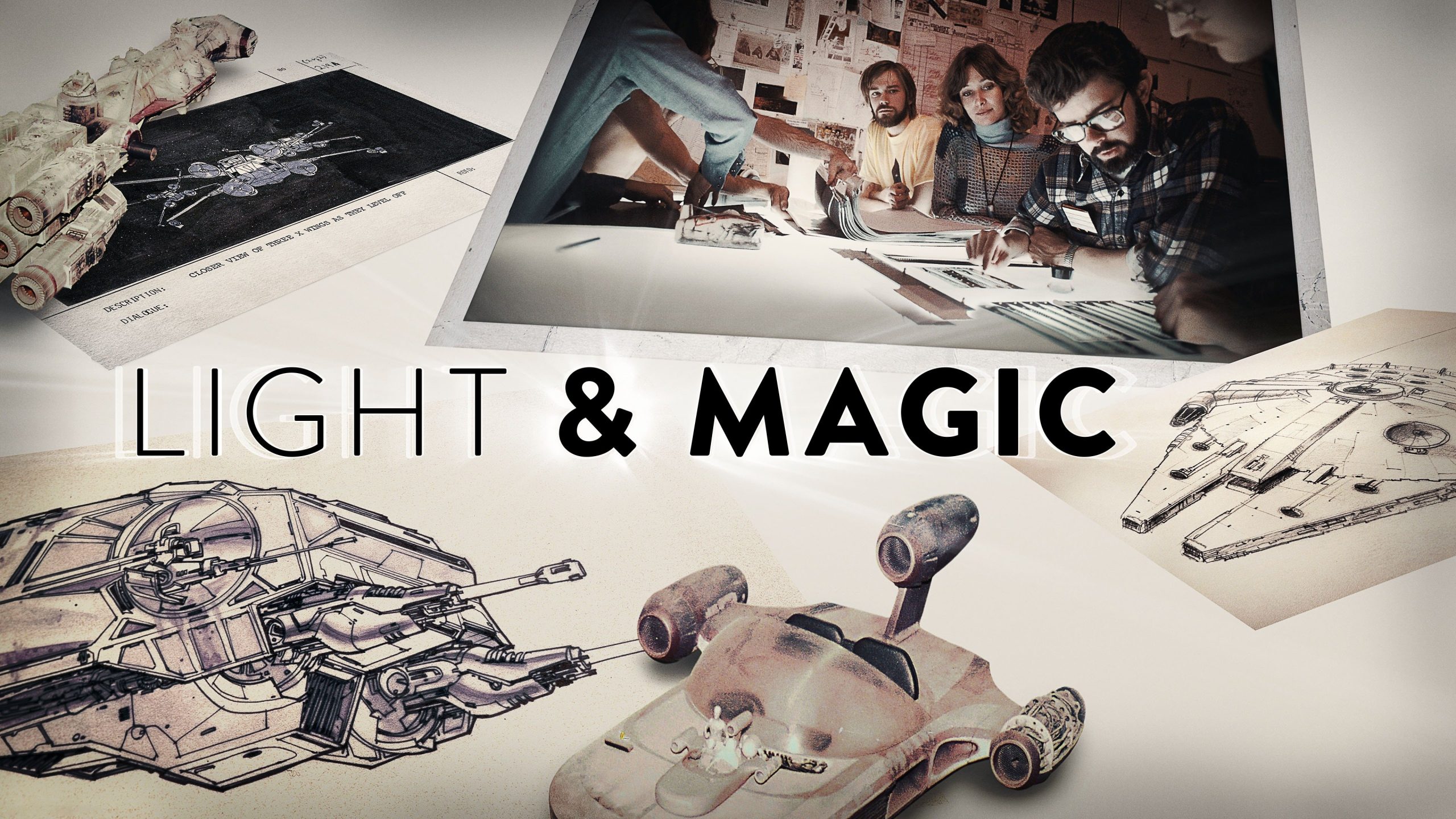
Disney+ released the trailer and key art for Lucasfilm and Imagine Documentaries’ “Light & Magic,” an immersive series that chronicles the untold history of world-renDisney+ released the trailer and key art for Lucasfilm and Imagine Documentaries’ “Light & Magic,” an immersive series that chronicles the untold history of world-renowned Industrial Light & Magic (ILM), the special visual effects, animation and virtual production division of Lucasfilm.
Granted unparalleled access, Academy Award®-nominated filmmaker Lawrence Kasdan takes viewers on an adventure behind the curtain of Industrial Light & Magic. Learn about the pioneers of modern filmmaking as we go on a journey to bring George Lucas’ vision to life. These filmmakers would then go on to inspire the entire industry of visual effects.  

The series is directed by Lawrence Kasdan, and the executive producers are Ron Howard, Brian Grazer, Justin Wilkes, Lawrence Kasdan, Kathleen Kennedy and Michelle Rejwan. 

All six episodes of “Light & Magic” premiere on July 27, exclusively on Disney+.

Twitter@DisneyPlus@ILMVFX
Instagram@DisneyPlus@ILMVFX
Facebook@DisneyPlus@ILMVFX
TikTok@DisneyPlus
Hashtag: #DisneyPlus

ABOUT DISNEY+

Disney+ is the dedicated streaming home for movies and shows from Disney, Pixar, Marvel, Star Wars, and National Geographic, along with The Simpsons and much more. In select international markets, it also includes the new general entertainment content brand, Star. The flagship direct-to-consumer streaming service from The Walt Disney Company, Disney+ is part of the Disney Media & Entertainment Distribution segment. The service offers commercial-free streaming alongside an ever-growing collection of exclusive originals, including feature-length films, documentaries, live-action and animated series, and short-form content. With unprecedented access to Disney’s long history of incredible film and television entertainment, Disney+ is also the exclusive streaming home for the newest releases from The Walt Disney Studios. Disney+ is available as a standalone streaming service or as part of The Disney Bundle that gives subscribers access to Disney+, Hulu, and ESPN+. For more, visit disneyplus.com, or find the Disney+ app on most mobile and connected TV devices.

MEDIA CONTACTS

Disney+ Media Relations
Shelby Cotten
Shelby.b.cotten@disney.com

Walt Disney Studios Global Publicity
Global Publicity (NY)
Derek Del Rossi        
derek.del.rossi@disney.com

Lucasfilm Publicity
Ian Kintzle 
ikintzle@ilm.com

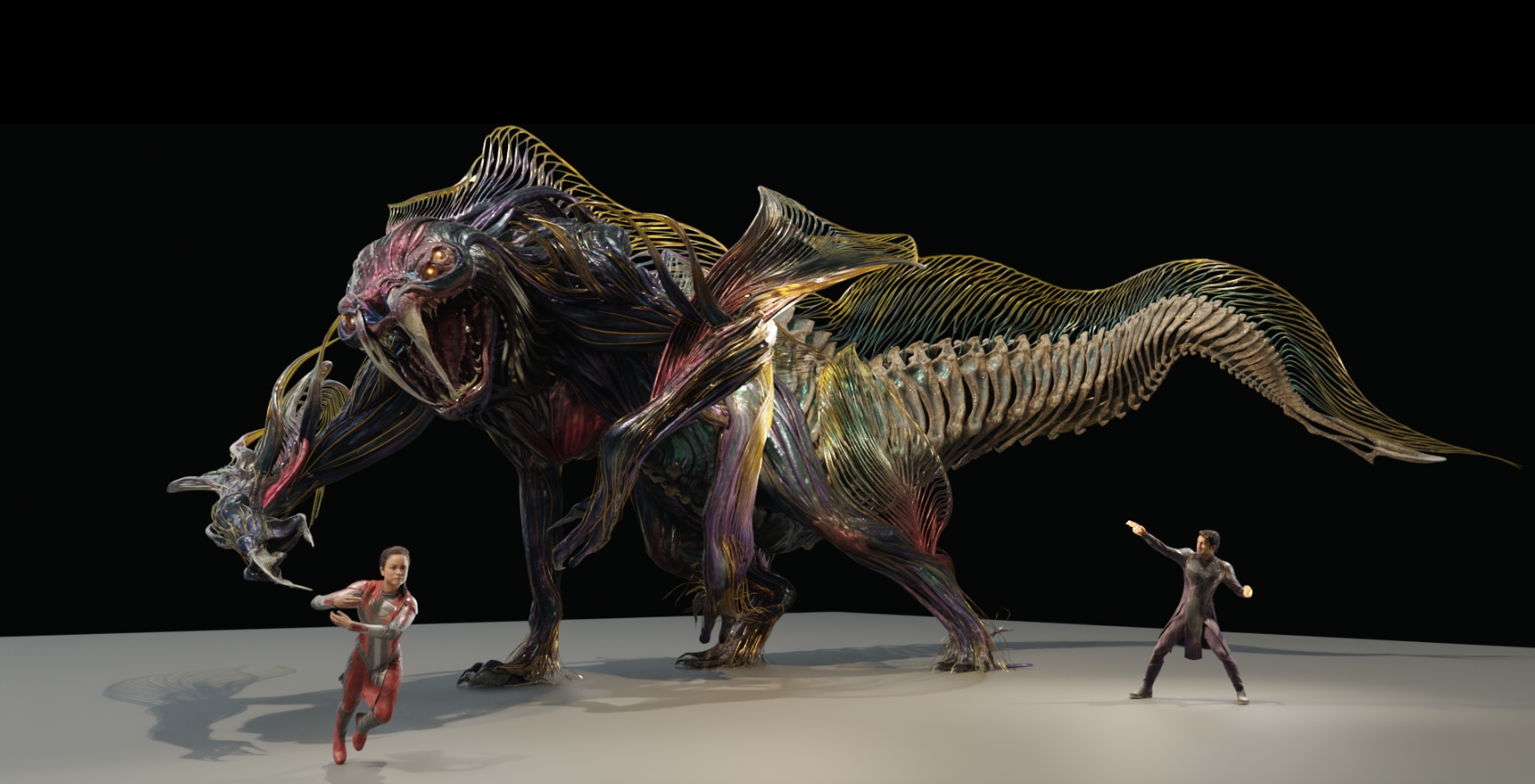
Step inside the film — with Sprite, an Eternal, as your guide. Go on an epic Augmented Reality adventure through time and space to discover the truth about humanity. Enter the world, learn the backstory, and meet the characters, in Marvel Studios’ first Immersive Story Experience. This mini prequel lets you explore the story like never before and become a part of the action.

Marvel Studios, Industrial Light & Magic, and the Technology Innovation Group at Disney Studios Content have teamed up to bring the Eternals to your living room through an exciting augmented reality experience.

Industrial Light & Magic is thrilled to announce an exciting partnership with Disney’s Technology Innovation Group on Marvel Studios’ Eternals: AR Story Experience for the iPhone® and iPad®. In this augmented-reality app, the characters, world, and stories of the Eternals film have been brought to life like never before.

“I was so excited to get the call to come work on the Eternals: AR Story Experience,” said Danielle Legovich, Visual Effects Producer at ILM’s London studio. “What I found wonderful throughout the process was the incredible collaboration with the team at Disney, along with all of the content creators on the project. They were all such lovely people, and we were able to combine talent in such a profound way. With Disney coming from that background of games and apps, and ILM coming from the visual effects point of view—and having worked on a large portion of the Eternals film—it made for a really wonderful partnership. At ILM, we’re used to creating images that people view in a darkened cinema, so to be able to work on images that people would then bring into their home through AR was so much fun. The experience became so immersive for me personally during the creative process, that I would imagine this Deviant just exploding up from my kitchen floor. I really loved that.”

Film-quality VFX assets used in the app. Image courtesy of Disney Studios Content / Marvel Studios.

As you might expect, what makes this experience so incredibly unique is the augmented reality aspect. You’re able to literally step into that world and meet these characters without having to leave your home. That level of detail brought a host of exciting challenges. Edmund Kolloen, Computer Graphics Supervisor on the project, goes on to explain, “What was thrilling for me was trying to get the same quality that we would push out of a final render, and get that to look and act the same in a real-time application. The challenge, of course, was getting that data from our render package and pushing it to the pipeline at Disney. There was a lot of really great cross-collaboration on both sides, building it as we went along. The results were amazing. You can walk right up and have a look at these characters, because they’re the exact same digi-doubles from the film. We worked diligently to ensure that every facial expression and every emotion comes through.”

Recording actress Lia McHugh using over 100 cameras. Image courtesy of Disney Studios Content / Marvel Studios.

On the Disney front, the Technology Innovation Group developed a host of new cutting-edge tools and techniques during the iterative process of translating that data from ILM. Evan Goldberg, Manager, Technology Innovation Research at Disney Studios Content recounts, “We had a small but mighty team here at Disney to put this project together. Daniel Baker was the Producer, and was the beating heart and metronome of the project. I’ve been here at Disney for sixteen years, with a history of feature film production, animation, and VFX experience. My role on this project straddled the line between Tech Supervisor and VFX Supervisor. Both my team and Industrial Light & Magic really wanted to come from a place of authenticity for the experience, and to be as faithful as we could to the source material. When you see a still from the AR experience, it should feel like a still from the film, and we were able to do that by working directly with ILM. They were very open to adapting their pipeline to conform to what we needed on our end. That allowed us to collaborate more quickly, and make something that had a visual fidelity on par with the film, but rendered in a fraction of a second. It was so incredible to see new technologies born out of that process.”

Pre-visualization of in-app scene. Image courtesy of Disney Studios Content / Marvel Studios.

With all of the innovation, the teams still had a daunting undertaking. They had to create a cinema-quality AR experience, and one that would carry the Marvel Studios name on top of it. “We knew that we had to match the quality of what people see in the cinema,” explains Daniel Baker, Senior Producer and Manager, Technology Innovation at Disney Studios Content. “The iterative design process with ILM was so helpful, because it ensured that we were always working with the latest assets. The pre-visualization work, along with that review and iteration process, was really exciting. Since we were working from home, and across multiple time zones, we had to really make the most with the time we had. So to get everyone to go out into their backyard to play with the experience, and really give it that high level of scrutiny and pixel-by-pixel accuracy, was a lot of fun.”

Kolloen summarizes the overall Eternals: AR Story Experience perfectly, “one of the exciting things for me was to see the Deviants in that augmented reality environment. Nothing prepares you for the moment you walk outside with your iPad® and see this creature that’s the size of your house.”

In a new video released by ILM on our YouTube channel, join Visual Effects Supervisor, Richard Bluff, as he shares a peek behind the curtain of the effects of The Mandalorian: Season 2, winner of 7 Emmy® Awards including Special Visual Effects, Sound Mixing, Cinematography, Prosthetic Makeup, Stunt Coordination, Stunt Performance, and Music Composition.

For its sophomore outing, Lucasfilm’s hit Disney+ series built upon the groundbreaking technical and artistic achievements accomplished during season one, combining traditional methodologies, with ever-advancing new technologies. The team also increased the physical size of the ILM StageCraft™ LED Volume which would again be used for over half of all scenes. This season also marked the debut of ILM’s state-of-the-art real-time cinema render engine called, Helios. The high-resolution, high-fidelity engine was used for all final pixel rendering displayed on the LED screens and offers unmatched performance for the types of complex scenes prevalent in today’s episodic and feature film production.

Practical creature effects have been a vital part of the aesthetic and charm of the Star Wars universe since 1977, and for season two, the effects team realized over 100 puppeteered creatures, droids, and animatronic masks, which included the beloved Tatooine Bantha, realized as a ten-foot-high puppeteered rideable creature. 

Practical miniatures and motion control photography were used once again for scale model ships, as well as miniature set extensions built for use in ILM’s StageCraft LED volume. Stop-motion animation was also utilized for the Scrap Walker at the Karthon Chop Fields. The greater Krayt dragon on Tatooine was realized as a six-hundred-foot computer-generated creature that would swim shark-like through the sand environment by way of a liquefaction effect, wherein the sand would behave like water. 

We would like to acknowledge the care and dedication that the team here at ILM put into the show, along with our partners at Legacy Effects, Hybride, Image Engine, Important Looking Pirates, Ghost VFX, Lola, Stereo D, Tippett Studios, Base FX, Raynault, Virtuous, and Yannix. 

We hope you enjoy this look inside The Mandalorian: Season 2.

The Television Academy announced its winners for the 73rd Annual Primetime Creative Arts Emmy® Awards over the weekend, celebrating a diverse group of talent from across television. ILM’s creative teams were honored with an award for Outstanding Special Visual Effects in a Season or a Movie for The Mandalorian, alongside nominations for their contributions on The Boys, WandaVision, and The Falcon and the Winter Soldier.  This is the second year in a row that the hit Lucasfilm series has received the Emmy Award for Special Visual Effects, a testament to the groundbreaking work that the show is known for.

Animation Supervisor Hal Hickel, VFX Producer Abbigail Keller, VFX Supervisor Joseph Kasparian (Hybride), and Environments Supervisor Enrico Damm in attendance at the 73rd Annual Primetime Creative Arts Emmy® Awards.

The visual effects team representing this win, included: Joe Bauer, Richard Bluff, Abbigail Keller, Hal Hickel, Roy K. Cancino, John Knoll, Enrico Damm, John Rosengrant, and Joseph Kasparian. Special recognition is also in order for ILM Producer Stacy Bissell, ILM Animation Supervisor Paul Kavanagh, and the entire StageCraft team for their incredible contributions.

Richard Bluff, Visual Effects Supervisor on The Mandalorian, added, “I want to take this opportunity on behalf of the visual effects team to congratulate all the artists, production, and the technical support staff who contributed to the Visual and Special Effects on season two of The Mandalorian. We continue to be in awe of the spectacular work and the effortless partnerships we enjoy with all of our vendor partners. The time and effort invested in the visuals by ILM, Hybride, Image Engine, Important Looking Pirates, Ghost VFX, Lola, Stereo D, Tippett Studios, Base FX, Raynault, Virtuous, and Yannix has been exceptional and this recognition is fully deserved. Everyone associated with the show couldn’t be happier or more grateful for what we all achieved together.”

In addition, The Mandalorian was also recognized with Emmys in the following categories: Sound Mixing, Cinematography, Prosthetic Makeup, Stunt Coordination, Stunt Performance, and Music Composition.

The 73rd Emmy Awards will be hosted by Cedric the Entertainer at  L.A. Live in Downtown Los Angeles, California. Executive Producers Reginald Hudlin and Ian Stewart and Director Hamish Hamilton have been selected to helm the show for production companies Done+Dusted and Hudlin Entertainment. Highlights from the 73rd Annual Creative Arts Emmy Awards will be broadcast on Saturday, Sept. 18 (8:00 PM ET/PT) on FXX. The 73rd Primetime Emmy Awards will be broadcast live on Sunday, Sept. 19 (5:00-8:00 PM, PST) on the CBS Television Network, and as well as streaming live and on-demand on Paramount+.

For the second season of Lucasfilm’s hit Disney+ series, The Mandalorian, Industrial Light & Magic reengineered their StageCraft virtual production platform rolling out version 2.0 in which ILM introduced among other things, Helios, Industrial Light & Magic’s first cinematic render engine designed for real-time visual effects. Engineered from the ground up with film and television production in mind, Helios offers incredible performance, high fidelity real-time ray tracing, the ability to rip through scenes of unparalleled complexity, all while leveraging ILM’s unrivaled color science, and was designed from the start to work seamlessly with ILM StageCraft.

The purpose-built, production-hardened platform allows filmmakers to explore new ideas, communicate concepts, and execute shots in a collaborative and flexible production environment.

Check out the featurette on our YouTube channel.

“I strive to make it easier to innovate — to create a supportive environment for groundbreaking creativity and excellence in production,” explains Janet Lewin, SVP and general manager of Industrial Light & Magic.

Formerly vice president of Visual Effects at Lucasfilm, Lewin has spent a combined 26-years at the two companies. She currently oversees the visual effects and StageCraft business at Lucasfilm as well as ILM’s five studios, focusing primarily on operations and production. Lewin is an experienced executive and producer with numerous credits to her name, most recently serving as a producer on both seasons of Lucasfilm’s ground-breaking hit series, The Mandalorian for Disney+.
A graduate of Boston University with a degree in PR and Mass Communications, Lewin explains, “I always knew I wanted to work in film and entertainment.” She recalls being mesmerized by the visual effects work she saw in Terminator 2: Judgment Day, “I remember watching it and I just couldn’t understand how T-1000 walked through the bars in the psychiatric hospital. I was so taken by what I had seen that I watched all the behind the scenes and that’s where I learned about ILM, Dennis Muren and what his team had created.”

In 1994, she was hired as a temporary assistant in ILM’s purchasing department. “The job consisted mostly of filing purchase orders,” she recalls. “But it was my first real exposure to filmmaking and visual effects at the same time. All the brilliant people and incredible projects at ILM hit the sweet spot for my interest in production, innovation, and the business of filmmaking.”

Lewin spent the next two decades of her career at ILM working her way up the ranks to ultimately become Global Head of Production in 2010. In 2013, she moved to Lucasfilm to oversee Visual Effects for the newly rebooted Production studio, at the same time serving as the overall visual effects producer on all of the new Star Wars films, collaborating with directors such as JJ Abrams, Rian Johnson, Gareth Edwards, and Ron Howard over the next seven years. “It was a fantastic opportunity for me to partner directly with filmmakers and gain studio-side knowledge and empathy for that side of the coin,” she mentions.

That experience, combined with her vast tenure at ILM, positioned her well to take on this new adventure as GM at ILM, partnering with ILM Chief Creative Officer, Rob Bredow, to run the global organization. “I’m mostly excited about the incredible talent we have at ILM, the innovative StageCraft technology, our entree into episodic work with our amazing television division, ILM TV, and the diverse content on the horizon – not only from Lucasfilm, but from all of our clients. We are in a unique position to push the boundaries of what’s possible in real-time visual effects, immersive entertainment, and animated features, while we continue to innovate and grow our capabilities with regard to our traditional effects work.”

On her collaboration with Bredow, Lewin says, “We work just like a visual effects producer and supervisor but on a much larger scale. I focus more on how to execute the business and shows successfully while Rob’s focus is more on innovation and technology. We have a similar aptitude for driving projects and passion for the business that overlap in both areas, so combined with our different experiences and styles, that makes for a great partnership.”

“So often ILM is on the bleeding edge in terms of developing technologies that go on to change how stories can be told — and never has that been more true than with StageCraft,” explains Lewin. Originally developed with inspiration from Jon Favreau for The Mandalorian, ILM StageCraft is a suite of virtual production tools that encompass all aspects of production from design, scouting, and previsualization in the virtual art department to principal photography on ILM’s StageCraft LED volumes. The system proved to be a gamechanger on season one of The Mandalorian and since have been used on feature films, music videos and commercials. 

ILM isn’t resting on its laurels, the team took everything they learned on season one and combined that with 45-years of filmmaking and visual effects experience and reengineered StageCraft from the ground up for season two of the series. “We identified all of the shortcomings in the system and areas where we needed more flexibility and enhanced functionality, designing StageCraft 2.0 with filmmaking and production needs at its core.” notes Lewin. 
Lewin credits many of her role models and mentors, including Lynwen Brennan, General Manager, Lucasfilm, for setting great examples. “I’ve kept an eagle eye on the way Lynwen leads, how inclusive she is and how unflappable. She is always approachable and makes people feel welcome… a real creative problem-solver and I admire that.”

With a Player-Coach leadership style, Lewin explains, “I like to be part of solving problems, being in the trenches and supporting my teams so they can do their best. I don’t communicate a broad vision and then expect everyone to just figure it out.” Lewin continues adding, “I’ve grown into someone who tries to be curious as a leader, really engage with stakeholders and I try to inspire the people who are going to be the ones to make the change.” She makes clear, “I do have a strong point of view but I want to also be open, and allow the best idea to get elevated.”

Lewin, who feels strongly about bringing on a diverse workforce and creating an inclusive environment, is also a part of Lucasfilm and ILM’s Diversity, Inclusion, and Belonging team, helping executive initiatives both internally and externally. “The work we are doing through our employee resource groups is providing more connection points to different people within different communities. It really benefits the work we do – to have a welcoming and inclusive environment for diverse storytellers, production, creatives, and executives – it makes us bring our ‘A’ game because we all feel seen and recognized as individuals.” Lewin adds, “We care for each other and want to make sure everyone is thriving.”

One thing is clear, with Lewin and Bredow at the helm, we’re sure to see great things from the company for many years to come.  

Industrial Light & Magic today announced the next phase of its global expansion plan for the company’s virtual production and StageCraft LED volume services. This expansion of services is tied to a proactive initiative for increasing diversity in the industry by combining ILM’s growth in this innovative methodology with a global trainee program geared for underrepresented VFX talent.

ILM’s existing StageCraft volume set at Manhattan Beach Studios (MBS) was used for the Emmy nominated series The Mandalorian and will soon be joined by a second permanent StageCraft volume set at the studio, servicing a variety of clients in the greater Los Angeles area. In addition, ILM is building a third permanent StageCraft volume at Pinewood Studios in London, and a fourth large-scale custom volume at Fox Studios Australia to be used for Marvel’s highly anticipated feature Thor: Love and Thunder directed by Taika Waititi. ILM will also continue to provide “pop up” custom volumes for clients as the company recently did for the Netflix production The Midnight Sky, directed by George Clooney.

An end-to-end virtual production solution, ILM StageCraft is a production-hardened technology that provides a continuous pipeline from initial exploration, scouting, and art direction, traditional and technical previsualization, lighting, and of course, real-time production filming itself, with the innovative StageCraft LED volumes. Lucasfilm’s hit Disney+ series, The Mandalorian, and a highly anticipated feature film took advantage of the full complement of ILM StageCraft virtual production services. Other projects such as Avengers: Endgame, Aquaman, Jurassic World: Fallen Kingdom, Battle at Big Rock, Rogue One: A Star Wars Story, Kong: Skull Island, Solo: A Star Wars Story, Ready Player One, and Rango, have utilized aspects of the toolset as well.

By every measure, the new stages are vast improvements over the original ground-breaking LED volume developed for the first season of The Mandalorian in 2018. Physically, the new stages are larger, utilizing substantially more LED panels than ILM’s original stage and also offering both higher resolution and smooth wall to ceiling transitions – this directly results in better lighting on set as well as many more in-camera finals. ILM’s proprietary solutions for achieving groundbreaking fidelity on the LED walls at scale allows for higher color fidelity, higher scene complexity, and greater control and reliability.

“With StageCraft, we have built an end-to-end virtual production service for key creatives. Directors, Production Designers, Cinematographers, Producers, and Visual Effects Supervisors can creatively collaborate, each bringing their collective expertise to the virtual aspects of production just as they do with traditional production,” explained Janet Lewin, SVP, GM ILM. Rob Bredow, CCO, ILM added “Over the past 5 years, we have made substantial investments in both our rendering technology and our virtual production toolset. When combined with Industrial Light & Magic’s expert visual effects talent, motion capture experience, facial capture via Medusa, Anyma, and Flux, and the innovative production technology developed by ILM’s newly integrated Technoprops team, we believe we have a unique offering for the industry.”

Alongside the new stages, ILM is rolling out a global talent development initiative through the company’s long-standing Jedi Academy training program. The program, which is part of the company’s larger Global Diversity & Inclusion efforts, offers paid internships and apprenticeships on productions with seasoned ILM Supervisors and Producers who serve as mentors. The program is intended to fill roles across the virtual production and VFX pipeline with those from traditionally underrepresented backgrounds; ILM has posted expressions of interests for jobs across the spectrum, from virtual art department teams and production management to engineering and artist roles. The goal with this initiative is to attract diverse junior talent and create a pipeline for them to become future Visual Effects artists, technicians, and producers who will be “ILM trained” and uniquely qualified to work in this new, innovative way of filmmaking.

“There is a widespread lack of diversity in the industry, and we are excited to leverage our global expansion in this game-changing workflow to hire and train new talent, providing viable, exciting, and rewarding jobs across many of our locations,” noted ILM VP, Operations, Jessica Teach, who oversees the company’s Diversity and Inclusion initiatives. “We believe this program can have a multiplier effect, attracting even more diverse talent to the industry and creating a pipeline for visual effects careers. We know that bringing more diversity into the industry is a critical part of strengthening and expanding our storytelling potential.”
ILM expects to have the new stages up and running for production in London in February of 2021 and in Los Angeles in March, with a mix of projects from features to commercials in line to take advantage of them. The company is currently fielding inquiries for future bookings by studios and filmmakers. For more information or to express interest in the Jedi Academy program visit our careers site.

Starting May the 4th viewers have been treated to a closer look at the groundbreaking technology at work behind the scenes of The Mandalorian and more when Disney+ pulls back the curtain on the live-action Star Wars series with Disney Gallery: The Mandalorian. The eight-episode docuseries, hosted by creator and executive producer Jon Favreau, promises insightful commentary from actors including Pedro Pascal and Gina Carano, anecdotes from the directors who helmed episodes in the first season, ILM’s visual effects team, and an exploration into what it means to be a part of telling stories in the Star Wars galaxy and honoring George Lucas’s legacy.

Check out the official trailer for Disney Gallery.

Early this morning the Academy announced the nominees for the 91st Oscars and we’re so excited that ILM artists worked on three of the five films in the Achievement in Visual Effects Category.
AVENGERS: INFINITY WAR
Dan DeLeeuw
Kelly Port
Russell Earl
Dan Sudick
READY PLAYER ONE
Warner Bros. Pictures
Roger Guyett
Grady Cofer
Matthew E. Butler
David Shirk
SOLO: A STAR WARS STORY
Rob Bredow
Patrick Tubach
Neal Scanlan
Dominic Tuohy
Other nominated films:
CHRISTOPHER ROBIN
Christopher Lawrence
Michael Eames
Theo Jones
Chris Corbould
FIRST MAN
Paul Lambert
Ian Hunter
Tristan Myles
J.D. Schwalm
And here are some early reactions from a few of our newly-minted nominees:
Solo: A Star Wars Story
Rob Bredow, Overall VFX Supervisor – “We pretty much freaked out! All of us were gathered around the TV. It was pretty exciting. It’s such a great list of nominees, so it was amazing to see us on the list.”
Patrick Tubach, VFX Supervisor – “I’m incredibly excited to be nominated for the VFX work on Solo. Like many, I’ve been waiting to hear this story ever since some hot shot pilot bragged about it over a table in a seedy backwater cantina, but there’s a extra special thrill in being one of the lucky group of artists who finally got to tell it. Seriously- never tell me those odds!”
Ready Player One 
Roger Guyett, VFX Supervisor – “I’m really thrilled about the nomination – we worked so hard and had an incredible team working on the project. I’m sharing this with our huge crew who put so much love into this project. Its an honour and great recognition from our peers for the work we did on RPO.”
Grady Cofer, VFX Supervisor – “I’m delighted to hear that Ready Player One has been nominated for Best Visual Effects. It’s a testament to all the hard work that went into it. From day one this has been a dream project. Steven’s passion for the story, fueled by his endless creative energy, made it all possible. I am honored to join my fellow nominees and represent this film at the Oscars.”
Avengers: Infinity War  
Russell Earl, VFX Supervisor – “I’m just really happy to be nominated and feel lucky to be able to represent the whole team that worked on the film. It’s been a really exciting morning.”
The Oscars are February 24th. Congratulations to all the nominees!

The Visual Effects Society released the nominations for the 17th Annual VES Awards this morning, and we’re thrilled to have been nominated for seventeen awards for our work in 2018. We’d like to congratulate all the nominees and thank our teams for their hard work.

Our nominations include:

Outstanding Visual Effects in a Photoreal Feature
Ready Player One
Roger Guyett
Jennifer Meislohn
David Shirk
Matthew Butler
Neil Corbould

Solo: A Star Wars Story
Rob Bredow
Erin Dusseault
Matt Shumway
Patrick Tubach
Dominic Tuohy

Outstanding Supporting Visual Effects in a Photoreal Feature
12 Strong
Roger Nall
Robert Weaver
Mike Meinardus

Bird Box
Marcus Taormina
David Robinson
Mark Bakowski
Sophie Dawes
Mike Meinardus

Outstanding Animated Character in a Photoreal Feature
Jurassic World: Fallen Kingdom; Indoraptor
Jance Rubinchik
Ted Lister
Yannick Gillain
Keith Ribbons

Ready Player One; Art3mis
David Shirk
Brian Cantwell
Jung-Seung Hong
Kim Ooi

Outstanding Created Environment in a Photoreal Feature
Ant-Man and the Wasp; Journey to the Quantum Realm
Florian Witzel
Harsh Mistri
Yuri Serizawa
Can Yuksel

Aquaman; Atlantis
Quentin Marmier
Aaron Barr
Jeffrey De Guzman
Ziad Shureih

Ready Player One; The Shining, Overlook Hotel
Mert Yamak
Stanley Wong
Joana Garrido
Daniel Gagiu

Solo: A Star Wars Story; Vandor Planet
Julian Foddy
Christoph Ammann
Clement Gerard
Pontus Albrecht

Outstanding Virtual Cinematography in a Photoreal Project
Aquaman; Third Act Battle
Claus Pedersen
Mohammad Rastkar
Cedric Lo
Ryan McCoy

Jurassic World: Fallen Kingdom; Gyrosphere Escape
Pawl Fulker
Matt Perrin
Oscar Faura
David Vickery

Ready Player One; New York Race
Daniele Bigi
Edmund Kolloen
Mathieu Vig
Jean-Baptiste Noyau

Outstanding Model in a Photoreal or Animated Project
Ready Player One; DeLorean DMC-12
Giuseppe Bufalo
Kim Lindqvist
Mauro Giacomazzo
William Gallyot

Solo: A Star Wars Story; Millennium Falcon
Masa Narita
Steve Walton
David Meny
James Clyne

Outstanding Effects Simulations in a Photoreal Feature
Avengers: Infinity War; Wakanda
Florian Witzel
Adam Lee
Miguel Perez Senent
Francisco Rodriguez

Outstanding Compositing in a Photoreal Feature
Jurassic World: Fallen Kingdom
John Galloway
Enrik Pavdeja
David Nolan
Juan Espigares Enriquez

Nominees in 24 categories were selected by VES members via events hosted by 11 of our Sections, including Australia, the Bay Area, Germany, London, Los Angeles, Montreal, New York, New Zealand, Toronto, Vancouver and Washington. The VES Awards will be held on February 5th at the Beverly Hilton.

Ten films remain in the running in the Visual Effects category for the 91st Academy Awards, and we’re thrilled to have contributed to six of them.
All members of the Visual Effects Branch will be invited to view 10-minute excerpts from each of the shortlisted films on Saturday, January 5, 2019. Following the screenings, members will vote to nominate five films for final Oscar consideration.
ILM contributed to:
Ant-Man and the Wasp – ILM VFX Supervisor, Russell Earl
Avengers: Infinity War – ILM VFX Supervisor, Russell Earl
Black Panther – ILM VFX Supervisor, Craig Hammack
Jurassic World: Fallen Kingdom – Overall VFX Supervisor, David Vickery
Ready Player One – Overall VFX Supervisor, Roger Guyett
Solo: A Star Wars Story – Overall VFX Supervisor, Rob Bredow
Other Semi-finalists:
Christopher Robin
First Man
Mary Poppins Returns
Welcome to Marwen
Congratulations to all the semi-finalists!

Industrial Light & Magic expanding its offering of best-in-class visual effects and animation services to include the streaming and episodic television market with a new division: ILM TV. The division will be based out of ILM’s new 47,000 square foot London studio and supported by the company’s global locations in San Francisco, Vancouver and Singapore.

The ILM TV team will be lead by Visual Effects Supervisors Hayden Jones and Jonathan Privett alongside Executive Producers, Louise Hussey and Stefan Drury. Previously, the team set up and oversaw DNEG’s television division; winning a BAFTA for Special, Visual and Graphic Effects for their work on BLACK MIRROR.

ILM TV’s first projects will be Lucasfilm’s eagerly anticipated live action series based in the Star Wars universe, THE MANDALORIAN, being developed by Jon Favreau and Superman prequel series KRYPTON, now in its second season, based on DC characters from Warner Horizon Scripted Television for SYFY.

“It’s not often you get to create a new division at Industrial Light & Magic”, explained Rob Bredow, Executive Creative Director and Head of ILM, “We are seeing a real convergence in our creative approach used on films and in our immersive entertainment division ILMxLAB, and now we’re proud to be able to offer these ILM innovations in a way that’s suitable for streaming and television work to creatives around the world.”

ILM’s legacy in television dates back to the studio’s revolutionary and Emmy award-winning work for THE YOUNG INDIANA JONES CHRONICLES, which brought feature film quality effects to an episodic series for the first time.“We are extremely excited to be re-igniting ILM’s involvement in this market and to showcase the team’s expertise, unrivaled technology and production management globally.” adds VFX Supervisor Hayden Jones, “The television and streaming segments have grown exponentially in recent years and we are seeing substantial demand for high calibre visual effects that can be delivered on schedule and within budget, all of which lie at the core of our teams expertise and proven track record.”

ILM TV will offer producers and showrunners access to Industrial Light & Magic’s legendary VFX talent, infrastructure and technology combined with a fresh approach to visual effects, designed to suit the condensed production schedules and rapid turnaround times that episodic series and online streaming programs demand.

Join SVP, Executive Creative Director and Head of ILM, Rob Bredow for his keynote address from this year’s SIGGRAPH Conference in Vancouver. Bredow shares his unique understanding of how media and technological innovation can join forces to tell great stories and create groundbreaking experiences.

Watch: