
ILM artists share their insights about this distinct installation now on view at Somerset House in London.
By Jamie Benning
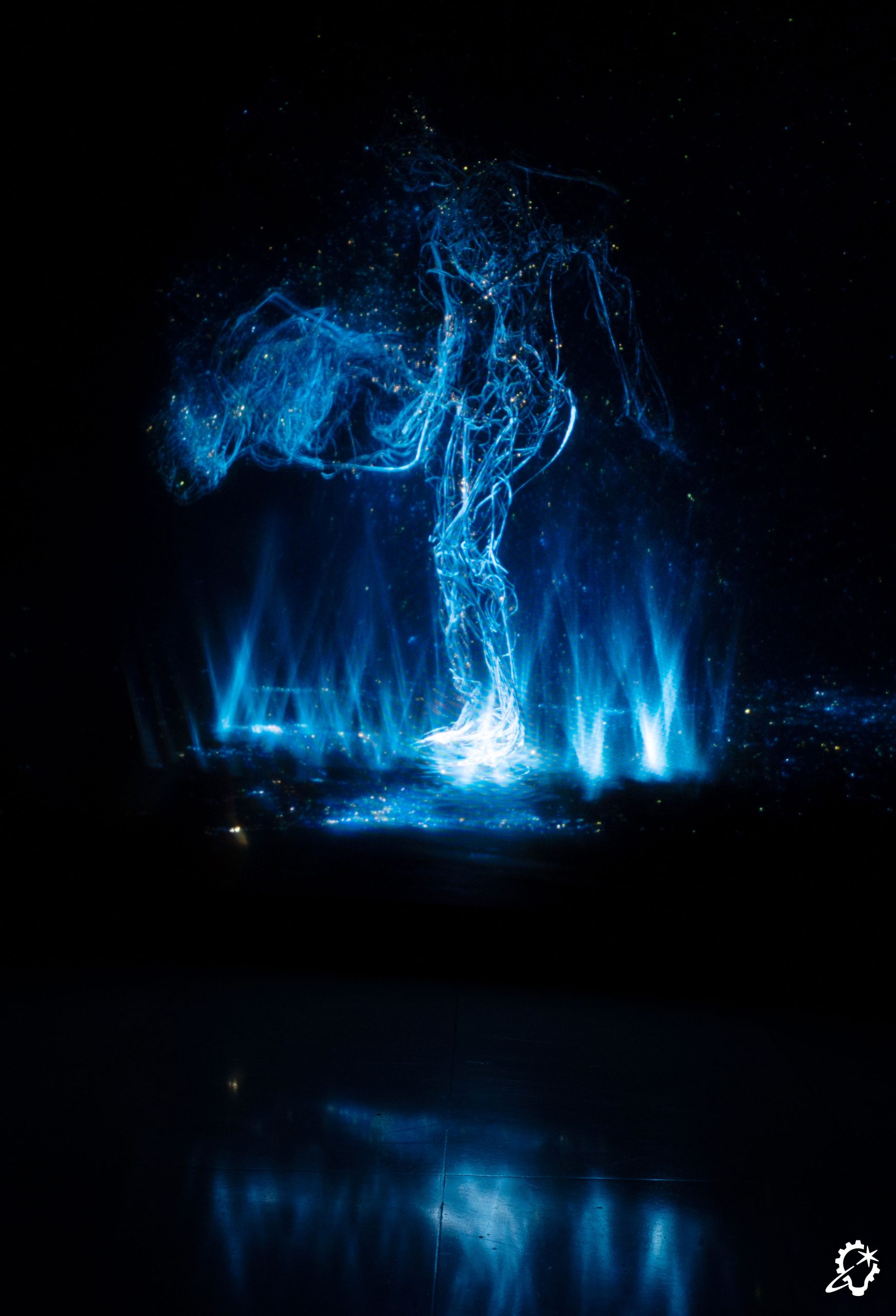
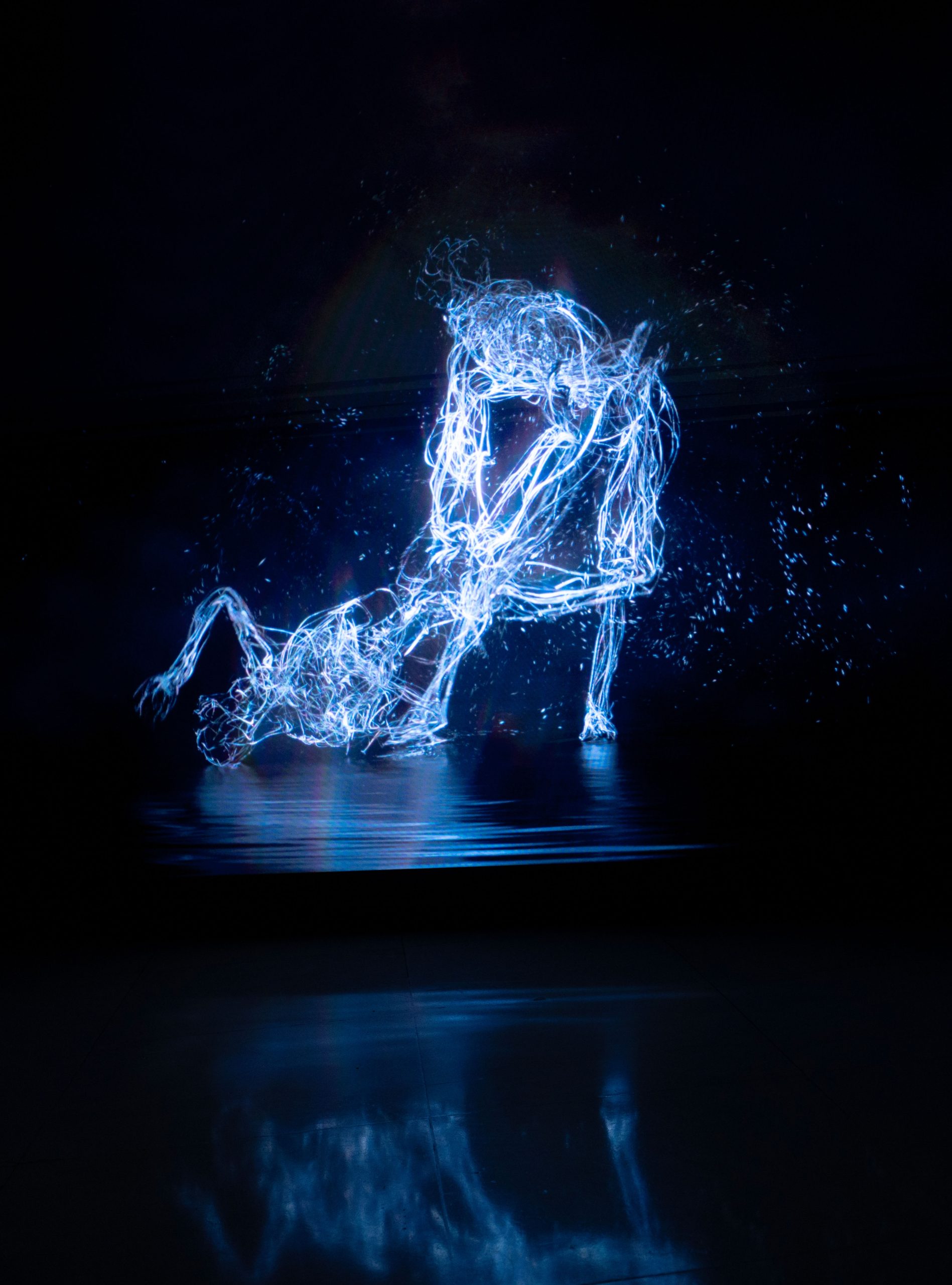
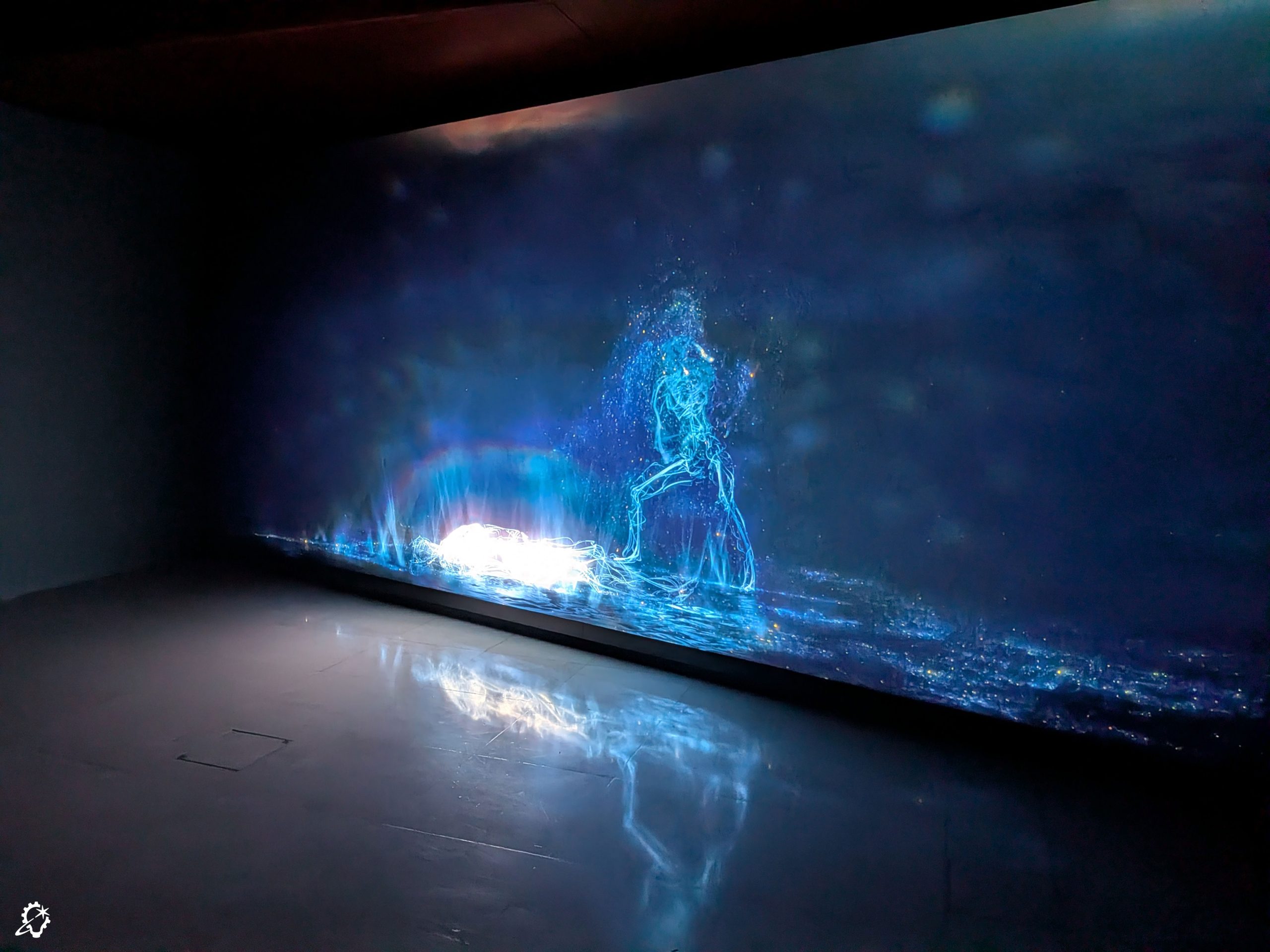
The first thing visitors encounter inside Wayne McGregor: Infinite Bodies at London’s Somerset House is darkness. A vast LED screen fills the room, its shifting light reflected across the faces of those watching. The space is quiet at first, then sound begins to breathe into the room. Two figures slowly emerge. Their bodies twist, merge, and reform, suspended in a deep digital expanse that feels both intimate and endless. It is OMNI, a collaboration between choreographer Wayne McGregor and Industrial Light & Magic, and it sets the emotional, thematic, and sensory tone for everything that follows.
As an entry point, OMNI does not explain itself in conventional terms. It does not offer narrative, character, or spectacle in a familiar cinematic sense. Instead, it presents presence. Motion without edges. Energy without beginning or end. Viewers gather instinctively. Some stand for seconds. Others for many minutes. The work opens and closes in cycles, dissolving into darkness before returning again, as if inhaling and exhaling. It is an installation that encourages stillness before it encourages movement.
Reuniting McGregor with the creative teams and technologists at ILM for the first time since their work together on ABBA Voyage in 2022, OMNI invites viewers into what McGregor calls “a choreographic exploration of the infinite potential of human connection.” Using ILM’s performance capture and simulation technologies, dancers Rebecca Bassett-Graham and Salvatore De Simone perform an unending duet of energies. Their movement is captured, transformed, and re-presented inside a boundless digital plane, a place where the distinction between human and virtual becomes beautifully uncertain.
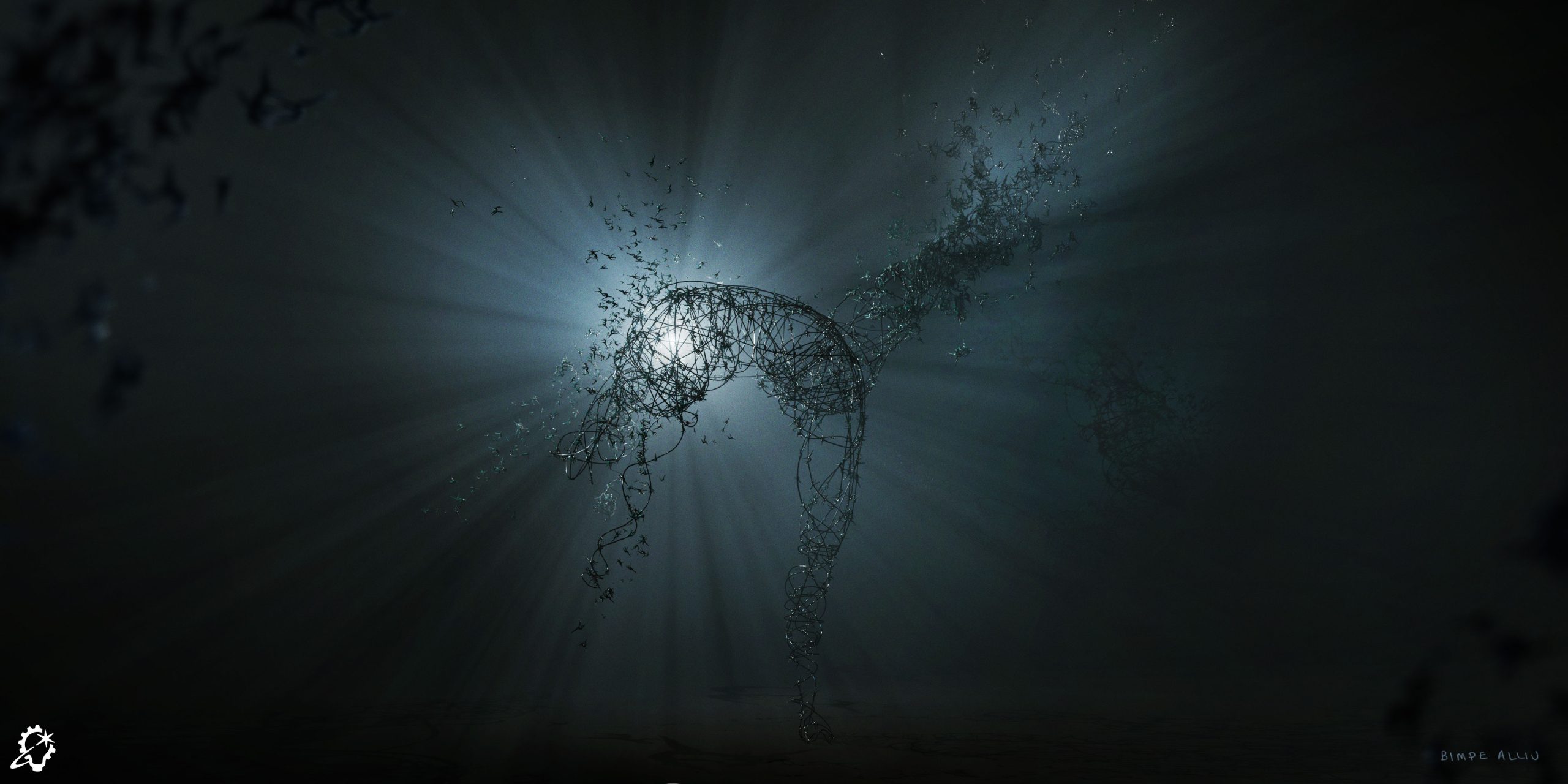
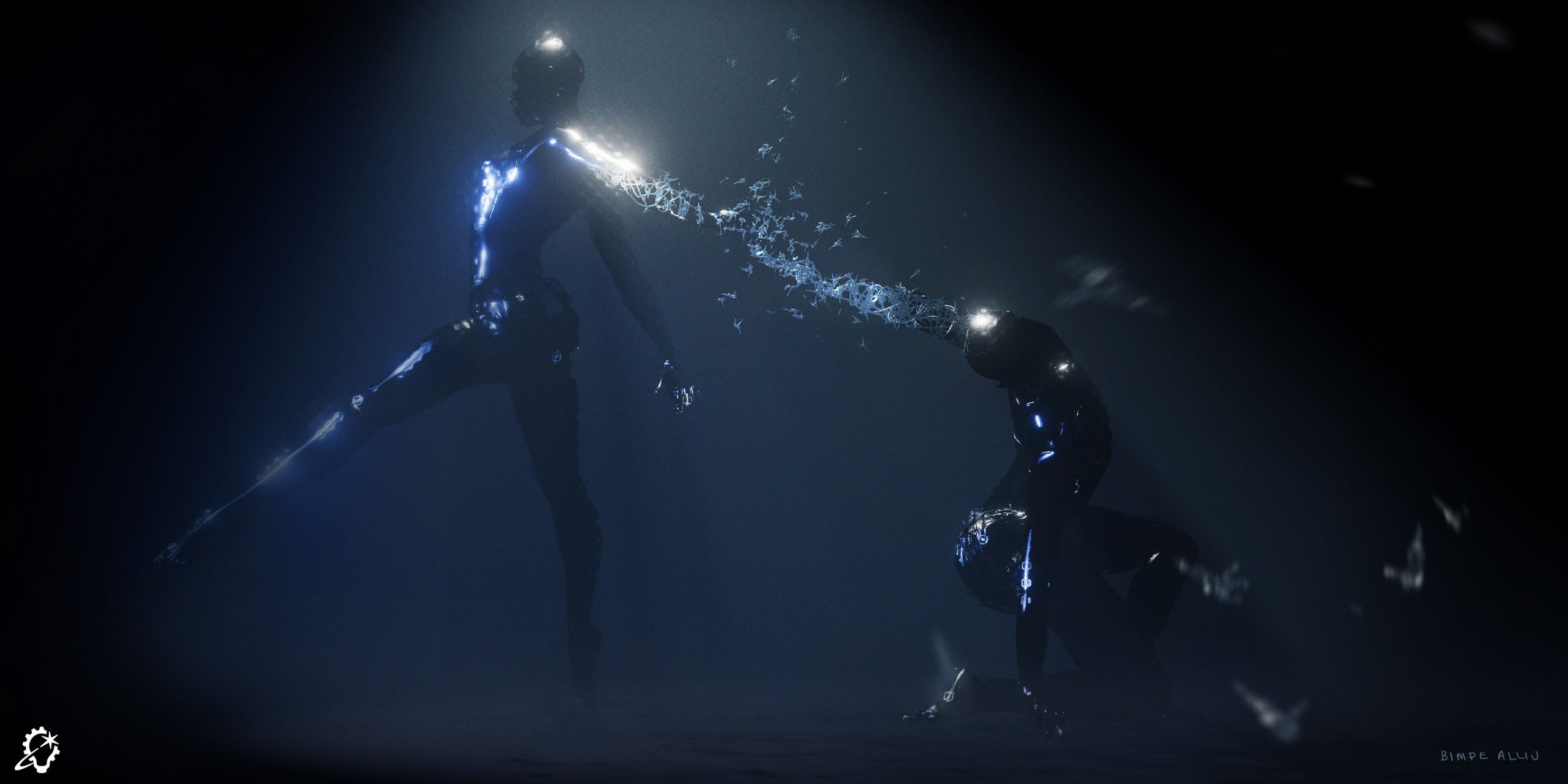
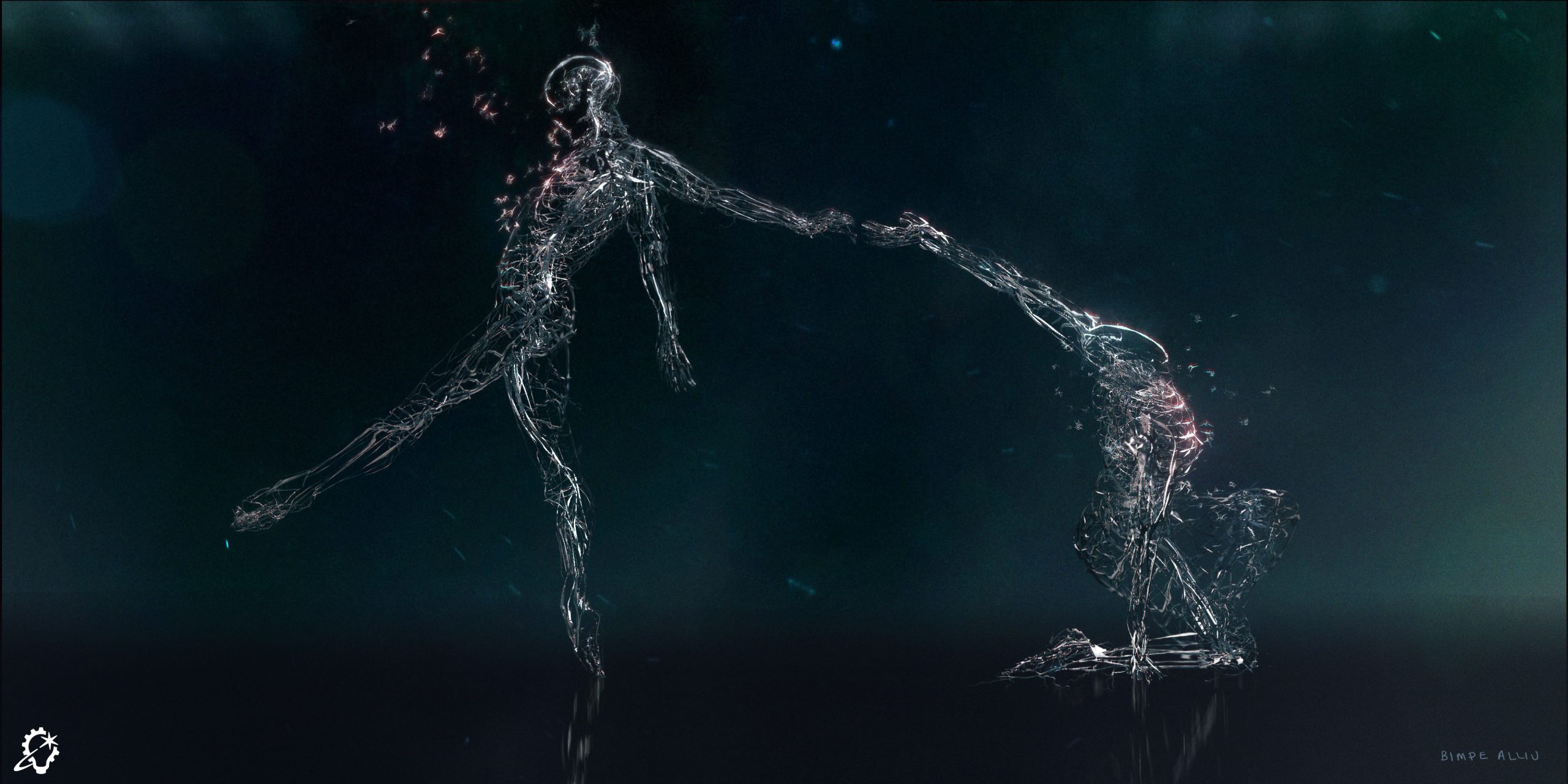
You do not see the performers themselves, but ghost-like representations and shadows of their digital footprint. Luminous networks of the skeletal and nervous systems glow and decay in cycles of light. Around them, murmuration-like particles drift and swirl, sometimes responding to the dancers’ movements, and at other moments seeming to lead them, creating a shifting dialogue between motion and environment. Form appears, dissolves, reforms. It is at once biological and architectural, organic and synthetic.
The installation was created with ILM visual effects artists Matt Rank, Xavier Martin Ramirez, Edward Randolph, Arnaud Mavoka-Tama, Mike Long, Julien Ducoin, Oscar Dahlén, Alessandro Pieri, and Bimpe Alliu, with generous support from ROE Visual and Studio Wayne McGregor. Positioned deliberately as the first work visitors encounter, the piece anchors the exhibition and mirrors Somerset House’s broader mission to explore the intersection of art, technology, and society.
Conceptualizing Motion
Concept artist Bimpe Alliu was brought onto the project at a very early stage to help shape those initial visual directions. “I was going through the ideas with Matt [visual effects supervisor Matt Rank], and learning more about what the project was going to entail,” she said. “I was playing around with storyboarding a lot of potential movement ideas.”
Rather than beginning with dancers as recognizable figures, the creative team quickly gravitated toward abstraction. For Alliu, the use of murmurations became central to expressing motion without relying on literal anatomy. “It is a beautiful way of capturing movement while still existing as a solid form. There is all this motion and synergy happening at the same time,” she explained. “It also allows for a lot of natural push and pull, which is really exciting when you are thinking about animation.”
Her design process embraced freedom over prescription. “It is fun because it is nice to do something that is a little more abstract. It gets the brain thinking in different ways and allows you to deconstruct form and how to portray it,” she said. “You can tap into other references and use them in different ways. You might think, ‘I can approach this in a completely different way from how I usually would.’ You have a wider park to play within. There is no wrong idea. They are just ideas, and either they land, or they do not.”
Although OMNI was always destined for a monumental screen, Alliu said it was vital not to let format dictate imagination. “You start big, knowing it is going to be on a screen, but you do not let that stop you,” she said. “There was never a point where it felt like, because it is on the screen, you cannot do this or that. It was very much ‘blue sky’ thinking.”
Somerset House and the Culture of Collaboration
Introducing the exhibition, Somerset House director Jonathan Reekie described Infinite Bodies as a perfect embodiment of the institution’s ethos. “Wayne McGregor and Infinite Bodies, in so many ways, encapsulates what Somerset House is all about. Most visibly, Somerset House has been about reimagining the historic building for the future. We developed a cultural program that sits between different art forms, the intersection of culture, technology, and society at large. We are conscious that we are in an ever-changing creative landscape, and therefore, artists are changing and working in different ways all the time. We need to create a space for that.”
Reekie also pointed to the importance of community in shaping new ideas. Somerset House is home to a creative community of nearly 3,000 artists, makers, and entrepreneurs, and collaboration sits at the core of its identity. “We don’t believe great ideas always come from an individual working on their own in a room. They come from community, from groups of people coming together and making great things,” he said. “That’s the way Wayne works.”
For McGregor, this collaborative model has defined his career. His studio, based in East London’s Olympic Park, has long operated as a laboratory for experimentation with scientists, technologists, and other artists. Infinite Bodies brings together more than three decades of his interdisciplinary works and investigations into the subtleties of movement, both human and non-human. Each work within the exhibition operates as an experiment, a proposition about the body’s potential and how technology might allow us to perceive it differently.
Dr. Cliff Lauson, director of exhibitions at Somerset House and co-curator of Infinite Bodies, recalled that McGregor’s polymathic approach was one of the defining reasons he wanted to collaborate. “It was several years ago, and that impulse that I felt about Wayne’s work, and what might make for an interesting exhibition at Somerset House, now has been so gratifying to see after so many years,” he said. “Interesting ideas come out during conversation and collaboration. It doesn’t help anybody to be working in silos.”
Physical Intelligence
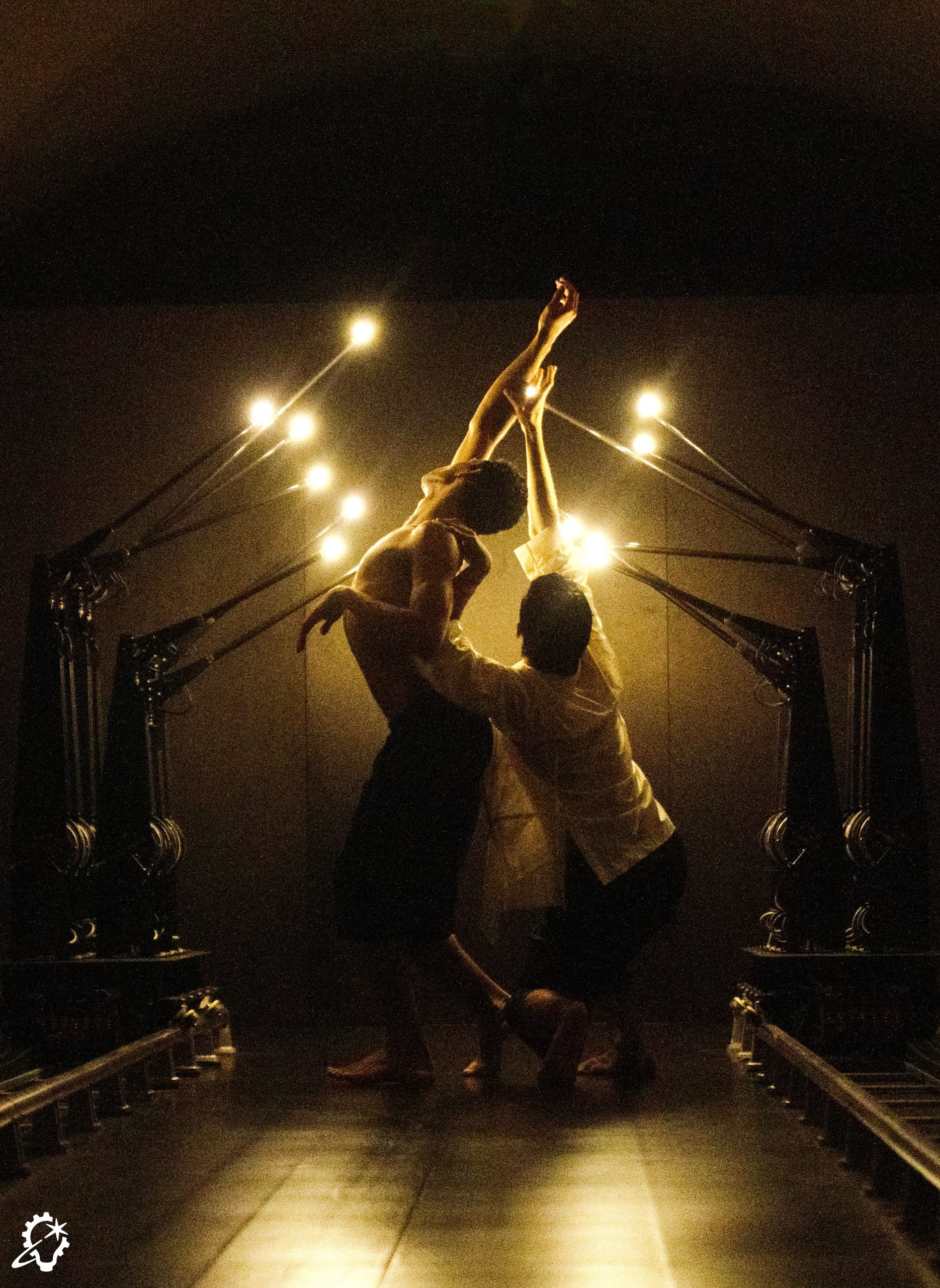
When Wayne McGregor took the microphone at the exhibition launch, he spoke with warmth and generosity about the complex process of translating live choreographic practice into a gallery environment. “I want to say thank you to Somerset House and to Cliff and Jonathan and to all my team at Studio Wayne McGregor because it’s been a huge challenge,” he said. “I’m used to making. I’ve made something like 200 pieces at this stage. That’s been a huge passion for my kind of choreographic practice. But I’ve always had a parallel practice, and that parallel practice has been in research and testing ideas around the notion of physical thinking.”
At the heart of Infinite Bodies is McGregor’s long-standing interest in what he describes as physical intelligence. The exhibition invites visitors to reconsider their own physical awareness and their relationship to technology. “Technology is not outside of ourselves,” McGregor said. “The body is the most technologically advanced thing we’re looking at. I’ve not seen any form of technology that surpasses the living body, its ability to create, to respond, to be spontaneous, to feel.”
This tension between embodiment and computation, between instinct and algorithm, runs through OMNI in particular. It reframes dance through light and motion while still preserving the physical presence and emotional weight of performance.
From Film to Immersive Space
For ILM, OMNI provided a rare opportunity to apply cinematic tools to an environment that does not behave like cinema. “I’ve spent my career digitising the real world, real people, real environments, and turning that into assets that we can use in CG,” said Matt Rank, ILM’s visual effects supervisor on the project. “My role has taken me full circle. Now we’re taking computer graphic content and displaying it back in the real world.”
Rank’s work sits at the intersection between traditional visual effects, virtual production, and emerging immersive media. “What we found from ABBA Voyage and with Infinite Bodies is that shared experience, people coming together is what matters,” he said. “That’s where we’re pushing our content and technology, a shared, meditative experience that people can have together.”
Working with McGregor offered a fundamentally different creative starting point. “We’re used to working with studios and directors who have very specific briefs on where they want the creative to be led. Working with Wayne was a blank canvas. We spent a lot of time understanding what this piece should be, and maybe more time understanding what it shouldn’t be,” Rank said. “He didn’t necessarily want to see the form or the shape of his performers, but how their movement reflected through the body. That became the first aesthetic for the piece. From his feedback, we then started work with our own art department, bringing these ideas and concepts to life to present back to Wayne in more unique visual forms that would set the tone of the final piece.”
Rank described OMNI as “… an abstract piece, but it is quality, it feels photographic. Even though there’s real-world elements about it, it kind of sits within your psyche. It doesn’t make you feel uncomfortable either.” He also pointed to natural phenomena as key influences. “There is a nod to how birds flock and dance in the sky, and how plankton can emit light when it is disturbed by movement, and these carried through into the final piece, represented by the murmurations seen across the two looks.”
ILM Beyond the Frame
Reflecting on ILM’s wider creative mission, Rank said, “We’re all storytellers. We love collaborating with directors, but doing that in new forms and new mediums is incredibly exciting. Our world is becoming ever more interconnected, and we’re keen to explore what we can do in those spaces. With a smaller team, you can be really agile and get to results faster.”
For Alliu, projects like OMNI underline the breadth of what ILM represents today. “It showcases to people that want to work with companies like ILM that there are so many different kinds of projects we create,” she said. “People do not just think of ILM as one kind of thing anymore. They start to see that there is a much broader range of work.”
Seeing the completed exhibition in sequence gave Alliu a new perspective on how OMNI functions within the wider narrative of Infinite Bodies. “Coming straight out of seeing the work that we did and then going into everything else, it suddenly felt like being grounded back in the physical space again,” she said. “It was really nice seeing all the different interpretations of movement and communication, the role digital plays in that, and the fact that it still very much needs the physical. It still very much needs the body, the person, and the movement.”
She also sees that visibility as vital to the industry’s future. “It gives people the understanding and the option to think, ‘This is something I could do,’ and they start to think about careers in this space,” she said. “We still need that human input. You still need that eye, that instinct, and that creativity behind it all.
“Art and science have always co-existed on many levels, and technology is also a part of that, especially as a lens by which we’re able to understand, explore and conceptualise both,” Alliu added.
As Reekie observed, Somerset House’s role is to provide artists with the space to imagine new futures. “It’s up to the artists to tell us what the future might look like because they’re the best people to help us navigate it,” he said.
Infinite Bodies offers one such vision. A space where choreography, light, and digital craft meet. A reminder that innovation is not just about machines, but about the bodies, instincts, and creative impulses that continue to drive them. ILM continues to explore how those instincts and tools translate beyond film and into shared physical spaces.

—
Jamie Benning is a filmmaker, author, and podcaster with a lifelong passion for sci-fi and fantasy cinema. He hosts The Filmumentaries Podcast, featuring twice-monthly interviews with behind-the-scenes artists. Visit Filmumentaries.com or find him on X (@jamieswb) and @filmumentaries on Threads, Instagram, Facebook, and YouTube.