
Visual effects supervisor Ben Snow, associate visual effects supervisor Gabriel Reichle, and animation supervisor Stewart Alves takes us behind the scenes at the Sydney studio.
By Clayton Sandell
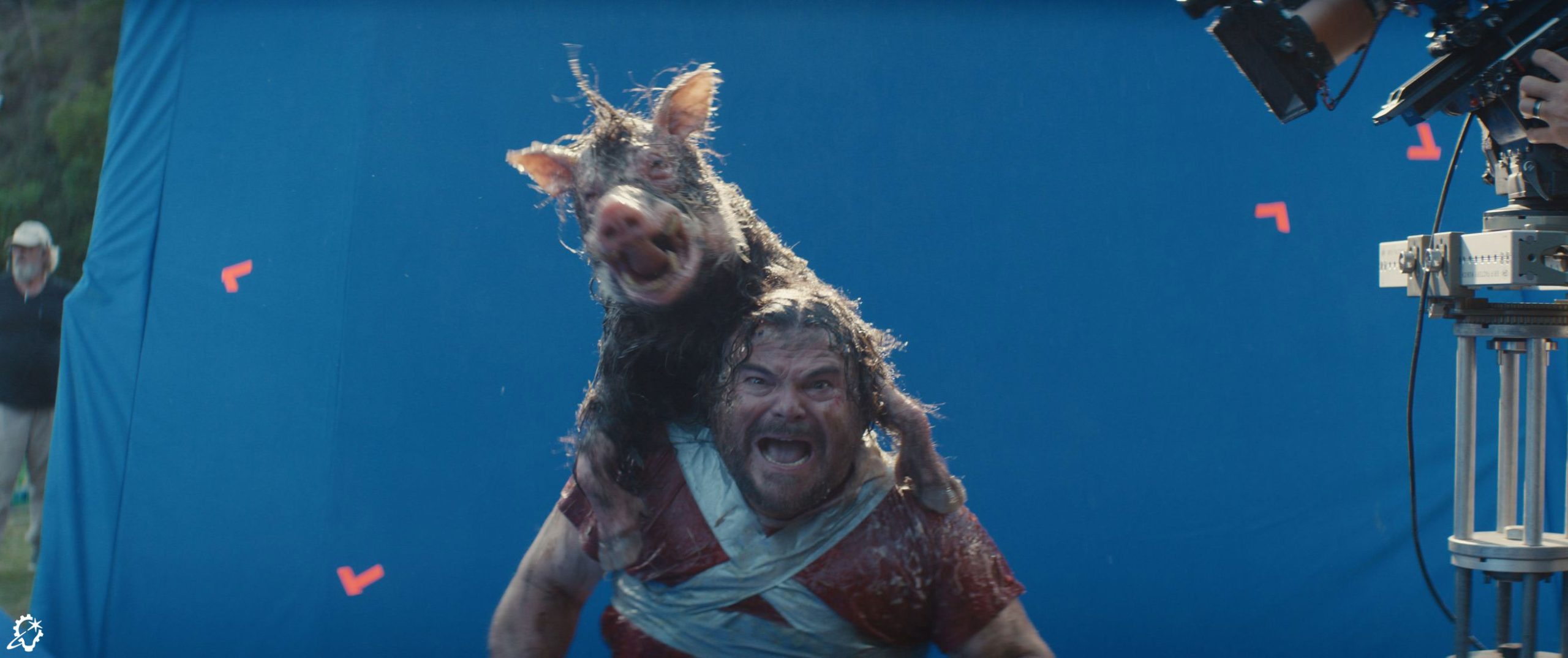
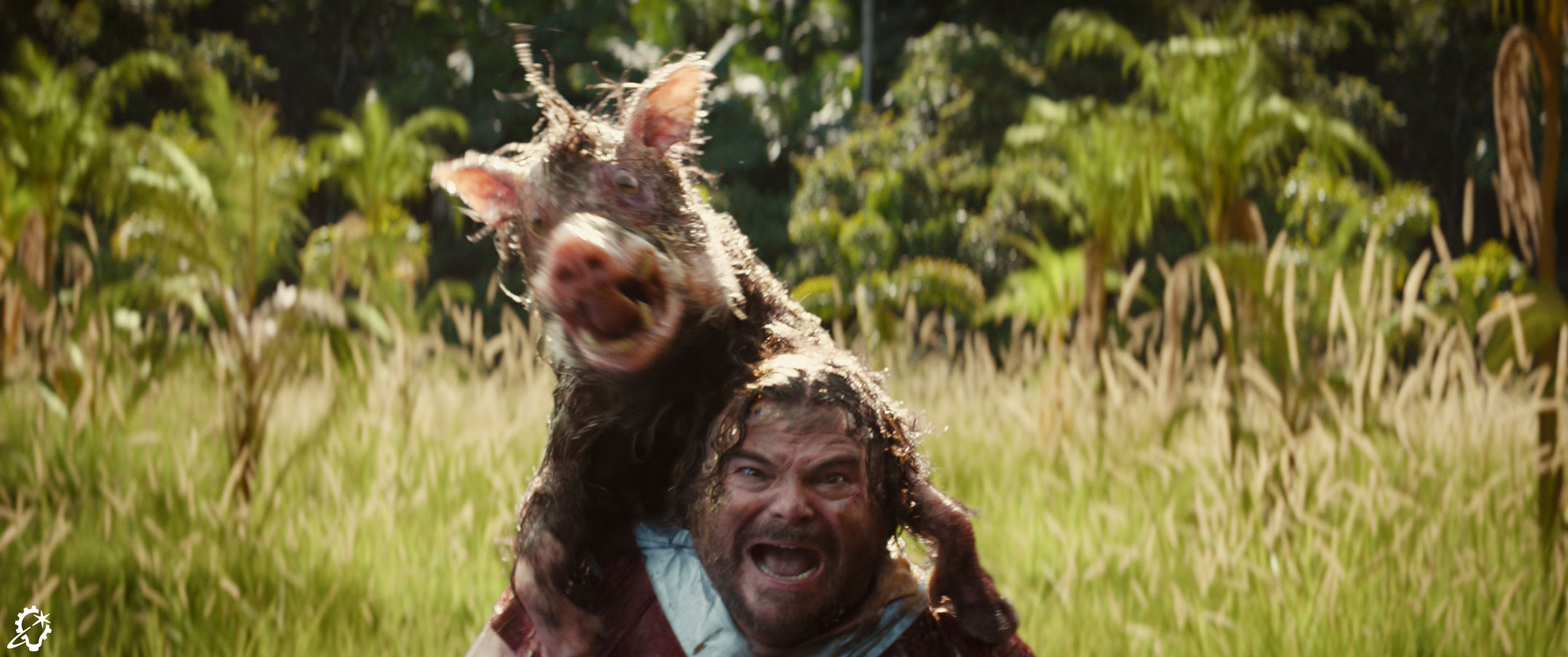
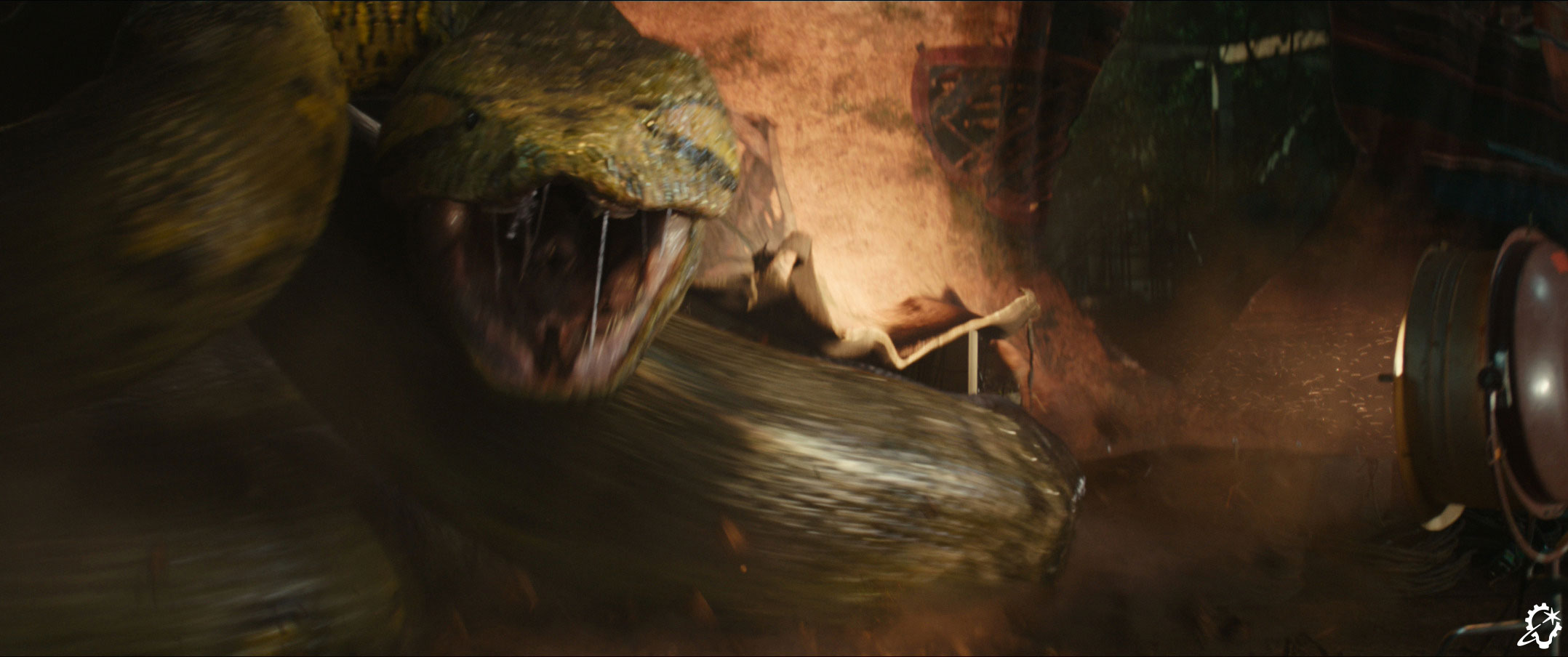
One of the challenges for the Industrial Light & Magic team working on the comedy-horror meta-reboot Anaconda (2025) was making sure the titular monster looked truly frightening.
And not, as some worried, like a puppy dog.
“If you look at any real anaconda image, you only know it’s scary because it would attack you and squeeze you. But it’s not that scary,” says ILM associate visual effects supervisor Gabriel Reichle.
Based at ILM’s Sydney studio, Reichle says some creative license was necessary when designing and modeling a computer-generated anaconda that would terrify audiences. During post production, the snake’s design evolved thanks to lead supervisor Gene Chee’s 3D model work building on concepts from the ILM Art Department teams in Sydney and San Francisco—changes that included making its mouth longer and shaping the look of its eyes to be scarier.
“It’s more like a viper than an anaconda in its appearance,” Reichle says. “Anaconda don’t have teeth and all that stuff. So, there was a lot of blending the anaconda as much as possible.”
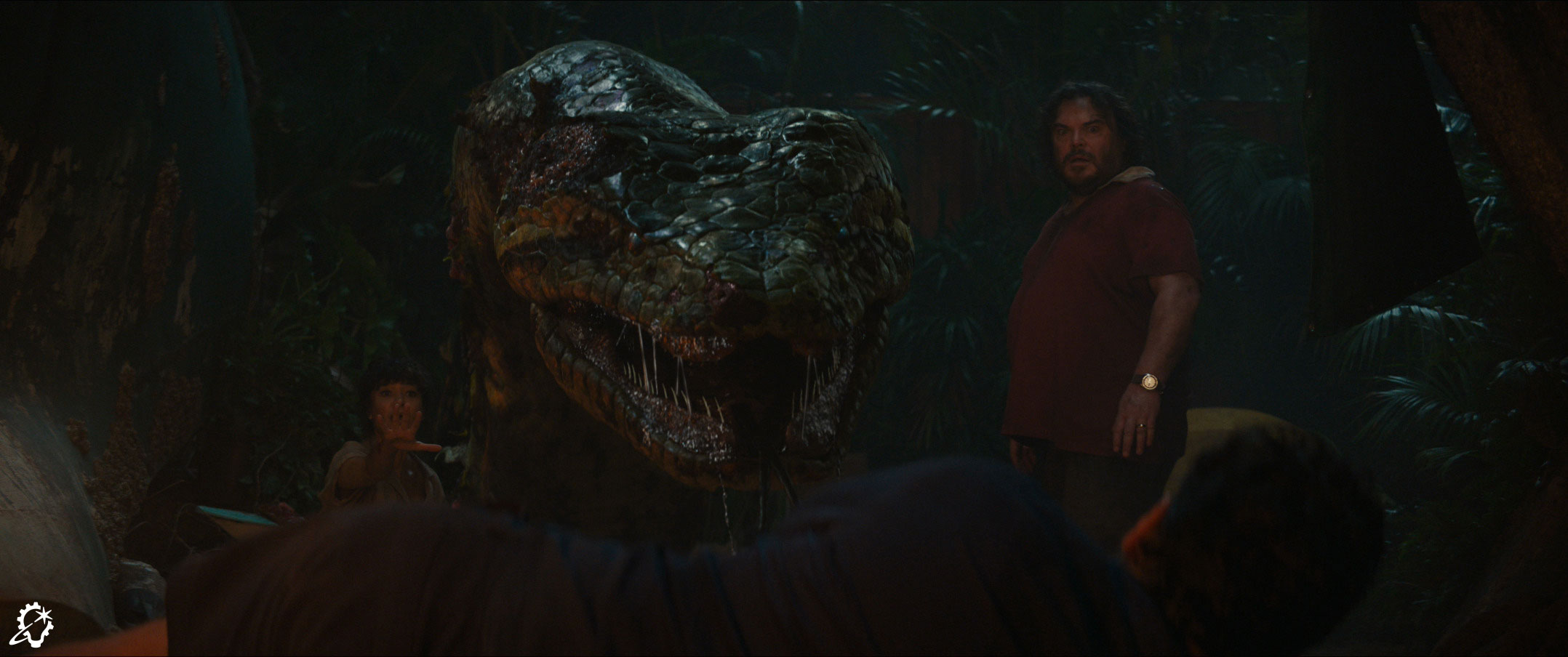
The story follows the filmmaking exploits of Doug McCallister (Jack Black), Ronald “Griff” Griffin (Paul Rudd), Clair Simons (Thandiwe Newton), and Kenny Trent (Steve Zahn), childhood friends attempting a low-budget remake of the classic horror flick. The group travels to the jungles of Brazil to start filming but soon runs into trouble with both snakes and humans.
Early on, there were discussions about creating the giant killer snake through largely practical means, including puppets. But the pace of the production as well as the number and complexity of shots required leaning into ILM’s digital solutions.
“Shoots are very fast and furious these days, with all of us trying to get every cent on the screen,” explains ILM visual effects supervisor Ben Snow. “Practical work takes a lot of time, and it takes effort and energy. I think there was hope that a puppet would work, and a good-looking model was made of the smaller snake Heitor, but in the end the filmmakers decided to create all the snakes via computer graphics.”
To develop a proof-of-concept digital monster, animation supervisor Stewart Alves used an existing CG snake model and scaled it up for a series of movement tests for director Tom Gormican. “One was essentially wrapped around the tree just to see how it went down the tree,” Alves explains. “The other one was what everybody knows— the serpentine movement of chasing a guy through a forest. And the third one was where you usually see the back end of the snake kind of compress into itself as it launches forward. That was enough for our director to see and determine, ‘OK, we have a snake movie we can do in CG.’”
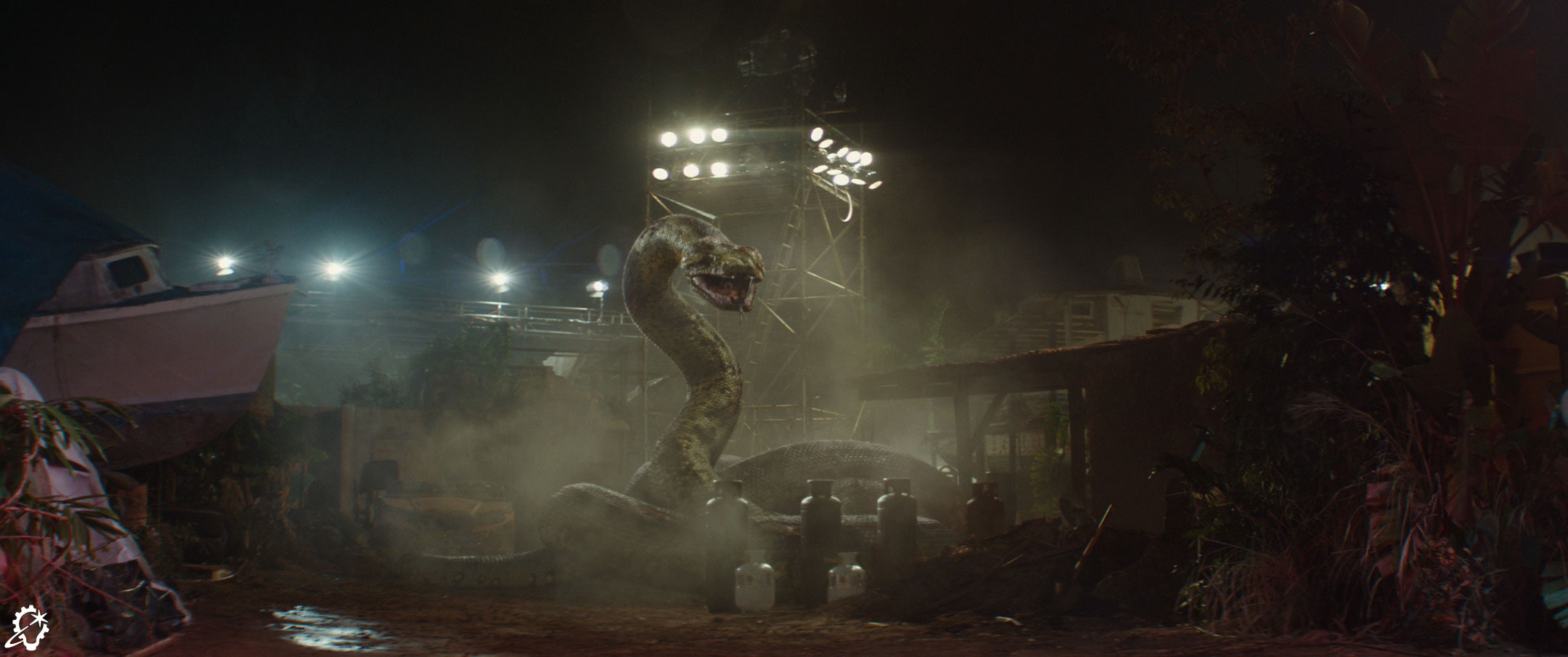
The ILM team also helped filmmakers determine how large the anaconda should appear on screen.
“What they wanted to do was essentially previs, just to determine the scale,” Alves recalls. “So we took some lenses, putting in one scale of a snake with a base human character and then trying different lenses and different scales for the snake. You initially go with the idea that our snake is 80 feet long, and it’s this wide, it’s this high. But by the end of the project the snake had somewhat drastically changed.”
The primary anaconda – and the smaller snake Heitor that has an unfortunate encounter with a boat propeller – were modeled in Autodesk Maya, scales and all. “The tricky part was the scales on the model. Because you can’t solve that in texture,” Reichle says. “There’s a lot of time spent on those scales because the one thing that I noticed is that if you made the scales slightly bigger or more arched than flat, it started looking like a dragon.”
During filming, chroma-key green proxy forms – essentially stuffed animals – represented the creatures on the set. But the snake stuffies were lightweight, presenting a performance challenge to the actors. “Sometimes the problem is that you’ve got a large, muscular, heavy creature,” Snow comments, “and so it really comes down to the actors’ abilities. Obviously, someone like Jack Black has done a ton of these sorts of films. He knows how to mime that.”
For a number of scenes, however, ILM artists digitally enhanced actor performances to better sell the idea that they were struggling with a weighty animal. In one shot, snake handler Santiago Braga (Selton Mello) drapes Heitor over his neck and shoulders. “That was done with the lightweight stuffy,” Alves says. “And you could see it. There’s not a lot you can do, other than having conversations about digitally replacing arms so that you’re essentially dropping that weight.
“We also allow the snake to kind of slide through his hands so that there is enough movement to dictate the way he is holding it,” Alves continues. “It might have been heavy at one point as he’s walking over the boat, but by the time it gets to the next part, that weight shifted slightly by going on to the ground. So when he lifts, it is no longer lifting all of this thing.”
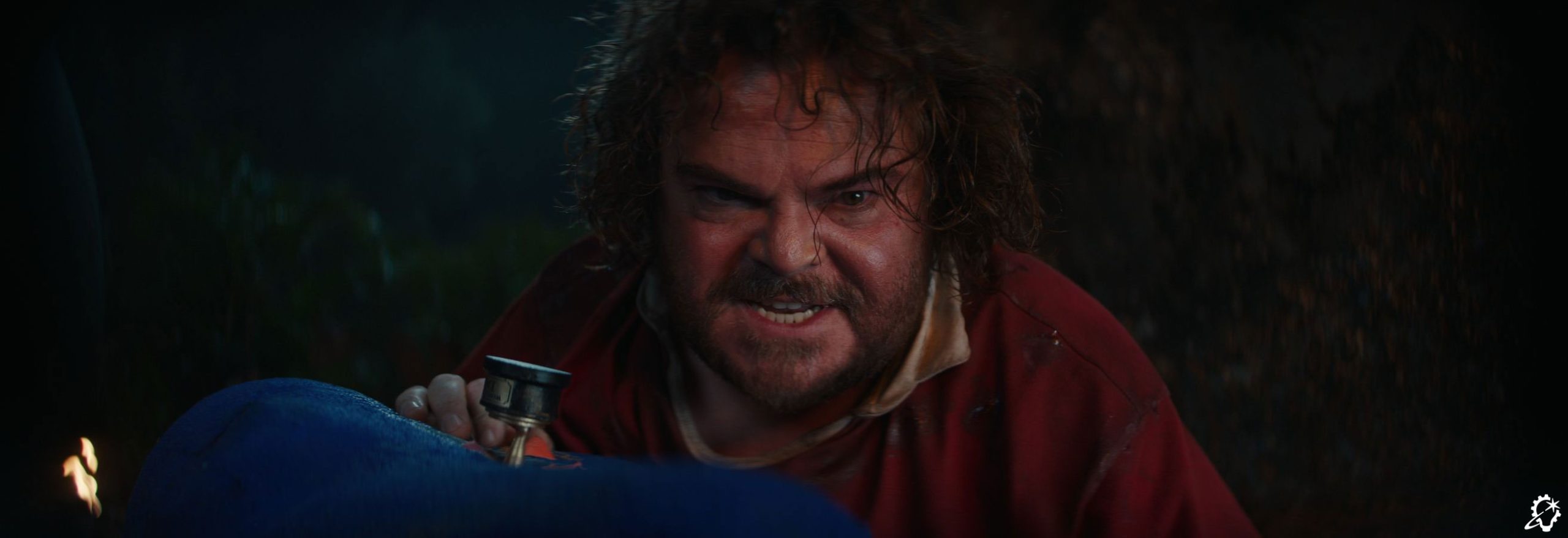
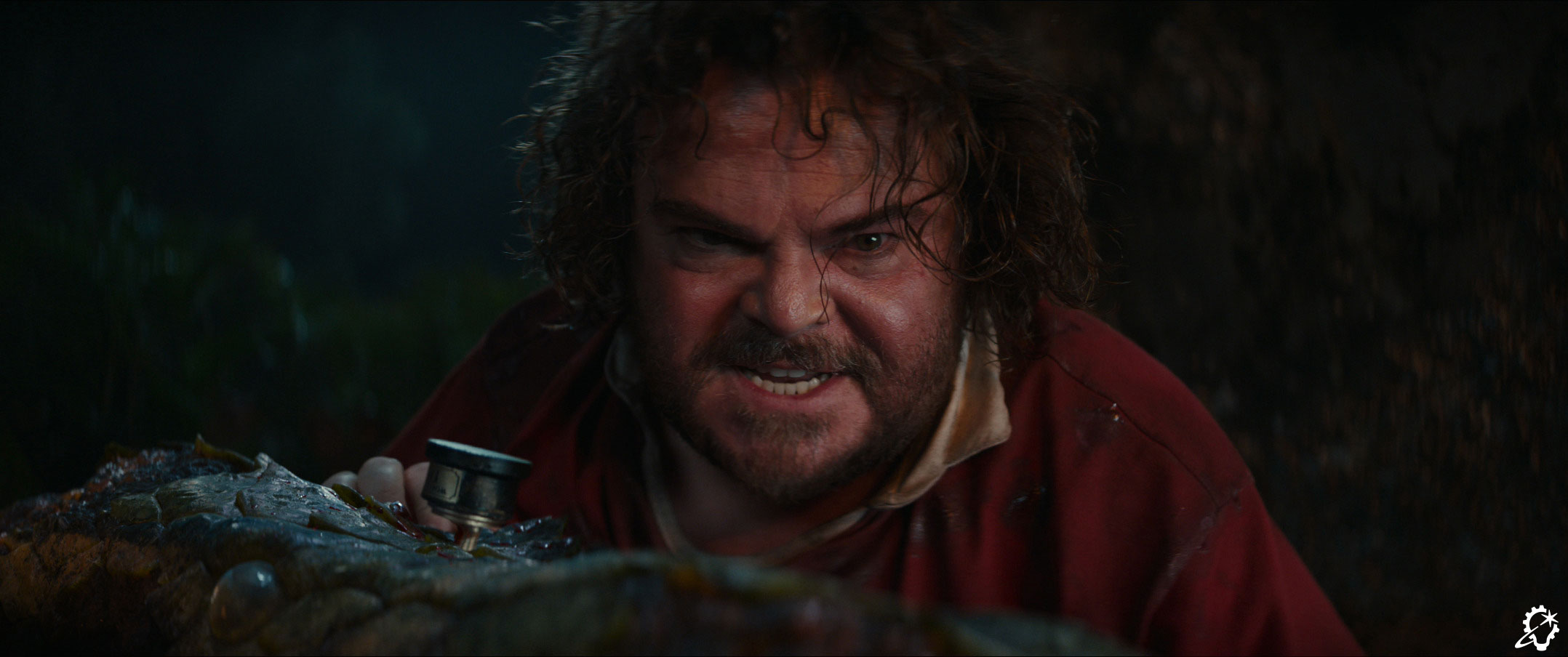
Another scene where Griff has a grip on Heitor required some stabilization work on Paul Rudd’s moving hands, since he was completely miming the action with no proxy snake to make it easier to allow flexibility later on. “We had to ‘calm’ one of the hands and then digitally replace the other one so that it was physically holding the snake,” Alves notes. “Otherwise, you lose all sense of weight of the snake. There were multiple shots where we had to do that.”
ILM also focused on giving the digital anaconda a credible screen-worthy performance based on the behaviors of a real animal.
“We definitely needed it to be a monster and an animal,” says Snow. “All of Stewart’s research was really invaluable, because we could always pull up a video of what Stewart found for performance of a real snake when Tom was like, ‘Oh, I’m not really sure about this.’”
As the snake moved, great care was taken to show it making split-second timing decisions about where it was headed next. “Like any character,” says Alves, “you need to know that it has a thought process. But aside from that, we always try to maintain a sense of believability from nature. You’re showing the thought process through posing more than you are through a facial expression. An open mouth, for example, could be aggressive.”
Artists also animated the environment around the snake to show its impact as it moves, including sprays of dust, sand, and water. The digital anaconda model was rigged with 2,000 controllers to help emulate its rectilinear motion and muscle movement in which a snake compresses and expands its body muscles to move across an environment, be it land or water.
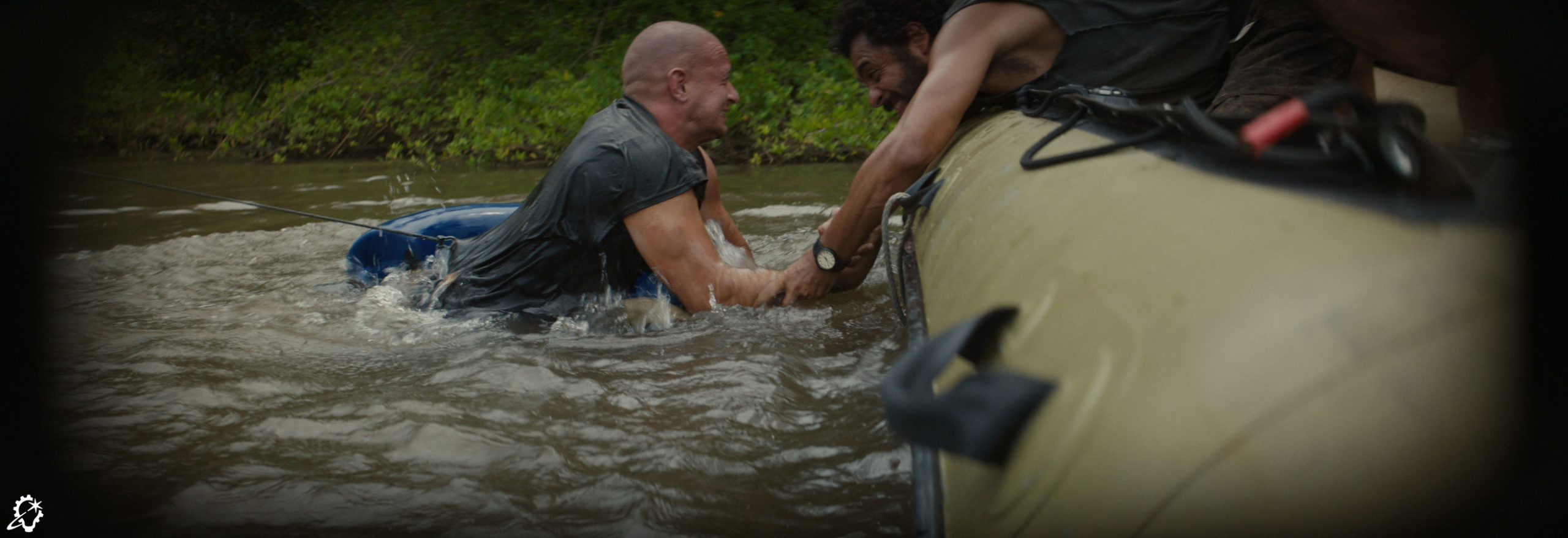
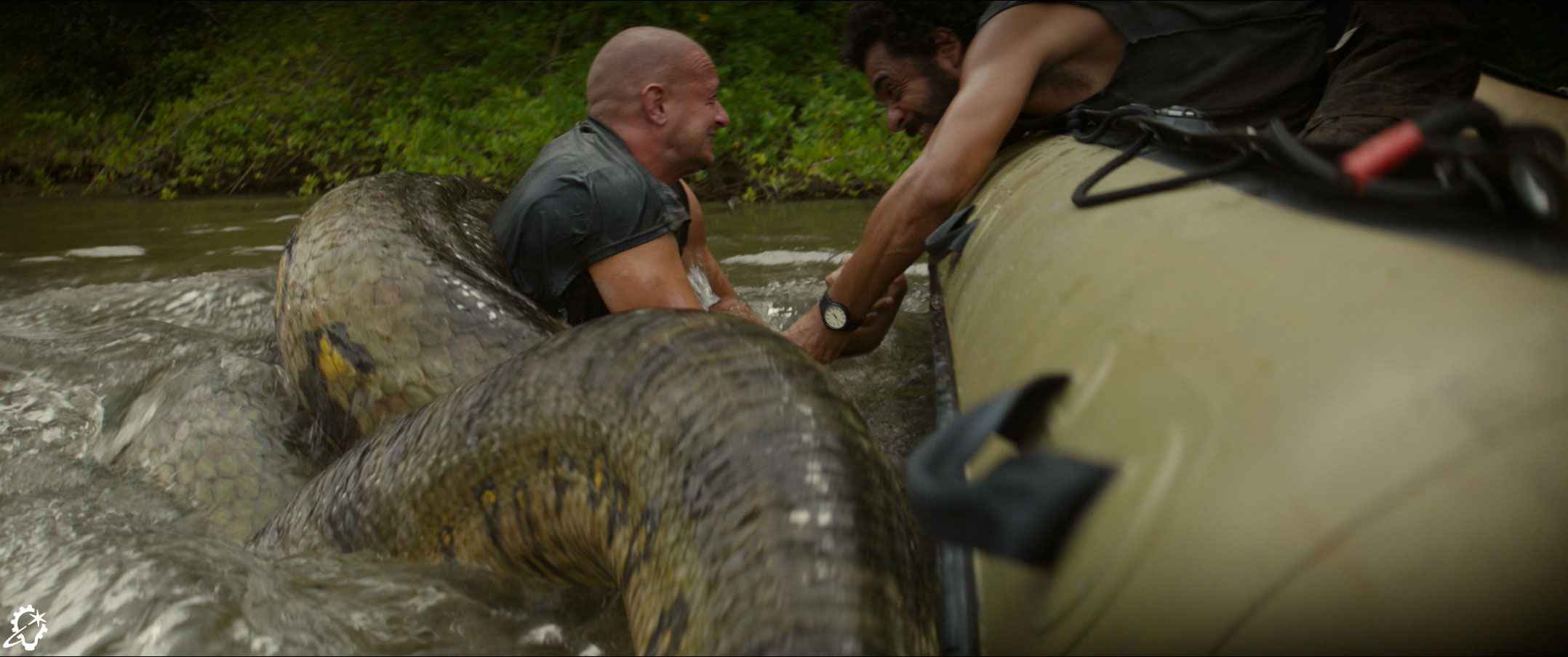
“Snakes are a challenge,” says Alves. “There are so many things that a snake can do. This thing’s made up of tens of thousands of muscles.” Animators developed loops that would simulate movement along the rig, as well as shapes moving through that create the illusion of muscle compression. “That was very important for Tom in certain shots. He really wanted to see the muscles,” Snow adds, “when it was squeezing and constricting. That was a great combination of animation and creature work.”
Alves credits ILM’s pipeline team for writing new tools to help streamline the animation process. “That made the constriction stuff a lot simpler to do,” he says. “And if we hadn’t had that, I think it would have been very, very difficult to manage.”
The production filmed on the Tweed River in Queensland, about an eight-hour drive north of ILM’s Sydney studio. But even being in the same country provided more collaborative opportunities between the filmmakers.
“If you’re working on a local production, there’s a strength to it all being here,” says Snow, who visited the set and together with production visual effects supervisor Frazer Churchill and visual effects producer Scott Puckett helped guide Tom Gormican through the visual effects sequences to ensure he got the results he wanted.
“As the production wore on, we really made an effort to educate him about the different stages of the process,” Snow recalls. “There’s a lot of editing, there’s a lot of testing, there’s a lot of tweaking. And he started trusting us.”
Reichle concurs that bringing Anaconda to life was a creative and technical challenge that required a massive team effort between different ILM departments, all working together to produce their slithering, terrifying best.
“If you have an idea for a story with a digital animal,” Reichle jokes, “don’t do snakes.”
—
Clayton Sandell is a Star Wars author and enthusiast, Celebration stage host, and a longtime fan of the creative people who keep Industrial Light & Magic and Skywalker Sound on the leading edge of visual effects and sound design. Follow him on Instagram (@claytonsandell), Bluesky (@claytonsandell.com), or X (@Clayton_Sandell).