
In the spring of 1971, George Lucas quietly established a new company to carry his future projects.
By Lucas O. Seastrom
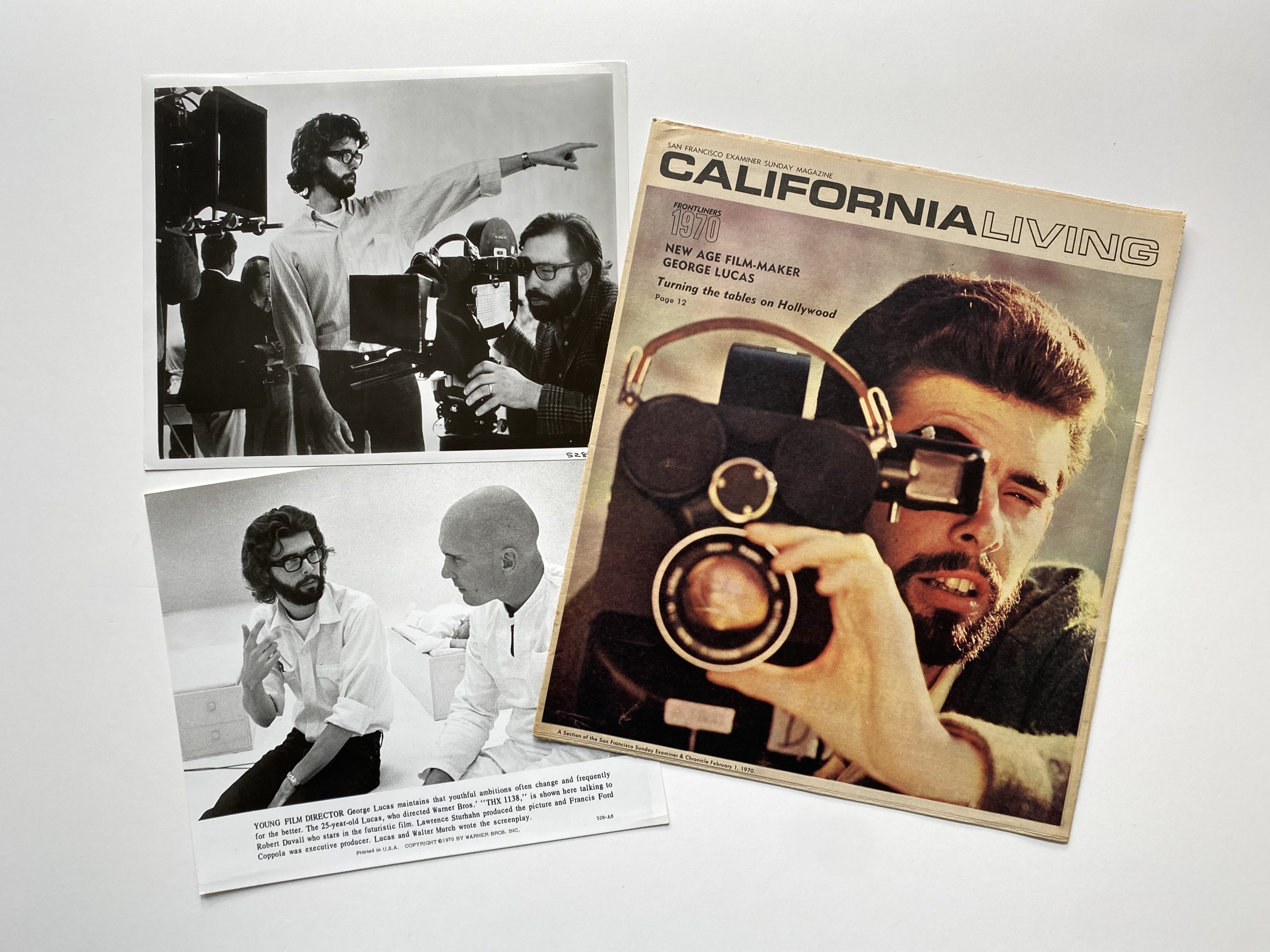
55 years ago today on April 20, 1971, Industrial Light & Magic’s parent company, Lucasfilm, was established by then 26-year-old George Lucas in Mill Valley, California. It was a relatively quiet moment, more of necessity than anything else. There were no formal announcements. For months the company would remain little more than a name on a legal document, but its promise was greater than anyone could have imagined at the time.
A rising star amongst his generation of young filmmakers, George Lucas had previously co-established the independent company American Zoetrope with Francis Ford Coppola and a group of fellow filmmakers in San Francisco. Empowered by their self-made creative freedom, they pursued an audacious vision to make films that challenged established Hollywood norms.
Lucas’ own THX 1138 (1971) was Zoetrope’s first feature to be completed and released. The film’s powerful depiction of one man’s attempt to escape from an oppressive society anticipates themes in the director’s future work. Lucas was deeply troubled, however, by distributor Warner Bros.’ efforts to remove scenes from THX. The film’s struggle to gain commercial footing upon its March 1971 release exacerbated financial pressures within Zoetrope. While Coppola planned to direct an adaptation of the popular crime novel by Mario Puzo, The Godfather, Lucas decided to set out on his own.
Initially, Lucasfilm was solely an imprint which the filmmaker could employ on his future projects. It was not necessarily destined to become a large organization with many divisions and enterprises. Within a month of the company’s founding, Lucas was striking an early development deal with United Artists for what became Lucasfilm’s first production, American Graffiti (1973). He also secured an interest in a vague but rapidly growing concept for what the filmmaker called “a space-opera fantasy film in the vein of Flash Gordon.”
Graffiti’s surprise commercial success in 1973 helped cement Lucas’ opportunity to make what became Star Wars: A New Hope (1977). That new production would necessitate the creation of a visual effects division within Lucasfilm, Industrial Light & Magic. Much of ILM’s initial funding came directly from the earnings of the ever popular Graffiti, and thus the upstart effects crew was inseparably wound up in the fortunes of this essentially small town company still just a few years old.
On this special day, the artists and technicians of Industrial Light & Magic salute Lucasfilm and its rich legacy that continues to inspire audiences the world over.
—
Lucas O. Seastrom is the editor of ILM.com and Skysound.com, as well as a contributing writer and historian for Lucasfilm.