
Visual effects supervisor Eric Leven takes us behind the scenes of the high-speed film from director Joseph Kosinski.
By Jamie Benning
There is a moment early in F1: The Movie (2025) when the film quietly makes a promise to its audience. Before we have settled into the present-day story, and before we have learned the rhythms of the modern races, we are pulled back into the past, into the memory of a catastrophic crash that defines Sonny Hayes (Brad Pitt) long before we meet him. It is a short sequence, but it carries the same burden as the first dinosaur reveal in Jurassic Park (1993). If the audience does not believe this moment, everything that follows becomes harder to land.
That opening crash is not simply exposition. It is the film’s tonal contract, shaped quietly by Industrial Light & Magic, with more than a little help from the real-life, near-fatal crash of racing driver Martin Donnelly at Jerez in 1990.
ILM visual effects supervisor Eric Leven described the challenge in clear terms. “Motorsport fans have watched countless hours of real racing footage, so they instinctively know when something feels wrong. A film, however, cannot simply document reality. It has to reshape it into something emotional and cinematic. Accuracy alone is never enough.”
I have worked in Formula One television production for more than twenty-five seasons, and when the Donnelly sequence began as I watched the movie, I recognized the real-world imagery within a second. Almost immediately, that recognition dissolved, and I found myself inside Sonny’s memories. I wanted to understand how ILM helped achieve that transition and set the tone for the entire movie.
Dreaming in VHS
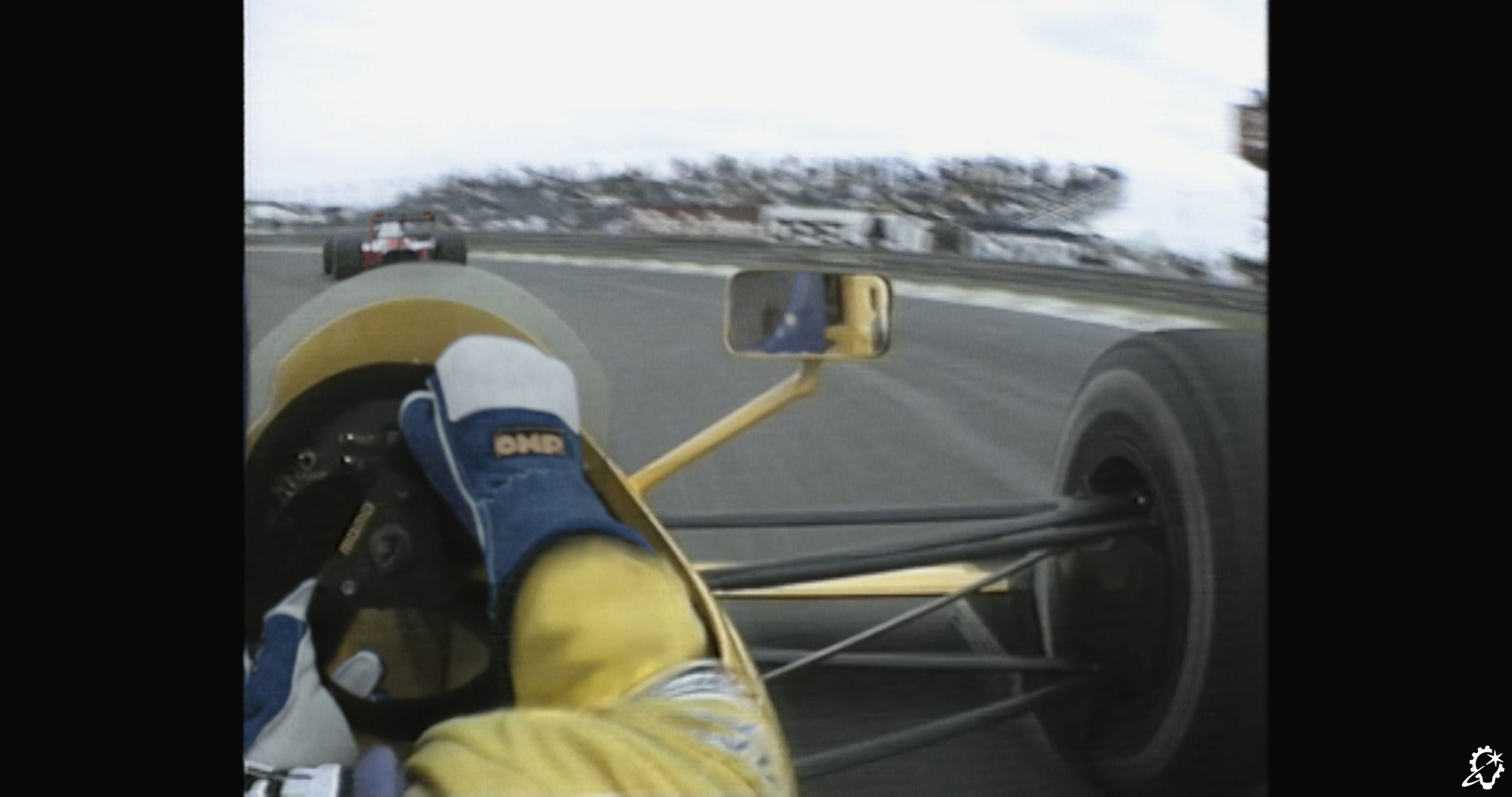
The conceit of the opening sequence is simple and effective. Sonny dreams in VHS. Editorial had mocked up an early version of the look, but everyone knew how unforgiving that format could be.
“Everyone knows exactly what real VHS looks like,” says Leven. “And if it is just a tiny bit off, you can tell that it was done in post or that it is not real VHS.”
Rather than rely on digital simulations, ILM turned to genuine analogue artefacts. Leven had digitized old family VHS tapes, complete with dropouts, noise, and tracking errors. Those became the foundation of the sequence.
“We were able to lift glitches from real VHS tapes,” Leven explains. “Our compositing supervisor, Heath Kranak, put that material together and mimicked the rest of the VHS look with the color desaturation and low fidelity and it matched perfectly. It was a really, really fun sequence to work on.”
The result does not feel stylised. It feels remembered and slightly damaged. The fragility it imparts is central to the emotional impact of the moment.
Rebuilding History, Donnelly, Senna, and the 1990s
Texture is only one part of the illusion. Many of the elements that appear in the Sonny Hayes crash exist because ILM reconstructed them digitally. The sequence blends archive racing footage of Martin Donnelly with new photography shot at the F1 legacy circuit Brands Hatch. Crucially, the archive was not something to be polished. It was the aim.
“The archive footage was the target look we were going for,” Leven says. “That became our roadmap for what the other footage needed to look like.”
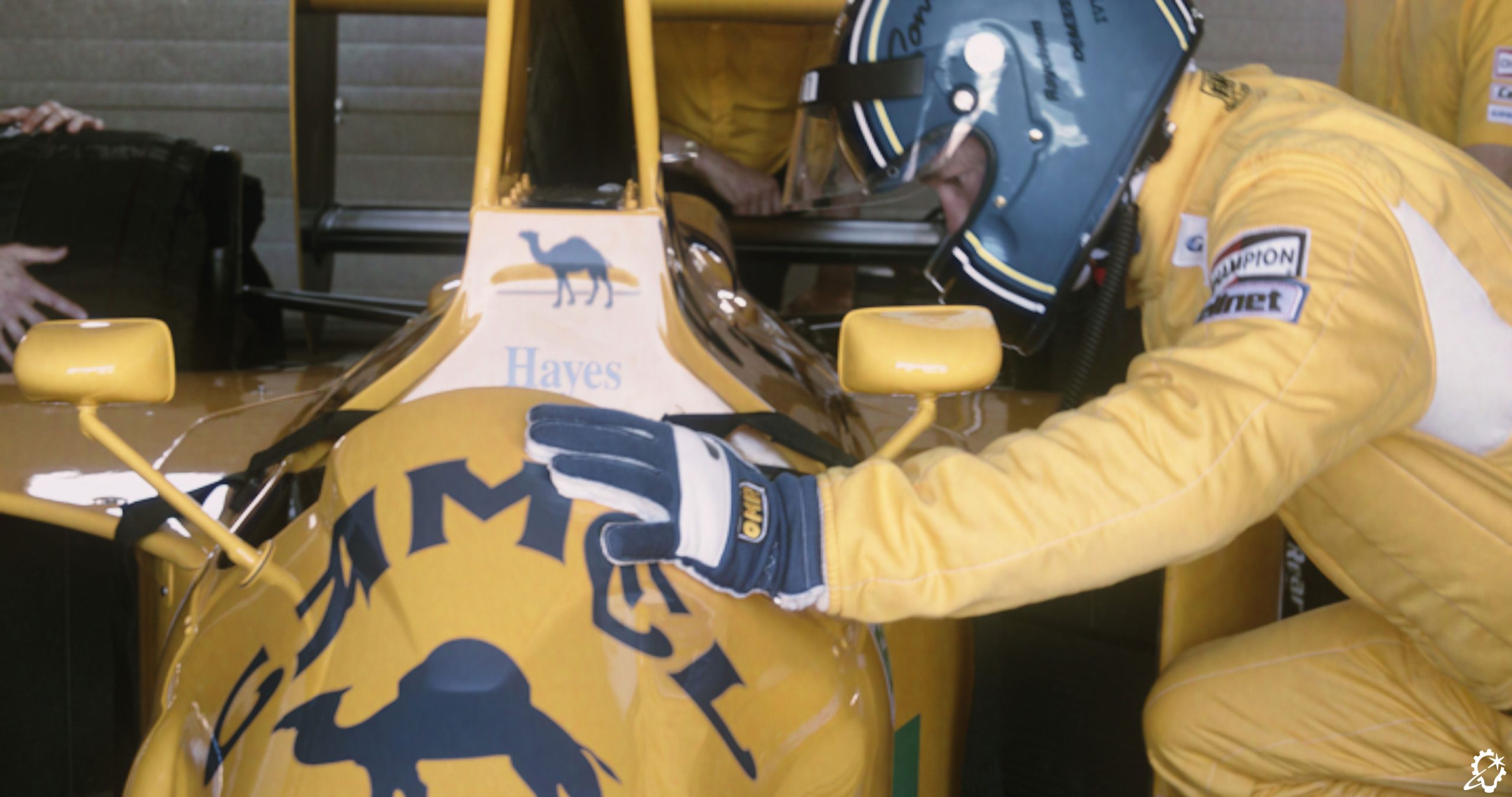
The new material had to bend toward the old. Stand-in cars did not match the shapes and proportions of early 1990s Formula One vehicles, so ILM made significant changes. “To me it looked like a Formula One car from the 1990s,” Leven notes. “But people said, no, the air scoop is different, and the tires are a little bit fatter. So we ended up replacing Senna’s car in its entirety.”
Branding needed the same attention. Logos removed on set were later reinstated for reasons of authenticity. “At that time they had Marlboro advertising,” Leven recalls. “So we added those logos onto Senna’s car and on some of the billboards.”
Playing With Recognition
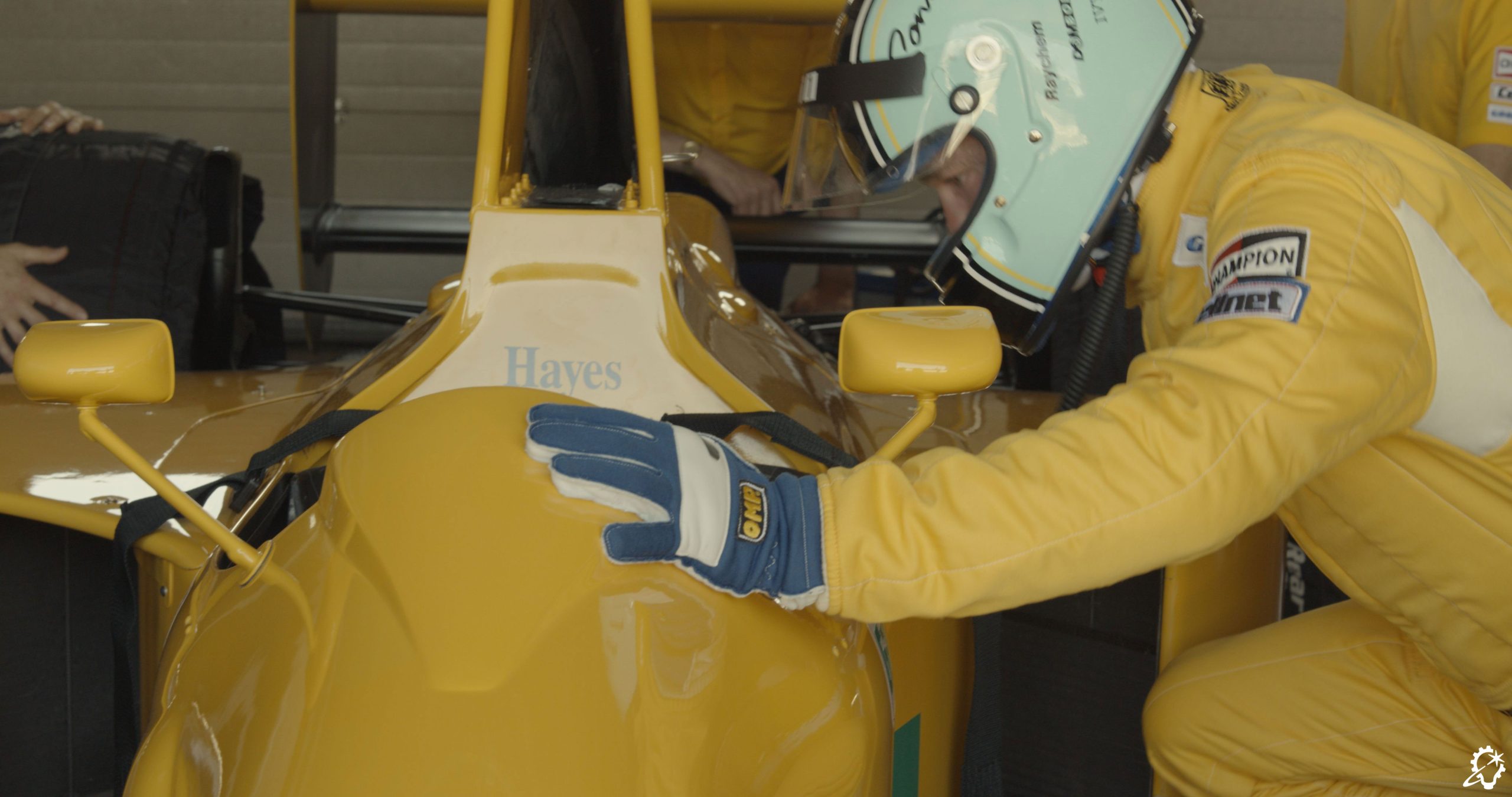
For viewers who know the real Martin Donnelly crash at Jerez in 1990, there is an immediate flicker of recognition when the sequence begins. The angles, trackside details, and violence of the moment feel unmistakably familiar. Yet within seconds, that certainty slips.
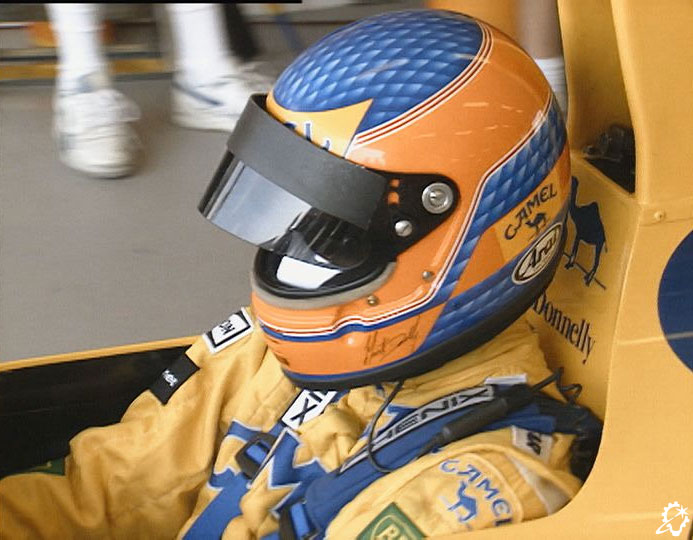
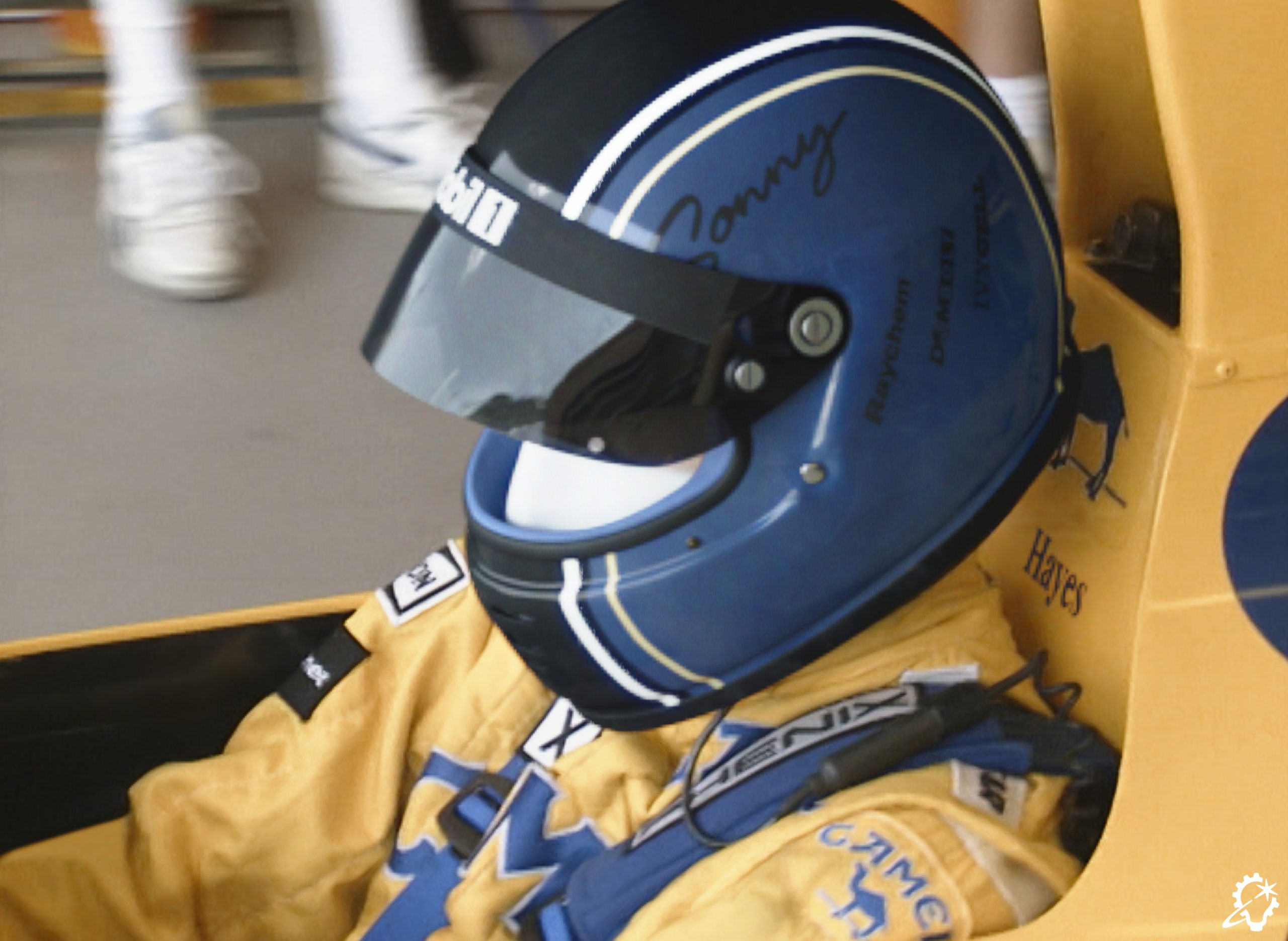
The yellow car remains, but the driver is no longer Donnelly. The incident has been reframed as Sonny Hayes’s defining memory, and from that point on, the sequence belongs to the character rather than history. ILM is not inserting new material into archival reference. It is reconstructing a memory, taking an incident that fans may hold vividly in their minds and reshaping it so the audience feels both recognition and unease.
That approach extends beyond the car itself. Although the sequence was shot at Brands Hatch, ILM removed contemporary details, replaced the environment, added period-appropriate crowds, and regraded the landscape to resemble the Spanish circuit of the early 1990s. For seasoned Formula One fans, this is where the spell takes hold. They recognize the shape of what they are seeing, but begin to question its ownership.
The Crash That Is Not There
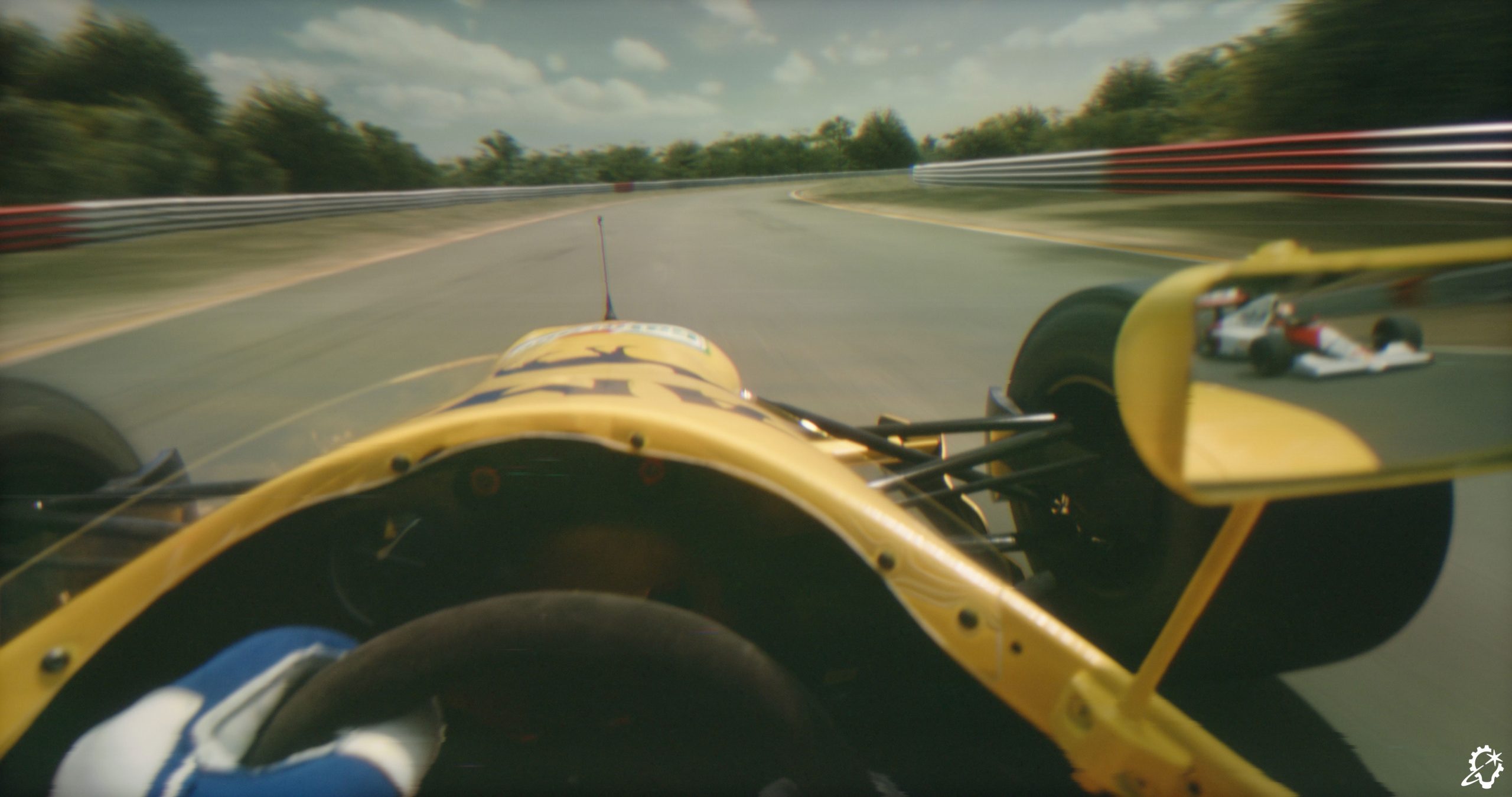
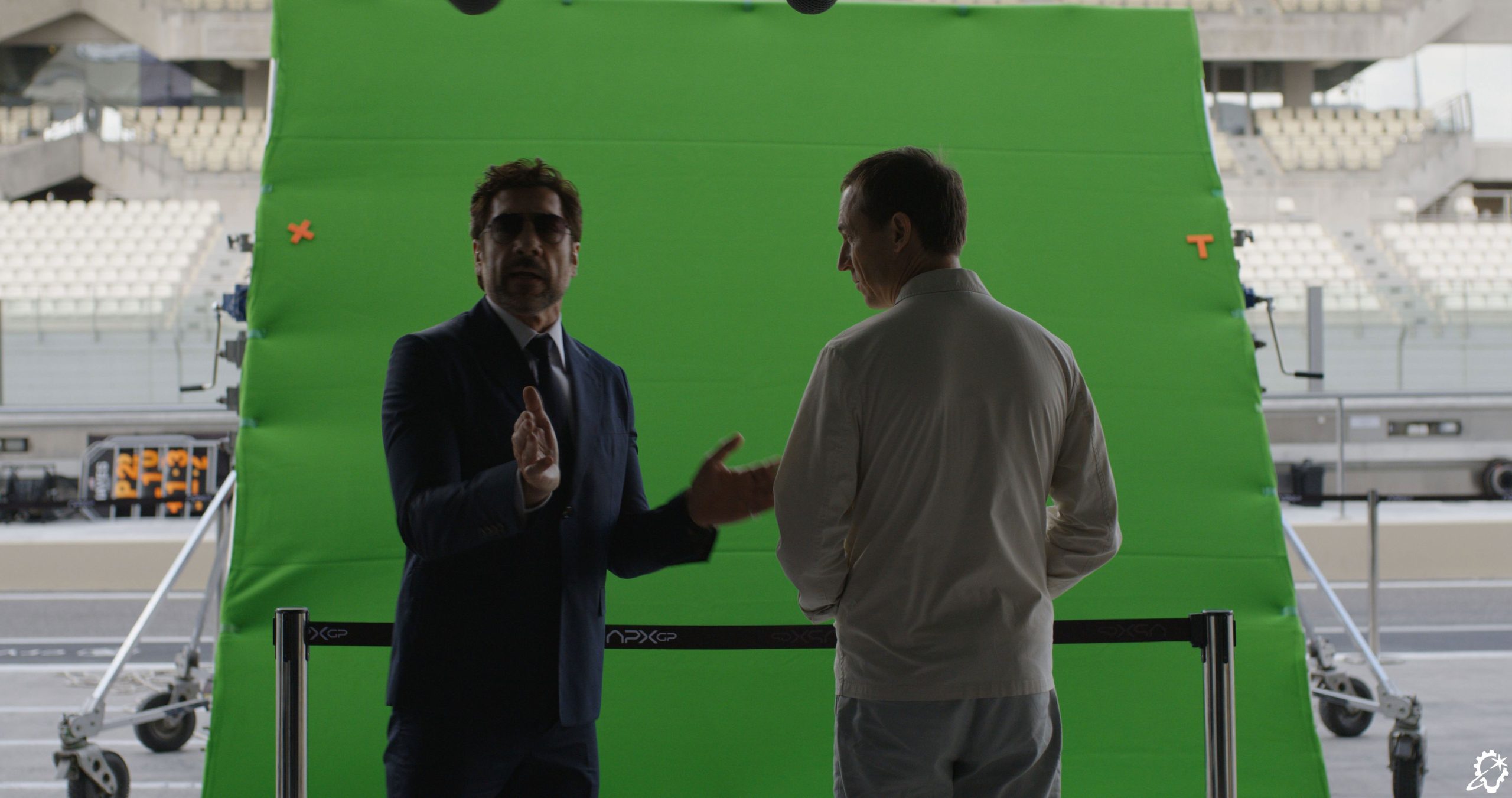
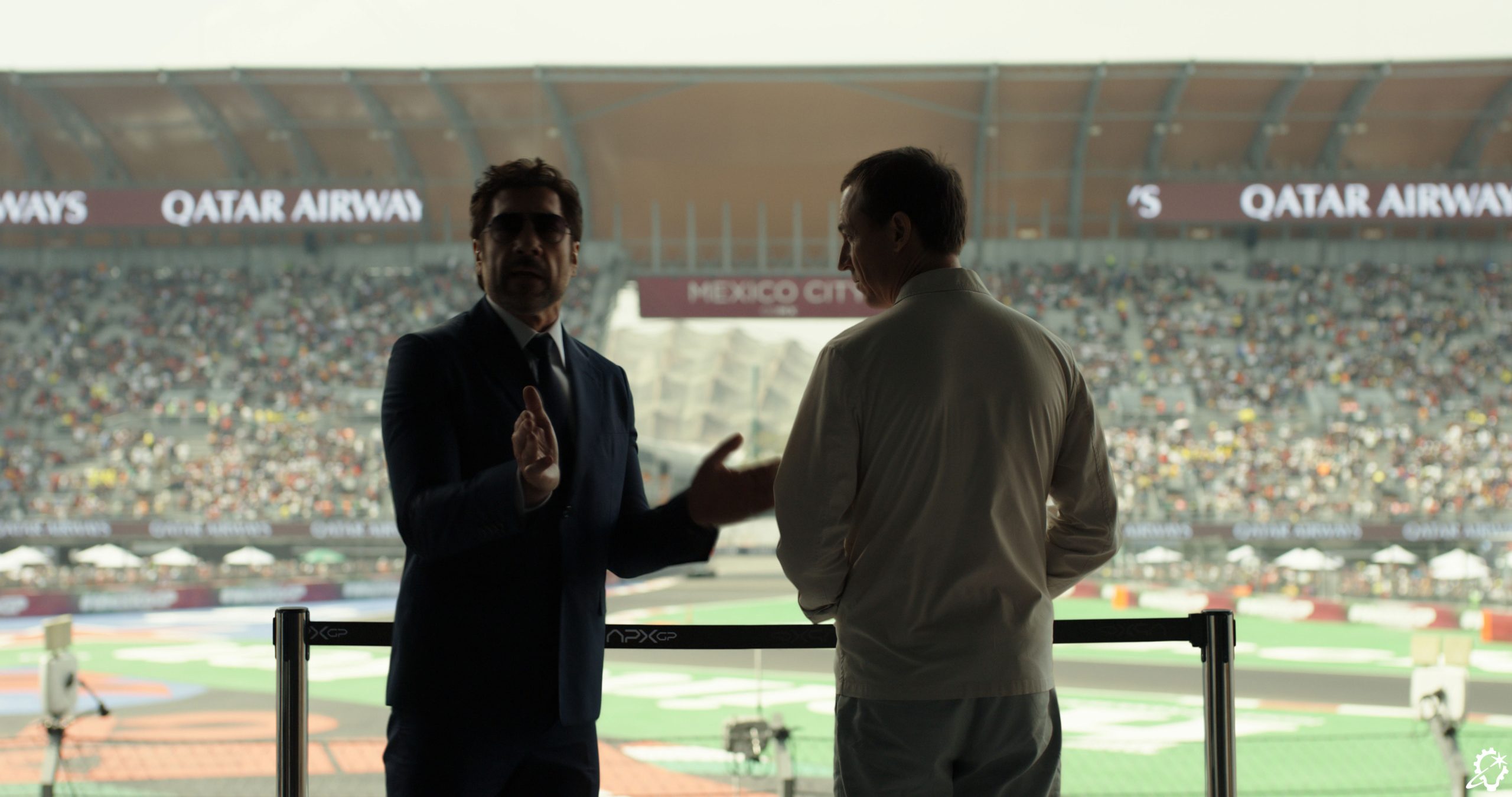
One of the most dramatic shots in the sequence, the car losing control and heading toward the guardrail, appears to be captured entirely in camera. In reality, it is almost fully digital.
“The crash was shot as the camera car was driving normally around a curve,” Leven says. “At a certain point, we took over. It basically became a full CG shot because we needed to replace the entire background and make it look like it was crashing into the guardrail.”
Once ILM replaced the environment, the car needed work too. “We needed to vibrate the wheels and make it look like he is going off the road,” Leven explains. “One of the wheels goes askew. Maybe 90 percent of the car was replaced.”
Even the driver’s hands on the steering wheel were animated later to make his struggle more believable. The goal was never pure spectacle. It was to make the audience feel the loss of control while subtly layering in the foundations of Sonny Hayes’s early racing story.
Daytona Nights
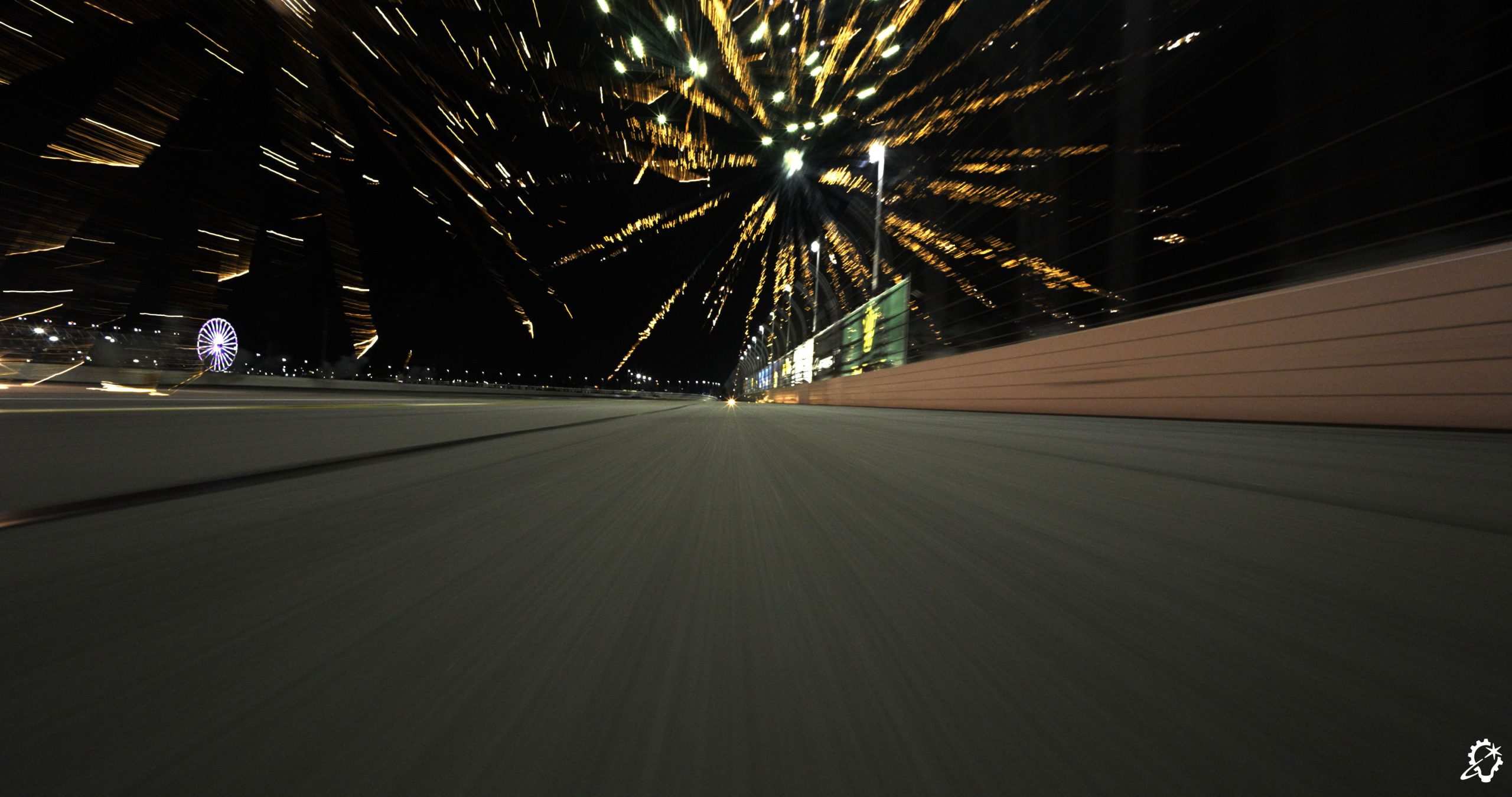
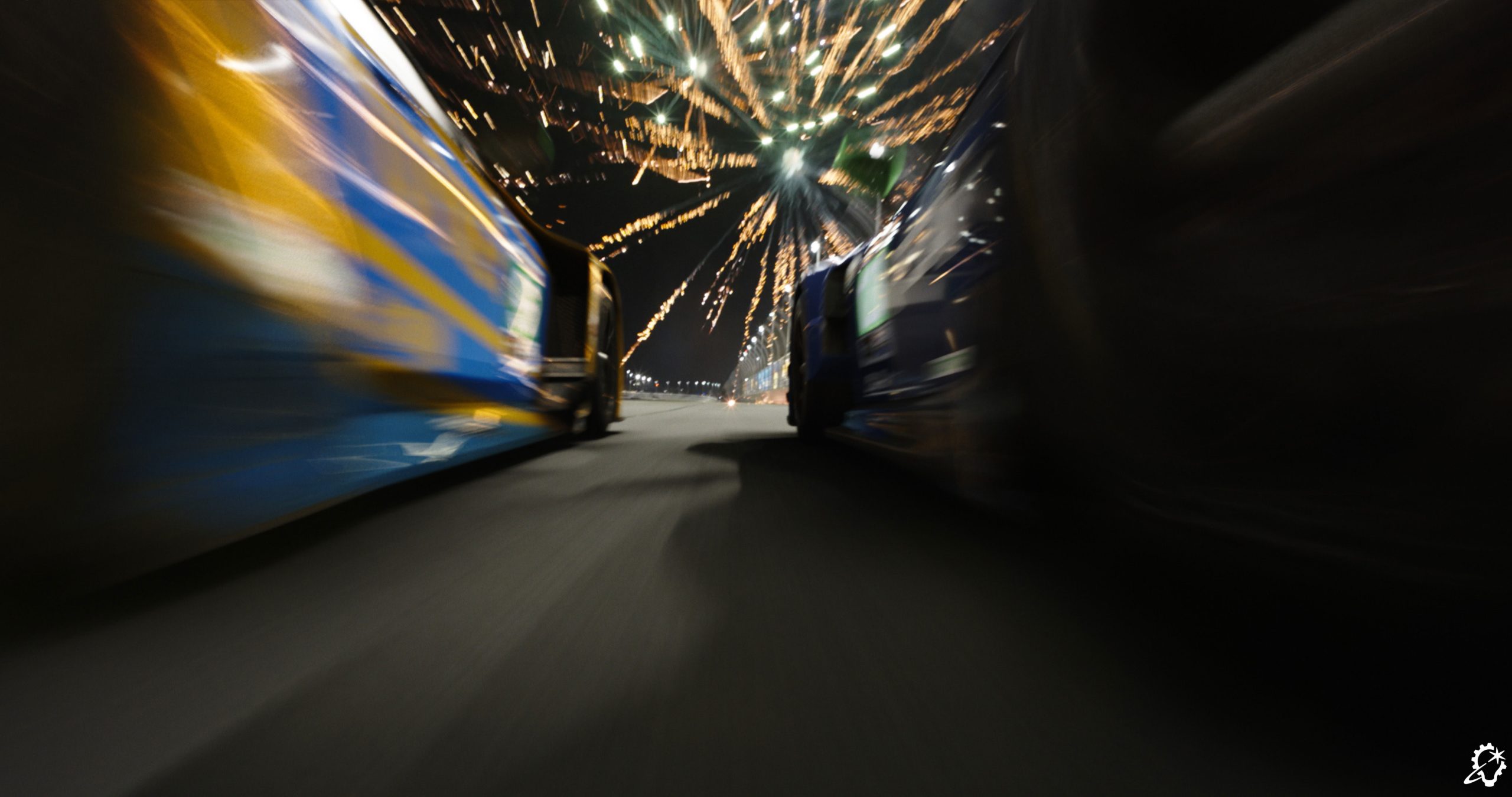
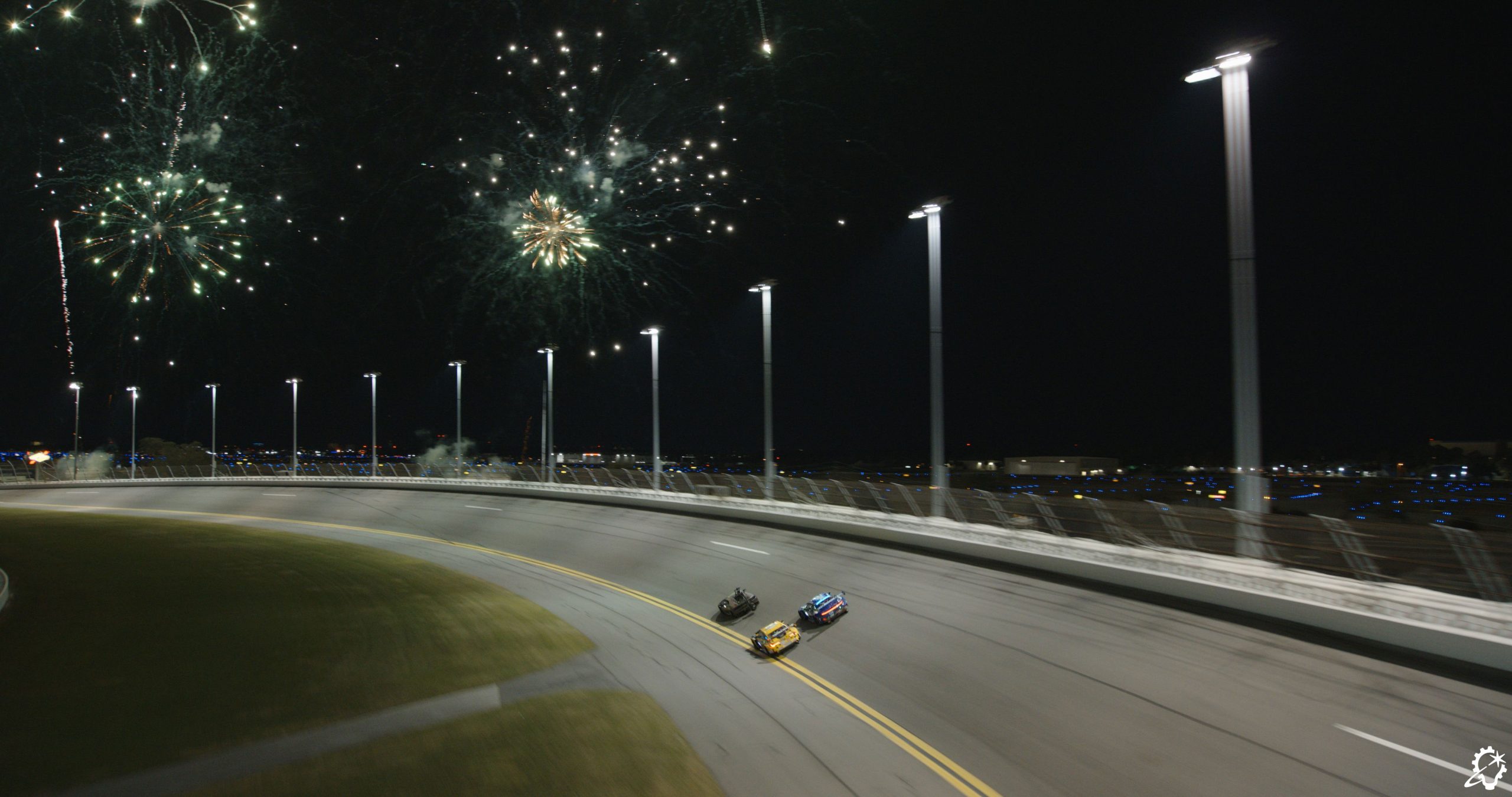
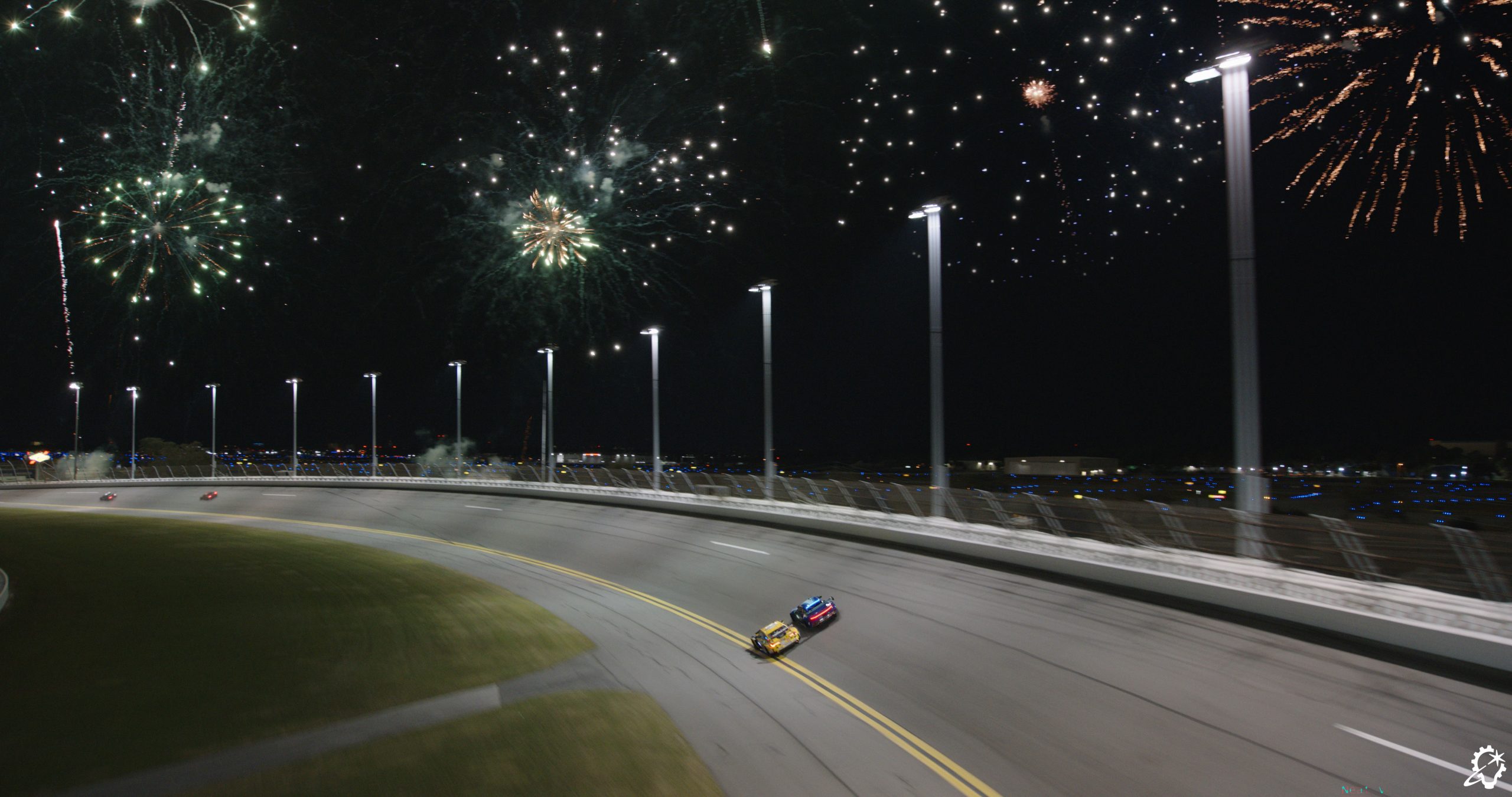
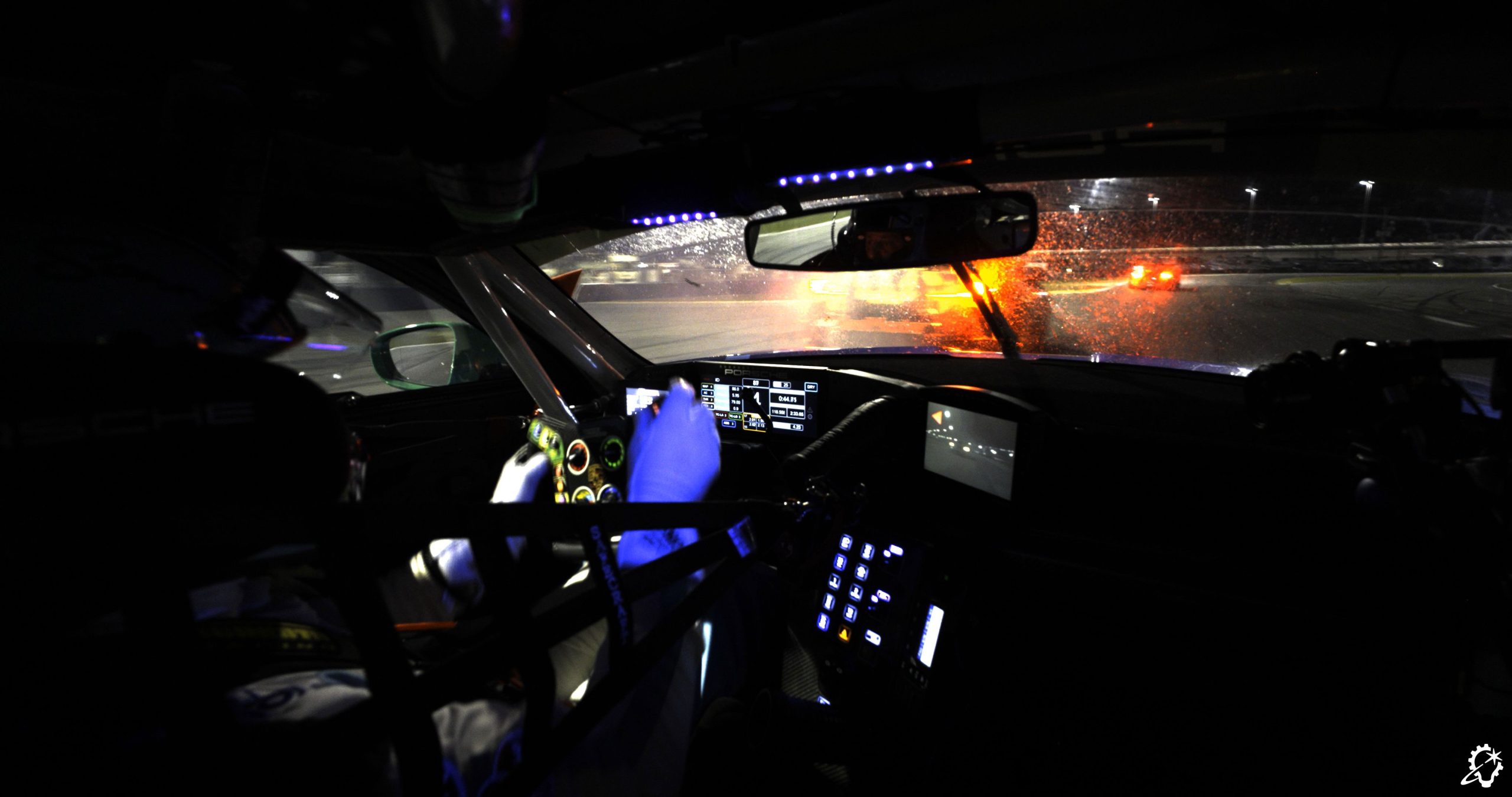
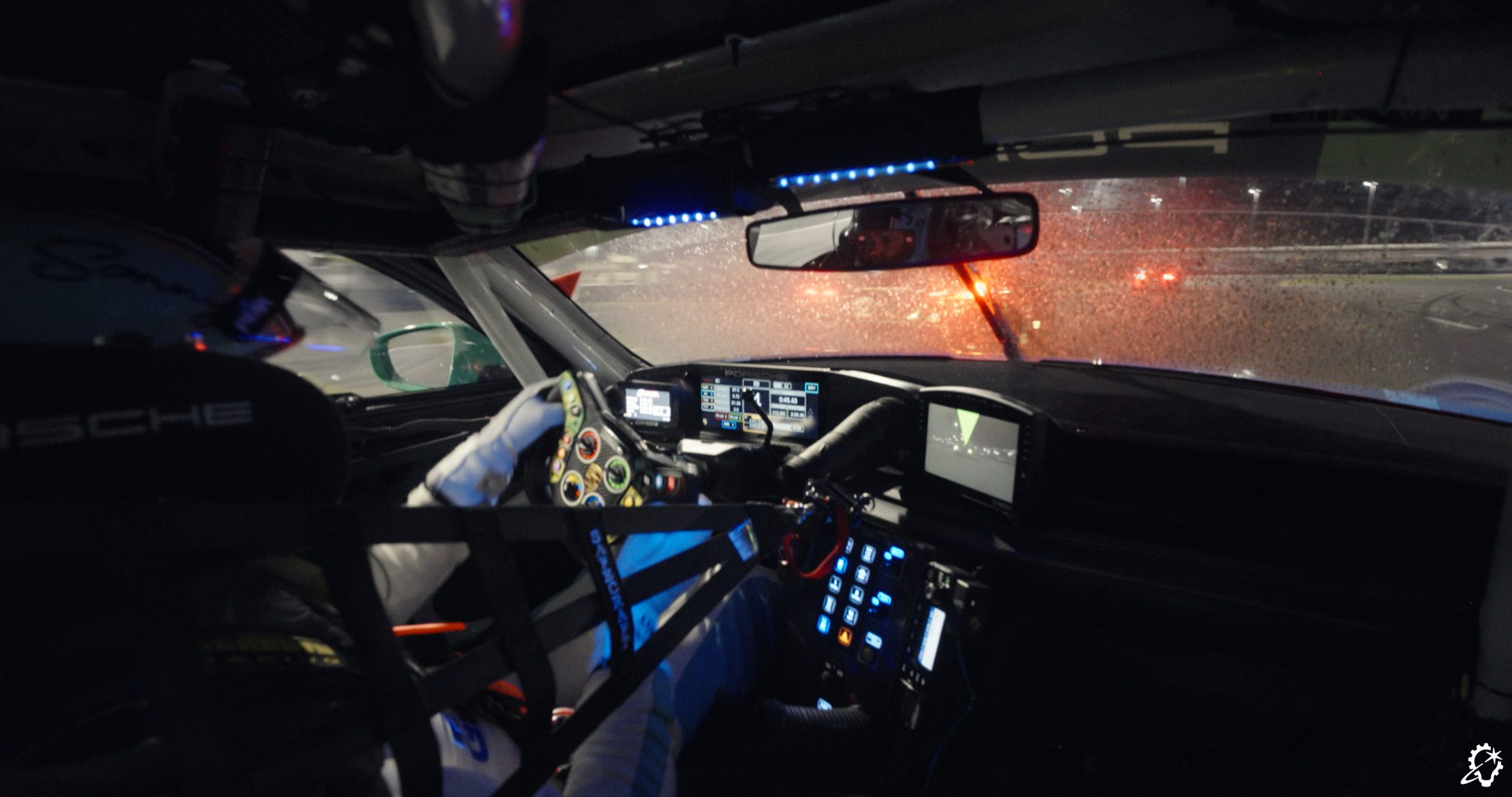
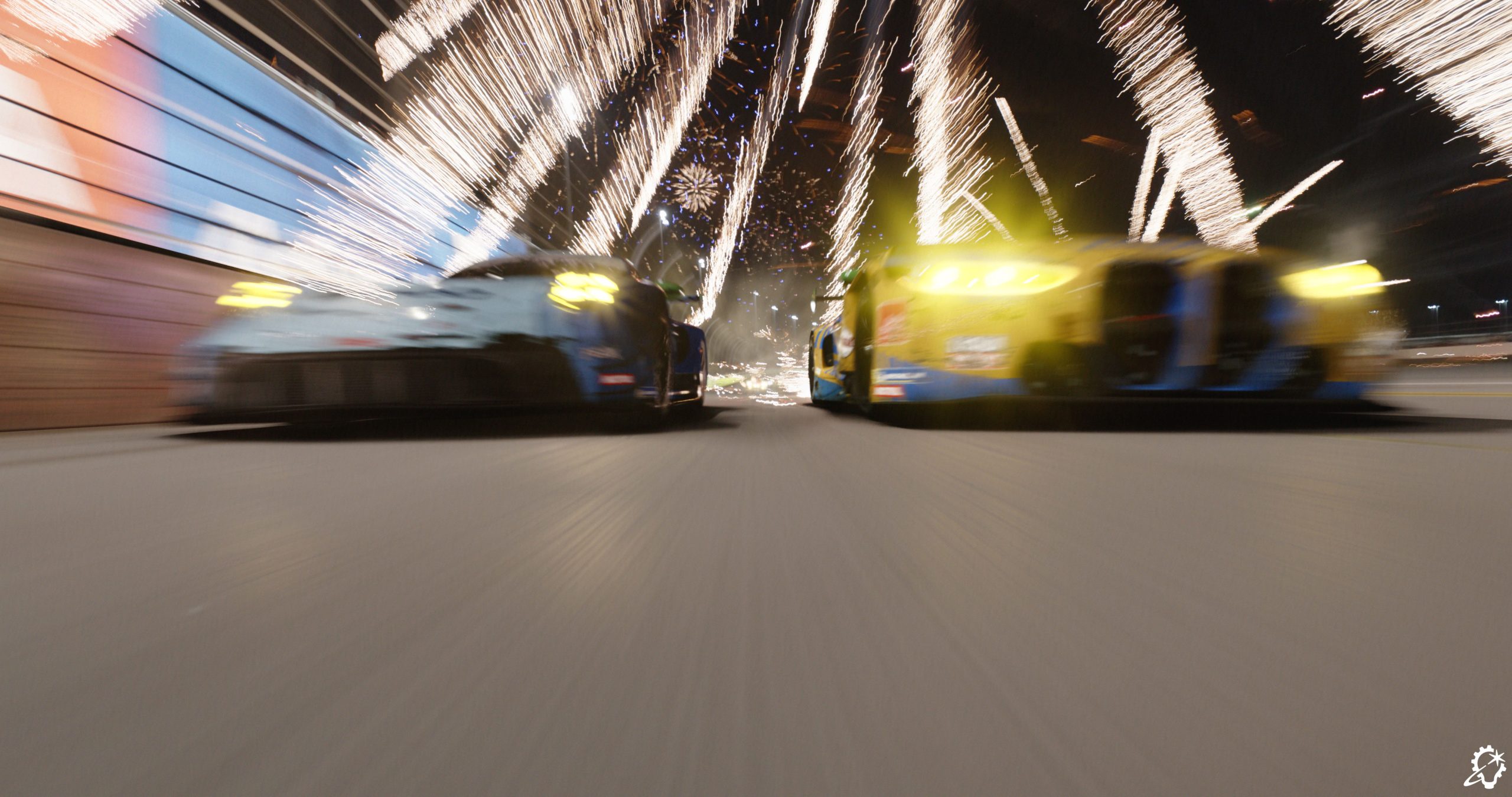
If the opening crash sequence sets the emotional foundation, the Daytona material sets the film’s visual rhythm. Once again, the work begins with practical filmmaking. “Joseph Kosinski was all about shooting as much as possible for real,” Leven says. “Let visual effects help only where you cannot get exactly what you want.”
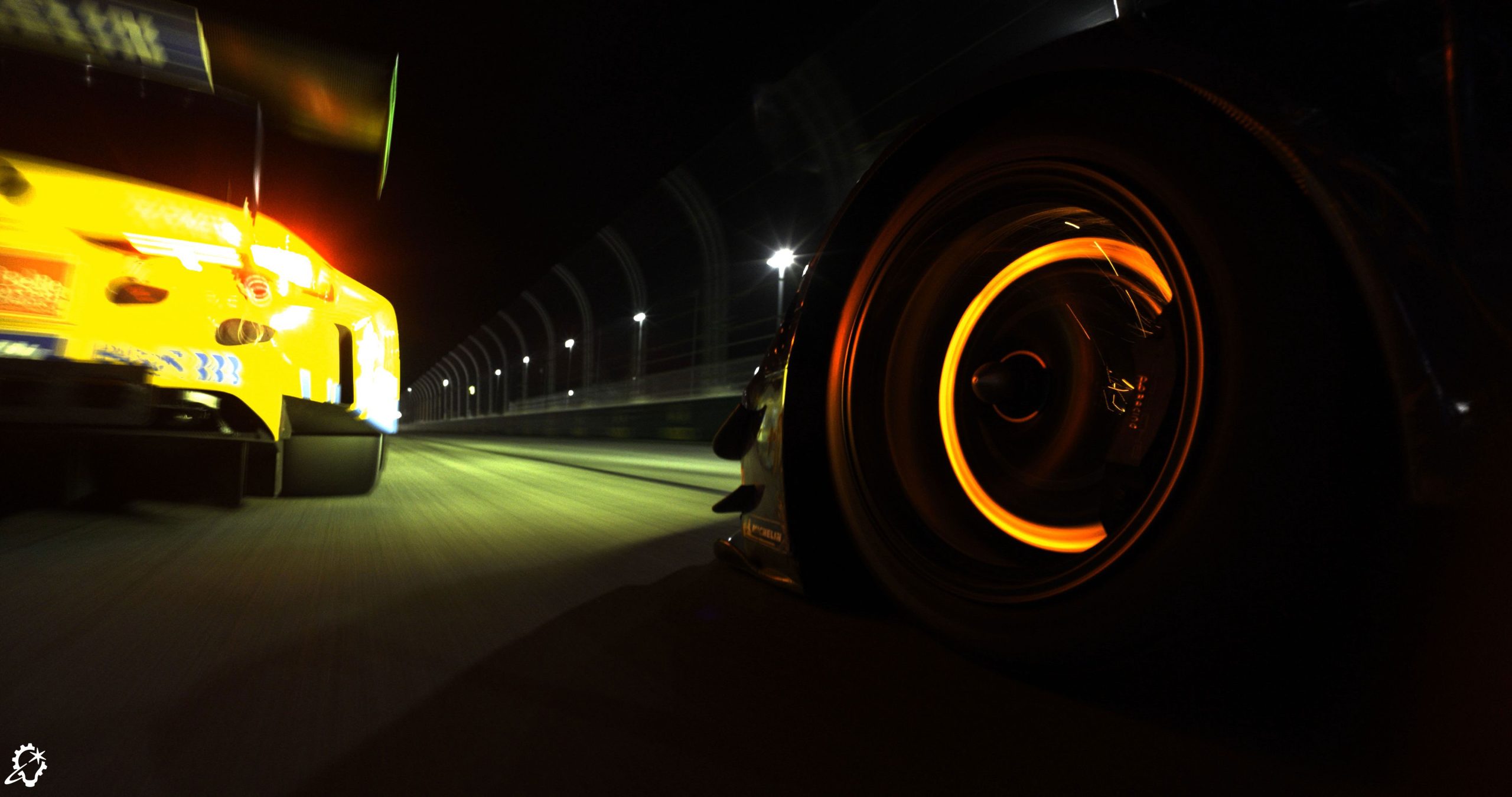
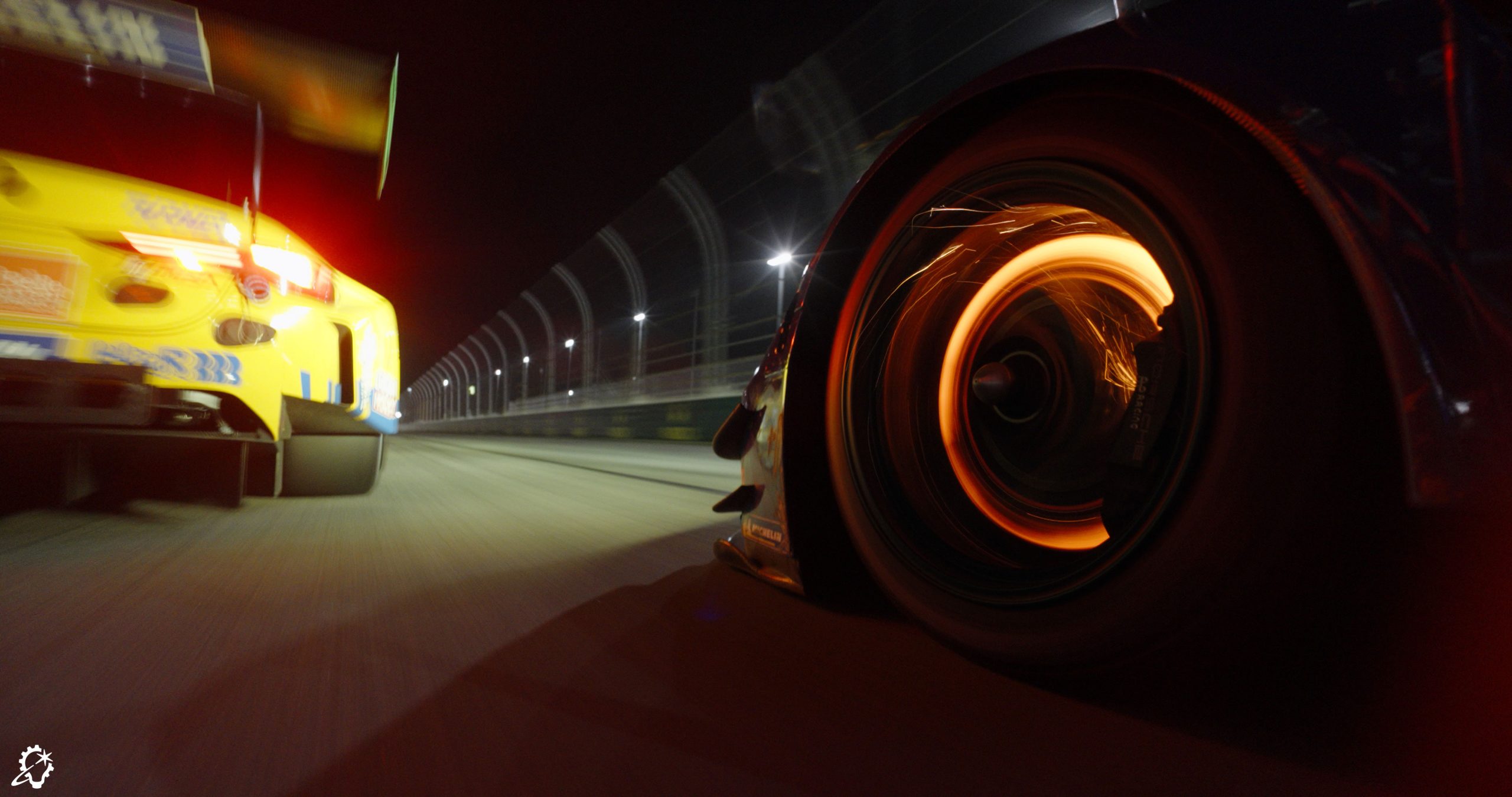
Units captured a wealth of footage and reference, from headlight sweeps to subtle brake behavior. This allowed ILM to integrate story beats seamlessly into authentic environments.
When the narrative required Sonny to be surrounded by several cars as he exited the pits, ILM added those cars. When positional indicators on the sides of vehicles needed to reflect a different moment in the story, ILM updated them.
“It is great to be at ILM where you can say, ‘Absolutely, we can do that, and it will look seamless.’ We had a lot of fun adding all kinds of little details,” Leven says.
When the script asked for Sonny’s competitors to have mechanical failures, the same principle was followed. ILM kept real sparks and flame bars where possible, added smoke and oil when required, and extended practical effects only where the story demanded it.
In some cases, that meant going far beyond enhancement. Entire vehicles were replaced or rebuilt in visual effects when the practical footage could not deliver what the story required. Stand-in cars became different models. Background vehicles were added wholesale. In certain shots, only fragments of the original plate remained once the work was complete. It was not about spectacle, but precision. The cars had to behave correctly, brake at the right moment, shimmy under deceleration, and sit convincingly within the real racing environment.
Fire, Fabric, and Pixels
ILM’s work also appears in some of the film’s most intense moments, including the crash that engulfs Joshua Pearce (Damson Idris), the rival driver to Pitt’s Sonny Hayes. “There is a shot where you see his whole back,” Leven says. “On the day, it was just a bright white driving suit. We made it look burned and added ash.”
It is painstaking but important work, and most of it is invisible to the audience. But it matters because tire compound colors carry meaning. In Formula One, the colour markings on a tire indicate the compound being used, which in turn signals grip level, durability, and race strategy. For fans who understand the language of racing, those colors instantly communicate how hard a driver can push and how vulnerable they might be at that moment. If the color is wrong, the story beat is wrong, even if it only occupies a couple of pixels on screen.
The Myth of “No Visual Effects”
There is a recent marketing trend proclaiming that certain movies use very little or even no visual effects. Leven finds this both complimentary and misleading. For him, visual effects are simply one of many tools that support the filmmaking process.
“Obviously, we are using visual effects, and obviously we try to make them as seamless as possible, and that is what makes it amazing,” Leven says. “Though I would not mind if people could talk about how scenes were shot for real, but also used visual effects, and actors, and props, and sets. It’s all part of the filmmaking process.
“It is great when people watch the movie without noticing any visual effects. Ideally, nothing takes them out of the moment,” he adds.
Why Filmmakers Come to ILM
Leven is clear about what ILM offers when filmmakers come to the studio. “We have such a rich history,” he says. “When filmmakers come to ILM, we want them to be comfortable knowing we share their vision. We are all filmmakers here, and we want to push the boundaries on every project to create incredible imagery.”
The production of F1: The Movie was notably smooth from ILM’s perspective. “There were no problem shots,” Leven says. “It was just executing a plan.”
The work was shared between the San Francisco and Mumbai teams, with each location taking ownership of full shots from start to finish. This created a genuine around-the-clock workflow that supported the film’s editorial pace.
The Tone Is Already Locked In
By the time we leave Daytona, the film no longer needs to ask for the audience’s trust. The visual language has been established and proven. The speed feels credible. The danger feels earned. The emotional weight of the story is already in place.
That trust is built on work the audience will rarely notice. VHS glitches lifted from real tapes. Crowds added to empty grandstands. Tire markings adjusted by only a couple of pixels. A racing suit digitally burned to reflect the impact of a crash. Cars are rebuilt so subtly that the original plate becomes almost invisible. All of it supports the story without ever interrupting it.
The tone, the thing that convinces us this world is real and worth investing in, is established quietly by artists whose success is measured not just by what the audience sees, but by what they never question.
–
Jamie Benning is a filmmaker, author, and podcaster with a lifelong passion for sci-fi and fantasy cinema. He hosts The Filmumentaries Podcast, featuring twice-monthly interviews with behind-the-scenes artists. Visit Filmumentaries.com or find him on X (@jamieswb) and @filmumentaries on Threads, Instagram, Facebook, and YouTube.