2010s

50 Years | 500+ Film and TV credits | 135+ Awards

SINCE 1975

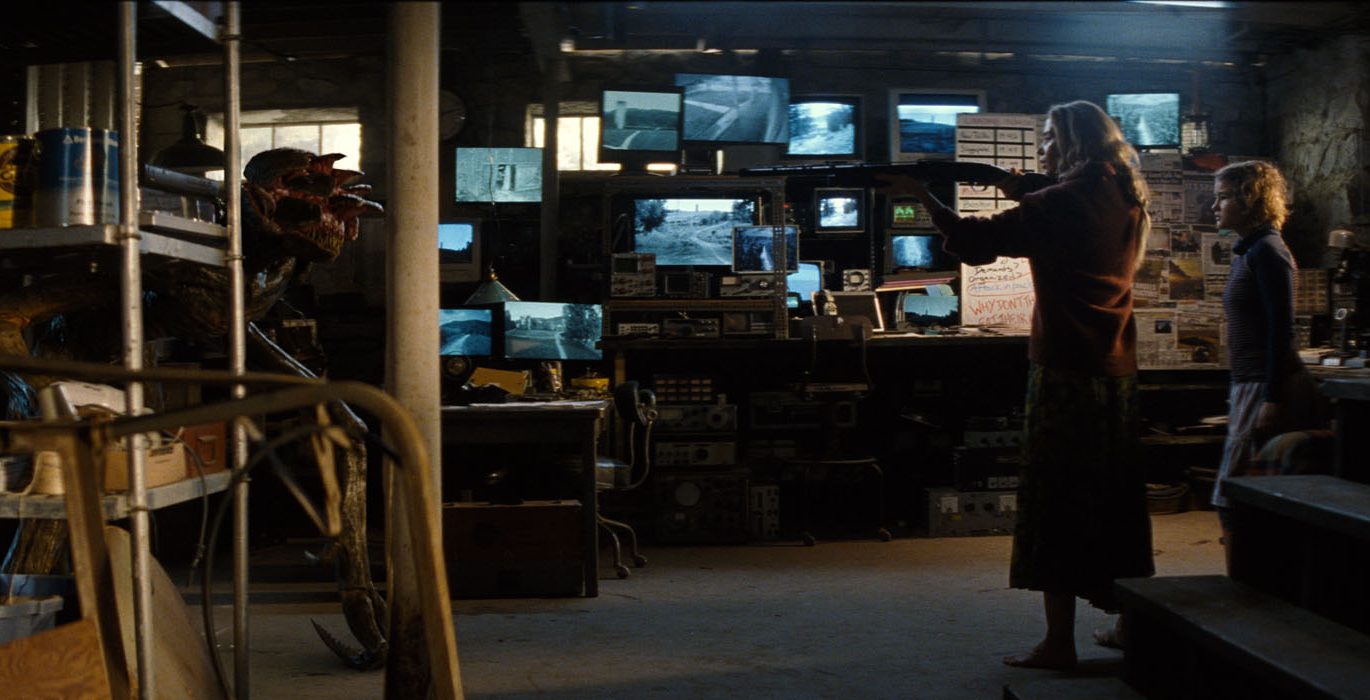
In the post-apocalyptic world that is the setting of A Quiet Place, a family is forced to live in silence while hiding from monsters with ultra-sensitive hearing. In addition to a variety of general effects work ranging from set extensions and paintouts, ILM was tasked with creating the monsters that are terrorizing what’s left of the human population on Earth.

Director John Krasinski had enlisted ILM to bring the blind, shrieking creatures to life but when the decision was made to push the design from merely scary to something truly terrifying with just one month left before release, it was the ILM team led by visual effects supervisor Scott Farrar and animation supervisors Scott Benza and Rick O’Connor who had to deliver that terror in record time.

In the end, collaborating with Krasinski ILM’s design team came up with the stuff of nightmares, a creature that makes the hair on the back of your neck stand up the moment you catch a glimpse of it on-screen. The reptilian-like humanoid creature was quadruped with a large head and a lobster-like exoskeleton. It had no eyes, horrific rows of sharp teeth, and claws that could rip a person’s limb clean off.

In the end, the revised design was a tremendous success and supported Krasinski’s vision amping up the fear factor and tension in every scene it played in.

The Mandalorian which debuted on Disney+ in November 2019 was set five years after the events depicted in Return of the Jedi. To achieve the vision of series creator Jon Favreau, Industrial Light & Magic worked with him, series producers, and the production’s visual effects supervisor Richard Bluff to bring together a number of companies that would form a basis for the technology that would allow the series to be produced. ILM, Golem Creations, Epic Games, and technology vendors Fuse Technical Group, and Profile Studios collaborated on developing the ground-breaking virtual production process used on the first season of the series.

After preliminary testing in 2018, the first ILM StageCraft LED Volume was constructed at scale on a soundstage at Manhattan Beach Studios. For season one of the series ILM StageCraft utilized Unreal Engine to perform the real-time render for the 60+ photo-real virtual environments ILM artists created for the series.

All told, the first season contained over 4000 traditional visual effects shots created in post in addition to the real-time effects achieved in the StageCraft Volume. In recognition of impressive work done on the series, The Mandalorian received 15 Emmy Award nominations and won 7 awards. The effects team’s pioneering work was rewarded with the Emmy Award for Visual Effects as well as three Visual Effects Society Awards including the television categories’ top prize.


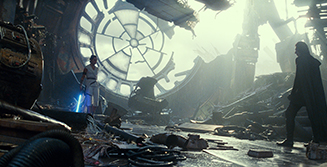
No one’s ever really gone…  Star Wars: The Rise of Skywalker, is the final installment in the Skywalker saga. The series finale drew on the skilled effects artists, engineers, and production teams from all five studios of ILM – San Francisco, London, Vancouver, Singapore, and Sydney – with senior visual effects supervisor Roger Guyett and producer Stacy Bissel leading the global effort.

From the creation and subsequent destruction of the ice world Kijimi, the Sith stronghold Exogol, the high-speed skiff chase in the deserts of Passana, and the massive waves at Kef Bir, The Rise of Skywalker takes us to an exciting array of new locations in the Star Wars universe created with the help of visual effects. The team created also all manner of spacecraft, creatures large and small, and even some a few Droids such as D-O.

Of the many challenging effects that the team had to undertake, repurposing Carrie Fisher’s previously unused takes from episodes VII and VIII to create a whole new performance suitable for this story was a tremendous one. Crafting the new performance would require careful planning by the filmmakers and some deft sleight of hand by the visual effects team. Camera moves from the original shots were painstakingly replicated in CG and output for motion control, Dan Mindel’s on-set lighting for the new shots had to match precisely to the archival footage as well as ILM’s digital additions such as wardrobe and hair. In the end, we see General Leia in conversation with Rey in a powerful and moving scene that couldn’t have been possible any other way.

Each Star Wars film brings a unique set of challenges. This film had virtually every type of visual effect in the book and added a few new chapters as well.


ILM has been closely associated with the Terminator franchise since first contributing to James Cameron’s Terminator 2: Judgment Day back in the early 1990s. For this installment in the series, we were tasked with creating digitally de-aged versions of Linda Hamilton as Sarah Connor, Edward Furlong as John Connor, and Arnold Schwartzenegger as the T-800 as they had appeared in Judgment Day.

A pivotal moment in the film relies on a flashback where we see all three of them as their younger selves. The effect was achieved through the use of actor doubles for the physical performance and the visual effects team who had painstakingly sculpted and recreated each of the character’s younger selves. The digital heads were then performance-matched to the actual heads of the on-set actors replacing their own. We utilized data captured with Disney Research Studios & ILM’s Anyma markerless facial capture system and combined it with significant amounts of traditional keyframe animation augmenting the performance due to the disparity between each actor’s current age and how they appear in the film.

Two other challenging scenes included the fight in the Turbine room in which Grace and the T-800 are trying to pull the REV-9 into a spinning turbine and what was perhaps one of the largest and most exciting action sequences in the film, the air battle between a KC-10 and a C5 aircraft.

According to visual effects supervisor Jeff White, “what was great about working on the film is that each sequence came with a huge variety of different visual effects challenges to solve. How many films do you get to de-age famous actors, create an aerial fight with planes colliding, an underwater scene with tank and dry for wet work, and a huge fight involving a liquid metal villain to end the film? Almost every shot required multiple departments and tremendous coordination to pull it all together.”

ILM split the work amongst its Vancouver, San Franciso, London, and Singapore teams with the project being led out of Vancouver with the ILM Art Department playing a key role in developing several looks and designs for the film and ILM’s shot work.


Under the watchful eye of production visual effects supervisor Pablo Helman, the visual effects team created 1,750 visual effects shots for Martin Scorsese’s epic three-and-a-half-hour drama, The Irishman. The film received both Oscar and BAFTA nominations for Best Visual Effects and won two Visual Effects Society (VES) Awards including Outstanding Supporting Visual Effects in a Feature and Outstanding Compositing in a Feature.

From the first discussions surrounding the project in 2015 Scorsese, along with actor/producer Robert De Niro, and his fellow cast members Al Pacino, and Joe Pesci, made it a requirement that all de-aging performances be captured on set, in the cinematographer’s lighting, on the day. ILM’s engineers would have to develop an entirely new system for facial performance capture for the project, one that couldn’t rely on visible markers on the actors’ faces or utilize helmet-mounted cameras which were de rigueur in 2015. The concept of a markerless-on-set process was consistent with the actors’ method approach to acting, that is to say, the technology should be invisible. 

ILM started developing a proprietary markerless capture system two and a half years before the movie was shot. The system represents a game-changer in facial performance capture, in fact, until The Irishman, no other feature had ever used this approach. The performance capture software and a custom-designed infrared dual-camera system that was combined with the director’s camera to create a 3-camera rig called “FLUX”. The system utilizes Machine Learning to aid the artists in finding flaws in the renders which can then be addressed. The film spans the years from 1949 through 2000 and continuously goes back and forth in time. De Niro’s character, Frank Sheeran, appears as a youthful twenty-something through his 30s, 40, 50, 60s, and 70s. When Sheeran needed to appear older than De Niro’s actual age of 76, the production relied on practical make-up effects to achieve the desired look.


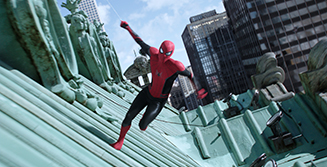
Following the events of Avengers: Endgame, Peter Parker (Tom Holland) returns in Spider-Man: Far From Home. Our friendly neighborhood Super Hero decides to join his best friends Ned, MJ, and the rest of the gang on a European vacation. However, Peter’s plan to leave super heroics behind for a few weeks is quickly scrapped when he begrudgingly agrees to help Nick Fury (Samuel L. Jackson) uncover the mystery of several elemental creature attacks. Spider-Man and Mysterio (Jake Gyllenhaal) join forces to fight the havoc unleashed across the continent but all is not as it seems.

Writer-director Jordan Peele’s psychological thriller Us made masterful use of plentiful yet invisible effects work. With Oscar-nominated visual effects supervisor Grady Cofer leading the ILM team, artists helped create the film’s menacing doppelgängers. All of the film’s visual effects live in the world of subtlety. Since each of the film’s main characters would ostensibly be playing two roles, we couldn’t rely on the tried and true split-screen technique to allow them to occupy the frame at the same time. Instead, the scenes had to be painstakingly rehearsed and shot in multiple passes so the crew could do extensive head and face swaps throughout the film. Bits and pieces of performances from successive takes along with those of body and stunt doubles would be grafted together to build up the performance that Peele ultimately sought. To capture all the footage that ILM’s artists would need to create the effect, the actors had to perform scenes twice, once for each of their roles. Lupita, for instance, would first play Red with her body or photo double playing Adelaide, and then she would go to wardrobe and hair and makeup and change into her alter ego meanwhile the set would be completely reset as though the scene never happened. Then it was filmed again with reactive performances being captured as carefully as possible particularly where the characters are interacting with each other.

Like all scenes featuring the doppelgängers, the climax of the film had to be extensively choreographed and rehearsed over weeks so when the team shot the fight sequence, which was filmed over two days, it was incredibly complex but in the end, the results speak for themselves. With the premise of the film so intricately tied to the visual effects, they had to be seamless or the film simply wouldn’t work.

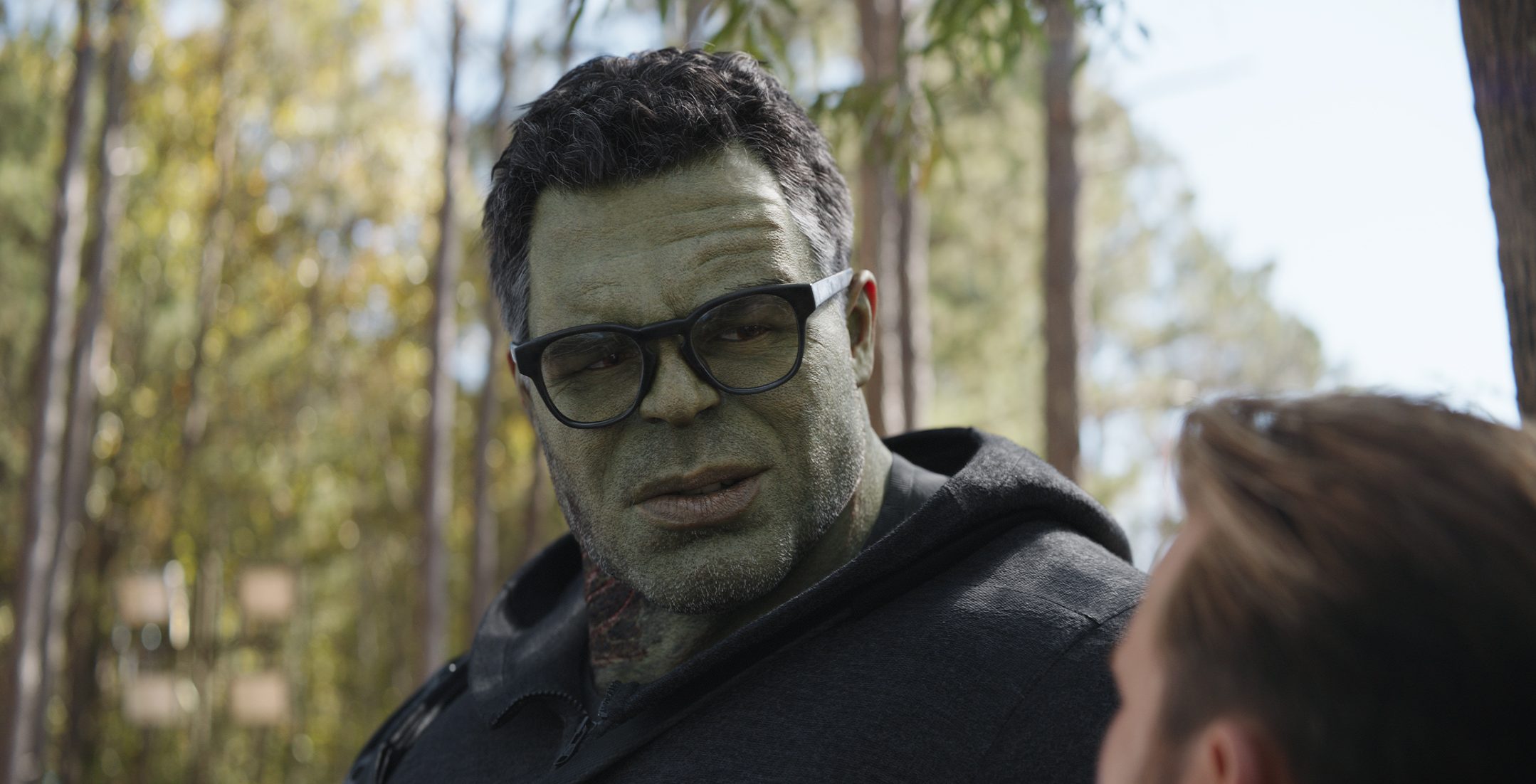
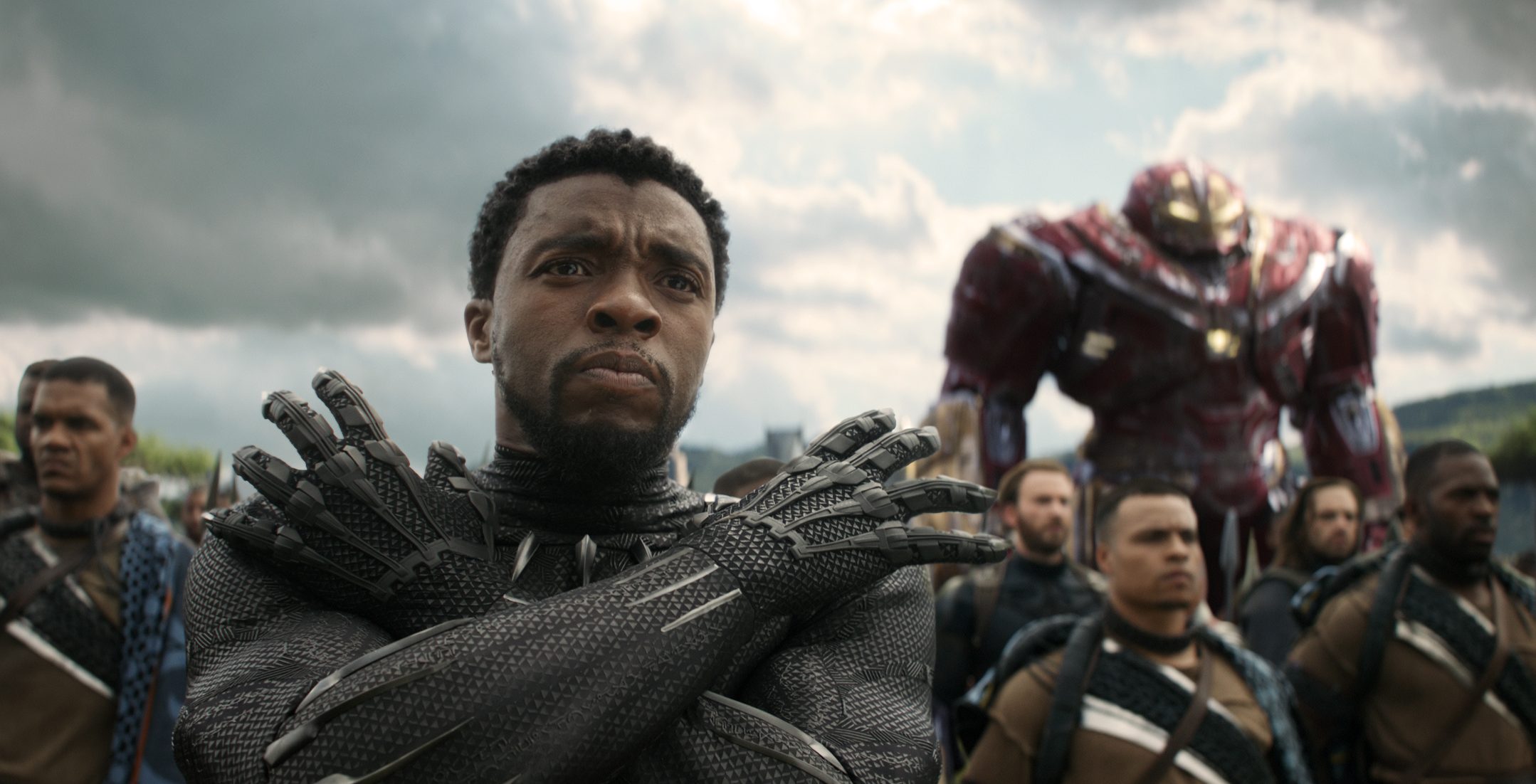
Although ILM had previously worked on eleven films in the Marvel Cinematic Universe, Avengers: Endgame brought a host of new and interesting challenges to the effects team. ILM Visual Effects Supervisor Russell Earl and Animation Supervisor Kevin Martel and their crew tackled some of the film’s most demanding work including the reinvention of Hulk who harnesses his power but at the same time manages to embrace his smart and sensitive side.

Hulk is once again played by Mark Ruffalo, as he has been since 2012 when ILM first created the modern incarnation for “The Avengers”. Turning Hulk into Smart Hulk was a balancing act. We employed cutting edge performance capture technology called Anyma which was originally created by Disney Research Studios and productized in partnership with ILM. ILM’s animation team on Avengers: Endgame, the first feature film to make use of the technology, pushed the technology’s ability to analyze pixel-level detail as it captured pore-level information from  Ruffalo. In fact, this high fidelity capture gave Martel’s animation team control over 200 individual facial attributes to recreate and, when necessary, augment every nuance of Ruffalo’s performance. 

ILM’s involvement in the film didn’t end there, the team was also instrumental in creating the end battle scene, and most of the other animated characters, including Iron Man, Iron Patriot, Ant-Man, and others. The crew also tackled the time travel sequences which meant delving back into our 2012 “Avengers” assets to recreate that film’s version of Hulk with a few improvements.