1980s

50 Years | 500+ Film and TV credits | 135+ Awards

SINCE 1975

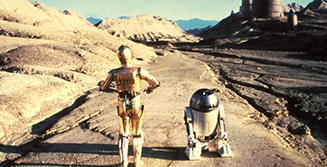
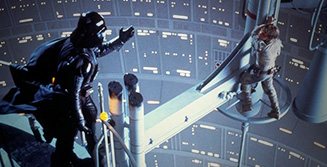
For many fans, this is the beating heart of all Star Wars films. Darker and denser than the original, it pushed the amazement audiences felt after watching the first visual extravaganza into another dimension.

1980 Special Achievement Academy Award® for Best Visual Effects

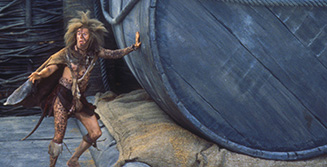
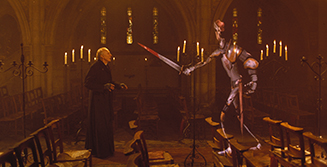
Three single women in a picturesque village have their wishes granted – at a cost – when a mysterious and flamboyant man arrives in their lives.

When young Willow Ufgood finds an abandoned baby girl, he learns she is destined to end the reign of the wicked Queen Bavmorda.

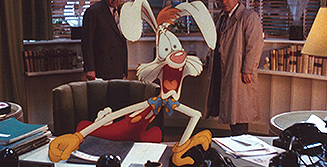
Notable for combining traditional cell animation with miniatures, practical effects, and live-action with a level of seamless integration that had never been achieved before. The ILM Optical Compositing team ran over 10,000 feet of composites for the effects work in the film.

1988 Academy Award® Winner for Best Visual Effects, and BAFTA Award Winner for Best Special Visual Effects.

1989 Academy Award® Winner for Best Visual Effects.


After rescuing Han Solo from the palace of Jabba the Hutt, the rebels attempt to destroy the second Death Star while Luke struggles to make Vader return from the dark side of the Force.

Return of the Jedi exemplifies ILM at its core: technical innovation meeting creative innovation. From ILM’s construction of a new camera rig they called the Technirama – a high speed, servo-driven track system capable of very fast moves – to Lucasfilm Computer Division’s development of a wire-frame “holographic” model of the Death Star under construction, to the methods used to capture Princess Leia being chased through a redwood forest on a speeder bike, Return of the Jedi expertly melded the creative and technical worlds to overcome challenges and create some of history’s greatest movie magic.

Rather than build a miniature forest and film Leia’s Endor chase with motion control cameras, ILM had Garret Brown — who had invented the Steadicam — walk through a redwood forest near Eureka, California while shooting a frame every few seconds. ILM then ran the film at 24 frames per second, which increased the apparent speed more than 5,000 percent. Optical compositing sent Princess Leia (Carrie Fisher) — filmed on a blue screen stage — speeding through the forest.

As a family moves into their new home, they notice strange events that mostly affect their young daughter.

It all began with what producer Frank Marshall called “the $250,000 sentence,” a four-word description in the script for Steven Spielberg’s film Poltergeist: “and the house implodes.” Marshall is referring to a scene in which the home of the Freeling family becomes so possessed by spirits of the dead that it is destroyed by implosion — it collapses upon itself and disappears into a black hole at its center. This was the effect that Spielberg wanted and what he asked ILM to do. Richard Edlund, the visual effects supervisor, relished this kind of challenge.

The difficulty of the shot centered on the way the model of the home had to break up. It couldn’t just collapse into a pile. It had to actually implode — to break up into pieces and pull into a tiny hole. To accomplish this, ILM went through months of testing and development. Eventually, a number of techniques operating in unison were devised to achieve the effect. This included rigging the detailed model with steel cables that extended into a funnel-like construction and setting up a vacuum system to capture any dust and fragments not pulled through by the cables. It was all shot with a high-speed camera and done in one take. The actors shot their part on a blue screen set and the optical department worked on rotoscoping the shot and putting it all together using the Anderson Optical Printer.

In addition to the home implosion, Spielberg wanted a full size enormous esophagus to engulf a bedroom. Interestingly, this “throat” was never part of the set; it was a miniature that was filmed separately and combined. The scene is a masterpiece of optical compositing, as no seams are evident and the miniature looks as though it is actually part of the live-action set.

The “flying objects” sequence took nine months for the optical department to get right. With a wide range of tonalities in the background and dozens of objects flying in and out of the frames, Richard Edlund called this the most difficult matting sequence he ever worked on. This shot was tedious because of the nature of the optics department during that era. If one element of a shot wasn’t perfect after running the shot through the optical printer, the team had to start over. In the end, Poltergeist is a great representation of the kind of “movie magic” ILM is known for.

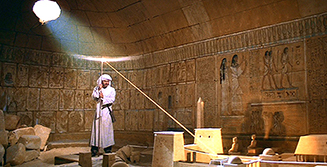
Renowned archeologist, Dr. Indiana Jones, is hired by the U.S. Government to find the Ark of the Covenant, which is believed to still hold the Ten commandments. Unfortunately, agents of Hitler are also after the Ark.

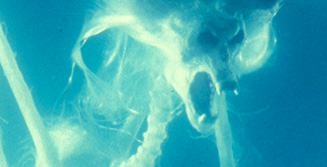
ILM was instrumental in creating many of the notable sequences in Raiders, including the finale when the unsealing of the Ark of the Covenant results in a spectacular supernatural event. Achieved via a clever mix of small gossamer puppets filmed in a water tank and a variety of optical effects, the sequence used every trick in the book.

Live action footage was enhanced with opticals and matte paintings, including the creation of the now famous warehouse where the Ark is stored. More than 50 passes were made on some shots to increase image quality for the film’s climactic ending. ILM’s special effects team was honored with the Academy Award® for Best Visual Effects for their work on the film.

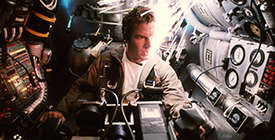
After a science experiment gone wrong, a miniaturized Marine finds himself in the body of a hypochondriac — trying to outwit saboteurs who want the device that shrank him.

ILM constructed (larger than life) scale sets representing internal body organs and pathways, which were photographed and composited with blue screen footage of rod-puppeted submersible pods that were filmed with ILM’s Go-Motion technology.

The miniatures were predominantly shot in the ILM cloud tank to create the liquid look of the internal environment.

The ILM team was honored with the Academy Award® for Best Visual Effects in 1987 for their work on the film.

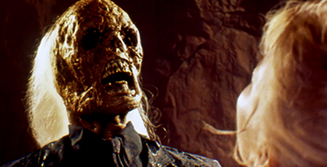
The good Dr. Jones embarks on a search for the Holy Grail and quickly learns that another archaeologist has disappeared while searching for the precious goblet — his own father, Dr. Henry Jones.

One of the film’s key scenes, turncoat Walter Donavan’s face melting and ultimately turning to dust, was conceived by ILM in one continuous shot. Three motion-controlled puppet heads reveal the character in various stages of decomposition, with ILM’s patented Morphing technique used to blend the photography.

It was the first ever digital composite of a full-screen live action image.

The second of the Lucas/Spielberg Indiana Jones epic is set a year or so before the events in Raiders of the Lost Ark. Indy needs to retrieve a precious gem and several kidnapped young children on behalf of a remote East Indian village.

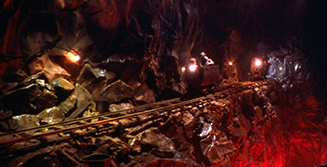
ILM created 140 shots for this film, including the action-packed mine cars sequence, which took four months to complete and includes more than a third of all of the effects shots in the film. The lava was generated by shooting a mixture of red-tinted glycerin and water illuminated from beneath.

In order to film the chase sequence, ILM’s camera engineering department heavily modified a 35mm Nikon F3 SLR body with custom machined parts and custom film magazines, as well as a stepper motor to drive the action. Dubbed the NikonFlex, the tiny camera system rode the miniature mine car tracks on an aluminum dolly, capturing the action along the way.

ILM’s team was honored with the Academy Award® for Best Visual Effects for their contribution to the film.

A gentle alien is stranded on Earth, discovered, and befriended by a young boy named Elliott.

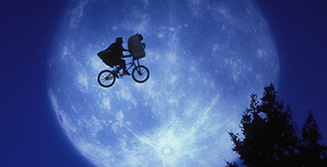
ILM created the now iconic image of E.T. and Elliot flying over the face of a full moon using the studio’s Go-Motion technology combined with exquisitely crafted miniatures and puppet characters shot on a blue screen and then seamlessly inserted into live action plates.

The legendary ILM model shop created the forced perspective neighborhood, miniature forest, and E.T.’s dazzling mothership. ILM’s effects team was honored with the Academy Award® for Best Visual Effects for their efforts in 1982.

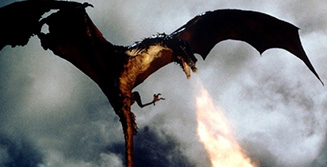
Dragonslayer is notable as Industrial Light & Magic’s first non-Lucasfilm production. The film inspired the development of the Go-Motion process, where ILM’s motion-control technology was adapted to stop-motion-style puppet animation.

Go Motion created the film’s realistic motion blur and smooth character articulation — both instrumental in what was described as the most realistic dragon portrayed on film to date. ILM’s effects team was honored with an Academy Award for their work on the film.

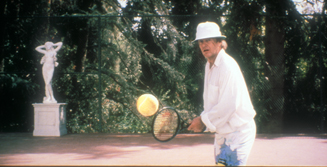
This gentle, warm-hearted comedy/fantasy earned director Ron Howard his first Saturn award.

ILM developed a series of unique shots for this film using a combination of matte paintings, miniatures, and optical effects, and were able to bring to life an alien mothership, stormy turbulence and an intimate scene between two aliens. As a result, the ILM team was honored with an Academy Award® for Best Visual Effects.

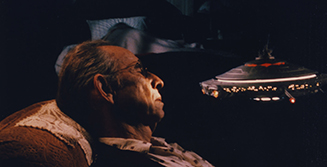
Faced with eviction by an evil land developer, the poor residents of a slum aid flying saucers that need electricity to survive. The grateful spaceships repay the kindness of their hosts by battling the developer and all ends well.

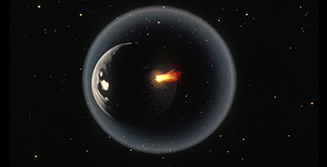
Wrath of Khan is notable for containing the first all-CG sequence in a feature film. ILM collaborated with the Lucasfilm Computer Graphics division to create the “Genesis Sequence,” showcasing a continuous shot of a planet being terraformed into a inhabitable environment fit for life.

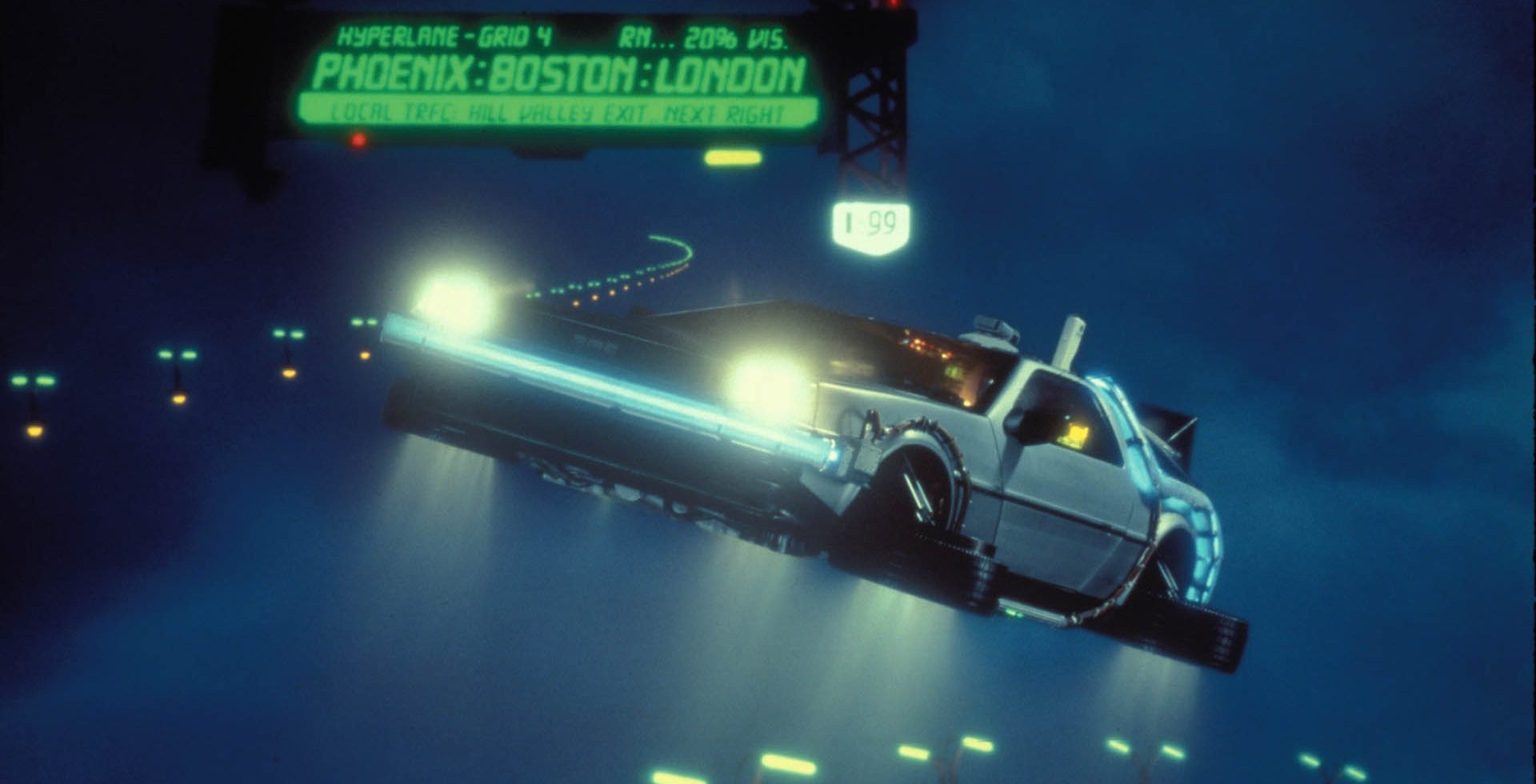
Getting back was only the beginning, as the most spectacular time-travel adventure continues in Back to the Future Part II — the sequel that proves that lightning can strike twice!

ILM’s work for this film included a series of ambitious multi-split-screen shots featuring Marty and his alternate future family (all played by Michael J. Fox), as well as the introduction of a 3D shark to the suburb of the futuristic Lone Pines. ILM’s model shop also built and puppeteer a fully articulated, remote-control 1/15-scale DeLorean and a variety of other vehicles for the film’s numerous flying sequences.

To meet the script demands, ILM’s engineers developed VistaGlide — a portable motion control dolly system with video-playback — which enabled camera operators to record and review their work almost instantly. In recognition of their groundbreaking work on the film, ILM was nominated for an Academy Award for Achievement in Visual Effects.

From Academy Award®-winning filmmakers Steven Spielberg and Robert Zemeckis comes Back to the Future — the original, groundbreaking adventure that sparked one of the most successful trilogies ever. Powered by innovative special effects, unforgettable songs, and non-stop action, Back to the Future is an unrivaled adventure that easily stands the test of time!

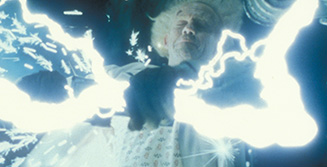
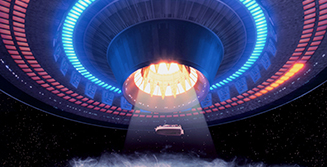
ILM created a series of special-effects shots for the first installment in this franchise, including the hallmark time-travel sequence, complete with a dynamic display of light and color as well as the shocking effects surrounding Doc’s “weather experiment” (helmed by the animation department). ILM was also tasked with creating the film’s parting shot of the famed DeLorean time machine lifting off and flying… To the Future.